Bolu Kukus: A Small Cake That Opens in the Steam
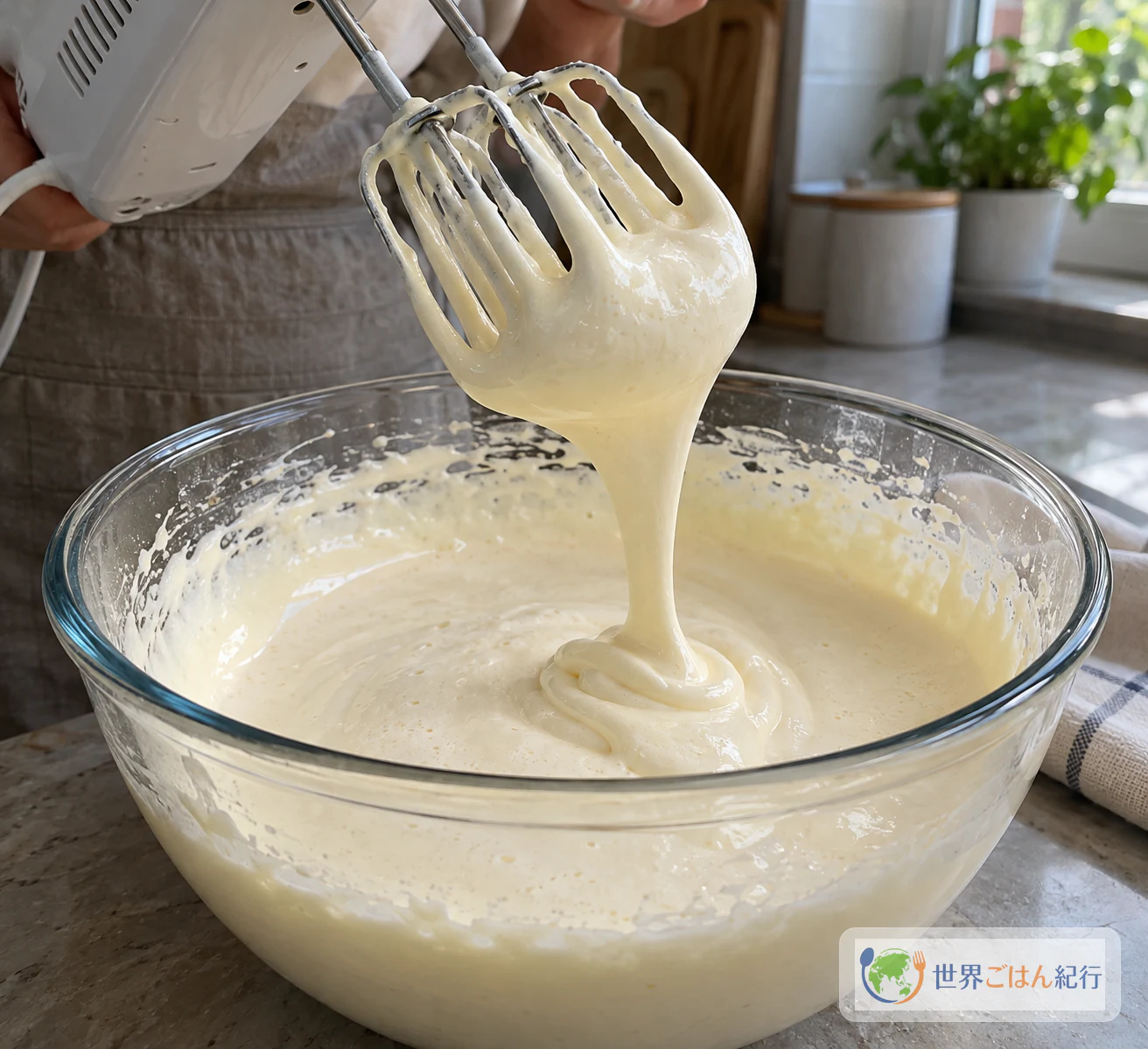
Whisk the eggs and sugar until they fall in a ribbon, fill each paper cup four-fifths full, put the cakes into a steamer that is already boiling hard, and keep the lid closed for 20 minutes on high heat.
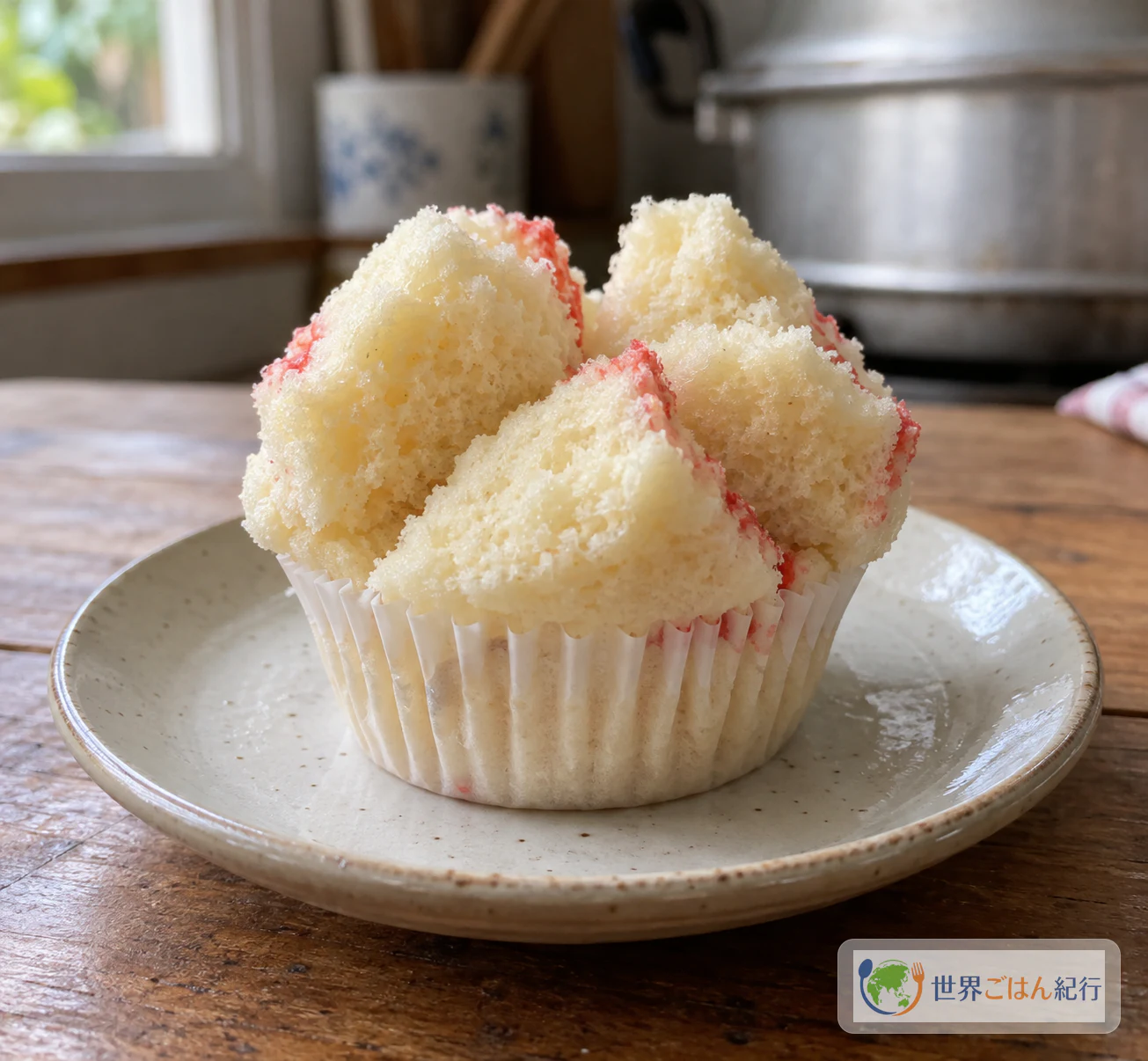
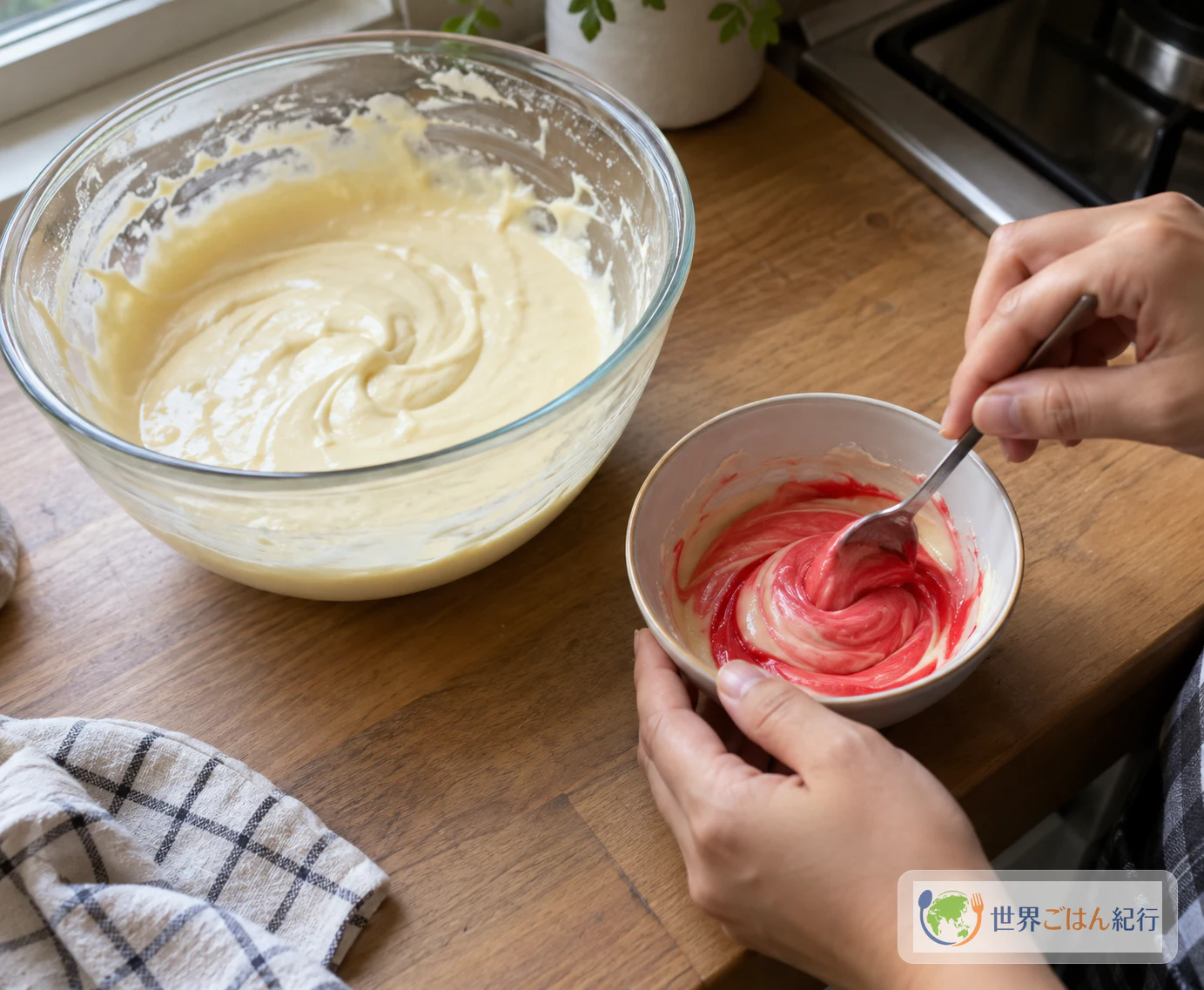
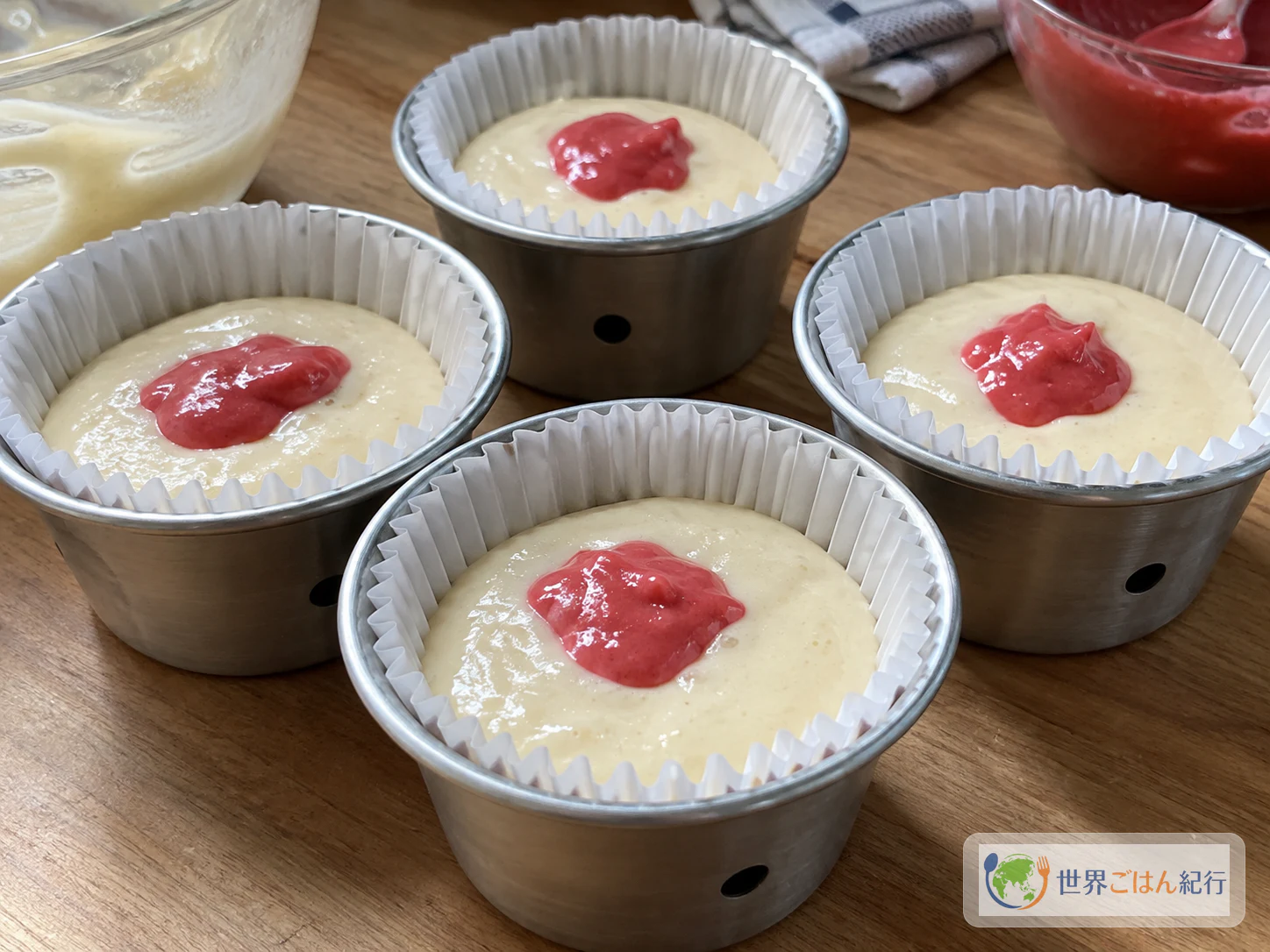
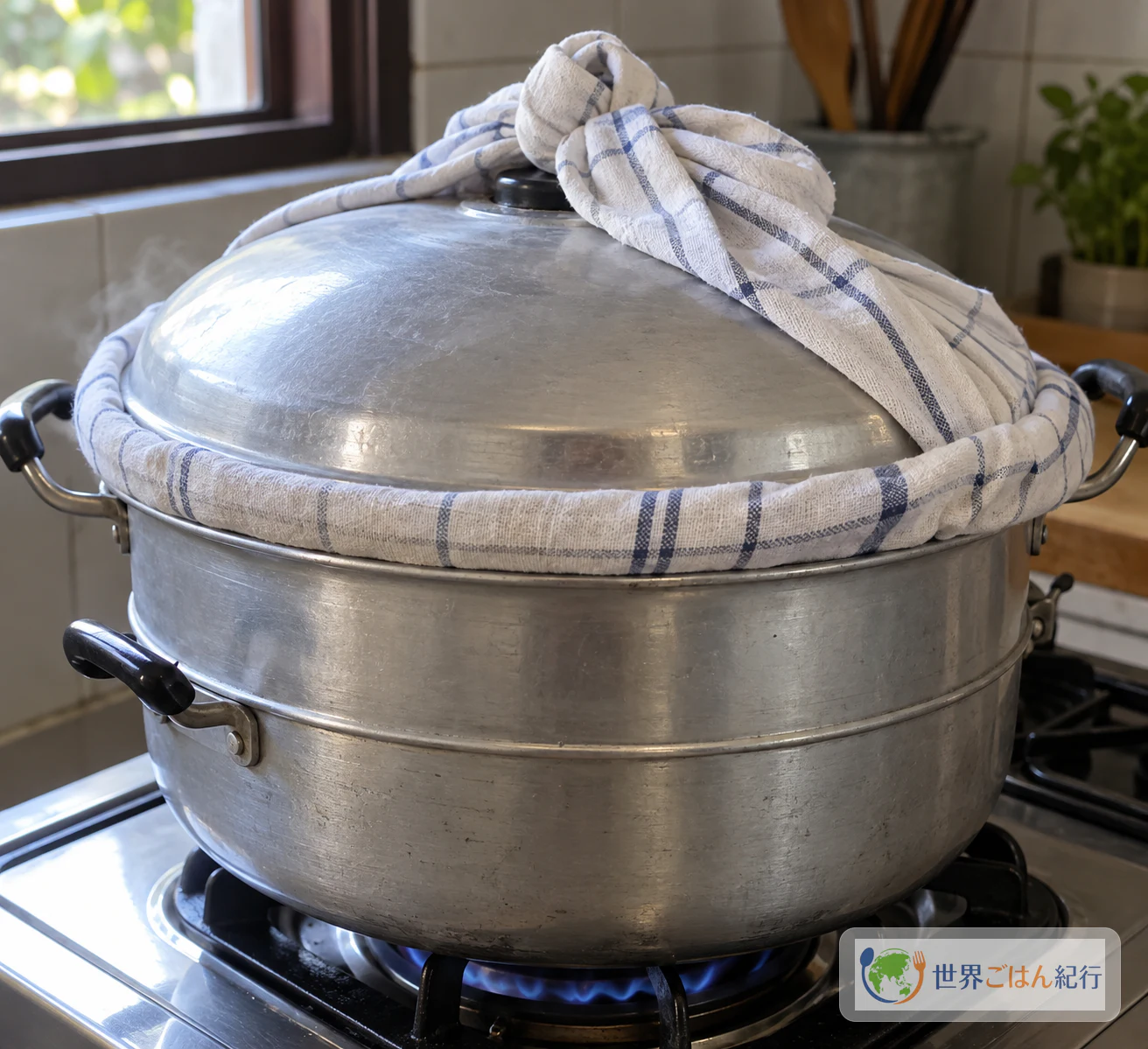
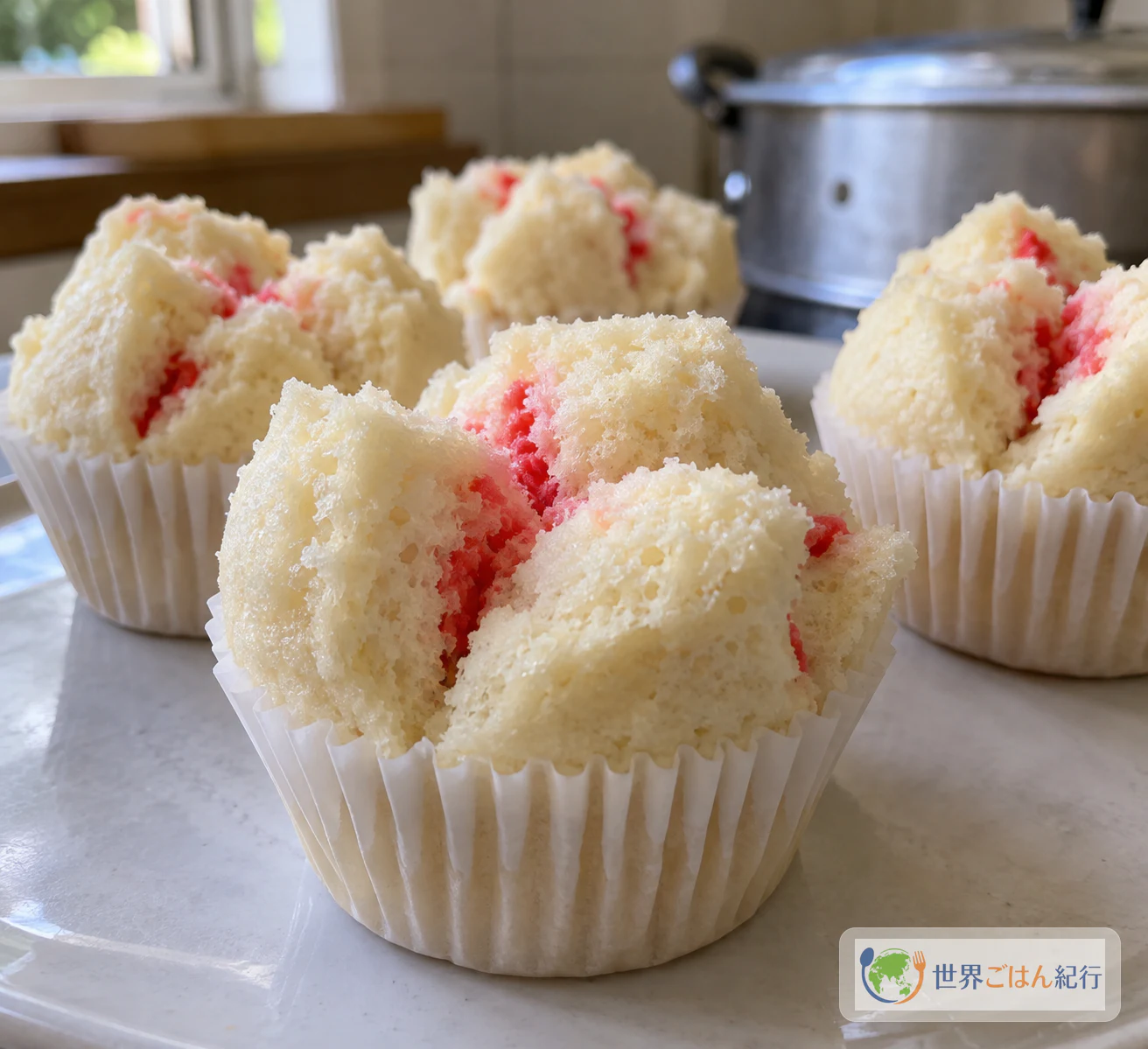
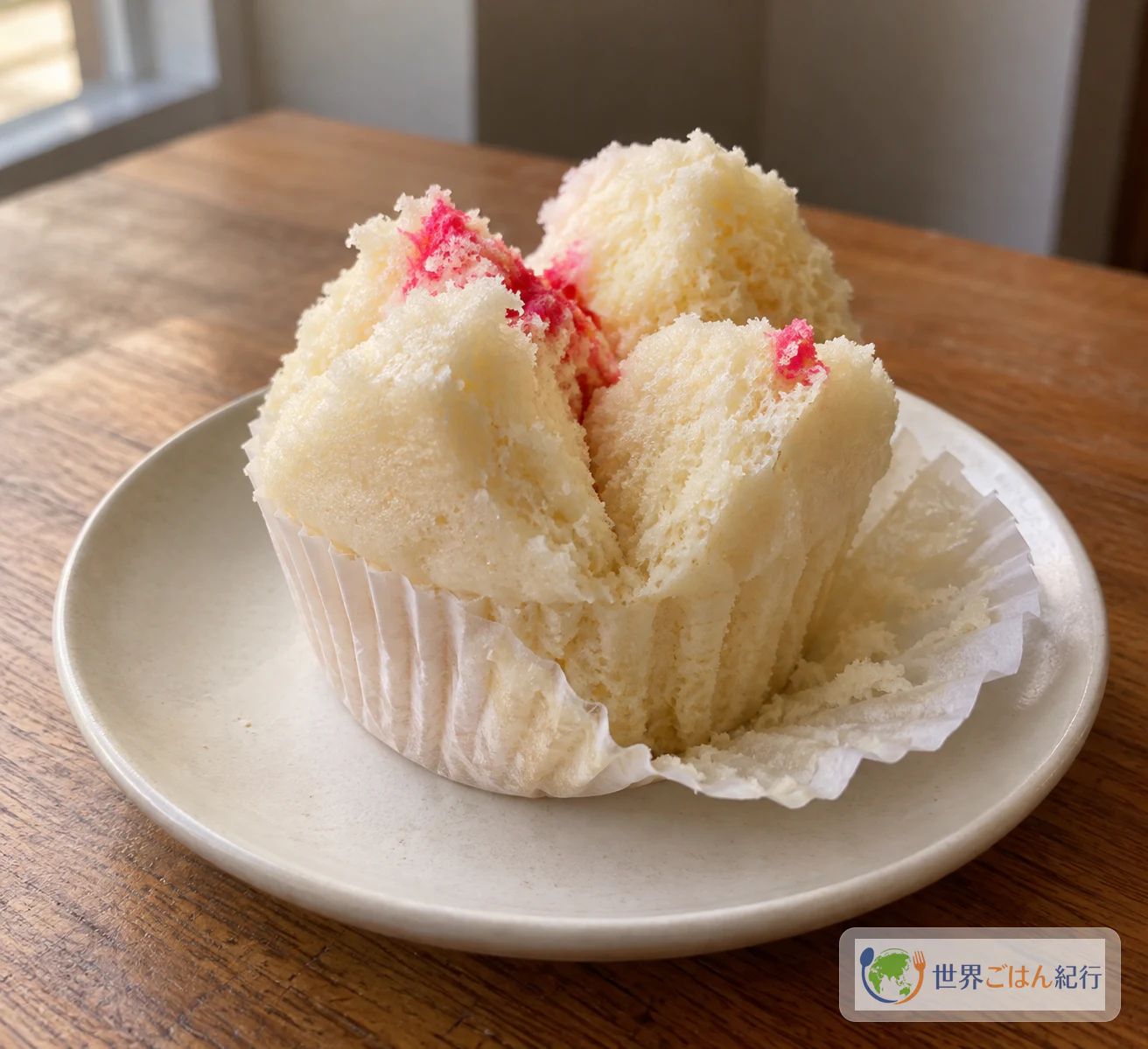
Inside a steamer that is already at a full boil, small paper cups of pale batter sit side by side, each topped with a teaspoon of red batter. After 20 minutes on high heat with the lid wrapped in a cloth, the tops have risen and split open, and the red shows through the cracks. This is bolu kukus, an Indonesian steamed cake. The Indonesian recipe site Primarasa describes it as a popular snack in Java, and Kompas presents it as a traditional snack enjoyed with family and guests.
The way it opens is not only about looks. How well the eggs and sugar are whisked, and how much steam is rising when the cups go in, both bear on the shape of the finished cake. That is why this article asks you to look closely at the batter and the steamer, not only the clock.
The recipe below follows the Primarasa version as published. It has not been kitchen-tested for this article. The yield of 15 cakes is the figure stated by the source, not a measured result, and whether the cakes are steamed through at 20 minutes in your steamer has not been verified.
What Bolu Kukus Is: A Steamed Cake Loved in Java
Bolu kukus means a steamed bolu, or cake. The name does not fix a single look or formula: Indonesian recipes under the same name use different ingredients, amounts and steaming times. This article covers one specific type, the small cake steamed in a paper cup whose top cracks open like a flower, often called bolu kukus mekar. It is built on flour, eggs and sugar whisked into a sponge batter.
Primarasa introduces this cake as popular in Java, and Kompas describes bolu kukus as a traditional snack to share with family and with guests. Beyond that, the sources used here do not establish the cake's origin, any link to particular festivals, or how it spread, so this article does not make claims about them. For more dishes from the same country, see the Indonesia page.
Because recipes with the same name vary so much, what follows is a single adopted version: Primarasa's 15-cake recipe with a plain batter and a red accent. Ingredients from other bolu kukus recipes are not mixed into it.
Ingredients for 15 Cakes: Eggs, Fine Sugar, Flour and Sweet Soda
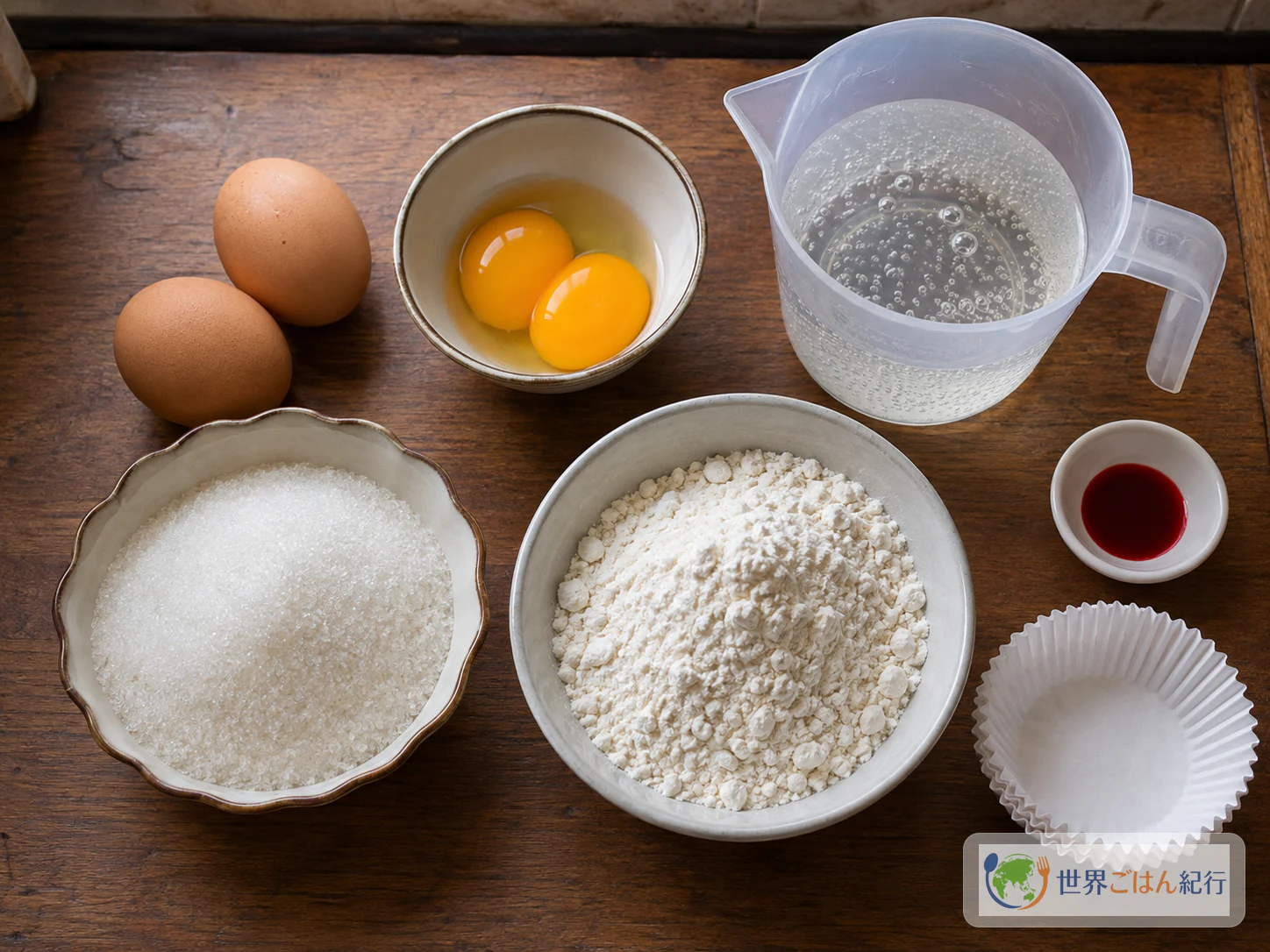
The two whole eggs and the two egg yolks are separate: you need two eggs plus two additional yolks. No baking powder, baking soda, vanilla, salt or cake emulsifier is added.
This recipe contains egg and wheat. Check the labels of the sweet soda and the food coloring as well, since their ingredients may include other allergens.
Equipment
- Mixing bowl and electric mixer that can run at high speed
- Spatula
- Small bowl for the red batter, and a way to measure 100ml of batter
- Teaspoon
- Paper cups for 15 cakes
- Outer cake molds to hold the paper cups
- Steamer with a lid
- Clean cotton cloth to wrap the lid
Choosing and Substituting Ingredients
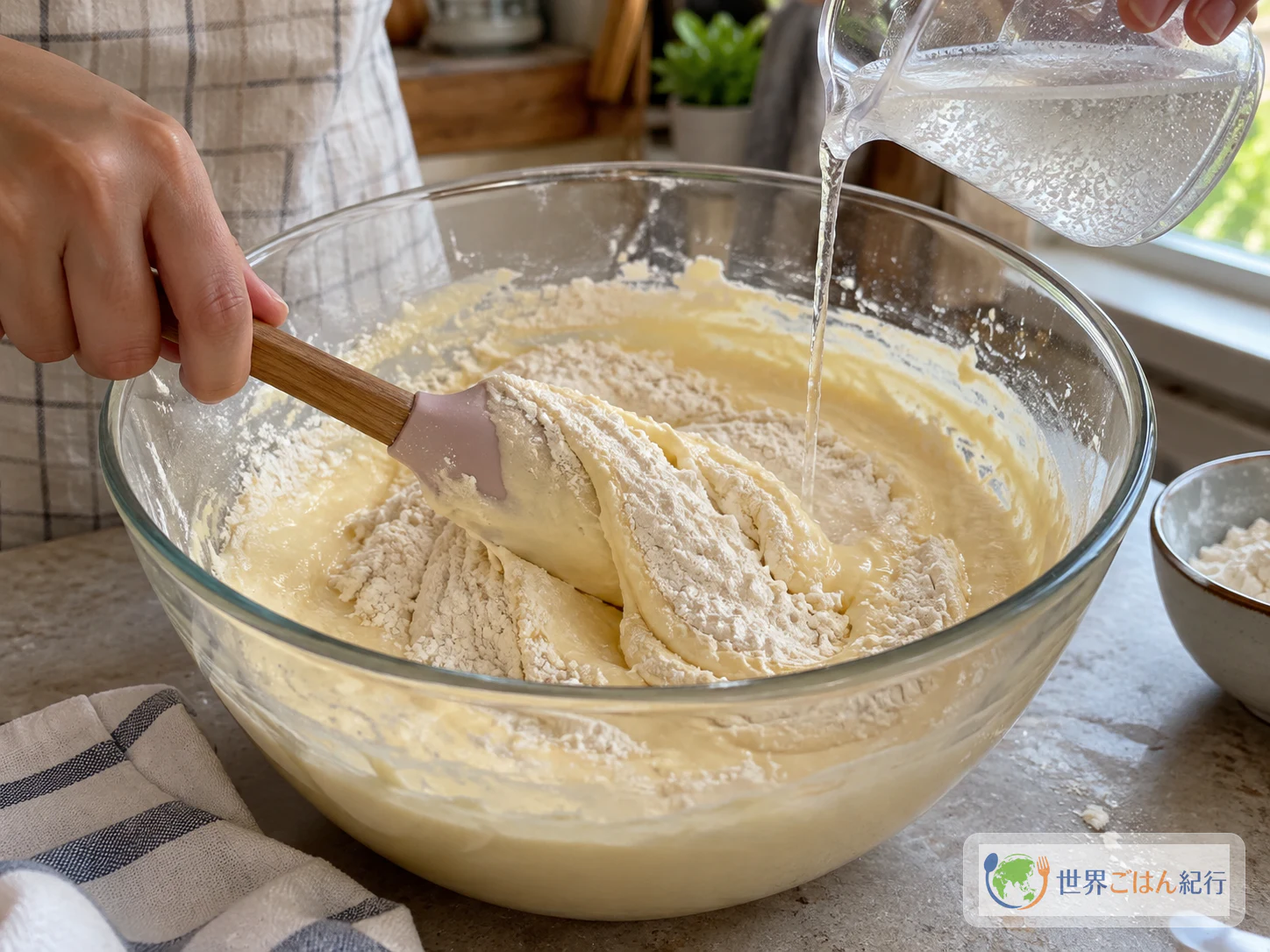
Sweet soda. Use air soda manis, a sweet fizzy drink. Any sweet carbonated drink works, but products differ in aroma, so the flavor of the cake will shift with your choice. If you replace it with unsweetened carbonated water, the sweetness and flavor change.
Flour. Use wheat flour. A soft, low-protein cake flour is a close choice, but it has not been tested for equivalence.
Sugar. Use fine granulated sugar. Ordinary granulated sugar may dissolve differently while you whisk.
Red coloring. You can leave it out and make all-white cakes. Only the appearance changes; the batter is the same.
Method: From Ribbon-Stage Eggs to the Steamer
Allow 1 hour 30 minutes in total, including about 30 minutes of whisking and 20 minutes of steaming. Judge each stage by the state of the batter and the steamer.
When the Tops Don't Open or the Surface Gets Wet
| Problem | What to check | What to do |
|---|---|---|
| The cakes don't rise or open | Whether the steamer was fully boiling, with plenty of steam, when the cakes went in | Bring the water to a strong boil on high heat before adding the cakes, as the source advises |
| Water drips onto the surface | Whether the lid was wrapped | Wrap the lid in a clean cloth, including the underside, as in the source's method |
| The texture is dense | Whether the eggs and sugar reached the ribbon stage | Next time, whisk until pale and thick with a clear ribbon trail before adding the flour. There is no reliable shorter whisking time to recommend |
These checks follow the source's conditions; they are not guarantees that the cakes will open every time.
Storage
The source gives no storage guidance. As an editorial suggestion only: these are best eaten the day they are made. Put any leftovers in a clean, airtight container and eat them soon. To rewarm, steam them briefly and check their condition. No storage periods or safety limits are given here, because the sources do not provide them.
Variations: Same Name, Different Recipes
Recipes published under the name bolu kukus differ widely. The following are separate recipes; do not mix their ingredients or amounts into the version above.
- Pandan bolu kukus mekar (Kompas). A different formula using three eggs and pandan paste, with salt, baking powder and cake emulsifier, none of which are in the Primarasa version.
- An older formula (detikFood, 2001). Makes 20 cakes with more yolks and whites, more flour, baking soda and vanilla, and is steamed on high heat for 30 minutes.
- Corn bolu kukus manis. A publication from Indonesia's agricultural research agency includes a sweet bolu kukus made with corn, an example of a quite different ingredient base under the same name.
- All white. Skip the red coloring for plain cakes. Only the look changes.
- Different sweet sodas. Different products change the aroma. Changing the amounts to adjust sweetness would need separate testing.
Frequently Asked Questions
What kind of sweet is bolu kukus?
It is an Indonesian steamed cake. The type in this article is the mekar style: a whisked batter of flour, eggs and sugar steamed in paper cups until the tops split open.
Is it the same as kue mangkok?
This article does not treat them as the same recipe. The formula here is a flour-and-egg whisked batter. The sources used here do not establish a historical lineage between the two, so no claim is made about it.
Can I use unsweetened carbonated water?
The source uses sweet soda. Switching to unsweetened carbonated water changes the recipe, its sweetness and its flavor.
Why didn't my cakes rise?
Check that the steamer was boiling hard, with plenty of steam, when the cakes went in, and that the eggs and sugar were whisked until they fell in a ribbon.
How long does bolu kukus keep?
The sources give no storage period. Eat them soon, and keep leftovers in a clean, airtight container.
Sources
- Primarasa, "Bolu Kukus." The adopted 15-cake recipe: ingredients and amounts, steps, whisking at high speed for about 30 minutes to the ribbon stage, filling cups four-fifths full, steaming on high heat in a boiling steamer with a cloth-wrapped lid for 20 minutes, and the description of bolu kukus as popular in Java. https://www.primarasa.co.id/camilan/bolu-kukus
- Kompas.com, "Resep Bolu Kukus Mekar Rasa Pandan, Pakai 3 Telur." Bolu kukus as a traditional snack eaten with family and guests, and a separate pandan formula using baking powder, salt and cake emulsifier. Used for comparison only. https://www.kompas.com/food/read/2024/09/20/153712175/resep-bolu-kukus-mekar-rasa-pandan-pakai-3-telur
- detikFood, "Bolu Kukus." A separate 20-cake formula from 2001 with a colored topping, steamed on high heat for 30 minutes. Used for comparison only. https://food.detik.com/kue/d-360604/bolu-kukus
- Badan Penelitian dan Pengembangan Pertanian, "Aneka Olahan Jagung." Includes a corn-based "Bolu Kukus Manis," showing that recipes with the same name use different ingredients. Used for comparison only. https://repository.pertanian.go.id/server/api/core/bitstreams/326b0746-5031-4aa4-ab9b-9d801c1c627a/content