Kecap Manis: A Dark, Glossy Syrup of Soy Sauce and Sugar
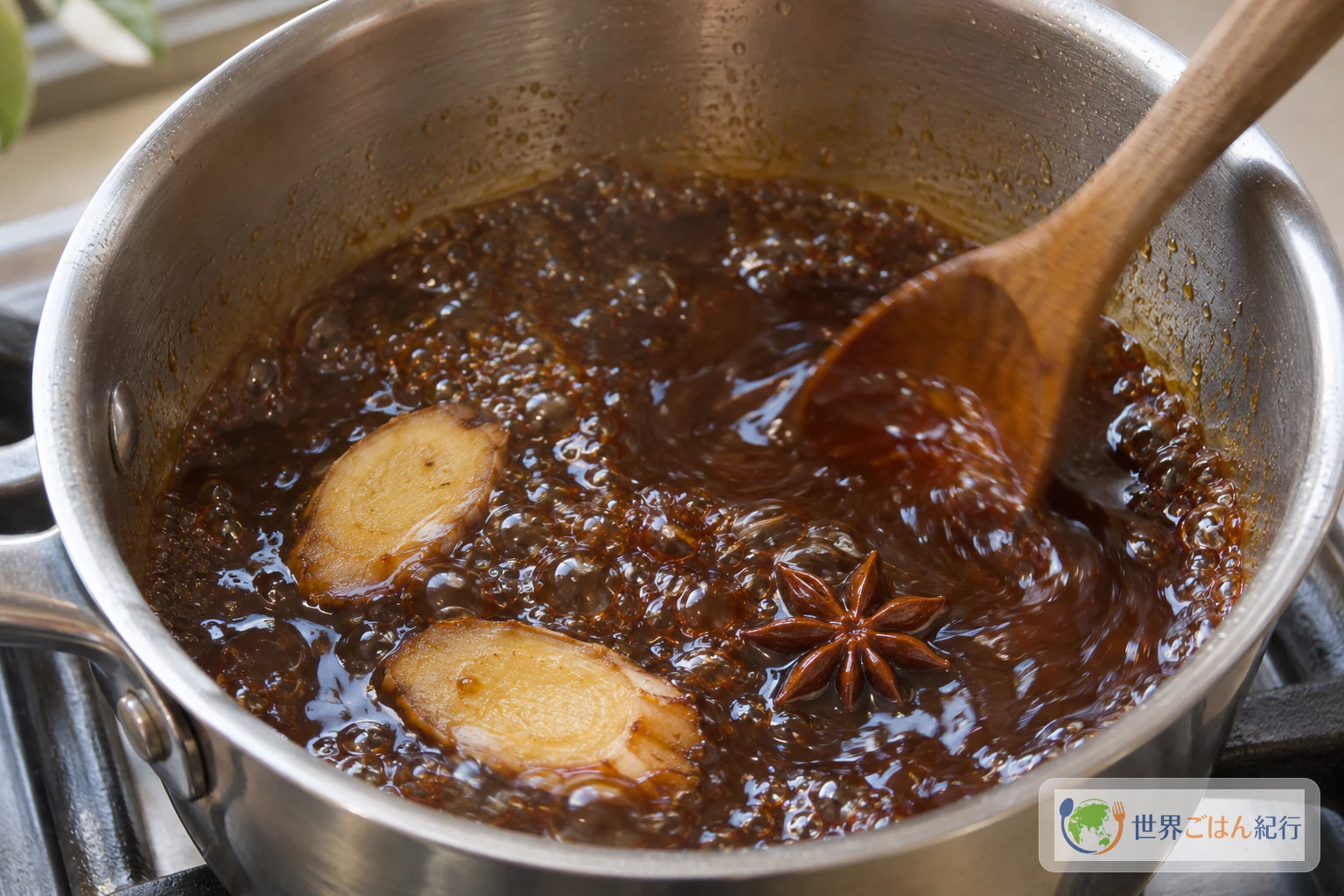
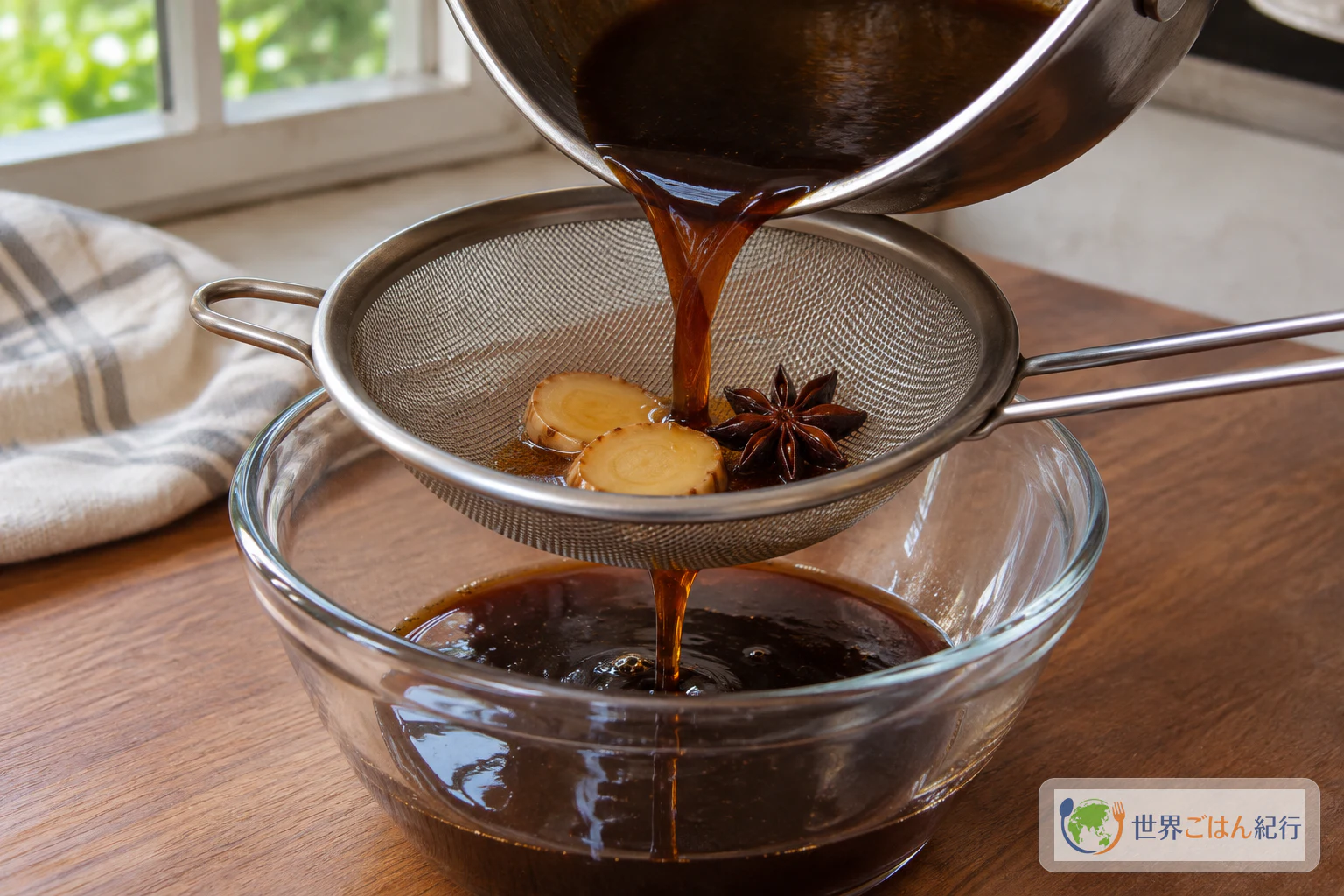
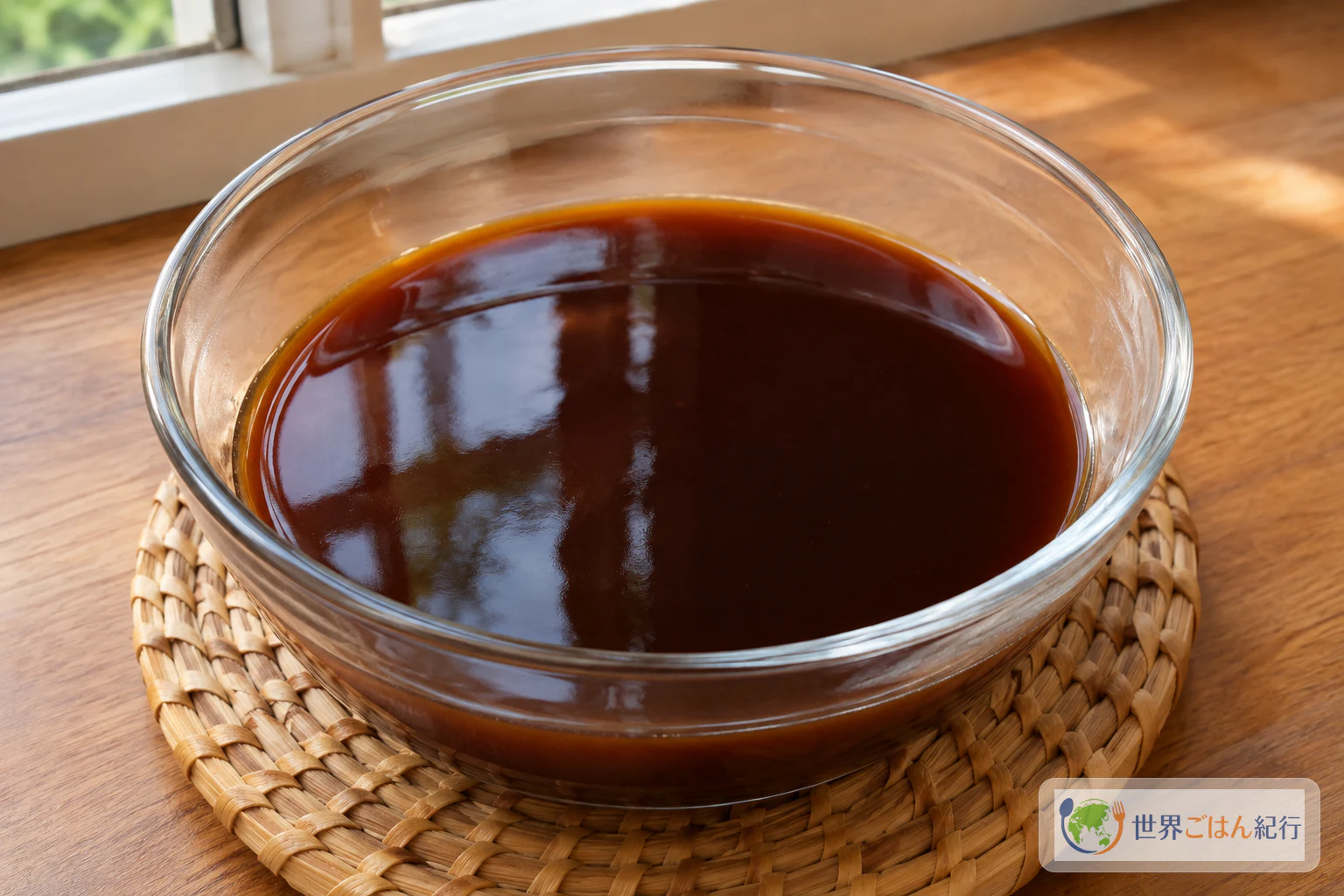
Melt the sugar on its own without burning it, add the liquids carefully off the heat, then boil and stir until the sauce turns syrupy. Strain out the spices, let it cool and keep it in the refrigerator.
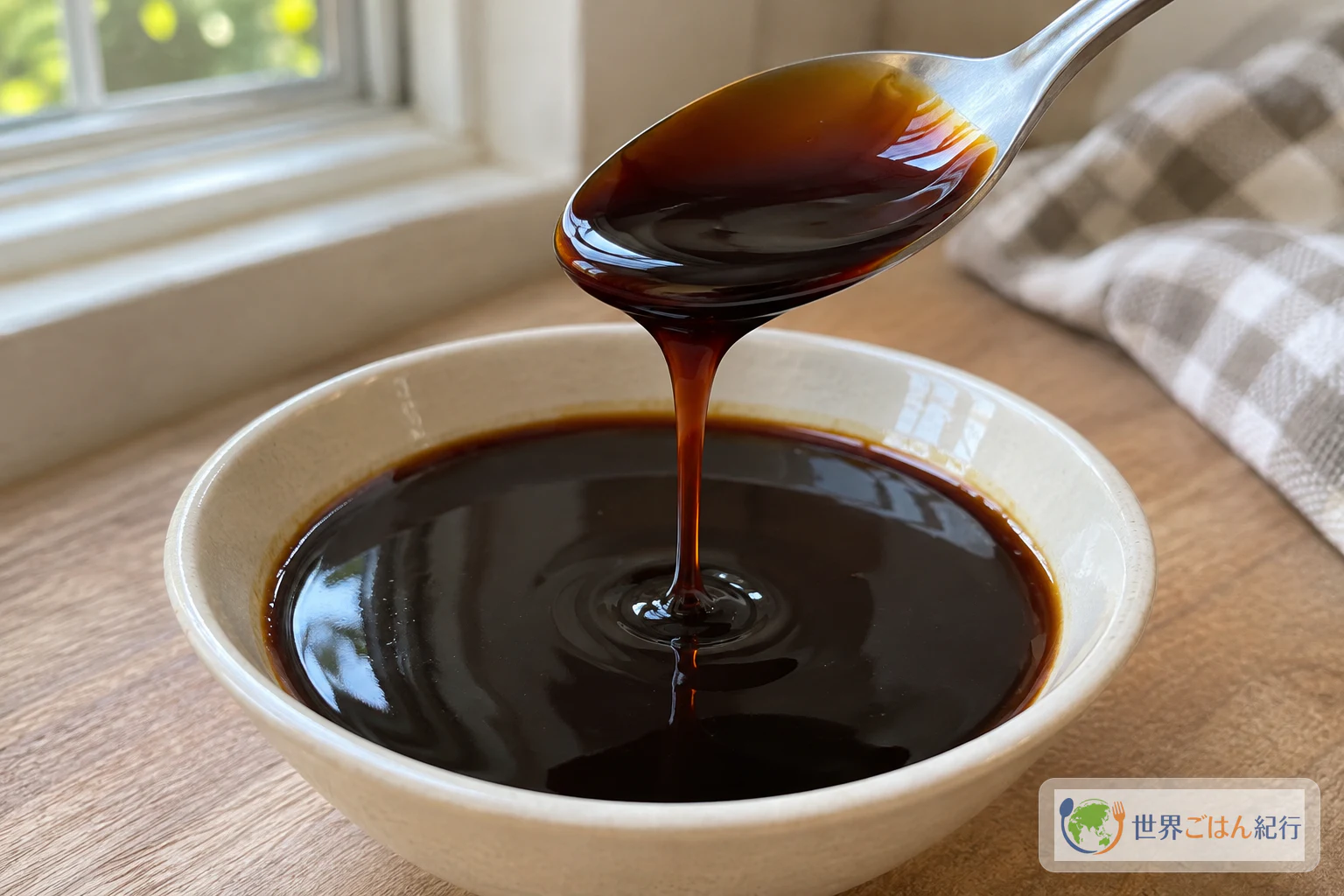
Kecap manis is a sweet soy condiment that pours slowly and coats a spoon in a dark, glossy ribbon. Indonesia's Ministry of Trade describes it as a widely used condiment that accompanies satay, fried rice, noodles, meatballs and siomay, with sugar or palm sugar and water giving it its sweetness and syrupy consistency.
This article makes a household version based on the Whats4eats recipe "Kecap Manis (Indonesian sweet soy sauce)," published under the byline chefgod. It uses only five ingredients: brown sugar, ordinary commercial soy sauce, water, fresh galangal root and one star anise. It is a home approximation built on store-bought soy sauce. It does not reproduce the fermentation that Indonesian kecap manis is traditionally made with. This recipe as a whole has not been kitchen-tested by Sekai Gohan.
The Whats4eats page says the recipe makes about 2 cups. That figure is the page's own estimate, not a measured yield, and the page gives no cooking times, temperatures or storage period. This article does not add any either; instead, each step describes the state to look for.
Kecap manis is often explained in English as "Indonesian sweet soy sauce." To see how it sits among other dishes and ingredients of the country, start from the Indonesia country page.
Ingredients: Five Items, in Cups
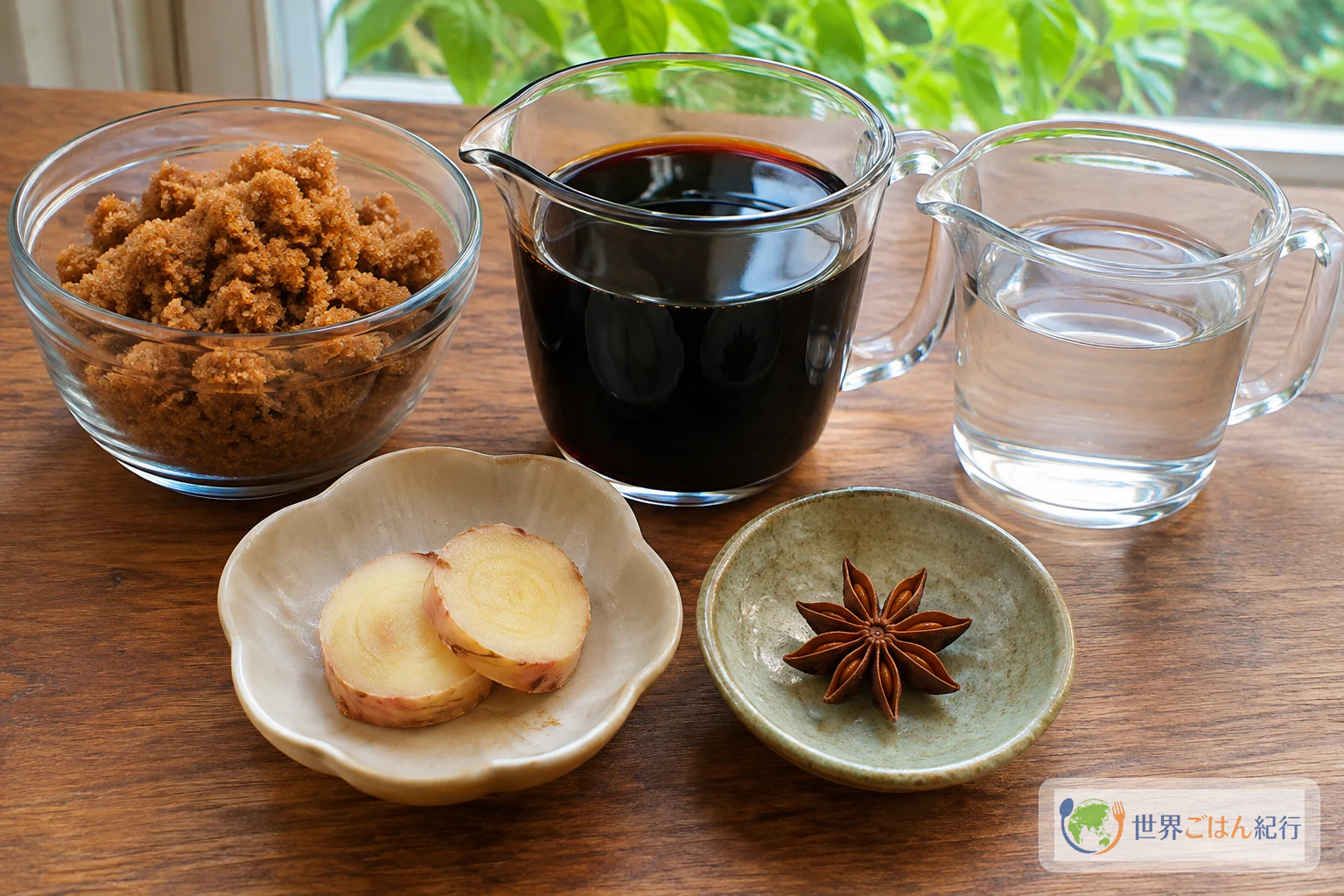
Measure everything before you start. Once the sugar has melted, the next steps follow quickly.
Soy sauce commonly contains soy and may contain wheat. Check the label of the product you use. Use food-grade galangal and star anise sold for cooking, and commercial soy sauce; this recipe does not involve foraging or fermenting soybeans at home.
Equipment
- Measuring cup
- Small heavy-bottomed saucepan
- Spoon for stirring
- Heatproof trivet
- Fine strainer
- Heatproof bowl
- Clean container for the refrigerator
Choosing and Substituting
Brown sugar. Use brown sugar. Palm sugar and other unrefined sugars are not interchangeable in this formula.
Fresh galangal, not ground. Use 2 slices of fresh galangal root, sliced into discs; 1 slice is also an option. Use fresh root rather than ground galangal.
Star anise. One whole piece, used as is.
Soy sauce. Ordinary commercial soy sauce is the base. Salt level and allergens vary by product, so read the label.
Method: Melt, Cool Slightly, Add Liquids, Boil to a Syrup
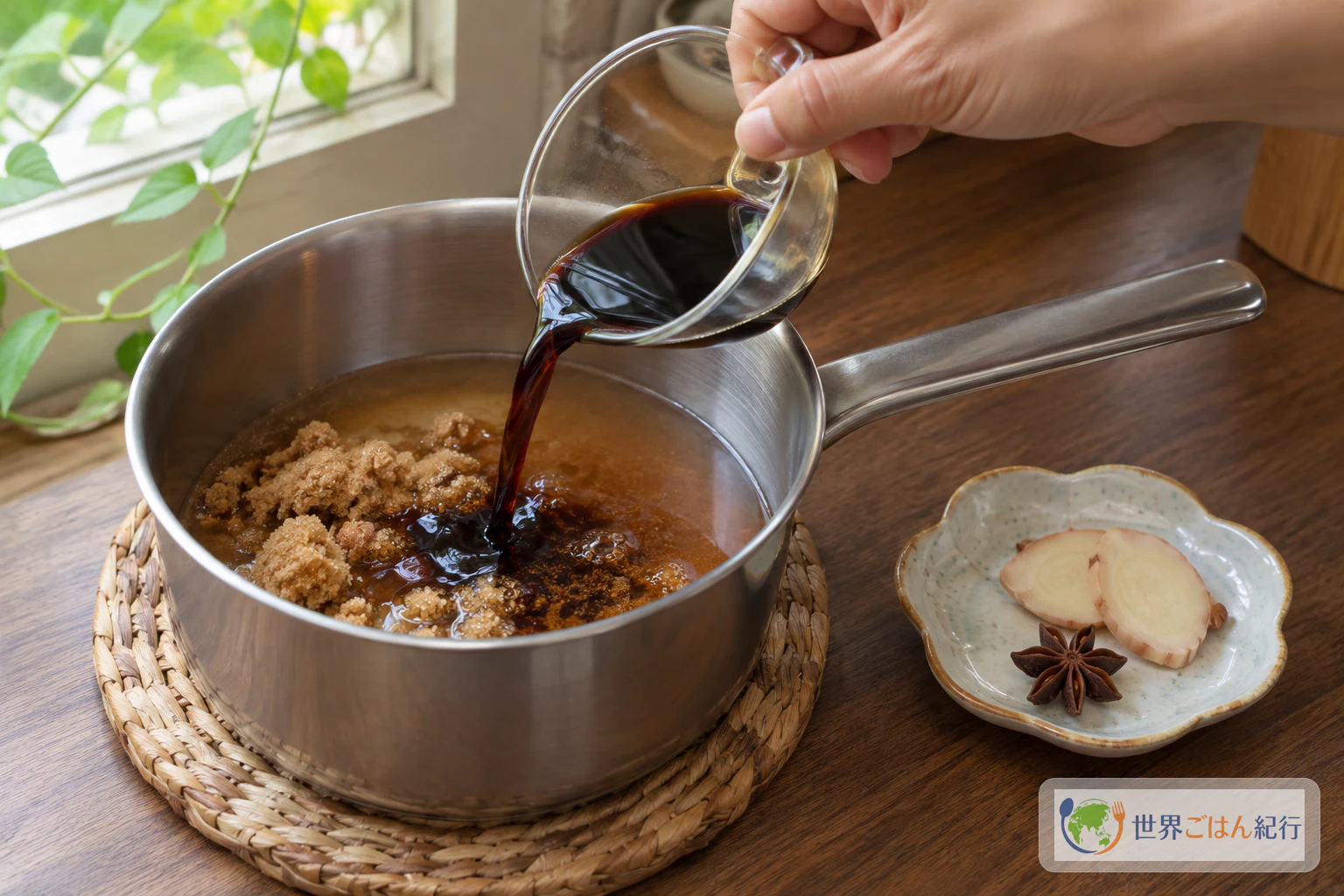
Adding liquid to hot melted sugar makes it spatter. Take the pan off the heat and let it cool slightly first, pour slowly, and keep your hands and face back from the pan.
When Something Looks Wrong
Judge by what you see in the pan, not by a clock or a thermometer reading.
| What you see | What to do |
|---|---|
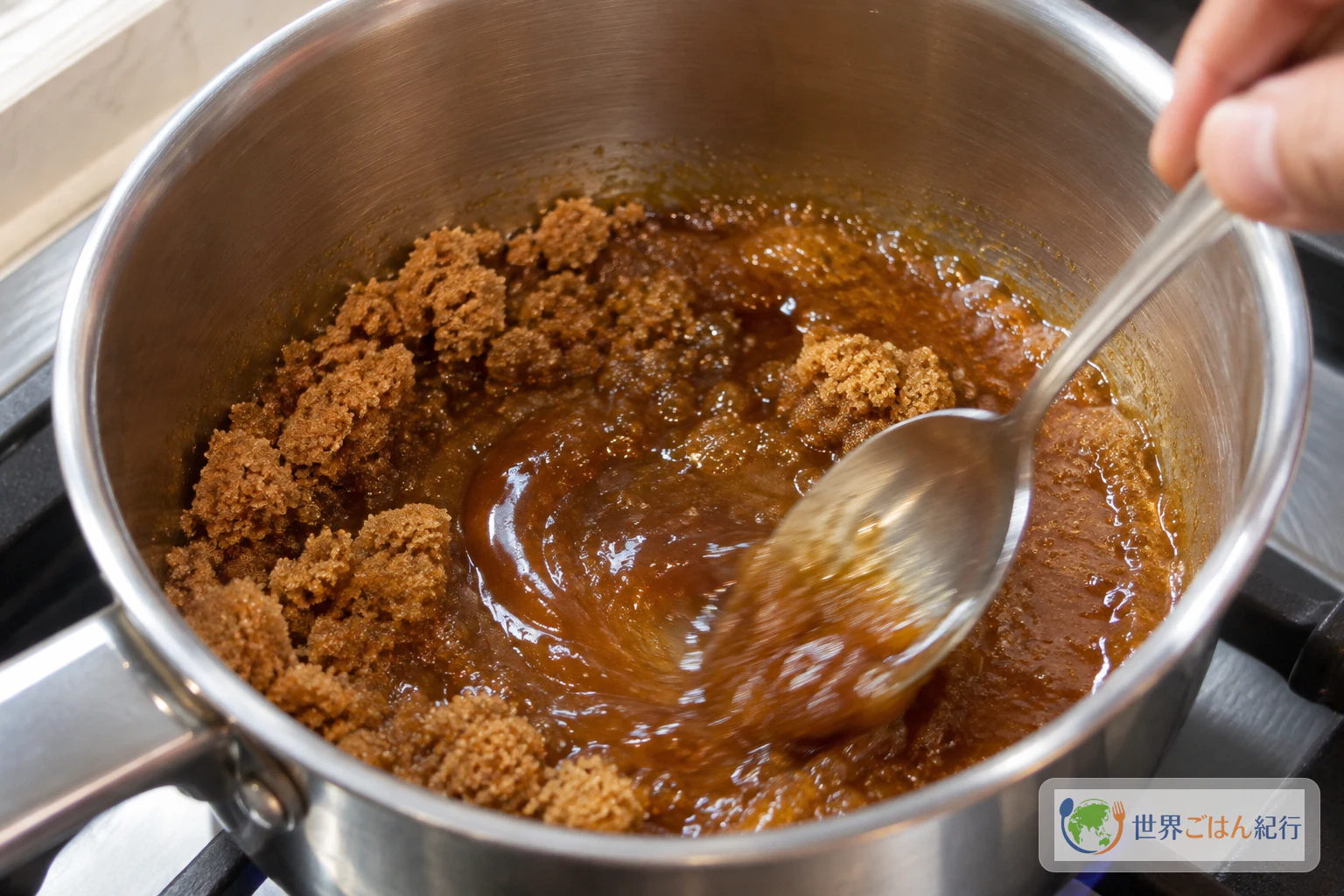
| The sugar clumps before it melts | Keep stirring over the heat until it has melted completely. Clumping on the way is expected |
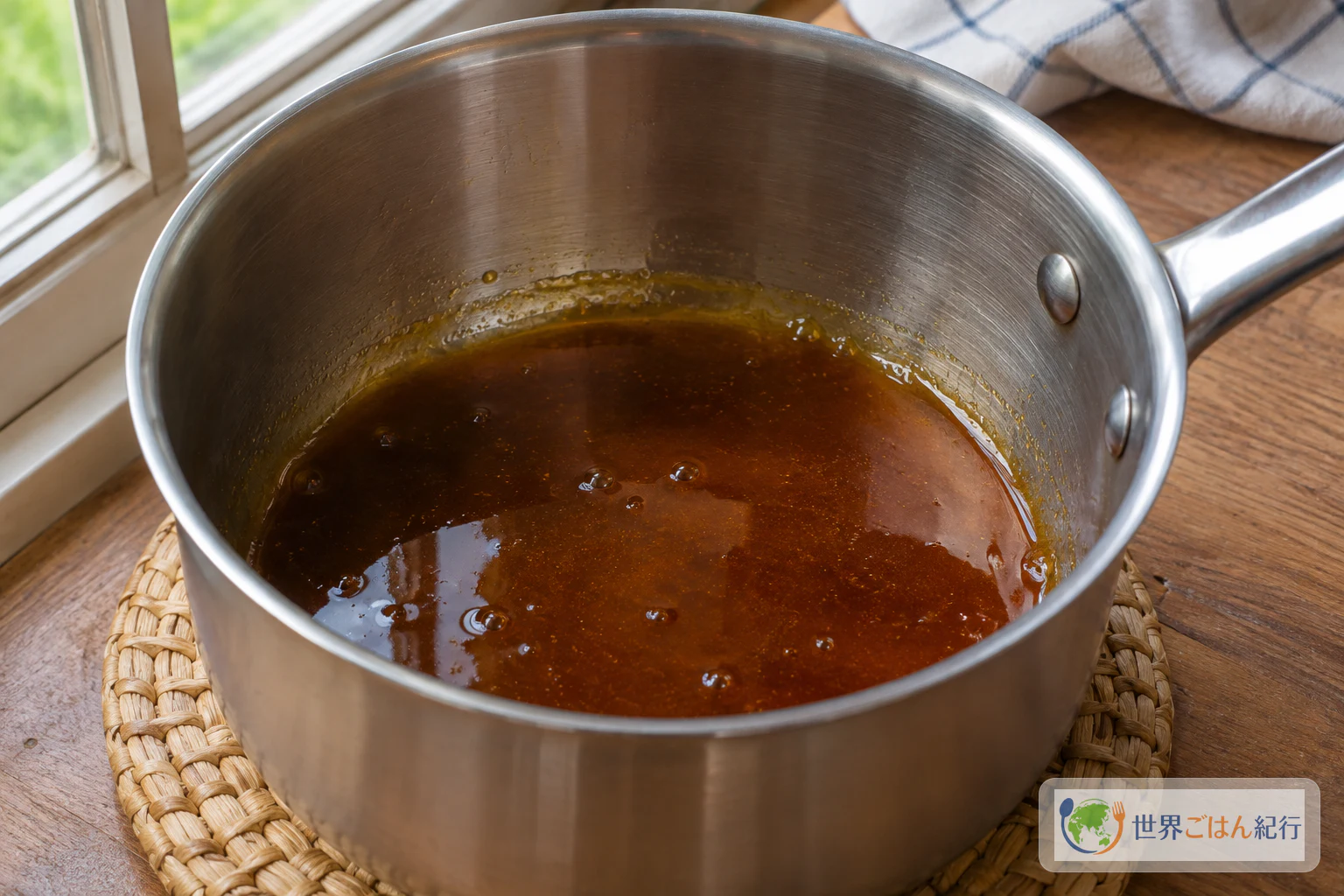
| The sugar is darkening fast or smells scorched | Do not let it burn. Watch it closely and keep stirring, and move on to taking it off the heat as soon as it is fully melted |
| Liquid spatters when added | Take the pan off the heat and let it cool slightly before pouring, then pour slowly and stand back |
| Hard lumps of sugar after adding the liquids | Return the pan to medium heat, bring to a boil and stir until the sugar dissolves again |
| The sauce is still thin | Keep boiling and stirring until it becomes syrupy |
| Bits of spice in the finished sauce | Strain again through a fine strainer |
Storage
Let the strained sauce cool, then keep it refrigerated in a clean container. The recipe this article follows gives no storage period, and none is given here. It is not a bottling or canning recipe and is not meant for keeping at room temperature.
Variations and How This Differs from Indonesian Kecap Manis
The galangal amount. Whats4eats allows 1 or 2 slices of galangal. This article fixes it at 2.
Variations not used here. The Whats4eats page also lists variations involving palm sugar and molasses. They are not part of this version, which keeps to the five ingredients above.
A different household formula. Saveur publishes a separate kecap manis recipe with its own ingredients, including molasses and ground spices. Its heating instruction gives a temperature of "200°" with no unit. Because that unit cannot be determined, this article does not use Saveur's formula, quantities or heating conditions, and does not mix them into this recipe.
How fermented kecap manis is made. Indonesian kecap manis is traditionally a fermented product. A research chapter by A. Apriyantono and colleagues at Bogor Agricultural University describes black soybeans made into koji with Aspergillus sojae, brined as moromi and filtered, then finished with coconut sugar and a spice extract of fennel and Chinese star anise before filtering and bottling. That is a controlled research method with specialist ingredients and processes, not a home recipe, and it is not adapted here. An Indonesian food article on detikFood likewise reports culinary author Harry H. Nazarudin describing koji and moromi fermentation, with gula merah (palm sugar) and spices added at the finishing stage. The recipe on this page skips fermentation entirely by starting from commercial soy sauce, so it should be read as an approximation, not as the same product.
At the Table: A Condiment Across Indonesian Dishes
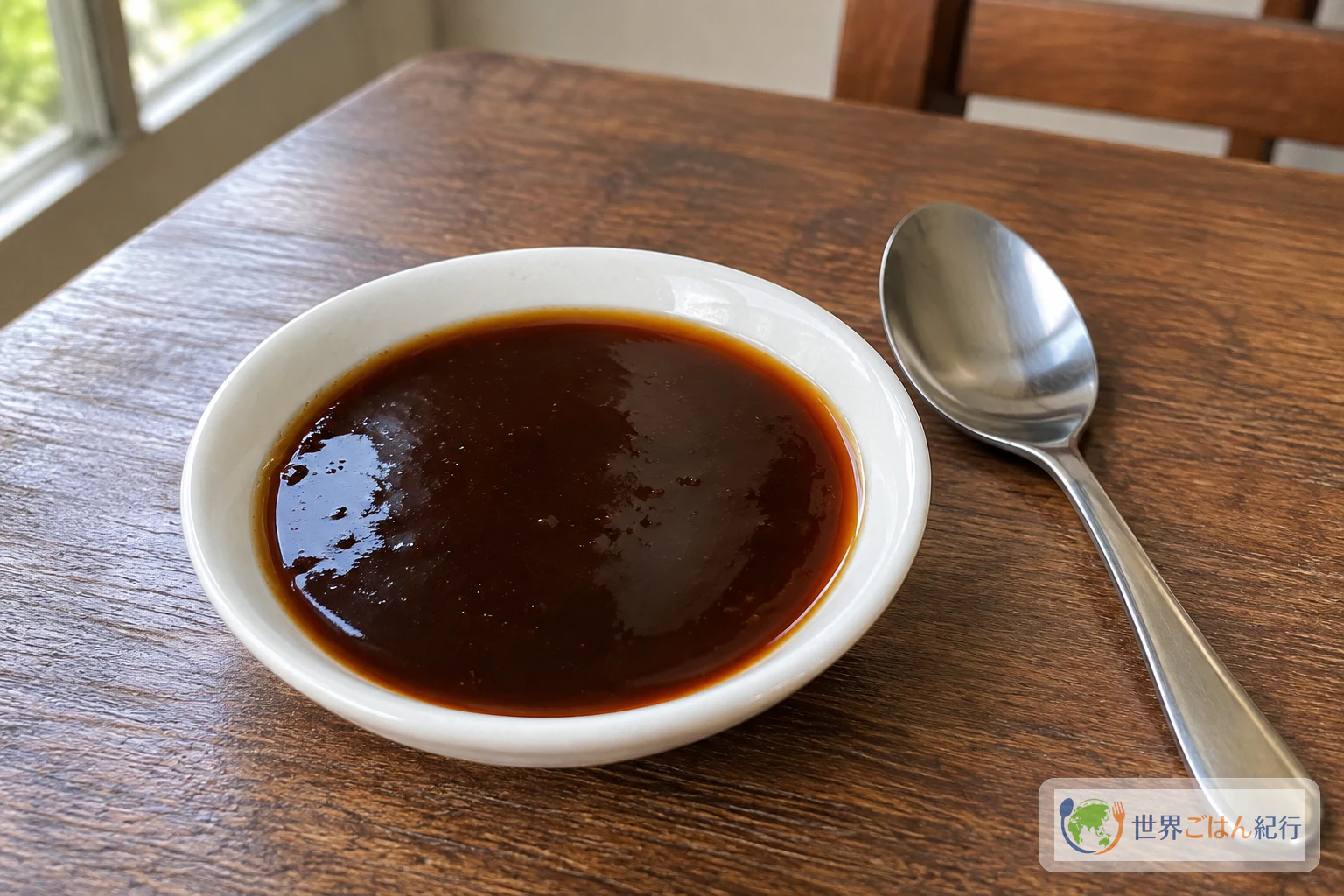
The Indonesian Ministry of Trade's export publication on condiments describes kecap manis as an everyday condiment served with satay, fried rice, noodles, meatballs and siomay. It also notes that the spices used vary from maker to maker, so no single spice profile defines every bottle.
On origins, the same publication states plainly that when and where kecap manis began is not certain. It relays an account connecting it to the Chinese community of Tangerang, but alongside that uncertainty rather than as settled history. The detikFood article frames kecap manis as Indonesian while acknowledging Chinese influence. This article does not settle the question.
When you cook with kecap manis, follow the amount given in that dish's own recipe.
Frequently Asked Questions
Is this the same as store-bought Indonesian kecap manis?
No. Indonesian kecap manis is traditionally made by fermenting soybeans and then finishing with sugar and spices. This version is a household approximation from the Whats4eats recipe that starts from commercial soy sauce. It is not presented as equivalent to traditional or commercial products.
Can I use ground galangal instead of fresh?
There is no basis here for an equivalent amount, so no conversion is offered. This recipe uses 2 slices of fresh galangal root.
Can I use palm sugar or another dark sugar?
This version uses brown sugar. Palm sugar appears in Indonesian production and in the Whats4eats page's variations, but it is not treated here as interchangeable with brown sugar, and this recipe does not adapt it.
Why melt the sugar without water first?
That is how the Whats4eats method is built: melt the sugar dry, take it off the heat to cool slightly, then add the liquids. Water goes in only in step 3, together with the soy sauce and spices.
How much does it make?
The Whats4eats page says about 2 cups. That is the page's estimate, not a measured or guaranteed yield.
How long does it keep?
No storage period is given, so none is stated here. Cool it, then keep it refrigerated in a clean container. It is not a recipe for bottling or for storing at room temperature.
Sources
- Whats4eats (byline: chefgod), "Kecap Manis (Indonesian sweet soy sauce)." The adopted household recipe: brown sugar 1 cup, soy sauce 1 cup, water 1/2 cup, galangal root 1 or 2 slices, star anise 1 piece, makes about 2 cups; melt the sugar without burning, remove from heat and cool slightly, add the remaining ingredients with a caution about spattering, return to medium heat and boil, stirring, to a syrup, then strain, cool and refrigerate. https://www.whats4eats.com/sauces/kecap-manis-recipe
- Saveur, "Kecap Manis." A different household formula, not adopted; its heating temperature is given only as 200° without a unit. https://www.saveur.com/kecap-manis-sweet-soy-sauce-recipe/
- A. Apriyantono et al., "Flavor Characteristics of Indonesian Soy Sauce (Kecap Manis)," in Flavor Chemistry of Ethnic Foods (1999). The experimental fermentation method with koji and moromi from black soybeans, and finishing with coconut sugar and a fennel and star anise extract; used as background only. https://ndl.ethernet.edu.et/bitstream/123456789/5190/1/Fereidoon%20Shahidi_1999.pdf
- Directorate General of National Export Development, Ministry of Trade, Republic of Indonesia, "Export News: Condiment," April 2021 (featured product: Kecap Manis). Kecap manis as a widely used condiment with satay, fried rice, noodles, meatballs and siomay; sugar or palm sugar and water for sweetness and syrupy consistency; spices varying by maker; uncertainty about its origin. https://ditjenpen.kemendag.go.id/storage/publikasi/Qae2qpFnimLcG3Wzn99qiyPN7LDnPBvymqBsqzkR.pdf
- detikFood, "Ada Pengaruh China, Tapi Kecap Manis Asli dari Indonesia." Culinary author Harry H. Nazarudin on koji and moromi fermentation and adding gula merah and spices at the finishing stage; secondary cultural context. https://food.detik.com/info-kuliner/d-3197823/ada-pengaruh-china-tapi-kecap-manis-asli-dari-indonesia