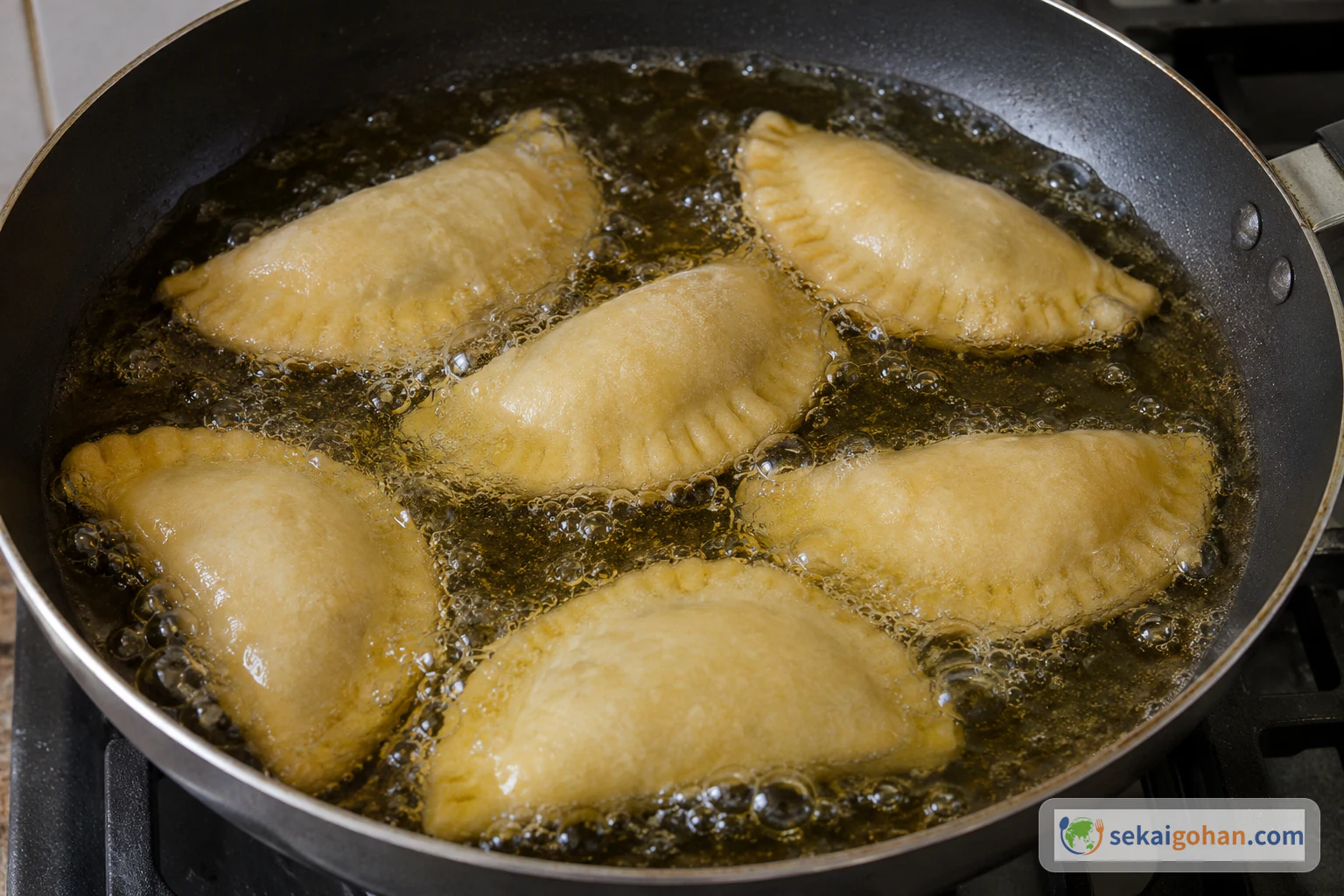
Panada: A Soft Yeasted Dough Around a Fragrant Fish Filling
Cook the fish filling first and cool it. Rest the dough twice. Then fry the pleated half-moons over medium heat and confirm the center with a thermometer rather than by color.
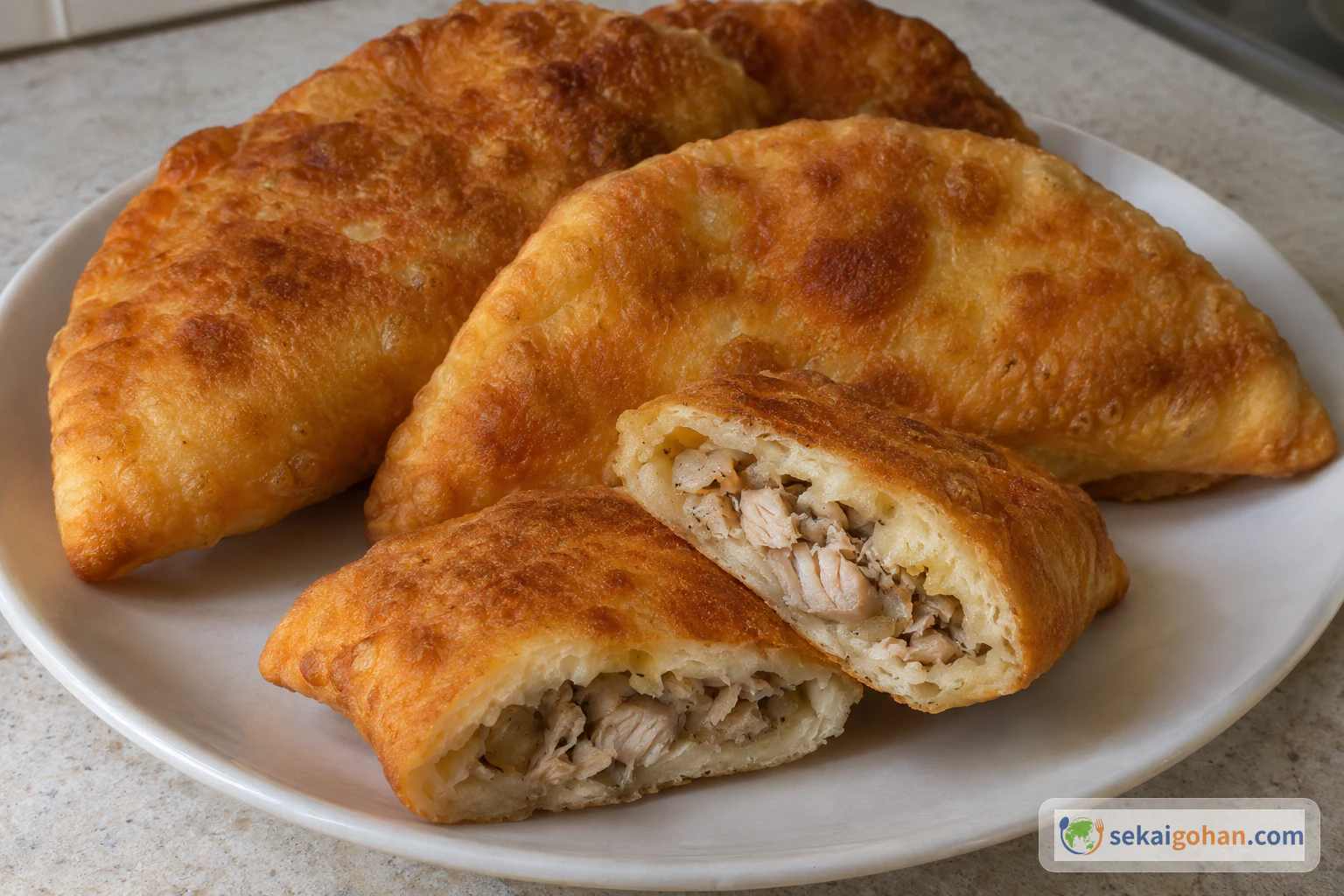
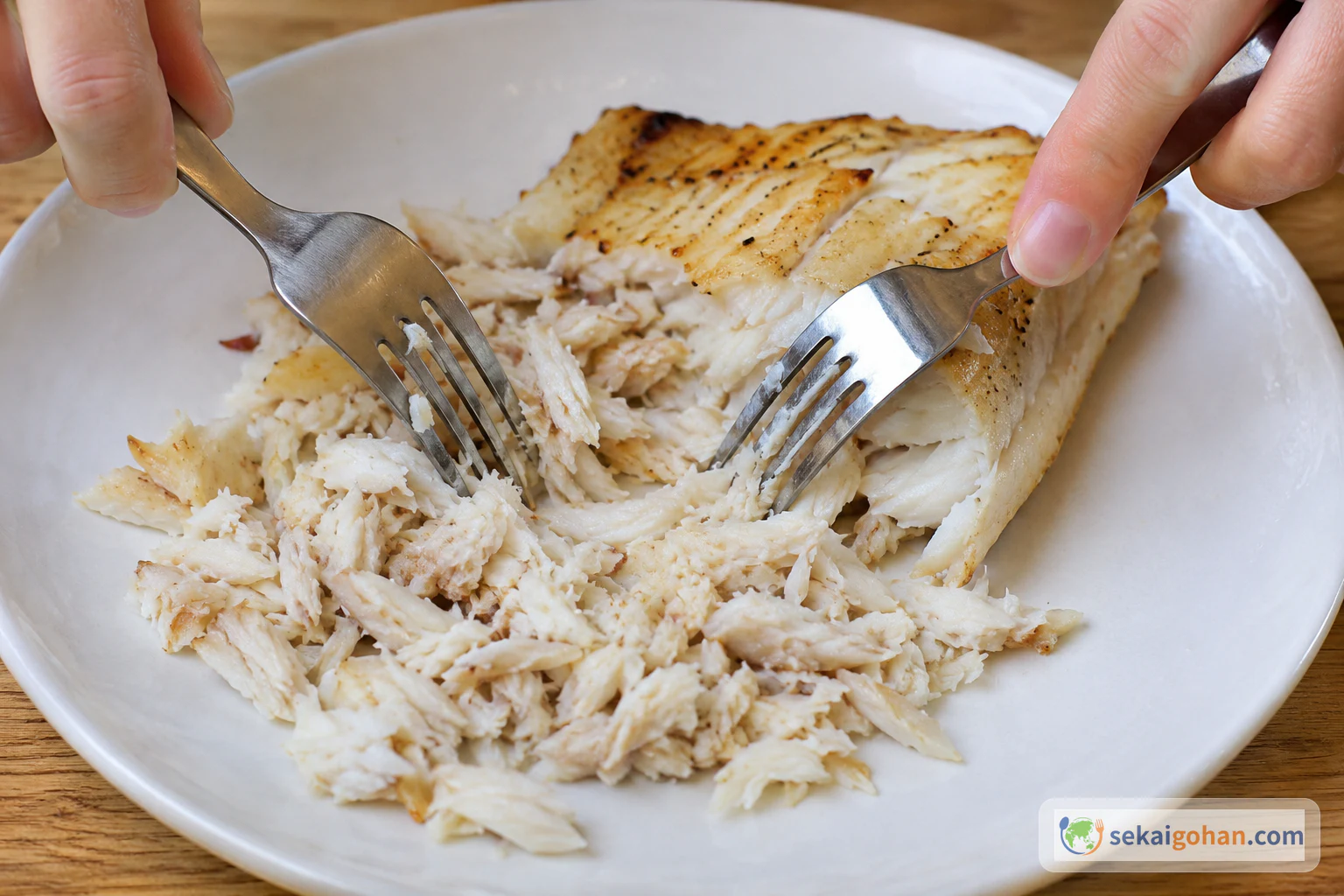
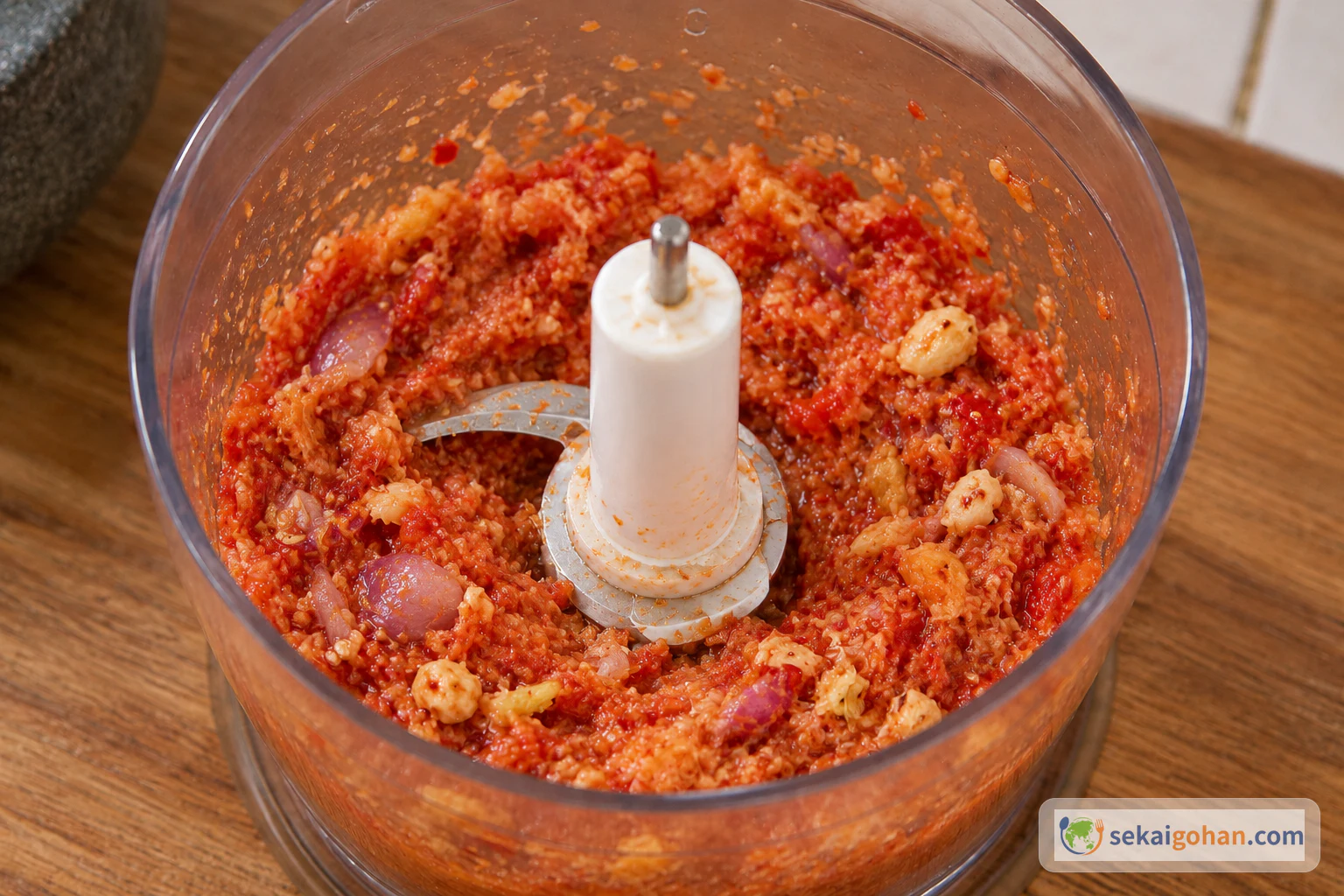
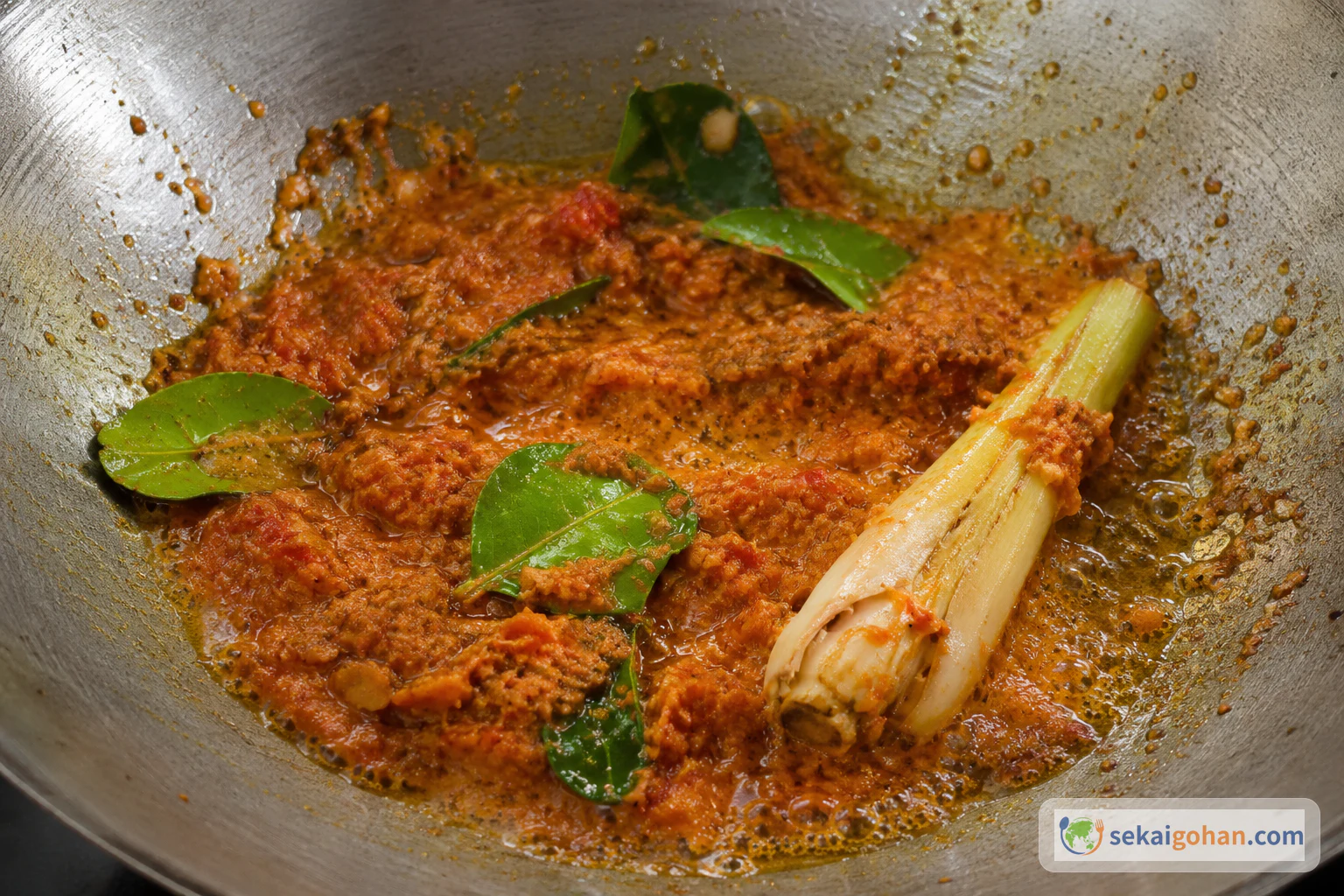
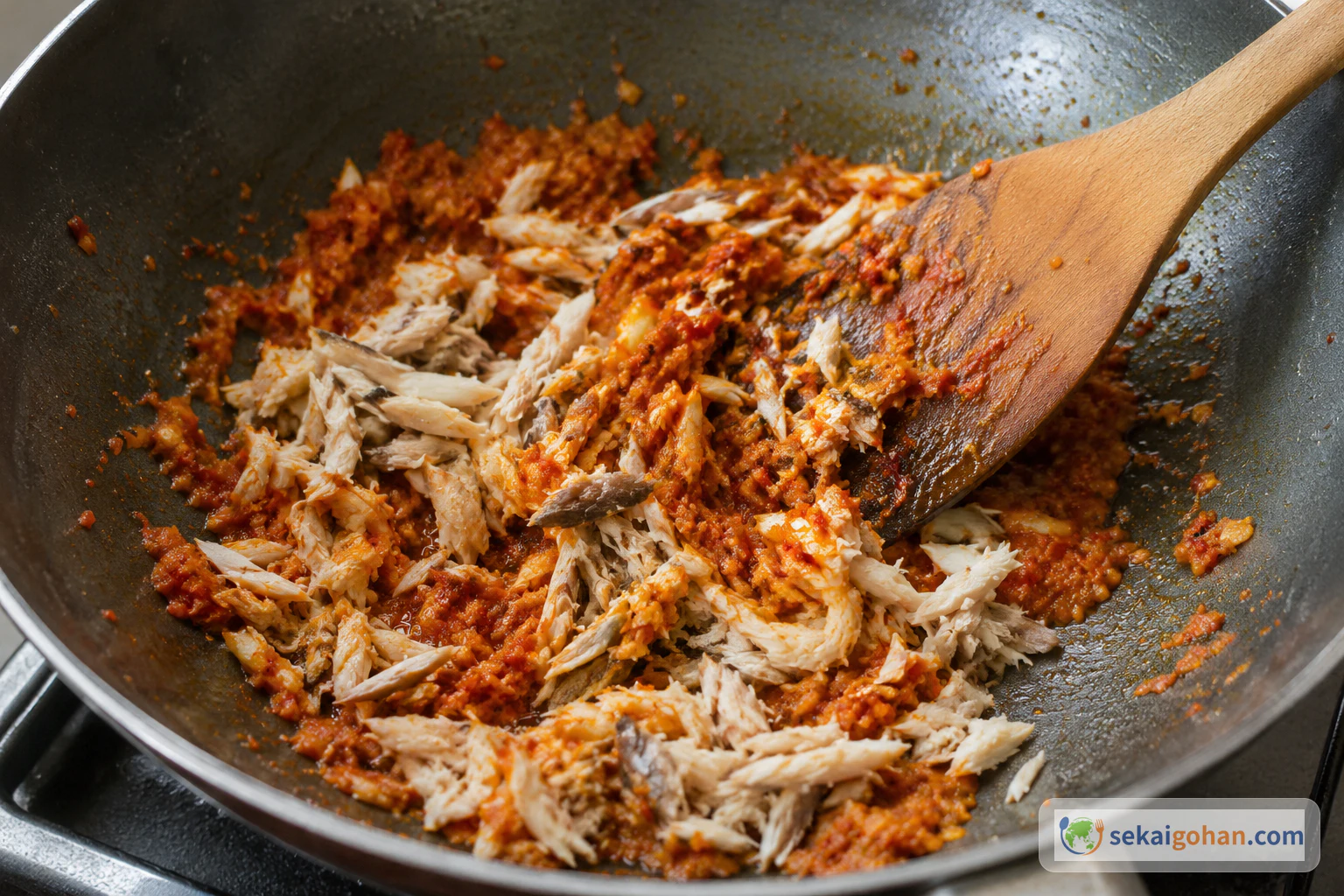
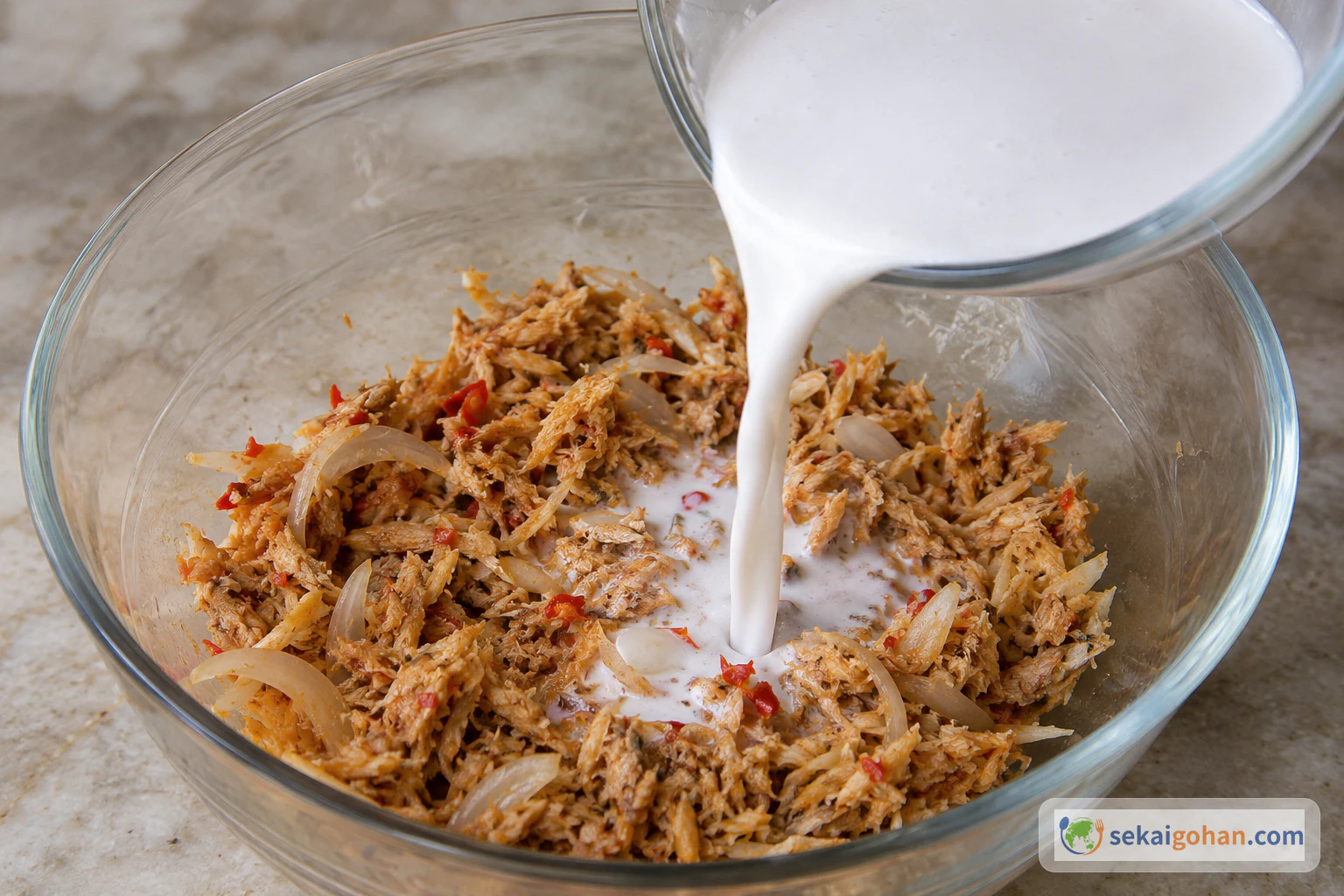
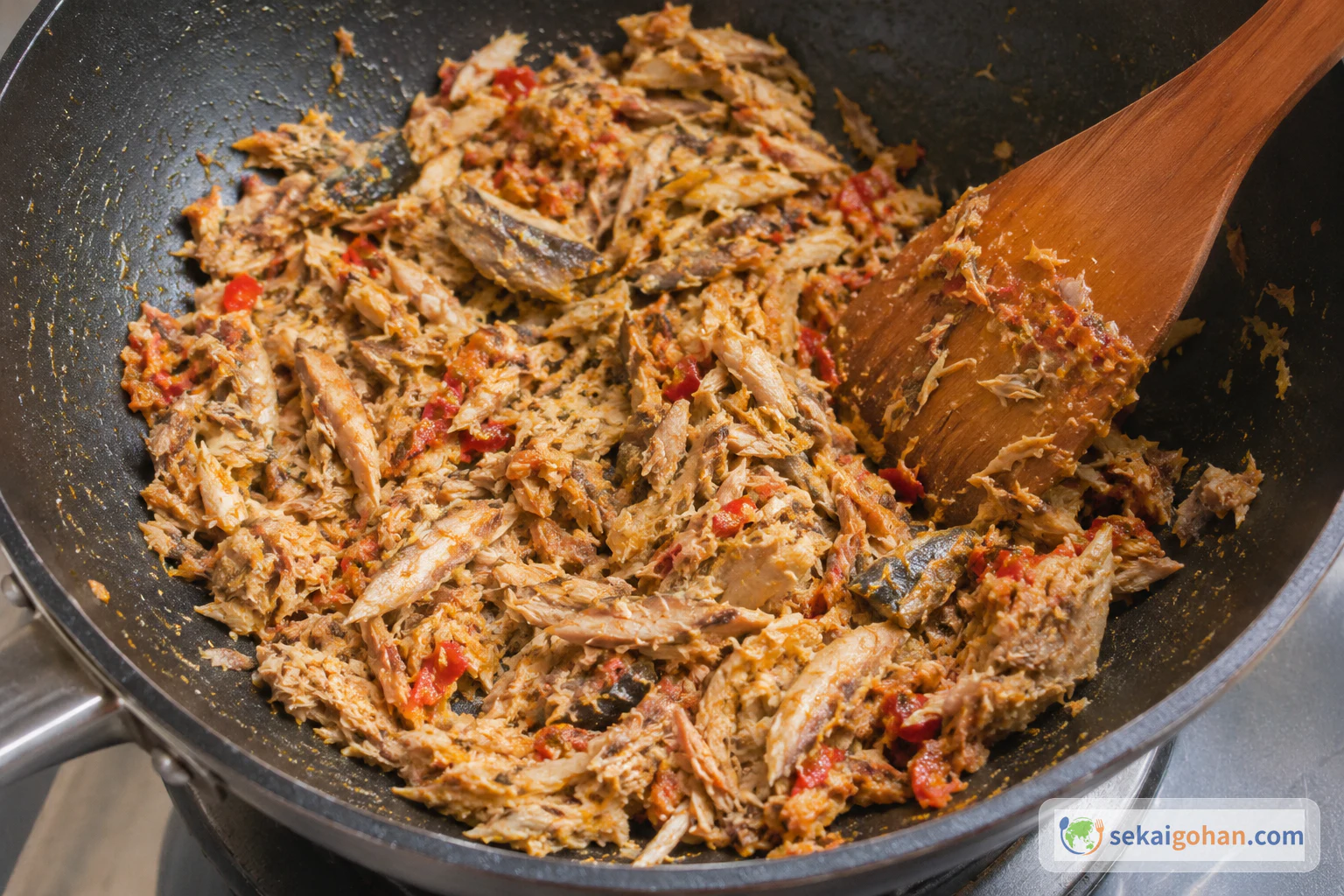
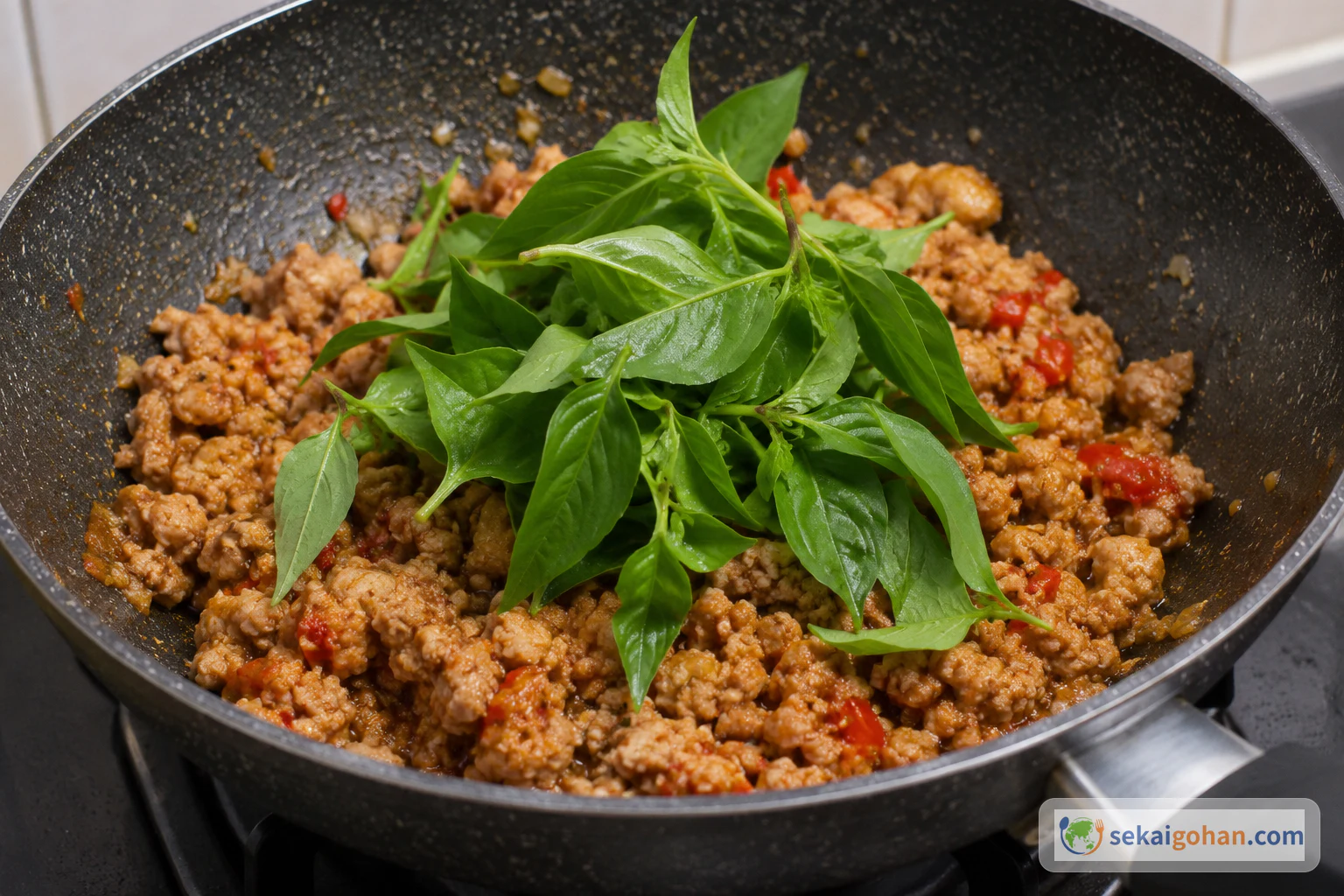
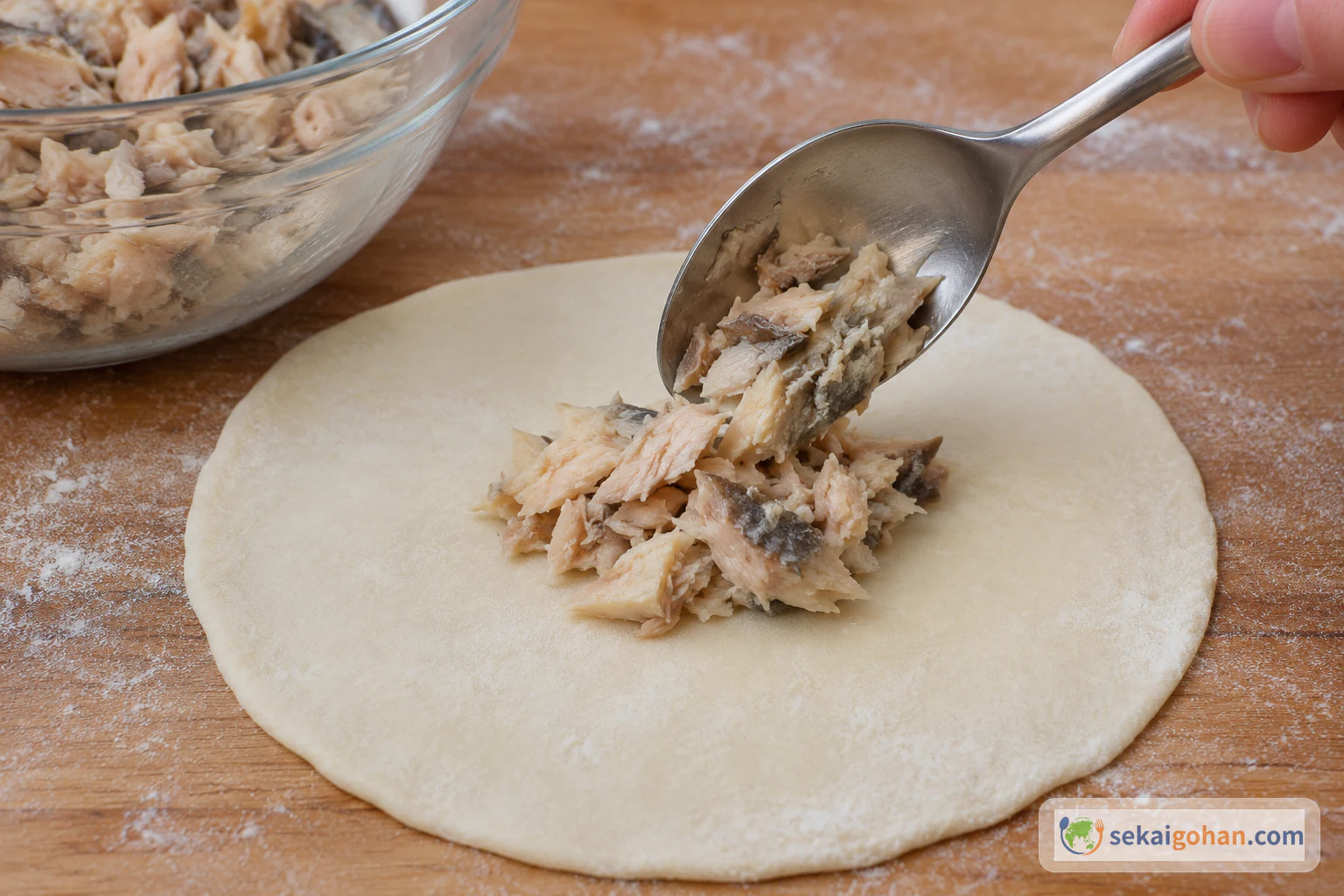
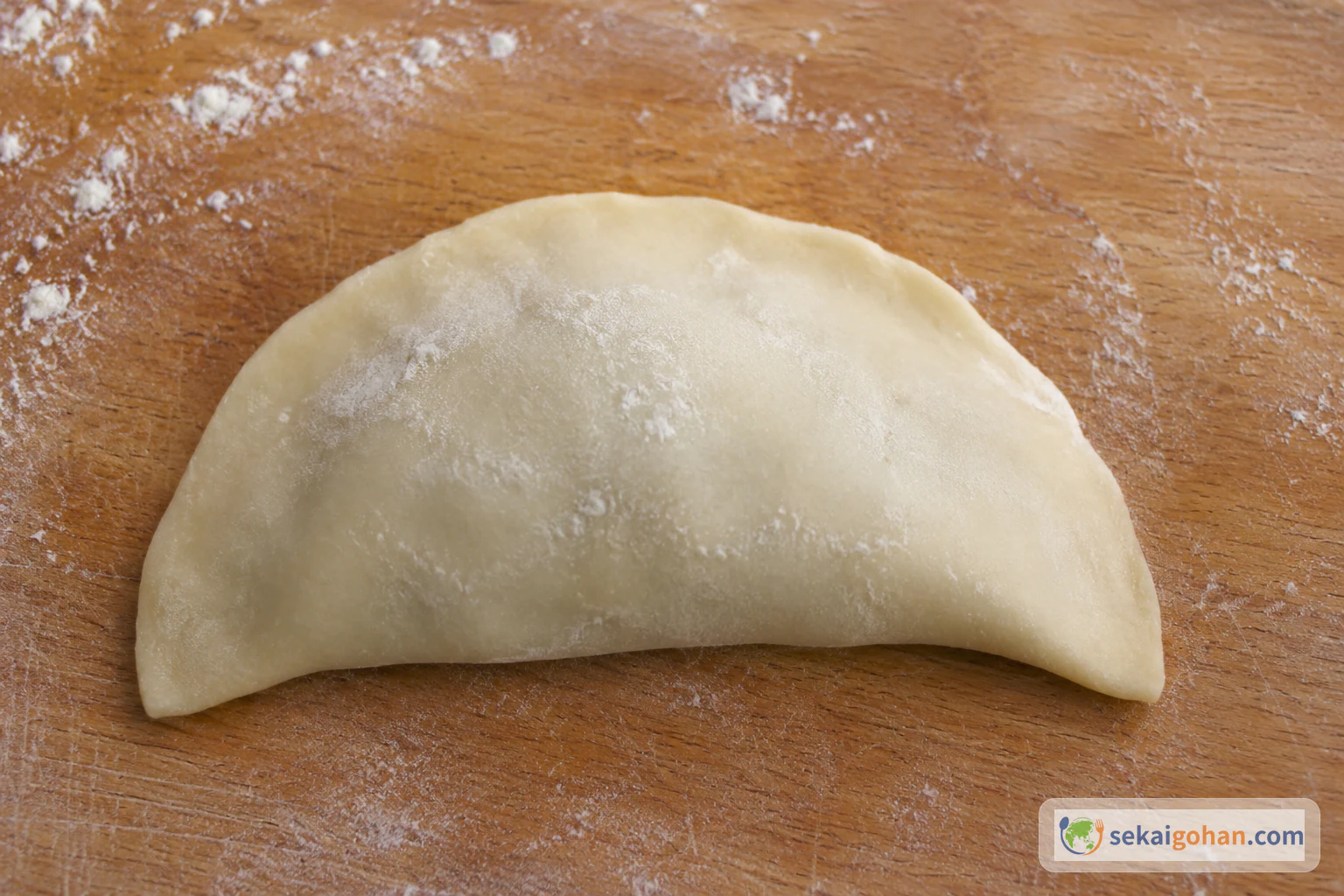
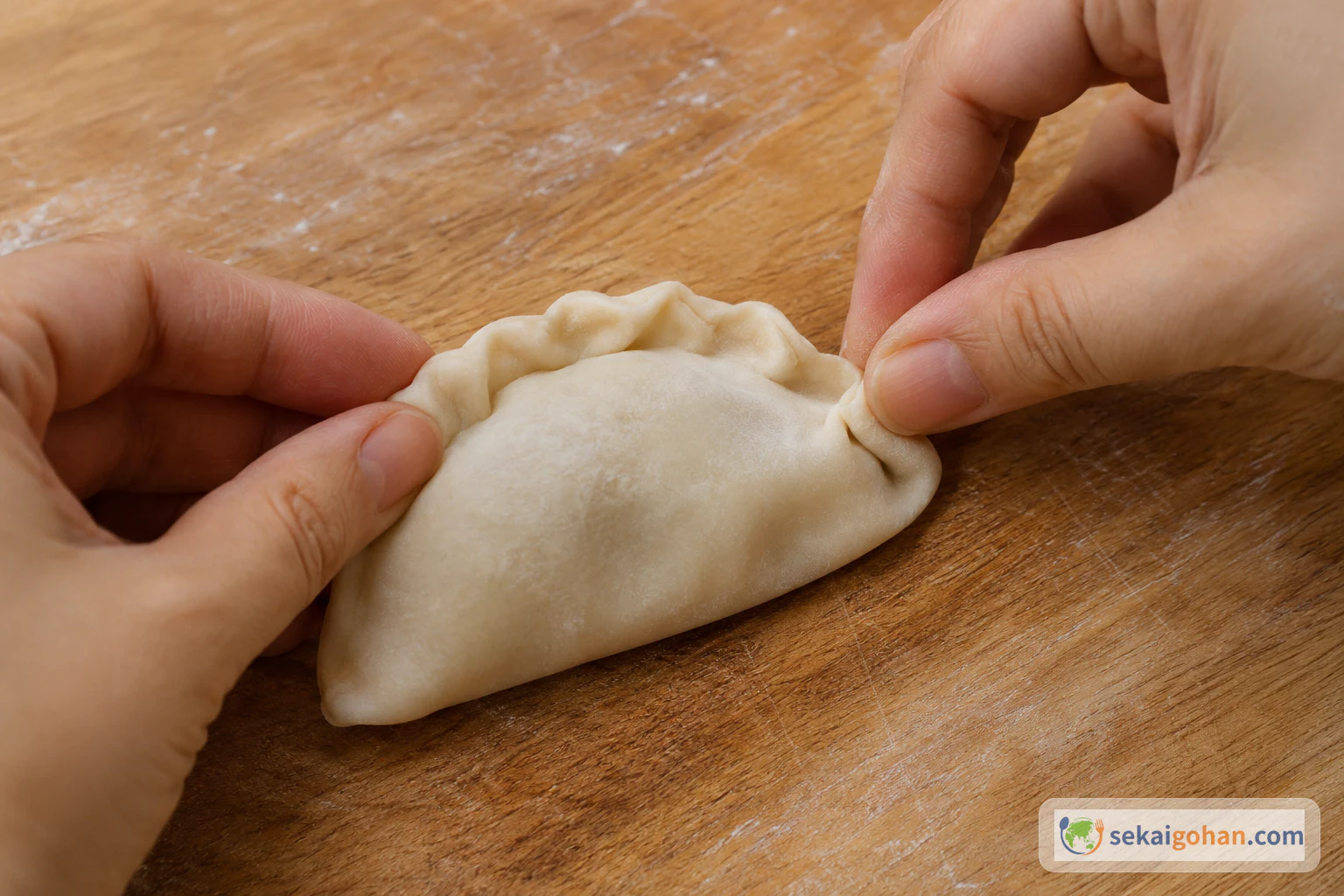
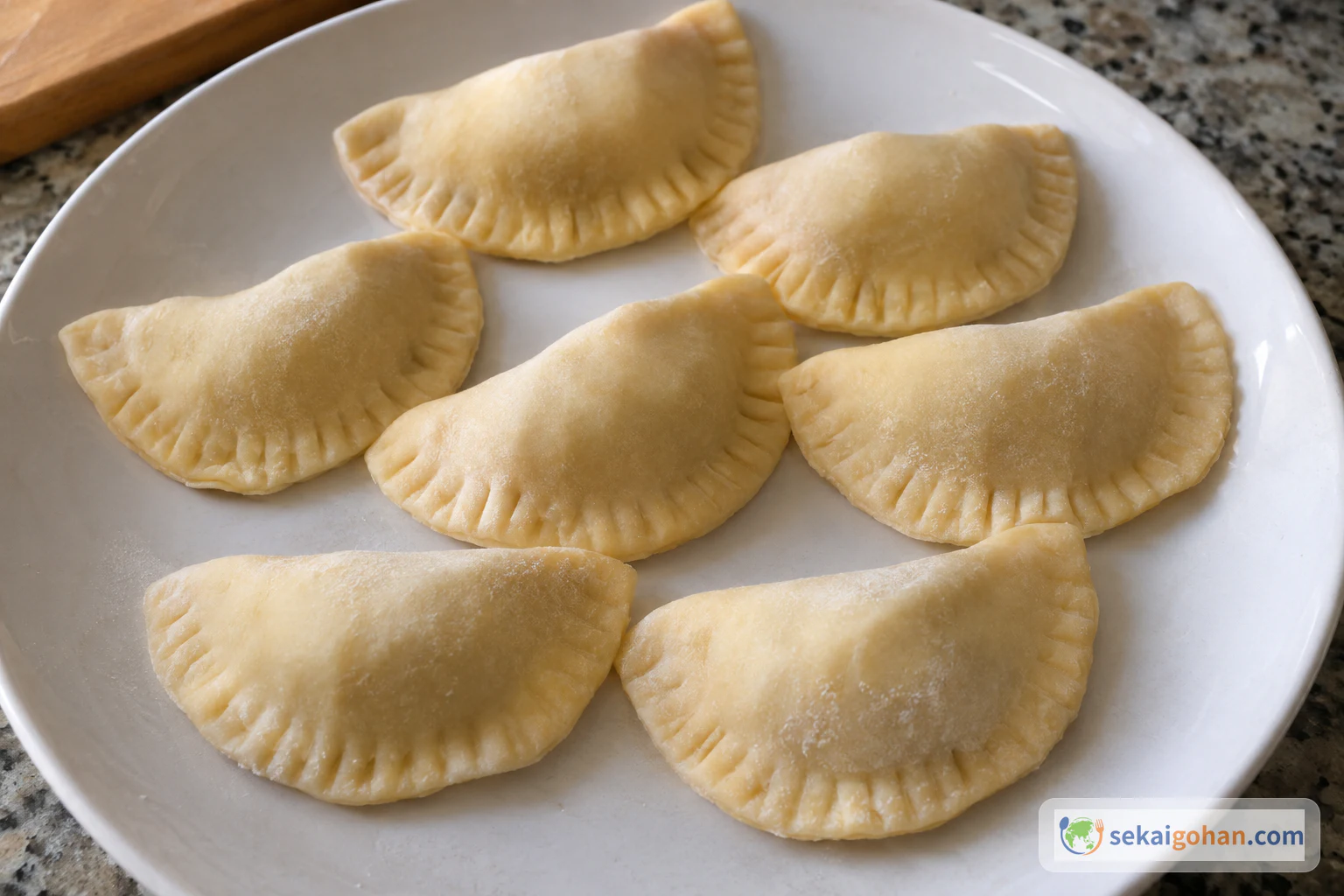
Fish flakes turn in a pan with ground chili, shallot and lemongrass. Coconut milk goes in and cooks down, and kemangi wilts into the mix at the very end. Once cooled, the filling is wrapped in a yeasted dough made with more coconut milk, pleated shut into a half-moon, and fried.
This is panada, a snack from Manado in North Sulawesi. At a glance it resembles kue pastel, the thin, crisp Indonesian pastry, and its seam is closed in much the same way. The difference is the dough, which contains yeast and rests twice before frying. It should not be confused with South American empanadas either, although Indonesia's tourism ministry notes a likeness that is covered further down.
This recipe has not been kitchen-tested. Nobody at Sekai Gohan has cooked it, measured its temperatures, timed its rise or tried storing it. The amounts and method come from a 2016 Indonesian vocational teaching text published by the Ministry of Education and Culture. That text lists 21 pieces from 20g portions of dough. Treat 21 as the published figure, not a guaranteed yield.
Four things are editorial additions to that text, and they are worth knowing about before you cook:
- The fish. The text calls for 150g of tongkol and doesn't say whether that weight is raw or cooked. This version uses 150g of edible bonito fillet, weighed raw. Bonito is a practical substitute, not a claim that the two fish are the same.
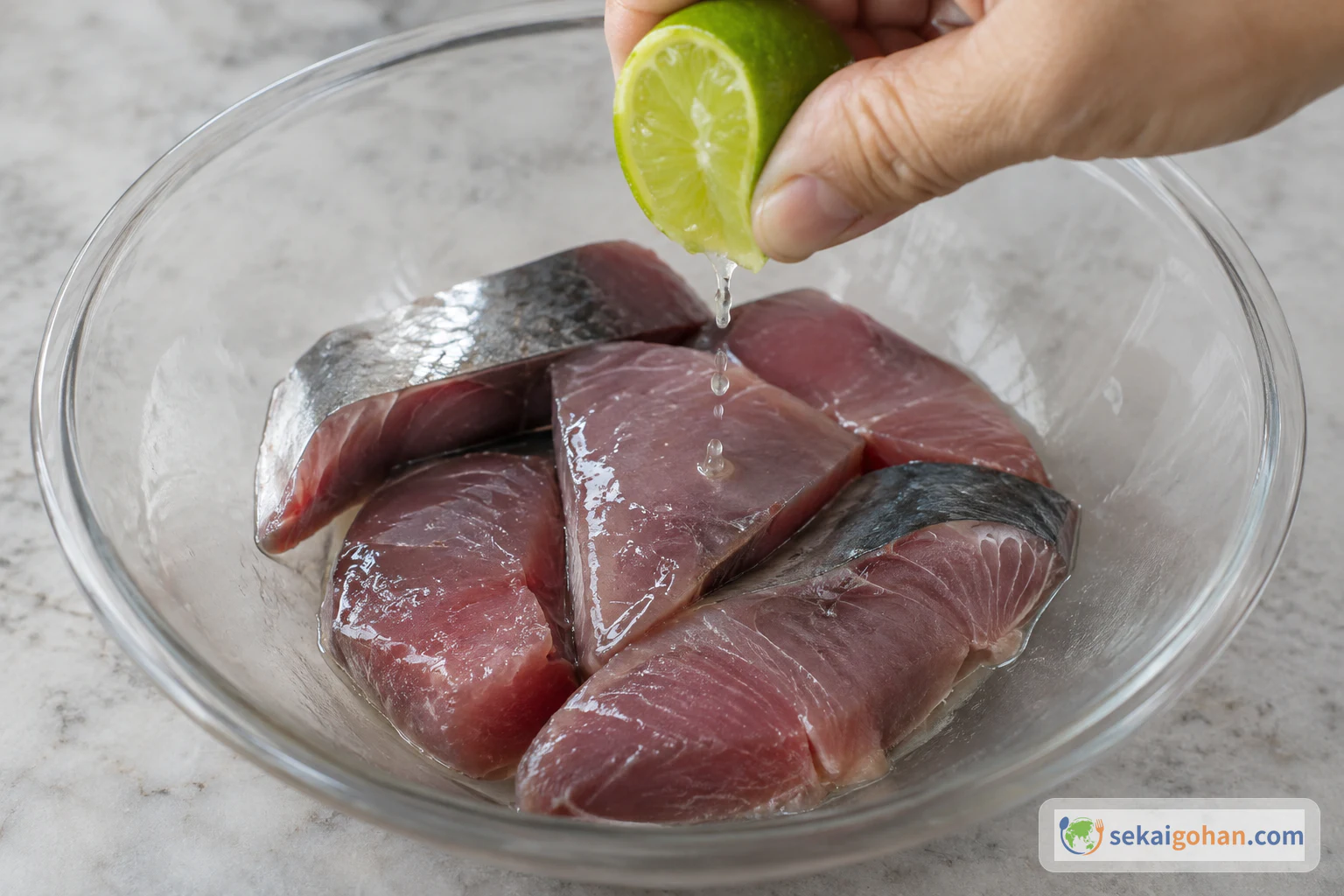
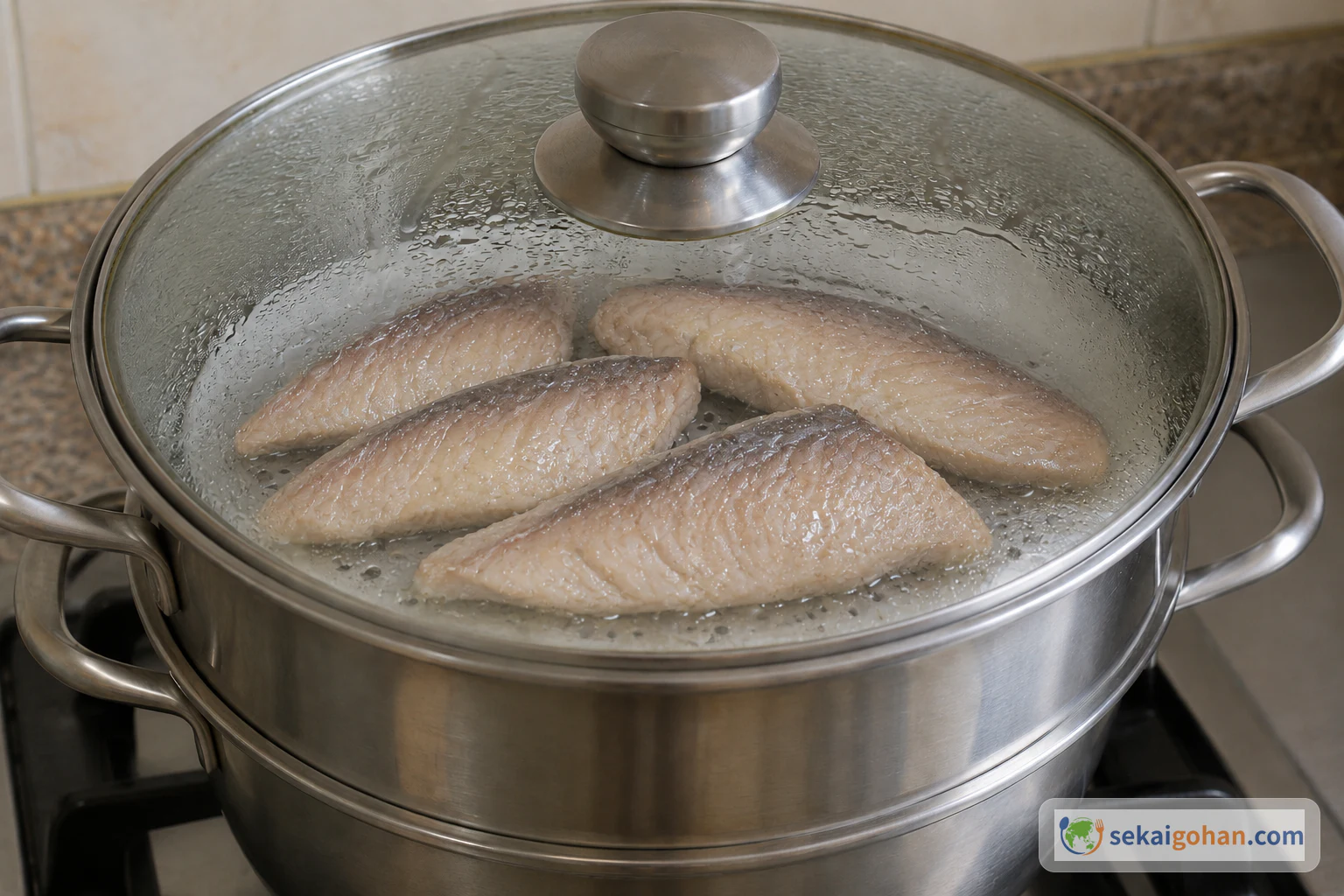
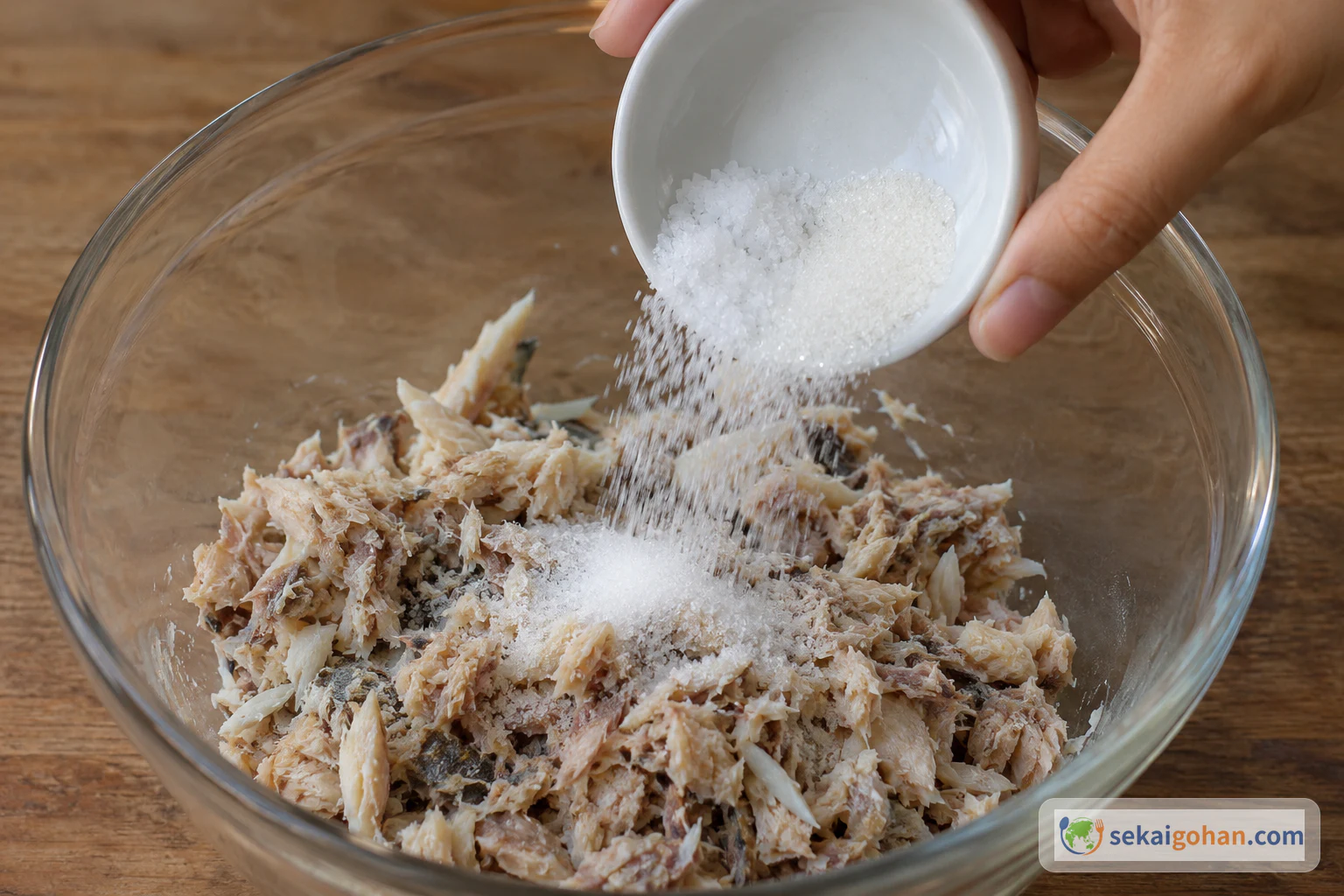
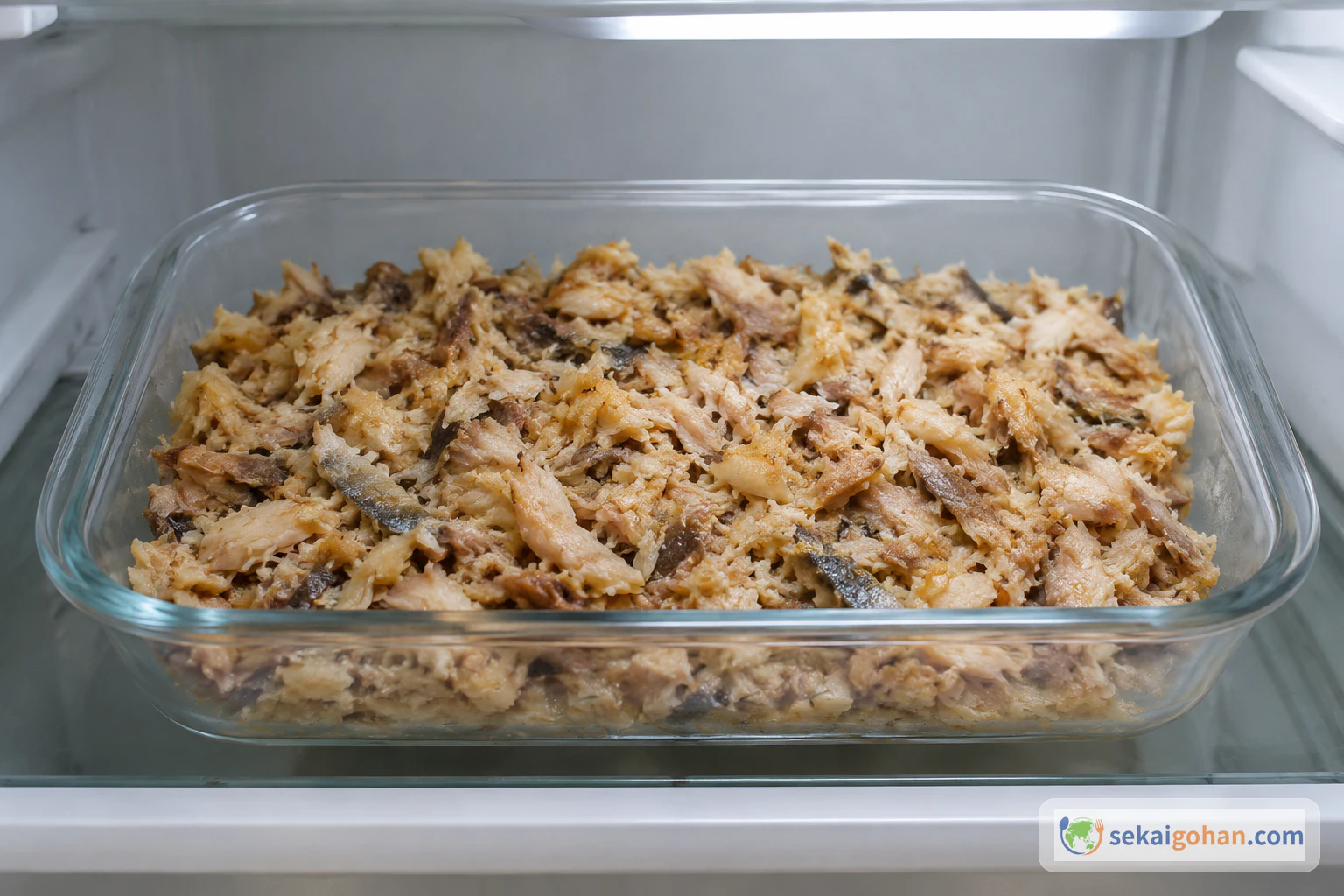
- Food safety. The text gives 10 minutes in lime and 20 minutes of steaming, but no internal temperature. Marinating in the refrigerator, washing hands and tools, keeping raw and cooked food apart, chilling the filling quickly in a shallow container, and checking for 75°C at the center for at least 1 minute all follow general home food-safety guidance from Japan's Ministry of Health, Labour and Welfare. That guidance does not address this recipe's timings specifically.
- Roasted candlenuts. This version uses only food-grade, already-roasted kemiri.
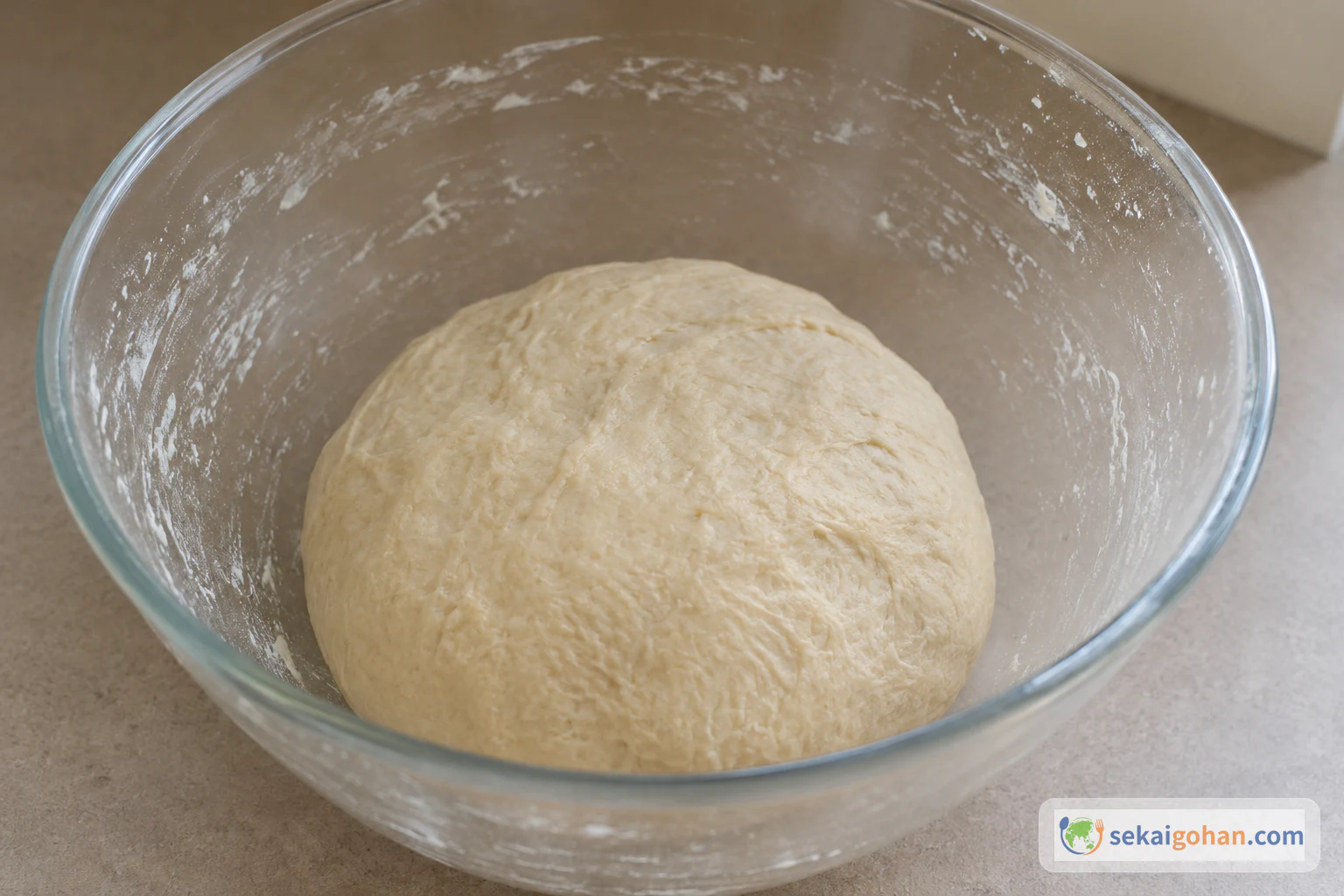
- Resting conditions. The text says only to rest the dough for 20 minutes, twice. The room temperature of about 24–26°C (75–78°F) and the lid or plastic wrap come from King Arthur Baking's guidance on where to put dough to rise. That guidance gives no timing for this dough, and the text states no expected rise, so no rise or doubling is promised here.
Ingredients for the Filling, Paste and Dough
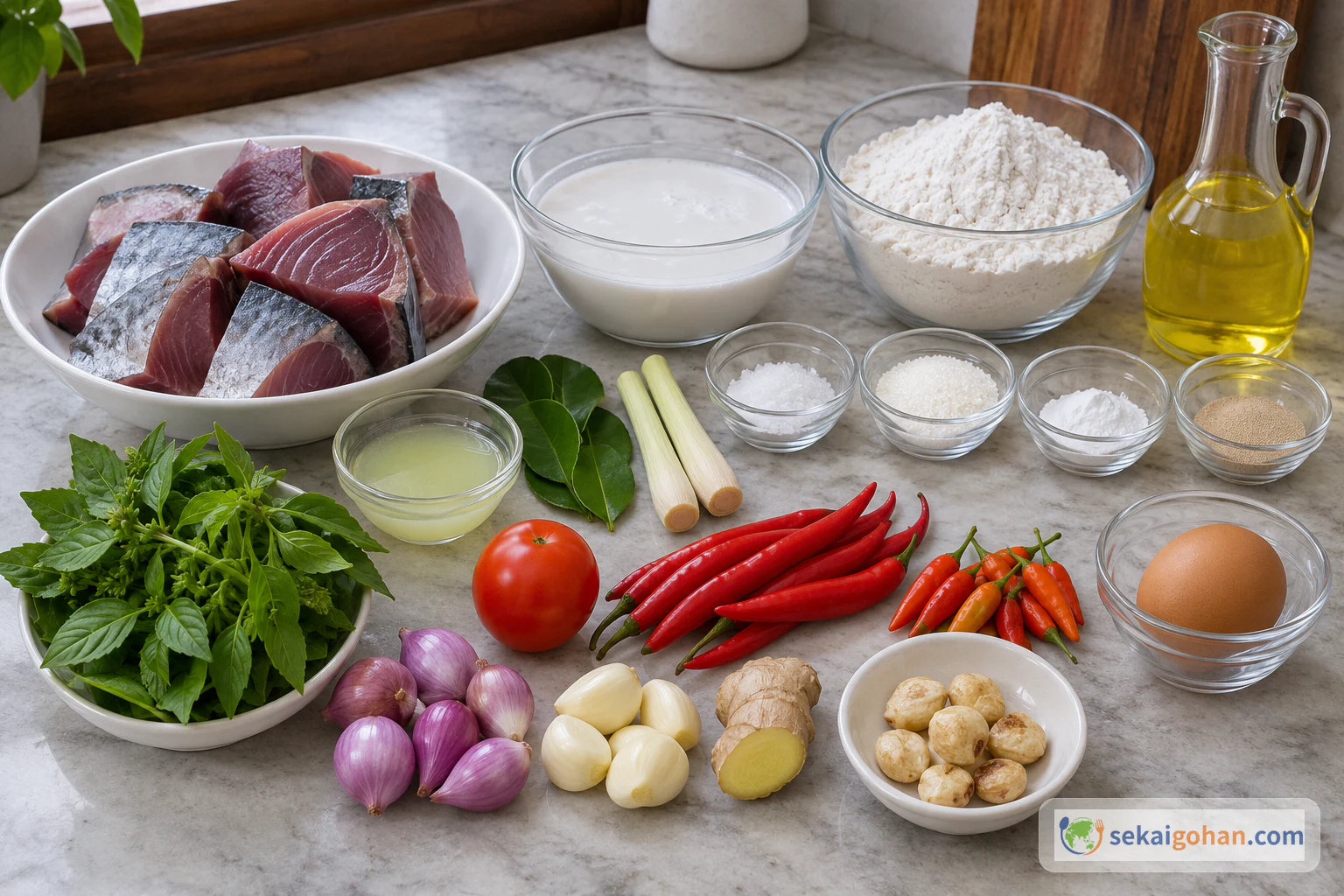
You need two stalks of lemongrass in all. One is bruised and goes into the pan whole, and the other is ground into the paste.
Choosing the Fish, Candlenuts and Coconut Milk
Fish. Use bonito fillet, weighed as the raw edible portion. Local versions use tongkol or cakalang. Bonito is a practical substitute, and its flavor may not match either.
Candlenuts. Buy food-grade, already-roasted kemiri. Do not replace them with raw or wild-gathered nuts.
Coconut milk. The dough and the filling each need their own measure of santan. Do not replace it with water or dairy milk, because the recipe's liquid amounts are written for coconut milk.
Results vary. Fish thickness, your steamer, how much liquid your flour absorbs and how much moisture stays in the filling can all change the result.
Equipment
- Steamer
- Two forks
- Mortar and pestle or a food processor
- Frying pan for the filling
- Clean, shallow heat-safe container
- Mixing bowl with a lid, or plastic wrap
- Kitchen scale
- Deep pan for frying
- Slotted spoon
- Food thermometer
Method: Filling First, Then Dough, Then the Fryer
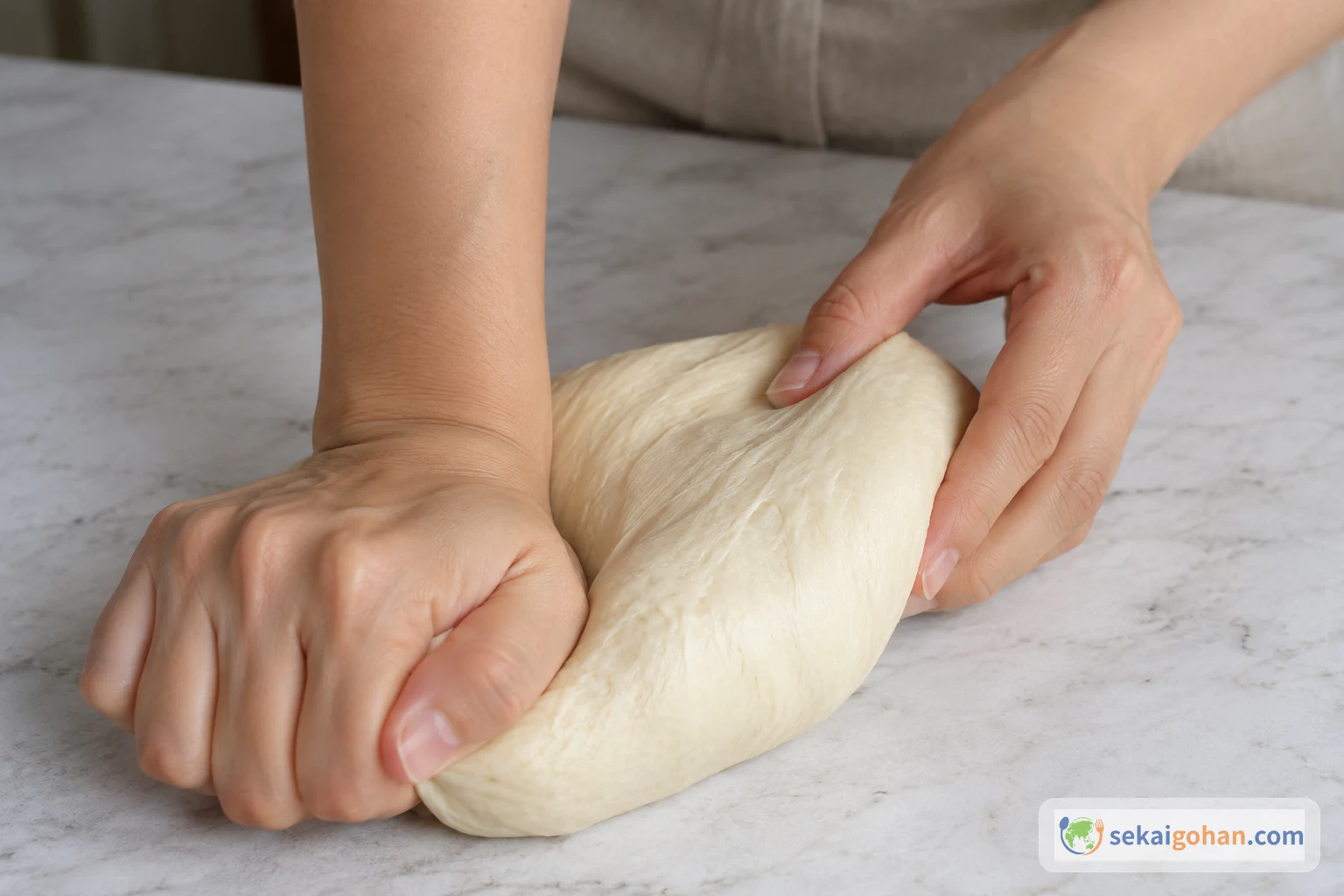
Steaming and frying times, color and steam do not prove that food is cooked through. Use a food thermometer to confirm that the center of the fish, and later the center of each fried panada, reaches 75°C for at least 1 minute. If it doesn't, keep cooking. Wash your hands and tools before and after they touch raw fish or egg, and keep them away from cooked food.
Serving
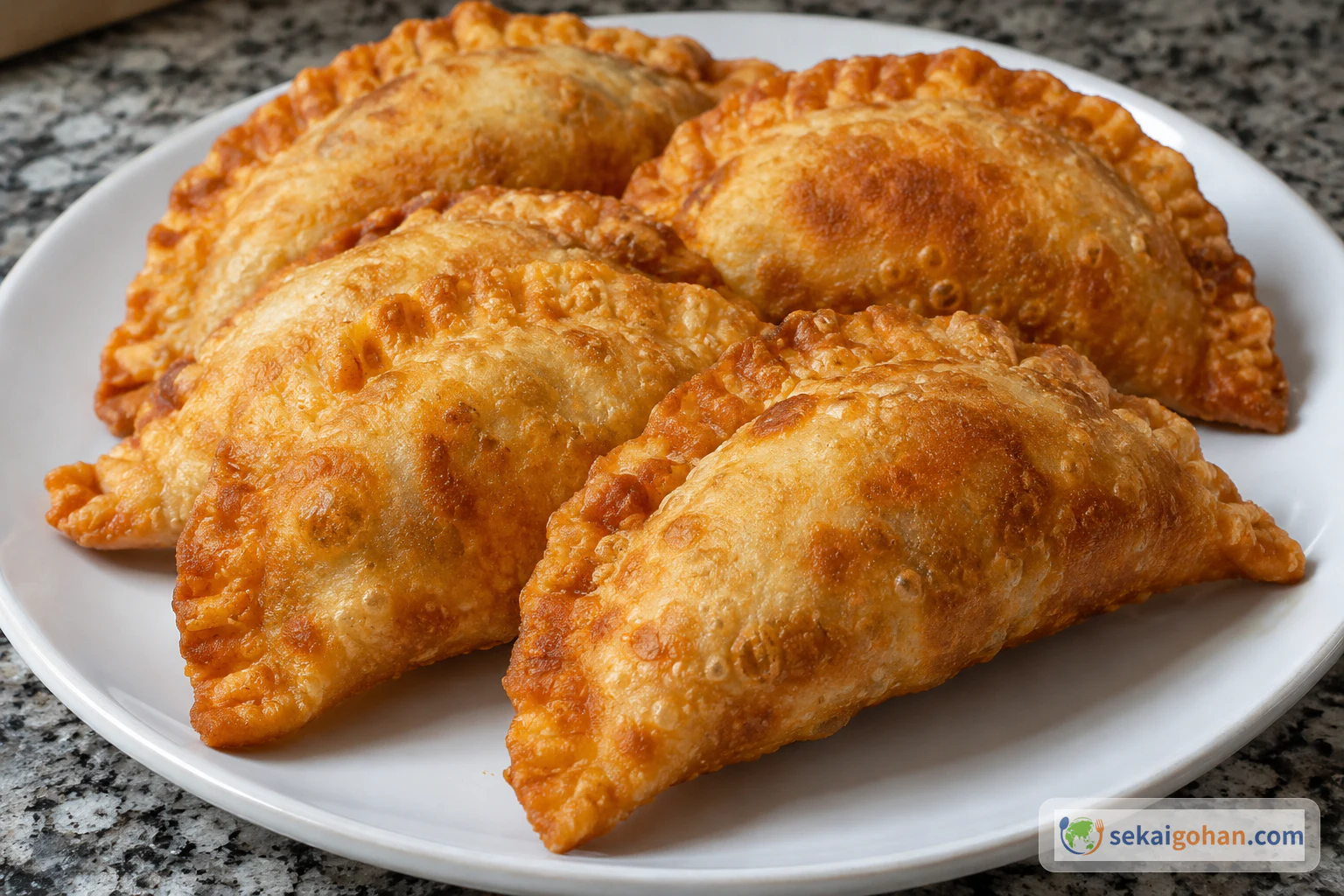
Move the fried panada to a clean plate. The teaching text names no sauce or side dish, so none is treated as necessary here.
If Something Goes Differently
Since this recipe has not been kitchen-tested, these are checks based on the method, not fixes proven in a test kitchen.
| What you notice | What to do |
|---|---|
| The fish center is below 75°C after 20 minutes | Keep steaming, then measure again. Thicker pieces can behave differently from thinner ones |
| A panada looks golden but its center is below 75°C | Keep frying and measure again. Color doesn't show the internal temperature |
| Coconut milk is still pooling in the filling | Keep cooking and stirring before you add the kemangi |
| The filling is still warm when you are ready to wrap | Return it to the refrigerator until it has cooled |
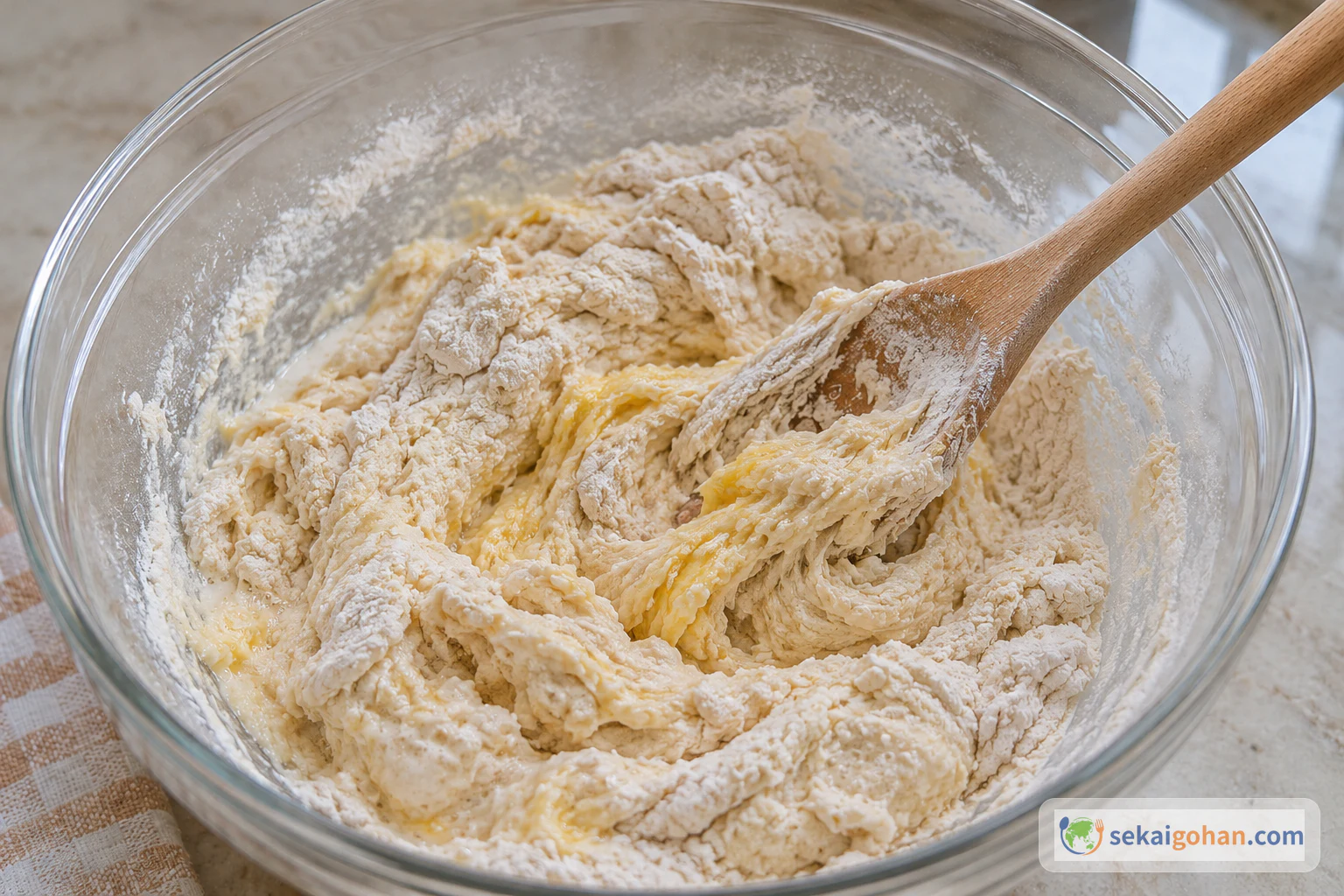
| The dough's surface is drying out | Check the cover. King Arthur Baking notes that a cloth lets moisture escape, while plastic or a lid holds it in |
| The dough doesn't look much bigger after 20 minutes | No rise is specified for this rest, so there is no size to compare it against. Don't read it as a sign that the dough is finished or has failed |
| The dough feels different from what you expected | Flours absorb liquid differently. No correction amounts are set, so results can vary here |
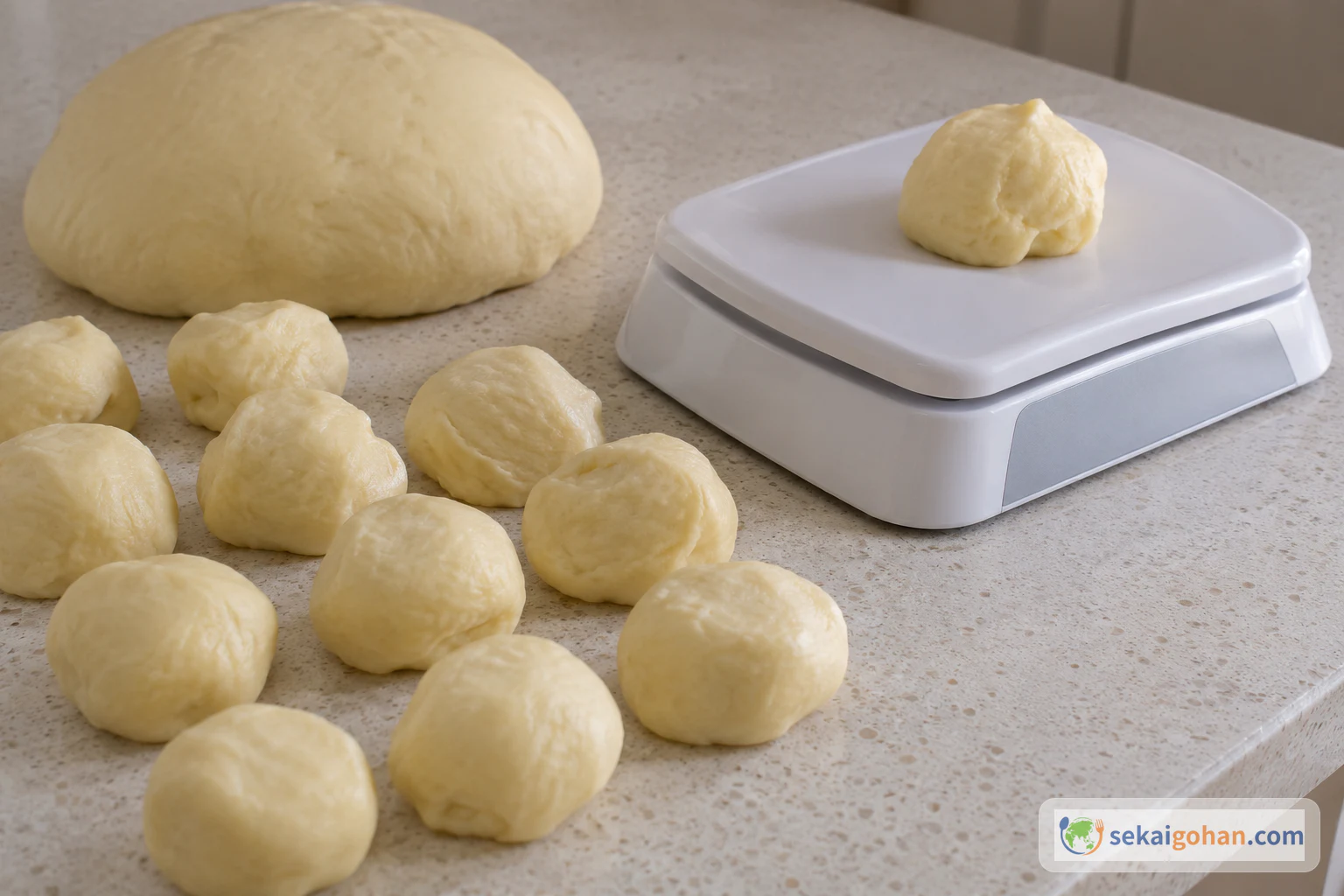
| You don't end up with 21 pieces | Keep portioning at 20g. The 21 is a published figure that hasn't been tested here, so you may have extra or fall short |
The reason for cooling the filling isn't given in the teaching text. A reasonable inference is that cooled filling passes less heat and moisture to the raw dough while you shape it.
Other Versions of Panada
Local recipes differ widely, as these published versions show. Each one has its own balance of ingredients, so cook any of them from its own page instead of mixing their numbers into this recipe.
| Version | Fish | Dough and filling | Worth noting |
|---|---|---|---|
| RRI Manado | Cakalang or tongkol, 250g | 500g flour with a variable amount of water | Aromatics are garlic, shallot, chili, scallion and kaffir lime |
| ResepKoki | Steamed tongkol, 200g | 300g flour and 130ml santan | Has its own spice set and reports a yield of 20 |
| Perpustakaan Digital Budaya Indonesia | Fish, 500g | 500ml coconut milk in the filling | Community-submitted, shaped into 15 pieces |
| Indonesia's tourism ministry | Cakalang | General description, not a recipe | Says panada may be fried or baked according to preference |
Baking is not part of the recipe used here, so this article gives no oven method.
Panada in Manado and North Sulawesi
RRI Manado, the local public broadcaster, presents panada as a specialty of North Sulawesi. Its recipe describes a yeast dough wrapped around shredded, sautéed fish and sealed into a half-moon, much like a pastry. Indonesia's tourism ministry introduces panada as a Manado specialty filled with cakalang, along with onion, chili and basil.
The ministry's page also compares panada with the empanada and reports a Portuguese cultural influence. That is the ministry's account. The sources reviewed for this article don't establish a detailed origin or timeline, so it is best read as a reported connection rather than settled history.
The Perpustakaan Digital Budaya Indonesia archive describes a bread-like dough and a tuna filling, which fits the difference between panada and thinner pastries. To continue exploring the country's food, browse more recipes from Indonesia.
Frequently Asked Questions
Has this recipe been tested?
No. The amounts and method come from the 2016 teaching text, with the editorial additions described at the top of this article. No one at Sekai Gohan has cooked it, measured its temperatures or tried its dough at home.
Will it really make 21 panada?
The teaching text lists 21 pieces and 20g portions of dough. That yield hasn't been checked here, so you may end up with slightly more or fewer.
Is this a fermented food?
The dough uses instant yeast and rests for 20 minutes twice before frying. These are short rests, not a long room-temperature fermentation. No particular rise is claimed for either rest.
Why bonito instead of tongkol?
Bonito fillet is a practical choice for cooks who can't find tongkol. The two shouldn't be treated as the same fish or as tasting the same. The 150g figure is kept, but here it means the raw edible portion, which the teaching text doesn't specify.
Is 20 minutes of steaming enough?
The 20 minutes comes from the teaching text, which gives no fish thickness or internal temperature. Use it as the listed time and rely on your thermometer: 75°C at the center for at least 1 minute, and more steaming if the fish isn't there yet.
What about leftovers?
Cool leftovers quickly in a clean, shallow container and refrigerate them, as general home food-safety guidance advises. The sources give no storage period for panada, so this article doesn't offer one, and storage has not been tested.
Sources
- Ministry of Education and Culture of Indonesia, Directorate of Course and Training Development (Kementerian Pendidikan dan Kebudayaan, Direktorat Pembinaan Kursus dan Pelatihan), "Makanan Pembuka/Penyelera Indonesia — Panada," 2016. The source for the recipe's quantities and units, the lime, steaming, shredding and sautéing order for the filling, and the dough, 20g portions, shaping and frying. https://repositori.kemendikdasmen.go.id/11835/1/5-Tata-Boga-FIX.pdf
- LPP RRI Manado, "Resep Kue Panada Khas Sulawesi Utara." Used for panada's Manado and North Sulawesi identity and as a comparison recipe. Its amounts are not used in this recipe. https://rri.co.id/manado/kuliner/1467006/resep-kue-panada-khas-sulawesi-utara
- Ministry of Tourism, Republic of Indonesia, "Panada." Used for the Manado identity, the general description of the filling, the frying or baking option, and the reported similarity to the empanada and Portuguese influence. https://www.indonesia.travel/id/en/travel-ideas/gastronomy/panada
- ResepKoki, "Resep Panada." Used for comparison only. https://resepkoki.id/resep/resep-panada/
- Perpustakaan Digital Budaya Indonesia, "Panada." A community-submitted entry used for comparison and for its description of a bread-like dough with a tuna filling. https://budaya-indonesia.org/Panada-1
- Ministry of Health, Labour and Welfare, Japan, "家庭でできる食中毒予防6つのポイント" (Six points for preventing food poisoning at home). General home guidance on heating food to 75°C at the center for at least 1 minute, washing hands and tools, separating raw and cooked foods, and cooling and storing food quickly in shallow containers. It does not address this recipe's specific timings. https://www.mhlw.go.jp/stf/seisakunitsuite/bunya/kenkou_iryou/shokuhin/syokuchu/01_00006.html
- King Arthur Baking Company, "Where to put dough to rise." Used as an editorial supplement for the 75–78°F (about 24–26°C) resting temperature and for how cloth, plastic and lids affect moisture. It gives no timing or rise for this dough. https://www.kingarthurbaking.com/blog/2019/03/12/where-to-put-dough-to-rise