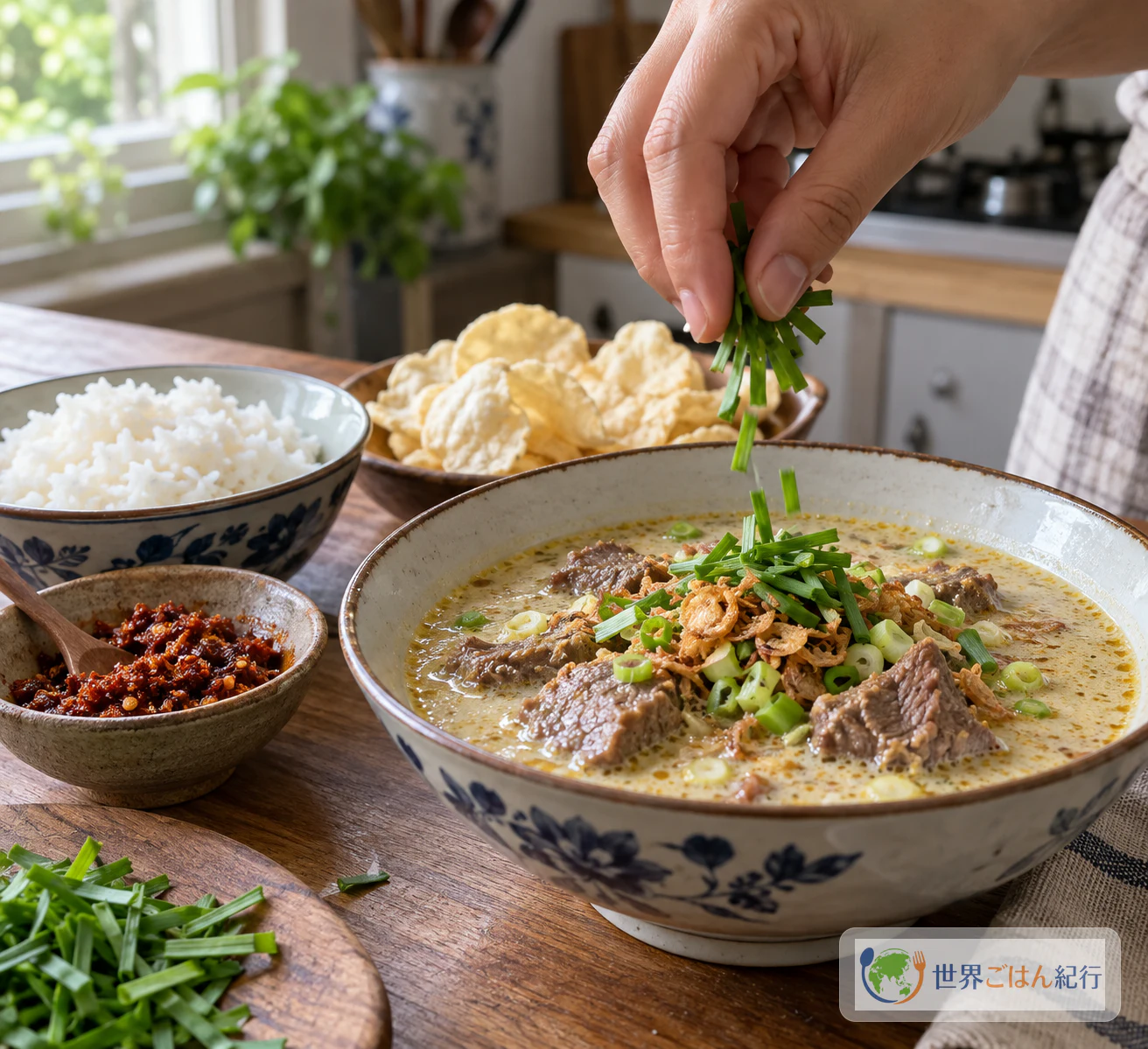
Empal Gentong: Beef, Coconut Broth and the Scent of Kucai
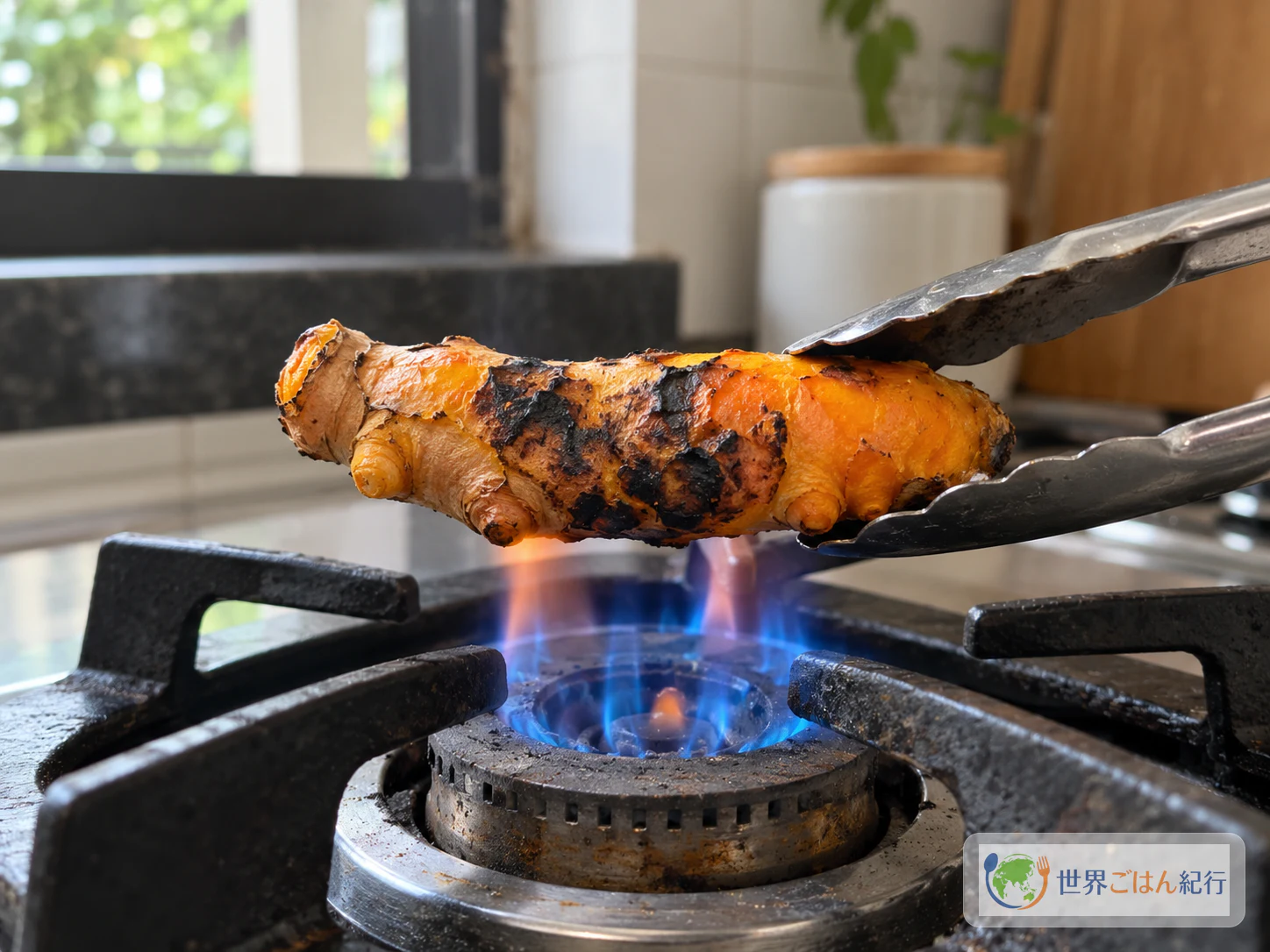
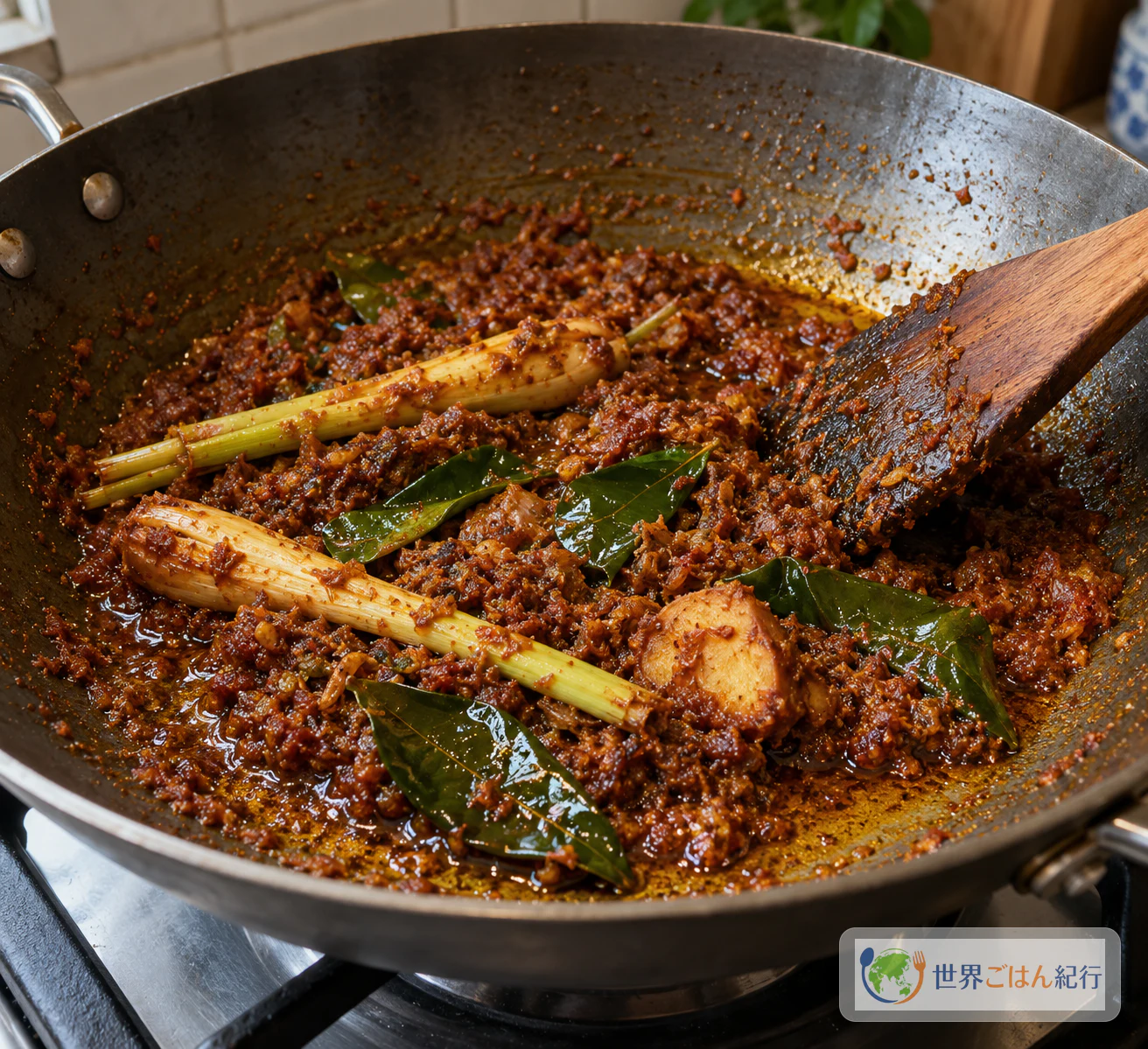
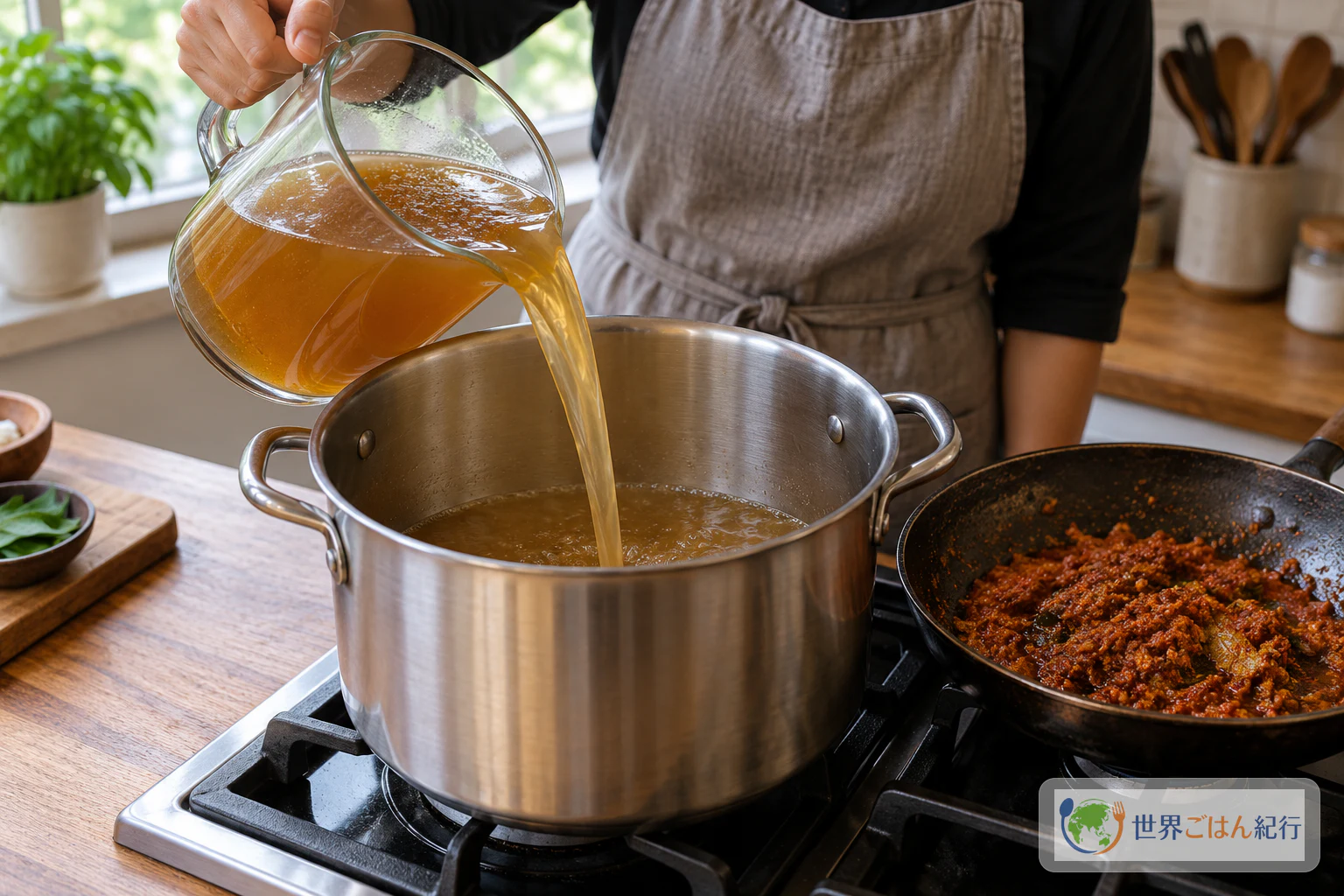
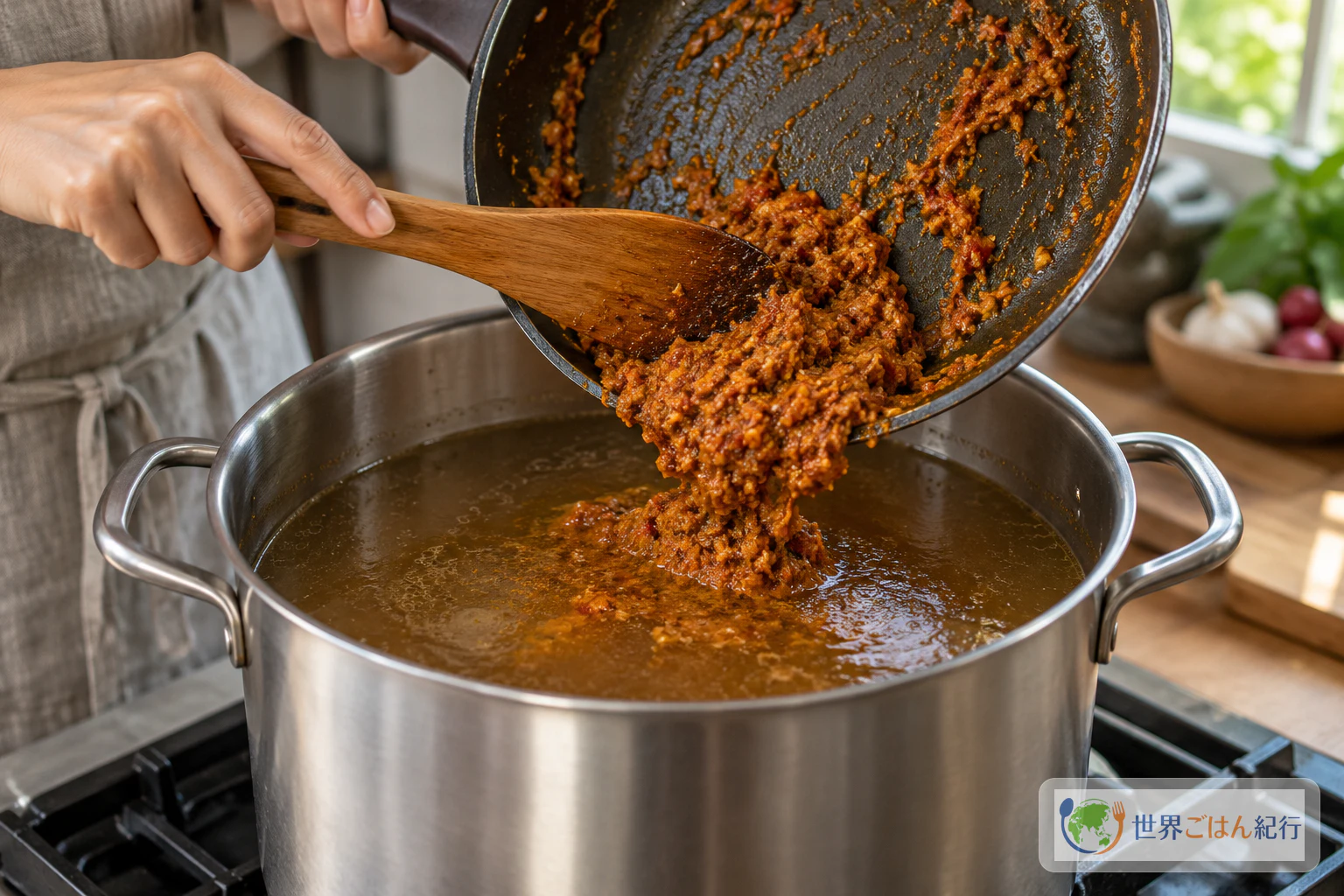
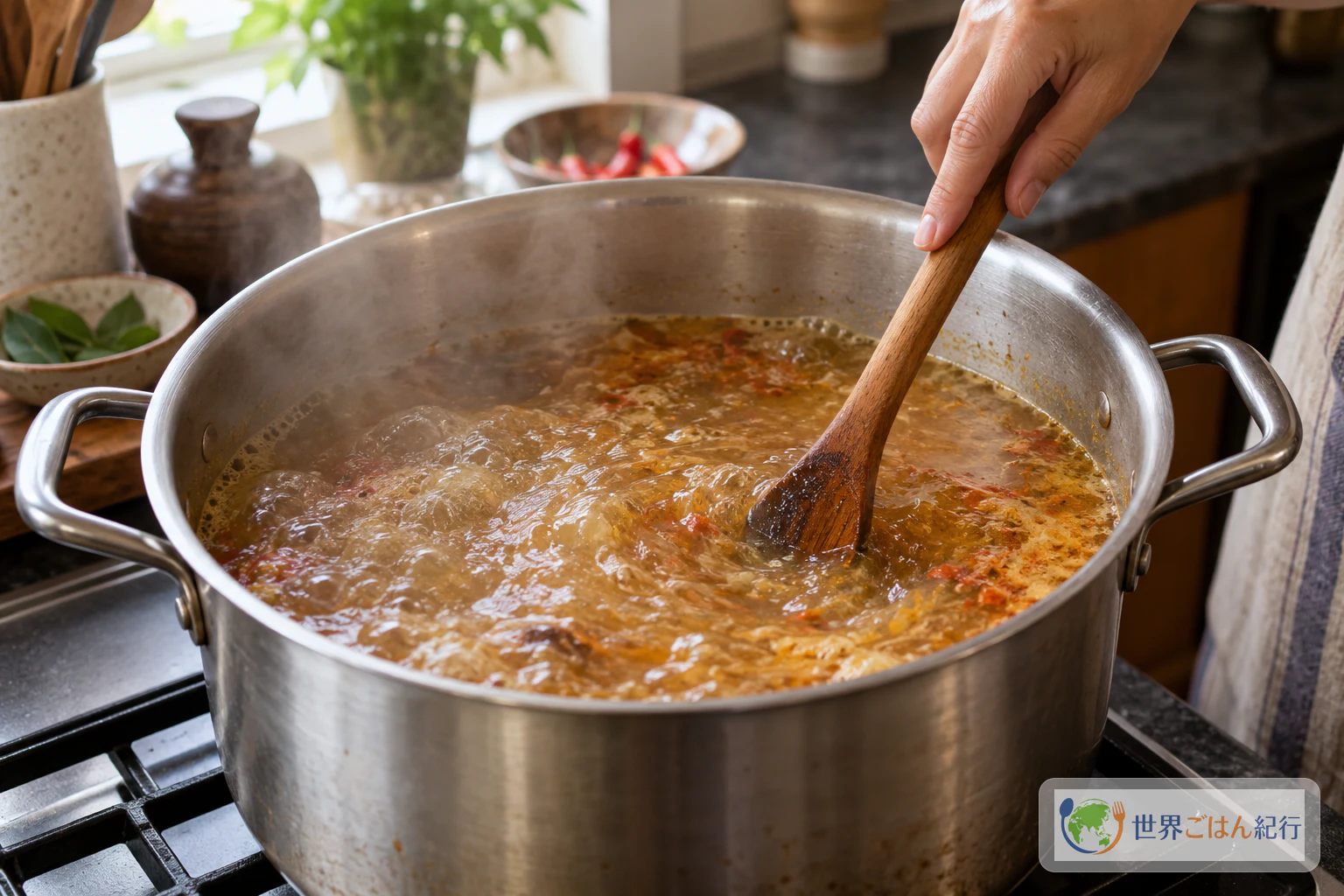
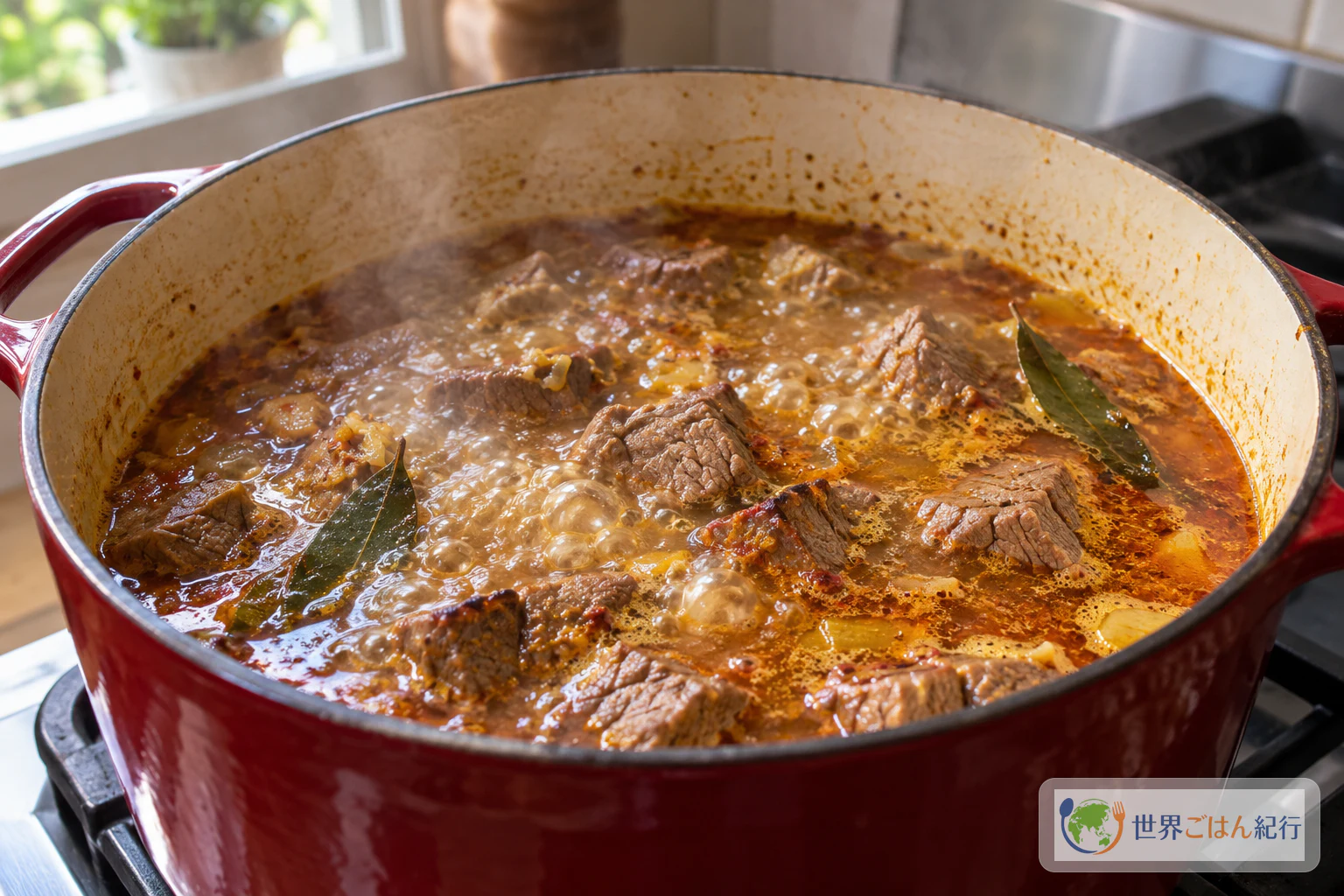
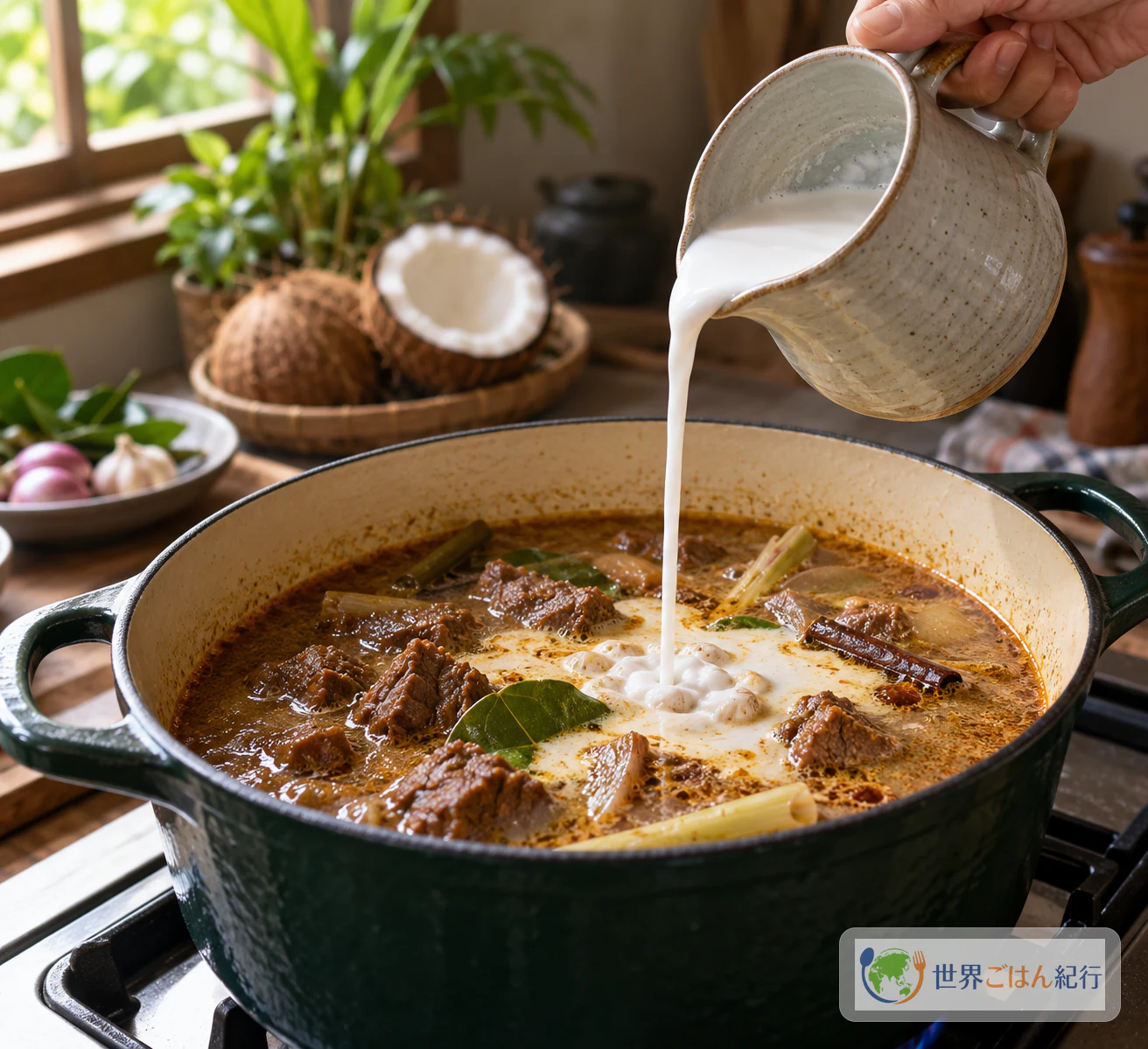
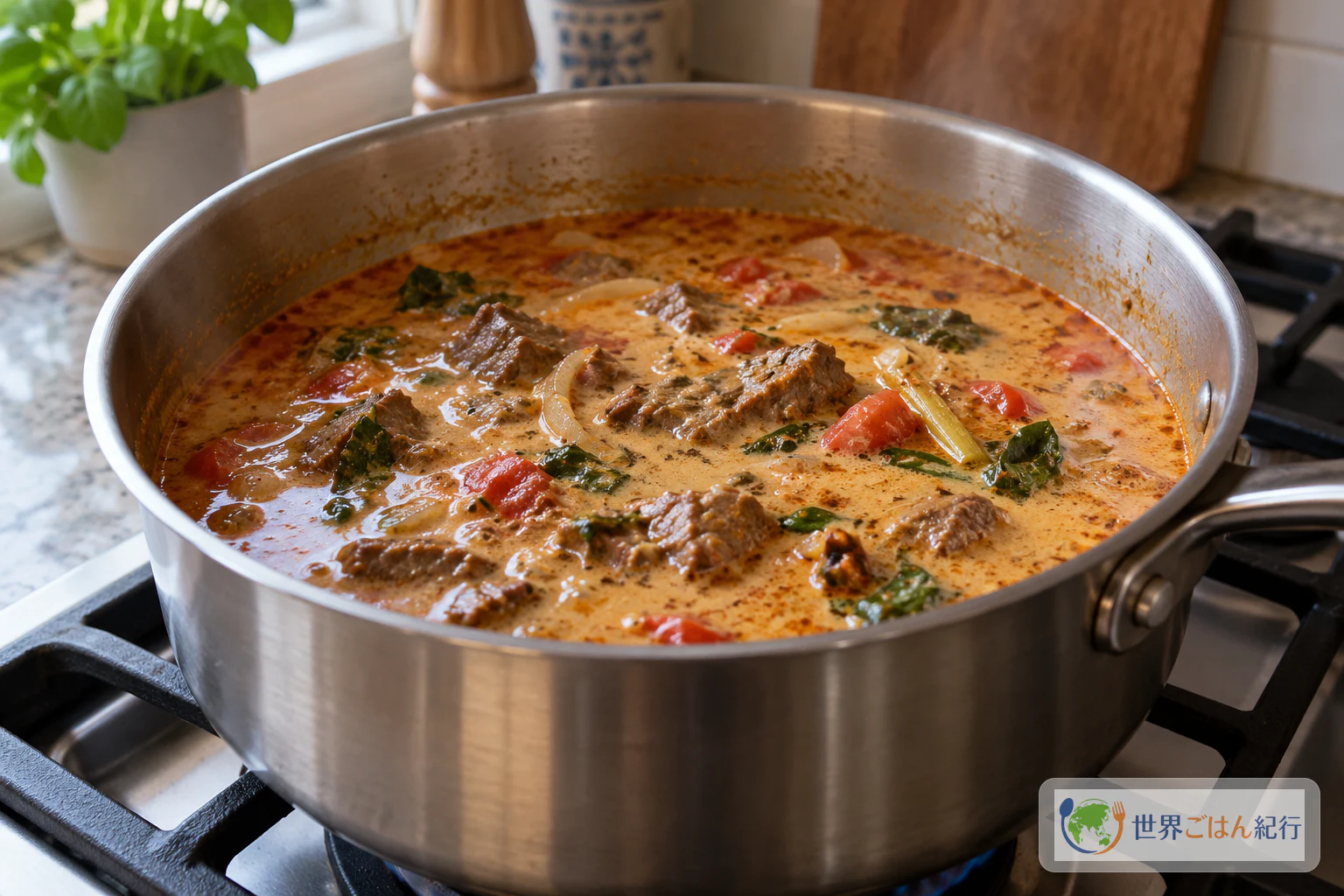
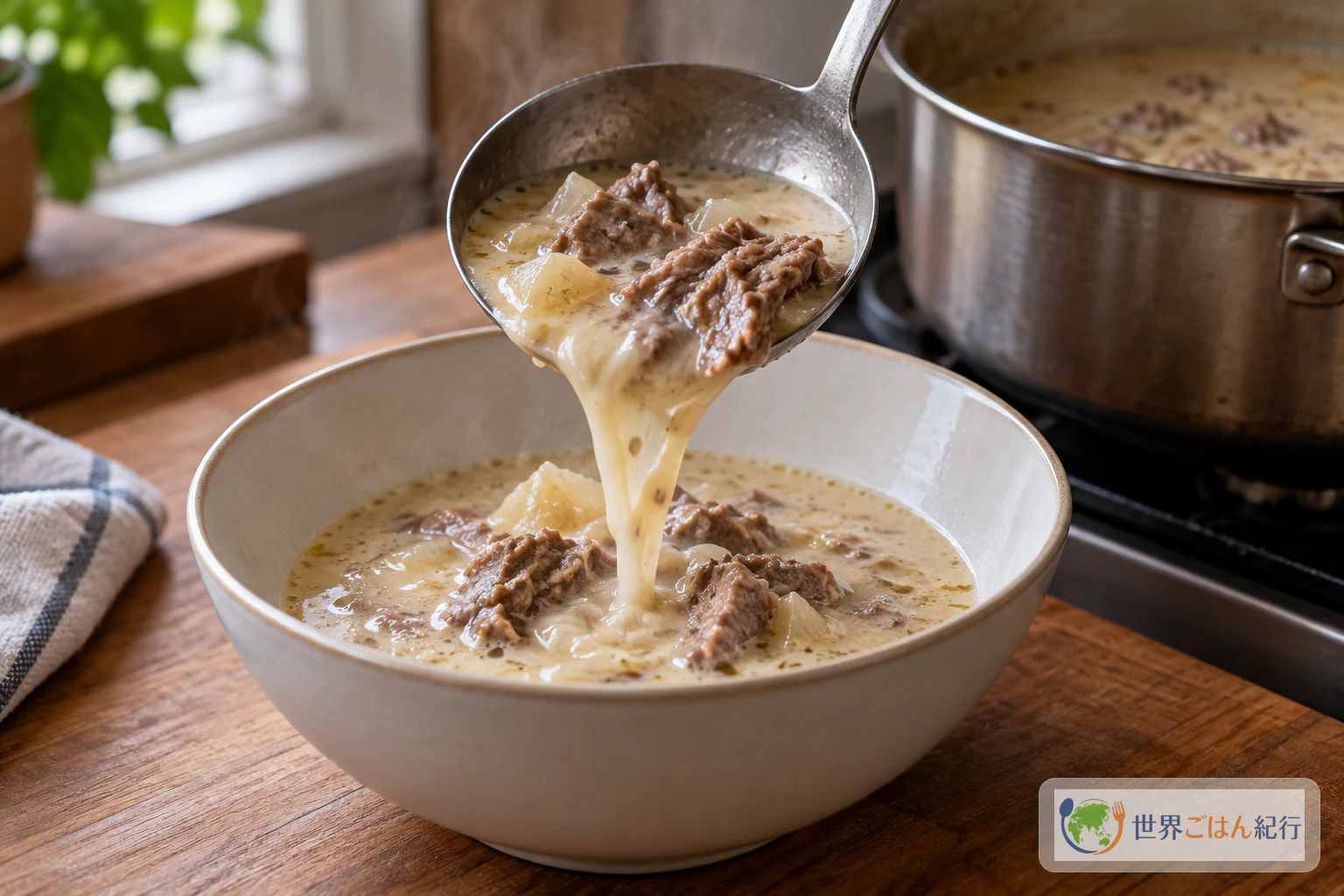
Fry the spice paste until the oil separates at the edge of the pan. Once the coconut milk goes in, keep the heat low and never let the soup boil hard.
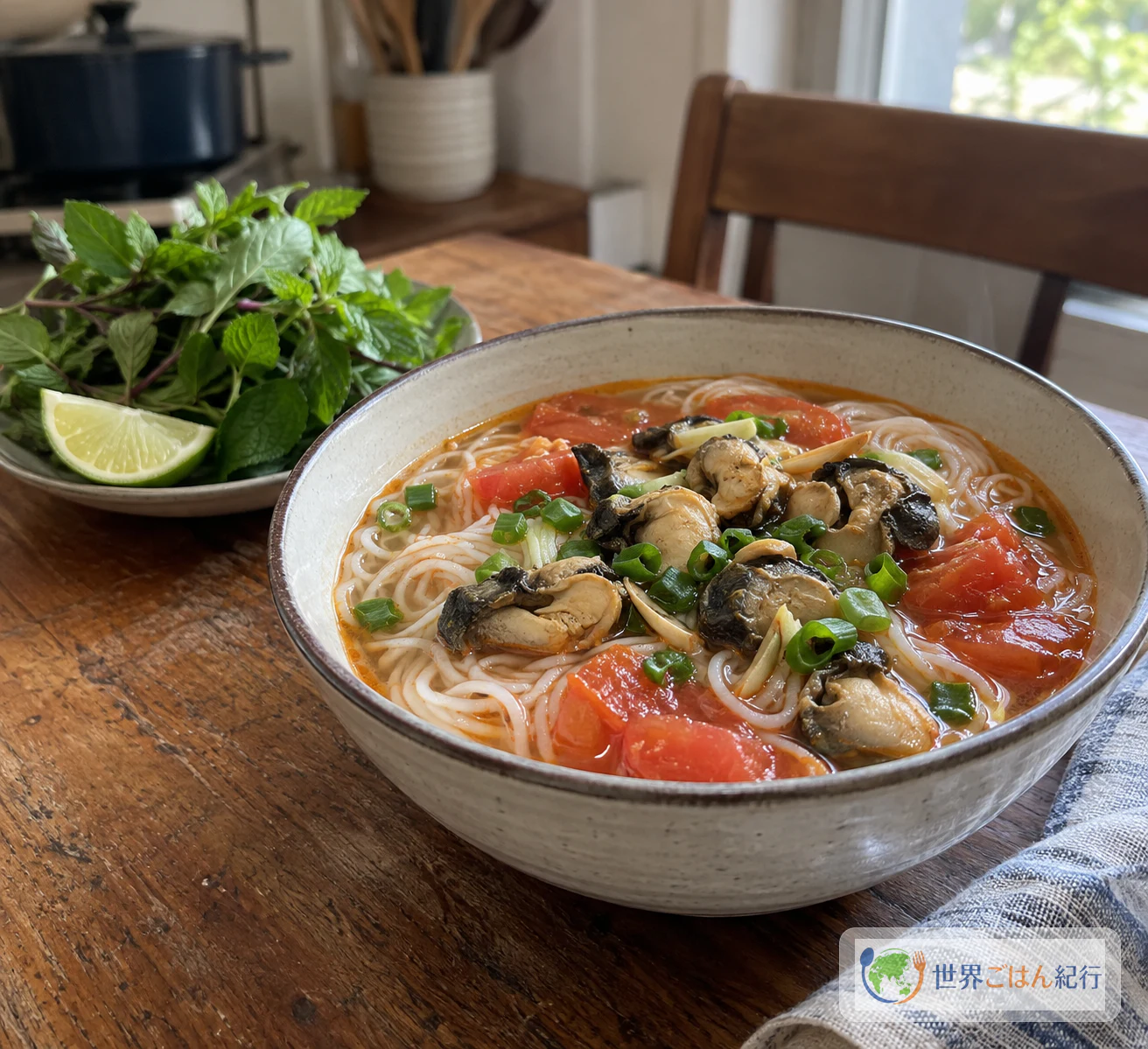
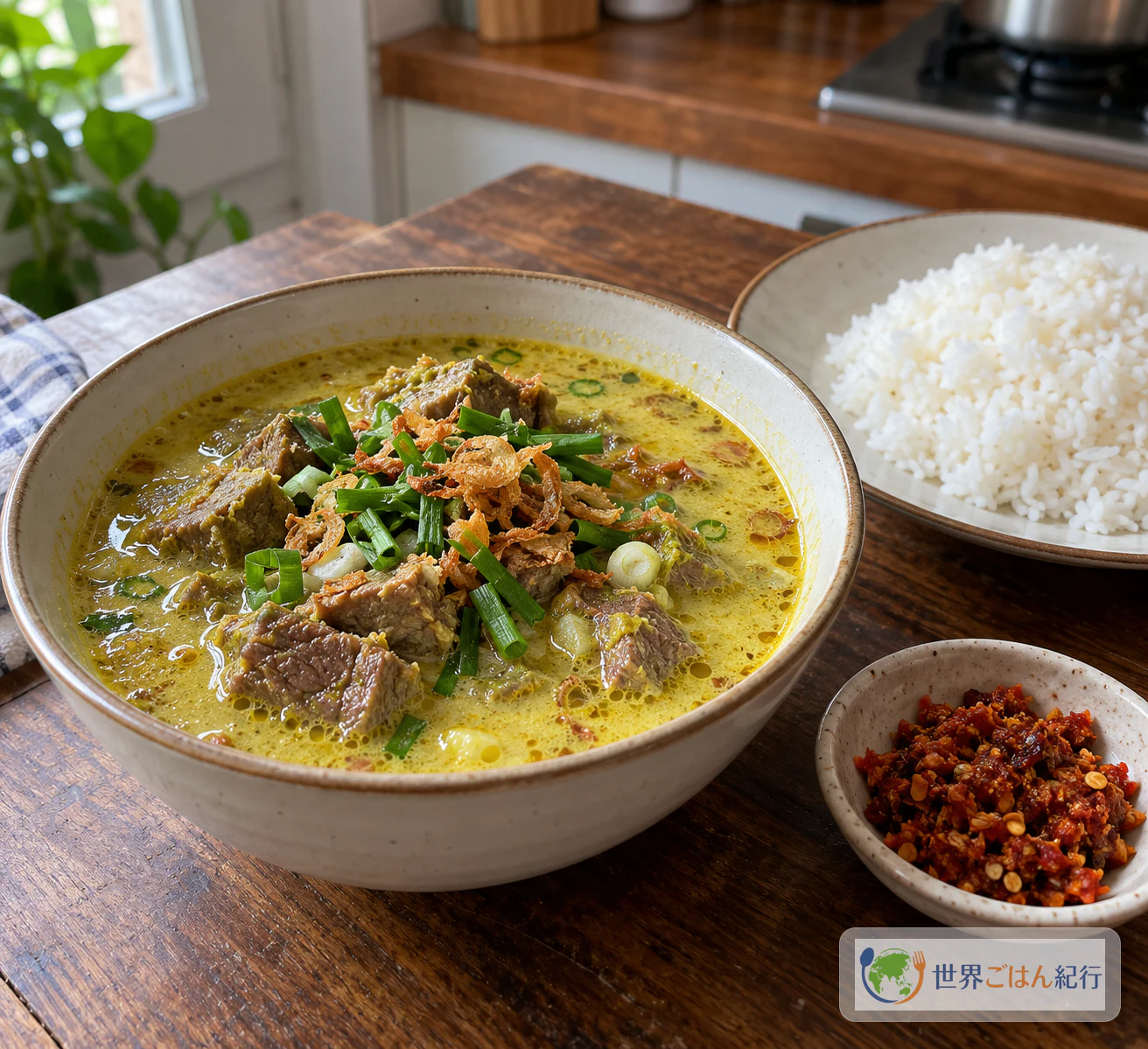
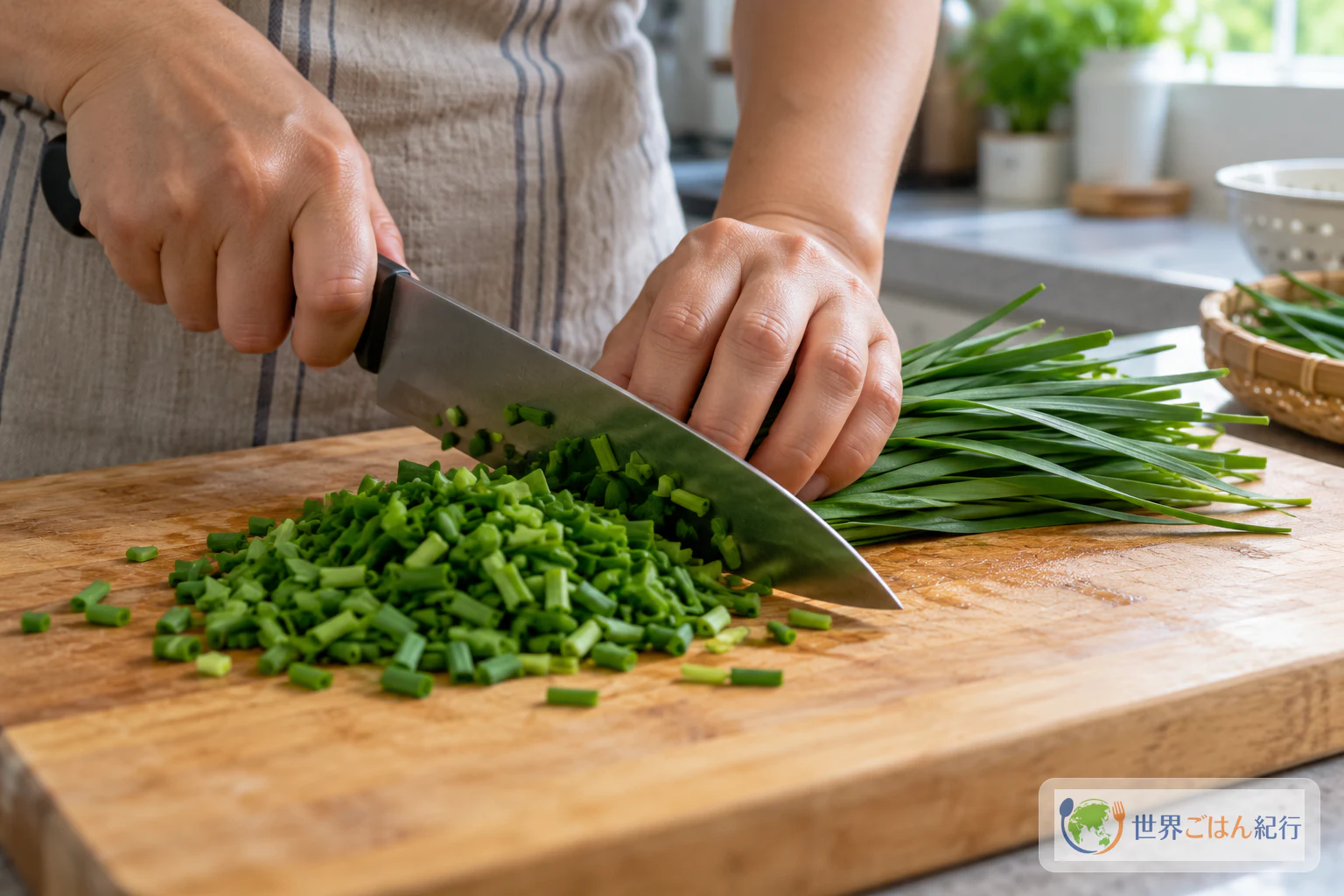
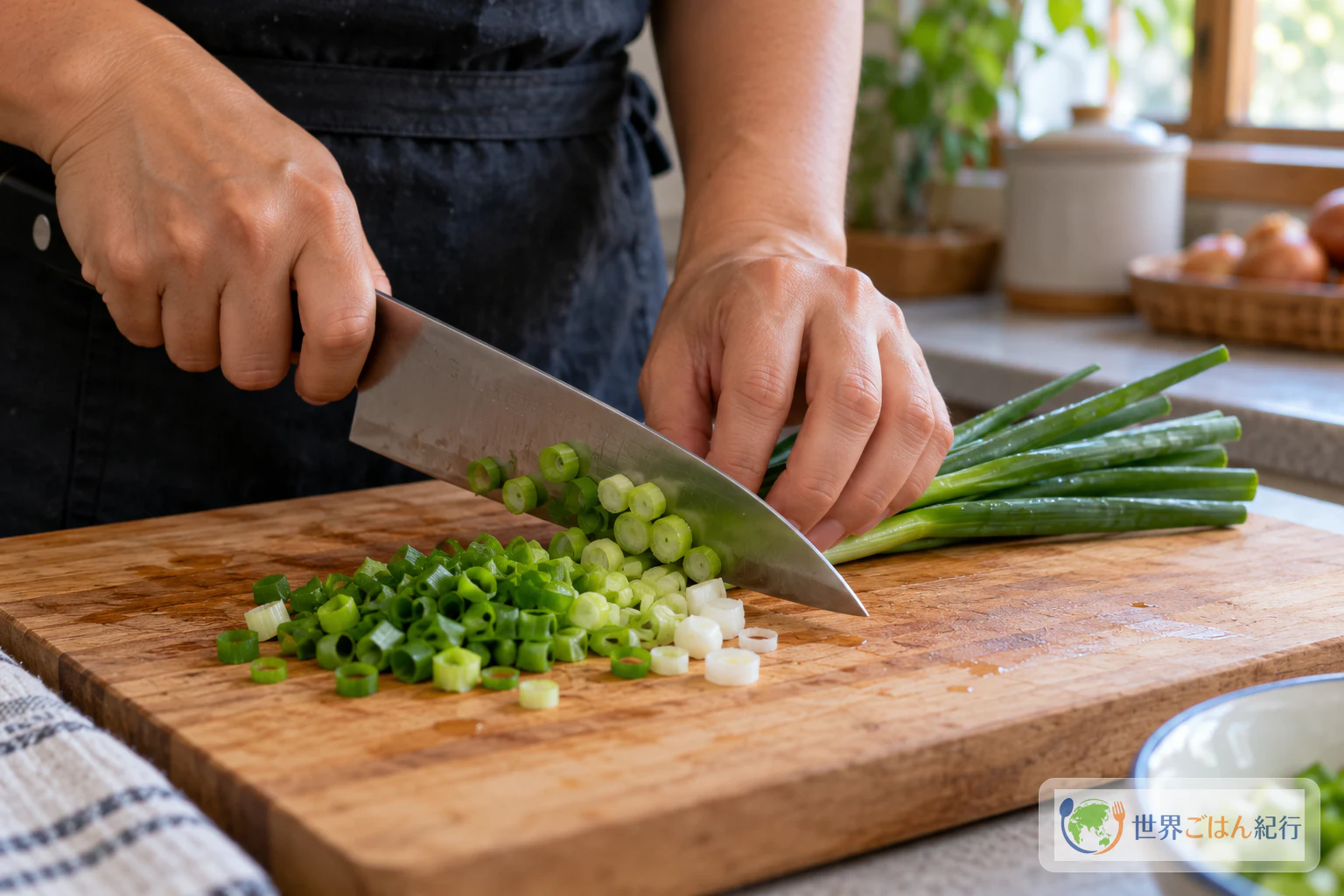
Picture pieces of beef in a coconut milk broth, with the scent of kucai, or garlic chives, rising from the bowl. Indonesia's tourism ministry describes empal gentong in much these terms when it lists the dish among the regional foods to look for at eateries around Cirebon.
Cirebon is a city on the north coast of West Java, and the ministry names empal gentong among its specialties. It describes a fragrant meat soup traditionally cooked in a gentong, a clay vessel. That vessel gives the dish part of its name in everyday talk, but the recipe below does not use one. It is a home version made with ordinary pots and a pan, so don't expect it to match the aroma of a bowl cooked in clay.
The version used here
This article follows one recipe: the home version published on the official Haji Apud restaurant site by Tim Redaksi Haji Apud, listed as serving 6–8. It appears on a commercial restaurant blog, with no named recipe developer and no independent testing shown. It should not be read as the restaurant's private kitchen formula or as the single standard for Cirebon. We have not kitchen-tested this recipe, so treat the times and visual cues as the published guide, not as results we have confirmed.
The page leaves some details open, and we have not filled them in:
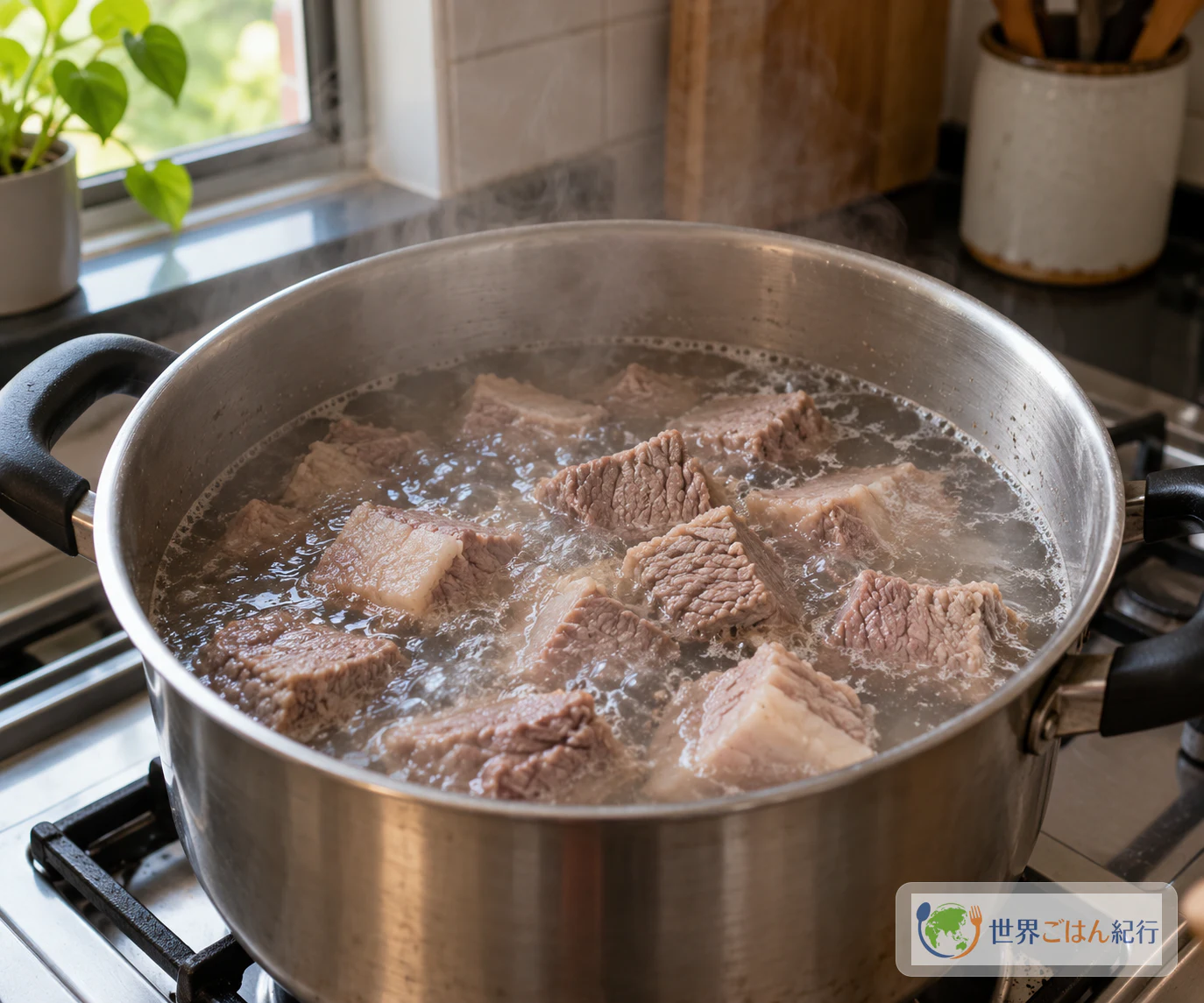
- The amount of water for the first and second boils
- The heat level for those boils
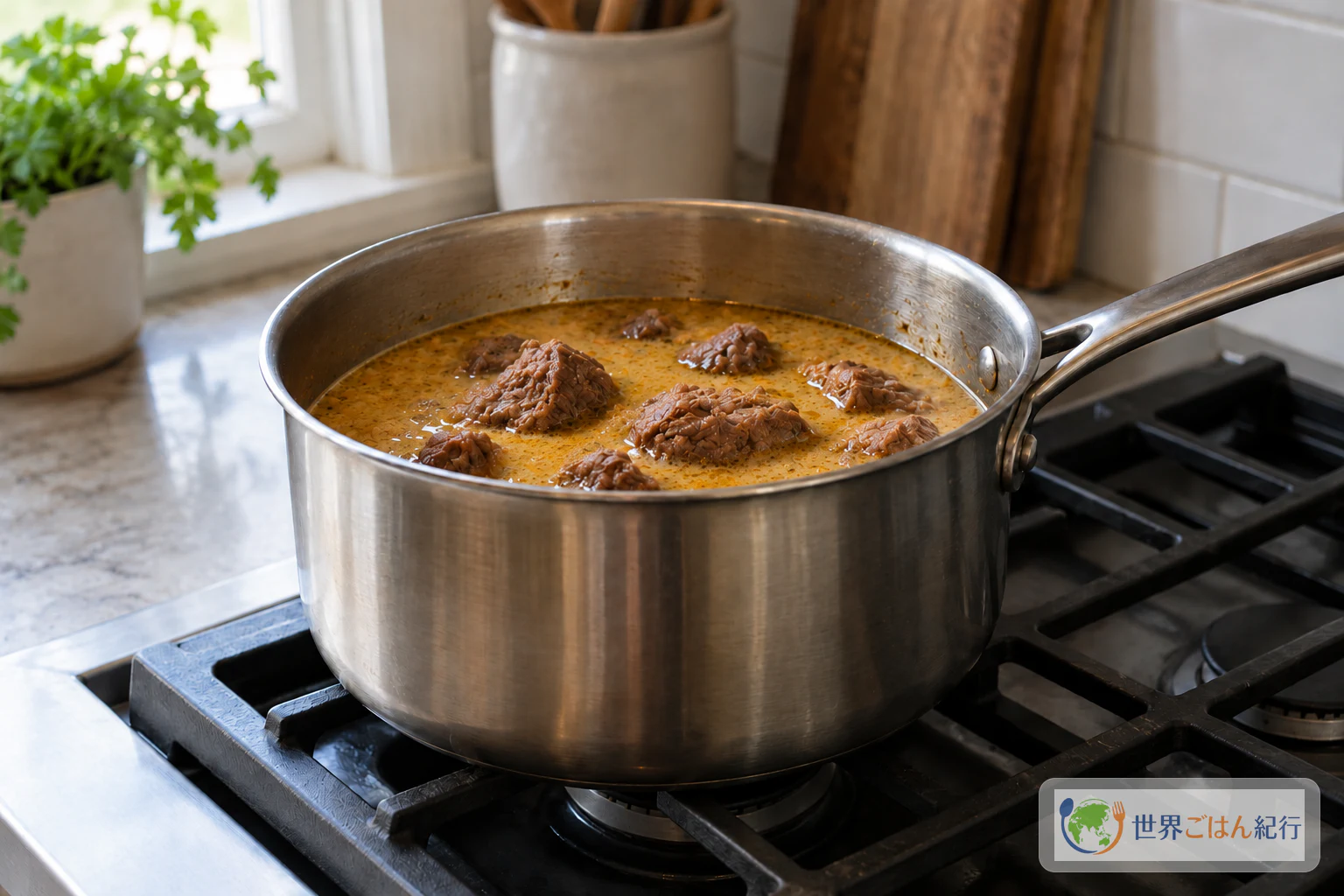
- What to do if the second boil leaves more or less than the 1 L of broth you need
- An exact amount of salt, or amounts for the garnishes and sides
- Whether the pot is covered during the final simmer and rest
It also gives no prep time, total time or nutrition figures, so none appear here.
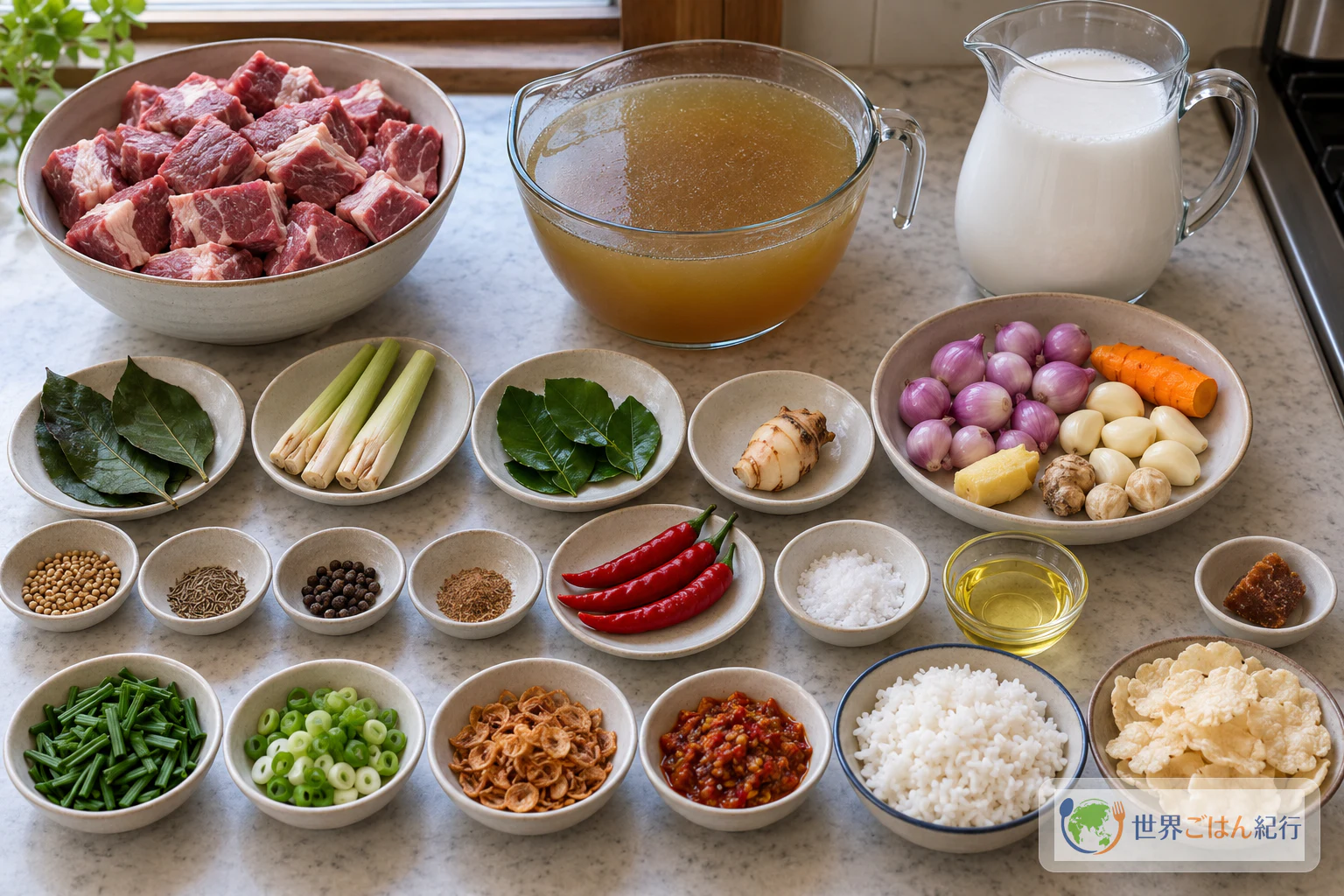
Ingredients (6–8 Servings)
Equipment
- Knife and cutting board
- Pot for boiling the beef
- Colander
- Measuring pitcher
- Tongs
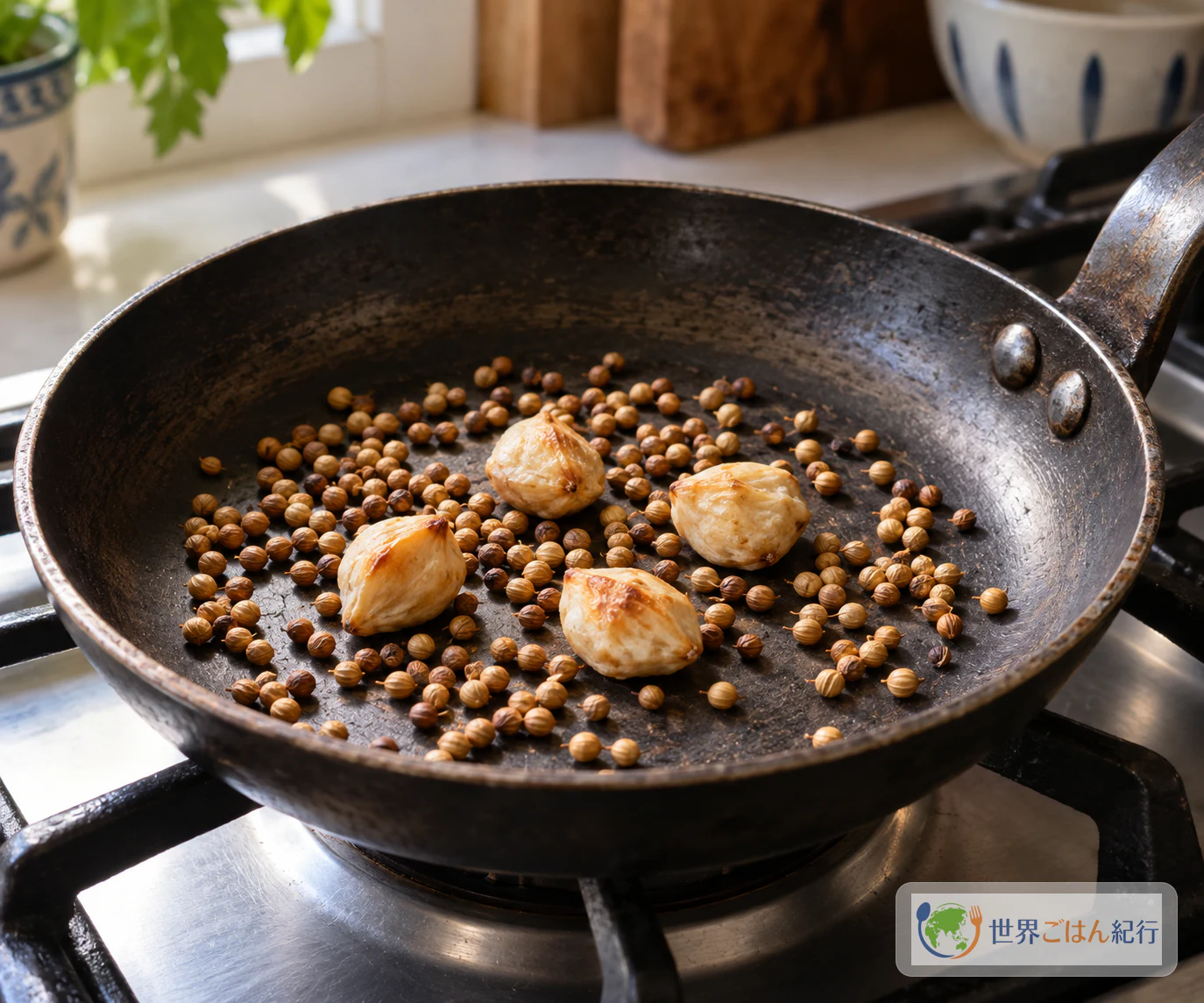
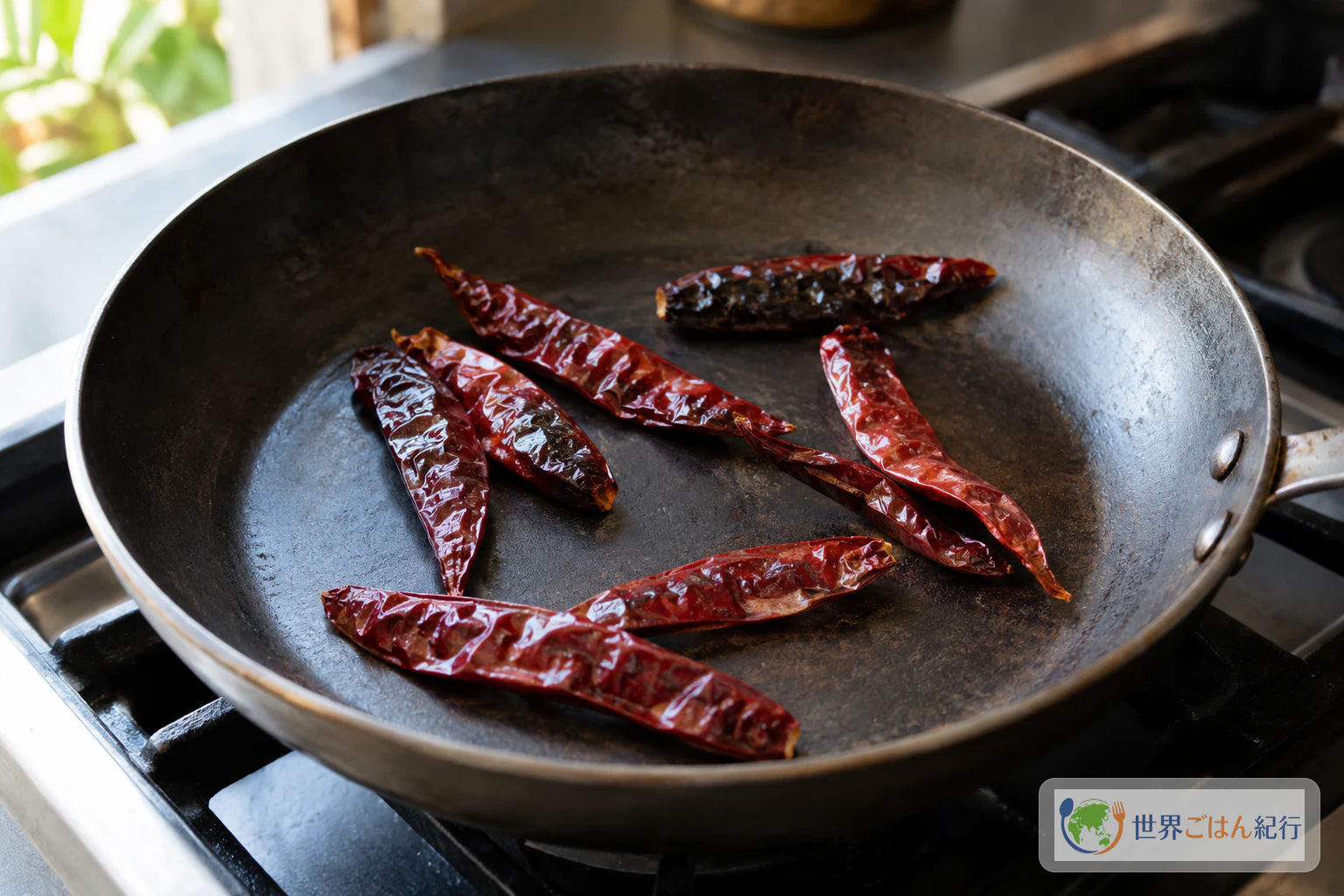
- Small dry pan for toasting
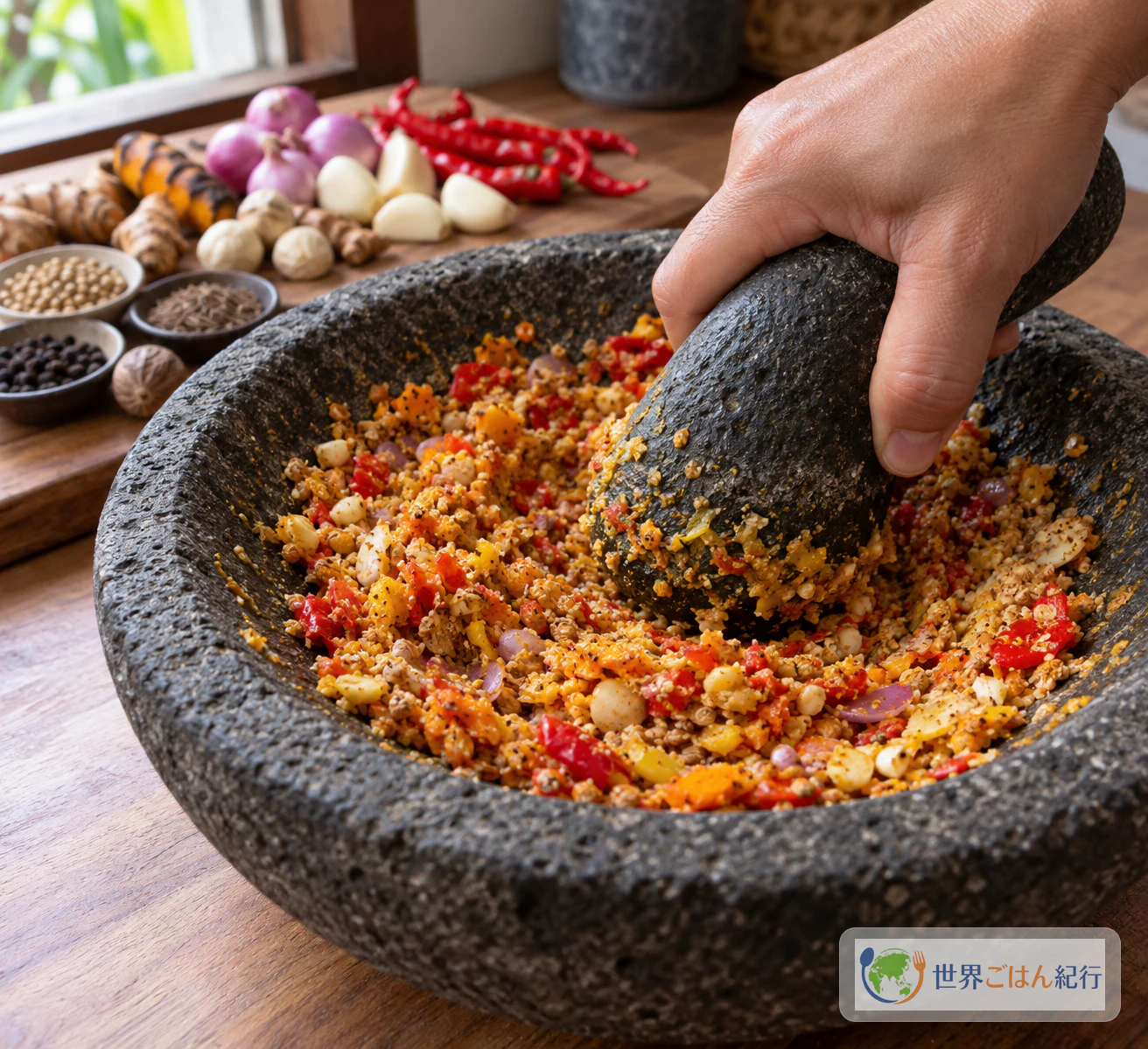
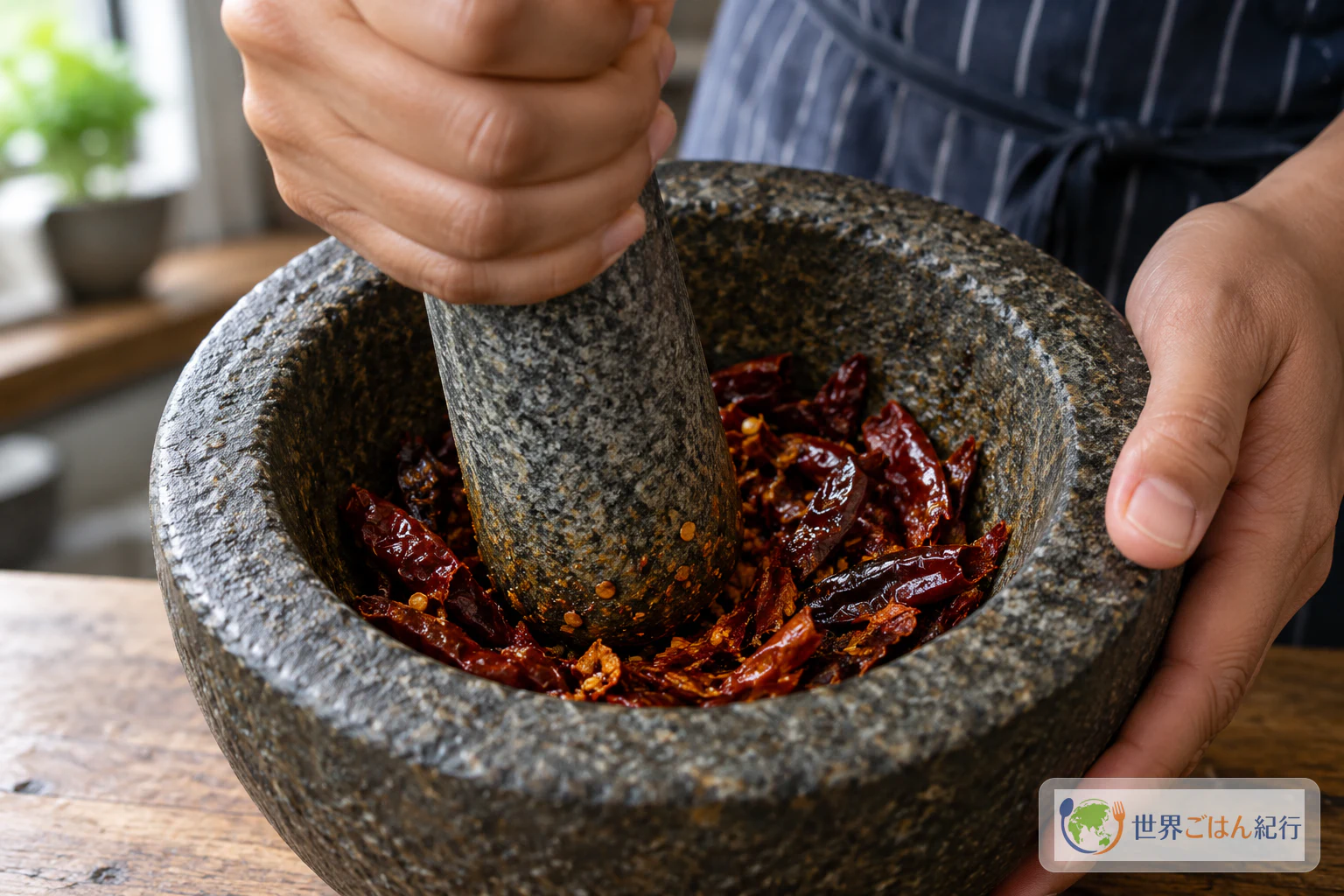
- Stone mortar and pestle, or a blender
- Shallow pan for frying the spice paste
- Large pot for the soup
- Ladle
Choosing and Finding the Less Familiar Items
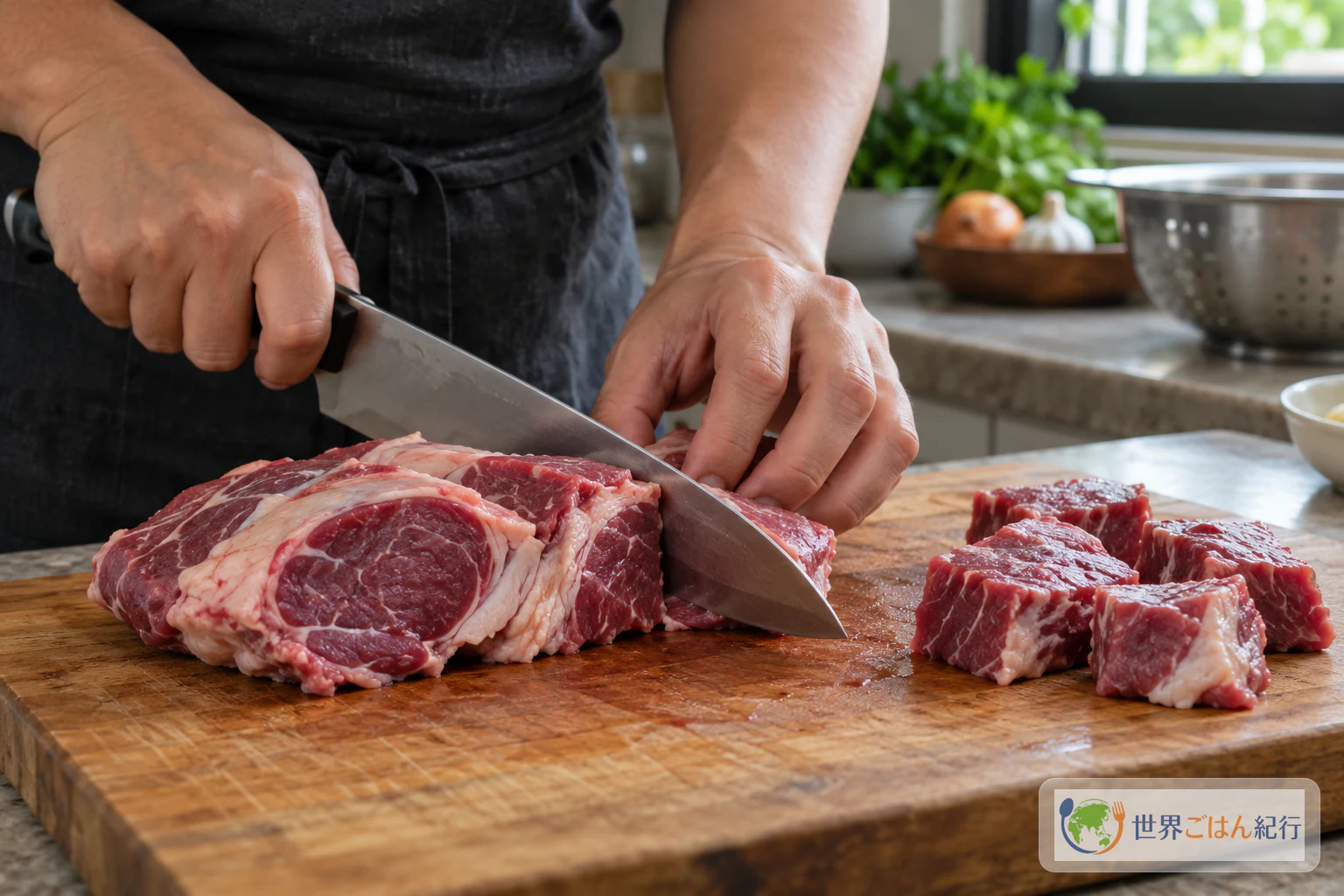
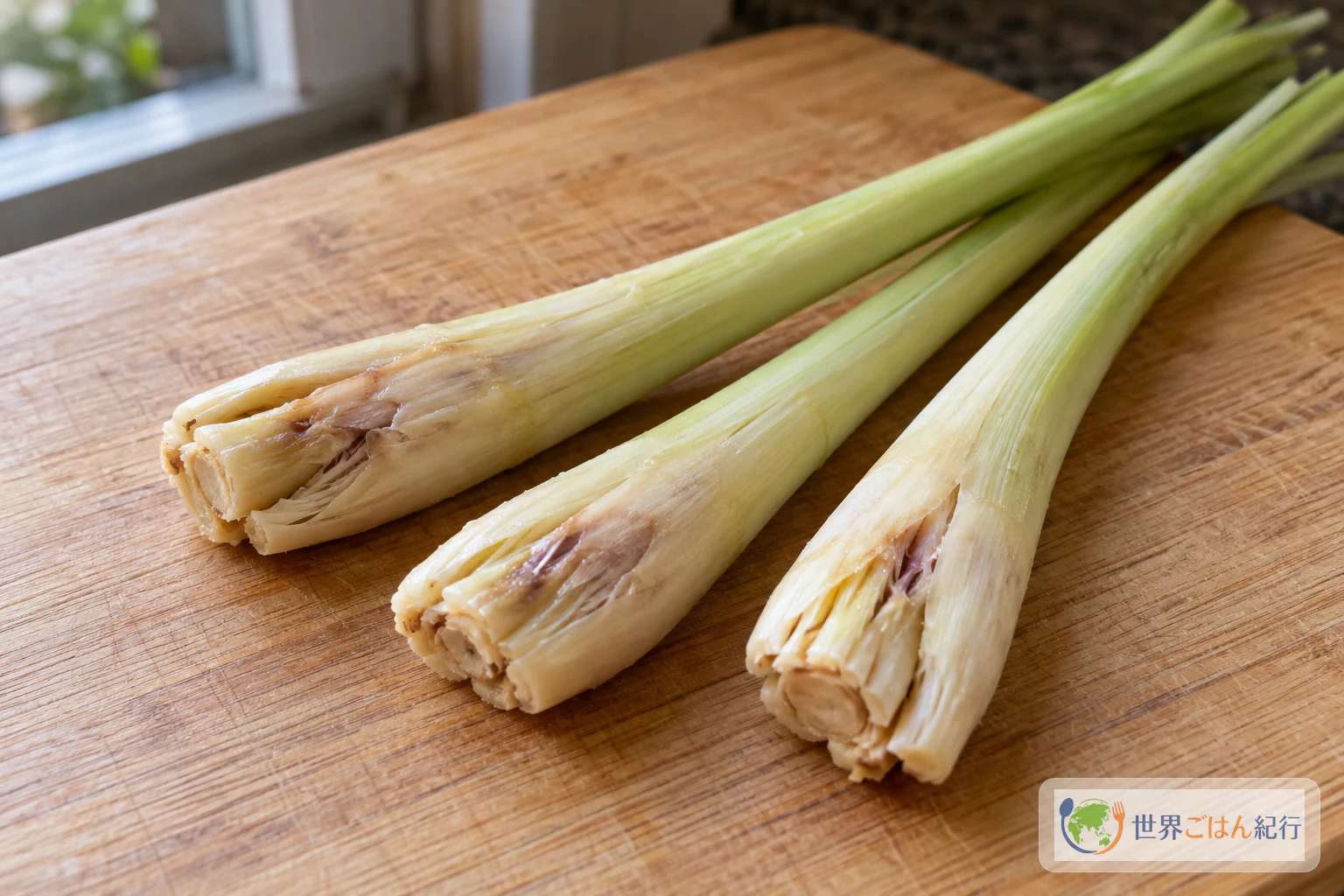
Beef. Sandung lamur is a brisket cut with some fat, and sengkel is shank. If your butcher uses different cuts, look for beef meant for long simmering with some fat or sinew. This is a practical guide rather than an exact match.
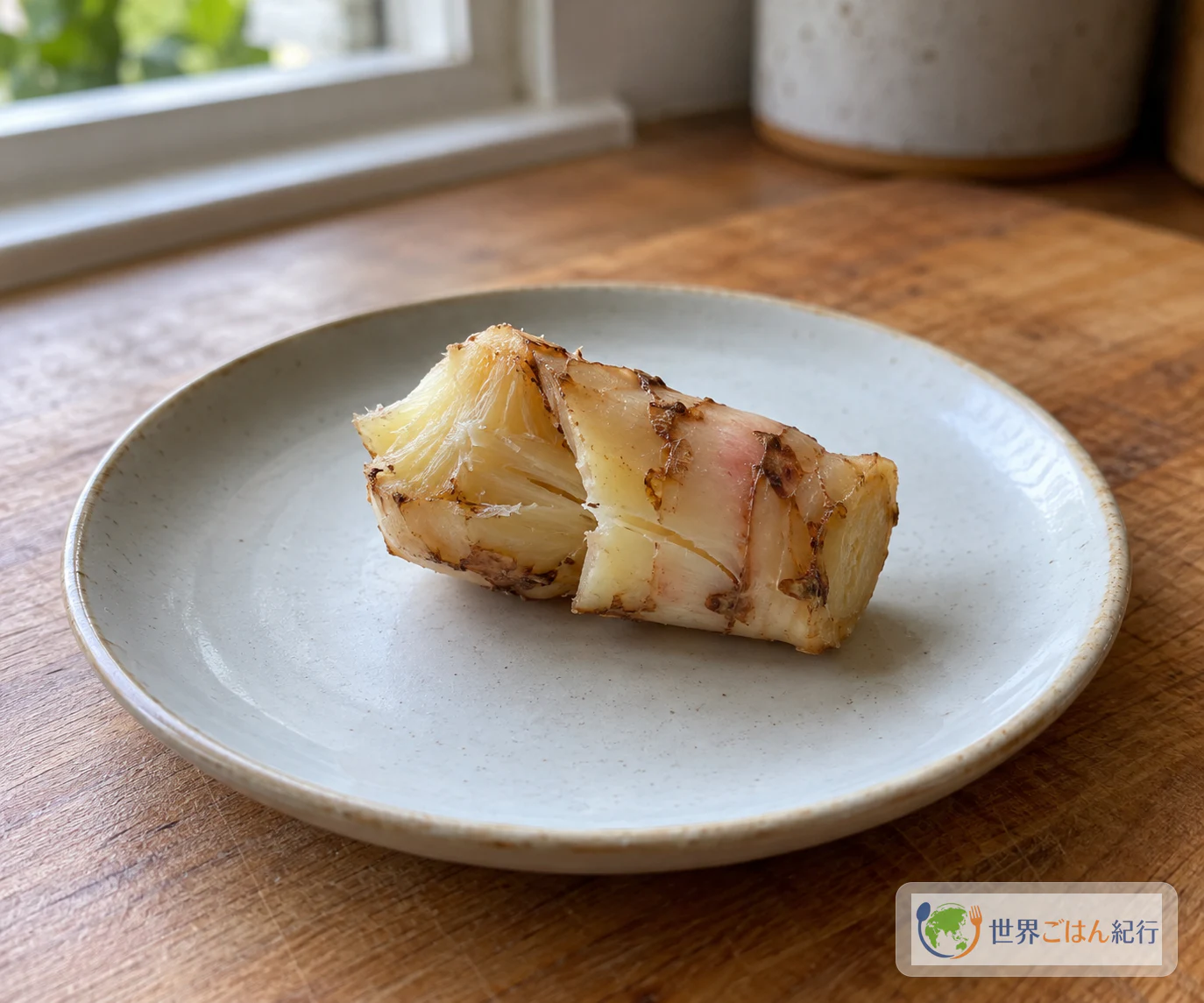
Kencur. This is Kaempferia galanga, also sold as sand ginger. Ginger and galangal have their own rows in the table, so neither one stands in for it. Search under kencur, sand ginger or the botanical name at import grocers and online shops.
Kemiri. This is the candlenut, Aleurites moluccana. We have no confirmed substitute to offer, so look for kemiri or candlenut.
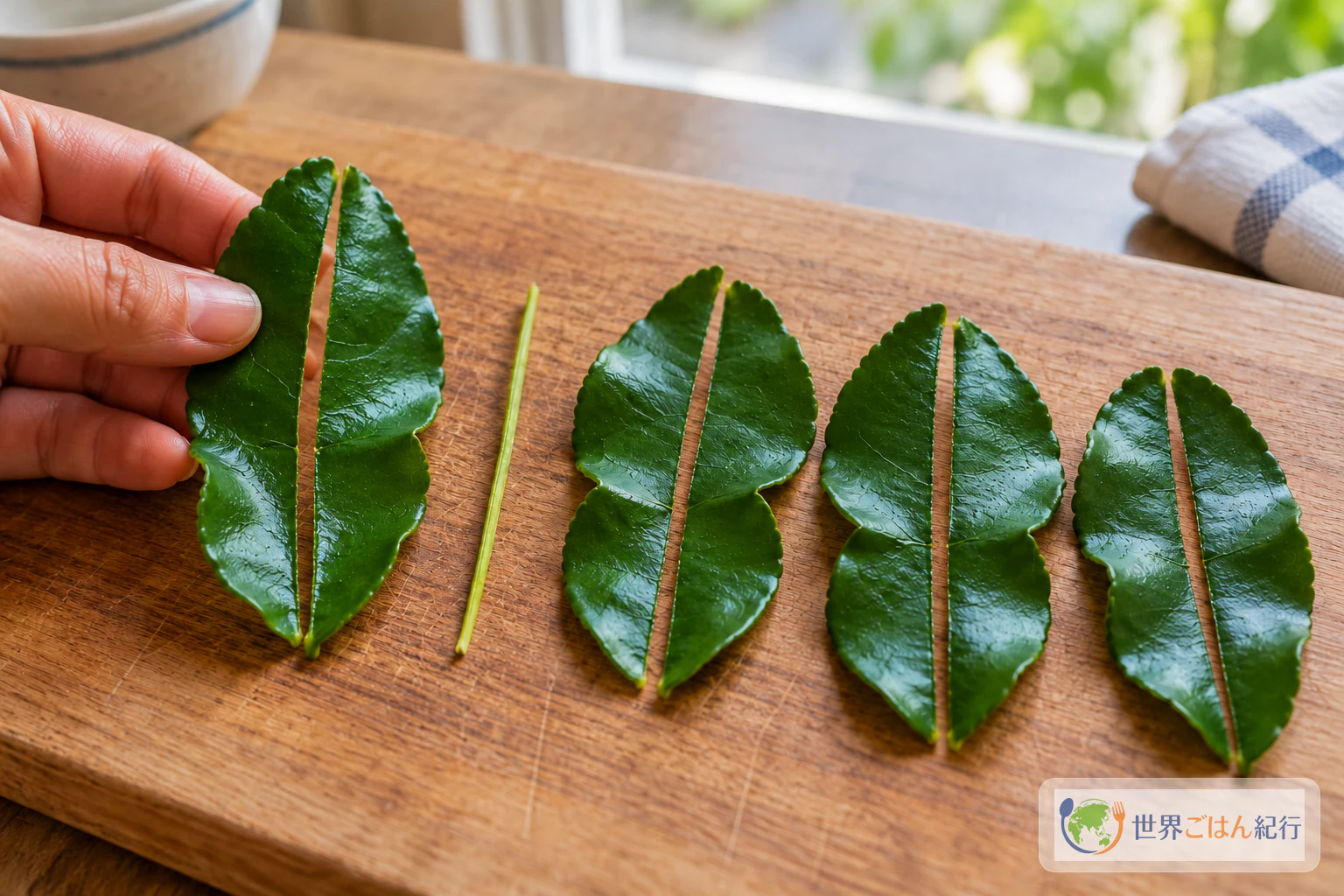
Daun salam and daun jeruk purut. Search under these Indonesian names. We can't confirm that bay leaf gives a comparable aroma to daun salam, so we don't suggest it as a swap.
Coconut milk. Choose one route and stay with it. The instant route comes to 1.4 L, which is 100 ml less than the 1.5 L fresh route. Leave that difference as it is and don't add water to even it out. We haven't compared the flavor or body of the two.
Gula merah. Look for it under this name. We don't specify a particular sugar or product.
This soup contains beef, coconut and candlenut. If you use packaged ingredients, read their ingredient lists and allergen notes.
Checkpoints and Fixes
| What you notice | What to check | What to do |
|---|---|---|
| The beef is still firm at 60 minutes | Tenderness is the cue, not the shortest time | Keep boiling within the 60–90 minute range and test again |
| The paste still smells raw | It may not be fully fried | Keep stirring over medium-low heat until it darkens, oil separates at the edge and the raw smell has gone |
| The soup is starting to boil hard after adding coconut milk | The heat is too high | Return to low heat and keep stirring. We can't promise that separated coconut milk will come back together, so prevention matters most |
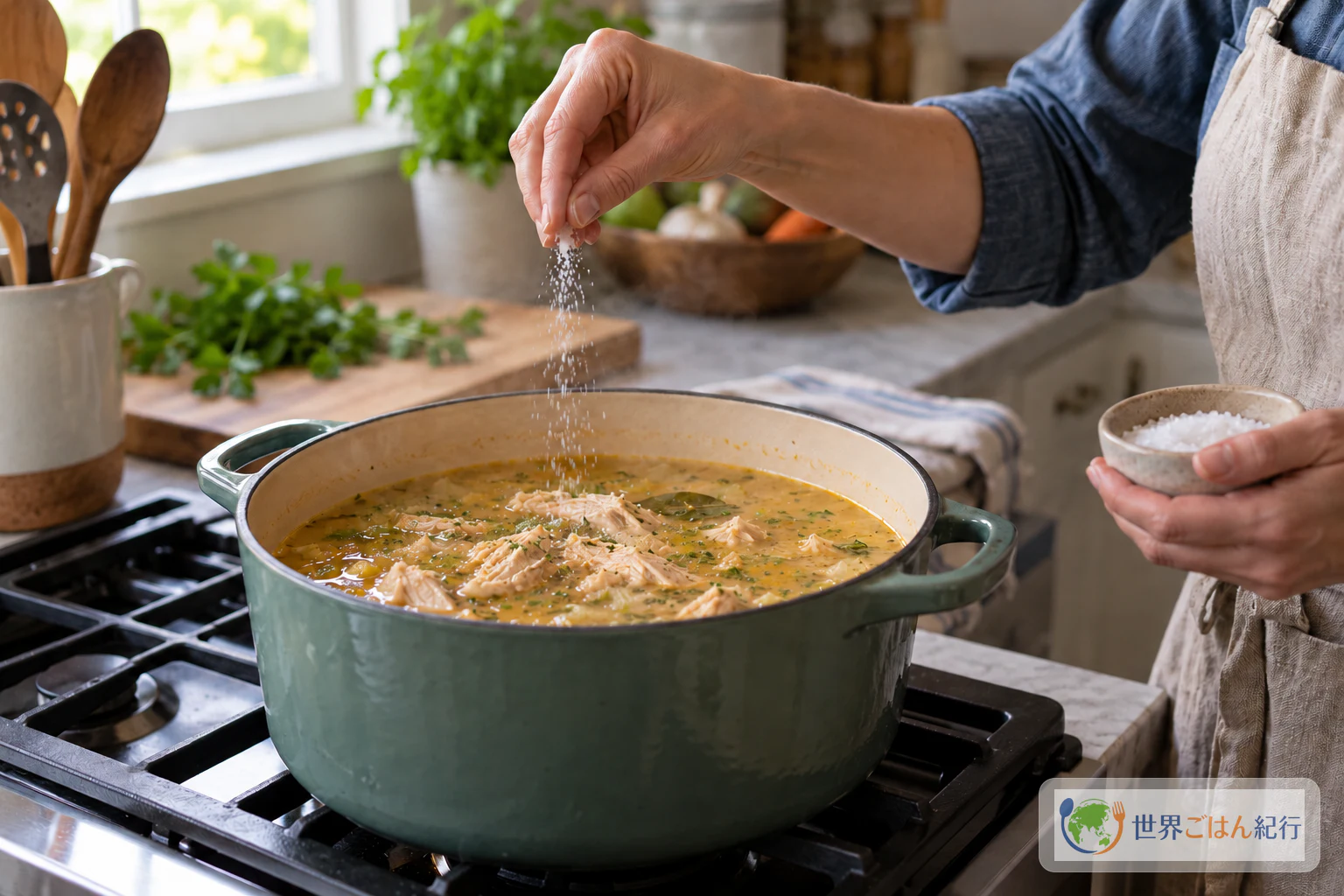
| The broth tastes flat or unbalanced | Salt comes first | Add salt a little at a time, then add the 1 tbsp of gula merah only if you still need it |
| The soup is too hot or not hot enough | The 3 chilies in the paste set the heat in the pot | Next time, adjust the chilies in the paste. For now, use more or less of the pounded chili at the table |
Food Safety and Leftovers
Japan's Ministry of Health, Labour and Welfare gives a general guide of heating meat until the center reaches 75°C for at least 1 minute. It also advises keeping raw meat juices away from other foods. This is general home guidance and does not replace the recipe's cooking times, nor do those times prove that this temperature has been reached.
The recipe gives no storage period, and we don't give one either. For leftovers, the same ministry's general guidance is:
- Use clean utensils to divide the soup into shallow containers.
- Cool it quickly and don't leave it at room temperature for long.
- Reheat soup until it boils.
Variations Within This Recipe
| Choice | Options | What to keep in mind |
|---|---|---|
| Coconut milk | Fresh 1.5 L, or instant 200 ml × 2 plus 1 L water | Use one route only. The amounts differ, and we can't say the results taste the same |
| Heat | Change the 3 chilies in the paste; serve pounded dried chili on the side | Each diner can add more at the table |
| Staple | White rice or lontong | Serve it separately rather than adding it to the pot |
| Beef cut | Sandung lamur or sengkel | Use one cut, for the full 1 kg |
Other published versions
Recipes for empal gentong differ widely, and the versions below are separate formulas. Mixing their amounts into this recipe would produce something none of them published.
| Publisher | How it differs |
|---|---|
| Primarasa | 400 g of fatty beef or trimmings, 1.5 L water strained to 800 ml broth, 500 ml coconut milk, 4 servings, 60 minutes |
| IDN Times | 500 g beef, 1.5 L water, 300 ml low-fat milk, kecap manis and beef stock powder, with thick coconut milk suggested as a change |
| detikFood | 500 g beef and 500 g offal cooked separately, with 500 ml fresh coconut milk |
The optional offal: listed, but not given as a method
The Haji Apud page offers an optional 300 g of one type of offal: babat (tripe), usus (intestine) or kikil (a gelatinous cut). This means one choice at 300 g, not 300 g of each. The page says to cook it separately from the beef with ginger and lemongrass "until cooked", then cut it and set it aside.
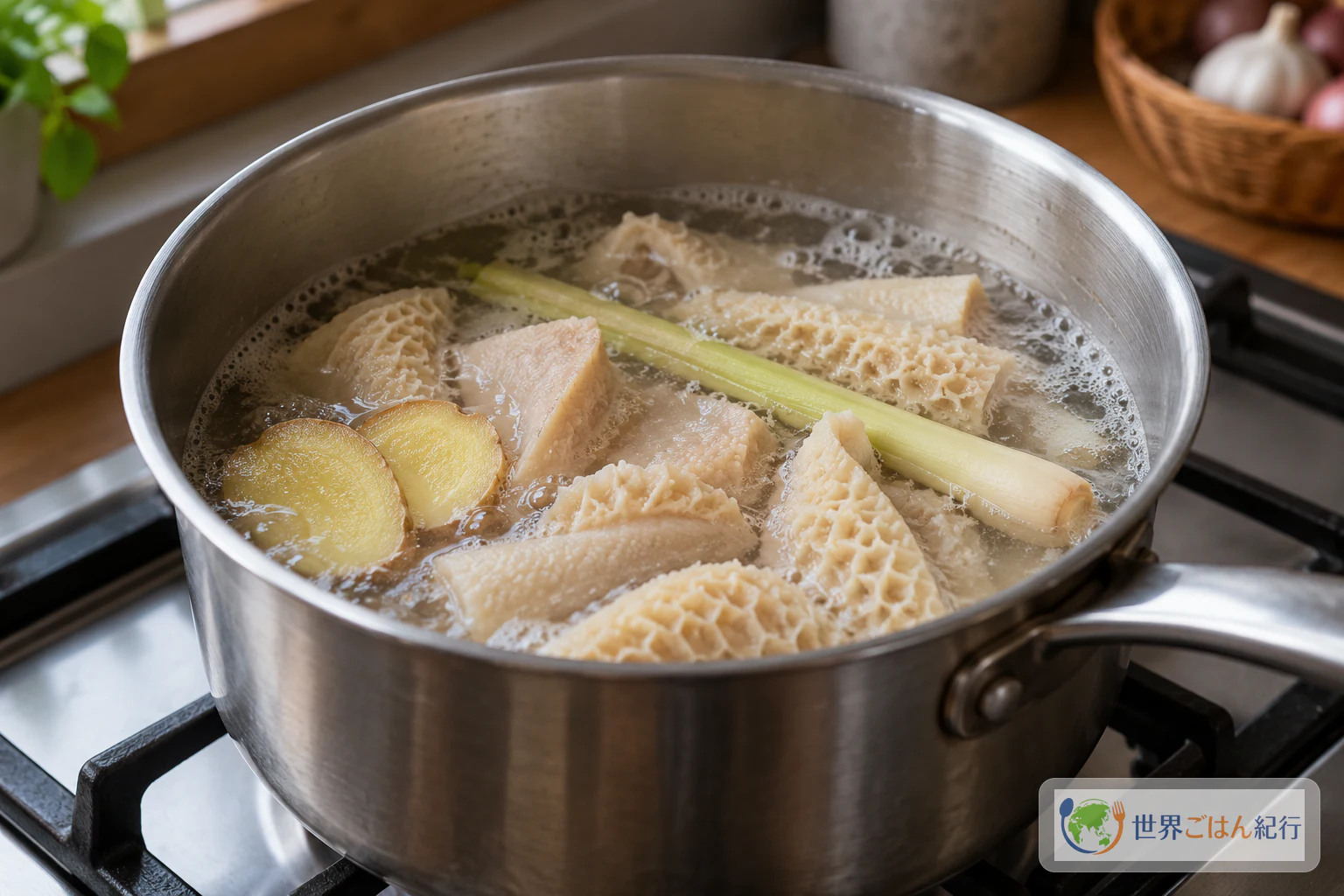
The page doesn't give the amount of ginger and lemongrass, the water, the time, the temperature or any cleaning and preparation steps. Japan's health ministry says meat and organs need thorough heating and notes contamination risks, including on cattle offal other than liver. However, it gives no specific times or temperatures for offal, and the 75°C meat guide above is not an offal rule.
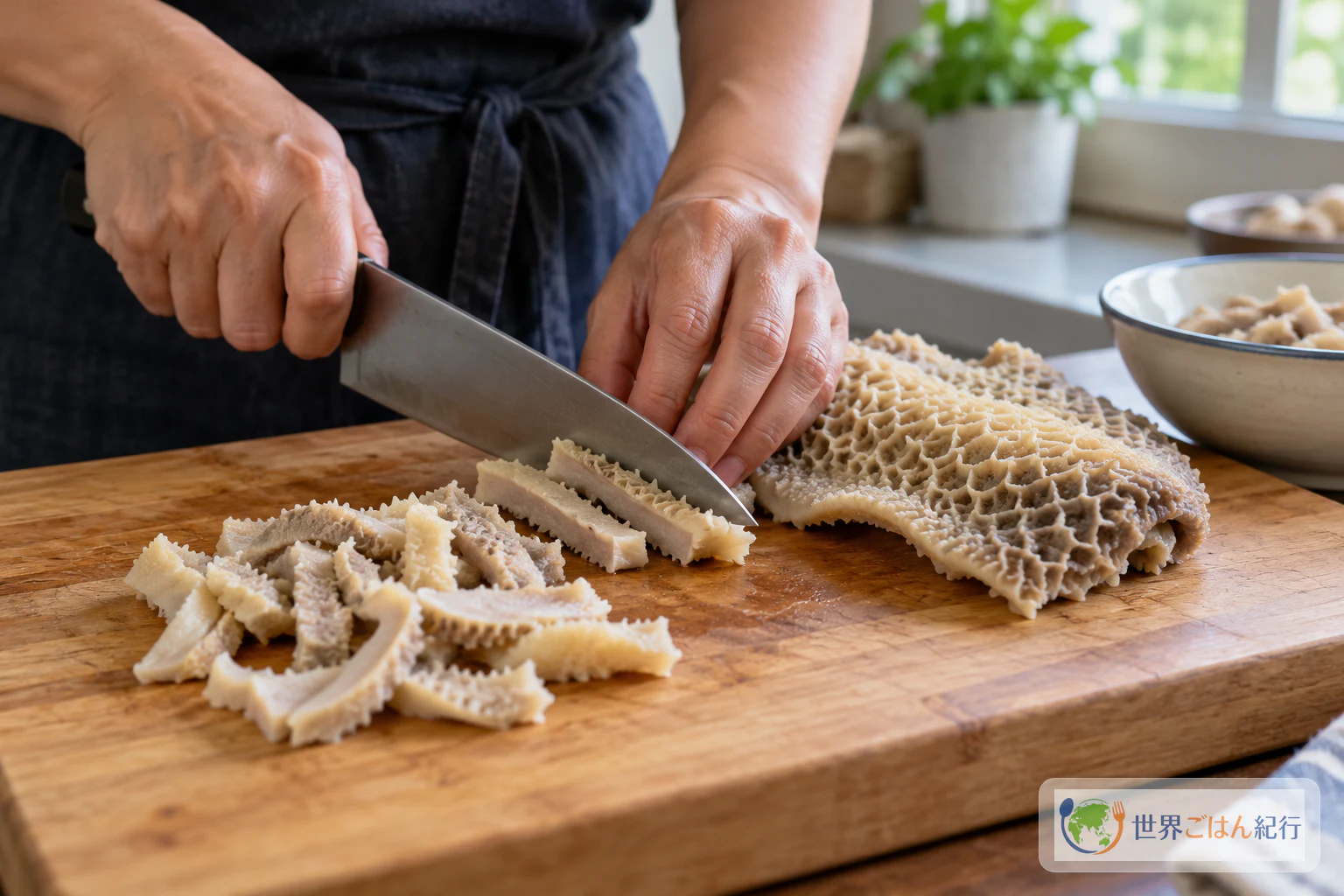
Because those conditions are missing, we don't give offal directions or any assurance about its safety here. The method above and the hero bowl are beef only.
Cirebon and the Gentong
Indonesia's tourism ministry presents Cirebon as a north-coast city in West Java with a history of trade and shipping, and lists empal gentong among its specialties. It's tempting to connect the port's past directly to this soup's spices, but the sources we used don't establish that link.
They also don't confirm a founding date, a religious origin, the origin of the name, a link to any festival, or how often households make the dish. We leave those out. What they do support is simple: a regional soup of beef and coconut milk, traditionally cooked in a clay gentong and found at eateries in the area, with kucai as part of its aroma.
The Haji Apud home version moves that soup into ordinary pots and pans. That makes it possible to cook in a home kitchen, but it isn't the same as cooking in a gentong, so it's best to treat it as its own version.
If this bowl makes you curious about Indonesia's other soups and regional dishes, explore more on our Indonesia page. Soto Betawi from Jakarta, coto Makassar from South Sulawesi and rawon, a black soup built around keluak, are all beef soups with their own identities. Tahu gejrot is a very different dish from the same city.
Frequently Asked Questions
Do I need a clay gentong?
Not for this recipe. The tourism ministry describes the gentong as the traditional cooking vessel, while the Haji Apud home version uses ordinary pots and a pan. We don't claim the two taste the same.
Is offal required?
No. The Haji Apud page lists it as optional, and this method uses beef only. The page doesn't provide enough detail on preparation and cooking, so we don't give offal directions.
Can I use packaged coconut milk?
Yes. The Haji Apud page gives 2 × 200 ml of instant coconut milk plus 1 L of water as an alternative. That comes to 1.4 L, compared with 1.5 L for fresh coconut milk. We keep the difference as published and haven't compared the results.
Is discarding the first boiling water a safety step?
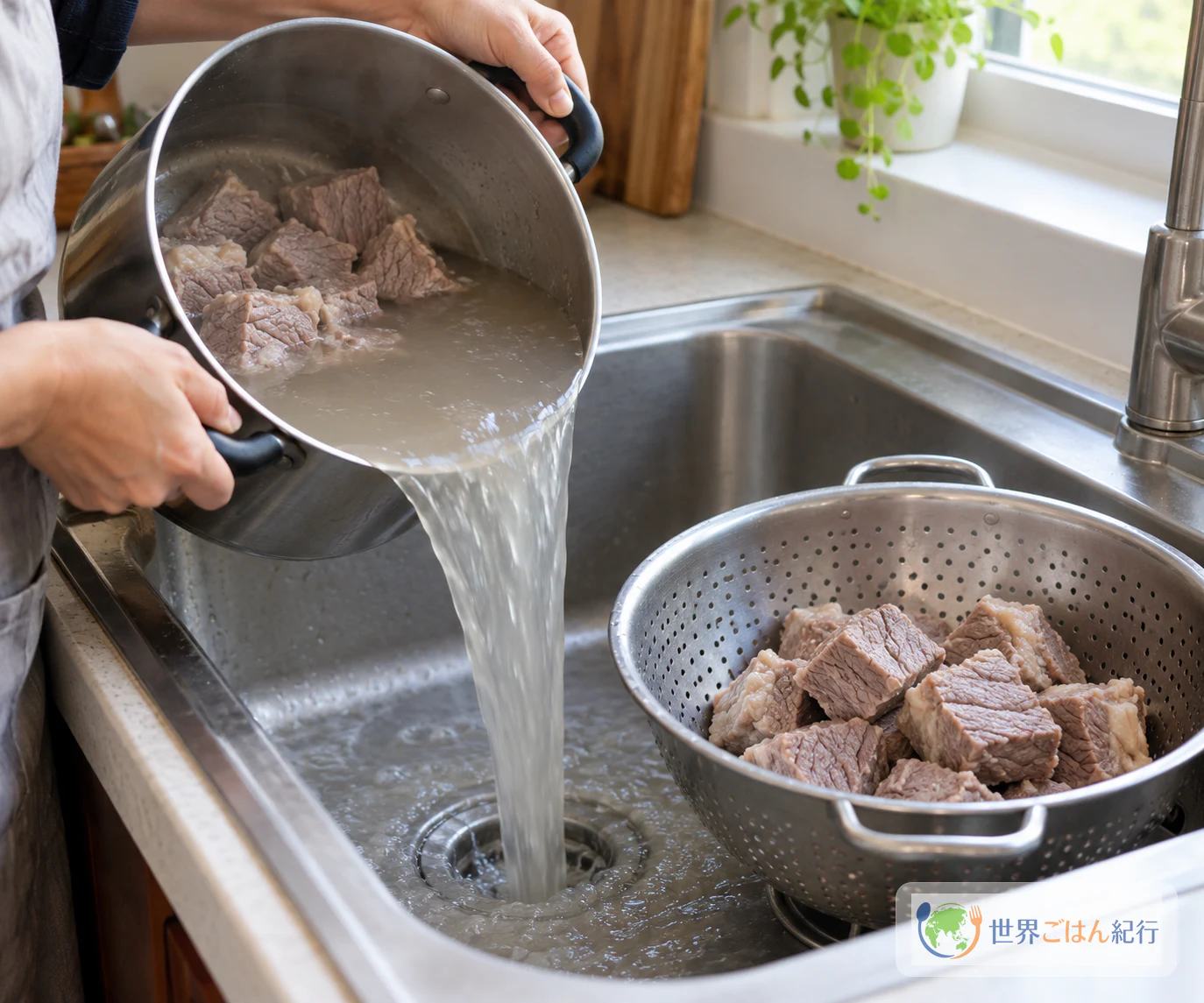
The recipe includes it as part of the method, but we don't present it as a food safety measure. Treat it as a step in the dish, and follow general food safety guidance separately.
Can I adjust the heat?
Yes. The page says the 3 chilies in the paste can be adjusted to taste. Because the pounded dried chili is served on the side, each person can also add heat at the table.
Can I replace kencur with ginger or galangal?
We can't confirm that swap. The recipe lists all three as separate ingredients, and Singapore's National Parks Board identifies kencur as Kaempferia galanga. Your best option is to look for it by name.
How long does the whole recipe take?
The page doesn't state a prep time or a total time, so we don't print one. The times in the steps apply to individual stages. Cutting, grinding and preparing the garnishes have no stated times.
How many days will it keep?
The recipe doesn't say, and we don't guarantee a number of days. Follow the cooling and reheating guidance in the leftovers section.
Is this the authentic recipe for all of Cirebon?
No single recipe here can claim that. This is one published home version from the Haji Apud site, and the other published versions above differ considerably in their ingredients and amounts.
Sources
- Tim Redaksi Haji Apud, "Cara Membuat Empal Gentong Cirebon yang Otentik: Resep Lengkap Step by Step." The home recipe used here: ingredients, amounts, branches, order and stated times. https://hajiapud.co.id/blog/cara-membuat-empal-gentong-cirebon-yang-otentik-resep-lengkap-step-by-step
- Primarasa / GCM Group, "Resep Empal Gentong." A separate version, used for comparison only. https://www.primarasa.co.id/lauk-utama/resep-empal-gentong
- Dimas Hutama / IDN Times, "Resep Empal Gentong Rumahan, Gurih Harum Kuahnya Menggugah Selera." A separate home version with low-fat milk, used for comparison only. https://www.idntimes.com/food/recipe/resep-empal-gentong-rumahan-gurih-harum-kuahnya-menggugah-selera-01-rbmsh-1k5sws
- Niken Widya Yunita / detikFood, "Resep Empal Gentong yang Empuk Gurih untuk Sajian Ramadhan." A separate version with beef and offal cooked separately, used for comparison only. https://food.detik.com/info-kuliner/d-4989653/resep-empal-gentong-yang-empuk-gurih-untuk-sajian-ramadhan
- Ministry of Tourism of the Republic of Indonesia / Indonesia Travel, "Cirebon, Kota Pesisir dengan Warisan Akulturasi Budaya yang Beragam." Cirebon's location and trade history, and empal gentong as a local specialty traditionally cooked in a clay gentong. https://www.indonesia.travel/id/id/destination/java/west-java/cirebon
- Ministry of Tourism of the Republic of Indonesia / Indonesia Travel, "Mudik Lewat Jalur Pantura? Cobain 6 Kuliner Daerah yang Menggugah Selera!" Eateries around Cirebon, and the beef, coconut milk broth and kucai aroma of the dish. https://www.indonesia.travel/id/id/travel-ideas/gastronomy/mudik-lewat-jalur-pantura-cobain-6-kuliner-daerah-yang-menggugah-selera
- Ministry of Health, Labour and Welfare, Japan, "家庭でできる食中毒予防の6つのポイント" (six points for preventing food poisoning at home). General guidance on heating meat, handling raw meat juices, and cooling and reheating leftovers. https://www.mhlw.go.jp/stf/seisakunitsuite/bunya/kenkou_iryou/shokuhin/syokuchu/01_00006.html
- Ministry of Health, Labour and Welfare, Japan, "食肉や内臓の生食は食中毒のリスクがあります" (eating raw meat and offal carries a risk of food poisoning). General guidance on thorough heating and contamination risks in cattle offal other than liver. https://www.mhlw.go.jp/stf/seisakunitsuite/bunya/0000050019.html
- National Parks Board Singapore (NParks), "Sand Ginger." Identification of kencur as Kaempferia galanga, a spice used in Indonesian and Malaysian cooking. https://gardeningsg.nparks.gov.sg/gardening-resource-library/sand-ginger/
- Koji Tanaka, "Kemiri (Aleurites moluccana) and Forest Resource Management in Eastern Indonesia: An Eco-historical Perspective," Kyoto University, 2002. Identification of kemiri as candlenut and its use as a seasoning in Indonesian cooking. https://www.asafas.kyoto-u.ac.jp/dl/publications/no_02/p005_023.pdf