
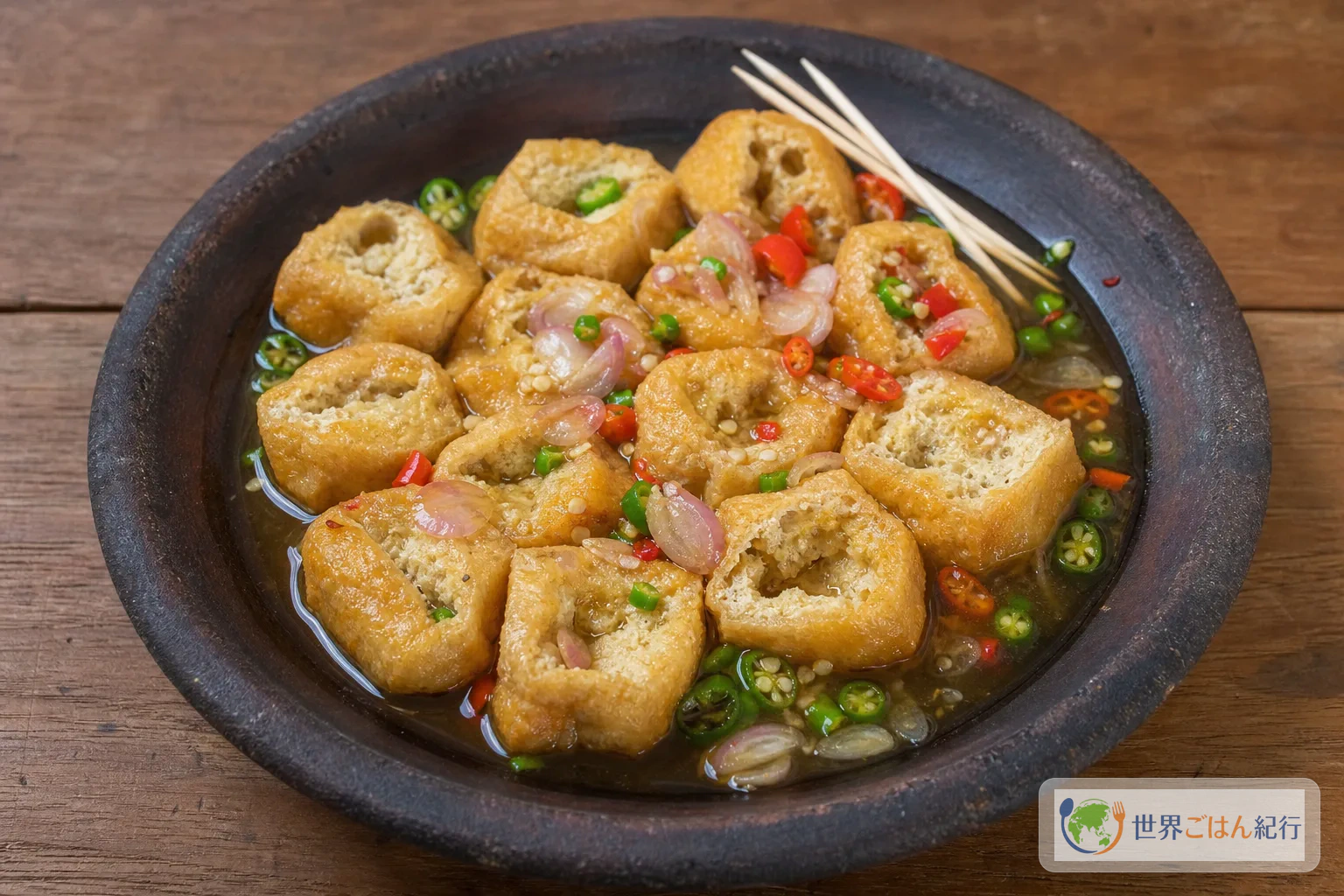
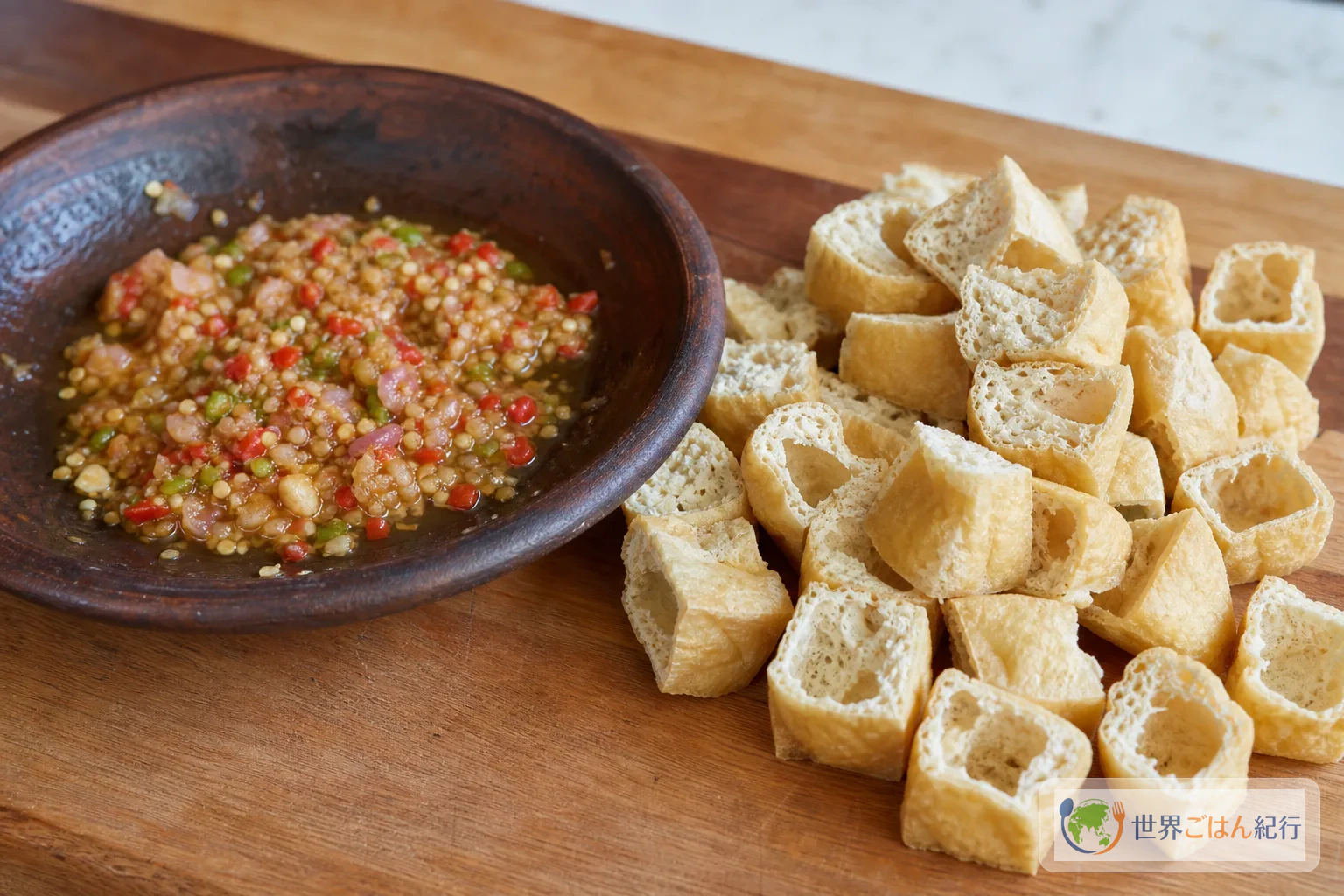
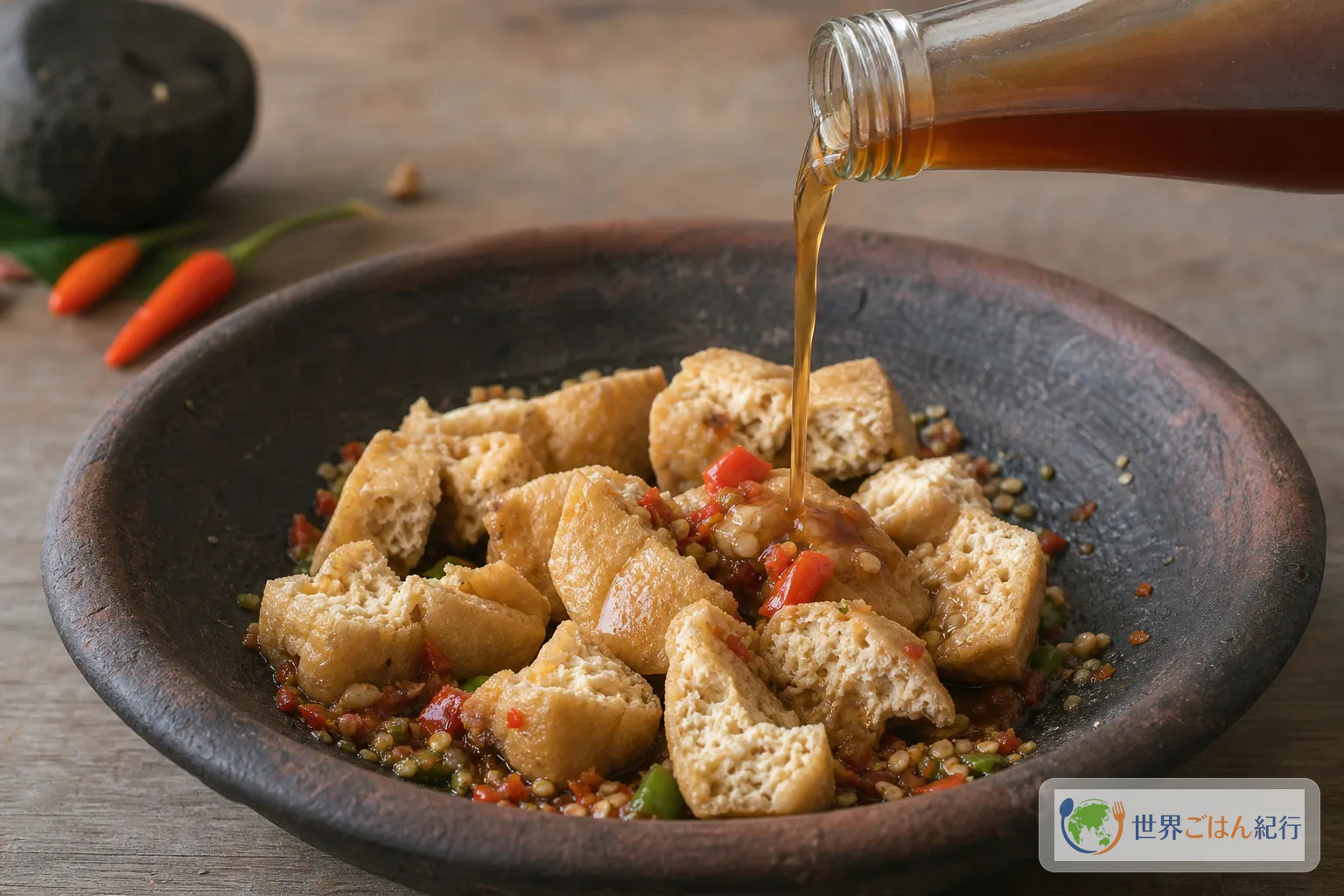
Tahu Gejrot Begins with a Small Cobek Plate
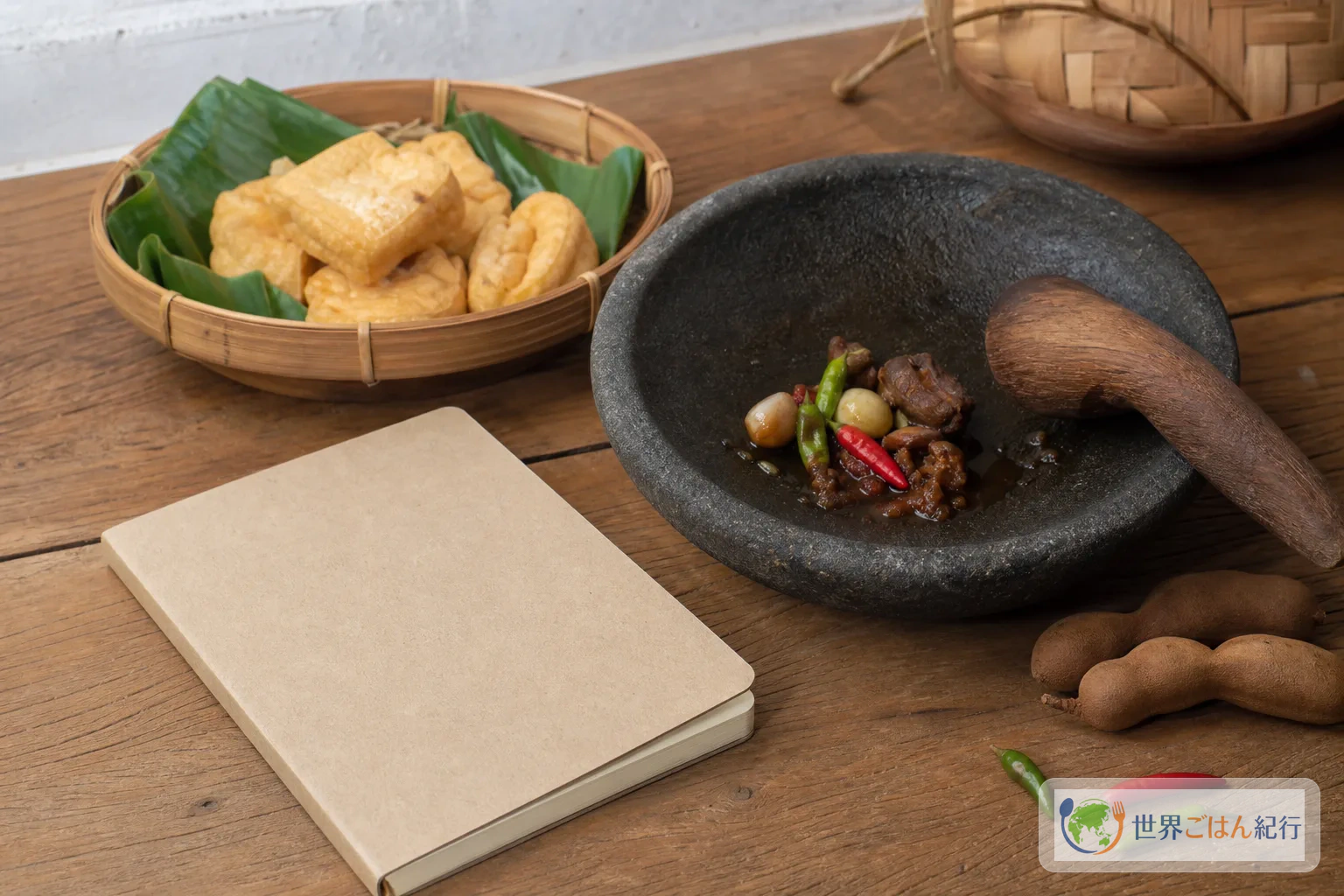
Cut fried tofu into bite-size pieces, coarsely crush chilies and aromatics, and pour on a sweet, sour, slightly spicy sauce. Judging by the ingredients alone, tahu gejrot is a very plain dish.
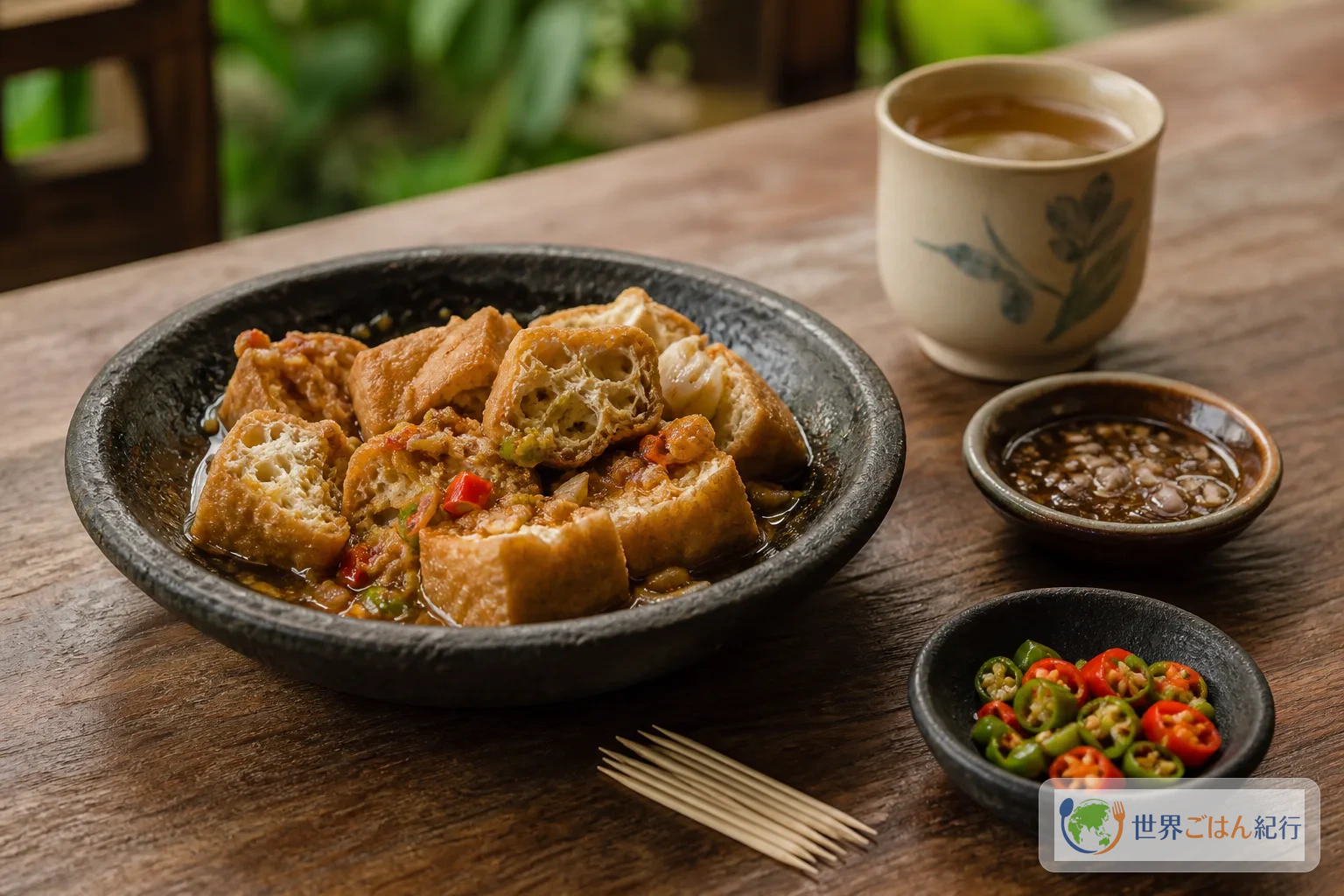
But if you wait just a little after plating, the surface is still crisp while the sauce seeps into the holes of the tofu. First comes sweetness, then a fruity sourness of tamarind, and last the green heat of green chilies. You can tell it is not a dish coated thickly in a rich sauce but one where a thin sauce soaks in and the texture is kept.
The home of this dish is Cirebon, a port town in West Java. The English article of the Indonesian tourism board also introduces it as a Cirebon specialty, fried tofu paired with a sweet, sour and spicy sauce. The official profile of Cirebon city explains that as a port on the north coast it was a place where Javanese, Sundanese, Arab, Chinese and European cultures crossed, which gives a clue to seeing the dish not as a single point on a map but as a taste of a place where people and goods mix.
There is an interesting variation in the origin of the name. An introduction by the West Java Tourism and Culture Office explains that it was named for the sound "jrot" of sauce being poured from a bottle. On the other hand, a book from BRIN that treats Indonesian culture records a different telling, that it comes from the sound of crushing aromatics in a small clay dish. Rather than deciding on one, it is more natural to take it that both the sound of crushing and the sound of pouring remain in the memory of the dish.
What I want to reproduce when making it at home is also close to these two sounds. Do not turn the chilies into a smooth paste. Do not reduce the sauce too much; pour it thin at the end. Do not toss so much that the tofu breaks; get the sauce into the holes and the unevenness of the surface.
This article is built as a snack for 4 servings. If you can find local tahu pong, that is quickest; if not, you can make it with thick fried tofu (atsuage). But thick fried tofu has smaller holes and holds less sauce. Choosing with that difference in mind makes clear which ingredients to buy and which to pass on.
- The sauce is made thin, with tamarind, palm sugar or dark brown sugar, and kecap manis.
- For the tofu, tahu pong, with its holes, gets closer to the local texture, and thick fried tofu lets you start with a nearby supermarket.
- Decide the heat at the stage of crushing the chilies, and let people add more at the table.
- It is a dish for a day when you can eat it right after it is done. If you are looking for a make-ahead main dish, another dish suits better.
To widen the Indonesian table, gado-gado, which eats vegetables and tofu with a rich sauce, and sate ayam, which coats meat in the aroma of sweet soy sauce, are also easy pairings. Tahu gejrot is lighter than those two, and you can set it out as a mid-afternoon bite or between dishes without adding carbohydrate.
Buy Kecap Manis, or Approximate It with What You Have
Made with ordinary dark soy sauce alone, the saltiness comes forward and the sauce tends to look tightly black rather than red-brown. Kecap manis is a sweet Indonesian soy sauce with sweetness and viscosity. In tahu gejrot you use only about 2 tbsp, but it also carries over to the sauce for nasi goreng and satay.
The condition for buying is that you plan to cook Indonesian food two or three more times and want to enjoy even the thickness of sweet soy sauce as part of the flavor. If you are trying it only once, you can substitute by dissolving 2 tsp dark soy sauce, 10 g brown sugar and 15 ml water over low heat. But the aroma and viscosity will not be the same. If you do not expect to use up a bottle, it is enough to make it with the substitute first and then decide whether to buy.
Ingredients (serves 4)
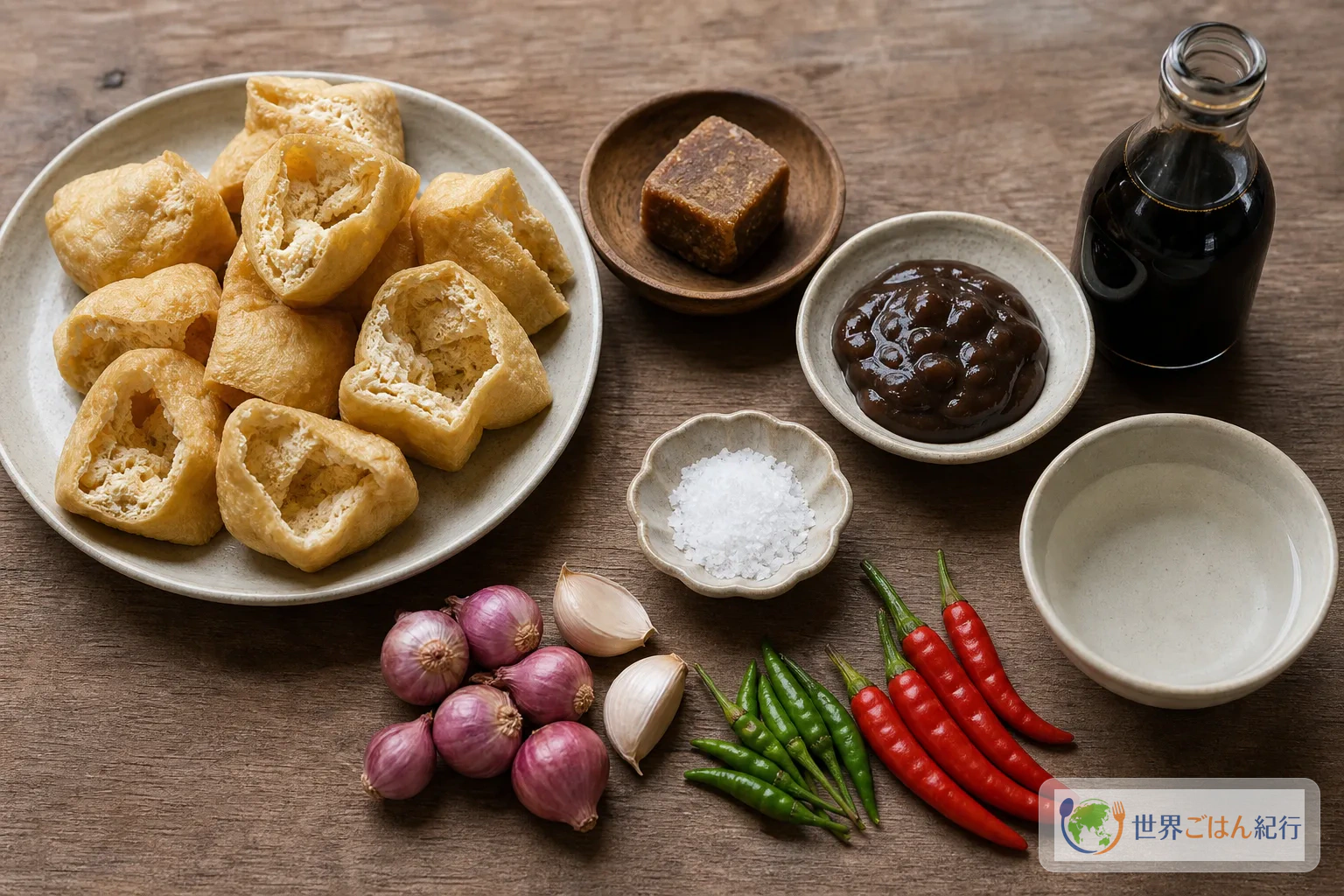
As a snack for 4, use 16 pieces of tahu pong. That is about 4 pieces per person, so as a side dish at a meal you may divide it for 2 servings.
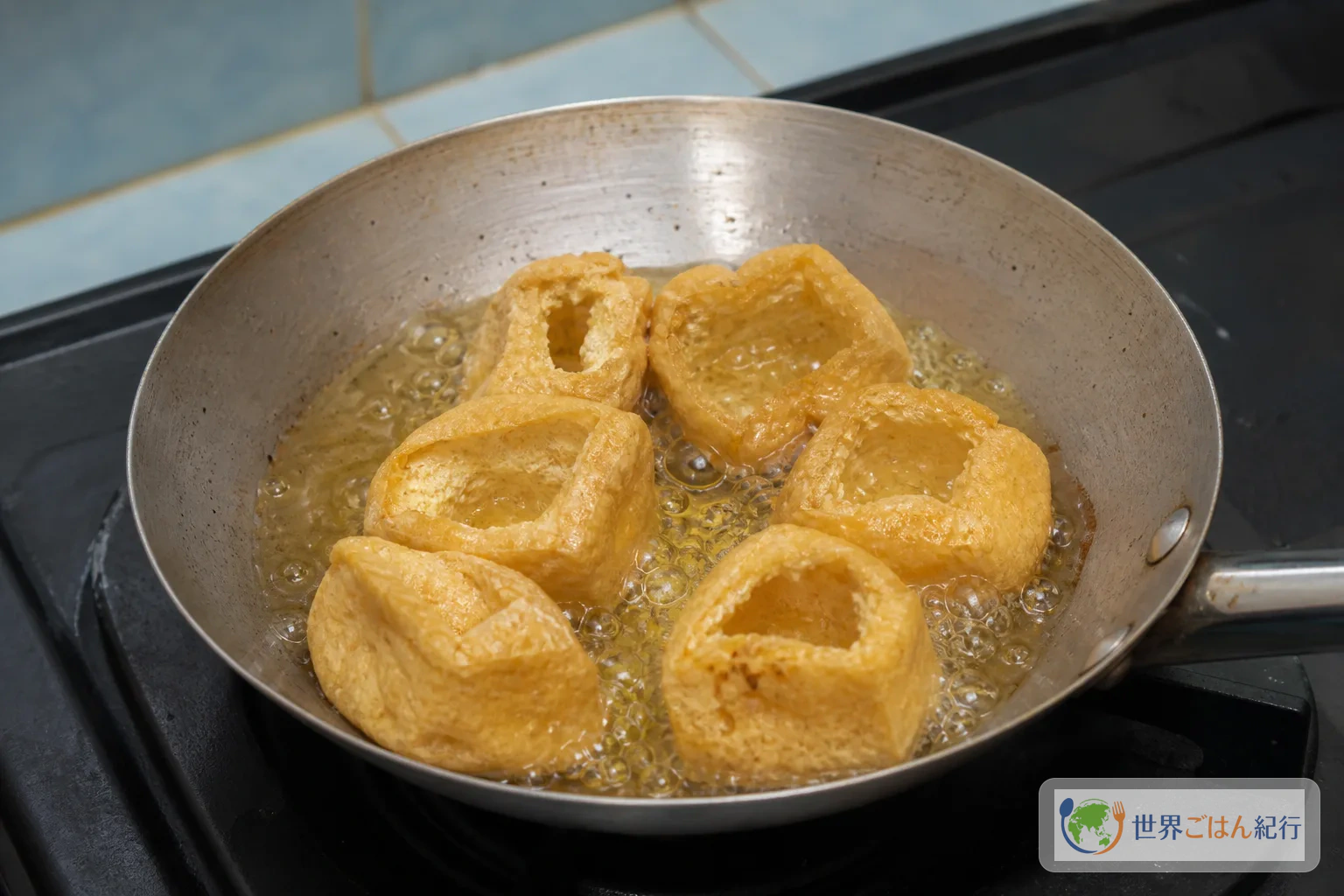
Tahu pong is fried tofu that has become hollow inside. Japanese aburaage is thin and thick fried tofu is solid inside, so the closest substitute is tofu puffs or the fried tofu used in Chinese cooking. If you prioritize availability, thick fried tofu is fine, but take care over the step of letting the cut faces absorb a little of the sauce.
Do not crush all 6 chilies from the start. The heat differs by variety, and even with the same number the warmth that lingers in the mouth changes. Start with 4 green chilies and 1 red chili, then taste and add the rest, and setting aside a portion for children first is not difficult.
Tamarind Is the Core of the Sourness
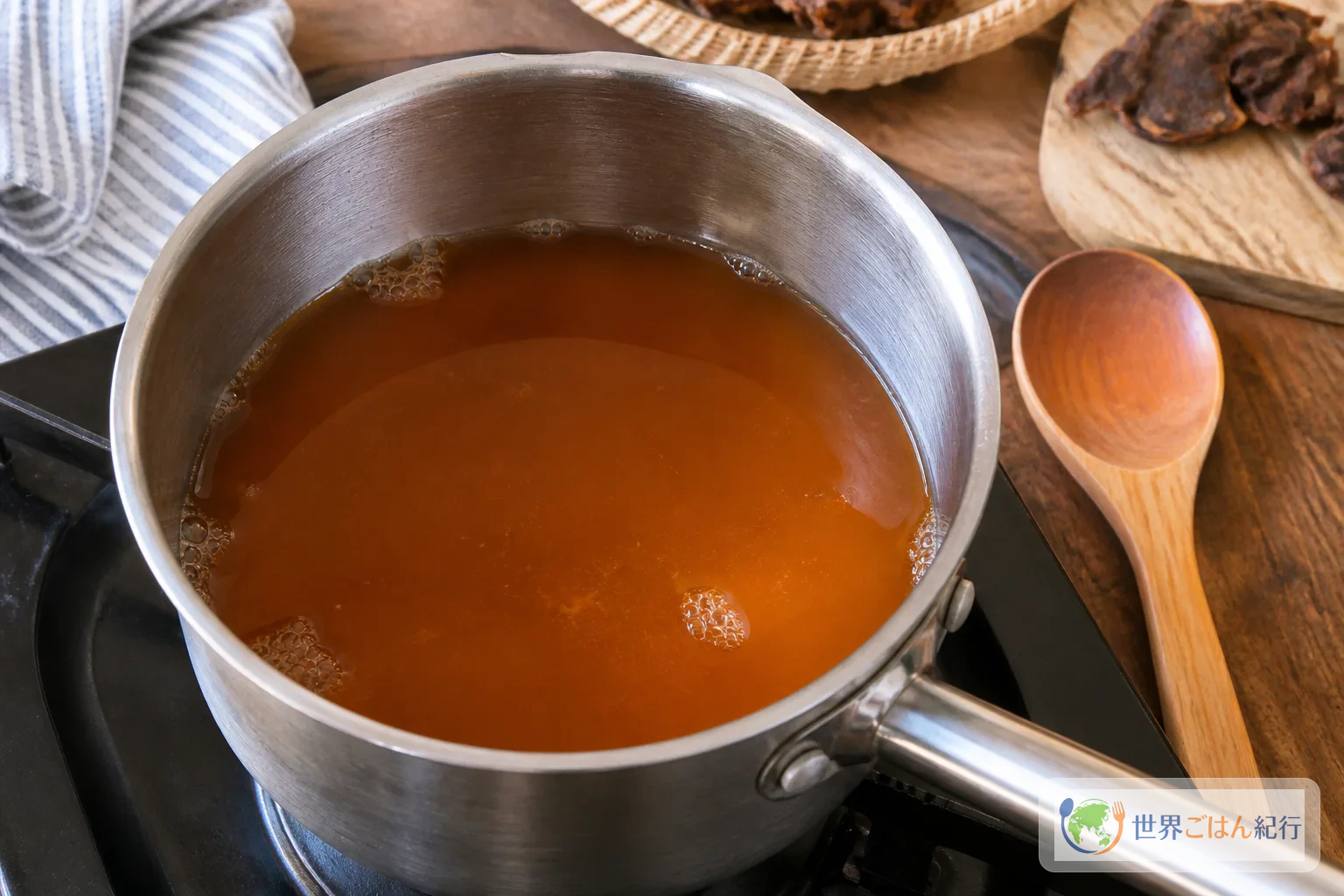
Vinegar or lemon juice can also make sourness. But tamarind has a round, fruity sourness with a slightly earthy aftertaste. When a sauce of only sweet soy sauce and sugar feels heavy, restoring tamarind rather than increasing the sourness gives the dish its outline.
The condition for buying is to use it not only for tahu gejrot but also for pad thai and Indonesian sauces. For just one dish, you can try it with block tamarind or rice vinegar and know the direction of the flavor before it is too late. Tamarind paste differs in strength and saltiness by product, so do not put in the whole amount from the start; taste the sourness and adjust.
Tofu and kecap manis contain soy. Kecap manis may contain wheat, sesame and so on depending on the product, so if you have a food allergy, check the label of the product you buy. The nutrition per quarter of the amounts above varies greatly with the amount of oil absorbed and the labeled values of products, but the estimate for the whole batch is about 1,180 kcal energy, about 42 g protein, about 72 g fat and about 96 g carbohydrate. This is an estimate calculated from the ingredients and does not replace the nutrition label of a product.
Method
Make the sauce first, re-fry the tofu, coarsely crush the aromatics and then combine them. If you pour the sauce on the tofu while it is hot, the surface goes soft quickly, so the time to let the sauce cool is part of the method.
Cooking Tips: Get It into the Holes Rather Than Making It Richer
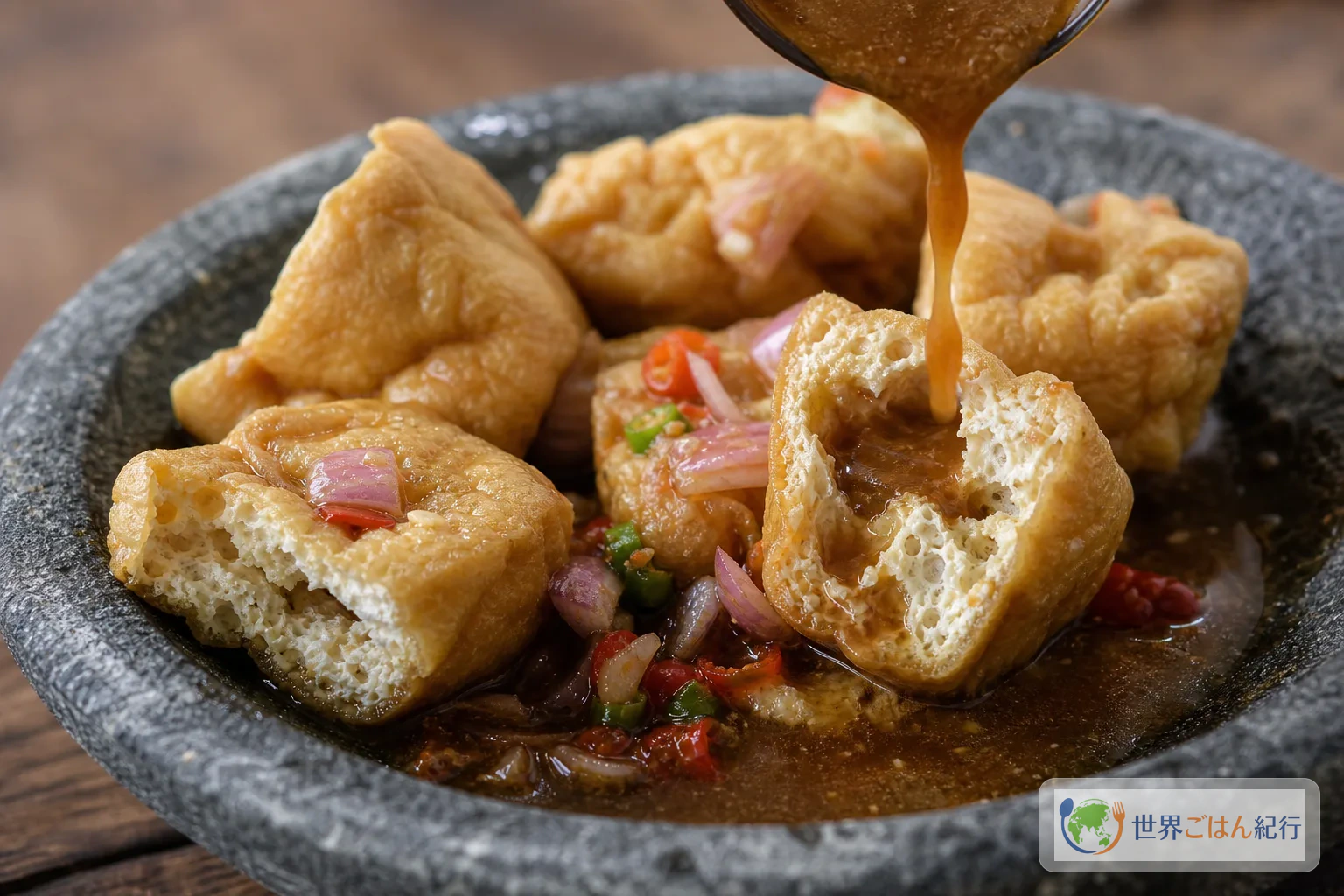
When tahu gejrot turns watery, you want to fix it by reducing the sauce. But a thick sauce only covers the surface of the tofu and erases the difference in texture. The order to fix it is the dryness of the tofu, the particle size of the aromatics and the amount you pour, rather than the sauce's thickness.
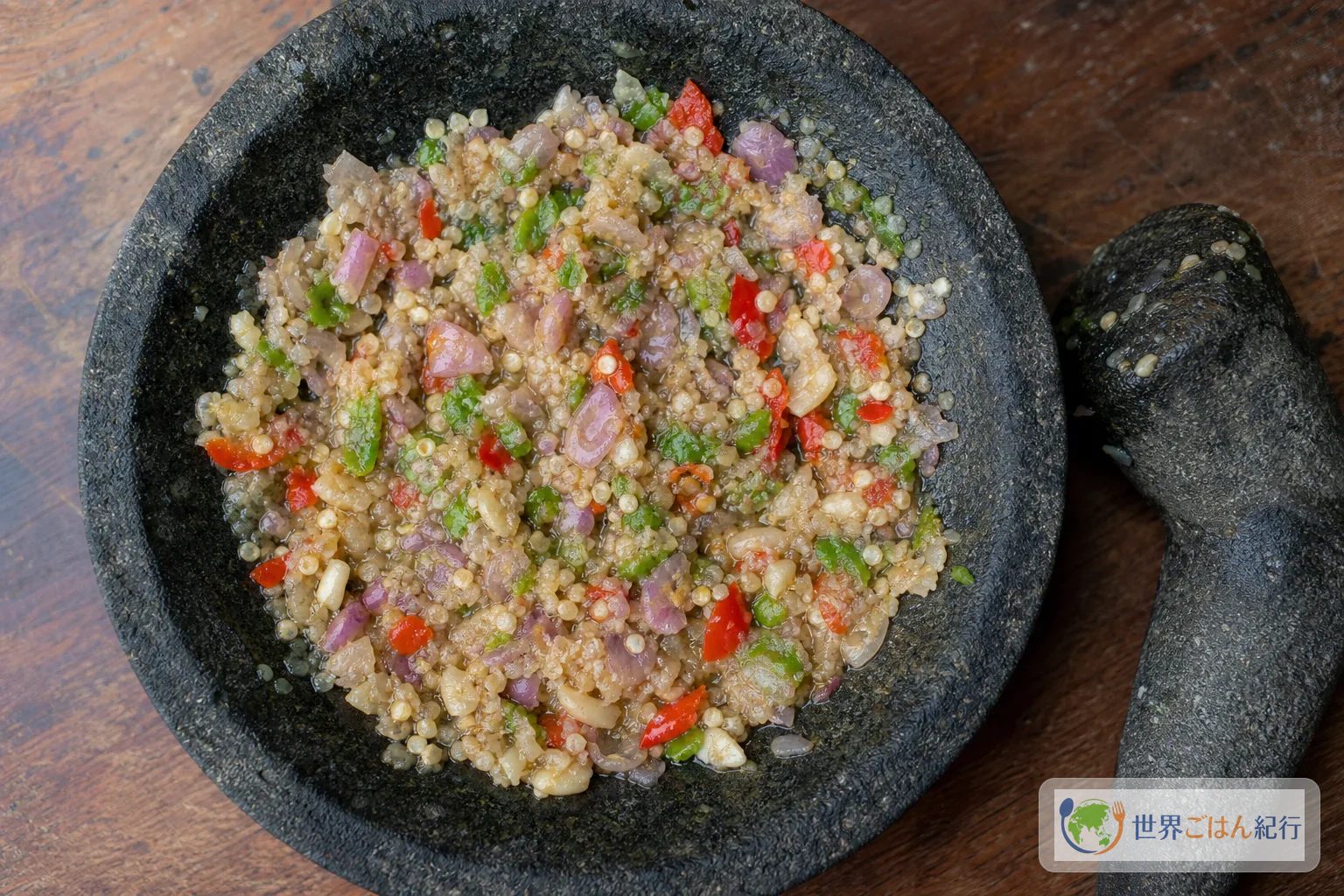
The more you want the heat to be even and quick, the more you want to turn the mortar hard. If you leave 2–4 mm particles, the sweet scent of the onion, the garlic and the chili come in turn in one bite. With a food processor, do not run it continuously; pulse just 1–2 times for 1 second each.
A sauce that looks just right in the pot tends to be heavy once poured on the tofu. The guide is that it falls loosely from a spoon and collects thinly at the bottom of the dish. If it tastes weak, before increasing the sugar add a pinch of salt, then 2–3 g more tamarind.
Adding more sauce makes the flavor stronger, but wet tofu lets the coating absorb moisture quickly. If the corners are soft and the surface sinks when you lift it with chopsticks, rewarm it in 170°C (340°F) oil for about 1 minute before pouring on the sauce. After rewarming, let the steam escape on a rack before plating.
For this dish alone, you can make it by mincing the aromatics with a knife and pressing with the back of a spoon. The condition for buying is that you will keep making sambal, the aromatics for gado-gado and Thai pastes, and want to get coarse, even particles of onion and chili. The condition for passing is that you have no storage space and want to try it just once this time.
On days when time passes after you make it, keep the tofu and the sauce separate. If you put the sauce on the tofu first and refrigerate it, the coating on the surface does not come back easily and the heat spreads through everything, which makes adjustment hard. Right before serving, first pour 80 percent, and if it is not enough, drizzle on the rest.
Variations and Substitutes: Choose What to Keep Close
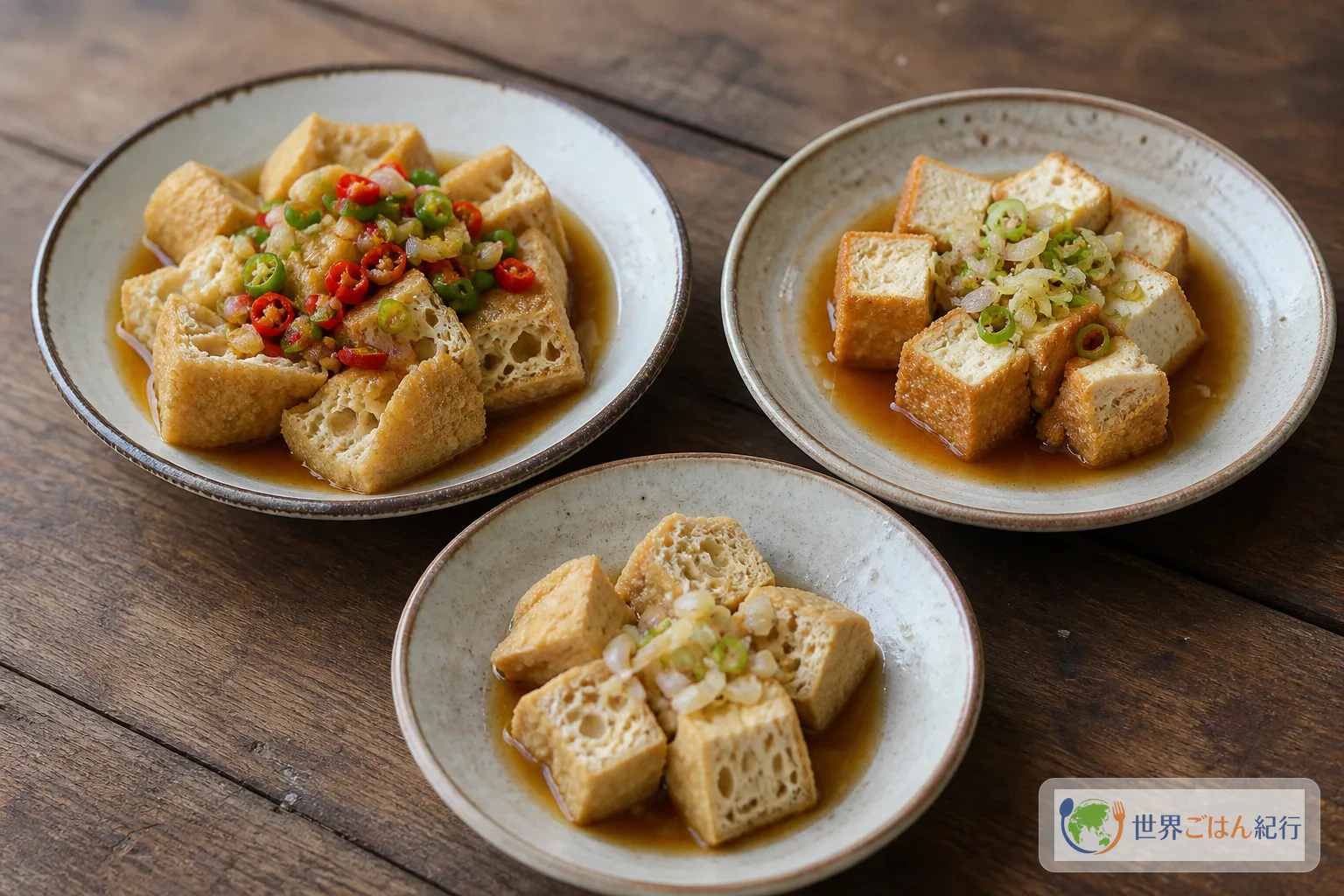
When you cook it at home, there is no need to replace everything with local ingredients. If you decide first which difference moves the center of the flavor, the outline of the dish does not blur even with substitutes.
| Approach | What changes | Difference in the result | Good for |
|---|---|---|---|
| Closer to Cirebon | Tahu pong, tamarind, kecap manis | Sauce enters the holes and the sweet-sour and heat stand out | Those who prioritize the local texture |
| Made from ordinary groceries | Thick fried tofu, brown sugar, rice vinegar | The cut face is dense and the flavor is cleaner | Those who want to start at a nearby supermarket |
| Milder heat | 2 green chilies, seeds removed | The aroma stays and the heat on the tongue is weaker | Those who eat the same dish as a family |
| Make-ahead leaning | Store the tofu and sauce separately | Pouring right before keeps the texture of the surface | People who eat at different times |
Adjustment When Using Thick Fried Tofu
Thick fried tofu is denser than tahu pong and has fewer entrances for the sauce, so after cutting into 2 cm cubes set the cut faces up. Re-fry the surface in oil to dry the corners, and after coating with the aromatics, do not pour all the sauce at once. Pour half, wait 1 minute, see whether it has gone into the cut faces, and then add the rest.
If you crumble thick fried tofu finely, the sauce clings, but it moves away from the tahu gejrot way of eating, "dry outside, sauce inside." Keeping the shape lets you enjoy the difference of the substitution.
When Substituting Vinegar for the Sourness
In place of 15 g tamarind, use 2 tsp rice vinegar and 10 ml water. Vinegar's aroma is linear, so do not cook it long in the pot; add it after the sugar has dissolved and the heat is off. The same goes for lemon or lime: add it little by little after the sauce has cooled slightly at the end.
The flavor works, but the round sourness and earthy aroma of tamarind are weaker. Eating a plate with the sourness substituted and then deciding whether to buy tamarind or pass keeps the shopping from running ahead of you.
The Heat Can Be Moved to a Separate Dish
With all the chilies left out it becomes sweet-and-sour fried tofu. If you do not want to remove the heat completely, use only 2 green chilies when crushing the aromatics and put the rest sliced on a separate plate. The first plate is not made too hot, so children and people not used to spice can eat the same tofu.
This is a method that moves only the heat to the table and keeps the axis of tamarind, sugar and salt.
The Background That Made This Dish the Taste of Cirebon
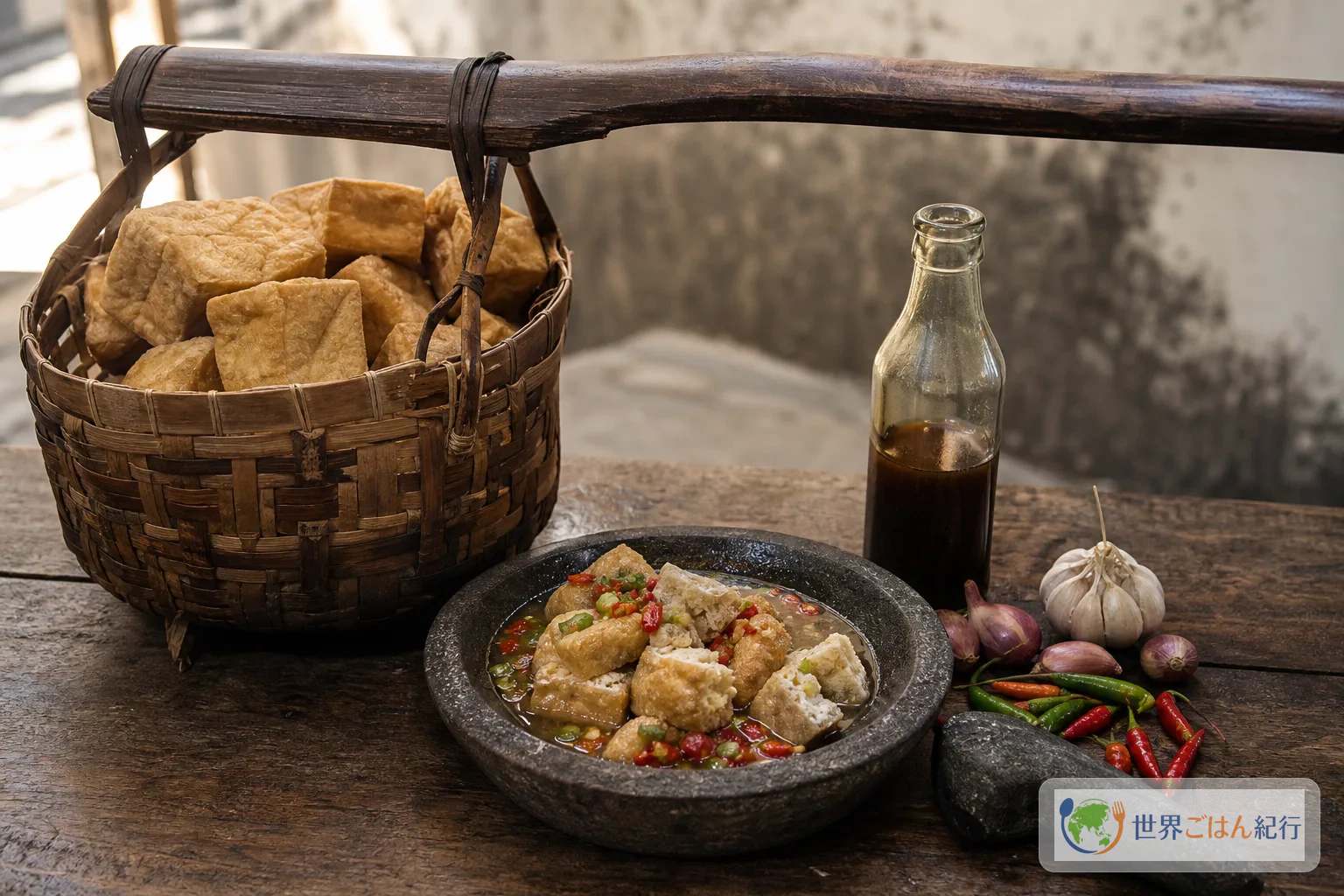
It is a dish whose origin is hard to explain with a single founder or a fixed year. Depending on the source, the explanations of which area of Cirebon it spread from and which sound the name came from differ a little. That ambiguity is also part of the character of a dish made at street stalls and spread by word of mouth.
The Indonesian cuisine book published by BRIN introduces tahu gejrot as a snack around Jatiseeng village and Ciledug in Cirebon Regency. It is recorded as a dish of fried Sumedang-type tofu combined with palm sugar water, shallots, garlic, chilies and salt, and also includes the often-told story that a new snack was born because the inside of the tofu became hollow. This is one recorded telling, and not every source shows the same process of origin.
The West Java Tourism and Culture Office's introductory article treats Cirebon as one center of north-coast food culture and explains the method of coarsely crushing and combining palm sugar water, tamarind, shallots, garlic and chilies for tahu gejrot. The same office also reports that tahu gejrot was recognized as national intangible cultural heritage in 2025. A small dish eaten while walking around is thus treated as regional memory beyond the scope of home cooking.
There is a lightness to the way it was sold on foot, too. In the past it was sold using wooden poles and baskets, and now it has become known while moving among stalls, shops and food events. It is not a dish simmered for hours in a big pot; it is fried tofu, crushed aromatics and sauce combined on the spot, so the dish and the steps become the scene of the table.
I have not confirmed here a source that ties Cirebon's diverse background as a port town directly to a single plate of tahu gejrot as cause and effect. Still, that the city's official profile records the passage of multiple cultures, and that each source speaks of street stalls and a regional spread, gives grounds to think of this taste not as belonging to one closed shop but as a dish handed along within the land.
So when you cook it at home, it is not the only right answer to make every ingredient the same. Whether to choose tofu with holes or switch to thick fried tofu. Whether to buy the round sourness of tamarind or just try the direction with rice vinegar. Whether to put the chilies outside the plate or mix them in from the start. Deciding these small choices yourself is the pleasure after knowing the background of the dish.
Storage and Serving: Do Not Rush the Finish
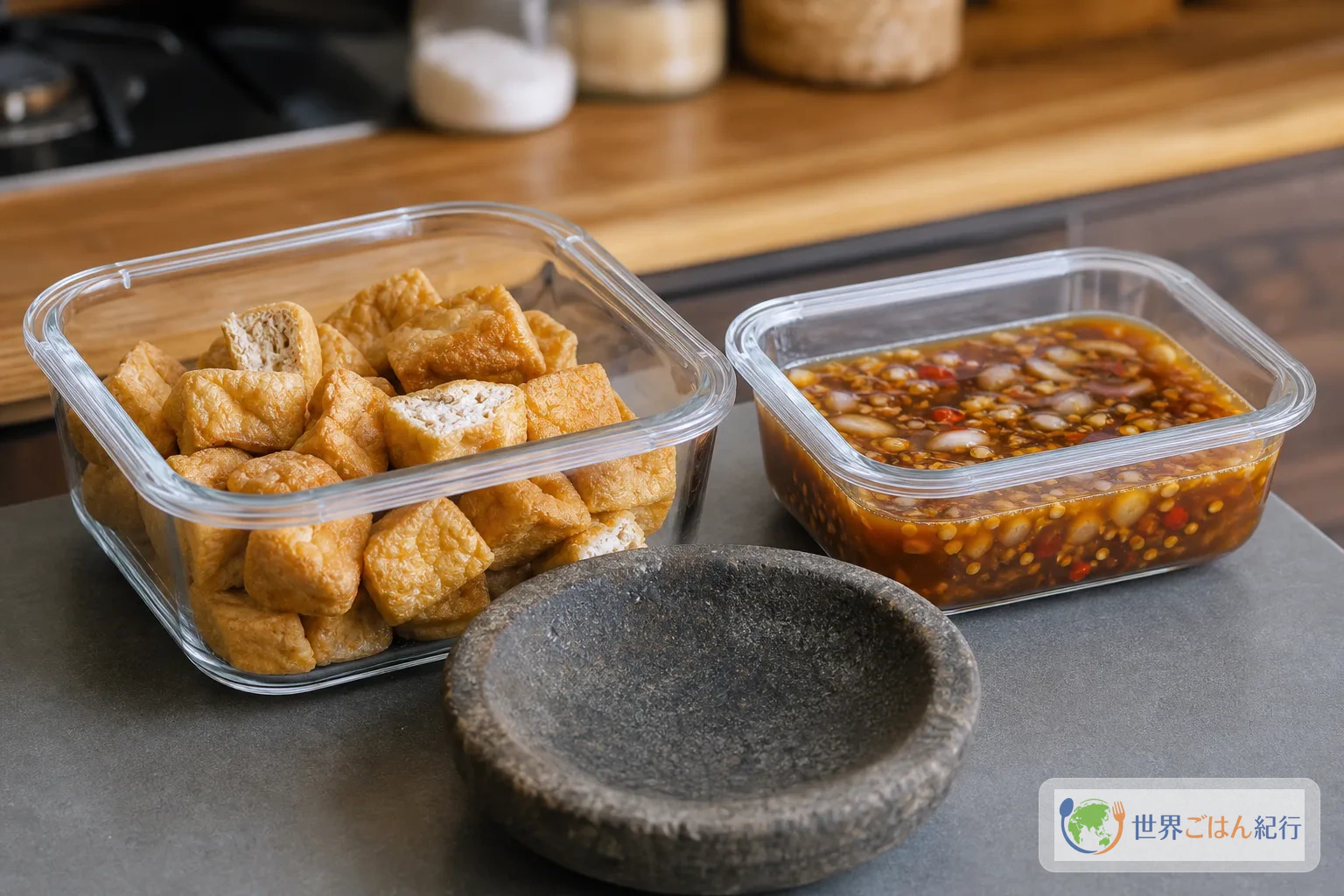
From the moment it is done, the texture of the surface of tahu gejrot changes. If storing, separate the fried tofu, the aromatics and the sauce. If the sauce and aromatics are mixed, put them in a clean container with a lid and refrigerate once cooled. Cool the tofu well on a rack and put it in a separate container.
To eat, put the tofu in a skillet over medium-low heat and warm for 2–3 minutes until the surface dries and the corners come back. Warm the sauce over low heat in a small pot without boiling, back to slightly warmer than body temperature. Making the temperature gap between the two small keeps the coating from suddenly absorbing moisture, better than pouring hot sauce on cold tofu.
Eat leftovers within the day you made it or the next day as a guide. Do not use anything left long at room temperature, or anything with a change in smell or stickiness. A sauce mixed with raw shallots and chilies is easier to manage, in aroma and in safety, if made in small batches.
For serving, a shallow dish suits better than a deep bowl. Do not pile the tofu, and leave a place where the sauce runs thinly across the bottom. Putting out toothpicks gives a street-snack way of eating and keeps you from turning it again and again with chopsticks and breaking the coating.
If serving it as a small bite, add unsweetened tea or a small amount of plain rice. On a day you eat a proper staple, as a side to nasi goreng (in Japanese) or nasi uduk, reducing the tofu to about 3 pieces per person keeps the table from getting heavy.
Frequently Asked Questions
Can I make it with aburaage or firm tofu?
Aburaage is thin, and firm tofu is watery as it is, so thick fried tofu is easiest as a substitute for tahu pong. If you use firm tofu, wrap it in paper towels, set a weight on it and drain in the refrigerator for about 30 minutes before cutting into 2 cm cubes. There is also a method of dusting with potato starch and frying, but when the coating gets thick it moves closer to a different fried tofu dish. For a first batch, choosing thick fried tofu adds no steps.
Without kecap manis, is soy sauce alone enough?
You can make it, but the sweetness and viscosity fall short. Dissolve 2 tsp dark soy sauce, 10 g brown sugar and 15 ml water in a small pot, cool it, and add it to the sauce. Boiling brown sugar hard brings out bitterness, so stop where the sugar dissolves. If you like that flavor, it makes sense to buy kecap manis next time.
How much vinegar replaces the tamarind?
For 15 g tamarind paste, the guide is 2 tsp rice vinegar and 10 ml water. Add the vinegar after the heat is off, cool the sauce a little and taste. If the sourness is sharp, add 2–3 g brown sugar to round it. Lemon or lime has a strong aroma, so add from 1 tsp.
Can I make tahu gejrot that is not spicy?
Yes. Even with the chilies taken out, the aroma of fried tofu, tamarind, sugar, garlic and shallot remains. If you add heat for adults, put sliced chilies on a separate plate. Mixing chilies in afterward does not give as much aroma as crushing them coarsely, so you can make up for it by pressing and crushing them with a little sauce right before eating.
Can I make it ahead?
The sauce and aromatics can be made up to the day before, but pour them on the tofu right before eating. You can fry the tofu the day before, too, but taken straight from the refrigerator the surface is heavy. Rewarm over medium-low heat, let the steam escape on a rack and then pour on the sauce. Thinking of it not as a fully make-ahead dish but as a snack you finish in the last 2 minutes makes the difference after storage easy to understand.
Does the flavor change without a mortar?
The axis of flavor does not change, but it is harder to even out the particles of the aromatics. Chopping to 2–4 mm with a knife and pressing with the back of a spoon in a bowl is enough. Just keep it from becoming a paste. Whether to buy a mortar can be decided by whether you will also make sambal and aromatic sauces besides tahu gejrot.
Sources
- Indonesia Travel, "Tahu Gejrot" (English, accessed 18 July 2026)
- Unilever Food Solutions Indonesia, "Tahu Gejrot" (English, accessed 18 July 2026)
- KIBAR UK, "Buku Resep Masakan Indonesia" (English PDF, accessed 18 July 2026)
- Kulture Kween, "Tahu Gejrot: A Sweet, Sour and Spicy Tofu Snack from Cirebon" (English, a food-culture introduction by someone from the region, accessed 18 July 2026)
- West Java Tourism and Culture Office, "Tahu Gejrot Khas Cirebon" (Indonesian, accessed 18 July 2026)
- BRIN Publishing, "Buku Resep Masakan Nusantara" (Indonesian PDF, accessed 18 July 2026)
- Cirebon City Si-Ceppot, "Profil" (Indonesian, accessed 18 July 2026)



