

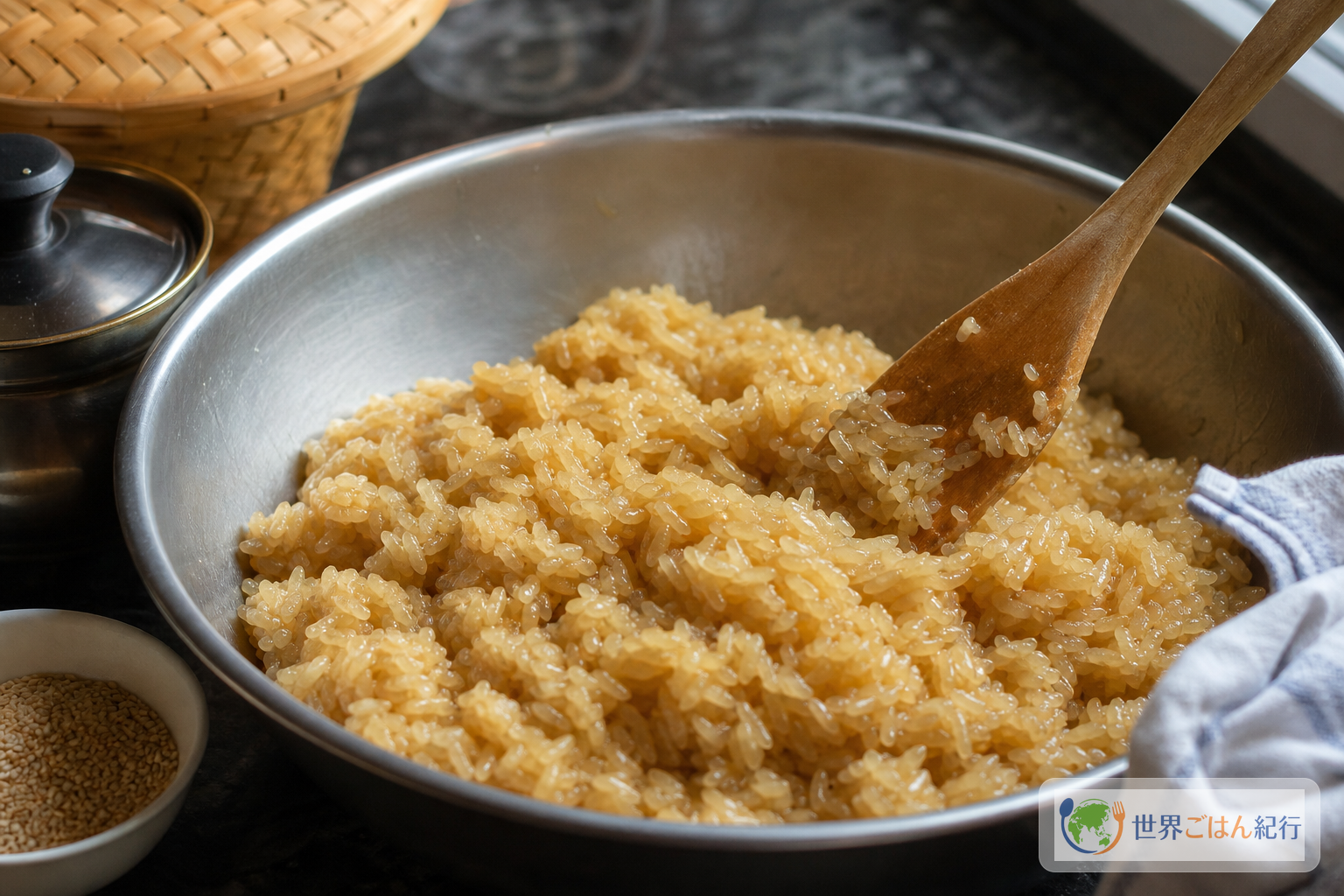

A morning when yellow oil perfumes the rice
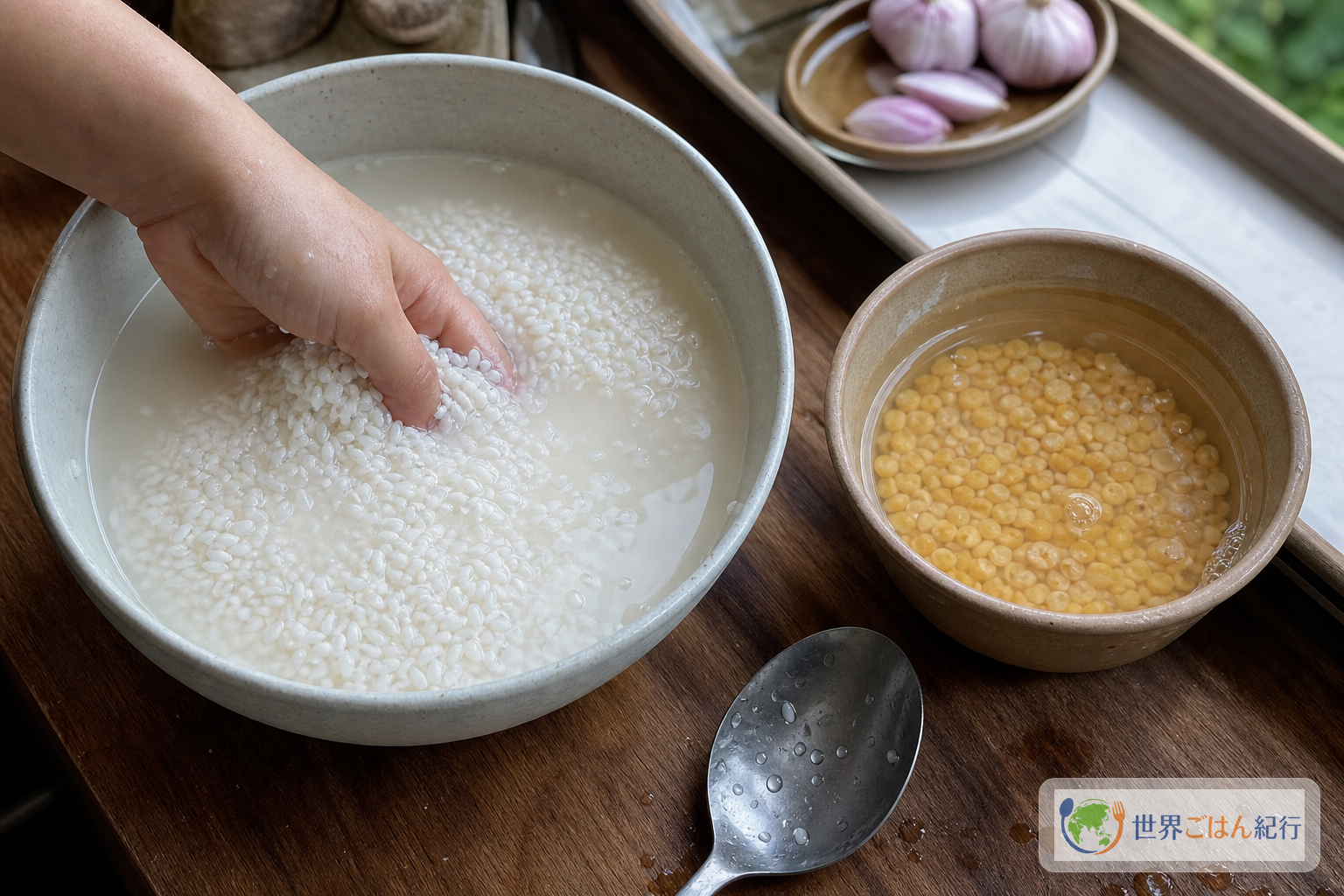
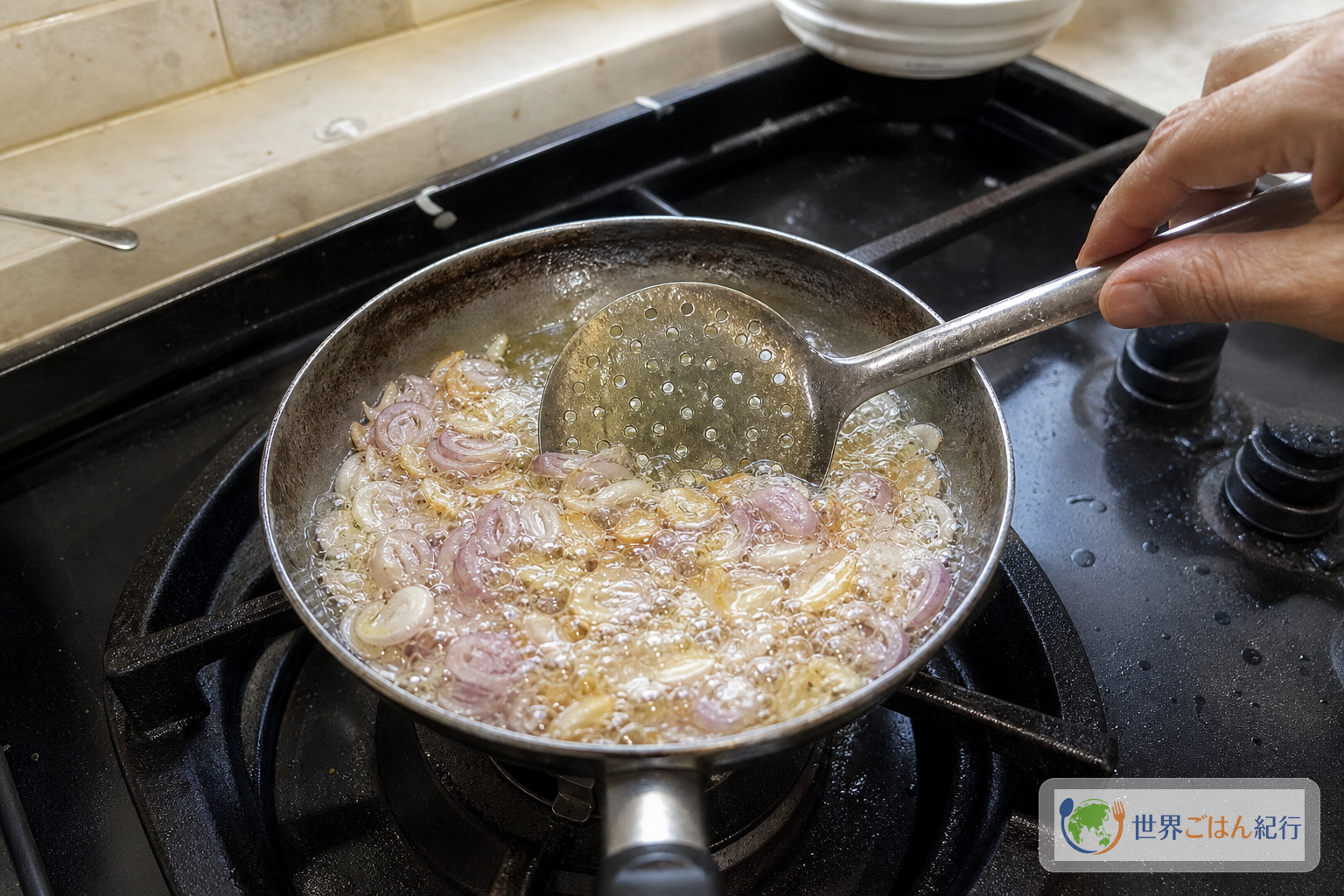
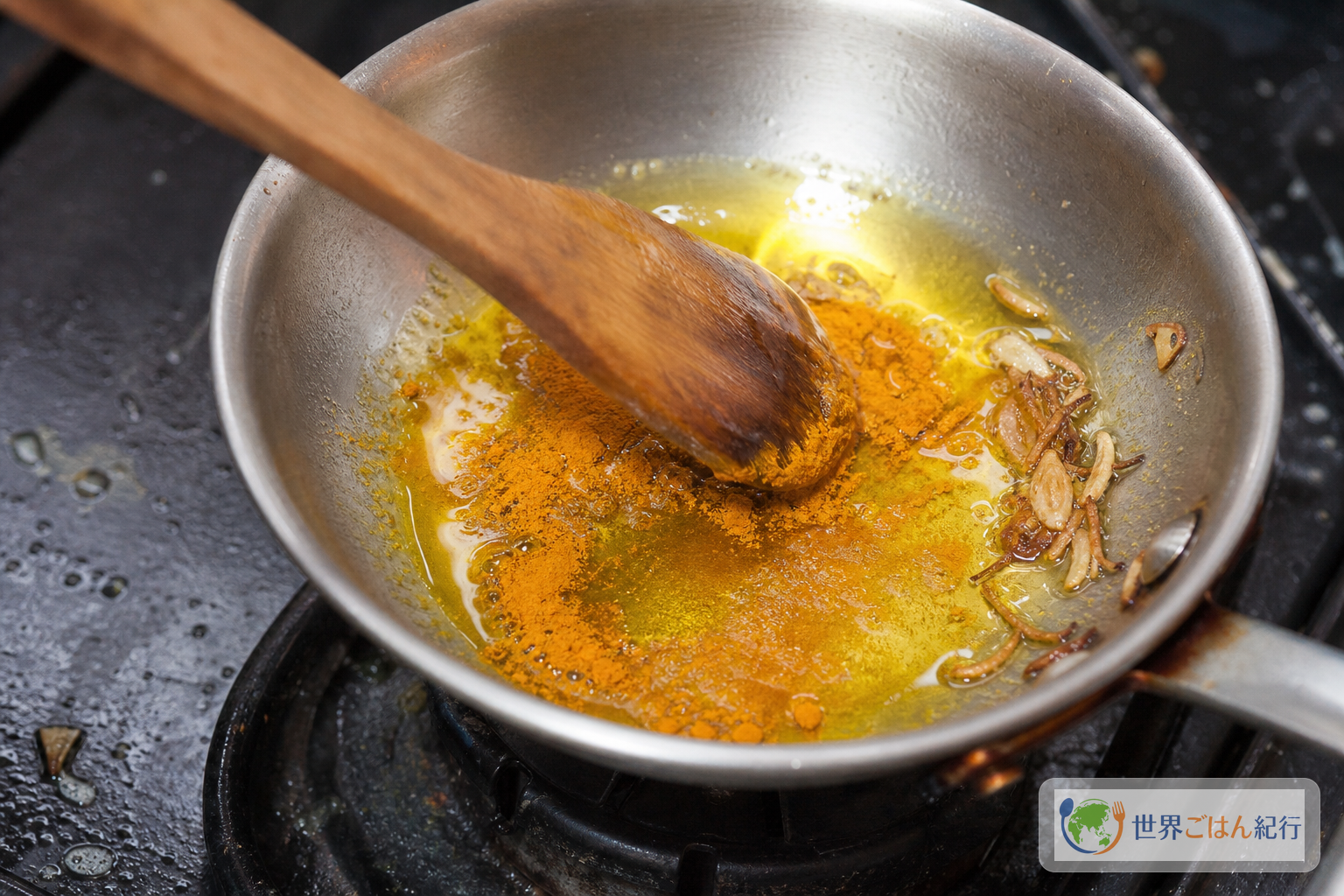
When you lift glutinous rice out of its water, the grains feel heavy and firm between your fingers. Then you pour over the oil in which onions have been slowly fried. The moment the turmeric goes in, the whole kitchen turns yellow. It does not push a fragrance to the front the way curry powder does; it lays a thin wash of color between the oil and the rice.
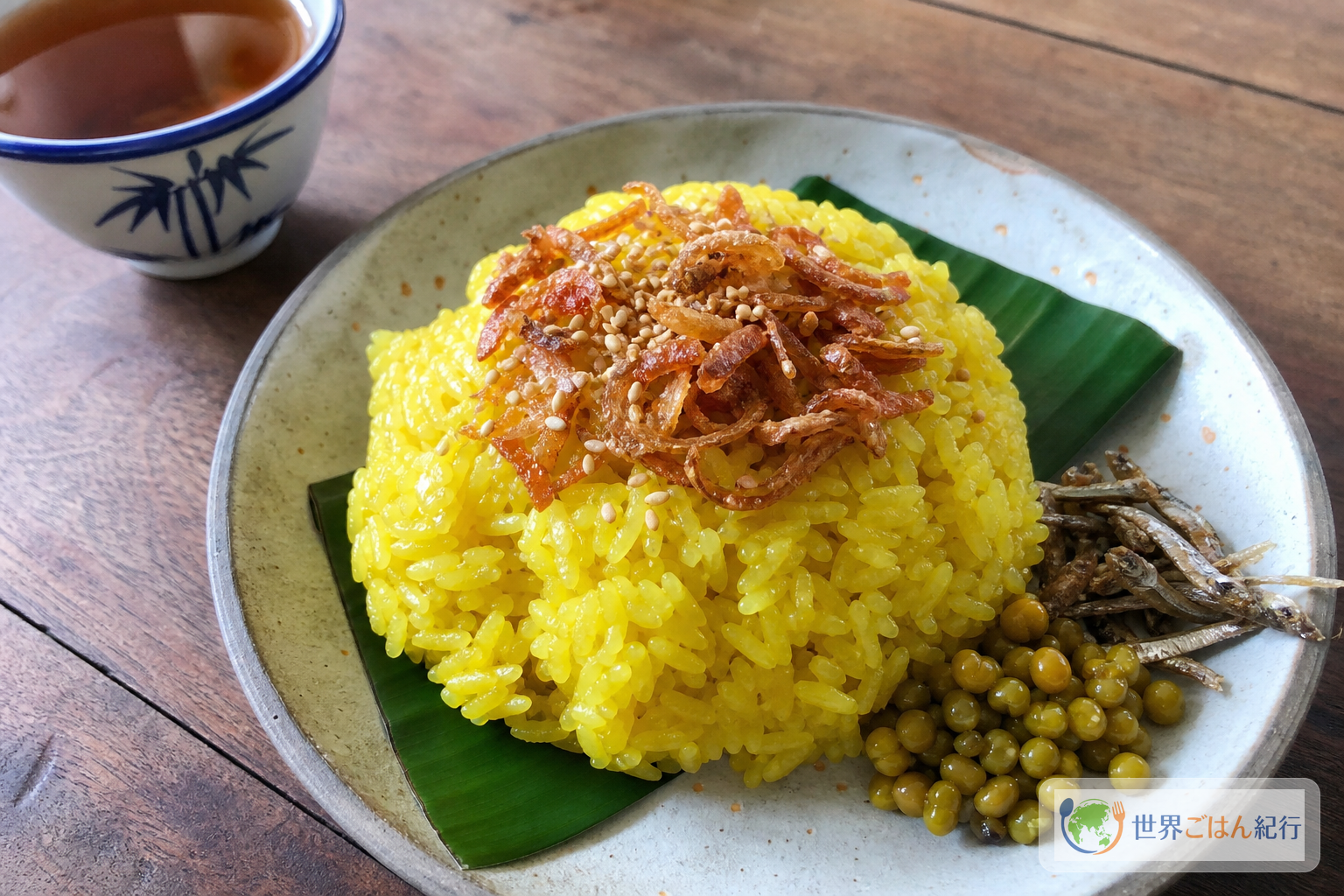
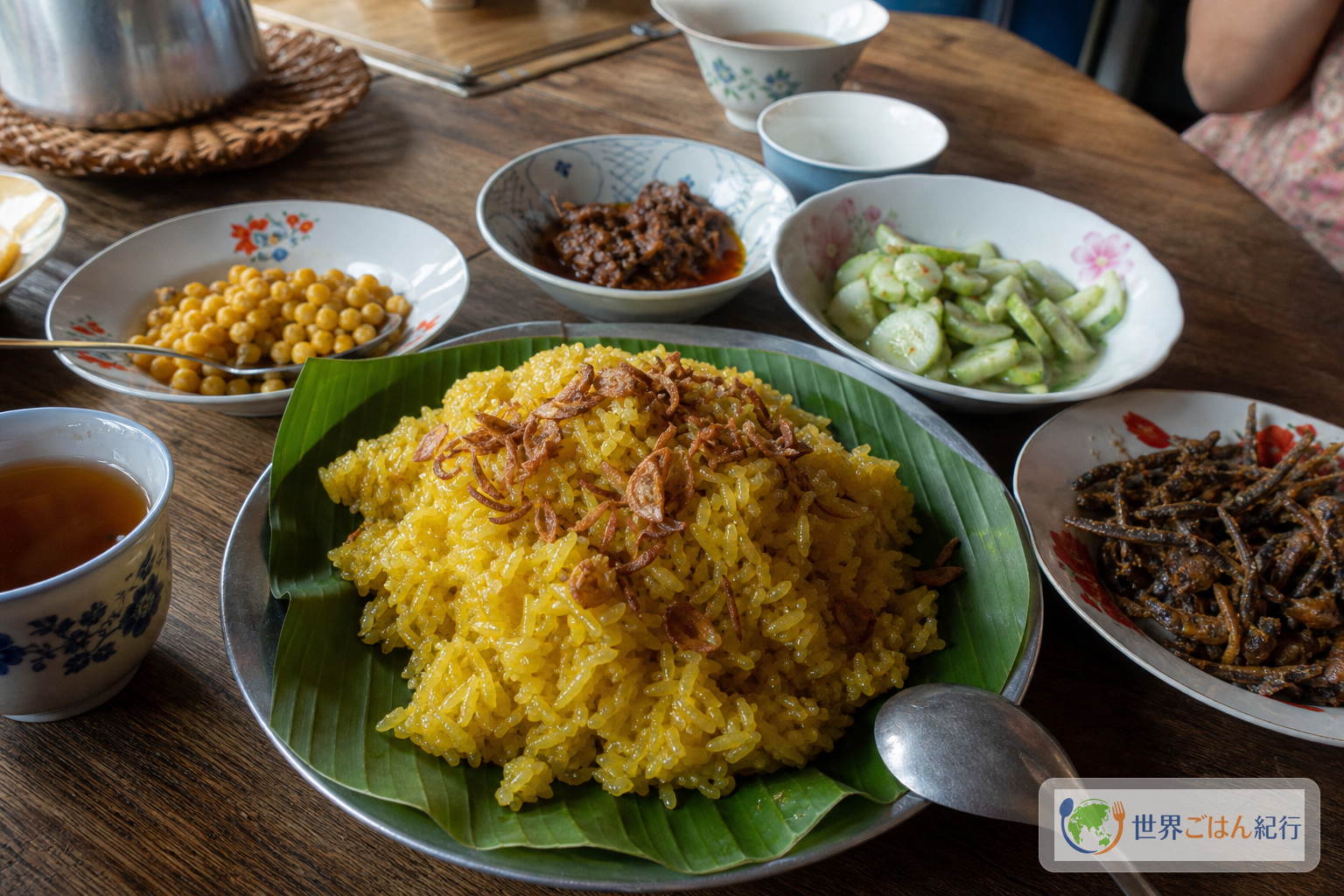
Hsi htamin (ဆီထမင်း) is a yellow oil rice eaten in Myanmar. English-language sources describe it as Burmese oiled rice: a breakfast or snack made with glutinous rice, oil, onion and turmeric. The plate may come with fried onion, sesame, beans and dried fish. It is not a sweet; it is a savory, fragrant, staple-leaning dish.
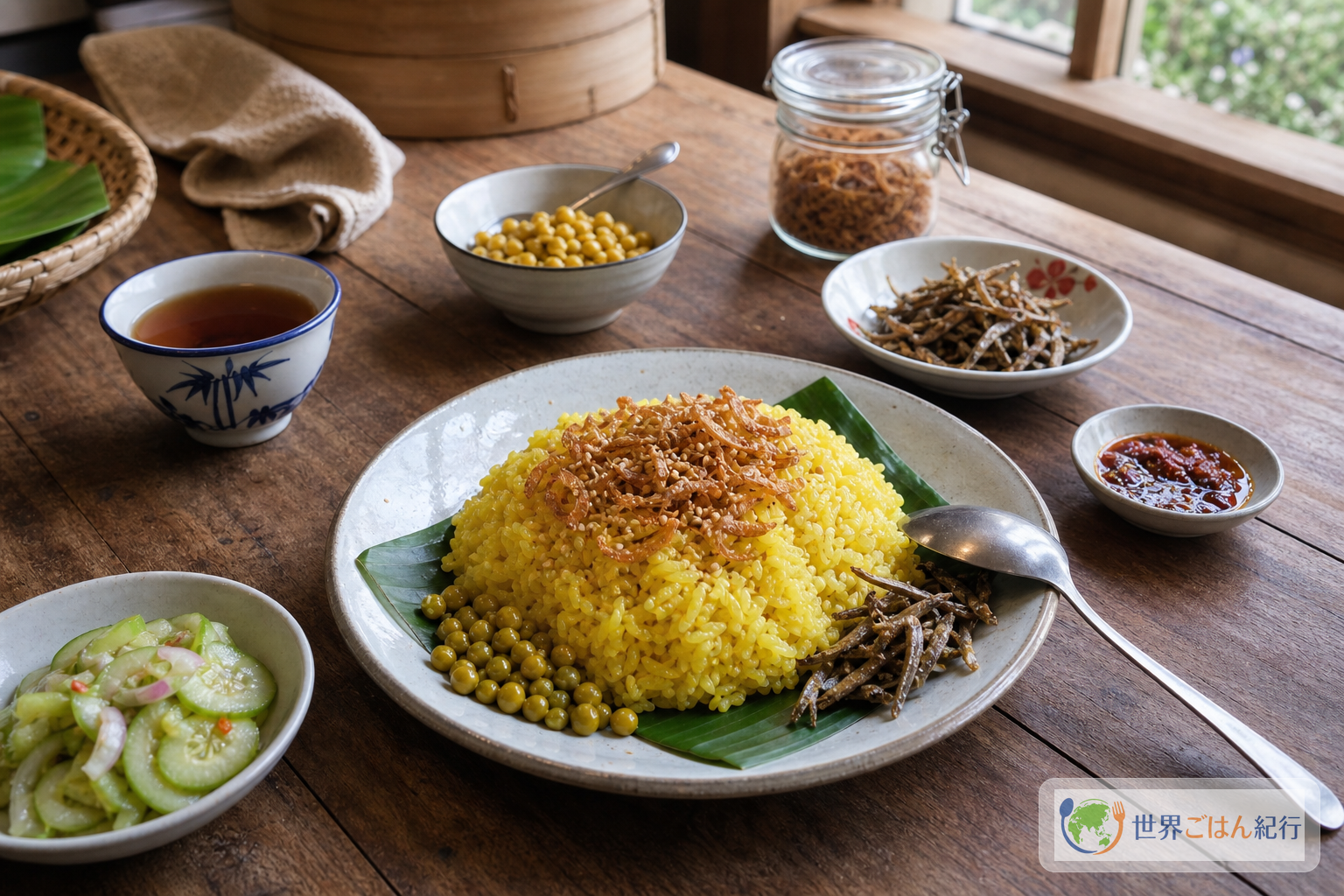
The hard part at home is less the ingredients than not using too much oil. Glutinous rice takes oil in readily, and if you keep adding spoonfuls in a rush you end up with a heavy, oily lump instead of yellow rice. In this article you make the onion oil first, put only part of it into the rice and adjust the rest at the end.
If mohinga is the breakfast noodle soup and htamin gyaw is the fried rice that revives leftover rice, hsi htamin is the breakfast built around glutinous rice. Put a little of the bitterness of lahpet thoke (in Japanese) on a side dish and you can see how rice, oil, tea leaves and beans connect.
Hsi htamin is also written si htamin. If you search in English, look up Hsi htamin, Burmese oiled rice and Myanmar sticky rice with turmeric together and you will find more sources.
Not fried rice: glutinous rice steamed with oil
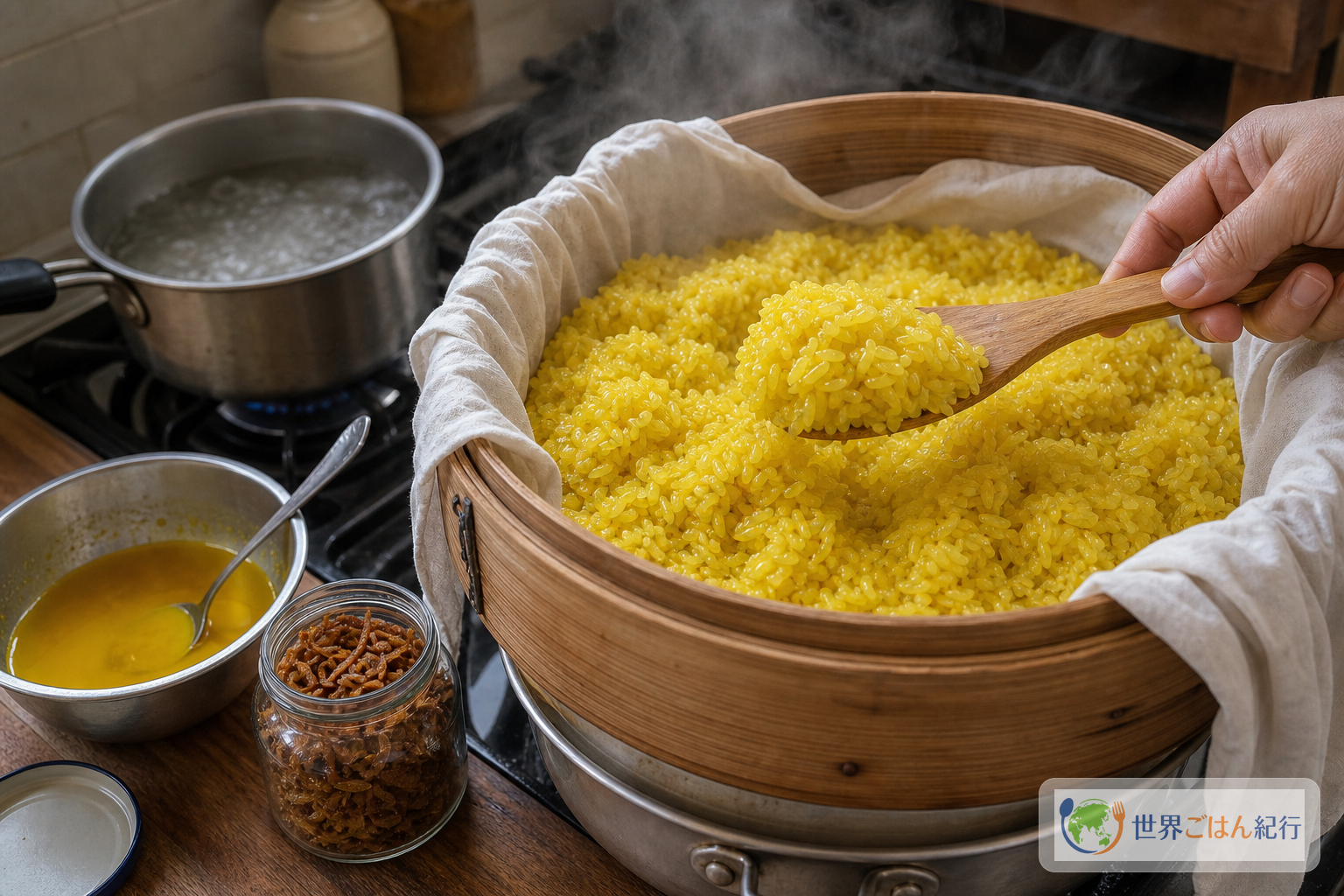
Hsi htamin is different from htamin gyaw, which is made by stir-frying rice in a pan. Soaked glutinous rice is coated with color and oil and cooked through with steam. The grains are not loose and separate; they are glossy and cling together just enough.
| What to protect | The local idea | How to handle it in a home kitchen |
|---|---|---|
| Glutinous rice | Use a sticky rice, not ordinary long- or short-grain rice | Soak Thai or other glutinous rice for at least 4 hours |
| Oil | The rice should carry the aroma of the oil | Use the oil from frying the onion, and never add it all at once |
| Yellow | A pale color from turmeric | Start with a scant 1 tsp and do not add so much that it turns bitter |
| Toppings | Do not load the rice itself with ingredients | Serve beans and dried fish on the side so the rice texture stays |
| Finish | Sesame and fried onion add a toasty note | Layer store-bought fried onion or your own on top at the end |
A dish that is easily confused with it is pe htaw bhut htamin. English sources describe it as butter rice, a separate rice dish made with long-grain rice, butter, spices and lentils, closer to a feast dish. Hsi htamin is built around glutinous rice and oil, so even though both rices are yellow, the texture you are after is different.
Ingredients (serves 4)
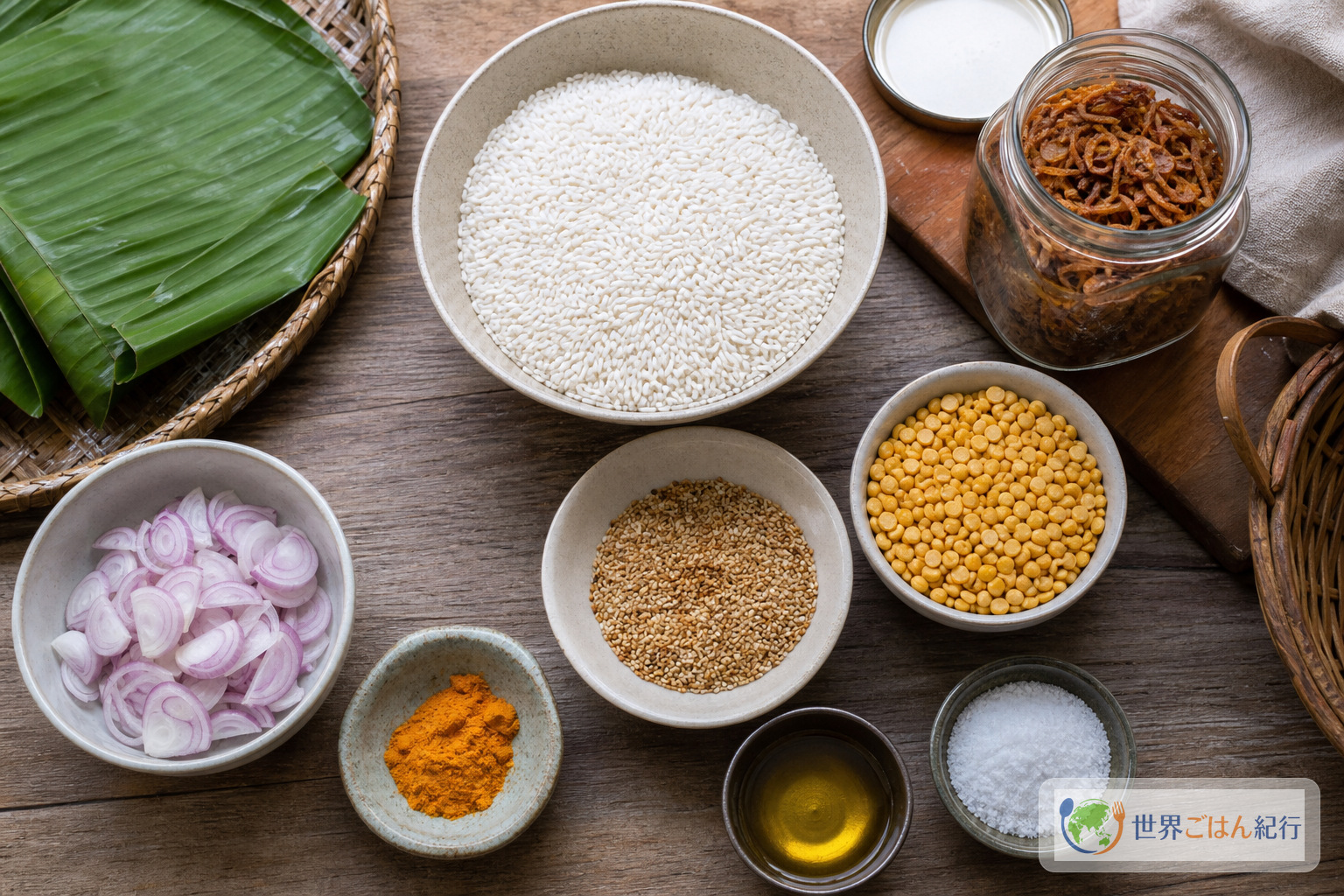
Use 450 g of glutinous rice for 4 servings. Glutinous rice is filling, so for breakfast this leaves a little over. The rest can be frozen in small portions.
Fried onion and dried fish may contain wheat, fish, shrimp or soy-derived ingredients. Check the ingredient labels. Do not leave glutinous rice out at room temperature for long: eat it soon after cooking, and cool the leftovers in a shallow container before refrigerating or freezing them.
Shopping: glutinous rice and aroma come first
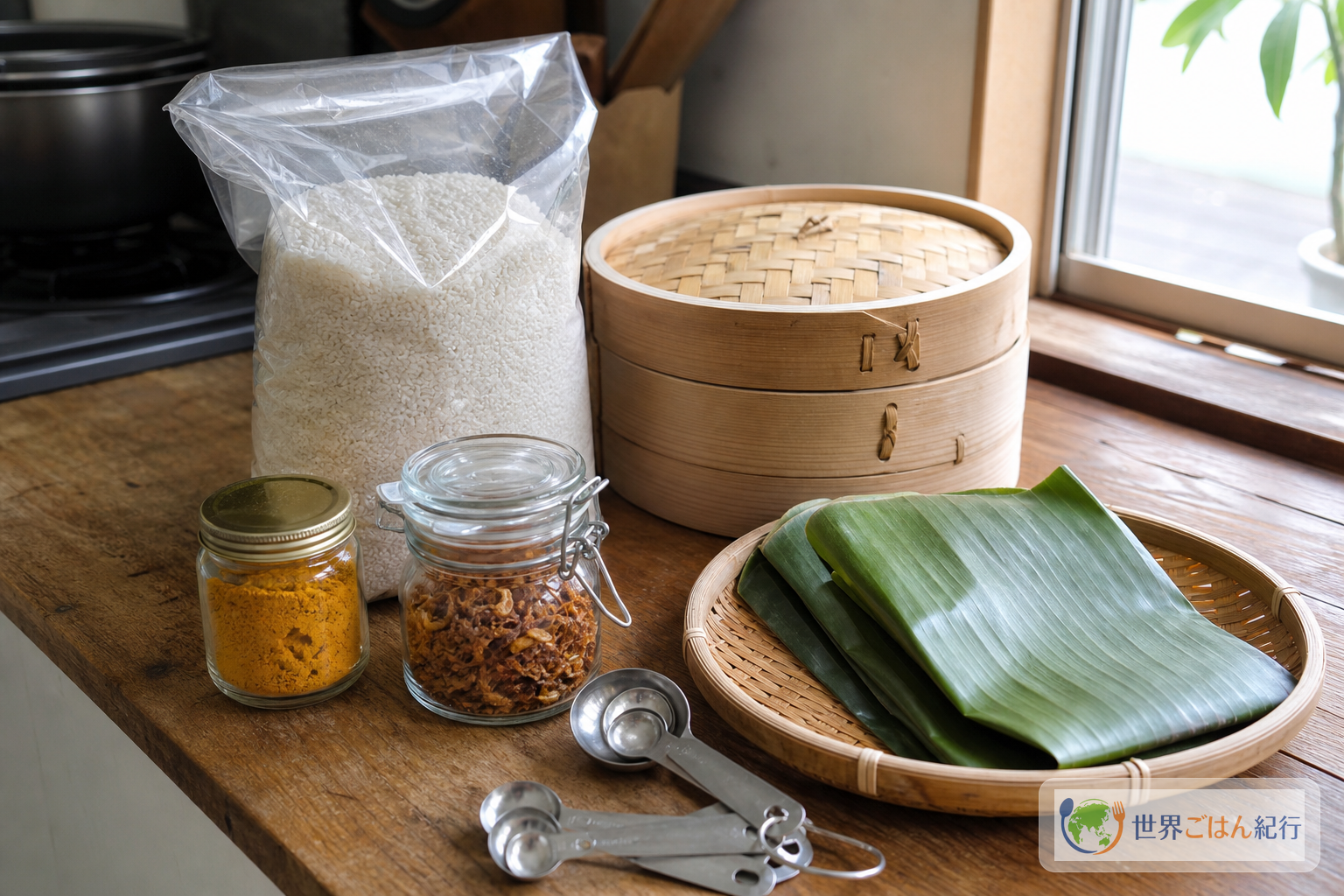
Onion, oil, cucumber and lemon you can get at any supermarket. The ones worth seeking out are glutinous rice, turmeric and fried onion. Once the rice, the color and the finishing aroma are set, hsi htamin gets very close. The oil, onion and ordinary sesame you already have are enough.
Short-grain sticky rice works, but for the lighter feel of Southeast Asian cooking, Thai glutinous rice is easier to handle. The grains are slender and do not turn too heavy when steamed. Asian grocery stores and online shops usually carry it.
Even 1 tsp of turmeric changes the impression of the whole rice. If you substitute curry powder, the cumin and chile aromas mix in and you get curry-flavored sticky rice rather than a Burmese oil rice, so use plain ground turmeric.
You can make fried onion yourself, but a store-bought one the first time makes the amount of oil easier to read. Beyond hsi htamin, it also finishes nasi uduk and bubur ayam.
How to make it
A steamer makes it easiest, but a deep pot with a steaming rack also works. Use a clean cloth, and check that no scent of detergent remains.
Choices for a home kitchen
With so few ingredients, what you substitute changes the impression a great deal. The first time, keep the rice, oil and turmeric as written and adjust with the side dishes.
| Question | Recommendation | Why |
|---|---|---|
| Is short-grain sticky rice fine? | Yes | It turns heavy more easily, so cut the oil by 1 tbsp |
| Can I make it in a rice cooker? | Yes, but the steamer comes first | The bottom gets sticky in a rice cooker and the oil is hard to adjust |
| Can I use butter? | It becomes a different dish | It moves toward a butter-rice aroma, away from the light oiliness of hsi htamin |
| Can I use curry powder? | Avoid it the first time | Cumin and chile enter, and it is no longer a turmeric-oil dish |
| Is dried fish essential? | No | Beans, sesame and fried onion alone are fine |
| Is a banana leaf necessary? | It is for atmosphere | The flavor works without it. It only keeps oil from lingering on the plate |
To use a rice cooker, put 450 g of soaked glutinous rice in the inner pot, pour water to 3 mm below the 3-cup line for white rice, mix in 3 tbsp turmeric oil and the salt, and cook. Rest it 5 minutes after cooking, do not add the remaining oil, and add aroma with the fried onion. It comes out softer than from a steamer, so take care not to add too much water.
What goes wrong, and how to fix it

Hsi htamin goes wrong over the amount of oil more than over the firmness of the rice. Adding oil is easy and removing it is hard, so start at 3 tbsp and add at the end.
| Condition | Cause | How to fix it |
|---|---|---|
| Oil stays at the bottom | Too much turmeric oil | Mix in 150 g freshly steamed glutinous rice or warm cooked rice to dilute |
| Rice is hard | Too little soaking or steam | Sprinkle 2 tbsp water from a spray bottle and steam 5 more minutes over medium heat |
| Rice is sticky | Not drained enough, or too much water in the rice cooker | Spread on a plate for 5 minutes and add no more oil |
| Bitter taste | Turmeric scorched at high heat | Next time, 30 seconds over low heat. This time, round it out with a few drops of lime and fried onion |
| Color is pale | Too little turmeric | Do not add powder directly at the end; dissolve a pinch in 1 tsp oil first, then mix in |
| Onion is bitter | Fried to dark brown | Do not mix the burnt parts into the rice; use store-bought fried onion instead |
A hard rice is the easiest to fix, because steam brings it back. Rice with too much oil is the hardest, so always keep some of the turmeric oil in reserve.
Serving and storage
Hsi htamin smells best while warm. For breakfast, put cucumber, beans, dried fish and hot tea beside it and the heaviness of the oil loosens. For a sour side dish, lightly pickled cucumber or vinegar-pickled red onion makes it easier to eat.
Build the plate around the rice, with small side dishes in small amounts. For 4 servings, a small bowl of lightly pickled cucumber, 2 tbsp beans per person and a pinch of small dried fish are enough. Piling the oil rice high and skipping the sides gets monotonous, but a little acidity, the sweetness of beans and the saltiness of fish keep it from feeling heavy to the end.
For a Burmese meal, make it a staple on a different day from the soupy mohinga, and serve lahpet thoke (in Japanese) after the meal or as a side. On a day you want fried rice, move on to htamin gyaw and the difference in cooking method between two htamin dishes becomes clear.
| Storage | Time | Reheating |
|---|---|---|
| Refrigerator | 2 days | Spread on a heatproof plate, sprinkle 2 tsp water, microwave at 600 W for 1 min 30 sec; stir and heat 30 sec more |
| Freezer | 2 weeks | Wrap flat in single portions. Microwave at 600 W for 2 min 30 sec, turn over and heat 1 min |
| Lunch box | Same day | Cool completely before packing. Pack dried fish separately |
| Fried onion | About 1 month after opening | It goes soft in humidity, so keep it airtight. Add just before eating |
When making ahead, do not mix in the fried onion and sesame; add them just before eating. Mixed in, the toasty flavor absorbs moisture from the rice and weakens.
Frequently asked questions
Can I make it with ordinary rice instead of glutinous rice?
Ordinary rice alone will give you yellow oil rice, but it will not have the stickiness of hsi htamin or its staying power as a breakfast. Make it with 100% glutinous rice the first time, and if it feels heavy, use 300 g glutinous rice and 150 g regular rice next time.
I don't have peanut oil
Rice bran oil, light sesame oil or neutral vegetable oil all work. With strongly scented toasted sesame oil alone, it tilts toward Chinese-style sticky rice rather than Burmese oil rice. If you use it, keep it to 1/4 of the total.
Will more turmeric make it more authentic?
Better not to overdo it. Turmeric is mainly there for color, and a powdery or bitter taste wipes out the sweetness of the rice. For 450 g glutinous rice, 1 tsp is the upper limit; if the color is pale, dissolve a little in oil and add a small amount.
Do I mix the beans into the rice?
In this article they are a side. Mixed into the rice they tend to cause uneven steaming, and the moisture in the beans changes how the oil spreads. Scooping them from the side as you eat lets you enjoy the rice's aroma and the beans' sweetness separately.
I don't have a steaming cloth
A clean cheesecloth, a thin cotton dish towel or parchment paper with holes punched in it will do. Thick towels let steam through poorly and can carry the scent of fabric softener, so avoid them.



