
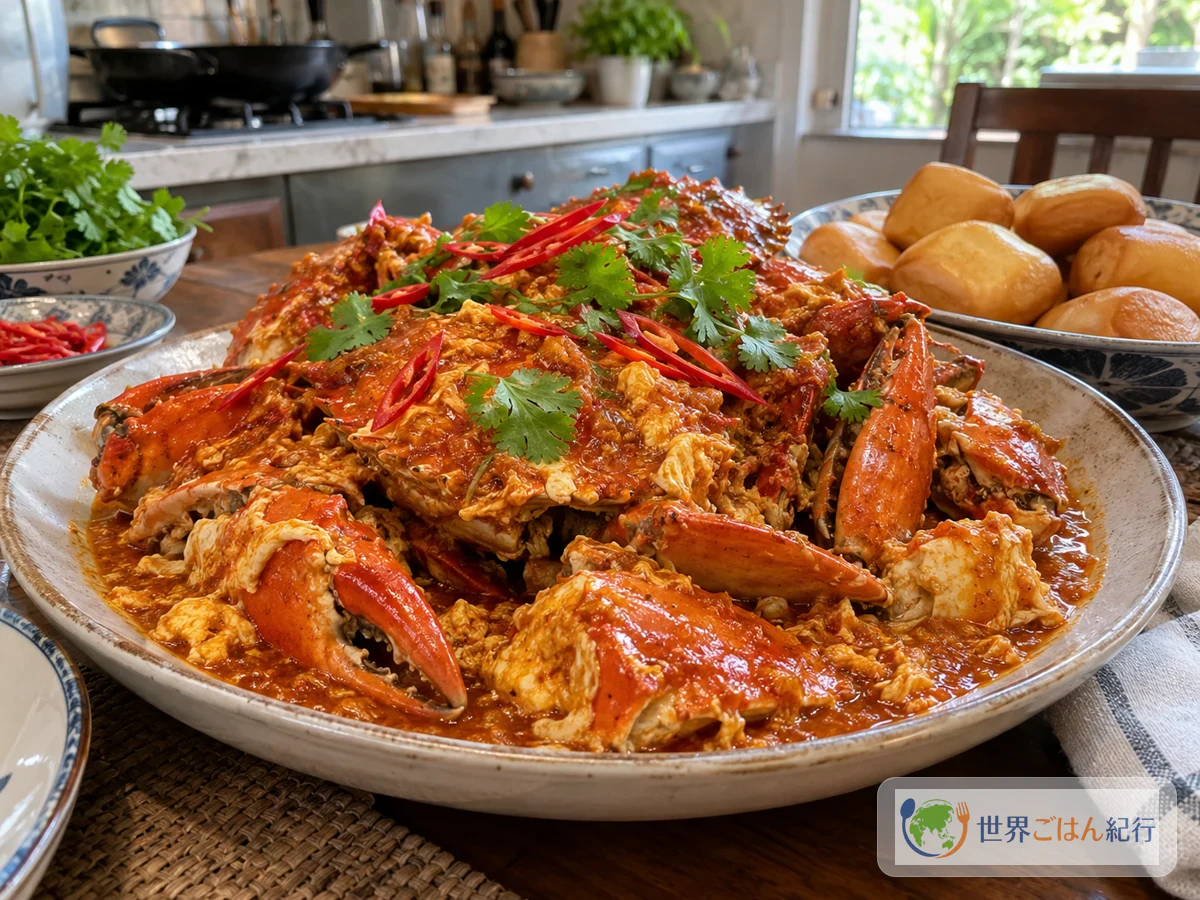
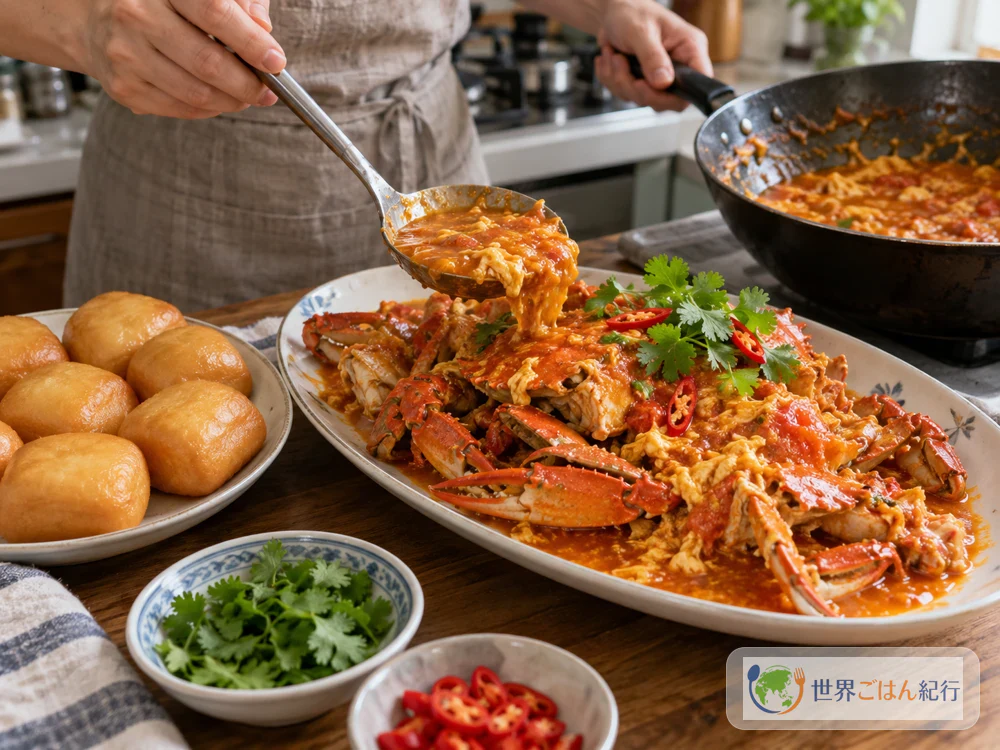
On a big platter, red crab shells are piled in a mountain. Spilling from the gaps between the shells is a thick, orange sauce of tomato and chili. Beaten egg floats in fluffy streaks, and a sweet, spicy, slightly sour smell rises. Everyone at the table has sauce-covered hands as they crack the shells, tearing off pieces of freshly fried round bread to wipe up the sauce. This is chilli crab, the star of Singapore's evening tables.
A signature dish that began at a stall on the Kallang River
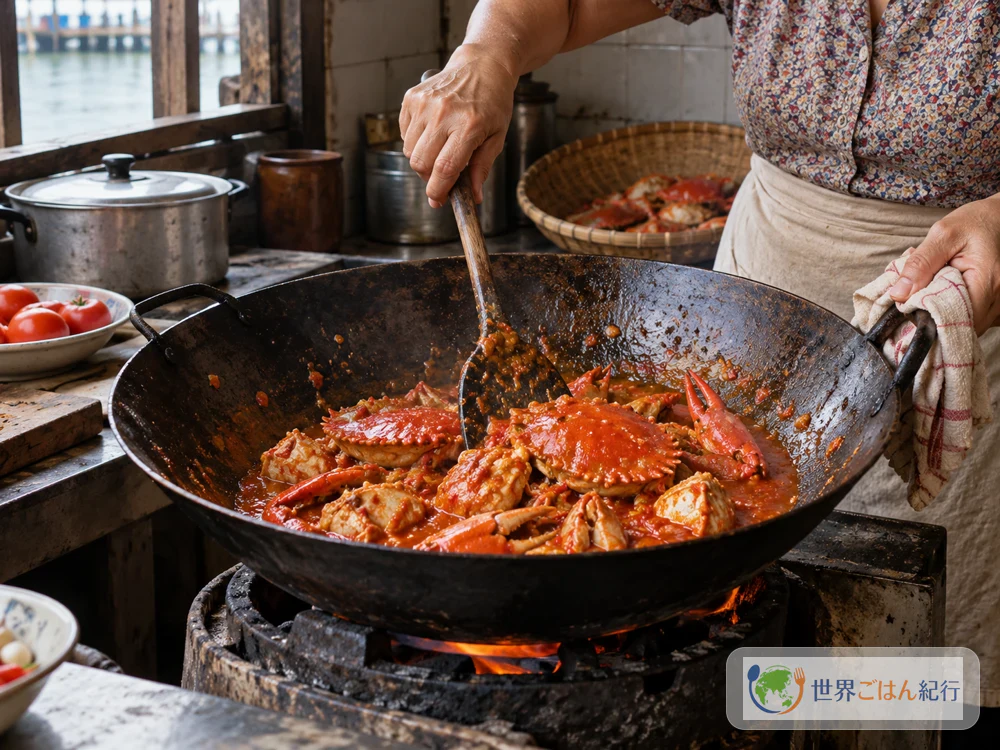
The origin of chilli crab is a story about a married couple, still told today. In the 1950s, Cher Yam Tian, living in Singapore, was experimenting with a dish of crabs her husband, Lim Choon Ngee, had caught, stir-fried with tomato. The restaurant run by their two sons says that when her husband said it was "too sweet" and urged her to add chili, it became the very first plate of chilli crab.
In 1956, the couple set up a small stall on the banks of the Kallang River in eastern Singapore. They had started without a license, and at times, it is said, they moved the stall to avoid enforcement officers. Their reputation grew, and in the early 1960s they opened a restaurant on Upper East Coast Road. The chef credited with shaping the chilli crab we know now is Hooi Kok Wai, who refined the recipe in the 1960s. He added lemon juice, vinegar, sambal, tomato paste, and egg white to finish a thick sauce with a pronounced sourness.
The chili pepper itself is said to have been brought by the Portuguese to Malacca on the Malay Peninsula in the 16th century. Until then, Malay cooking used pepper for heat. Behind the red heat of chilli crab lies several hundred years of trading history.
Today it is known as a leading Singaporean dish and was included in the "World's 50 Most Delicious Foods" chosen by the travel site of America's CNN. It is eaten in neighboring Malaysia too, and sometimes there is debate over which country it belongs to. The crab generally used is the hard-shelled mud crab. It is eaten with small fried or steamed breads called mantou, which you use to scoop up the sauce and enjoy to the last bit.
What to know when cooking it in a home kitchen
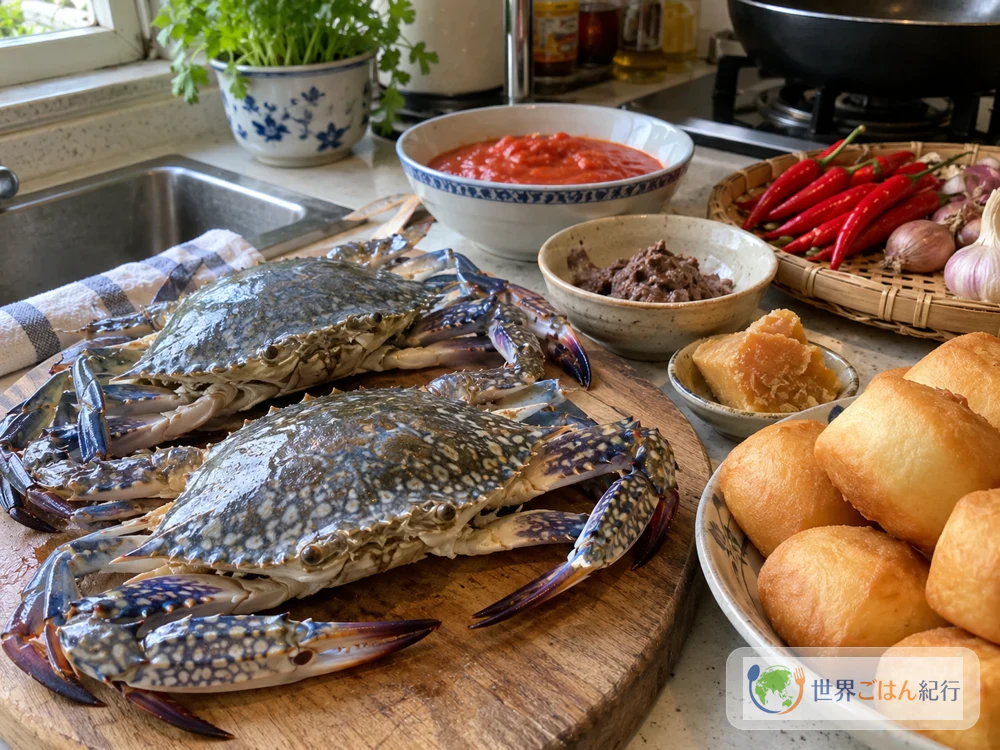
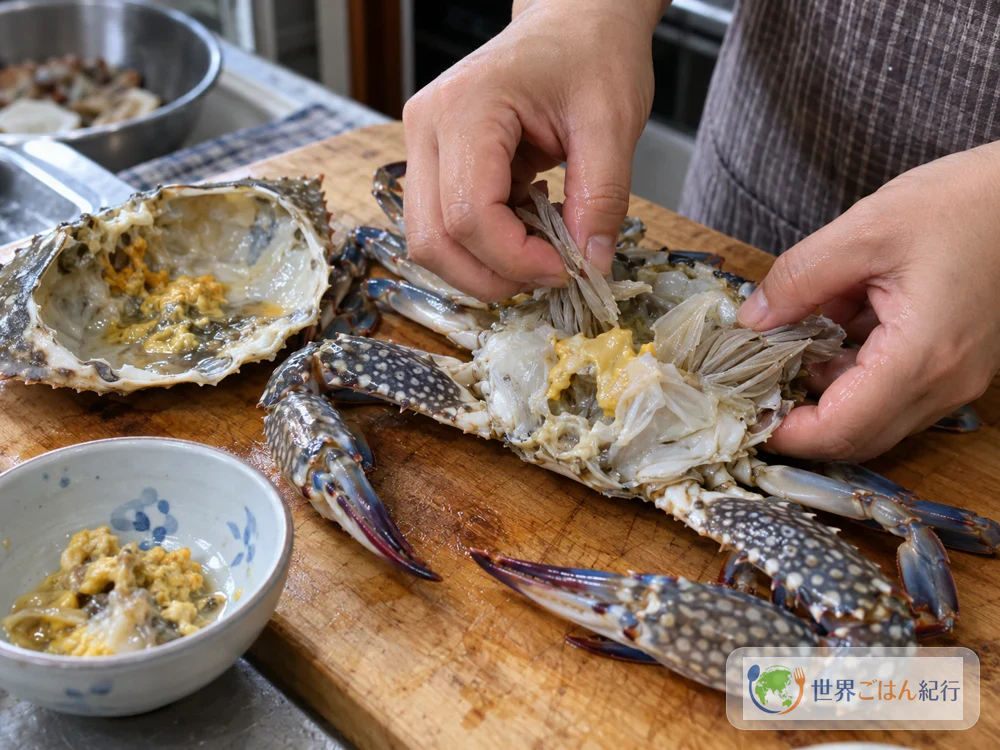
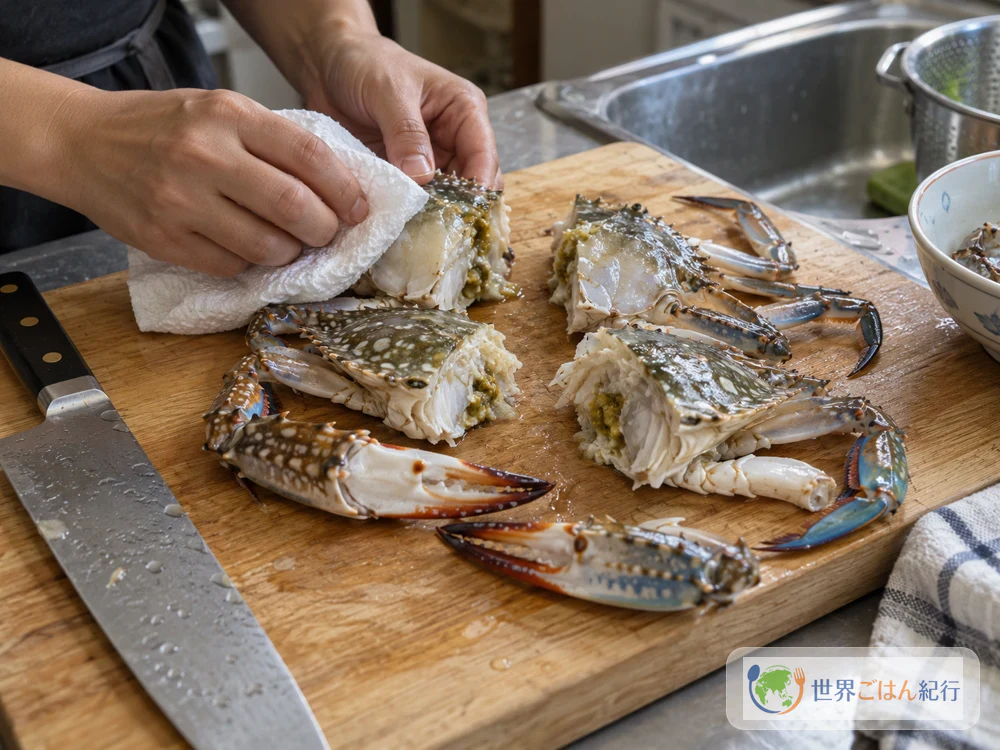
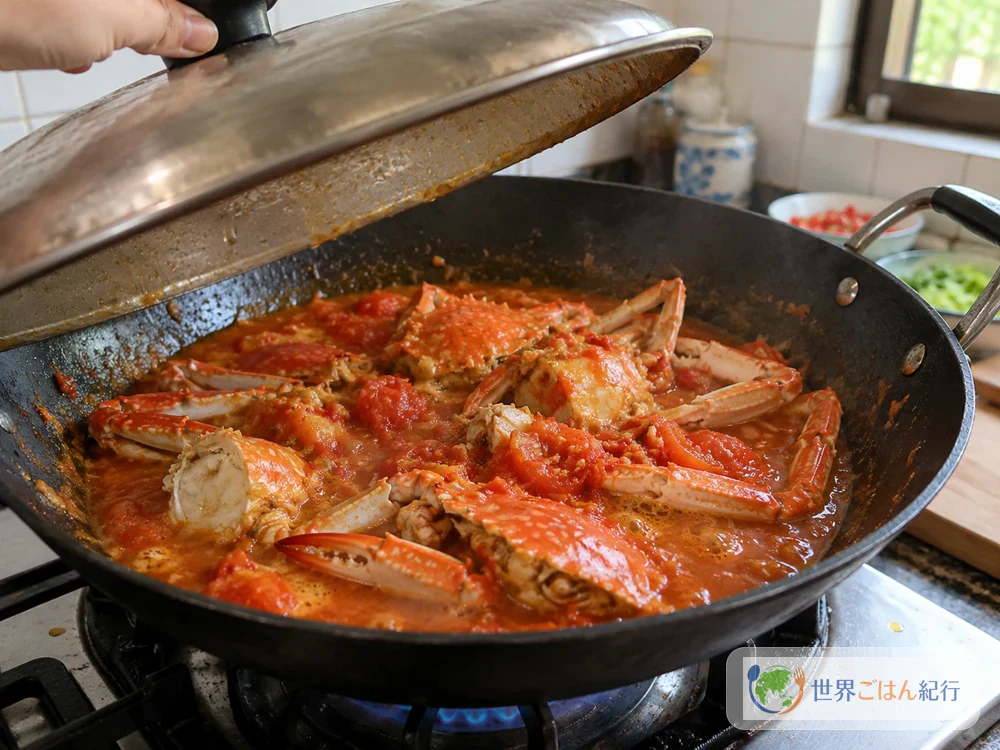
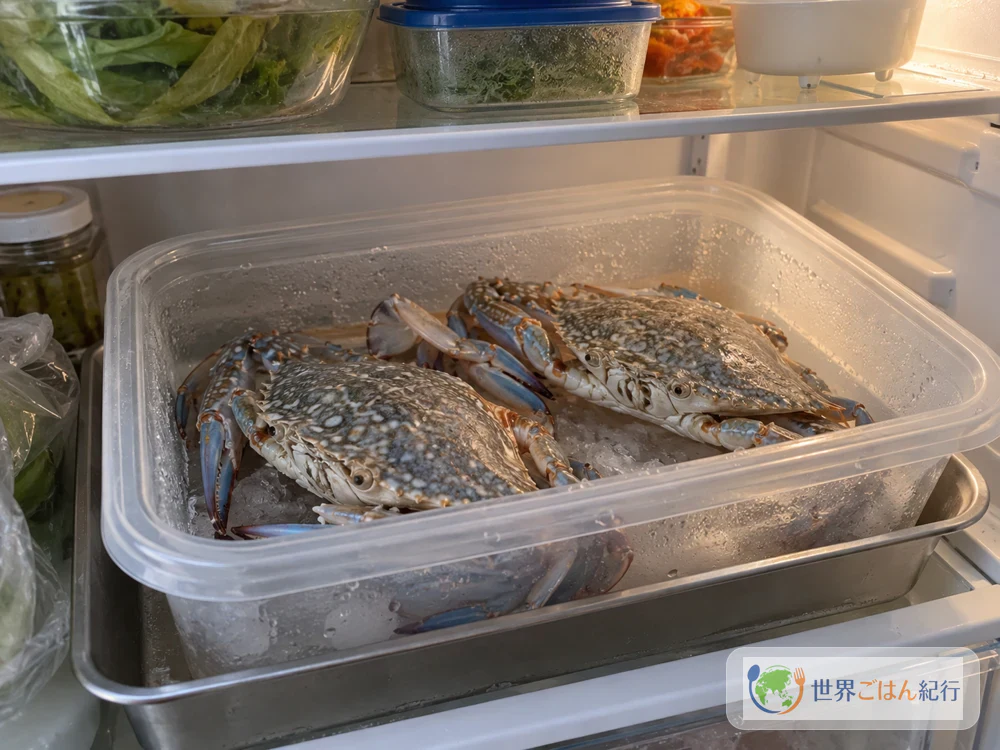
The formula in this article is based on the recipe presented on SBS Food by Australian cook Adam Liaw. The original calls for one large mud crab, but since it is hard to get in many places, we replaced it with 2 swimming crabs (about 800 g), which are easier to find at fish markets and supermarkets. Swimming crab has a thin shell and sweet meat, so the sauce coats it well. Frozen swimming crab also works. Thaw frozen crab slowly in the refrigerator from the day before.
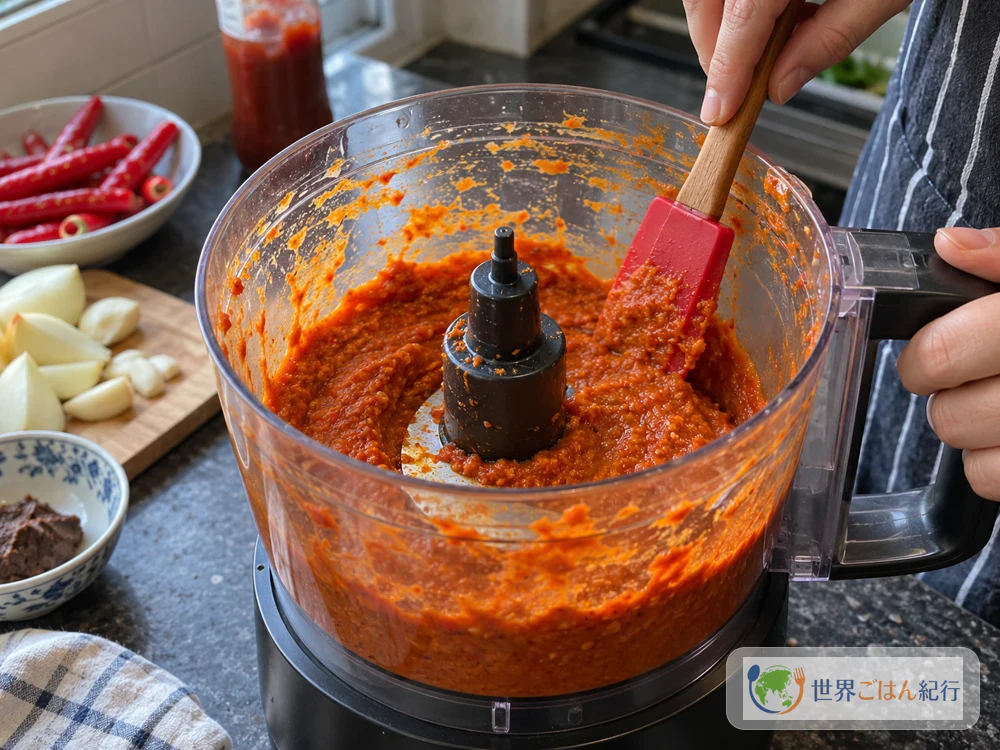
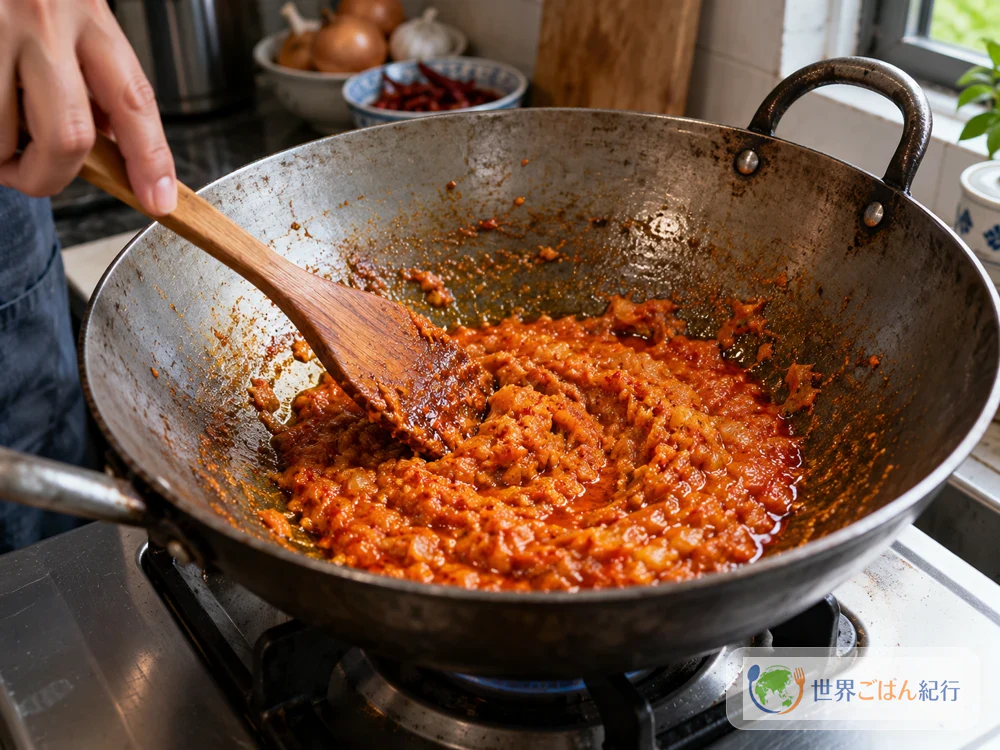
What gives the sauce depth is belacan (the Malay word for shrimp paste). It is made from fermented, pressed small shrimp and has a strong smell, but heat turns it into a savory depth. It can be found at Asian grocery stores and online. The original also lists it as optional, so you can make it without, but with it you get a deeper, more authentic flavor. If you don't have palm sugar, raw cane sugar can substitute.
Choose large, long fresh red chilies (a type like the long Thai chili) and remove the seeds. Their aroma and red color lead, and the heat is gentle. If you make it only with small, hot chilies, the paste becomes too hot. If you can't find them, 1/2 red bell pepper combined with 2 dried red chilies rehydrated in water gives a guide to the color and heat.
Mantou, in frozen fried form or steamed, can be found at Chinese grocery stores or restaurant-supply stores. Warm fried mantou in a toaster oven, and steamed mantou in a steamer or microwave. Thickly sliced and toasted baguette also wipes up the sauce well.
Ingredients (serves 2–3)
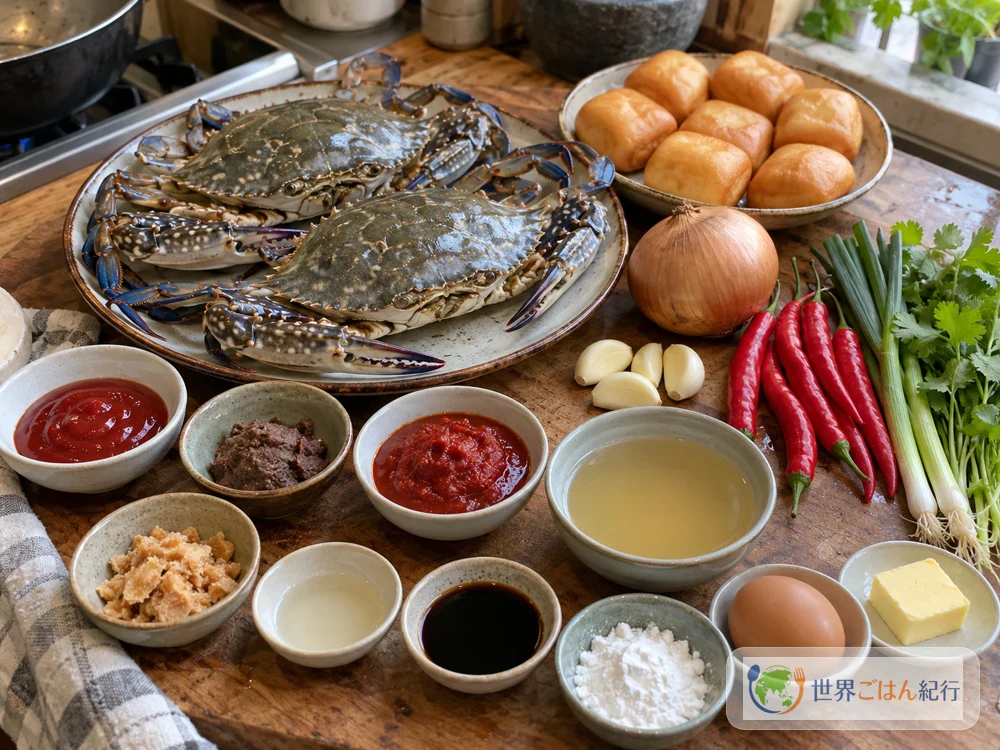
This dish contains crab, shrimp (belacan), egg, dairy (butter), and wheat and soy (soy sauce, mantou). Crab and shrimp are foods subject to allergy labeling. People with a shellfish allergy cannot eat it. The cut edges of crab shell are sharp, so be careful of injury both when preparing and eating.
How to make chilli crab
Preparing and prepping the crab takes about 1 hour 20 minutes (including 1 hour to put live crab to sleep in the freezer), and cooking about 25 minutes. If using frozen crab, thaw it in the refrigerator from the day before.
Cook the crab thoroughly all the way through. Check that the shells have all turned red and that the meat is white and opaque with no translucent parts. When handling live crab, work only after it has stopped moving in the freezer, so the claws can't pinch your fingers.
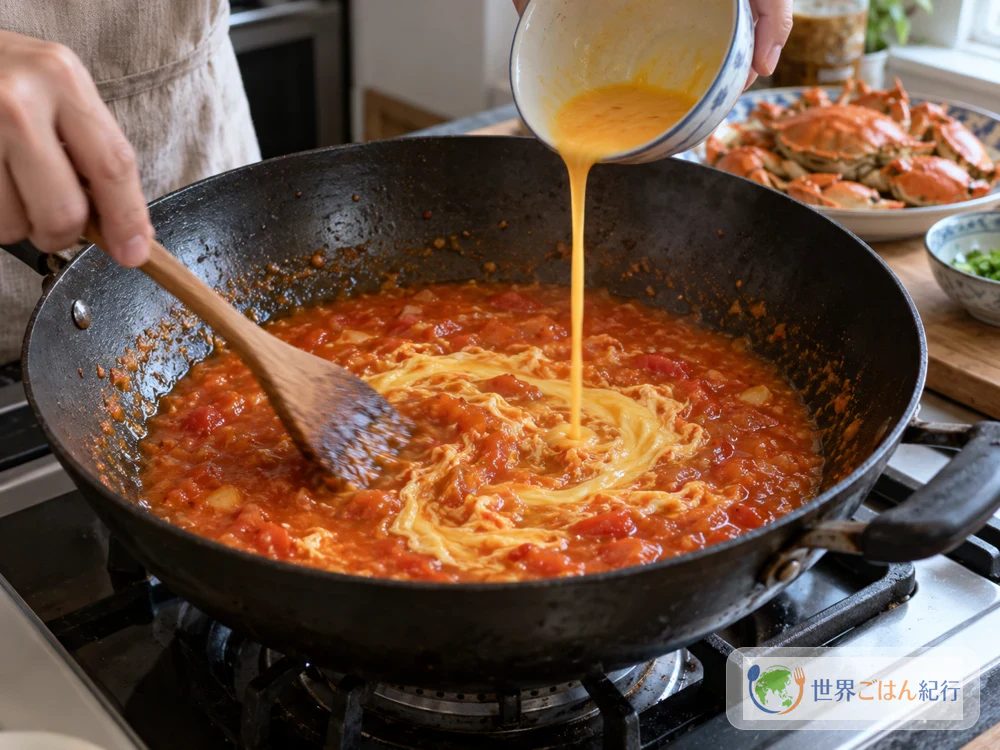
If you add the beaten egg all at once, it forms big clumps in the sauce. The trick is to drizzle it thinly, running it down chopsticks, while stirring the sauce slowly. If the heat is too high, the egg turns crumbly, so keep it at medium.
Getting your hands dirty is the best way to eat it
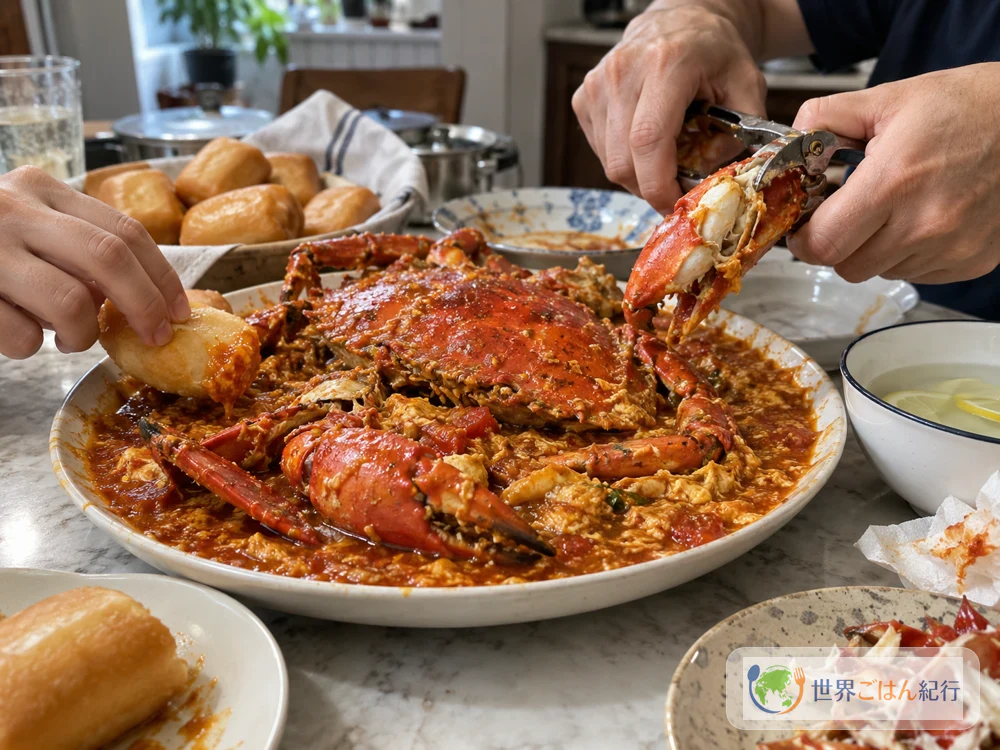
Chilli crab is not a dish to eat politely. You crack the shells by hand, slurp out the meat, and savor even the sauce on your fingers. After you finish the crab meat, the sauce left on the plate is the main event. Tear off pieces of fried mantou and wipe the sauce right down to the bottom of the plate. The sweetness of crisp-fried mantou goes well with the heat and sourness of the sauce.
In Singapore's seafood restaurants, black pepper crab, made with plenty of black pepper, is a standard alongside chilli crab. If you want to continue with seafood at home, try setting it beside Assam pedas, fish simmered in a sour-spicy sauce, Orh luak (蚝煎), the hawker-stall oyster omelet, and Otak-otak, fish paste wrapped in banana leaf and grilled.
Cher Yam Tian and her husband, who created chilli crab, gave up their restaurant in 1985, but their son Roland Lim carried on the flavor and later opened his own restaurant at Marine Parade. A dish that began with a stall-keeping couple is still carried on today by Singapore's family-run restaurants.
Ways to vary it
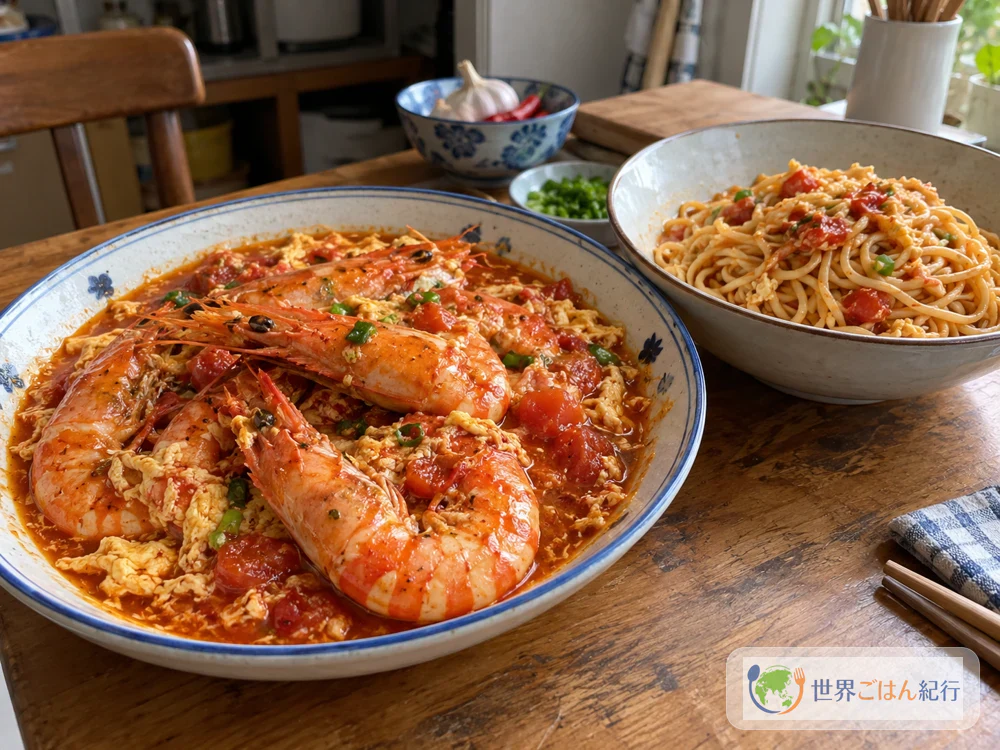
You can also make it with large shell-on shrimp instead of crab. Devein the shrimp, fry them in the shell in the paste, and shorten the simmering time to 3 to 5 minutes. They are done when the flesh turns white and they curl up. The sauce is made the same way as for crab.
Leftover sauce can be tossed with boiled Chinese noodles or spooned over rice. To tone down the heat, replacing some of the red chilies with red bell pepper keeps the same color with only the heat dialed back. For more heat, add 2 to 3 small, hot fresh chilies to the paste.
FAQ
Can I make it with frozen crab?
Yes. Move it to the refrigerator from the day before, thaw it slowly, and then do the preparation. If you use frozen crab that has already been boiled, shorten the simmering time to about 5 minutes; just heating it through is enough. Simmering longer makes the meat tough.
Does the flavor change without belacan?
The original lists it as optional, and you can make it without. But belacan adds depth to the sauce with the fermented savor of shrimp. Adding about 1 tsp fish sauce in its place makes up a little of the seafood savor.
Can I make it ahead?
Crab meat gets tough as time passes, and the egg in the sauce separates easily, so finish it the day you make it. Leftover sauce alone can be kept in the refrigerator until the next day and reheated in a pot to a full boil.
What if I don't have mantou?
Cut a baguette about 2 cm thick, toast it in a toaster, and serve it alongside to wipe up the sauce. Spooning the sauce over white rice is also recommended.
Sources
- SBS Food, Adam Liaw, "Singapore chilli crab," published 6 June 2018. (accessed and checked 22 October 2026). https://www.sbs.com.au/food/recipe/singapore-chilli-crab/yr891ksxt
- Wikipedia, "Chilli crab." (accessed and checked 22 October 2026). https://en.wikipedia.org/wiki/Chilli_crab
- Roland Restaurant, "The Origin of Our Signature Dish: The Chilli Crab," published 12 June 2024. (accessed and checked 22 October 2026). https://rolandrestaurant.com.sg/the-origin-of-our-signature-dish-the-chilli-crab/



