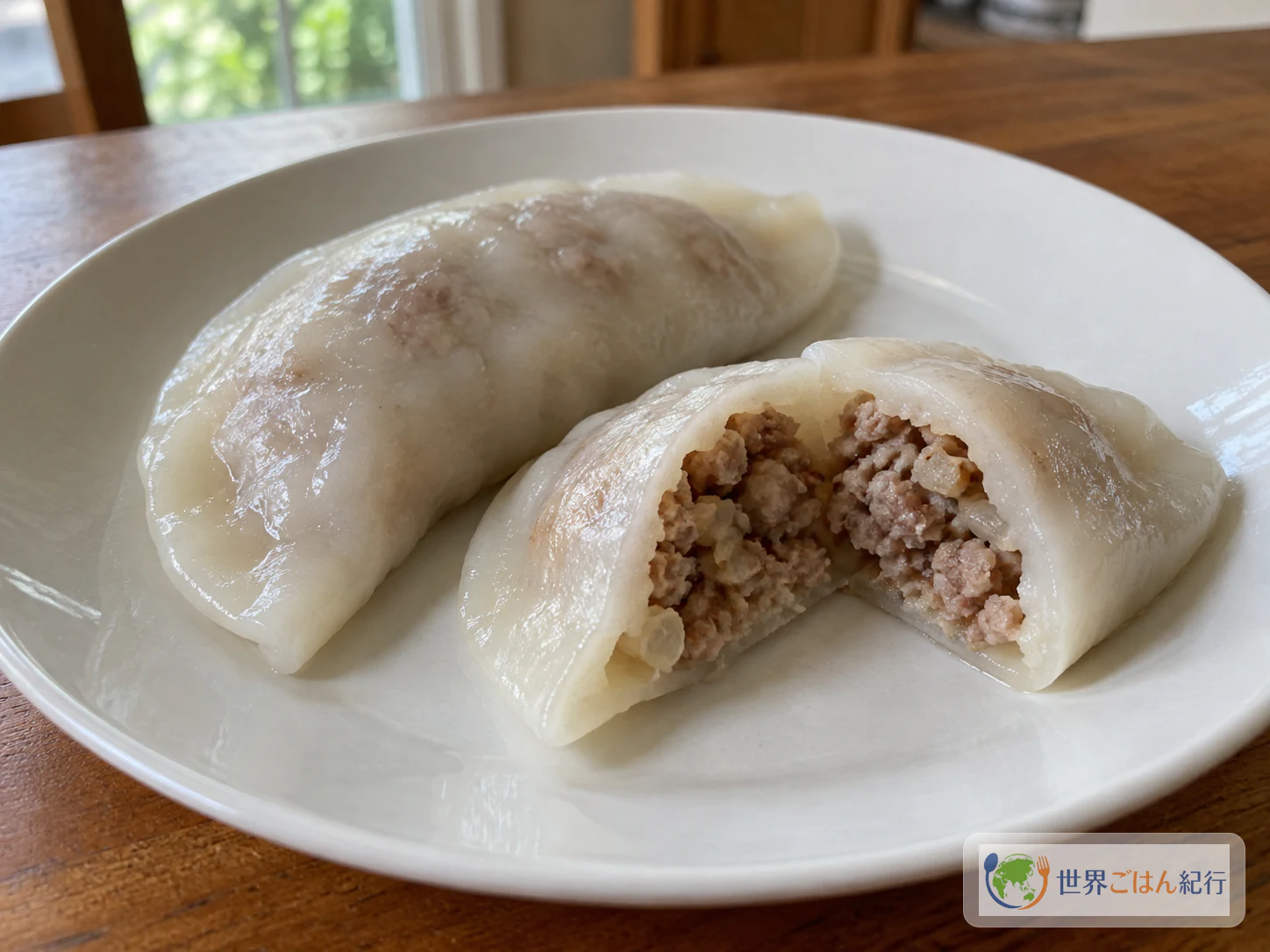
Bánh Tai: A Breakfast Rice Cake Shaped Like an Ear
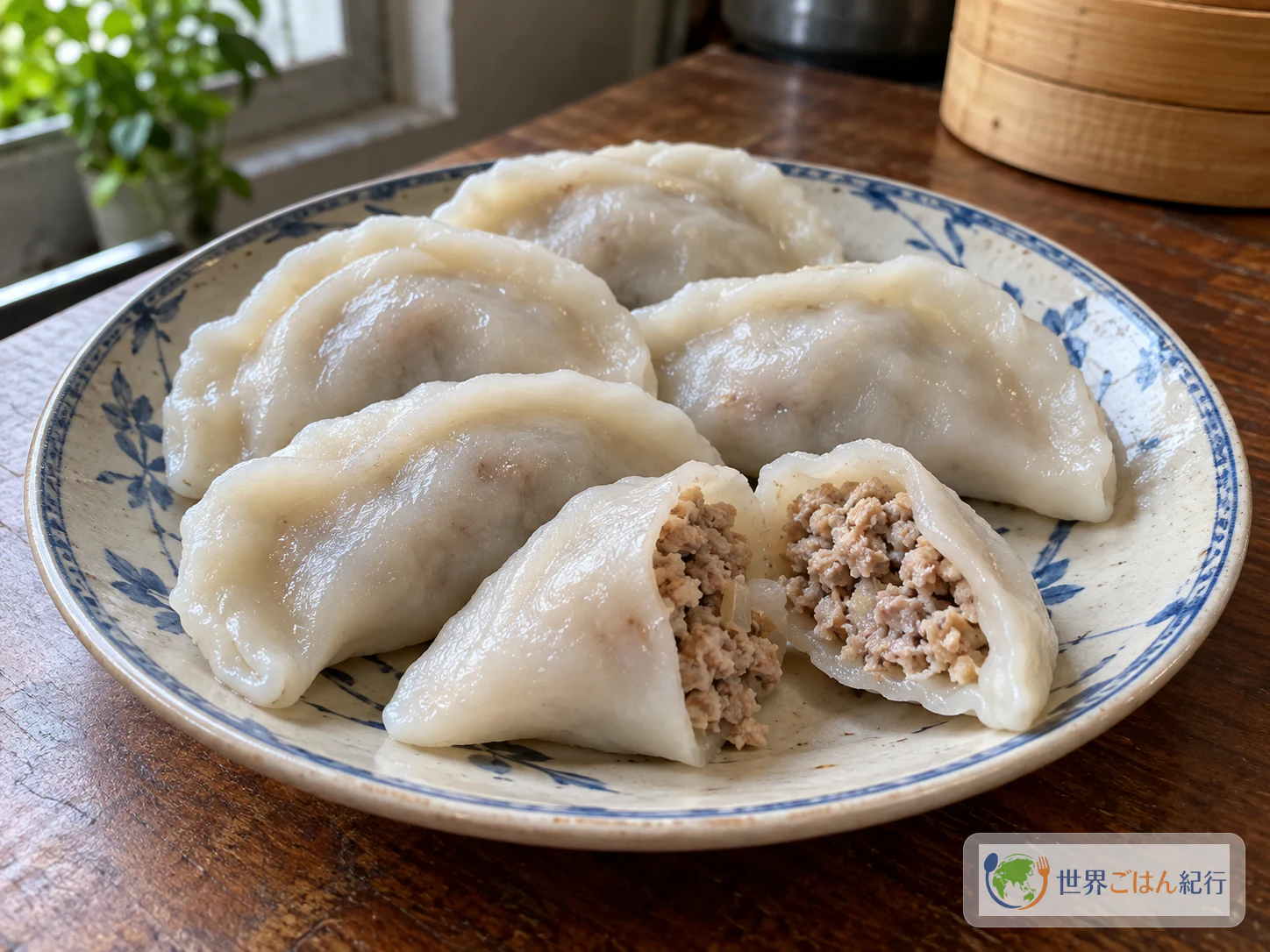
A soft, white dough made from plain (non-glutinous) rice, a filling of pork and shallots that is fully cooked before wrapping, and a gently curved "ear" shape steamed until the skin looks slightly translucent.
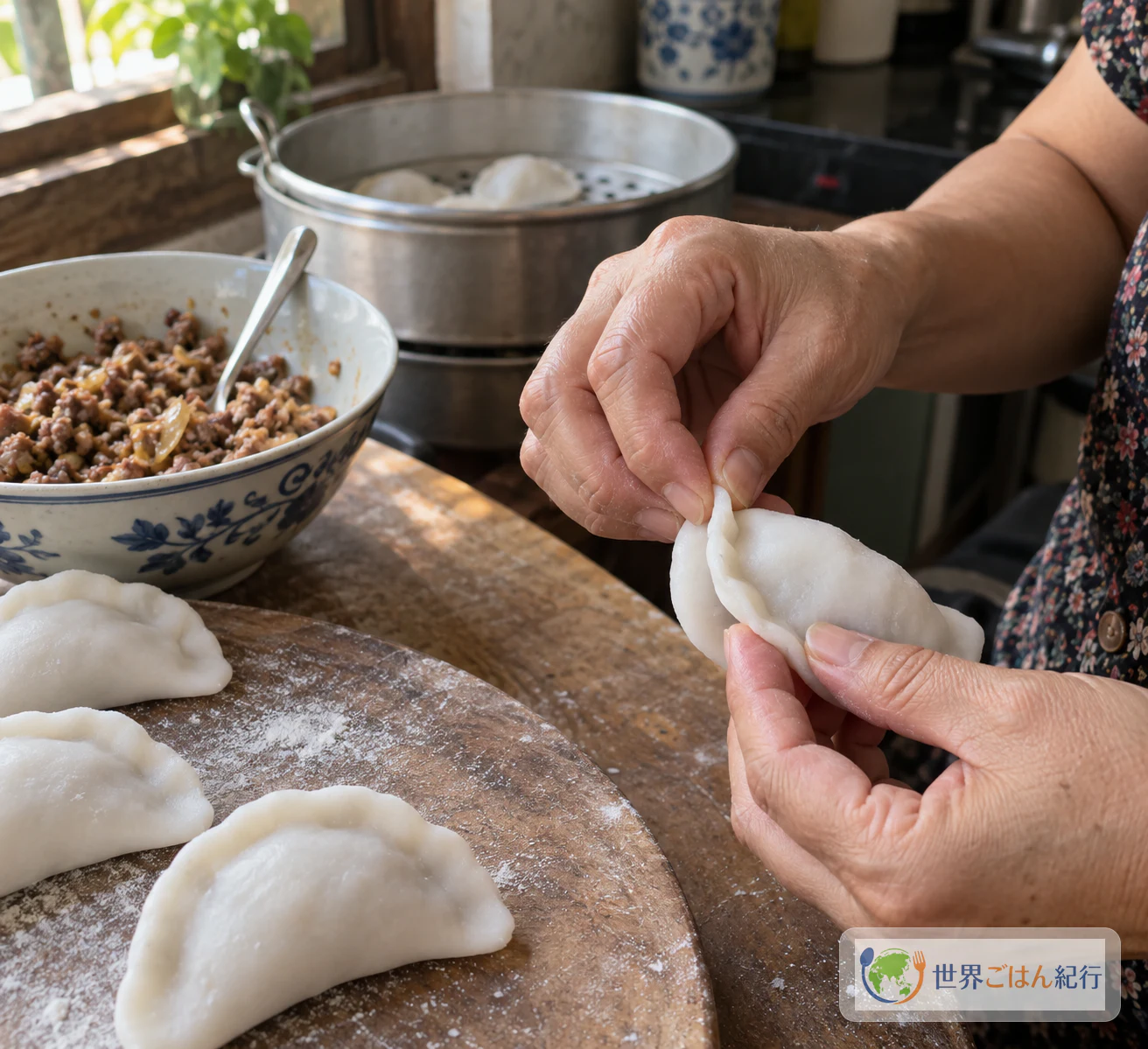
In the early morning in Phú Thọ, a province in northern Vietnam, freshly steamed bánh tai are carried to the market and kept warm in baskets. Phú Thọ's tourism promotion center describes the scene: the cakes are bought as breakfast and eaten hot. Each one is a small half-moon of rice-flour dough folded around minced pork and curved slightly, like an ear.
The name says as much. Bánh is a cake or dumpling, and tai means ear. Báo Phú Thọ, the provincial newspaper, explains that the name comes from the cake's curved, ear-like shape, and it notes that there are several stories about where the dish came from. This article doesn't pick one of them.
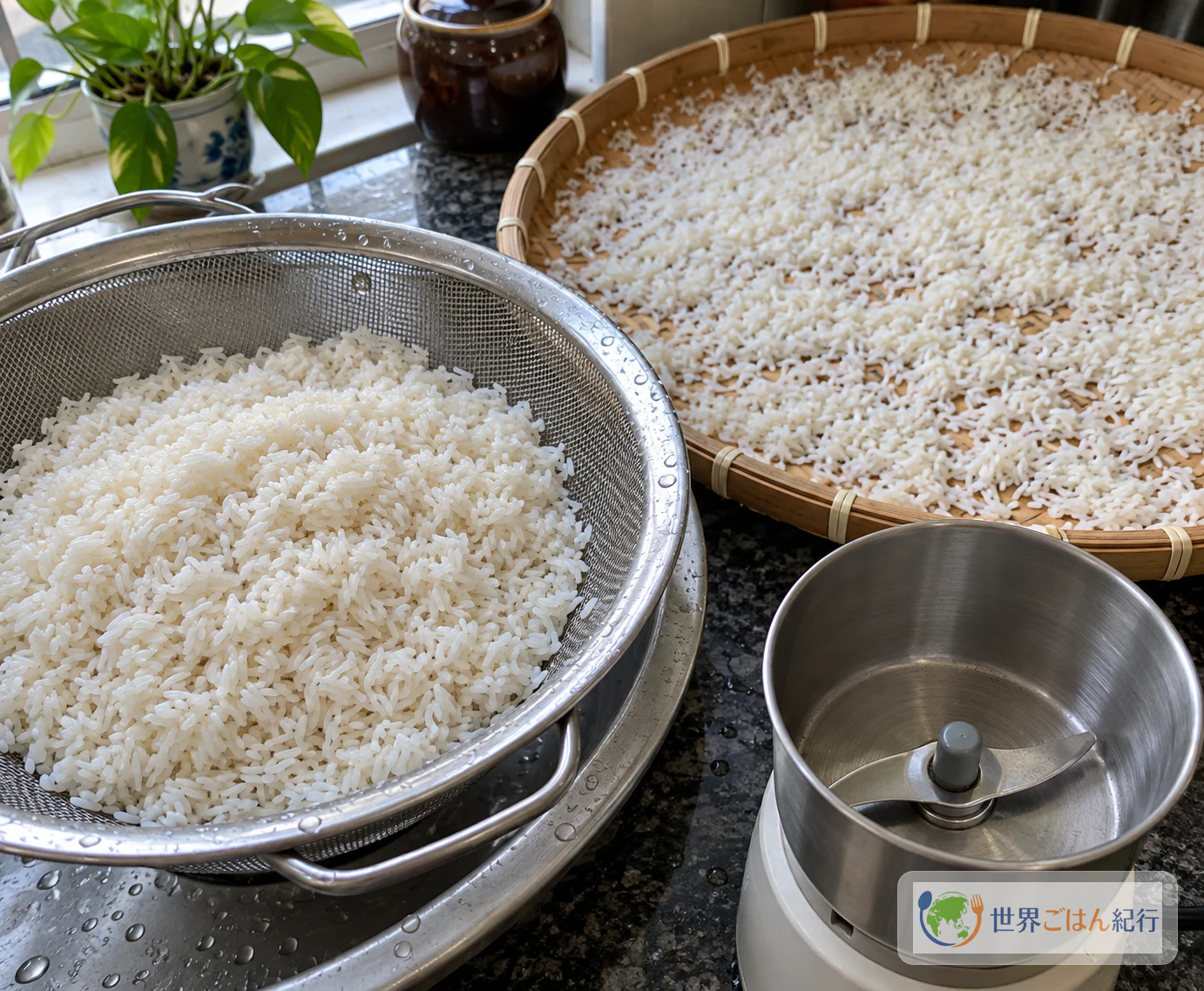
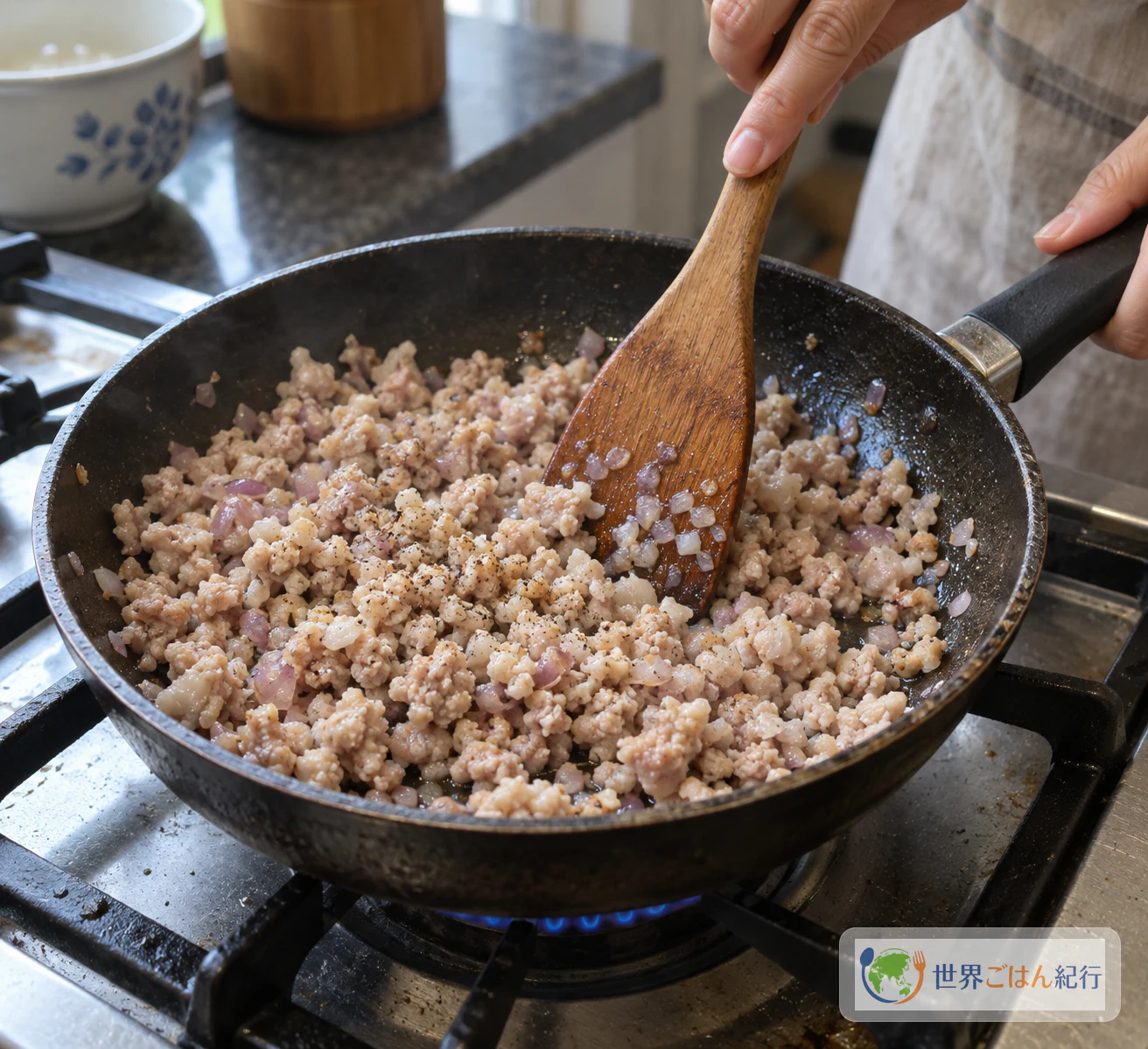
Bánh tai is made in more than one way. Traditional makers soak the rice, cook the dough and pound it. The version here is a home recipe published by the Vietnamese cooking site Điện máy XANH. It dry-grinds rinsed rice, brings the flour together with boiling water and oil, and wraps it around a filling that is stir-fried first. It is one reproducible home version, not the single standard for the region. You can find more dishes from the same country on the Vietnam page.
This recipe has not been kitchen-tested by Sekai Gohan. The amounts, times and visual cues come from the published home recipe described above. Expect to judge the dough by feel.
Bánh tai heo ("pig's ear cake") is a different food: a fried, spiral-patterned snack. Bánh tai vạc is also a separate dish. This article is about the steamed, pork-filled rice cake of Phú Thọ.
Three Ways of Making It: Traditional Workshops and the Home Kitchen
Accounts from Phú Thọ agree on what bánh tai is: plain rice dough, pork filling, an ear shape, and steaming. They differ in how the dough is made and what goes into the filling. These differences reflect different places, makers and records. None of them is a mistake.
| Account | Dough | Filling | Notes |
|---|---|---|---|
| Phú Thọ Tourism Promotion Information Center, traditional craft | Rice soaked from 2 hours to half a day and ground. The flour is shaped into balls, boiled for 20–25 minutes, then pounded into dough | Pork only, 2 parts lean to 1 part fat. About 400–450g of filling per 1kg of rice | Eaten the same day. One workshop describes steaming one layer for 30 minutes and two layers for 60 minutes. Traditionally no dipping sauce is needed |
| Phú Thọ Tourism Promotion Information Center, "Món ngon Đất Tổ" | Rice soaked 2–3 hours in summer and 4–5 hours in winter | Pork shoulder, shallots, pepper and fish sauce, wrapped into a half-moon | Remembered as a breakfast sold around Phú Thọ town. Now also a travel snack and served at weddings and meetings |
| Báo Phú Thọ, one maker's routine | Rice soaked 10–12 hours. Dough and filling prepared from early morning | Pork shoulder or belly, avoiding meat that is too fatty or too lean | Steamed for about 20 minutes. Valued in family meals, at breakfast and as a gift |
| Điện máy XANH, home recipe (used here) | Rinsed rice dried and dry-ground. Kneaded with boiling water and oil | Pork and shallots stir-fried with seasoning powder, sugar and pepper | Steamed 20–25 minutes until the skin is slightly translucent. Serves 4 |
The home recipe's ingredient list says only "a little seasoning." Its method, however, gives specific amounts: 1½ tbsp seasoning powder, ½ tsp sugar and ½ tsp pepper. This article uses the amounts from the method. That recipe also uses 1 tbsp of salt, but only to wash the pork; the salt is rinsed away and is not part of the filling's seasoning.
The traditional steps (soaking, boiling the dough balls, pounding) are not mixed into the method below. If you want to explore them, see the variations section.
Ingredients (Serves 4)
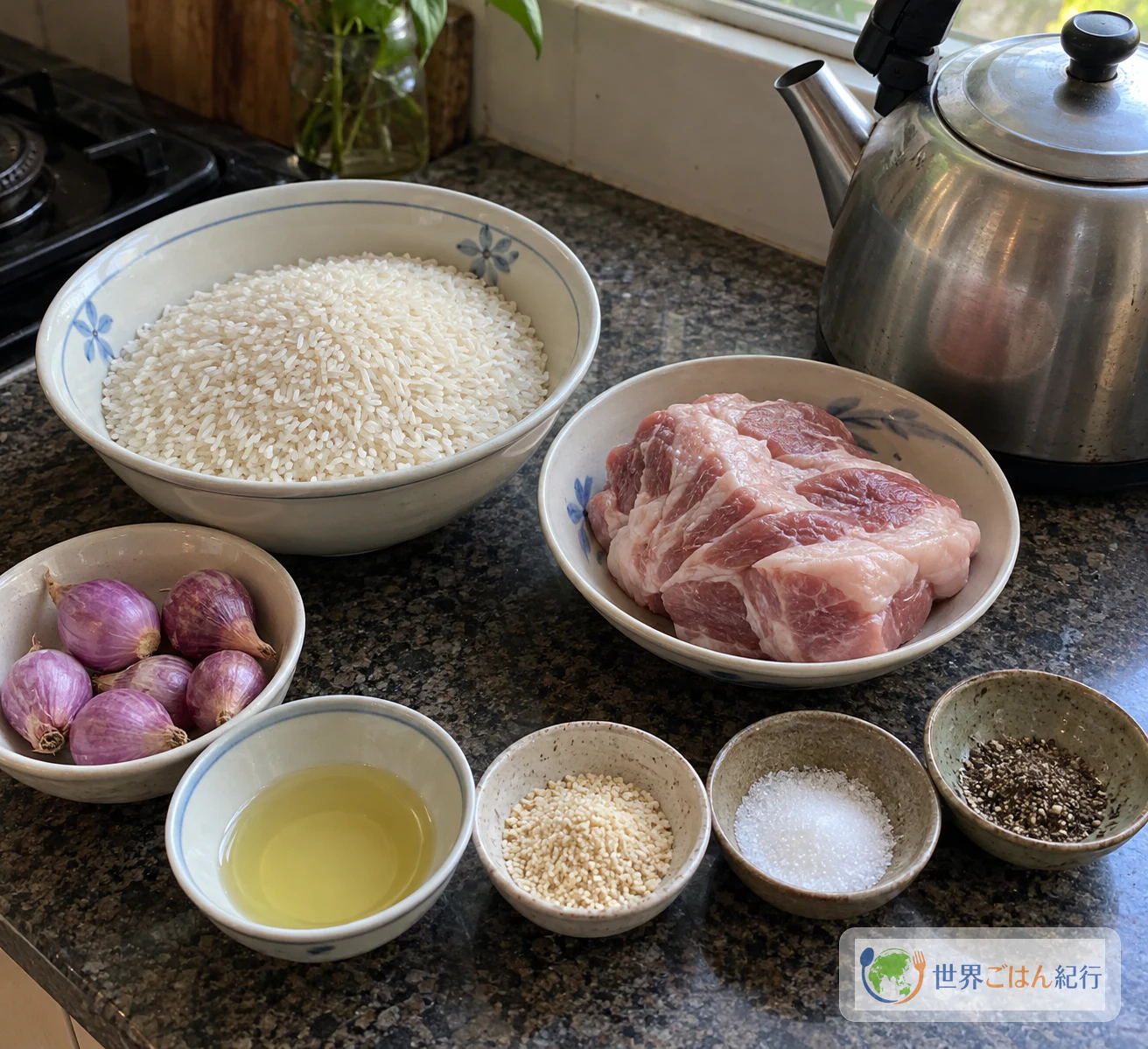
These amounts make 4 servings. The number of cakes depends on how large you shape them.
Equipment
- Fine sieve and a tray or wide plate for drying the rice
- Grinder or mill that can grind dry rice (check the product's instructions for grains and run time)
- Knife and cutting board
- Skillet and spatula
- Kettle for boiling water
- Large bowl or clean work surface for the dough
- Steamer with a lid
Choosing and Substituting
Rice. Use plain rice (gạo tẻ), not glutinous rice. Glutinous rice would change both the texture and the character of the dish. The same goes for wheat dumpling wrappers: they produce a different food, not bánh tai.
Store-bought rice flour. If you can't grind rice at home, ready-made rice flour is a possible route, but it changes the recipe. The flour will absorb water differently from freshly ground rice, so 100ml of boiling water may not give the same dough. This hasn't been tested. Treat it as a separate experiment and adjust the water a little at a time.
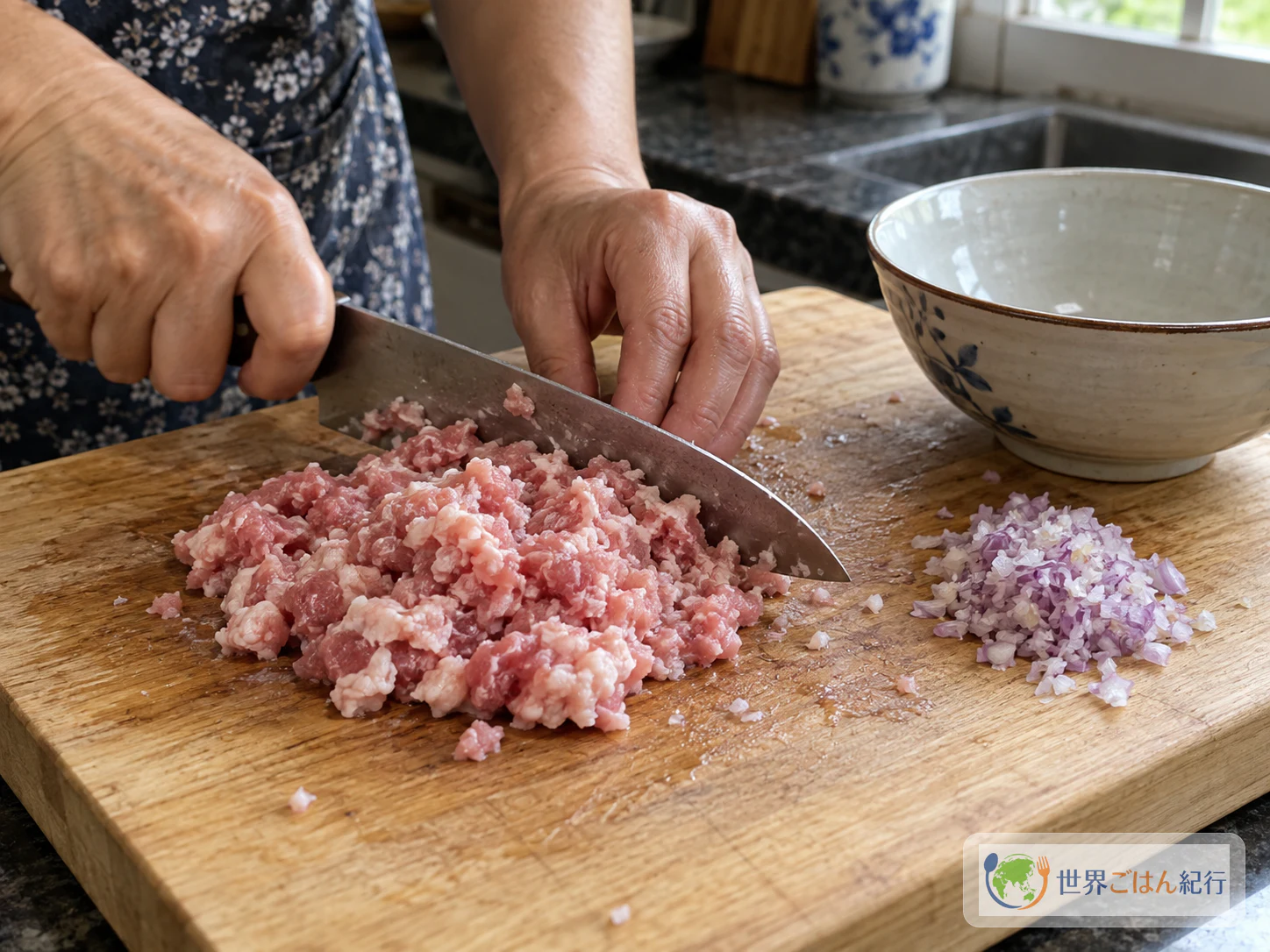
Pork. A cut with some fat keeps the filling from turning dry. Shoulder or belly suit it; avoid meat that is either very fatty or very lean.
Seasoning powder. Hạt nêm is a granulated seasoning sold in Vietnamese and Asian groceries. Brands differ in saltiness and in what they contain, and no tested substitute exists for this recipe. Check the label of the product you use for salt, and for allergens such as pork or soy.
How to Make Bánh Tai
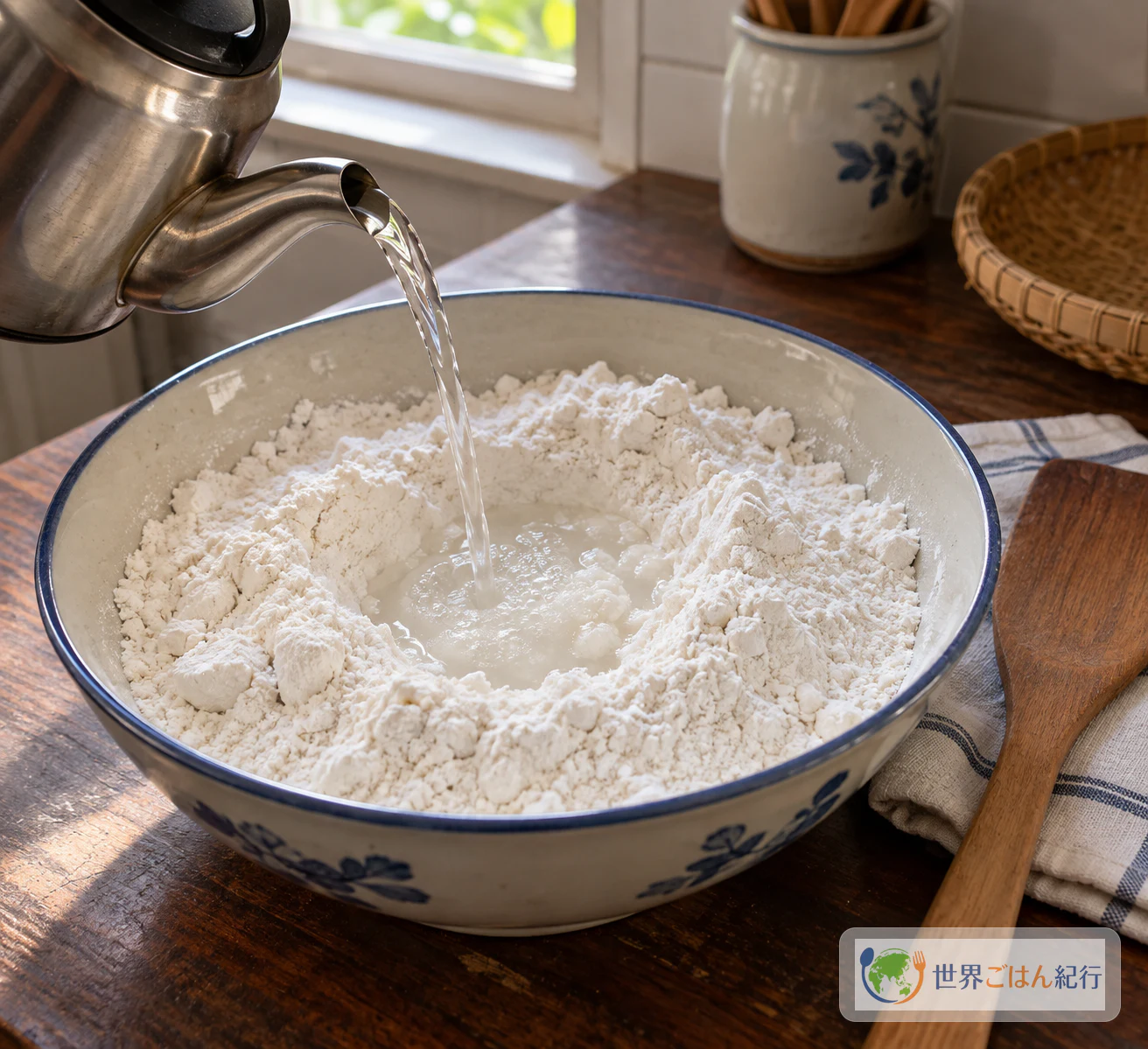
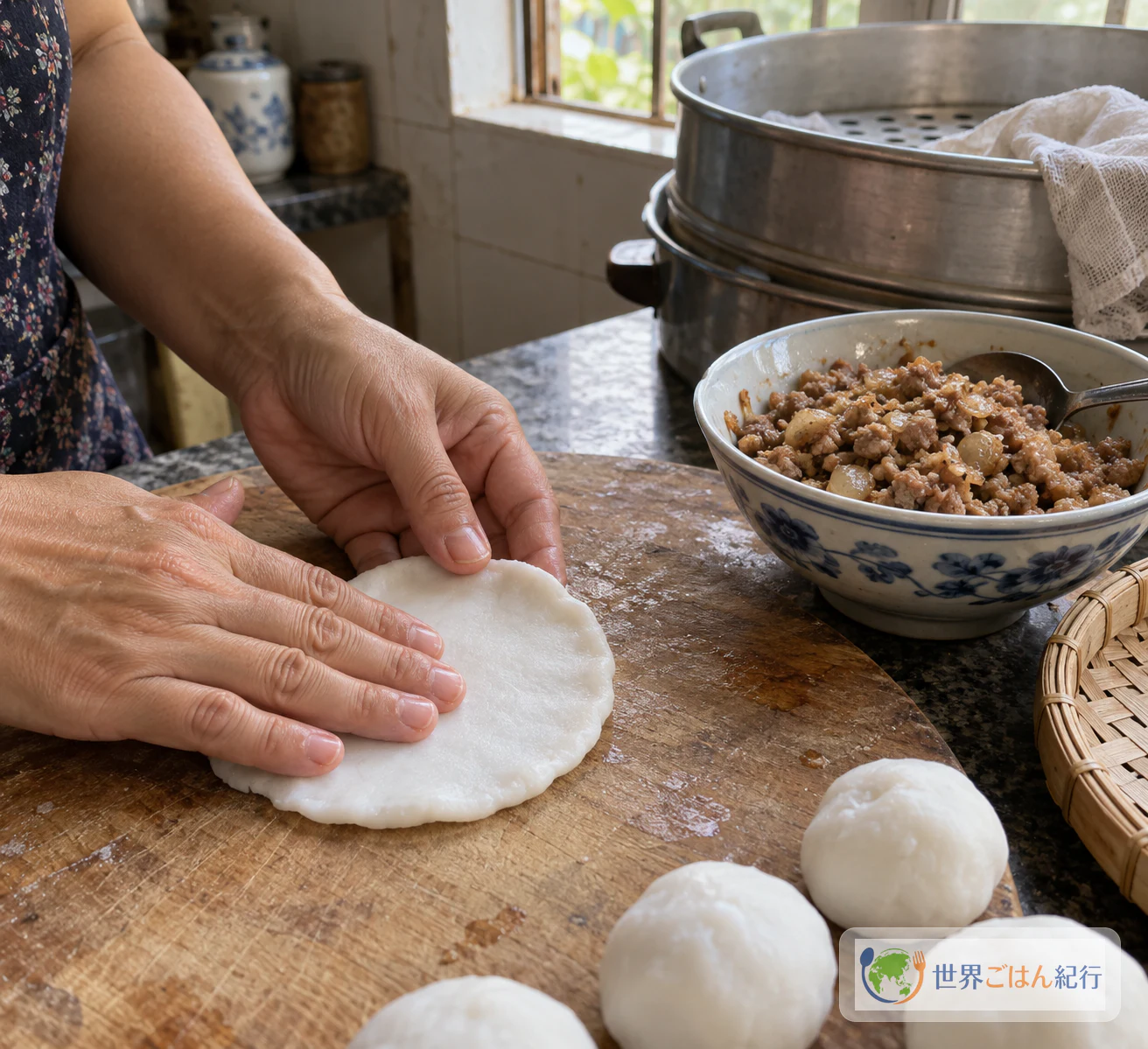
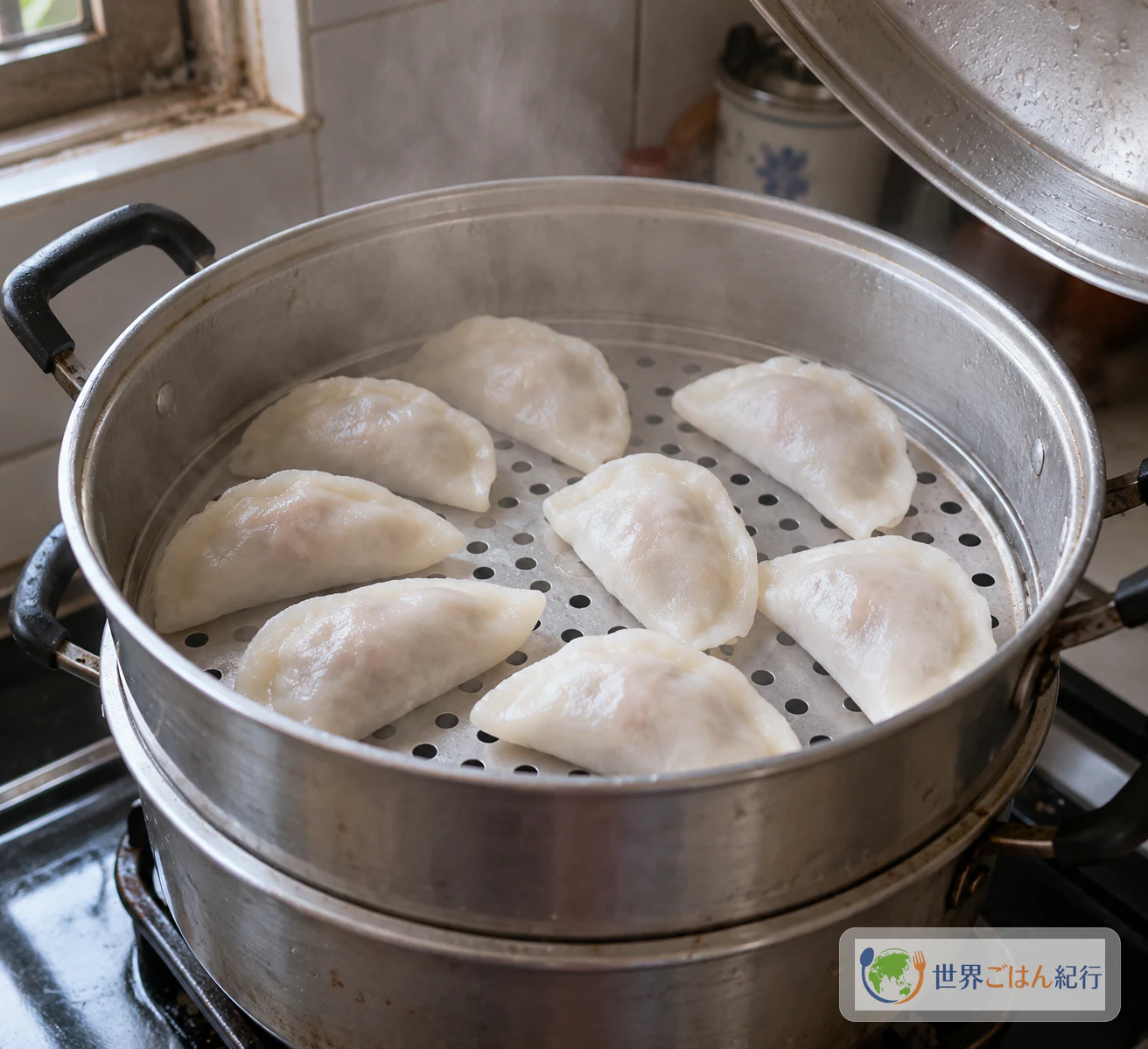
Cook the filling all the way through before you wrap it. Let the boiling water soak into the flour before you knead. Seal the edges firmly before steaming.
Fixing Common Problems
| Problem | Likely cause | What to do |
|---|---|---|
| Dough is crumbly and won't come together | The boiling water didn't reach all the flour | Keep drawing the flour over the water until it is absorbed before kneading. If it is still dry, add a little more boiling water |
| Dough is sticky | Too much water for this flour | Knead first and see how it feels before adding anything. If it stays sticky, work in a little more rice flour |
| Cakes open during steaming | Filling on the edges, or a weak seal | Keep the filling in the center and pinch the edges firmly together |
| Skin still looks opaque and white | Not steamed long enough, or the cakes are thick | Steam a little longer and check that the skin has turned slightly translucent. Time alone doesn't guarantee doneness |
| Filling tastes too salty | Seasoning powders vary in saltiness | Next time, check your brand's label. The washing salt is rinsed off and isn't meant to season the pork |
Serving, Safety and Same-Day Eating
Accounts from Phú Thọ describe bánh tai as something eaten hot, often for breakfast. The traditional record from the tourism center says it is eaten on the day it is steamed. No storage times or reheating guidance are given here, because none have been confirmed.
Cook the pork filling through before wrapping it. Wash hands and tools that touched raw pork before they go back to the dough or the finished cakes. The recipe uses rice instead of wheat, but that doesn't make it free of any particular allergen. Seasoning powder can contain pork, soy and other ingredients, and products may be made in shared facilities, so check the labels of what you use.
Variations and Ways of Eating It
The ideas below come from other accounts of bánh tai. Try them as separate versions rather than mixing them into the recipe above.
- With a dipping sauce. The Điện máy XANH recipe suggests fried shallots and a sweet-and-sour fish sauce as optional extras. By contrast, the tourism center's traditional account says bánh tai needs no dipping sauce. Either way is a household choice, and neither is part of the base recipe.
- A fish sauce filling. The "Món ngon Đất Tổ" account describes a filling of pork shoulder, shallots, pepper and fish sauce. It gives no amounts, so treat it as a direction to explore.
- The traditional pounded dough. Workshops soak the rice, boil balls of the flour and pound them into dough, and fill it with pork only. This is a different process from the home method, with its own timings.
Related Vietnamese rice and filled dishes on this site include bánh bột lọc, a different kind of rice-flour cake; bánh cuốn, thin steamed rice sheets; and bánh bao, another wrapped and filled dish.
Frequently Asked Questions
Is bánh tai the same as bánh tai heo?
No. Bánh tai from Phú Thọ is a steamed rice-flour cake with a pork filling. Bánh tai heo is a separate fried, spiral-patterned snack whose name refers to a pig's ear.
Do I need a dipping sauce?
No. The tourism center's traditional account says bánh tai doesn't need one. The Điện máy XANH home recipe offers fried shallots and a sweet-and-sour fish sauce as an optional extra. It's up to you.
Can I use store-bought rice flour?
Possibly, but it isn't the same as dry-grinding rinsed rice. Packaged flour may absorb water differently, so neither the 100ml of boiling water nor the texture is guaranteed to match. This hasn't been tested. Add water gradually and judge by the feel of the dough.
How many cakes does this make?
The recipe is for 4 servings and doesn't give a number of cakes. The count depends on how large you make each one.
Why do the steaming times differ between accounts?
They describe different settings. The home recipe steams for 20–25 minutes, until the skin is slightly translucent. Báo Phú Thọ's maker steams for about 20 minutes. A traditional workshop recorded by the tourism center steams one layer for 30 minutes and two layers for 60 minutes. For this recipe, use 20–25 minutes and check the skin.
Can I make them ahead?
The traditional account describes bánh tai as eaten on the day it is made, and this article doesn't give storage periods or reheating instructions. It's best to steam them on the day you plan to eat them.
Sources
- Phú Thọ Tourism Promotion Information Center, "Nghề làm bánh tai truyền thống thị xã Phú Thọ." The ear-shaped cake of plain rice dough with pork filling; breakfast at the market and eating it hot; the traditional soaking, boiling and pounding of the dough; the pork-only filling and its proportions; same-day eating; workshop steaming times; no dipping sauce traditionally. https://dulichphutho.gov.vn/nghe-lam-banh-tai-truyen-thong-thi-xa-phu-tho.html
- Phú Thọ Tourism Promotion Information Center, "Bánh Tai Phú Thọ - Món ngon Đất Tổ." Breakfast and street selling in Phú Thọ town; seasonal soaking times in another traditional method; the filling of pork shoulder, shallots, pepper and fish sauce; present-day use at breakfast, for travel and at weddings and meetings. https://dulichphutho.gov.vn/banh-tai-phu-tho-mon-ngon-dat-to.html
- Điện máy XANH Vào bếp, "Cách làm bánh tai Phú Thọ vỏ mềm dai nhân đậm vị ăn là mê." The home recipe used in this article: ingredient amounts, the stir-fried filling, the boiling-water and oil dough, shaping, steaming for 20–25 minutes until slightly translucent, 4 servings, and the optional fried shallots and sweet-and-sour fish sauce. https://www.dienmayxanh.com/vao-bep/cach-lam-banh-tai-phu-tho-vo-mem-dai-nhan-dam-vi-an-la-me-15477
- Báo Phú Thọ, "Bánh tai - Món quà quê mộc mạc của người dân Đất Tổ." The name's origin in the curved, ear-like shape; the several origin stories; one maker's early-morning preparation, soaking and steaming times; choosing pork shoulder or belly; bánh tai at breakfast and as a gift. https://baophutho.vn/banh-tai-mon-qua-que-moc-mac-cua-nguoi-dan-dat-to-258535.htm