Mebakbeka: Pasta That Cooks in the Broth
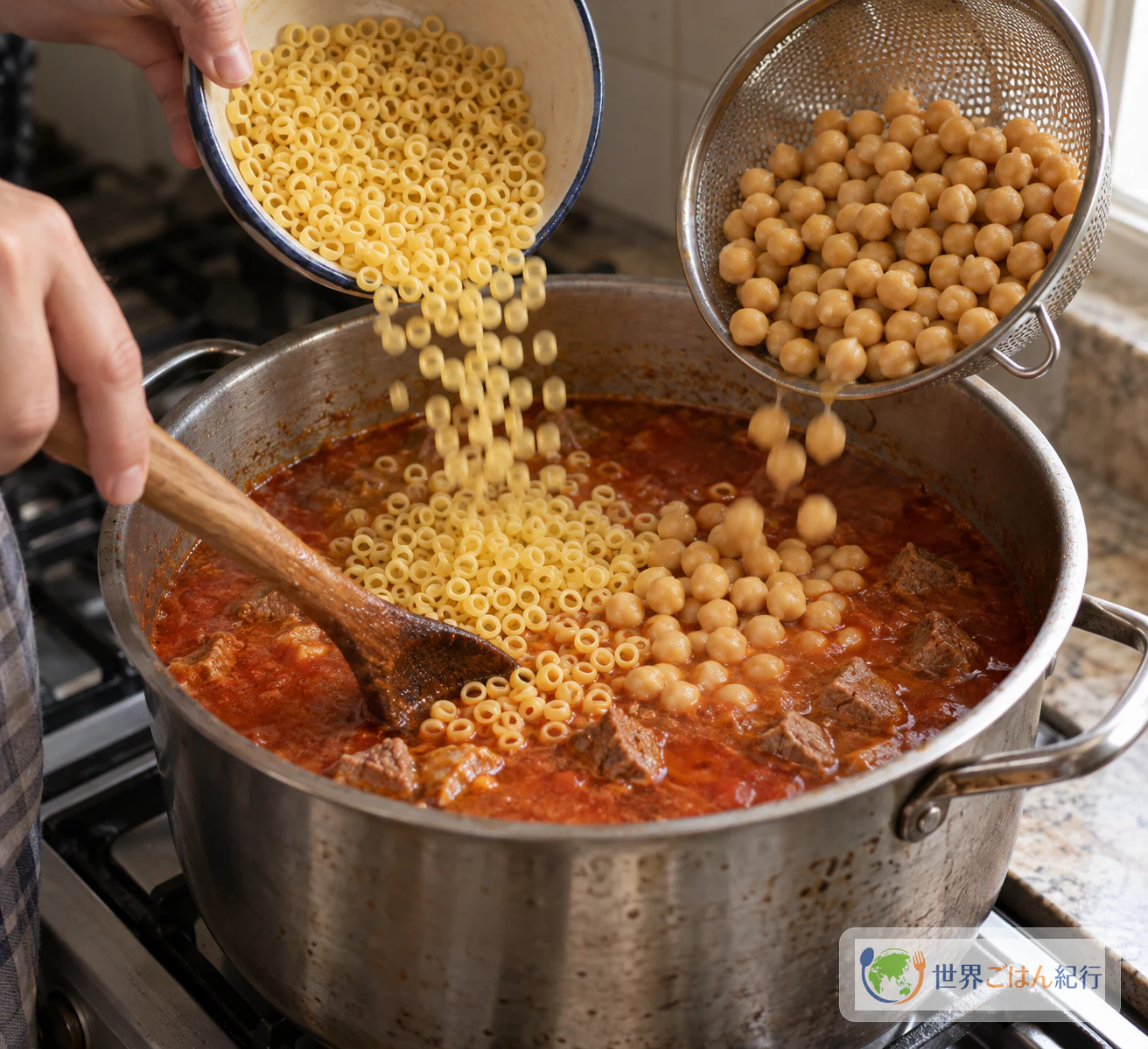
The dried pasta goes straight into the tomato and meat broth, in the same pot as everything else. Judge the meat and pasta by checking them, not by the clock.
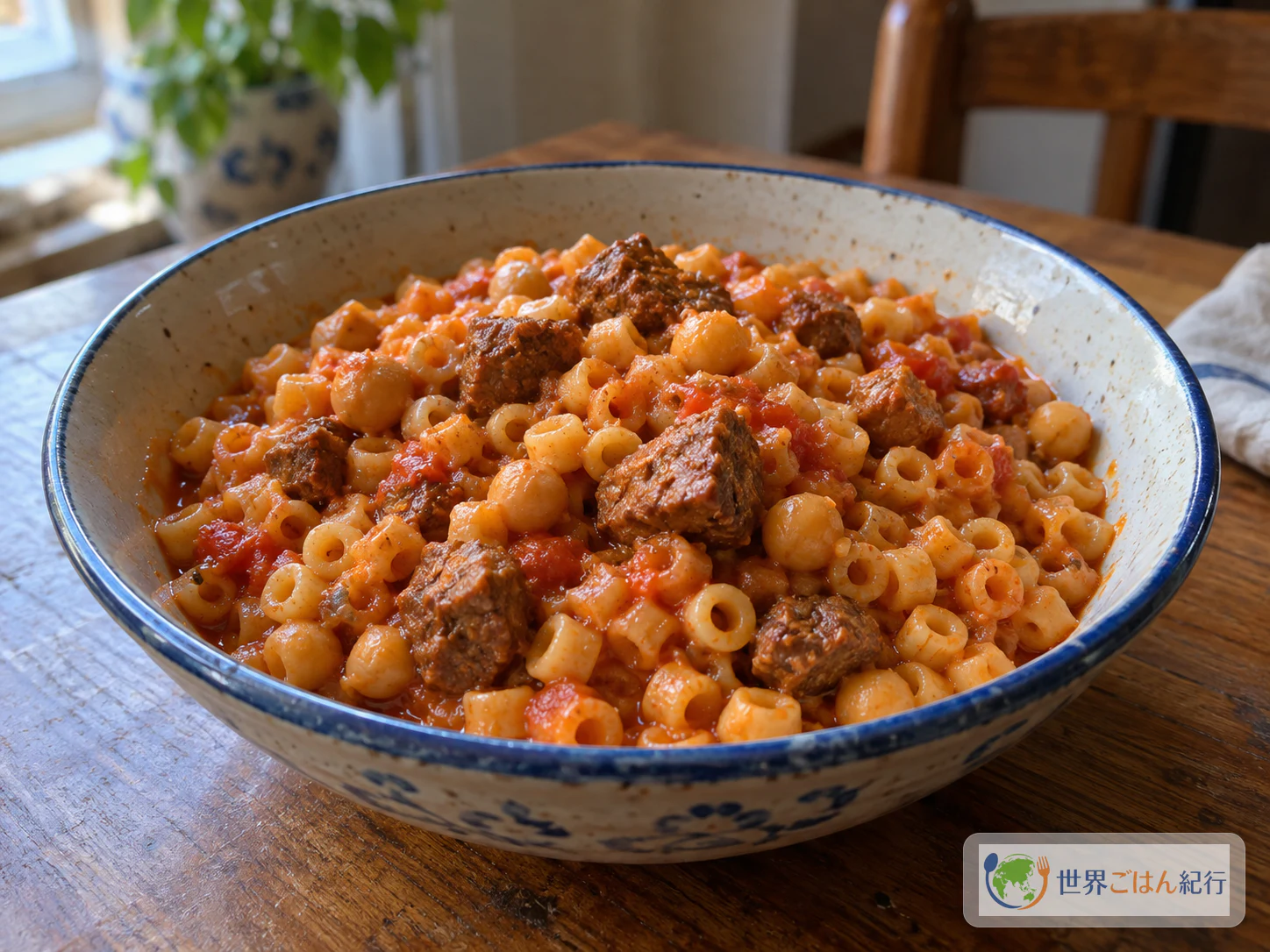
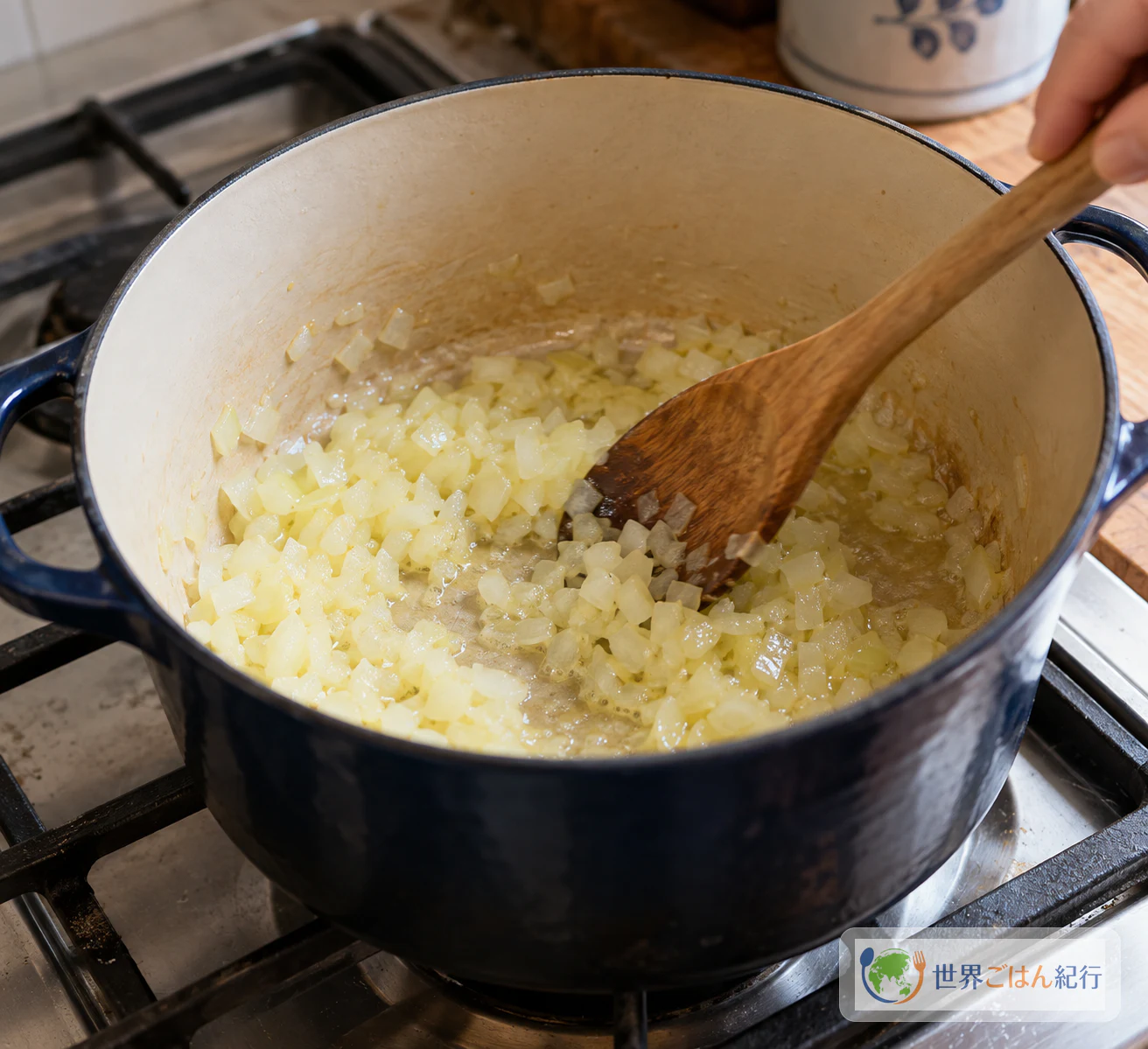
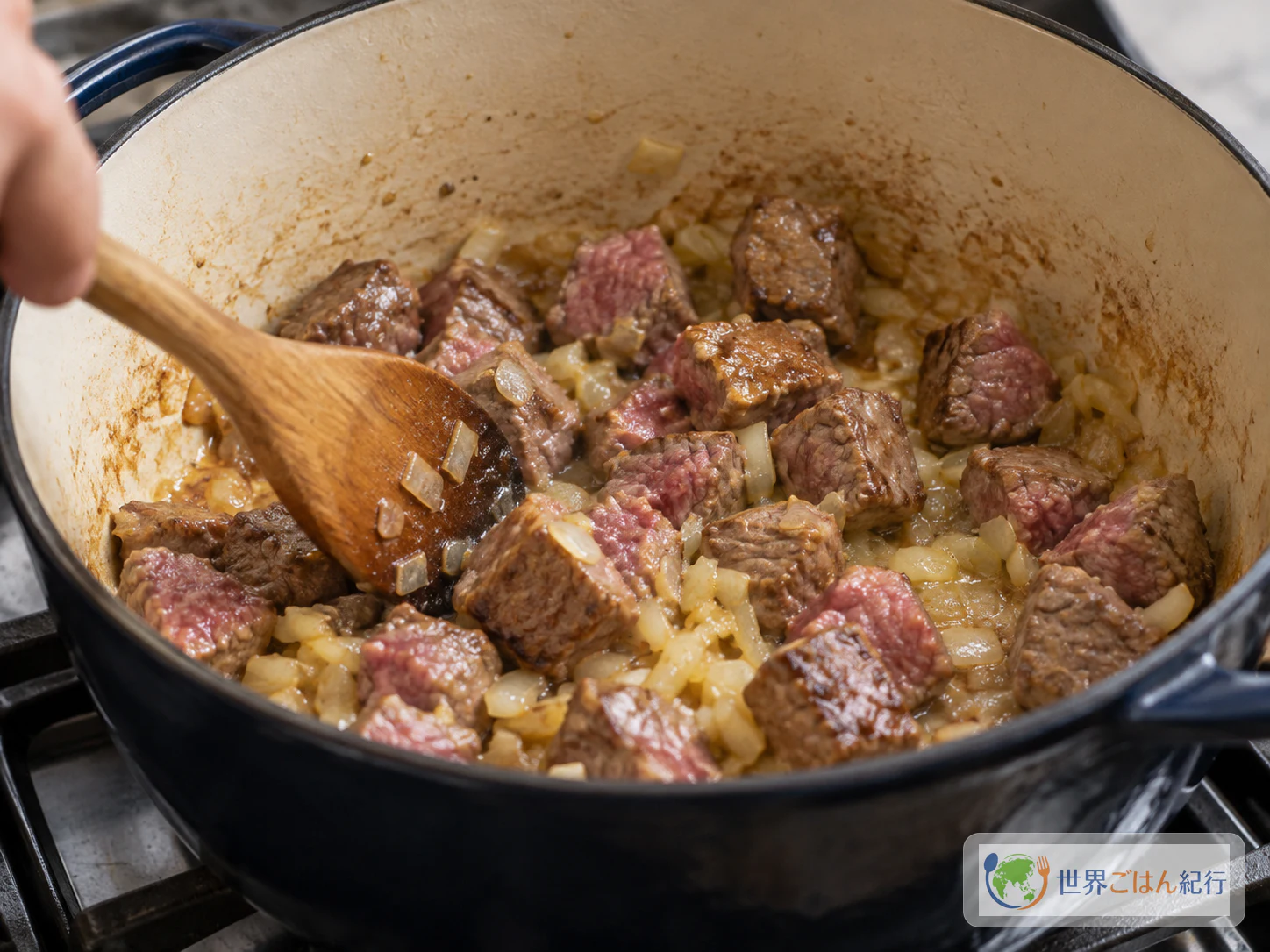
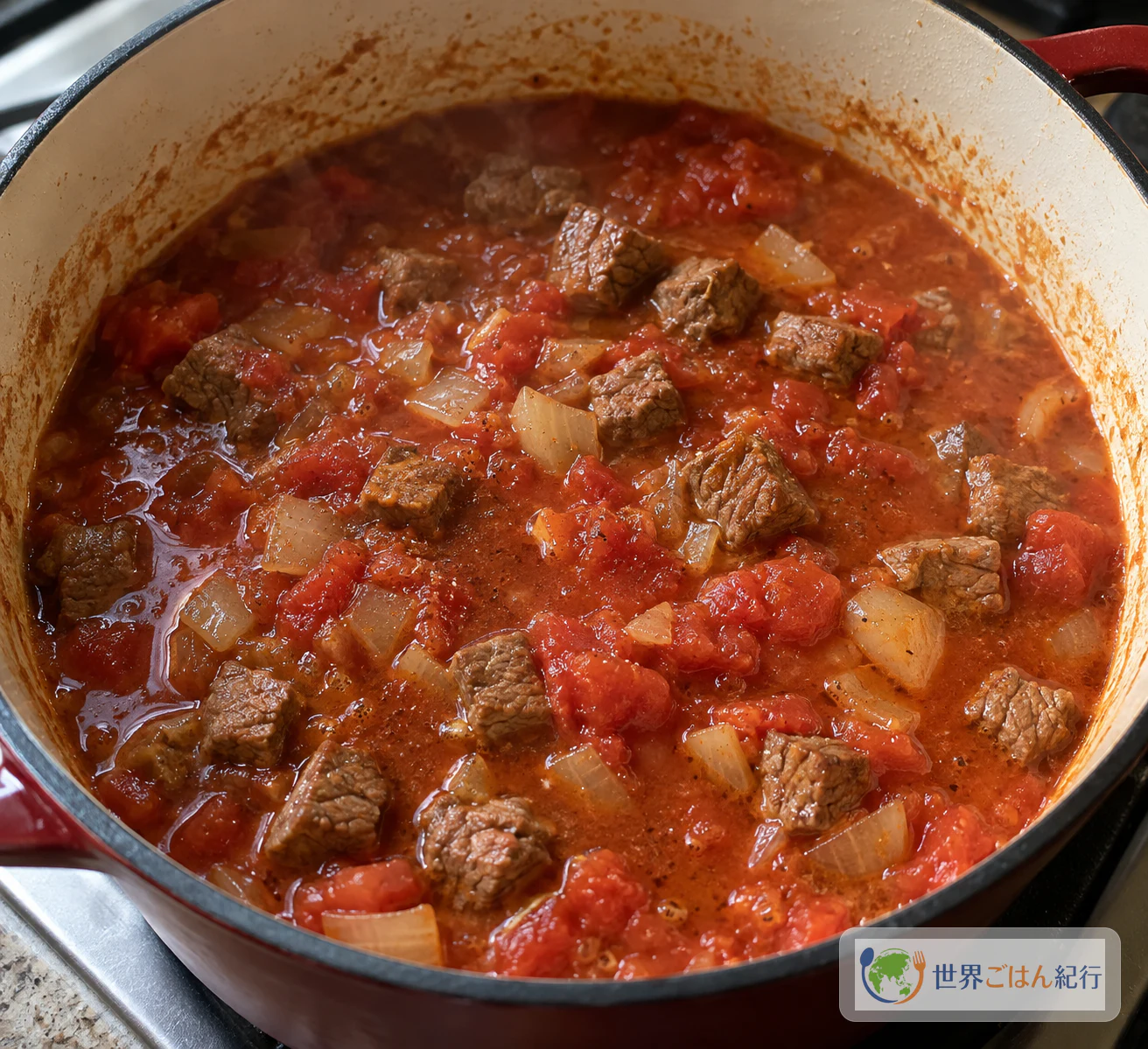
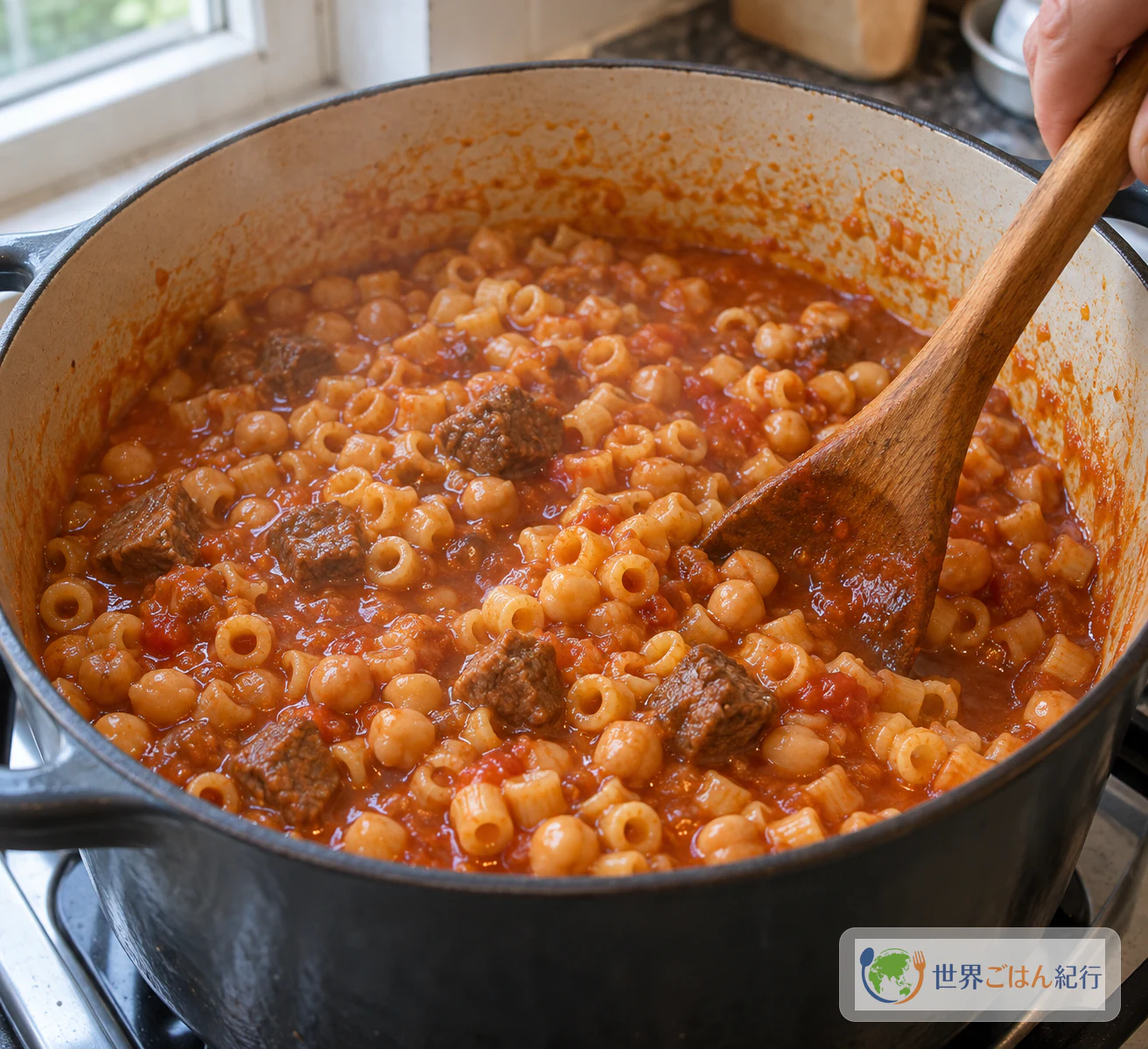
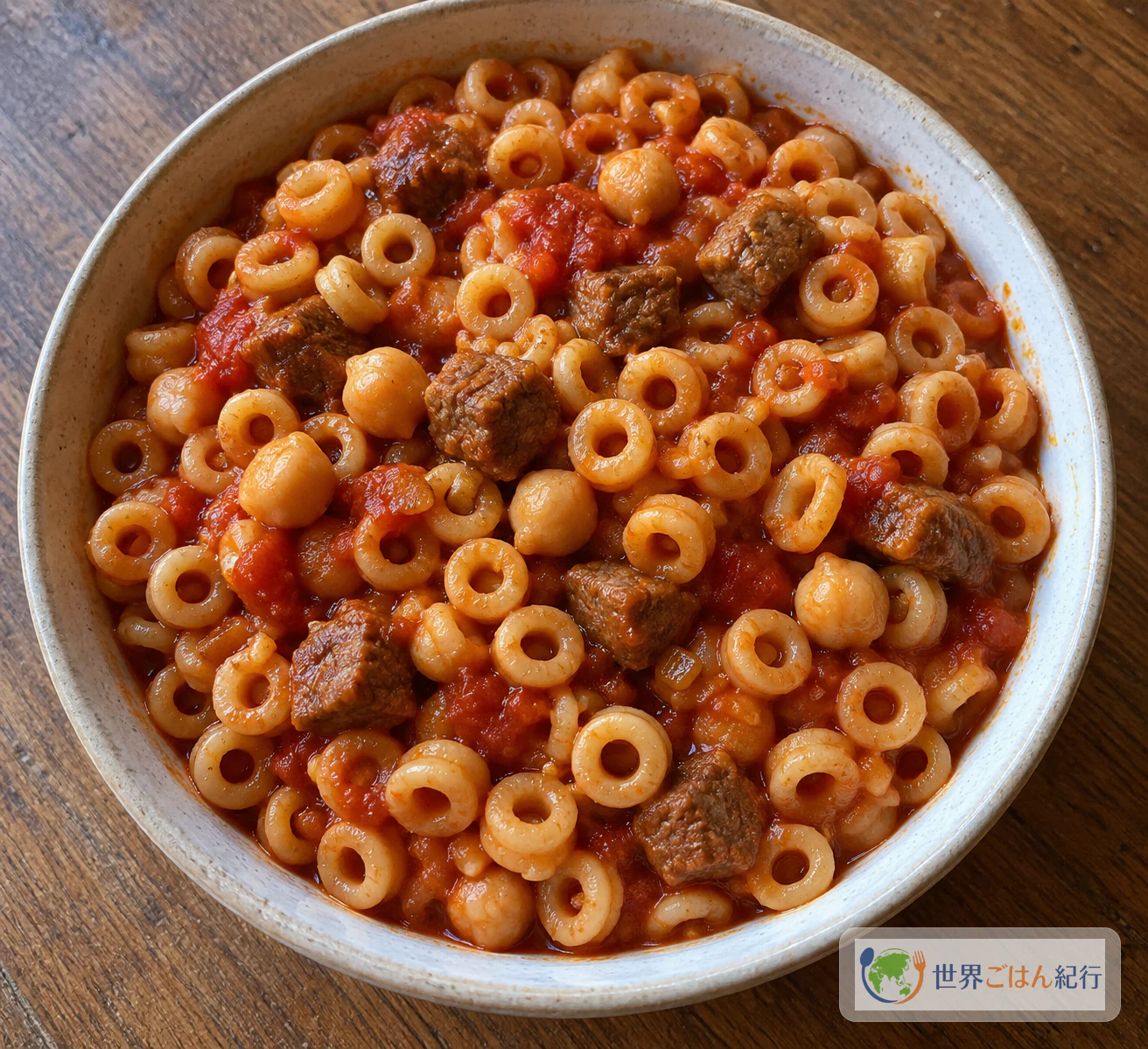
Onion softens in butter, small cubes of meat take on some color, and then water and diced tomatoes come to a boil. Instead of being boiled in a separate pot and sauced later, the dried pasta goes directly into that red broth with the chickpeas and simmers over low heat until tender. Mebakbeka (مبكبكة) is a Libyan dish of pasta cooked in tomato and meat broth, so it is neither a soup with noodles nor pasta with a sauce spooned over.
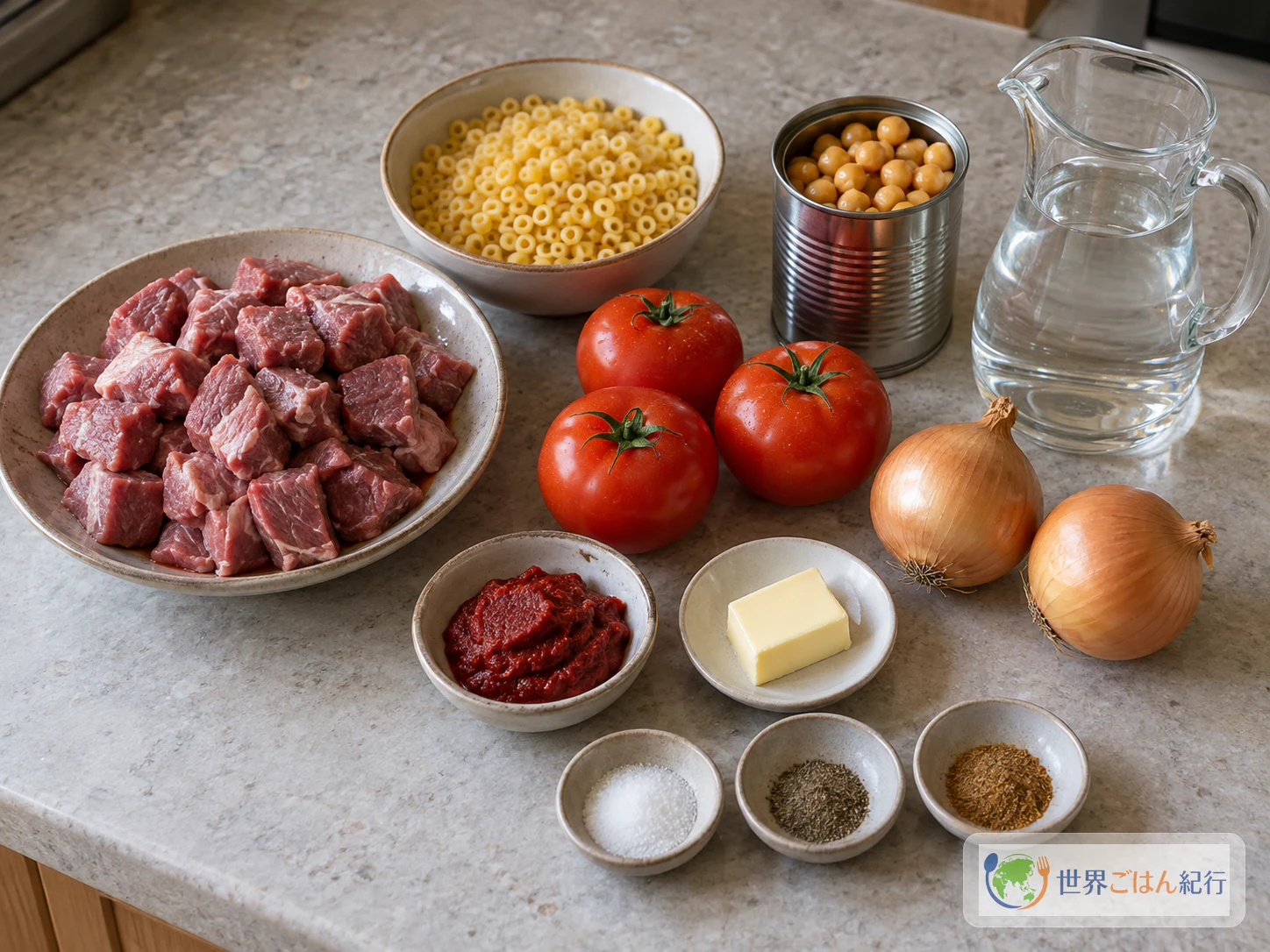
The recipe here follows a single version published by the Libyan media outlet Alwasat. It uses 500 g of meat, 500 g of ring or shell pasta, tomatoes, tomato paste, onions, butter, water and a can of chickpeas. Sekai Gohan has not kitchen-tested this recipe. The published version doesn't state the number of servings, the type of meat, the cup size, the can size or a cooking time, so none of those are filled in here. The section on meat, water and timing explains how to handle each one.
Ingredients for One Pot
Equipment
- A wide, heavy pot
- A wooden spoon or spatula that can reach the bottom of the pot
- A knife and cutting board
- A strainer for the chickpeas
- A kettle or small pot for hot water
- Deep bowls or plates for serving
Meat, Water and Timing
A few details need your judgment in the pot.
- Meat: Use small cubes. Lamb is a reasonable choice because the dish is described with a lamb broth, but that is our suggestion. Beef is another option. Your choice of meat will change both the flavor and the cooking time.
- Meat cooking time: The meat goes from browning straight into the water and tomatoes, and then the pasta is added, with no separate simmering time. That's why step 3 includes a check of the meat. If the meat needs longer, simmer it until tender before the pasta goes in.
- Water: Use 5 cups. We haven't converted this to milliliters, because any figure would be a guess. If the pot runs dry, add hot water little by little; we don't specify an amount.
Choosing the Pasta, Chickpeas and Seasonings
Pasta: Use ring or shell pasta. If you can't find them, a similar small short pasta is our suggested substitute. Different shapes absorb liquid and cook at different rates, so go by the pasta's texture in the pot more than the time on the package.
Chickpeas: Use one ordinary can, drained.
Mixed spice: Choose a ready-made blend and check its ingredients. Chili, harissa and garlic are not part of this recipe.
What's worth buying: Small short pasta and tomato paste are the main items to look for. A heavy pot also helps with sticking on the bottom and with long simmering.
The pasta contains wheat (gluten), and the butter is a dairy product. Check the labels on mixed spices and canned goods as well. We haven't tested a butter-free version, so we can't say how leaving it out or replacing it would change the dish.
Fixing Problems in the Pot
These fixes are general cooking guidance for a dish like this and haven't been tested against this exact recipe.
| Problem | Likely reason | What to do |
|---|---|---|
| Pasta sticks to the bottom | Too little stirring, or too little liquid | Lower the heat and stir from the bottom more often. Add a little hot water if the pot looks dry |
| The liquid runs out before the pasta is tender | Your pot or pasta shape uses more liquid | Add hot water a little at a time and keep simmering until the pasta is soft enough to eat |
| The pasta is done but the meat is still tough | The meat needs longer than the pasta | Keep simmering gently with a little hot water, stirring from the bottom, and accept softer pasta. Next time, simmer the meat longer before adding the pasta |
| The pot looks too soupy | Your pasta has absorbed less liquid | Keep simmering over low heat, stirring, and check the texture as you go |
| The flavor seems flat | Too little seasoning | Add salt, pepper or mixed spice a little at a time, tasting between additions |
Variations: Published Versions Differ
The versions we found differ in more than quantities, and none of them should be treated as the one correct form or as representative of every Libyan home.
| Version | What it uses or does | How we treat it |
|---|---|---|
| Alwasat, "Mebakbeka from the Libyan kitchen" | Butter, cubed meat, tomatoes, tomato paste, chickpeas, mixed spice | The recipe on this page |
| Omar's Cooking | Sears the meat, adds tomato paste, tomato juice and hot water, simmers the meat, then cooks the pasta in the same pot with added hot water and stirring. Gives 400 g to 1 kg of pasta for 500 g of meat | Comparison for method and preventing sticking. Its amounts aren't used here |
| Alwasat, from the book Water and Salt by Mohamed and Najat Al-Mughrabi | A larger batch with bone-in lamb, chickpeas, green peas, fenugreek and dill. Adds the pasta after simmering, with water as needed | Shown as an example of a different version. Tomato appears in its method but not its ingredient list, so we don't cook from it |
If you want to experiment with the recipe on this page, here are some untested ideas:
- Compare a beef pot and a lamb pot, noting how long each meat takes.
- Try different pasta shapes and compare how much hot water each one needs.
- Weigh your drained chickpeas and write down the amount you prefer.
Where Mebakbeka Fits in Libyan Food
A Library of Congress country study on Libya describes makaruna mbakbaka as spiced pasta cooked in a broth of tomato and lamb, the clearest outline of the dish in our sources. The same study notes that Italian-style pasta is common in Tripolitania. That is useful background, but it doesn't show that this dish came from Italy, and we make no such claim.
The name also appears in other Latin-letter spellings, such as mbakbaka and mebakbaka. We use Mebakbeka alongside the Arabic مبكبكة. The sources we used don't establish the name's etymology or when the dish first appeared, so we leave both open.
Libyan cooking extends well beyond this pot, with dishes such as the stuffed mafrum and the soup sharba libiya. You can explore more on our Libya page.
Frequently Asked Questions
Do I boil the pasta separately?
No. In the Alwasat recipe, the dried pasta and chickpeas go into the same pot as the broth and cook there.
Does it have to be lamb?
The Alwasat recipe doesn't specify a meat. The US country study describes a lamb broth, so lamb is a natural choice, but that's our suggestion. If you use another meat, check its tenderness rather than relying on a set time.
Are 5 cups of water enough?
We can't say for certain. The recipe gives 5 cups, but it doesn't define the cup size or mention extra water. Your pot and pasta will also affect how much liquid you need, and this recipe hasn't been kitchen-tested. Watch the pot and add hot water little by little if needed.
Is mebakbeka spicy?
The Alwasat recipe lists no chili or harissa, only salt, pepper and mixed spice. We wouldn't describe heat as a defining feature of this version, although the mixed spice you choose may affect the result.
How long does it take, and how many does it serve?
The recipe gives neither a total time nor a serving count, and we haven't measured them, so we don't provide figures.
How should I store leftovers?
Our sources give no guidance on storage or reheating, so we don't state storage times or temperatures here. Follow your local food safety guidance.
Where does the dish come from, and what does the name mean?
The sources we used don't confirm the name's origin or the dish's date, so we'd rather leave that question open than guess.
Sources
- Alwasat (بوابة الوسط), "«المبكبكة» من المطبخ الليبي." The ingredients, amounts and order of the method used in this recipe. https://alwasat.ly/news/kitchen/28723
- Omar's Cooking, "المبكبكة الليبية." A separate recipe used to compare the method, including simmering the meat first and adding hot water while stirring the pasta. Its amounts are not used. https://www.omarscooking.com/recipe-mebakbaka
- Federal Research Division, Library of Congress, "Libya: A Country Study," Sustenance & Health / Diet (hosted on GovInfo). The description of the dish as spiced pasta cooked in tomato and lamb broth, and the note that Italian-style pasta is common in Tripolitania. https://www.govinfo.gov/content/pkg/GOVPUB-D301-PURL-gpo129600/pdf/GOVPUB-D301-PURL-gpo129600.pdf
- Alwasat (بوابة الوسط), citing ماء وملح by Mohamed and Najat Al-Mughrabi, "مبكبكة ليبية في خطوات بسيطة." A different version with bone-in lamb, chickpeas, green peas, fenugreek and dill, used only as an example of variation. https://alwasat.ly/news/kitchen/92932