Boko Boko Harees: Bulgur and Chicken That Come Together in One Pot
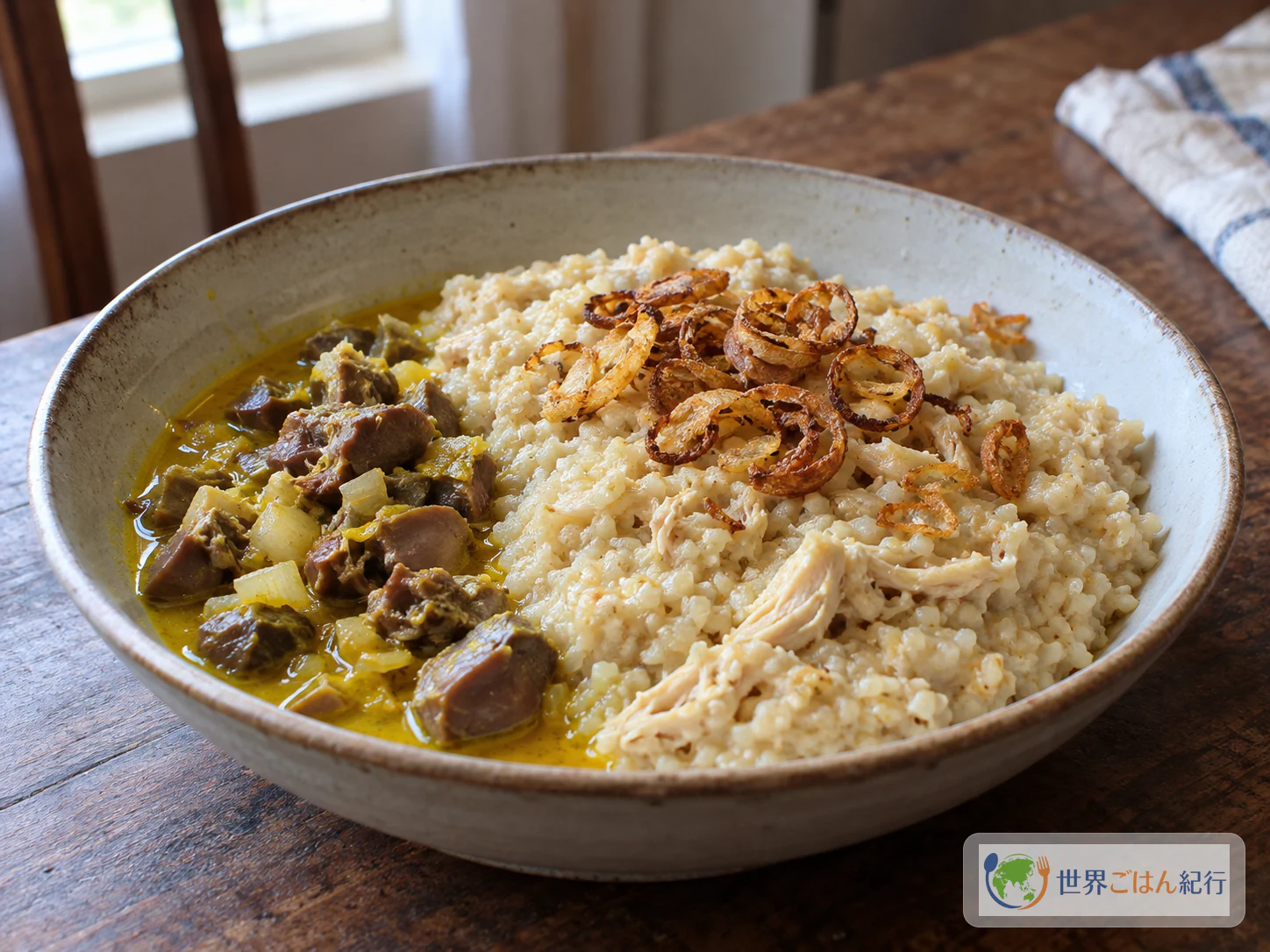
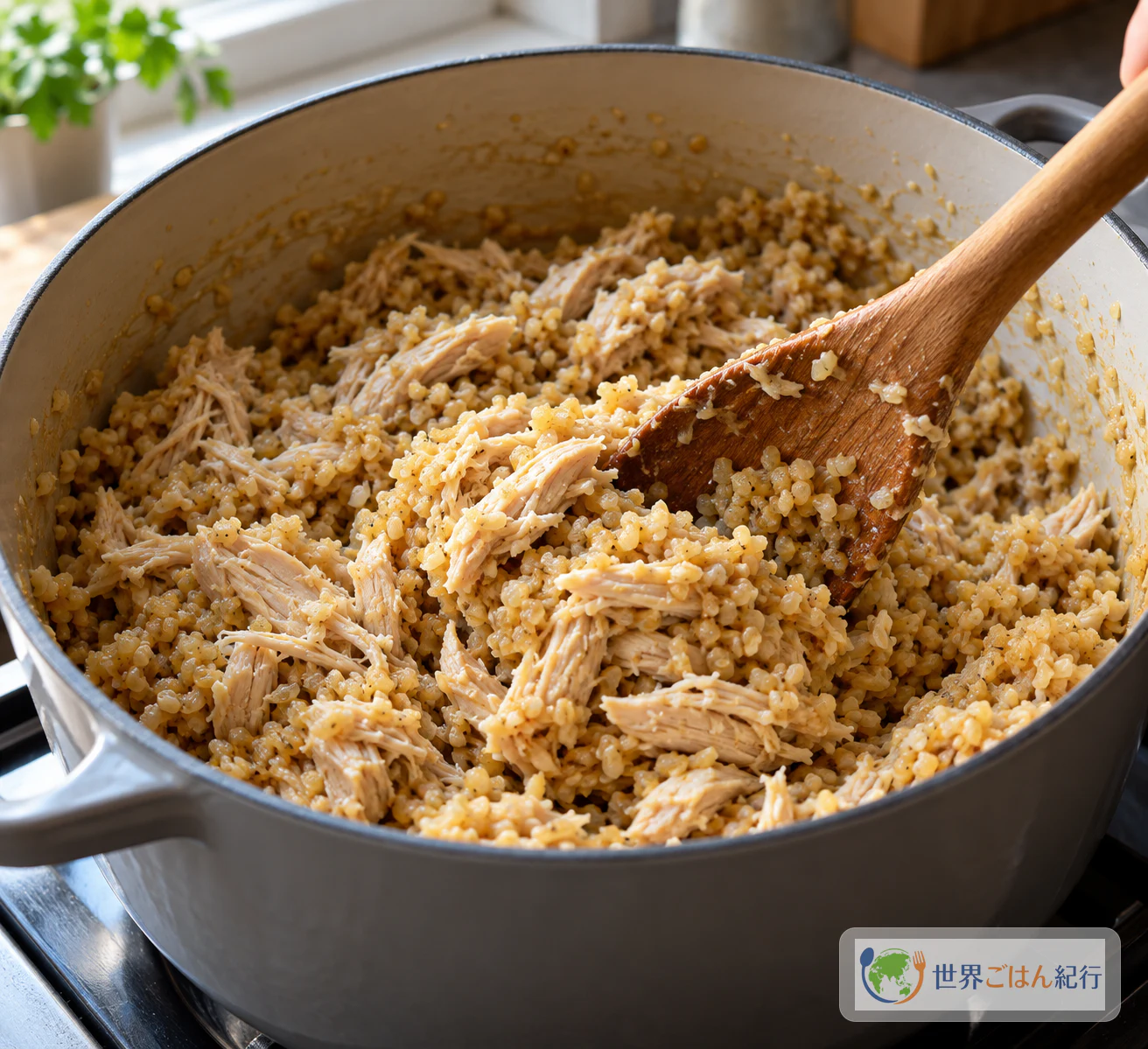
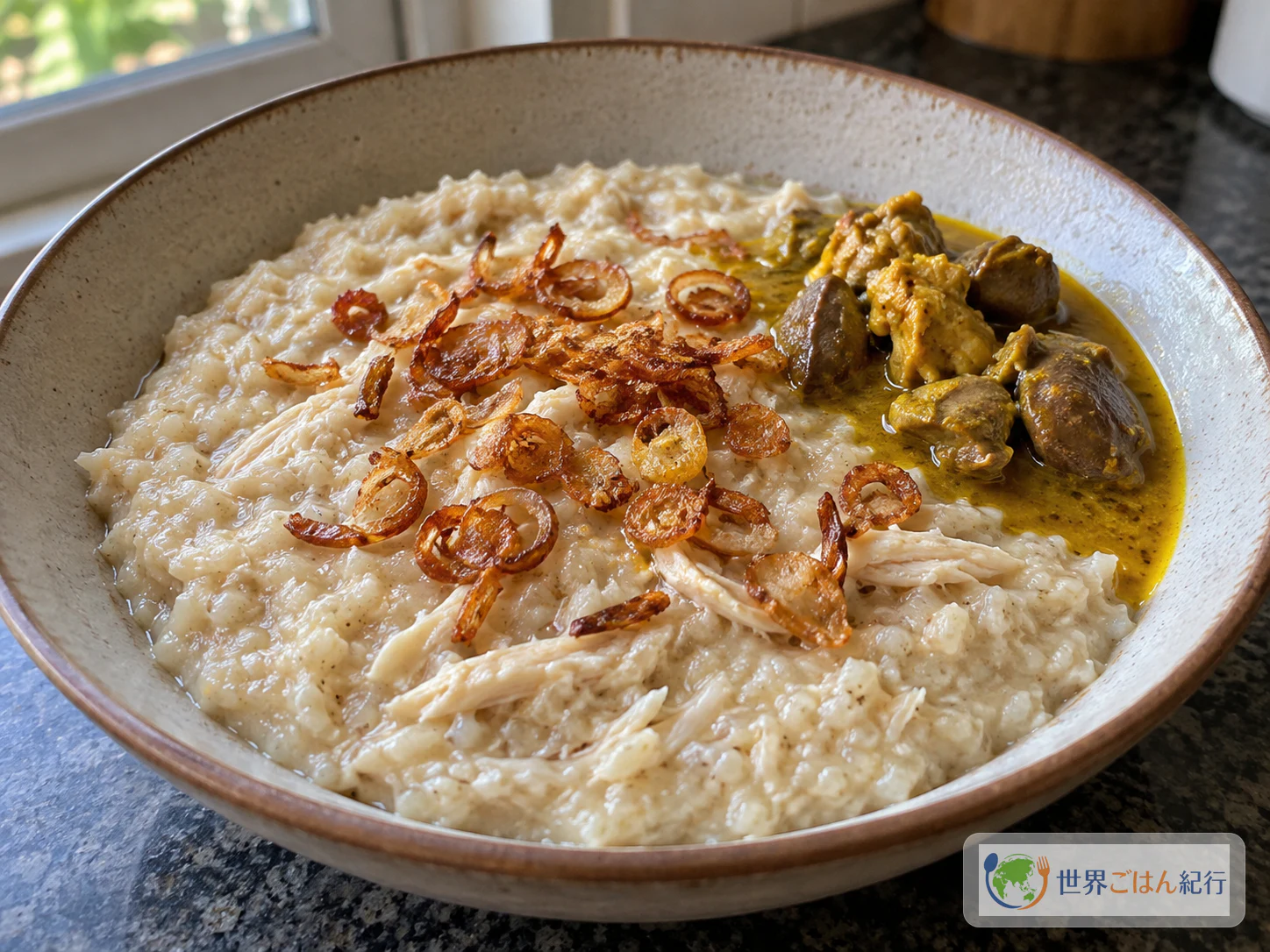
A pale, thick porridge of bulgur and shredded chicken, with a small spoonful of yellow turmeric and giblet sauce on the side and crisp fried shallots on top. Don't stir the turmeric into the whole pot.
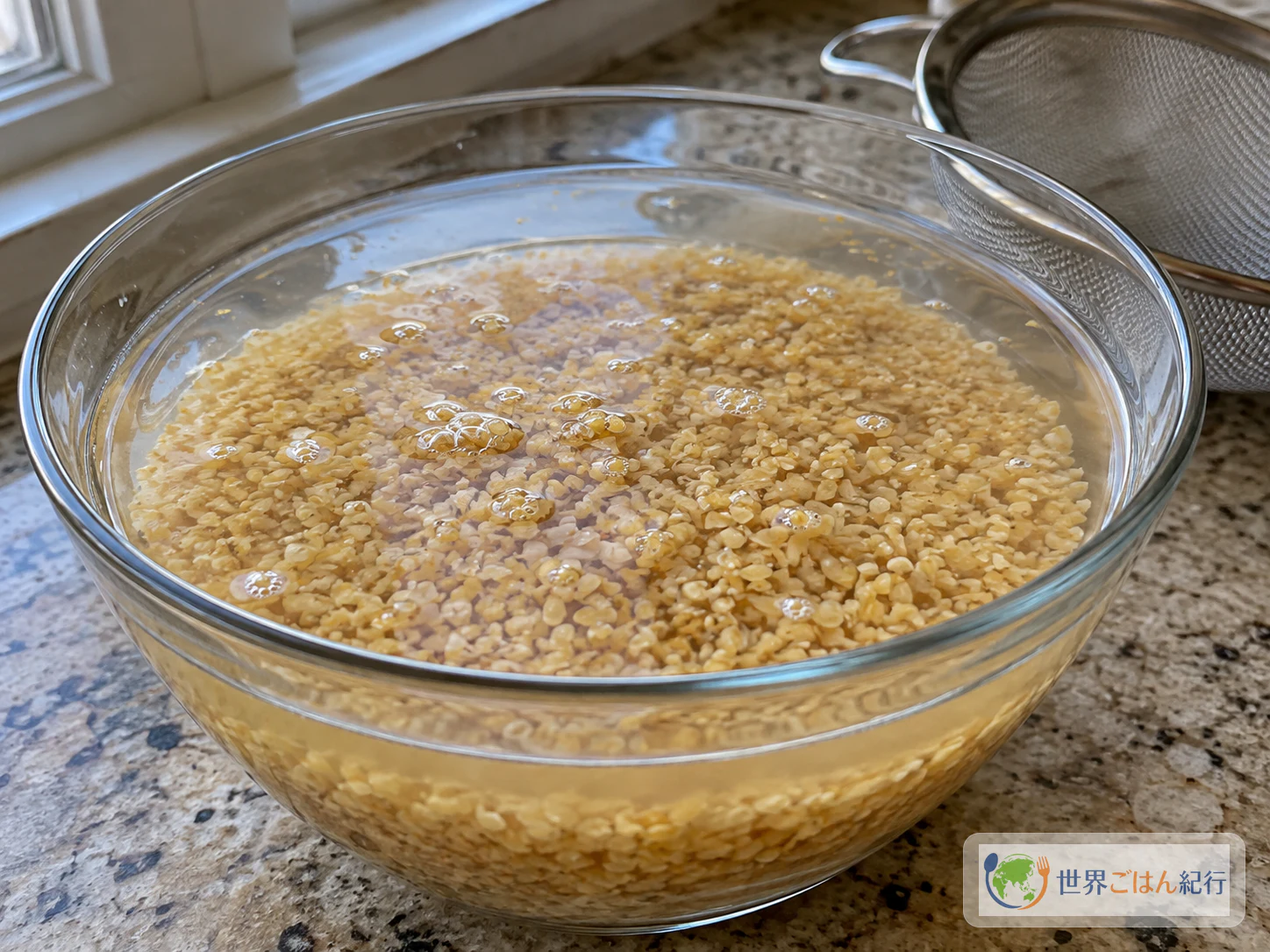
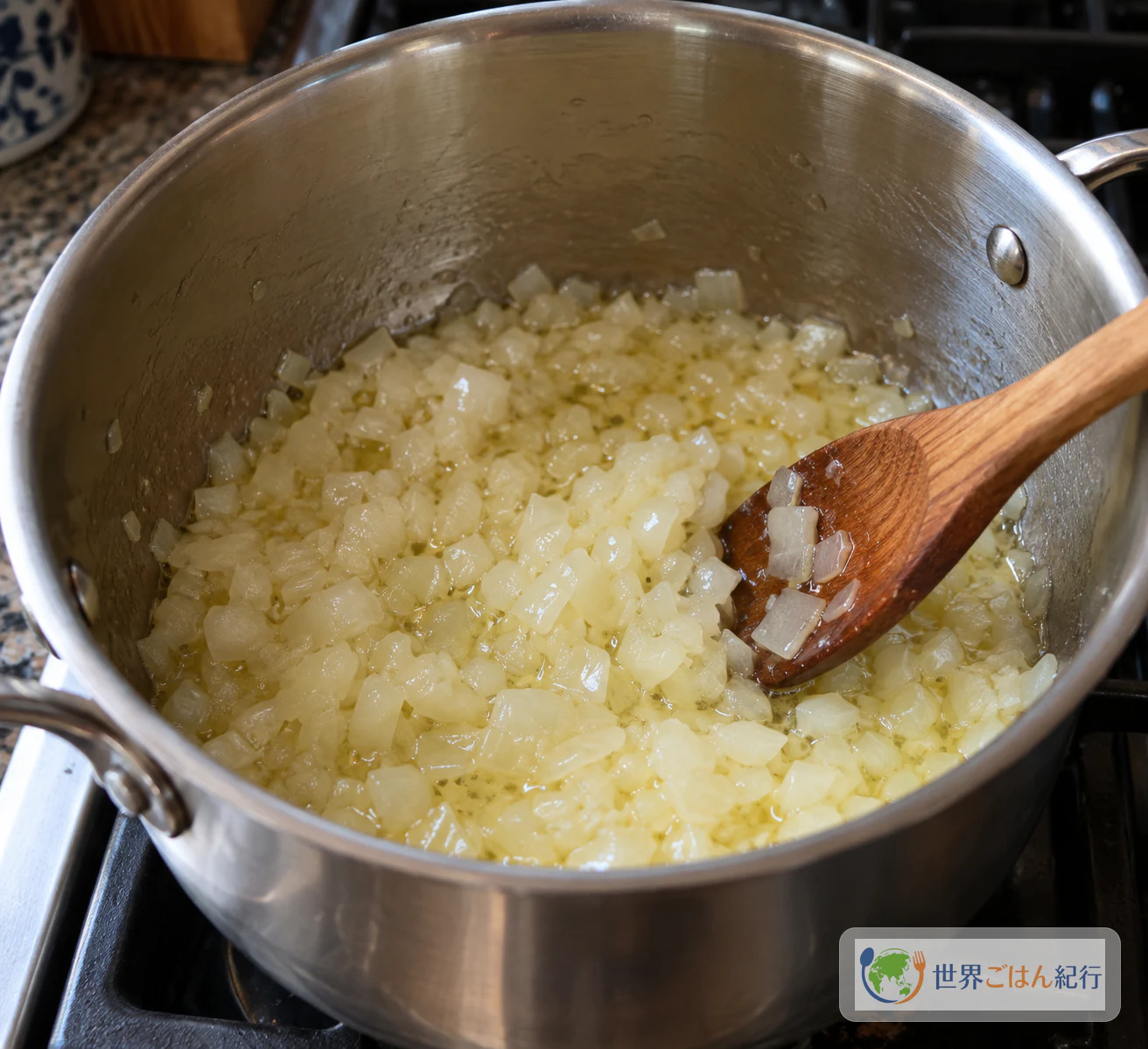
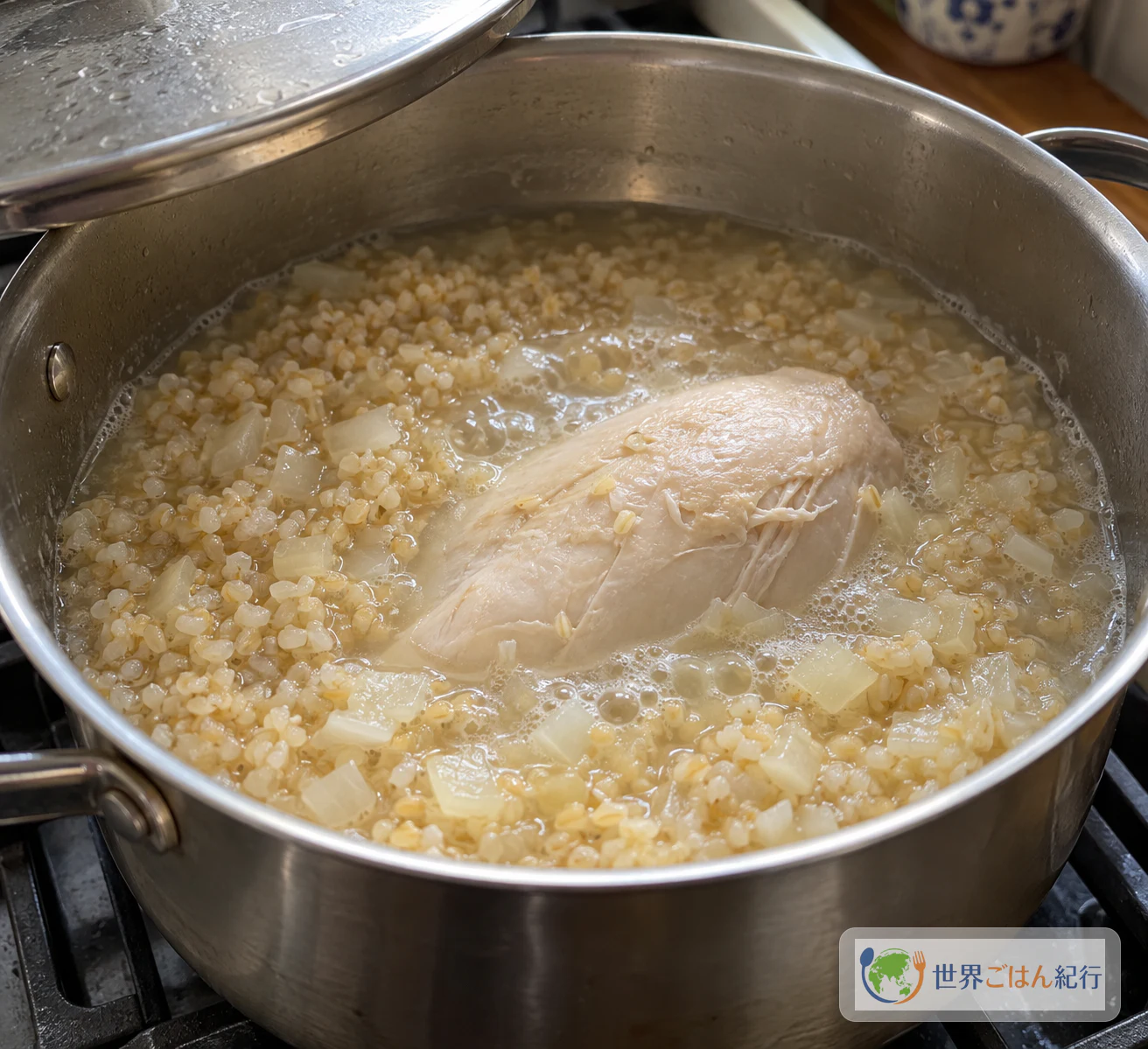
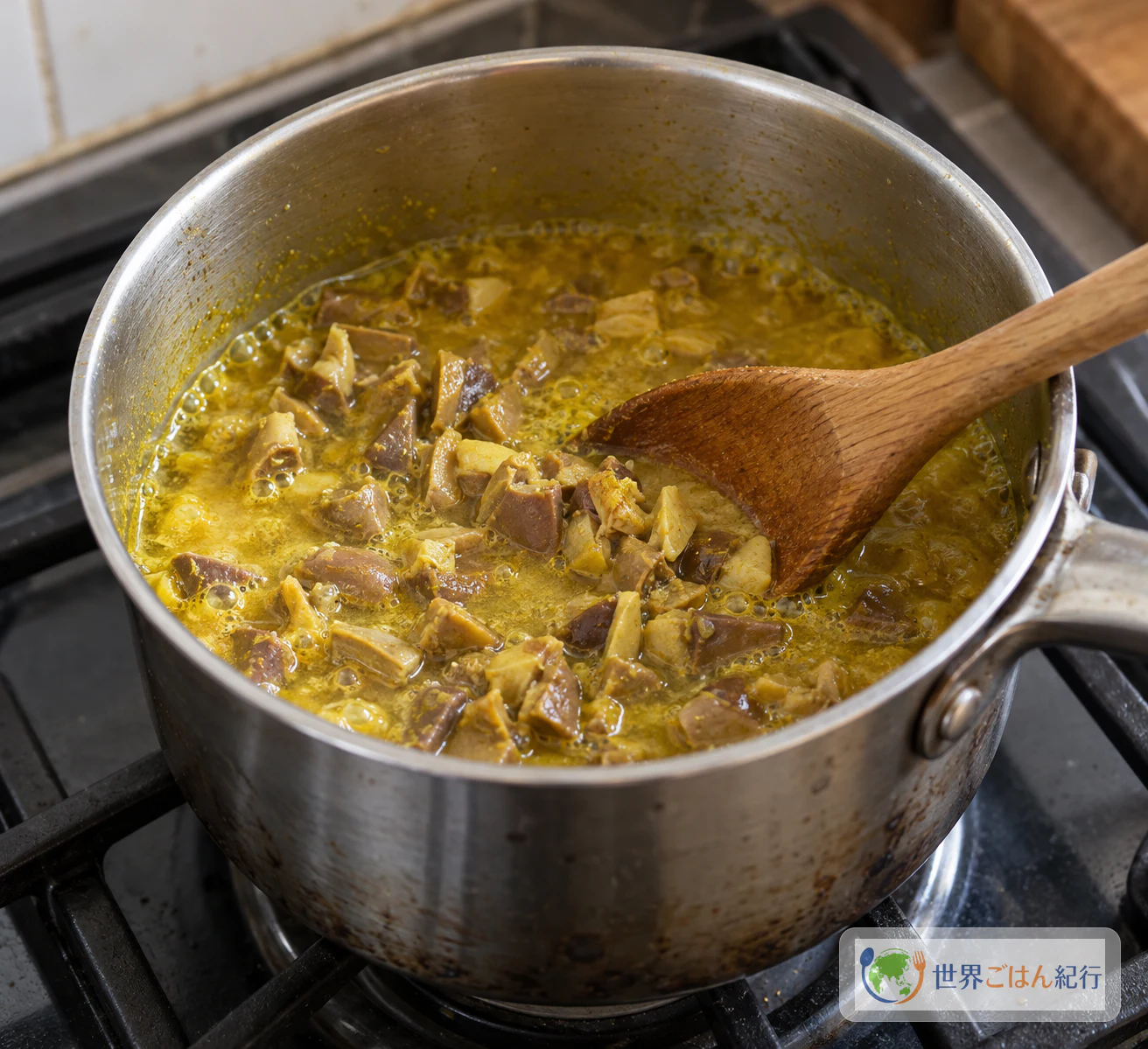
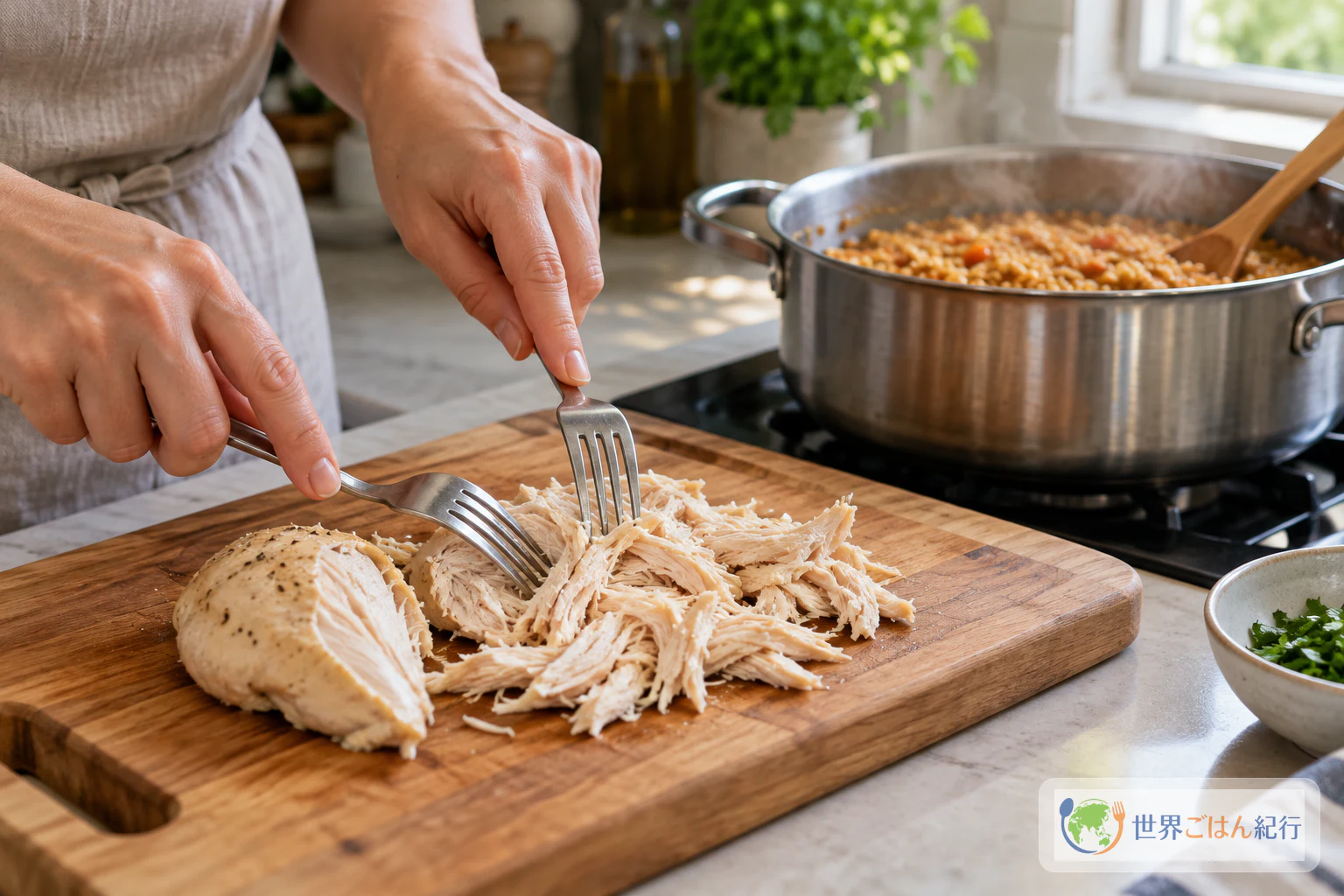
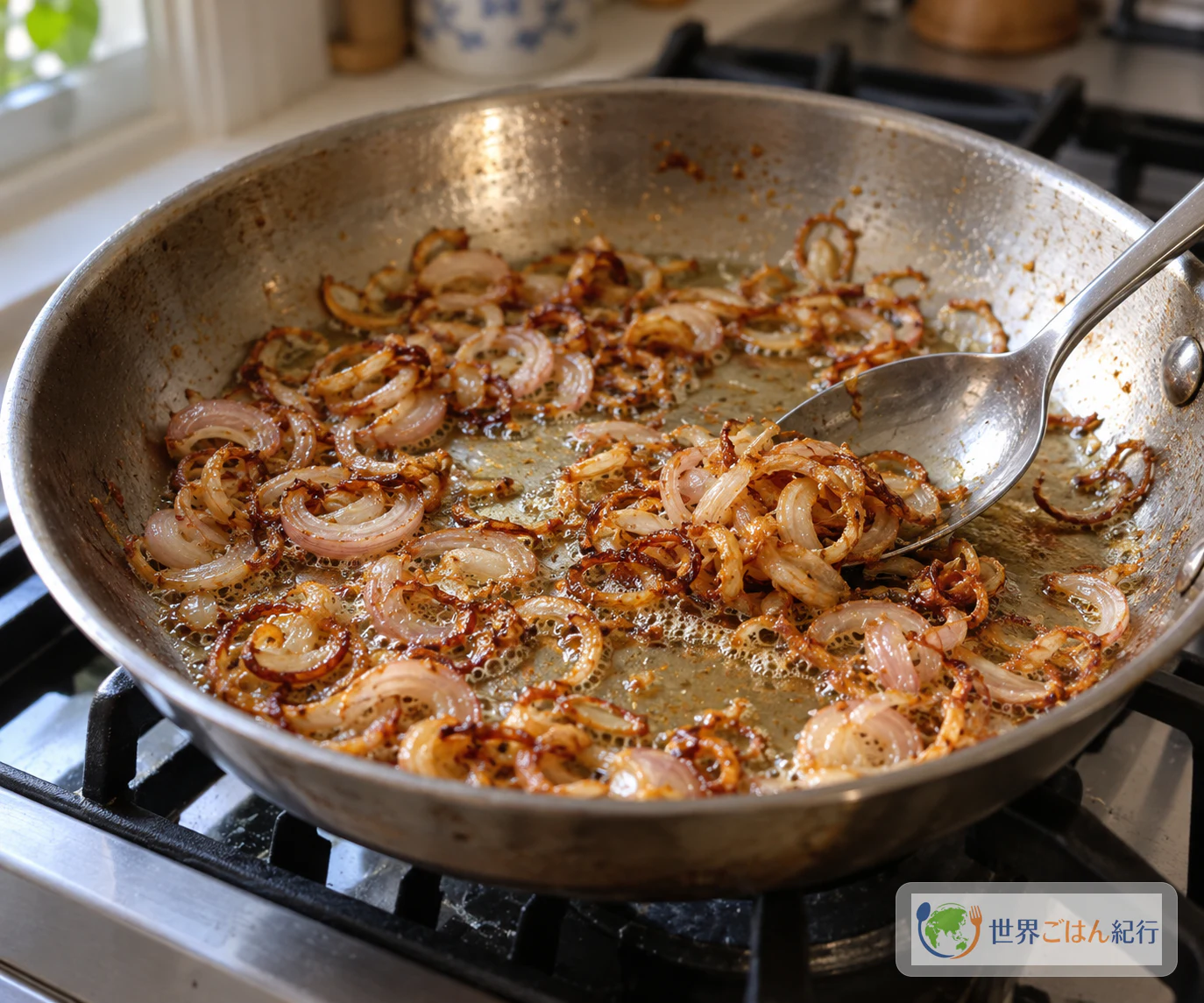
Soaked bulgur goes into the pot with softened onion and a chicken breast, and over half an hour it drinks up the cooking liquid. The real change comes at the end: the chicken is lifted out, pulled into thin shreds with two forks and folded back in, and the loose grains and meat close up into a single, heavy porridge that holds together when you press it with a wooden spoon. Alongside it sit two toppings with very different characters: a small pot of sweet, bright yellow turmeric sauce studded with chopped chicken hearts and gizzards, and shallot rings fried brown and crisp in ghee.
Boko Boko Harees appears in a February 2022 economic letter from the French government's Treasury as an example of a Burundian chicken-based dish. That document confirms the dish and its link to chicken, but it does not give a recipe. The amounts and method here follow one published home version, from the blog Naptime Prep Cook, whose author states that it was adapted from a recipe on Afro Tourism. That original page could not be read, so this is one cook's adaptation, not a standard Burundian formula.
This recipe has not been kitchen-tested by Sekai Gohan. The source gives no servings, no weight for the chicken breast and no weight for the giblets, so no yield is stated here. Judge each step by the state of the pot, and check that the chicken and giblets are fully cooked as described in the method.
Ingredients: One Published Version, in Cups and Spoons
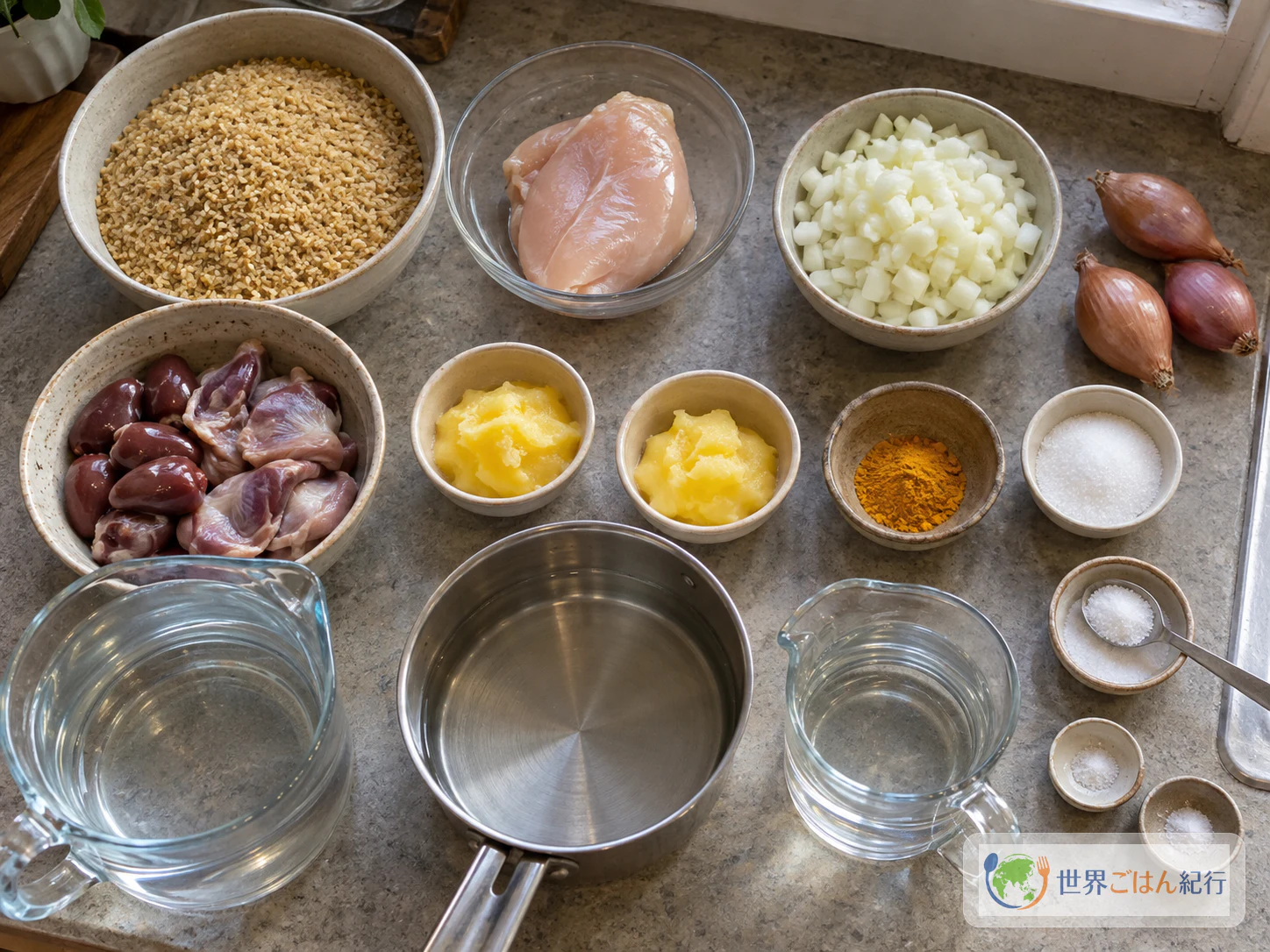
The milliliter figures below take 1 cup as 240 ml, 1 tbsp as 15 ml and 1 tsp as 5 ml. Bulgur, turmeric, sugar and ghee are measured by volume, not grams. Don't use a 200 ml measuring cup as if it were one of these cups.
Use 1 tsp of salt in the main pot. Add more salt to taste, split between the sauce and the final seasoning of the porridge, adding it gradually and tasting.
Equipment
- A mixing bowl for soaking the bulgur
- A sieve
- A heavy-bottomed pot for the porridge
- A small saucepan for the sauce
- A skillet for frying the shallots
- A wooden spoon
- Two forks and a cutting board for shredding the chicken
- A separate cutting board and knife for the raw chicken and giblets
- A food thermometer for checking the chicken and giblets
Choosing and Substituting: What Changes the Dish
Bulgur. The grind affects how much water the grains take up and how far they break down. Choose a package that states its grind so you know what you're working with, and judge doneness by the grain rather than by the clock. Rolled barley, couscous and rice are not equivalent substitutes and would make a different dish.
Ghee. This version uses ghee. Unsalted butter is a possible stand-in, but treat it as an untried option: the flavor and frying behavior will change.
Shallots. You can use 1 small onion in place of the 3 shallots. Use one or the other, not both. The size and flavor of the fried topping will differ.
Chicken hearts and gizzards. These are a core part of the sauce in this version. What counts as one "set" varies by shop, so ask at the meat counter or check the package. Leaving them out is not an established traditional alternative; it simply makes a different sauce.
Bulgur is wheat, and ghee is a dairy product (as is butter, if you use it). Anyone with a wheat or milk allergy should not eat this version. Check the labels on bulgur, ghee and any other packaged ingredients for wheat and milk.
Method: From Loose Grains to a Thick Porridge
The pot of bulgur and chicken is the long step. You can start the sauce while it simmers and fry the shallots alongside, but how long the whole meal takes depends on your stove and how you overlap the work.
When the Pot Goes Wrong
The source gives one set of times, and the bulgur grind is unknown, so the fixes below are about reading the pot. They are practical suggestions, not part of the published recipe.
| Problem | Likely cause | What to do |
|---|---|---|
| The bottom is starting to stick | Heat too high, or the liquid is running low | Lower the heat, stir from the bottom, and add a little hot water at a time |
| The grains are still hard after about 30 minutes | Coarser bulgur, or not enough liquid | Keep simmering gently, adding a little water if needed, and check the grain again |
| The porridge won't come together | The chicken isn't fully worked in yet | Keep folding over low heat after returning the chicken, pressing with the spoon |
| The whole porridge has turned yellow | The sauce was stirred into the pot | Next time, keep the sauce on the side at serving |
| The sauce is catching in the small pot | Heat too high for so little liquid | Turn it down to low; the sauce is meant to simmer gently |
| The chicken or giblets may be undercooked | The time ran out before the center was done | Keep cooking until the center reaches 75°C for at least 1 minute |
Variations Worth Trying (and What's Not Confirmed)
These are kept separate from the main version above.
- Fine versus coarse bulgur. Since the source doesn't name a grind, trying each changes how much water is absorbed and how grainy the porridge feels. Note which you used.
- One small onion instead of three shallots. The source's own alternative for the fried topping. Expect a different size and sweetness.
- Sauce on the side, generously or sparingly. Serving the sauce separately, as in step 7, lets each person decide how much turmeric and sweetness to add.
- Strained sauce. The source's author mentions straining out the giblets as an option, for a smooth sauce. This changes the character of the topping.
- Unsalted butter instead of ghee. Not offered by the source and not tried here. Butter would bring a different dairy aroma and behaves differently when frying.
- A sweet wheat porridge. Eat This NY mentions a sweet version, but its place in Burundi, its name and its amounts couldn't be confirmed, so it isn't given as a recipe here.
Boko Boko Harees on the Burundian Table, and the Name "Harees"
The French Treasury's February 2022 letter on food security in East Africa describes the Burundian diet as weighted heavily toward plant foods, with staples, legumes and imported wheat among the items it discusses, and names Boko Boko Harees as an example of a chicken-based dish made with minced meat. That is a picture of the national diet at the time of that document, not a description of how often or on what occasions this particular dish is eaten. The sources consulted here say nothing reliable about festivals, religious occasions, or differences between regions or households in Burundi, so those are left out.
The name invites comparison with harees, the wheat-and-meat porridge known around the Gulf and the Levant, and with Armenian harissa, a similar wheat and meat porridge. Both are cooked until grain and meat merge, as this dish is. Eat This NY's author writes that Boko Boko Harees has Middle Eastern origins and reached the region through Arab settlers and Swahili kitchens, but gives no supporting sources. The same author also notes that much of what they found on Burundian recipes came from food bloggers who aren't Burundian. Until better evidence turns up, a shared name and a similar structure are not proof of a route of transmission.
Published versions also differ widely. Eat This NY and AfroGistMedia each give their own amounts and methods, quite different from the version followed here. This article doesn't mix them; it keeps to one version so the amounts stay consistent.
Serving and Food Safety
Serve the porridge hot. Eat This NY's author observes that it firms up as it cools; the source used for this recipe doesn't give a reheating method, so none is given here.
Following Japan's Ministry of Health, Labour and Welfare guidance for home kitchens: cook chicken and giblets until the center reaches 75°C for at least 1 minute, wash your hands and the utensils that touched raw meat, keep separate boards and knives for raw meat, and don't leave cooked food sitting at room temperature for long. The materials behind this recipe give no storage period, so none is stated.
Frequently Asked Questions
What is Boko Boko Harees?
A Burundian dish of chicken and bulgur wheat cooked into a thick porridge. A French government document on food in Burundi lists it as a chicken-based dish. Published recipes differ in their proportions, and the version here follows one home cook's adaptation.
Is it the same as harees or harissa?
Not necessarily. Similar wheat-and-meat porridges with related names exist in other regions, such as Gulf and Levantine harees and Armenian harissa, but a direct line to Burundi hasn't been confirmed. It is also unrelated to Tunisian harissa, the chili paste.
What can I use if I can't find bulgur?
No equivalent substitute is established. Rolled barley, couscous or rice in the same amount would give a different texture and a different dish.
What if I don't like chicken giblets?
In this version they are a main part of the sauce, so leaving them out produces a different sauce, not a traditional alternative. If you make it without them, treat it as your own adaptation.
How many people does it serve?
The source doesn't say, and it gives no weights for the chicken or giblets, so no yield is stated here.
Sources
- Naptime Prep Cook, "Burundi 🇧🇮 Boko Boko Harees (Chicken & bulgur)." The version of the recipe followed here, with its ingredients, amounts and method; the author states it was adapted from an Afro Tourism recipe. https://naptimeprepcook.wordpress.com/2018/08/22/burundi-%F0%9F%87%A7%F0%9F%87%AE-boko-boko-harees-chicken-bulgur/
- Direction générale du Trésor, République française, "Lettre économique – Février 2022, sécurité alimentaire en Afrique de l'Est." Describes the Burundian diet and food situation, and names Boko Boko Harees as a chicken-based dish. It gives no recipe or origin. https://www.tresor.economie.gouv.fr/PagesInternationales/Pages/b828e2b7-b49c-43b3-ab52-f23d2b3de12a/files/5eaa4b96-8156-4e20-b6e0-f030ada2d8e7
- Eat This NY / Around the World in One Kitchen, "Boko Boko Harees and Ibiharage & Ibitoke from Burundi." A different home version, the author's note that many recipes found came from non-Burundian bloggers, the observation that it firms as it cools, and an unsourced account of Middle Eastern origins. Not used for the recipe or as historical fact. https://eatthisny.com/2022/02/22/around-the-world-in-one-kitchen/boko-boko-harees-and-ibiharage-ibitoke-from-burundi-around-the-world-in-one-kitchen/
- AfroGistMedia, "Boko Boko Harees Recipe | Burundian Cuisine." A separate recipe with different proportions, used only for comparison. https://afrogistmedia.com/boko-boko-harees-recipe-burundian-cuisine
- Ministry of Health, Labour and Welfare, Japan, "家庭での食中毒予防" (Preventing food poisoning at home). Cooking meat until the center reaches 75°C for at least 1 minute, hand and utensil hygiene, and not leaving cooked food at room temperature for long. https://www.mhlw.go.jp/stf/seisakunitsuite/bunya/kenkou_iryou/shokuhin/syokuchu/01_00008.html
- Iowa Department of Health and Human Services, "Kirundi Culture & Foods." General background on everyday foods and cooking methods in Burundi; not a source for how this dish is eaten. https://hhs.iowa.gov/media/12940/download?inline=