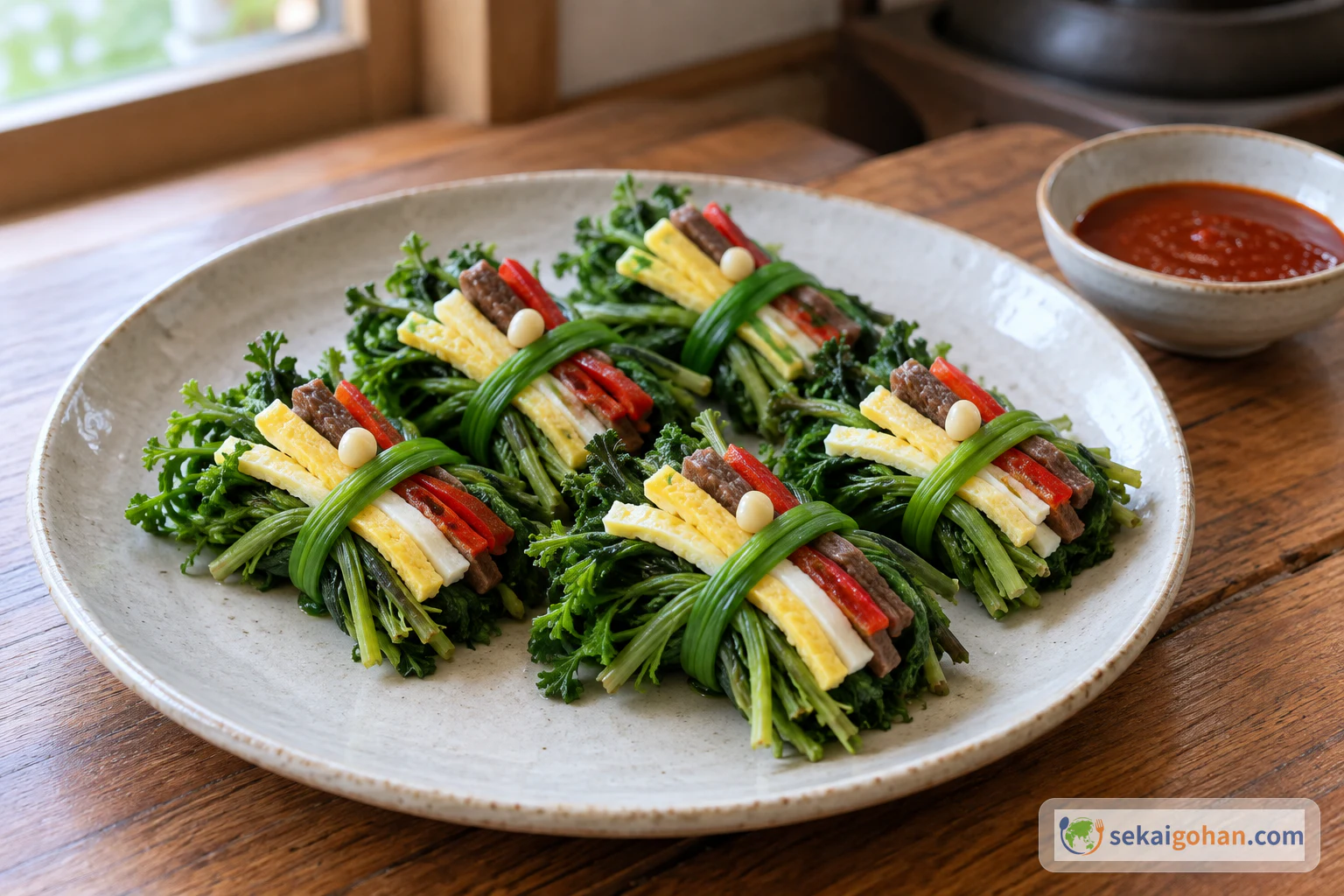
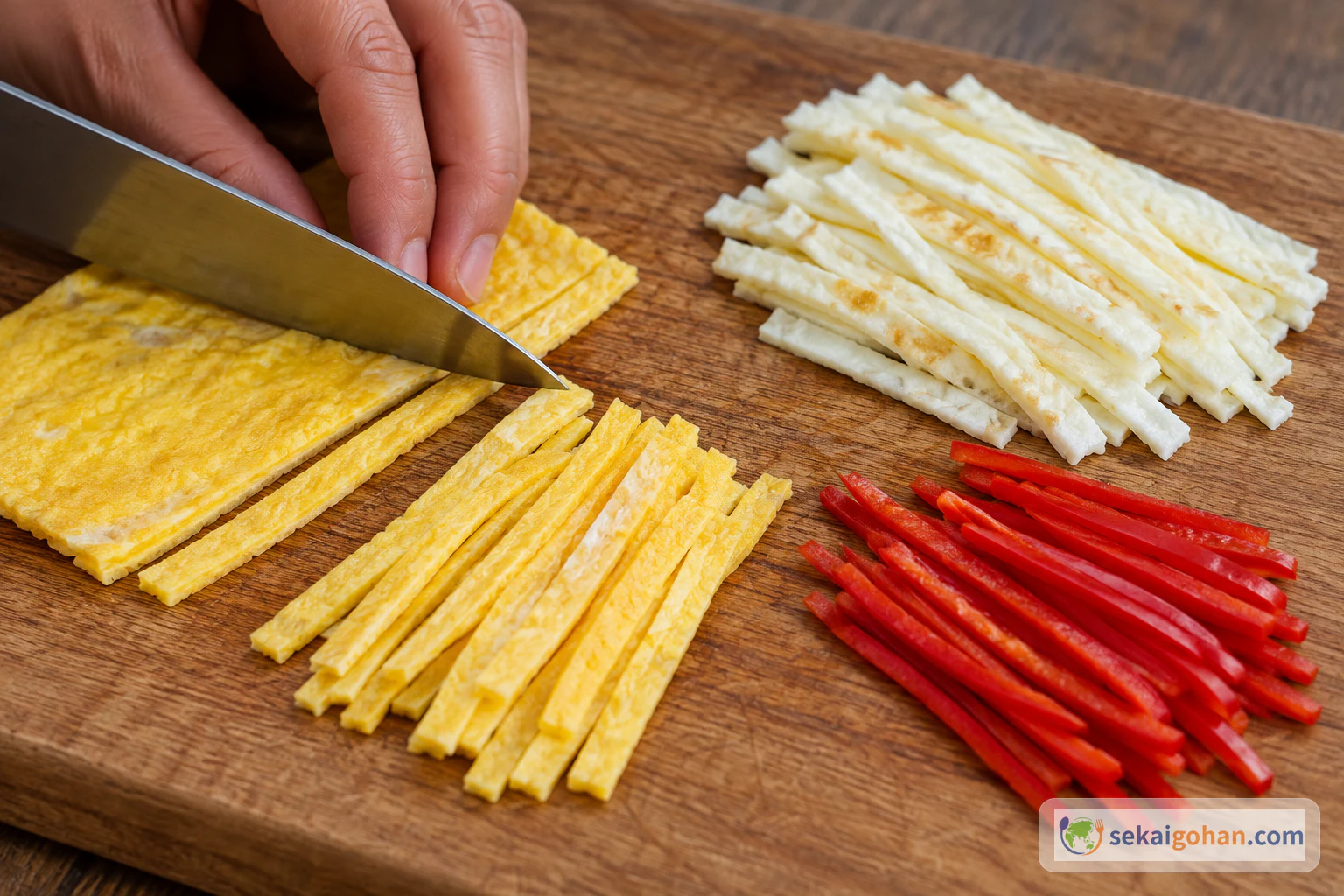
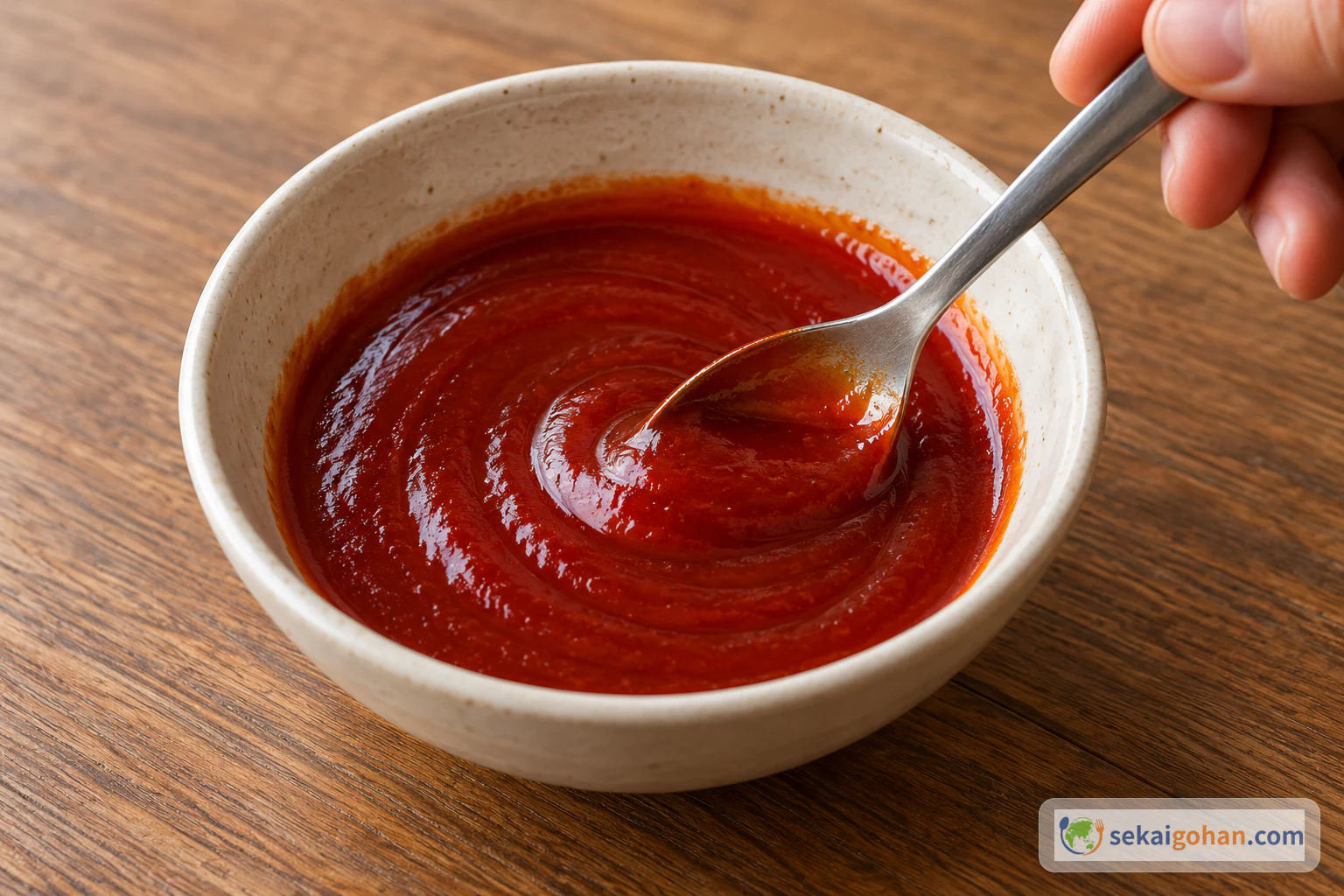
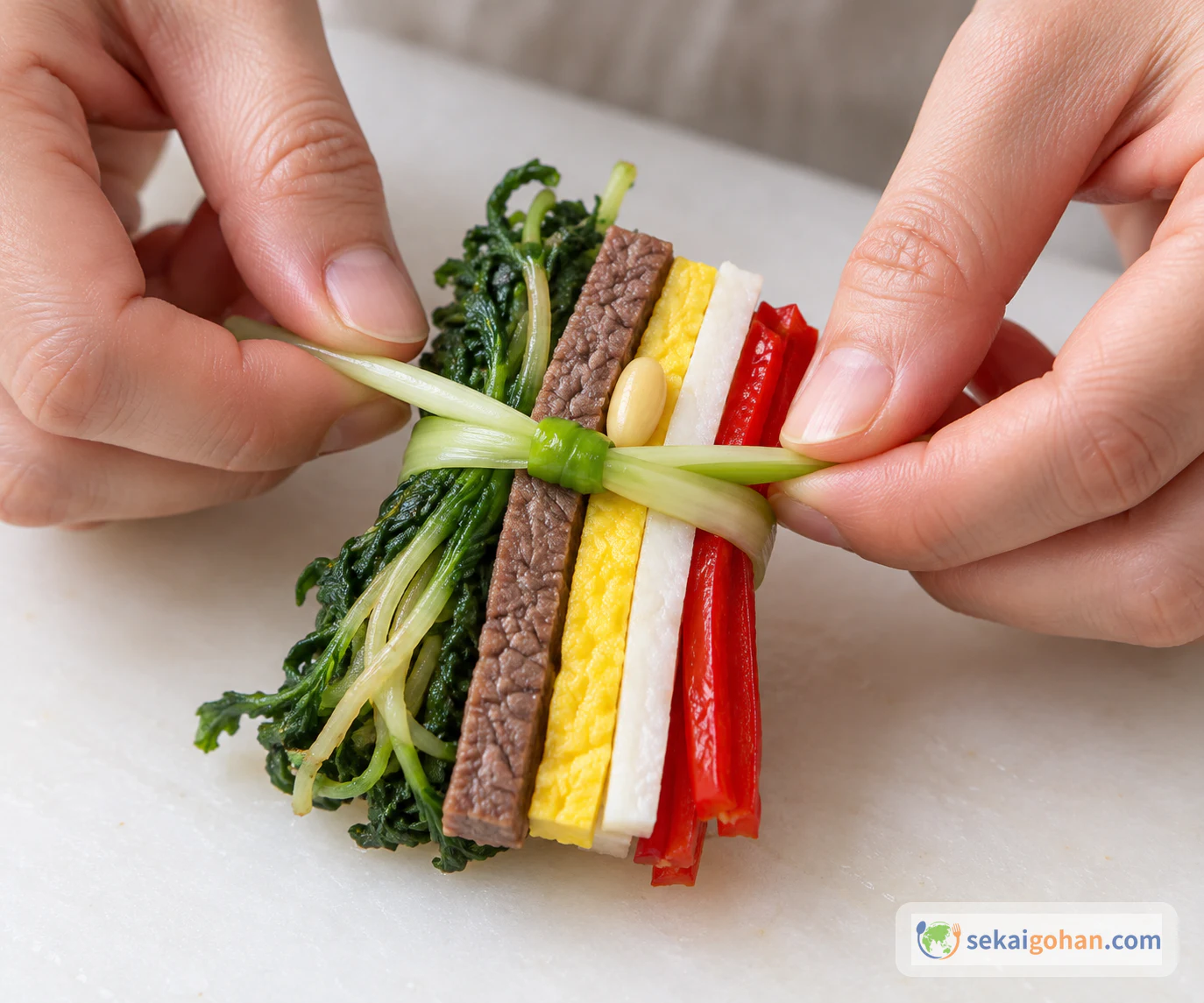
A soft green scallion stalk is wound around a small pile of strips and tucked under itself. The bundle stays closed when it is lifted. Inside you can see pale egg white, bright yolk, a thick strip of brown beef, a sliver of red chili and one ivory pine nut pressed into the gap. Each bundle gets a quick dip in glossy red vinegar gochujang, which is sweet, sour and gently hot. This is ganghoe, the Korean way of tying small fillings with blanched spring greens. In this version, naengi pa ganghoe, folded naengi sits at the base and a slender scallion ties it shut. It tastes clean, green and mild, and the sauce wakes it up.
A Bundle Tied in Green
Ganghoe is a family of dishes. Parboiled minari or green onion is wrapped around sliced fillings, and boiled beef, yellow and white egg garnish and red chili are the usual filling. The bundles are served with red chili paste mixed with vinegar. The dish is a sukhoe (숙회), a hoe made from parboiled ingredients, and it belongs to spring, when aromatic minari and scallions are at their best. The Korea Tourism Organization's VisitKorea site places it around Buddha's Birthday, as one of the seasonal ways of eating fresh greens. How widely that custom holds across the country is not settled, but the link between ganghoe and the green weeks of spring is easy to see on the plate.
When the wrapper is a thin green onion, the dish is called pa ganghoe, since pa is the onion. Naengi pa ganghoe goes one step further and puts a bed of naengi, folded short, under the fillings, then ties the whole thing with the scallion. The naengi gives an earthy spring flavour, and the scallion gives a sweet, soft onion note in every bite.
Its best-known neighbour is minariganghoe, tied with blanched minari. One minari version is linked to the late-19th-century cookbook Siui Jeonseo. It uses pan-fried egg strips, brisket, rock-ear mushroom and red chili tied with minari, with a pine nut and vinegar-mixed red pepper paste. The pine nut and the red sauce are shared, but the mushroom and the green wrapper make it a different bundle. The Encyclopedia of Korean Culture lists Siui Jeonseo and Gyugonyoram among the cookbooks in which methods for ganghoe appear. For more dishes from the same table, see our guide to Korean food.
강회 (ganghoe) names the whole family. 미나리강회 (minariganghoe) is tied with minari, 파강회 (pa ganghoe) with green onion, and 냉이 파강회 (naengi pa ganghoe) adds naengi under a scallion tie. These names describe different bundles with different fillings.
Ingredients
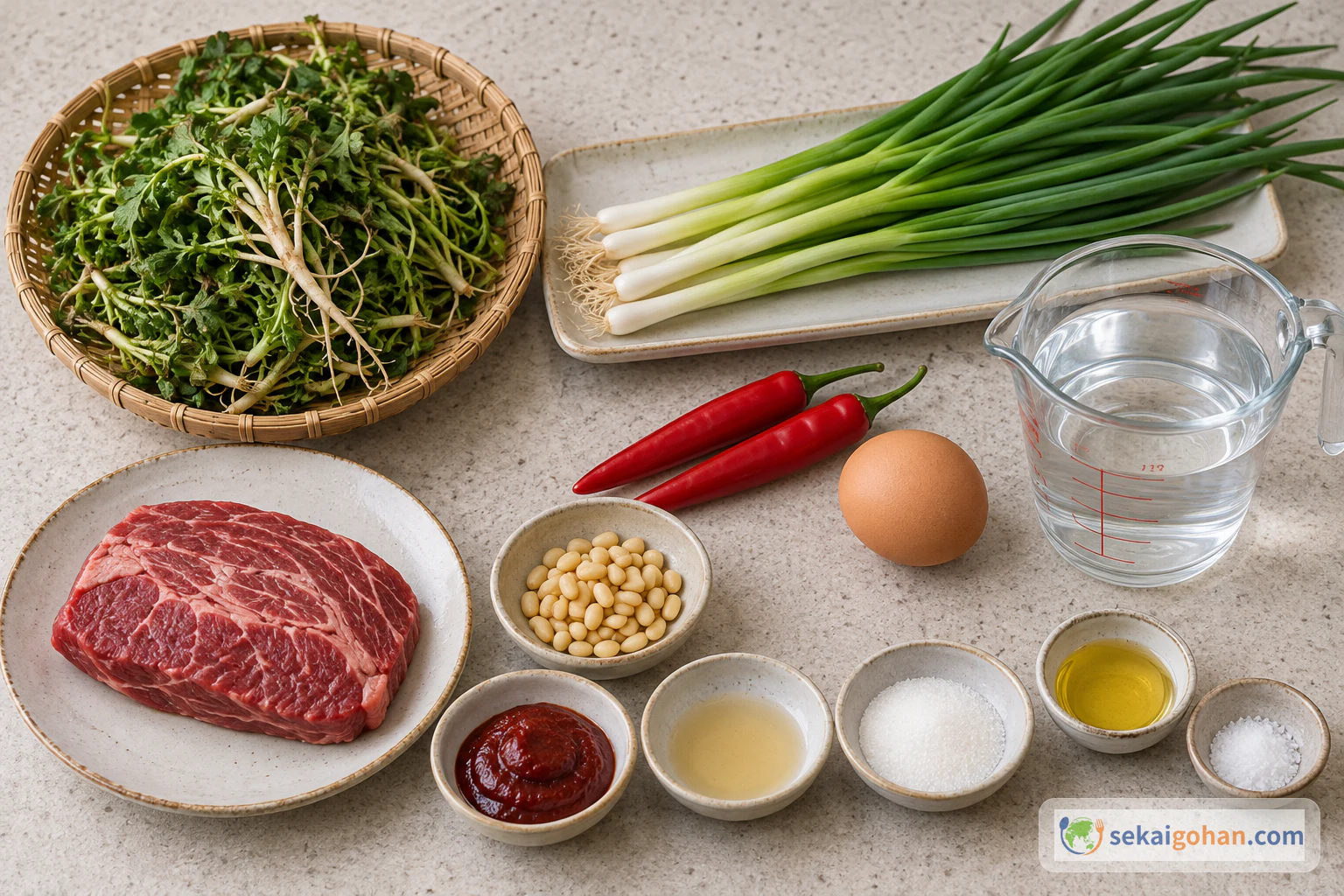
This dish contains egg and pine nuts (a tree nut). Gochujang is a blended product and can contain other allergens, so read the label on the tub you buy.
Equipment
- Two colanders, or one used twice, for washing the greens
- A saucepan for blanching and a second pot for boiling the beef
- A large bowl of cold water
- A fine sieve for straining the egg
- A nonstick or well-seasoned frying pan and a thin spatula
- A sharp knife and a clean cutting board kept apart from raw meat
- A small bowl and spoon for the sauce
- A round serving plate
Choosing What to Buy
Naengi is the ingredient that decides where you shop. Look for naengi sold as food at a Korean or larger Asian grocer, or from an online Korean grocery. Buy only naengi sold for eating. Do not pick wild greens or use plants sold for gardens. The scallion has to bend around a bundle without snapping, so choose the slenderest scallions you can find, the kind sold as silpa at Korean grocers. Thick supermarket green onions are too stiff to tie neatly.
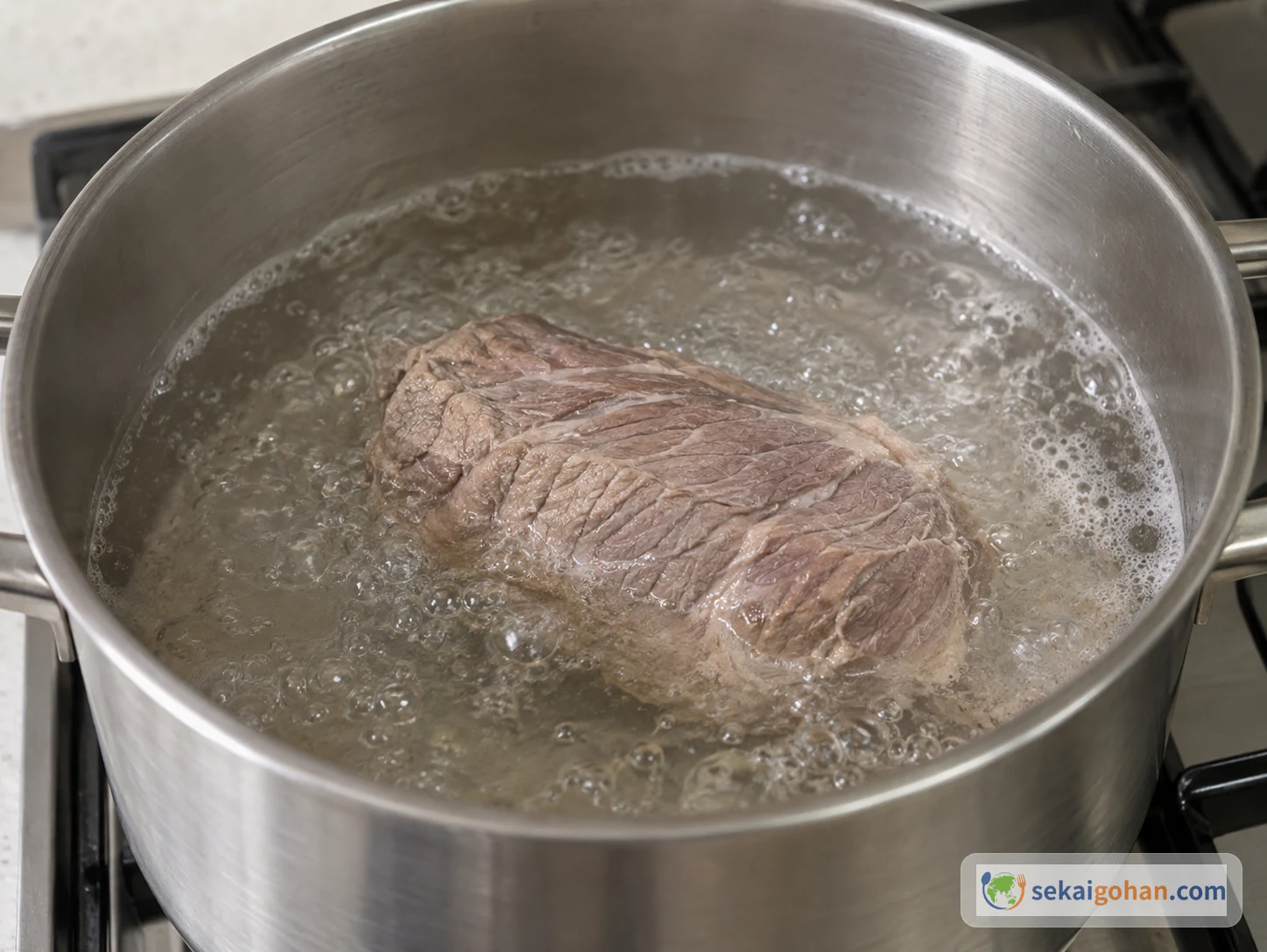
Ask a Korean butcher for buchaesal (부채살) in a single piece so it holds together through the long boil and cuts into clean strips. Pick long, fresh red chilis that are straight enough to cut into even strips. Gochujang, pine nuts and Korean vinegar are all on the same grocer's shelves. Use one egg, separated into one white sheet and one yolk sheet.
Bend a raw scallion into a loop. If it cracks right away, the stalk is too thick to tie even after blanching. Choose the thinnest stalks for the ties and keep any thick ones for another dish.
Method
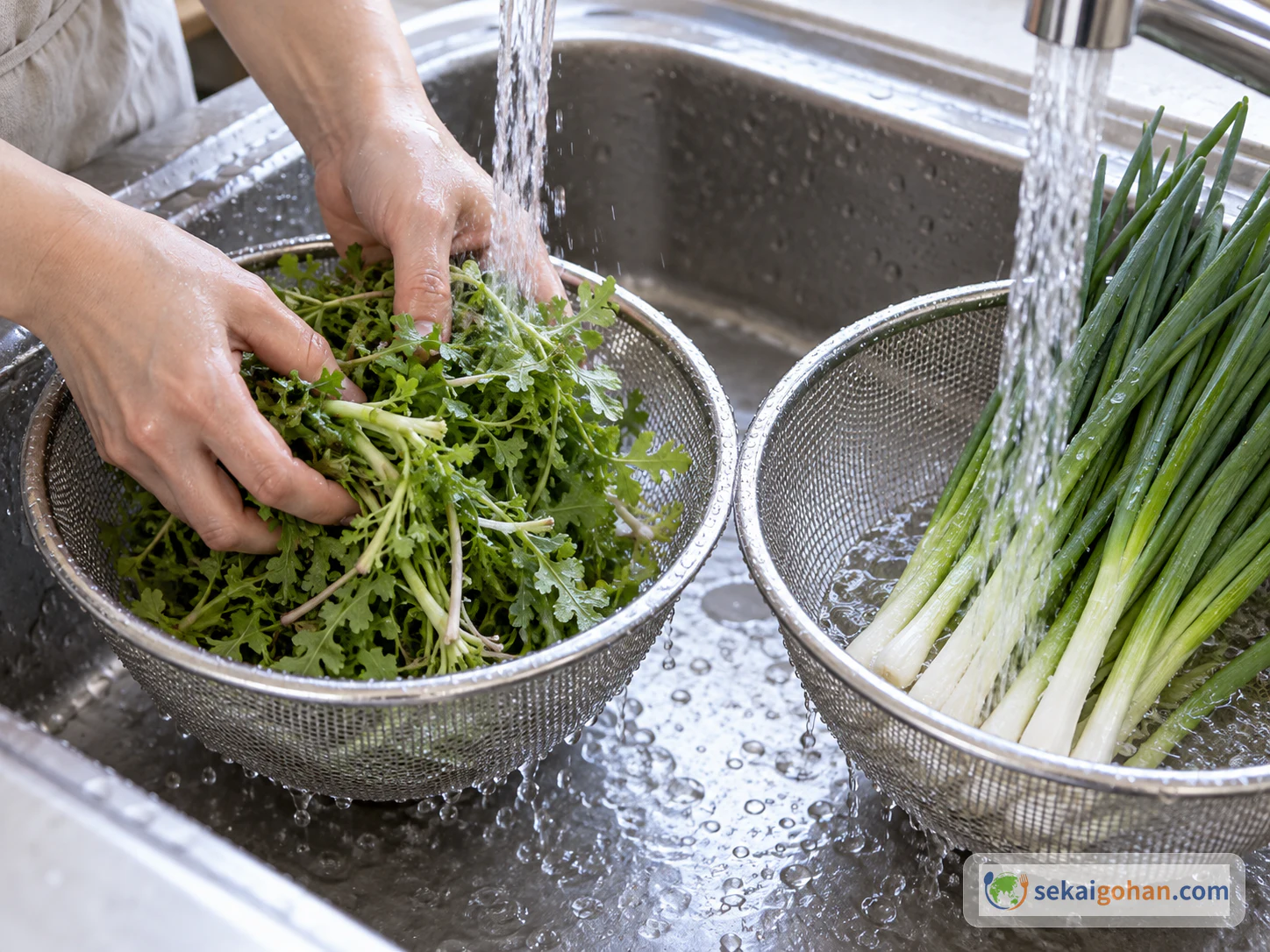
The beef takes the longest, so start it first. While it boils for about an hour, wash and blanch the greens, fry and cut the egg, prepare the chili and pine nuts, and mix the sauce. By the time the beef has cooled, every other filling is waiting in neat piles, and assembly goes quickly.
Buy naengi and scallions sold as food and wash them well. Use a clean board and knife for the cooked fillings, kept apart from raw meat and other food. Once the bundles are tied, keep them cold and eat them the same day.
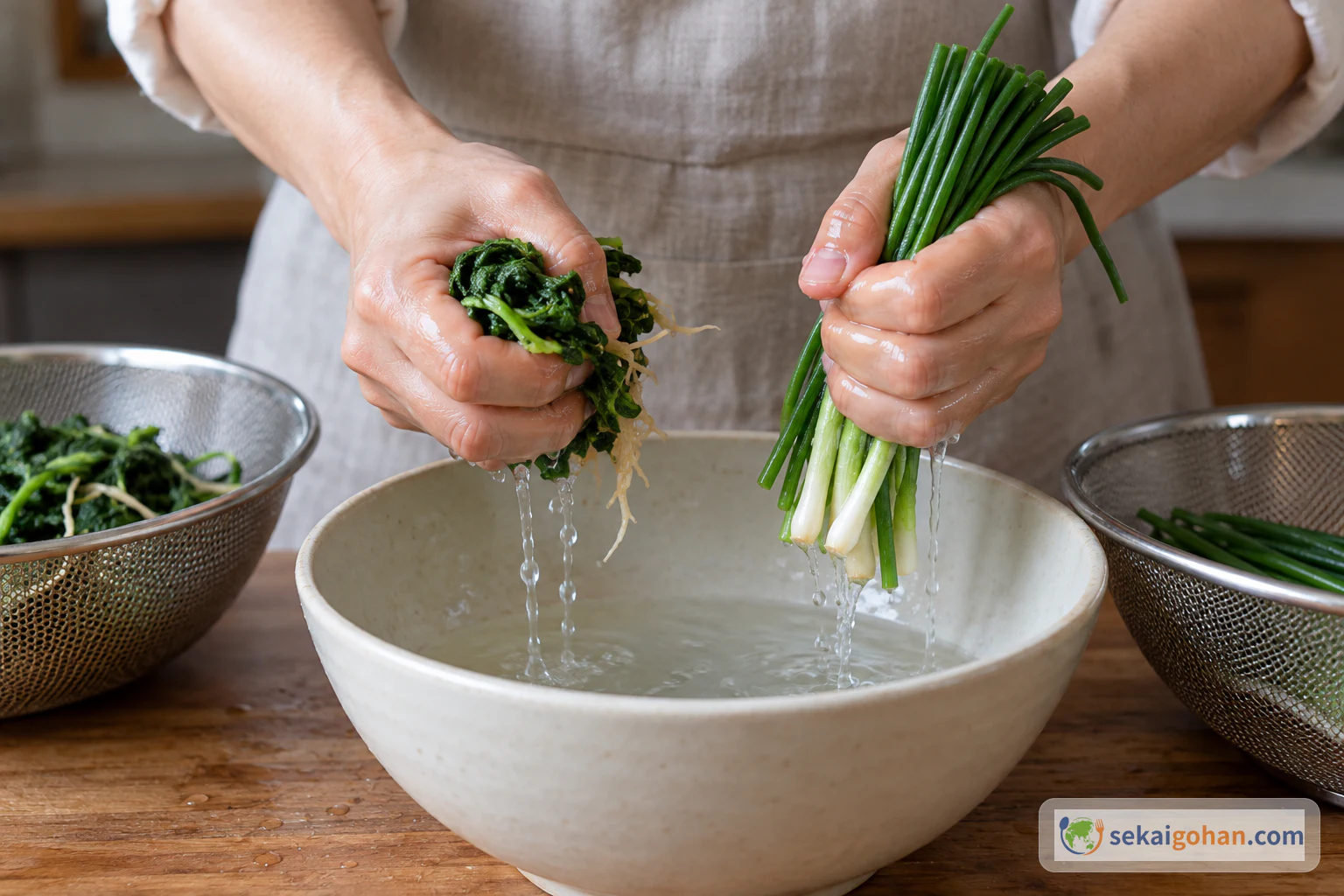
Water left in the greens runs into the fillings and makes the sauce slide off. Squeeze the naengi hard; squeeze the scallions more gently along their length so the stalks stay whole.
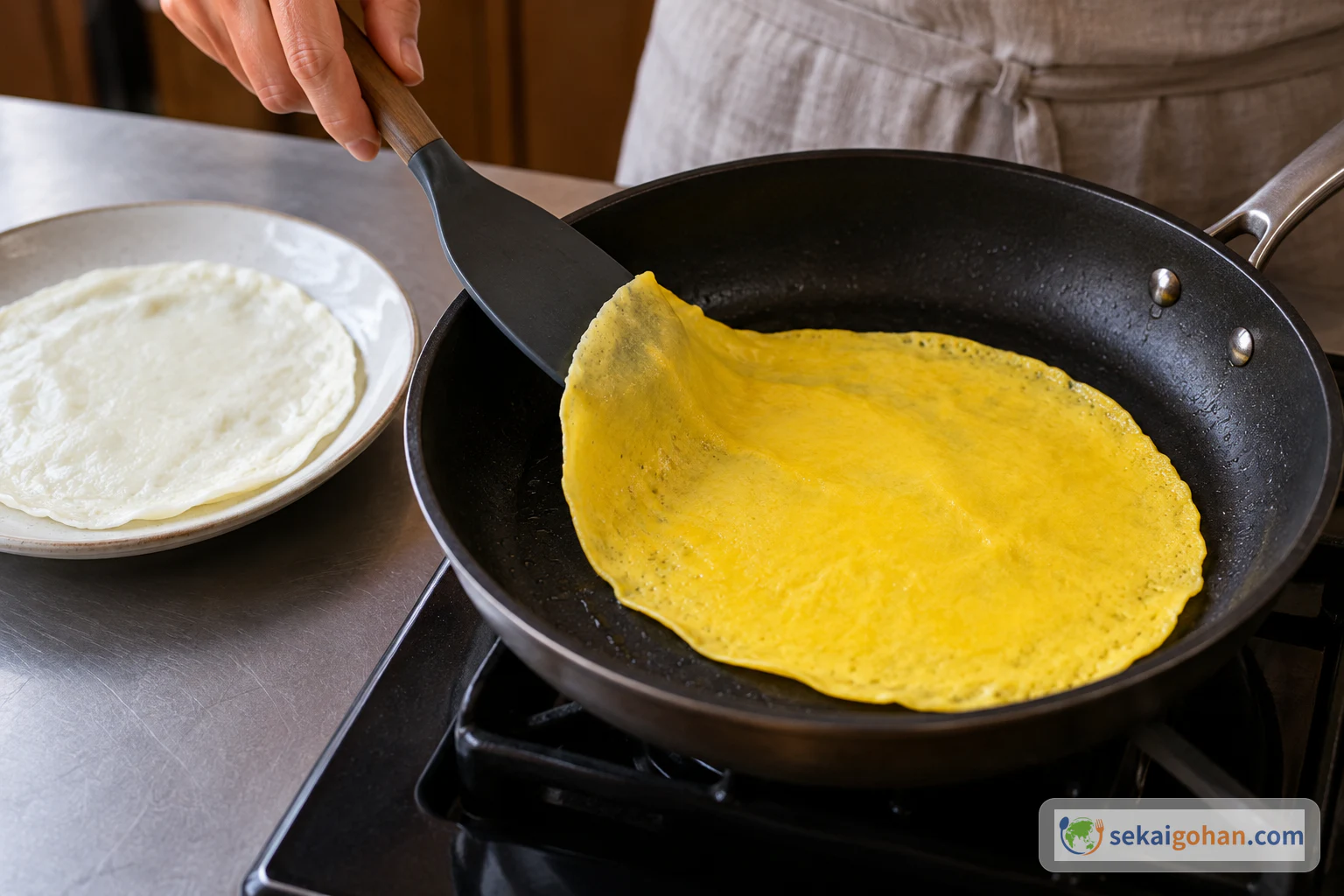
Straining the white and yolk removes the stringy bits and air bubbles. The sheets cook flat and even, and the strips keep sharp edges and pure colour in the bundle.
When It Goes Wrong
| What you see | Why | What to do |
|---|---|---|
| The scallion snaps while tying | The stalk is too thick or was barely blanched | Use the thinnest stalks for ties, and give stiff ones a little longer in the boiling water |
| Water pools under the bundles | The greens were not squeezed enough | Squeeze the naengi again before folding, and pat the scallions dry on a towel |
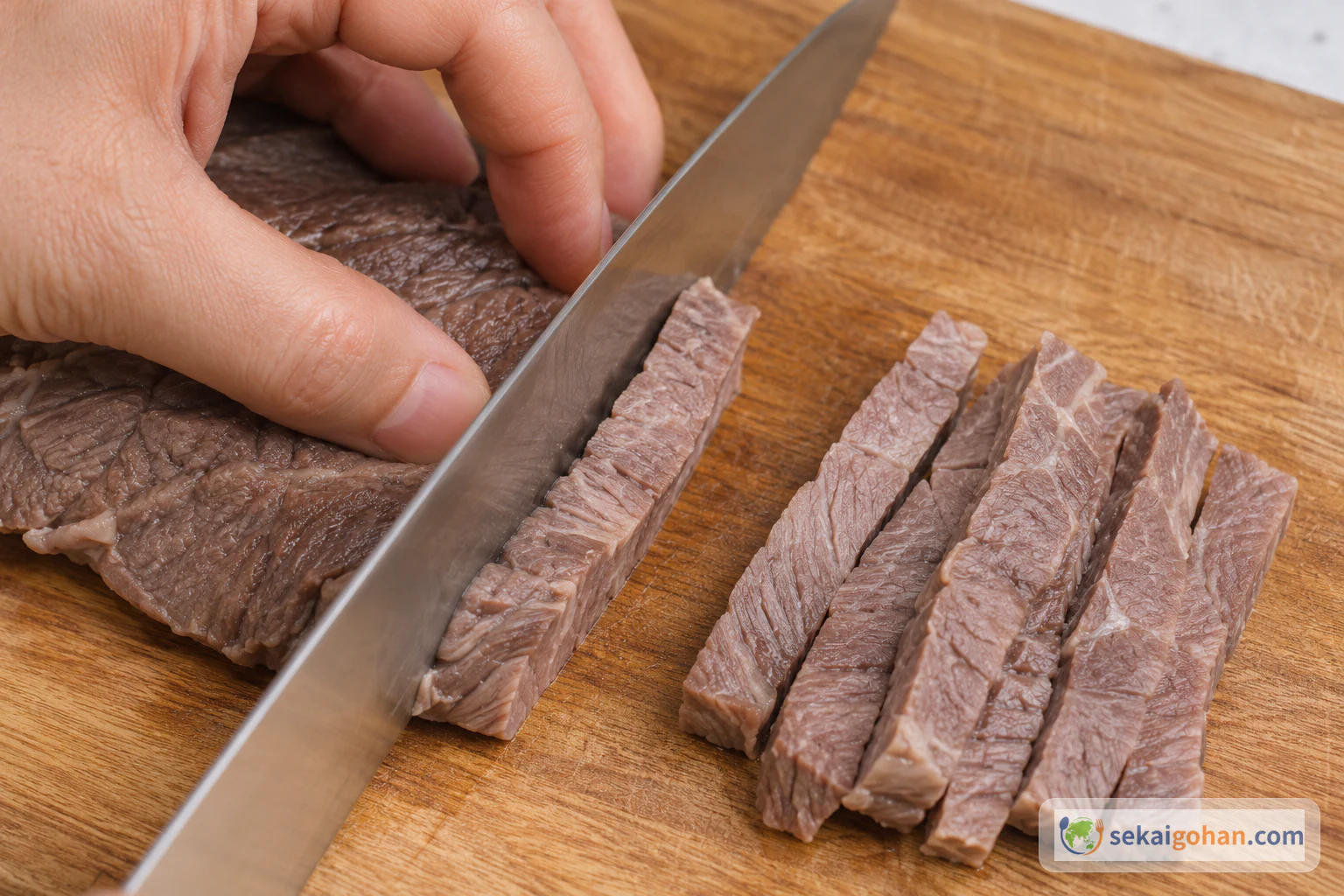
| The beef shreds when you cut it | It was cut while still warm | Let it cool completely, then cut with a sharp knife in one stroke |
| The egg sheet browns or tears | The pan is too hot or the layer is uneven | Take the pan off the heat for a moment, and tilt it so the egg spreads thin |
| The egg sheet is spotted with bubbles | The egg was not strained | Pass it through the fine sieve before it goes in the pan |
| The bundles fall open on the plate | The tie is loose | Wind the scallion snugly around the bundle and tuck the end firmly under the knot |
Serving
Ganghoe is a spring dish, the time when naengi and young scallions arrive at market. Set it out as a starter or one of several side dishes on a Korean table. Its mild beef and soft greens sit well beside richer dishes. Diners take a bundle with chopsticks, dip it in the sauce and eat it whole, so the scallion, naengi and fillings come together in one bite. The red sauce bowl in the centre of the circle makes the plate easy to share.
The bundles are best soon after they are tied, while the greens are still bright. Keep them cold and eat them the same day.
Frequently asked questions
Is ganghoe a raw dish?
Mostly cooked, not raw. It is a sukhoe, so the main parts are cooked. The greens are blanched, the beef is boiled through and the egg is fried into set sheets. It is served cool because the greens are chilled and the beef is cooled before assembly. The red chili strips go in raw, which is why they are rinsed first.
Is this the same as minariganghoe?
No. This version is tied with scallion and has naengi under the fillings. Minariganghoe, described above, is tied with blanched minari and is a different bundle.
How long should the greens stay in the boiling water?
Only briefly. The recipe gives no exact time, so keep it short, then drop the greens straight into cold water.
Why fry the white and yolk separately?
Two separate sheets give two colours, pale white and bright yellow, and they sit side by side in each bundle. A whole beaten egg would give one marbled strip and lose that contrast.