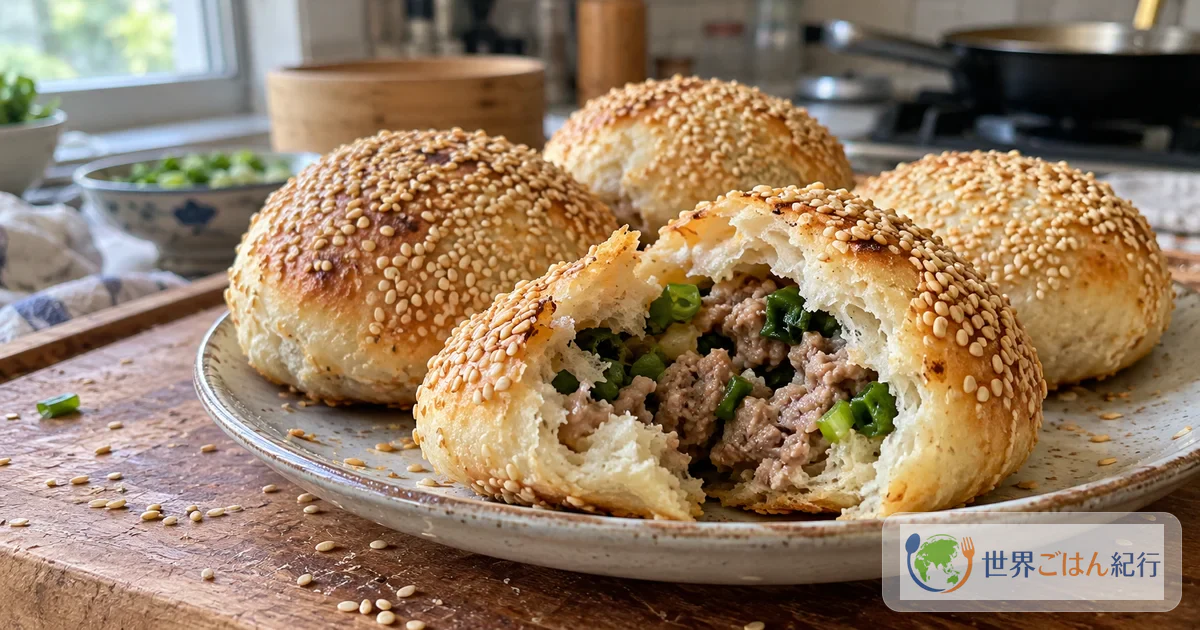
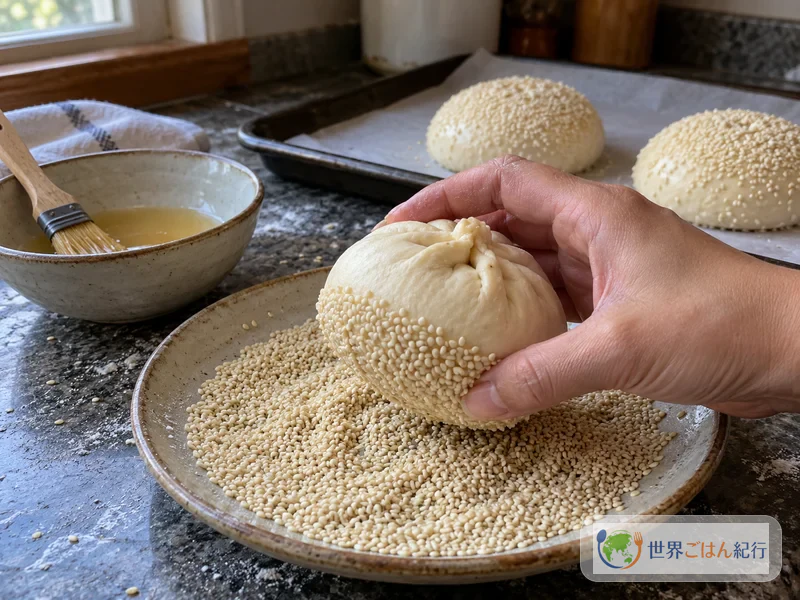
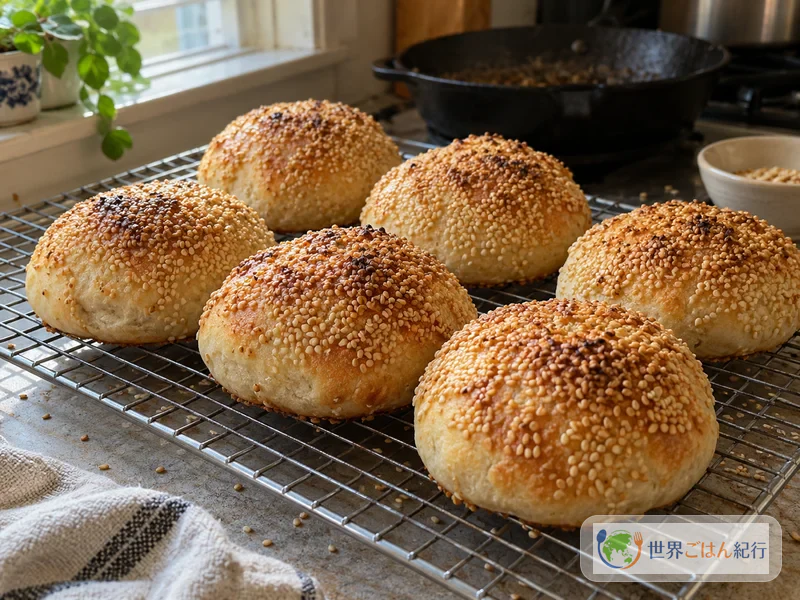
In a corner of a night market, a crowd gathers around a tall cylindrical oven. The vendor picks up a round of dough coated in white sesame, reaches an arm into the mouth of the oven, and slaps it against the inner wall. Charcoal glows red at the bottom, and before long a toasty smell spreads down the street. When they are done, he scrapes them off the wall with a flat spatula, catches them in a strainer below, and bags them. Bite in, and black pepper fragrance and hot juices pour out: this is a Taiwanese night market classic, hujiao bing (pepper buns).
A baked meat bun that crossed the sea from Fuzhou
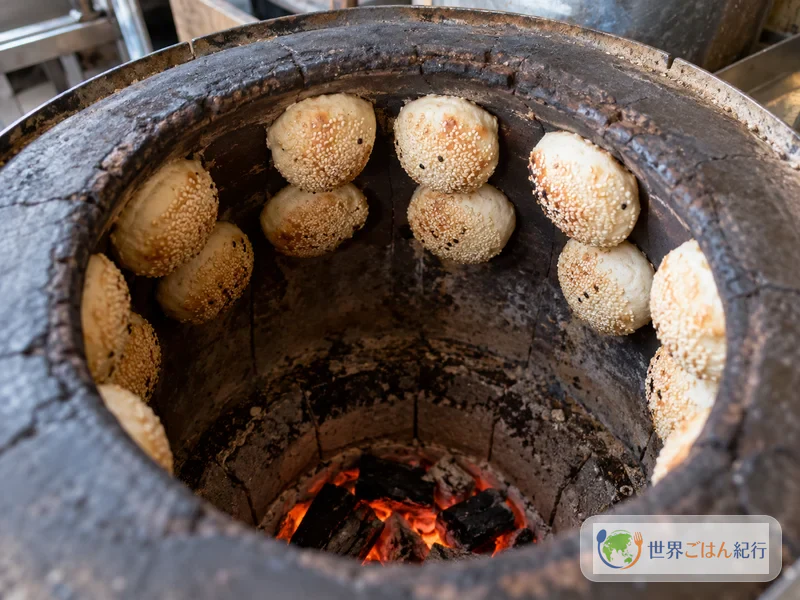
Hujiao bing's hometown is Fuzhou, capital of China's Fujian province. Who invented it is not known, but Taiwanese stalls still hang "Fuzhou hujiao bing" signs and say the flavor was brought by migrants from Fuzhou. Many longtime sellers have roots in Fuzhou. Pork and scallions seasoned with plenty of pepper are wrapped in sesame-coated dough and stuck to the inner wall of an oven to bake. This distinctive method produces a crisp outside and a fluffy inside.
In Taiwan it is now a standard of night markets and small street-corner stalls, seen all over the island. It has also been featured on overseas travel shows, which has spread its popularity among travelers, and waiting 30 minutes or more at busy hours is not unusual. Many customers buy in bulk, and at many stalls when they sell out, the stall closes for the day.
Fuzhou Lin Ji Hujiao Bing in Ruifang, New Taipei City, is said to have opened in 1988 as the first hujiao bing stall in town. It bakes on the wall of a 350-degree charcoal oven, and its dough, made with laomian (a fermented dough starter), is described as crisp outside and chewy inside. It is now counted among Ruifang's local specialties.
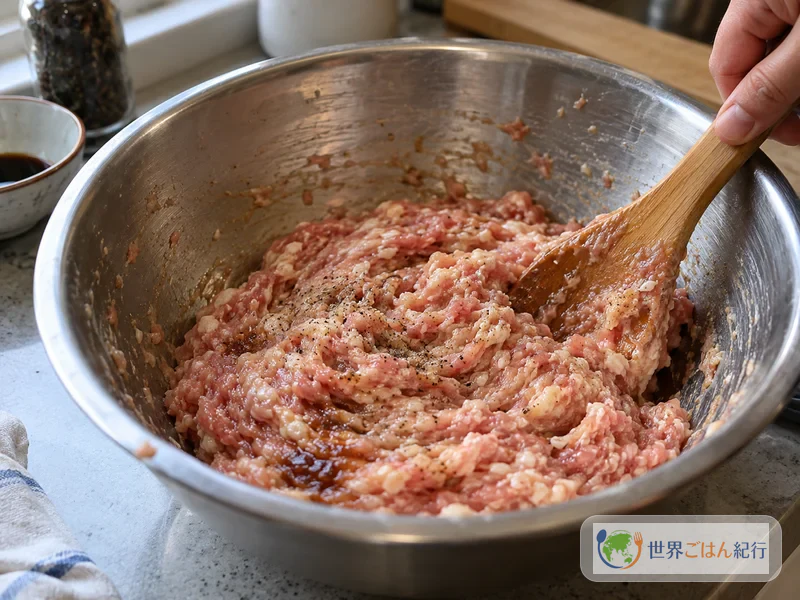
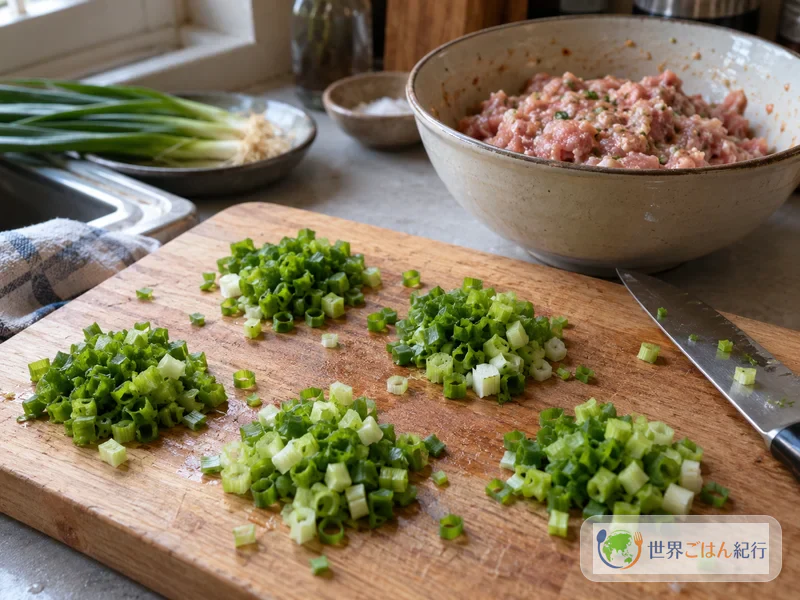
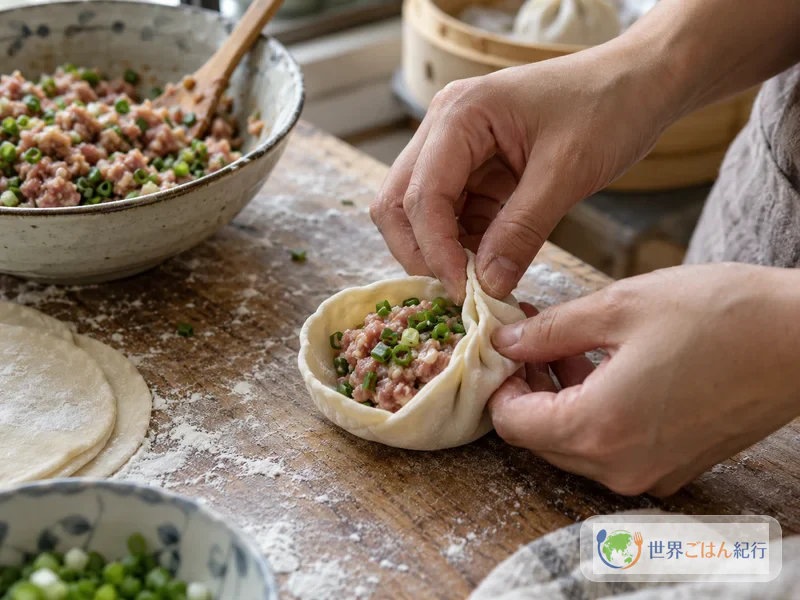
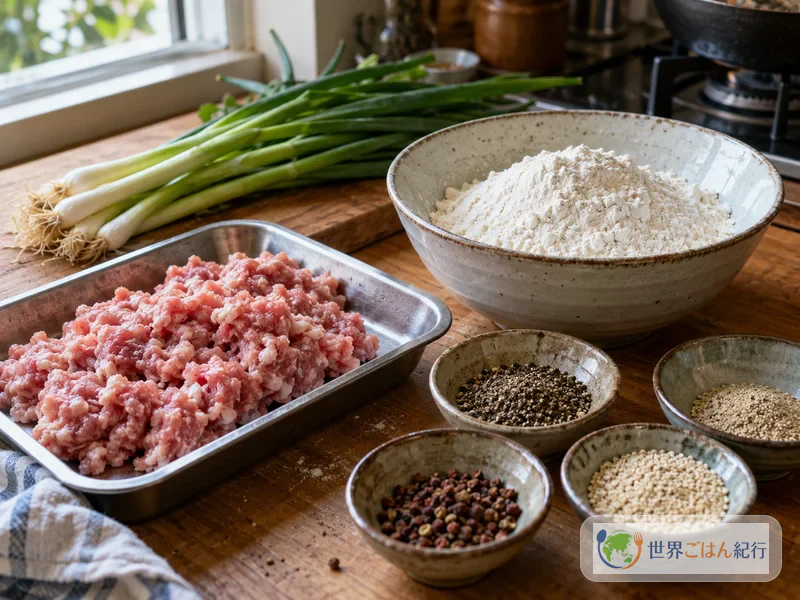
For the pork filling, some stalls use ground pork and others use thin slices. Ground pork yields more juice. The base seasoning is pepper, soy sauce, sugar, and wine, and some stalls add five-spice powder or curry powder. The other star is the scallion, which in the traditional method is not mixed into the meat but placed separately on top of it when wrapping. This keeps the fresh scallion aroma distinct.
What to know before baking in a home oven
The stall's oven is a special baking oven whose walls get hot from the charcoal. A home oven cannot bake the same way, so this article is based on the home sheet-pan recipe that the cook Marvellina shares on her site What To Cook Today. Baked at 200 °C for 20 minutes, the bottom comes out flat, but you still get plenty of toasty sesame and a filling that holds in the juices.
Three kinds of pepper are used. Black pepper is the pillar of aroma and heat, white pepper gives the sharp fragrance of Taiwanese stalls, and a little Sichuan pepper leaves a faint tingle on the tongue. Ground versions are fine for all of them, but freshly grinding black pepper and Sichuan pepper brings out more aroma.
Preparing the meat mixture the day before is recommended. Resting the pepper- and soy-seasoned meat in the refrigerator for 8–12 hours lets the flavors blend and makes it hold together better when wrapping. The next day you only have to make the dough, wrap, and bake.
The fat for the dough in the original recipe is lard. It gives the aroma of pork fat and a flaky texture, but if you cannot get it, vegetable oil or soft coconut oil at room temperature also works. Scallions can be thin spring onions or the green part of long onions, and a generous 120 g is used.
Ingredients (makes 6)
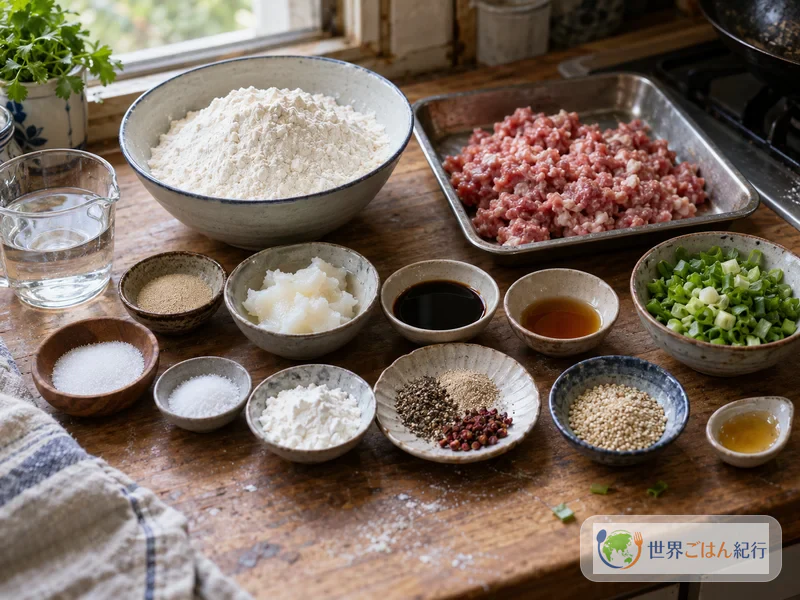
Amounts follow the What To Cook Today recipe (six large buns).
This dish contains wheat, soy (soy sauce), and sesame. Do not give the honey used for finishing to infants under 1 year old (per advisory from Japan's Ministry of Health, Labour and Welfare). If an infant may eat them, brushing with water alone instead of honey will still hold the sesame seeds.
How to make hujiao bing
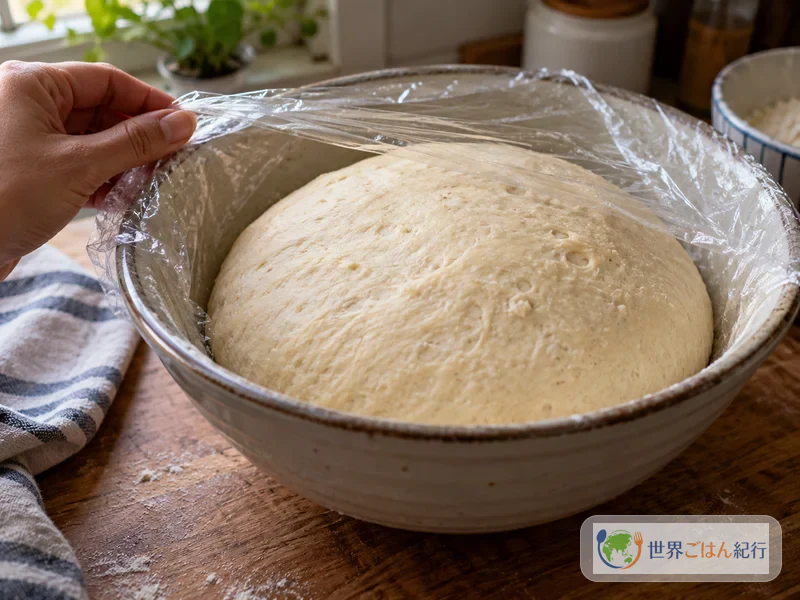
If the meat mixture is prepared the day before, the work on the day takes about 1 hour 30 minutes from making the dough to baking. In total, allow about 13 and a half hours including the time the meat mixture rests.
The juices inside a freshly baked hujiao bing are very hot. When biting in, first break open an end a little to let the steam out. Cook ground pork thoroughly through the center; Japan's Ministry of Health, Labour and Welfare urges heating pork to 75 °C at the center for at least 1 minute.
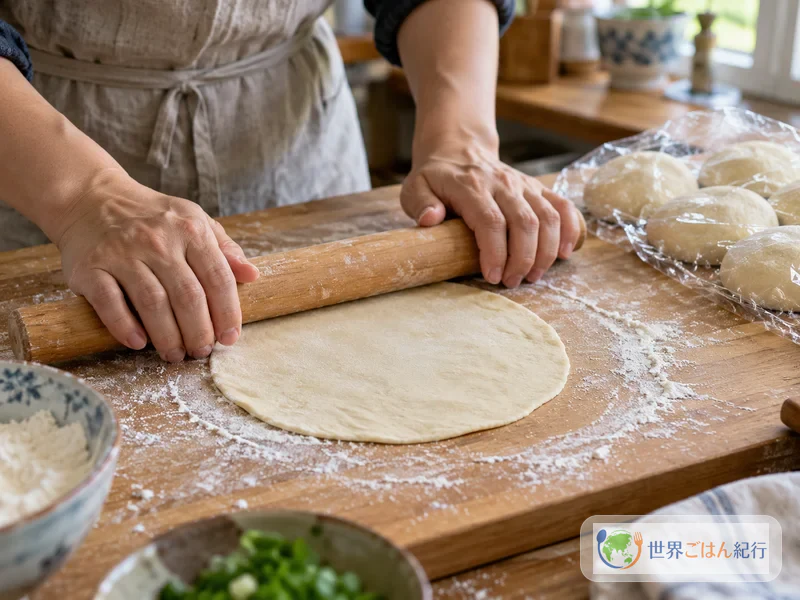
If time passes between wrapping and baking, the dough slackens and the seams tend to open. Start preheating the oven early and plan so you can bake right after wrapping all 6.
Eating it hot, the night market way
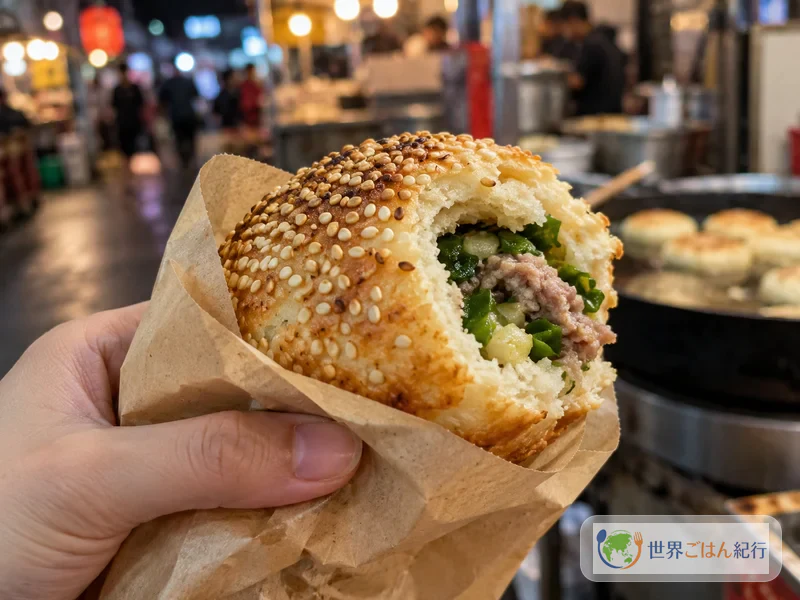
At night markets, the standard is to have it put in a paper bag fresh from the oven and bite into it standing on the spot. The first bite brings toasty sesame, then the heat of black pepper, and finally the juices and the sweetness of scallions follow. At home too, wrapping it in a paper towel and holding it in your hand gets closer to the piping-hot feel of a street stall than putting it on a plate.
For drinks, unsweetened Taiwanese oolong tea or warm soy milk goes well. To gather a few more street-stall flavors, set it beside night-market fried chicken yan su ji, sweet-savory pork over rice lu rou fan, or the breakfast egg crepe danbing.
Because Taiwanese stall hujiao bing bake on the oven wall, the bottom puffs slightly rounded. In a home oven the bottom comes out flat, but because it bakes on a sheet pan, the bottom also takes on a toasty color.
Ways to vary it
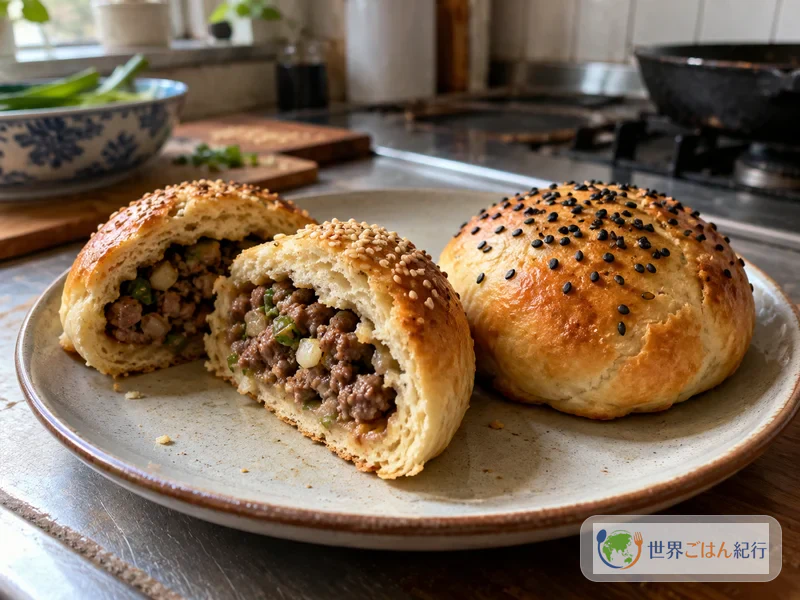
Instead of ground pork, you can use ground beef or chicken with some fat. Marvellina writes that lean ground turkey is not suitable because the filling turns watery. In Taiwan too, some shops serve beef hujiao bing, where the heat of pepper pairs well with the rich flavor of beef.
Some Taiwanese stalls add five-spice powder or curry powder to the seasoning. About 1/4 tsp five-spice powder brings out the sweet fragrance of star anise and cinnamon, and 1/2 tsp curry powder brings spice forward. Halving the pepper makes it milder and easier for children to eat.
Frequently asked questions
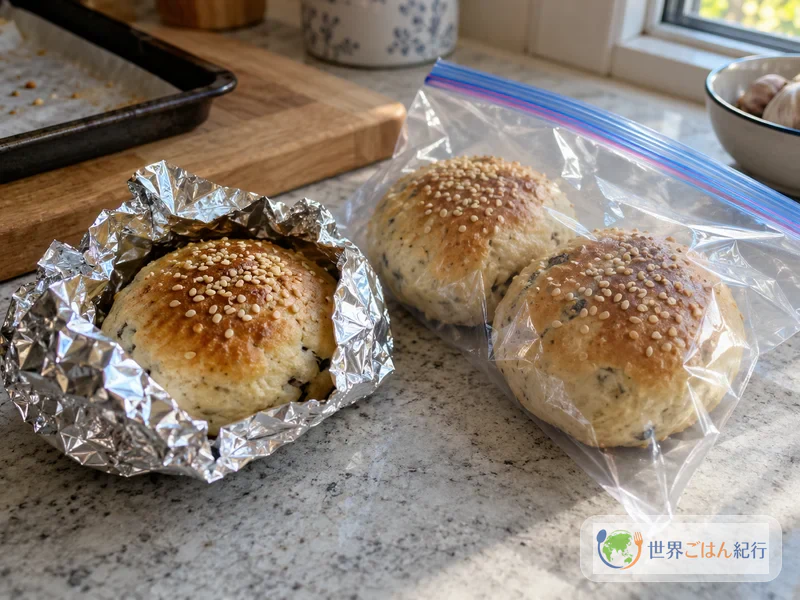
Can I make them ahead?
Baked hujiao bing can be frozen. Arrange them on a tray lined with parchment paper, freeze about 1 hour, and when firm, move them to a freezer bag. What To Cook Today says they keep up to 3 months, but in a home freezer it is best to finish them sooner.
How do I reheat frozen ones?
Wrap them still frozen in aluminum foil and heat in an oven or toaster oven preheated to about 180 °C for 10–15 minutes. The center can stay cold, so break one open to check it is hot through, and add a few minutes at a time if needed. If thawed in the refrigerator first, the time shortens to about 8–10 minutes.
Do I need lard?
You can also use vegetable oil, shortening, or soft coconut oil. Lard adds the aroma of pork fat and makes the crust flaky.
What if I do not have Sichuan pepper?
You can leave it out. Sichuan pepper is there for a faint tingle on the tongue, so without it the taste is still recognizably hujiao bing. In that case, increase the black pepper slightly.
Sources
- What To Cook Today, Marvellina, "Hu Jiao Bing (Taiwanese Pepper Meat Buns)," updated 6 March 2023. Accessed and checked 22 October 2026. https://whattocooktoday.com/hu-jiao-bing.html
- Wikipedia, "Hujiao bing." Accessed and checked 22 October 2026. https://en.wikipedia.org/wiki/Hujiao_bing
- 食力foodNEXT 編輯部「外皮外脆內Q、內餡肉汁滿溢!「福州林記胡椒餅」躍身瑞芳三寶」, published 12 August 2020. Accessed and checked 22 October 2026. https://www.foodnext.net/life/culture/paper/5470495681
- Ministry of Health, Labour and Welfare (Japan), "Do not give honey to infants under one year old" (in Japanese). Accessed and checked 22 October 2026. https://www.mhlw.go.jp/stf/seisakunitsuite/bunya/0000161461.html
- Ministry of Health, Labour and Welfare (Japan), "Cook beef and pork liver and pork thoroughly through" (leaflet for restaurants, in Japanese). Accessed and checked 22 October 2026. https://www.mhlw.go.jp/file/06-Seisakujouhou-11120000-Iyakushokuhinkyoku/innsyokutenn.pdf