Khailmag: Cream, Flour and the Moment Yellow Fat Appears
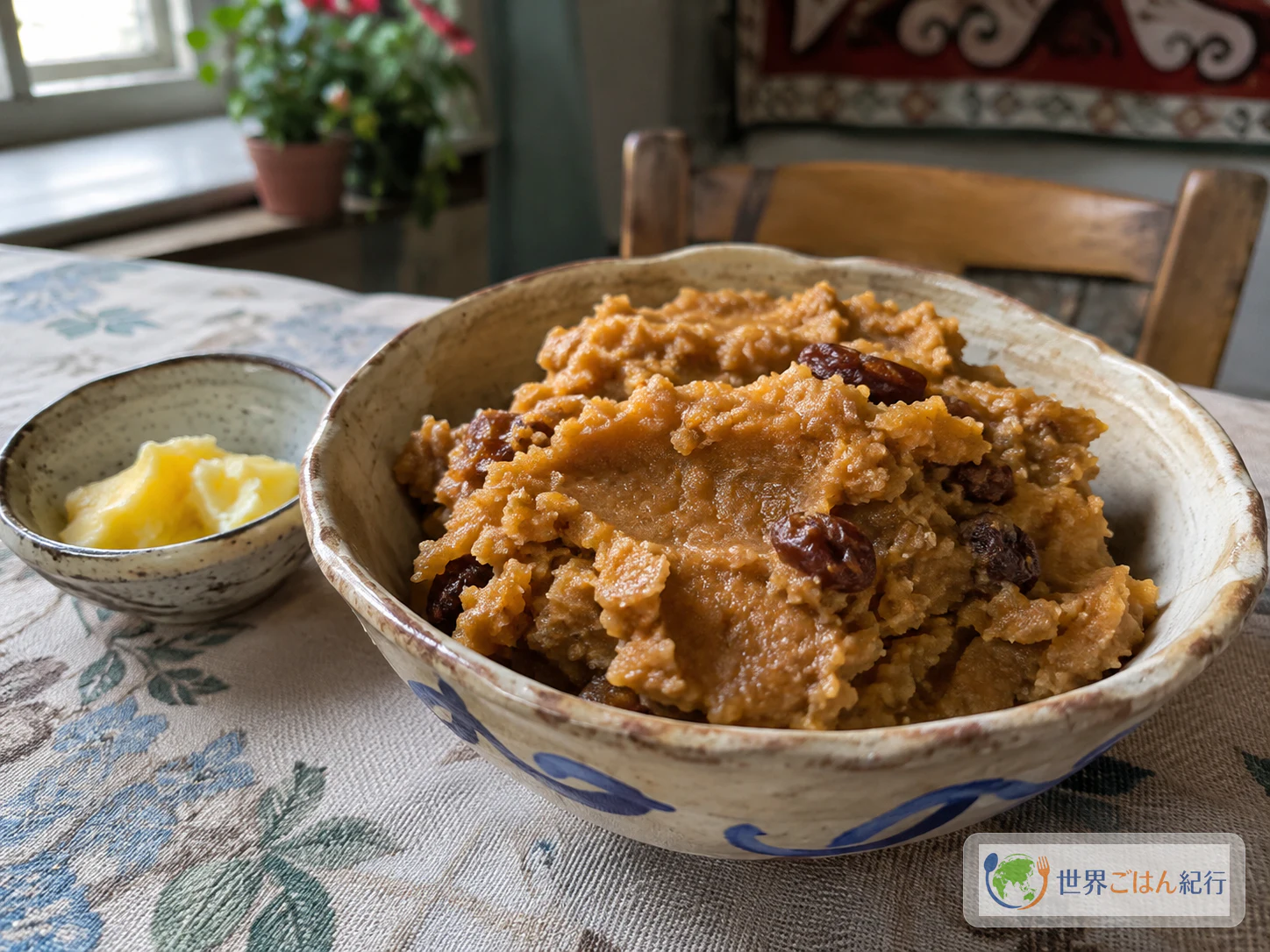
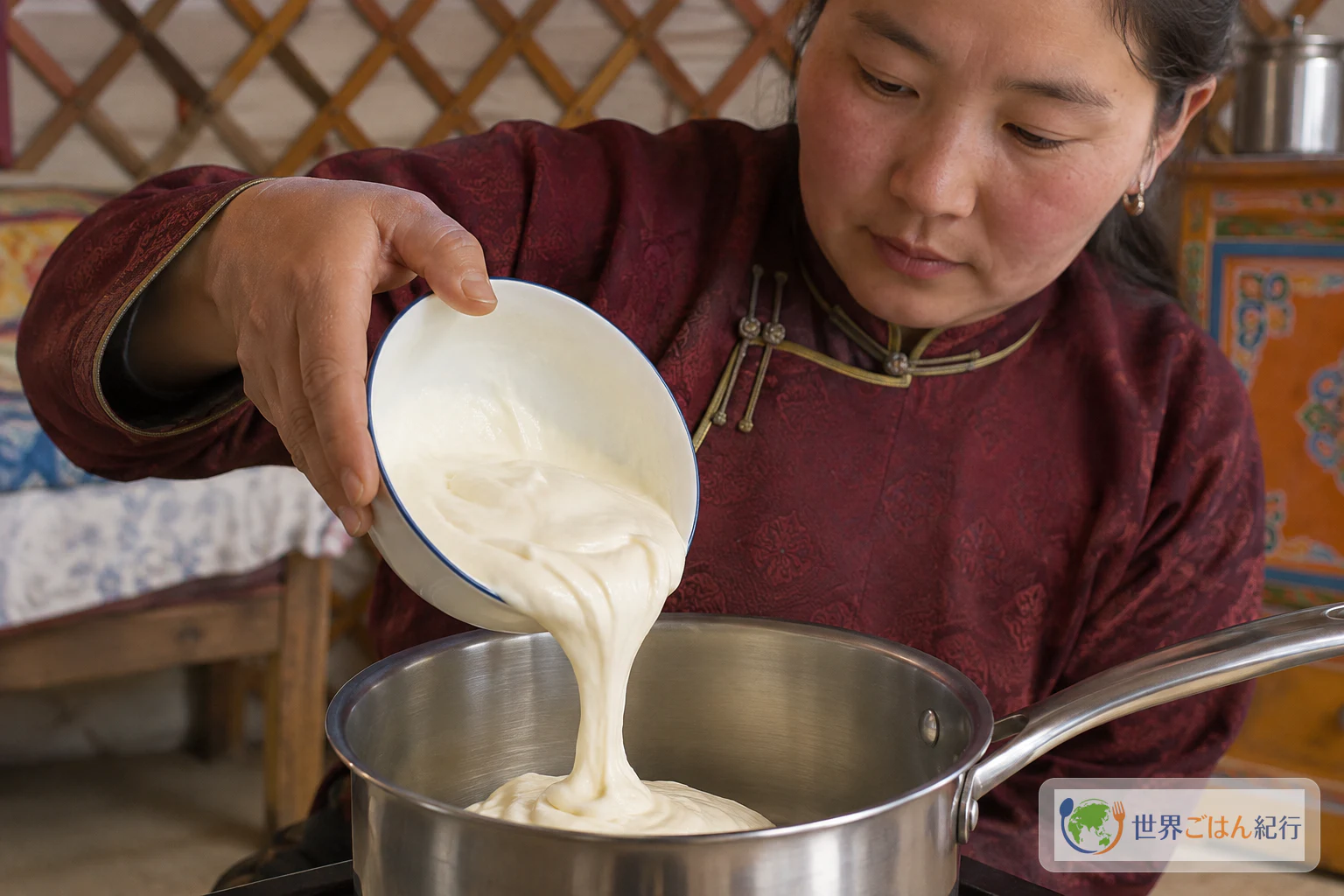
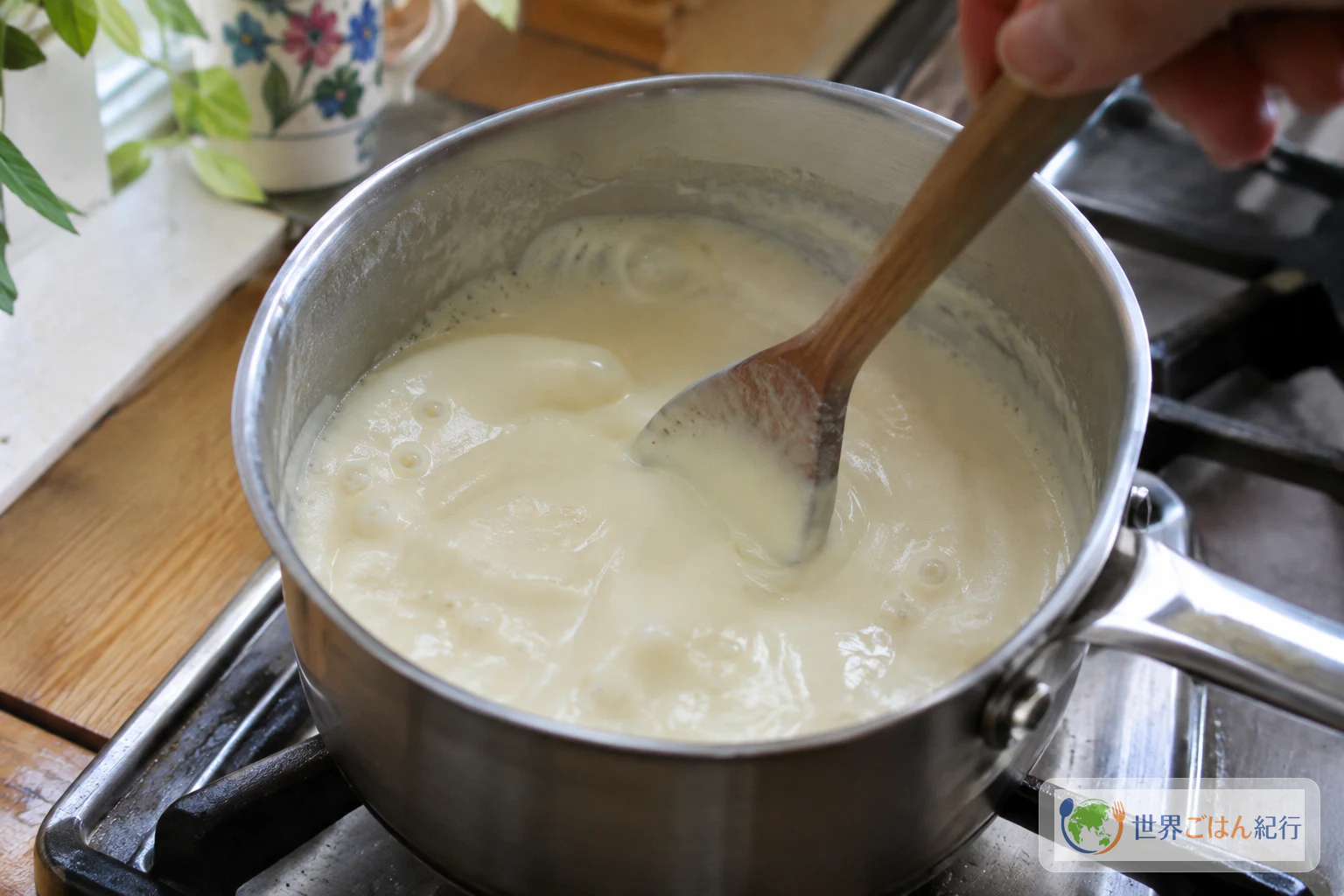
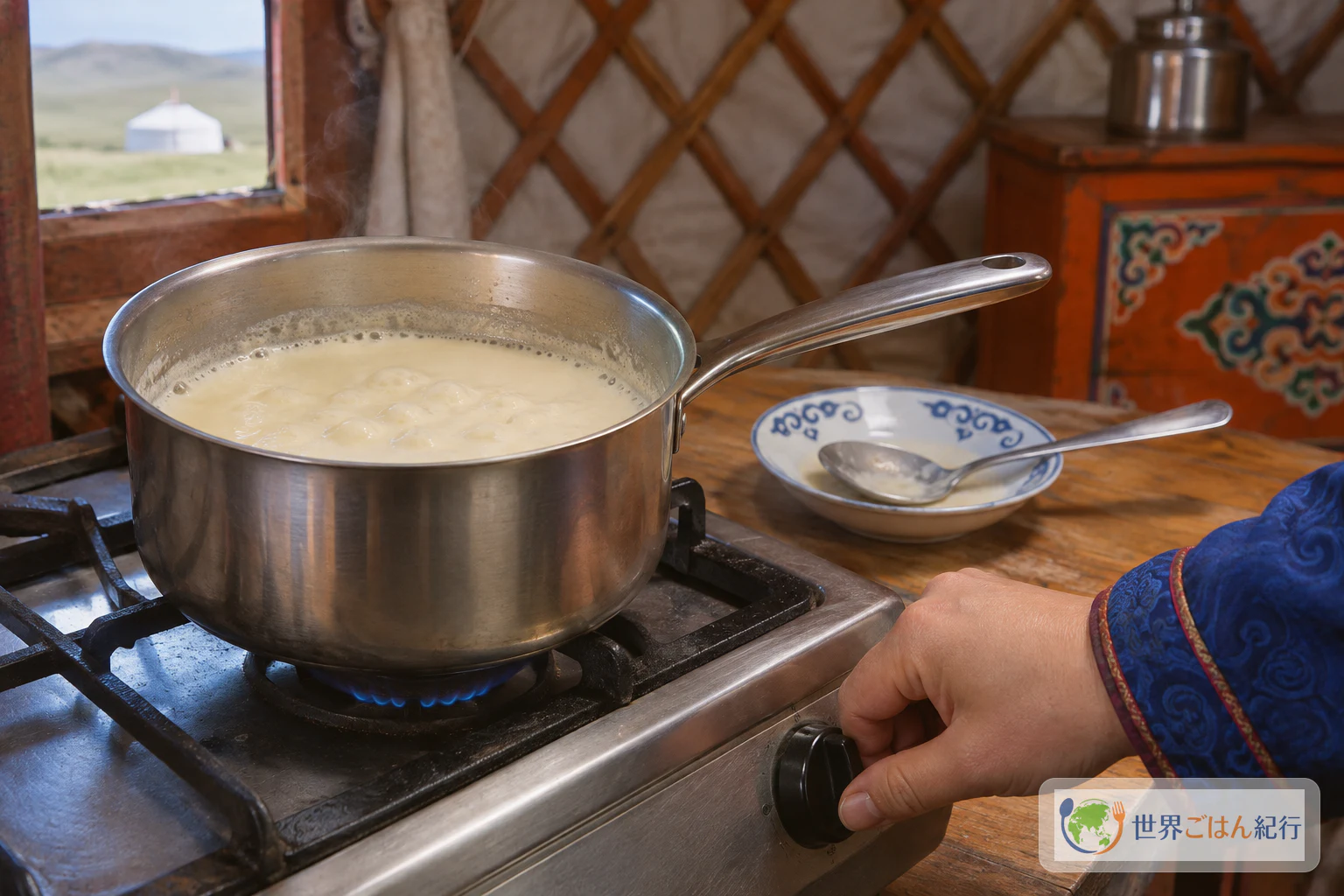
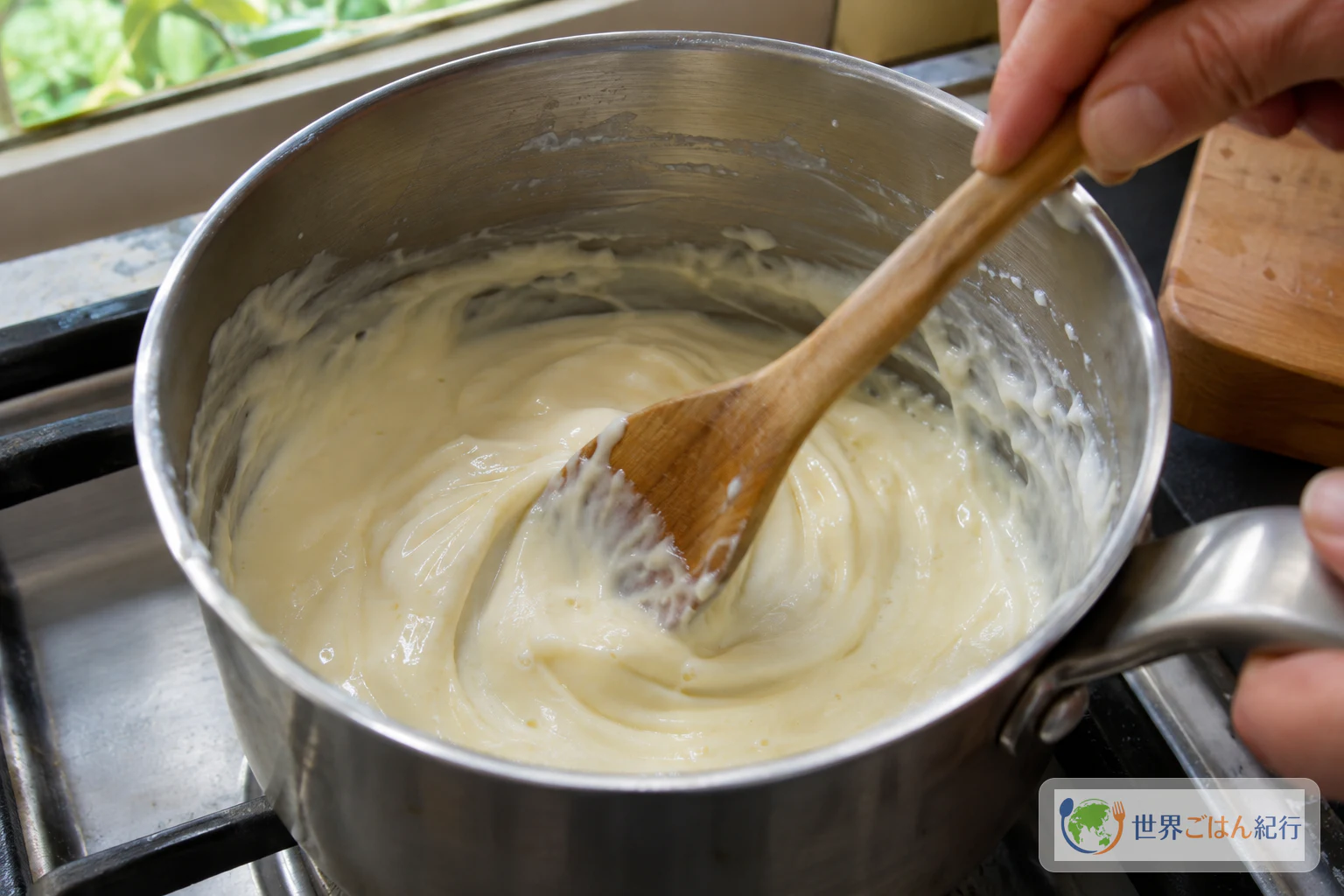
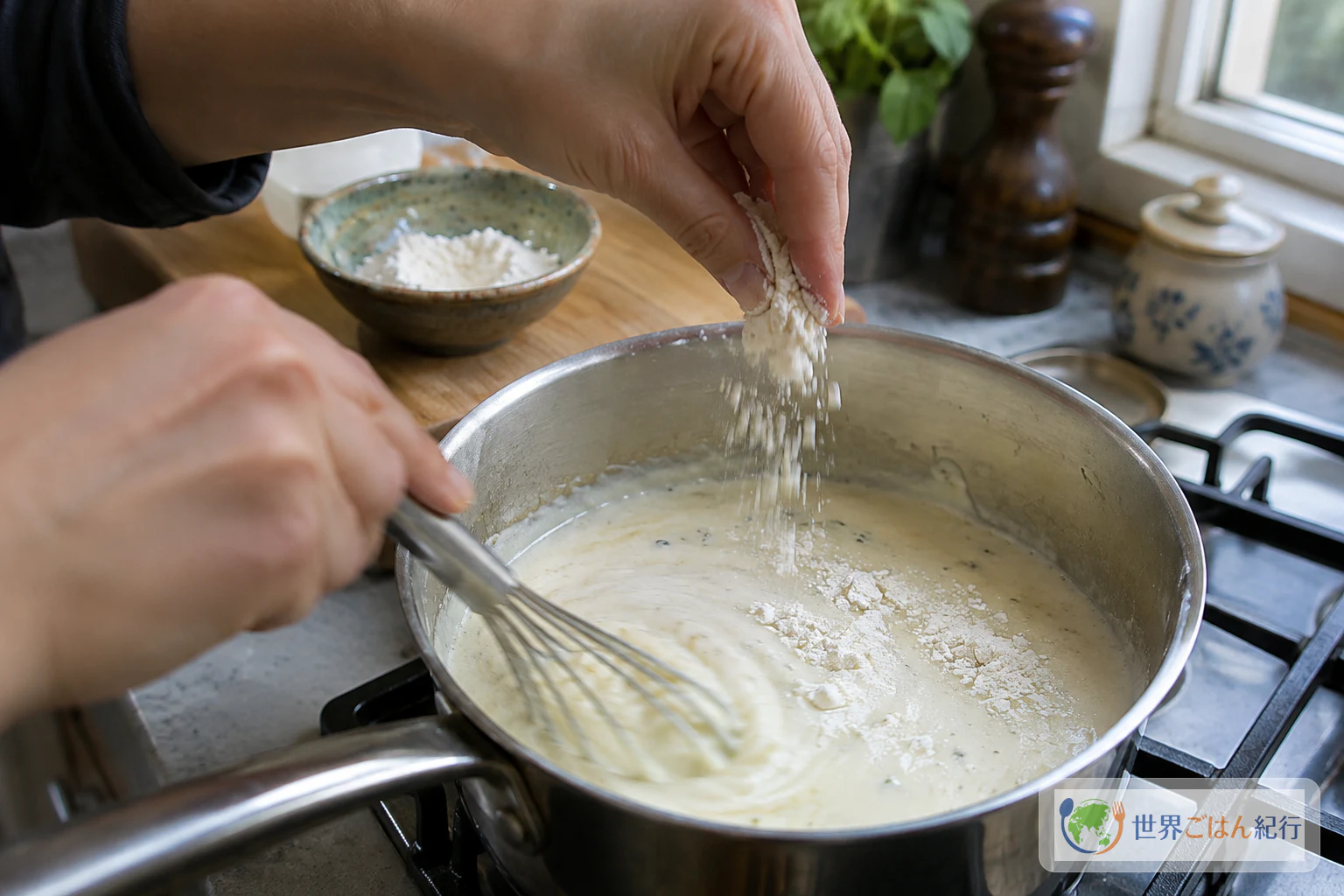
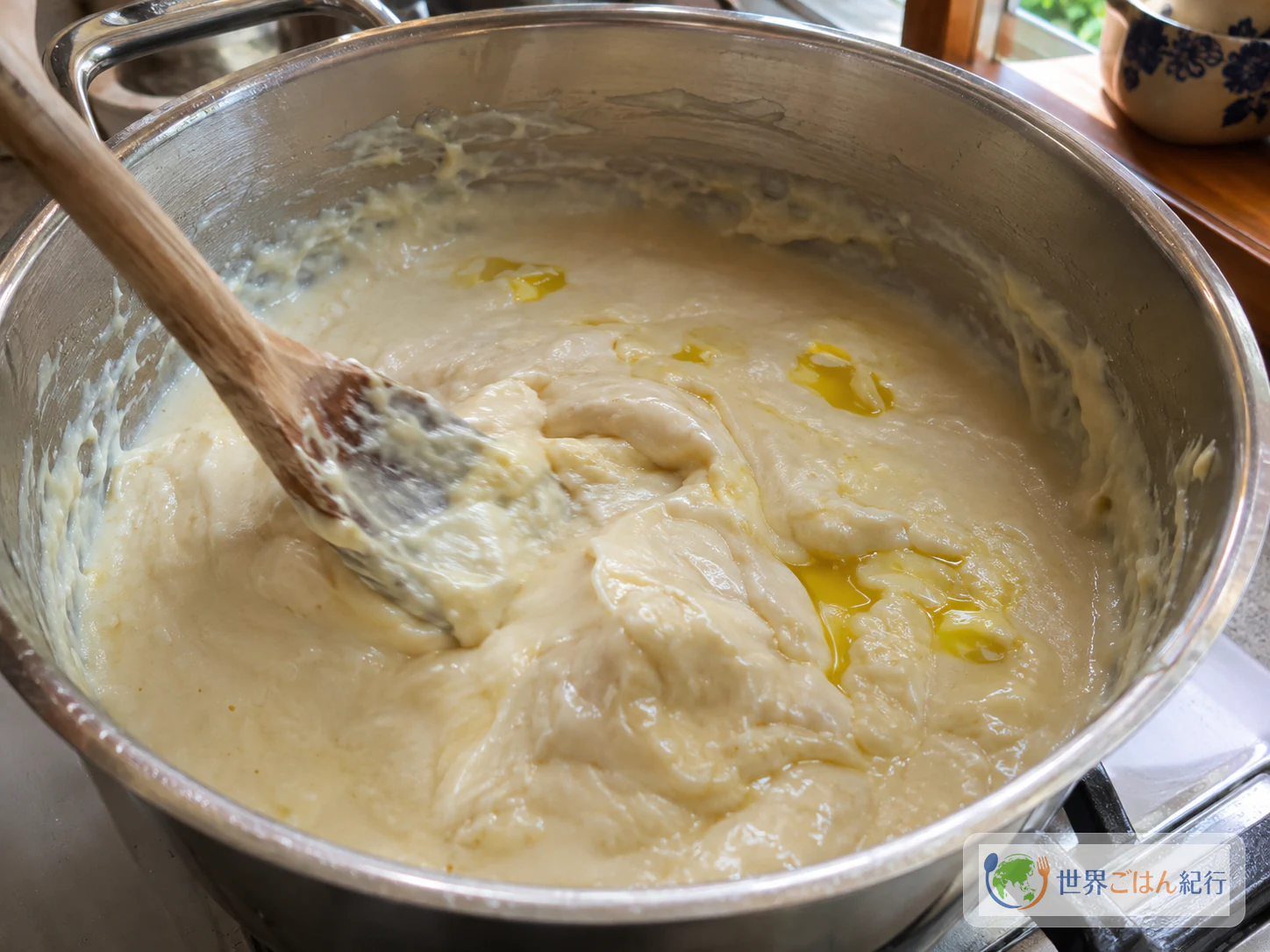
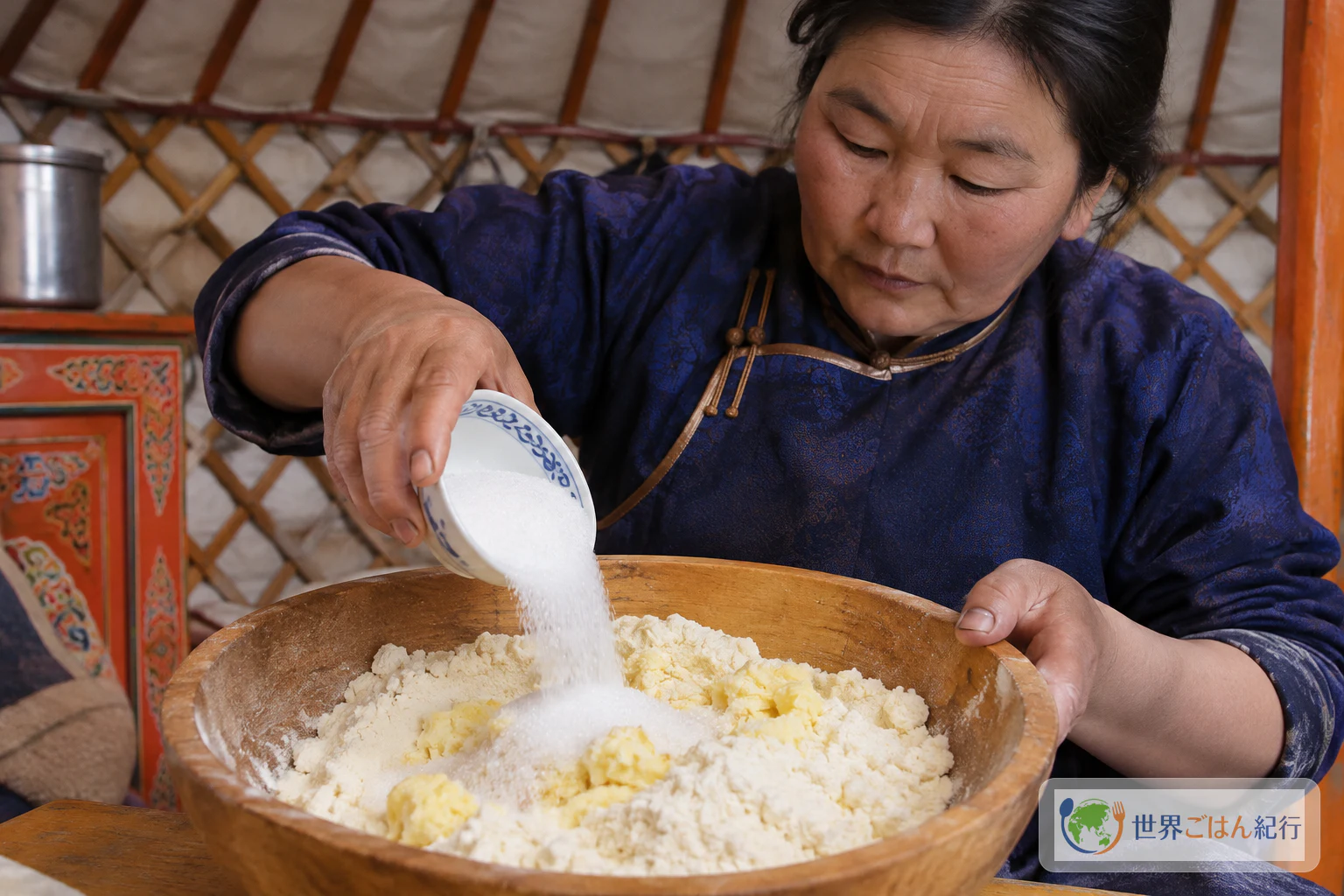
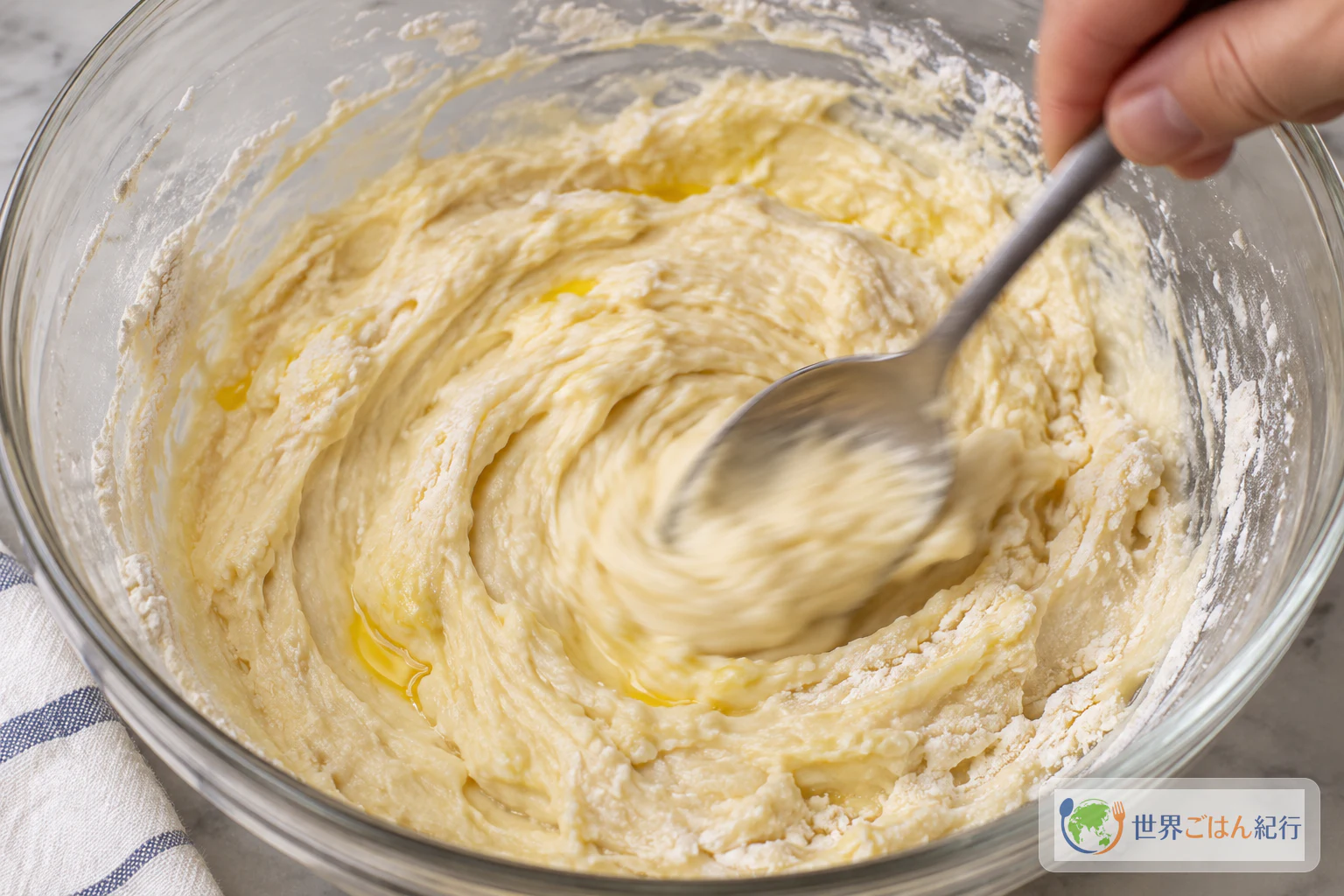
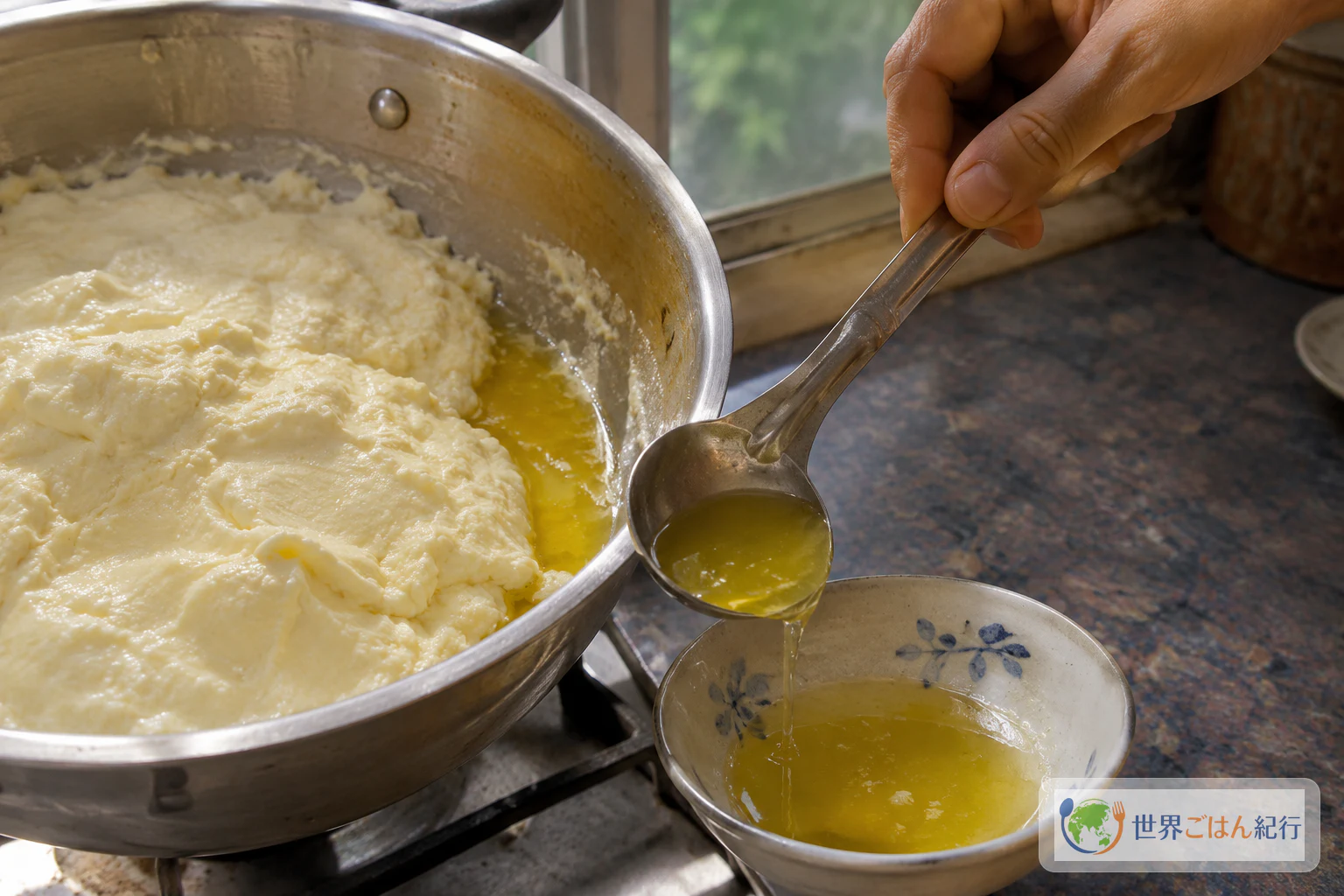
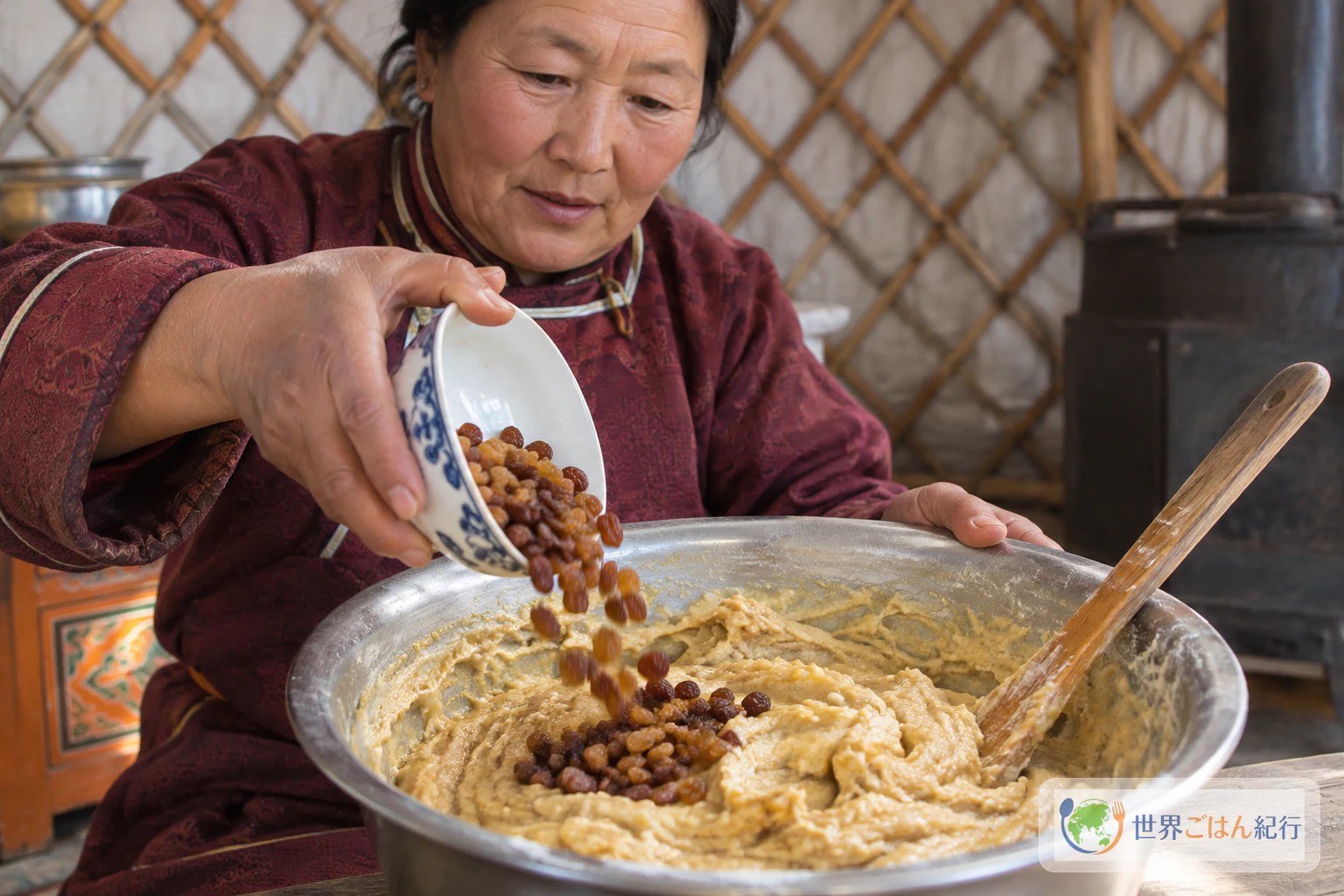
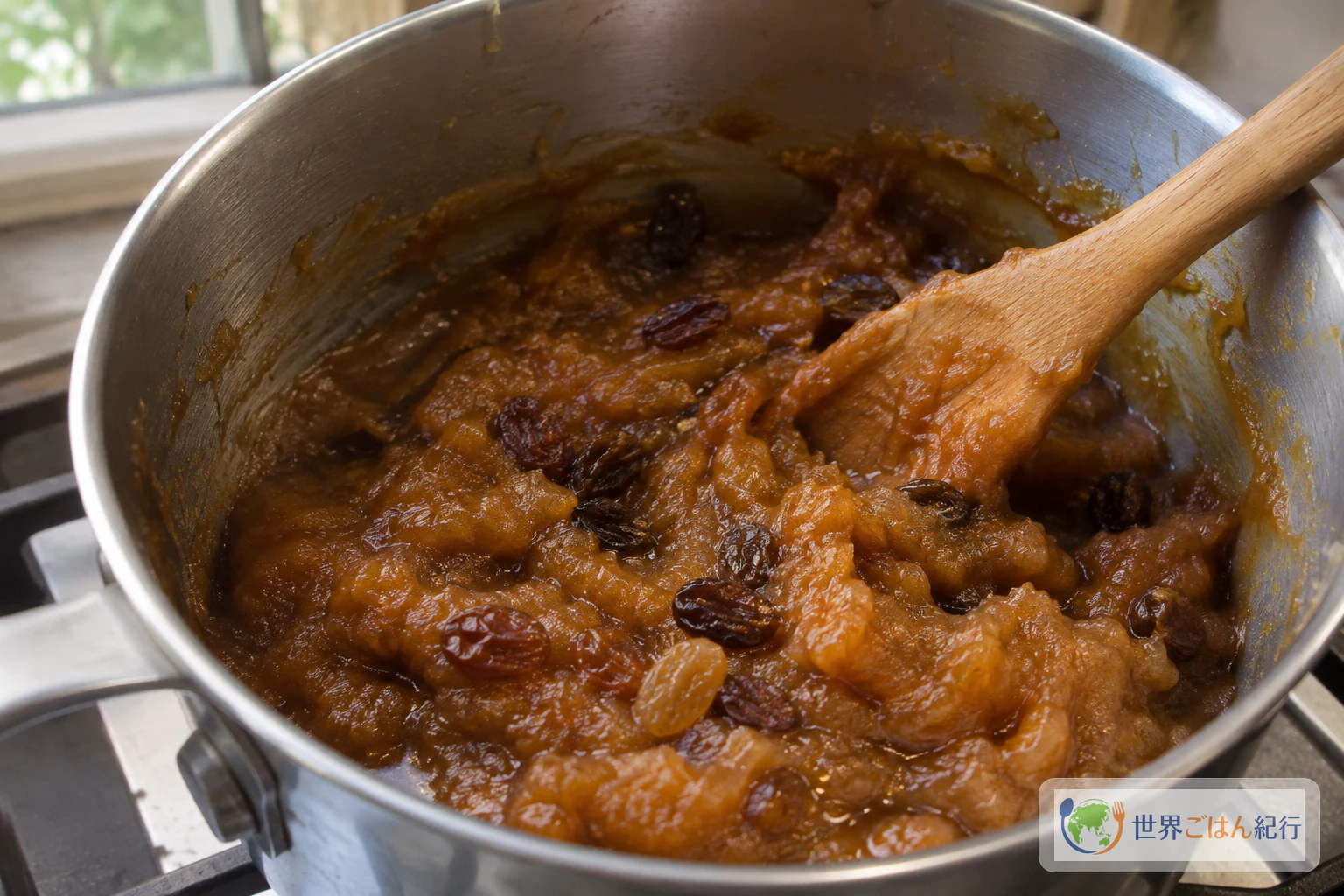
Crème fraîche comes to a boil, then cooks on low heat under a constantly moving spoon. Flour thickens it, yellow fat rises and is lifted away, and raisins go in once the mixture is as thick as fruit jam.
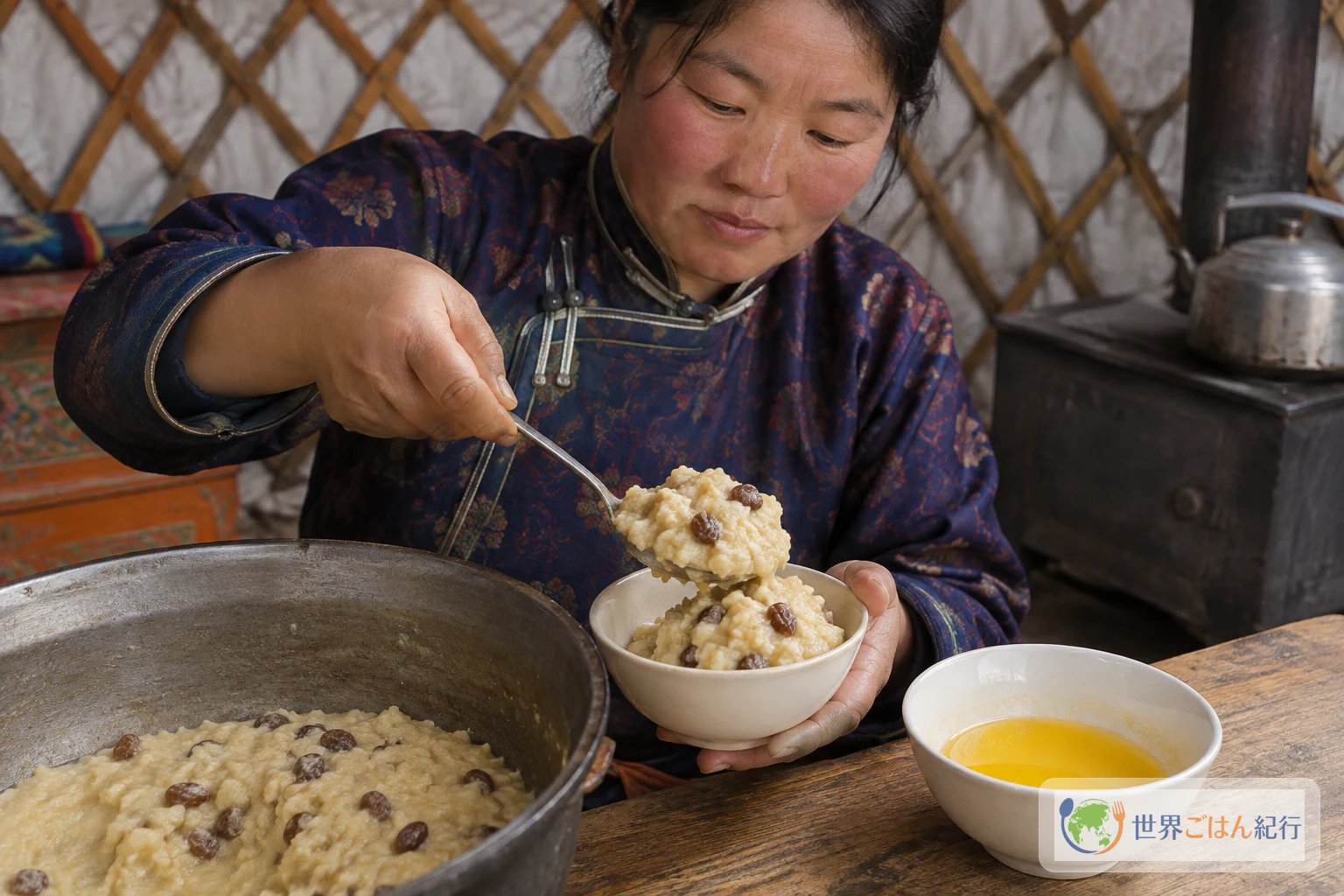
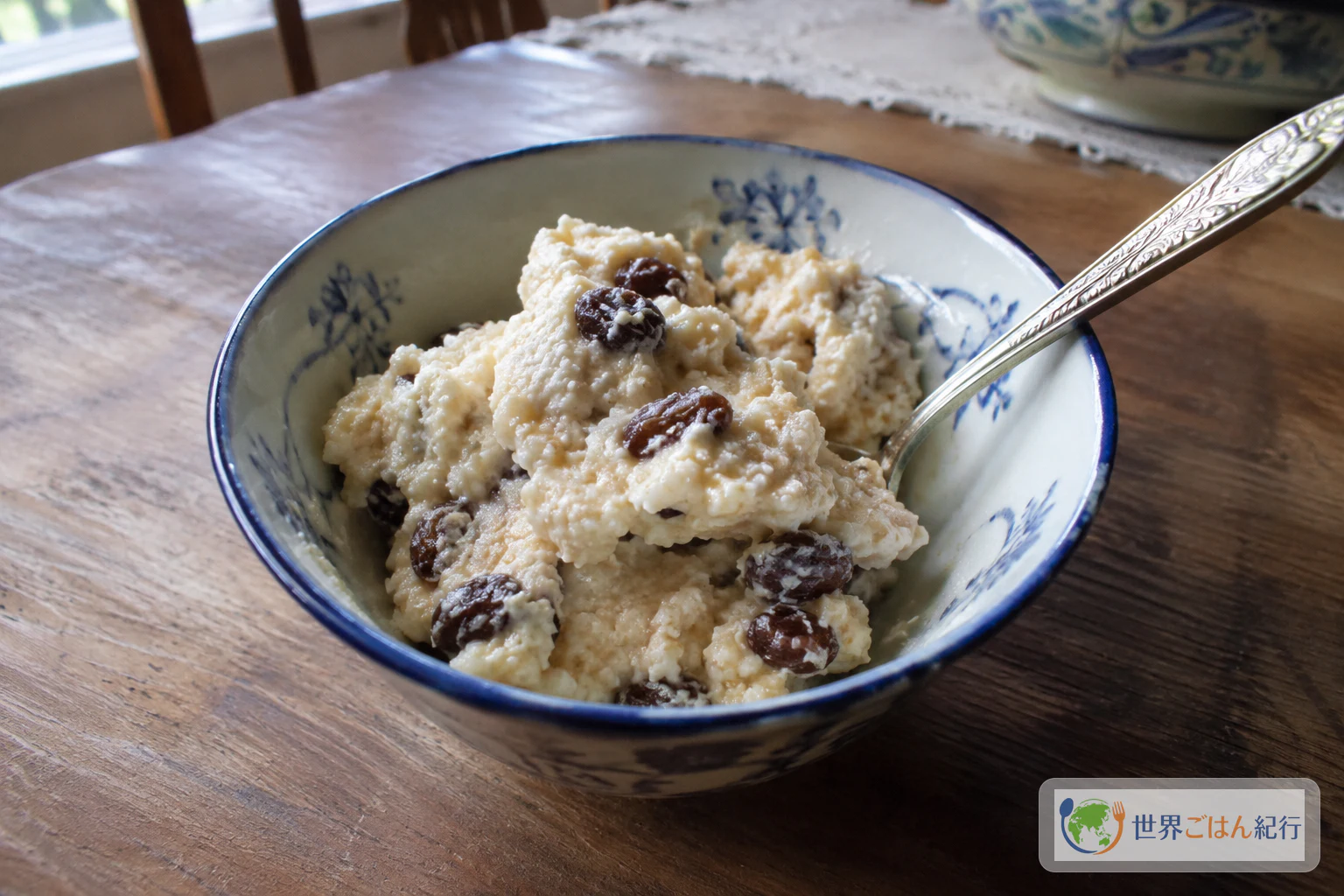
Khailmag (хайлмаг) is a rich Mongolian dairy sweet. Three Camel Lodge, a lodge based in Mongolia, connects it with the taste of childhood at home and with celebratory tables, including lunar new year and weddings. It also makes clear that khailmag varies from one part of Mongolia to another, so no single formula defines the dish.
This article follows one version: the simple recipe the lodge publishes as the easiest way to make khailmag at home. Traditionally the base is urum (хөрсөн өрөм), and the lodge suggests crème fraîche for cooks outside Mongolia. That makes this a practical adaptation for an ordinary kitchen, not a copy of urum-based khailmag. Sekai Gohan has not kitchen-tested this recipe.
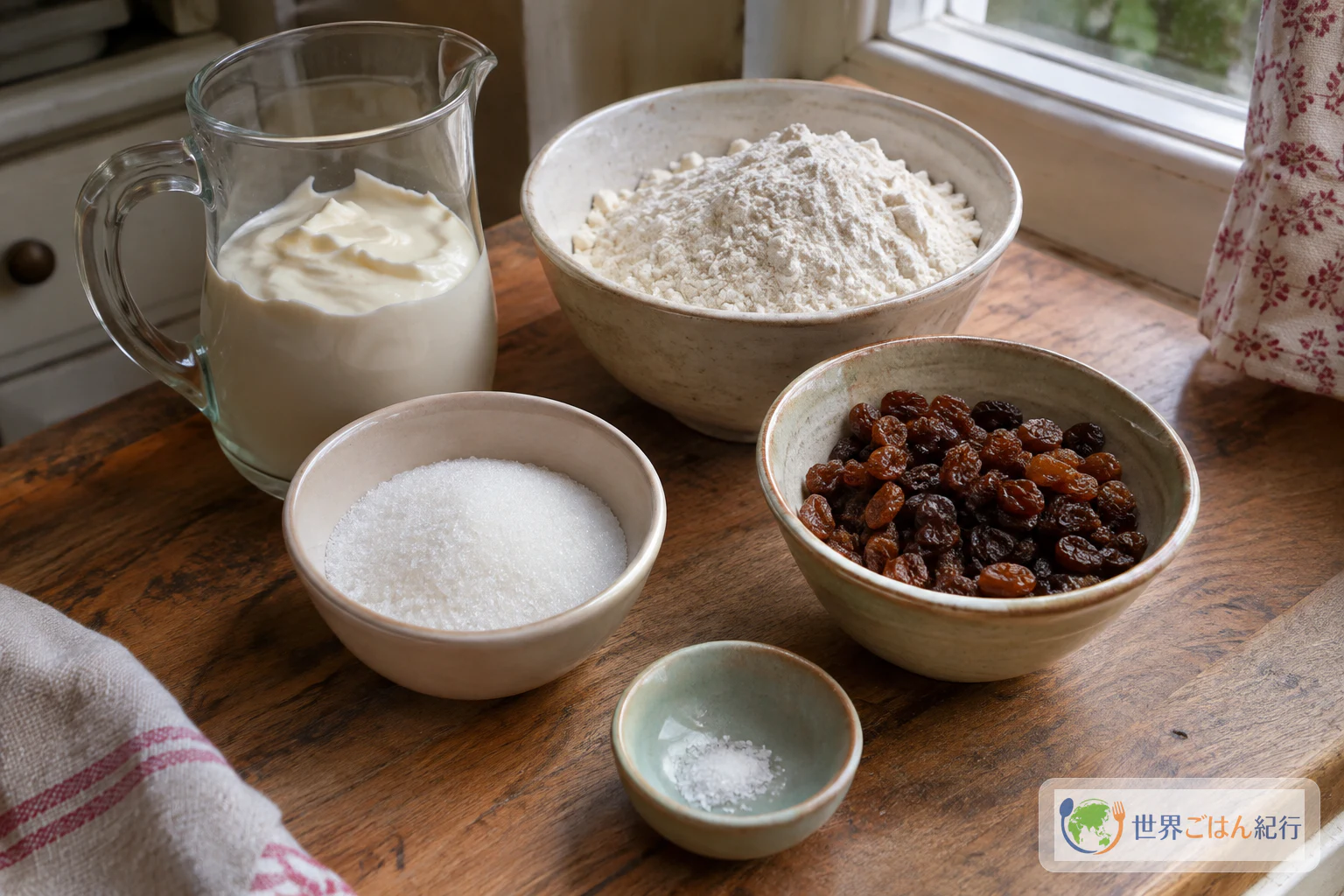
Ingredients
Equipment
- Saucepan
- Wooden spoon
- Measuring cup
- Spoon or small ladle for lifting off the fat
- Small bowl for the separated fat
- Small serving bowl and spoon
Choosing What You Buy
Crème fraîche: Look for a commercially prepared product made from pasteurized milk, with a fat content of around 40%. Before cooking, store it as its label directs. Crème fraîche and urum are not the same ingredient, so expect this to be an adaptation.
Cream: Ordinary whipping cream is not a confirmed swap for the same formula. Stick with crème fraîche for this recipe.
Flour: Use all-purpose flour. Don't assume that Japanese cake flour or another flour will behave identically.
Allergens: This recipe contains dairy and wheat.
Method: Watch the Pan, Not the Clock
Hot, high-fat dairy can spit and scorch. Once the cream has boiled, keep the heat low and keep stirring across the bottom of the pan. Don't add water, milk or oil at any stage.
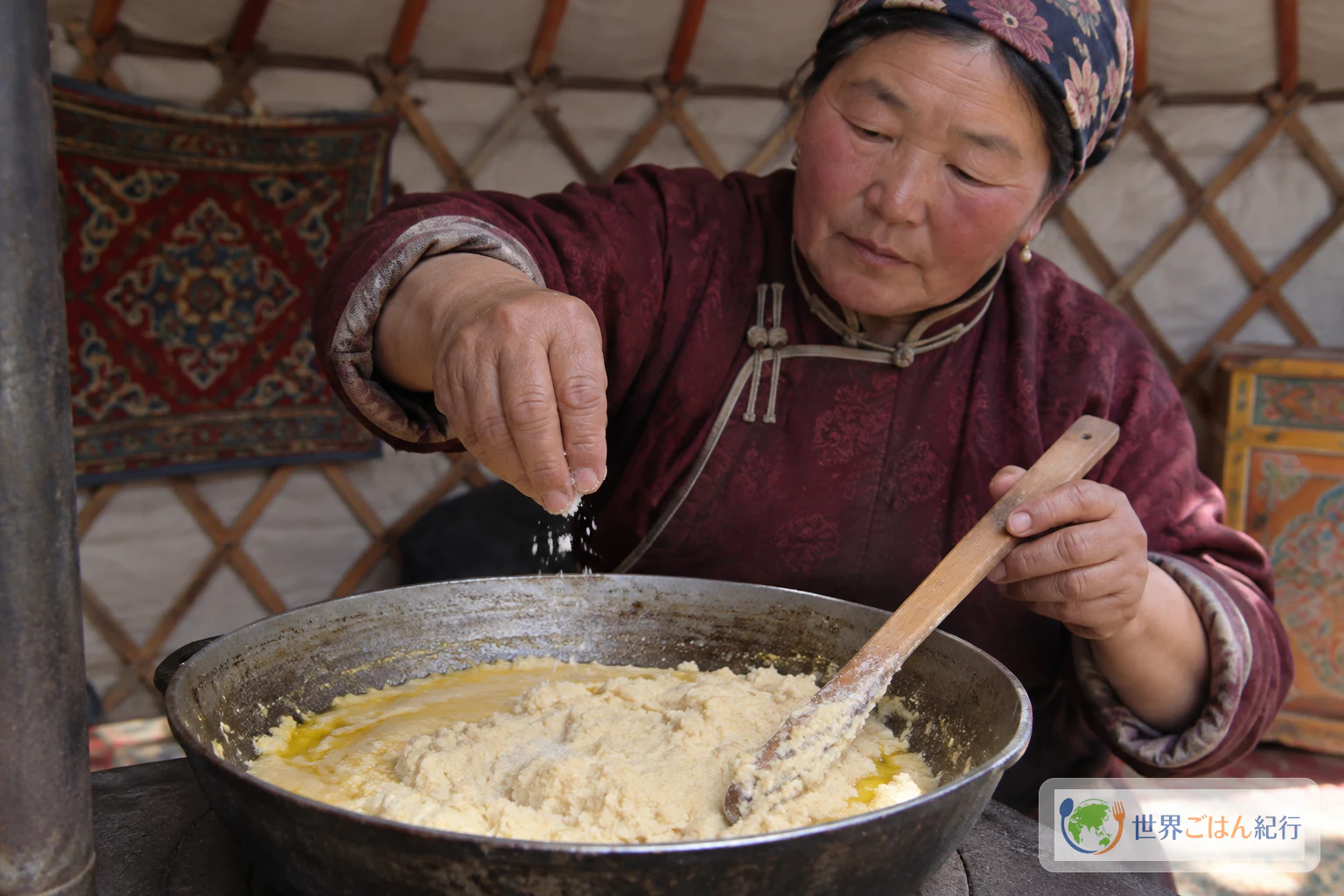
The first seven steps are the cooking, and the last is simply plating. No cooking times are given because each change is judged by what you see in the pan. The images illustrate each action, but they can't establish exact amounts, heat levels, timing or food safety.
Troubleshooting: Reading the Pan
| What you see | What to check | What to do |
|---|---|---|
| No yellow fat yet | Whether the cream is high-fat, around 40% | Keep stirring over low heat. There is no guaranteed time, and adding oil is not part of this recipe |
| Flour is clumping | How quickly the flour went in | Keep stirring, and add the remaining flour in smaller amounts |
| The bottom is starting to catch | The heat level and whether the spoon has reached the base | Keep the heat low and stir across the bottom without stopping |
| The mixture is spitting | The heat level | Keep the heat low and take care around the hot fat |
| Yellow fat is pooling on top | Whether enough has separated | Lift it into the separate bowl, and don't stir it back in |
| Not yet as thick as jam | The texture in the pan | Keep stirring over low heat and hold the raisins back until it reaches that thickness |
| Thicker than you expected | Whether you passed the jam-like stage | Don't loosen it with water, milk or oil. Next time, add the raisins as soon as it looks like thick fruit jam |
Variations: Different Khailmag, Not Swaps for This Pan
Three Camel Lodge notes that khailmag changes with the area, and its crème fraîche recipe is one easy home adaptation. The Mongolia Tourist Information Center describes a distinct method using white butter, flour, separated yellow butter (shar tos) and sugar, without quantities. It is a different preparation, so its steps and ingredients are not combined with the recipe above.
Urum-based khailmag is also a separate thing from this version. Using crème fraîche makes the dish practical outside Mongolia, but it doesn't make the two ingredients identical.
Background: Mongolian Dairy and Where Khailmag Sits
Khailmag belongs to Mongolia's wider world of dairy foods. A 2022 record from Mongolia's National Center for Cultural Heritage, cataloged by the International Research Centre for Intangible Cultural Heritage in the Asia-Pacific Region (IRCI), describes dairy processing adapted to local conditions. Livestock milk becomes many products, by-products are put to use, and sheep and yak milk are noted as suited to high-fat dairy. This article relies on the record's written description, not on the audiovisual recording it catalogs.
Urum is a traditional Mongolian clotted cream. The Mongolia Tourist Information Center describes boiling cow, sheep or goat milk and collecting the foamy cream from the surface. That is background only, and this article gives no recipe for making urum, working with raw milk or fermenting dairy at home.
The lodge's page also points to a video in which Narantsetseg (Nargie), a local demonstrator, shows a traditional method. The written recipe here is the lodge's own simplified adaptation and should not be credited to Narantsetseg, and no steps were taken from the video. The memories of childhood and of new year and wedding tables are the lodge's account of the dish. The materials don't support a date of origin or a claim that khailmag began as a preserved food, so neither appears here. You can explore more of the country's table from the Mongolia page.
Frequently Asked Questions
Is this the standard recipe for khailmag?
No. It is Three Camel Lodge's easy home version, and khailmag varies across Mongolia. Treat it as one approachable way into the dish.
Can I use ordinary whipping cream instead of crème fraîche?
This recipe doesn't offer that as a replacement, and whipping cream isn't confirmed to work in the same formula. The lodge's suggested alternative to urum is crème fraîche, high in fat at around 40%.
Which cup should I use, and can I convert to grams?
The recipe doesn't say which cup standard it uses, so the amounts stay as published and aren't converted here. That also means Japanese 200 ml cups or other standards can't be confirmed as equivalent.
How long does it take, and how many does it serve?
The recipe doesn't state a cooking time or yield, so this article gives neither. Rely on the visual cues instead: the boil, the yellow fat, then the jam-like thickness.
What do I do with the yellow fat?
Move it to a separate bowl. The recipe gives no further use for it, so this article doesn't add one. Don't pour it back over the finished khailmag.
How do I store leftovers?
The materials behind this article give no storage guidance or keeping time for finished khailmag, so none is offered here. Store unopened crème fraîche according to its label.
Sources
- Three Camel Lodge, "Traveling Through Cooking: Khailmag." The adopted written recipe, its ingredient amounts and seven-stage method, regional variation, urum and the crème fraîche substitute, and the dish's place at lunar new year and wedding tables. The linked video was not used as a source for the recipe. https://www.threecamellodge.com/khailmag-recipe/
- Mongolia Tourist Information Center, "Цагаан идээ / The Mongolian dairy product." Cultural background on urum and Mongolian dairy, and a different khailmag method used to show that formulas vary. It did not supply any amounts or steps for this recipe. https://www.touristinfocenter.mn/cate16_more.aspx?ItemID=101
- International Research Centre for Intangible Cultural Heritage in the Asia-Pacific Region (IRCI), record by the National Center for Cultural Heritage, Mongolia, "The traditional technique of preparing the dairy milk products," 2022. The written catalog description of regionally adapted dairy processing. It is not a khailmag recipe. https://www.irci.jp/rdb/item/13427