
Potato Babka: Grated Potato, Bacon and Onion Baked into One Golden Round
Potato babka is finely grated raw potato, crisp bacon and fried onion, bound with egg, sour cream and a little flour, then baked in one pan until the top turns golden. Keep the grated potato wet, use the bacon fat once, and finish with a short, hotter bake.
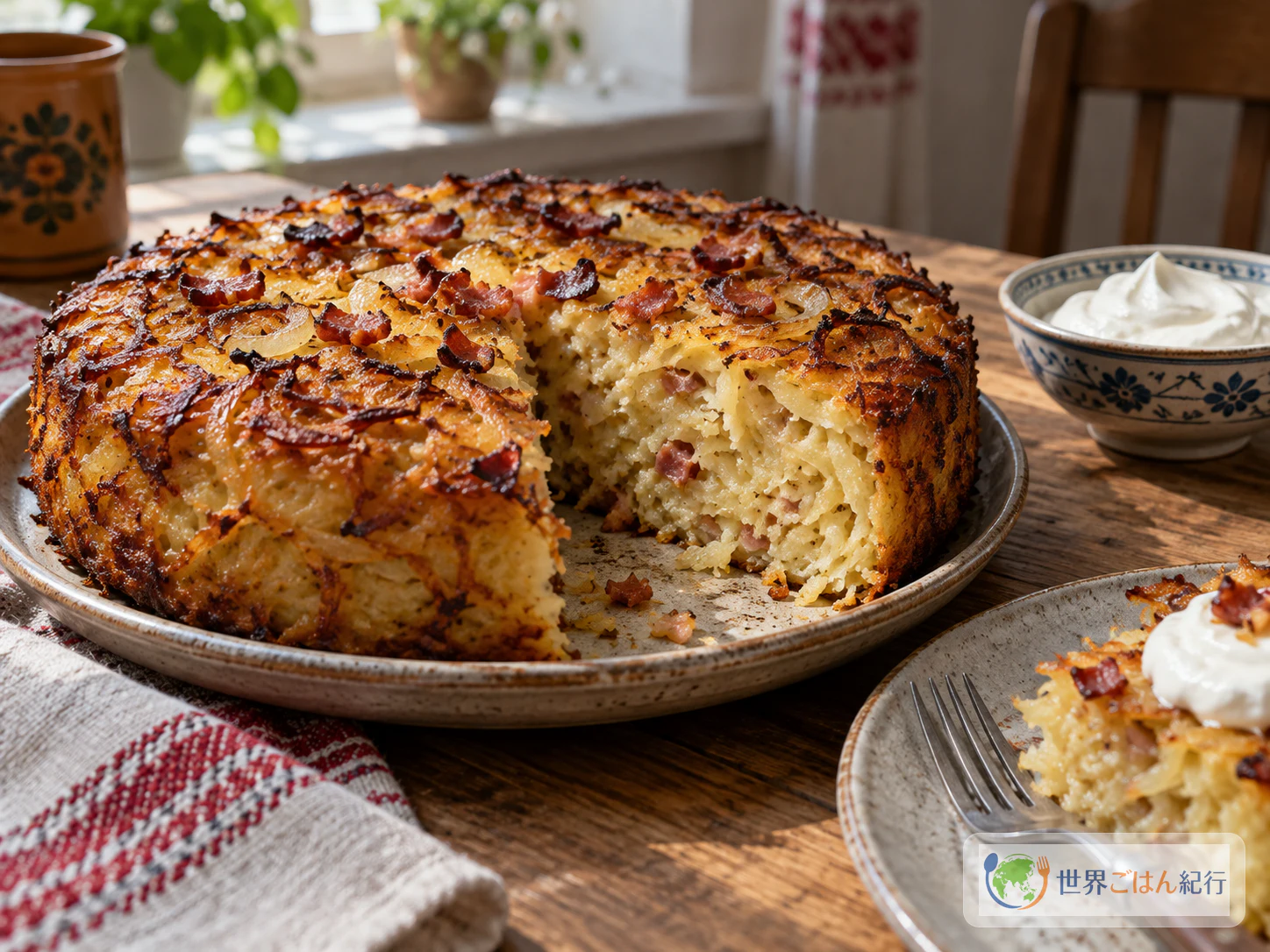
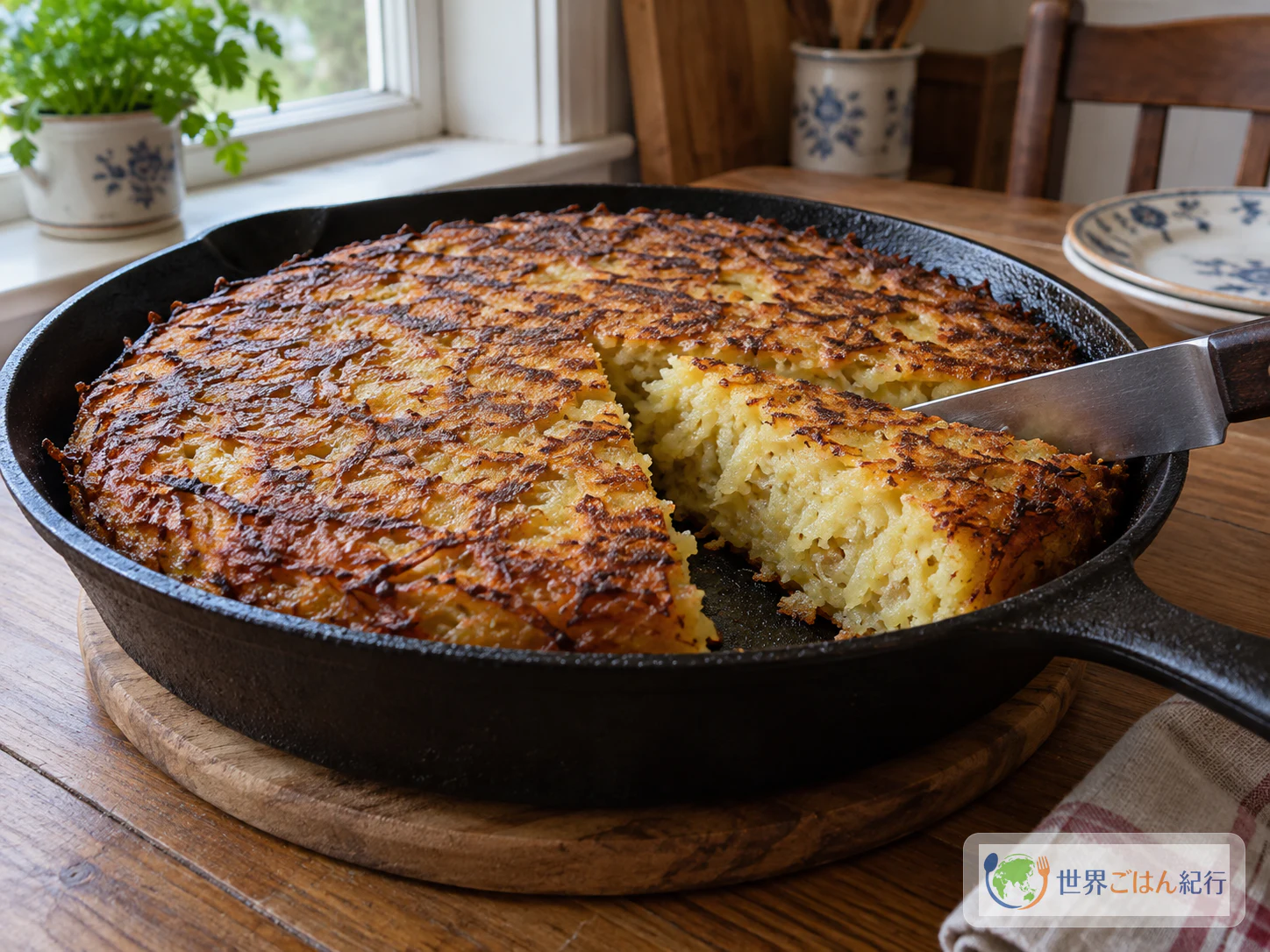
Potato babka (картофельная бабка, kartofelnaya babka; also бульбяная бабка, bulbyanaya babka) is a savory Belarusian potato dish. Finely grated raw potato is mixed with crisp bacon and onion fried in its fat, spread into a greased pan, and baked until the top is browned. It is cut into portions and eaten with sour cream, and the inside stays soft and moist rather than firm like a cake.
The Belarusian publication Nashaniva describes the dish as grated potato with salo or bacon and fried onion, a dish once cooked in a traditional masonry stove (печь) and now made in an ordinary oven. The recipe below follows the version Nashaniva publishes, keeping its amounts, oven temperatures and times. It is one published example, not the only way families make it.
"Babka" is also the name of a sweet yeasted cake, often with raisins. This article is about the savory potato dish. It also differs from draniki: both use grated potato, but draniki are cooked as small pancakes in a frying pan, while babka is baked in one pan and cut into portions.
For more dishes from the same table, see the Belarus country page.
What Potato Babka Is: Grated Potato at the Center of the Table
Visit Belarus, the country's tourism site, describes Belarusian cooking as built around potatoes, meat and dairy, and notes that grated potato appears in several dishes, potato babka among them. Babka sits beside draniki in that family: the same grated potato, but baked as one whole round rather than fried in small portions.
Similar grated-potato bakes exist in neighboring regions, so this article does not treat babka as having a single origin or as an exclusively national dish. Recipes also differ from home to home. A user-submitted version on the Russian baking forum Hlebopechka.ru, for example, adds hot milk, carrot and garlic, and Povar.ru publishes another set of proportions. Readers commenting on the Nashaniva recipe also disagree about what is authentic. The version here is one clear, published recipe to start from.
Ingredients: The Published Proportions, with Ranges Kept
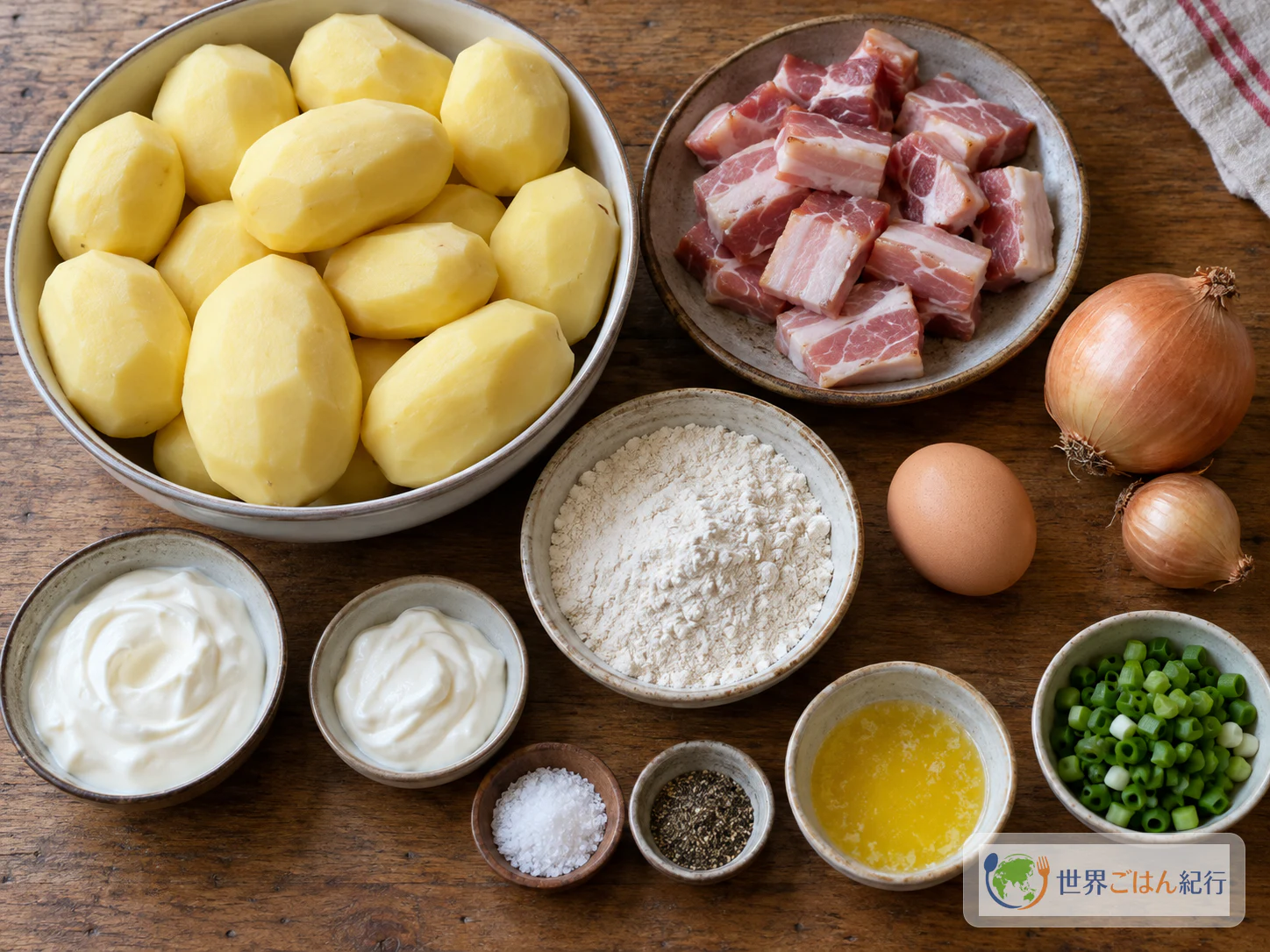
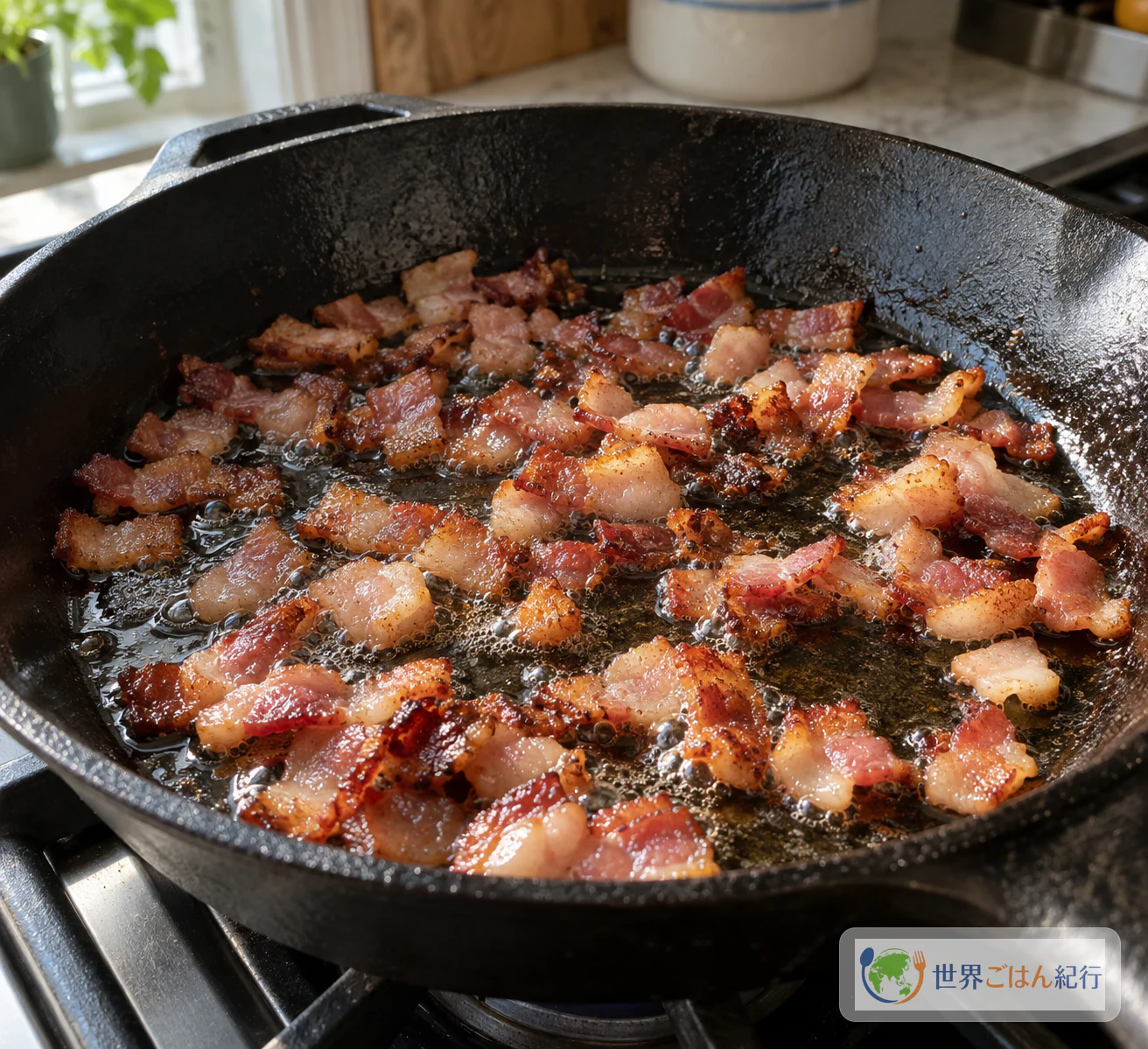
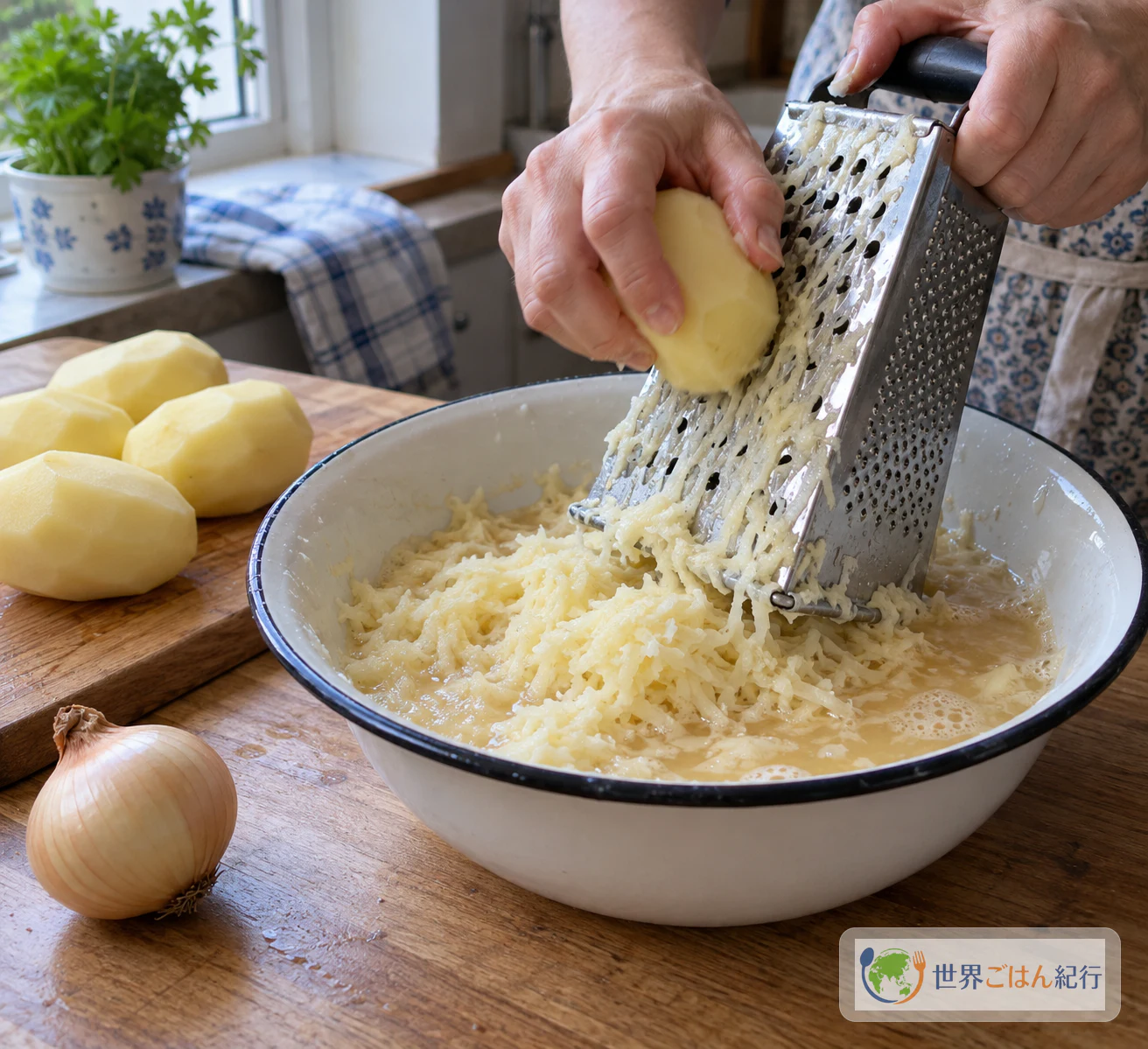
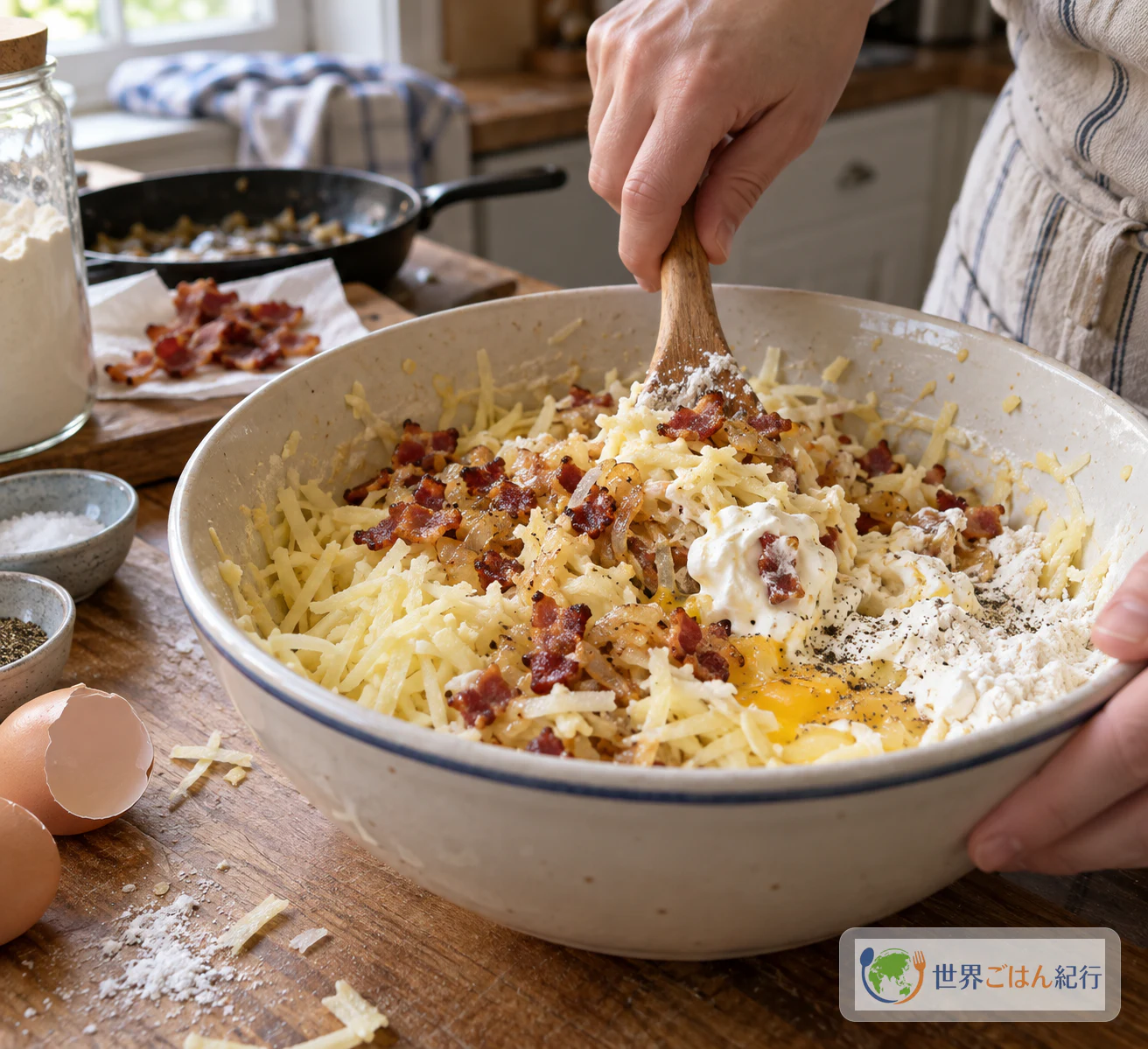
The published recipe does not state a number of servings, so none is given here. It gives the potato and bacon as ranges, and those ranges are kept. The photos in this article show the lower end, 1.5kg of peeled potato and 250g of bacon, as an example only.
Equipment
- 25 cm cast-iron skillet (used both for frying and as the baking pan), or an ovenproof dish
- Fine grater (a food processor also works)
- Large mixing bowl
- Spoon or spatula for mixing
- Pastry brush
- Food thermometer, for checking the center
Choosing Ingredients and Substitutions
Potatoes. The published recipe names no variety. Floury potatoes are one reasonable choice, but that is a suggestion, not part of the original.
Bacon. The 250–450g range is wide on purpose; choose within it to taste. Bacon varies in fat and salt. The method relies on leaving 1–2 tbsp of rendered fat in the pan, and very lean bacon may not give that much, so bacon with some visible fat makes it easier to follow the method as written. Check the label for added ingredients.
Flour. No type is specified. Plain (all-purpose) flour is a sensible choice.
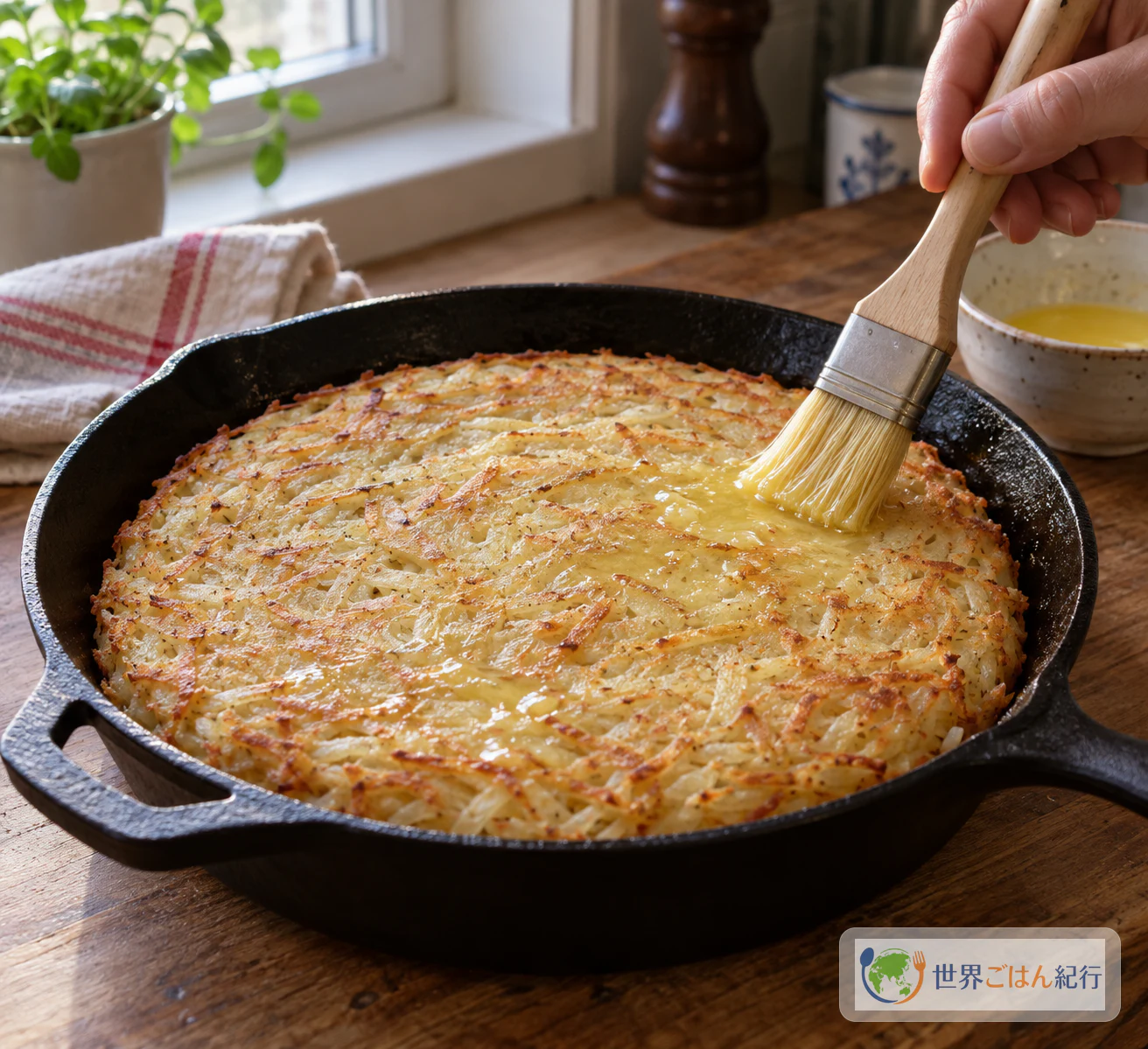
Finishing fat. The published recipe offers bacon fat, melted butter or sunflower oil for brushing the top. This version uses melted unsalted butter; the unsalted part is a choice made here, not part of the original.
Small onion. It is optional. Keep its role separate from the large onion: the large one is fried, the small one goes in raw and grated.
Not part of this version. Milk, garlic, carrot and herbs appear in other home recipes but not in this one, so they are left out.
This recipe contains egg, dairy (sour cream in the batter and to serve, plus butter for the top), wheat (flour) and pork (bacon). Check bacon labels for any added ingredients.
Method: Fry First, Grate, Mix, Then Bake in Two Stages
The published recipe grates the potatoes first and then fries the bacon and onion. Here the frying comes first, so the grated potato spends less time sitting in the air before it is mixed and goes into the oven. This is a change in timing only; the ingredients and oven stages are the same.
Getting It Right: Wet Potato, Fat Used Once, Two Oven Stages
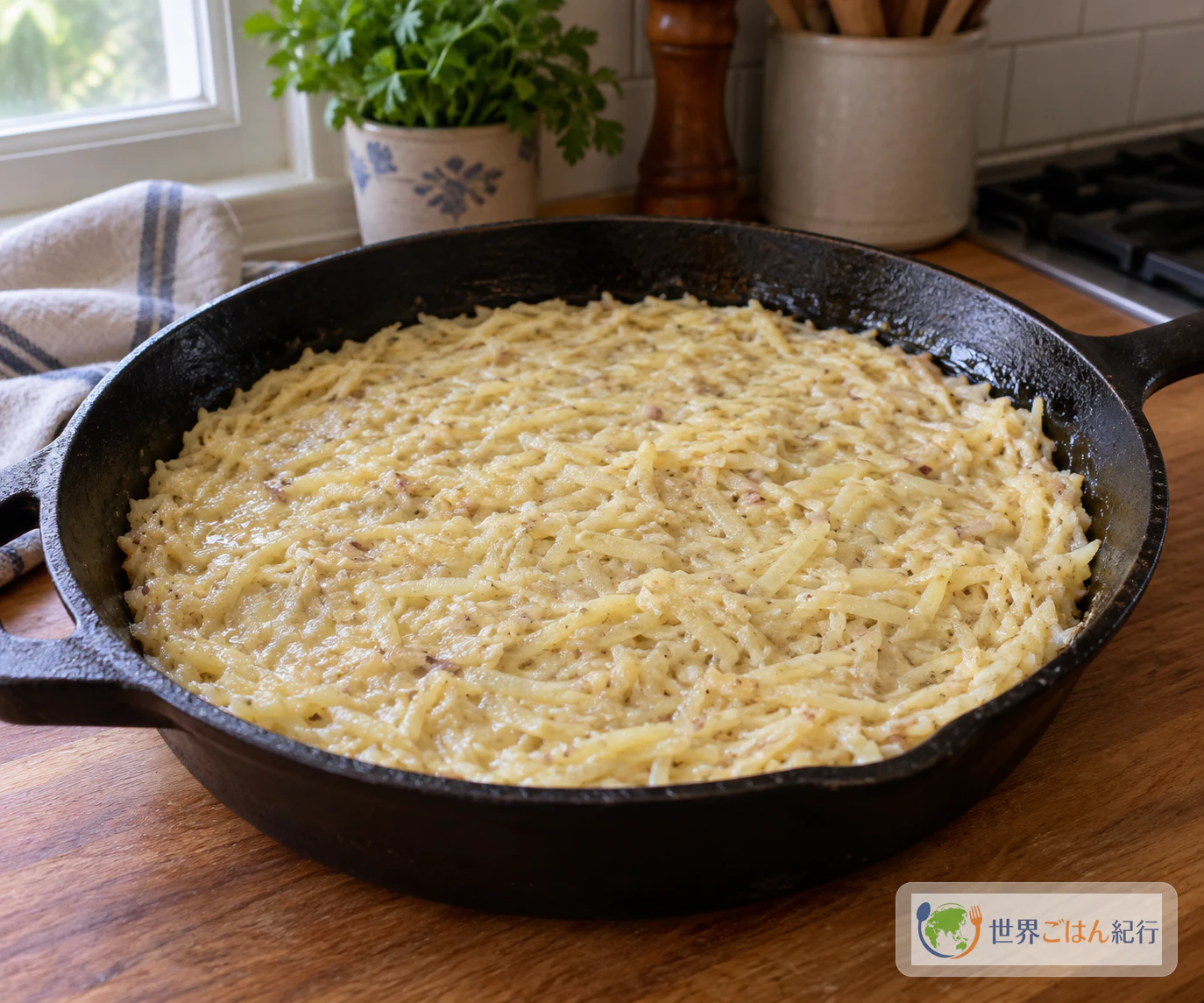
Keep the liquid. The grated potato will look wet, and that is how the recipe is written. Squeezing it out turns it into a different mixture from the one the amounts were designed for.
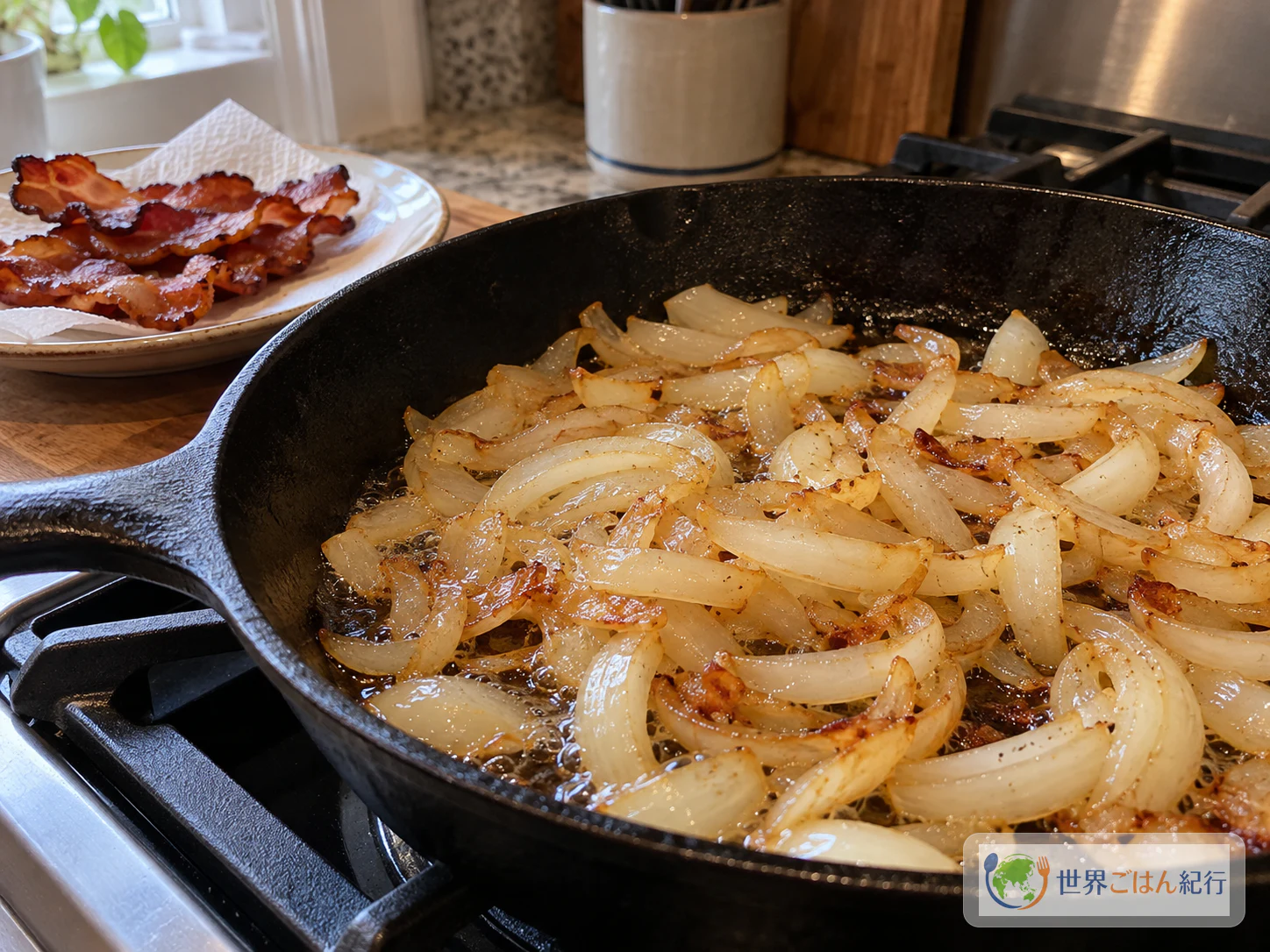
Use the fat once. The 1–2 tbsp of bacon fat left in the pan fries the onion and then greases the pan. It is not two separate portions, and the excess poured off at step 3 doesn't go into the batter.
Respect the two stages. The long bake at 180°C cooks the potato through; the brush of butter and the short bake at 230°C bring the top to golden and crisp.
Mind the pan. The 25 cm cast-iron skillet is the pan named in the recipe. A dish of another material or size may brown and cook differently, and the published times are not guaranteed for it.
| What you see | Likely reason | What to do |
|---|---|---|
| The batter looks very wet | The recipe keeps the potato liquid | That is expected. Don't squeeze or drain it |
| Top is browned but you're unsure about the center | Color shows the surface, not the inside | Check for 75°C at the center for at least 1 minute; keep baking if needed |
| Top still pale near the end | The browning happens mostly in the final hot stage | Make sure the top was brushed with fat and the oven reached 230°C |
| The cut portion slumps | Cut too soon, or the soft interior | Rest 10–15 minutes before cutting. A soft, moist inside is normal |
| Too salty | Salty bacon | Next time use less salt, within the "to taste" allowance. Taste only after cooking |
| Little fat left after frying the bacon | Lean bacon | Choose bacon with more visible fat next time |
Variations Within the Published Recipe
- More or less bacon. Anywhere in the 250–450g range. More bacon also brings more salt, so adjust the salt to taste.
- Finishing fat. Bacon fat, melted butter or sunflower oil, as the published recipe allows.
- Without the small onion. It is optional; the large fried onion stays.
- Other households' versions. Recipes such as the Hlebopechka.ru version with milk, carrot and garlic, or the Povar.ru version with different proportions, are separate recipes. If you try them, follow each one on its own terms rather than mixing their amounts, temperatures or times into this one.
Serving and Leftovers
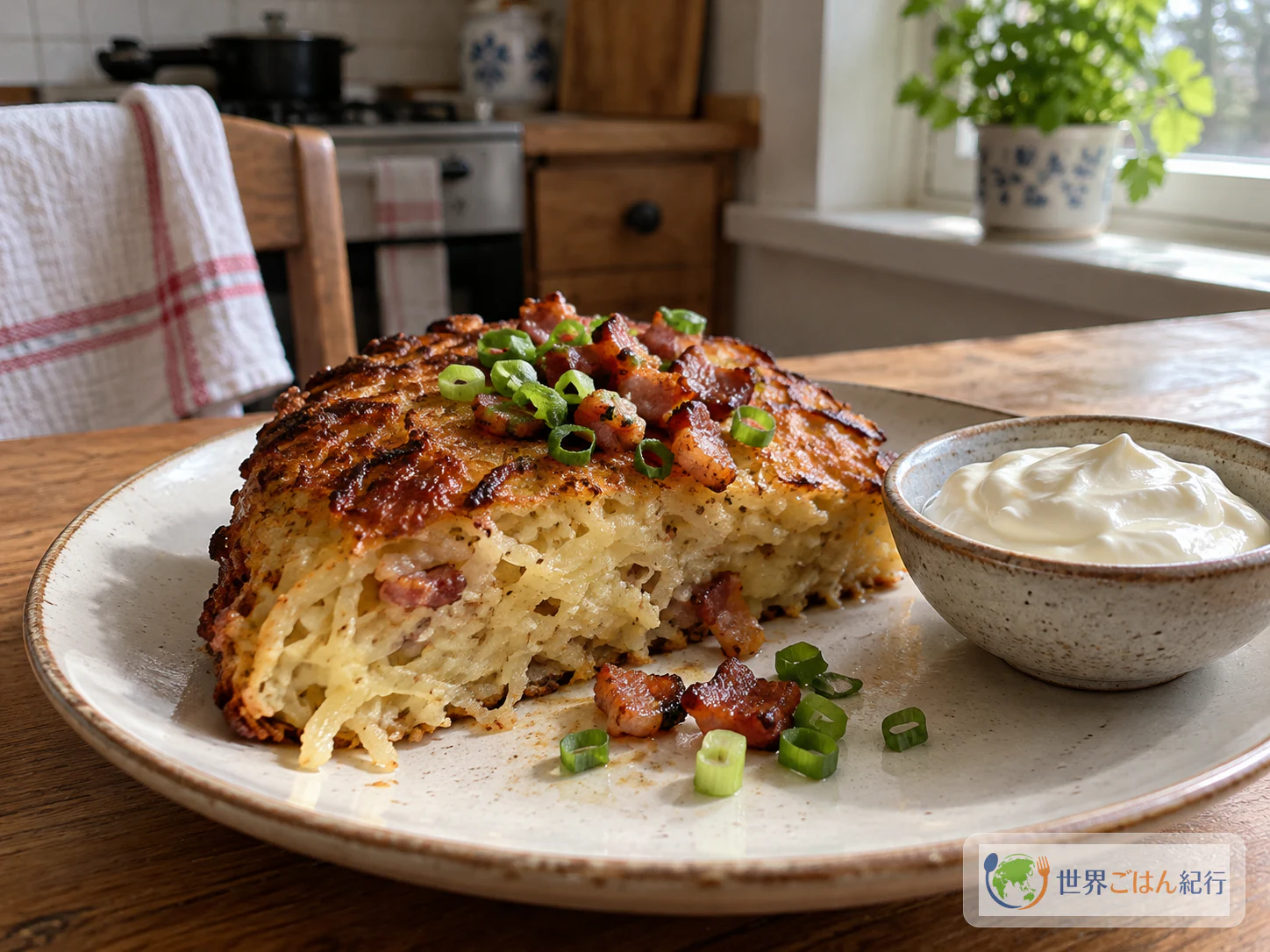
Serve the babka hot, topped with the reserved bacon and green onion, with sour cream on the side. The published recipe recommends eating it straight away.
If you keep any, divide it into shallow containers, cool it quickly and refrigerate. When reheating, the general household guidance from Japan's Ministry of Health, Labour and Welfare is to heat to 75°C or above. How long this babka keeps, and how its texture holds up after reheating, are not established in the sources for this recipe.
Frequently Asked Questions
Is potato babka the same as sweet babka?
No. The sweet babka is a yeasted cake, often with raisins. Potato babka is a savory bake of grated raw potato with bacon and fried onion, served with sour cream.
How is it different from draniki?
Both are made from grated potato. Draniki are cooked as small pancakes in a frying pan; babka is baked in one pan in the oven and cut into portions.
Should I squeeze the water out of the grated potato?
No. The published recipe does not drain or squeeze the potato, and removing the liquid would change the proportions.
Can I bake it in something other than cast iron?
Yes, an ovenproof dish works. Grease it with the bacon fat. Browning and cooking may differ from the 25 cm cast-iron skillet in the recipe, so don't rely on the times alone; check the color and the center temperature.
Why are the potato and bacon given as ranges?
The published recipe gives them that way: 1.5–2kg of peeled potato and 250–450g of bacon, with no stated number of servings. The ranges are kept here so you can choose within them.
Sources
- Наша Ніва (Nashaniva), "Картофельная бабка." The recipe followed here: ingredients and amounts, 180°C for about 45 minutes then 230°C for 10–15 minutes, the resting time, and the note that the dish was once cooked in a stove and is now made in an oven. The page links to Olga's Flavor Factory, but that linked page could not be opened, so only the recipe as published on Nashaniva is used. https://nashaniva.com/ru/329797
- Visit Belarus, "Features and Dishes of Belarusian cuisine." Background on potatoes, meat and dairy in Belarusian cooking, grated-potato dishes, and the introduction of potato babka. https://www.visit-belarus.com/en/dishes_belarusian_cuisine/
- Хлебопечка.ру, "Картофельная бабка (в горшочке либо в пиццепечке)." A user-submitted home version with grated raw potato, meat and fried onion, plus milk, carrot and other additions; used only as a comparison. https://hlebopechka.ru/a/index.php?topic=491377.0
- Повар.ру, "Картофельная бабка." A separate home recipe using bacon, onion, grated potato, egg and sour cream; used only as a comparison, not for amounts or baking. https://povar.ru/recipes/kartofelnaya_babka-14280.html
- Ministry of Health, Labour and Welfare (Japan), "家庭での食中毒予防" (Preventing food poisoning at home). General household guidance: cooking to 75°C at the center for at least 1 minute, avoiding cross-contamination, cooling leftovers quickly in shallow portions, and reheating to 75°C or above. https://www.mhlw.go.jp/stf/seisakunitsuite/bunya/kenkou_iryou/shokuhin/syokuchu/01_00008.html


