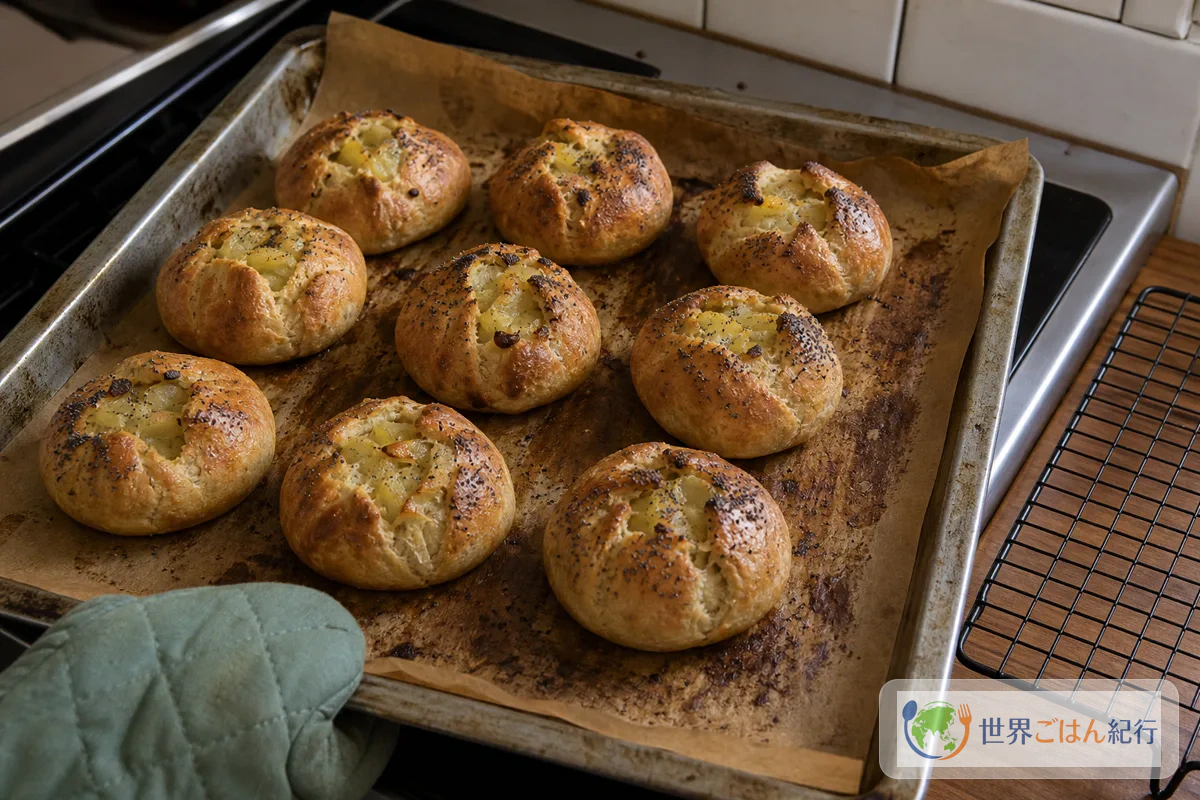
The story of knish: break it open and the sweetness of onion comes out
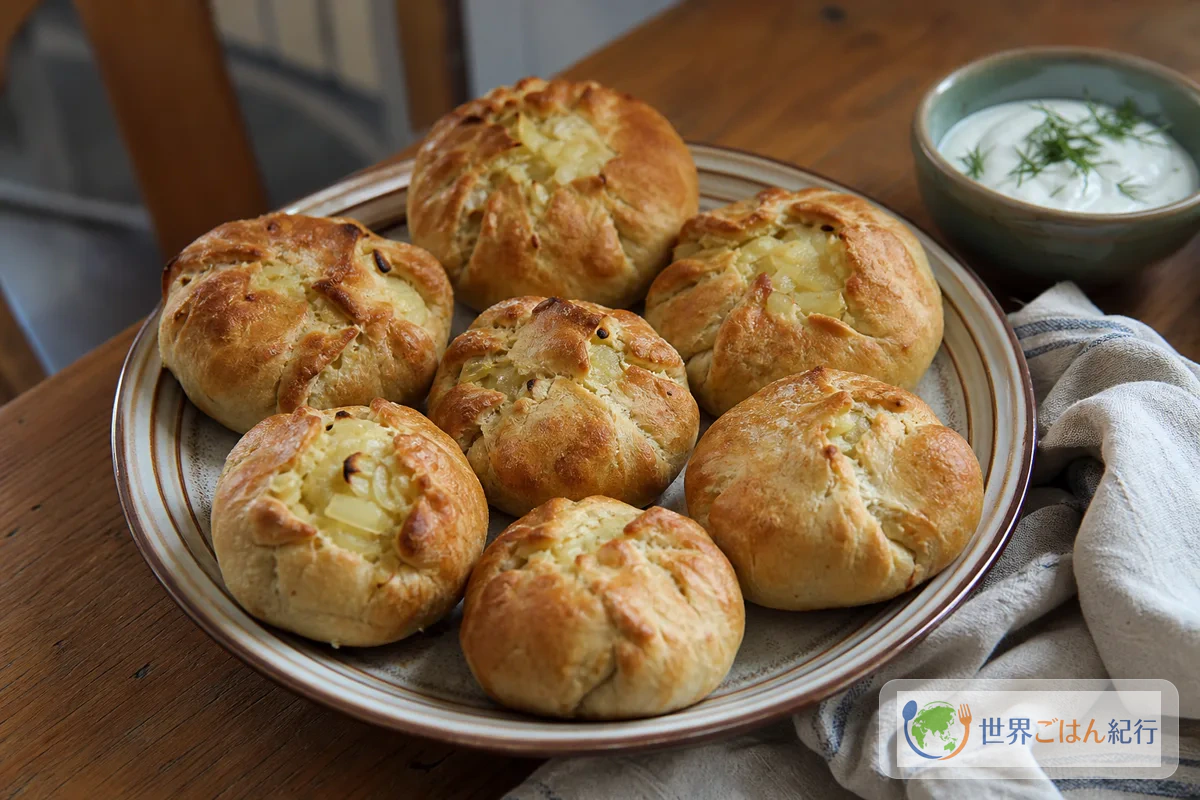
A knish fresh from the oven is not a showy dish. Inside a glossy brown dough is just a white filling of potato and onion. Break one in half, though, and the sweet smell of cooked onion mixes with the steam, and your kitchen moves a little closer to an Eastern European bakery.
Knish (קניש) is a baked or fried pastry that spread from the food culture of Ashkenazi Jews in Eastern Europe. Potato, onion, buckwheat kasha, meat or cheese is wrapped in thin dough and baked or fried. Today it is mostly talked about as a snack from New York's Jewish delis and street carts, but behind it lies the flour-and-dough cooking of the area around Belarus, Ukraine, Poland and Lithuania.
Some sources present it as a dish from Belarus. But knish is more accurately seen through the movement of Eastern European Jews and their home cooking than through modern borders alone. Here we take the shared kitchen sense of Belarusian machanka and Polish pierogi, "potato, onion and thin dough," as a guide, and shape it into a round knish that is easy to make in a home oven.
What to protect is a thinly rolled dough, well-salted potato, onion cooked until sweet, and the feel of a snack you can hold in your hand after baking. Roll the dough too thick and it turns heavy, like potato bread. If the filling is under-salted, the whole thing blurs.
Ingredients: serves 4, about 12 knishes
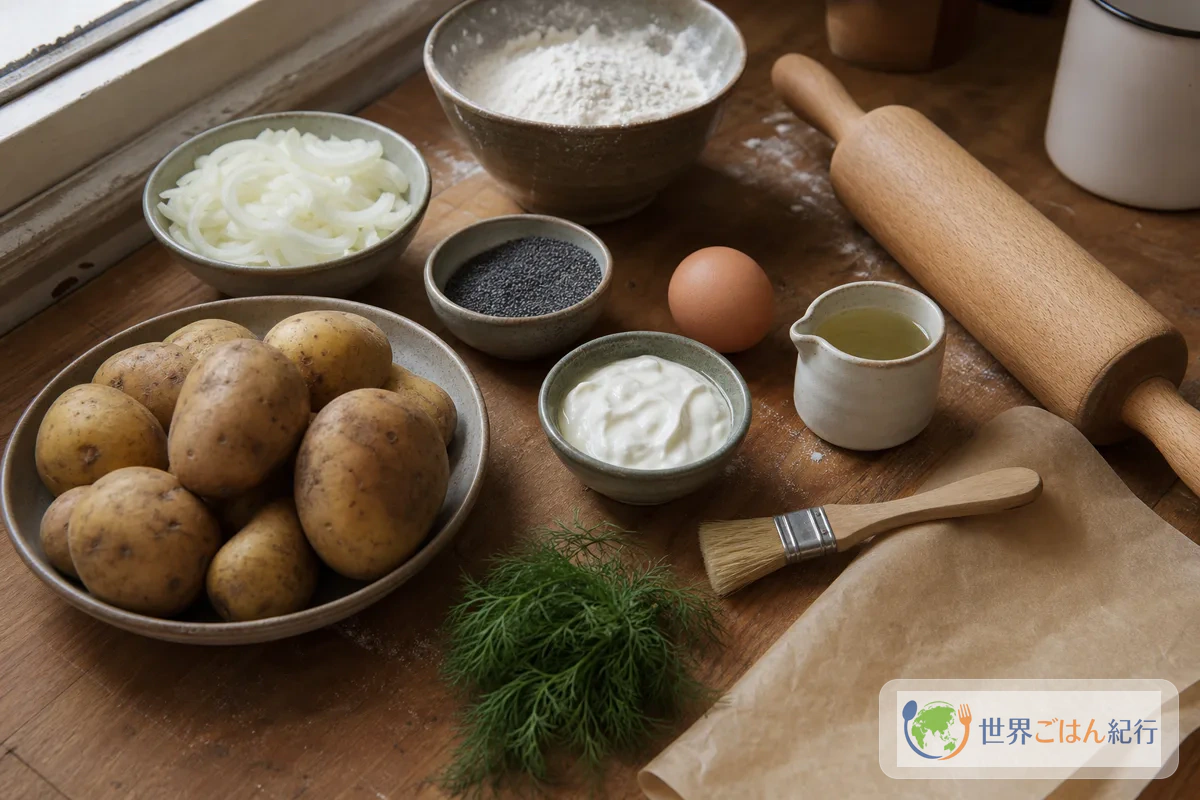
This recipe makes 12 round potato knishes. The dough is made with oil and rolls out thin, and the filling is led by potato and onion. It is built without dairy, but serving it with sour cream brings it closer to an Eastern European table.
This recipe uses wheat and egg. If you serve it with sour cream it also contains milk. Use poppy seeds sold for food use, and avoid them if you react to seeds.
Where home cooks hesitate
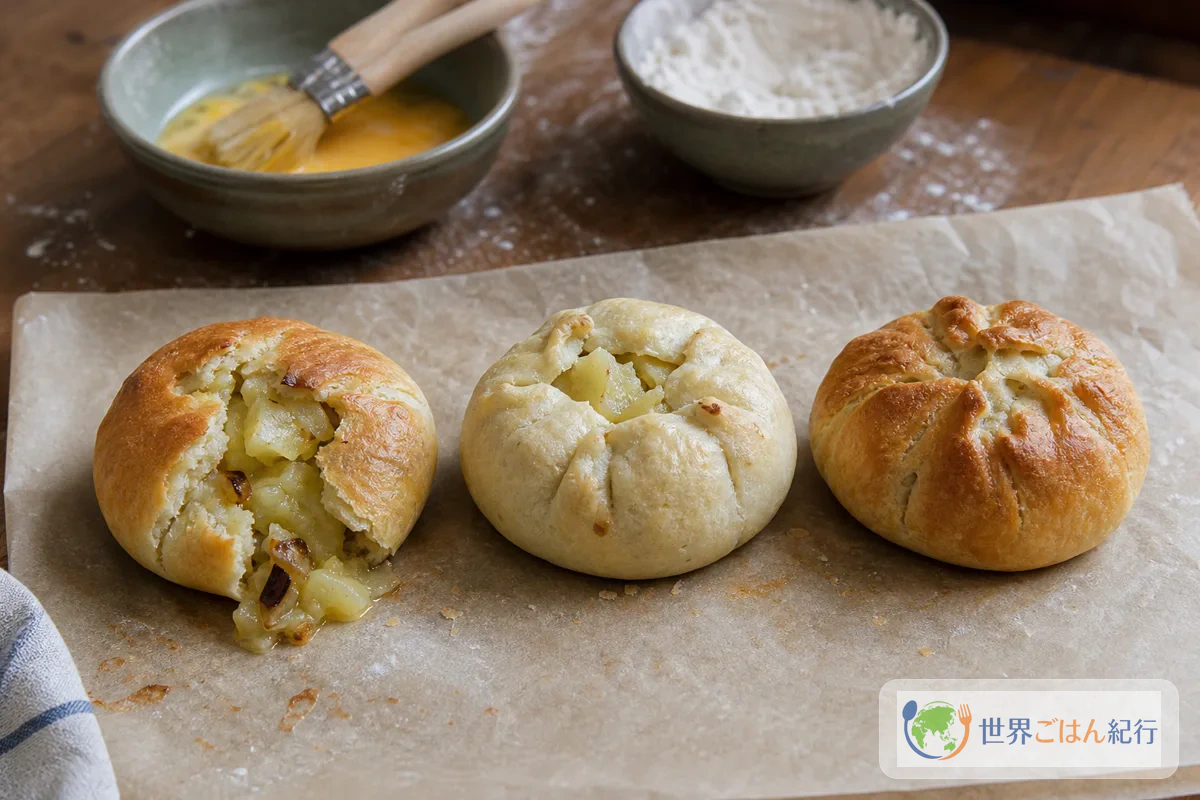
Because the ingredients are familiar, knish makes it easy to wonder where to lean toward the traditional. You can make it with ordinary supermarket ingredients, but if the potato is a mild mash, the baked result is vague. The most important things are to sweeten the onion without scorching it and to salt the potato properly.
| Doubt | To be closer to the original | To make it easier at home |
|---|---|---|
| Fat | Chicken fat or butter for aroma | Rice bran oil for lightness, and cook the onion longer for sweetness |
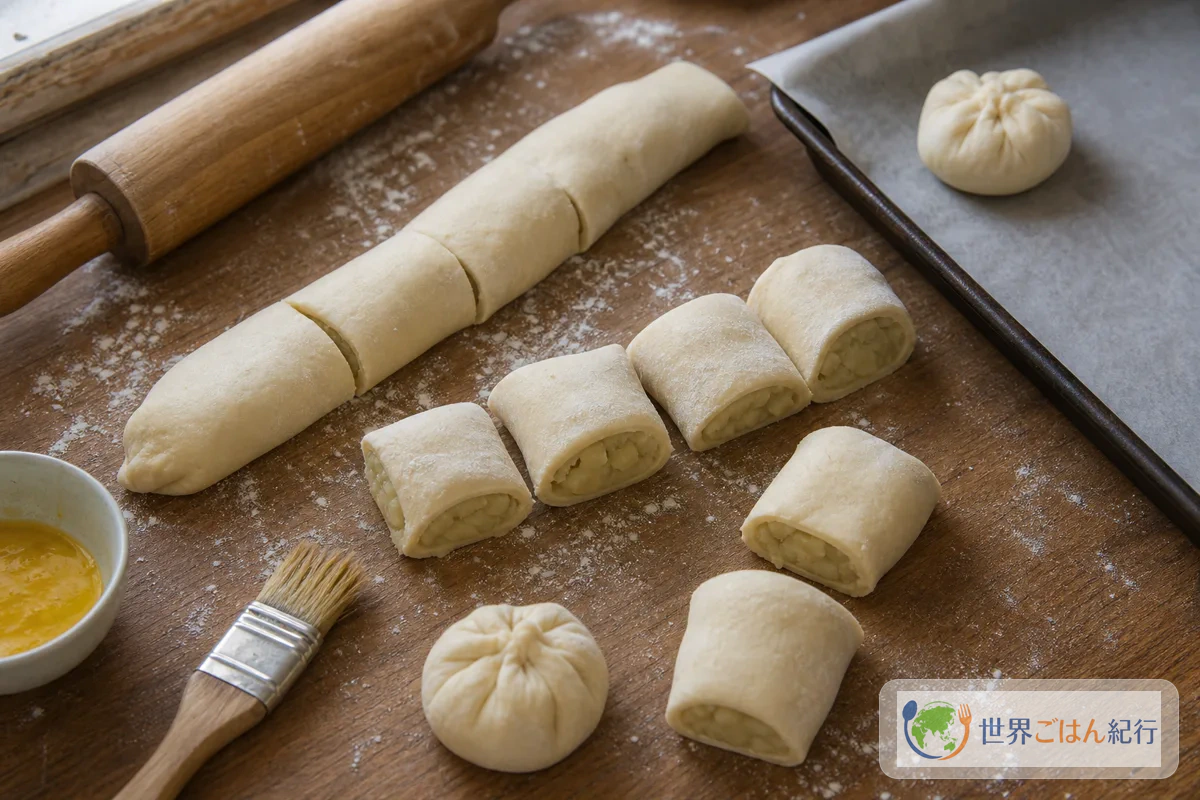
| Shape | Wrap into rounds and stand them upright | Roll into a log, cut, and pinch the ends |
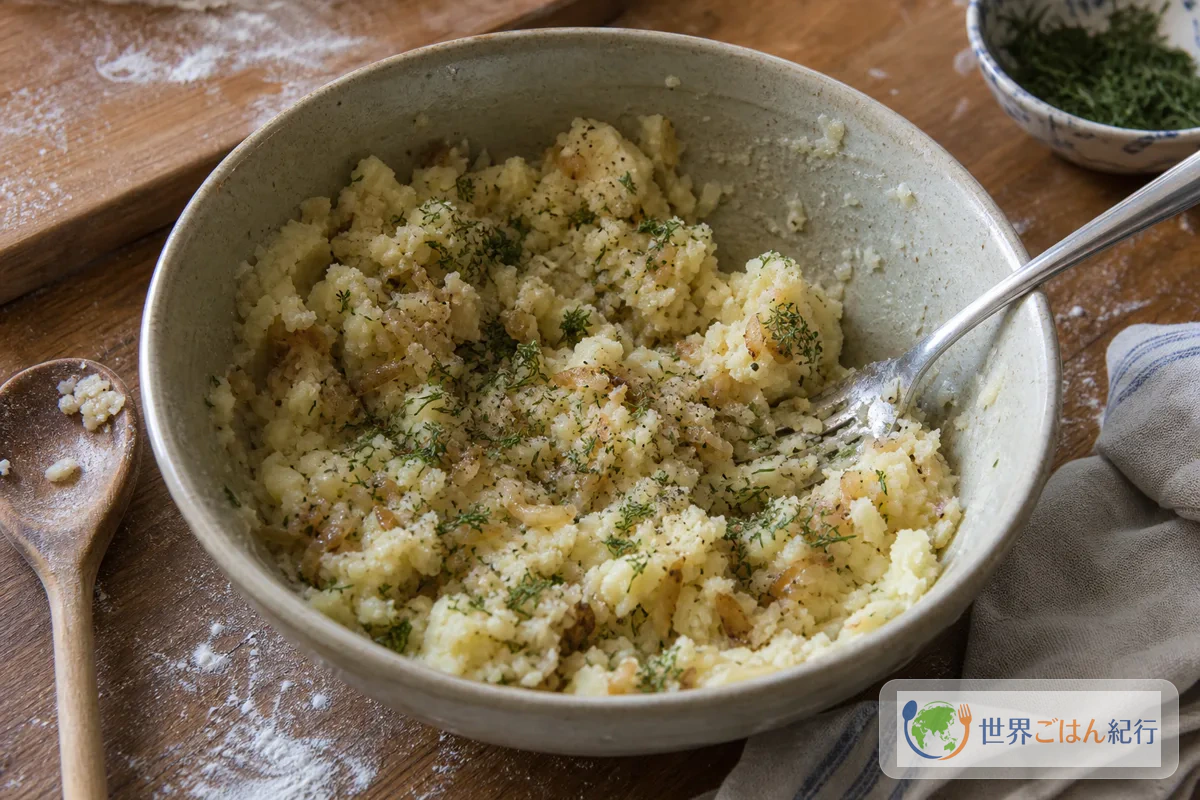
| Filling | Make potato, onion and pepper bolder | Add a little dill so the aroma lasts when it cools |
| Finish | Serve with mustard or sauerkraut | Whole-grain mustard, pickles and sour cream as stand-ins |
| Baking | Higher heat to dry the surface | Bake at 190 °C and move to the upper rack for the last 2 minutes |
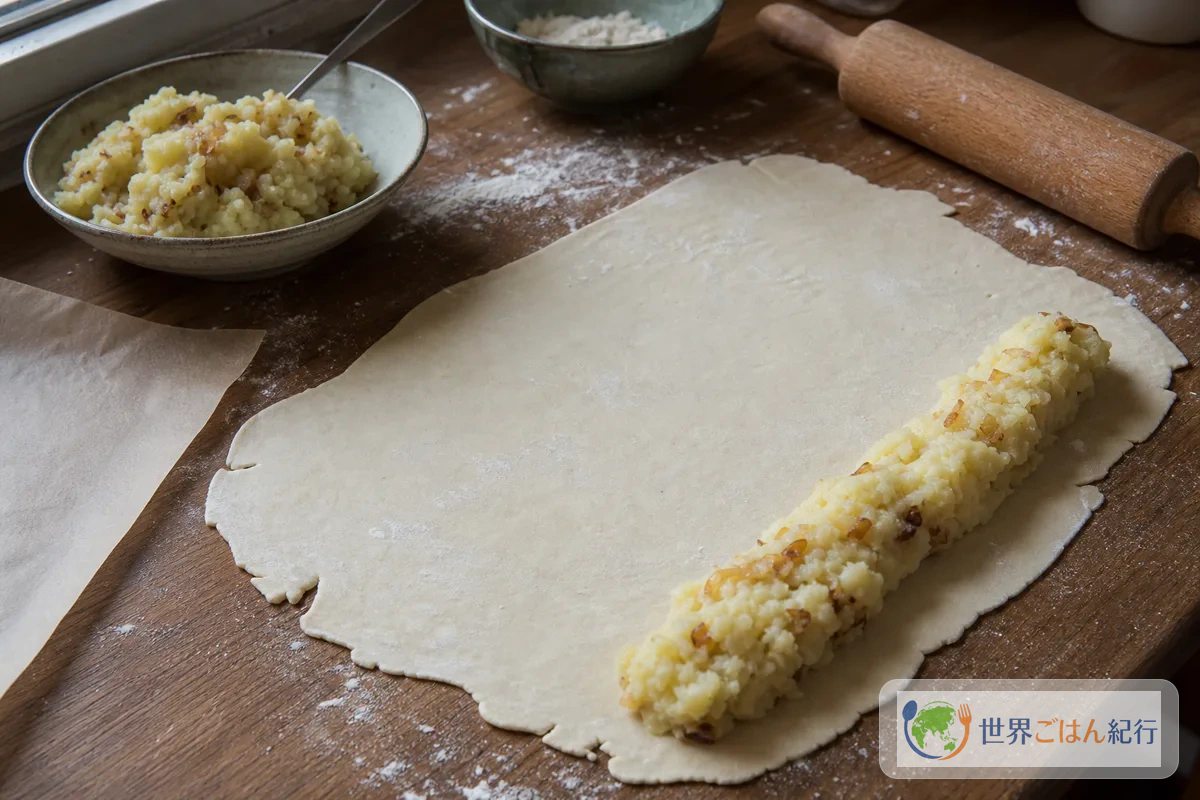
Aim for a dough a little thicker than a dumpling wrapper and much thinner than bread dough. Some traditions roll it so thin you can see through it, but on a home counter it tears easily. Start at around 1.5 mm, and stop where you can still faintly make out the shape of the potato once it is wrapped.
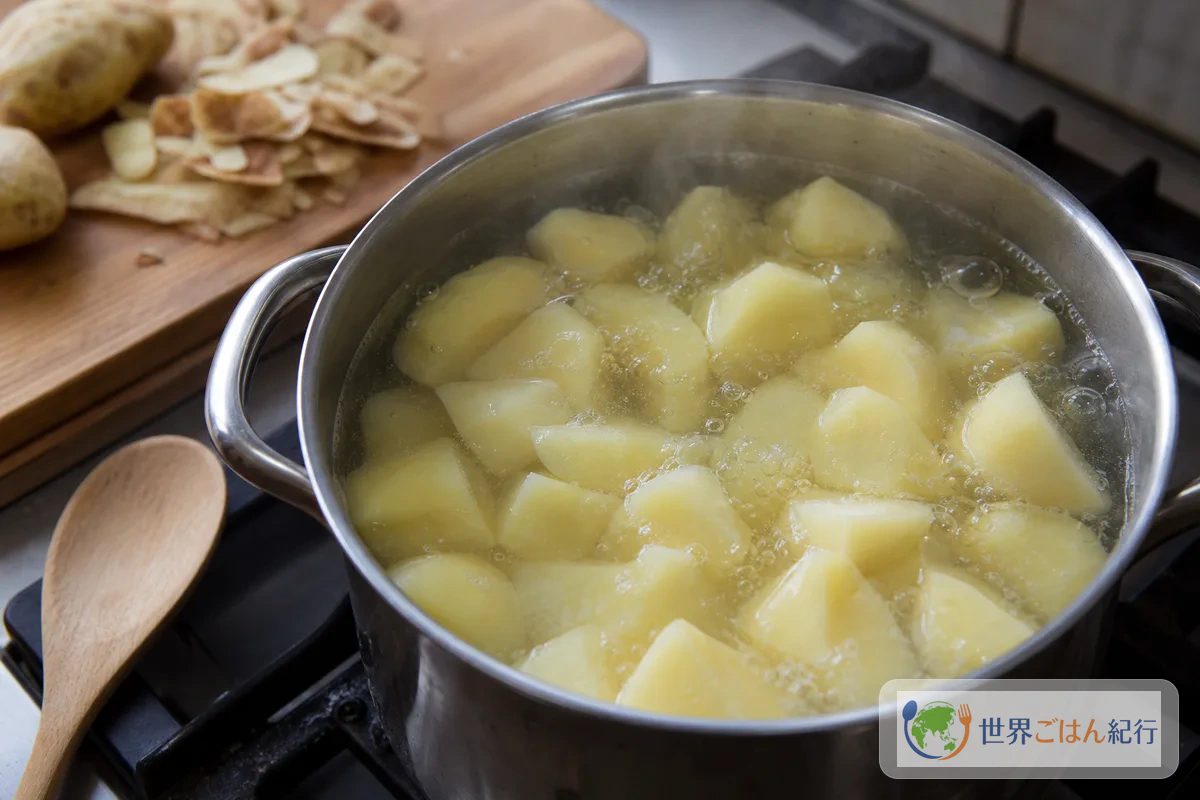
Mash the potatoes while hot. If they cool first, lumps remain and their corners tear the dough as you roll. On the other hand, if you make them as smooth as potato cream, the plain character that makes it knish disappears. A few small bits remaining is just right.
Shopping notes: add just the tools and aromatics
Potatoes, onions, eggs and flour are enough from any grocery. What is worth buying extra is a rolling pin to roll the thin dough evenly, a heavy skillet for slowly cooking the onions, and dill, which also serves as a finish and a side. Buy ordinary potatoes and sour cream locally, and add only the tools and aroma ingredients; that makes the shopping priorities clear.
If you keep cooking thin-rolled dishes, a rolling pin changes the work. It also serves placinta and burek, so it pays for itself fastest for people who go on to make more Eastern European dough dishes.
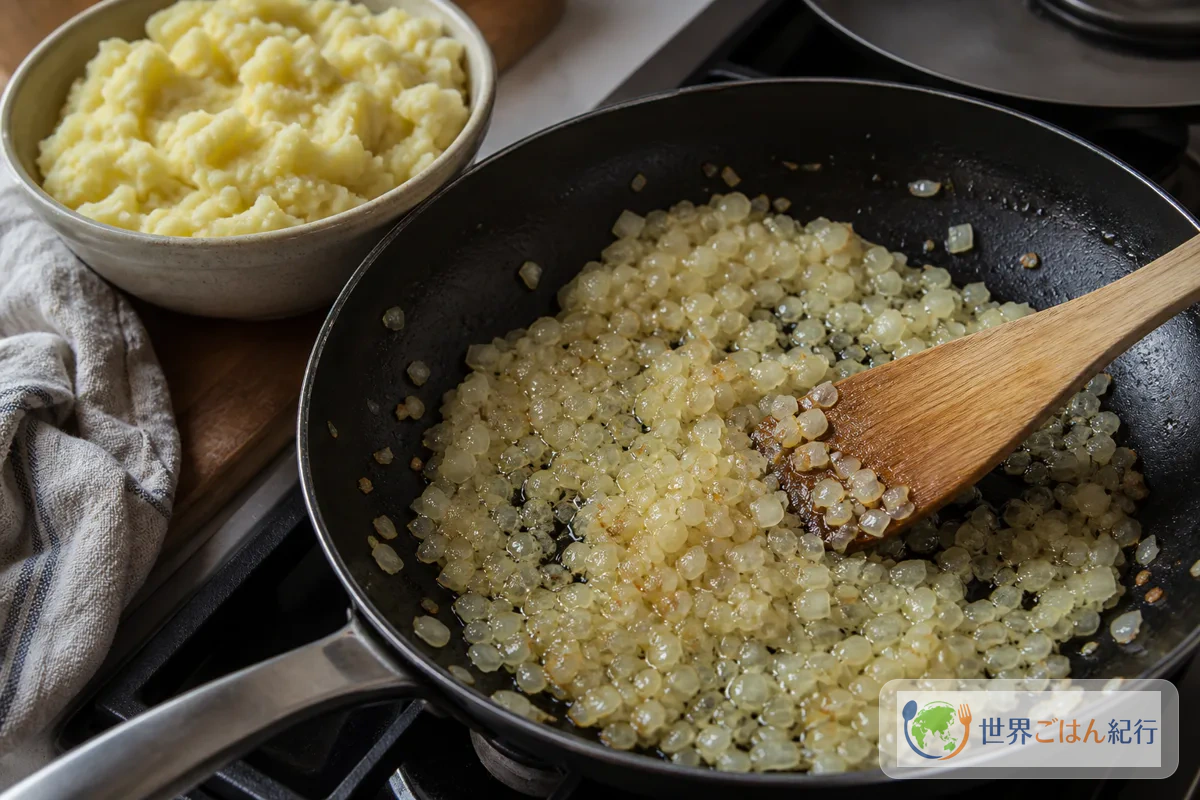
Cook the onion until sweet, never scorched. In a thin pan only one spot browns, so a heavy skillet steadies the filling. It also helps when you re-bake leftover knish the next day.
Dill is not essential. But in a household where potato and onion alone feel heavy, a little green aroma makes it easier to keep eating. Leftovers can go into the egg-and-butter side for karjalanpiirakka, or an Eastern-European-style cucumber salad.
Method: roll thin and seal the potato inside
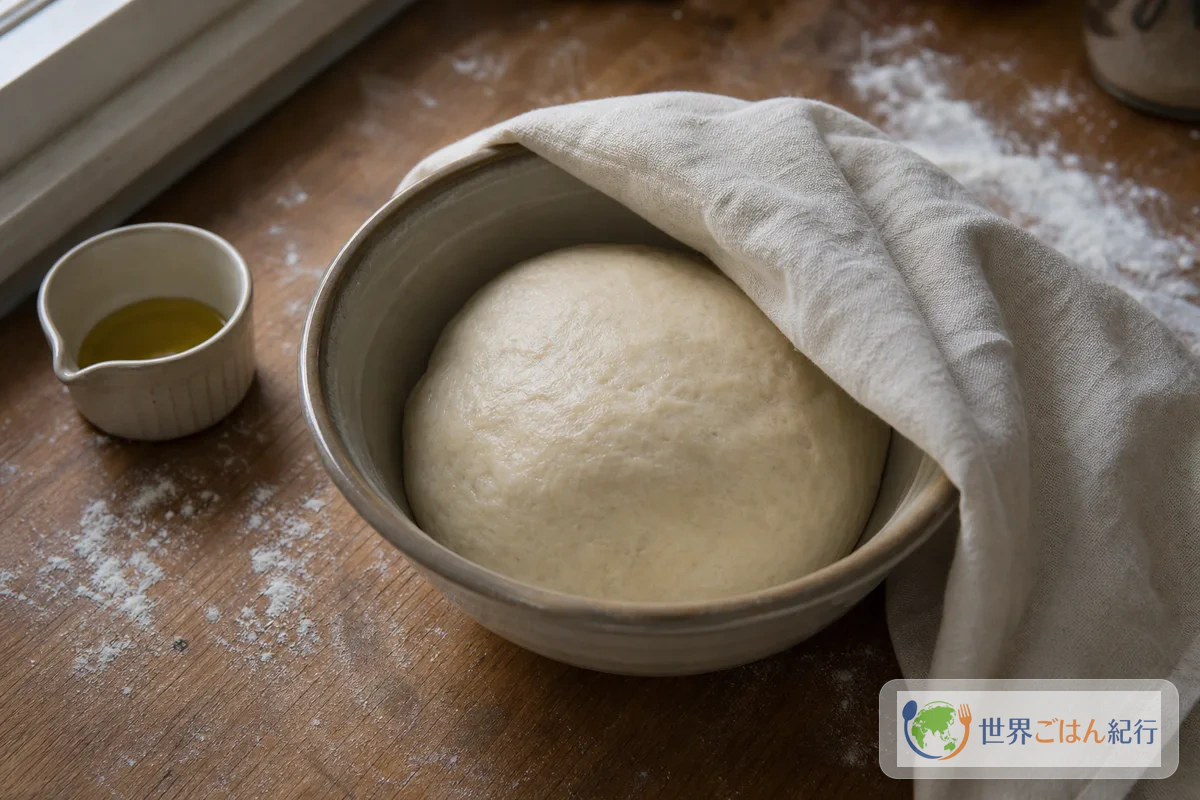
The order of steps matters for knish. While the dough rests, make the potato and onion, and wrap only after the filling has cooled a little. Hot filling softens the dough and makes the seams open.
Serving, storage and menu
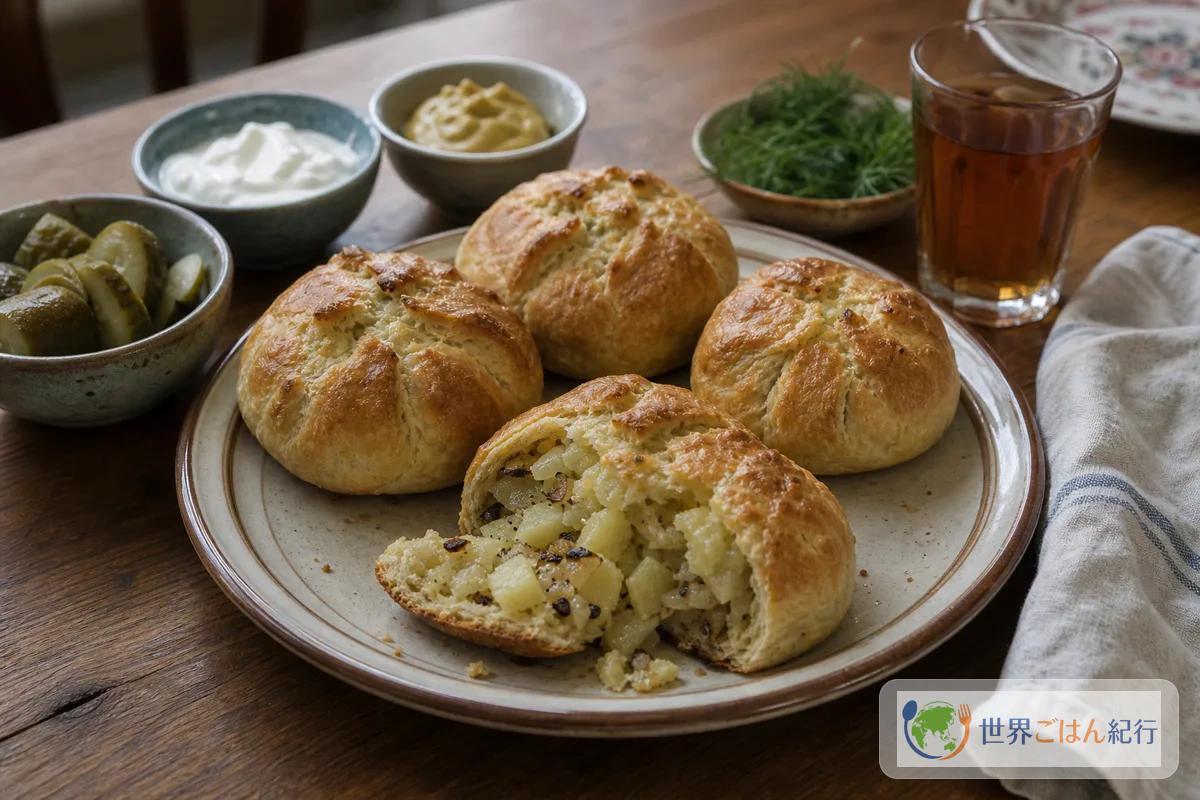
Knish can be eaten straight from the oven. At the table, small dishes of whole-grain mustard, pickles, sauerkraut and sour cream cut the heaviness of the potato. A quick cucumber pickle or vinegared cabbage works just as well.
When serving it as the main, give 2–3 knishes with a soup. A sour borscht or a clear mushroom soup is easy to pair. To compare with other wrapped Eastern European dishes, move on to pierogi, boiled then finished in butter, achma, layered thin dough, and burek, which rolls meat in long tubes, and you see how the texture differs within the same flour-based family.
| Serving | Pair with | Good for |
|---|---|---|
| Snack | Whole-grain mustard, pickles, tea | Fresh from the oven at lunch |
| Dinner | Borscht, mushroom soup, vinegared cabbage | A day when potato is the staple |
| Make-ahead | Refrigerated knish, re-crisped in a pan | Next-day breakfast or lunch box |
| Eastern European spread | Machanka, pierogi, sauerkraut | Several dishes side by side to compare |
Refrigerated, it keeps about 3 days. Let it cool, wrap each one in plastic, and put them in a container. To reheat, use a toaster oven at 180 °C for 6–8 minutes, or a lightly oiled pan over medium-low heat, 2 minutes per side. In the microwave alone the dough turns limp, so warming 30 seconds at 600 W and then moving it to the toaster oven helps it recover through to the center.
To freeze, wrap after baking once fully cooled. To eat, thaw half a day in the refrigerator, then toaster oven at 180 °C for 8–10 minutes. The dough is a little drier than before freezing, so mustard or sour cream makes it easier to eat.
Where it goes wrong
Because the ingredients are simple, the causes of failure are clear. They fall into four groups: the dough tears, the seam opens, the flavor is dull, the color is pale.
| What happened | Cause | Fix |
|---|---|---|
| Dough tears | Not rested enough, filling hot, big potato lumps | Rest the dough 30 minutes, cool the filling, mash large potato pieces |
| Seam opens | Overfilled, too much flour at the edge | Brush off edge flour, use a little less filling and pinch |
| Flavor is weak | Not enough salt in the potato | Taste while warm and salt until it seems a little strong |
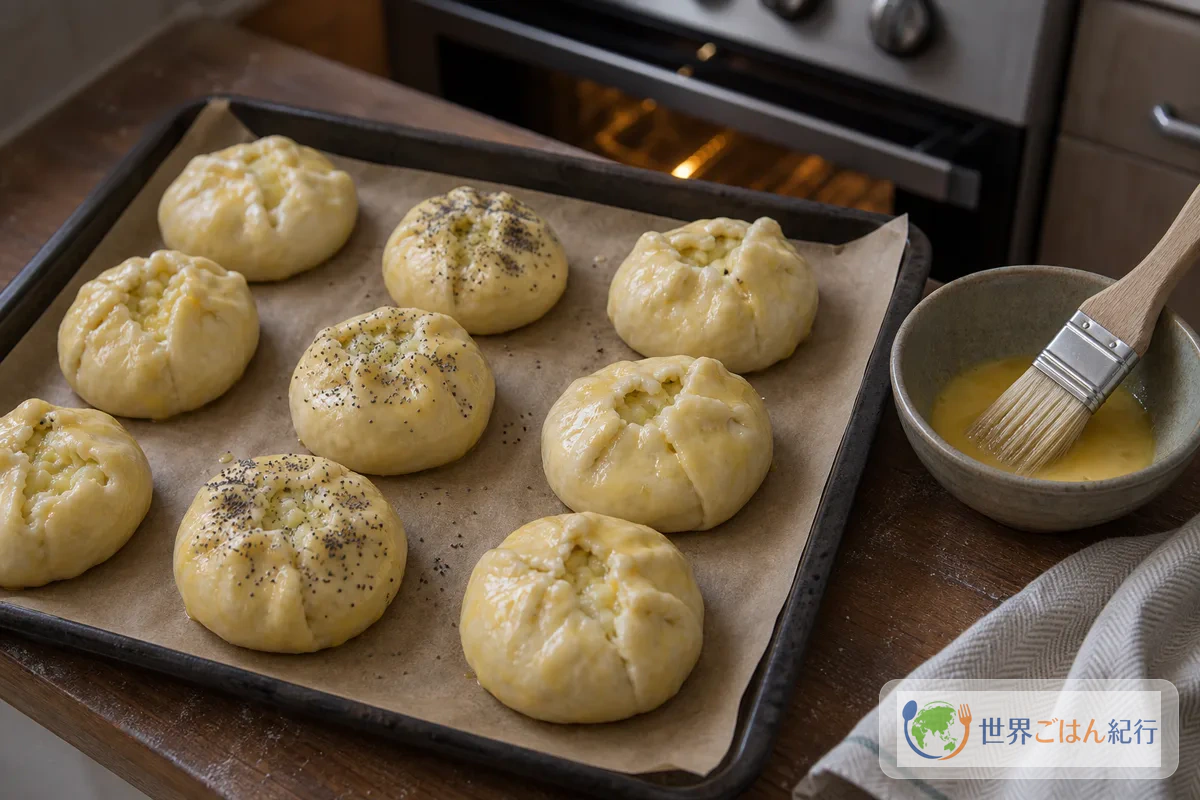
| Pale surface | Egg wash too thin, oven too cool | Brush on a thin egg wash again and bake 2–3 more minutes at 190 °C |
| Only the bottom scorches | Thin baking sheet, egg pooled at the bottom | Stack two sheets and brush away pooled egg |
Refrigerated knish take back moisture in the dough and soften a little. Drying the surface in a toaster oven or pan brings out a different savor from when they were fresh. Don't stop at the microwave; the sweetness of the potato comes back too.
FAQ
Is knish a Belarusian dish?
This page uses its connection to the flour-and-dough cooking around Belarus as a way in, but knish is more naturally seen as a dish that spread with the movement of Ashkenazi Jews in Eastern Europe than as a modern single-country dish. It connects with the kitchens around Belarus, Ukraine, Poland and Lithuania, and in North America it took root as a snack in New York's Jewish delis.
Can I just bake it instead of frying?
Yes. At home, baked knish is easier because there is no oil to manage. Baked at 190 °C for 25–30 minutes, the surface is light and the filling moist. Frying makes it closer to a different dish, so learning the dough thickness by baking first is recommended.
Can I make it with fillings other than potato?
Yes. There are buckwheat kasha, sautéed cabbage, mushroom, meat and cheese versions. But potato and onion are the easiest to handle at first. If you use watery mushrooms or cabbage, always cook off the moisture before wrapping.
Can I use store-bought puff pastry for the dough?
You can, but it becomes quite a different thing. Puff pastry has layers and a strong butter smell, so it moves closer to a savory pie than to knish. It's handy as a shortcut when time is short, but if you want to know the plain character of an Eastern European Jewish snack, make this oil dough once.
Can I pack it in a lunch box?
Yes. Let it cool completely, and pack whole-grain mustard or pickles separately instead of sour cream. In summer potato dishes spoil easily, so use an ice pack and avoid long carrying times.
Sources
- Britannica, "Knish" https://www.britannica.com/topic/knish
- Chabad.org, "How to Make Authentic Potato Knishes" https://www.chabad.org/recipes/recipe_cdo/aid/6282919/jewish/How-to-Make-Authentic-Potato-Knishes.htm
- Jewish Food Society, "Potato Knishes" https://www.jewishfoodsociety.org/recipes/potato-knishes
- The Nosher / My Jewish Learning, "How to Make Knishes Two Ways" https://www.myjewishlearning.com/recipe/knish-dough-and-fillings/
- Wikipedia, "Knish" https://en.wikipedia.org/wiki/Knish
Knish is a dish that becomes a little too narrow if you attach it to a single country. Season the potato boldly, cook the onion sweet, and seal it all in thin dough. Get that far, and even in a home kitchen you start to see the outline of Eastern European Jewish cooking's "staple you can hold in your hand."