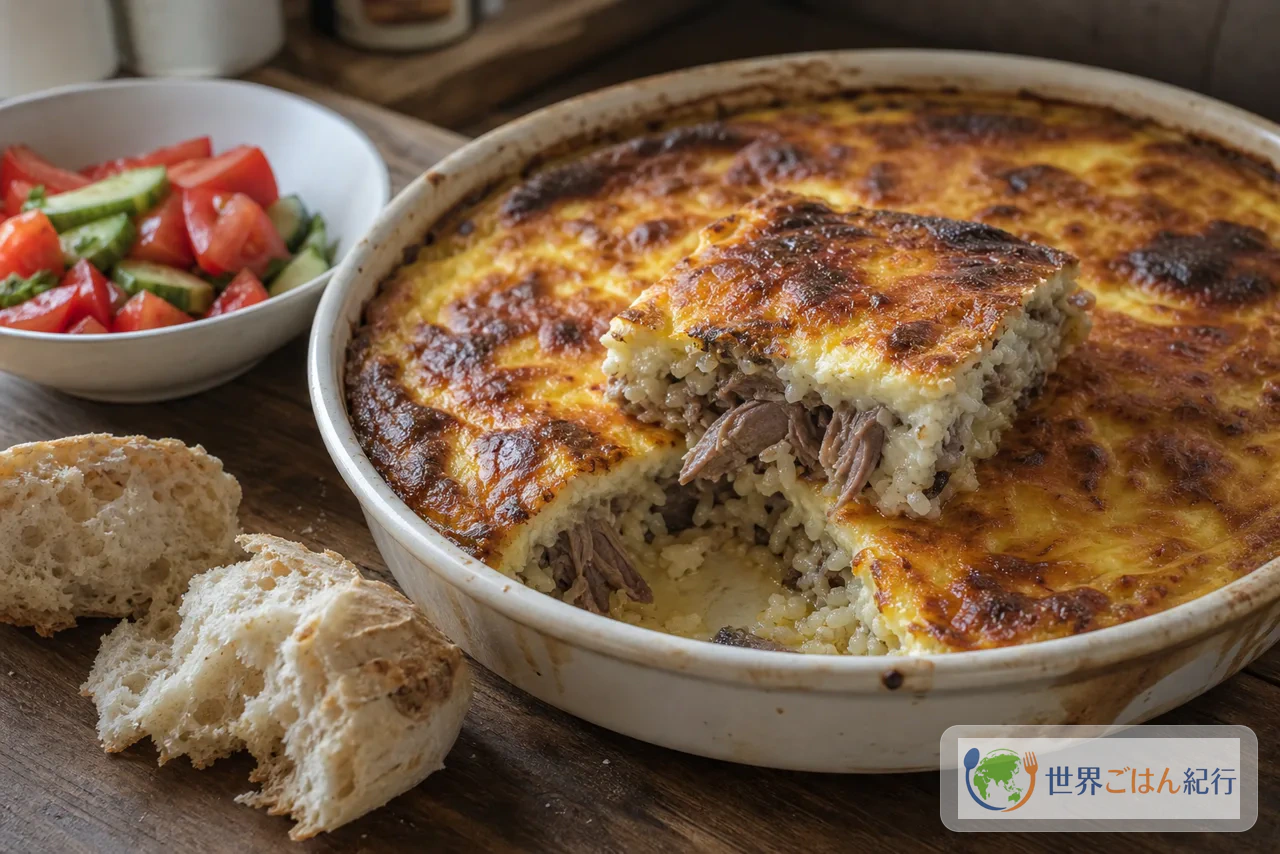



A baking dish of puffed yogurt from Elbasan
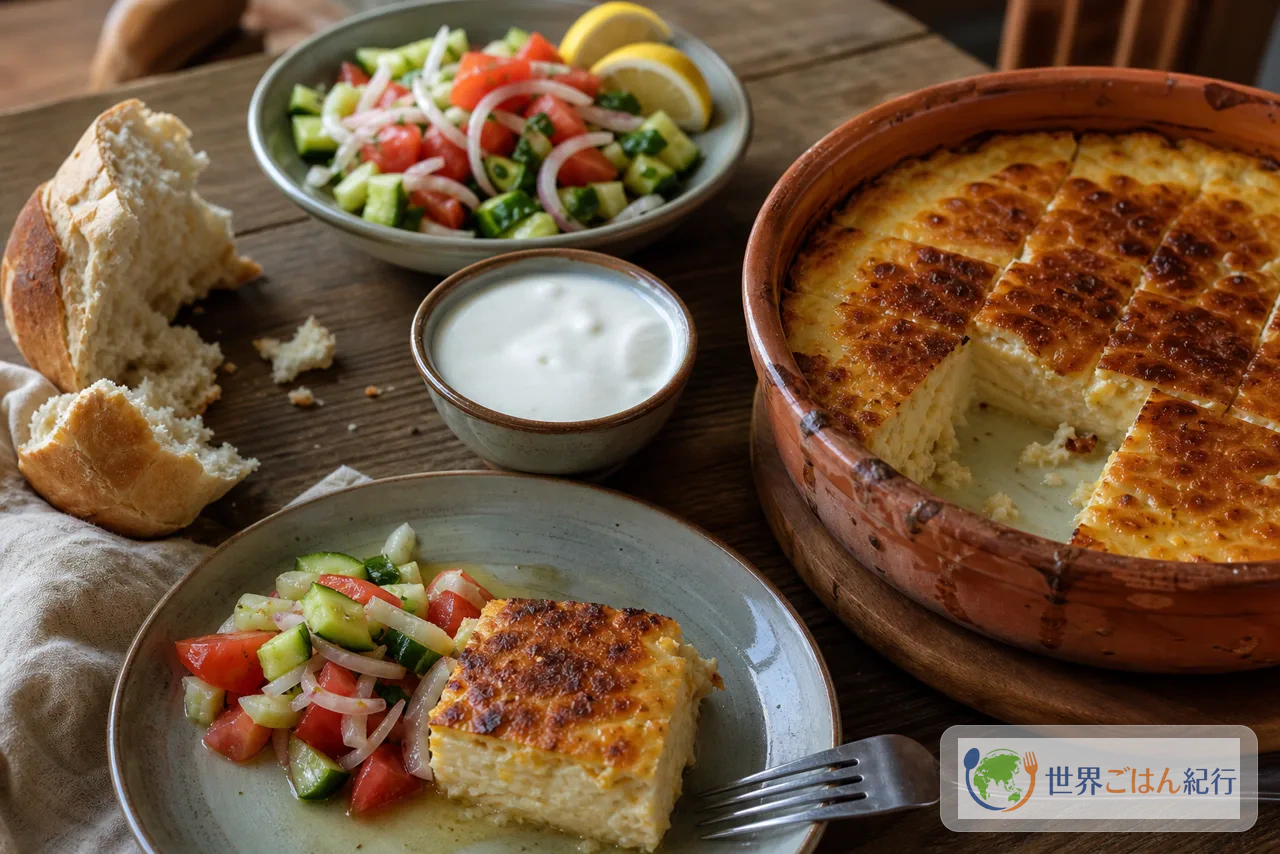
Open the oven door and the sourness of baked yogurt and the aroma of lamb fat rise together. The surface has puffed like a pudding, the edge is a slightly deeper fox-brown. Put a spoon in and rice and lamb come up from beneath. Tavë kosi is Albania's signature oven dish, sealing browned yogurt and meat juices in one dish.
In Albania it is also called Tavë Elbasani, and is sometimes talked about under the name of Elbasan. English and Turkish sources sometimes present it as Elbasan tava, but this article uses the Albanian Tavë kosi / Tavë Elbasani as the main name. Tavë is a baking dish and kos is yogurt. From the name it looks like a gentle dish, but making it, the keys are not letting the yogurt split, not letting the rice absorb too much, and cooking the lamb through without making it tough.
If you cook more Albanian food, fërgesë, with roasted peppers and white cheese, leans toward a starter, and tavë kosi toward a main. For a sweet finish, the spring sweet of Elbasan, ballokume, fits well. Seen as a Balkan table, it sits comfortably beside Bosnian burek and North Macedonian tavče gravče.
An Albanian dish of lamb, rice, yogurt and eggs baked in a shallow dish. The yogurt and egg mixture sets on top while the rice below absorbs the meat juices. Linked to Elbasan, it is sometimes called Tavë Elbasani, and English sources describe it as "Albanian baked lamb with rice" or "baked lamb and yogurt casserole."
What to protect to keep it tavë kosi

Tavë kosi is not a gratin. It is not a dish that stretches cheese, nor one that pushes with spices like a curry. The axis to protect is three things: the lamb's juices, the rice and the yogurt custard. Brown the lamb first to bring out fat and aroma, let the rice absorb just a little of the liquid, and finally bake the yogurt set, supported by egg and flour.
What is hard in a home kitchen is the yogurt. Plain unsweetened yogurt varies by brand in how much water it holds, and mixed straight with hot meat juices it splits into a grainy texture. Drain it too much and it turns heavy, a firm layer like a baked omelet. For a first try, lightly drain plain yogurt and combine it with the egg, flour and warm meat juices a little at a time; this is the stable way.
| Role | Closer to the original | Where to draw the line at home |
|---|---|---|
| Meat | Lamb, especially bone-in or fatty cuts | Lamb shoulder or leg in 3 cm cubes. Cubes are fine without bones |
| Dairy | Tangy yogurt from sheep's or cow's milk | Lightly drained plain yogurt. Greek yogurt needs no draining |
| Rice | A small amount to take up the meat juices | Rinse and drain, and stop at half-cooked |
| Baking dish | A shallow tavë or clay pot | A shallow baking dish about 20 cm. A deep pot sets poorly in the center |
| Seasoning | Salt, pepper, oregano and garlic only | No showy spices; a little sweet paprika to finish |
If you like red sauces, you may want to add paprika in the spirit of Turkey's kağıt kebabı or köfte. In tavë kosi, though, the aroma of white yogurt is the star. Sweet paprika only adds a little to the browning of the meat and the color of the table.
Ingredients (serves 4)
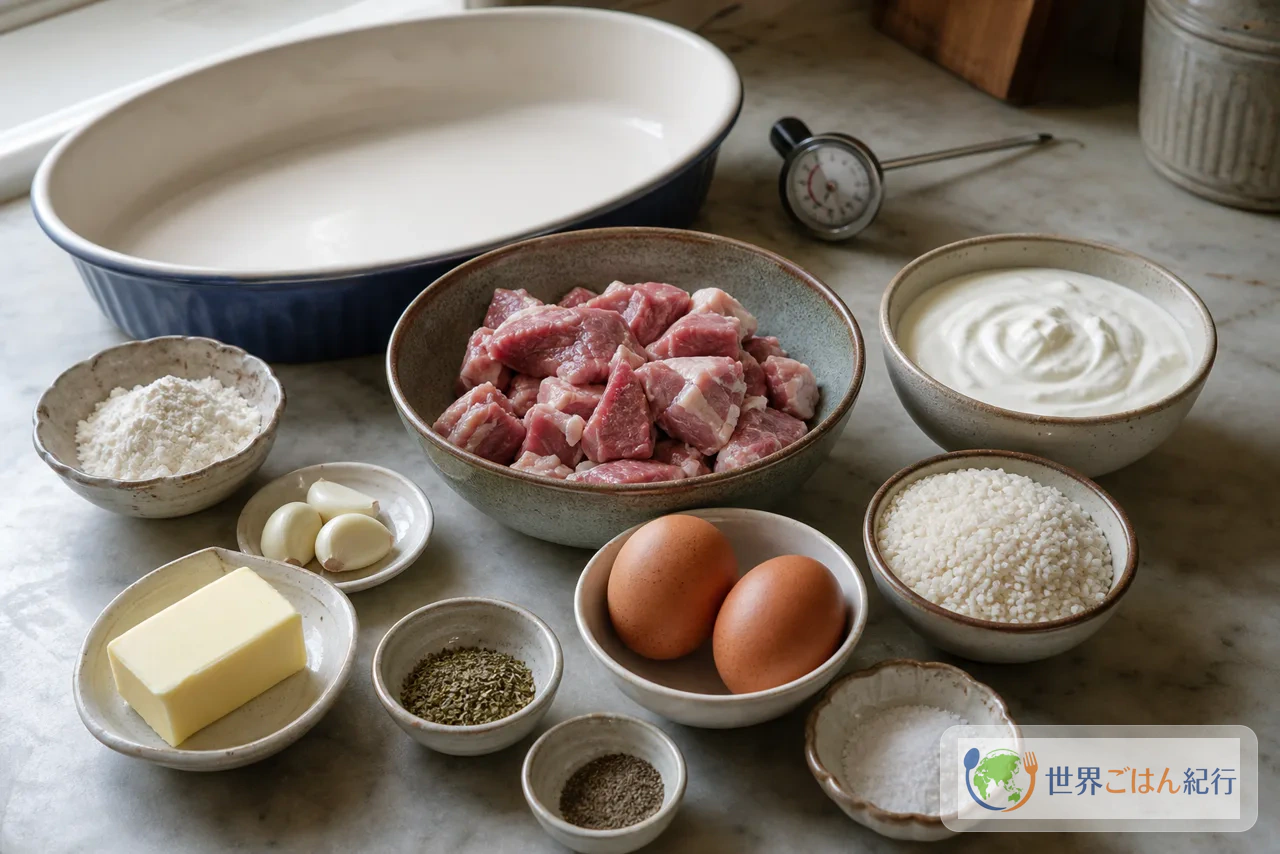
Lamb shoulder is easiest to handle. Leg alone has little fat and tends to feel tough after baking, so increase the olive oil a little. If someone in the family dislikes lamb, it can be made with beef chuck roll, but the aroma changes considerably. On a first try, lamb shoulder, a shallow baking dish and lightly drained yogurt are least likely to fail.
This recipe contains egg, dairy and wheat. If you avoid wheat, replace the flour with rice flour. Check that the lamb reaches an internal temperature of 63°C (145°F) or more, and rest it 3 minutes. The egg-and-yogurt layer should reach around 75°C (165°F) at the center, puffed on the surface with the center not wobbling in loose waves. When serving to children, older adults or anyone whose health is unsteady, checking with a thermometer is safer.
Shopping: ordinary dairy is not a product card
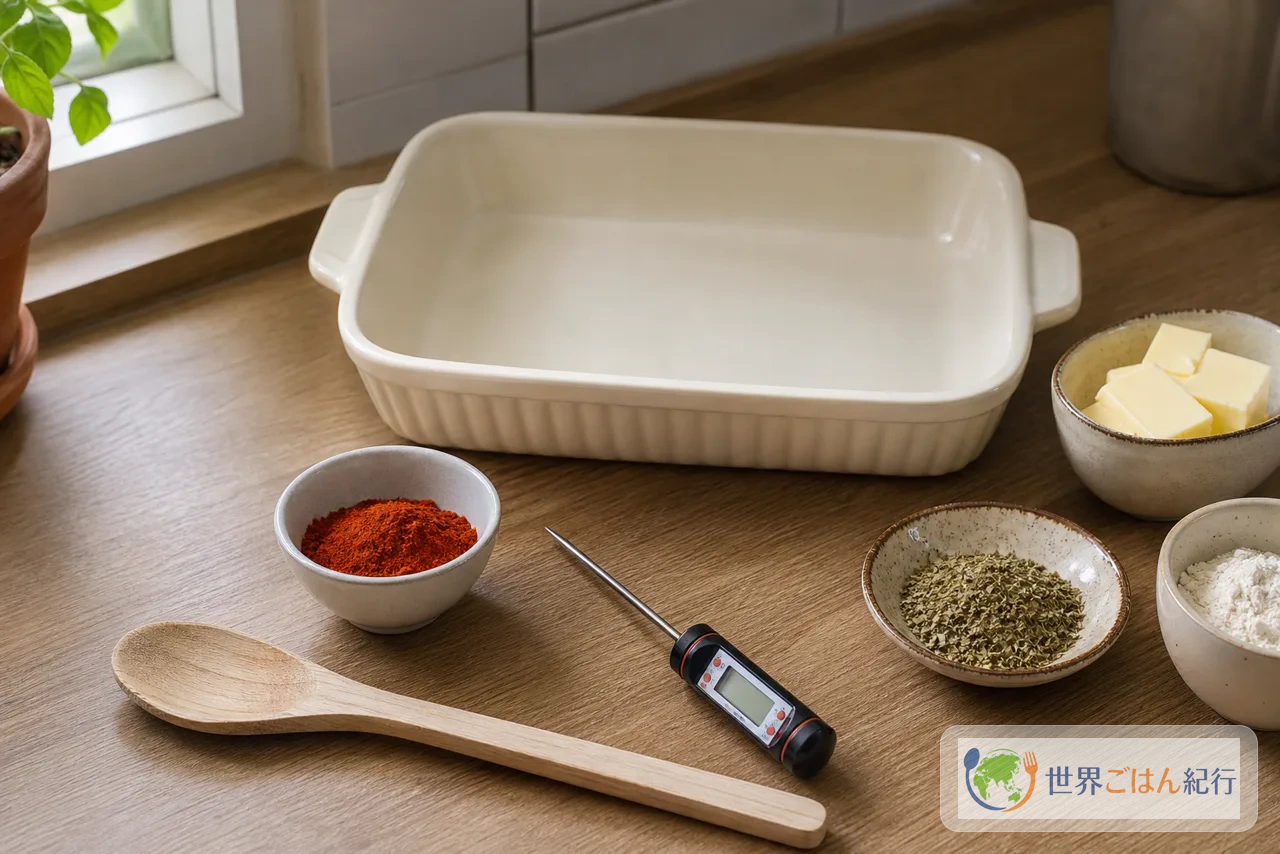
Yogurt, eggs, rice and butter are fine from a nearby grocery. There is no need to look for them online. What is worth adding is the shallow baking dish that determines the finish, a probe thermometer that lets you check the doneness of the meat and custard, and sweet paprika to add a little aroma at the end.
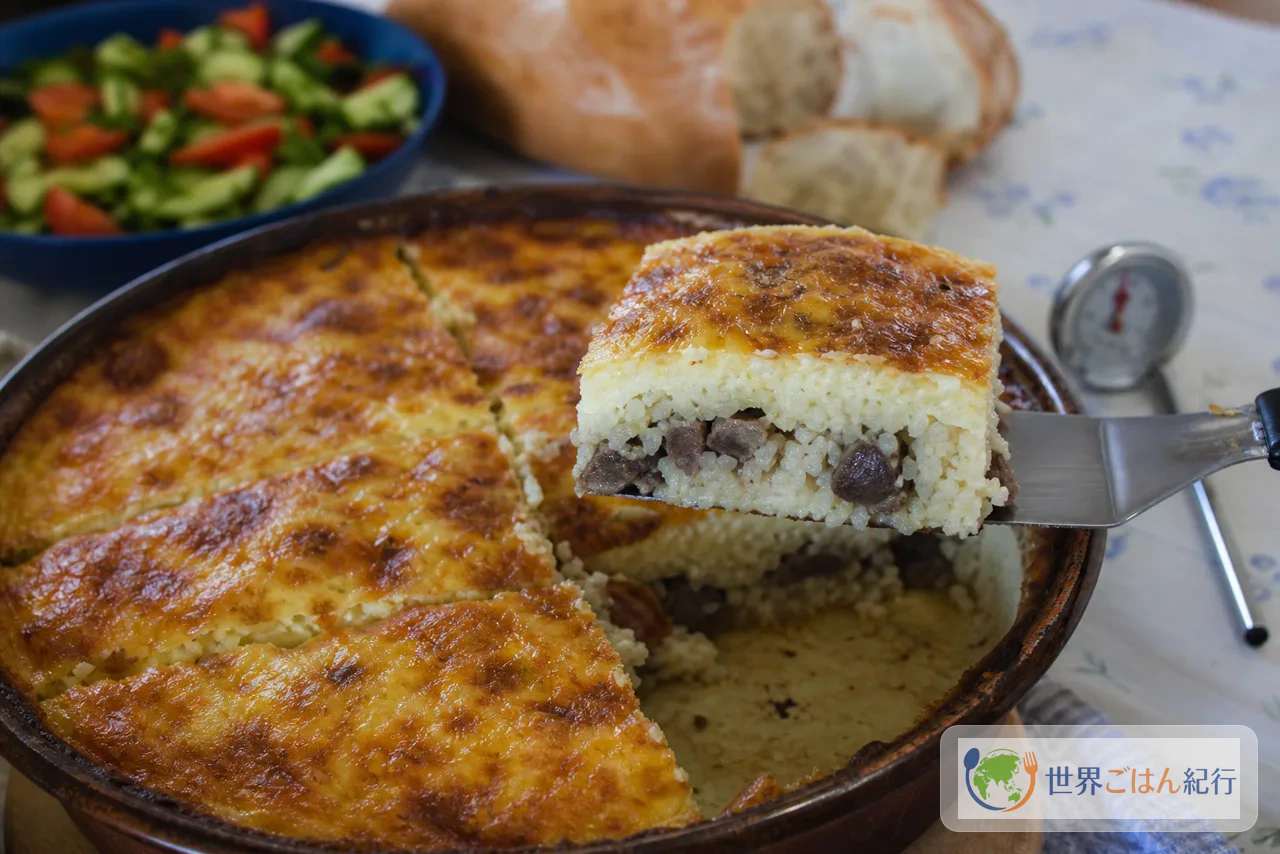
In a deep gratin dish, the yogurt layer in the center is thick, and only the edge bakes while the center stays loose. In a shallow dish about 20 cm across, the rice and lamb spread below and the yogurt layer above sets more evenly.
Tavë kosi can look nicely browned on top while the egg mixture in the center is still loose. Using a thermometer even just the first time makes it easier to stop before overbaking turns it grainy.
Sweet paprika is not the star in Albania. In a home oven that tends to brown lightly, though, mixing a very small amount into the finishing butter adds a red sweetness over the aroma of lamb. Don't substitute strong chili powder.
Instructions: bake it without splitting the yogurt
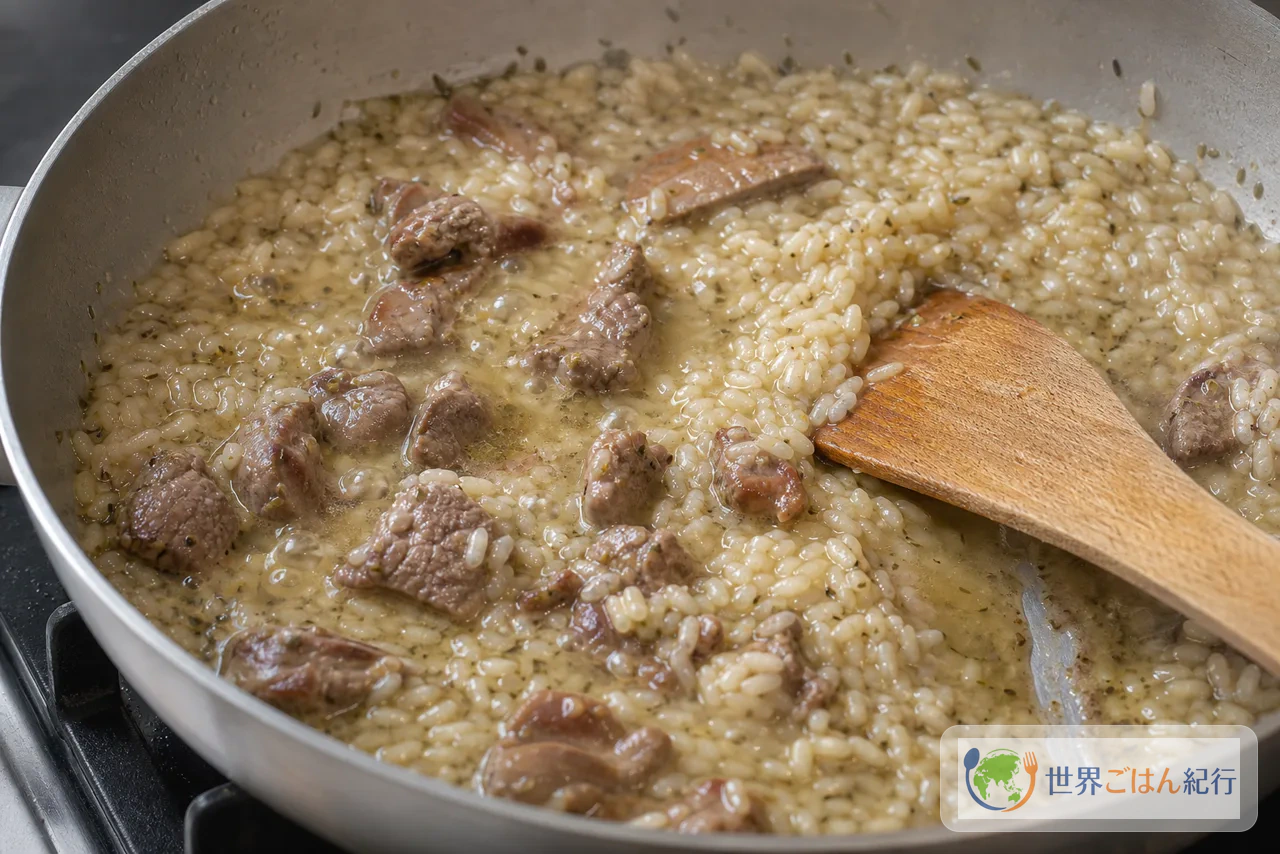
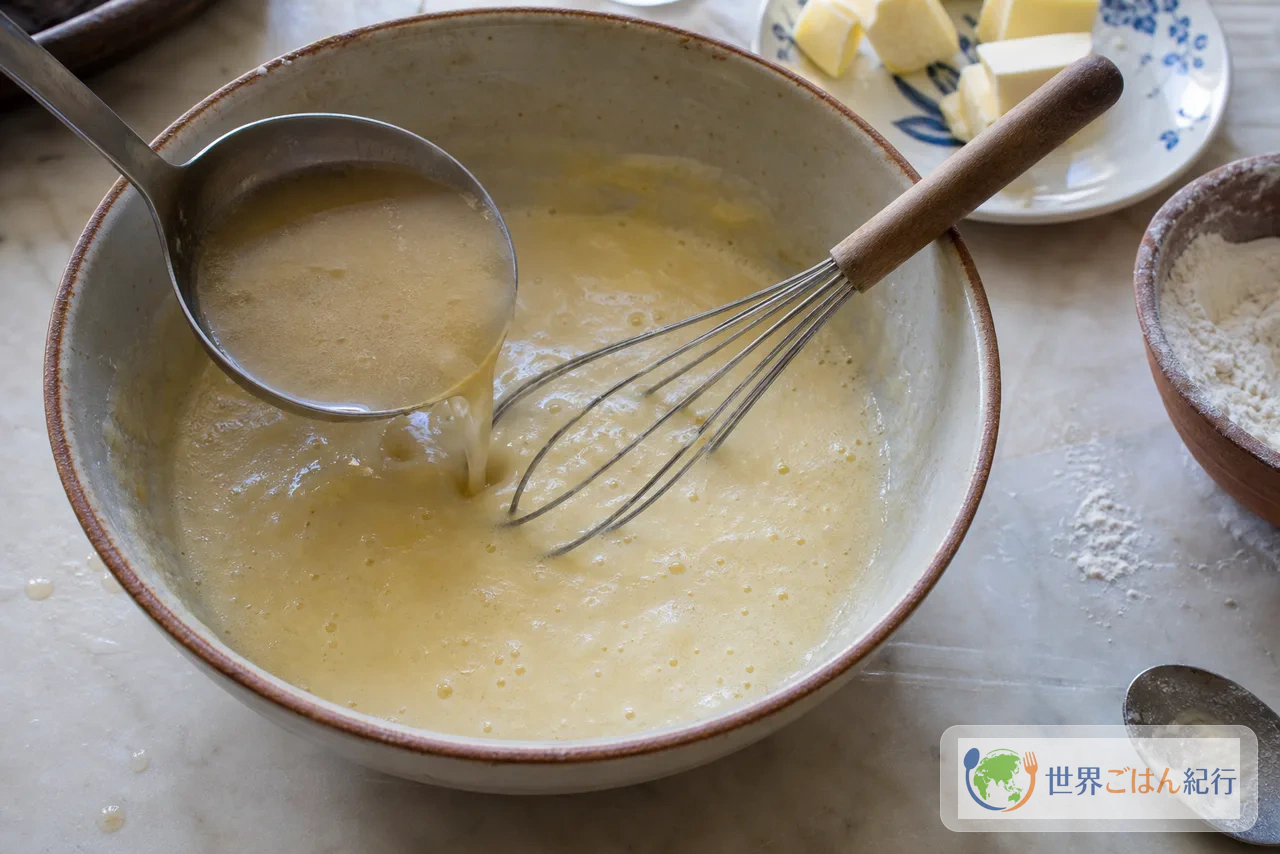
This dish isn't finished in the pot; it is brought together in the oven at the end. Don't cook the rice all the way, and move it to the baking dish with a little of the lamb's liquid left. Don't pour cold yogurt custard into a hot pot; loosen it with warm cooking liquid first and it splits less.
What goes wrong: avoiding splitting and wateriness
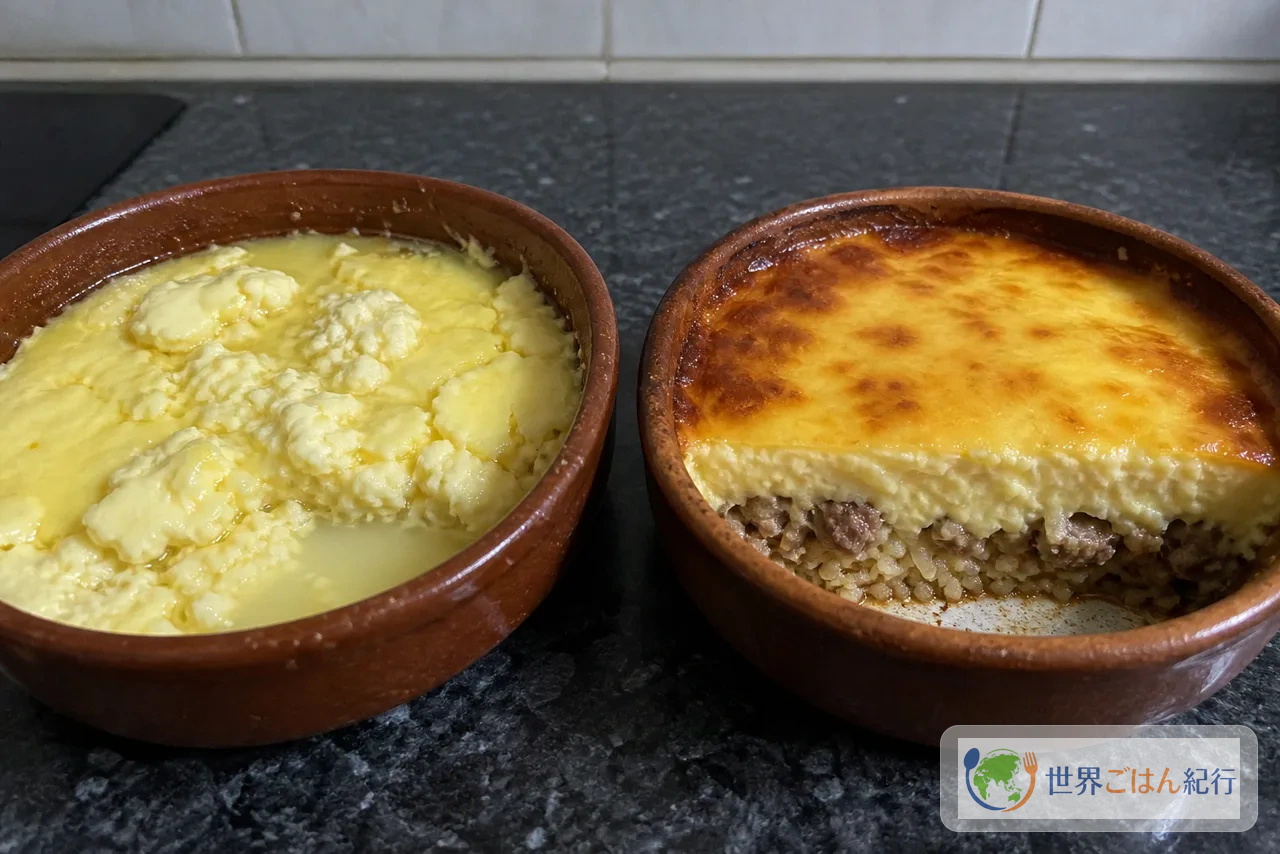
Failures of tavë kosi mostly show up in the yogurt and the rice: either the yogurt layer turns grainy or the rice below turns watery. The two look like different failures, but both come down to managing water and temperature.
| Problem | Cause | Fix next time |
|---|---|---|
| Yogurt layer is grainy | Cold custard went into a hot pot, overbaked | Warm the custard with cooking liquid, and stop at about 75°C (165°F) in the center |
| Water pools at the bottom of the dish | Too much cooking liquid, watery yogurt | Up to 3 tbsp liquid, drain the yogurt for 15 minutes |
| Rice is hard | Pre-simmered too briefly, cooked off too much liquid | Simmer 12 minutes or more over medium-low and leave a little liquid on the bottom |
| Lamb is tough | Lean meat only, long cooking after browning | Use shoulder, brown only for color and don't over-simmer |
| Only the surface scorches | Dish is deep, top heat is strong | Switch to a shallow dish, and cover with foil when it darkens |
| Flavor is vague | Salt lost to the yogurt | Split the salt between meat and custard, and add a little lemon at the table |
To recover, changing how you serve it is more natural than rebaking. If it has split, don't spoon unsweetened yogurt over the cut pieces; it makes it more watery. Instead, serve a tomato and onion salad and add acidity from the outside, which cuts the heaviness in the mouth. On a day it turned watery, the next day warm it in a skillet over low heat, brown the bottom a little and put it on bread, and it comes together as a different way to eat.
Regional differences and substitutes
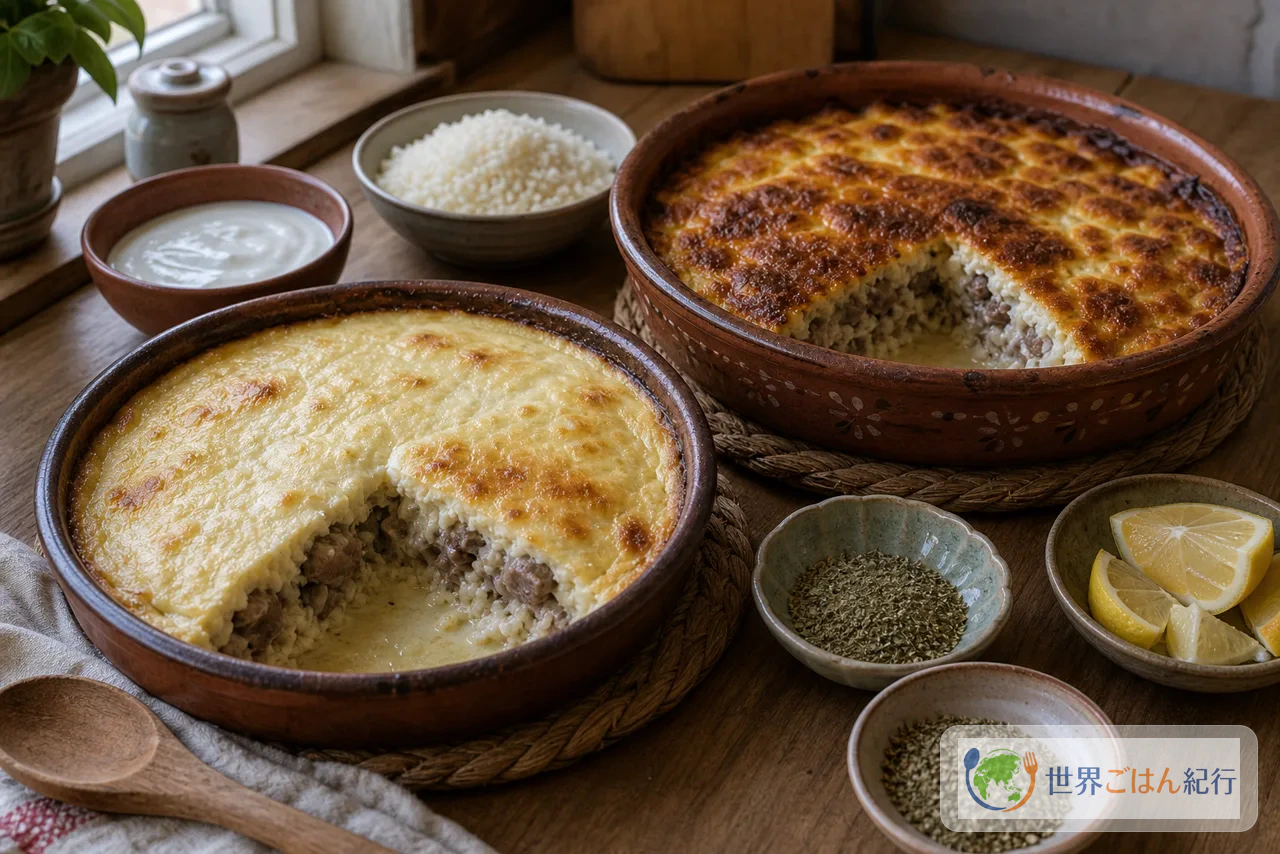
Tavë kosi is often presented as "Albania's national dish." Because it is home cooking, though, the amount of rice, how the meat is cut and how thick the custard is vary widely. When called by the name of Elbasan, the impression is strongly of yogurt and lamb becoming one in the baking dish, and it is closer to treat it as something different from dishes covered in red sauce or cheese.
It is easier to separate what can be substituted from what to protect. Ordinary plain yogurt is fine, and with Greek yogurt you can skip draining. Rice can be any short-grain. The lamb can be replaced with beef chuck roll, but the center of the dish's name is the pairing of lamb and yogurt. If you swap in beef, think of it as "tavë kosi-style," go slightly lighter on the garlic and increase the black pepper.
| What you want to change | Substitute | Effect on the result |
|---|---|---|
| Lamb shoulder | Beef chuck roll, bone-in lamb chops | Beef is milder; bone-in lamb gives stronger stock |
| Plain unsweetened yogurt | Greek yogurt, drained yogurt | The thicker it is, the more easily it sets, so watch for overbaking |
| Cake flour | Rice flour, a little potato starch | Rice flour is close. Potato starch adds springiness, so up to 2 tsp |
| Oregano | Thyme, a little mint | Mint is fresh, but too much leans toward dessert |
| Bread | Rice, boiled potatoes | Rice makes it heavy, so add plenty of salad |
For a menu, serve a small amount of fërgesë first, tavë kosi as the main, and ballokume after the meal. None of them rely on showy heat; they are linked by the aroma of baked dairy, wheat and egg.
Storage and eating it the next day
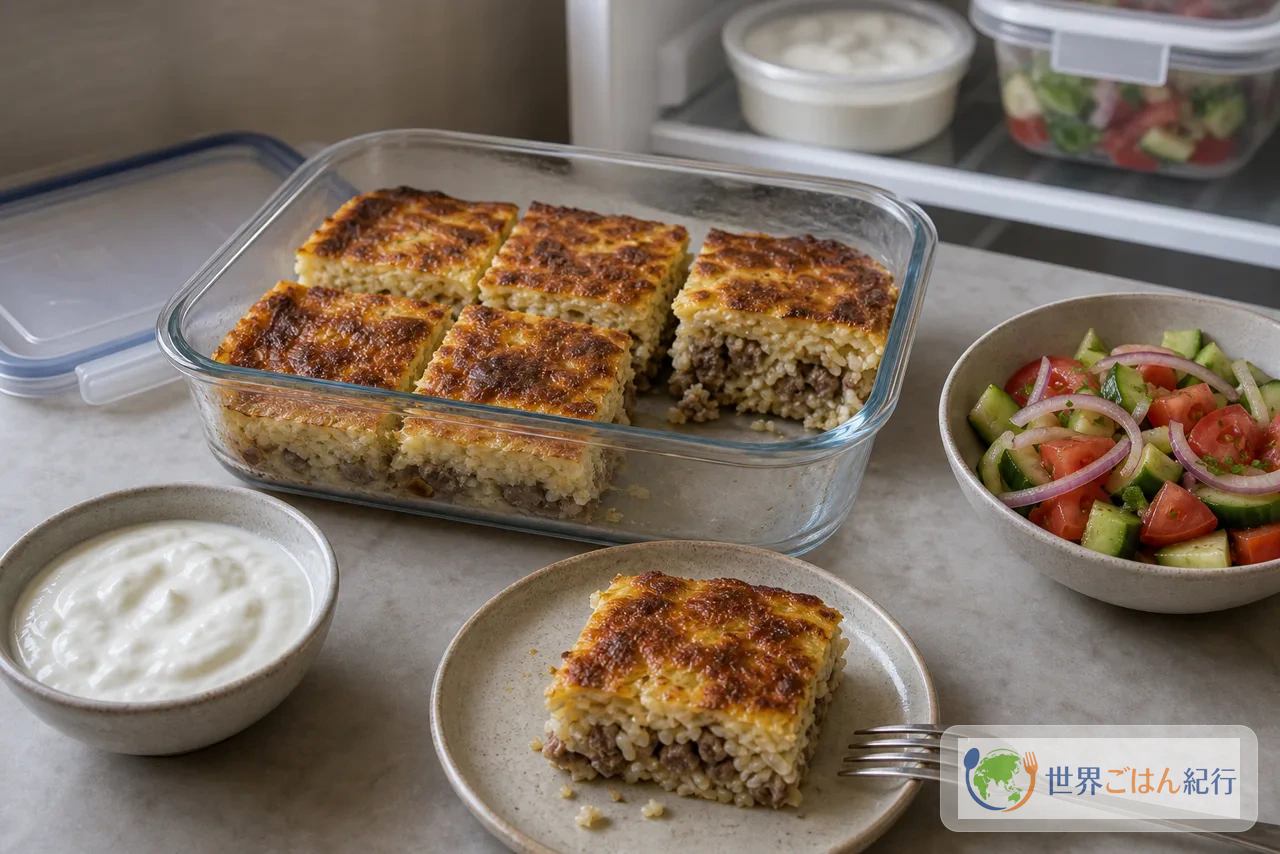
Cool leftover tavë kosi slightly, cut it into pieces and move to shallow containers. Eat within 2 days refrigerated. Left long in the baking dish, the rice absorbs the water at the bottom and the center turns heavy the next day. Store the salad, bread and yogurt drink separately.
To reheat, rather than finishing in the microwave alone, warm it briefly and then restore the surface. For one piece, 1 minute at 600 W, adding 20 seconds at a time if still cold. Then brush a skillet with a thin film of oil and cook the bottom over low heat for 1 minute, which firms the rice layer. In a toaster oven, cover loosely with foil and heat at 900 W for 5 minutes, then remove the foil for the last 1 minute to warm the surface.
The next day, more salad than bread is easier to eat. Combine diced tomato, cucumber and onion with a little salt, 1 tsp lemon juice and 2 tsp olive oil and put it beside the tavë kosi. Adding more yogurt on top makes the whole thing heavy, so serving it separately as a drink is just right.
Frequently asked questions
Can I make it if I don't like lamb?
It can be made with beef chuck roll. The aroma that makes it tavë kosi will be weaker, though. If you make it with beef, halve the garlic and increase the black pepper a little. Beef shank suits long braising, so with the baking time in this recipe it tends to stay tough.
Will it fail if I don't drain the yogurt?
Not necessarily, but some plain yogurts hold a lot of water. Leaving it for just 15 minutes in a strainer lined with paper towels greatly reduces splitting and wateriness. If you use Greek yogurt, don't drain it and use 400 g.
Can I make it without rice?
You can, but there is nothing to take up the meat juices that collect below, and the yogurt layer tends to feel heavy. If you leave out the rice, reduce the liquid from after browning the lamb to 250 ml and lay thin onion slices on the bottom of the dish to absorb moisture.
Can I make it without an oven?
A complete reproduction is difficult. Put the lamb and rice in a skillet, pour the yogurt custard over and steam-bake over low heat for about 20 minutes, and it takes shape, but the surface doesn't brown. If you can use a toaster oven, do the pre-simmer in the pot, move to a shallow baking dish and bake at 900 W for 15 to 20 minutes, which gets closer.
Is paprika powder essential?
It is not essential. If you want the white yogurt layer to be the star, leave it out. If you use it, use sweet paprika up to 1/2 tsp. Substituting chili powder or cayenne pepper pushes the heat forward and moves away from the mild tang of tavë kosi.
Sources
- Wikipedia, "Tavë kosi" (checked the dish name, the spelling Tavë Elbasani and the structure of lamb and yogurt; accessed 13 June 2026) https://en.wikipedia.org/wiki/Tav%C3%AB_kosi
- My Albanian Food, "Albanian Tavë Kosi" (checked the flow of a home recipe baking lamb, rice and yogurt custard; accessed 13 June 2026) https://www.myalbanianfood.com/recipe/albanian-tave-kosi/
- FoodSafety.gov, "Safe Minimum Internal Temperatures" (checked temperature guidelines for lamb, egg dishes and reheating; accessed 13 June 2026) https://www.foodsafety.gov/food-safety-charts/safe-minimum-internal-temperatures