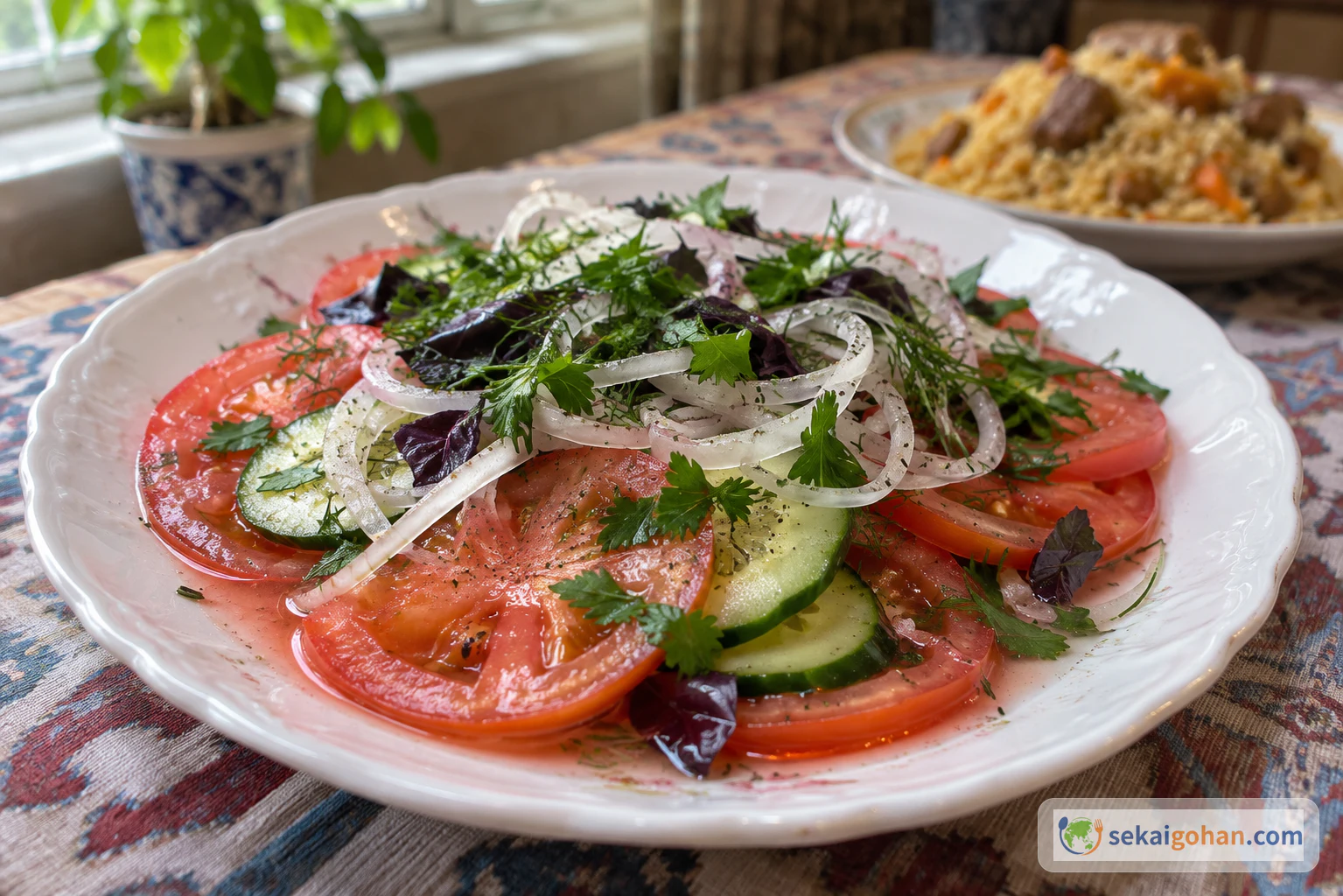
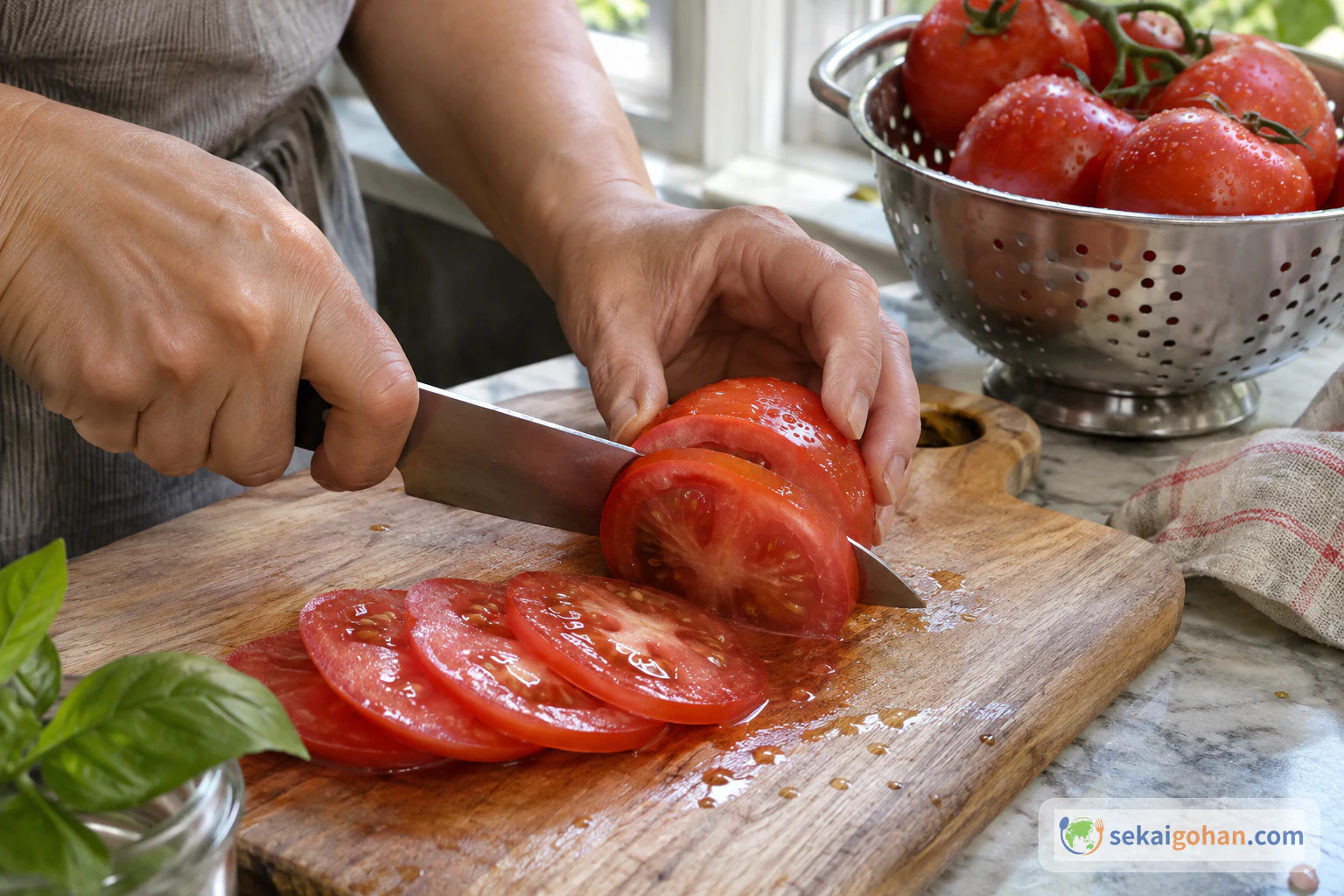
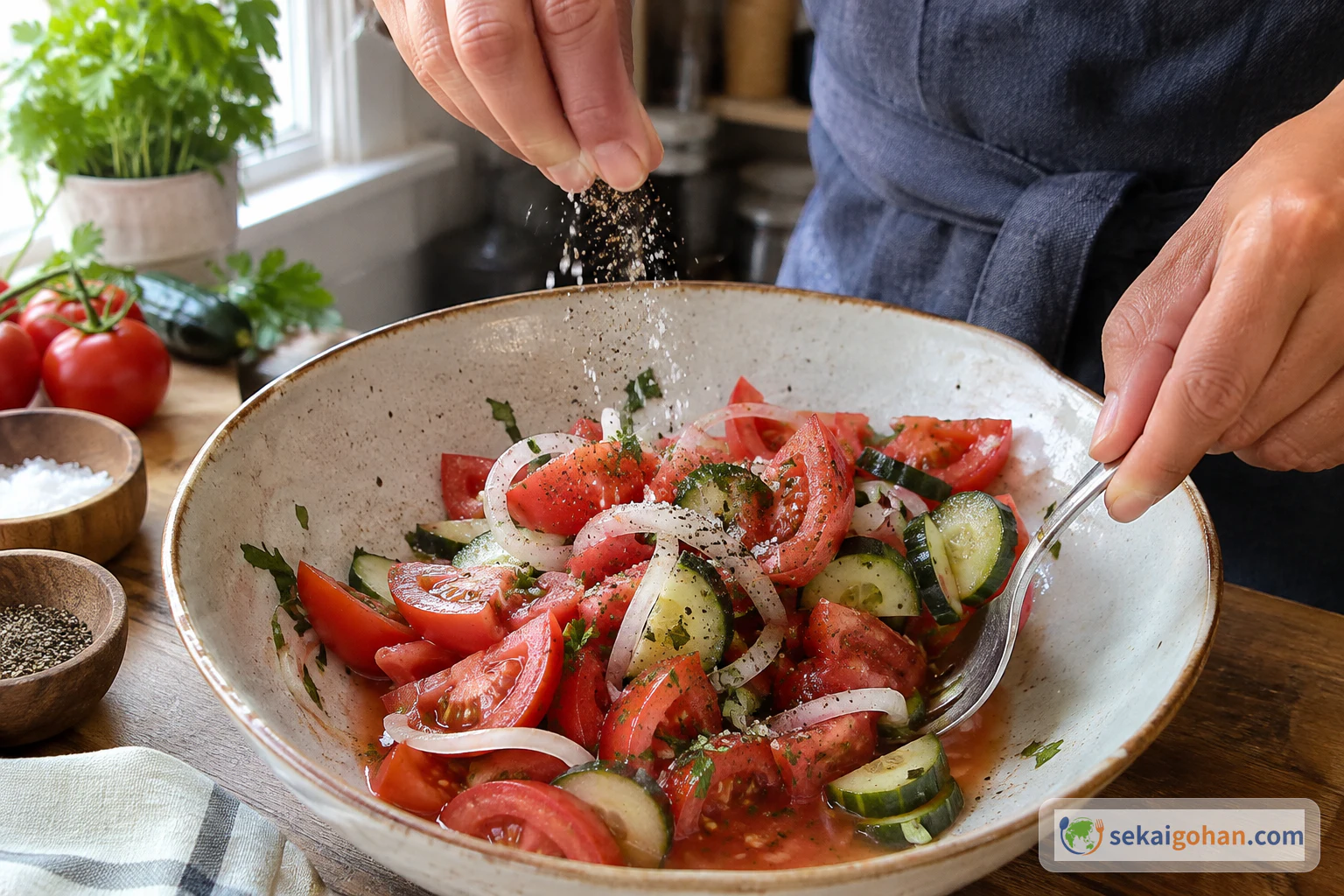
The moment salt touches the sliced tomatoes, red juice starts to gather at the bottom of the plate, and the onion rings resting on top go glossy. That juice is the whole dressing. Shakarap is the tomato and onion salad of Kyrgyzstan, Tajikistan and Uzbekistan: ripe tomato, paper-thin onion, chopped herbs, salt and black pepper, with no oil at all. It tastes bright, sharp and cold, and it lands on the table next to a heavy platter of plov or a skewer of grilled meat so that every rich bite has something clean to follow it.
One Salad, Several Names, the Same Plate Beside the Plov
The salad changes its name as it crosses borders. In Kyrgyz and Tajik-speaking homes it is shakarap, in Tajik also shakarob (Шакароб), and in Uzbekistan it is achichuk or achchiq-chuchuk. Under every name the plate looks the same: thin rounds of tomato, rings of onion, a scatter of green. Where the salad was first made is not settled, and it belongs to the whole region, including the tables of Kyrgyzstan, Tajikistan and Uzbekistan.
Its job at the table is specific. Plov is rice cooked in fat with meat and carrots; shashlik and barbecued meat drip fat over the coals. Shakarap is the counterweight: acid from the tomato, heat from the raw onion, and the lift of dill, basil and parsley cut through all that richness. It is at its best in summer, when tomatoes are ripe enough to give up juice the moment they are salted.
Households do not work to a fixed ratio. A cook uses what is in season and on hand, adds cucumber on one day and leaves it out on the next, and swaps herbs by what grows outside. Some add chili or green onion; some use red onion and a green chili for more bite. What stays constant is the thinness of the slices and the absence of a separate dressing.
The Uzbek name is said to come from achiq, a word linked to bitterness or sharpness, a nod to the raw onion at the heart of the plate. Shakarap is the Kyrgyz and Tajik-speaking form of the name, and shakarob the Tajik one.
Ingredients (serves 4)
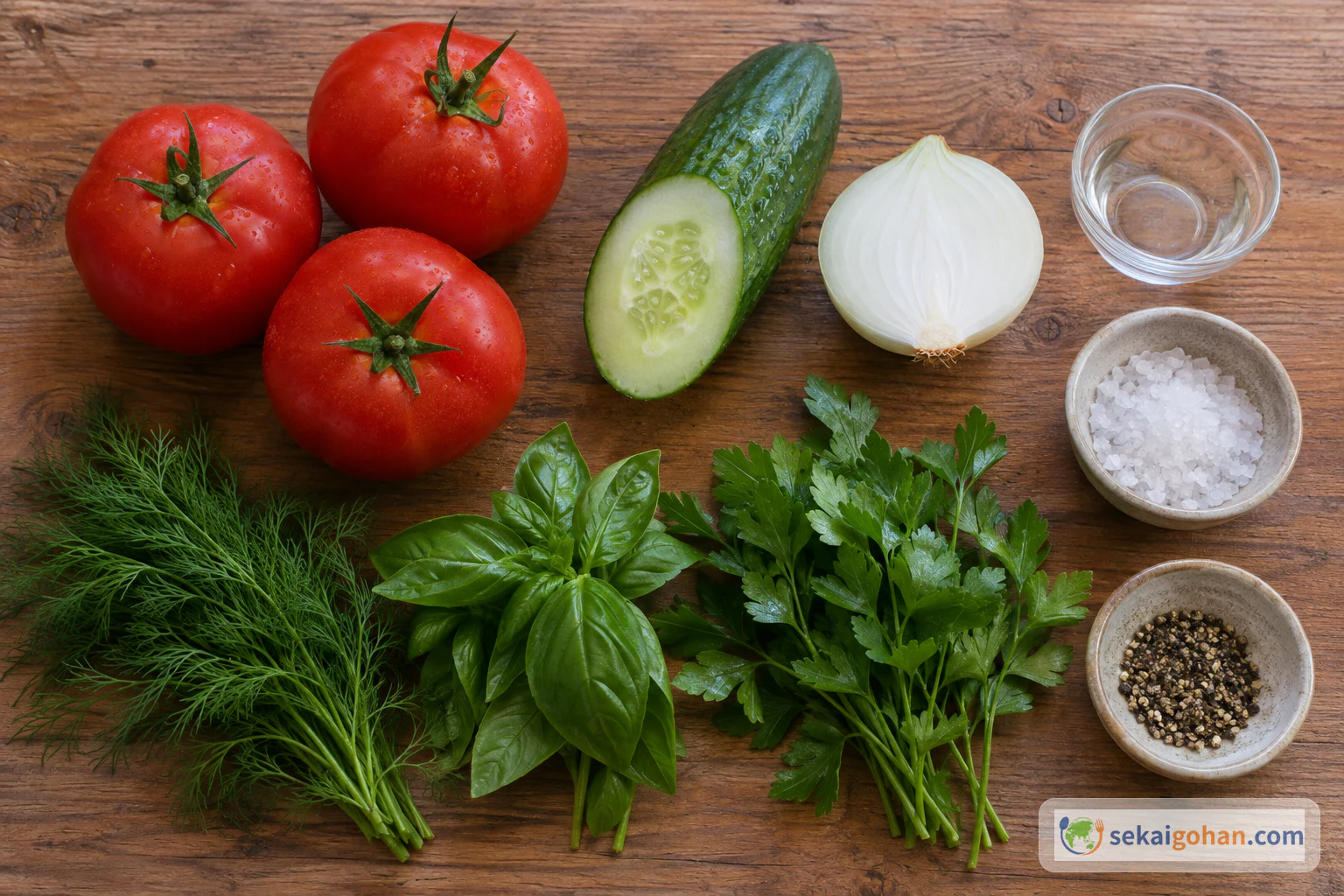
Everything here comes from an ordinary supermarket. The salad has so few parts that the ripeness of the tomatoes decides most of the flavour, and the onion decides the rest.
Pick tomatoes that are deep red, heavy for their size and smell like a tomato at the stem end. A pale, firm tomato gives no juice when salted, and the plate ends up dry and flat no matter how good the onion is.
Equipment
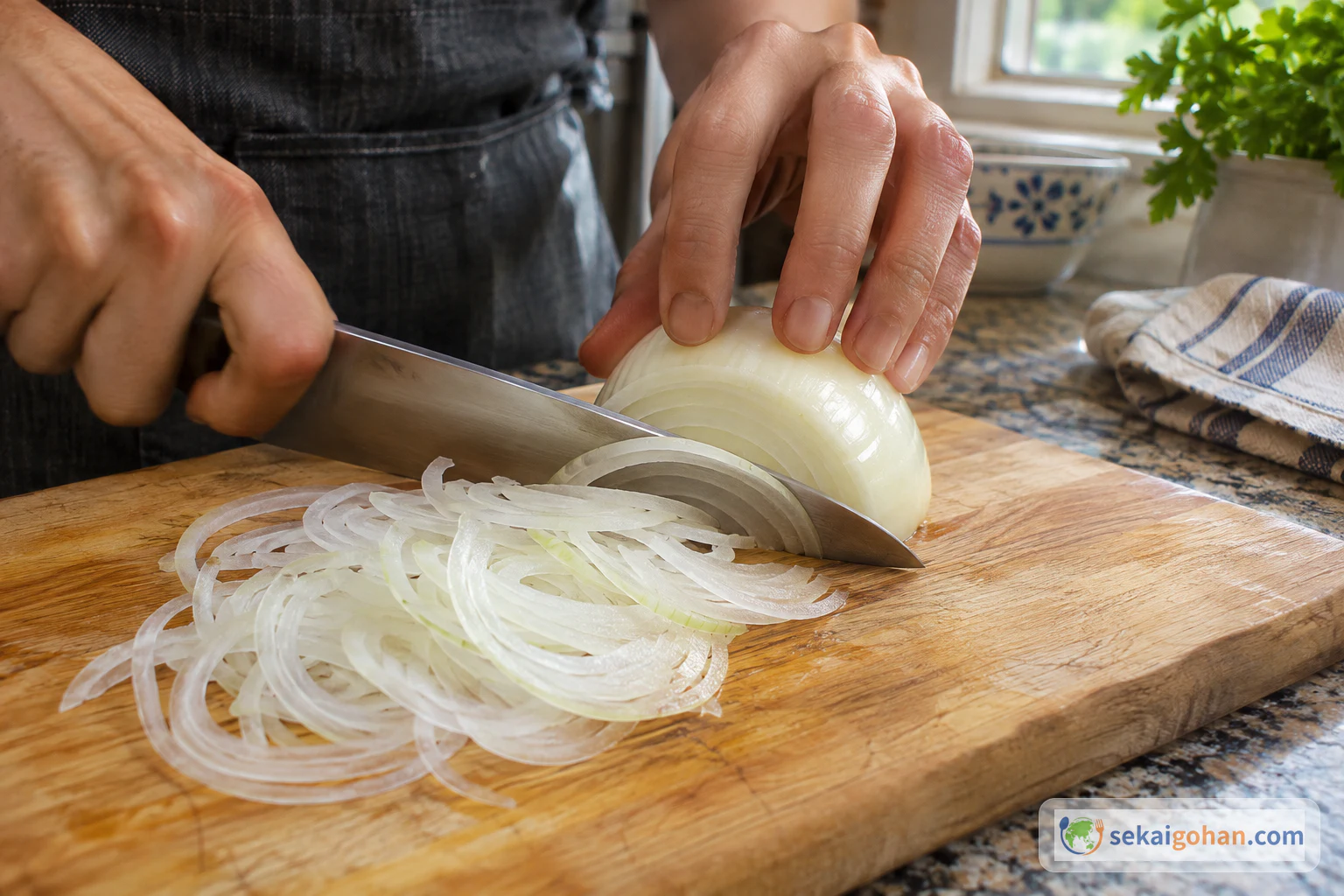
- A sharp knife, sharp enough to slice onion so thin you can see light through it
- A mandoline slicer (optional, for the onion)
- Two cutting boards, one kept only for produce
- A clean produce brush for the cucumber
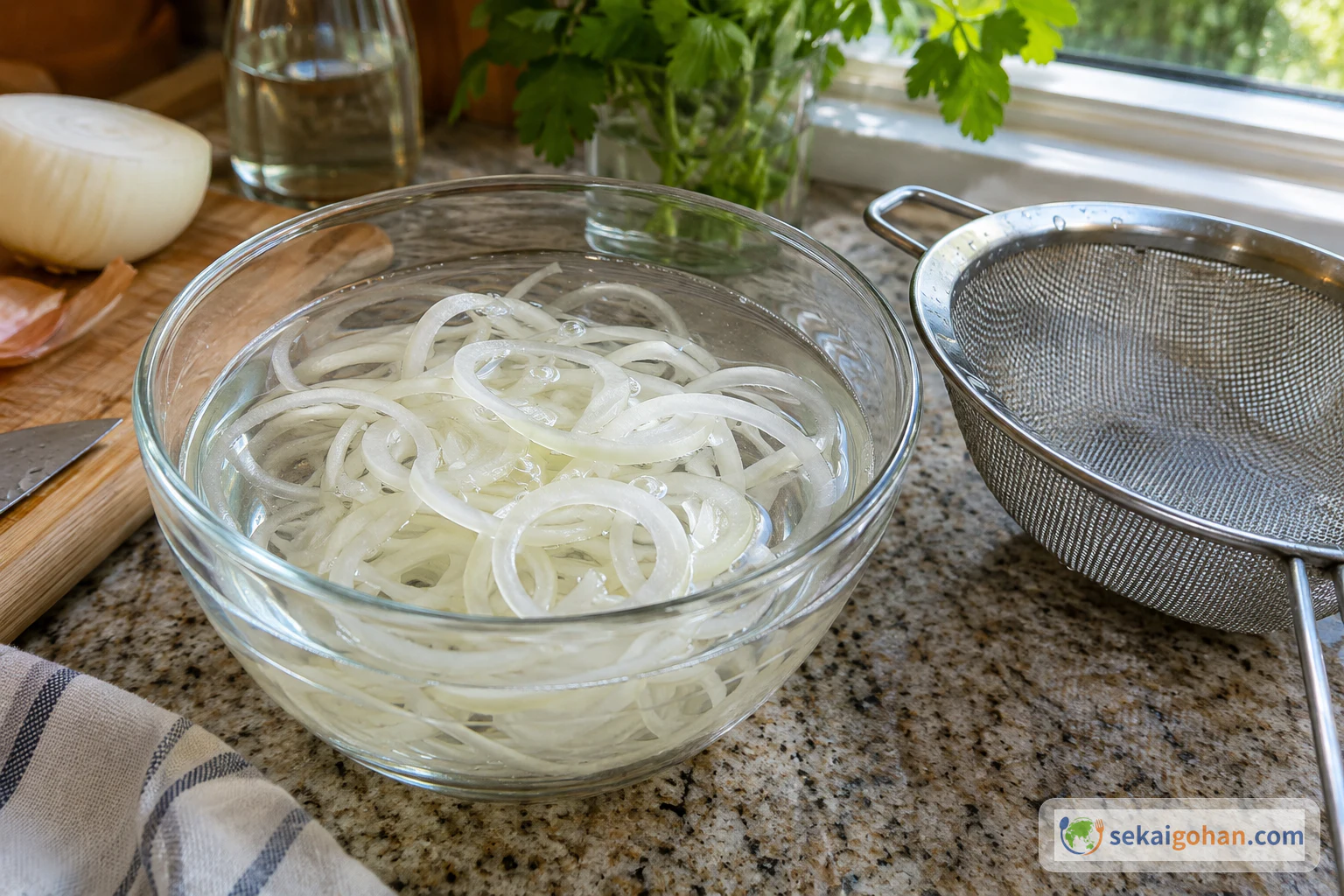
- A small bowl and a sieve for soaking and draining the onion
- A wide, shallow bowl or plate for mixing and serving
- An airtight food container for leftovers
Choosing and Substituting
The onion is the one ingredient worth thinking about. A white onion gives the clean, sharp bite the salad is built on. Sweet or new-season onions are milder and can go in without a soak. Red onion works and is used in parts of the region; it turns the plate pink-purple and looks striking beside plov. An ordinary yellow storage onion is the strongest of all and should always be sliced very thin and soaked.
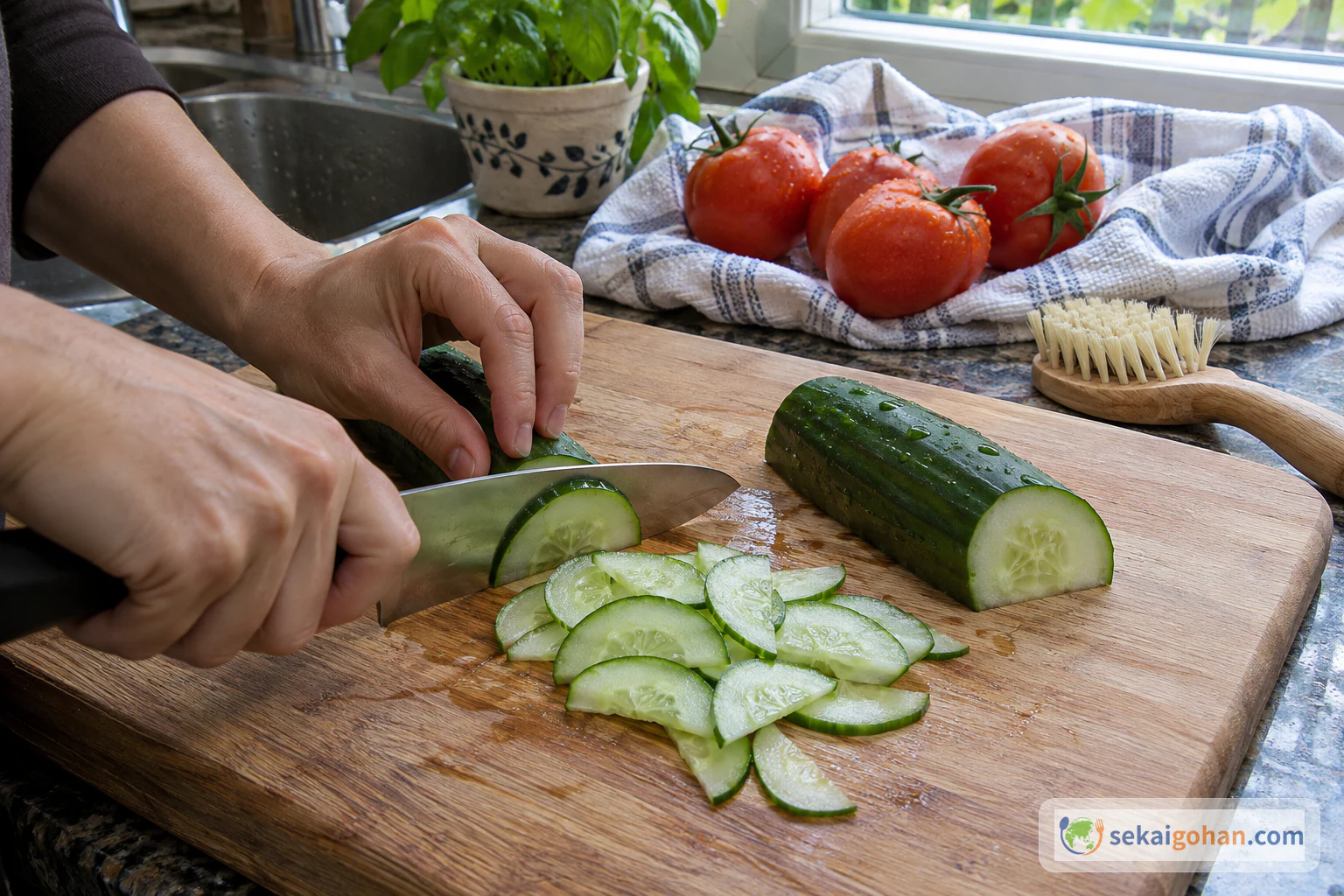
For the herbs, use what you can get. Dill and flat-leaf parsley are in most produce aisles; sweet basil is the basil to buy. If you only have one or two of the three, the salad still tastes right, because the herbs are a fragrance on top, not a base. Cucumbers with thin skin go in unpeeled; if a slice from the end tastes bitter, peel the cucumber before you cut it.
To keep the salad tasting like Central Asia rather than a garden salad, hold on to three things: thin slices, ripe tomatoes and no oil. Everything else, from the cucumber to the type of herb, is open to the season.
Method
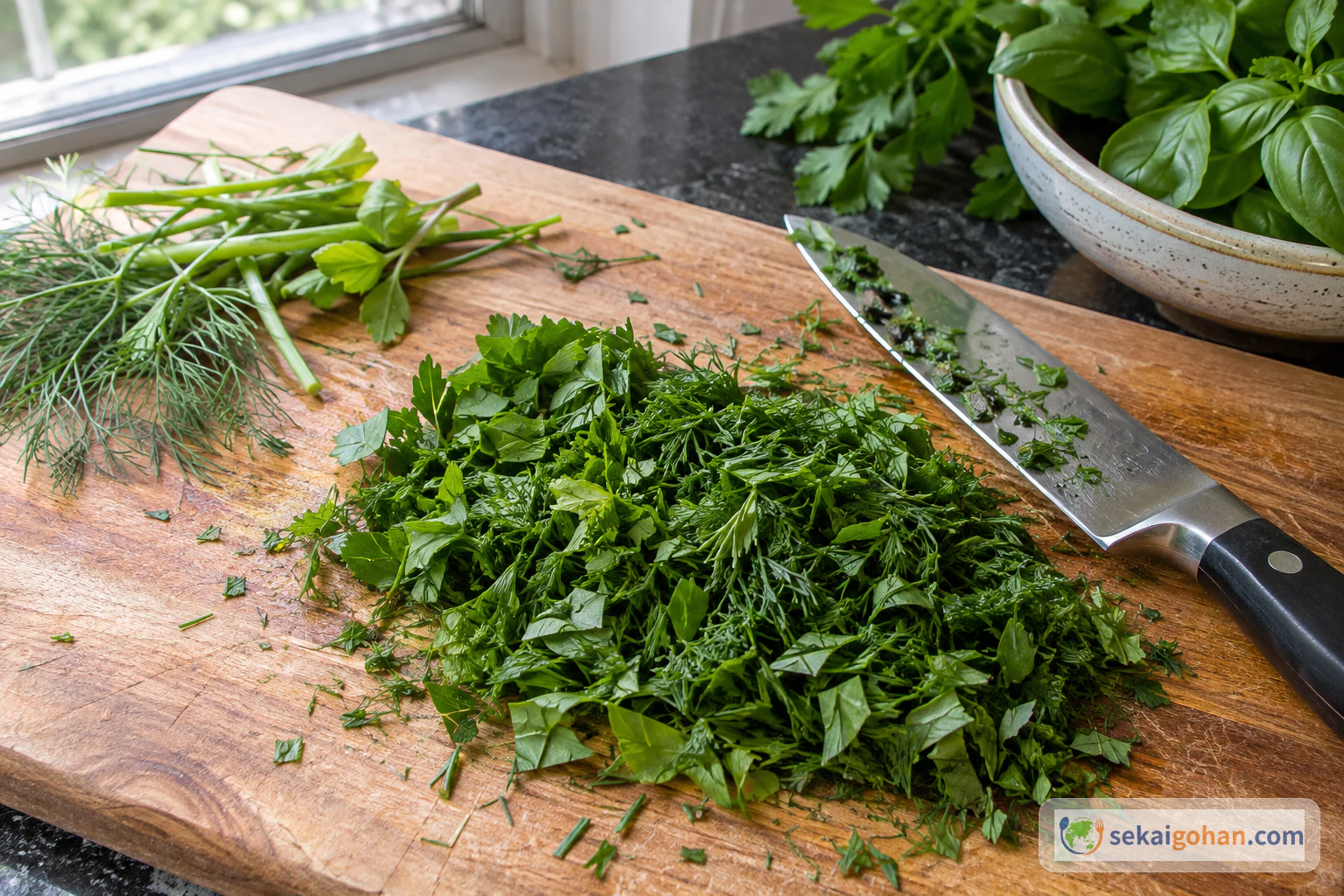
All the work is knife work, and nothing goes near a heat source. Wash all the produce first, then slice the tomatoes, cucumber and onion. Put the onion in its soak, and chop the herbs while it sits. Salt only when the plate is about to go to the table.
Rinse tomatoes, cucumber and herbs under running water. Do not use soap, detergent or any produce wash. Shakarap is served with shashlik and plov, so if you are also handling raw meat for them, cut the vegetables on a board and with a knife that have not touched raw meat. Keep a separate board for raw meat.
When It Goes Wrong
| What you see | Why | What to do |
|---|---|---|
| The onion burns your mouth | Rings cut too thick, or the onion went in without a soak | Slice thinner, soak the rings in cold water with a little vinegar, and use half an onion rather than a whole one |
| A puddle of water and soft tomatoes | Salted too early, or the plate sat too long | Pour off the extra liquid and serve right away; next time salt just before serving |
| The salad tastes flat | Underripe tomatoes, or too little salt | Add salt a pinch at a time and taste again; next time choose deep red, fragrant tomatoes |
| A sour, vinegary edge | Soaked onion not drained well | Shake the rings dry in the sieve before they go on the plate |
| A bitter aftertaste | Bitter cucumber skin | Peel the cucumber; taste a slice from the end before cutting the rest |
Serving, Variations and Storage
At the table
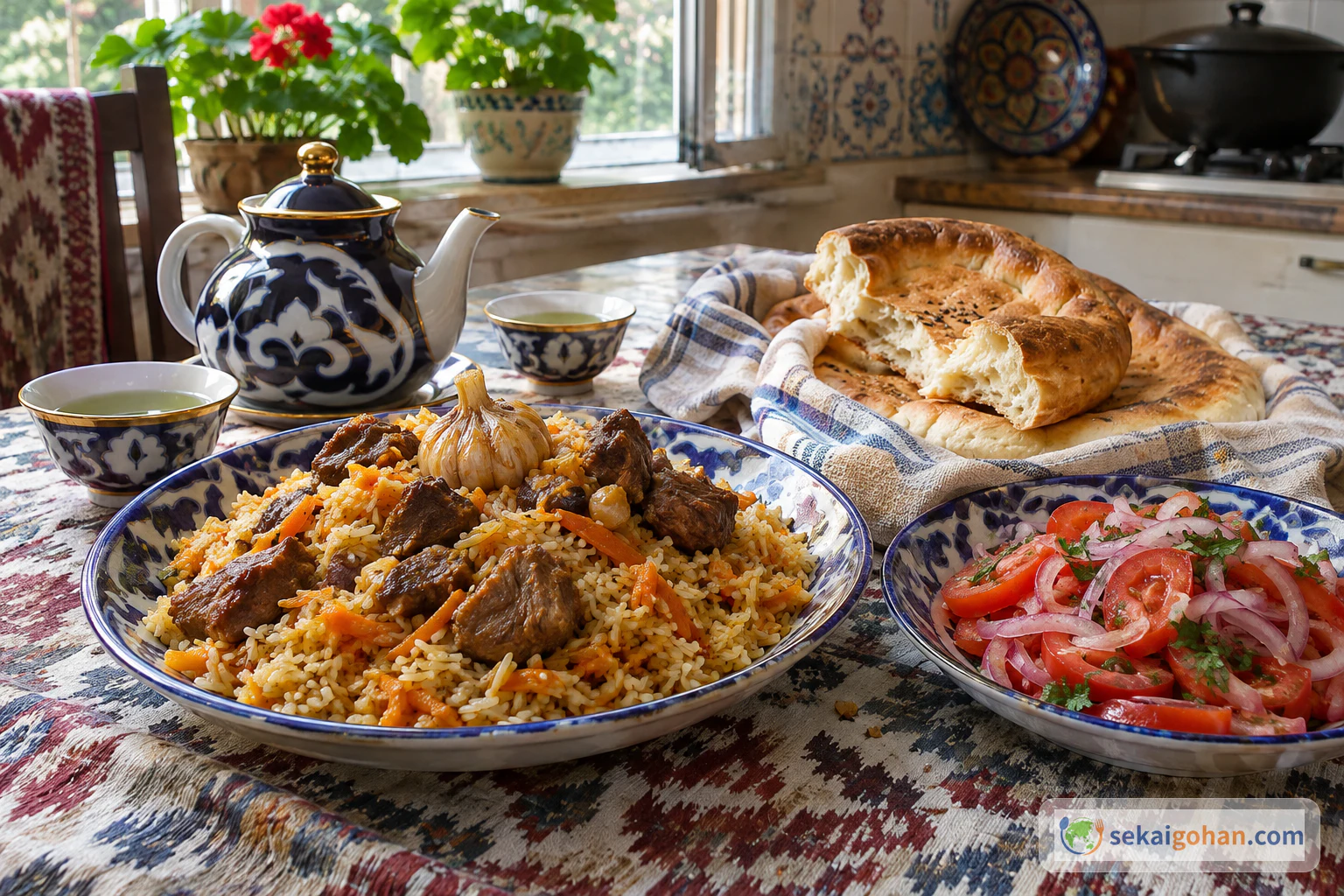
Put shakarap down at the same time as the main dish, in a shallow plate everyone can reach. Plov is its natural partner, and it belongs just as much beside shashlik or anything else from the grill, where the fat of the meat calls for acid and raw onion. Torn flatbread on the table is good for mopping up the tomato juice at the end.
Variations
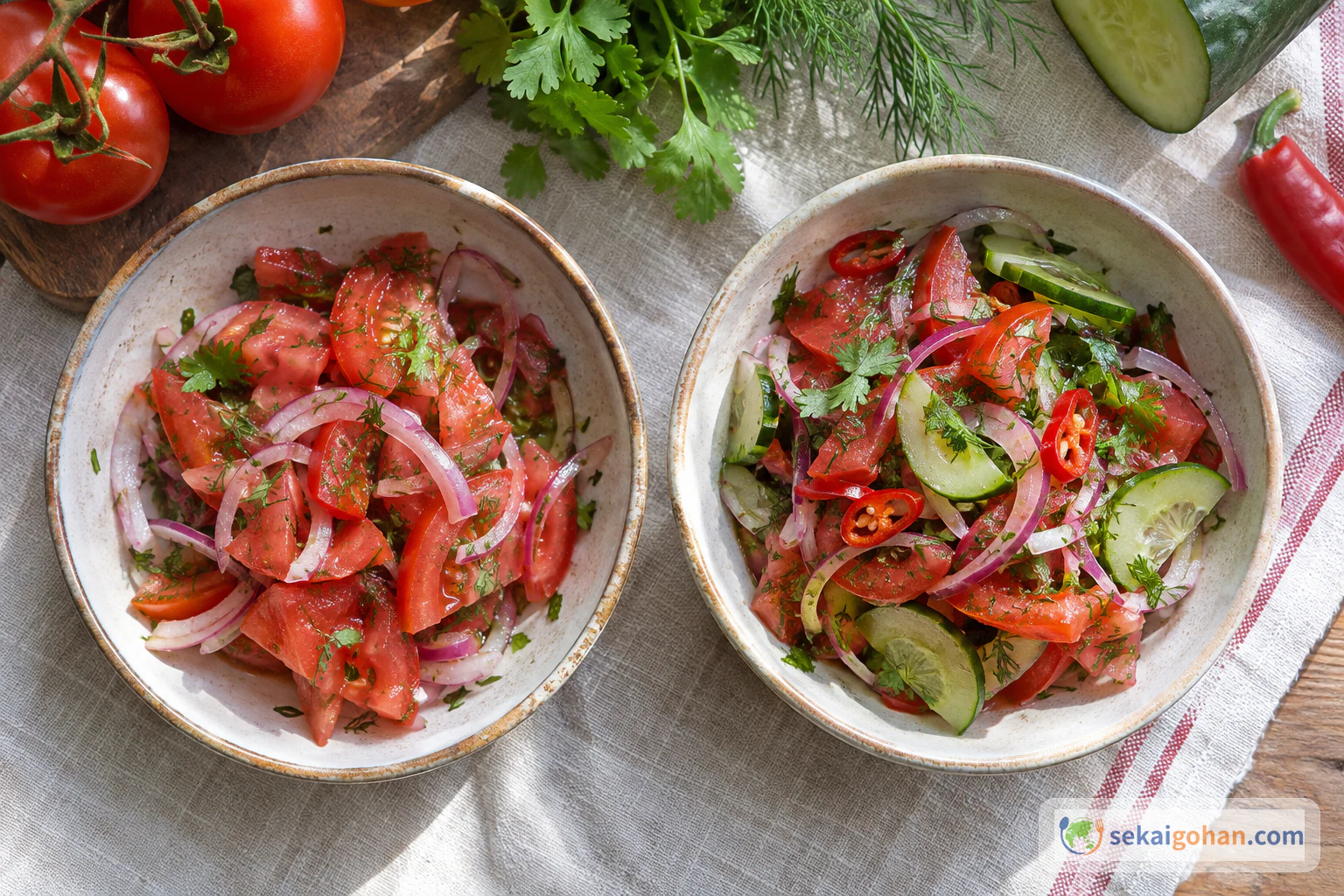
- Tomato and onion only. Leave out the cucumber for the plainest form of the salad, sharper and juicier, with nothing to cool the onion.
- With chili. Add a small red chili, seeded and sliced into thin rings, or a sliced green chili. It brings heat that stands up to grilled meat.
- Red onion. Swap the white onion for red. The plate turns pink-purple, and the onion still needs thin slicing and a soak.
- Other greens. Add sliced green onion, a little garlic, a pinch of paprika or other herbs you have. Garlic is the strongest of these and changes the salad most.
Storing leftovers
Shakarap is best eaten the day it is made. Leftovers keep for 2 to 3 days in an airtight container in the refrigerator, held at 40°F (4°C) or below. The tomatoes soften and the salad gets watery as it sits, so stir it well before serving.
Frequently Asked Questions
Can I skip the vinegar?
Yes. The vinegar only goes into the onion's soaking water, never onto the salad itself, and some cooks soak the onion in plain cold water instead. Some households avoid vinegar and lemon entirely and let the tomato supply all the acid. With a sweet onion, you can skip the soak altogether.
Half an onion or a whole one?
Either works with a pound of tomatoes. Half an onion gives a balanced plate; a whole onion makes it sharper and more onion-forward, which suits a table full of grilled meat. If you go with the whole onion, slice it extra thin and soak it.
Can I change the proportions?
Yes, and cooks in the region do it all the time. There is no fixed ratio, so adjust with what is ripe: more tomato in high summer, more cucumber on a hot day, more herbs when the garden is full. Keep the slices thin and the salad stays recognisable.
Should I add oil?
The salad is usually made without oil, and that lightness is what lets it cut through plov. Some versions add a little olive oil, about 1 teaspoon for two tomatoes, which gives a softer, rounder salad closer to a Mediterranean tomato plate. Make it without oil first, then decide.