
The story of Svan salt: the salt in your kitchen suddenly turns toward Georgia
You roast potatoes and finish them with salt. Up to there, it's an ordinary dinner. But mix into that salt the damp scent of garlic, the citrus-like sweetness of coriander, the nutty afterglow of blue fenugreek and the floral note of marigold, and the plate turns slightly in another direction. You haven't added butter or more meat, yet plain roasted potatoes edge toward the Georgian table.
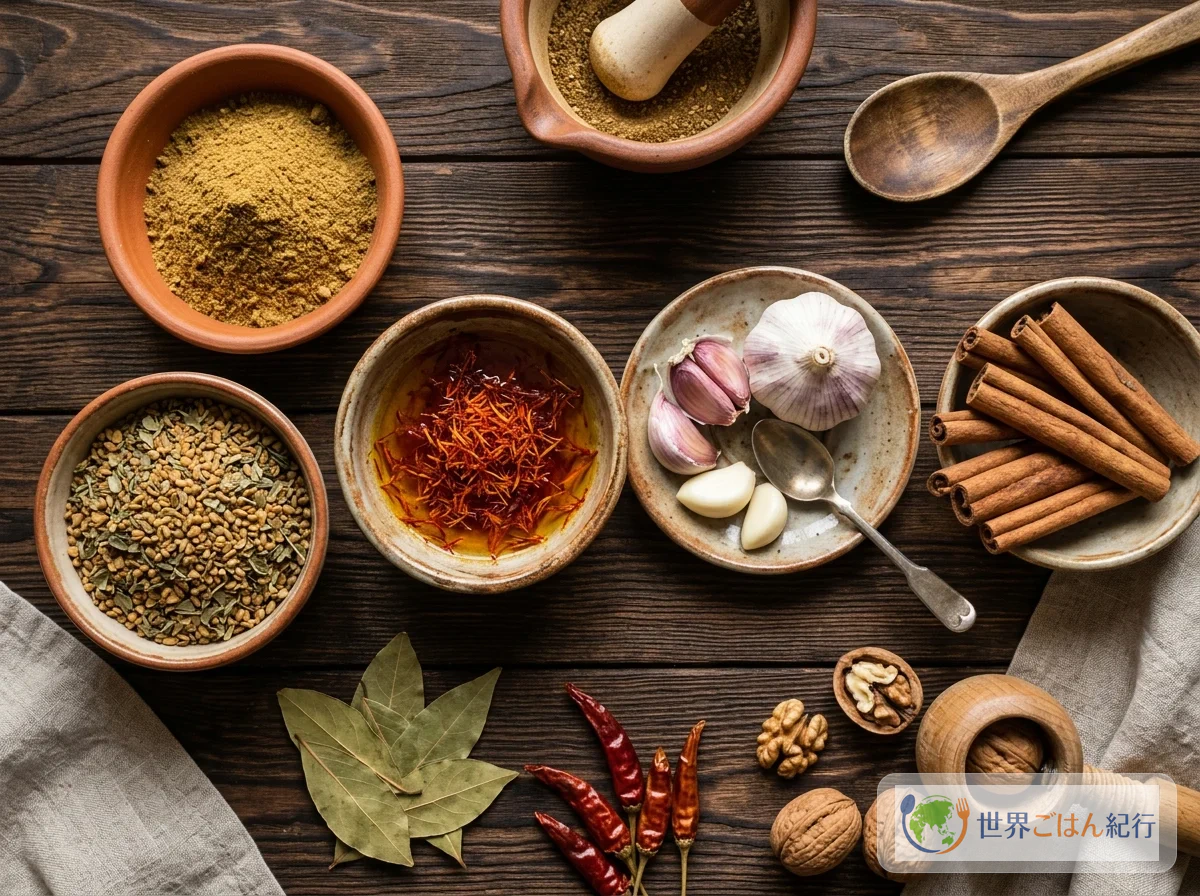
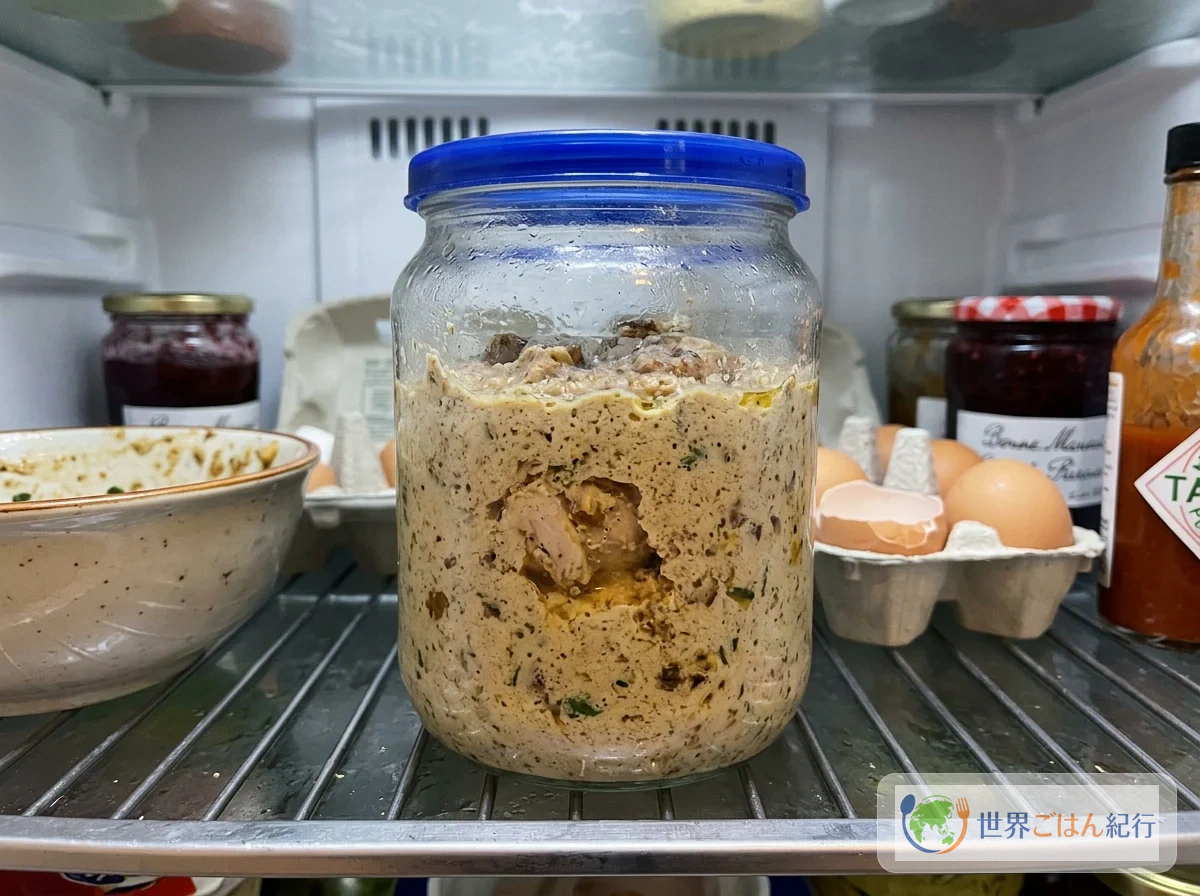
Svan salt (სვანური მარილი / svanuri marili) is a seasoned salt from Svaneti in northwestern Georgia. Known in English as Svanetian salt, it combines salt, garlic, coriander, blue fenugreek, dried marigold, chile, and caraway- or cumin-like aromas. It isn't just an "herb salt": the moisture from the garlic dampens the whole mixture slightly, letting the salt and spices meld.
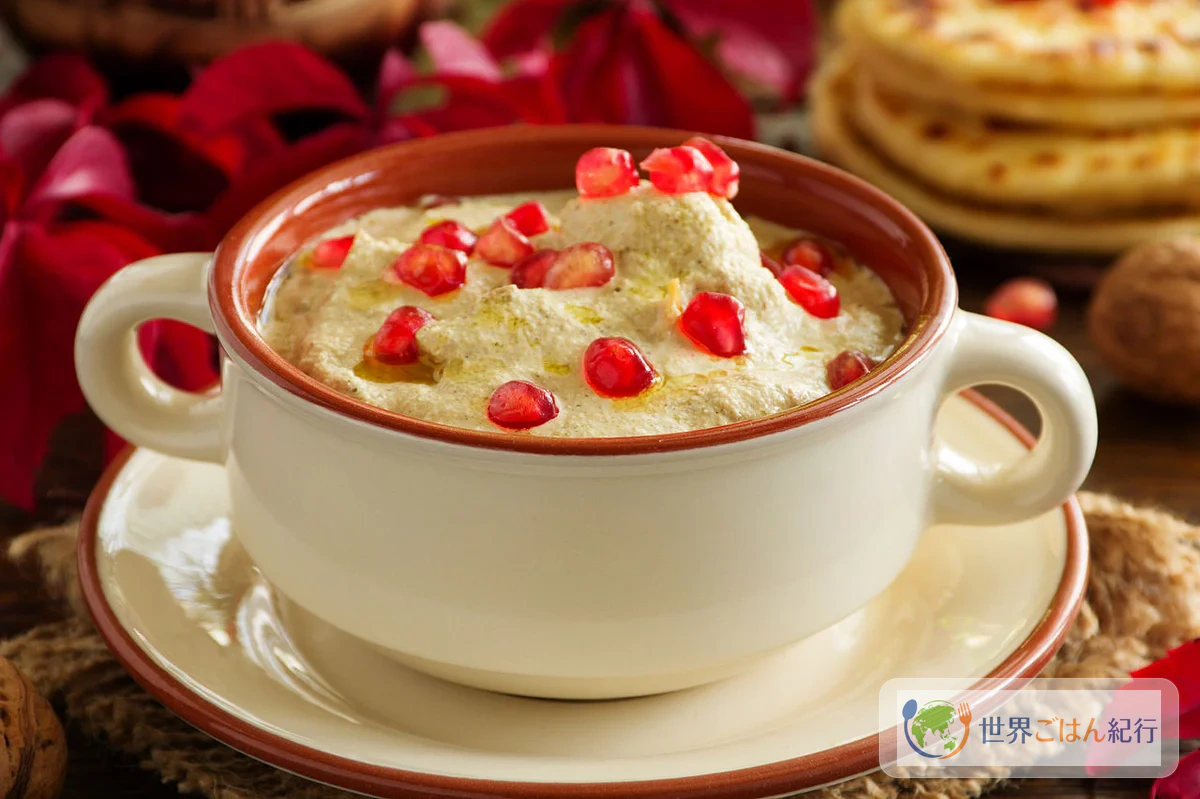
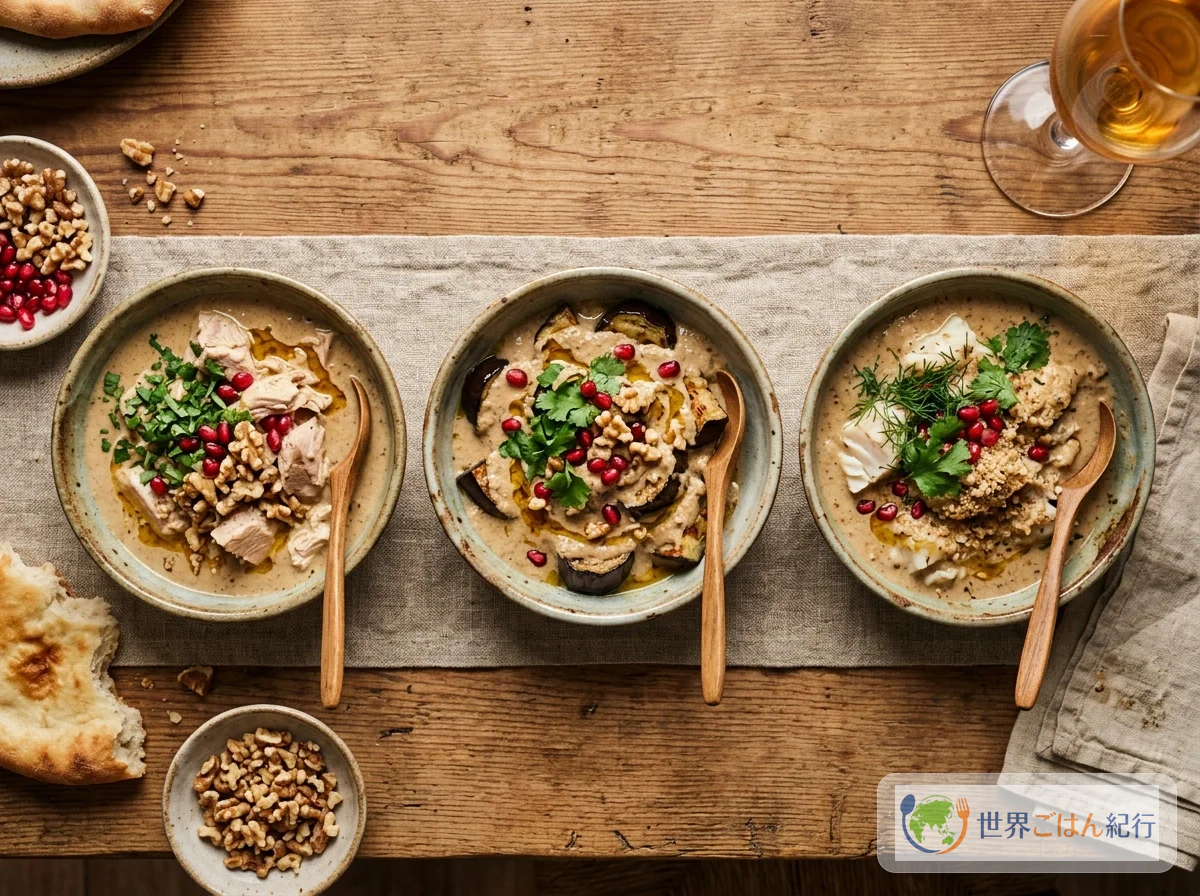
When you bake khachapuri (in Japanese), mix a little into the filling for khinkali (in Japanese), or sprinkle it on roasted vegetables beside satsivi (in Japanese), this salt makes it much easier to build the "aromatic foundation" of Georgian cooking. Bottled Svan salt is hard to find in many places, so in this article we make a small batch built from ingredients you can buy.
This isn't a recipe that fully reproduces the wild mountain herbs of the region. The real thing from Svaneti uses wild herbs from that land and blends that vary from home to home. Here, we keep blue fenugreek and marigold as the axis and sort out how to replace what you can't find nearby, and where it's best not to substitute too much.
Salt from Svaneti: the wisdom of stretching what a mountain life provides
Svaneti is a mountainous area in northwestern Georgia, close to the Caucasus range. The landscape around Ushguli, where stone towers still stand, carries a dry mountain air quite different from the sunny wine culture of Georgian cooking. In a region with long winters where travel was not easy, foods that keep, dried herbs and the use of salt were closely bound up with daily life.
The Slow Food Foundation's Ark of Taste presents Svan salt as a seasoned salt from Svaneti and lists salt, garlic, coriander, blue fenugreek, dried marigold and chile as common ingredients. It also mentions a distinctive caraway-like aroma from high altitude as one element that sets the local version apart. In other words, Svan salt is not just "salt with spices added" but a way of stretching limited salt with aroma and lifting the savoriness of the whole dish.
In English-language explanations of Georgian cooking, Svan salt is described as an all-purpose seasoning for meat, fish, potatoes, beans, soups and tomato-and-cucumber salad. Used in a similar way in your own kitchen, it's easiest to start with french fries, grilled chicken, pork stir-fries, fried eggs, tomato salad and a finishing sprinkle on minestrone.
If you use Svan salt only on Georgian-food days, it tends to be left at the bottom of the jar. Start with roasted potatoes, chicken thighs and boiled eggs. If it works in everyday cooking, buying blue fenugreek and marigold starts to make sense.
The skeleton of the flavor: what to keep and what to swap
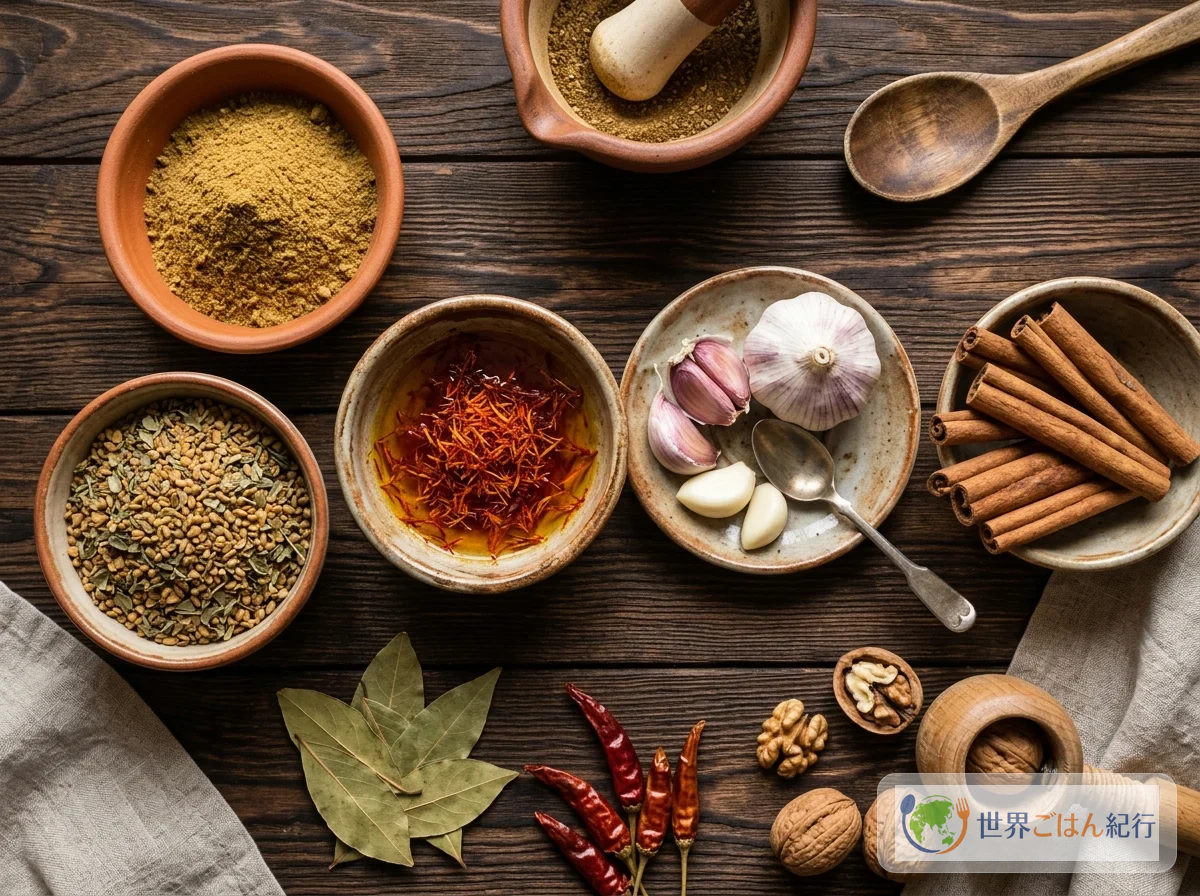
The easy mistake when substituting for Svan salt is to be satisfied with garlic salt mixed with a little chile. It's still tasty, but the Georgian character fades. What matters is the triangle of blue fenugreek, coriander and marigold.
| Role | More authentic ingredient | Realistic substitute | What happens if you swap too far |
|---|---|---|---|
| Nutty aroma | Blue fenugreek (utskho suneli) | Georgian grocery stores or online. Otherwise a little regular fenugreek + a pinch of roasted soybean flour (kinako) | Regular fenugreek alone turns bitter |
| Floral scent and yellow color | Dried marigold (Imeretian saffron) | Edible marigold, or a little paprika + a tiny bit of turmeric | More turmeric makes it taste like curry |
| Sweet, citrus-like aroma | Coriander seeds | Grind whole coriander seeds from a supermarket | Old powder has weak aroma |
| Damp savoriness | Fresh garlic | Grated garlic. In a hurry, garlic powder | Powder alone lacks the dampness special to Svan salt |
| Mountain-herb feel | Caraway, dill, cumin-type | A little caraway, a little cumin, dried dill | Too much cumin leans Middle Eastern or curry-like |
| Red heat | Chile powder | Crushed red pepper, cayenne, Korean chile flakes | If only heat stands out, it limits the dishes it suits |
Blue fenugreek has a name close to regular fenugreek, but it's better to treat its aroma as a different thing. Georgian Eats' spice guide also explains that ordinary fenugreek is strongly bitter, and that "fenugreek" in Georgian cooking usually means blue fenugreek. If you can't find it, using a small amount of regular fenugreek and mixing in just a little roasted soybean flour (kinako) helps avoid the failure of bitterness coming to the fore.
Don't use ornamental marigolds that are not meant to be eaten. Choose edible flowers sold as food, marigold sold for herbal tea, or Imeretian saffron sold as a Georgian ingredient. Turmeric can supply the color, but the aroma is different.
Ingredients (an easy batch, about 120 g)
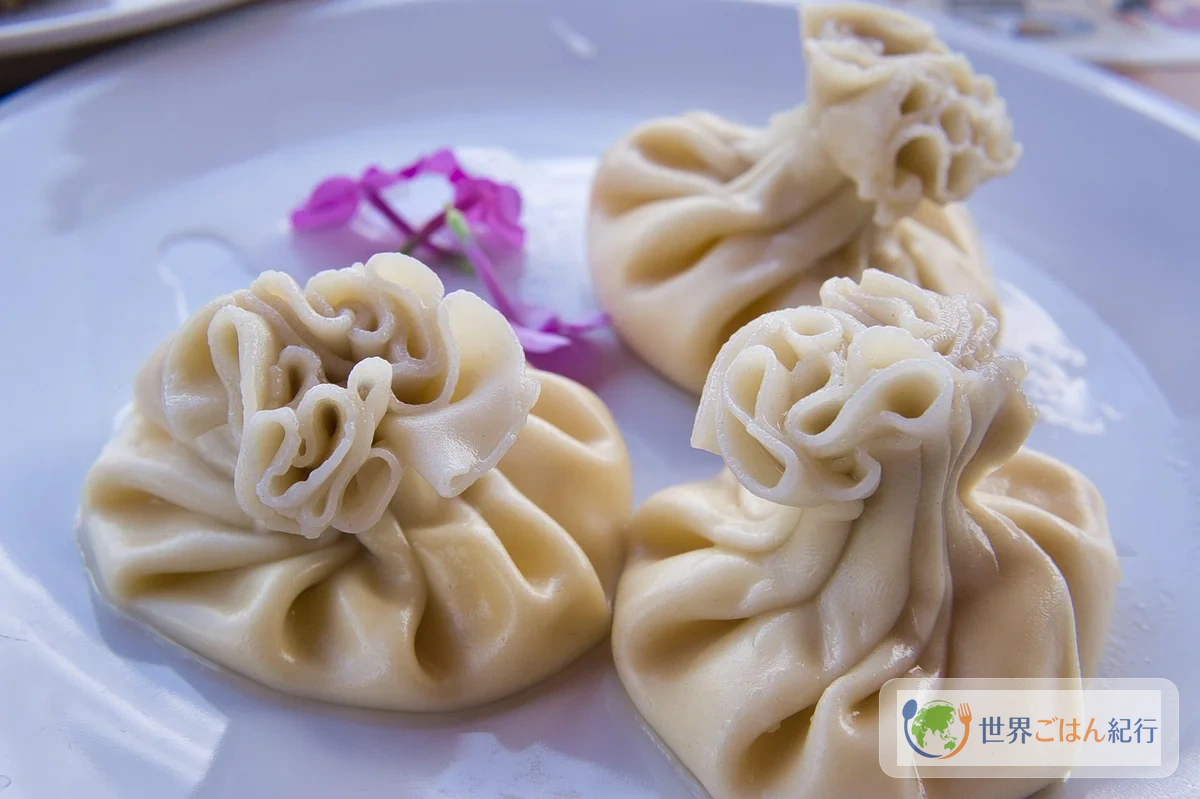
This amount fills one small storage jar. Svan salt is strongly salty, so rather than making a lot at once, it's better to keep the batch small enough to use up in 1–2 months so that the aroma stays. Local recipes are made in much larger quantities, but for a home kitchen it's realistic to start with a small batch.
The total sodium for this whole recipe is roughly 37 g. The nutrition information is for the whole batch, not for one serving. Don't use it like ordinary salt; start with less than 1/4 tsp per person.
Ingredients and equipment for this seasoned salt
Blue fenugreek and edible marigold are often not available at a neighborhood supermarket. Rather than buying a big bag from the start, you'll have fewer failures looking for small packets. Try Georgian grocers, spice shops or online stores. Whole coriander, a small spice mill, an airtight glass jar of about 150 ml (5 oz) and a mortar and pestle make the work easier.
Method: toast, crush, and bind with garlic
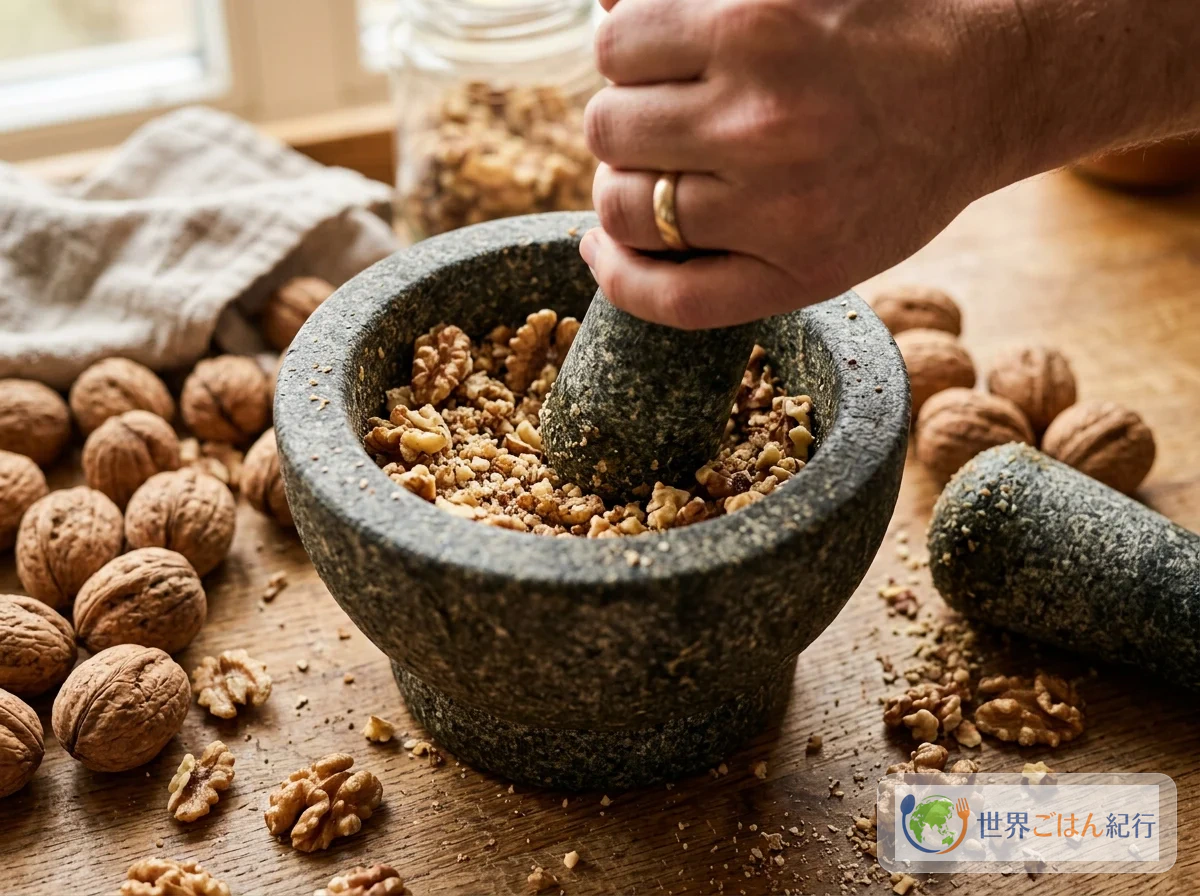
You can make it just by mixing powders, but lightly toasting the coriander and caraway before grinding brings out the aroma. Heat is for waking up the aroma, not for burning it. Toast until the color darkens and it turns bitter.
Because it contains chile and garlic, the scent and heat stay on your hands. If you rub your eyes or touch contact lenses, it can sting badly. Rubbing it in with disposable gloves or through a thick plastic bag is safer.
How to use it: start with potatoes, meat and eggs

If you get the amount wrong, Svan salt quickly turns too salty. It's not a mixed spice blend; it's salt, first of all. At the start, replacing half of your usual salt with Svan salt is a safe guideline.
| Dish | Guideline amount | How to use |
|---|---|---|
| Roasted potatoes | 1/2 tsp for 2 servings | Toss with a little butter after roasting |
| Grilled chicken thighs | 1 tsp for 300 g meat | Rub in lightly 15 minutes before grilling. Don't add other salt |
| Pork stir-fry | 2/3 tsp for 250 g meat | Stir-fry with onion and finish with a squeeze of lemon |
| Fried egg | A pinch per egg | Sprinkle on at the end, in place of black pepper |
| Tomato and cucumber salad | 1/3 tsp for 2 servings | Add a little olive oil and vinegar |
| Khinkali filling | 1/2 tsp for 300 g meat | Reduce ordinary salt while checking the saltiness |
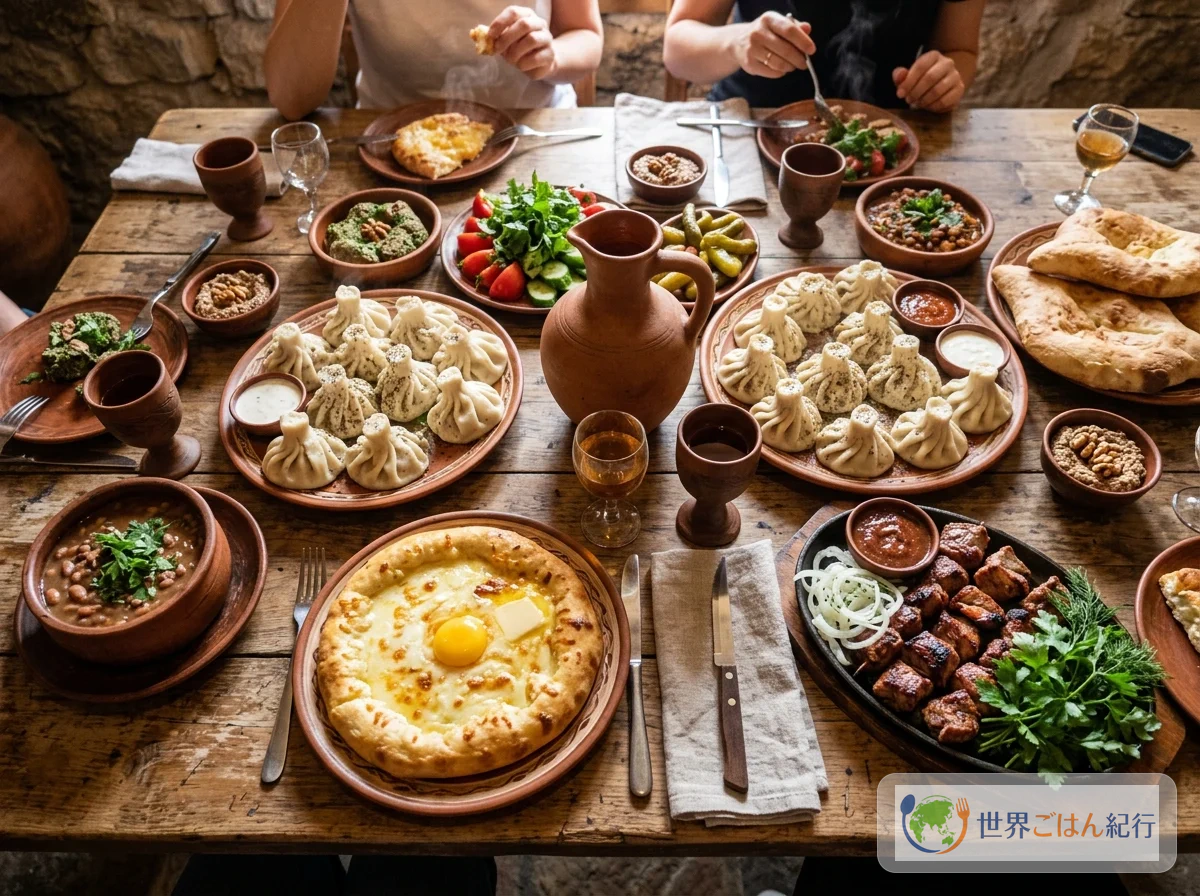
To lean into Georgian cooking, use it on roasted potatoes served beside khachapuri (in Japanese), in the filling for khinkali (in Japanese) and on the vegetables served with satsivi (in Japanese). Even when planning a table with our overview of Georgian cuisine (in Japanese), Svan salt lets you bring the side dishes' flavors in the same direction.
It also goes with fried chicken seasoning, grilled rice balls, soft-boiled eggs and chilled tofu. But combined with soy sauce or miso the saltiness stacks up, so reduce those seasonings a little. On chilled tofu, olive oil and Svan salt alone are enough, with no soy sauce.
Failures and storage: fixing too damp, too bitter and too salty
Too damp
If the garlic pieces are large, the salt is fine or droplets remain in the jar, Svan salt becomes too pasty. Damp is right, but watery is not suited to storage. Add 2–3 tsp of dry coarse salt, spread it on a clean plate and dry it in the refrigerator for about 30 minutes.
Too bitter
You may have used too much regular fenugreek, or scorched the coriander. Bitterness can't be removed completely, but adding 1 tsp paprika, 1 tsp ground coriander and 2 tsp coarse salt rounds off the edge a little. Next time, if you don't have blue fenugreek, keep regular fenugreek to 1/2 tsp or less.
Smells like curry
Too much turmeric or cumin moves it from Georgian cooking toward curry powder. Keep turmeric to 1/8 tsp as a color correction, and cumin to 1/2 tsp; make up any missing aroma with coriander and dried dill.
Too salty
Svan salt itself is salty. If you don't reduce ordinary salt in the dish, it quickly becomes strong. If a dish has already turned too salty, adding potatoes, eggs, unsalted yogurt or lemon makes it easier to eat. If you want to dilute the contents of the jar, rather than reducing the salt, add small amounts of coriander, marigold and blue fenugreek.
Storage
Because it uses fresh garlic, refrigerated storage is safer than keeping it at room temperature for long. Use a clean spoon and plan to use it up within 3–4 weeks in the refrigerator. A dry version made only with garlic powder has a weaker aroma but is easier to handle for about 2–3 months in an airtight container in a cool, dark place.
Making the damp and dry versions
If you're cooking Georgian food on a weekend, the damp version with fresh garlic is recommended. Used on potatoes served beside khachapuri, grilled chicken thighs and khinkali filling, the garlic aroma transfers into the food along with the salt. The aroma is strong but storage is shorter, so plan to use it up quickly once made, in the order potatoes, eggs, meat.
The dry version is handy as an everyday seasoned salt. Just put 70 g coarse salt, 1.5 tsp garlic powder, 1.5 tbsp ground coriander, 1 tbsp blue fenugreek, 1 tbsp marigold, 1 tsp chile and 1 tsp caraway into a jar and shake. It doesn't have the dimension of the damp version, but it's easy to use in small amounts on boiled eggs for a lunch box, frozen potatoes and toasted cheese bread.
| Version | Good for | Storage | Watch out for |
|---|---|---|---|
| Damp version with fresh garlic | Georgian-food days, seasoning meat, roasted vegetables | 3–4 weeks in the refrigerator | A clean spoon is a must. Don't leave it at room temperature |
| Dry version with garlic powder | Everyday table salt, lunch boxes, eggs, frozen potatoes | 2–3 months in a cool, dark place | Weaker aroma. Rub it a little just before using |
Avoid seasonings that combine garlic and oil and are stored at room temperature. This recipe contains no oil, but because it uses fresh garlic, store it in the refrigerator. If there is an off smell, sliminess or mold, discard it without eating.
FAQ
Q1. Can I make it without blue fenugreek?
Yes, but the "Georgian character" is weaker. If you use regular fenugreek, keep it to 1/2 tsp and add 1 tsp roasted soybean flour (kinako) to round off the bitterness. If you can get blue fenugreek, it's worth trying once.
Q2. Can I use turmeric in place of marigold?
For color alone, yes, but the aroma is different. Keep turmeric to about 1/8 tsp and add a little paprika. Too much gives an impression of curry powder.
Q3. Can I leave out the heat if kids will eat it?
You can make it without chile powder. Add chile or black pepper afterward only to the adults' plates. The garlic aroma remains, so starting with a small amount on fried eggs or potatoes makes it easier to accept.
Q4. Which is easier to use, the dry version or the fresh garlic version?
The fresh garlic version is better for aroma. The dry version is better for storage and ease of use. For a first time, make a small batch of the fresh garlic version, and if you'll use it often, it's practical to make a garlic powder version separately.
Q5. What dish does it go with best?
Start with roasted potatoes. The differences among saltiness, garlic, coriander and blue fenugreek are easy to notice, and it's easy to adjust if it fails. Once you're comfortable, expand to chicken, pork, bean soups and tomato salad.
Sources
- Georgian Recipes, "Svanetian Salt" (accessed May 2026) https://georgianrecipes.com/recipes/Svanetian-salt/
- Georgian Recipes.net, "SVANETIAN SALT" (accessed May 2026) https://georgianrecipes.net/2013/09/05/svanetian-salt/
- Georgian Eats, "Georgian Spices & Herbs: The Complete Guide to a Flavor-Obsessed Cuisine" (accessed May 2026) https://georgianeats.com/guides/georgian-spices/
- Slow Food Foundation for Biodiversity, "Svanetian Salt" (accessed May 2026) https://www.fondazioneslowfood.com/en/ark-of-taste-slow-food/svanetian-salt/