

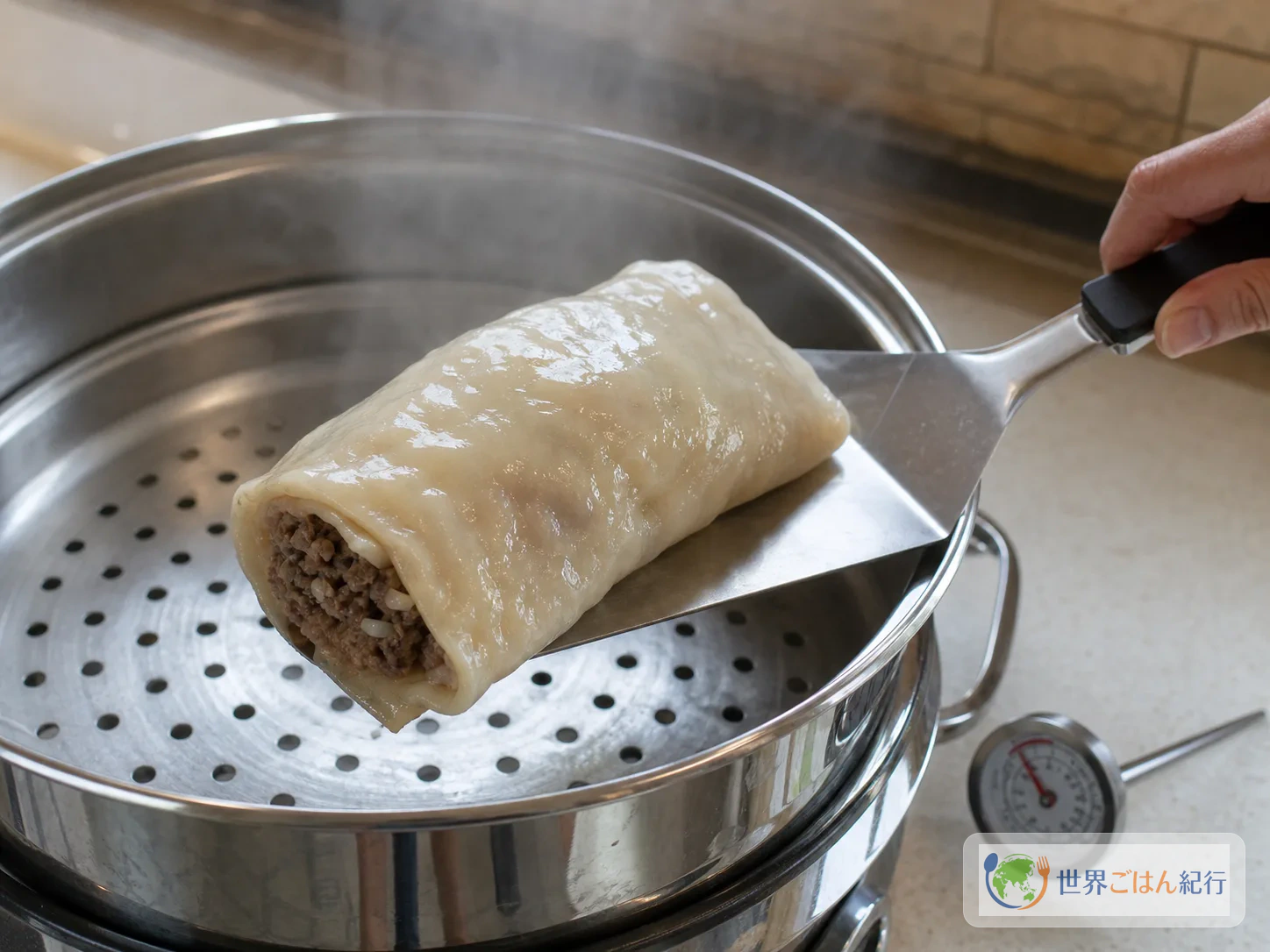
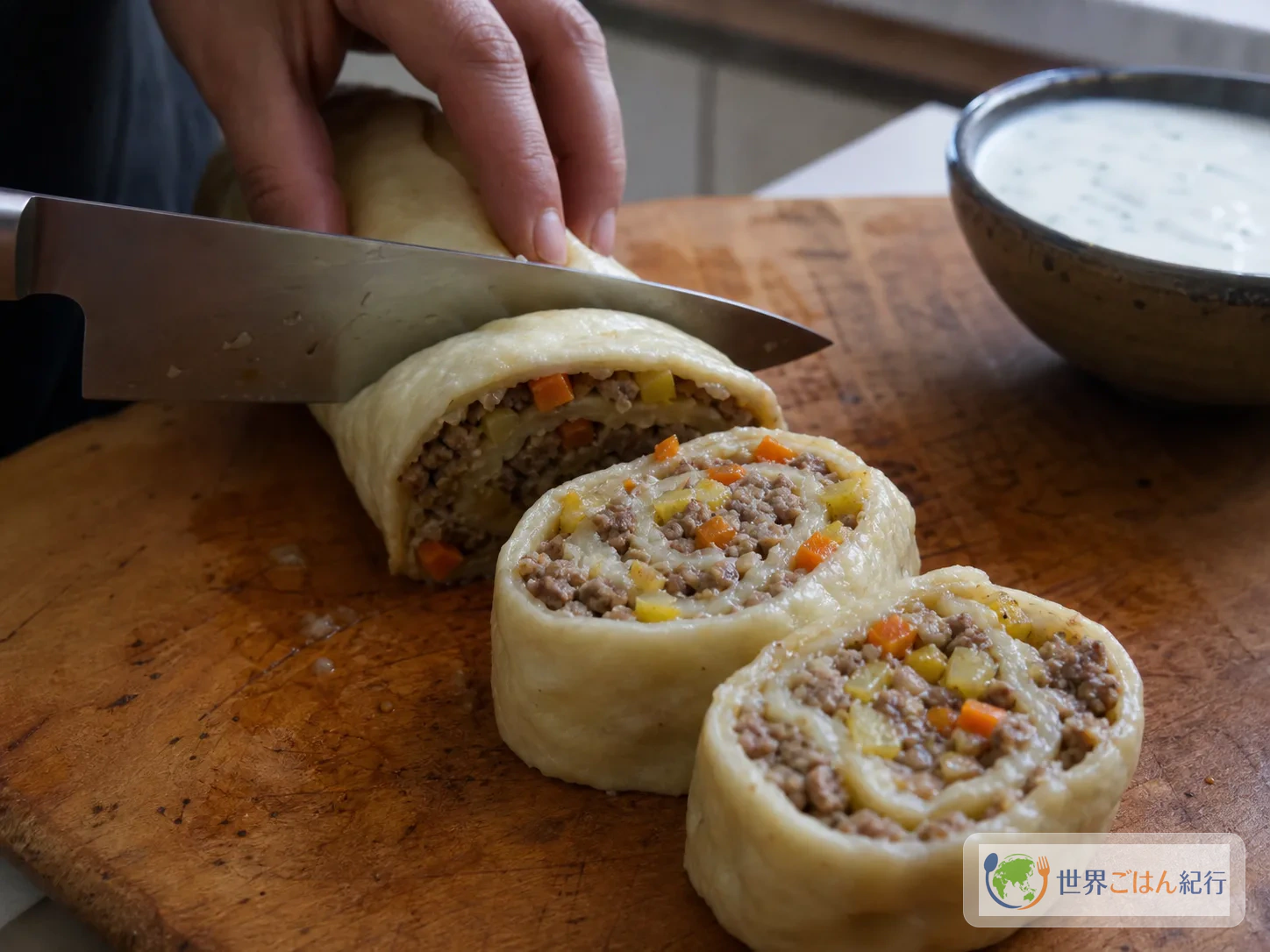
A Rolled Dish From Kyrgyzstan, Cut in the Steam
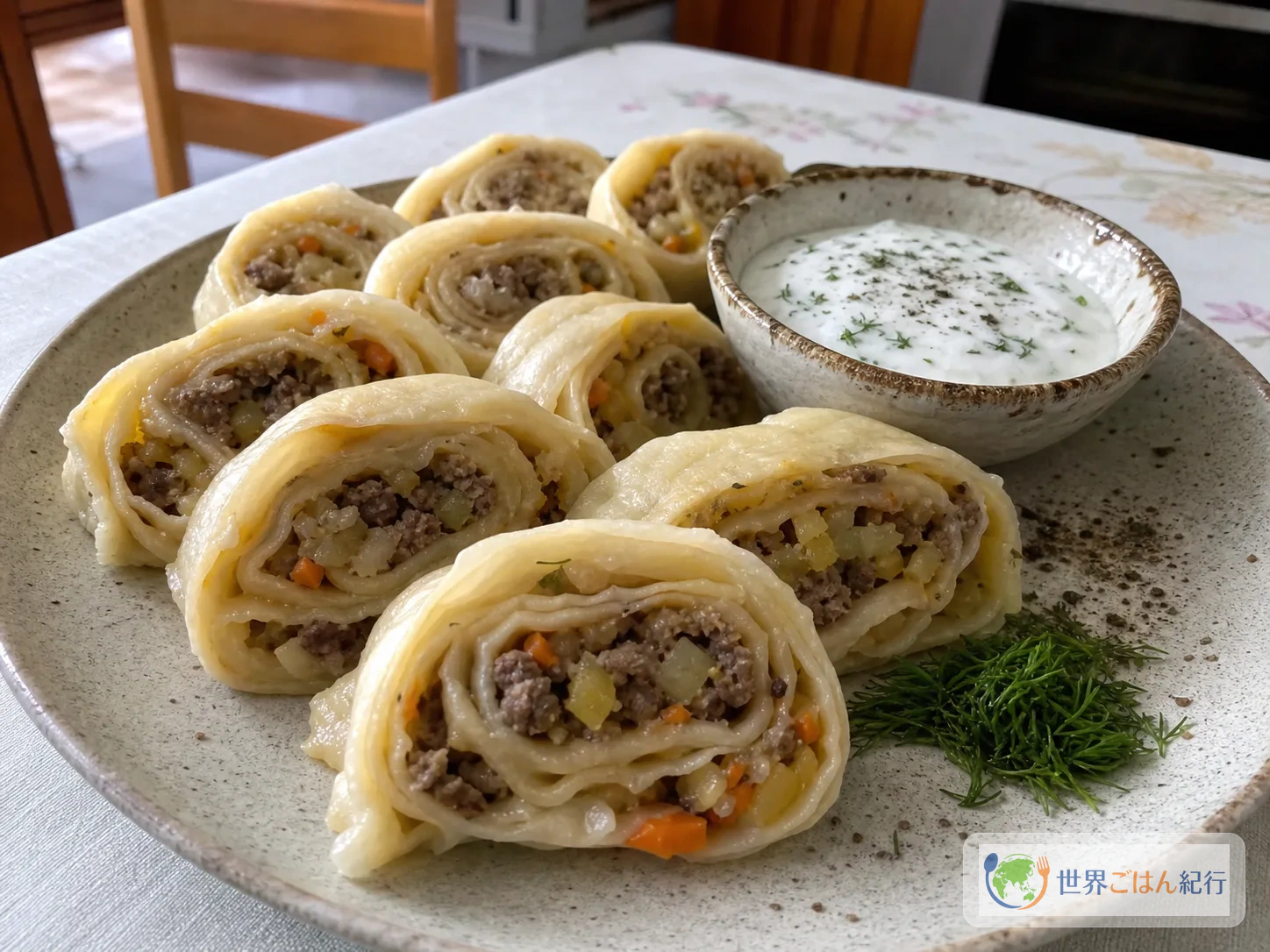
The moment you lift the lid off the steamer, the sweet smell of flour rises together with onion, meat and cumin. There is no browned crust like a pan-fried dumpling, and no rich broth like a stew. Yet slice it thickly with a knife, and potato soaked in meat juices shows from within the whorl of thin dough, and the kitchen suddenly feels like a Central Asian canteen.
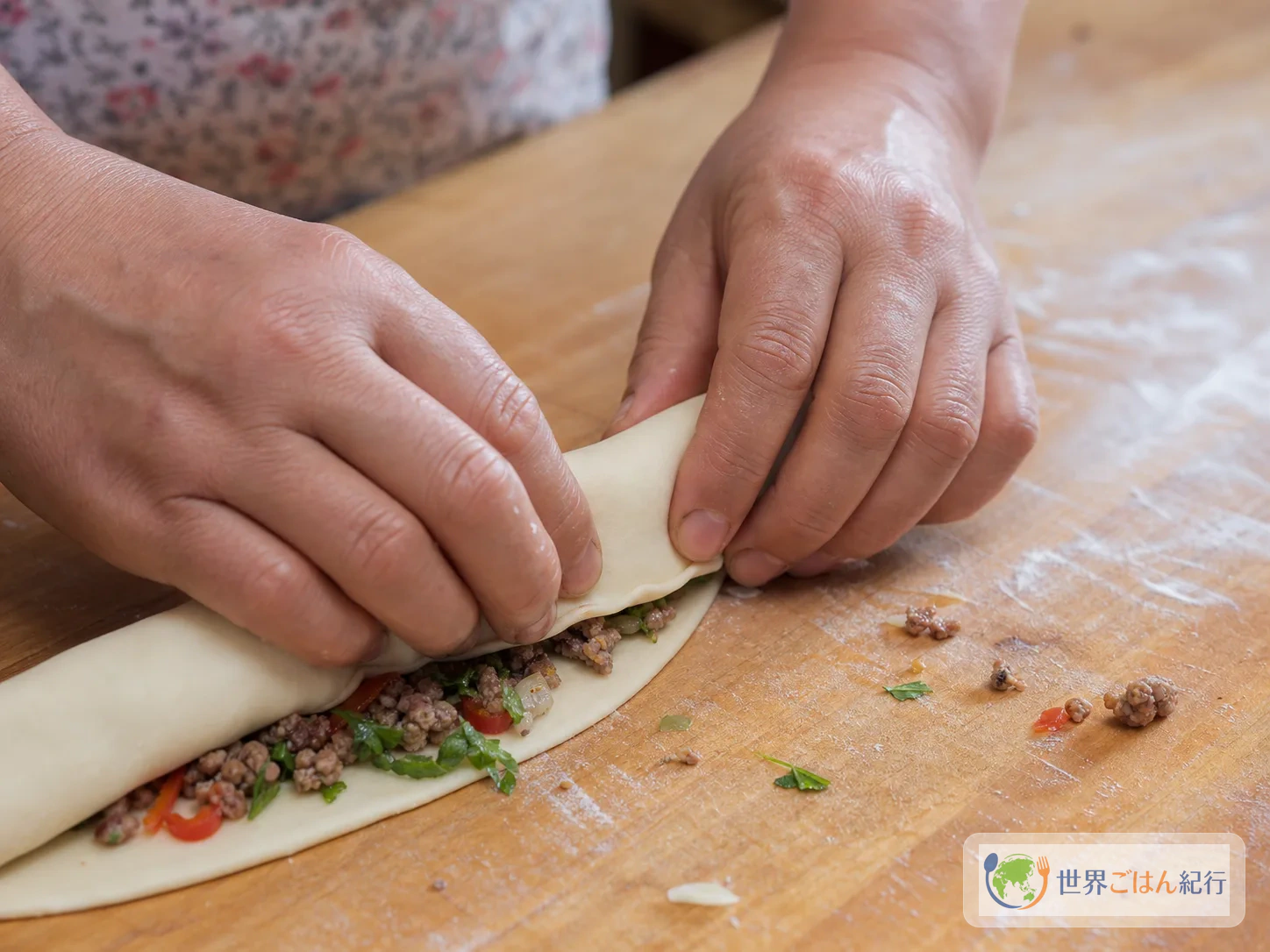
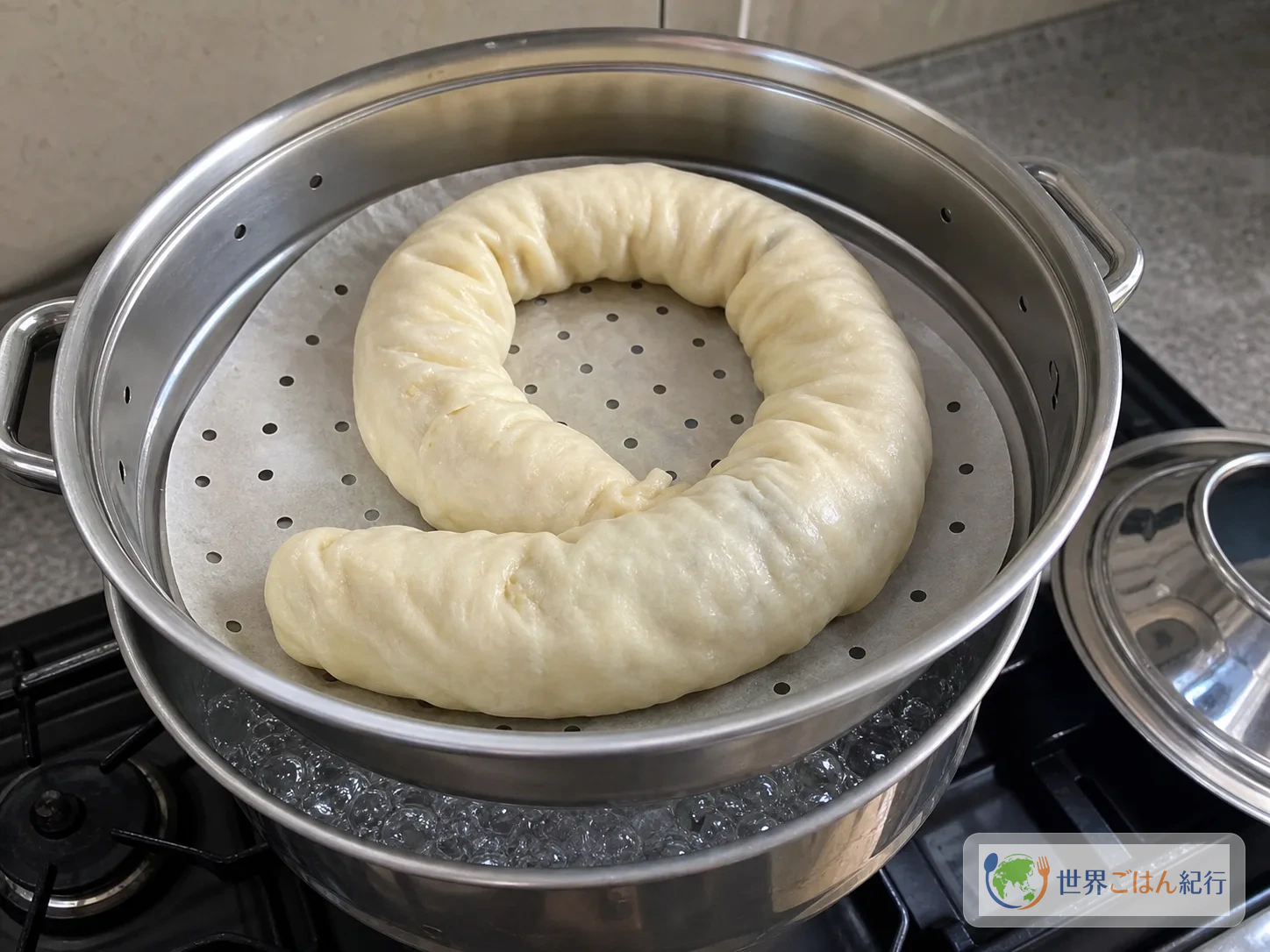
Oromo (Oromo / Оромо) is a steamed roll eaten in Kyrgyzstan. Thin wheat dough is spread with meat, potato and onion, rolled into a long tube and steamed. It looks like a giant rolled dumpling and eats like something between manti and lagman. You don't wrap pieces one by one as you do with manti, so at home it is actually easier to make.
Locally the usual form uses lamb, beef, potato and onion, and some households add carrot or pumpkin according to the season. Because ground lamb is not always easy to buy, this recipe is built around ground beef with a little beef fat added for aroma and juiciness. If you can get ground lamb, replacing half of the beef with it brings the dish much closer to the local version.
Oromo is a Kyrgyz dish of meat and wheat dough in which a filling is rolled in thin dough and steamed. Advantour's guide to Kyrgyz food presents it as a steamed dish filled with meat and potato, and classes it among the country's representative meat-and-dough dishes. Some people favor potato, some meat, some both, and the character changes quite a lot from household to household.
Ingredients (serves 4)
All the ingredients
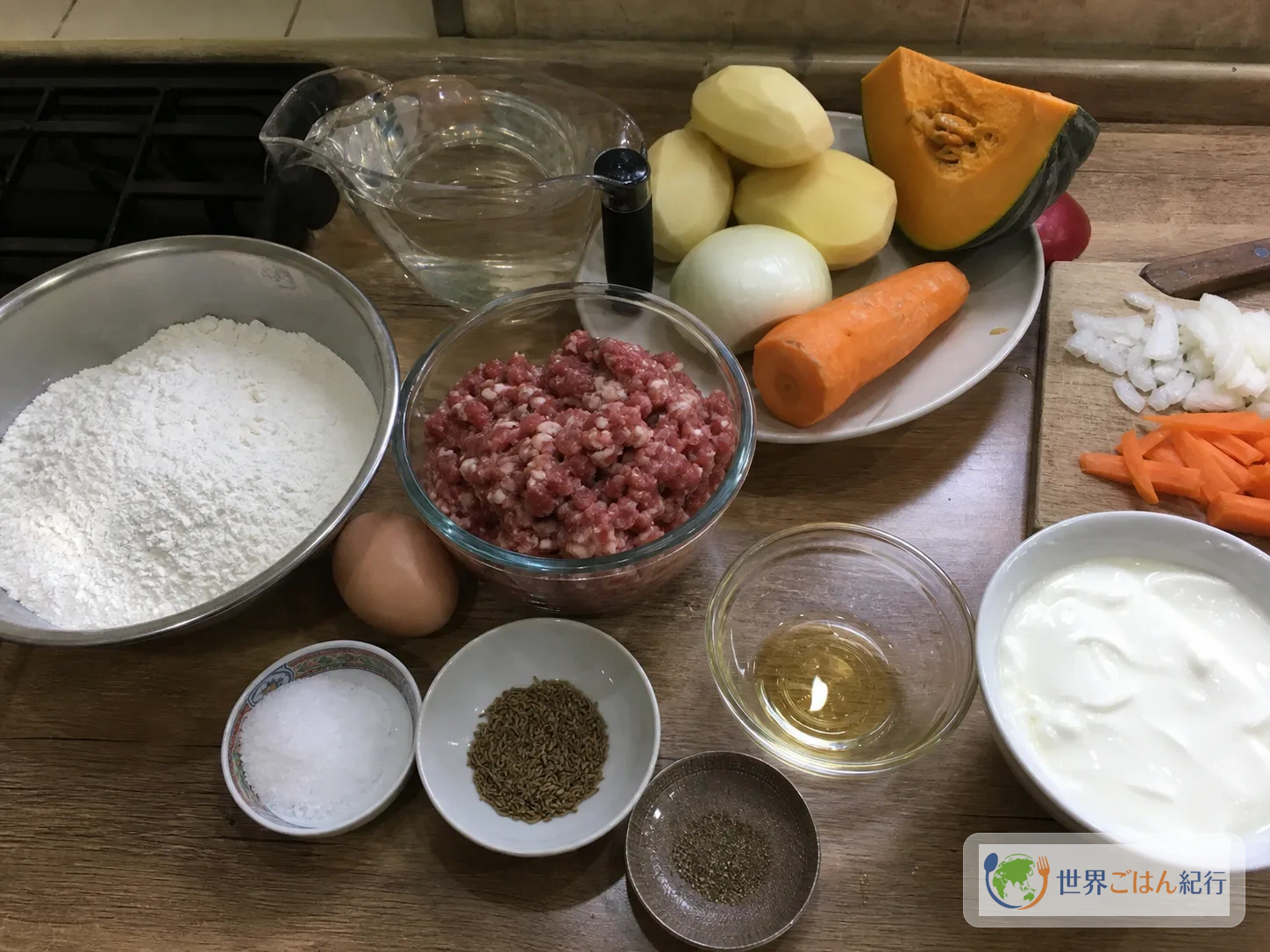
This recipe contains wheat, egg and dairy. If you leave out the egg, add 20 ml more water and knead 2 minutes longer. If you don't make the yogurt sauce, serve a tomato and cucumber salad with a little vinegar so the fat of the meat doesn't feel heavy.
Where Shopping Gets Confusing
With oromo, the result depends less on the meat and vegetables than on the aroma, the size of the steamer and confidence that it is cooked through. Ordinary ground beef and potatoes are fine from any grocery. Only a few items are worth thinking about before you buy.

You can make this with ground cumin, but for a steamed dish like oromo, the aroma of lightly crushed whole seeds lasts better. Mixed into the filling they are less likely to turn bitter, and they give the dish its Central Asian outline of fragrance.
A steamer 28–30 cm across lets you fit the long roll without forcing it to bend. If you only have a small steamer, rolling it into two pieces is safer.
Because the filling is rolled raw and steamed, an instant-read thermometer gives peace of mind. It is hard to judge a thick meat roll by its outside alone, so at home aiming for 75°C or above reduces doubt.
Instructions
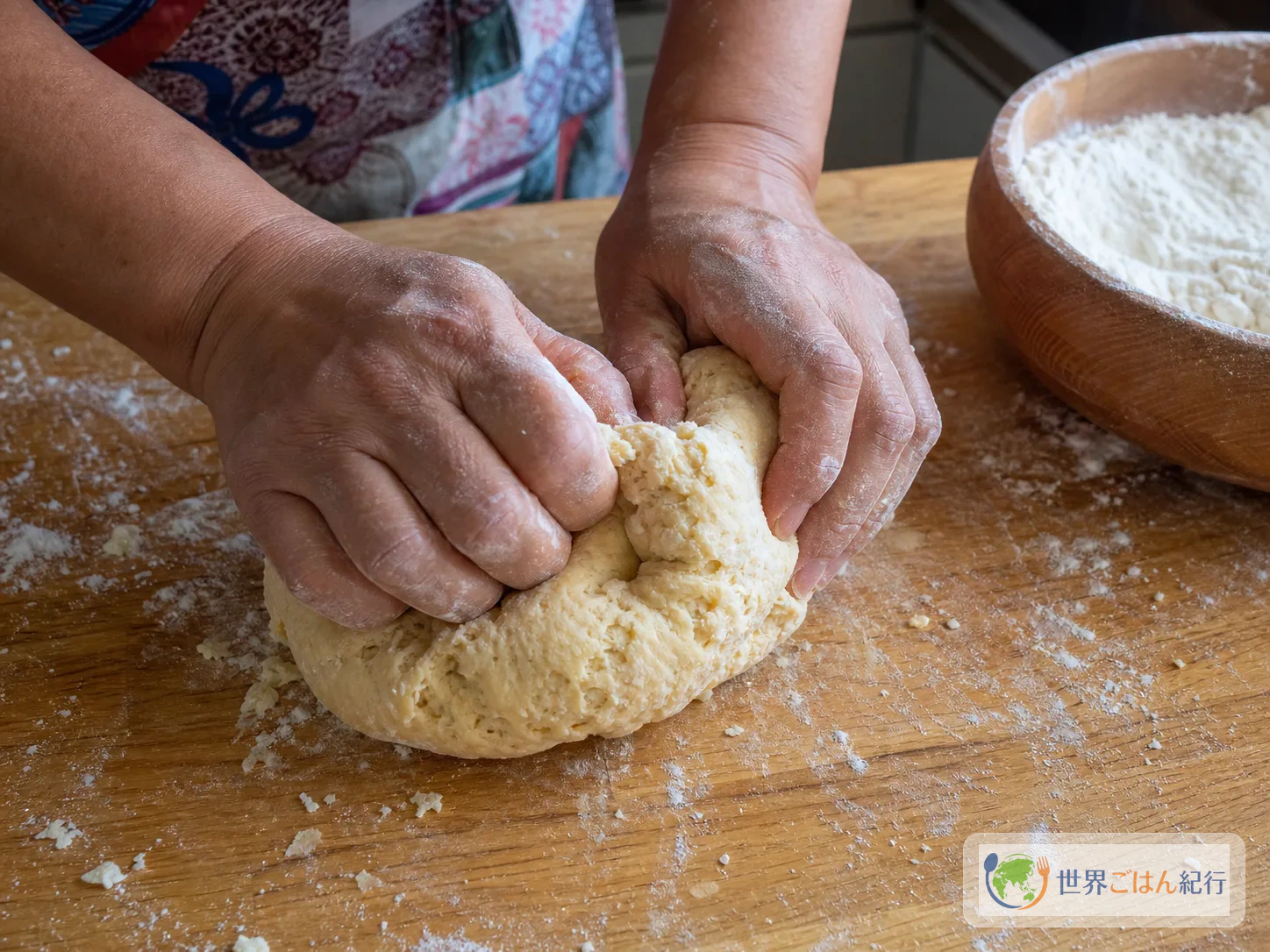
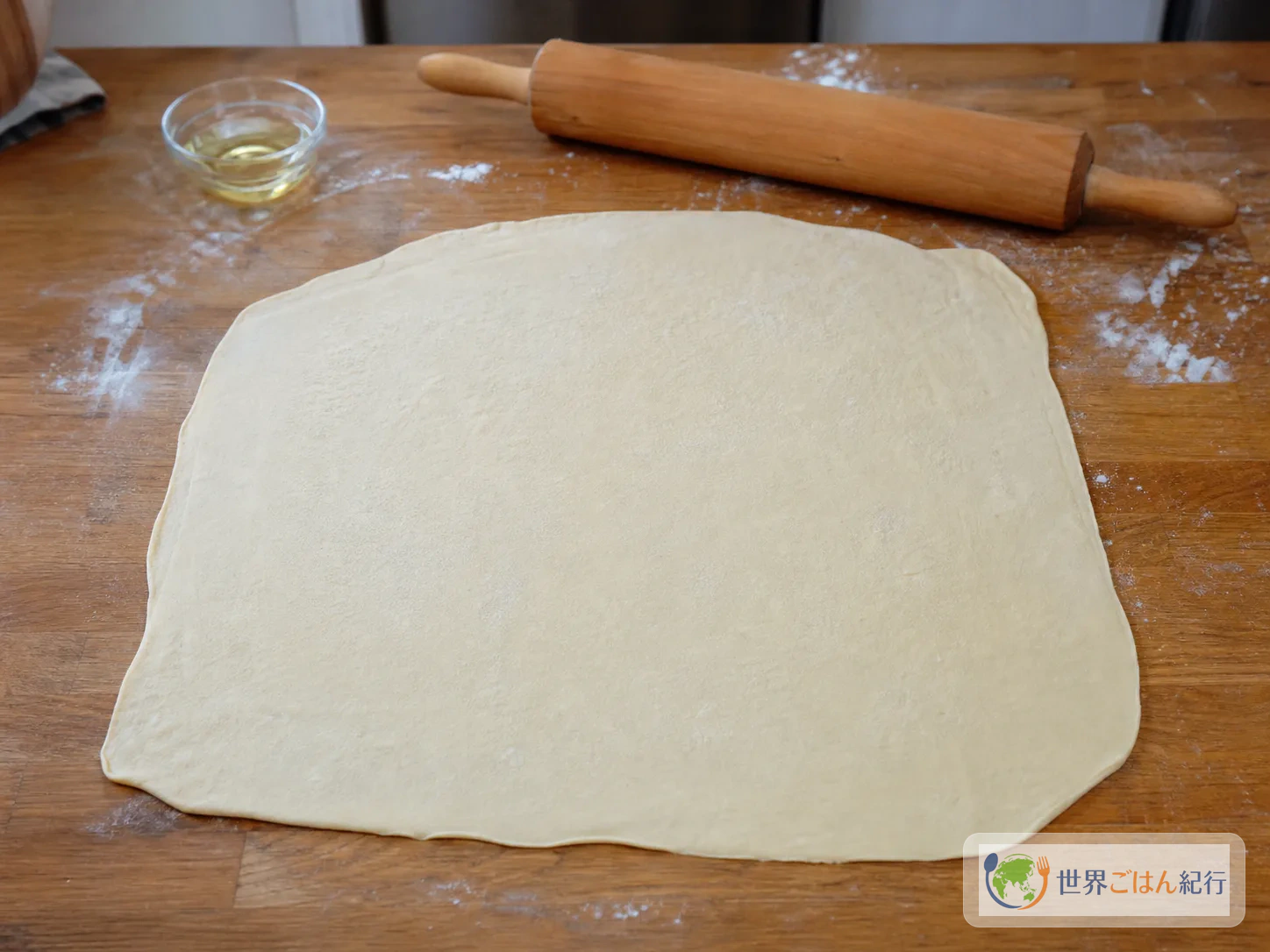
It is a dish with thinly rolled dough, but if you are afraid and roll it paper-thin, it tears. At home, stop at about 2 mm thick, spread the filling thinly and keep the steam steady for a better success rate.
Tips for Keeping the Local Character
Less meat tastes better
When cooking with meat, it is easy to make the meat the star. But with oromo, packing in only thick meat makes the center slow to cook and the fat runs when you slice it. In local sources, the combination of meat, potato and onion appears often. Potato is not mere bulk; it is there to catch the meat juices and the sweetness of the onion during steaming.
Whole cumin suits it better than ground
Ground cumin is convenient, but in a dish with a long steaming time the aroma gets too rounded. Lightly crushing whole seeds with your fingers and mixing them in lets the fragrance rise when you slice it. Too much feels heavy even when you are not using lamb, so 1 tsp is enough.
Use pumpkin as a seasonal touch
Advantour's description of the dish says that oromo can contain carrot and seasonal pumpkin. Japanese kabocha is very sweet, so making it the star moves the dish from a Central Asian meat dish toward a sweet steamed bun. About 120 g in small pieces, adding a touch of sweetness between the meat and potato, is easy to manage.
Where It Goes Wrong
| Problem | Cause | Fix |
|---|---|---|
| Dough tears | Too much water, not rested enough, filling too thick | Knead the dough firm, rest 30 minutes, spread the filling under 1 cm |
| Raw in the center | Roll too thick, weak steam, large potato | Diameter 7 cm or less, high heat at first, potato in 5 mm dice |
| Juices run when cut | Cut right after steaming | Slide the lid ajar for 2 minutes, then wait 2 more minutes on the board |
| Weak aroma | Only ground cumin, too little fat | Lightly crush whole cumin, add 10 g beef fat or a little lamb |
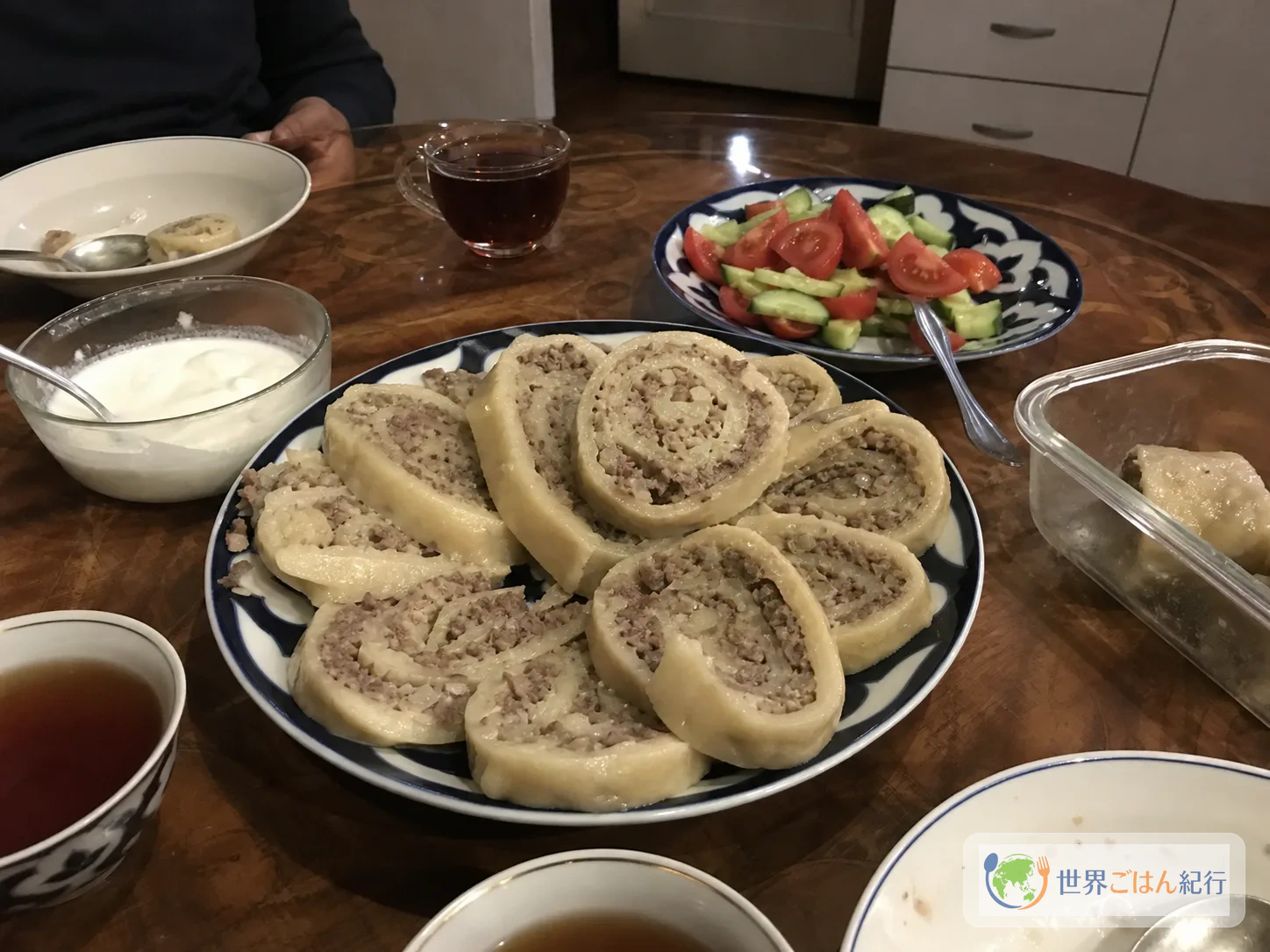
| Gets boring to eat | No sauce or acidity | Serve with yogurt sauce, cucumber and tomato salad, and hot tea |
Storage and Reheating
Steamed oromo, left uncut, keeps for 2 days in the refrigerator. When it has cooled slightly, wrap it in plastic and put it in a container so it doesn't dry out. Cut pieces dry out at the cross-section, so for the next day it looks better to leave what you will eat as a whole roll.
Re-steaming suits reheating better than a microwave. Put it in the steamer over medium heat for 8 minutes, or 5 minutes for slices. If using a microwave, arrange on a plate, sprinkle on 2 tsp water, cover loosely with plastic and heat at 600 W for 1 minute 30 seconds to 2 minutes. Overheating hardens the dough, so stop when the center is warm.
To freeze, let it cool uncut after steaming and wrap each roll separately in plastic. It keeps for about 3 weeks. Put it in the steamer still frozen and heat over medium for 15–18 minutes, and the chewy texture of the dough comes back more easily.
Frequently Asked Questions
Is it not authentic without lamb?
Lamb brings the aroma closer to the local version, but with ground beef it still works fully as a dish. What matters is to cut the onion and potato small, build the fragrance with cumin and cook it through properly in the steamer. If you can chop thinly sliced lamb with a knife, using 150 g ground beef and 150 g chopped lamb changes the character a lot.
Can I make it with store-bought dumpling wrappers?
It won't taste the same. Dumpling wrappers are small and can't make the rolled layers, so it ends up closer to a steamed dumpling than to oromo. If you want to shorten the time, it's better to divide the dough in two and make two smaller rolls.
What if my steamer is small?
Don't insist on one roll; divide it into two and roll them. Make sticks a little shorter than the inner diameter of the steamer, seal the ends firmly and set them side by side. With a two-tier steamer you may want to swap the tiers midway, but if the lid stays open long the steam drops, so steaming the whole 40 minutes straight is more stable.
What goes well with it?
Yogurt sauce, a cucumber and tomato salad, and hot black tea suit it. The open.kg oromo recipe also introduces pairings with sour-cream-style sauces and tea. Since it is a dish of flour and meat, sourness and a warm drink keep it from getting heavy to the last bite.
What to Cook Next
If you continue with Kyrgyz food, moving to lagman in the same stream of meat and flour connects the understanding from a steamed dish to hand-pulled noodles. To compare it with other Central Asian steamed dishes, the wrapped manti is a close relative. To look at the culture of lamb more widely, setting it beside Kazakhstan's beshbarmak makes the differences between "boiling," "steaming" and "making noodles" clear, even with the same meat and flour.