
The Onions Bake First: A Serbian Bean Dish
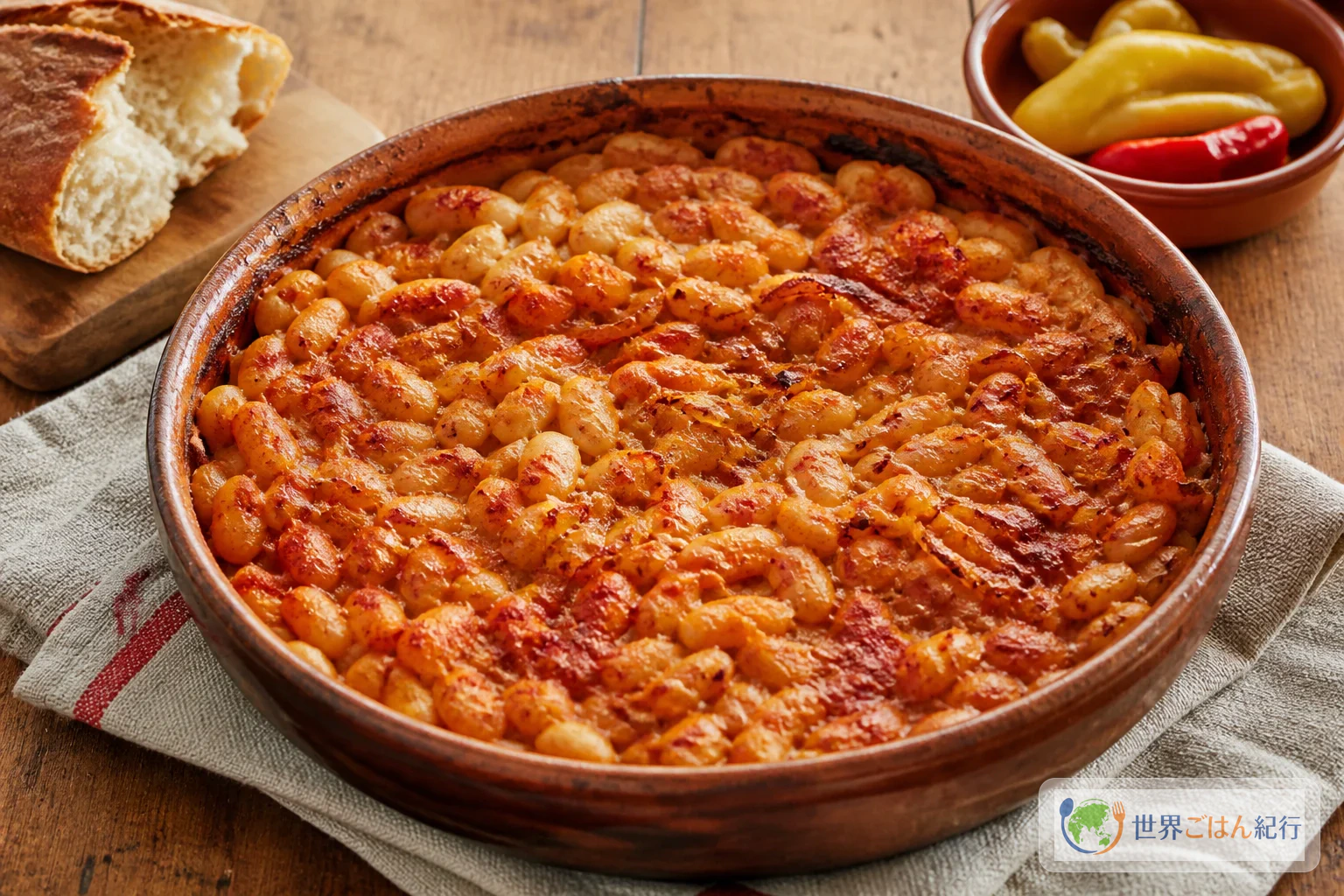
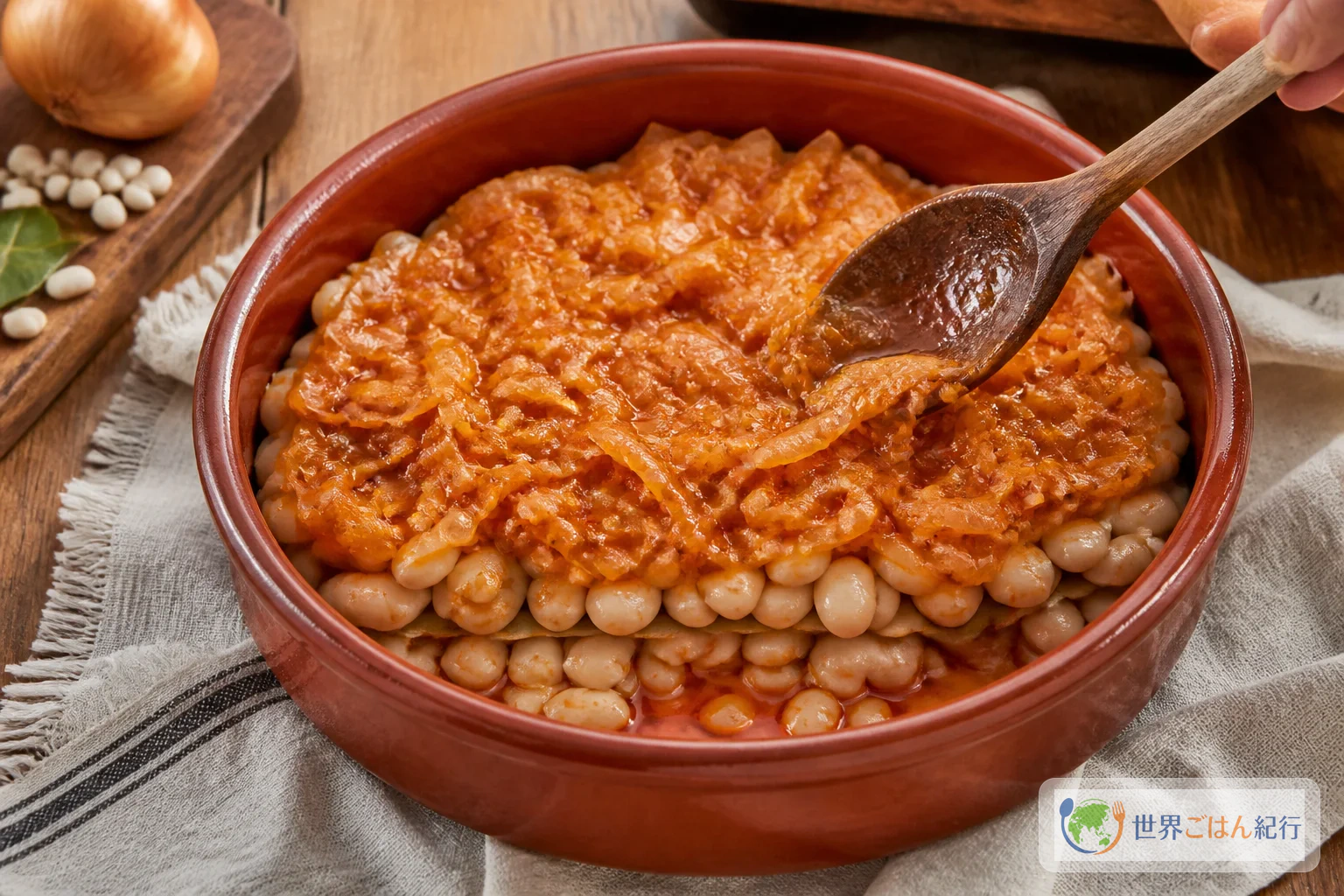
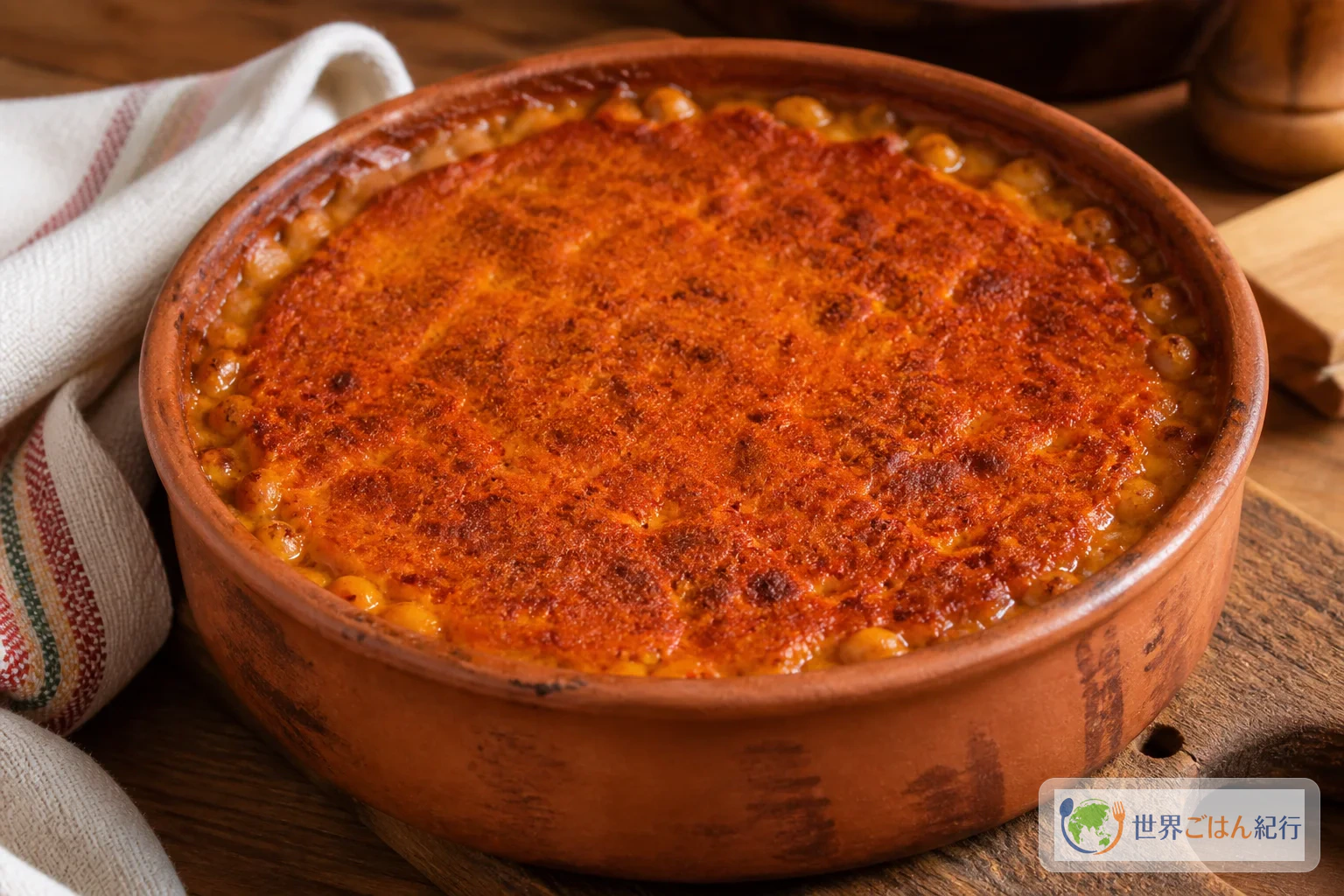
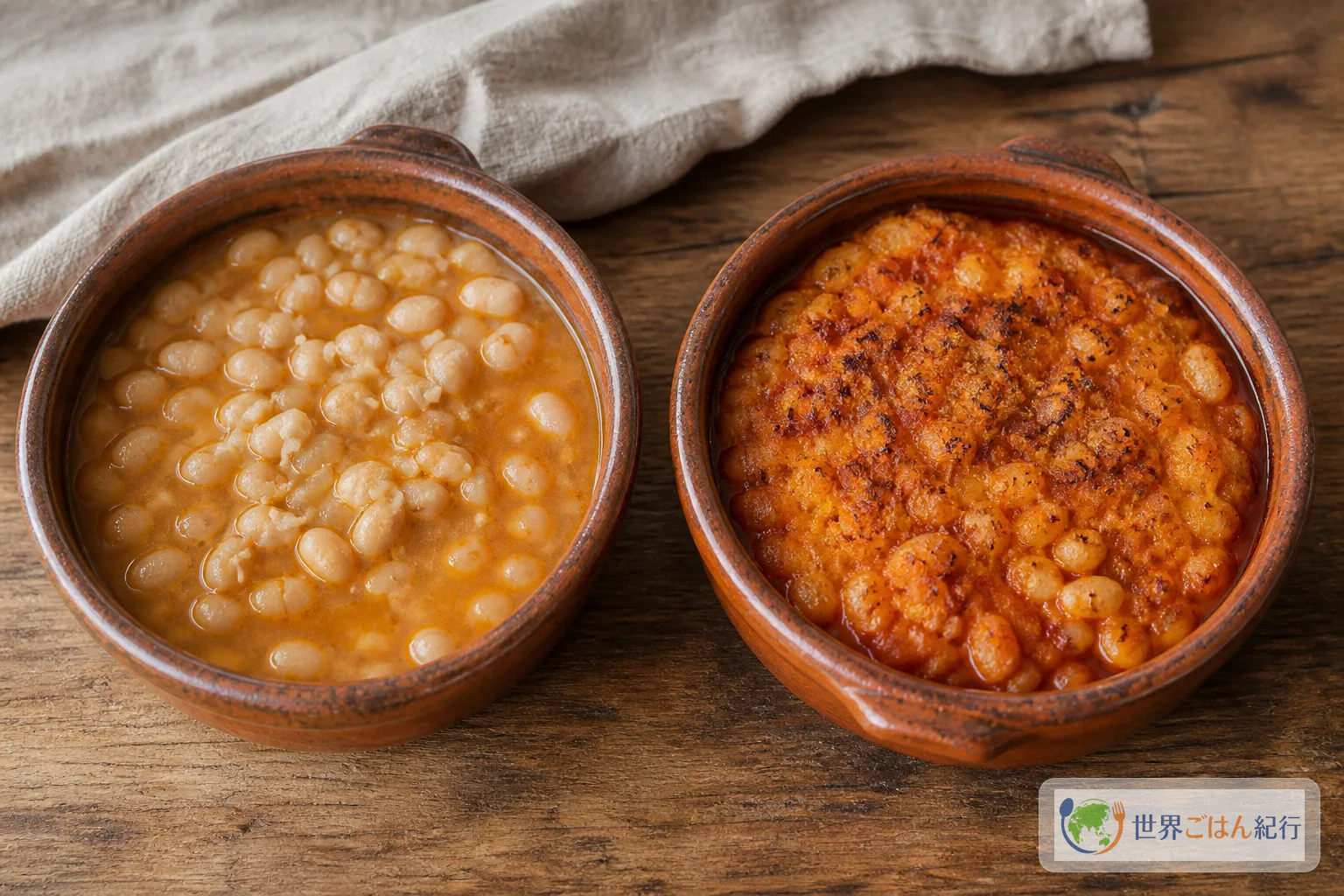
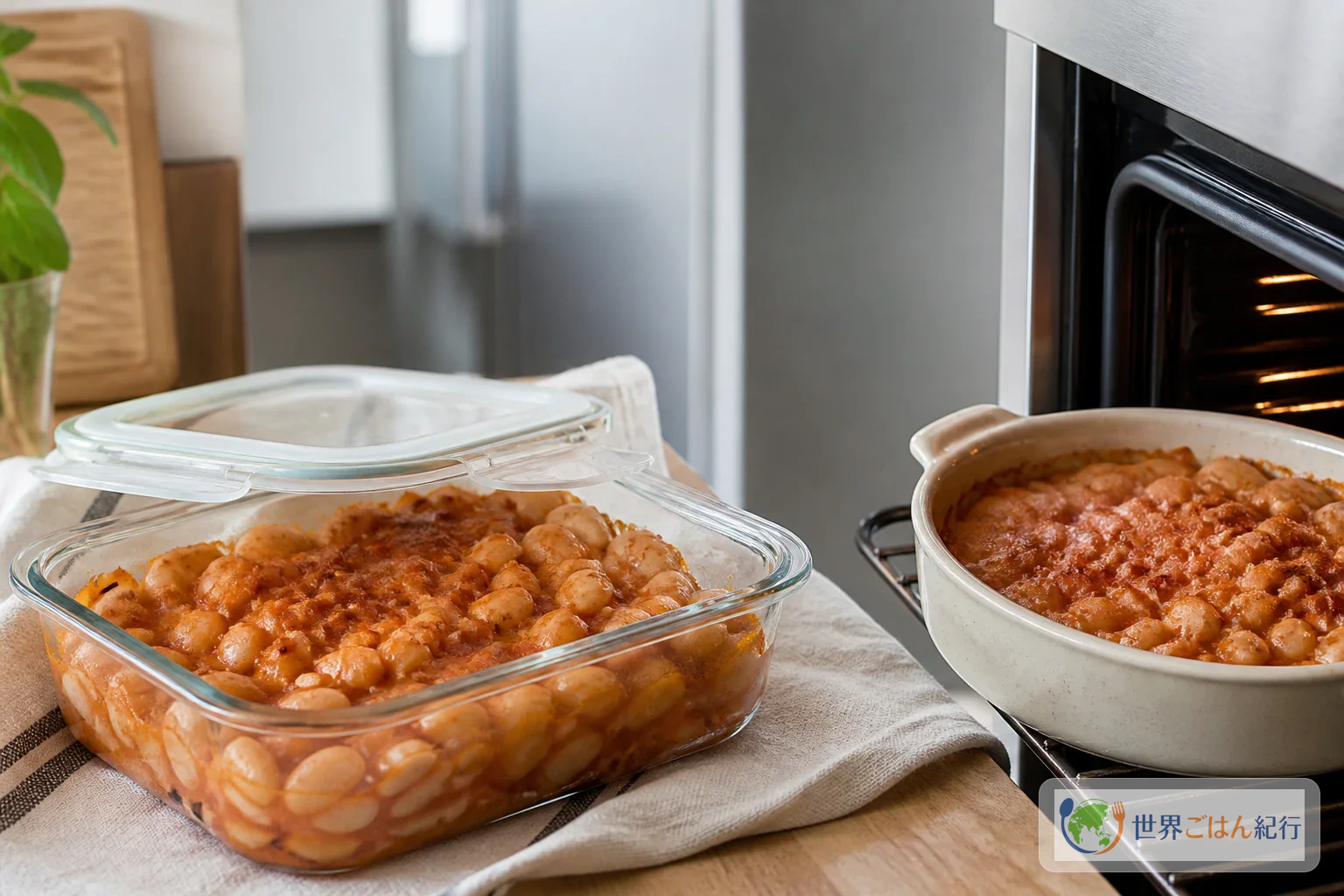
Straight out of the oven, prebranac looks like a reddish-brown casserole. Push a spoon in and the thin crust breaks, revealing white beans and soft, glossy onions underneath. If a little bean liquid is left pooling at the bottom of the dish, enough to dip bread in, you have not made a dry bean gratin.
Prebranac (Serbian: Пребранац) is a dish of white beans that are first simmered until tender, then baked with plenty of sautéed onions, red paprika, and garlic. The Serbian national tourism organization presents it as a winter dish in which the beans are cooked to keep their shape and then baked with onions and red paprika, naming tetovac as the best bean variety and gradištanac as the substitute.
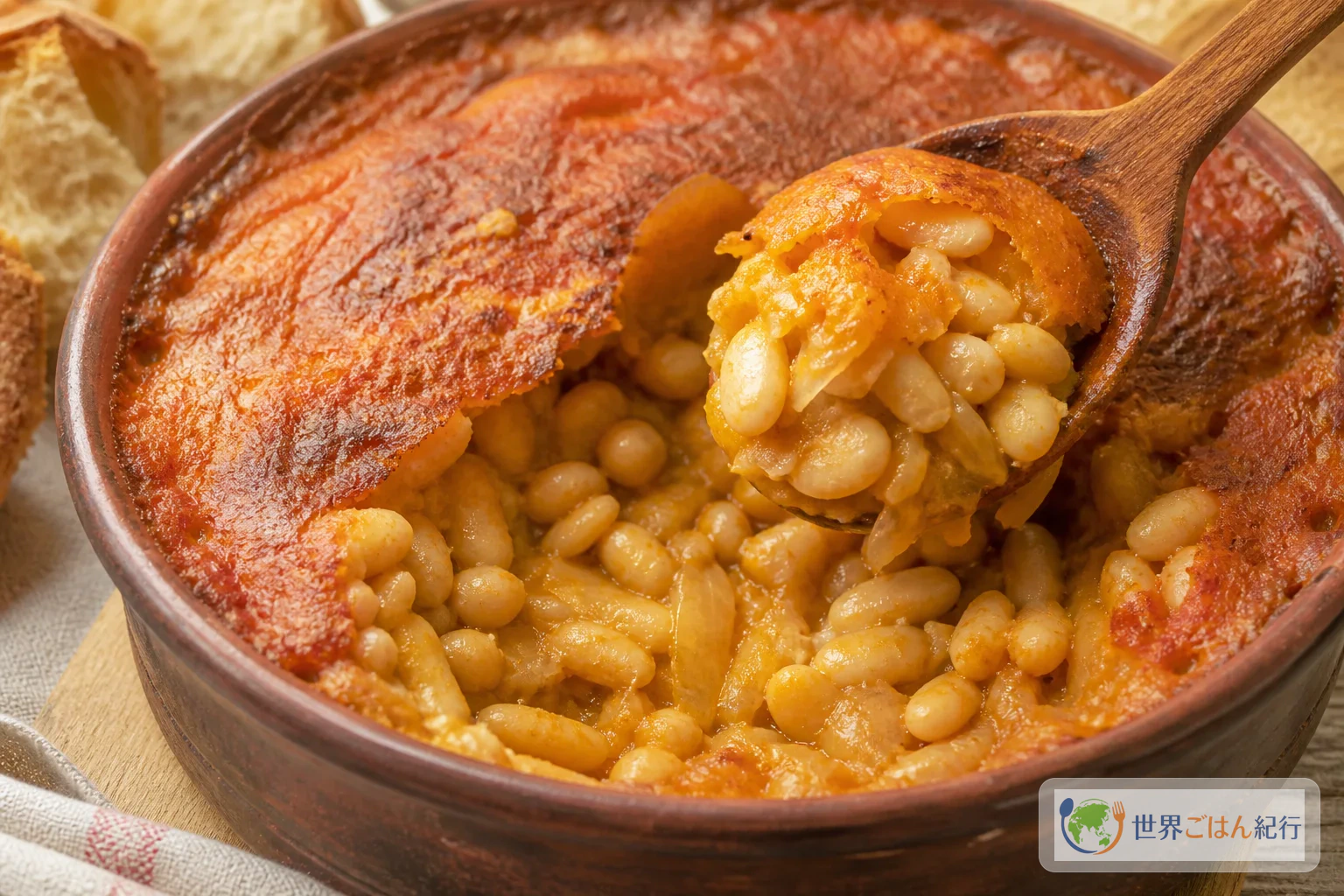
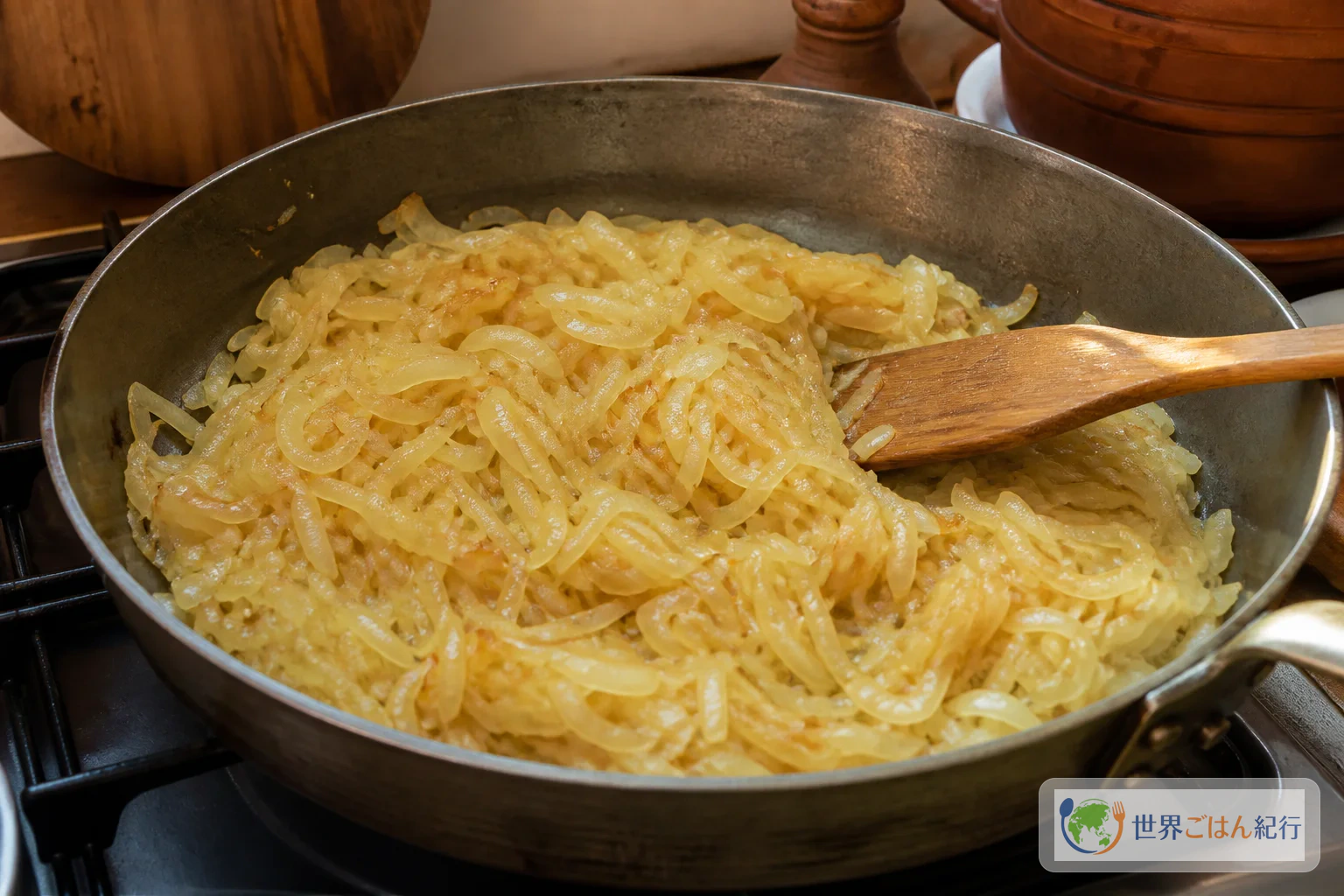
The usual stumbling points at home are how far to cook the beans, how dark to take the onions, and how much liquid to leave in the oven. If you start baking with hard beans, only the surface dries out. If you rush the onions into browning, bitterness comes through instead of sweetness. Keep the stages separate and top up the liquid as you watch the pot, and you can get close to a proper Serbian dish without special cookware.
The name is sometimes linked to the Serbian verb prebrati ("to sort through"). Rather than pinning the origin on one explanation, it helps to read it as a reminder of where the dish starts: picking out damaged beans and cooking evenly sized ones together.
Ingredients (serves 4)
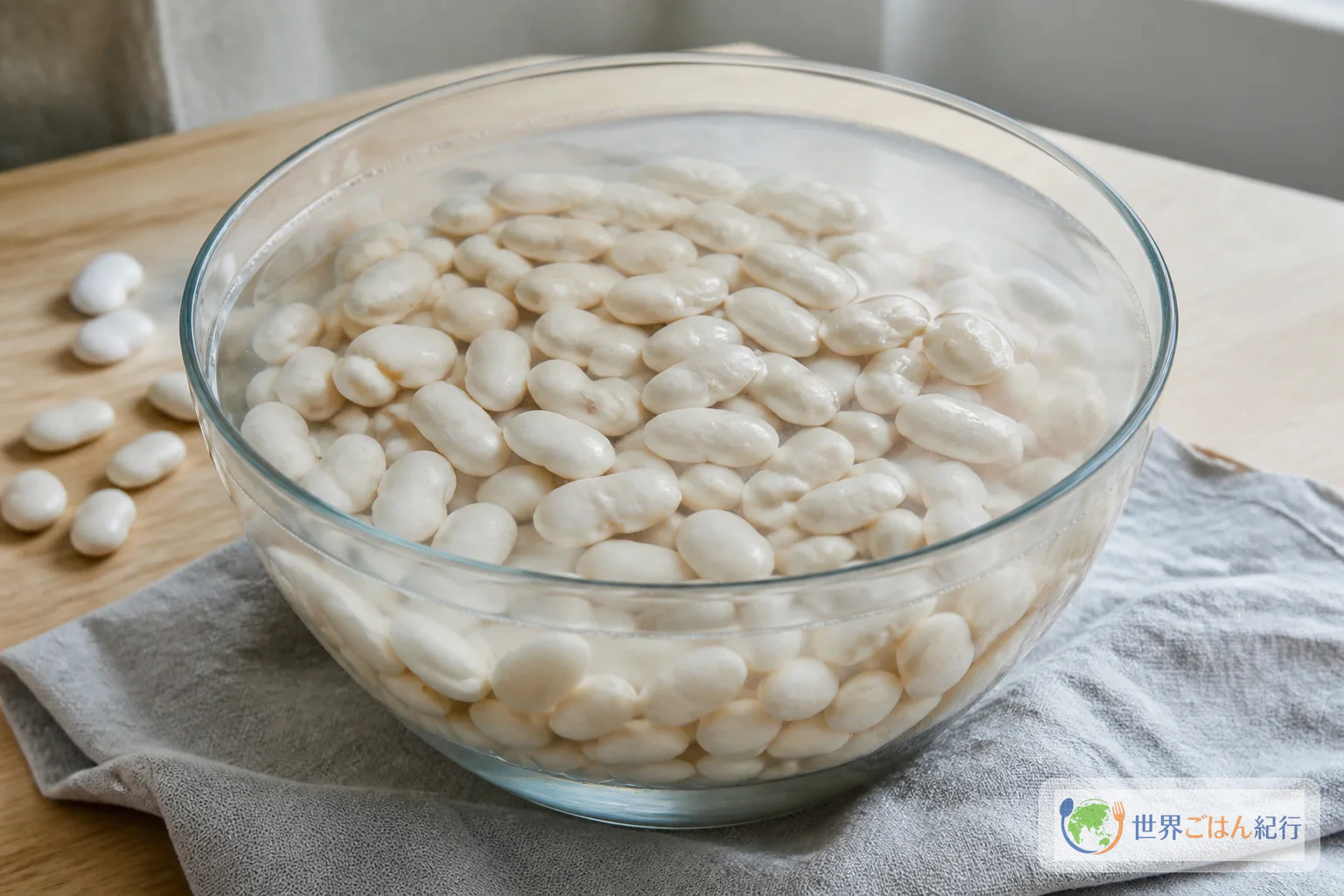
Cooking from dried beans takes an overnight soak and about 1 hour of simmering. Put the beans in water on the morning of the day you plan to eat, and you can start sautéing the onions and baking in the evening. If you cannot find tetovac, large white beans such as white runner (butter) beans or large cannellini work, though cooking time varies with the age and size of the beans.
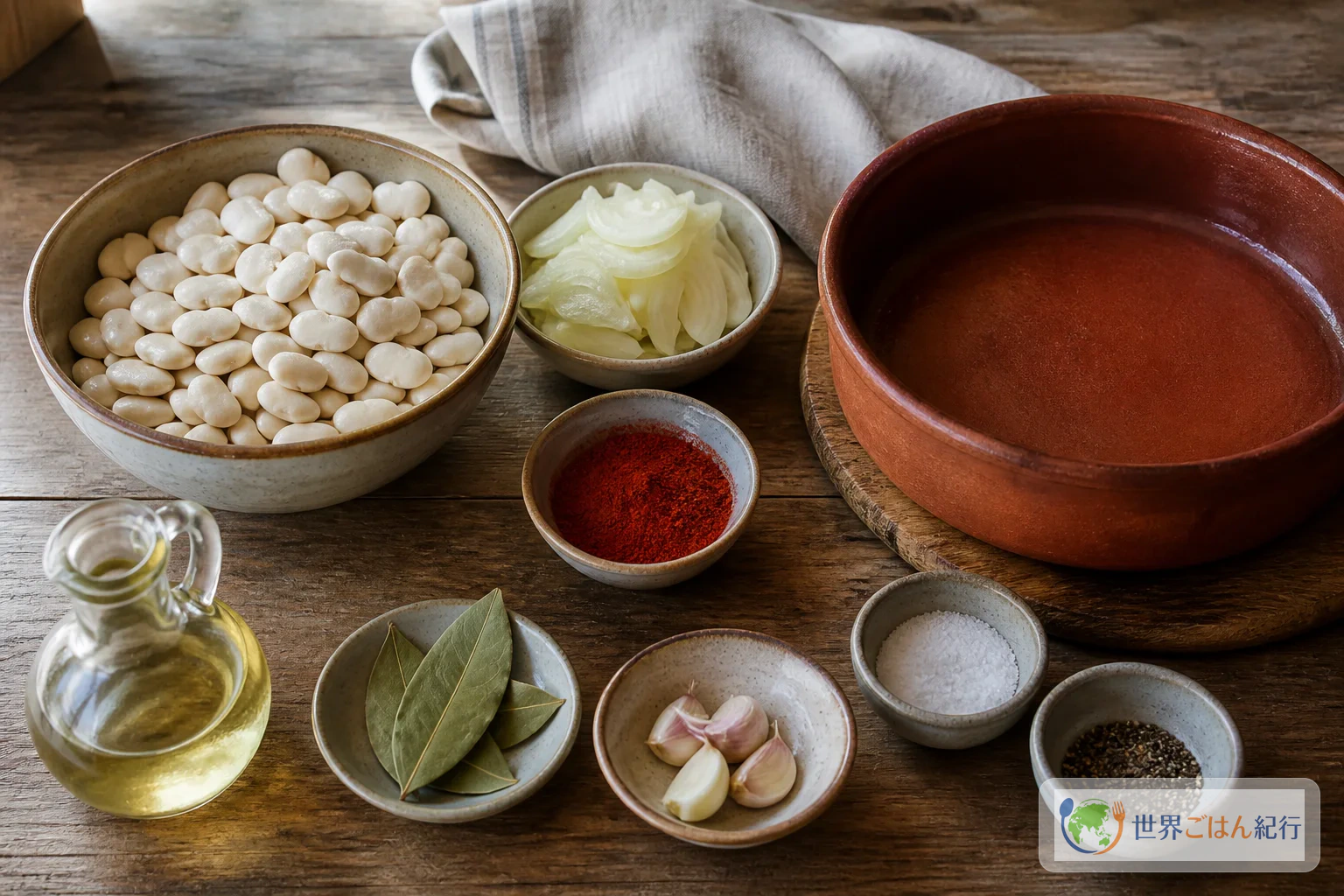
Tetovac is the large white bean that the Serbian tourism organization presents as the right one for prebranac. You do not need to keep hunting for the variety name. With substitutes, press one cooked bean between your fingers: you want it soft through the center with the skin still intact. Small beans break down easily, so shorten the simmering time and take the dish out of the oven as soon as the surface colors.
Sweet paprika powder is the basic ingredient that supports both the red color and the sweetness of the onions. If you can only find hot paprika, leave out the dried chile, and rather than swapping it in at full quantity, dissolve a little in the cooking liquid and taste. If you already own sweet paprika, there is no need to buy more.
Smoked paprika is not a standard ingredient in every Serbian home. In a skillet-and-home-oven version it is simply an option for adding a little of the aroma of charcoal or wood fire. Sweet paprika alone is enough, so only try 1 teaspoon if you like smoky flavor and use it in other stews too. Look for "smoked" on the label.
Beans that vary hugely in size within the bag, or that are deeply wrinkled or split, will not finish cooking at the same time in one pot. Choose large, white beans whose surface is not overly dry, and it is easier to reach the "soft but still holding their shape" stage before baking.
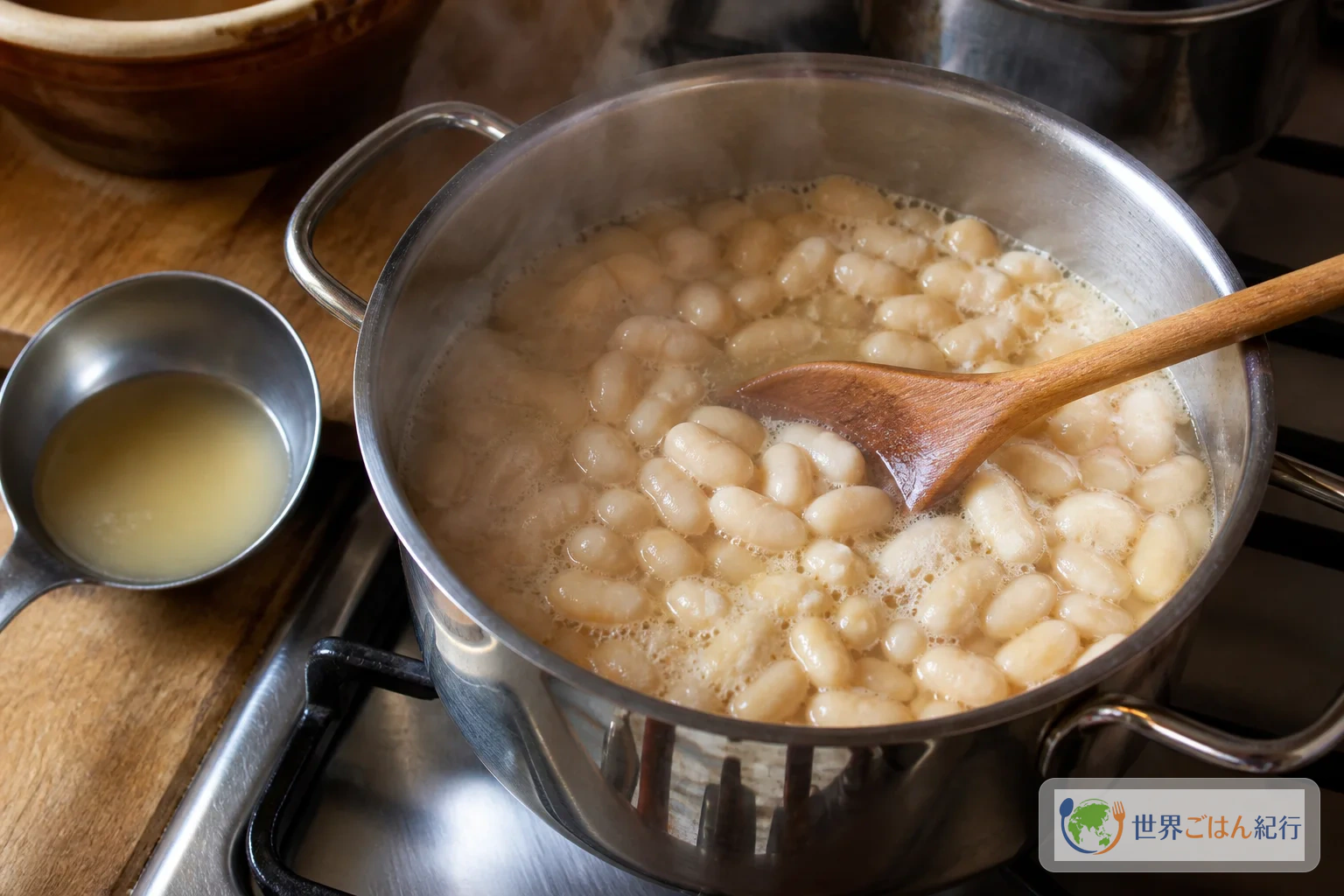
Dried beans must be fully cooked through to the center in a pot after soaking, before baking. If you rely on oven time alone, the surface may dry out while the center stays hard. If you are unsure about the beans' tenderness, cook them longer in the pot rather than extending the bake.
Method: Match the Bean Tenderness to the Onion Color
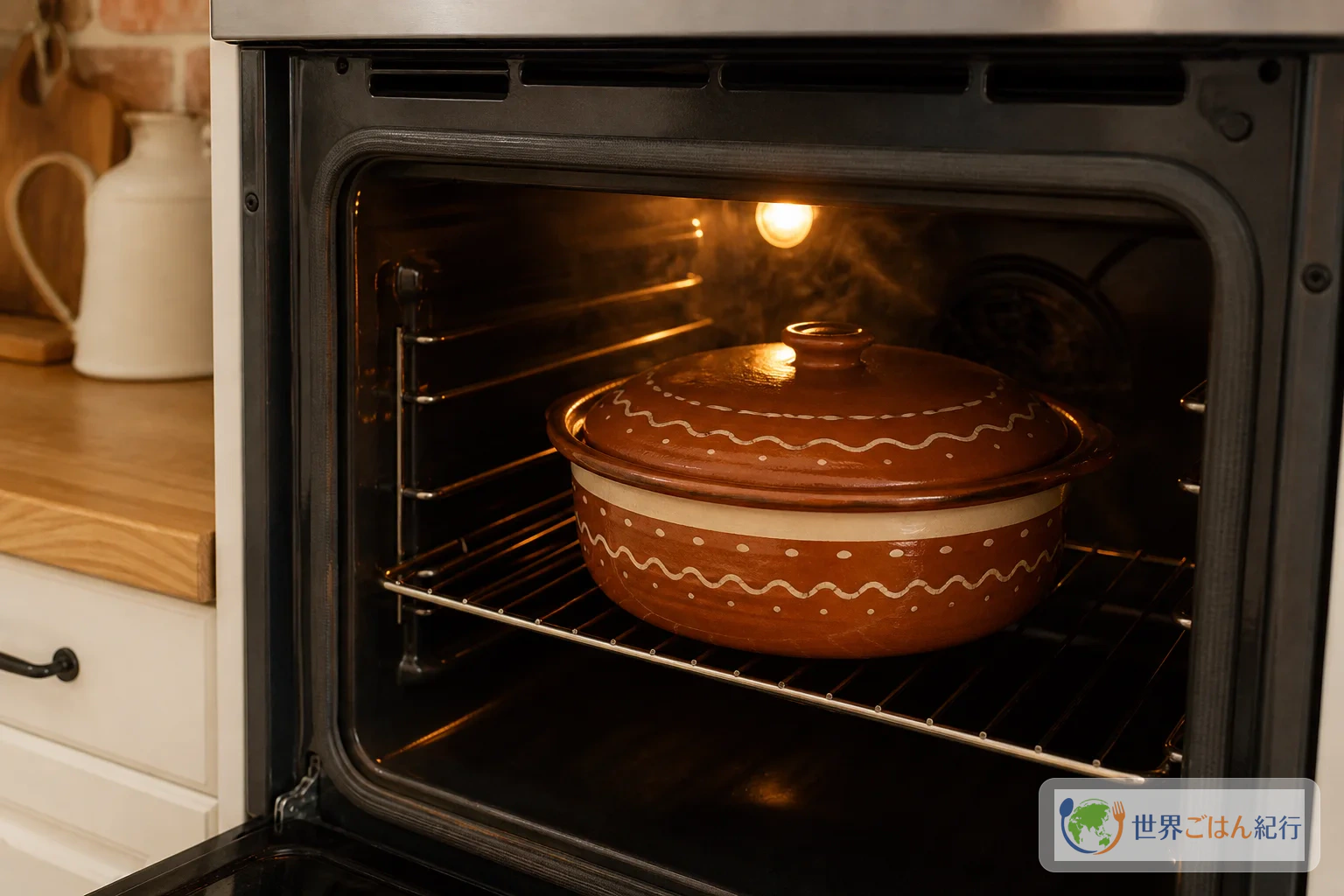
Prebranac is not a dish where everything is combined at the start and baked. You use three vessels in turn: a pot for the beans, a skillet to sweeten the onions, and a baking dish to settle the liquid at the end. Rather than hurrying to the finish, watch for the state that says you can move to the next stage, and it will go right.
Three Signs That It Is Done
Baking time varies with the bean variety, the depth of the dish, and the quirks of your oven. Rather than stopping on minutes alone, check these three things at the same time.
| What to check | What done looks like | Too early or overdone |
|---|---|---|
| Center of a bean | Crushes under a spoon but the bean's outline remains | A hard core, or the whole thing is a paste |
| Onions | Pale golden, soaked with oil, sweet-smelling | White and still crunchy, or black and bitter |
| Surface and bottom | A thin film on top, a little liquid left at the rim | Liquid spreads over the whole dish, or the bottom is dry |
If the beans still have a hard core but the surface has colored, put the lid back, add 100ml liquid, and bake at 180–200°C in 15-minute increments. If only the surface is drying out, restore liquid before extending the bake. Conversely, if the beans are soft but the dish is watery, uncover and bake 10 minutes at a time, then judge the thickness after resting.
A deep baking dish around 20 cm across is enough. A shallow dish increases surface area and gives more toasty flavor, but the liquid reduces faster. If you already have an oven-safe gratin or ceramic dish, there is no need to buy a new one. If you use whole black peppercorns and like to crush the dried chile fresh each time, a mortar and pestle is an option; if you use ground pepper or already own a grinder, you can skip it.
If the powder turns brown right after you add it, take the pan off the heat and stir in 2–3 tablespoons of the cooking liquid so it spreads through the onions. If a strong bitter smell remains, do not force yourself to use that portion; dissolve a little fresh sweet paprika and add it. Diluting scorched paprika with water does not remove the bitterness.
Where Prebranac Sits at the Serbian Table
Prebranac, as presented by the Serbian tourism organization, is a dish beloved on the winter table. With beans as the star and bread alongside, it is a main dish, and it is also a side for grilled meat or sausages. Unlike sweetened simmered beans, it is a dish that brings together the sweetness of onions, the aroma of red paprika, and oil-rich beans in one baking dish.
Meals in Serbia are described as something eaten slowly with family and others. Even a plate of just white beans and onions stands as the center of a meal once bread, pickles, and a seasonal salad are set beside it. It suits the nature of the dish better to bring the whole baking dish to the table and let everyone take some of the toasty top and the soft bottom, rather than plating individual portions straight from the oven.
Because prebranac uses no animal products, it fits easily into the table of Orthodox fasting periods. However, what fasting involves and what is served vary by denomination, day, and family. It cannot be said that "this bean dish always appears at Serbian observances." The Serbian Slava (the day celebrating a family's patron saint) is a family-inherited observance in which candles, wheat, and bread are important, but the composition of the meal varies by region and household.
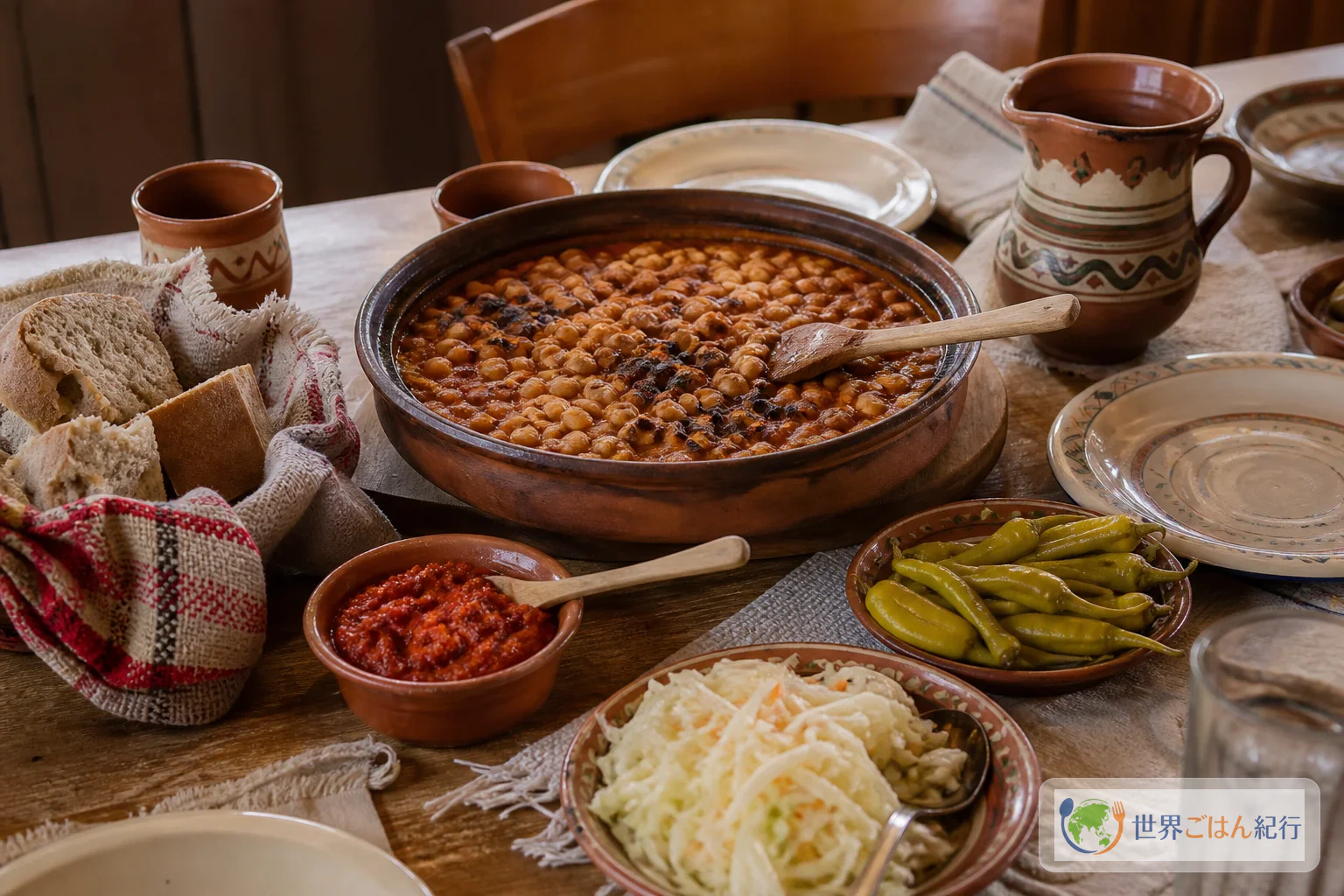
Baked white bean dishes have been shared in a similar form across the former Yugoslav region. Serbian prebranac and North Macedonian tavče gravče (in Japanese) share beans, onions, paprika, and a baking dish, but their names, vessels, and regional seasonings are not the same. If you want to know about meat on the grill, set Serbian ćevapi (in Japanese) beside it, and the difference becomes clear between a dish that centers charcoal aroma and one that slowly bakes beans and onions.
Variations and Storage: What to Do with Next-Day Beans
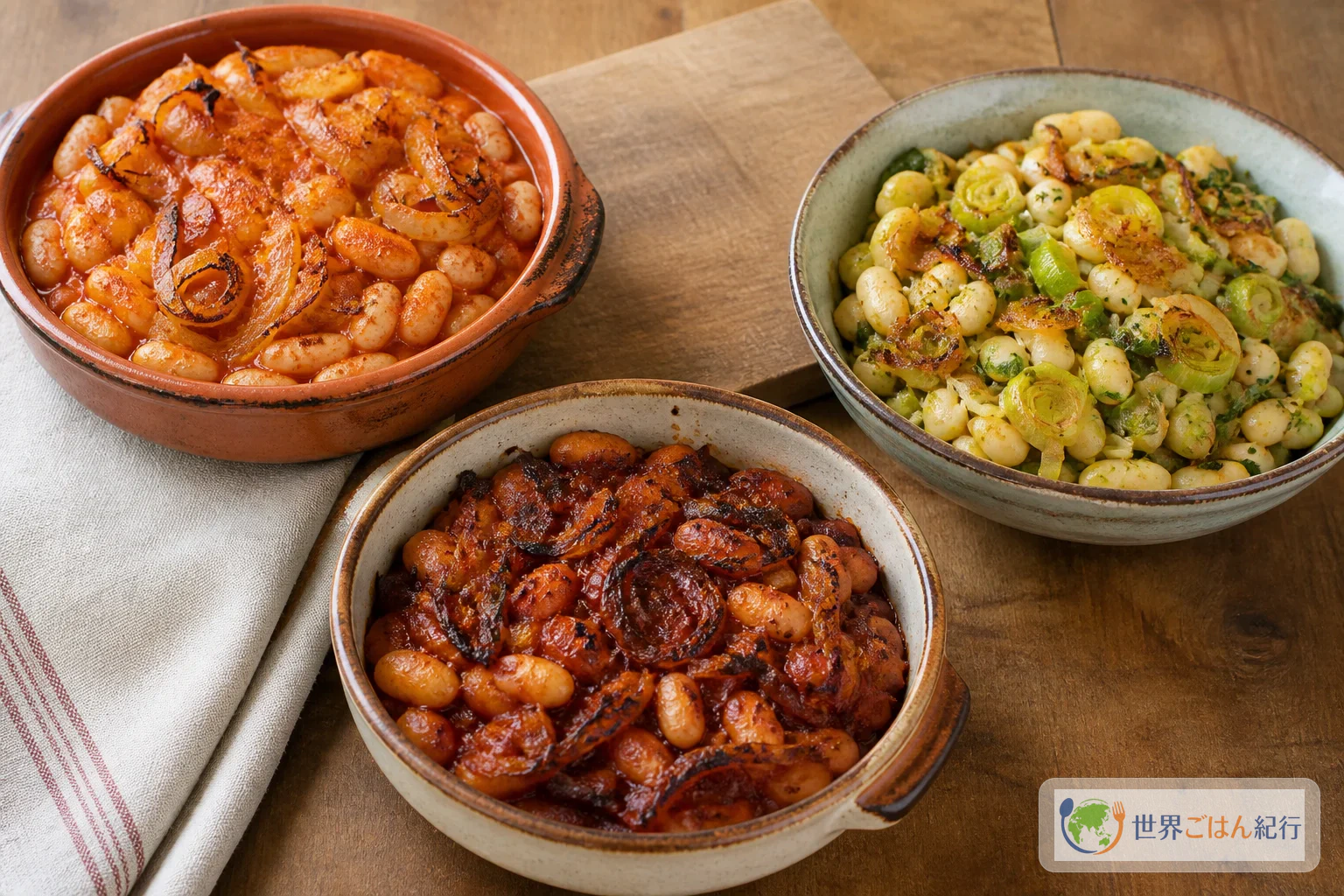
You can swap some ingredients in prebranac without breaking the basic dish. Choose substitutions by looking not only at flavor but at how they change the baking time and how the dish is handled at the table.
| Variation | Amount and method | How it turns out |
|---|---|---|
| Change the beans | Same weight of white runner (butter) beans or large cannellini. Adjust the pot time until a pressed bean is soft | Large beans are creamy; small ones break down more easily |
| Add leeks | Replace 150g of the 500g onions with leeks and sauté the white parts together | Milder aroma, lighter than onions alone |
| Add smoky aroma | Replace only 1 tsp of the 2 tbsp sweet paprika with smoked paprika | Closer to a charcoal aroma. Too much hides the sweetness of the beans |
| Separate the heat | Omit the dried chile and put sliced chile on the table | Everyone can adjust the heat |
| Add meat | Add 150g grilled smoked sausage between the layers and taste with half the salt first | No longer suitable for fasting; fattier and saltier |
| Shorten with canned beans | Drain 800g canned white beans well, skip the simmering, and use 300ml hot water in place of the cooking liquid | Lighter flavor than dried beans; bake about 40–50 minutes |
If you are saving leftovers, do not leave them to cool in the baking dish at room temperature. Divide them into clean, shallow containers and refrigerate without leaving them out long. Home guidance from Japan's Ministry of Agriculture, Forestry and Fisheries likewise advises not leaving cooked food at room temperature for long, dividing leftovers into small containers to cool, and reheating to at least 75°C at the center.
To eat it the next day, return it to a baking dish, add 1–2 tablespoons of cooking liquid or hot water, cover, and warm at 160–180°C for about 15 minutes. In a microwave, reheat one portion at a time and stir once partway to heat through to the center. Only if you want to bring the surface film back, uncover for the last few minutes. If it smells sour, foams, or turns slimy in storage, throw it out without tasting.
Basic prebranac uses beans, onions, paprika, and oil. Canned goods, the production lines of spice makers, and the ingredients of the bread or sausage you serve differ from product to product, so check the labels. If you switch to a meat version, also check the sausage for salt and for wheat, milk, soy, and other allergens, and do not add the full amount of salt from the recipe as written.
FAQ
If I forgot to soak, can I make it with dried beans straight away?
Avoid putting dried beans straight into the baking dish. If you are short on time, boil them in plenty of water for 5 minutes, turn off the heat, cover, and leave for 1 hour. Then cook in fresh water until soft through the center. The quick soak varies with the age of the beans, so press one to confirm there is no hard core before combining with the onions.
Can I substitute chickpeas or soybeans?
You can, but the texture moves away from prebranac. White beans take up the liquid and onions and turn creamy under the baked surface. Chickpea skins tend to stay firm, and soybeans are small and absorb liquid differently, so they may not finish in the same time. For a first attempt, white runner (butter) beans or large cannellini make it easier to predict the result.
What if I do not have an oven?
Move it to a heavy pot, cover, and cook over low heat for 20–30 minutes, then uncover and cook a few minutes more; the flavors of the beans and onions will come together. However, the step of forming a thin baked film across the whole surface is hard to reproduce. If you use a broiler or toaster oven, check the height of the dish, its distance from the heat, and the dish's temperature rating, and brown only the surface briefly.
Can I use the same amount of smoked paprika as sweet paprika?
Start with up to 1 teaspoon. Smoked paprika is strong, and replacing the full 2 tablespoons of sweet paprika lets the smoke come before the sweetness of the onions. When cooking for more people, make the base dish with sweet paprika and serve a little oil with smoked paprika dissolved in it on the side; that is easier to adjust.
Can I freeze prebranac?
You can, but after thawing the bean skins split a little and the just-baked film weakens. Cool it completely, wrap it in single portions, and add a little cooking liquid or hot water when reheating. Storage time depends on your freezer and container, so write the date on the container and plan to eat it without keeping it long.
What is the nutrition information?
The numbers below are estimates for the whole recipe from the ingredient table. They change greatly with the bean variety, how much oil is left, whether you use canned beans, and whether you add sausage. To reduce salt, use less at the start and add more after baking if needed, rather than diluting by adding more liquid.
| Nutrient | Whole recipe (approx.) |
|---|---|
| Energy | about 2,320 kcal |
| Protein | about 92g |
| Fat | about 84g |
| Carbohydrates | about 304g |
| Dietary fiber | about 70g |
| Salt equivalent | about 7.9g |
Simmering the beans and sautéing the onions take time, but once everything is in the baking dish, you can decide the next step by looking at the color of the surface and the moisture at the bottom. On a day when you cannot find tetovac, make it with large white beans, build on sweet paprika, and add smoky aroma only if you want it. Keeping the local name matters less than getting the beans soft, the onions unscorched, and leaving enough moisture to scoop up with bread; that is the shortest path to bringing it to your table.
Sources
- Serbian National Tourism Organisation, "Authentic from Serbia" — Prebranac's place on the winter table, how the beans are cooked, and the description of tetovac and gradištanac. Accessed and checked 27 August 2026
- Tamara Popović et al., "Traditional food in Serbia: sources, recipes and fatty acids profiles" — Prebranac as a Serbian dish, the step of boiling then baking the beans, and surveyed recipes using leeks, onions, and red paprika. 2014. Accessed and checked 27 August 2026
- Slovenian Kitchen, "Prebranac" — Ingredients and baking of prebranac, an explanation of the origin of the name, and shared food culture across the former Yugoslav region. Accessed and checked 27 August 2026
- Study In Serbia, "5 Traditional Serbian Dishes Every International Student Should Try" — An introduction to everyday food, the cold season, the relationship to fasting periods, and the culture of eating Serbian meals with others. Accessed and checked 27 August 2026
- St. Sava Serbian Orthodox Church, "Krsna Slava" — Slava as a family-inherited patron saint's day, and the symbolism of candles, wheat, and bread. Accessed and checked 27 August 2026
- Ministry of Agriculture, Forestry and Fisheries (Japan), "How Can We Prevent Food Poisoning at Home?" — Home hygiene guidance: do not leave cooked food at room temperature for long, divide it to cool, and reheat to at least 75°C at the center. Accessed and checked 27 August 2026


