Thin dough that puffs in the pan: street food from Baku
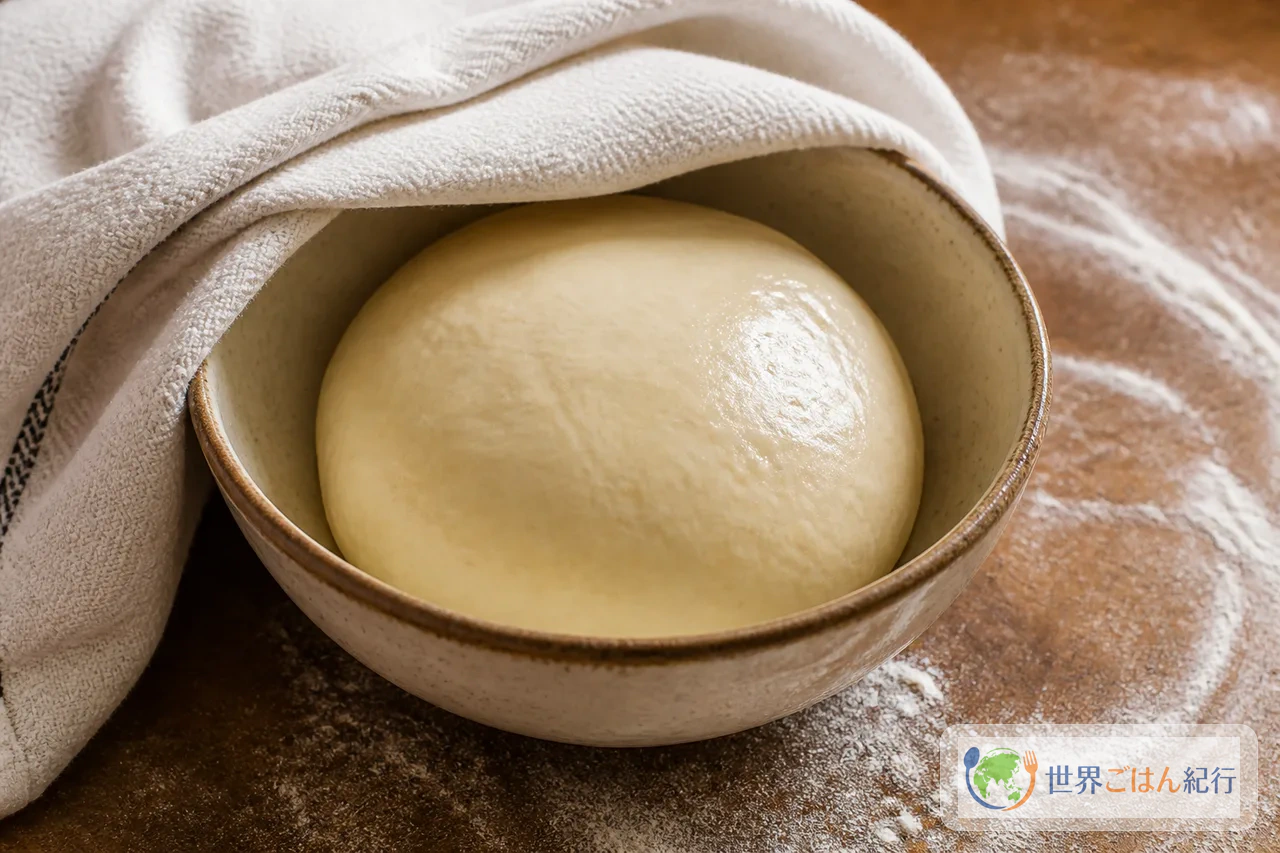
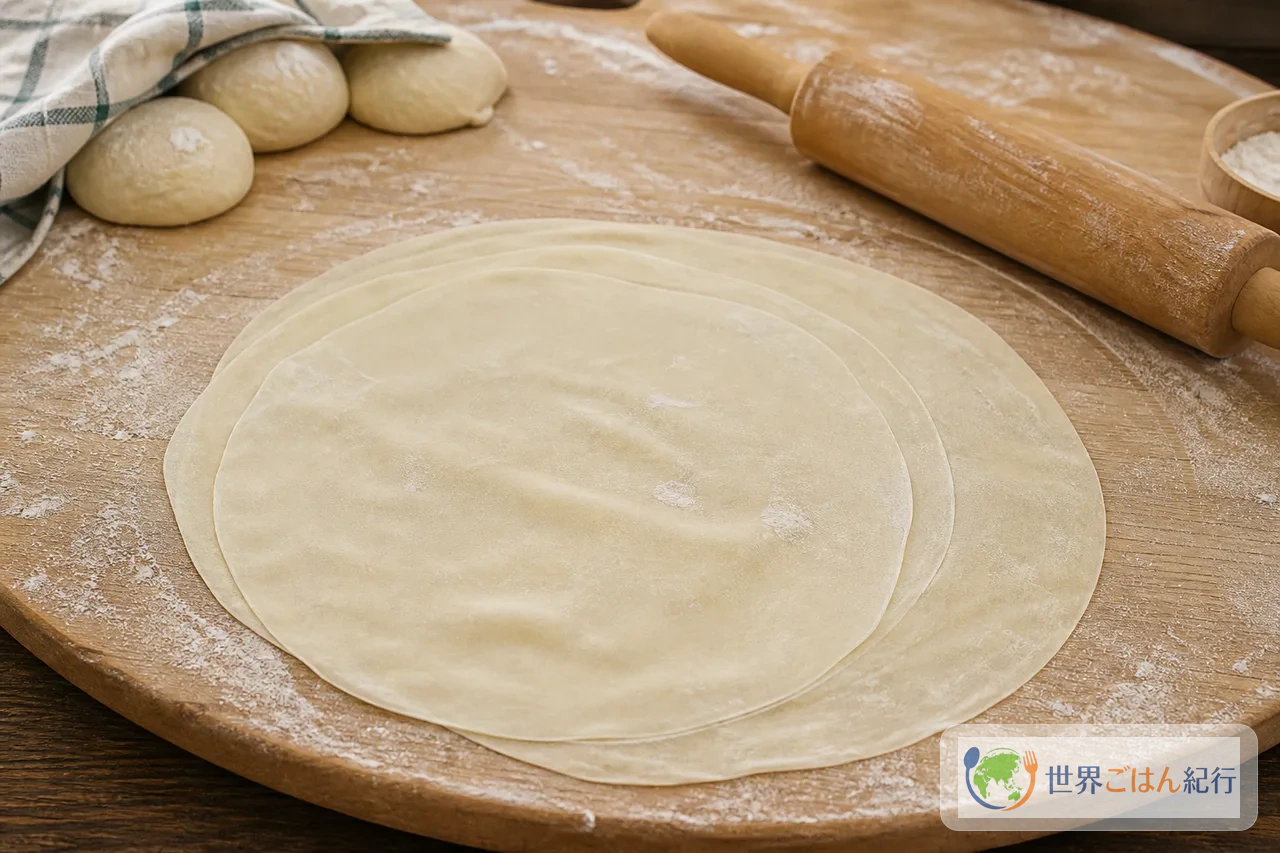
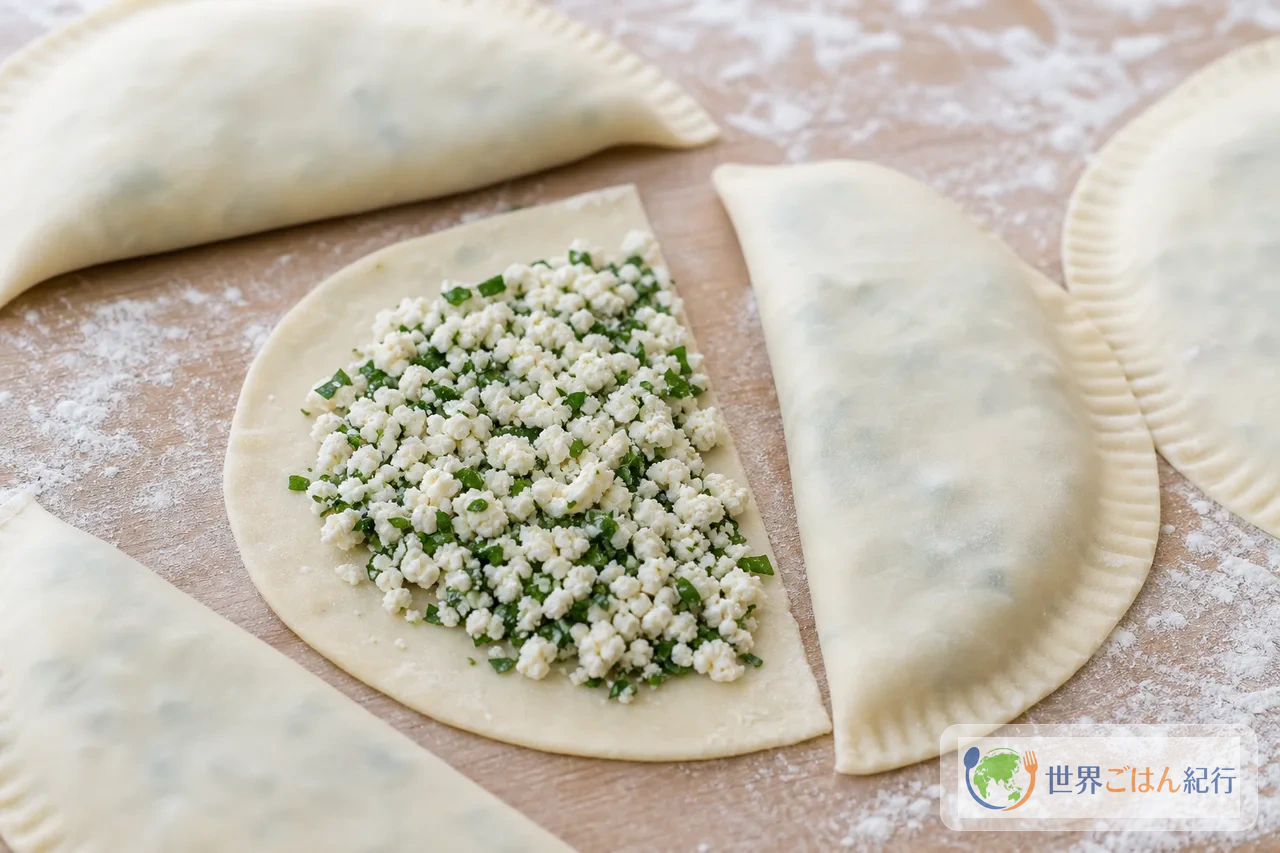
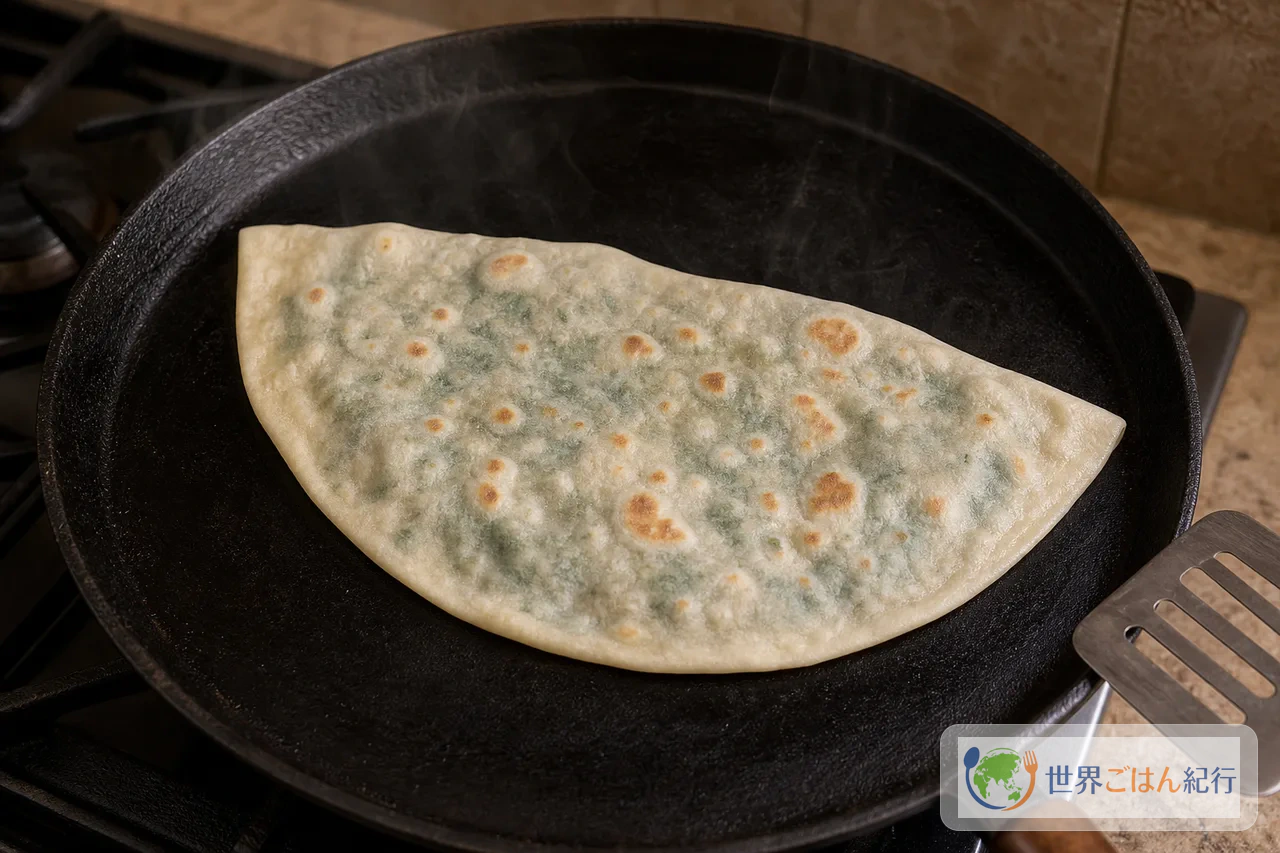
You knead the dough, chop green, fragrant herbs, roll the dough thin, and fold it into a half-moon. Set it on a dry pan and, without a drop of oil, the surface puffs up and brown spots start to appear. The fun of qutab is watching that small transformation happen right in front of you.
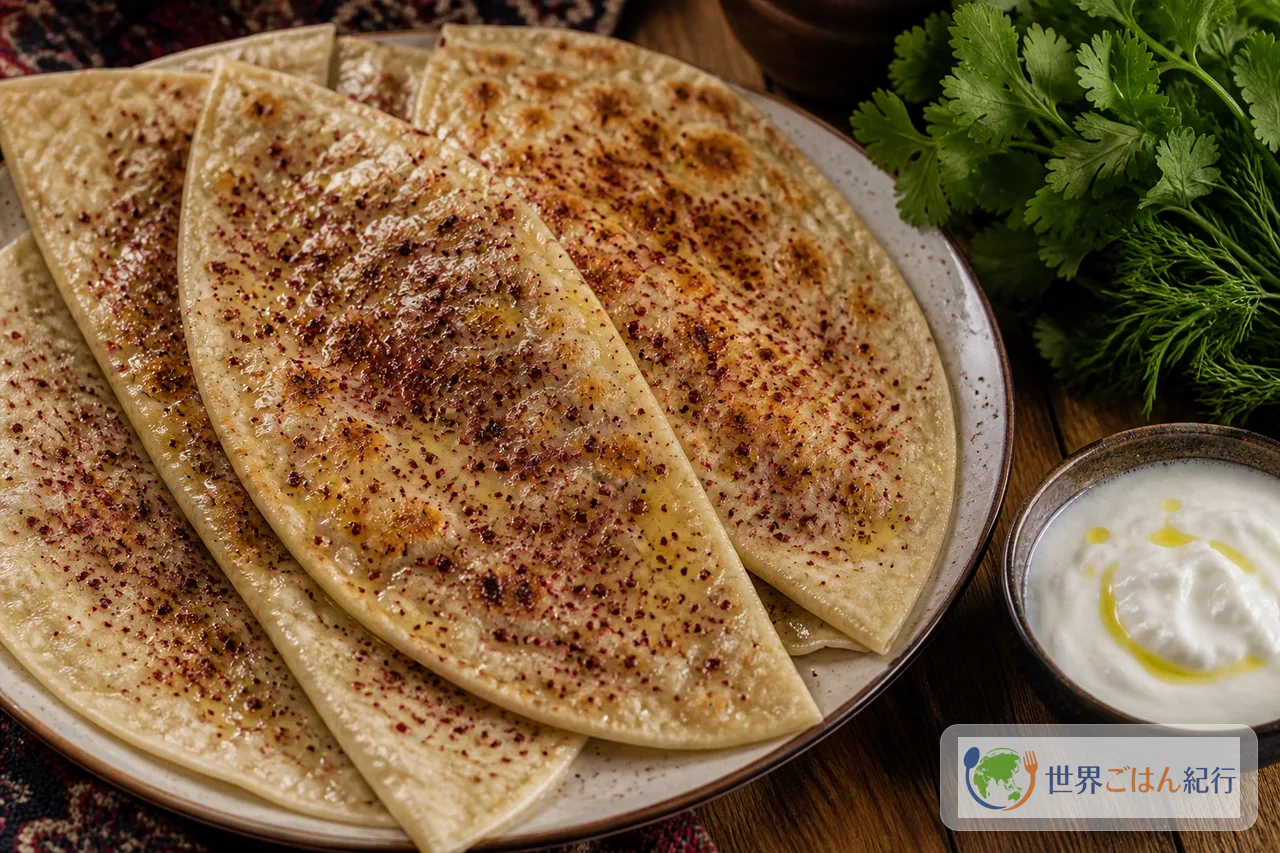
Qutab (also spelled gutab; in Azerbaijani, qutabı) is a thin stuffed flatbread eaten all over Azerbaijan. A filling goes on one half of a round of rolled dough, the dough is closed into a half-moon, and it is cooked briefly on a saj, a convex iron griddle, or on a flat pan. Fillings include herbs, meat, and pumpkin. The usual finish is to brush the hot qutab with butter, scatter sumac over it, and eat it with plain yogurt or ayran.
The official tourism site Azerbaijan.Travel describes qutab-making master classes in Baku's Old City and in regional restaurants, where you prepare the filling, roll out the dough, and fold the edges. Qutab is not a curiosity made for travelers: it runs through street snacks, home baking, and restaurant starters alike.
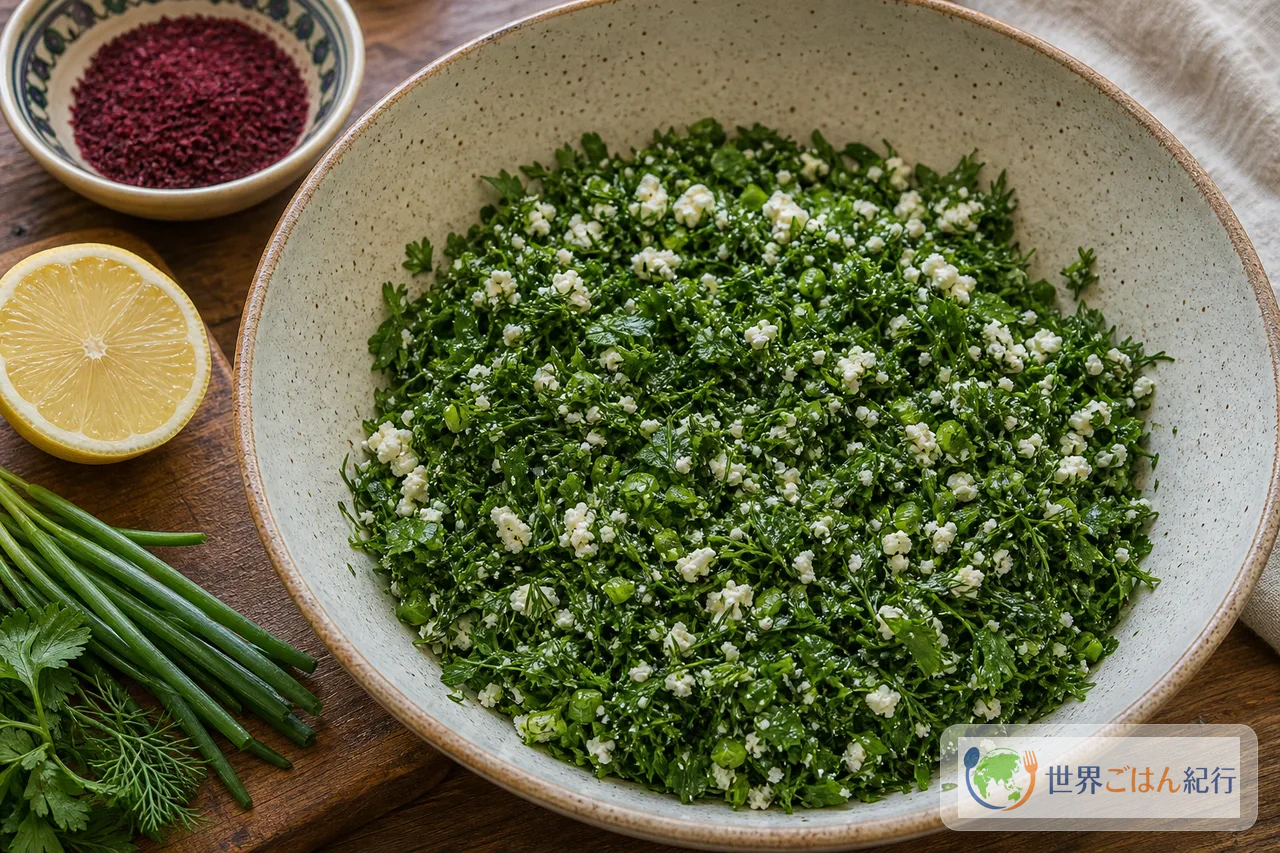
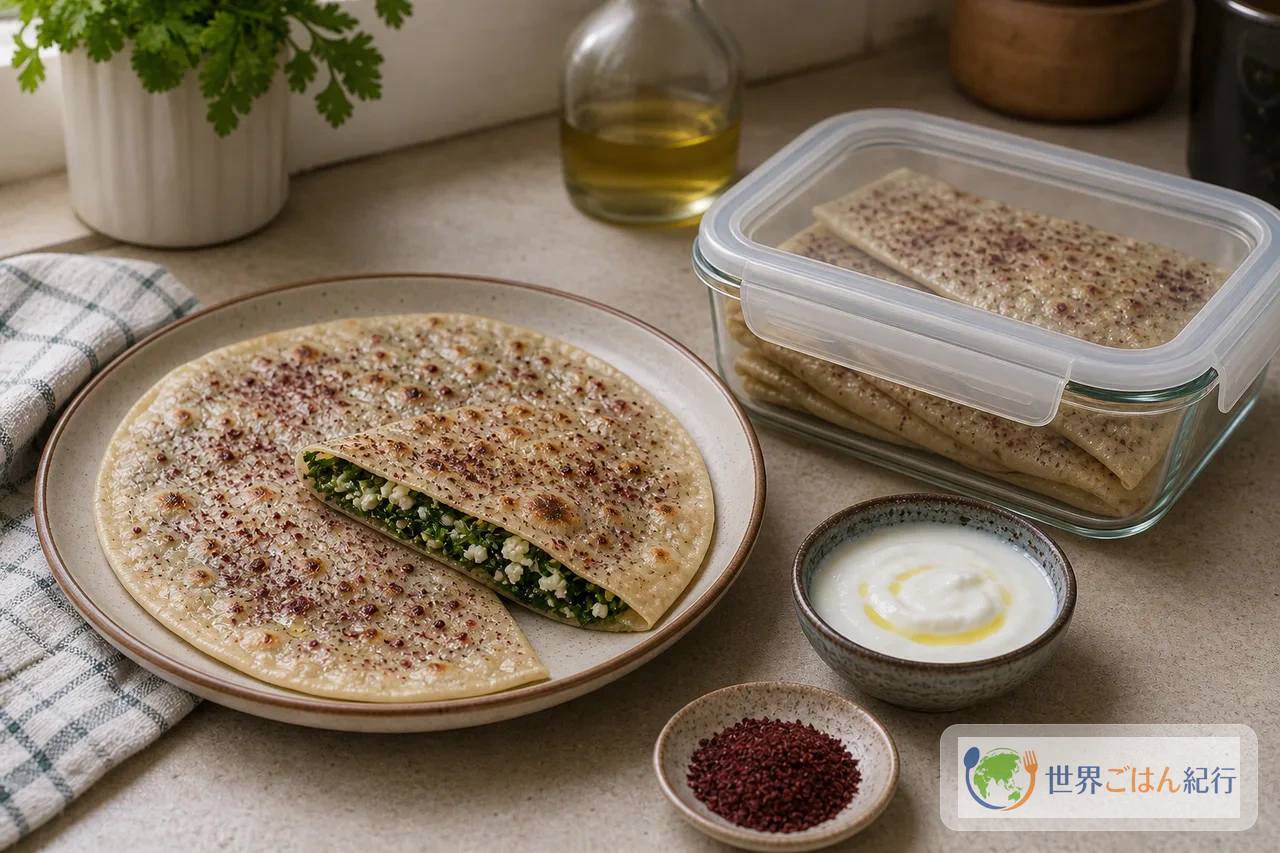
In a home kitchen, the hard part is not the saj but rolling the dough thin without tearing it. This recipe uses all-purpose and bread flour, spinach, dill, cilantro, and a feta-style white cheese, aiming for the herb-filled goy qutabı. It carries less worry about doneness than the meat version, and the sourness of sumac and yogurt is easy to enjoy, which makes it a good first qutab.
If you plan to keep cooking Azerbaijani food, set it beside Piti, the clay-pot stew, and Shah plov, rice wrapped in lavash, and the pattern of flatbread, rice, and stew comes into view. If you like Georgian khachapuri or khinkali, the thin dough and herb fragrance of qutab will land in much the same place.
It looks like Turkish gözleme, but qutab is thinner, always a half-moon, and often finished with sumac and yogurt. At home the boundary blurs, but this article follows the Azerbaijani flow: roll it thin, cook it on a dry griddle, finish with butter and sumac.
Ingredients (serves 4, makes 8)
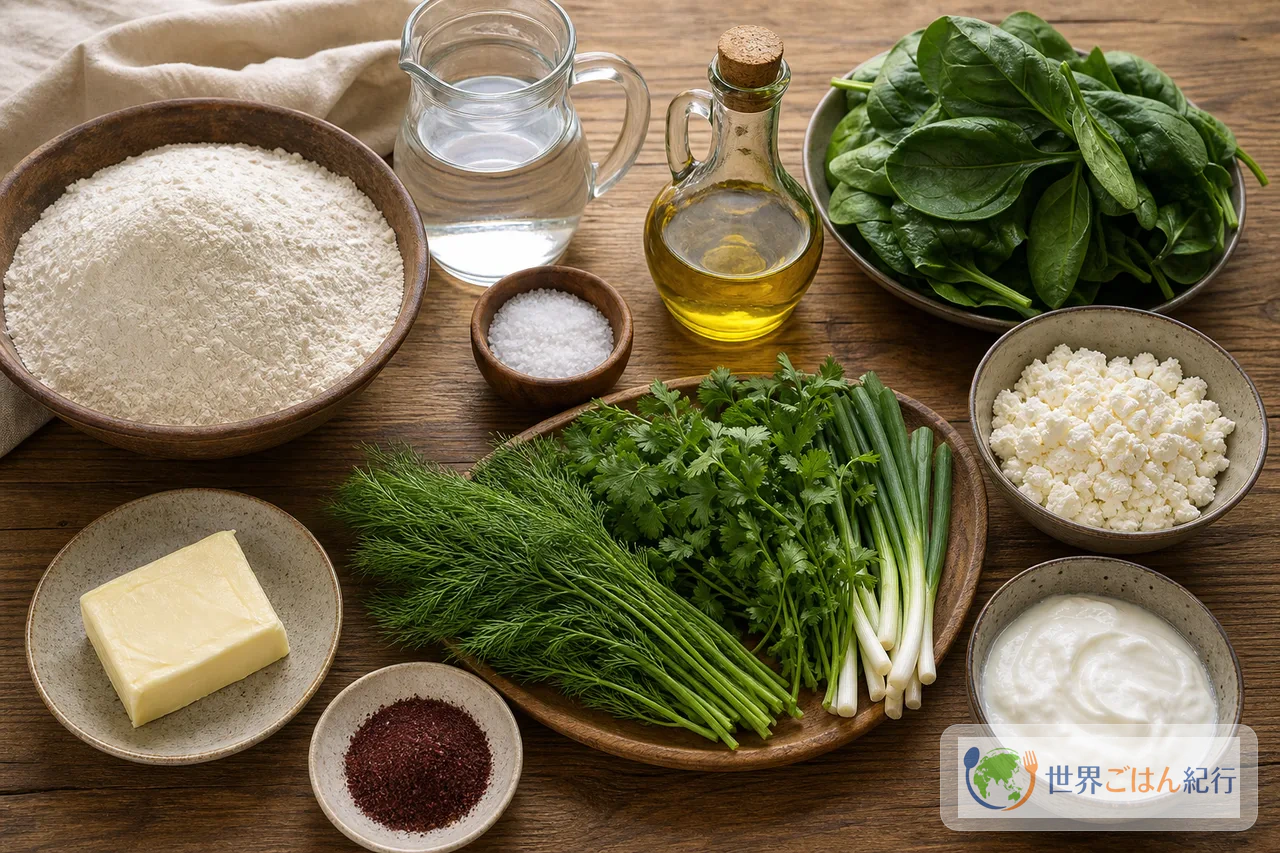
This recipe contains wheat and dairy. To avoid dairy, make the filling with herbs only and add a little more salt and olive oil. To avoid wheat, we don't recommend swapping in rice flour alone, since it is hard to reproduce the same thinness and foldability.
Ingredients and tools worth getting right
Sumac, a rolling pin, white cheese, and a heavy skillet make a real difference to the result. Sumac especially: a final pinch of this sour red powder moves the yogurt-and-herb combination much closer to the local way of eating.
Serving, storing, and variations
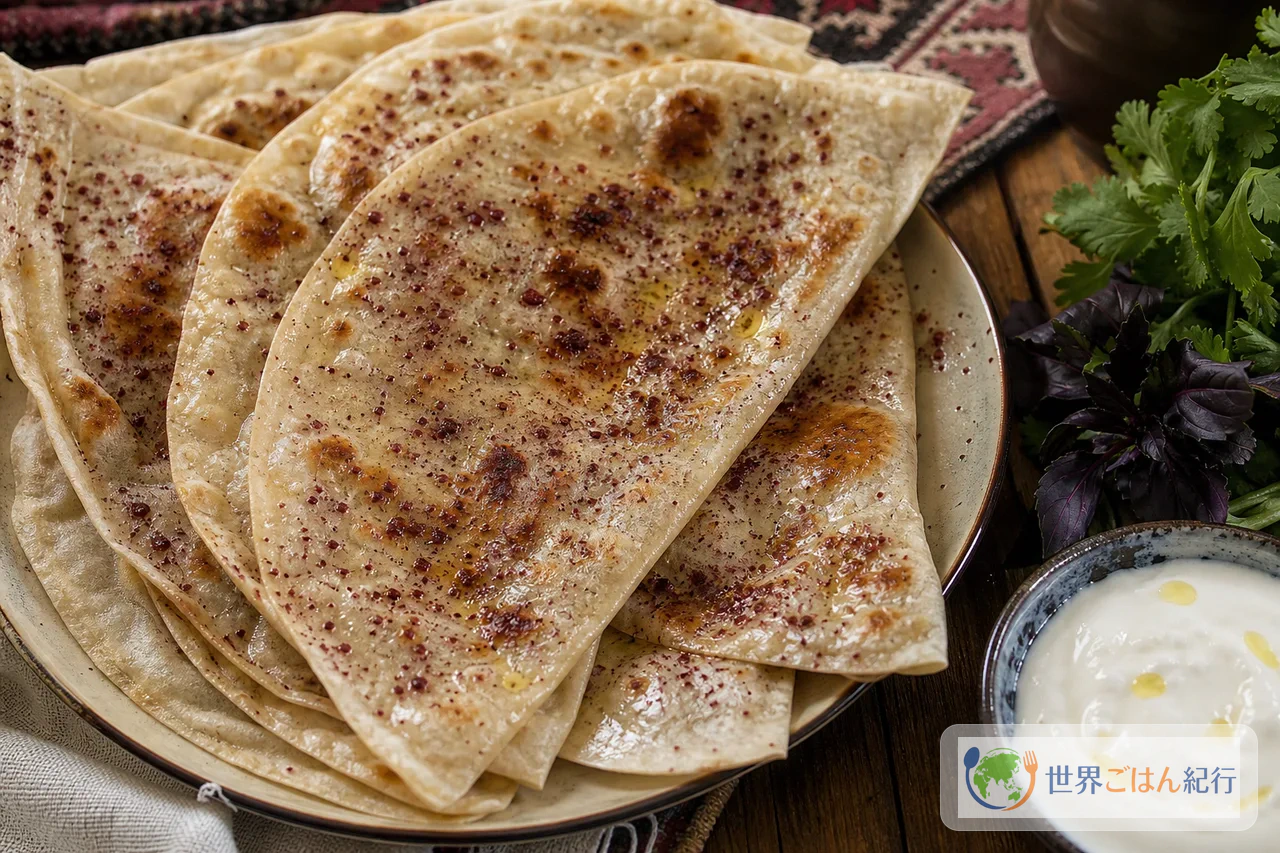
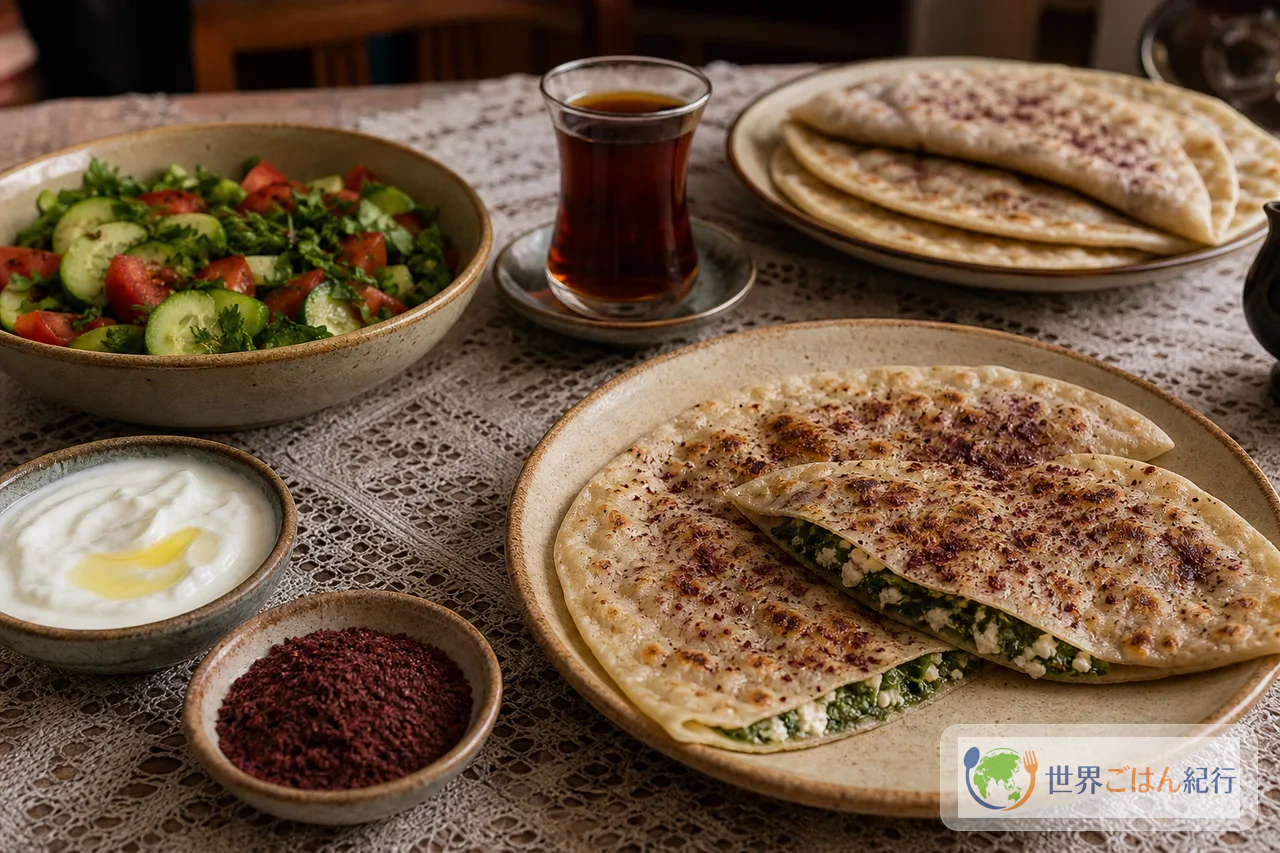
Fresh qutab is more fun folded in half by hand than cut with a knife. Dip in a little yogurt, add more sumac, and set a cucumber and tomato salad beside it, and the dish stays light for a flour-based food. In Azerbaijan it is often paired with black tea or ayran, and it serves as a starter before a meat dish or a light lunch.
For the vegetable salad, cut 1 cucumber into thin half-moons, 2 tomatoes into 1.5 cm cubes, and slice a little green onion, then toss with 1/4 tsp salt, 2 tsp lemon juice, and 2 tsp olive oil. If you have sumac, a 1/2 tsp sprinkle lines up the sourness with the yogurt.
To explore regional differences, change the filling as follows.
| Filling | Place in local cooking | Notes when making it at home |
|---|---|---|
| Herbs | A classic for snacks and starters | Squeeze out the moisture. Don't use just one herb |
| Meat | For a more filling meal | Spread the ground meat thin and cook longer over medium heat |
| Pumpkin | A sweet, homey filling | Steam the pumpkin to drive off moisture. A little cinnamon goes well |
| Cheese | Easy to make at home and in recipes abroad | If the feta is salty, leave out the salt in the filling |
Qutab is easier to handle if cooked before storing. Let them cool, wrap each one in plastic wrap, and refrigerate for 3 days or freeze for 1 month. To reheat, preheat a skillet over medium-low heat for 1 minute, then warm without oil for 1.5 minutes per side. The microwave alone makes the dough too soft, so microwave at 600 W for 20 seconds and then restore the surface in the skillet to bring back the toasty edges.
Qutab fails because of moisture more than flavor. Whether you use spinach, pumpkin, mushrooms, or ground meat, make sure no liquid pools at the bottom of the bowl before cooking. Too much liquid leaks through the seam and leaves the inside of the dough heavy, as if undercooked.
If you are building a Caucasian table around qutab, rather than putting the cheesy khachapuri beside it at the same time, a small portion of Piti, with meat and beans, or the strongly aromatic satsivi balances better. On a day when you want to stay with dough, move on to manti, the steamed dumplings of Central Asia, and the difference between a thin griddle bread and a steamed dumpling made from the same wheat dough comes through clearly.
FAQ
Q1. What can I use if I don't have sumac?
You can substitute 1 tsp lemon juice and a little grated lemon zest. It won't give you sumac's red color or dry sourness, though. Because qutab is eaten with yogurt, sumac keeps the sourness from turning watery and helps it cling to the cooked dough. It is also useful for Turkish kofte and Lebanese mujaddara, so one bag makes it easier to move around Middle Eastern and Caucasian cooking.
Q2. Is feta required?
No. Some local herb qutab are made without cheese. In home kitchens, adding a little feta or cottage cheese helps the filling hold together and goes well with yogurt, which is why it is used here. For a version without cheese, raise the herbs to about 220 g total and mix 1/3 tsp salt and 2 tsp olive oil into the filling.
Q3. Why does the dough tear?
The main causes are too little resting, a wet filling, and rolling too thin. A 30-minute rest relaxes the gluten and makes the dough easier to roll thin. Squeeze the moisture out of the filling and keep it to about 50 g per piece. Rather than aiming for 22 cm from the start, learn the feel of 20 cm without tearing, then push for thinner, and you'll have fewer failures.
Q4. How do I change the quantities for meat qutab?
Mix 250 g ground beef or lamb, 80 g finely chopped onion, 1/2 tsp salt, 1/2 tsp cumin, 1/4 tsp black pepper, and 2 tsp pomegranate molasses, and spread about 35 g thinly on each. Cook the meat version over medium heat for 3 to 3 1/2 minutes per side, until cooked through. If only the surface is scorching, lower the heat and use a lid for just 30 seconds to cook it safely.
Q5. Can I freeze them raw to make ahead?
We recommend cooking before freezing. Raw, the moisture from the filling moves into the dough and it tears easily when thawed. Cool the cooked qutab, wrap each in plastic, and lay them flat in a freezer bag. To reheat, cook from frozen in a skillet over low heat for 3 minutes per side, then 30 seconds per side over medium heat to restore the surface.
Sources
- Azerbaijan.Travel. "Qutab hazırlanması master-klasları." https://azerbaijan.travel/qutab-hazirlanmasi-master-klaslari (accessed 2026)
- Visions of Azerbaijan Magazine. "Introducing the Qutab and Ayran." https://www.visions.az/en/news/316/2fa760e2/ (accessed 2026)
- Cup of Yum. "Qutab (Azerbaijani Stuffed Flatbread)." https://cupofyum.com/recipes/qutab-azerbaijani-stuffed-flatbread (accessed 2026)
- The Cooking Foodie. "Qutab Recipe - Flat Bread Filled With Green Onion and Cheese." https://thecookingfoodie.com/recipe/Qutab--Flat-Bread-Filled-With-Green-Onion-and-Cheese (accessed 2026)