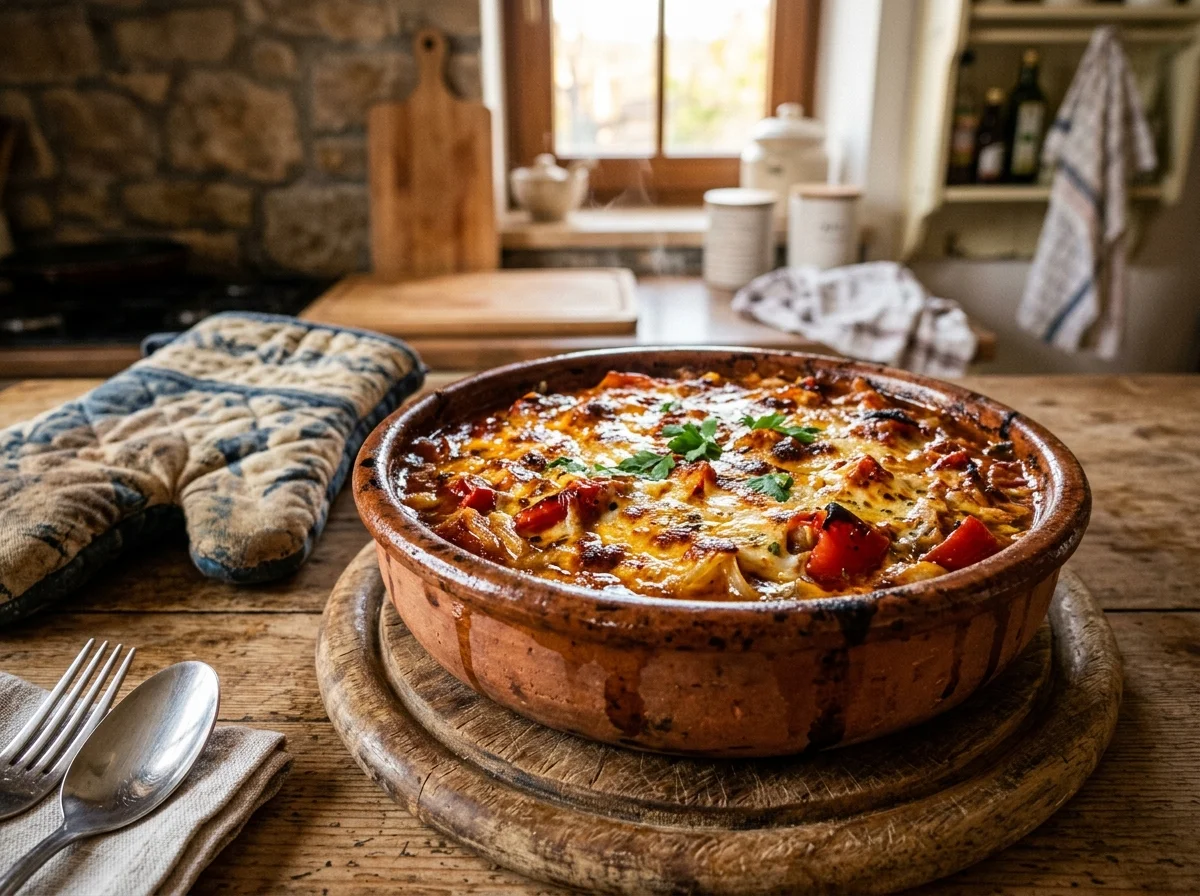
An Albanian Kitchen That Begins with the Smell of Charred Peppers
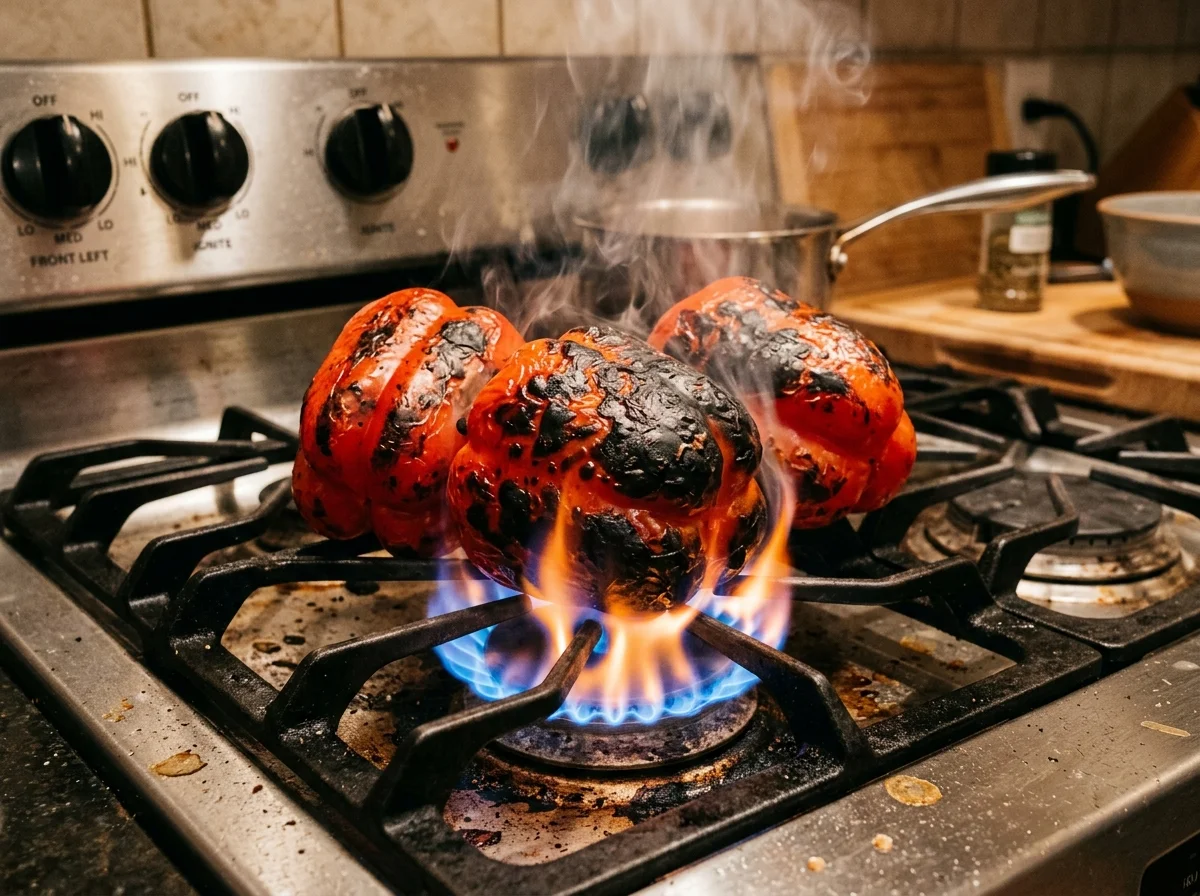
Set a red bell pepper over an open flame and at first you smell sweet vegetable, then a little later the scent of the skin charring. If you get nervous and pull it off the heat early, fërgesë ends up a watery cheese bake. Char the skin black, reduce the tomato's moisture over medium heat, and soften the saltiness of the white cheese with egg. Fërgesë is a home dish from central Albania whose flavor depends more on how you handle moisture and saltiness than on the ingredients.
In Albanian, the pepper version is sometimes called "Fërgesë e Tiranës me piperka." As the name of the capital, Tirana, suggests, it is a style well known around Tirana. In the south, around Gjirokastër, there is also a white fërgesë that uses no peppers and is baked slowly with gjizë, onion, tomato and olive oil. There are also versions with meat or liver, so it is a dish hard to talk about with only one right answer.
This article centers on the Tirana-style pepper version, which is easy to make in a home kitchen. Authentic gjizë is hard to find outside the region, so the first fork in the road is how to combine feta, cottage cheese and grated hard cheese. For kitchens that cannot char over a flame, I also added how to use ajvar and smoked paprika to make up the aroma. If you like Bosnian burek (in Japanese) or North Macedonian tavče gravče, it connects quite naturally as the same Balkan table. If you extend to Albanian main dishes, tavë kosi (in Japanese), which bakes lamb and yogurt in a shallow dish, is also a dish that sits easily at the same table.
If you hesitate when shopping, first decide three things: saltiness, charred aroma and the shallowness of the dish. The white cheese can lean toward what a regular supermarket sells, and there is no need to go out of your way to buy ordinary dairy online. What is worth looking for at a specialty store or online is ajvar, which adds the sweetness of roasted peppers, smoked paprika, which makes up the aroma in a kitchen without an open flame, and a shallow baking dish that lets you bake a wide surface. Get these right, and even with plain ingredients you escape being "just a cheese gratin."
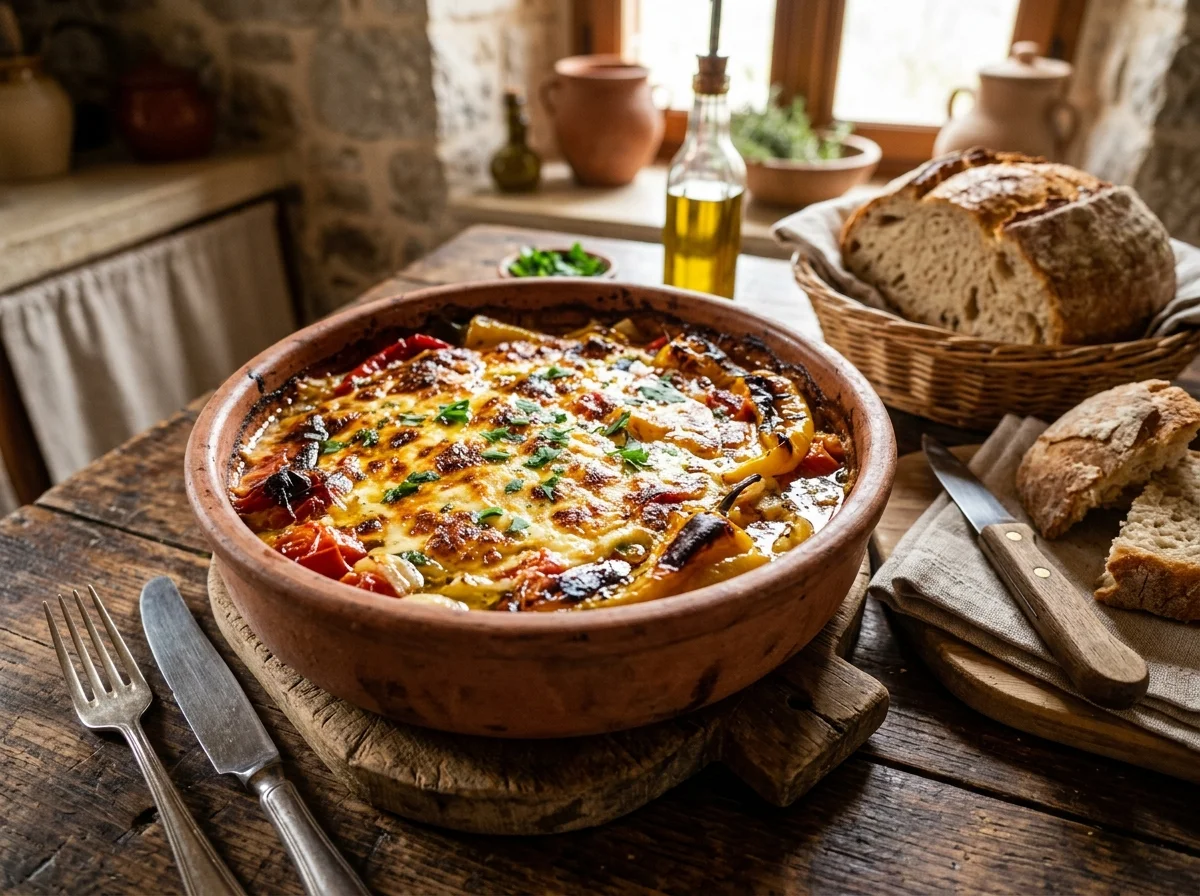
A baked dish enjoyed mainly in central Albania. Roasted peppers, tomato, white cheese and egg are combined and baked in an oven or clay pot until the surface turns golden. Many regions use a sour white cheese called gjizë, but depending on the household or region there are also versions with meat or liver, and white versions without peppers.
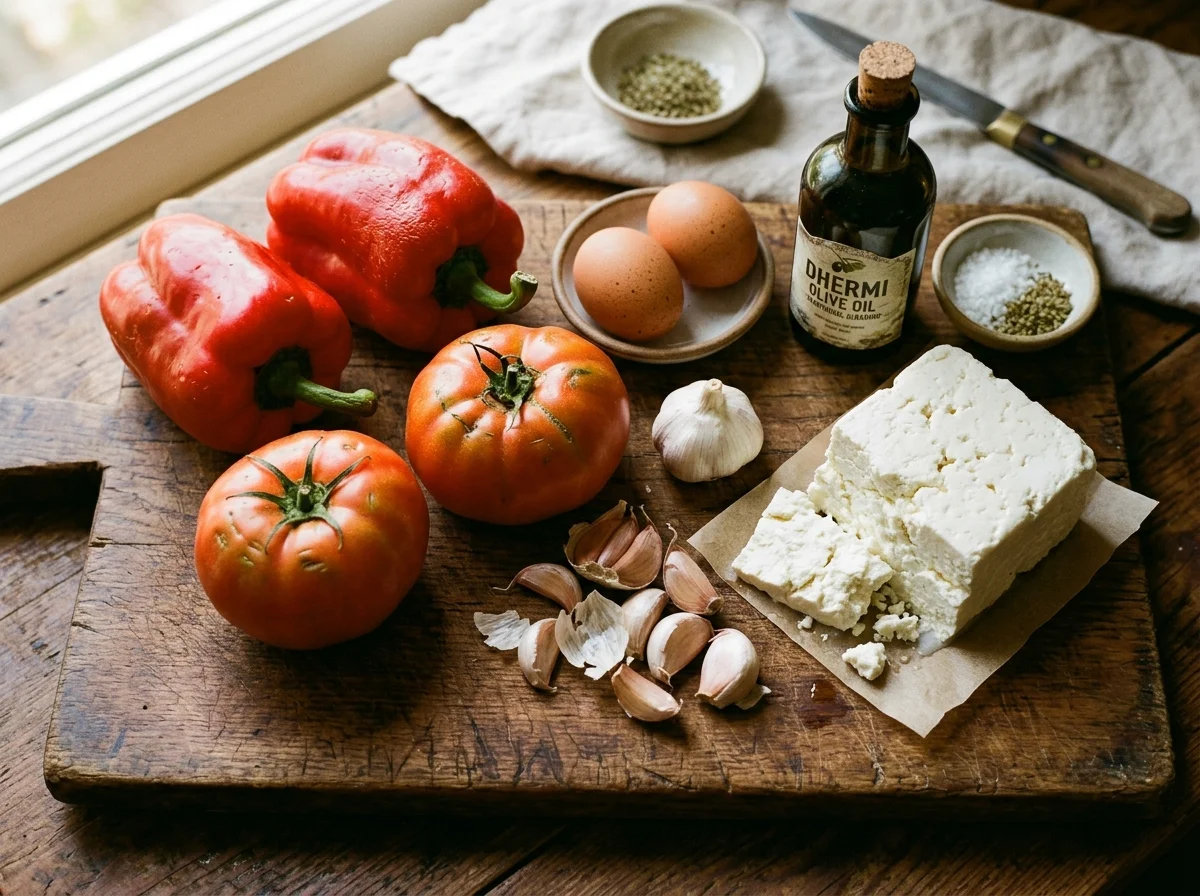
Ingredients (serves 4)
Main ingredients
Gjizë, commonly used in Albania, is a sour white cheese close to ricotta or cottage cheese. Made with feta alone it is too salty, and with cottage cheese alone the flavor is light. For a first batch, the combination of 100 g feta, 100 g cottage cheese and 1 tbsp grated hard cheese is stable. If using feta, press the surface moisture off with paper towels before crumbling.
| Flavor you want | Cheese blend | How to salt | Good for |
|---|---|---|---|
| Closer to the local white-cheese feel | 100 g feta + 100 g cottage cheese + 1 tbsp grated hard cheese | Start with 2/3 tsp salt. Taste before baking and add | A starter scooped with bread, white wine |
| Less salty, family-friendly | 150 g cottage cheese + 2 tbsp grated hard cheese + 1 tbsp unsweetened yogurt | Start with 1/2 tsp salt | Lunch, for children, breakfast |
| Richer, leaning toward a main dish | 120 g feta + 80 g ricotta + 2 tsp butter | Add salt last, a pinch at a time | A side to grilled meat or bean dishes |
With more feta the first bite feels more authentic, but scooping with bread again and again stacks up the saltiness. On the other hand, with cottage cheese alone, moisture is easy to absorb but the aroma when baked is weak. Grated hard cheese is not a traditional ingredient, but I use it as a small adjuster to supply the outline of acidity and saltiness in a home kitchen.
This recipe contains dairy, egg and wheat. For those with a dairy allergy, make it as a pepper and tomato stew without cheese; for those with an egg allergy, leave out the egg and finish with only the cheese and the flour's thickening. The flour can be replaced with rice flour.
Seasonings
What to Decide When Shopping
Fërgesë can be made with familiar ingredients, but what decides how authentic it tastes is "the aroma of roasted peppers" and "a dish that bakes shallow." Buy the white cheese and eggs at a regular supermarket, and if you look further afield, narrowing it to the aroma-boosting ingredients and the baking dish wastes the least.
| Where to buy | What to buy | What you do not need | Reason |
|---|---|---|---|
| Regular supermarket | Red bell peppers, tomatoes, eggs, garlic, cottage cheese, feta | Milk, cream, ordinary melting cheese | Fërgesë is not a stretchy cheese dish; it is a dish where white cheese holds the vegetables |
| Import or specialty food store | Paprika powder, oregano, baguette | Expensive all-purpose spice blends | The axis of flavor is roasted peppers and moisture management, not the quantity of spices |
| Online | Ajvar, smoked paprika, a shallow baking dish | Ordinary dairy, fresh peppers | Limit it to the things that are hard to buy nearby and decide how the dish turns out |
If you start looking for cheese online, feta, ricotta, halloumi and cottage cheese line up and it gets confusing. For fërgesë, putting effort into preparing to char the peppers black and securing a shallow dish steadies the flavor more than spending too much time there.
In a kitchen that cannot roast peppers over an open flame, adding a little ajvar makes up for the sweetness and savory aroma of red peppers. It is strongly flavored, so keep it to 2 tsp for a first batch. If you have leftover jar, spreading it thinly on bread or serving it with ćevapi makes it easier to use up.
Smoked paprika is not an essential ingredient in the authentic dish but insurance for the aroma. When the charred aroma of the peppers is weak from just a broiler or oven, use only 1/4 tsp. Too much moves it toward a smoky dip rather than an Albanian home dish, so stop at "adding" aroma.
Baking in a deep pot tends to leave moisture in the center. A shallow baking dish of about 20 cm browns the surface easily and sets to a thickness that is easy to scoop with bread. If you have only a deep gratin dish, halve the quantity and spread it thin, or simmer the sauce 2 minutes longer than usual in step 3 before baking.
How to Eat Fërgesë
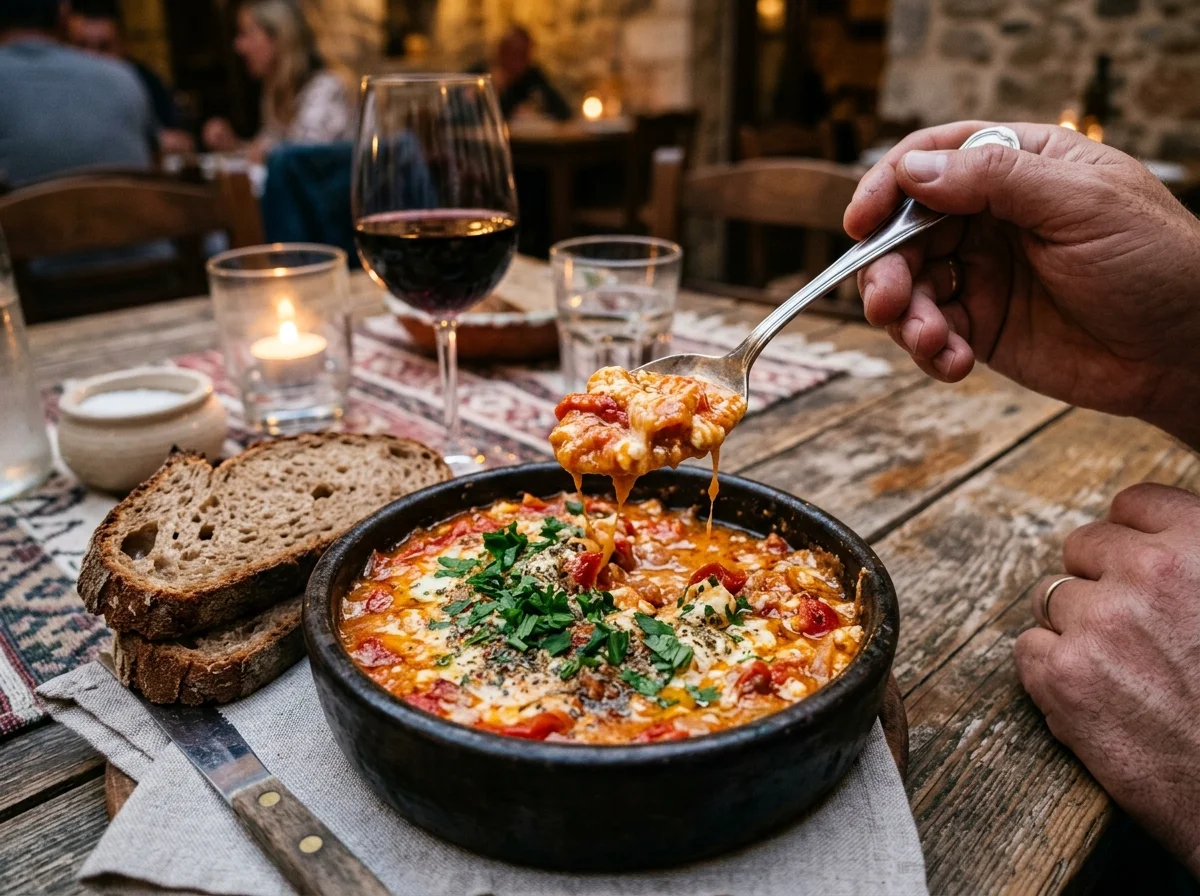
Fërgesë works as a starter or a light main dish. A small portion on a small plate is like a warm dip for bread, and served in the baking dish it becomes the center of a weekend lunch. Tear bread and scoop the browned surface and the soft center together, and the sweetness of the pepper, the acidity of the tomato and the saltiness of the cheese come together in one bite. It is close to the feeling of scooping Lebanese hummus (in Japanese) with bread, but in fërgesë the warmth of baked dairy takes the lead.
For drinks, in Albania raki, a grape distillate, is often served. If you pair alcohol, an acidic white wine is easy to work with. Served as a meal, adding a cucumber and tomato salad, grilled meat and a bean stew gives the satisfaction of a Balkan table. On days when the cheese is salty, a drink like dhallë, yogurt thinned with water, or a spoonful of unsweetened yogurt on the side lightens the palate.
At the table, letting it settle a little before serving is easier to eat than portioning it piping hot from a large dish. Right out of the oven the cheese and oil are moving, and they run when put on bread. After 1–2 minutes the surface firms, and it is easier to scoop while keeping the aroma of the browned edges. Leftovers the next day can be reheated and put on bread, or used as a filling for an omelet, over boiled potatoes or as a side to roast chicken.
History and Regional Differences
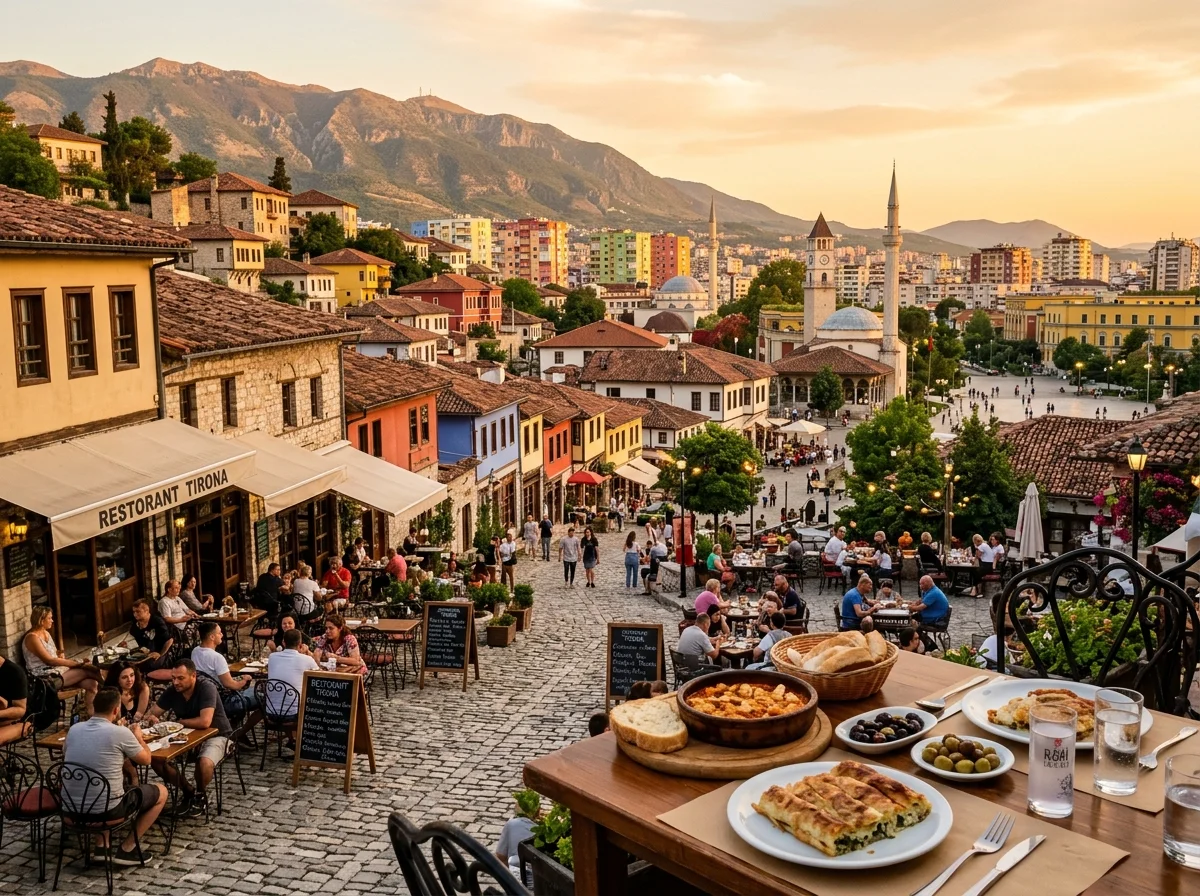
Tirana style and Gjirokastër style
Fërgesë is less a single fixed recipe than a family of baked dishes built around white cheese. The English version of the Albanian government tourism site introduces a fërgesë using meat, yogurt, eggs, butter, red peppers and garlic, and the Albanian version introduces, as the Gjirokastër style, a pepper-free type using gjizë, olive oil, onion, tomato and butter. In other words, even with the same name the dish changes quite a lot by region.
A pepper version like the one in this article is also often introduced on local recipe sites as "Fërgesë e Tiranës me piperka," and is characterized by baking peppers, tomato and white cheese in a shallow clay pot. The liver version, "Fërgesë me mëlçi," is richer and leans toward a main dish.
Balkan cooking is not cleanly cut by borders. Roasted peppers, white cheese, bread, yogurt, beans and dairy from sheep and cows are widely seen not only in Albania but in the surrounding regions. What makes fërgesë look Albanian among them is the plainness of pulling white cheese and roasted vegetables together with the heat of a clay pot rather than covering them in a thick sauce. When reproducing it at home, too, carefully shaping the boundary between the sweetness of roasted peppers and the saltiness of cheese gets you closer than adding showy spices.
| Style | Characteristics | Cautions when making |
|---|---|---|
| Tirana-style pepper version | Bakes roasted peppers, tomato, white cheese and egg | Char the pepper skin black, and do not leave too much tomato moisture |
| With meat or liver | Adds liver or meat and bakes in a clay pot | Sauté the liver first over medium heat until the color changes to cook off the gaminess |
| Gjirokastër style | Centered on gjizë, onion, tomato and olive oil, whiter and creamier | With no peppers, the acidity of the cheese and the sweetness of the onion are the stars |
What to preserve in a home kitchen
What is worth preserving is not gjizë itself but the structure in which a sour white cheese holds the moisture of the vegetables. Made with feta alone it is too salty, and with ricotta alone it is blurry. So using half feta and half cottage cheese and making up the missing richness with grated hard cheese gets a close outline.
The other is baking in a shallow dish. Fërgesë is not a dish that holds plenty of sauce like a gratin. The right consistency is one where, when you scoop with bread, the cheese chunks, peppers and thick tomato sauce come up together. If water pools in the center, it is not a failure but a sign that the baking or reducing was a little short.
Where It Goes Wrong
It turns watery
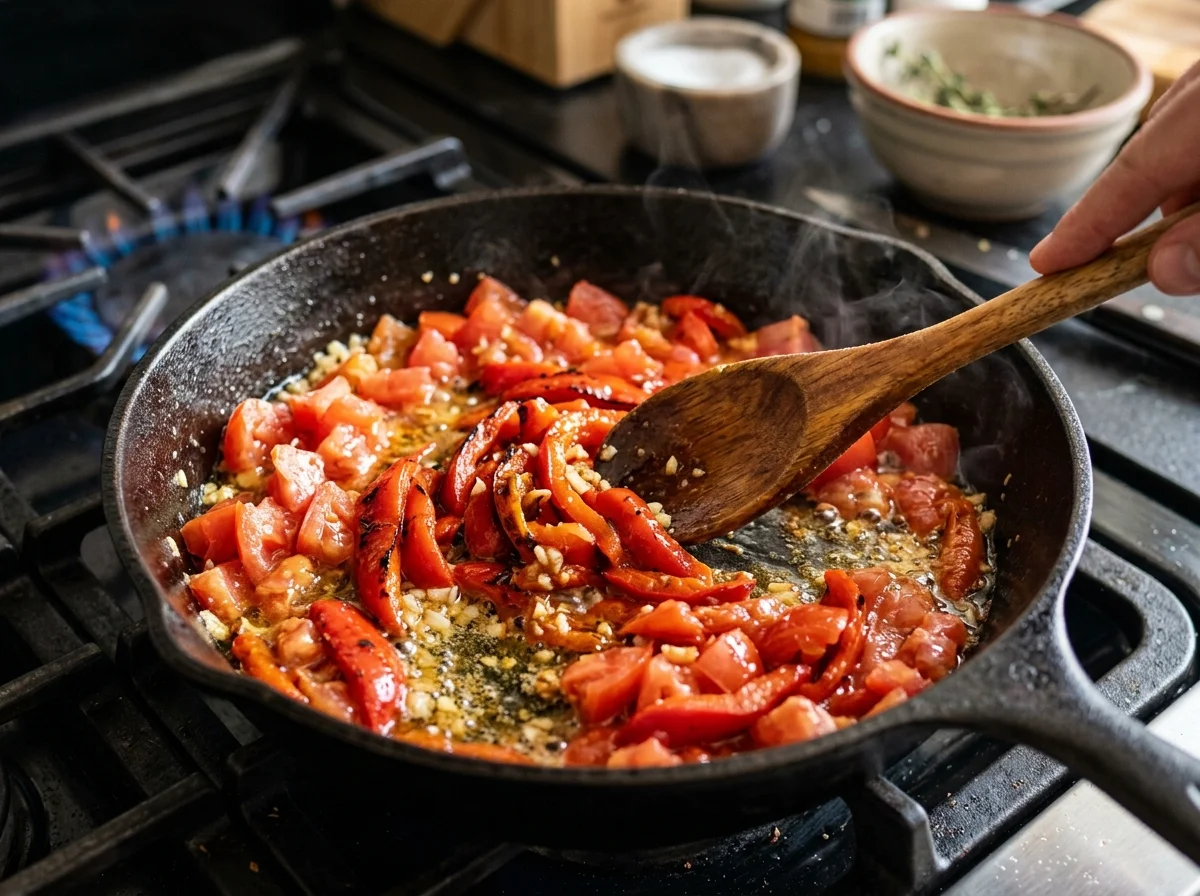
The cause is too much moisture left from the tomato and roasted peppers. In step 3, reduce over medium heat until the bottom shows for a moment when you draw the wooden spatula. If you use canned diced tomatoes, do not pour in all the liquid from the can; add mainly the flesh first. If the mixture still runs thin before baking, return it to the skillet for 2–3 minutes of reducing before it goes in the oven.
It turns salty
The feta's saltiness is the cause. When using feta, do not put in 1 tsp salt from the start; hold it to 2/3 tsp and adjust at the end. If it turns salty, add 50 g cottage cheese or mix in 2 tbsp unsweetened yogurt before rebaking, and the edges soften.
The egg turns crumbly
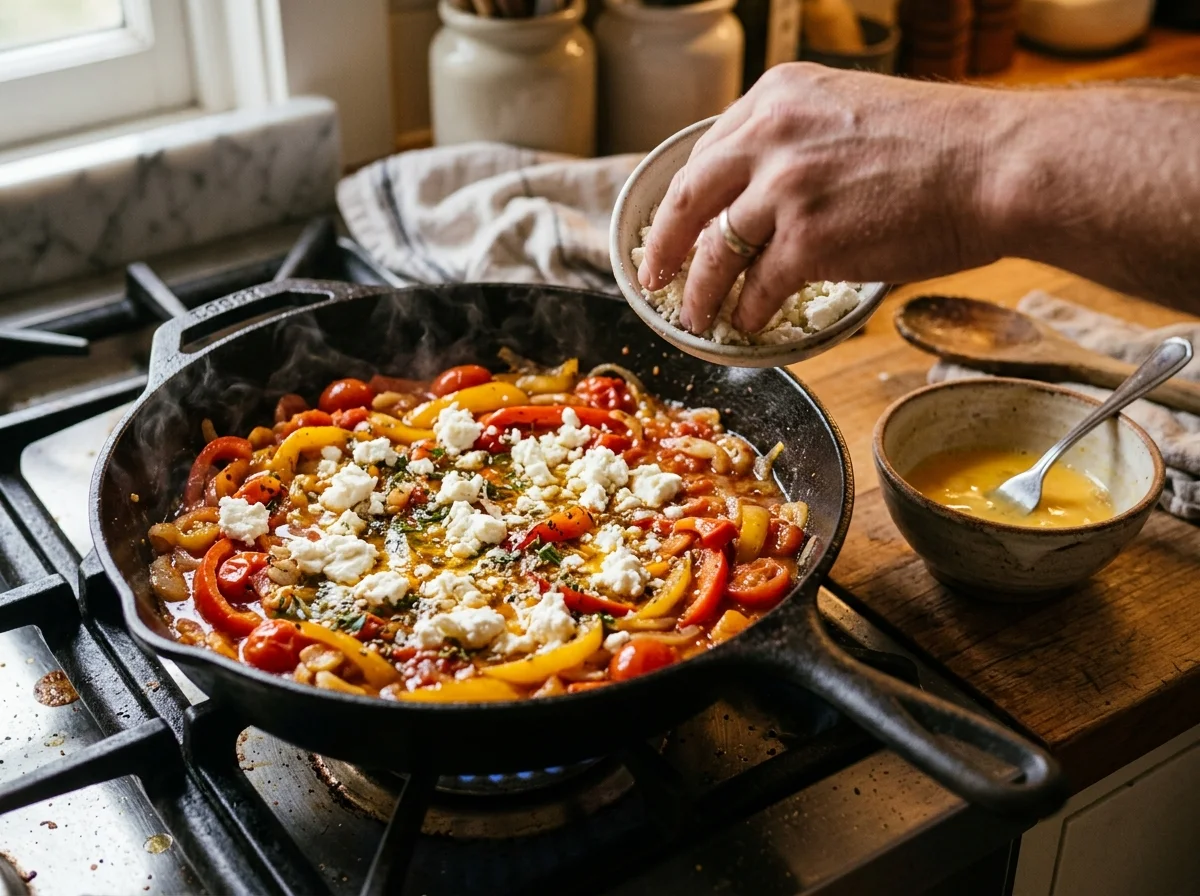
If you stir over high heat after adding the egg, it sets like fine scrambled egg. Lower to low heat before adding the egg, and turn off the heat immediately once it gathers to a soft set. It also cooks further during the 15 minutes in the oven, so there is no need to set it completely in the skillet.
The charred aroma is weak
When roasted only under a broiler or in the oven, the peppers may turn red and soft in appearance but struggle to take on the aroma of an open flame. Roast skin side up at 250°C (480°F) and move closer to strong top heat for only the last 3 minutes, and the aroma comes out. If it is still weak, add 2 tsp ajvar and 1/4 tsp smoked paprika in step 3. Increasing smoked paprika to 1 tsp makes the aroma cover the entire dish, so if you increase something, prioritize the ajvar.
| What happened | Quick fix | Prevention next time |
|---|---|---|
| Liquid pools in the center of the baking dish | Return to the skillet, reduce 2 minutes over medium heat, then bake again | Do not add all the liquid from the canned tomatoes at the start |
| Too salty | Mix in 50 g cottage cheese or 2 tbsp unsweetened yogurt and rebake | Add salt last when using feta |
| Egg is firm | Mix in 1 tsp olive oil while hot and put it on bread | Only 1–2 minutes over low heat after adding the egg |
| Flat aroma | Add 1 tsp ajvar and reheat | Char the pepper skin black on each side |
Variations
Fërgesë with liver
Chop 100 g chicken liver into 5 mm pieces and sprinkle with a little salt and black pepper. After sautéing the garlic in step 3, add it before the tomato and sauté 3 minutes over medium heat until the surface changes color. When no red juices come out, add the tomato and peppers and proceed as usual. The ironlike aroma of the liver comes out, so increasing the oregano to 1 tsp helps pull it together.
Fërgesë with eggplant
Replace 2 peppers with 2 eggplants. Slice the eggplant into 1 cm rounds and brown both sides in 1 tbsp olive oil before adding. It soaks up the tomato sauce and gives a satisfaction close to Greek moussaka (in Japanese). Eggplant absorbs moisture, so adjust the salt at the end.
Lighter cheese
If the saltiness of feta is not to your taste, replace the 200 g white cheese with 150 g cottage cheese, 2 tbsp grated hard cheese and 1 tbsp unsweetened yogurt. The browning is weaker, but it is light enough to eat at breakfast. Taste before baking and add a pinch of salt if it feels lacking.
Prepping the day before
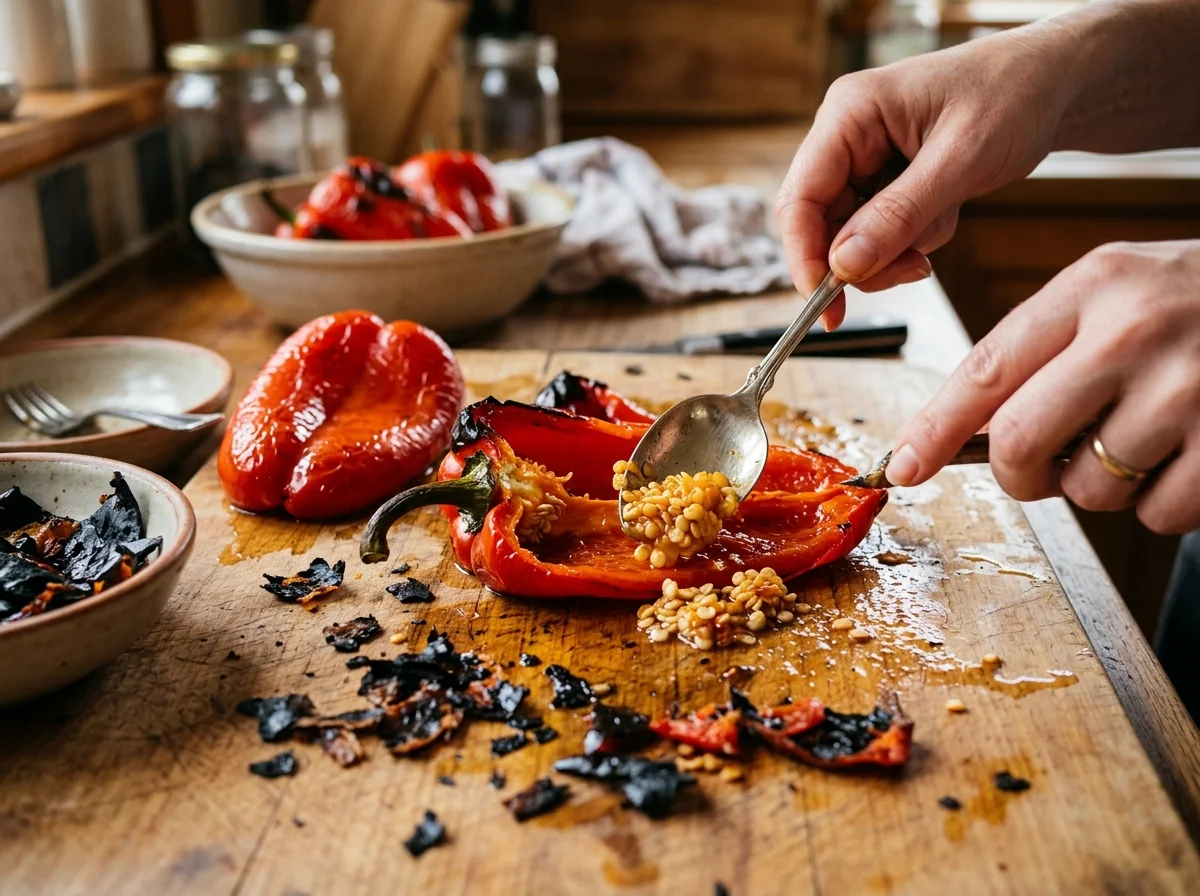
Finishing the roasting and peeling of the peppers the day before makes the day's work much lighter. Cut the peeled flesh into 2–3 cm pieces, toss with 1 tsp olive oil and refrigerate. The next day you can start from reducing the tomatoes, so it is easy to make even for dinner. If liquid comes out of the roasted peppers, do not put all of it back; return only about 1 tbsp of the strongly flavored liquid to the sauce.
Side Dishes That Go with Fërgesë
Fërgesë is a dish with dairy and oil, so keeping the outside of the plate light with acidity or raw vegetables helps you keep eating.
- Bukë: Albanian country bread. A baguette, country loaf or lightly toasted sandwich bread can substitute.
- Shopska salad: a salad of tomato, cucumber and white cheese. If you use a lot of cheese in it, reduce the cheese in the fërgesë a little.
- Marinated roasted peppers: a side of peeled peppers dressed with vinegar, olive oil and garlic. You can make it by setting aside just one of the peppers roasted for the fërgesë.
- Dhallë: a drink of yogurt thinned with water. 100 g unsweetened yogurt, 100 ml water and a pinch of salt gives a similar feel.
To lean toward the same Eastern European and Balkan table, connecting it to meat and bean dishes such as piti, shashlik and bigos makes a menu that does not end with just the baked cheese dish.
On a day when fërgesë is the only star, increase the bread and raw vegetables. On a day you put it beside a meat dish, use the lighter cheese blend and reduce the salt so the whole table does not get heavy. If you grill meat skewers such as Georgian shashlik, serving fërgesë in small portions as a warm sauce and side works well.
Frequently Asked Questions
Q1. Can I substitute something for feta?
Yes. The easiest is mixing 2 tbsp grated hard cheese into 150 g cottage cheese. Ricotta has a similar texture, but the flavor is light, so adding a pinch of salt and grated hard cheese pulls it together. Cream cheese is high in fat and easily covers the pepper aroma, so it is not suited to be the star.
Q2. What if I cannot roast the peppers over an open flame?
Roast under the oven broiler at 250°C (480°F) for 15–20 minutes, or in a fish-grill broiler on high for 12–15 minutes. Cut them in half, set skin side up, and heat until the skin is black and puffed. If the charred aroma is weak, you can make it up with 2 tsp ajvar or 1/4 tsp smoked paprika.
Q3. Can I make it ahead?
Up to 3 days in the refrigerator is the guide. Cool it a little, put it in an airtight container, and reheat for 2 minutes in a 600 W microwave or 10 minutes in a 180°C (350°F) oven. Freezing is possible for about a month, but moisture tends to come out of the cheese on thawing. Wipe off a little of the surface moisture before reheating and warming in the oven brings it back more easily.
Q4. Can I give it to children?
It is not spicy, so if you adjust the salt it is easy to eat. For children, leave out the smoked paprika, reduce the feta and increase the cottage cheese. From age 2, chopping the peppers to about 1 cm and making the consistency easy to put on bread makes it easier to eat.
Q5. Can I make it without an oven?
Yes. After step 4, spread it to 2–3 cm thick in the skillet, cover and heat over low heat for 10 minutes. The browning on the surface is weaker, but it is fine to eat once the edges bubble and the center is set. Finishing with 3 minutes in a toaster oven adds surface savoriness.
Q6. Can I make it without ajvar?
Yes. If you can char the peppers properly black over an open flame, you can leave out the ajvar. When the aroma is weak from just the oven or broiler, increase the sweet paprika powder from 1 tsp to 1 1/2 tsp and add 1/4 tsp smoked paprika. Ajvar is not an essential ingredient; it is insurance to supplement the sweetness of roasted peppers in a kitchen without an open flame.
Summary
Fërgesë can be made with plain ingredients, red peppers, tomato, white cheese and egg, yet differences in how you apply heat show clearly. Char the skin black, reduce the moisture over medium heat, stop the egg over low heat and bake the surface in a shallow dish. Just keeping these four gets you close to the warmth of an Albanian eatery even with ordinary supermarket ingredients. If you do buy extras, choosing things that directly change the result, such as ajvar, smoked paprika and a shallow baking dish, rather than ordinary dairy, wastes the least.
Put it on the table in the baking dish at weekend lunch and eat it scooping with bread, and the good of this dish is easy to see. As an entrance to Balkan food, it is lighter than fried or meat dishes, with the sweetness of vegetables out front. Next, going on to Bosnian burek (in Japanese), which ties into the same white-cheese culture, or tavče gravče, which bakes beans in a clay pot, will make the Eastern European kitchen look a little more three-dimensional.
Sources
- Albanian National Tourism Agency. Fërgese.
- Albanian National Tourism Agency. Fërgesë.
- My Albanian Food. Albanian Fergese / Fergesë e Tiranës me piperka.
- Kumi, Petrit. Albanian Cuisine: A Journey Through Flavors. AlbanianCuisine.com, 2024.