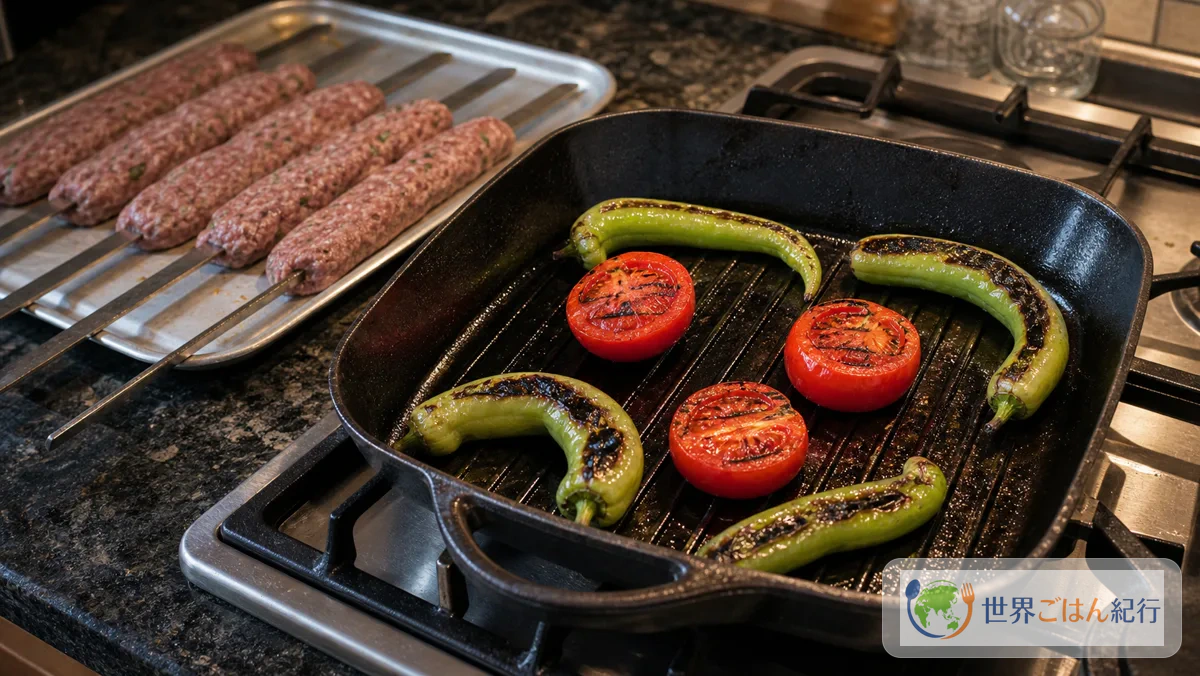
The kitchen goes quiet until the meat clings to the skewer
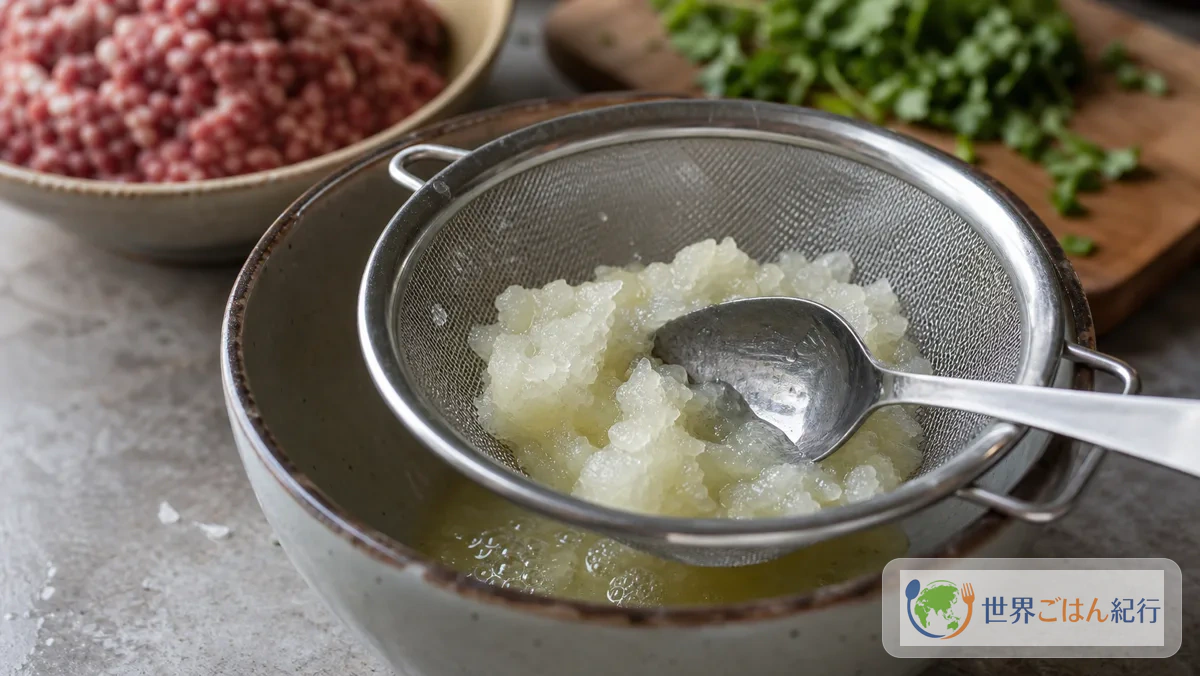
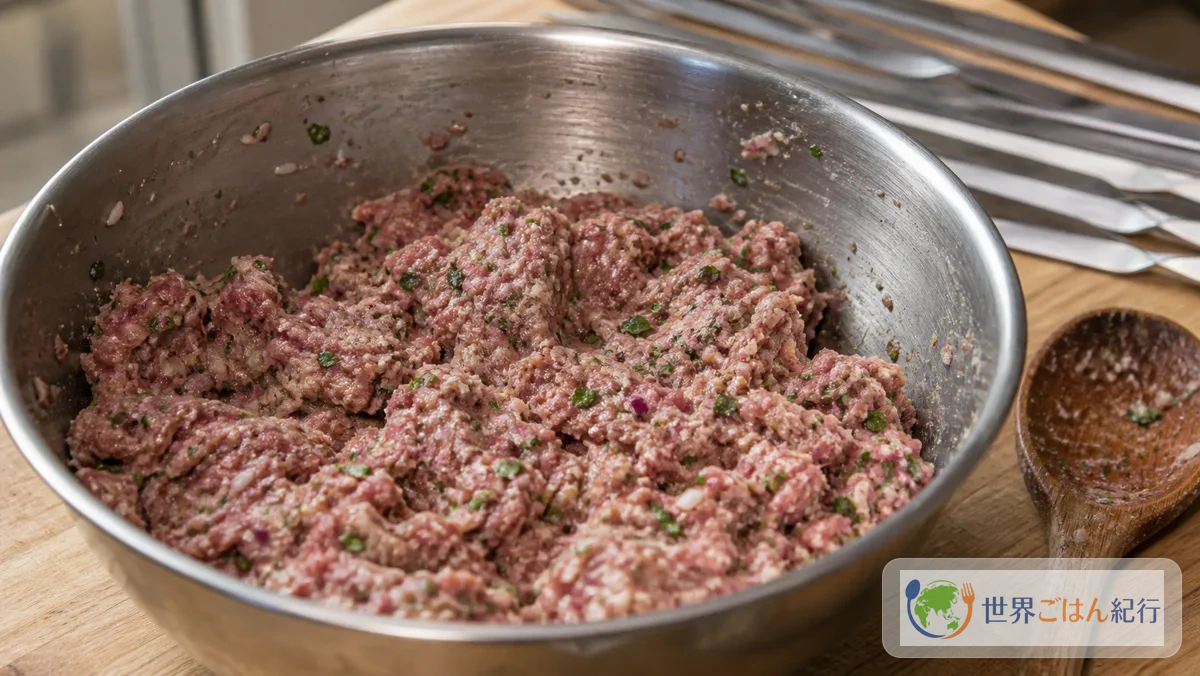
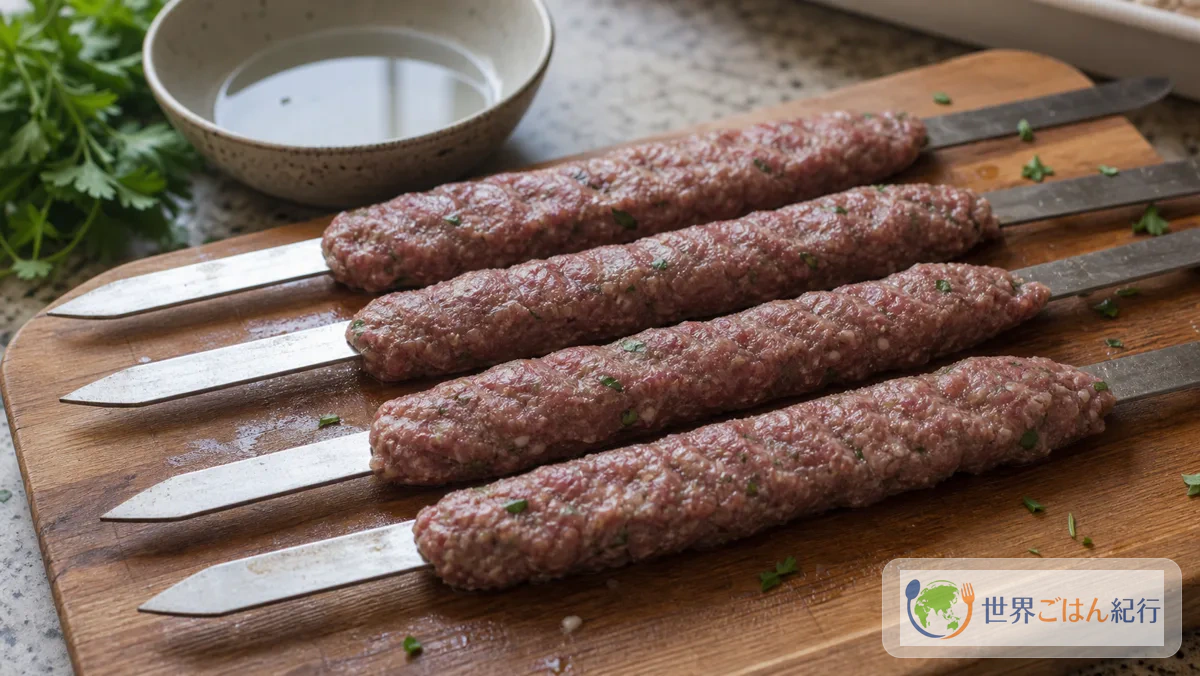
Wrapping minced meat around a skewer looks easy. But the moment it hits the heat and the meat cracks and falls, the mood in the kitchen sinks. The difficulty of lula kebab lies less in the amount of spice than in the stickiness of the meat mixture. Drain the water from the onion, keep the fat, chill the mixture, and press it onto a flat skewer. This plain preparation decides the shape when it is grilled.
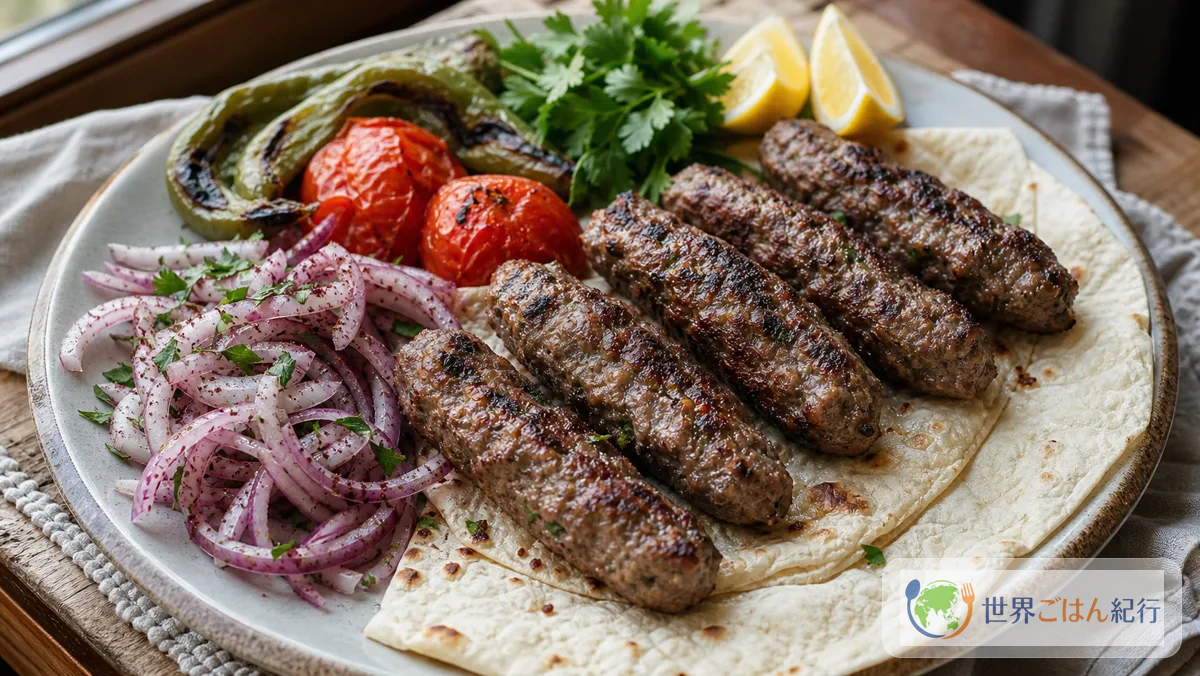
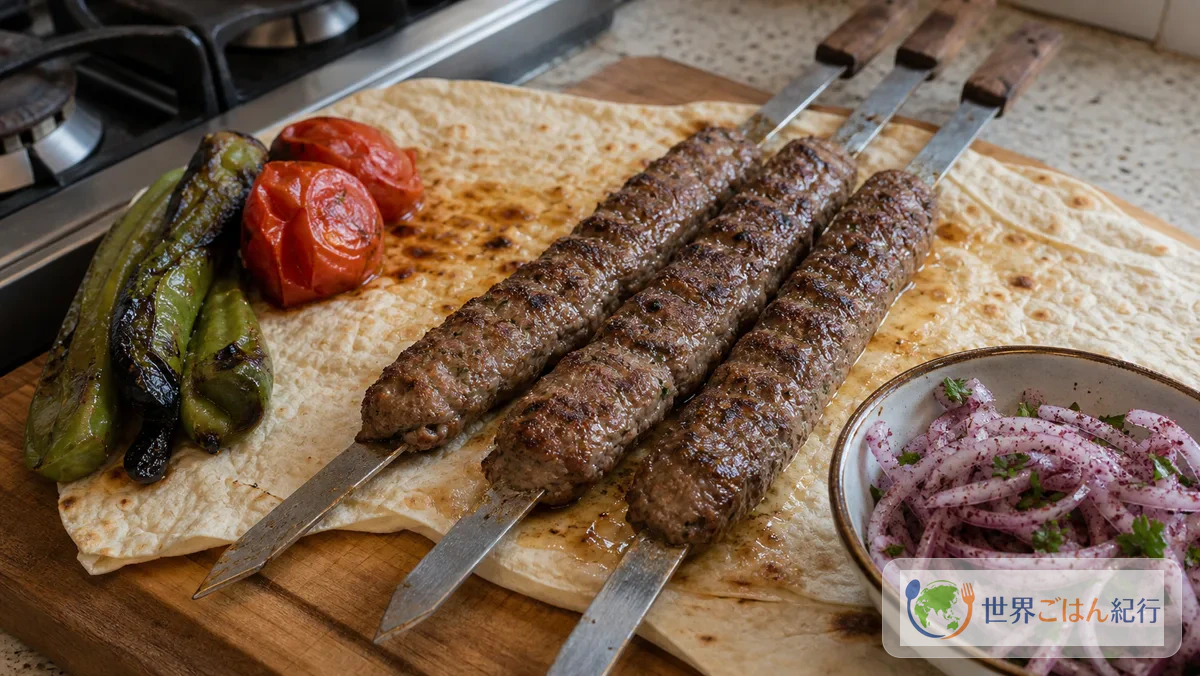
Lula kebab (also written lule kabab; in Azerbaijani, Lülə kabab or Lülə kababı) is a South Caucasus meat dish in which ground lamb or beef is shaped into long cylinders, wound onto skewers and grilled over charcoal. Azerbaijan.az, the country's official information site, also presents lula kebab as one of the kebab dishes and describes eating skewers with lavash and onions.
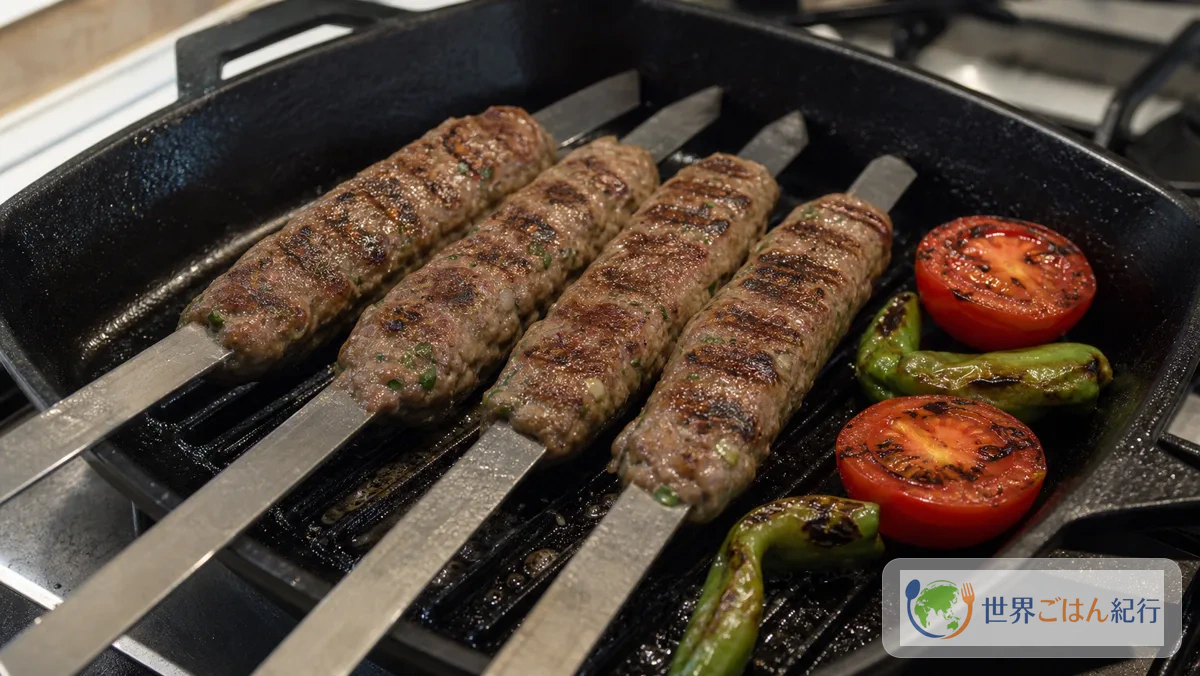
For this article I use a mix of ground lamb and ground beef, a blend that also works in a cast-iron grill pan instead of over charcoal, so it is easy to make in a home kitchen. As with Azerbaijani qutab (in Japanese), serving it with onions dusted with sumac makes the fatty meat feel lighter. On days you want to compare skewer cultures, good companions are Georgian shashlik, Turkish kofte, and how to make kebab, which sorts out the idea of grilling meat over charcoal.
What lula kebab is
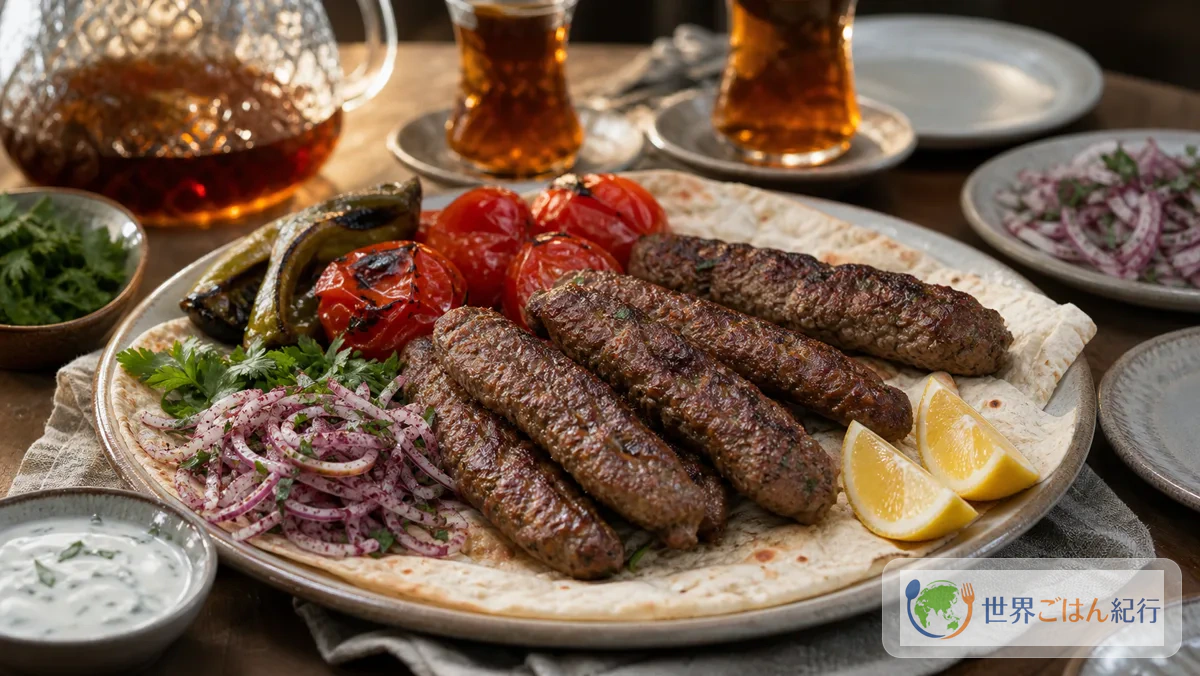
"Lula" is often explained as a name that suggests a tube or a rolled shape, and as a dish it means a kebab formed from ground meat into a long, thin shape. It is close in form to Turkey's Adana kebab, but lula kebab varies by region and household. Some homes make it with lamb alone, while some restaurants mix in beef. Rather than seasoning heavily with chili, a version that lets the meat, onion, salt, black pepper and herbs come through plainly is easiest to handle at home.
What matters in the local way of eating is not to stop at placing the kebab alone on a plate. Lavash or thin bread catches the juices, sliced onion is dusted with sumac, and grilled tomato and green chilies sit alongside. It is a composition that cuts the meat's fat with sourness and aroma. The cuisine material from the Azerbaijan Tourism Board also shows that Azerbaijani meat dishes are strongly eaten with bread, herbs and sour condiments, so this is not just grilled meat but a dish completed by the whole table.
There are three crux points when making it at home.
| Crux | If it goes wrong | How this recipe handles it |
|---|---|---|
| The meat's fat | It falls off the skewer or turns dry | Combine lamb and beef; don't use lean meat alone |
| The onion's water | The mixture loosens | Grate the onion, then squeeze hard |
| Skewer and heat | Only the surface burns and the center is raw | Shape thin on a flat skewer and grill briefly over medium-high heat |
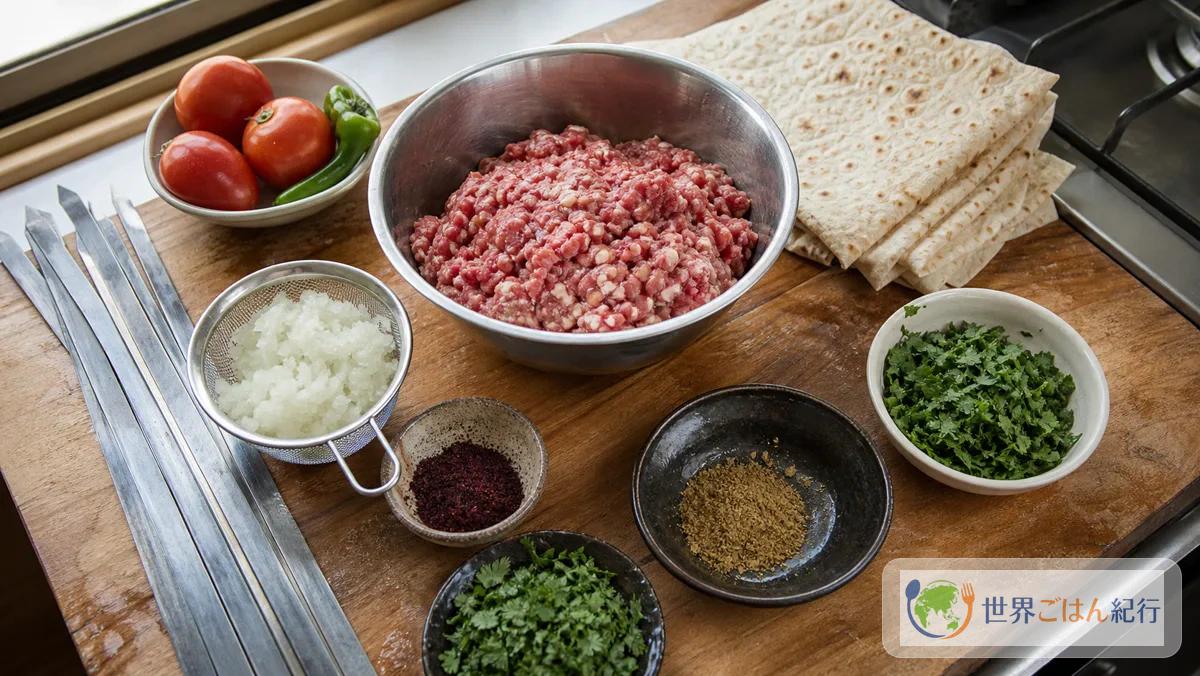
Ingredients (serves 4, 8 skewers)
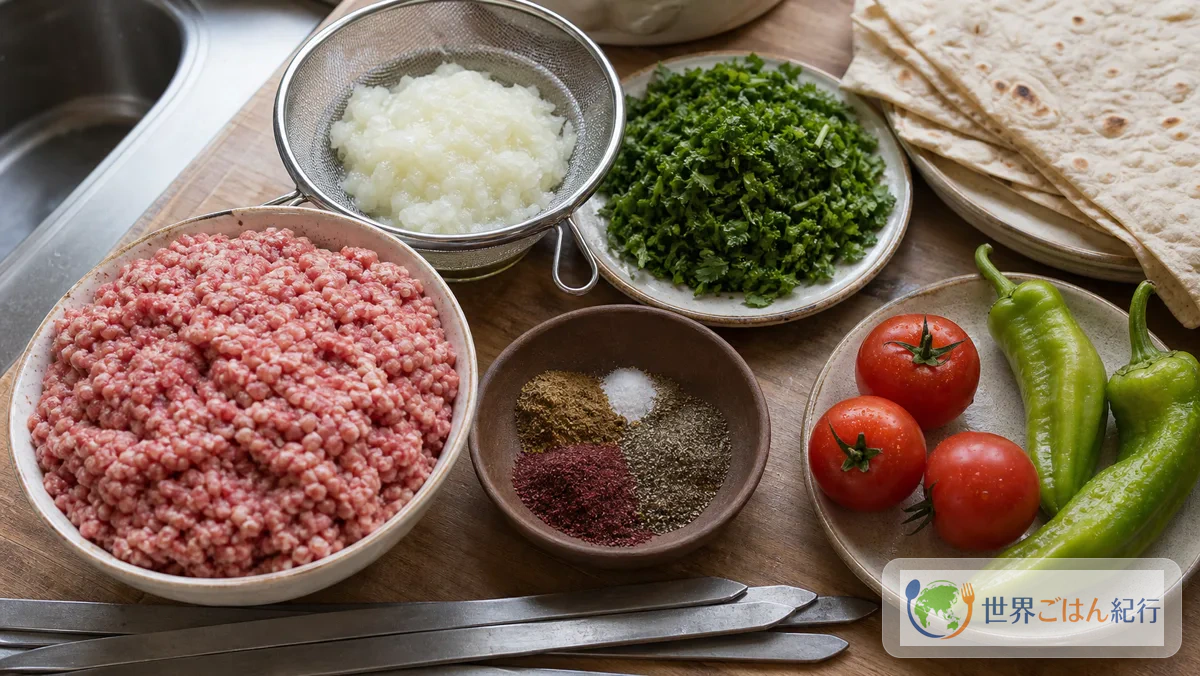
If you can make it with ground lamb alone, the aroma is closest to the local one. Ground lamb can be hard to find in some places, so it is combined with ground beef. Made with lean ground meat alone, it tends to come off the skewer, so adding a small amount of beef fat, or using the fattier portion of the ground meat, is the practical approach. Pork is easy to find in some places, but because it lies outside the Azerbaijani context, it is not used in this recipe.
Lavash and pita contain wheat. Because this is a ground-meat dish, cook it through to the center. If you have a thermometer, aim for 75°C or higher at the center, and keep the plate and tongs for the cooked kebab separate from those that held raw meat.
Tools and spices you may be unsure about
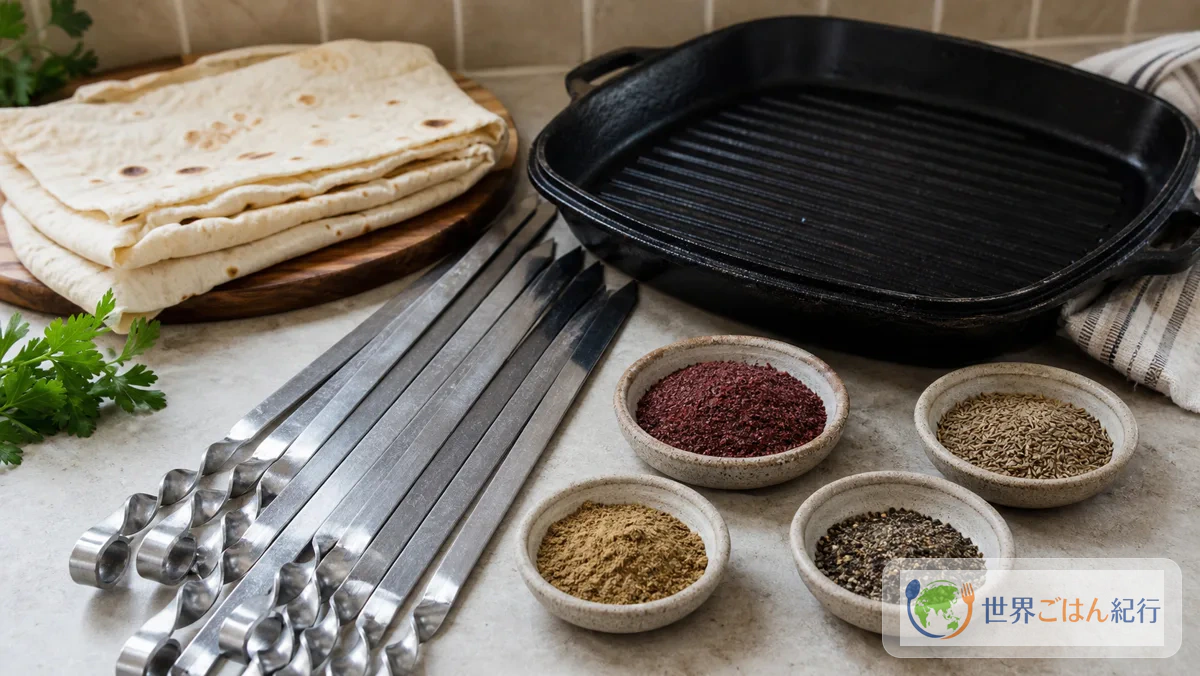
Ordinary bamboo skewers will work, but for winding ground meat, flat metal skewers are easier to handle. On round skewers the mixture spins and cracks when you turn it. If you don't have flat skewers, soak wooden chopsticks in water for 30 minutes first, or skip the skewer and grill it as a long thin patty in the grill pan. Even then, adding sumac onions and lavash keeps the direction of the dish.
Sumac is a red, sour spice. It has a dry sourness that lemon alone doesn't give, and it matches the meat's fat well. You can also use it in qutab (in Japanese), so if you cook Azerbaijani dishes in succession, one bag goes round easily. Ground cumin blends into the mixture more evenly than whole seeds.
Flat skewers and sumac are the tools and spice hardest to find in an ordinary supermarket. Having them gives the same ground meat the outline of a "skewered dish." If you will use cumin for the meat often, a larger jar can also go into the seasoning for chapli kebab (in Japanese) and souvlaki.
Think of the order of priority for buying as flat skewers, sumac, then cumin. Flat skewers physically support the meat mixture, so they directly reduce how easily it falls apart. Sumac is the sourness that moves the way of eating toward the local one. Cumin is a supporting aroma, and if you already have a small jar at home you can make this without buying new.
| Priority | What to buy | What to look for | Substitute |
|---|---|---|---|
| High | Flat metal skewers | Wide, so the meat doesn't spin. At 21 cm or longer they still work with a home grill pan | Soak wooden chopsticks in water, or grill it as a long patty with no skewer |
| High | Sumac | Red-purple and sour. Just mixing it with the onions moves toward the local way of eating | Extra lemon juice for sourness |
| Medium | Ground cumin | Mixes evenly into the meat. Strong aroma, so start with 1 tsp | Increase coriander 1 tsp and black pepper a little |
| Medium | Cast-iron grill pan | Holds around 200°C and sets the surface quickly | In a frying pan, use less oil and cook over medium-high heat |
Even if you don't buy flat skewers, it is worth keeping sumac on the table. Without sourness, the meat's fat comes too far forward and the dish gets heavy as you eat. Conversely, even with sumac, if you cook only on round skewers the mixture spins and cracks each time you turn it. If you buy just one thing the first time, it is flat skewers; if you put the Azerbaijani way of eating first, it is sumac.
Why it falls off the skewer, and how to fix it
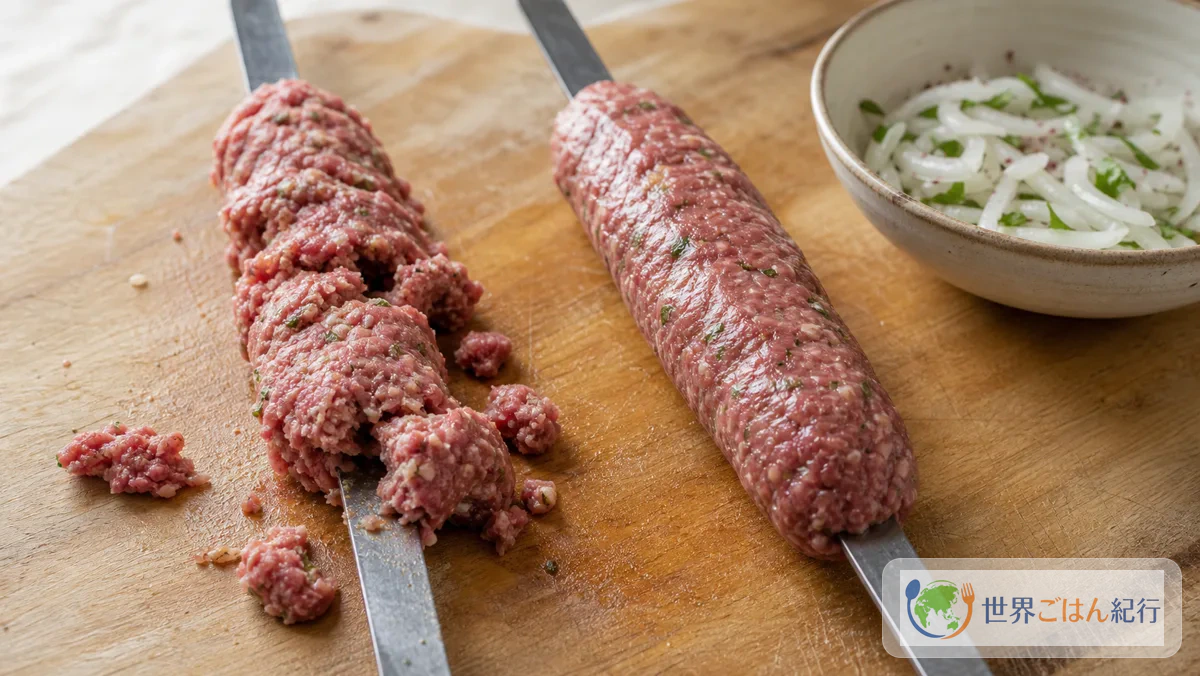
Lula kebab is a dish where mistakes are hard to fix once you start grilling. If you hurriedly press meat that is about to fall, only the surface crumbles and it comes off all the more. It is surer to eliminate the causes in the earlier steps.
| Symptom | Cause | Fix |
|---|---|---|
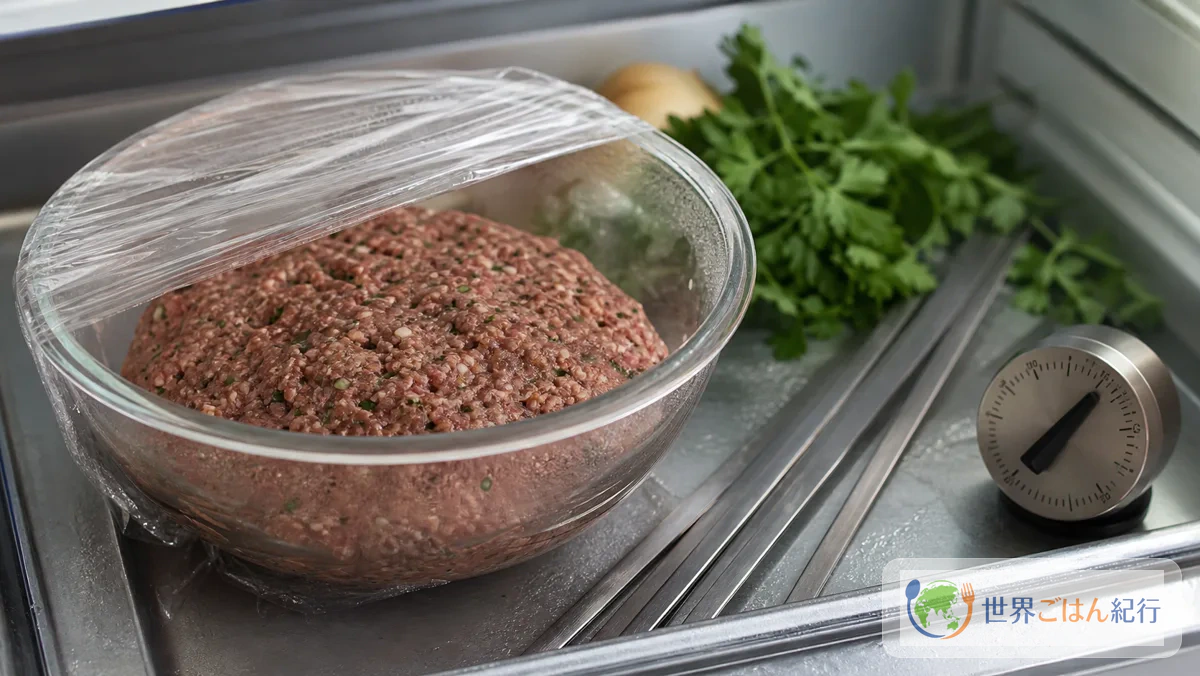
| Sags before grilling | Onion water, fat has melted | Squeeze the onion more and chill the mixture 20 minutes |
| Cracks when the skewer is turned | Spins on a round skewer, ends too thick | Use a flat skewer. Thin the ends and make the middle even |
| Surface burns but the inside is raw | Too thick, heat too high | Keep to 2 cm or thinner and lower from medium-high to medium |
| Dry | Too lean, overcooked | Add 20 to 40 g beef fat and stop at 75°C in the center |
| Flat flavor | Not enough salt, too much onion | Aim for 8 g salt per 700 g meat and serve with sumac onions |
Adding egg or breadcrumbs as a binder moves it toward a Japanese-style hamburger steak. That is not bad as home cooking, but it weakens the springiness that is characteristic of lula kebab. Try first to hold it together with salt and kneading, fat and chilling. Only if it still breaks, add 2 tsp potato starch. Too much makes the surface powdery and reduces the juices when you wrap it in lavash.
How to eat it and what to serve with it
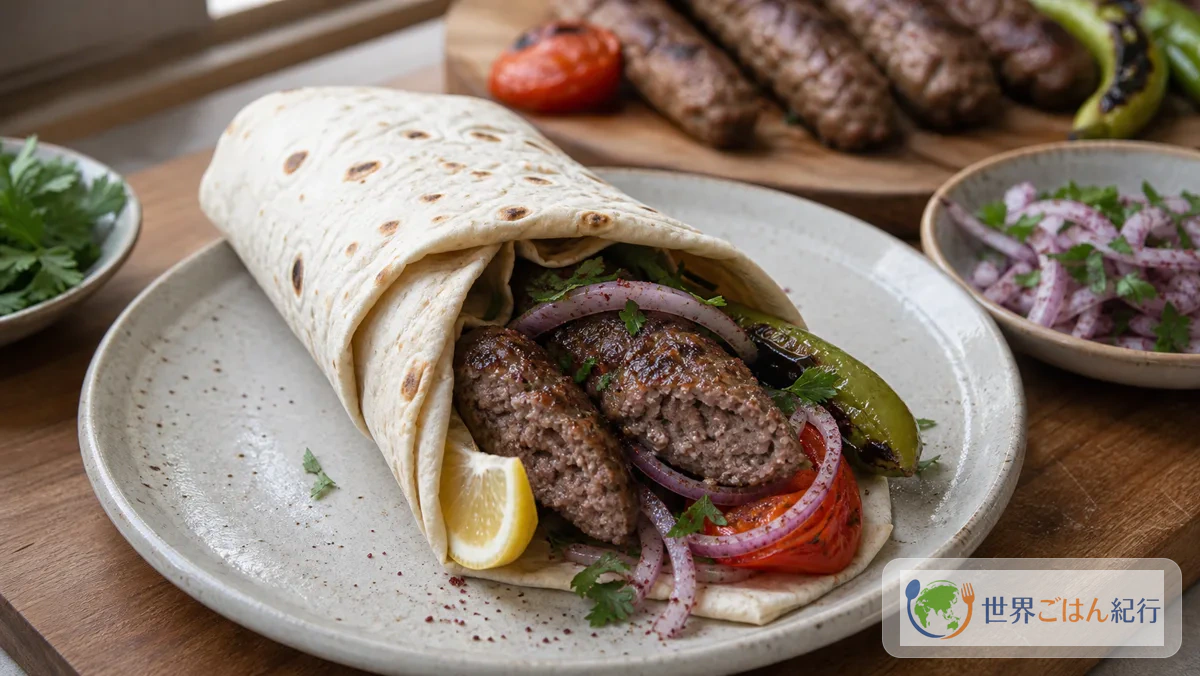
To eat, tear the lavash into small pieces and wrap the meat, sumac onions and grilled tomato together. Picking up the meat alone, the fat tastes strong, but once the onion and bread are in between it suddenly feels light. A sauce of yogurt mixed with salt, lemon juice and chopped parsley, set out in a small dish, makes it easier to eat at any table.
To move it toward the Azerbaijani, add a little qutab (in Japanese) as an appetizer, and Georgian lobio (in Japanese) as a Caucasus-table companion, so the meal does not tip toward meat alone. For comparing meat dishes, set it beside Turkey's kofte, which rolls ground meat; shashlik, which skewers bite-size meat; and chapli kebab (in Japanese), which is strongly spiced; even among dishes where "meat is shaped and grilled," the differences in moisture, fat and doneness become clear.
If you want to add heat, serving green chilies or chili flakes at the table fails less than putting chili in the meat. Put too much heat in the mixture and you can't fix it after cooking. On days when children or people who dislike heat are eating, keep the mixture mild and let adults adjust with the sumac onions and lemon, and the table holds together better.
Storage and frequently asked questions
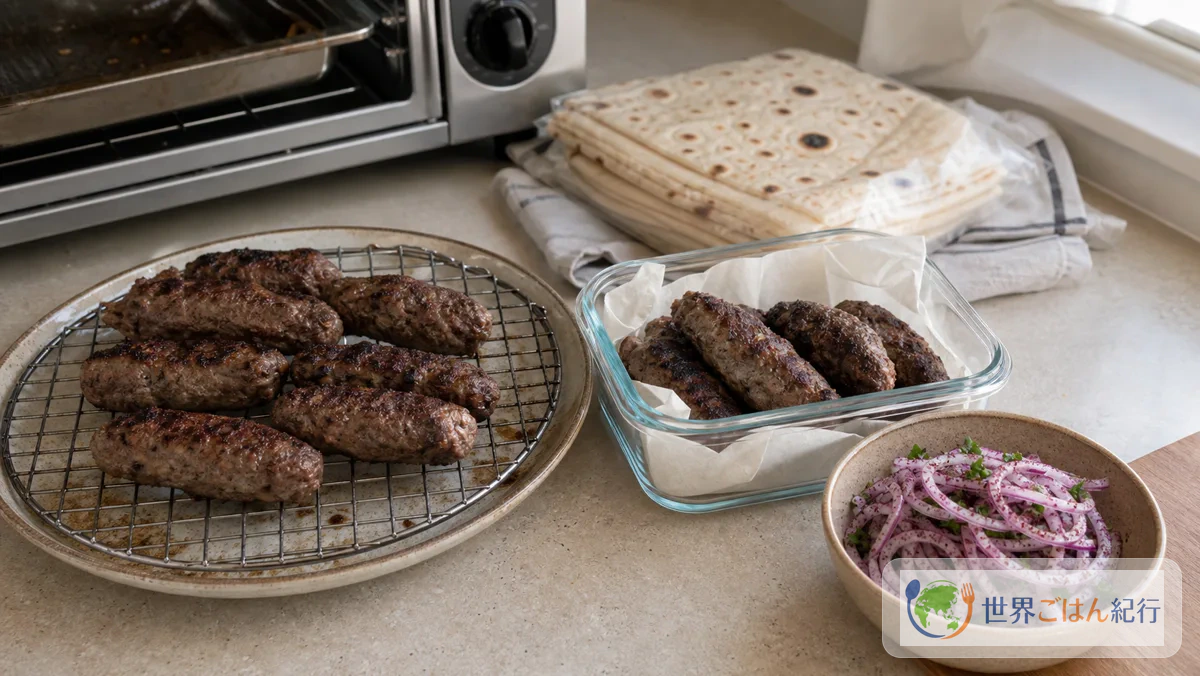
Can I make it ahead?
The mixture before shaping can be held in the refrigerator for up to half a day. Left on the skewer for long, it releases water, so it is safest to shape just before grilling. After grilling, cool it completely and keep it in an airtight container in the refrigerator for about 2 days.
How should I reheat it?
Only the microwave tends to harden the surface. Warm it at 600 W for 30 seconds to bring back the center, then bake 2 minutes at 180°C in a toaster oven to bring back the savoriness. Warm the lavash separately and serve the sumac onions cold.
What if I can't get lamb?
You can make it with 700 g ground beef, but lean meat alone turns dry. Mix in 40 g of finely chopped beef fat, or chop fatty beef trimmings with a knife. To make up for aroma, use 1 tsp cumin and 1 tsp black pepper, and serve extra sumac onions at the table.
Can I make it without skewers?
Yes. Shape the mixture into long forms 10 cm long and 2 cm thick and grill 3 minutes per side in a grill pan. You lose the aroma and shape from the skewer, but serving lavash, grilled vegetables and sumac onions with it moves it close to how lula kebab is eaten.
What can replace sumac?
A full replacement is hard, but mixing 1 tbsp lemon juice and a pinch of salt into thinly sliced onion moves toward the sourness.
What heat should I use for charcoal?
The guide is medium-high heat: the coals are covered in white ash and your hand held 10 cm above feels hot in about 3 seconds. Don't move the skewers for the first 2 minutes, and turn them once the surface has set. If fat drips and flames rise, move the skewers to a cooler spot and don't let them blacken.