Bokpe: Millet Grains That Drink Up the Milk
Bokpe has four ingredients: hulled millet, milk, butter and a little sugar. Keep the grains whole and soft, keep the heat low, and keep the bottom of the pot from scorching. No salt, water, spices or toppings belong in this version.
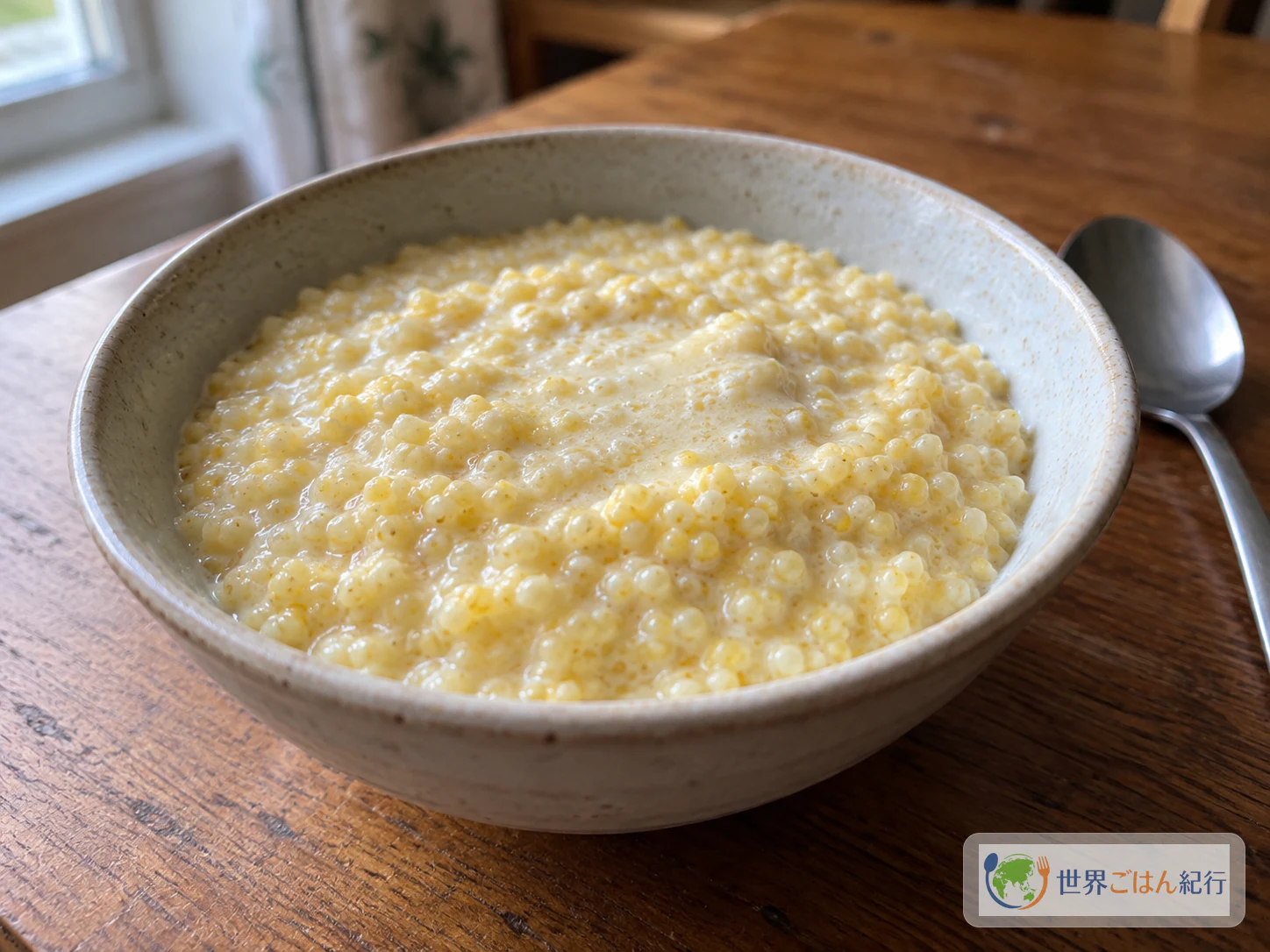
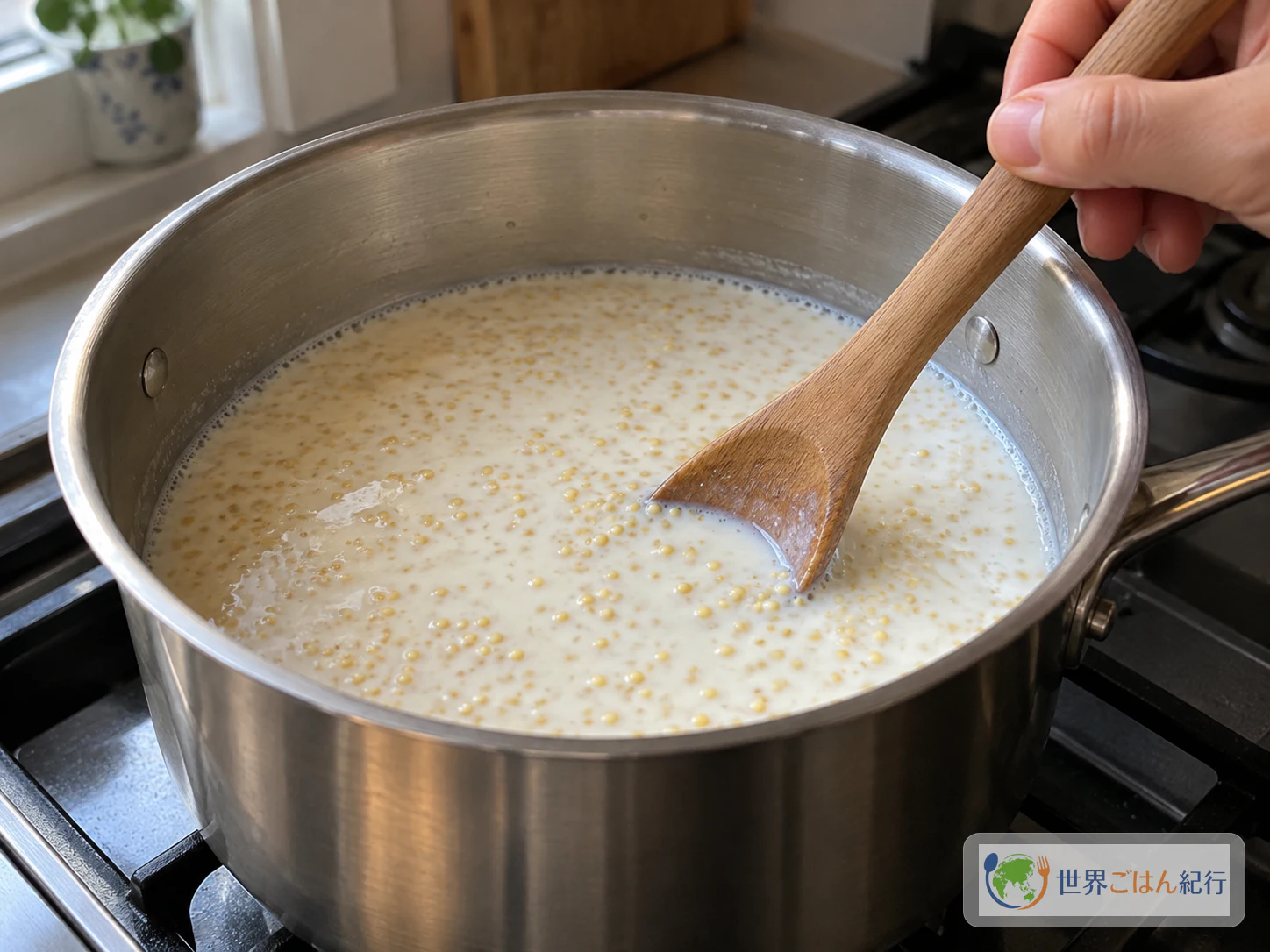
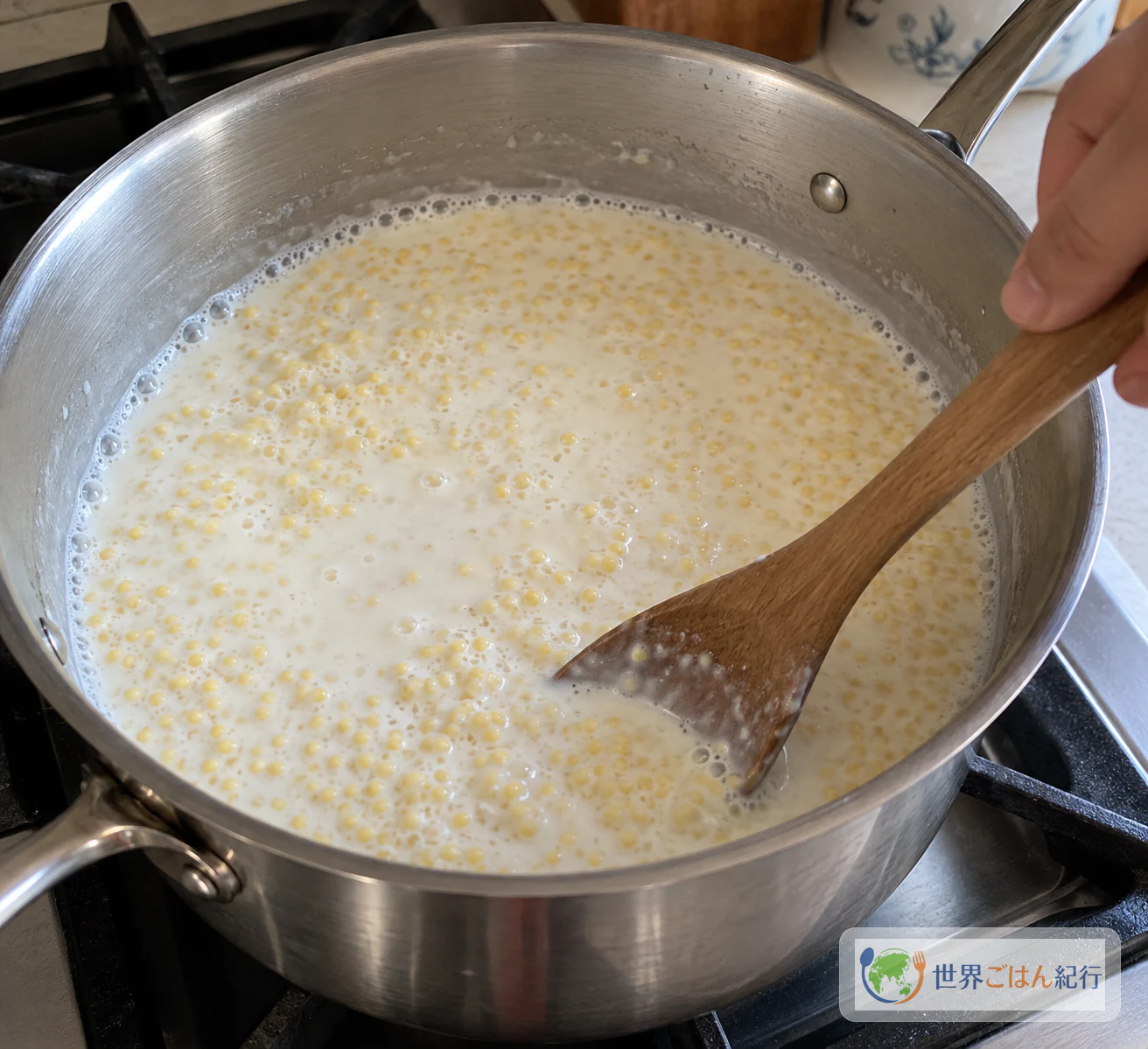
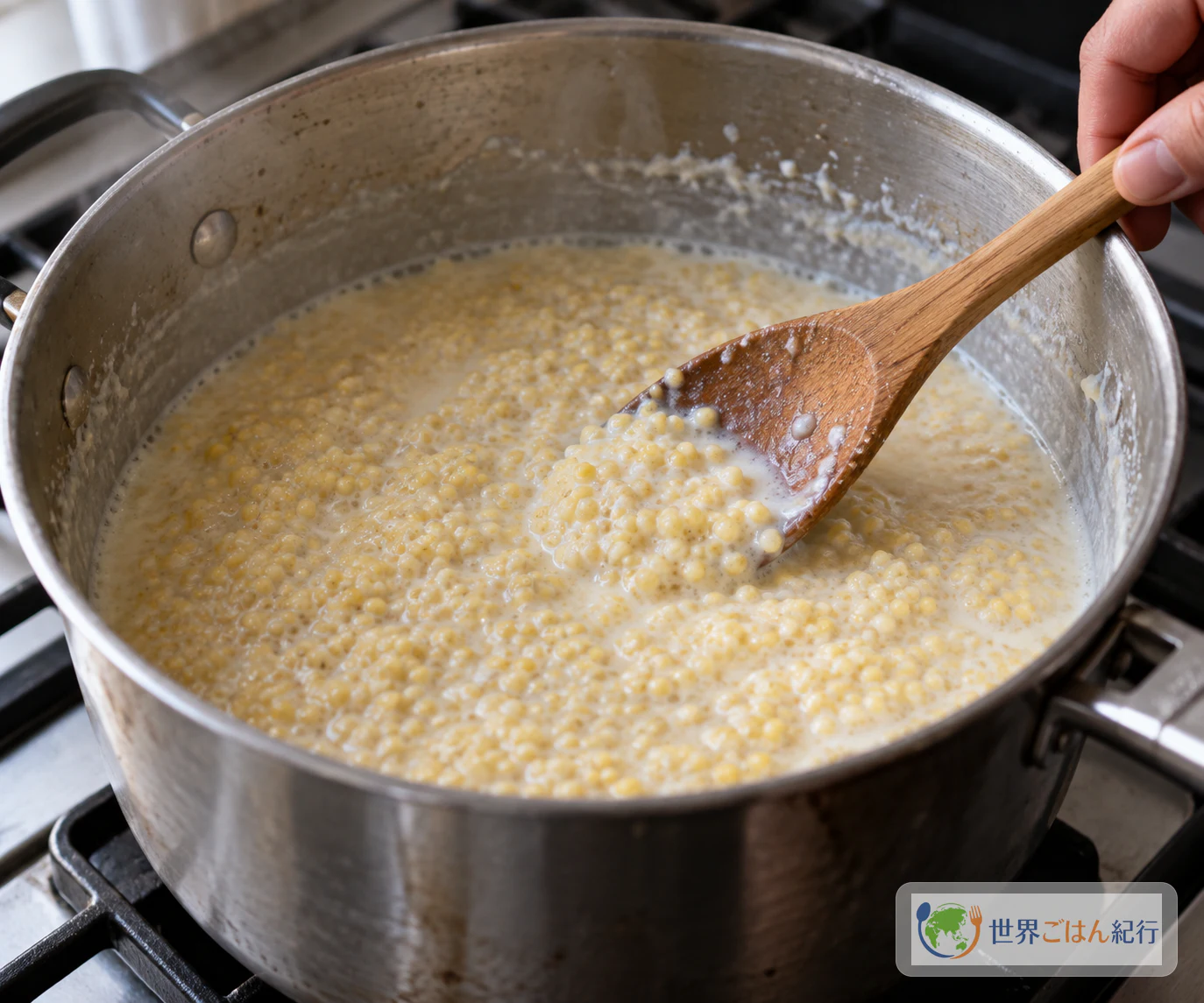
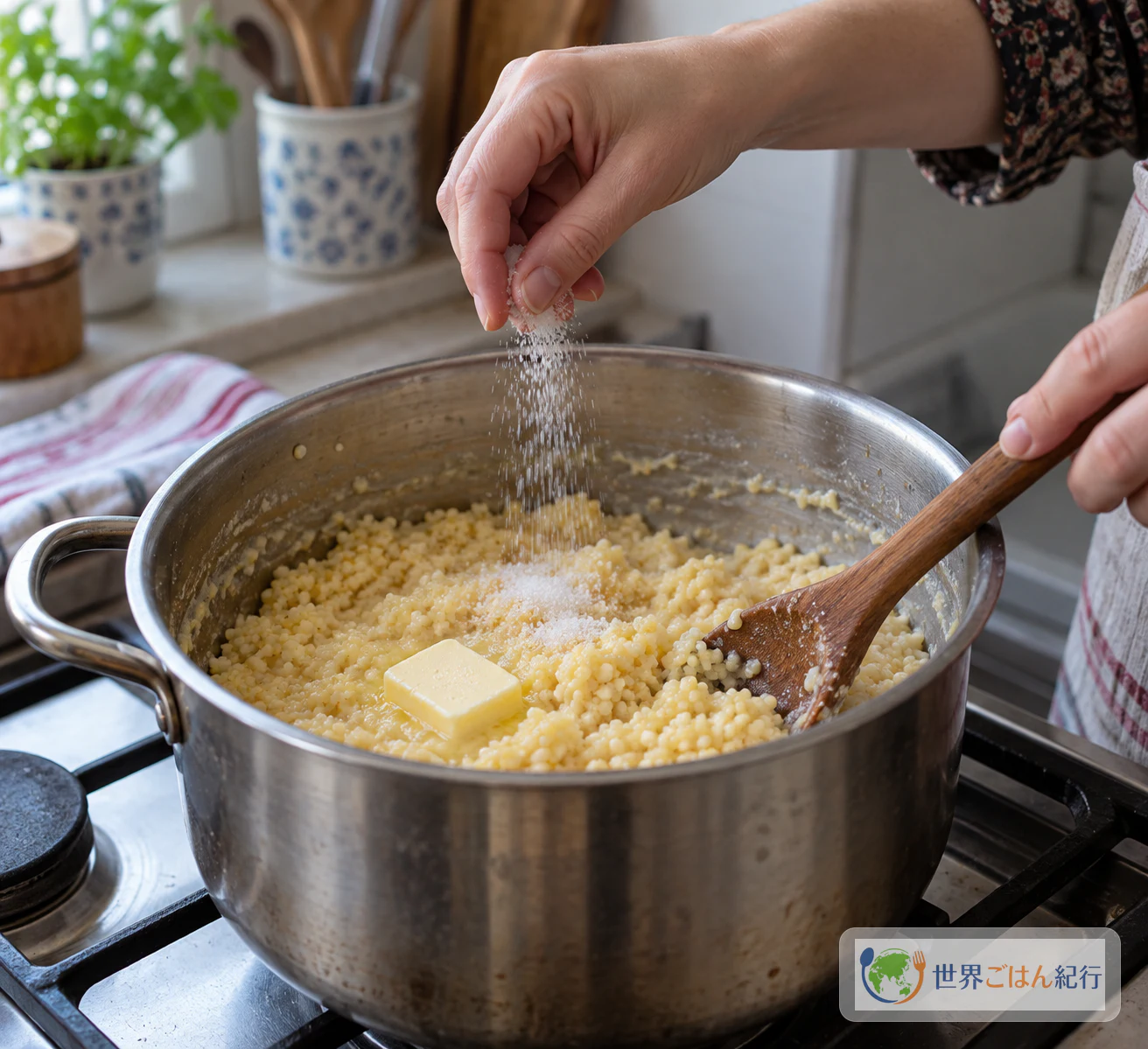
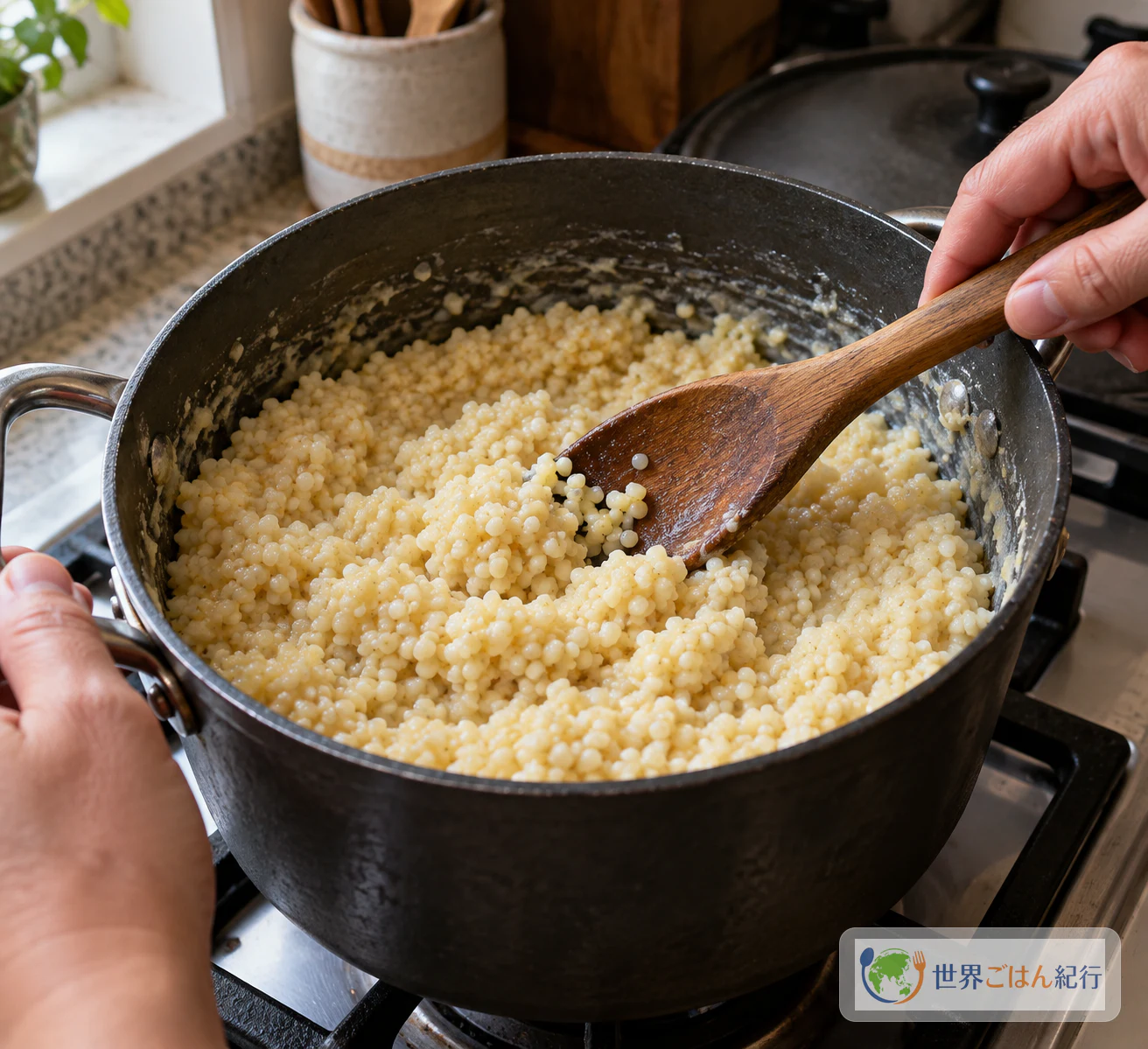
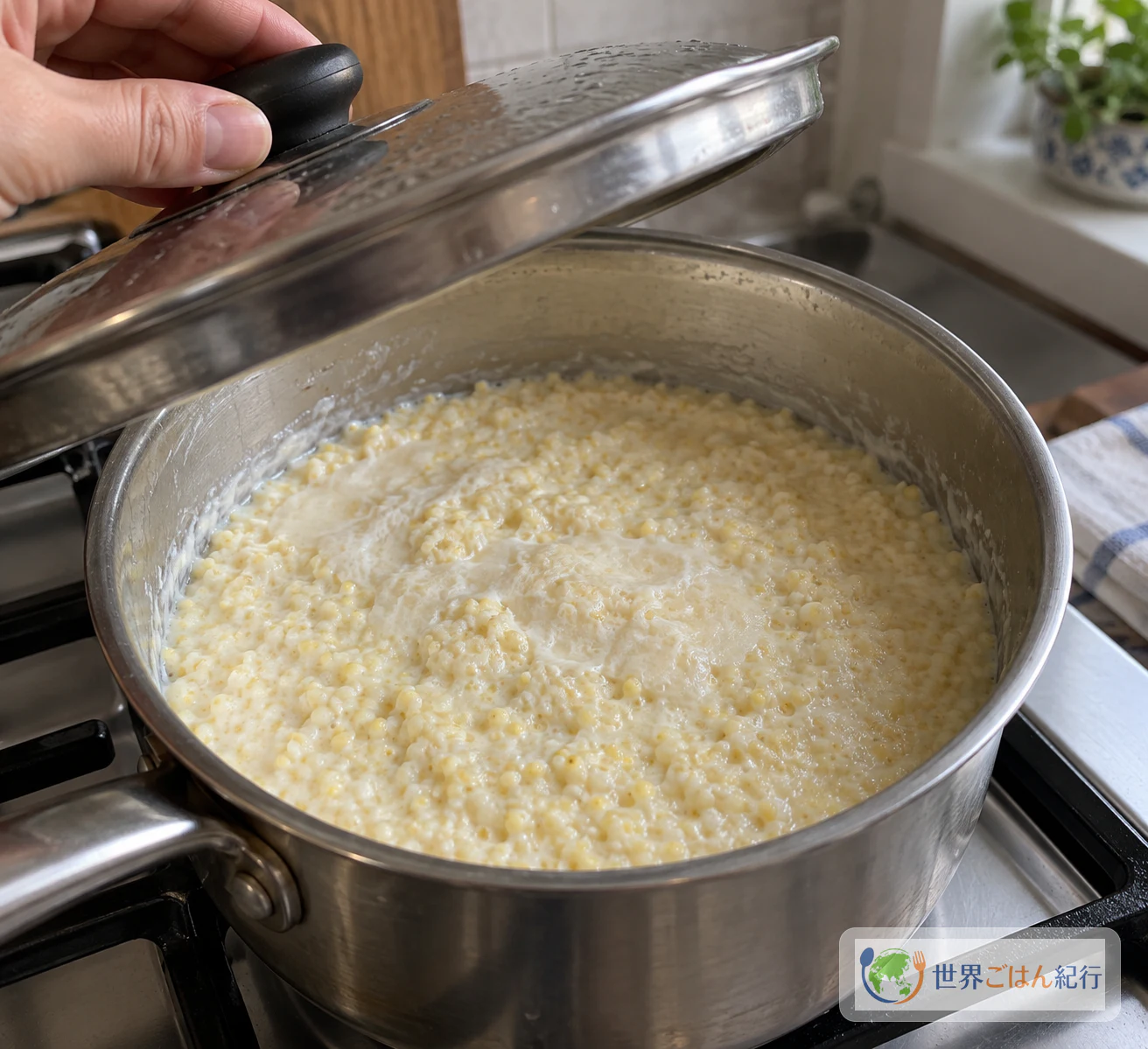
The milk barely moves in a deep pot over low heat. Small hulled millet grains slowly swell, and as the milk reduces, they absorb it. A Kazakh cultural compendium describes this dish, Бөкпе (Bokpe), as millet gently simmered in whole milk until the milk reduces and the grain cooks. Butter and a little sugar go in partway through, and the finished dish holds both the milk and the fat. It may form a thin skin on the surface.
The same book places Bokpe in two settings. It is everyday household food, and it is also a meal fit to serve honored guests. This article stays within what the sources say. It does not add origin stories, festivals or seasonal customs that the sources do not describe.
This recipe has not been kitchen-tested. The sources give no cooking time, serving count or yield, so this article does not give them either. Judge each stage by the state of the pot: how much milk is left and how soft the grains are.
What Bokpe Is, and Which Bokpe This Is
This article covers Бөкпе made from hulled millet and milk. The Kazakh source calls the grain ақталған тары, meaning husked or polished millet. That source and a closely matching el.kz article both describe the same method. The millet is simmered gently in full-fat milk, and butter and a little granulated sugar are added as the milk reduces. Both texts also name another grain, қонақ, as an alternative. This article does not identify that grain and does not use it.
The name is not fully unambiguous. One compiled list of Kazakh traditional foods gives "Тары бөкпе" (millet bokpe) and "Бөкпе" as separate entries. A general el.kz overview lists бөкпе among meat dishes cooked by enclosed or stewing methods, a form that may overlap with бұқпа. If you are searching for Bokpe and find a braised meat dish, it is a different kind of dish. Don't treat it as a regional variant of this milk-and-millet recipe.
Calling Bokpe a "porridge" is only an approximate description for English readers. The grain is millet, not rice or oats, and the grains are meant to stay distinct rather than turn into a smooth paste.
For more dishes from the same country, see the Kazakhstan country page.
Ingredients: The Source Formula, Unconverted
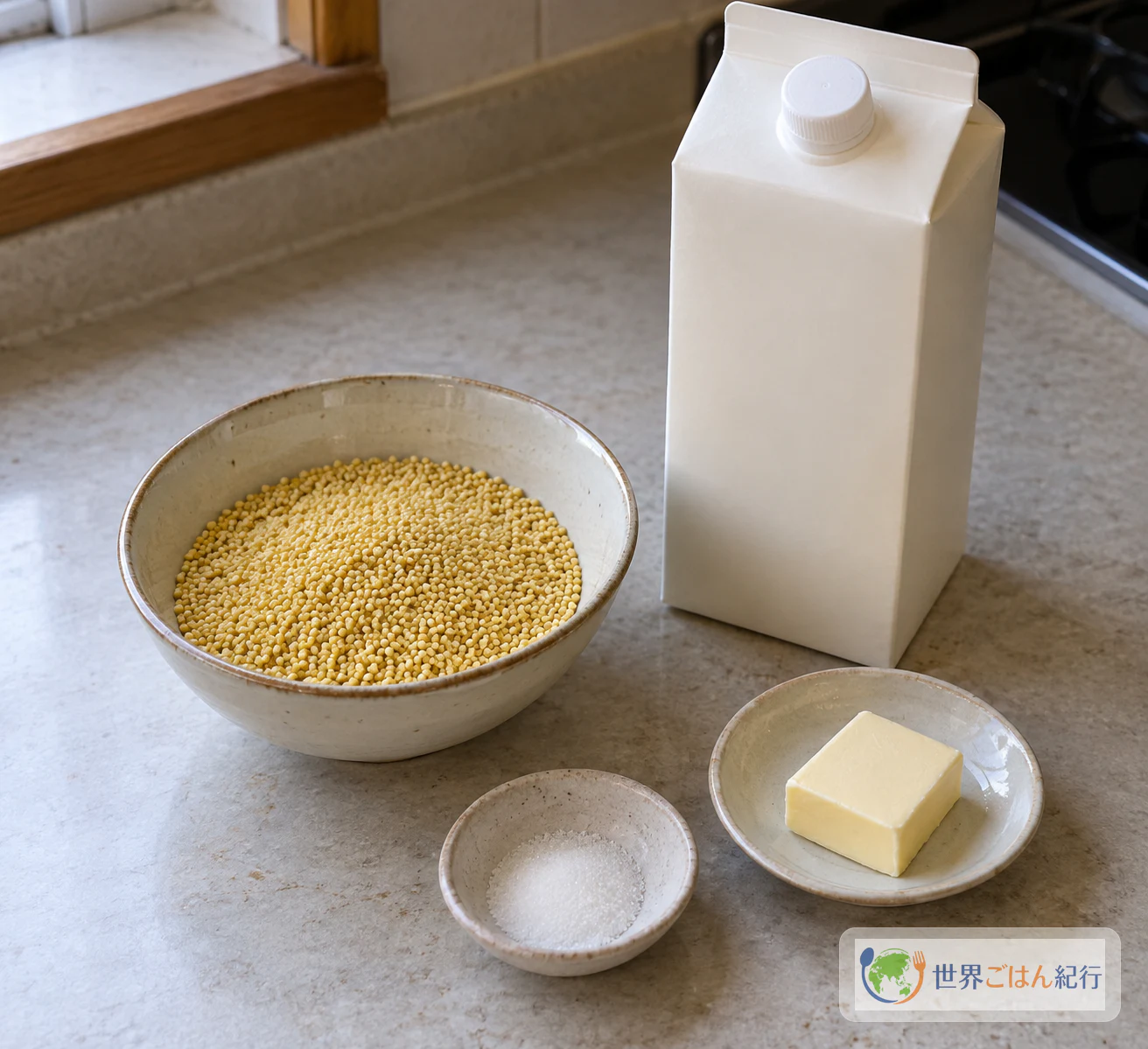
These amounts come from the only measured version found, a Bokpe recipe on a Kazakh food-culture website. That source does not say which cup standard it uses. The amounts are kept exactly as written, with no conversion to milliliters or grams.
The sources give no serving count or finished amount. The source's cup capacity is unresolved, so this formula cannot be reproduced as an exact millet-to-milk ratio from the stated units alone. Keep the original 1 cup and 1 L figures without implying that any arbitrary cup reproduces them.
This dish contains milk and dairy (milk and butter). The Kazakh source wording refers to raw, unskimmed milk. This article does not recommend raw milk and uses pasteurized whole milk as an editorial substitution. The flavor and the way it reduces may differ from the original, and that difference has not been tested. For packaged millet, check the label yourself for allergen and cross-contact statements.
Equipment
- A deep, heavy-bottomed saucepan with plenty of room above the milk, so it is less likely to boil over
- A wooden spoon or spatula that reaches the bottom of the pan
- A cup for measuring the millet
- A tablespoon for the butter
- A lid for the pan
Choosing Millet, Milk and Butter
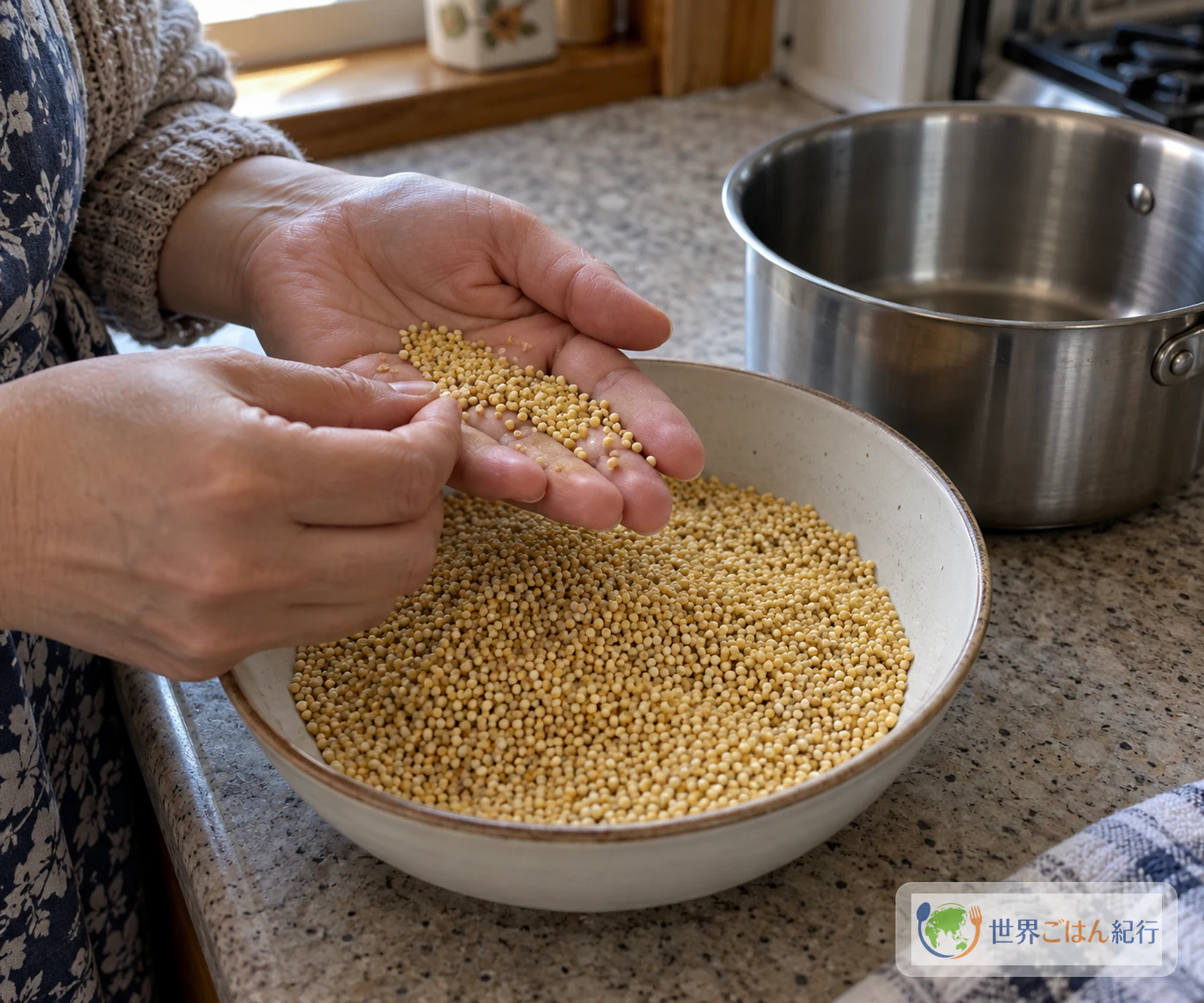
Millet: Look for whole hulled millet, often labeled hulled millet or millet groats. Millet flour, puffed or flaked millet, rolled grains, oats and rice are not the same thing and would make a different dish. Glutinous ("sticky") millet varieties sold in some shops may be easier to find. They may differ from the source's hulled millet in variety, grain size and how they absorb liquid, and they have not been tested in this recipe.
Milk: The sources call for whole milk but give no fat percentage. Use pasteurized whole milk. Lower-fat milk has not been tried, so its effect on the result is unknown.
Butter: The source does not specify salt, and no salt is added to this dish. Salted butter will change the taste, so treat it as your own choice rather than the standard version.
Sugar: The source says only "a sprinkle," so there is no fixed amount. Add a little, taste, and add more later only if needed.
Method: Watching the Milk Reduce and the Grains Soften
The sources give no times or temperatures. Move on to each stage when you see the change described: first the milk starts to reduce, then the grains become soft with no hard center.
Hot milk and grain hold their heat. Take care when lifting the lid, stirring and handling hot bowls.
Serving: As It Is, at the Everyday Table or for a Guest
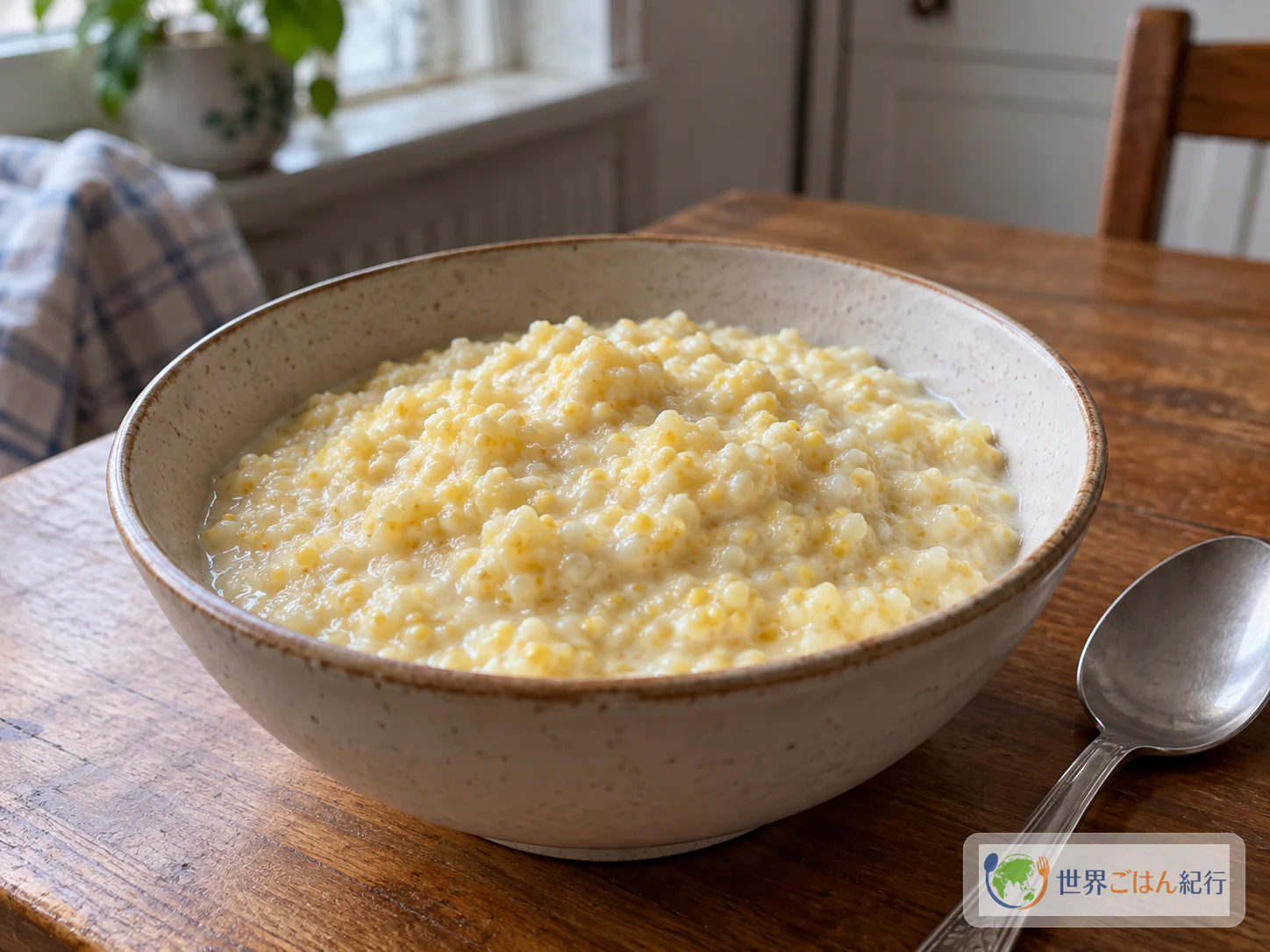
Spoon the Bokpe into bowls and serve it as it is. The selected recipe has no fruit, nuts, honey, bread or extra butter on top. The source describes Bokpe both as everyday household food and as a dish worth serving to guests, so a plain bowl suits either occasion.
The sources give no guidance on storing or reheating leftovers. This article does not give storage times or reheating temperatures.
Scorched, Hard or Clumped: Fixing Problems in the Pot
| Problem | Likely cause | What to do |
|---|---|---|
| The bottom is scorching | Heat too high, or not enough stirring | Lower the heat and stir all the way to the bottom of the pan. Scraping the burnt layer into the dish is not a fix |
| The milk has reduced but the grains are still hard | The milk was reduced too quickly | Don't use high heat to drive off the liquid. Amounts of extra milk or extra cooking time to correct this have not been tested |
| The millet has sunk and stuck together | The grains settled while the pot was left alone | Scrape along the bottom regularly the whole time the pot is on low heat |
| A skin formed but the grains aren't done | The skin was used as the only sign of doneness | Taste the grains. The skin can appear before the grains are soft |
Variations Worth Thinking About
The standard version is the four-ingredient formula above. These are options to consider, kept separate from that version:
- Milk fat: The sources call for whole milk with no fat percentage. Lower-fat milk has not been tested, so the difference is unknown.
- Sticky millet: This may be easier to find, but its equivalence to the source's hulled millet has not been established. Grain size and absorption may differ, and so may the cooking time.
- Sweetness: The source gives no sugar amount, so start with a little and adjust. There is no standard spoon measure.
- Pot: A heavy-bottomed pot generally helps you manage scorching. No specific product is recommended.
- Butter salt: No salt is added to this recipe. Using salted butter is your own choice and changes the taste.
Frequently Asked Questions
What kind of dish is Bokpe?
In this article, Bokpe (Бөкпе) is a Kazakh grain dish of hulled millet simmered slowly in milk and finished with butter and a little sugar. A similar name appears for a meat dish cooked by stewing. That is a different dish.
Is it the same as rice pudding?
No. The grain is millet, not rice, and the grains should stay distinct and soft rather than turning creamy and smooth.
Can I use sticky millet instead?
It may be easier to find, but it may differ in variety and grain size, and how long it takes to cook has not been tested. Treat it as an experiment, not the standard recipe.
How many milliliters is 1 cup?
The source does not say which cup standard it uses, so this article does not convert it. The original 1 cup of millet and 1 L of milk are retained, but the exact millet-to-milk ratio remains uncertain because the cup capacity is not specified.
How long does it cook?
The sources give no time. Add the butter and sugar when the milk starts to reduce. Stop cooking when the grains are soft with no hard center and the milk has been absorbed.
Do I need raw milk?
No. The source text describes raw whole milk, but this article does not recommend raw milk. It uses pasteurized whole milk as an editorial substitution.
Sources
- Әлижан Тауұлы (comp.), Қазақ салт-дәстүрлері (Kazakh Customs and Traditions), Балуса, 2017, via the Kazakhstan National Electronic Library. Source for the dish name, hulled millet (ақталған тары), gentle simmering in unskimmed raw milk until it reduces, adding butter and a little sugar, the possible surface skin, and Bokpe as everyday household food also fit for honored guests. It gives no quantities, yield or cooking time. The original PDF was recorded as accessed in the initial research, but was unavailable during a later source recheck; that later recheck did not independently reconfirm the PDF. https://kazneb.kz/FileStore/dataFiles/45/5e/1541701/content/full.pdf?isPortal=true&key=1fe965569f090d5a2ae335da7fe3c221&time=1735351051620
- el.kz / Qazcontent JSC, "Бидай қуыру, Бөкпе, Жарма, Жент." A passage closely matching the book above: hulled millet or қонақ in full-fat raw milk, butter and a little sugar as the milk reduces, and Bokpe as household food also served to honored guests. Used as corroboration, not independent evidence. https://el.kz/content-28004_17626/
- Азат Сәлімгерейұлы, "Ұлттық тағамдардың 220 түрі," ruh.kz. A compiled list of Kazakh foods that gives "Тары бөкпе" and "Бөкпе" as separate entries. Used only to show that the name is ambiguous. https://ruh.kz/ulttyq-tagamdardyn-220-turi_10997/
- el.kz / Qazcontent JSC, "Дәстүрлі тағам түрлері." A general overview that lists бөкпе among meat dishes cooked by enclosed or stewing methods. Used only to flag the name collision. https://el.kz/d-st-rli_ta-am_t_rleri_21311/
- Kazakh Culture, "Traditional Flour and Grain Dishes in Kazakh Cuisine | Authentic Recipes." Source for the measured formula (1 liter milk, 1 cup millet, 2 tablespoons butter, a sprinkle of sugar) and for gentle simmering, frequent stirring, reduction, and a soft texture with a surface skin. The cup standard, sugar amount, serving count and cooking time are not specified. https://kazakh-culture.com/traditional-food/traditional-kazakh-flour-and-grain-dishes