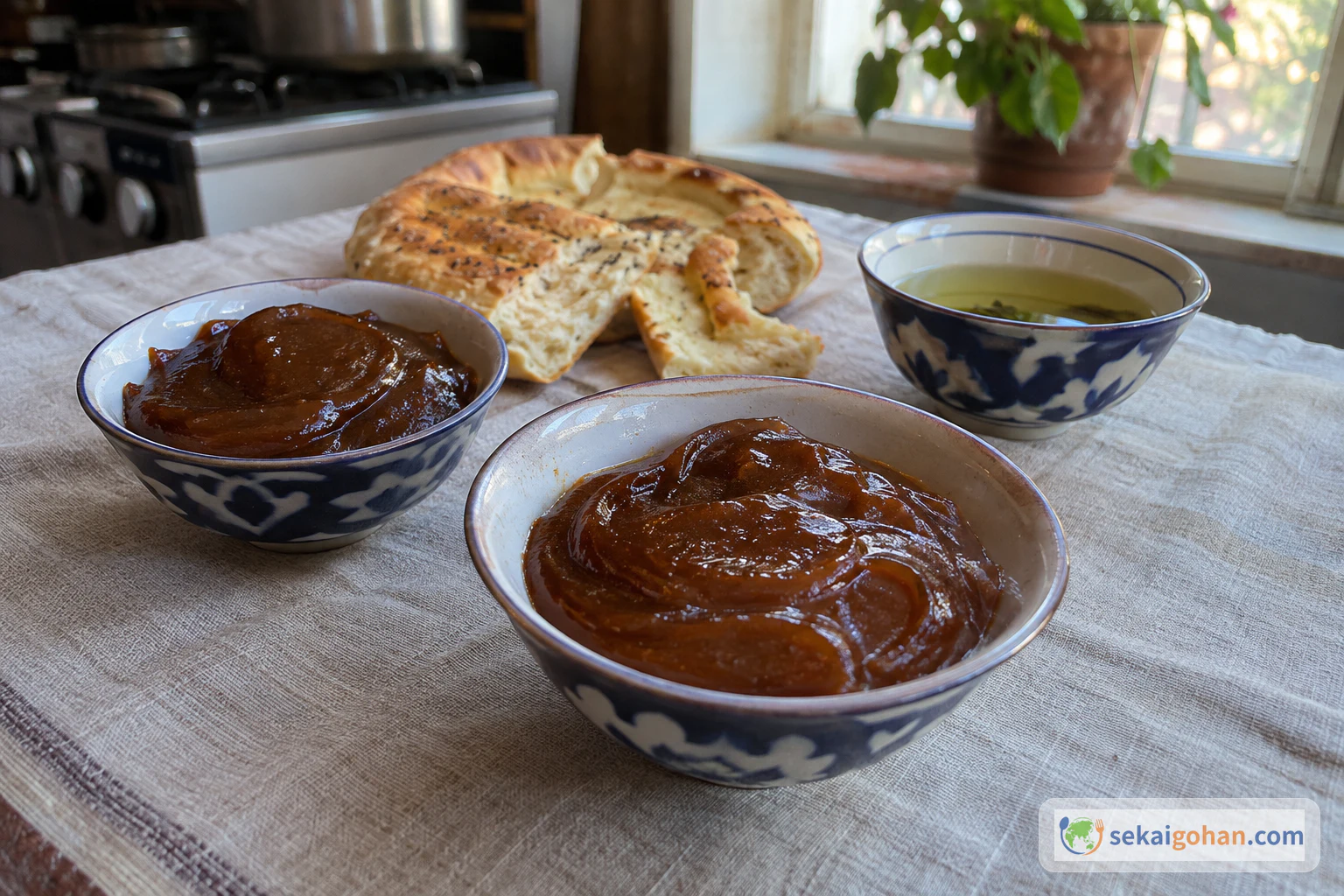
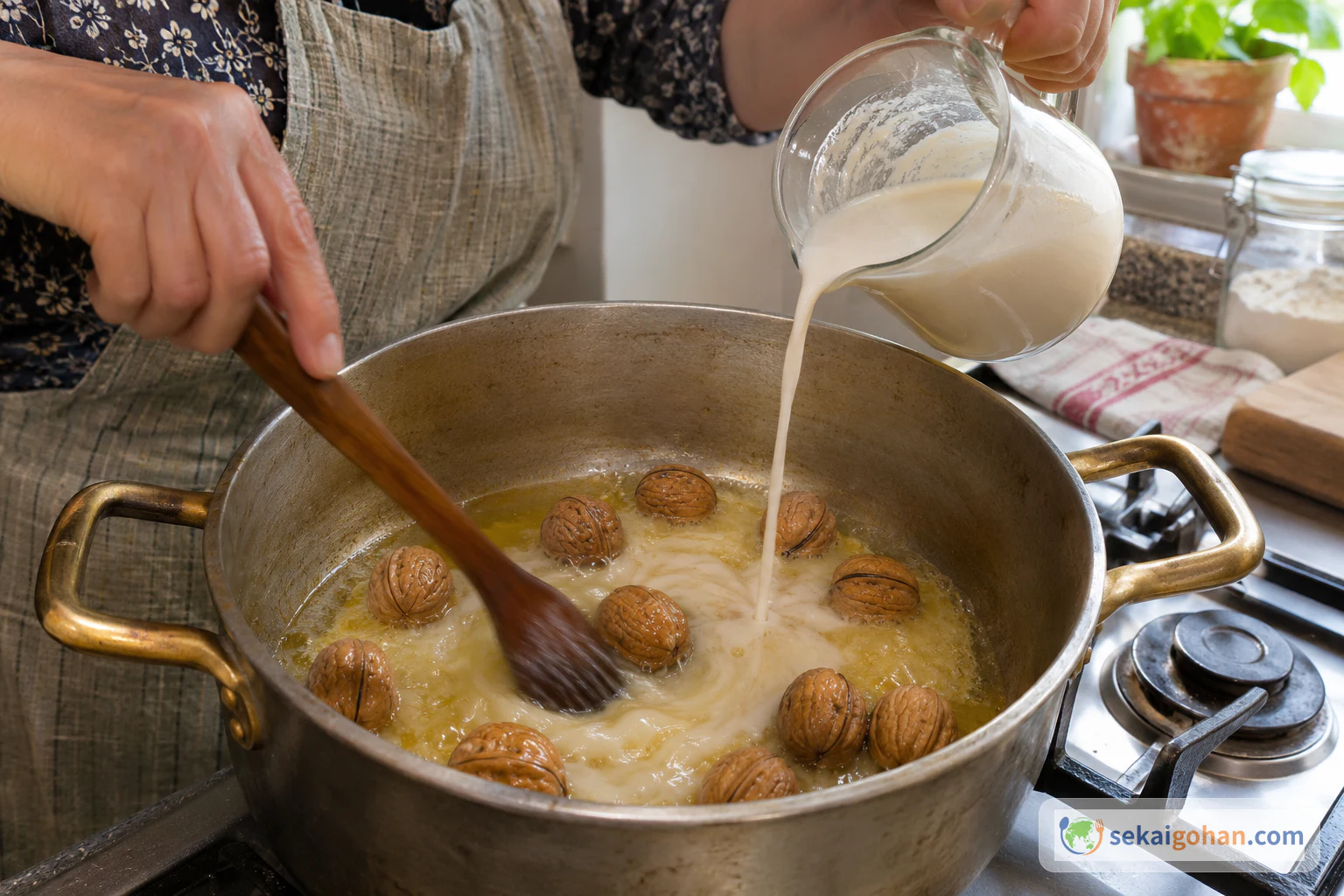
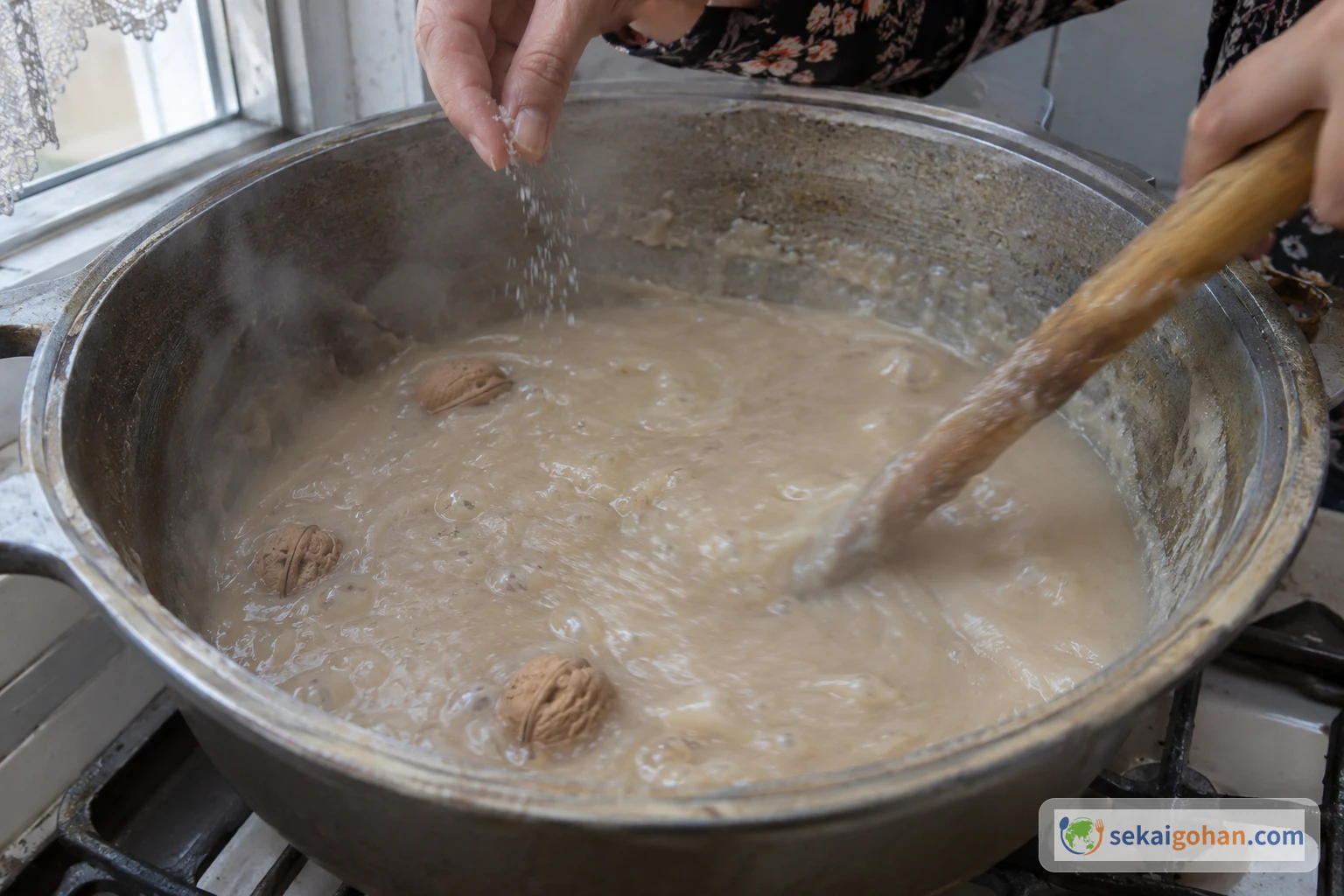
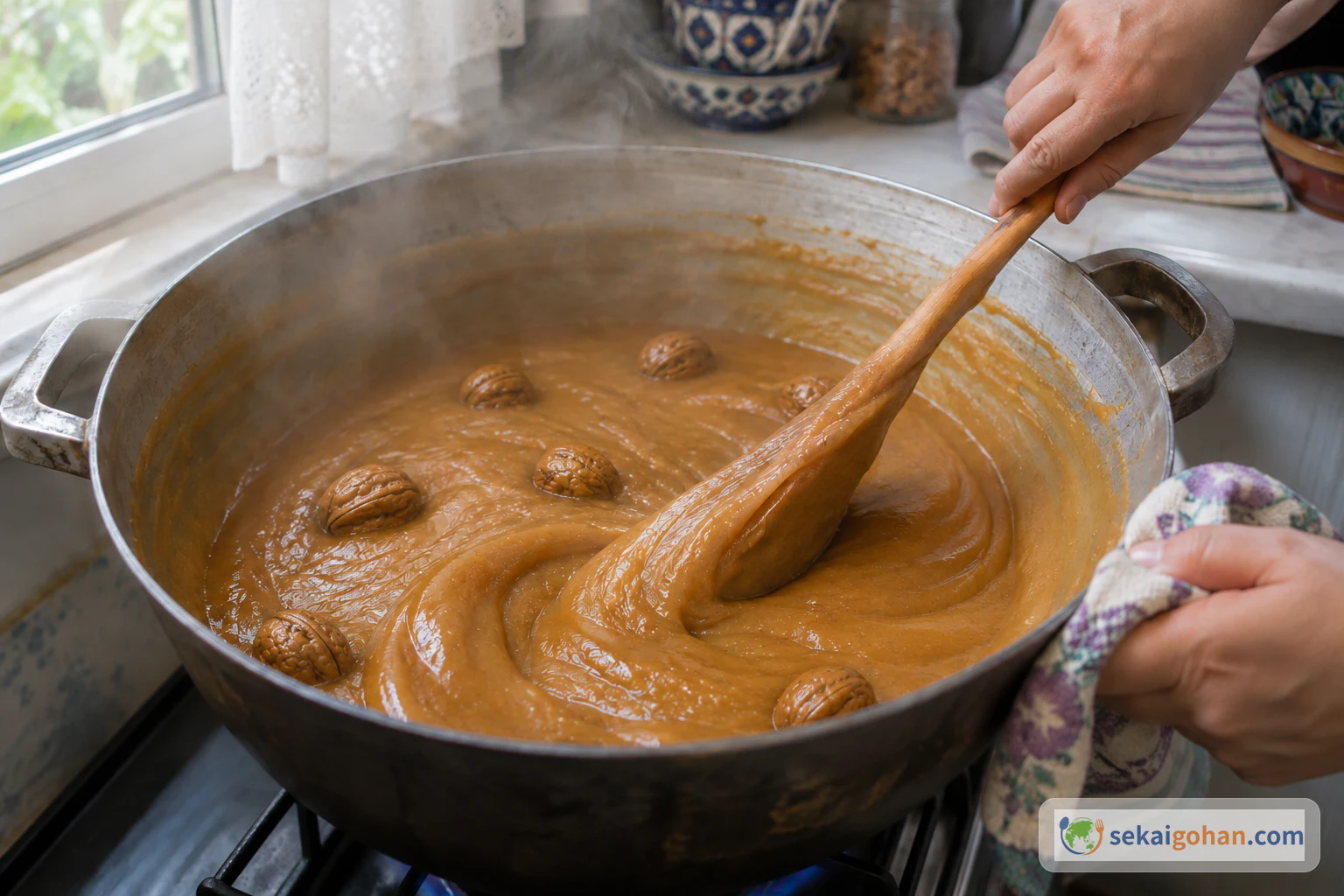
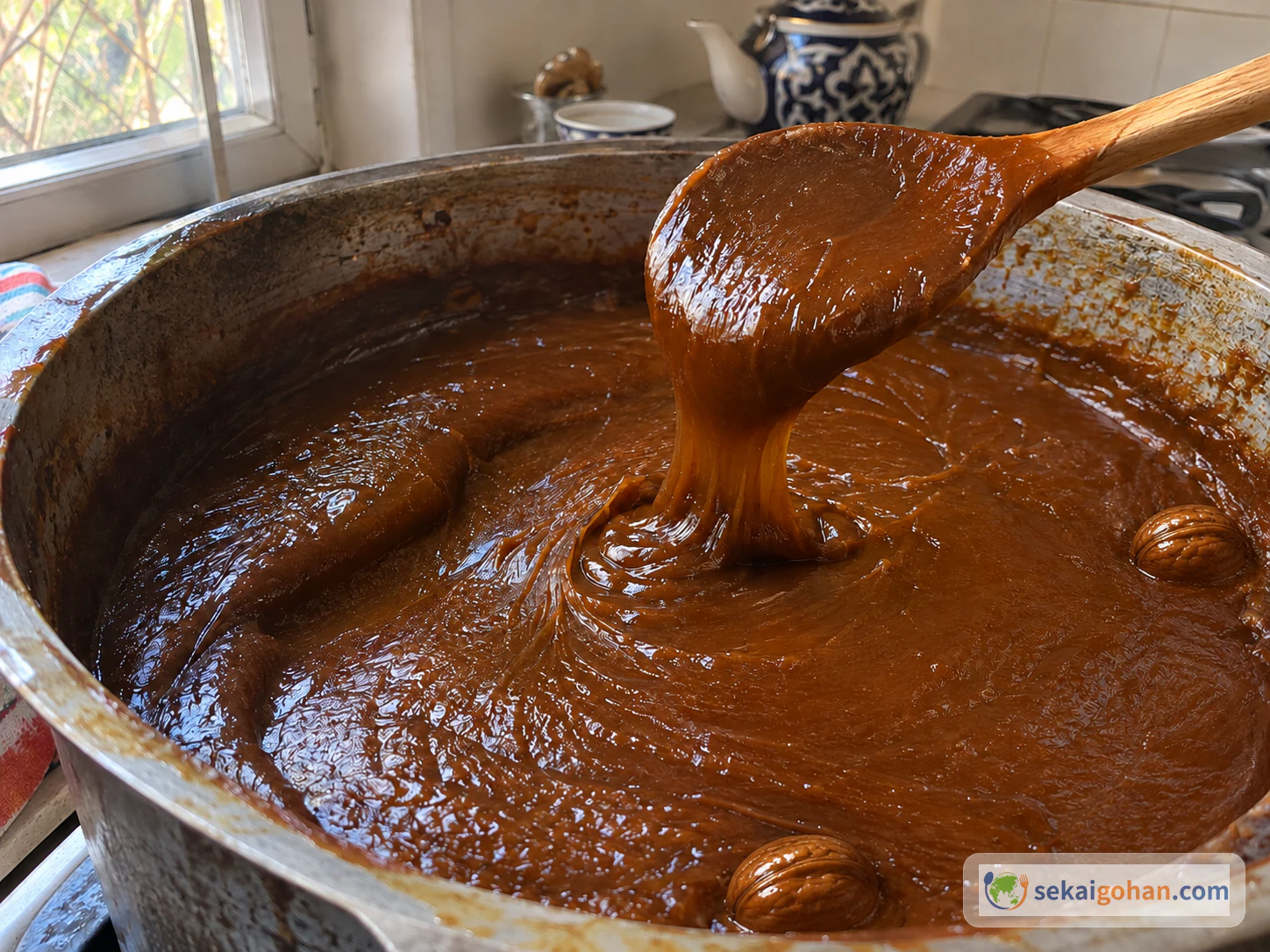
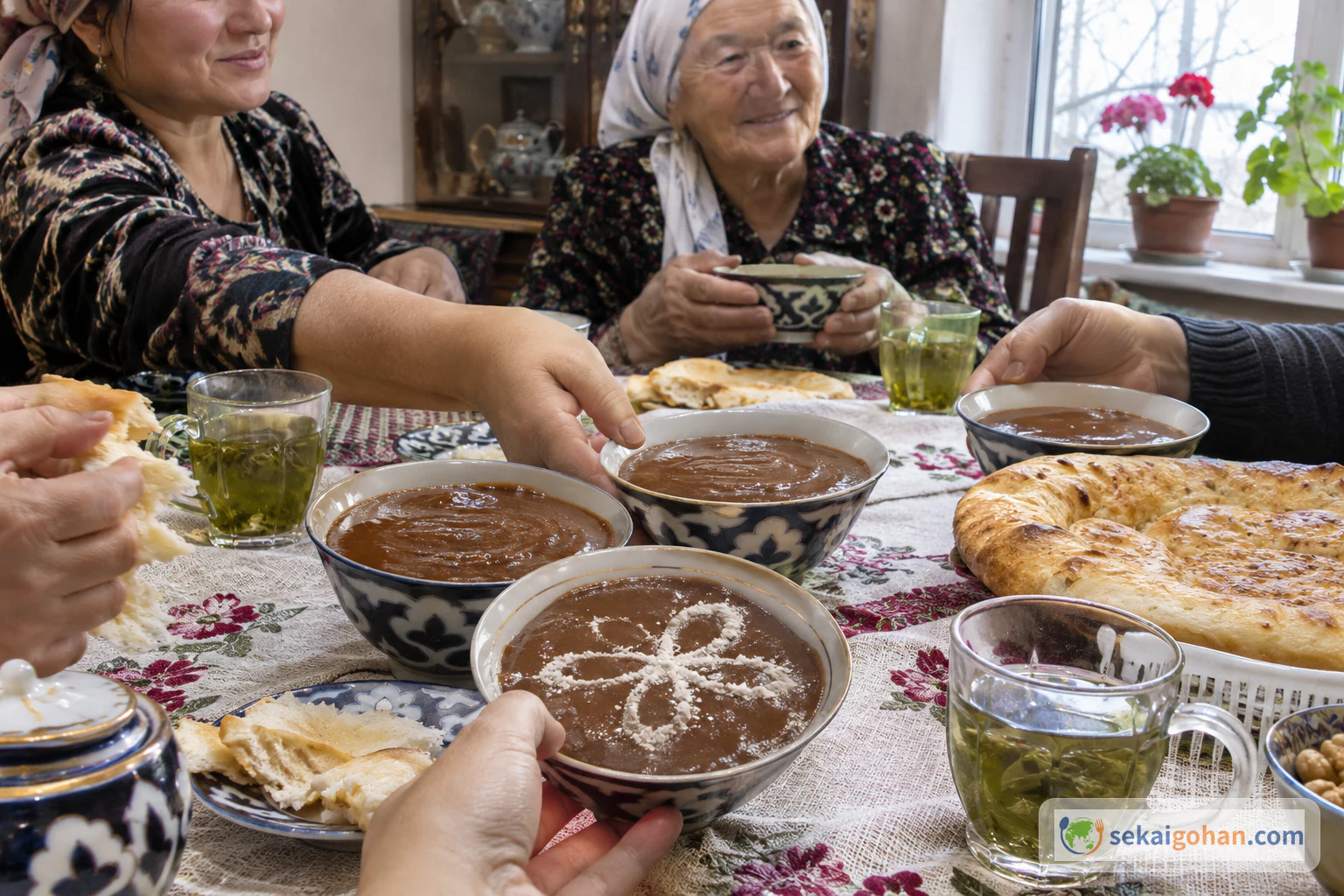
Hours into the cooking, you hear it before you see it: walnuts in their shells knocking across the bottom of the pot each time the spoon sweeps through. The paste above them started pale grey. By evening it has turned milky, then caramel, then a deep, glossy chestnut brown that closes slowly over the track your spoon leaves. Sumalak is the spring pudding of Uzbekistan. It is made from wheat that has been sprouted, ground, pressed into juice and cooked for most of a day. It tastes clearly sweet, with a dark, malty depth, and there is no sugar in it at all.
A Pot for the Spring Equinox
Sweetness from the grain
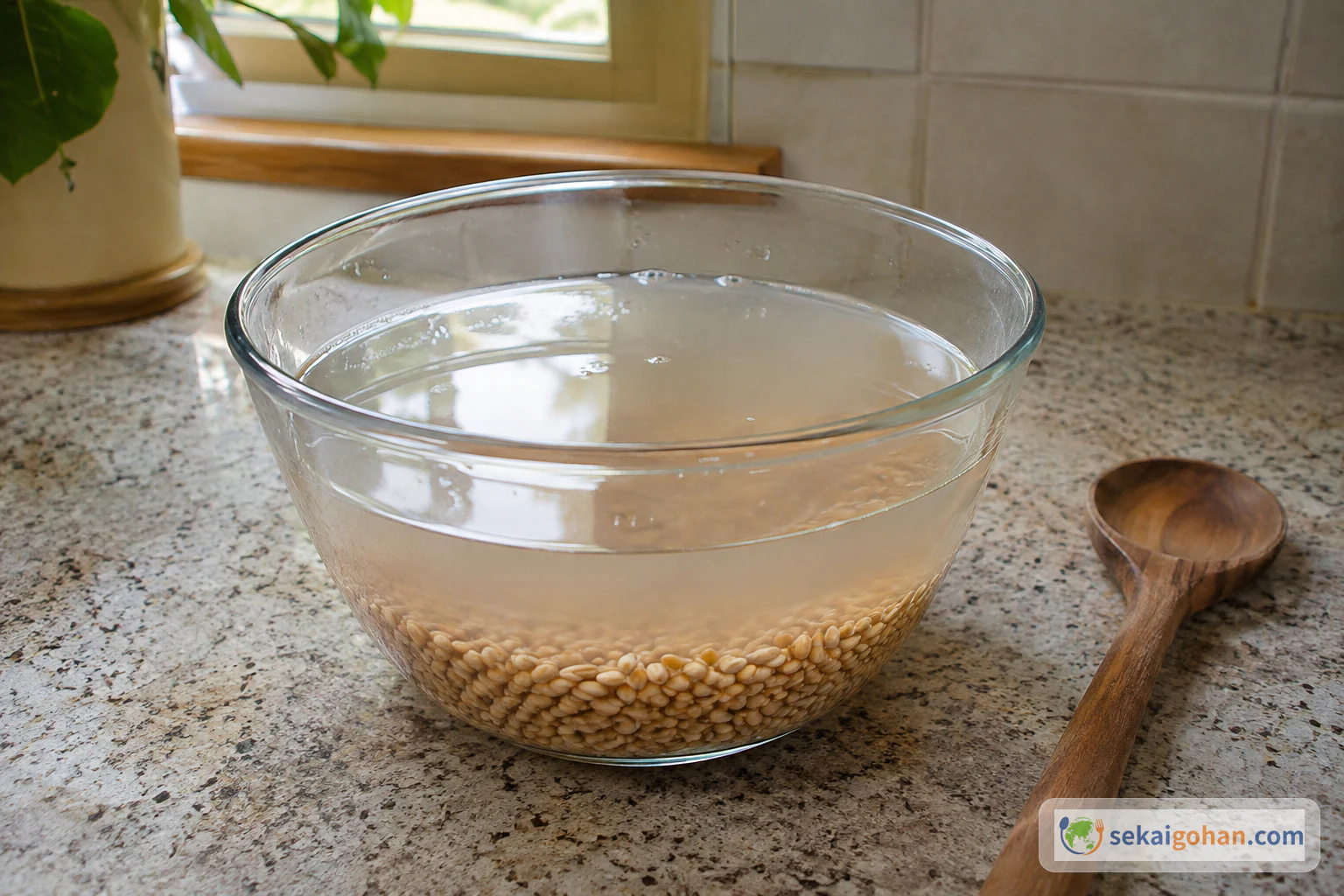
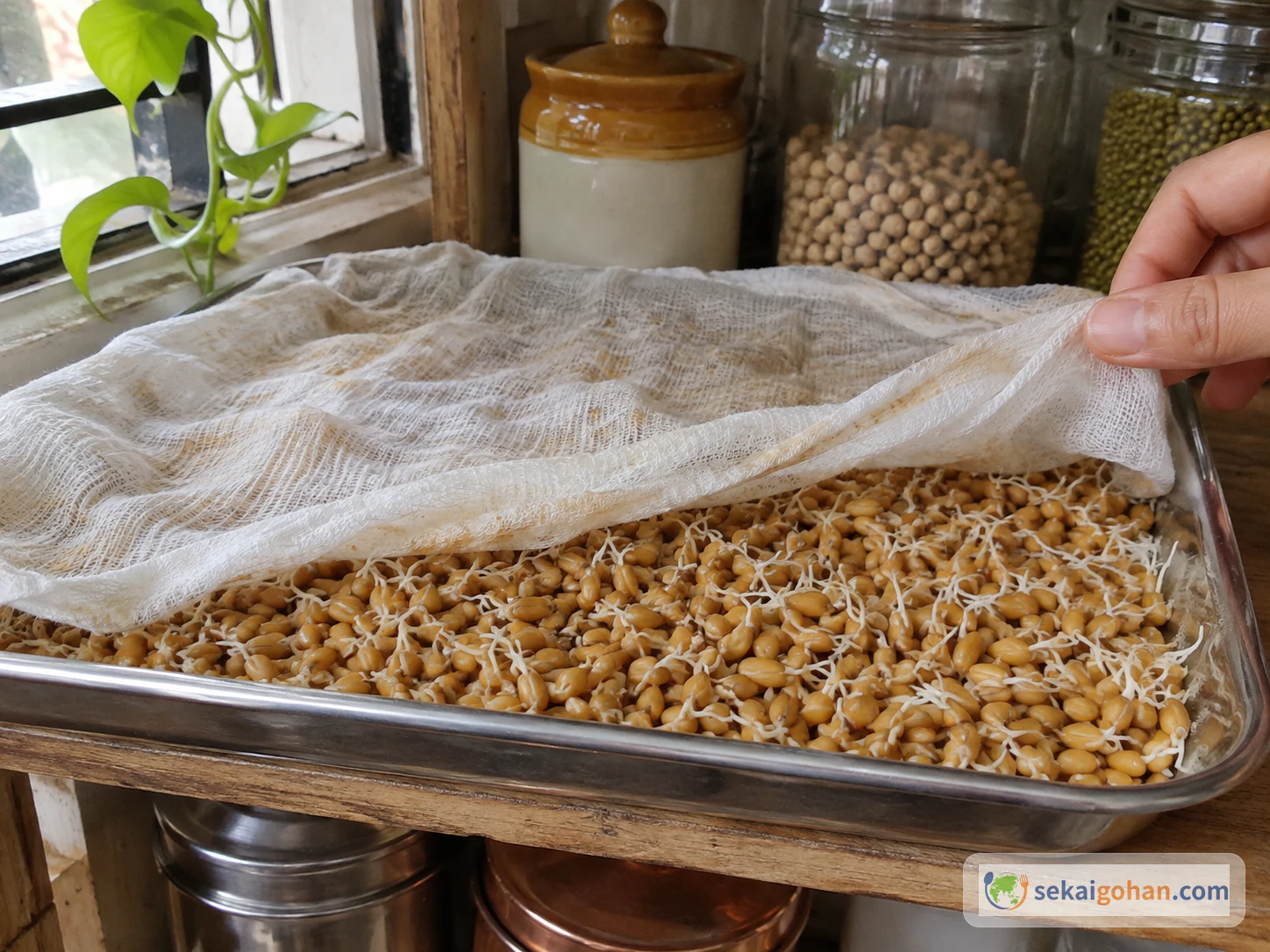
Everything in sumalak depends on the sprouts. As the wheat germinates, its own enzymes turn starch into malt sugar. The long, slow cooking then concentrates that sugar and caramelizes it until the paste goes dark. That is why adding sugar counts as a failure and not a shortcut: the sweetness is meant to come from well-sprouted grain and from patience at the stove. The whole project starts about a week before the meal. The wheat soaks overnight, sprouts for several days and is cooked on the last day.
Navruz, the mahalla and the cauldron
Sumalak belongs to Navruz, the new year festival held on March 21, the spring equinox. Of all the festival dishes, it is the most sacred and the best loved, and it is made by following a sequence of customs. Cooking it is a celebration in itself. The whole mahalla (neighbourhood) takes part, with songs, dances and local legends told around the pot. Girls may go up to the simmering cauldron to make a wish, and many of them wish for a child. When the sumalak is ready, it is shared with everyone in the courtyard as a sign of generosity and friendship. On the Navruz dastarkhan it sits beside plov, bread, sweets, halim and samsa, and it is also listed among the country's desserts and sweets, next to halva and nisholda. You can find more of the country's table on our Uzbekistan page.
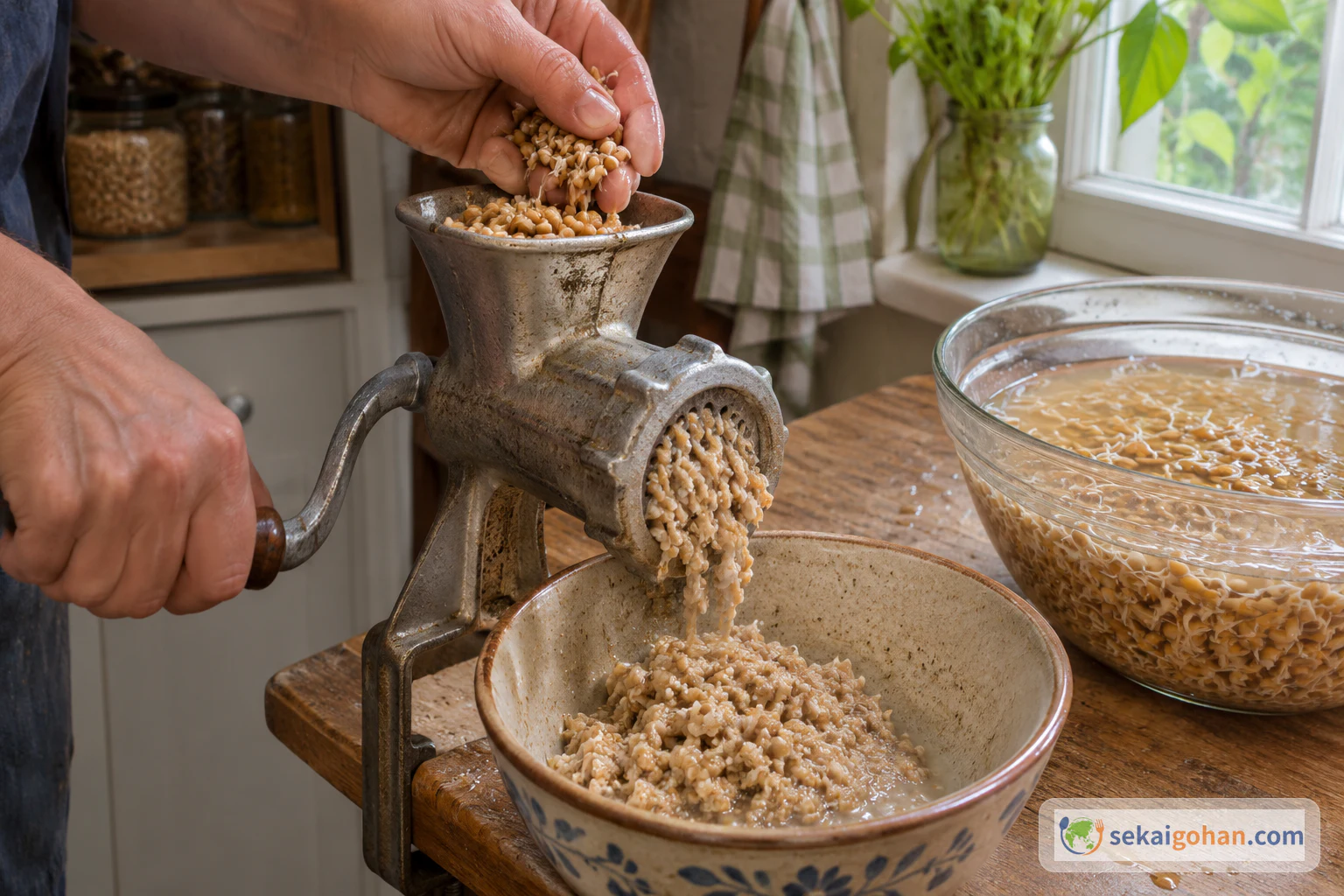
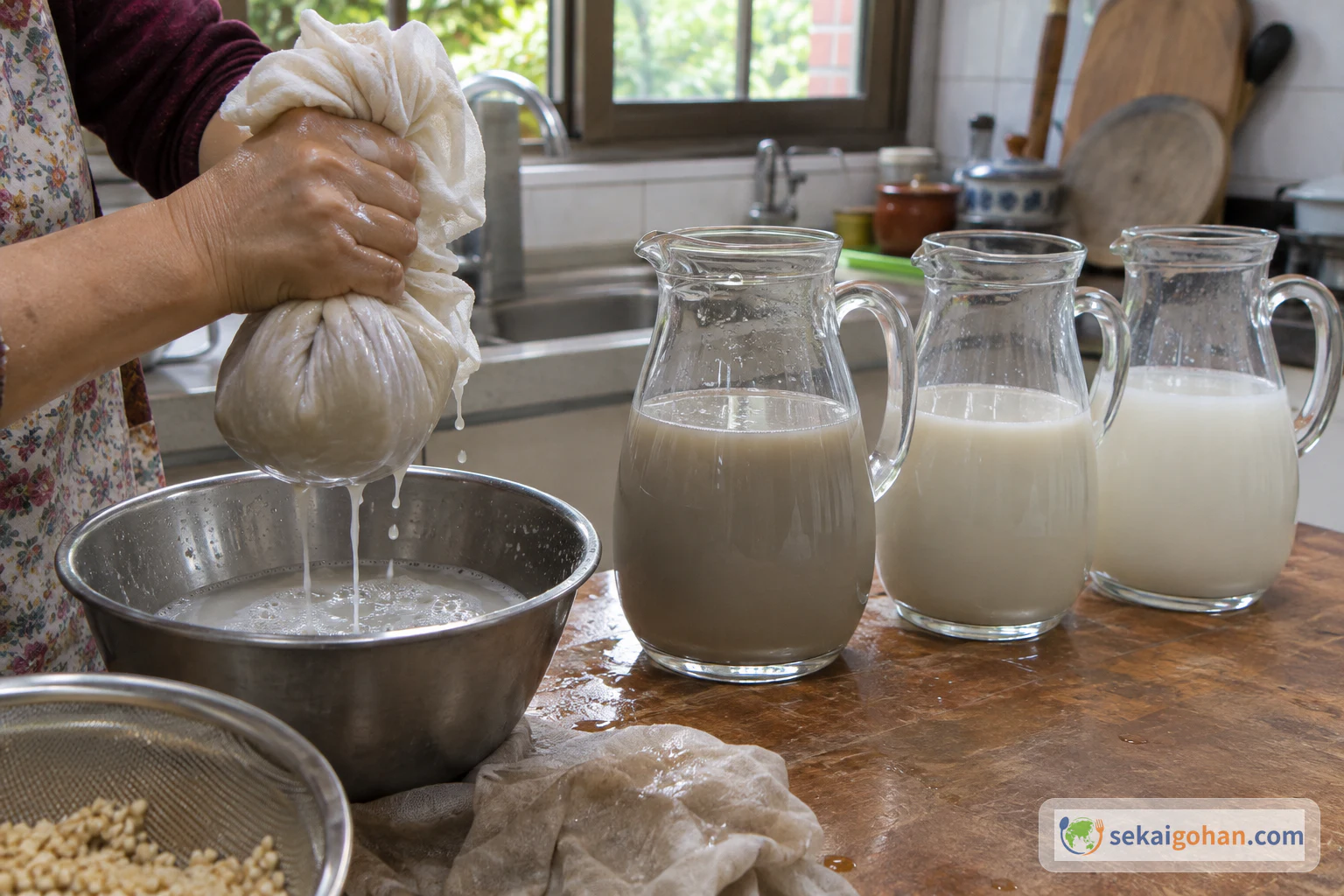
In a village in the Jizzakh region, several families cook it together. They check the wheat first, because cracked grains do not sprout and can rot. The soaked wheat goes into cotton sacks and is sprinkled and turned until milky sprouts appear. Then it is spread in layers on a khon-takhta, a low wooden platform lined with oilcloth, and sprinkled with warm water three times a day. Everyone there knows that overgrown sprouts make the sumalak bitter. The wheat is ground in a meat grinder and washed several times until the liquid runs white and thick. Children gather stones for the cauldron, an elder says a prayer, and then oil, wheat juice and flour go in, in that order. Each time bubbles the villagers call "coins" rise to the surface, more juice is added, nine times in all. The cooking goes on late into the night. People take turns at the paddle, trading songs, dialect words and stories, and they fry baursak to honour the elders who still remember the old songs. Each stir carries a wish: a child's schooling, gas piped to the house, peace in the country.
Every household does it a little differently. Some family cauldrons use far more flour in proportion to the wheat and put the first, strongest juice in at the start. Many make it with no salt at all. The home-sized pot below starts the flour with the second and third juices and saves the first juice for the end. In Iran and Afghanistan, the same sprouted-wheat method gives samanu, which takes its place on the haft-sin table at Nowruz.
One tale tells of a widowed mother with almost nothing in the house. She set a pot of a little wheat, water, flour and stones on the fire, stirred until she fell asleep, and woke to find that thirty angels had made it into a sweet porridge. In the village telling, the cook is Fatima, the Prophet's daughter. The name sumalak is often explained as "thirty angels", but that comes from the legend and is not a settled word history. The stones themselves are practical, because they keep the paste from catching on the base. They also carry a custom: whoever finds a stone in their portion makes a wish and keeps it as a charm.
Ingredients (serves 10)
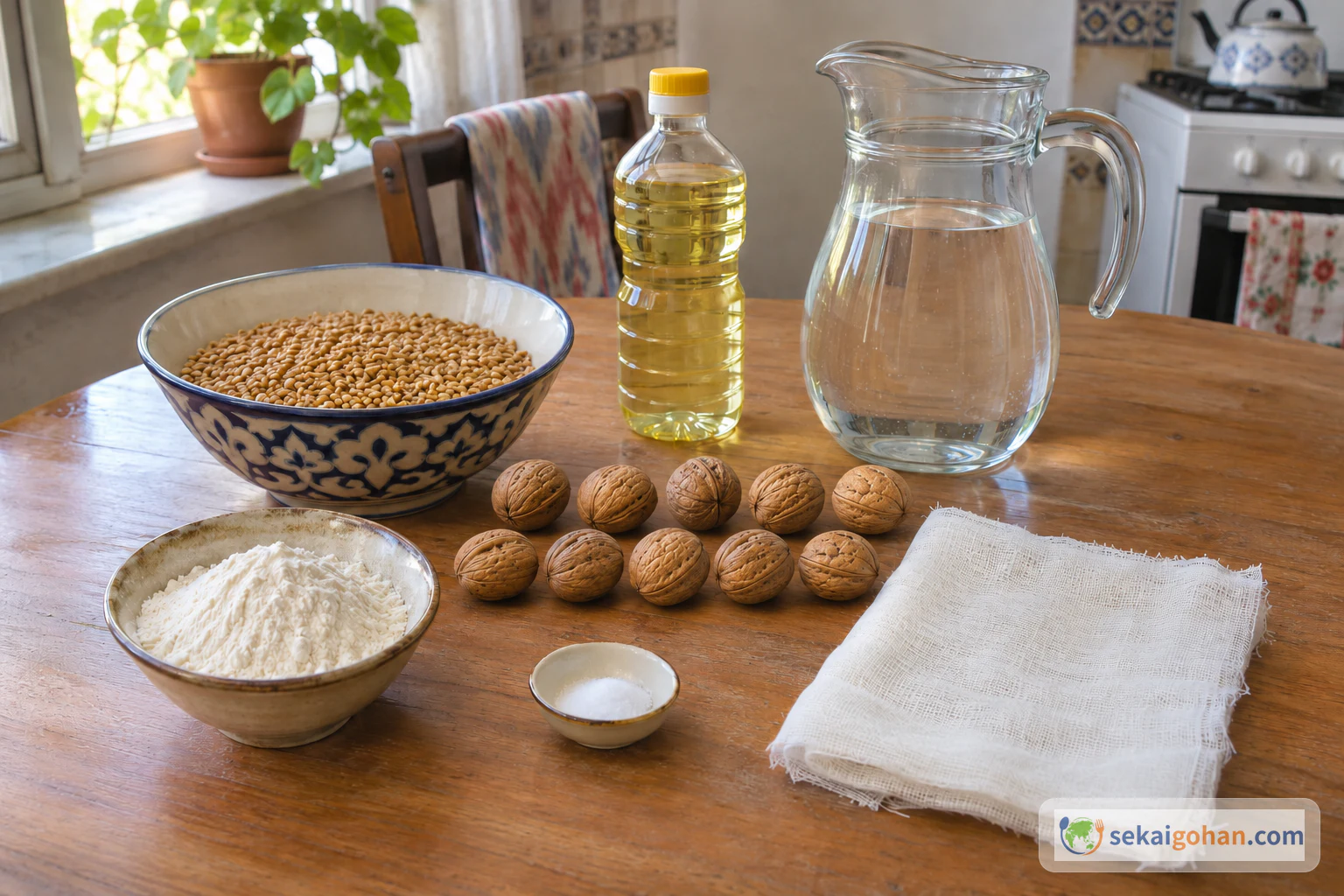
Cover the wheat with cold water by 2 inches (5 cm). The rest of the water is for the three extractions, so measure those out separately when you get to them.
Sumalak contains wheat (gluten). The walnuts cook in their shells and come out before serving. If anyone at the table has a tree-nut allergy, use boiled pebbles instead (see below).
Equipment
- Large bowl for soaking
- Large flat tray and a damp cotton cloth for sprouting
- Meat grinder, or a powerful blender used in batches
- Muslin cloth for squeezing
- Three separate jugs or containers for the extractions
- Whisk
- Heavy, thick-bottomed deep pot with a lid
- Long-handled wooden spoon
- Heat-resistant gloves
- Small serving bowls
Buying the Wheat and Making Swaps
The wheat is the only ingredient that takes real searching. You need whole, untreated wheat berries. Pearled, cracked or heat-treated grain will not sprout, however long you wait, and broken kernels tend to rot instead of sprouting. Look for wheat sold for sprouting or milling at health-food shops, grain specialists or online.
Central Asian and Iranian shops sometimes sell wheat that is already sprouted, frozen or dried, around Navruz. With dried sprouted wheat, skip the soaking and sprouting steps. Rehydrate it for 1 hour, then grind it and carry on from step 3.
| Item | Swap | What it changes |
|---|---|---|
| Cottonseed oil, the traditional fat | Rapeseed, sunflower or another neutral oil | Does the same job of coating the base and smoothing the paste |
| Walnuts in shell | 12 smooth pebbles, boiled for 10 minutes | Same anti-sticking job, and they bring the wish-stone custom to your table |
| Pinch of salt | Leave it out | Gives the salt-free version that many households and villages make |
| Butter | Do not use | Oil is the fat in sumalak; butter does not belong here |
Sumalak is eaten with bread, so any plain flatbread or crusty loaf on the table works. Keep the pot free of sugar, milk and butter. The sweetness has to come from the sprouts.
Method
The work comes in two parts. The first part is several days of light care while the wheat soaks and sprouts, a few minutes morning and evening. The second part is one long day at the stove. After a short boil, plan on six hours of steady stirring, then two to four more after the first juice goes in, then a long rest off the heat. Light the stove early in the morning so that the last stirring ends while you are still awake. Do not keep a lit pot going through the night at home. If you can, have a second person to take turns. This really is a job for two people, and that is part of why it is cooked together.
When It Goes Wrong
| What you see | Why | What to do |
|---|---|---|
| The grains will not sprout | Pearled, cracked, heat-treated or broken wheat | Start again with whole, untreated berries, or use dried sprouted wheat |
| Sour smell or slime on the tray | Rinsing was skipped, or the layer was too thick and warm | Throw the batch away. Next time spread it thin and rinse and drain twice a day |
| Grassy, bitter sumalak | The sprouts grew too long before grinding | Grind as soon as the shoot is as long as the grain and tastes sweet |
| Lumps of flour in the pot | Flour went in without being whisked smooth | Whisk the flour fully into the second and third juices before pouring |
| Burnt taste or black flecks | Heat too high or gaps in the stirring | A scorched pot cannot be saved. Keep the flame at its lowest and scrape the corners every 2 to 3 minutes |
| Pale paste that is barely sweet | It came off the heat early, or the sprouts were weak | Keep cooking until it is deep chestnut and glossy. Do not add sugar; the sprouts give the sweetness |
Serving, the Wish Stone and Leftovers
At the table
Sumalak is eaten cold, in small bowls, with bread. A spoonful at a time is enough, because it is dense and sweet. At Navruz it shares the dastarkhan with plov, samsa and halim, but most of the pot goes out the door. Sharing it with neighbours is the point of making this much.
Ways people make it
- Salt-free: leave out the pinch of salt, as many households and villages do. The sweetness tastes rounder and less defined.
- With pebbles instead of walnuts: use 12 smooth pebbles boiled for 10 minutes. Count them out before serving, and take extra care when young children or older people are at the table.
- Village style: in big cauldrons, juice is added each time "coin" bubbles appear, nine times over a cooking that runs late into the night. It is made at a scale and with a crowd of helpers that a home kitchen does not have.
- Samanu: the Iranian and Afghan relative made by the same sprouted-wheat method, set out on the haft-sin table.
Leftovers
Cover the bowls or the pot and refrigerate leftovers promptly. This is our own suggestion, and we do not give a keeping time. Serve them cold, as on the first day.
Frequently asked questions
Is sumalak the same as samanu?
They come from the same method of sprouting wheat, pressing out its juice and cooking it slowly. Samanu is the dish's relative in Iran and Afghanistan, where it is part of the haft-sin table at Nowruz. Sumalak is the Uzbek version, cooked for the spring equinox and shared through the mahalla.
Do I have to cook it through the night like the villages do?
No. Village cauldrons run late into the night because of their size and because cooking them is a shared event. A home pot follows the timings in the steps. Start in the morning so the stirring ends in the evening, then let the covered pot rest off the heat overnight.
Why does it rest for so long before serving?
Resting with the lid on lets the paste settle and set as it cools. Sumalak is served cold, so the rest is part of the dish. Count out the walnuts or pebbles only after resting, just before you spoon it into bowls.
Can I make the wheat sprout faster somewhere warm?
Keep the tray at ordinary room temperature, out of direct sun. Warm, damp grain is exactly where bacteria multiply. Judge readiness by the shoot length and the sweet taste, not by the calendar, and throw out anything that smells sour or feels slimy.