

In a cold kitchen, wrapping little ears over rising steam
Knead the flour, work the mince, wrap dozens of the same shape. Made alone and in silence, pelmeni can feel a bit like training, but made in a kitchen close to the table it suddenly becomes fun. Flour is scattered at the edge of the board, the water comes to a boil, and a little juice seeps from the small parcels as they come out of the pot. In that moment you see that this is neither a gyoza nor a pasta but a boiled dumpling that in a cold land served both storage and a meal.
Pelmeni (Пельмени) is a Russian dish of ground meat wrapped in a thin unleavened dough and boiled in salted water. It is strongly associated with Siberia and the Urals and is also characterized by how easily it freezes. Russia Beyond presents it as a dish that families wrap in large quantities in winter and keep stocked in the freezer.
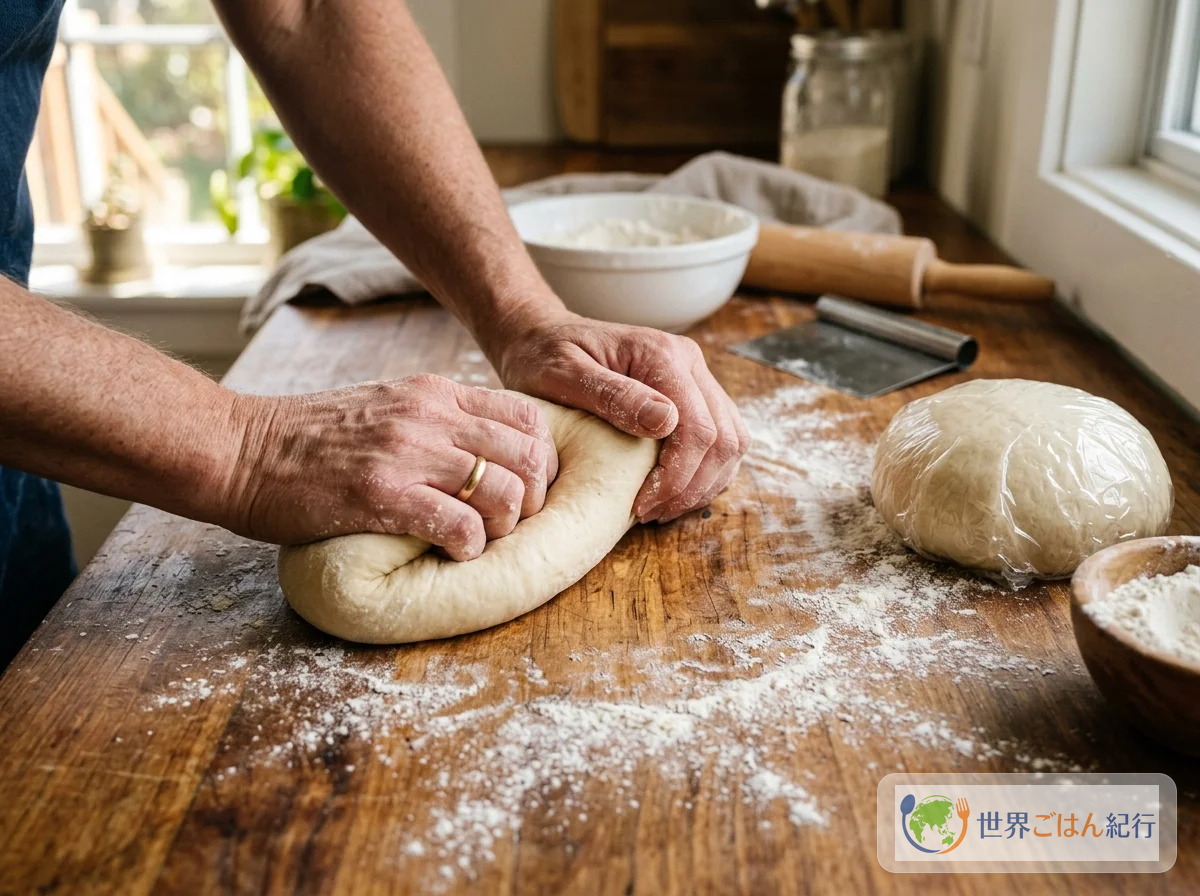
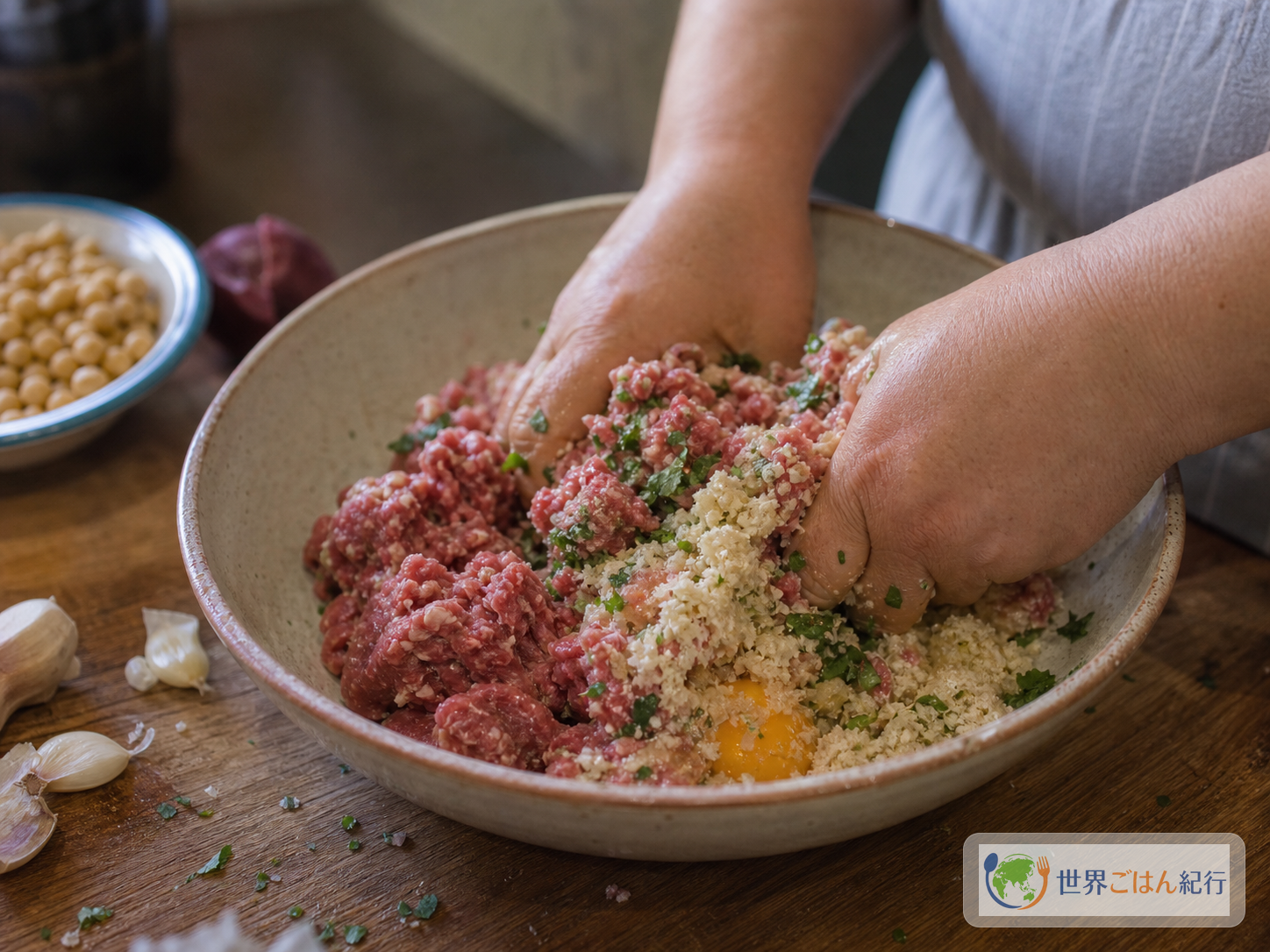
This recipe uses beef-and-pork mince that is easy to buy, and a dough of cake flour and bread flour mixed for ease of handling. Rather than stopping the dish to hunt for lamb or smetana, it narrows down the points to protect: a dough that rolls thin, a cold filling, a gentle simmer, and the internal temperature when done. If you have these four, a home kitchen can come close to the satisfaction of pelmeni.
If pierogi (in Japanese) are filled dumplings of potato or cheese, pelmeni are small boiled dumplings with meat as the star. Set beside sour borscht (in Japanese) or summer's cold okroshka (in Japanese), a table of "wrap, boil, add acidity" emerges across Eastern Europe and Russia.
What pelmeni are
| What to look at | Place in Russia | How to think about it when cooking elsewhere |
|---|---|---|
| Local name | Пельмени. Singular: пельмень | Also written pelmeny |
| Dough | A thin unleavened dough of flour, water, egg and salt | Cake flour alone tears easily, so mix in a little bread flour |
| Filling | Ground beef, pork or lamb with onion | For the first time, use beef-and-pork mince for stability |
| Shape | A small round parcel, with the ends joined like an ear | Cutting rounds about 7 cm across is easy to boil in a home pot |
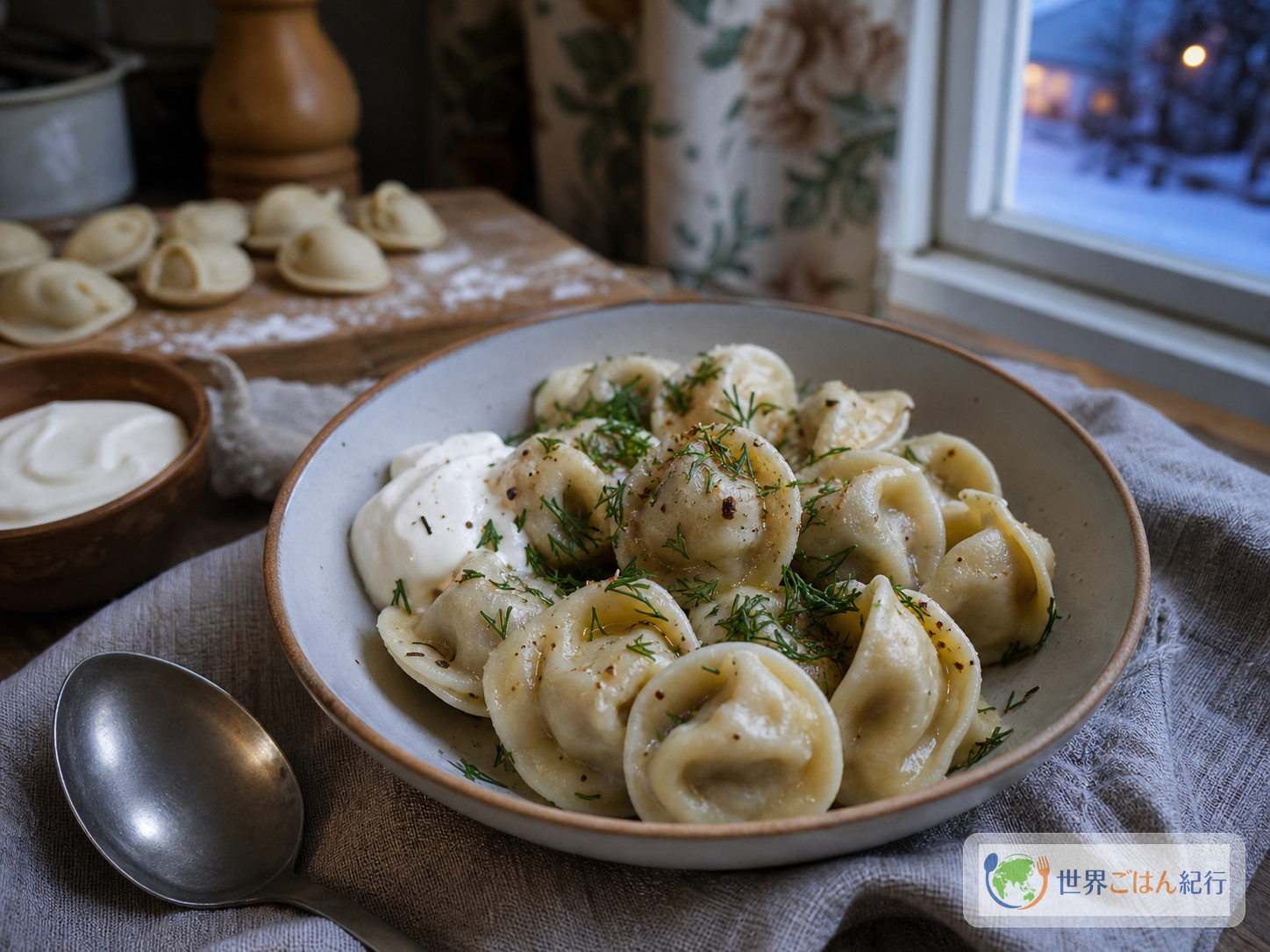
| How to eat | Butter, smetana, vinegar, dill, cooking broth | Sour cream, rice vinegar and dried dill can approximate it |
| Storage | Easy to freeze once wrapped | Freeze on a tray, then move to a bag |
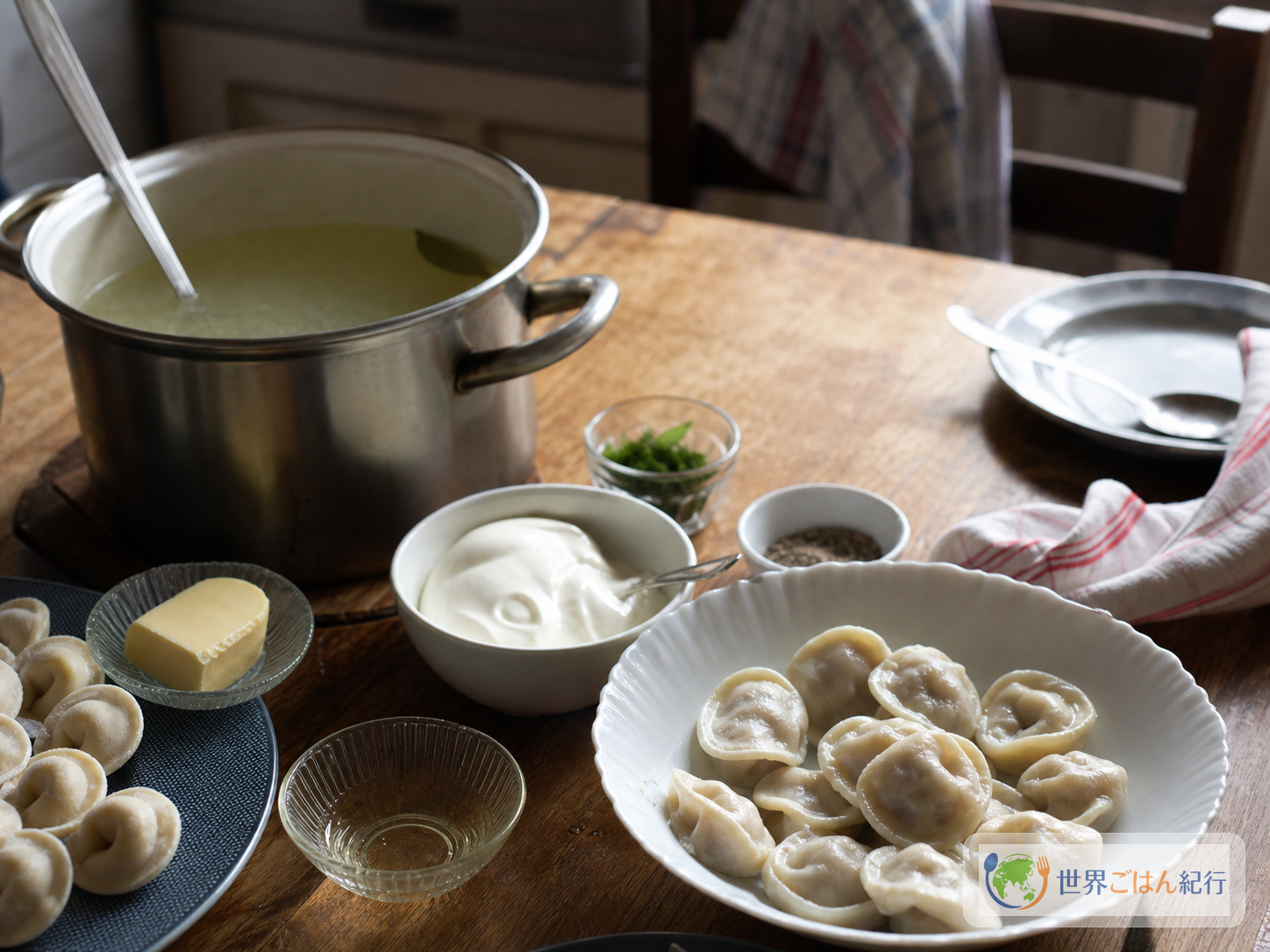
The Moscow Times' food-culture article explains that the name pelmeni relates to the Finno-Ugric words for "ear" and "bread." On the other hand, the spread of the dish itself was not in one direction. There was contact with filled dishes of the Urals, Siberia, Central Asia and China, and it is thought to have become known across Russia around the 19th century.
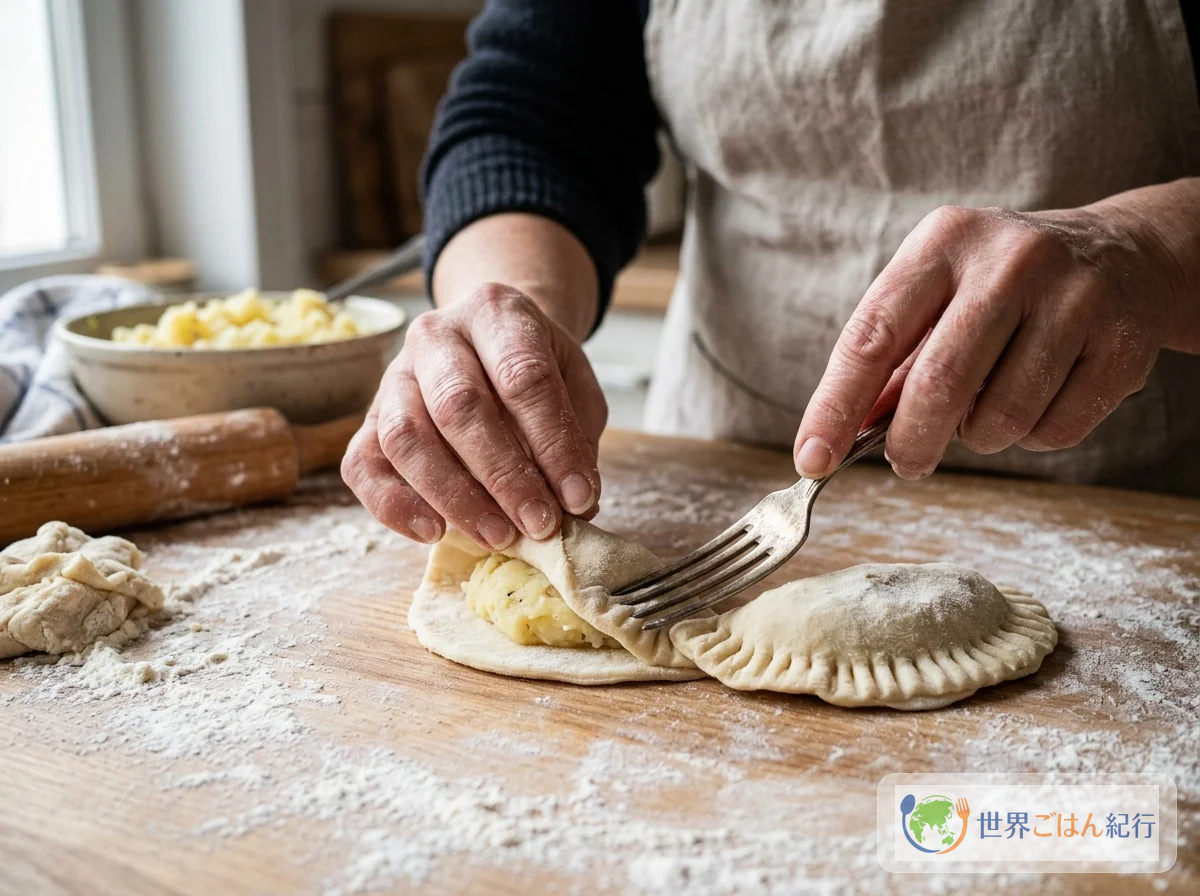
What matters for readers elsewhere is not to see pelmeni only as "Russian gyoza." It is not a dumpling made fragrant with a browned crust, but a dish in which the wrapper turns plump in the water and keeps its juices and a soupy quality. If you press the seam too hard into a flat half-moon, it comes close to pierogi (in Japanese). Joining the ends into a small ear shape keeps a rounded thickness after boiling.
Ingredients (serves 4, about 36 pieces)
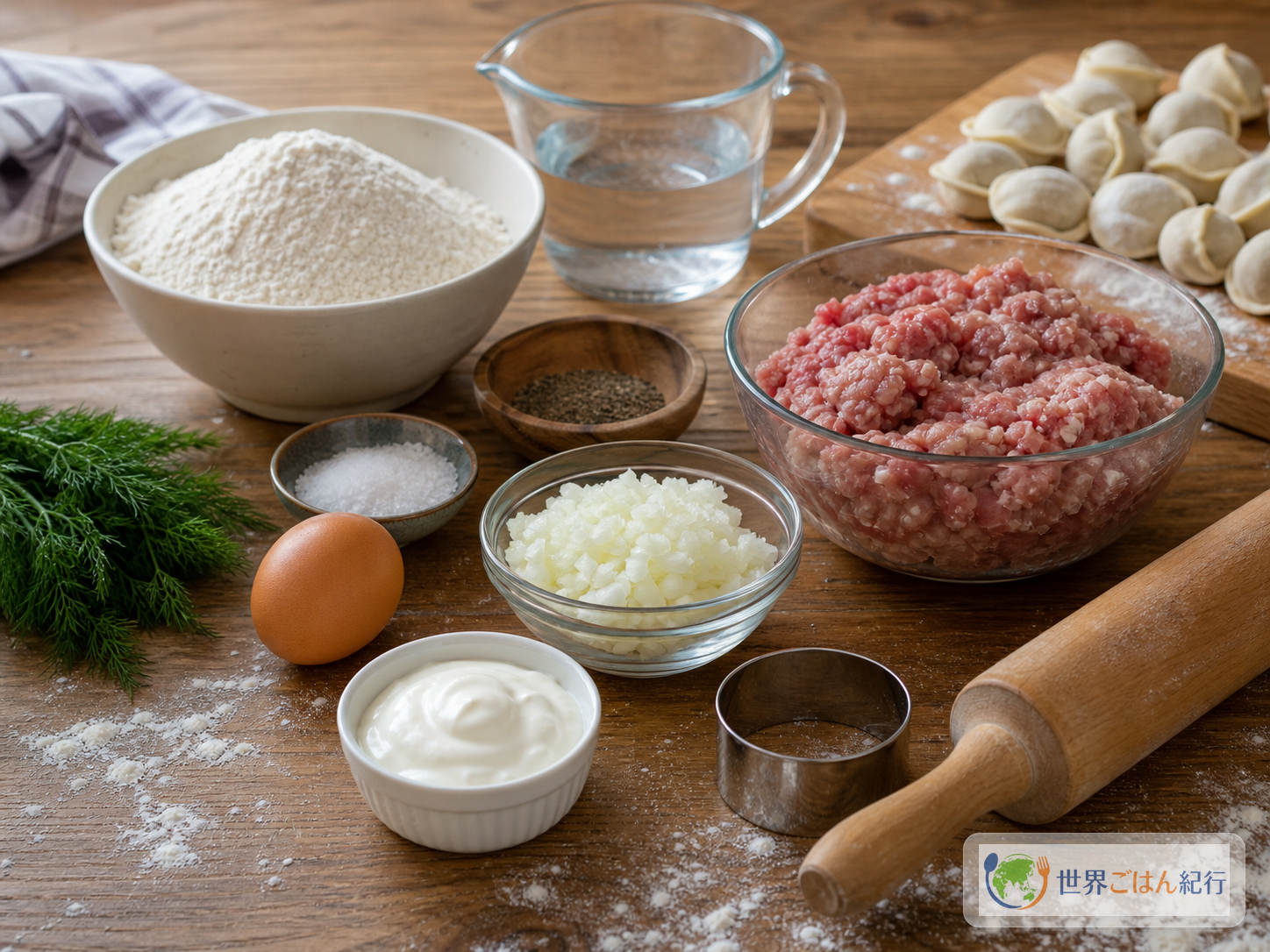
This recipe uses wheat, egg, dairy, beef and pork. With ground meat it is hard to judge doneness by color alone, so the first time check 71°C at the center with a thermometer. Do not leave raw wrapped pelmeni at room temperature; when wrapping a large amount, move them to the refrigerator or freezer partway.
What is worth seeking out when shopping
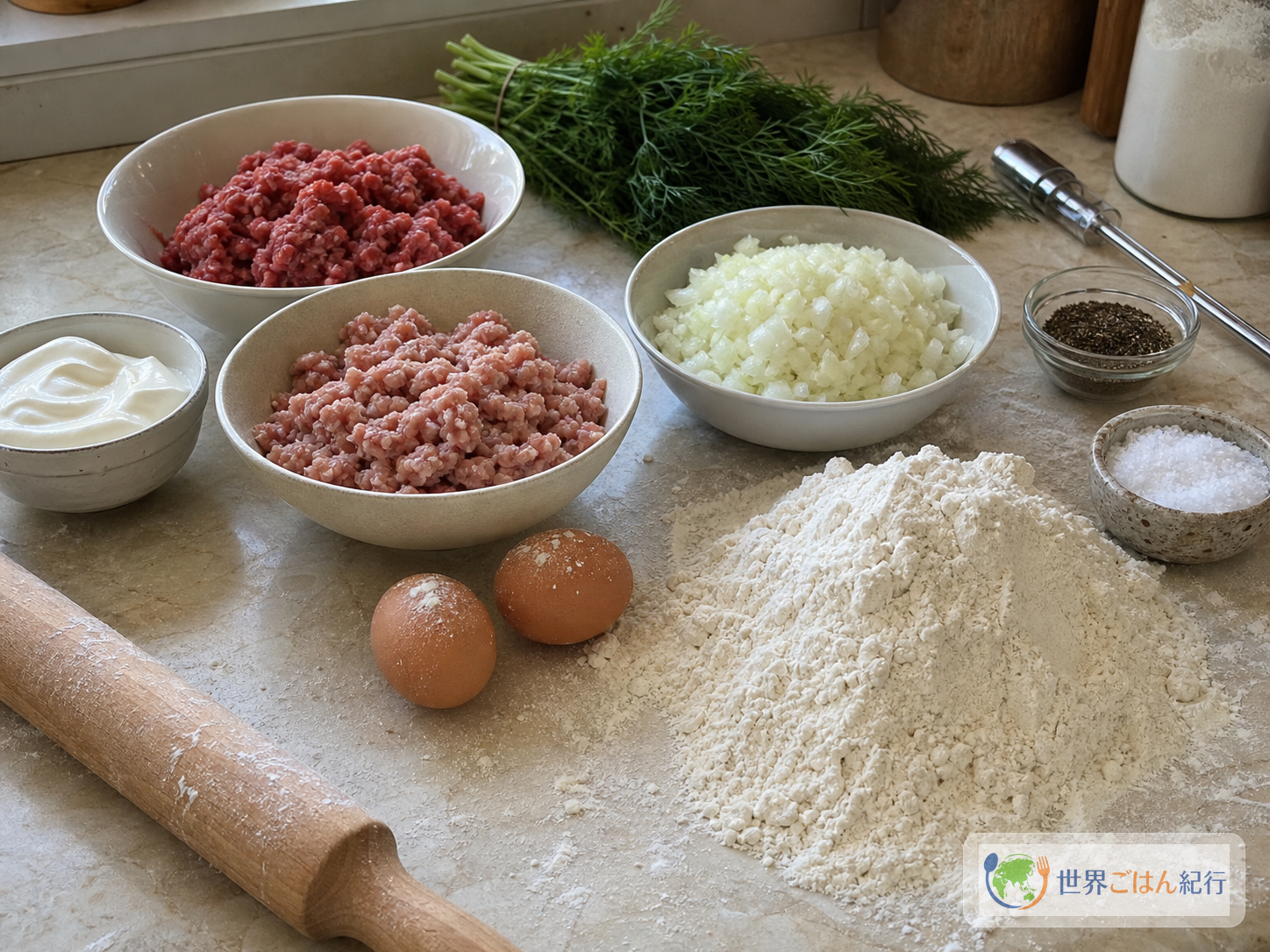
Beef-and-pork mince, flour, eggs and sour cream are fine from an ordinary supermarket. The things worth looking out for are a rolling pin to roll the dough evenly, a thermometer to check the internal temperature of the mince, and the dill that adds a Russian aroma. Dairy items such as sour cream and butter are covered only in the ingredient table and substitute notes.
When rolling the dough thin, a short pin takes too much force. A wooden rolling pin of about 30 cm makes it less likely that the wrapper will be thick only in the middle.
With dishes that wrap ground meat, you cannot see the color inside through the wrapper. Even just the first time, measuring the internal temperature tells you in your own pot how many minutes to wait after they float.
Dill changes the impression of the dish even in a small amount. If you have no fresh, sprinkle freeze-dried at the finish and do not simmer it long in the hot water.
Nutrition
| Item | Per serving (approx.) |
|---|---|
| Energy | About 620 kcal |
| Protein | About 30 g |
| Fat | About 25 g |
| Carbohydrates | About 68 g |
| Fiber | About 3 g |
| Salt equivalent | About 2.1 g |
The figures are estimates assuming beef-and-pork mince, butter and sour cream, with about 9 pieces eaten per person. Swapping the sour cream for Greek yogurt lowers the fat slightly.
Choices for getting close to the original in a home kitchen
| Ingredient or tool in question | Local-leaning | Realistic elsewhere | Effect on the dish |
|---|---|---|---|
| Meat | A combination of beef, pork and lamb | Beef-and-pork mince | Less of the lamb aroma, but the juiciness and substance can be made |
| Smetana | Russian-style cultured cream | Sour cream, Greek yogurt | Adds acidity and the weight of dairy |
| Dill | Chopped fresh dill | Freeze-dried sprinkled at the end | Using it at the end without simmering keeps the aroma |
| Vinegar | A little at the table | Rice vinegar, white wine vinegar | Cuts the heaviness of fat and flour |
| Cutter for the wrapper | A small round cutter | Cut with the rim of a glass | About 7 cm across is enough |
| Cooking liquid | Some households drink it like a bouillon | Flavor only with bay leaf and black pepper | Ladle a little into the bowl only if you want it as a soup |
There are things you can substitute and things that bring it closer to something else if you do. Sour cream can be approximated with Greek yogurt, but leaving out the dill entirely weakens the Russian aroma considerably. You can add green with shiso or scallion, but the direction of the aroma moves toward a Japanese cold dish.
You can also make it with store-bought gyoza wrappers. However, pelmeni wrappers are a little more elastic than gyoza wrappers and are characterized by not turning watery when boiled. As a substitute for a day with no time, use large, thick gyoza wrappers and reduce the filling to about 8 g. If you make it as in this first article, making the dough from scratch makes it easier to grasp the outline of pelmeni.
Causes of failure and how to fix them
| What happened | Cause | Fix next time |
|---|---|---|
| They open when boiled | Filling on the edge, shallow seam | Wipe the edge and press twice with the pad of a finger |
| The wrapper is tough | Dough not rested, too much bread flour | Rest 30 minutes and keep the bread flour to 80 g |
| The filling is dry | Not enough cold water, overboiled | Add 60 ml cold water in portions and check 4 to 5 minutes after floating |
| The water is cloudy and floury | Too much dusting flour | Lightly brush off surface flour before putting in the pot |
| The shape is flat | The ends were not joined | Do not stop at the half-moon; overlap the ends into an ear |
| The taste is blurred | Not enough salt and acidity | 1 tsp salt in the filling, and a few drops of vinegar at the table |
The most common failure with pelmeni is that they open while boiling. Sometimes the wrapper itself is weak, but most often the cause is fat from the filling on the seam. If filling gets on the edge, do not press it over; wipe it off with a wet finger and then close it again.
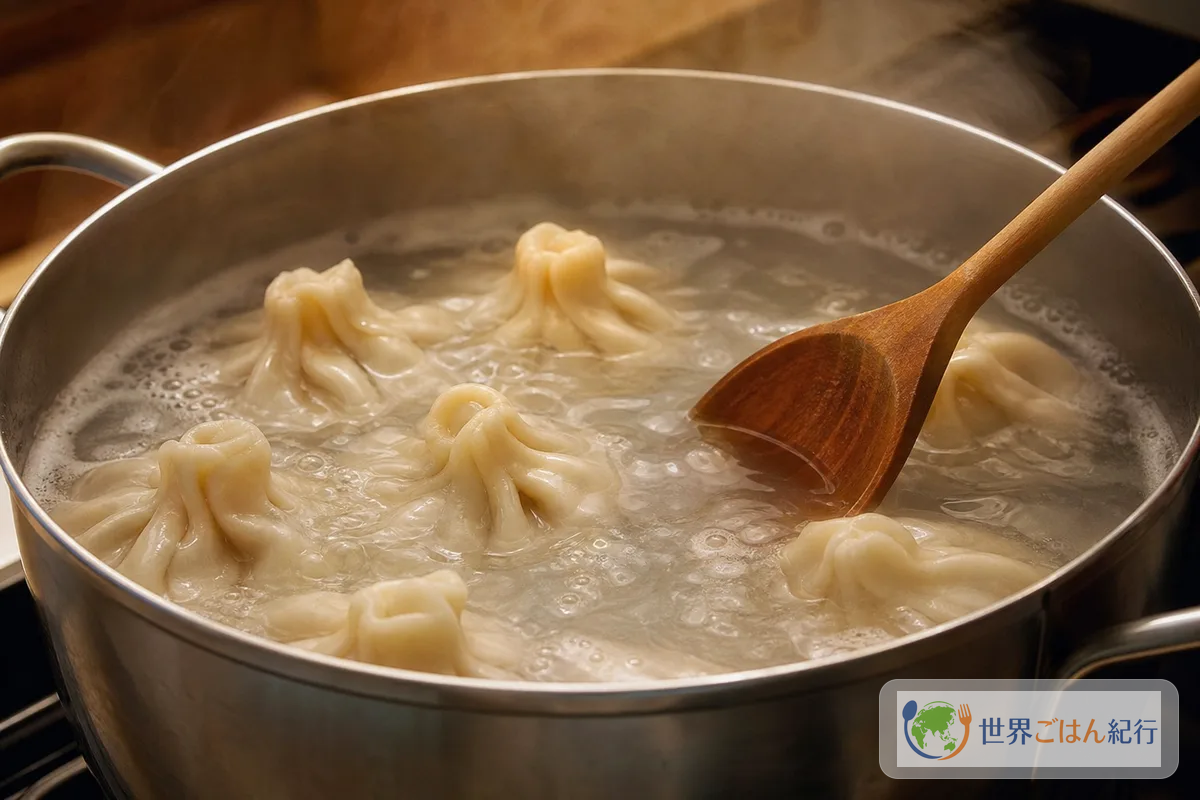
The other is the strength of the water. A hard rolling boil makes wrappers bump into each other and split at the seams. Strong boil only as you add them; once it boils again, medium-low. Lowering it to where the surface just trembles lets the heat reach the inside of the wrapper.
Storage and serving
| State | How to store | Keeps | How to use |
|---|---|---|---|
| Just wrapped | Refrigerate on a floured tray | 6 hours | Boil before the wrappers get damp |
| Just wrapped | Freeze on a tray, then move to a bag | About 1 month | Boil from frozen |
| After boiling | Refrigerate in an airtight container | 2 days | Rewarm in butter |
| After boiling | Drain and freeze | About 2 weeks | Texture falls, so better for soup |
If freezing, raw is best. Arrange the wrapped pelmeni on a tray without touching and freeze for about 1 hour. When the surface has firmed up, move them to a storage bag. If you put them in a bag from the start, the soft wrappers stick together and tear when boiled.
To eat, put them in the pot frozen. If boiled after thawing, the wrappers get damp and split easily. Frozen pelmeni lower the water temperature, so bring it back with high heat only at first, then lower to medium-low after it boils again. Allow 6 minutes after floating and check that the center of the mince reaches 71°C.
For a menu, adding a sour soup or vegetables balances the heaviness. Borscht (in Japanese) gives acidity and the sweetness of beet, okroshka (in Japanese) the lightness of cold lactic acid, and mamaliga the plain sweetness of corn, to support a plate of flour and meat. If you want to carry on to a Russian sweet after the meal, cutting a little medovik, rested overnight in the refrigerator, closes the aftertaste of meat with honey and tea.
FAQ
What is the difference between pelmeni and pierogi?
Pelmeni are Russian boiled dumplings in which a small meat filling is wrapped and the ends are joined into an ear shape. Pierogi are a Polish filled dish with a wide range of fillings such as potato, cheese, mushroom and fruit, and are often served as a half-moon. Both are boiled, but pelmeni center on juicy meat and ease of freezing.
What changes if I use gyoza wrappers?
The wrapper is thin and can become too soft when boiled. If substituting, choose large, thick wrappers and use less filling. The texture will be closer to a Japanese boiled gyoza than to pelmeni.
Why put water in the filling?
So that the filling does not become a hard lump when boiled. Mixing in cold water little by little lets moisture enter the meat and keeps it moist after heating. Adding the water all at once makes it likely to separate, so add it in 3 portions.
What if I have no sour cream?
Mixing 80 g Greek yogurt with a pinch of salt and 1/2 tsp rice vinegar brings the acidity and weight close. Low-fat yogurt alone turns watery, so drain it before using.
Is dill essential?
You can eat it without, but the Russian aroma is considerably weaker. If you have no fresh dill, sprinkle freeze-dried just before plating. Simmering it long drives off the aroma, so do not put it in the boiling water.
How many pieces is one serving?
About 9 as a main, or about 7 if you serve soup or salad with it. Making 36 serves 4, but since wrapping takes effort, sending half to the freezer is also realistic.