Afelia: Pork, Red Wine and Cracked Coriander in One Covered Pot
Pork cubes that have spent a night in red wine and lightly crushed coriander seeds, browned gently, then simmered under a lid until tender in a sauce that has turned rich and slightly reduced. No onion, no garlic, no extra spices: the wine and the coriander carry the dish.
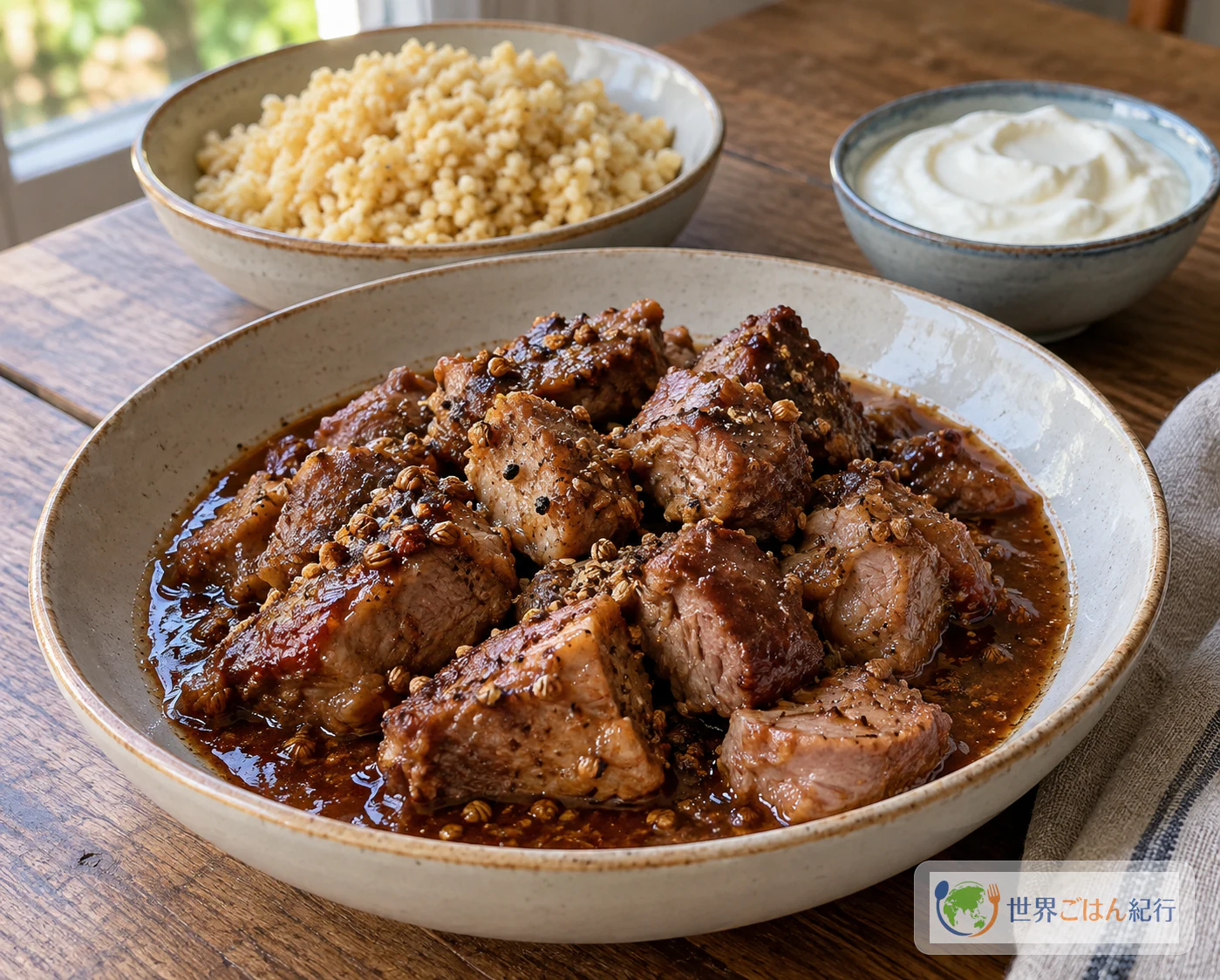
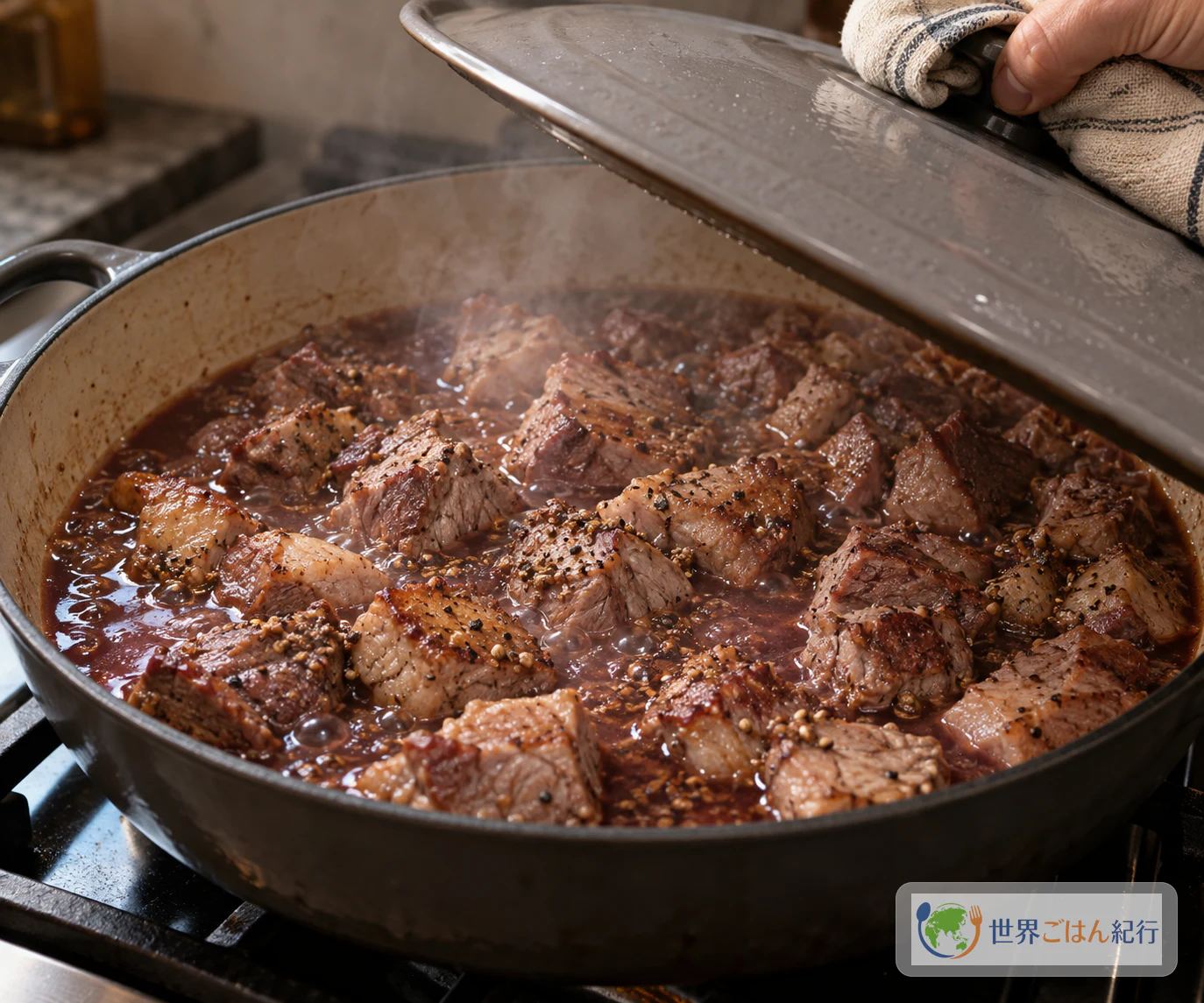
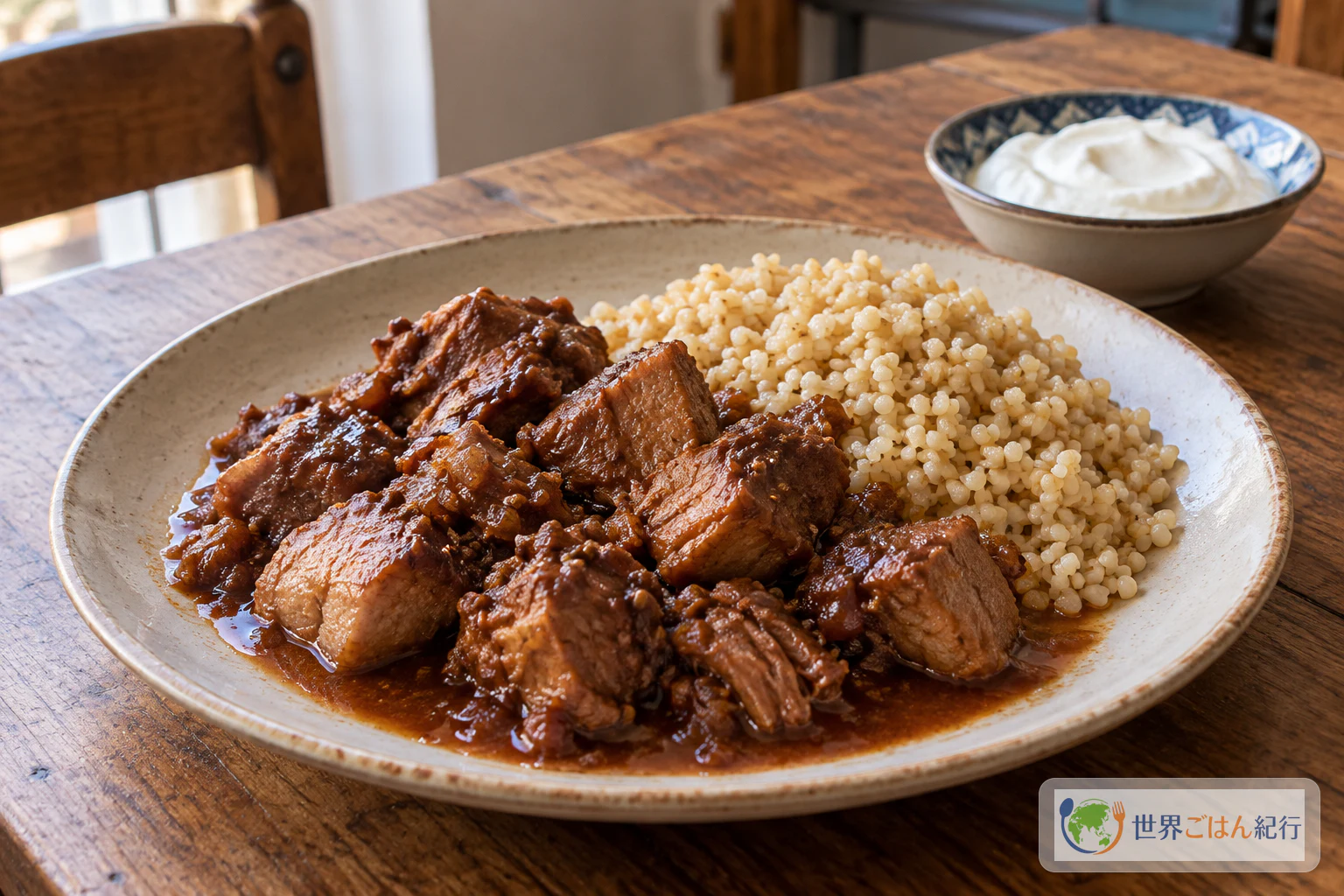
Lift the lid near the end of the simmer and you find wine-dark sauce clinging to the pork, with the warm, citrusy scent of coriander seed rising from the pot. Afelia (Αφέλια) is a Cypriot dish of pork cooked with red wine and coriander, and in its published modern form it comes to the table with bulgur pilaf and a dish of strained yogurt.
This article follows one version only: the afelia recipe in Traditional Dishes of Cyprus, published by the Republic of Cyprus in 2026. Its amounts and method are used as printed, without blending in other versions. Older and household versions are described further down so you can see the range, but they are kept separate from the recipe.
This recipe has not been kitchen-tested by Sekai Gohan. It reproduces the published Cypriot government recipe, with a few clearly marked editorial choices (such as using shoulder rather than leg) and food-safety checks added for home cooks.
Afelia Is a Cypriot Pork Dish Cooked With Wine and Coriander
The Cyprus Food Museum records the dish as Αφέλια (Afélia): small pieces of pork browned and cooked with red wine and coriander. The flavor rests on just these elements, so the choice of wine and the way the coriander is handled matter more than any extra seasoning.
The sources used here do not establish where the name comes from or when the dish first appeared, so this article does not guess at either. What they do show clearly is the shape of the dish and how it is eaten. For more Cypriot dishes, see the Cyprus country page.
At the Cypriot Table With Bulgur
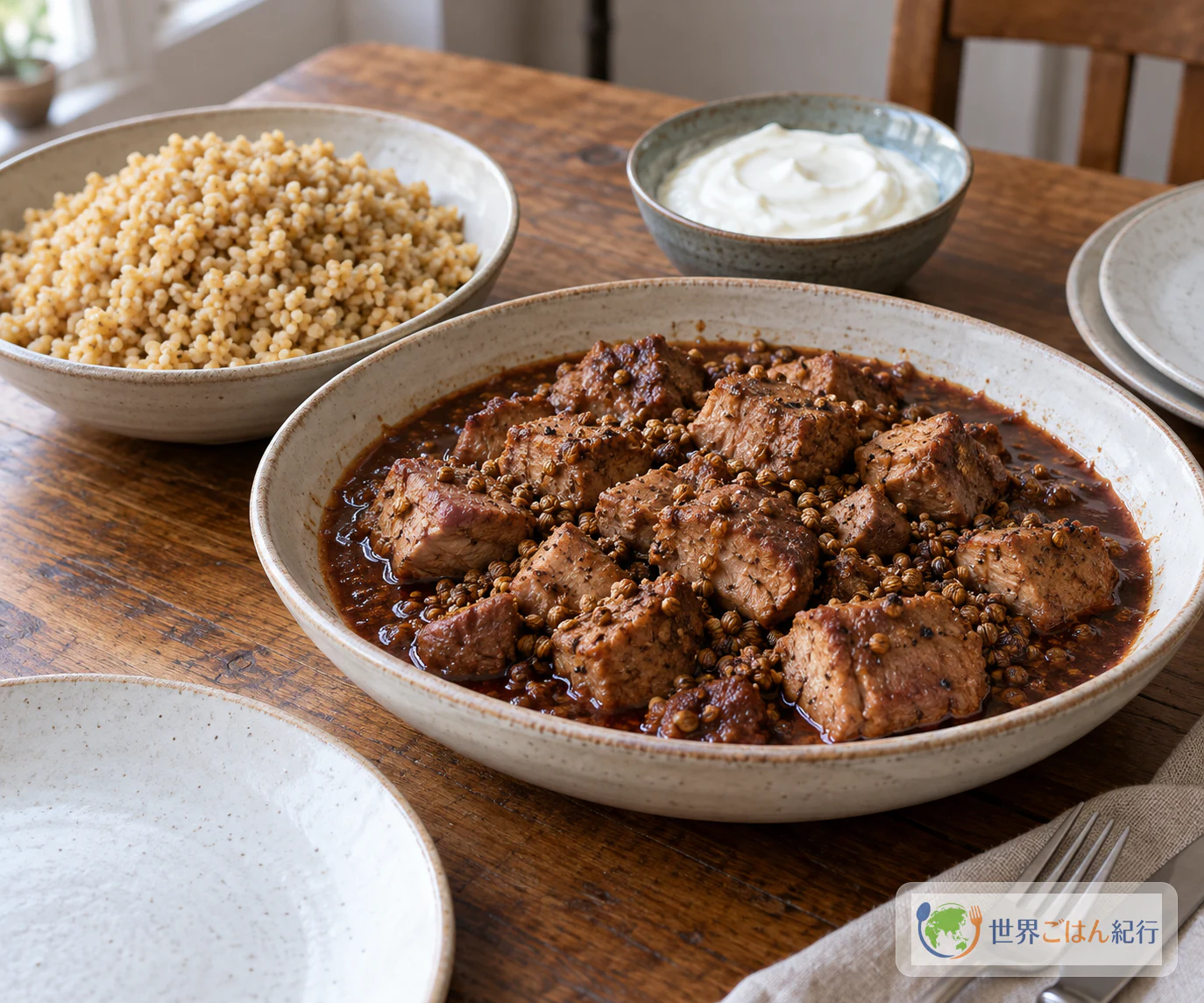
Among the recollections the Cyprus Food Museum has gathered is one from Sotira, in the Famagusta district: the speaker remembered afelia being made on the day a pig was slaughtered, using the fat from beneath the neck, and eaten with bulgur pilaf. This is one person's memory from one place. It is a vivid glimpse of how the dish once fit into the rhythm of a household, but it should not be read as the custom of the whole island or of every family today.
The 2026 government recipe, as a modern published version, suggests serving afelia with pourkoúri (bulgur pilaf) and strained yogurt. The Food Museum also mentions bulgur pilaf and yogurt as accompaniments. The pairing is easy to understand on the plate: a grain to take up the wine sauce, and something cool and tangy beside the warm, spiced pork.
Ingredients for a 1 kg Batch
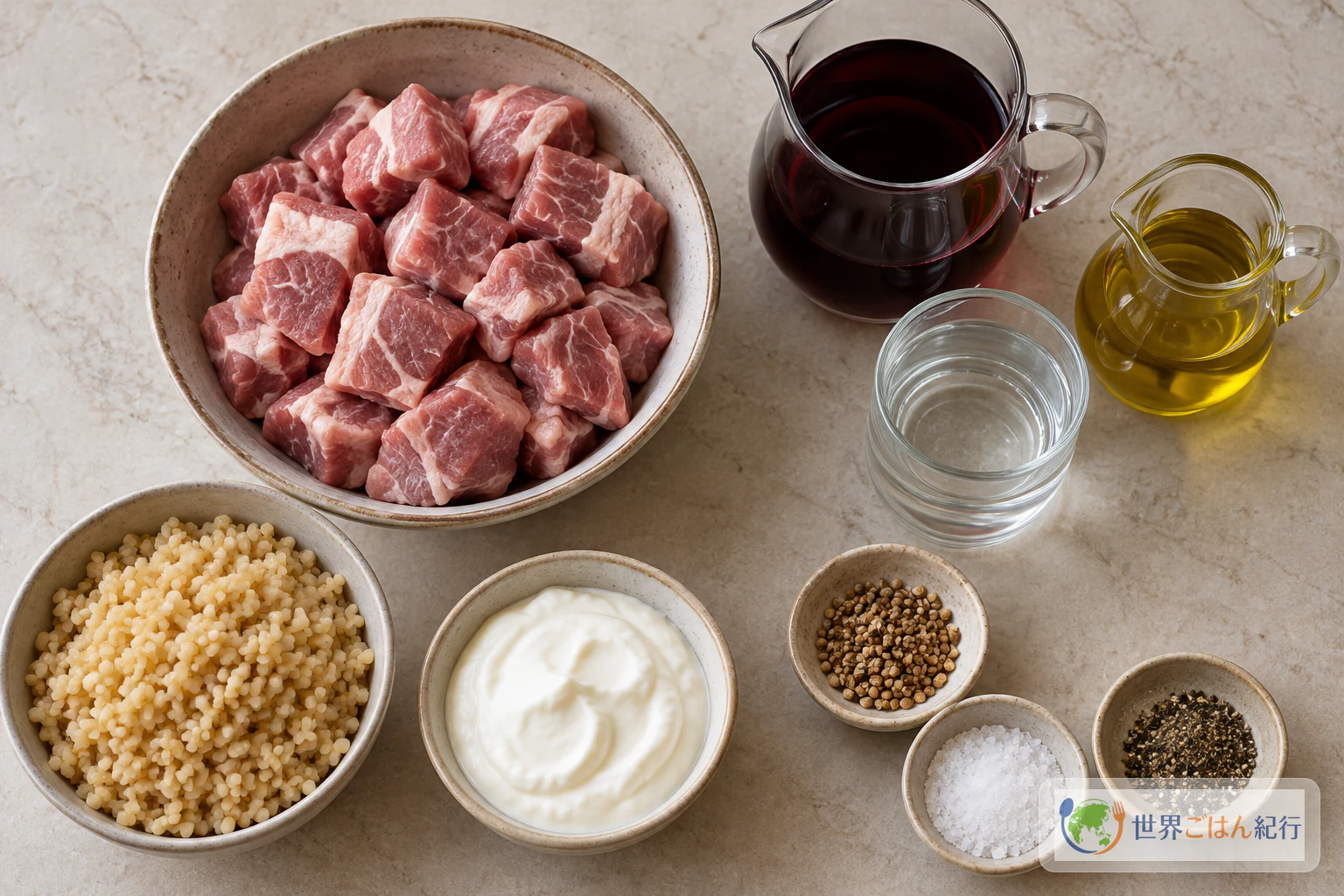
The published recipe gives amounts for 1 kg of pork but does not state a number of servings, so none is given here. The printed page also lists the wine as 1½ cups and the oil as ½ cup; those cup figures do not correspond to a single cup size, so follow the millilitre amounts below.
The dish itself contains pork. The bulgur pilaf contains wheat, and the strained yogurt contains milk. Check the labels of any prepared or packaged items, including the wine, for allergen information.
Equipment
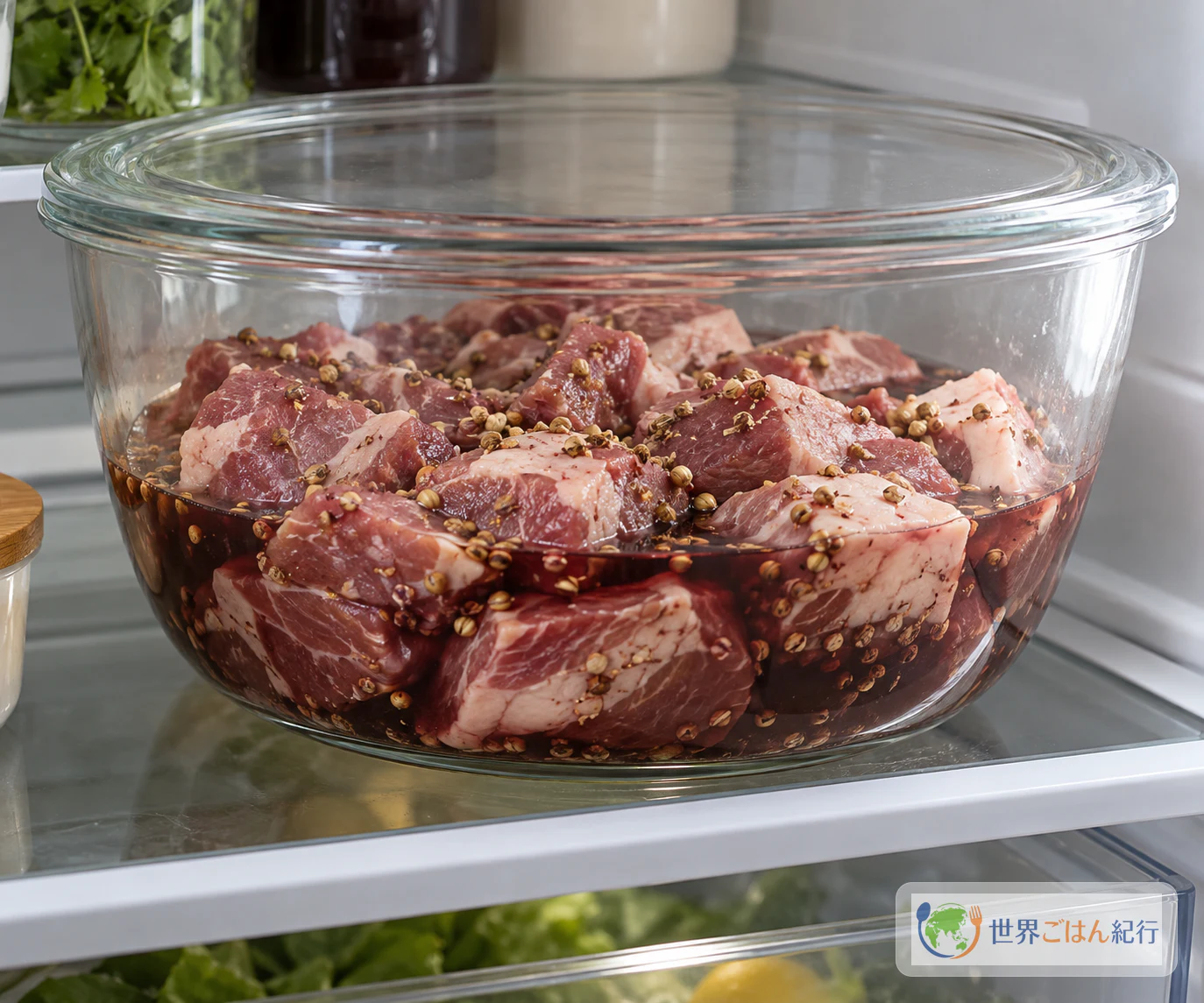
- Bowl with a cover (or lid) for marinating in the refrigerator
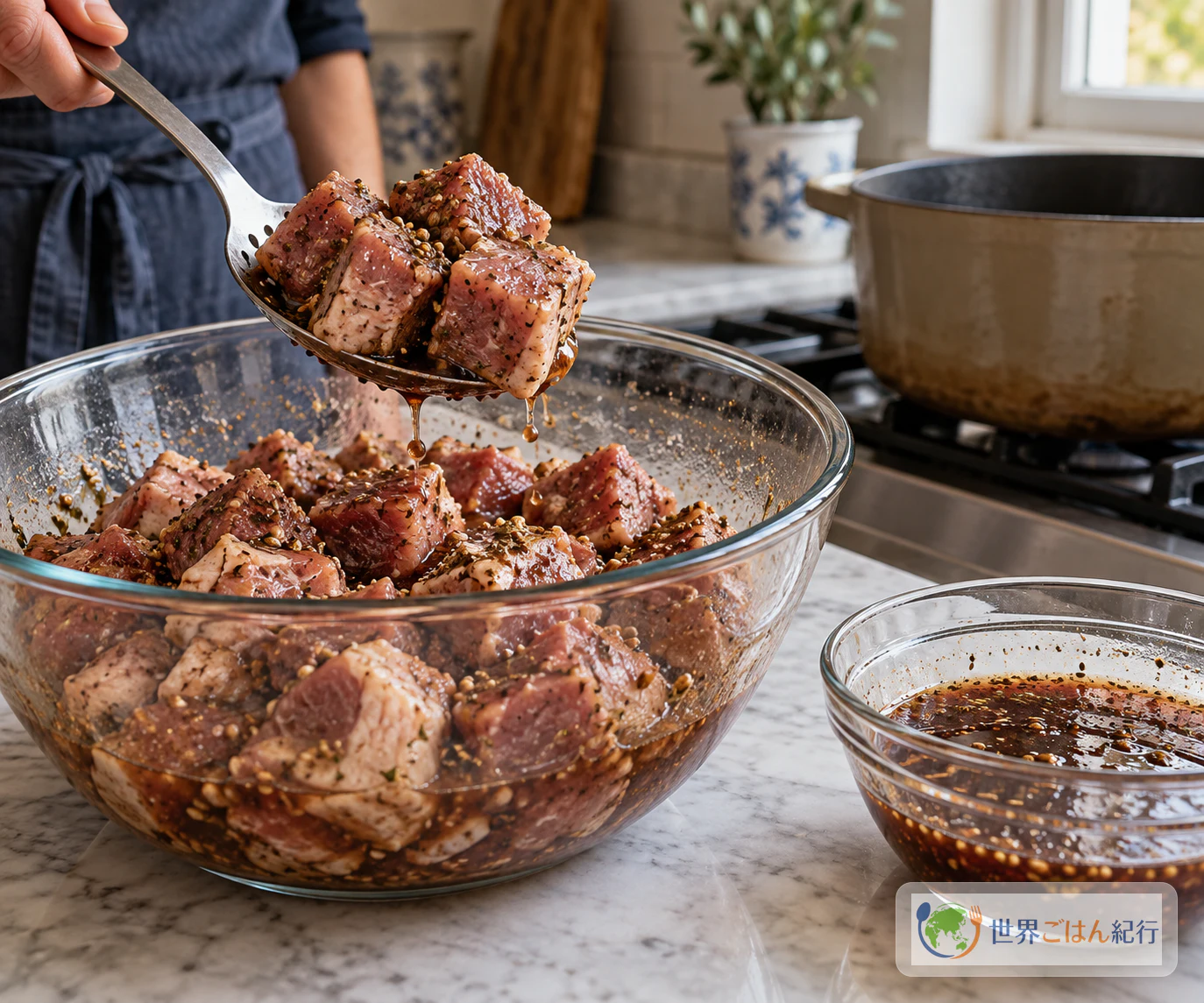
- A separate bowl for reserving the marinade
- Mortar and pestle, for lightly crushing the coriander seeds
- Large heavy pot with a lid
- Fork, for checking tenderness
- Meat thermometer, for checking the center of the pork
Choosing the Pork, Wine and Coriander
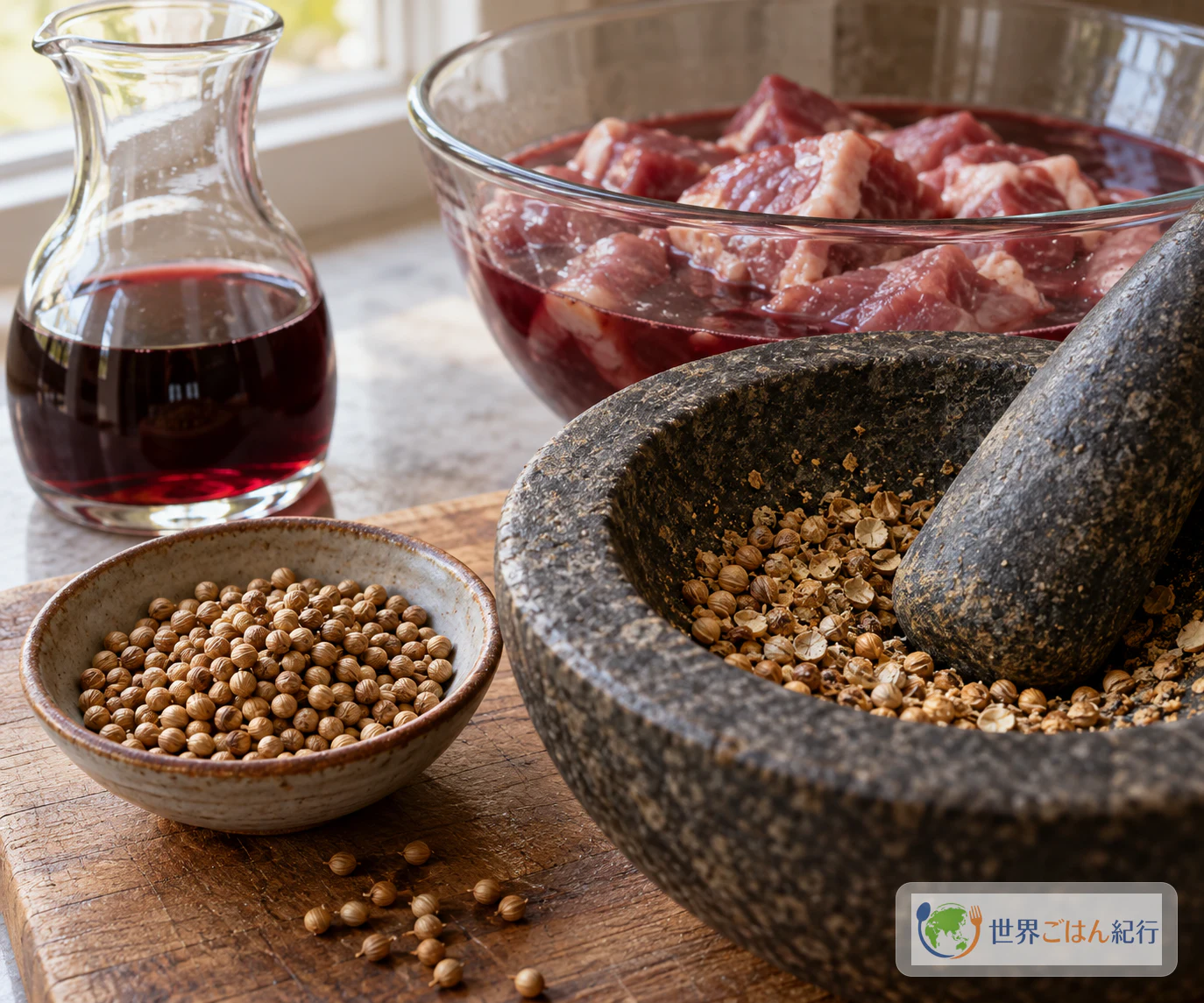
Coriander seeds, not powder. The published recipe uses whole coriander seeds, lightly crushed. There is no basis in the sources for swapping in ground coriander at the same amount, so keep to whole seeds and crack them just before marinating.
Wine. The publisher recommends a full-bodied Cypriot red. If you cannot find one, an ordinary dry red wine is a practical substitute, but it will not taste the same, and the sources do not name a specific grape or label.
Pork cut. The recipe offers shoulder or leg. The steps below are written for shoulder; leg is the published alternative, and the same checks for tenderness and temperature apply.
Marinating Overnight, Then Simmering in Red Wine
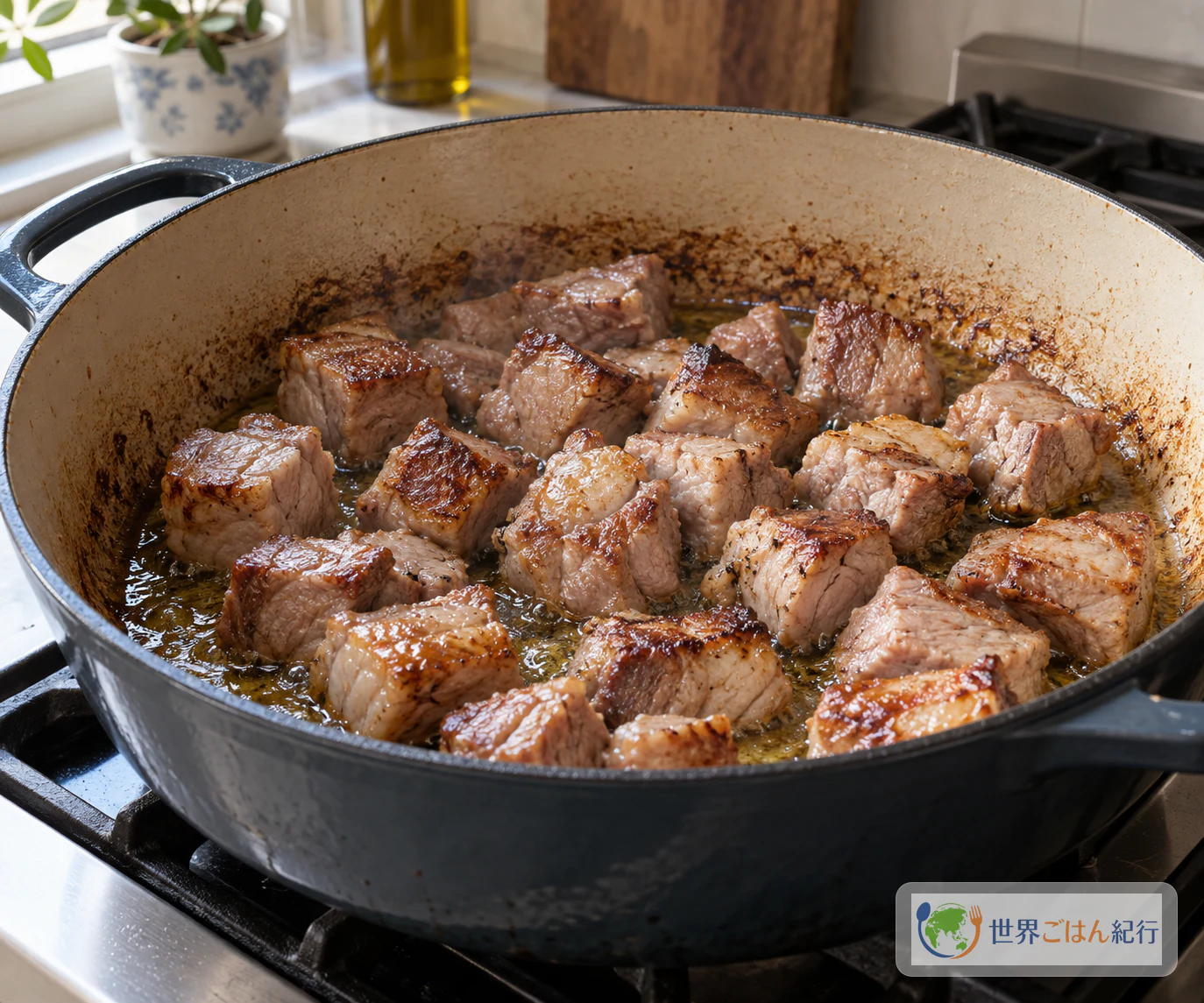
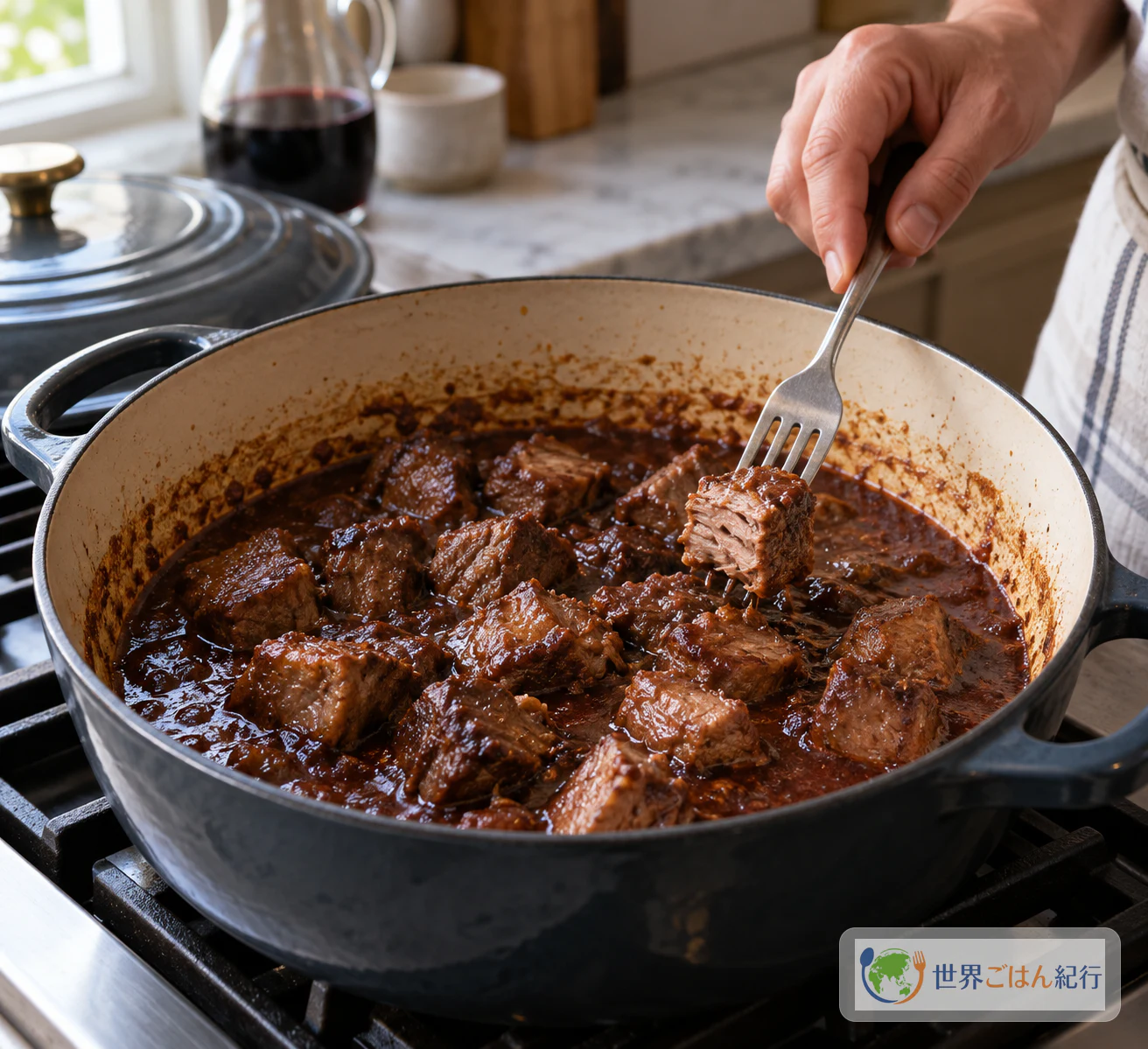
The published times (8–10 minutes to brown, 45–60 minutes to simmer) are guides. Finish when the pork is tender and the sauce is rich and slightly reduced, and confirm the center temperature separately.
Tips for Tender Pork and Safe Cooking
| Problem | Likely cause | What to do |
|---|---|---|
| The pork won't brown | The pot is crowded and the meat is steaming | Brown in batches. Keep the reserved marinade for step 4 rather than discarding it |
| The coriander aroma is weak or muddy | Ground coriander was used | Use whole seeds, lightly crushed. There is no basis for an equal-amount swap to powder |
| The meat is still firm at 45 minutes | Time alone is not the finish line | Keep simmering covered on low until a fork goes in easily and the sauce is slightly reduced |
| The sauce looks thin | Not yet reduced | Judge by the sauce as well as the meat; the recipe finishes when the sauce is rich and slightly reduced |
| Unsure if it is safely cooked | Simmer time does not confirm temperature | Check that the center of the pork reaches 75°C for at least 1 minute |
Keep raw pork juices from dripping onto other foods, and wash knives, boards and tools that touched raw meat before reusing them. The marinade must go back into the pot and be heated thoroughly, never served raw. Simmering does not guarantee that the alcohol from the wine is completely gone.
Leftovers
Divide any leftovers into shallow containers, cool them promptly, and refrigerate them. Reheat thoroughly before eating; as a general guide, reheat to 75°C or above. The sources do not give a storage period for this recipe, so none is stated here.
Serving With Bulgur Pilaf and Yogurt
The 2026 government recipe pairs afelia with pourkoúri (bulgur pilaf) and strained yogurt. Whether to add the yogurt is a choice at the table; it stays in its own dish and is never part of the pot.
The 2012 government edition of Traditional Dishes of Cyprus suggests fried potatoes or bulgur pilaf as accompaniments. If you would like a change from bulgur, fried potatoes on the side follow that published suggestion.
Household Differences Recorded in the Sources
Afelia is not a single fixed recipe. The Cyprus Food Museum records two broad ways of making it: one in which the meat is browned in fat first and then cooked with dried coriander and dry red wine, without a prior marinade; and one in which the pork is marinated in wine and coriander first and then cooked. This recipe follows the second, as the 2026 publication does.
The government's own publications differ, too. The 2012 edition lists 1 kg pork, 1 cup red wine, 2 tablespoons crushed coriander, ½ cup oil, and salt and pepper, with a brief method: marinate overnight, fry the meat, add the marinade and water, cover and cook until tender. It does not detail a cup size, water amount or cooking times, so its proportions are not mixed into the 2026 recipe used here.
Other directions for your own pot:
- Brown first, no marinade. The style recorded by the Food Museum, for a day when you have not marinated overnight. Treat it as a separate version rather than a shortcut to this recipe.
- Pork leg instead of shoulder. The 2026 recipe's other listed cut.
- A Cypriot red wine. The publisher's recommendation, for a version closer to the source.
- Fried potatoes on the side. The 2012 edition's alternative to bulgur.
- With or without yogurt. A table choice that does not change the pot.
Frequently Asked Questions
What is afelia?
A Cypriot dish of pork cooked with red wine and coriander, recorded by the Cyprus Food Museum as Αφέλια (Afélia).
Do I have to marinate it?
The recipe here marinates the pork overnight in the refrigerator. The Cyprus Food Museum also records a style in which the meat is browned first without marinating; that is a different version, not a variation of these amounts and steps.
Can I use ground coriander?
The published recipe uses lightly crushed coriander seeds, and there is no basis in the sources for substituting the same amount of ground coriander. Whole seeds, cracked just before marinating, are the way to go.
What should I serve with it?
The 2026 government recipe suggests bulgur pilaf and strained yogurt. The 2012 edition suggests fried potatoes or bulgur pilaf.
How many servings does it make?
The published recipe does not state a number of servings. It is written for a batch made with 1 kg of pork.
Sources
- Republic of Cyprus, Publications Office, "Traditional Dishes of Cyprus – Afélia (Pork in Red Wine & Coriander)," 2026. The recipe followed in this article: ingredients and amounts, the overnight refrigerated marinade, reserving the marinade, browning for 8–10 minutes, simmering covered on low with about 100 ml water for 45–60 minutes, and serving with pourkoúri and strained yogurt. https://publications.gov.cy/en/assets/user/publications/2026/2026_117/HTML/33/
- Cyprus Food Museum / Museum of Cypriot Food and Nutrition, "Afelia." Identification of the dish, the brown-first and marinate-first styles, accompaniments of bulgur pilaf and yogurt, and the oral recollection from Sotira, Famagusta district. https://www.cyprusfoodmuseum.com/en/sylloges/trofima/afelia
- Ministry of Agriculture, Natural Resources and Environment, Department of Agriculture, Cyprus, "Traditional Dishes of Cyprus" (2012), "Fried Pork in Wine (afelia)." The earlier published version with different proportions, and the suggestion of fried potatoes or bulgur pilaf. https://moi.gov.cy/moa/da/da.nsf/All/B3C42E12B630A02DC22587BA003E41B1/%24file/Traditional%20dishes%20of%20Cyprus%202012_low.pdf
- Ministry of Health, Labour and Welfare (Japan), "家庭での食中毒予防" (Preventing food poisoning at home). Keeping raw meat juices away from other foods, washing knives and boards after cutting meat, cooking meat to 75°C at the center for at least 1 minute, and dividing leftovers into shallow containers and reheating thoroughly. https://www.mhlw.go.jp/stf/seisakunitsuite/bunya/kenkou_iryou/shokuhin/syokuchu/01_00008.html