Begova čorba: A Pale Chicken Soup Scented with Dried Okra
A broth built on bone-in chicken and root vegetables, small dried okra pods that keep their shape, a roux cooked only to pale gold, and a sour cream and egg yolk finish that goes in smoothly without ever boiling hard.
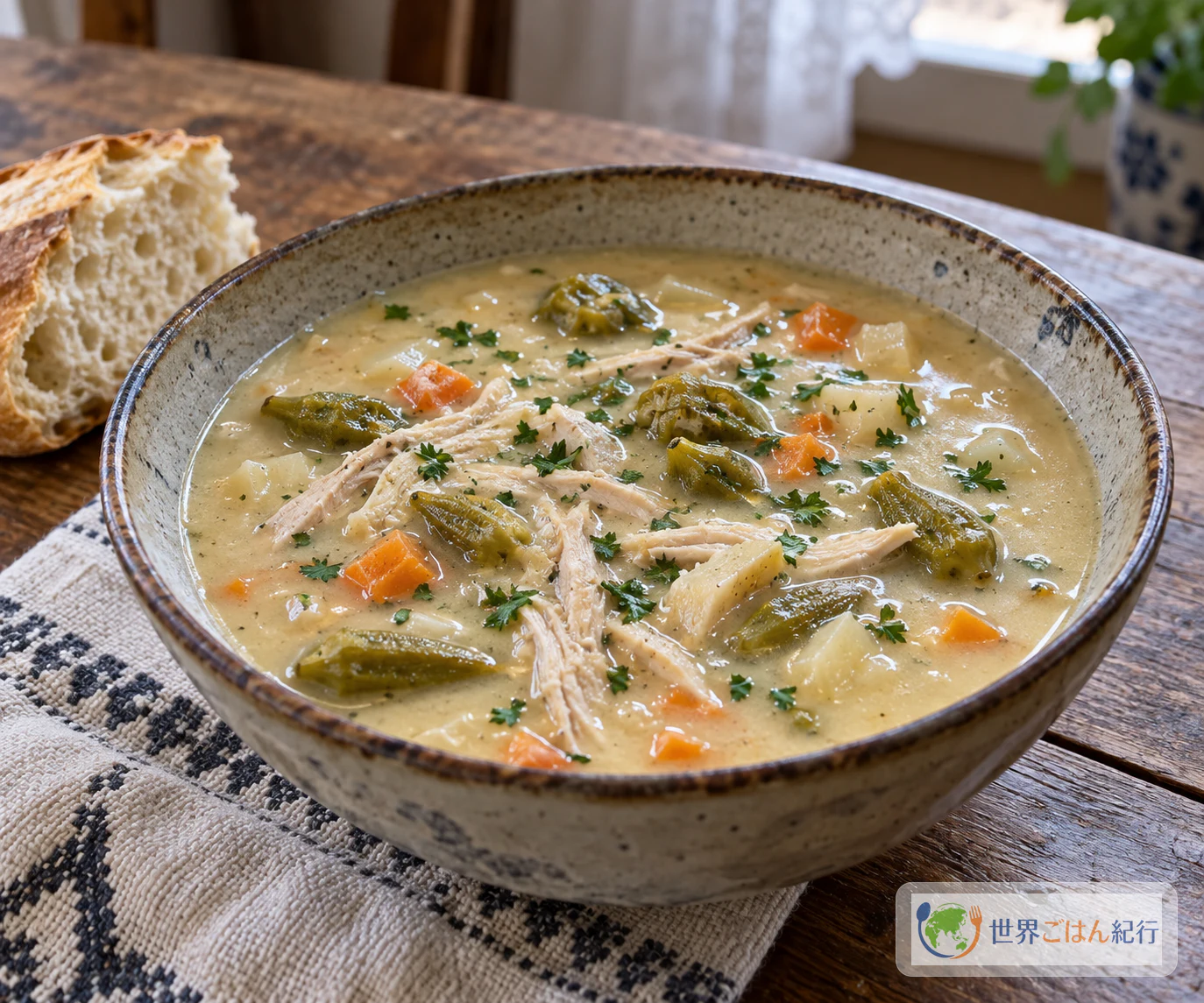
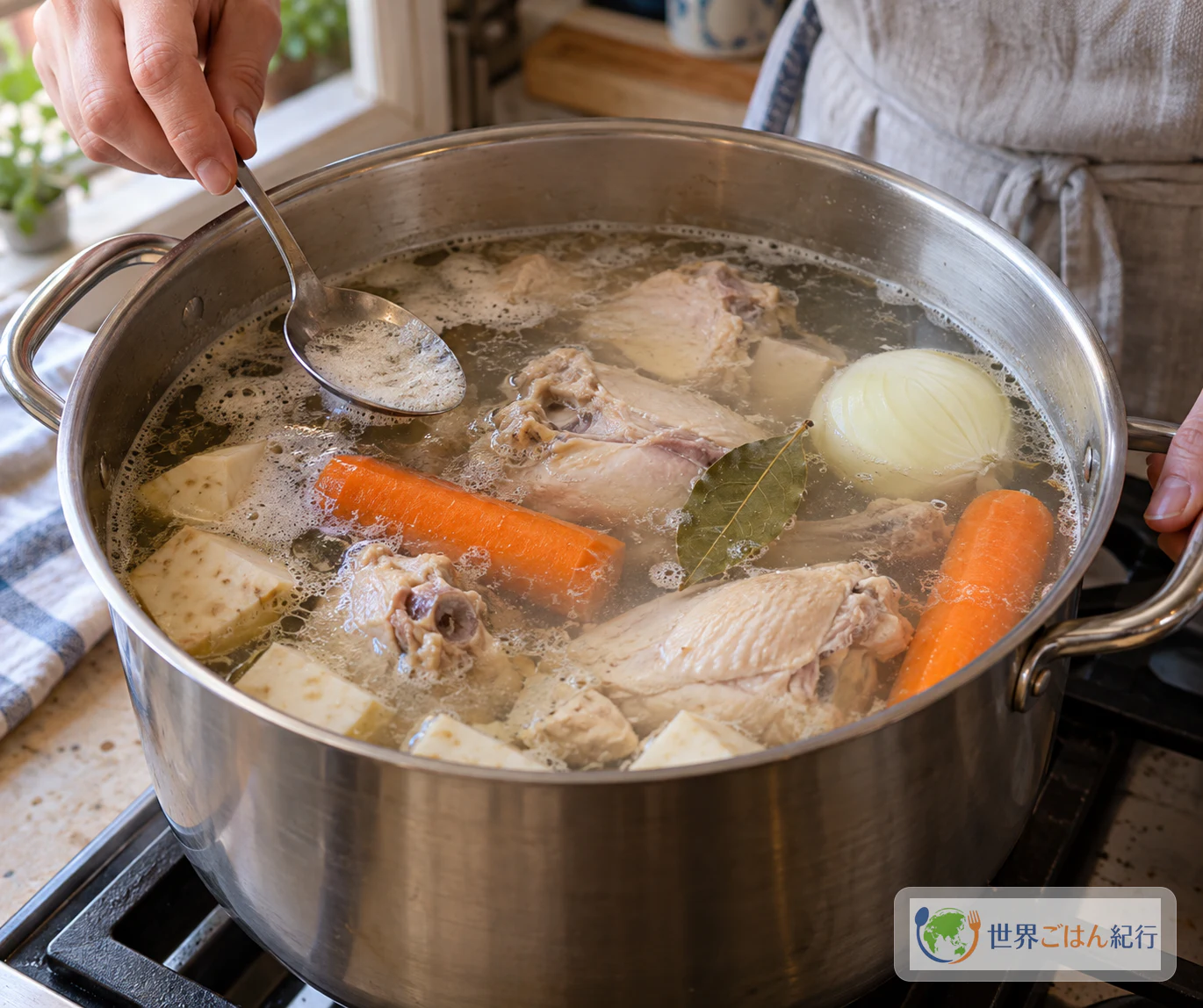
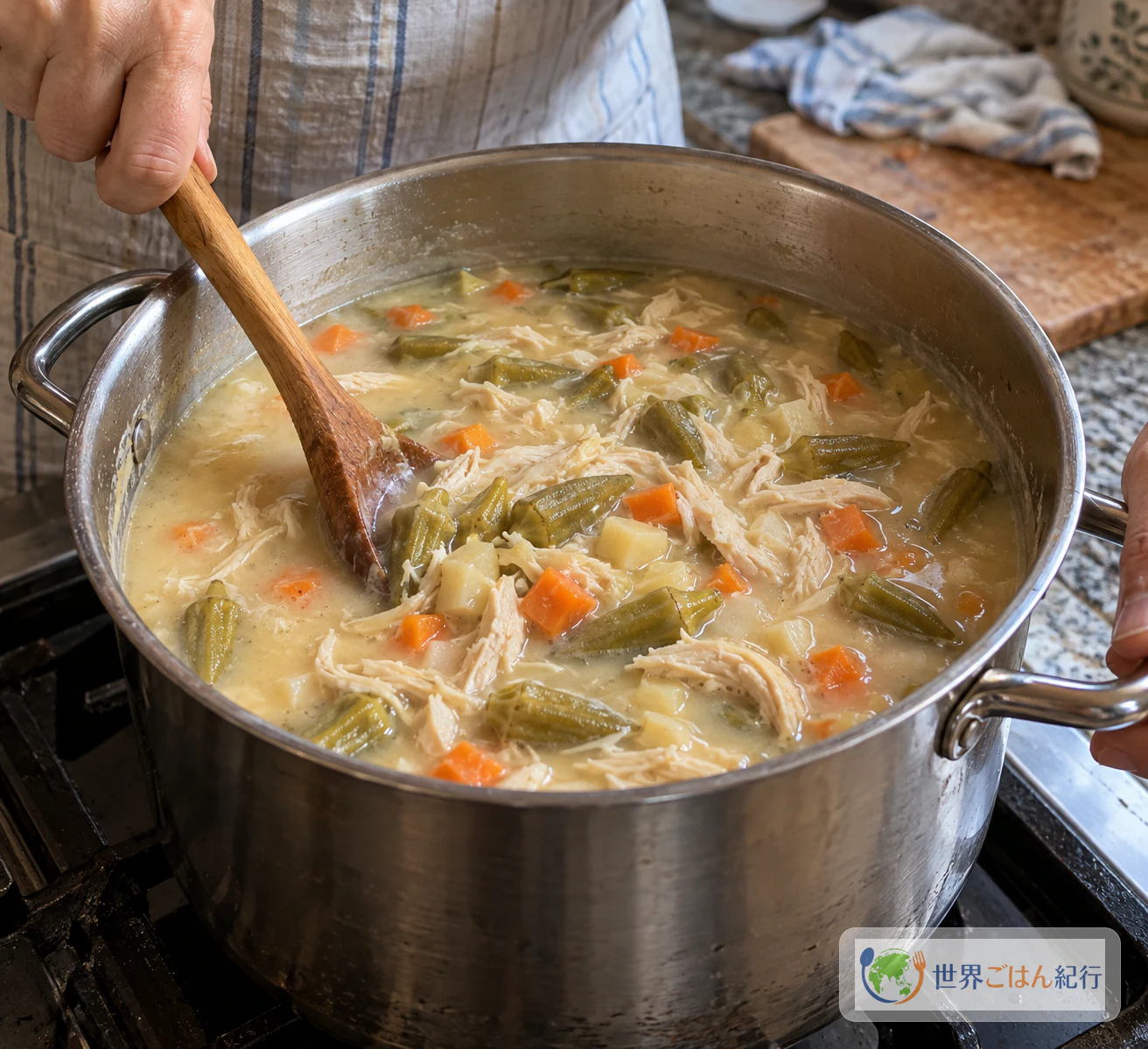
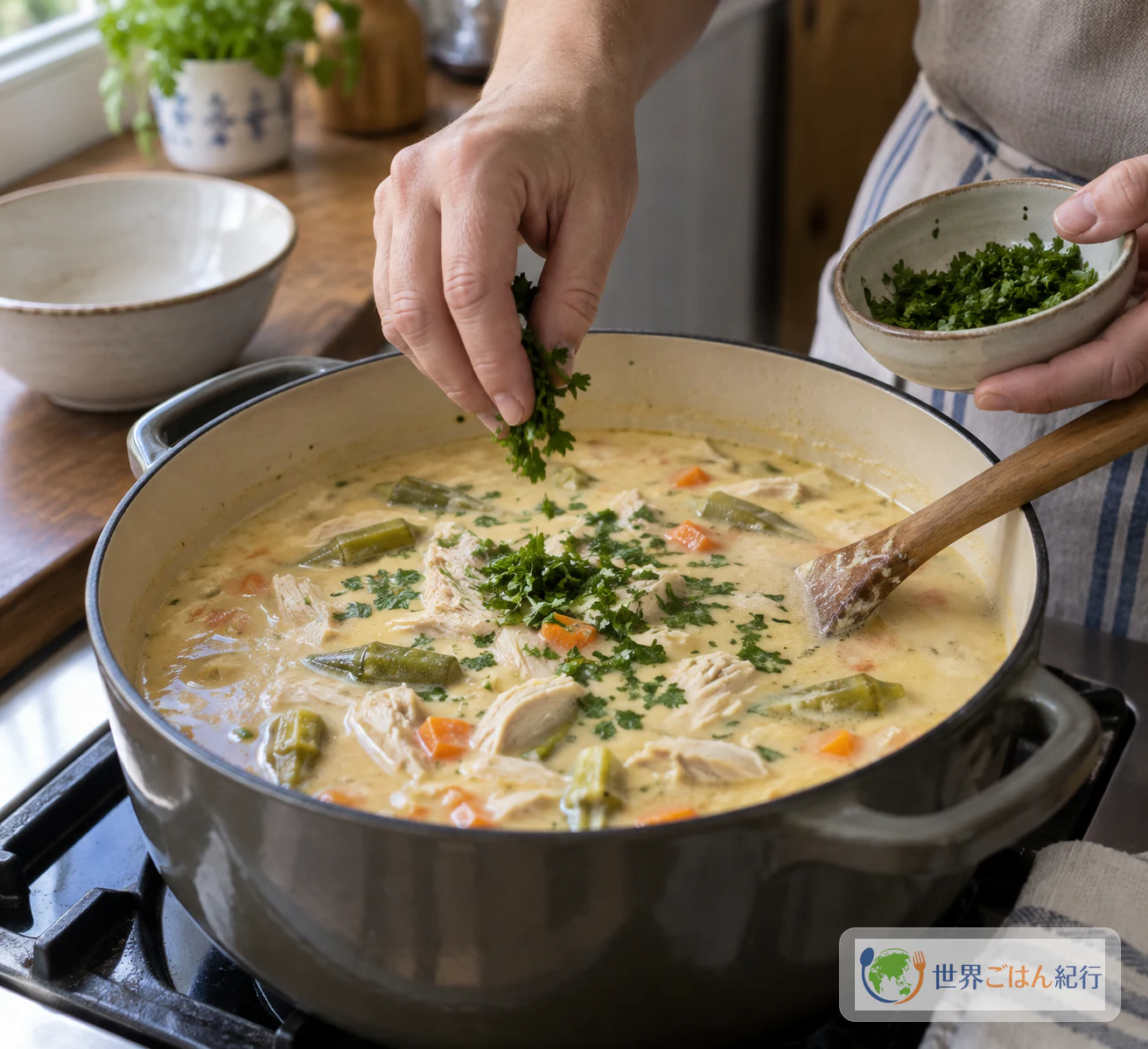
In Bosnia, an aščinica is the kind of eatery where you go looking for home-style stews, okra dishes and soups. What is cooking changes over the course of the day, so the practical move is to ask what they have rather than expect a fixed menu. Begova čorba belongs to that world of slow pots. Steam rises off a chicken broth sweetened by carrot and celeriac, small okra pods float whole in a pale, lightly thickened soup, and a sour, creamy finish softens the whole bowl.
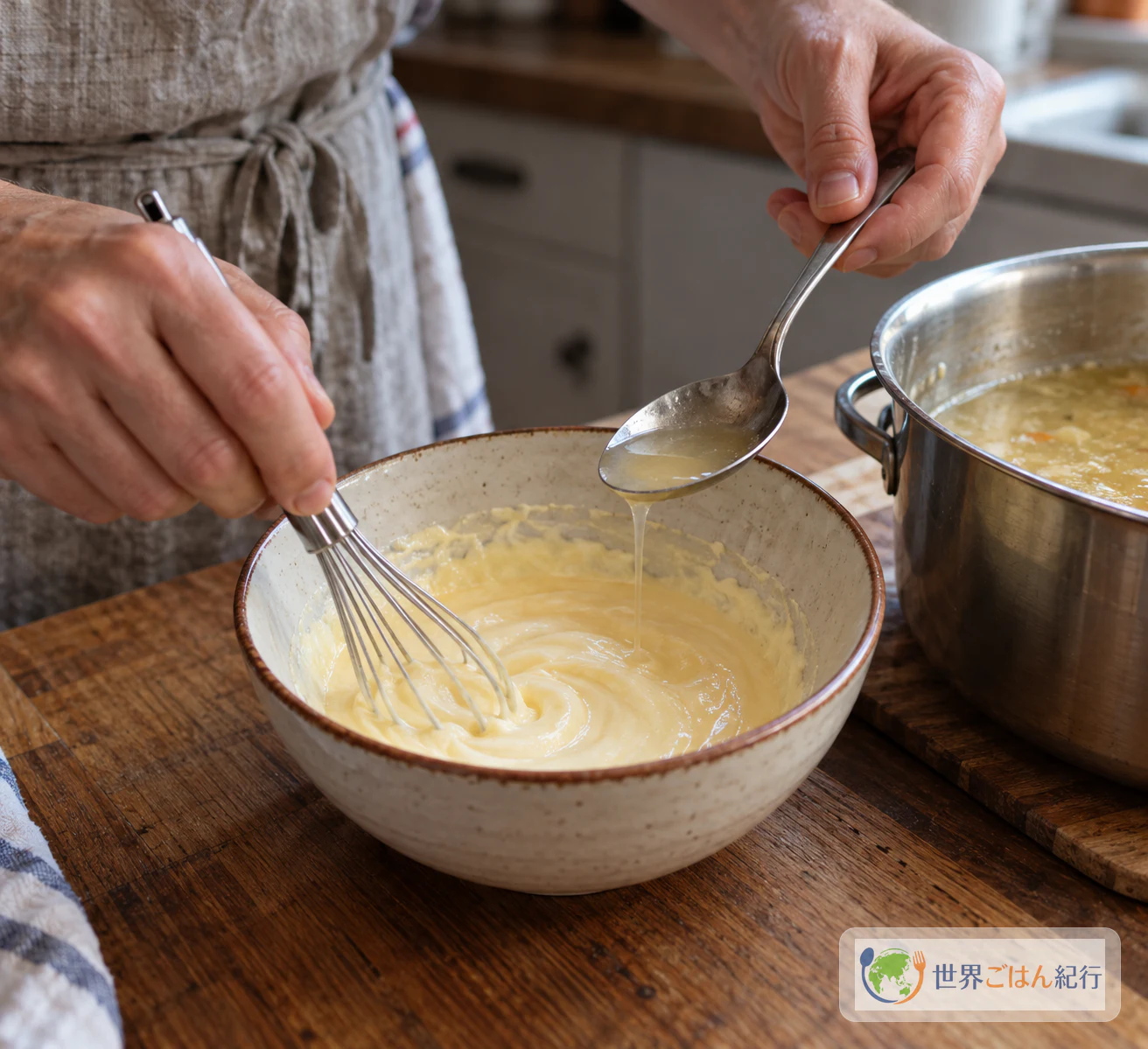
You can make it at home. Two steps matter most. First, the dried okra is boiled on its own before it goes into the soup. Second, the sour cream and egg yolk are tempered with hot soup before they join the pot. This recipe follows one published Bosnian home recipe for 6 servings. Our editors have not kitchen-tested it. It uses no rice and no potatoes, so the okra, chicken and pale cream stay at the center.
The local name is Begova čorba. Note the č in čorba. In English it is often called Bey's soup. That English name appears alongside the local one in Bosnian food media and cookbooks, but the origin of the name is not settled by the sources here, so this article does not tell a story about it.
What Begova čorba Is: Chicken, Bamija and a Creamy Finish
Begova čorba is a chicken soup built around bamija, which is okra, plus root vegetables. A light flour roux gives it body, and sour cream with egg yolk rounds it off. Recipes under the same name differ. Some add rice. Some thicken the soup with mashed vegetables. Some lean harder on the roux or on the egg yolk cream. This article follows one of them: the Korisni recipe with bone-in chicken, dried bamija, a pale roux, sour cream and one egg yolk.
The setting for a bowl like this ranges widely. The Bosnian outlet Furaj.ba describes Begova čorba as something served at celebratory lunches and at iftar during Ramadan, and also on ordinary days. It can be a starter soup or a filling dish in its own right. That is one outlet's description of how the soup is eaten, not a rule that it is a ceremonial dish everywhere. Alongside the aščinica's rotating pots, it gives a sense of a soup that moves between special occasions and everyday meals.
Threaded Dried Okra, Boiled First in Lemon Water
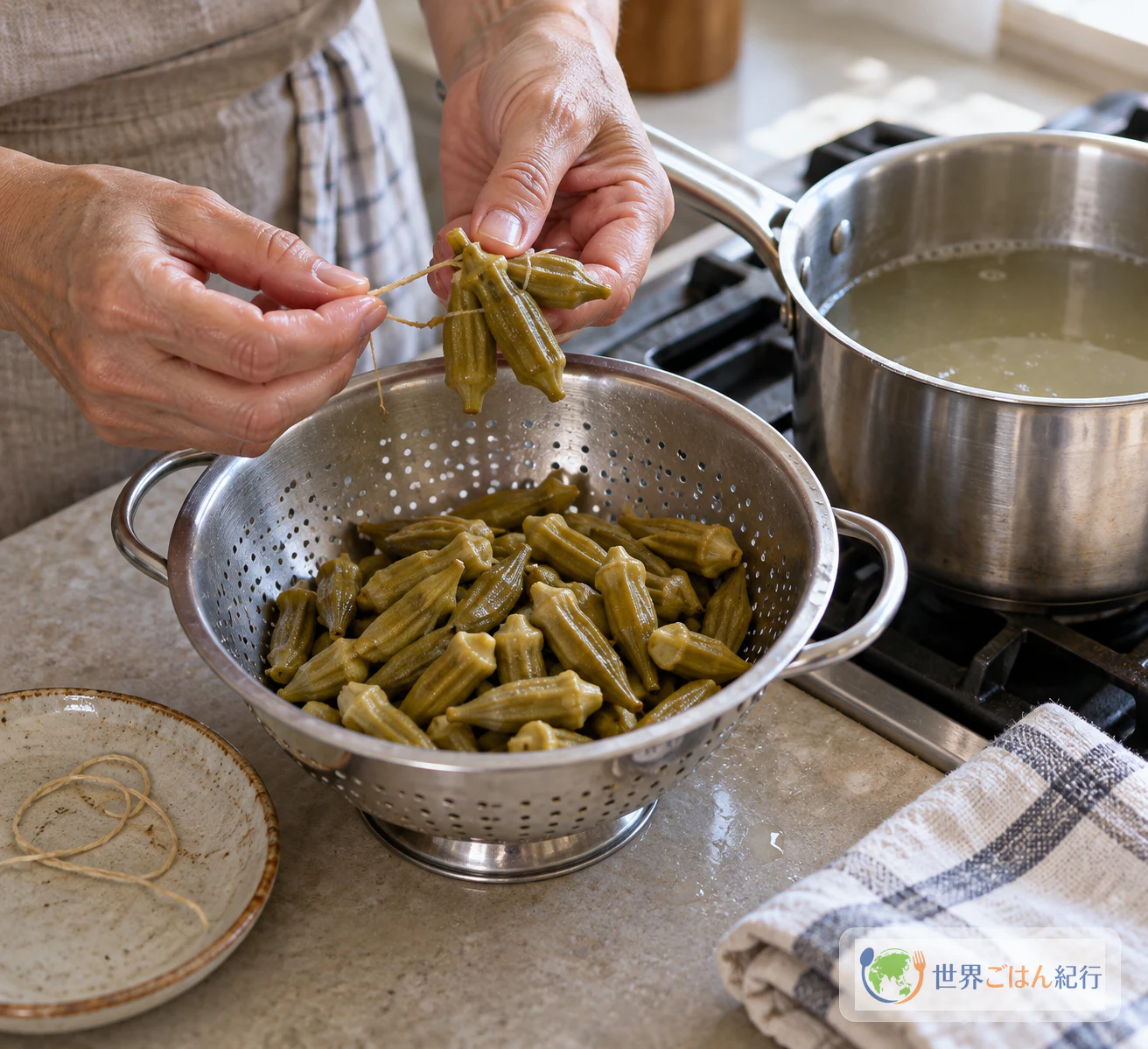
The okra in this soup is not the fresh green pod most supermarkets sell. A product specification for bamija from Brčko District, published through Bosnia and Herzegovina's food safety agency, describes young, small pods that are dried and strung on thread. The same document names Begova čorba as one of the dishes in which bamija is essential, along with dishes for Bajram. That specification covers one regional product, so not every dried okra sold in Bosnia necessarily looks the same. Still, it shows clearly what kind of okra this soup is built around.
Dried pods differ from fresh or frozen okra in size, moisture and texture. That is why this recipe keeps the 80g of dried bamija instead of swapping in the same weight of fresh okra. The pods are rinsed briefly and boiled in their own pot for about 10 minutes in water with a few drops of lemon juice. Then they are drained, and the thread is removed after draining. This does not promise to remove all the okra's slipperiness. What it does is keep the okra's cooking water out of the soup, which makes the soup's thickness and flavor easier to manage.
Ingredients: 6 Servings, with Dried Okra and Celeriac
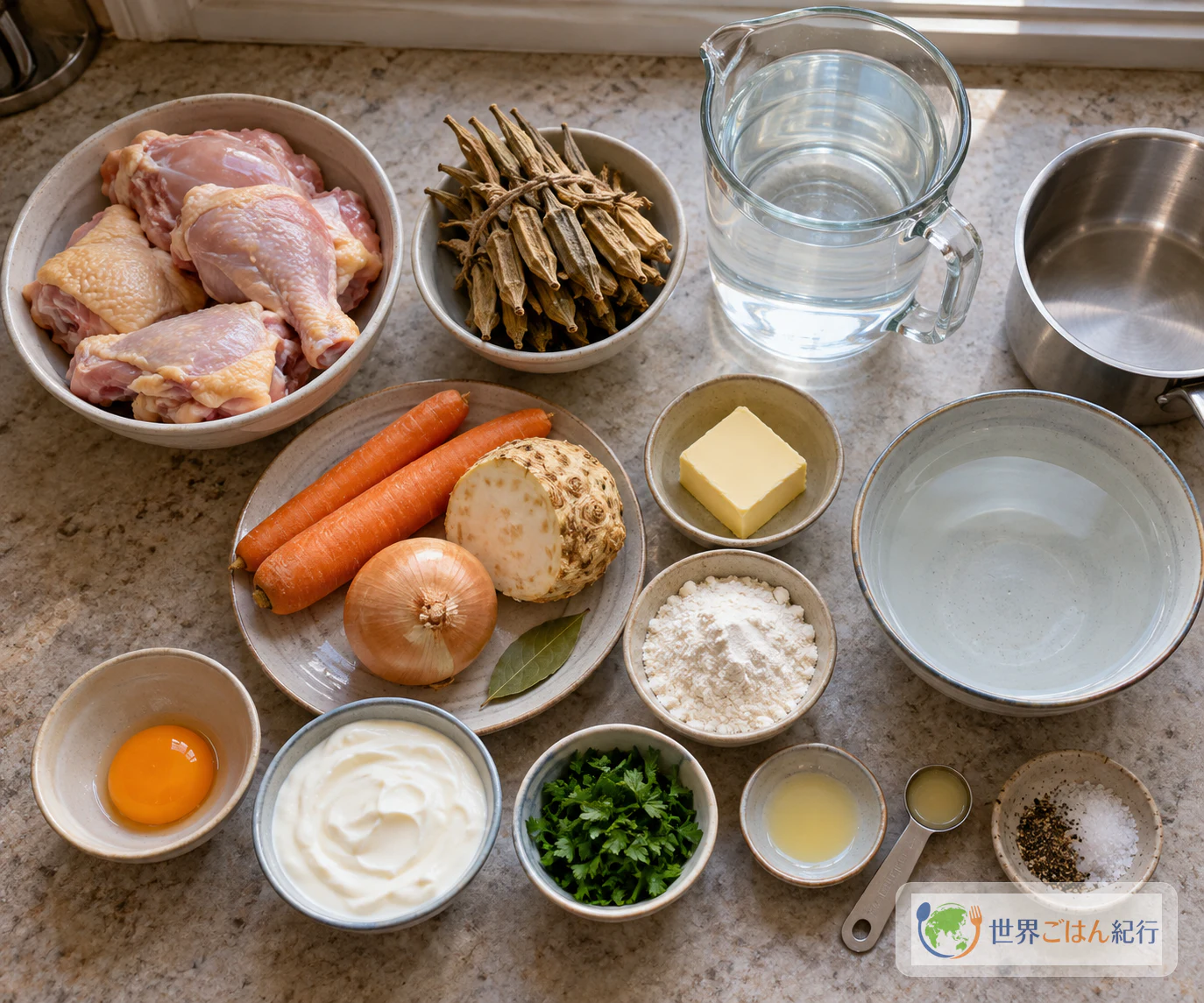
These are the published recipe's amounts for 6 servings, unscaled. The serving count is the source's figure, not a measured yield. The source gives no sizes for the vegetables, so they are listed by count. Salt and pepper are to taste.
Equipment
- A large pot, roughly 5L, with room for 1.5L of liquid plus the chicken and vegetables (a suggested size, not from the source)
- A small separate saucepan for the okra
- A colander or strainer
- A whisk
- A bowl for tempering the sour cream and egg yolk
- A probe thermometer
- A cutting board, knife and tools reserved for raw chicken, kept apart from those for cooked food
Choosing and Substituting
- Tablespoons. The source measures in kašika, a tablespoon. Where a volume is needed, this article reads 1 kašika as 15 ml. That makes the butter, flour and parsley 30 ml each and the lemon juice 15 ml in total. These are volumes, not gram weights, and the 15 ml reading is an editorial convention, not something the source states.
- Lemon juice. The source puts a few drops into the okra water and adds lemon juice again at the end, but lists only one tablespoon in total. This recipe treats that tablespoon as the whole budget: a few drops for the okra, the rest for the finish. The source gives no exact split. No extra lemon or lemon wedges are added.
- Liquid. The source allows water or a light chicken stock. This version uses 1.5L of water and lets the bone-in chicken make the broth. There is no need to add strong bouillon.
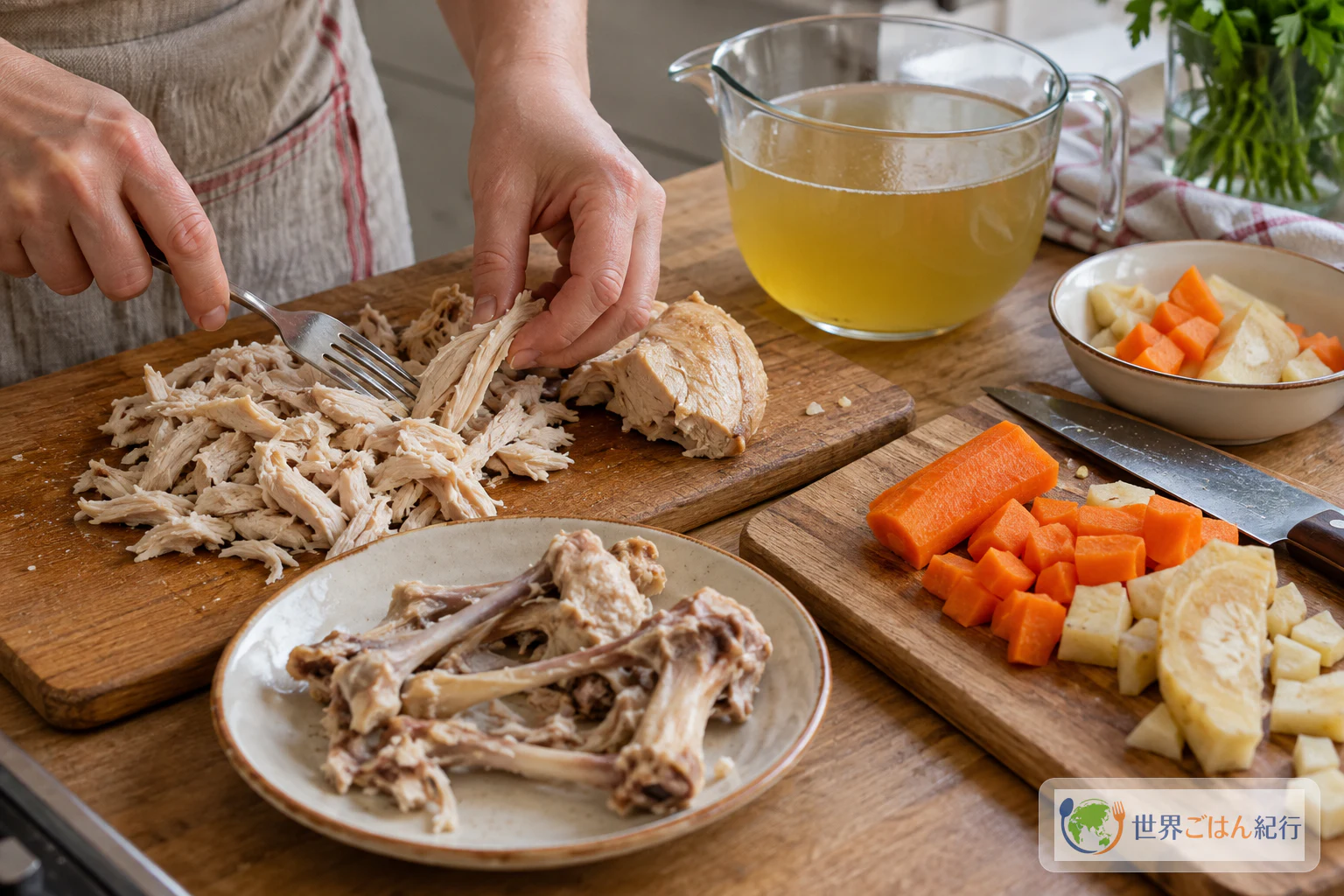
- Celeriac. Look for celeriac, also sold as celery root. Celery stalks have a stronger, more forward aroma and a different moisture content. If you use them, expect a lighter, different flavor rather than the same soup.
- Dried okra. Fresh or frozen okra is not a same-weight swap. Its moisture and size differ, and it is harder to keep the dish's character. Do not replace okra with starch or other thickeners and call it the same dish.
- Sour cream. Choose plain, unsweetened sour cream and avoid sweetened or flavored products. Unsweetened plain yogurt changes the acidity, fat and thickness. It is a workaround, not an equivalent.
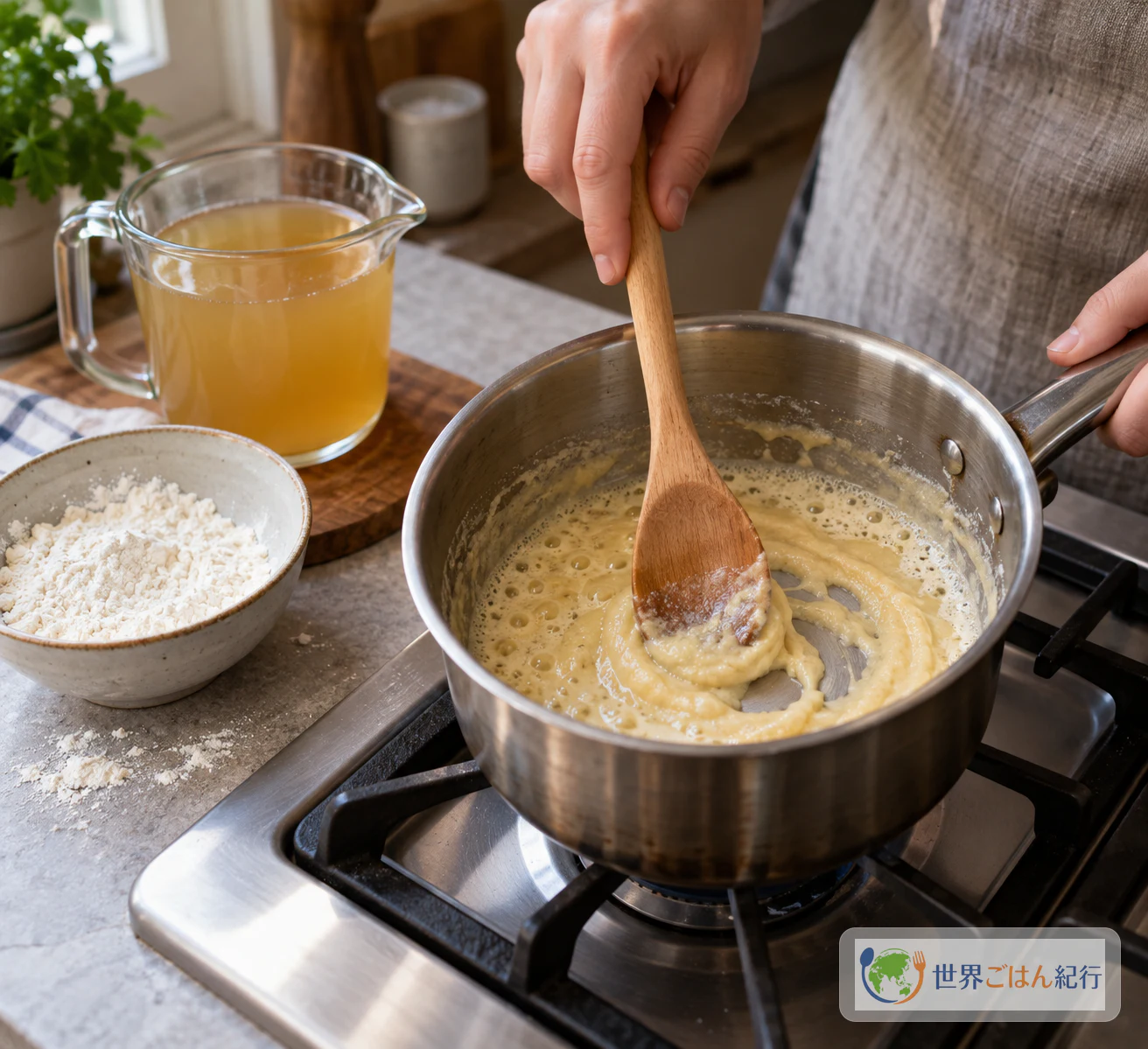
- Butter and flour. Unsalted butter lets you control the salt. If you only have salted butter, go easier on salt at the end. Ordinary plain flour works for the roux.
- Egg yolk. The source does not specify an egg size. Do not swap the yolk for a whole egg.
This soup contains chicken, milk, egg and wheat. Check the labels of store-bought sour cream and other packaged items. Keep raw chicken juices away from other foods. Use separate tools for raw meat, and wash tools and hands after handling it.
Method: Chicken Broth, Pale Roux, Then the Egg Yolk Cream
The published recipe gives 25 minutes of preparation, 65 minutes of cooking and 90 minutes in total. These are the source's guide figures, not measurements. They shift with your pot, your stove and the size of the chicken pieces. The real endpoint for the broth is chicken that is fully tender.
The okra can boil in its small pot while the chicken broth gets going. Just keep the two liquids completely separate.
Keeping It Smooth: Heat Control and Adjustments
Most problems with this soup come from adding liquid too fast or using too much heat at the end.
| Problem | Likely cause | What to do |
|---|---|---|
| Lumps in the roux | Broth added too quickly | Add warm broth in small amounts and whisk until smooth each time. If lumps remain, pass the soup through a strainer |
| The cream splits or looks grainy | Strong heat after the cream went in | Next time, temper the cream and yolk with a few spoonfuls of hot soup first, and keep the pot below a boil afterward |
| Too thick | Liquid reduced, or a heavy roux | Add a little warm water at a time |
| Too thin | Not enough reduction before the finish | Before adding the dairy, simmer briefly over low heat. Avoid hurried extra roux or borrowing from another recipe |
| Okra breaking up | Stirred hard or cooked too long | Stir gently in step 5 and keep the simmer short |
Okra texture has some range. Some cooks prefer pods that keep their shape and others accept a little slipperiness. This recipe takes the middle path of a separate boil followed by a short simmer.
From Festive Lunches to Everyday Bowls: Other Versions
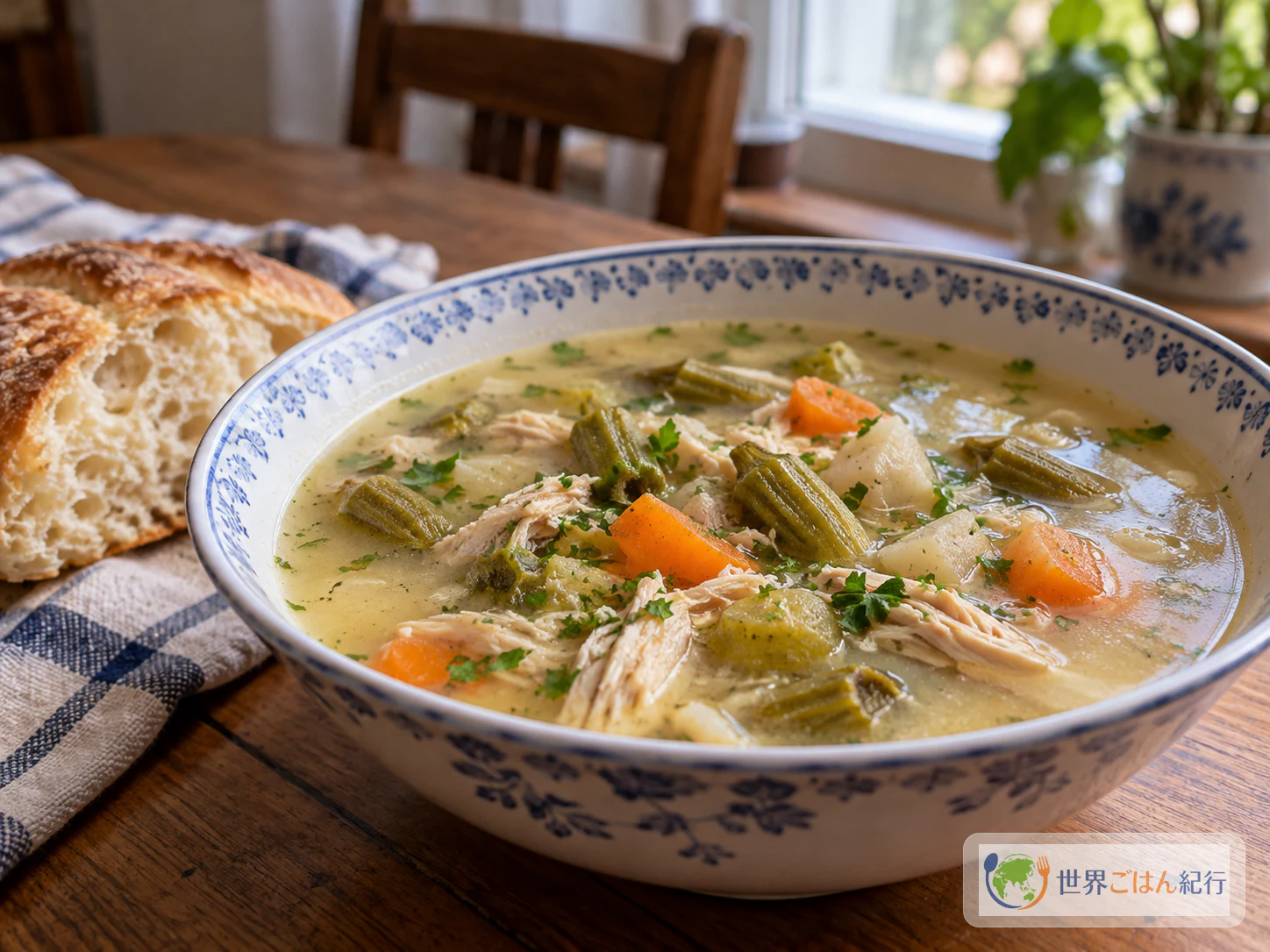
Begova čorba is not one fixed formula. Furaj.ba presents a version with rice, sour cream and egg yolk, and it rehydrates the dried bamija in warm water before boiling it lightly. Balkan Lunch Box, written by an author from Bosnia, describes several approaches. One thickens the soup with potatoes or mashed vegetables. One finishes it with egg yolk mixed with flour. Another uses a butter roux. That author also soaks the okra in lemon water and discusses using dried, frozen or fresh okra, and serves the soup with bread or lokumi.
Those versions are worth knowing, but their amounts and steps are not mixed into the recipe above. For a different regional soup, compare Slovenian jota, which is built around beans and sauerkraut rather than this chicken-and-okra combination. If you want to try rice or mashed vegetables, treat it as a different recipe rather than an addition to this pot.
Bamija itself has a long local record. The Brčko specification refers to agricultural records of okra from the 1890s and from 1932. That history concerns growing and eating okra in the region. It does not date the soup, so no origin year is claimed here.
Storage and Reheating
This soup contains chicken, egg and dairy, so handle leftovers with care. Divide them into shallow, clean containers and refrigerate promptly. Do not leave the soup standing at room temperature. If you have to pause partway through cooking, refrigerate what you have. No specific number of days is given here. The freezing quality of this soup has not been confirmed either, so there is no freezing advice.
Reheat only what you plan to eat, and reheat it thoroughly. Stirring over low heat helps protect the smooth texture of the egg yolk cream, but heating it through properly comes first.
Frequently Asked Questions
What if I can't find dried okra?
Fresh or frozen okra has a different size and moisture content, so it is not a same-weight replacement, and the soup will not be quite the same dish. Look for dried bamija at Balkan, Turkish or Middle Eastern grocers. Small threaded pods are the traditional form.
Should I add rice?
Not to this recipe. Rice versions exist, but they are a different formula. This version deliberately leaves out rice and potatoes.
Why did my egg yolk cream split?
Usually the heat was too strong. Temper the sour cream and yolk with a few spoonfuls of hot soup, pour the mixture back slowly, and keep the pot below a boil. You can still bring it to 75°C gently while stirring.
Is warming the soup after tempering enough to cook the egg safely?
Tempering is about texture, not safety. Use a thermometer and stir over low heat until the whole pot reaches 75°C for at least 1 minute. That follows a general home food-safety guideline, not a figure from the source recipe.
What kind of cream should I use?
Plain, unsweetened sour cream. Yogurt changes the acidity and thickness, so treat it only as a workaround.
Where does the name "Bey's soup" come from?
It is the common English name, but the sources here do not confirm the origin of the name, so this article does not state one.
Sources
- Korisni / Amina Hadžić, "Begova čorba – tradicionalni bosanski recept." The recipe followed here: ingredients, amounts, 6 servings, steps, the separate okra boil, the pale zaprška, tempering the yolk and sour cream, and the published time guide. https://korisni.com/tradicionalna-kuhinja/begova-corba
- Agencija za sigurnost hrane Bosne i Hercegovine / Udruženje voćara i prerađivača voća Voćni klub, "Bamija iz Brčko distrikta BiH — Proizvođačka specifikacija." Brčko District bamija as young dried pods strung on thread, its importance in Begova čorba and Bajram dishes, and references to earlier agricultural records. https://fsa.gov.ba/wp-content/uploads/2024/07/Specifikacija-proizvoda-Bamija_iz_BD_BiH_Proizvodjacka_specifikacija_sa_prilozima.pdf
- Balkan Lunch Box / Aida, "Okra Soup: Creamy Chicken Soup with Okra (Bosnian Bey's Soup, Begova Čorba)." Other versions of the dish, including mashed-vegetable and yolk-and-flour finishes, okra options, and serving with bread or lokumi. https://balkanlunchbox.com/beys-soup-traditional-version/
- Safari Bosna, "Traditional Bosnian Food: What to Eat and How to Order." The aščinica as a place for home-style stews, okra dishes and soups, with offerings that change through the day. https://www.safaribosna.ba/en/travel-guide/food-culture/traditional-bosnian-food-guide
- Furaj.ba, "Begova čorba – tradicionalno jelo za posebne prilike." The soup at celebratory lunches, Ramadan iftar and on ordinary days, and a version with rice. https://furaj.ba/begova-corba/
- Ministry of Health, Labour and Welfare (Japan), "家庭での食中毒予防" (Preventing food poisoning at home). Heating meat to 75°C at the center for at least 1 minute, separating raw-meat tools, cooling leftovers quickly in shallow containers, and reheating thoroughly. https://www.mhlw.go.jp/stf/seisakunitsuite/bunya/kenkou_iryou/shokuhin/syokuchu/01_00008.html