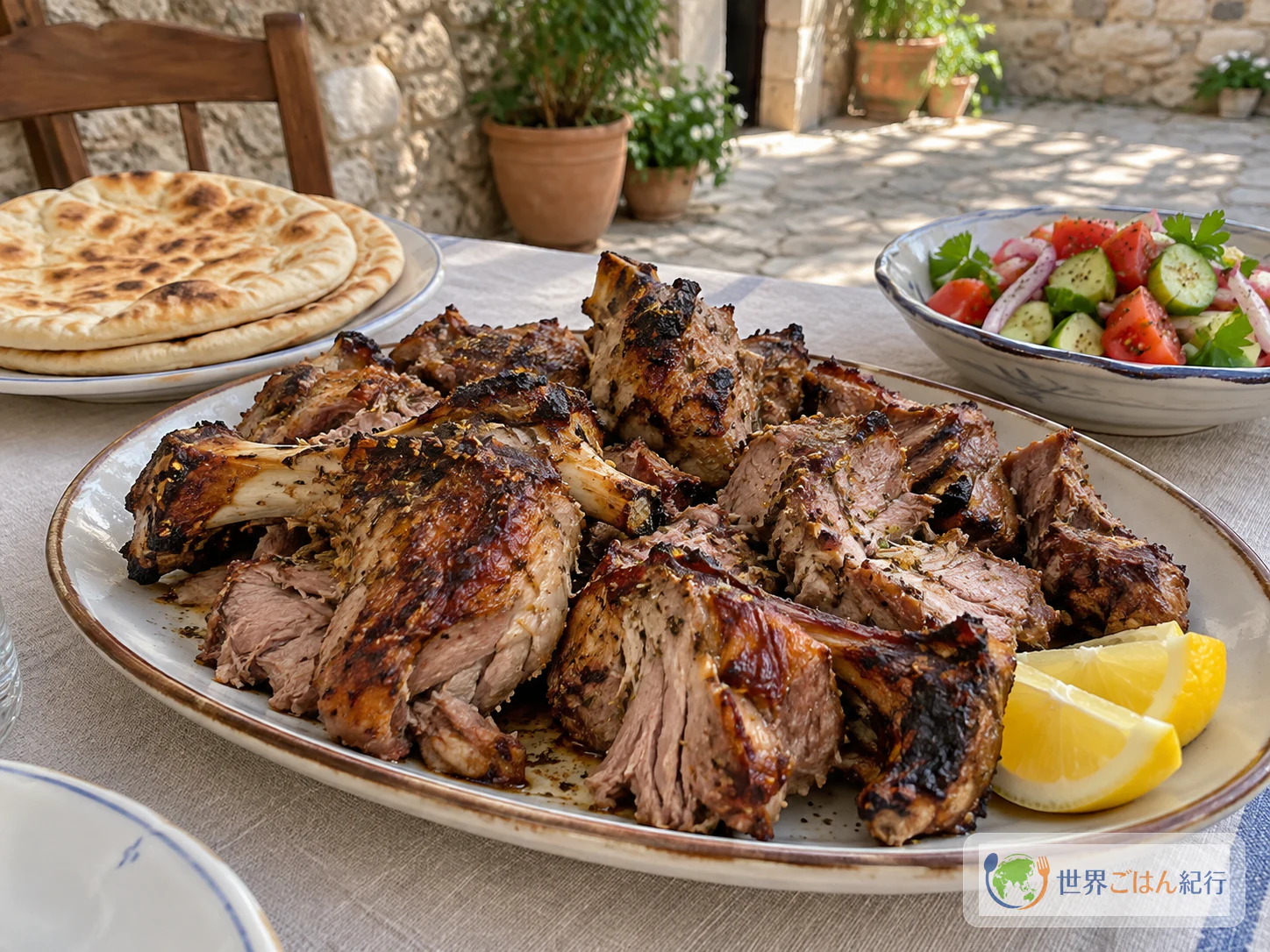
Souvla: Big Pieces of Lamb, a Long Spit and Time
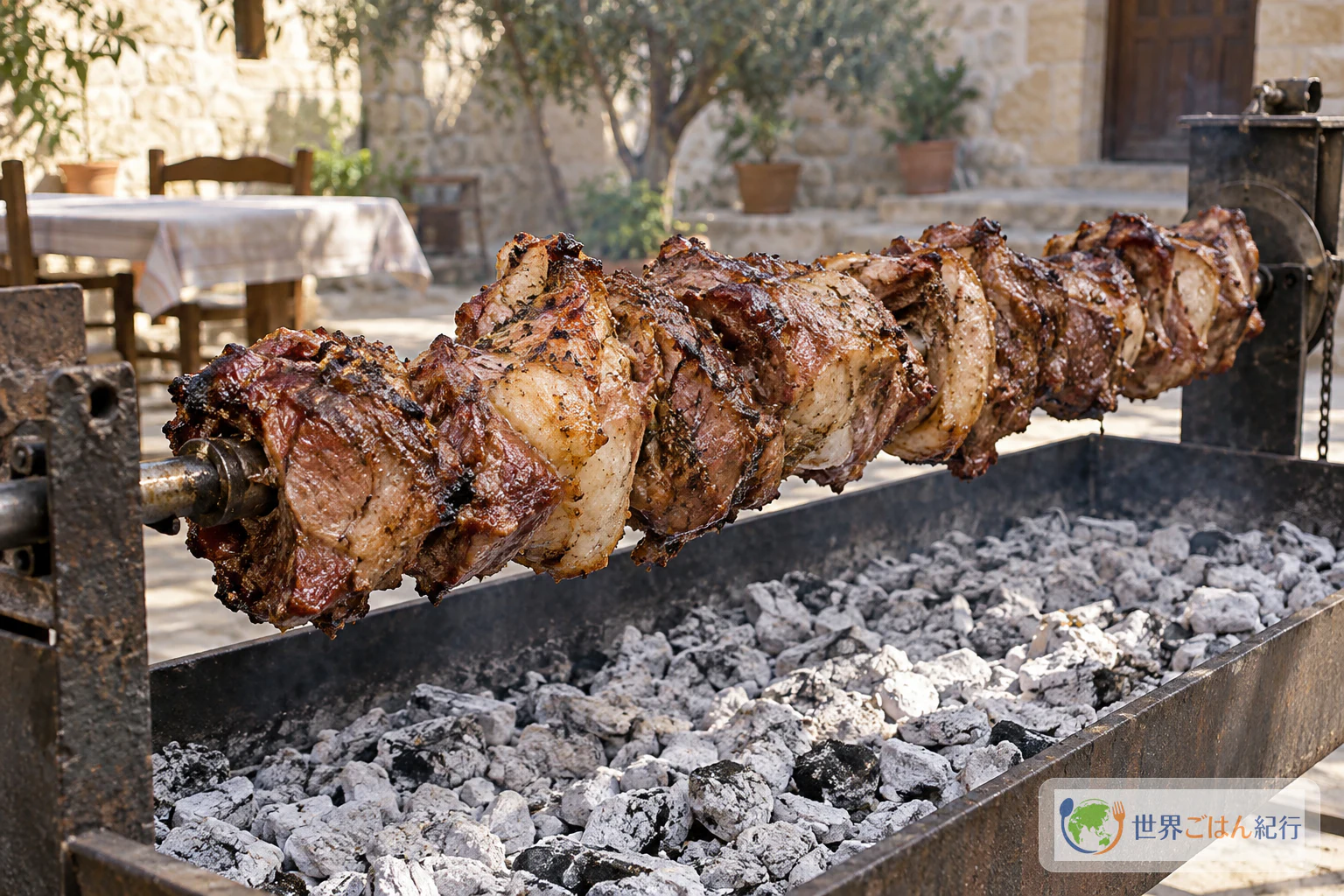
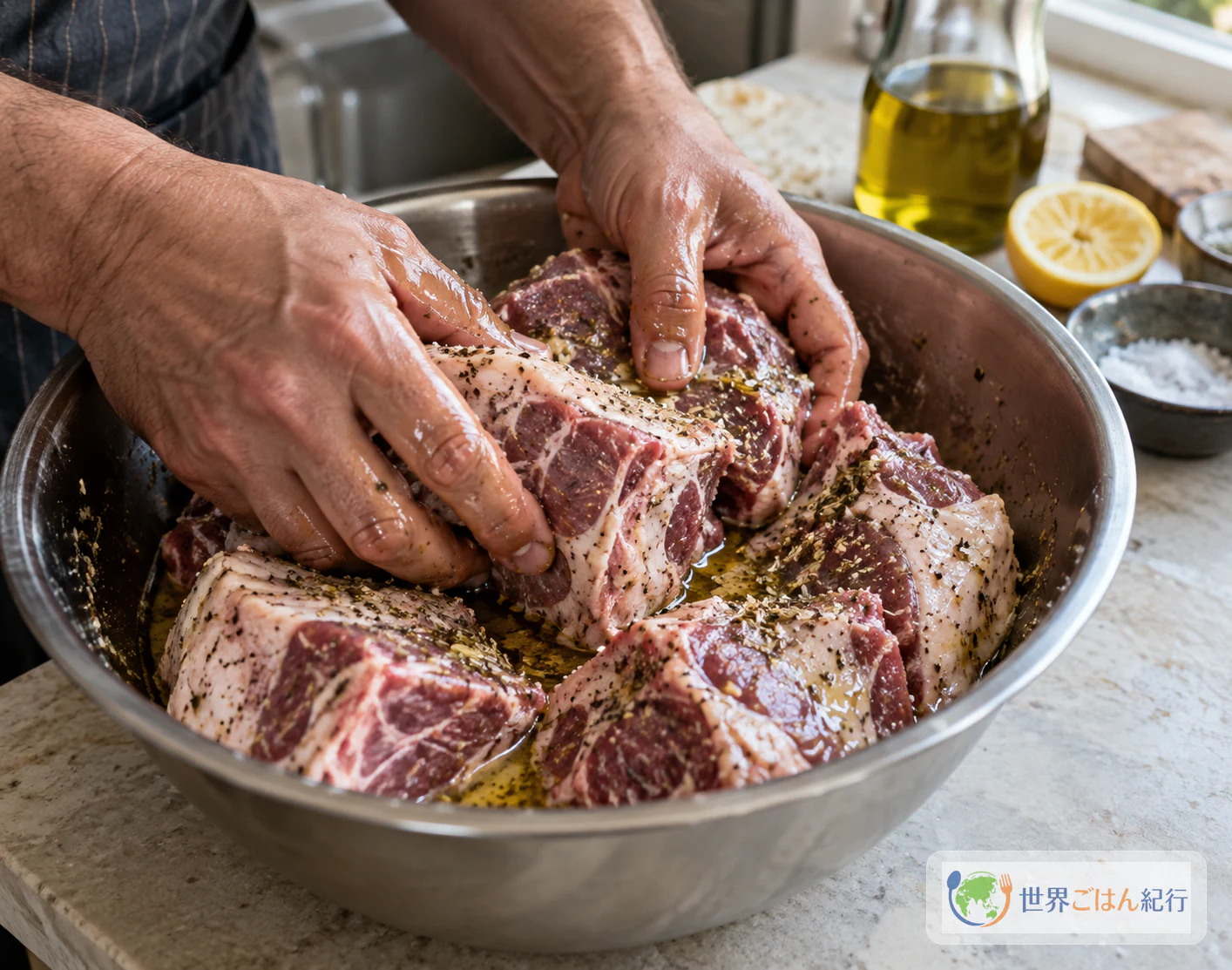
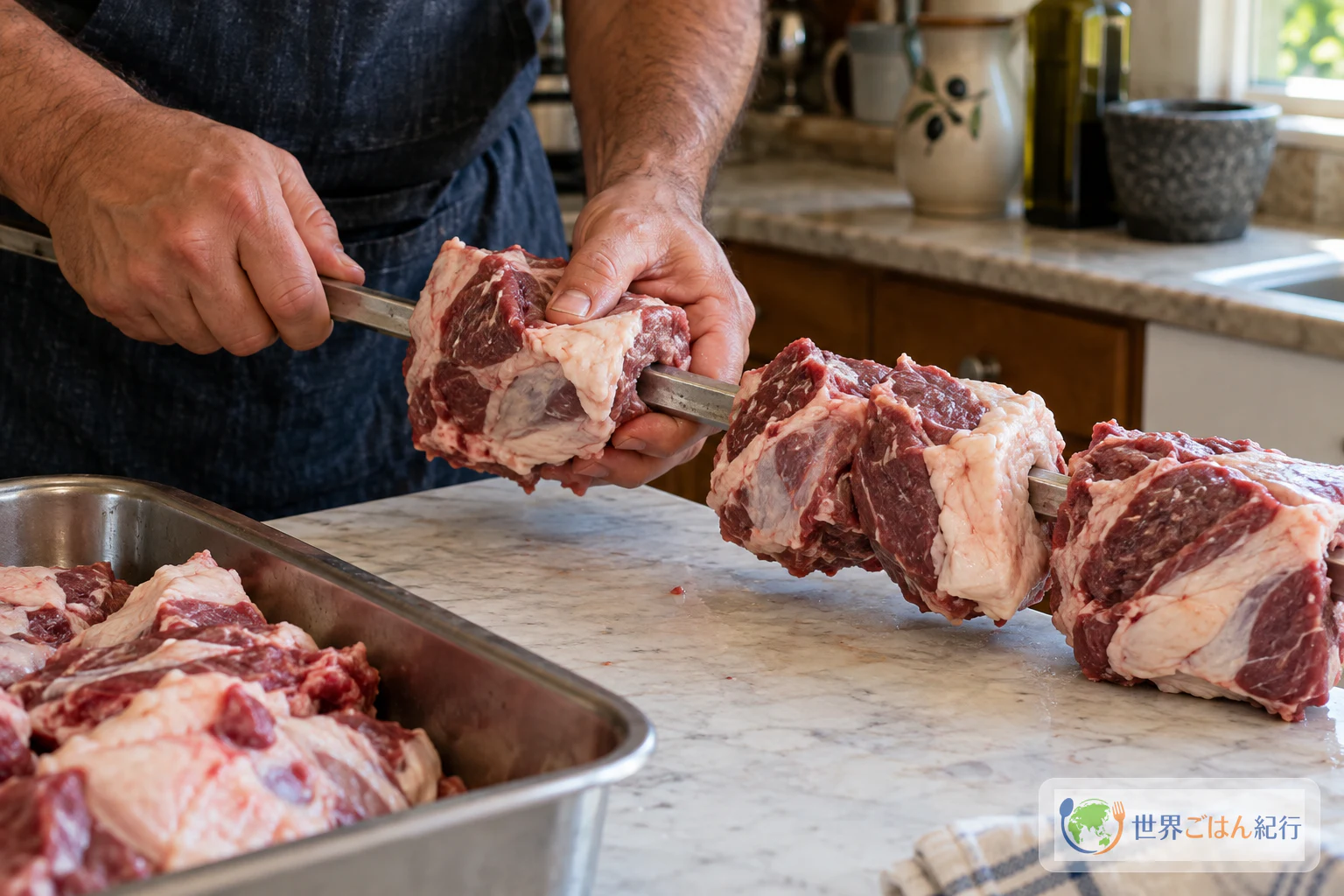
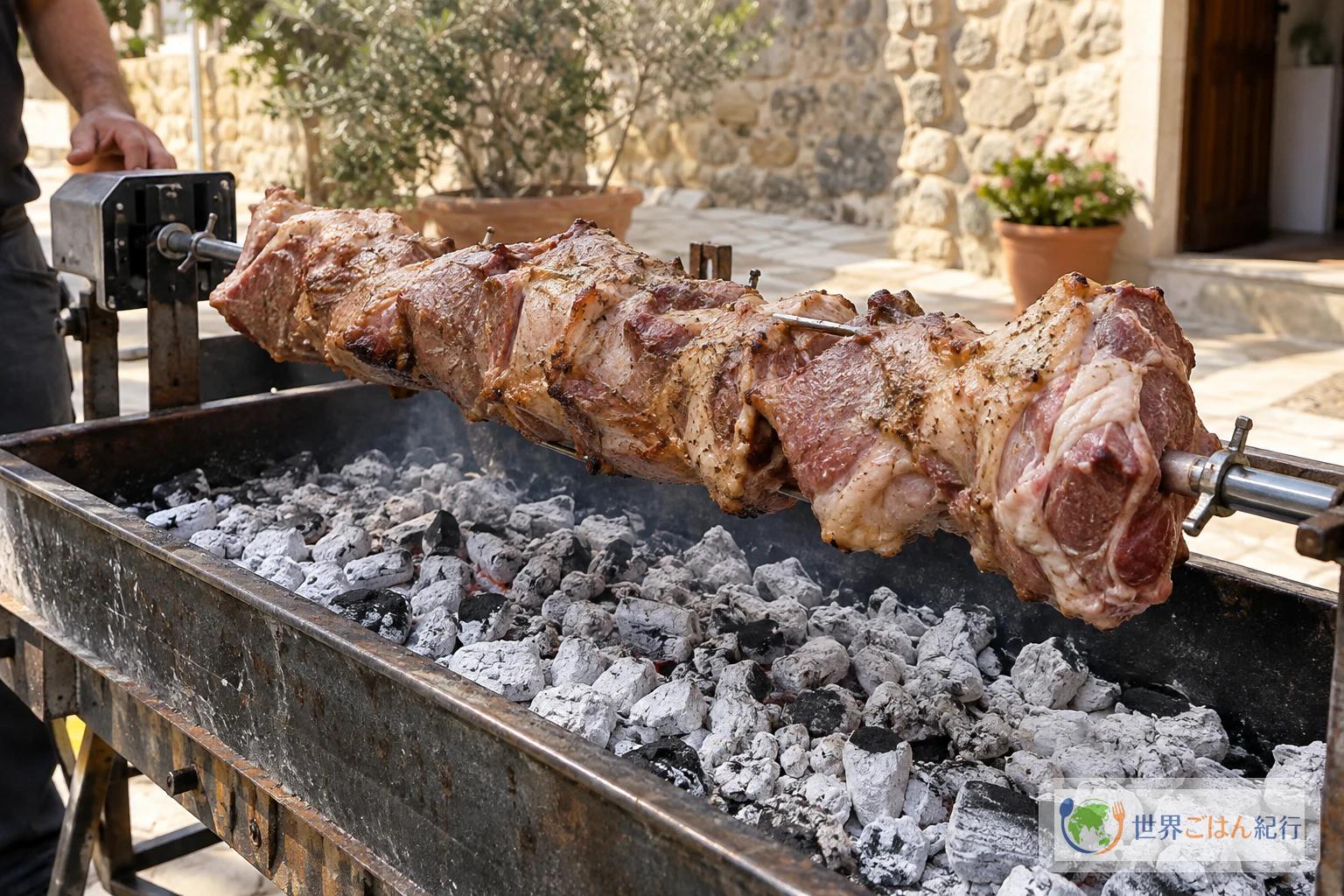
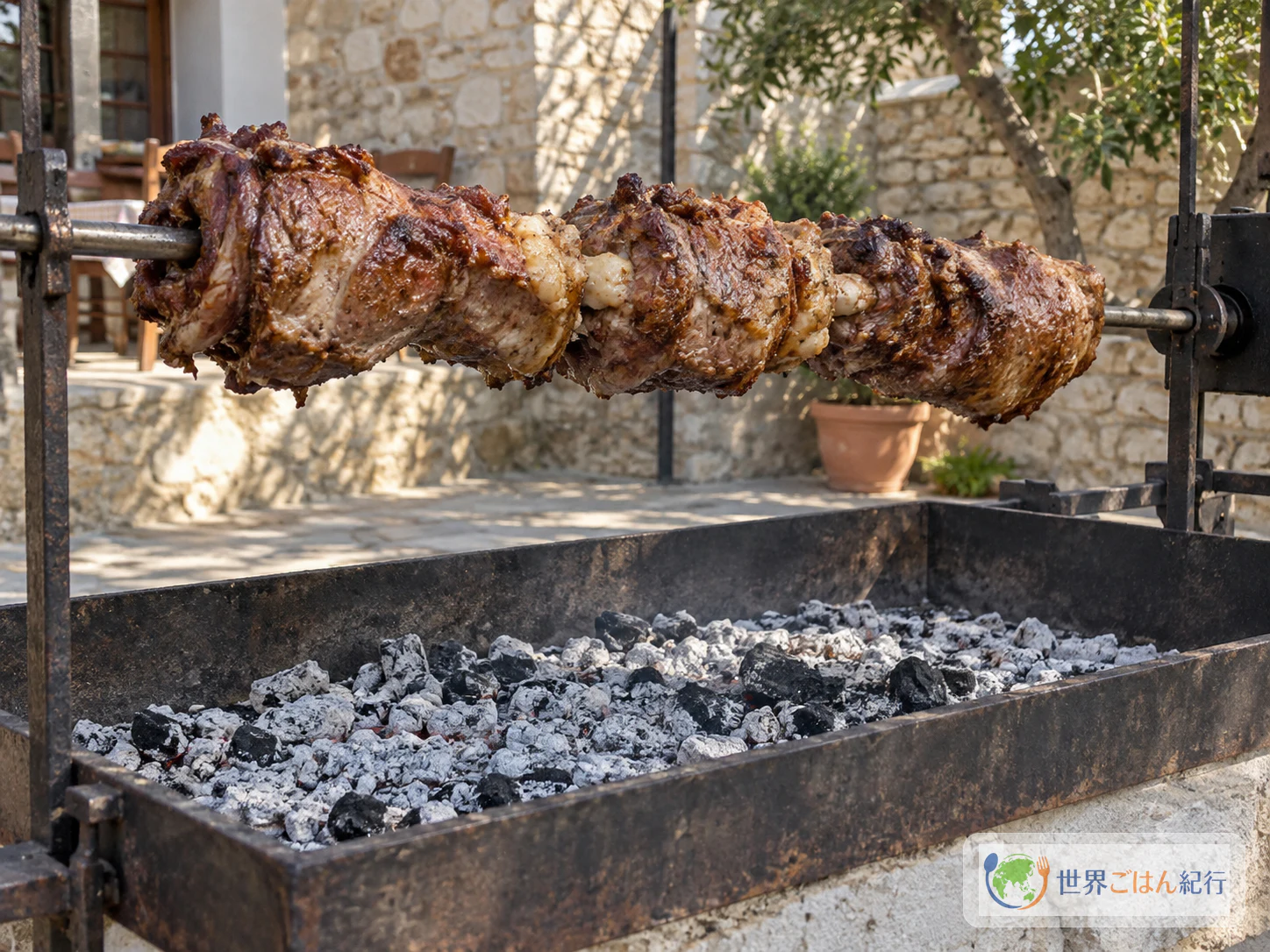
Large, fist-sized pieces of lamb with their fat left on, threaded onto one long spit and turned over charcoal: hot at first, then raised higher and cooked slowly. The seasoning stays simple: olive oil, lemon, salt, pepper and oregano.
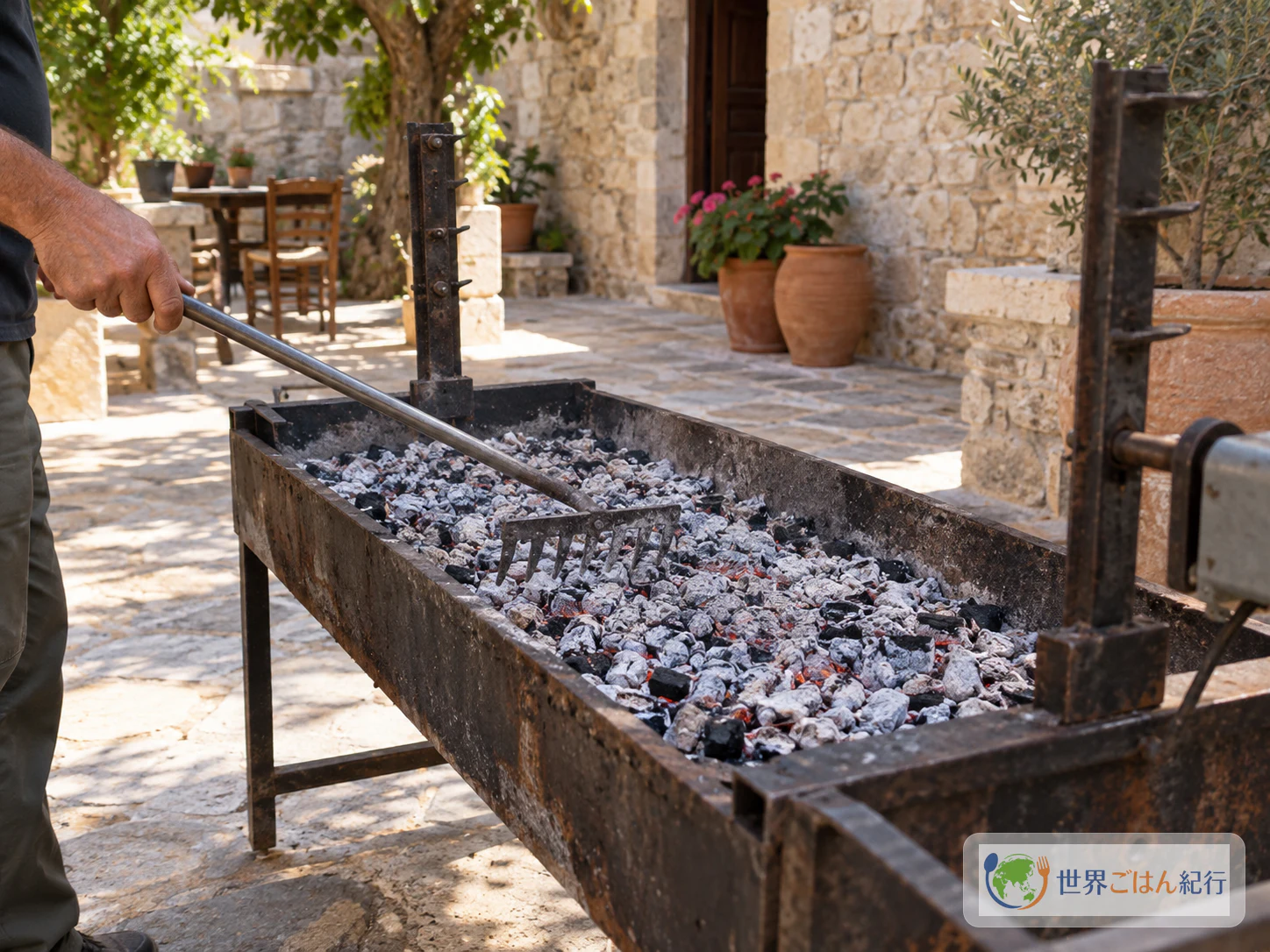
The charcoal has to burn down until its surface turns white with ash before the spit goes on. Then the long skewer, loaded with big pieces of lamb, begins to turn, and the cooking settles into a slow rhythm that suits a long gathering. The Cyprus Tourism Organisation describes souvla as popular at festivities and large family meals, and as something also cooked at picnics: large pieces of meat seasoned with herbs, threaded onto a spit and grilled over charcoal.
This article follows one Cypriot lamb recipe, published by the cook Ivy Liac on her site Kopiaste, and keeps to its amounts and method. The recipe has not been kitchen-tested by us, so where the source is unclear, this article says so rather than filling the gap with guesses. Even if you have no charcoal rotisserie at home, understanding how the dish is built (piece size, fat, turning and distance from the heat) will help you choose equipment and judge what a substitute can and cannot do. For more dishes from the island, see our Cyprus country page.
What Souvla Is: Not the Same as Souvlaki
Souvla (σούβλα) and souvlaki sound alike, but the Cyprus Tourism Organisation lists them as separate dishes. Souvla uses large pieces of meat on a long spit, turned over charcoal for a long time; souvlaki is made from small pieces of meat on short skewers. Cutting the lamb down to souvlaki size would change the dish itself, not just the cooking time.
Households differ. The tourism organisation names lamb, pork and chicken with fresh herbs. LoveCyprus gives a home version with bone-in pork shoulder, while the Kopiaste recipe uses lamb neck or shoulder with lemon. This article is limited to that lamb version, and nothing from the pork recipe is mixed into its ingredients or method.
| Dish | Form of the meat | How it is cooked |
|---|---|---|
| Souvla | Large pieces of meat | Threaded onto a long spit and turned over charcoal |
| Souvlaki | Small pieces of meat | Short skewers |
| Sheftalia | Minced meat wrapped in caul fat | A different dish with a different shape |
| Kleftiko | Lamb | Sealed and cooked for a long time in an oven |
Ingredients: Lamb Neck or Shoulder in Fist-Sized Pieces
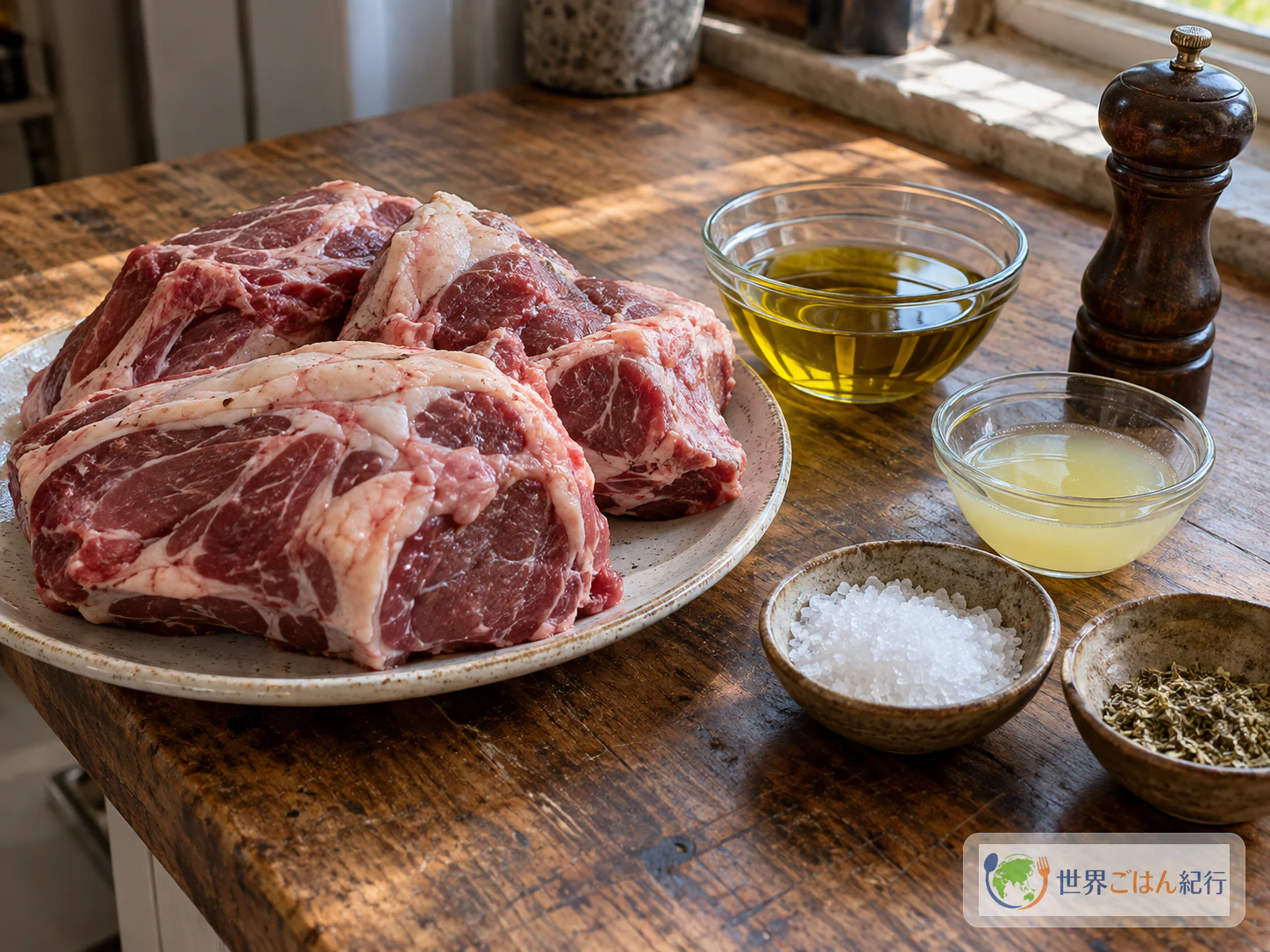
These are the amounts as written in the source recipe, which lists a yield of 4. That figure is the recipe's own label, not a measured yield. The cup measures are not defined in the source, so they are kept as written rather than converted.
Choosing the Meat and Reading the Recipe's Gaps
Neck or shoulder. The source allows either. Lamb neck can be hard to find, so lamb shoulder is a choice within the same recipe, not a substitute from outside it. Ask a butcher for large pieces suitable for a long spit, and explain that you want some fat left on.
Bone in or boneless. The source's description mentions meat cut with the bone, while its ingredient list does not settle the point. Either is within what the source describes. If you thread bone-in pieces, they can be harder to secure on the spit, and taking the internal temperature is harder because the probe must not touch bone.
Salt and pepper. The source gives "1 tablespoon coarse sea salt and freshly ground black pepper" as a single line, with no separate amount for pepper. Its method says to marinate with all the ingredients, yet salt and pepper also appear later in the steps. In this article the salt and pepper are rubbed onto the meat first and then the rest of the marinade is added; this is our editorial arrangement of the source, not a change to its amounts. Season the pepper by your own judgment, since the source gives no figure.
Lemon to finish. The source finishes the lamb with lemon. How much of the ¼ cup goes into the marinade versus the finish is not stated, so any extra lemon at the table is optional and separate from the amounts above.
Pork instead of lamb. Pork is part of souvla in Cyprus, but it belongs to a different recipe (see Variations). Don't move these lamb amounts and cooking stages onto pork as they are.
No major labeled allergens appear in the recipe's own ingredients. Cross-contact depends on your kitchen and equipment. Pita served alongside contains wheat; it is an optional side, not part of the base recipe.
Equipment
- A charcoal grill suited to spit roasting (in Cyprus, a foukou)
- Charcoal
- A long, sturdy spit with a rotisserie motor; check the manufacturer's maximum load
- A mixing bowl large enough for the marinating lamb
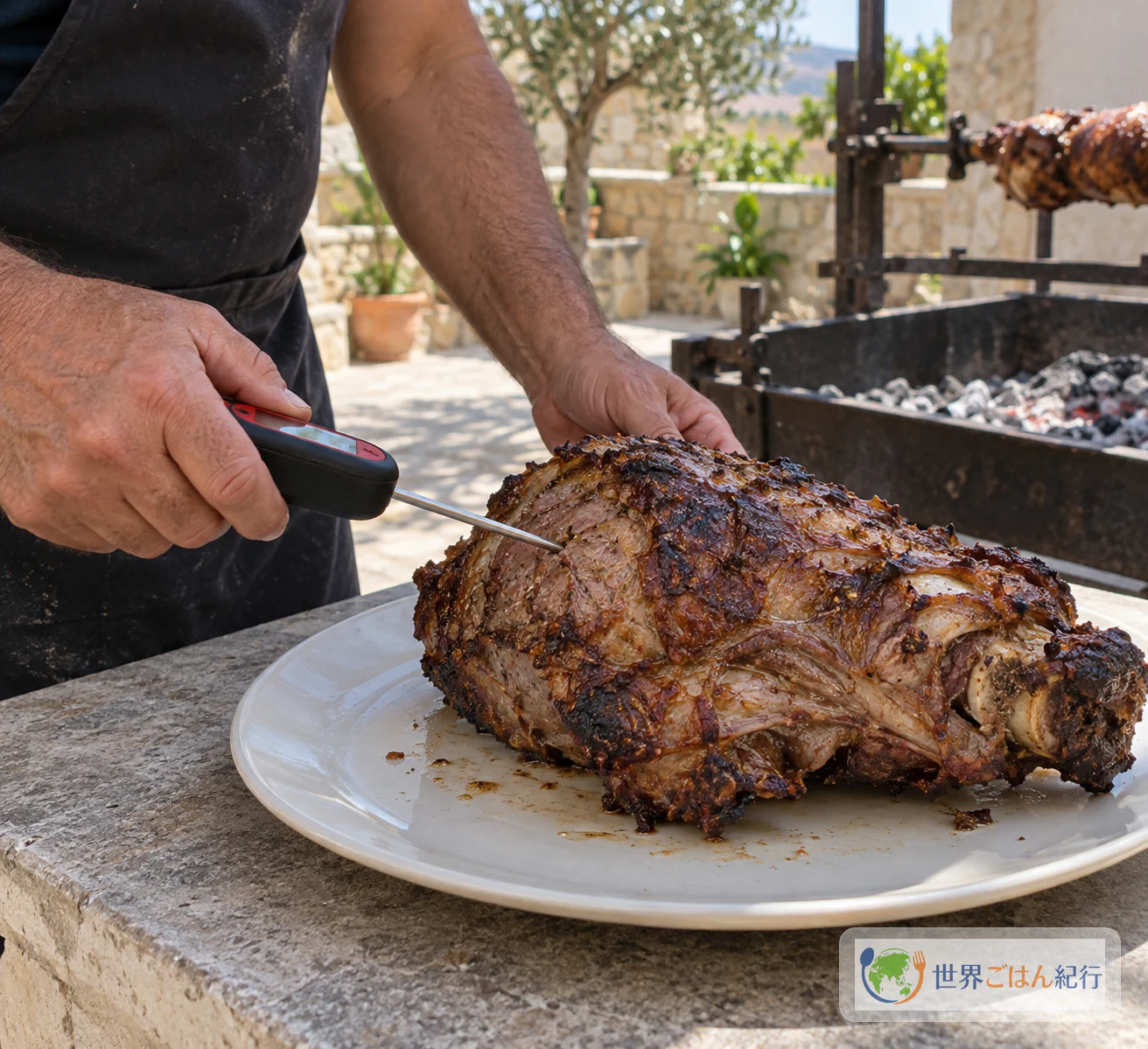
- A food thermometer
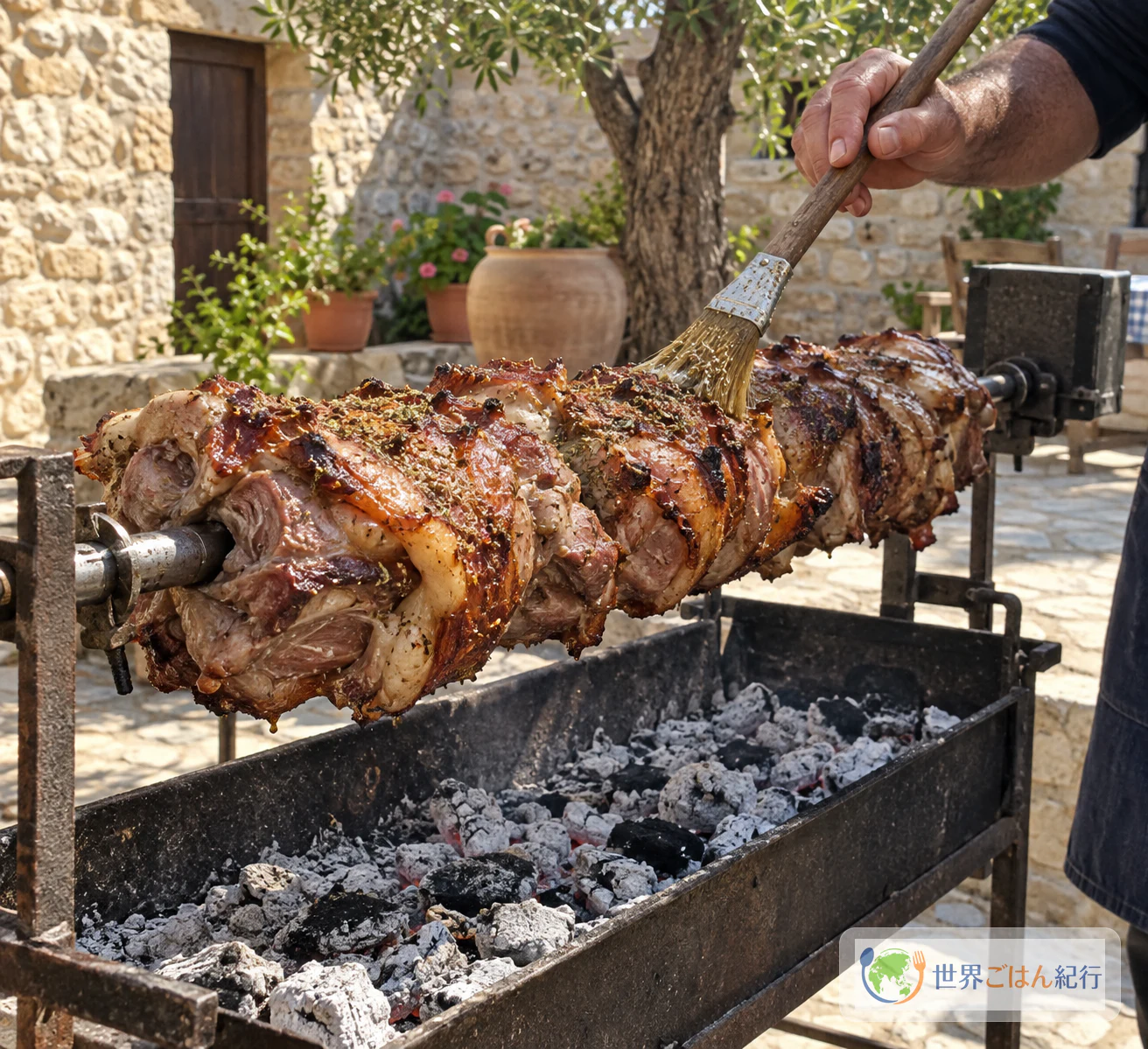
- A long-handled, heat-safe basting brush
- Separate plates, tongs and utensils for raw meat and for cooked meat
Method: From Marinade to a Slow-Turning Spit
The source's method gives several hours for marinating and about 2–3 hours on the spit. The time summary on the recipe page does not match its method text, so no single total time is given here. Judge doneness with a thermometer, not by the clock alone.
Raw or undercooked meat carries a risk of food poisoning, so cook it thoroughly. Japan's Ministry of Health, Labour and Welfare advises using separate chopsticks and utensils for raw meat and for cooked food; apply the same to plates, tongs and brushes here.
Troubleshooting
| Problem | Likely cause | What to do |
|---|---|---|
| The spit tilts or won't turn smoothly | Pieces uneven in size, fat bunched in one place, too much weight | Rethread with pieces of similar size and the fat spread out. Don't exceed the rotisserie's maximum load |
| Only the outside is burning | The spit stayed too close to the coals | Move on to the raised stage. Keep the source's order: hot at first, then distance, then slow cooking |
| The meat is dry | Too much fat trimmed, cooking judged by time only | Leave some fat on next time, and use a thermometer to decide when to stop |
| Hard to tell if it's done | Large pieces, possibly bone-in | Measure at the thickest part, away from bone, and follow the USDA temperature and rest |
Storing Leftovers
The sources do not give storage guidance for souvla. It is best eaten freshly cooked. If you can't cool and store leftovers safely, cook only what you will eat; if you do keep any, follow the leftover guidance of your local food-safety authority.
Variations
- Lamb shoulder: Within the source recipe. Use it when neck isn't available, with the same amounts and method.
- Pork shoulder (a different recipe): LoveCyprus gives a home version with bone-in pork shoulder, olive oil, oregano, salt and pepper, marinated for 3–4 hours and turned on the spit about 12 inches above white-hot coals for 1–2 hours. It has no ingredient amounts and is a separate recipe; don't mix it with the lamb recipe above.
- Less lemon at the end: Keep the lemon in the marinade and simply skip or reduce the extra lemon at the table to adjust the acidity.
- Without a rotisserie: The source cooks on a turning spit. Short skewers or a home grill are not part of the source recipe, so treat them as an editorial substitute, not a reproduction. Cutting the meat smaller than the source shortens the cooking and does not give the same texture. No times are given here for these methods; rely on the thermometer.
Souvla at the Cypriot Table
The Cyprus Tourism Organisation connects souvla with festivities, large family meals and picnics, with large pieces of meat cooked over charcoal on a spit. This is a dish shaped by gatherings: the spit turns for hours while people wait around it. That does not mean every household in Cyprus cooks it the same way. The choice of meat and seasoning varies, as the lamb and pork recipes show. The Kopiaste recipe describes its version as Cypriot souvla and also gives the name kontosouvli in its title.
Frequently Asked Questions
Can I make it with pork?
Pork souvla exists in Cyprus, and the tourism organisation lists pork among the meats used. It follows a different recipe, though, so don't carry these lamb amounts and cooking stages directly over to pork.
How is it different from souvlaki?
Souvla is large pieces of meat turned slowly on a long spit; souvlaki is small pieces on short skewers. The Cyprus Tourism Organisation lists them as separate dishes.
Can I make it in the oven?
That would not reproduce charcoal spit roasting. It is also not the same as kleftiko, a different dish of lamb sealed and cooked in the oven. If you substitute, expect a different flavour and texture, and judge doneness with a thermometer.
How long does it cook?
The source gives about 2–3 hours on the spit after the first hot stage, and several hours of marinating before that. The actual time changes with the size of the pieces and the distance from the coals. Because the recipe page's time summary and its method do not agree, no single total time is given.
How do I know it's cooked through?
Don't rely on appearance alone. Measure the thickest part, away from bone; USDA FSIS gives 145°F / 62.8°C for whole cuts of lamb, followed by a rest of at least 3 minutes.
In Short
What makes souvla is not a long list of flavourings but large pieces of meat, fat left on, slow turning, the distance from the coals and the patience to wait. If you can't find lamb neck, choose lamb shoulder, check your rotisserie's maximum load, and keep a thermometer at hand.
Sources
- Cyprus Tourism Organisation / Visit Cyprus, "Flavours of Cyprus" (2015). Souvla as popular at festivities, large family meals and picnics; large pieces of lamb, pork or chicken seasoned with herbs and grilled on a spit over charcoal; souvla and souvlakia as separate dishes. https://www.visitcyprus.com/wp-content/uploads/files/food_and_drink/Flavours_of_Cyprus_6_2015_EN.pdf
- LoveCyprus, "Traditional Cyprus Recipes." A home version cooked on a turning spit over a foukou with bone-in pork shoulder, olive oil, oregano, salt and pepper; used only for comparison, not for the lamb recipe. https://www.lovecyprus.com.cy/traditional-cyprus-recipes/
- Ivy Liac / Kopiaste, "Cypriot Souvla (kontosouvli) - Kopiaste..to Greek Hospitality." The lamb recipe followed here: amounts, piece size, keeping the fat, threading, white-ashed coals, starting hot and then raising the spit for about 2–3 hours, basting, and finishing with lemon. A cook's personal site, not an official standard recipe. https://www.kopiaste.org/2025/04/cypriot-souvla-kontosouvli/
- USDA Food Safety and Inspection Service, "Safe Minimum Internal Temperature Chart." Whole cuts of lamb: 145°F / 62.8°C, then rest for at least 3 minutes. https://www.fsis.usda.gov/food-safety/safe-food-handling-and-preparation/food-safety-basics/safe-temperature-chart
- Ministry of Health, Labour and Welfare (Japan), "お肉はよく焼いて食べよう" (Cook meat thoroughly). The food-poisoning risk of raw or undercooked meat, and using separate utensils for raw meat and cooked food. https://www.mhlw.go.jp/stf/seisakunitsuite/bunya/0000049964.html