Parmigiana di Melanzane: Fried Eggplant, Tomato and Cheese in Soft Layers
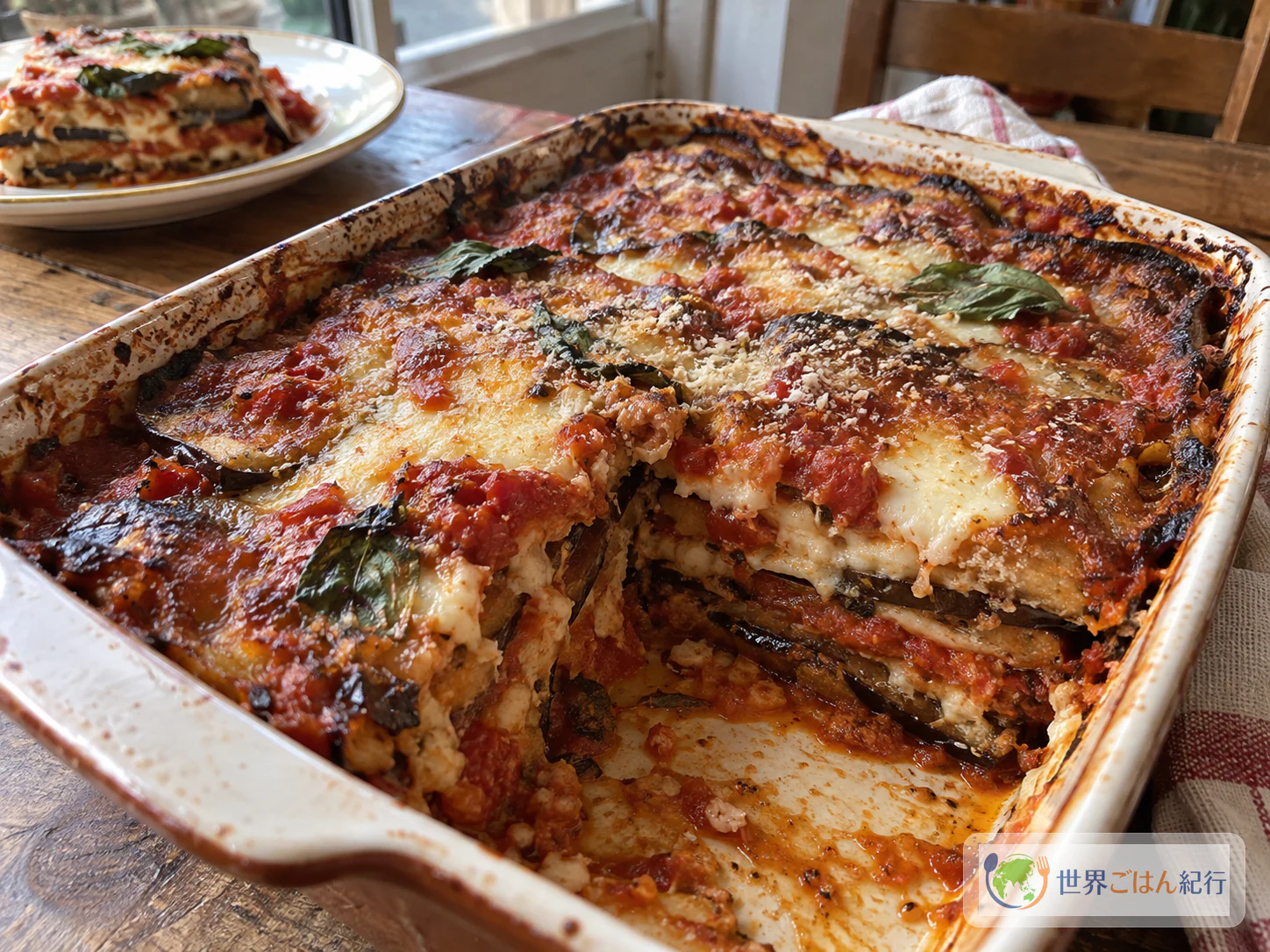
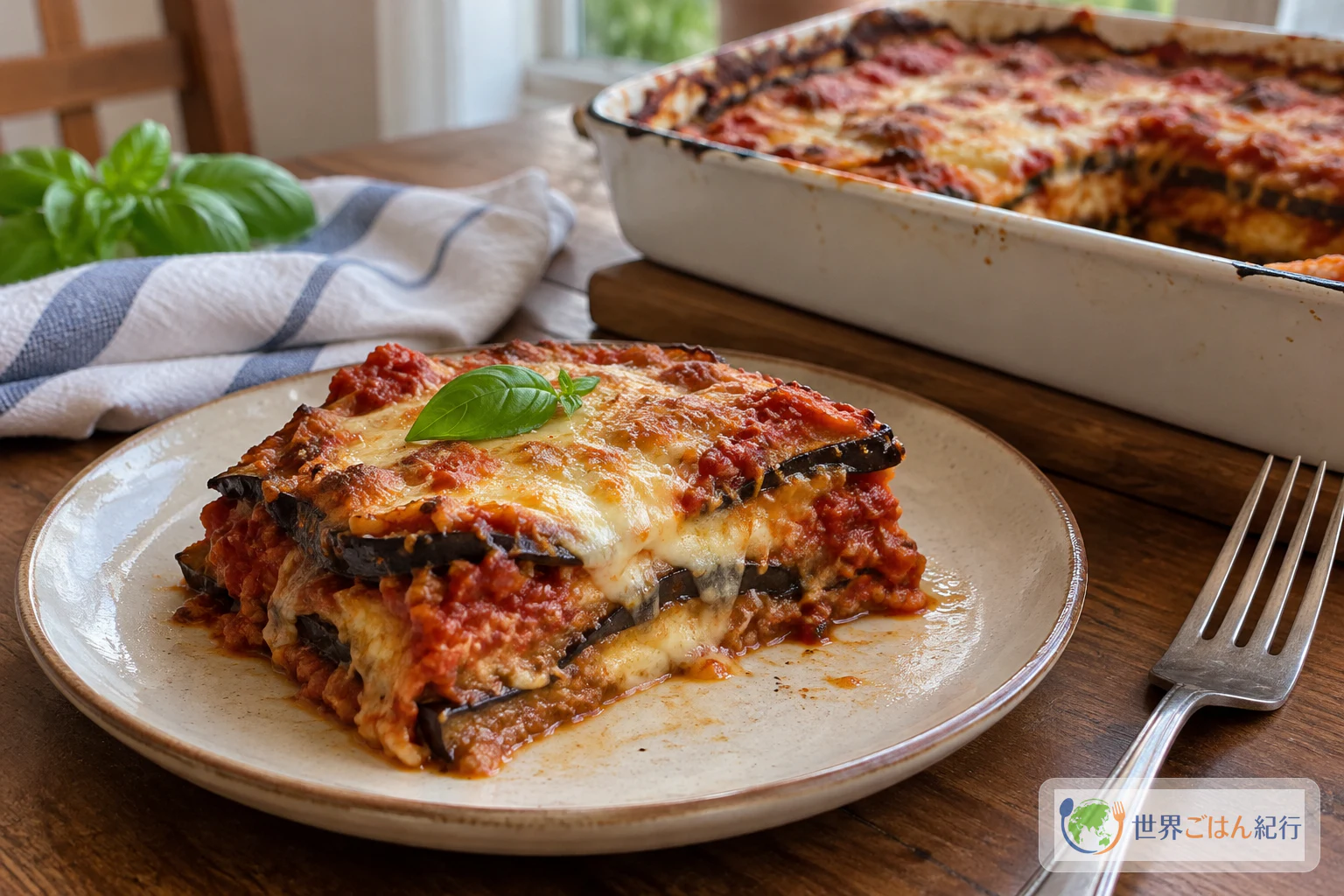
Tender fried eggplant, a short-cooked tomato sauce, mozzarella between the layers and grated Parmigiano Reggiano on top. Let it cool a little after baking so the layers settle and hold when you cut it.
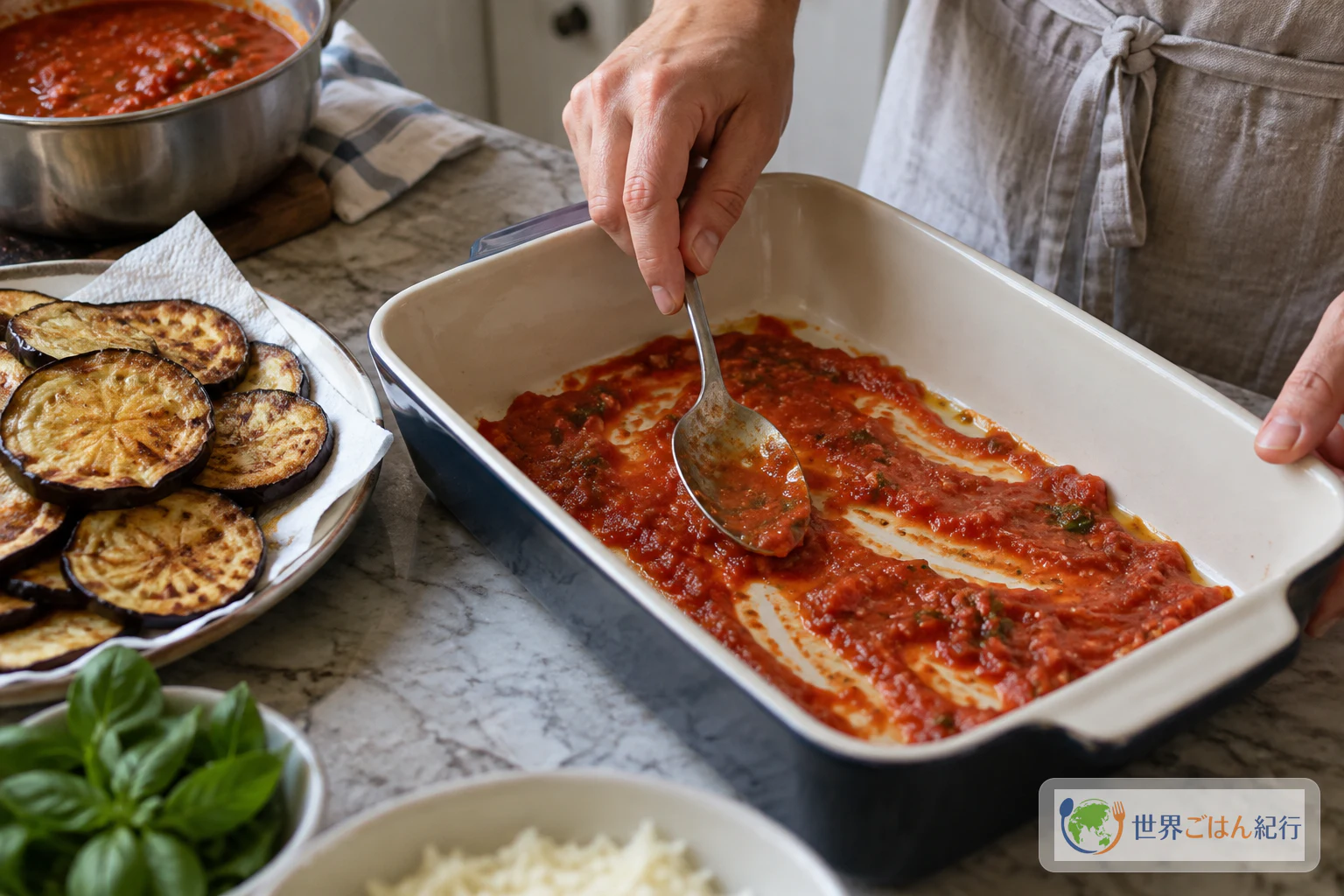
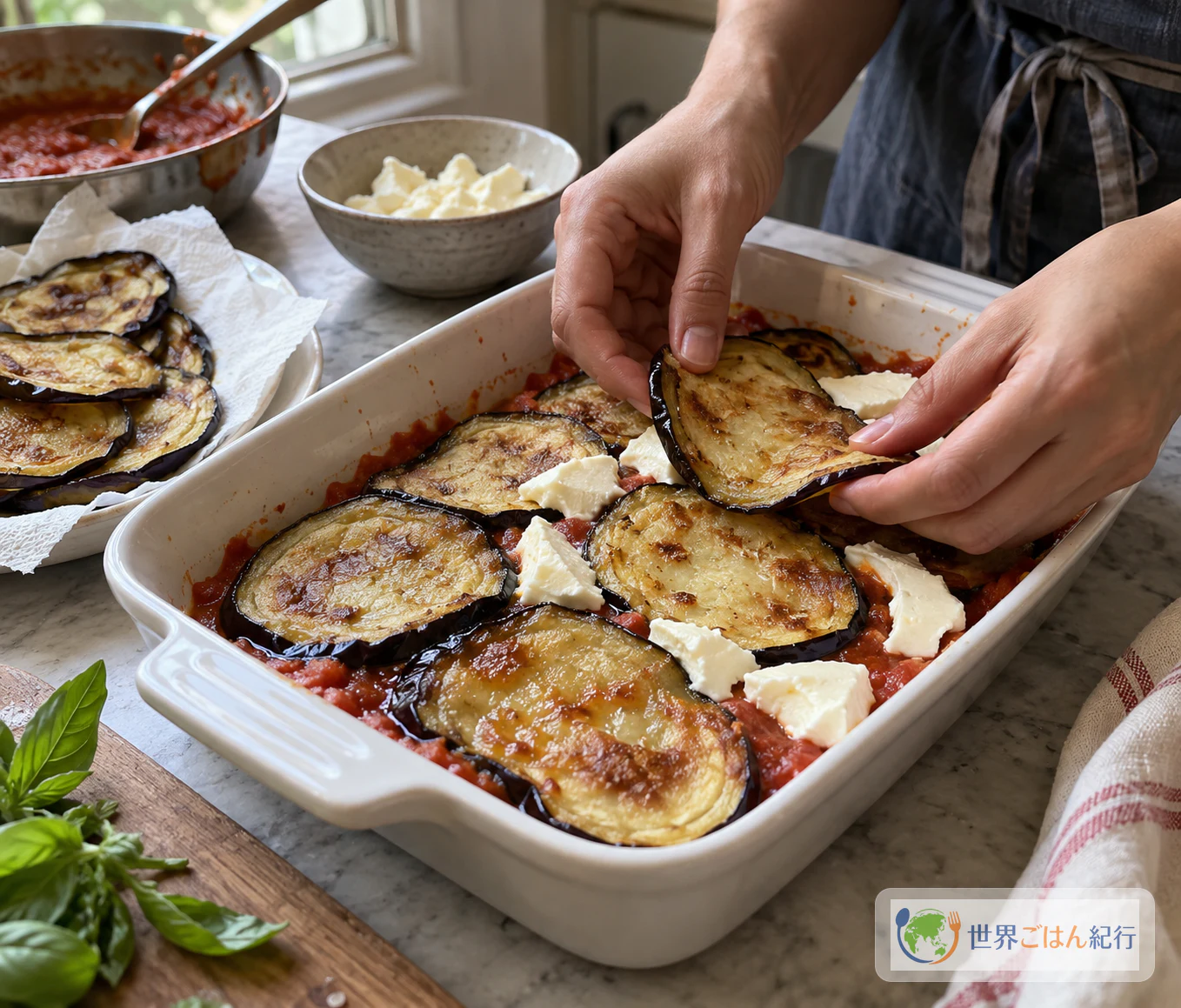
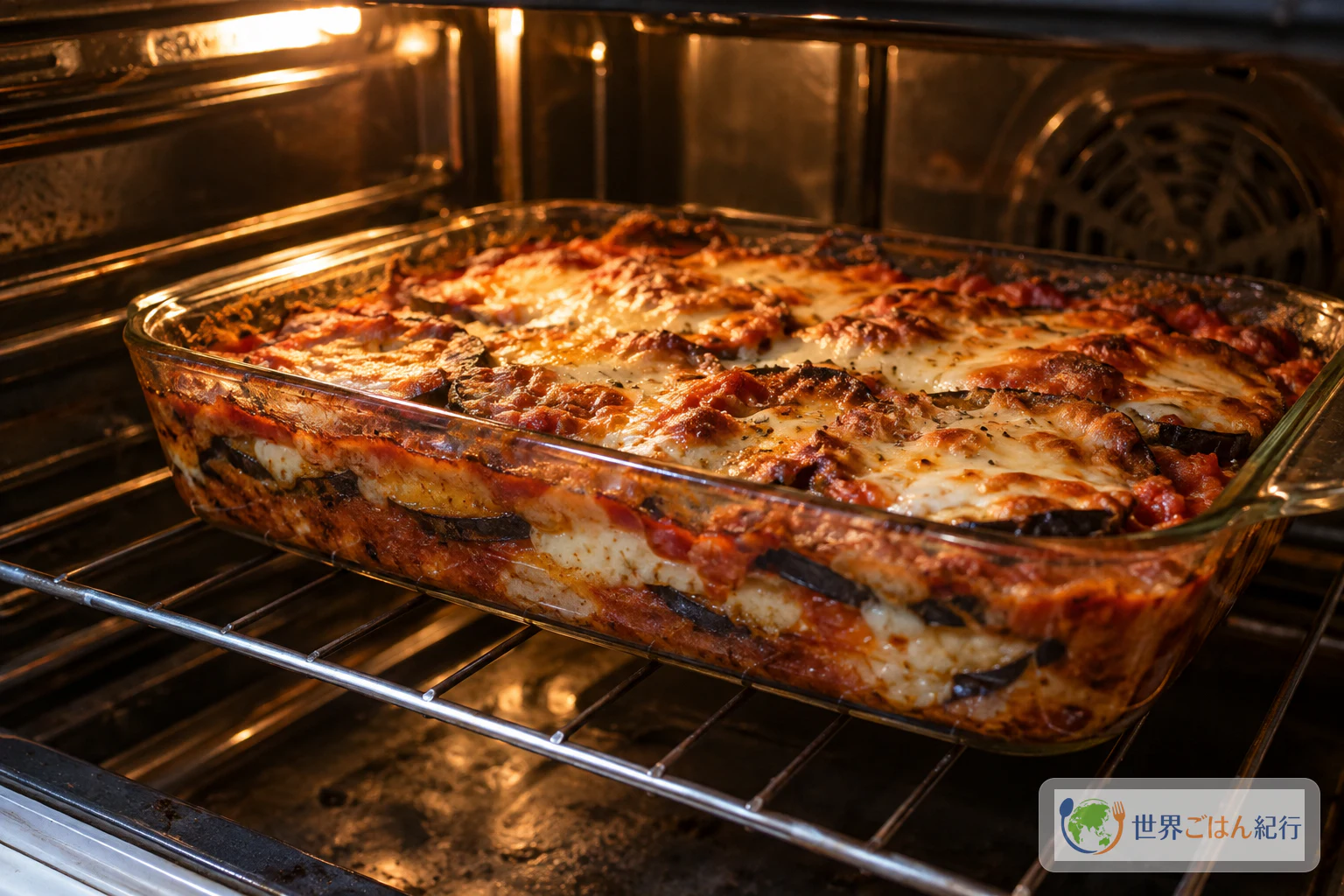
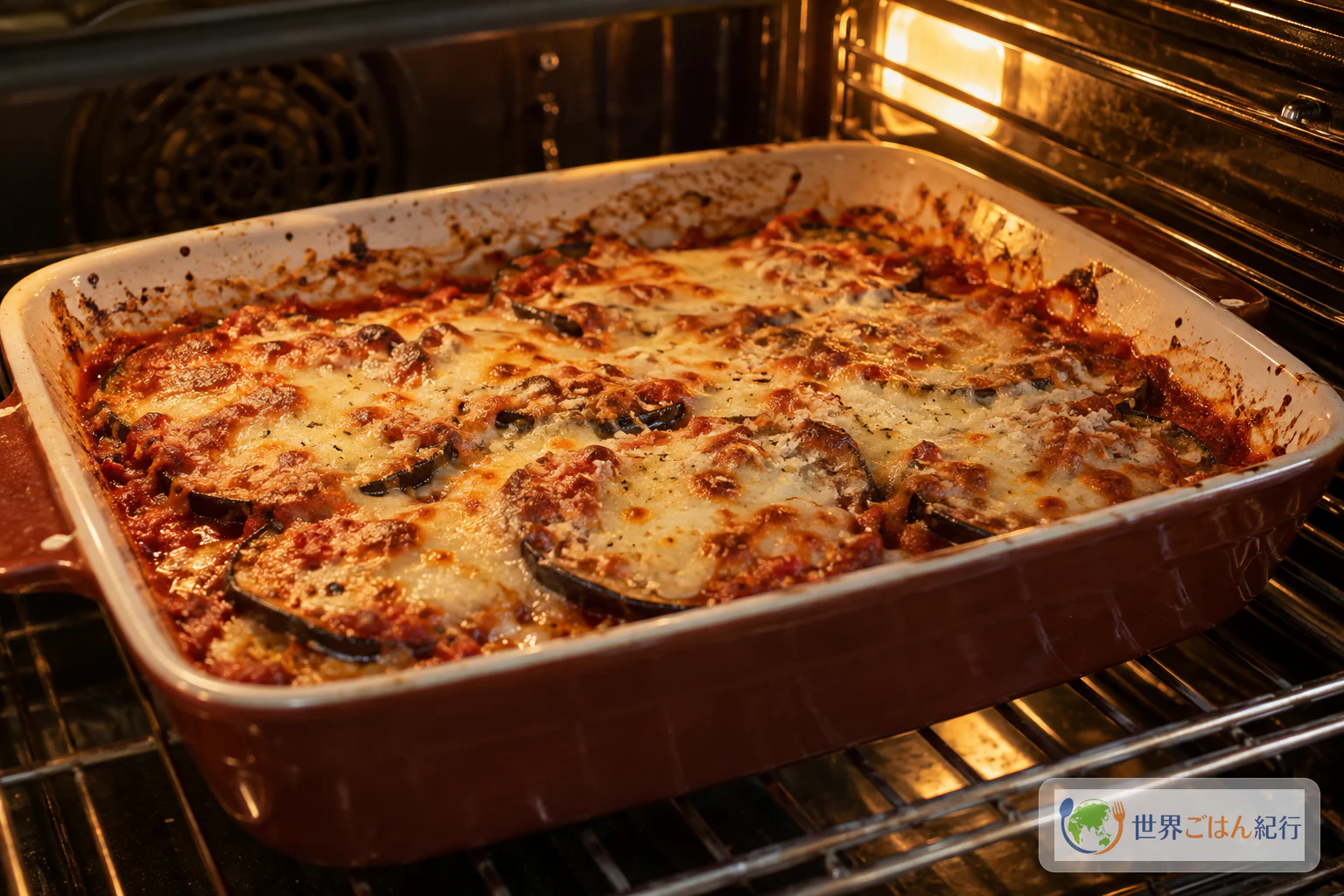
Slices of fried eggplant, still warm and soft, go into a baking dish one layer at a time, each covered with tomato sauce and pieces of mozzarella. The last layer is finished with sauce and grated Parmigiano Reggiano, and the dish goes into a hot oven until the top is browned and the inside is hot. Straight out of the oven, the layers slide apart easily; after a short rest, a slice lifts out with its stripes of eggplant, tomato and cheese intact.
Parmigiana di melanzane is made in many ways across southern Italy, and even within Campania the regional government records several versions. This article does not try to name a single "authentic" recipe. Instead, it follows one published home recipe closely, from salting the eggplant to resting the finished dish, and keeps the regional variations separate so you can choose them knowingly. Whether you change the cheese, and whether you fry the eggplant, are the decisions that shape the flavor and texture most.
What Parmigiana di Melanzane Is
Parmigiana di melanzane is eggplant, fried and layered with tomato sauce and cheese, then baked. It is not the same dish as chicken parmigiana, the breaded chicken dish known in the United States. Here, eggplant is the main ingredient.
The Campania Region's page on traditional products describes many variations within the region: long eggplants, salting and frying, different dairy products, tomato sauce or a ragù-style sauce, slices dipped in egg, and various cheeses. Italia.it, Italy's official tourism portal, describes Italian cuisine more broadly as a food culture shaped by interpretations that differ by region, city and household, and by the sharing of food at the table. A dish with this many forms is best understood as a family of related bakes rather than one fixed formula.
On where it comes from, the Soprintendenza Archeologia Belle Arti e Paesaggio for the city of Naples places the dish's origin in Campania. Its page cites Vincenzo Corrado in the late eighteenth century and an 1837 description by Cavalcanti, and it also explains the name as coming from the Sicilian word "parmiciana." These are that institution's explanations; the history and the origin of the name are debated, and this article does not treat either as settled. For more dishes from the same country, see the Italy page.
Ingredients: As Written in the Source Recipe
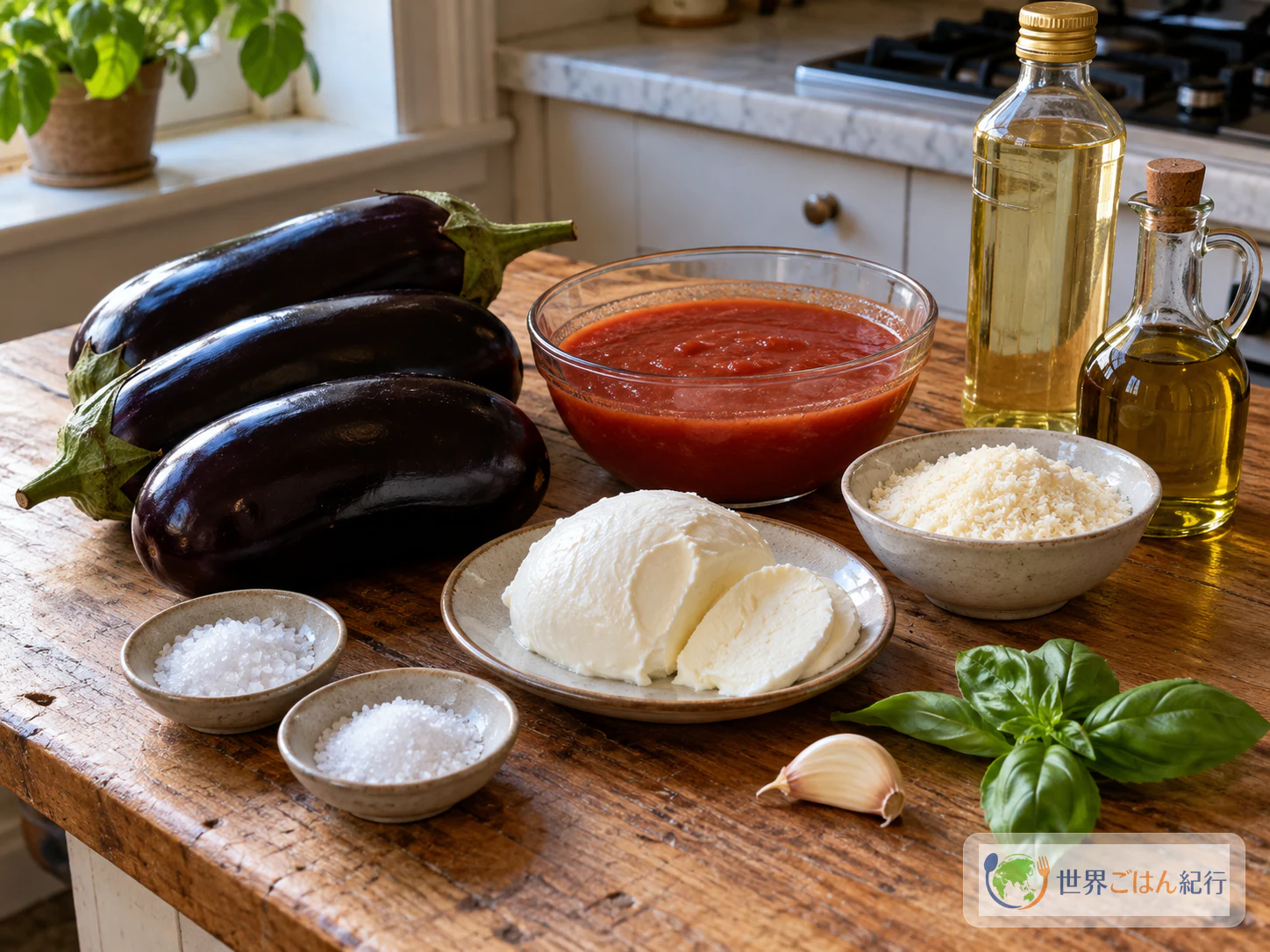
These amounts come from a recipe by home cook Valeria Ciccotti, published on her blog Vale cucina e fantasia on the GialloZafferano blog platform. The recipe states 8 servings. It gives the number of eggplants as 3 but does not state their size or weight, so if your eggplants are small, three may not be enough for eight portions. Oil, salt and basil are listed only as "q.b." (quanto basta, as much as needed), and this article does not invent amounts for them.
Mozzarella and Parmigiano Reggiano contain milk. The source recipe fries the eggplant in peanut oil, so peanut is an allergen to consider. If you fry in a different vegetable oil instead, that is a change from the source recipe; check that oil's label. For every product, check the labeling for allergens such as soy and any cross-contact or shared-facility statements. This information is not a medical guarantee of safety.
Choosing and Substituting Ingredients
Passata: Choose a smooth, unsalted tomato passata or an unsalted, smooth tomato purée. A salted, ready-made tomato sauce will change the saltiness of the finished dish.
Parmigiano Reggiano: Look for Parmigiano Reggiano with its DOP designation where you can. If it is hard to find, Grana Padano can stand in, but its aroma and saltiness are different.
Mozzarella: The source recipe does not specify a type of mozzarella. If you use fresh mozzarella, draining off its excess liquid before layering helps keep the dish from turning watery; this is an editorial suggestion, not a step in the source recipe.
Eggplants: The source does not name a variety. Long eggplants can work too; choosing ones that slice easily into thin lengthwise pieces is an editorial suggestion.
Equipment
- Cutting board and knife
- Colander, for salting the eggplant
- Paper towels, for drying and draining
- Small saucepan with a lid, for the sauce
- Wide, deep pan for frying, with enough depth for the oil
- Tongs
- Baking dish
- Oven (static, without fan)
- Fine sieve or paper towels, if draining fresh mozzarella
Method: Salt, Sauce, Fry, Layer, Bake, Rest
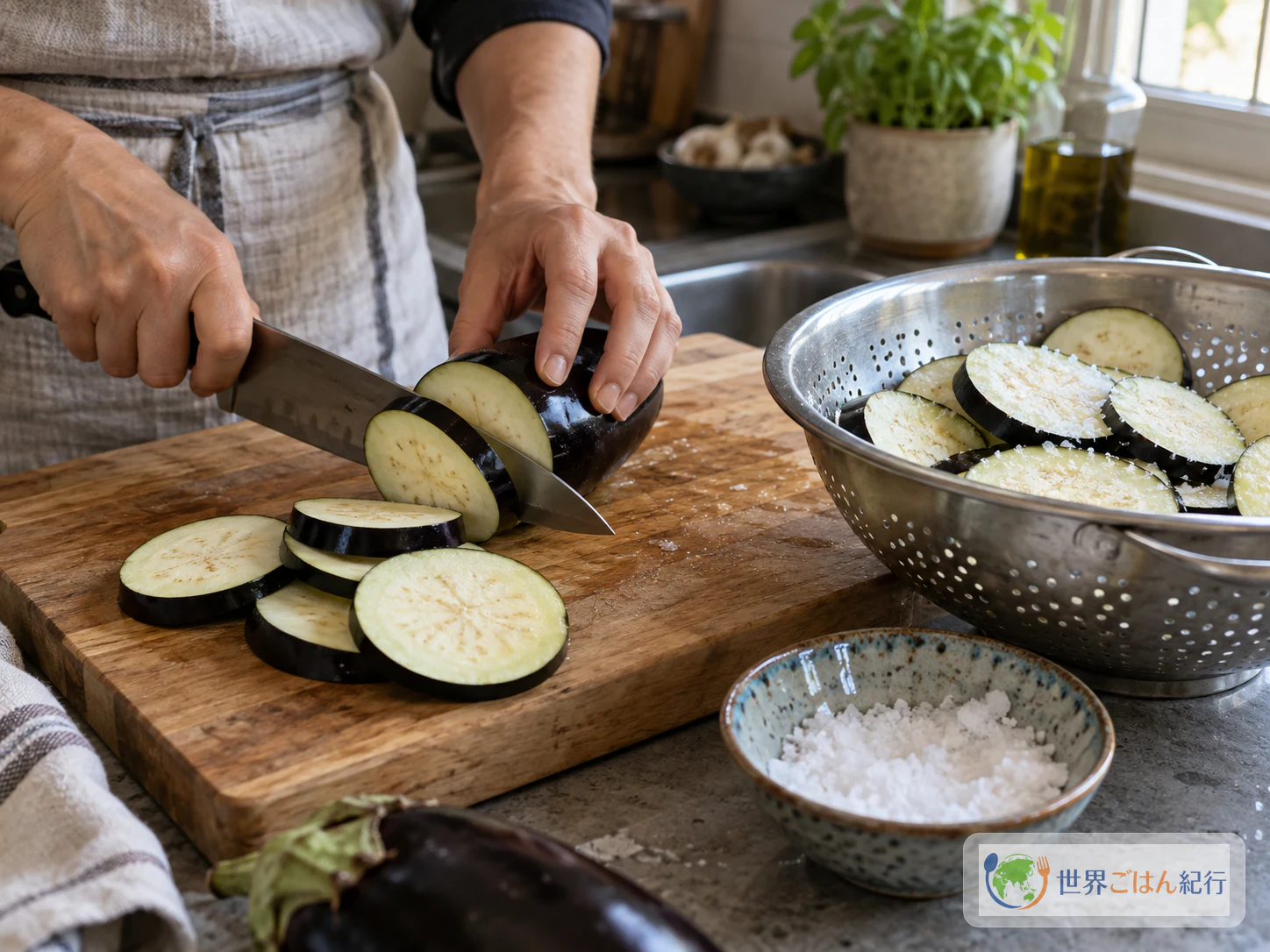
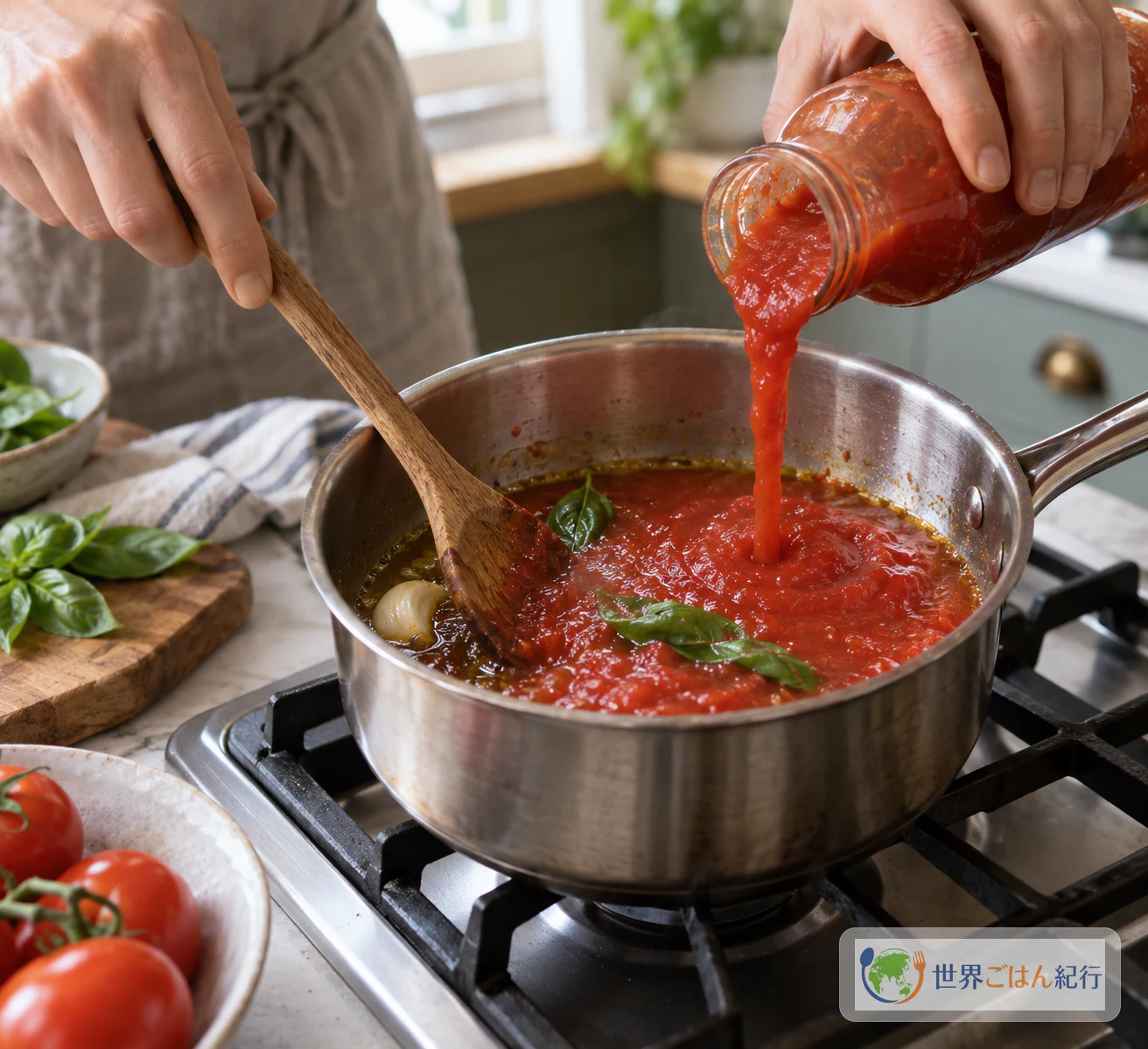
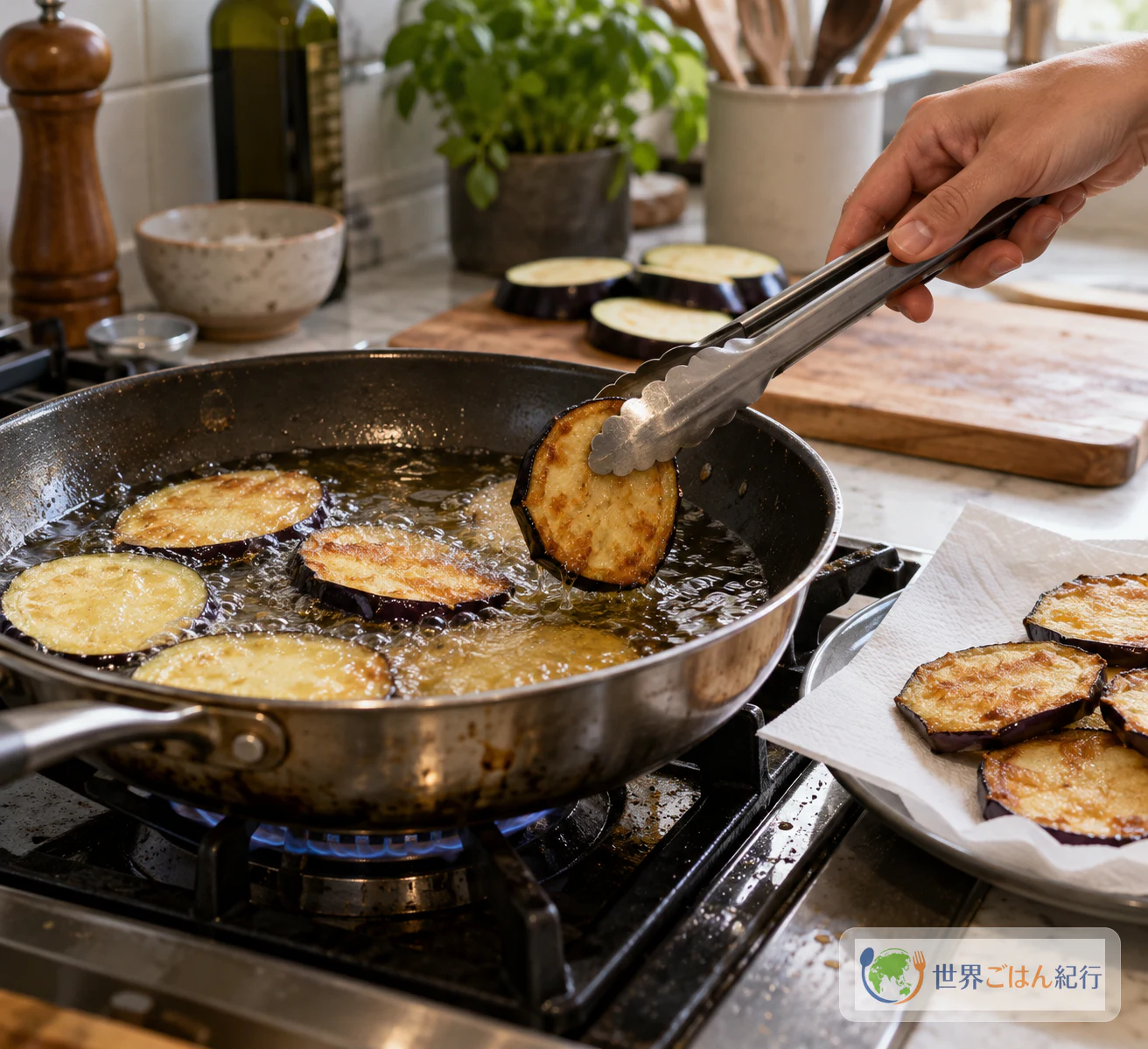
The source gives the salting time, the sauce time and the baking temperature and time. It does not give frying times, oil temperature or a slice thickness, so watch for color and tenderness at each stage.
When It Goes Wrong: Water, Oil and Collapsing Layers
| Problem | Likely cause | What to do |
|---|---|---|
| Watery in the dish | Sauce not cooked long enough, eggplant not drained, wet fresh mozzarella | Cook the passata for the full 10 minutes, drain the fried eggplant well, and drain fresh mozzarella before layering |
| Layers slide apart when cut | Cut straight from the oven | Let it cool a little so the layers settle before cutting |
| Eggplant greasy or burnt | Slices fried while still wet | Dry the slices thoroughly before frying and drain them on paper afterward |
| Top dark but inside not hot | Oven runs hot or browns strongly from above | Adjust for your oven, and check that the dish is hot through rather than relying on the top's color |
Most problems come back to moisture. The sauce, the eggplant and the mozzarella each bring their own liquid, and the steps of cooking the sauce, drying and draining the eggplant, and using sauce moderately on each layer are what keep a slice from sitting in a pool. The source gives no figures for oil temperature or amount, so watch the color and tenderness of the eggplant rather than a number.
Regional Variations and Other Versions
These versions come from other sources and are not mixed into the recipe above. They are options to choose deliberately, not corrections of the base recipe.
- Egg-coated eggplant: The Campania Region's page records eggplant dipped in egg, with salt, pepper and grated cheese, before frying. The coating makes the layers denser and saltier.
- Different cheeses: The same page mentions pecorino or Parmigiano, and caciocavallo, provola or fiordilatte. Each changes the moisture and saltiness of the dish.
- A ragù-style sauce: The Campania page also describes a version layered with a ragù-style sauce in place of plain tomato sauce.
- Rounds or long slices: Cutting the eggplant into rounds or long slices changes the thickness, the shape of dish that suits it and the way it layers. Neither is the one correct regional form.
- A light dusting of flour: The source recipe mentions dusting the slices lightly with flour before frying as an option. Flour may absorb oil and adds a coated texture, so it is not used in the base recipe here.
- Another published recipe: The Naples superintendency's page includes a different recipe using 1.8 kg of eggplant cut about 0.5 cm thick, salted for 2 hours and baked at a low temperature for 30–45 minutes. It is a separate recipe, not a variation of the amounts above.
If you already make other eggplant dishes, the differences are worth keeping in mind: caponata from Sicily is a different eggplant dish, not a layered bake, and Greek moussaka layers eggplant with a different set of ingredients and sauces.
Storage and Reheating
The source recipe says the parmigiana keeps for 2 days in the refrigerator in an airtight container, and that it can be frozen. This is the recipe author's guidance; it is not a safety-tested storage period, and freezing is not a guarantee of quality.
For general home food safety, Japan's Ministry of Health, Labour and Welfare advises dividing leftovers into shallow containers so they cool quickly, not leaving them at room temperature for long, and reheating until the center reaches 75°C for at least 1 minute.
Frequently Asked Questions
Is parmigiana di melanzane the same as chicken parmigiana?
No. This article covers the Italian dish built on eggplant. Chicken parmigiana is a different dish, and the two should not be confused.
Can I make it without frying the eggplant?
The source recipe mentions baking or grilling the eggplant as an alternative. That makes a lighter version, but its texture is different from the fried version followed in this recipe.
Can I skip salting the eggplant?
The recipe followed here specifies at least 1 hour of salting. A shortcut without salting is a different set of conditions from this recipe, and its result is not covered here.
Will the mozzarella make it watery?
It can. Drain off excess liquid from fresh mozzarella, and use the sauce moderately on each layer rather than flooding it. No draining time is given here because none is specified in the materials.
How long does it keep?
The source recipe says 2 days in the refrigerator in an airtight container, and that it can be frozen. Refrigerate leftovers promptly in shallow containers, check their condition before eating, and reheat until the center reaches 75°C for at least 1 minute.
Sources
- Valeria Ciccotti, Vale cucina e fantasia (hosted on the GialloZafferano blog platform), "Parmigiana di melanzane ricetta originale con tutti i consigli." The recipe followed in this article: ingredients and amounts, the stated 8 servings, salting for at least 1 hour, the roughly 10-minute tomato sauce, frying in peanut oil, assembly, baking in a static oven at 200°C for about 25–30 minutes, and refrigerated storage. A single home cook's recipe, not a standard recipe from the publication's editors. https://blog.giallozafferano.it/valeriaciccotti/parmigiana-di-melanzane-ricetta-classica/
- Regione Campania, Direzione Generale Politiche Agricole, "parmigiana di melanzane — Prodotti tradizionali." The regional government's record of the many versions within Campania, including long eggplants, salting and frying, egg coating, different cheeses, and tomato or ragù-style sauce. https://agricoltura.regione.campania.it/tipici/tradizionali/parmigiana.html
- Soprintendenza Archeologia Belle Arti e Paesaggio per il comune di Napoli, "La parmigiana di melanzane." The institution's account of the dish's history and name, attributed to it, and the separate recipe published on its page. https://sabap.na.it/la-parmigiana-di-melanzane/
- Italia.it / ENIT, "Italian cuisine, a UNESCO World Heritage asset." General context on Italian cuisine as varying by region, city and household, and on sharing food at the table. Not a source on parmigiana itself. https://www.italia.it/en/italy/things-to-do/italian-cuisine-unesco-heritage
- Ministry of Health, Labour and Welfare (Japan), "家庭でできる食中毒予防の6つのポイント" (Six points for preventing food poisoning at home). General household guidance on heating to 75°C at the center for at least 1 minute, cooling in shallow containers and reheating. https://www.mhlw.go.jp/stf/seisakunitsuite/bunya/kenkou_iryou/shokuhin/syokuchu/01_00006.html