Pesto Genovese: Basil, a Marble Mortar and a Wooden Pestle
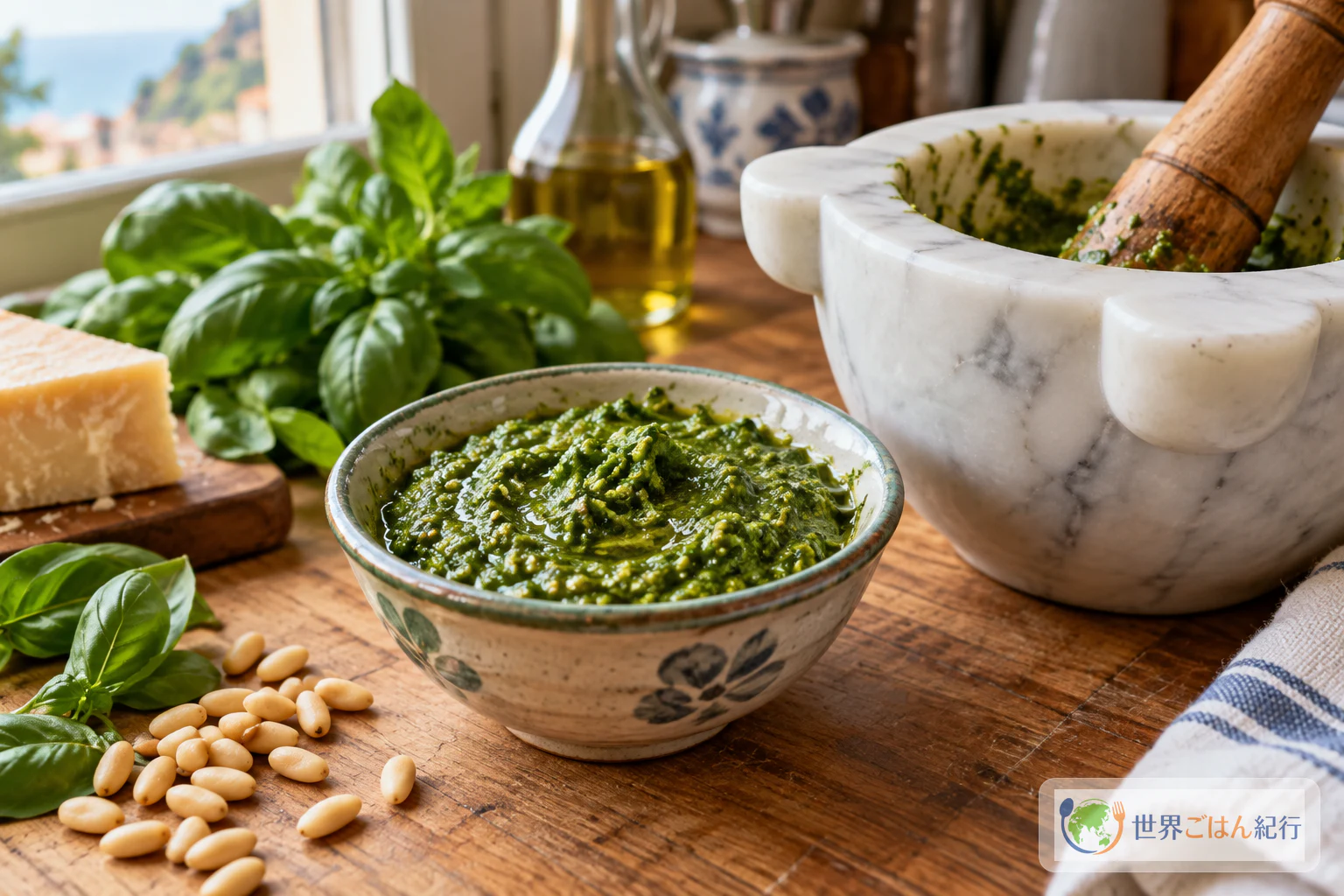
Small, young basil leaves, ground gently and quickly at room temperature. The color and aroma of Pesto Genovese depend on both what goes into the mortar and how the pestle moves.
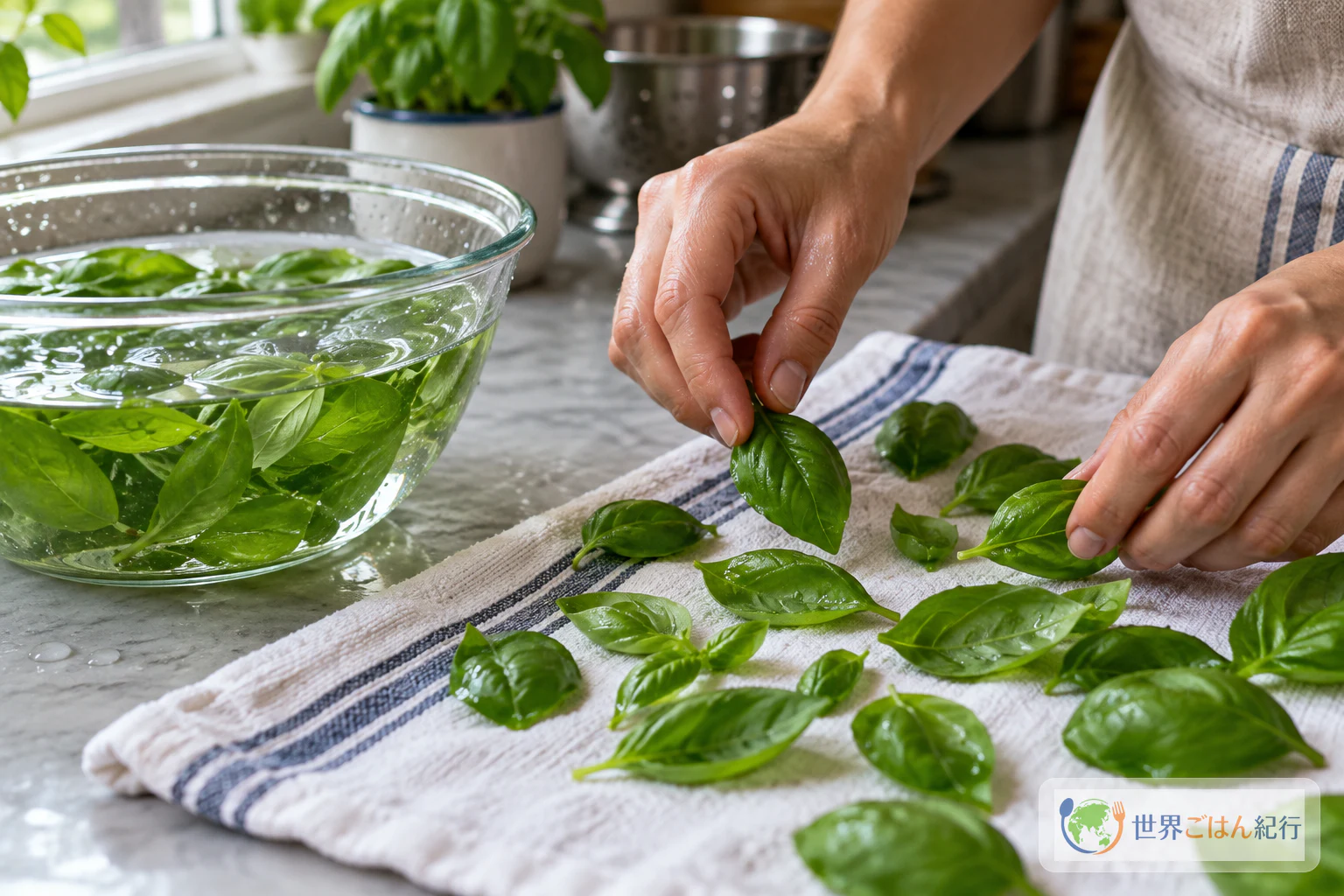
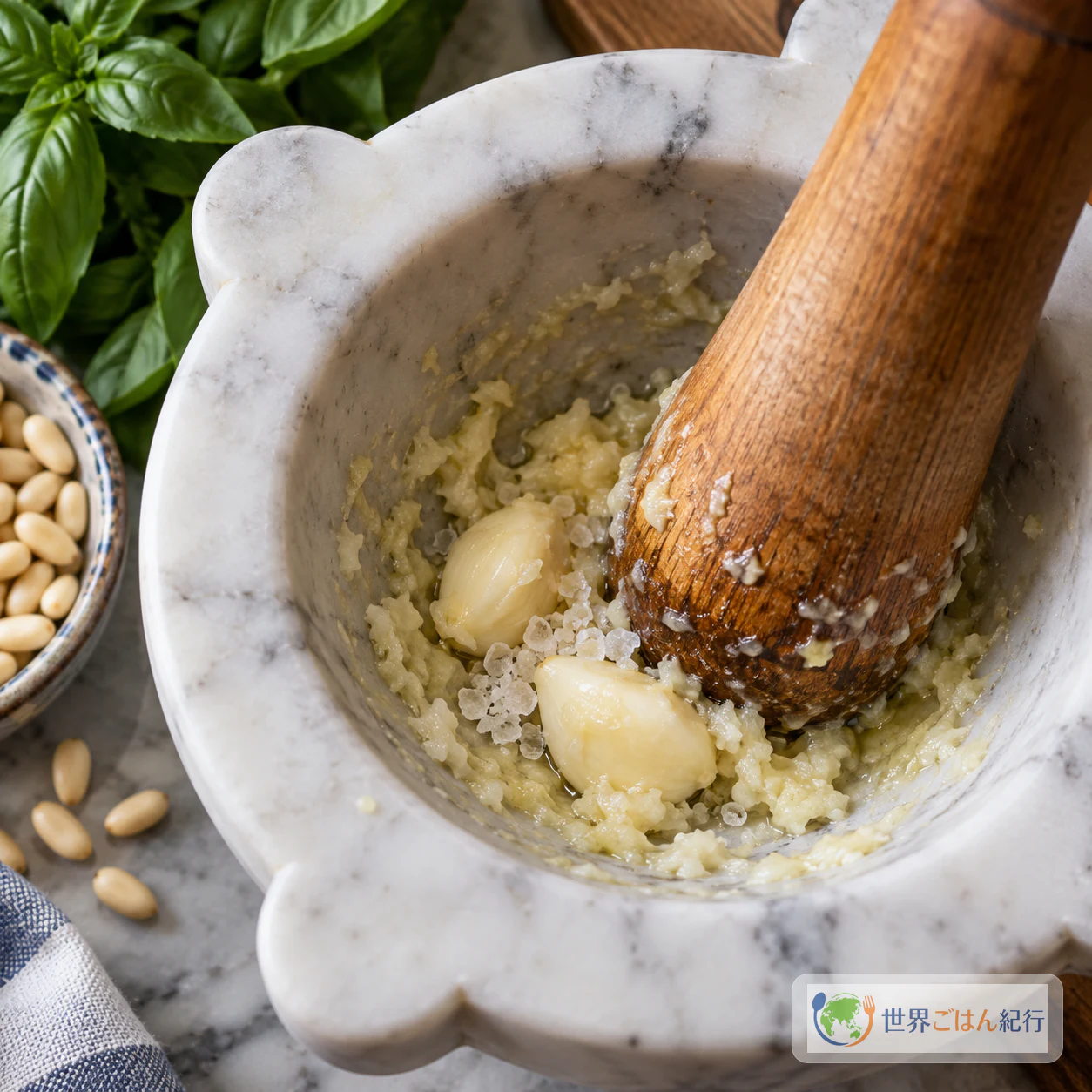
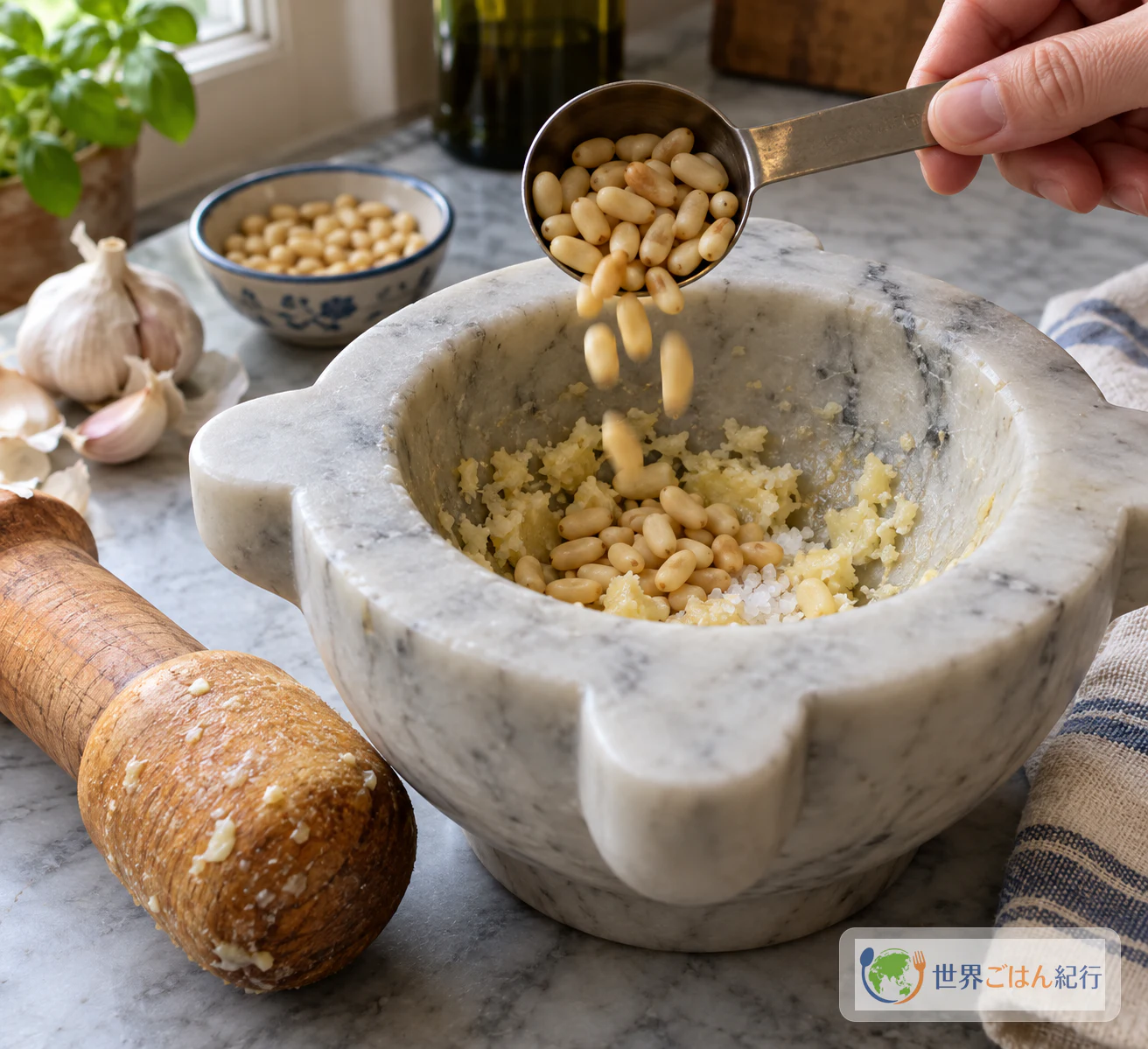
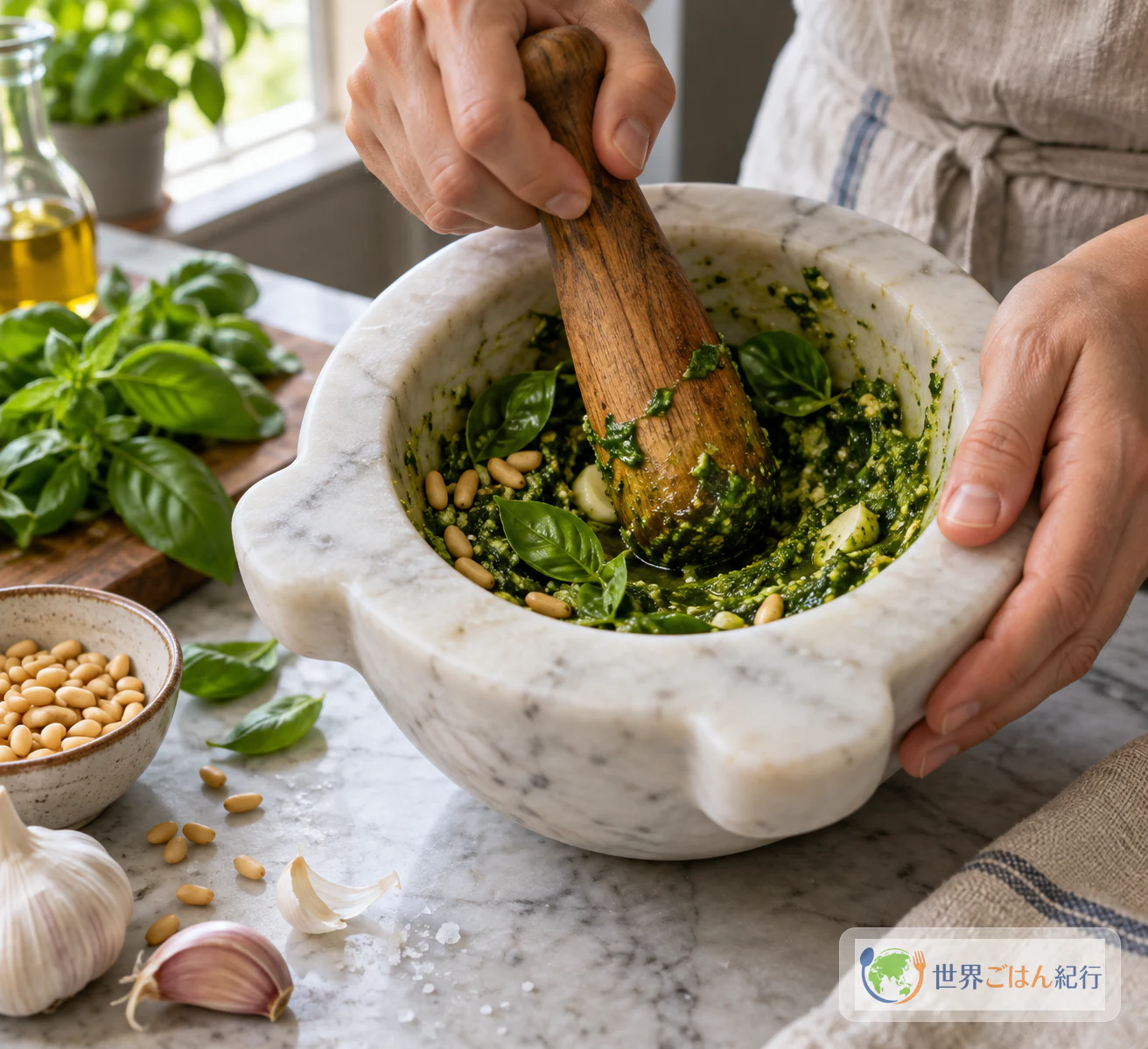
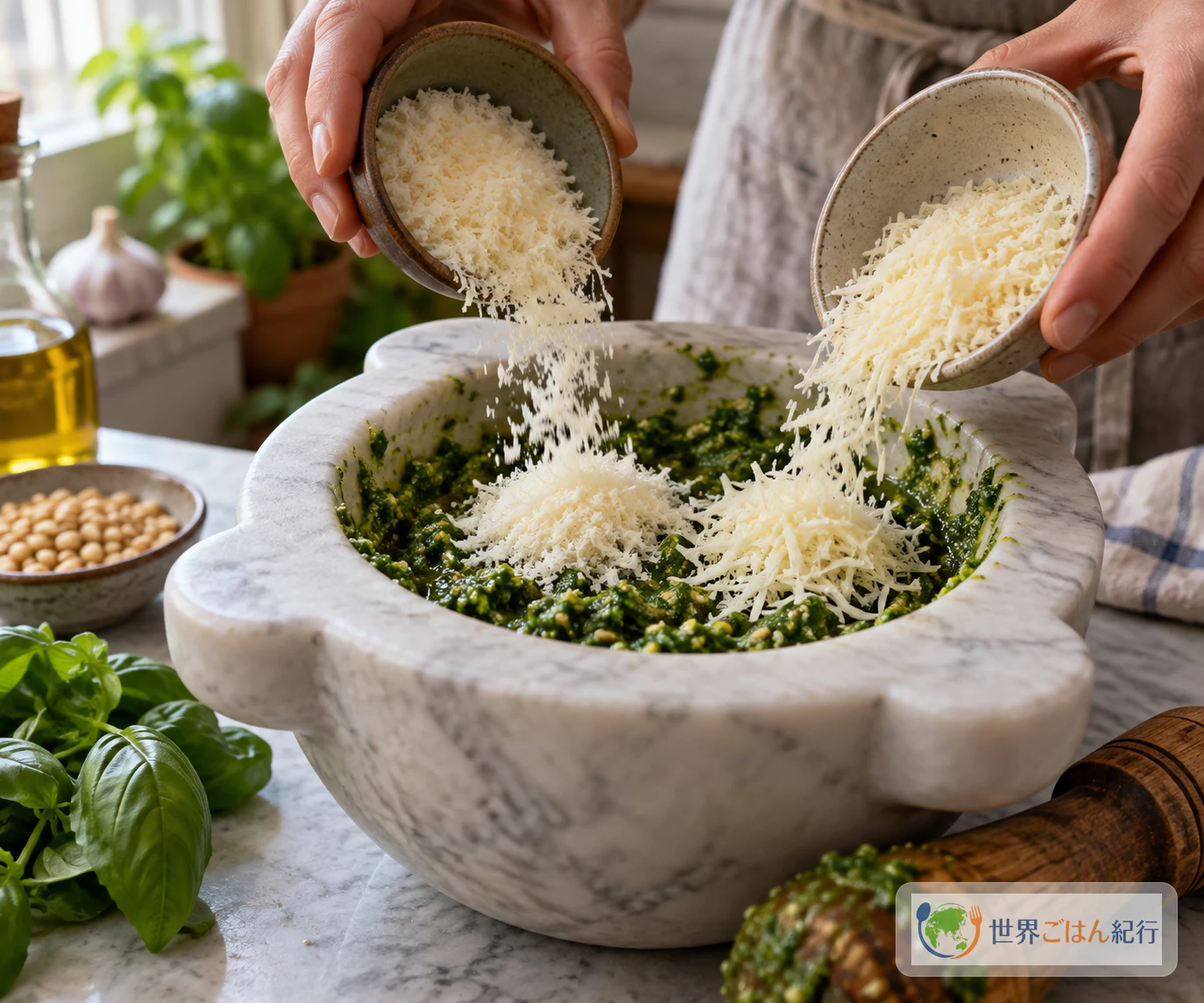
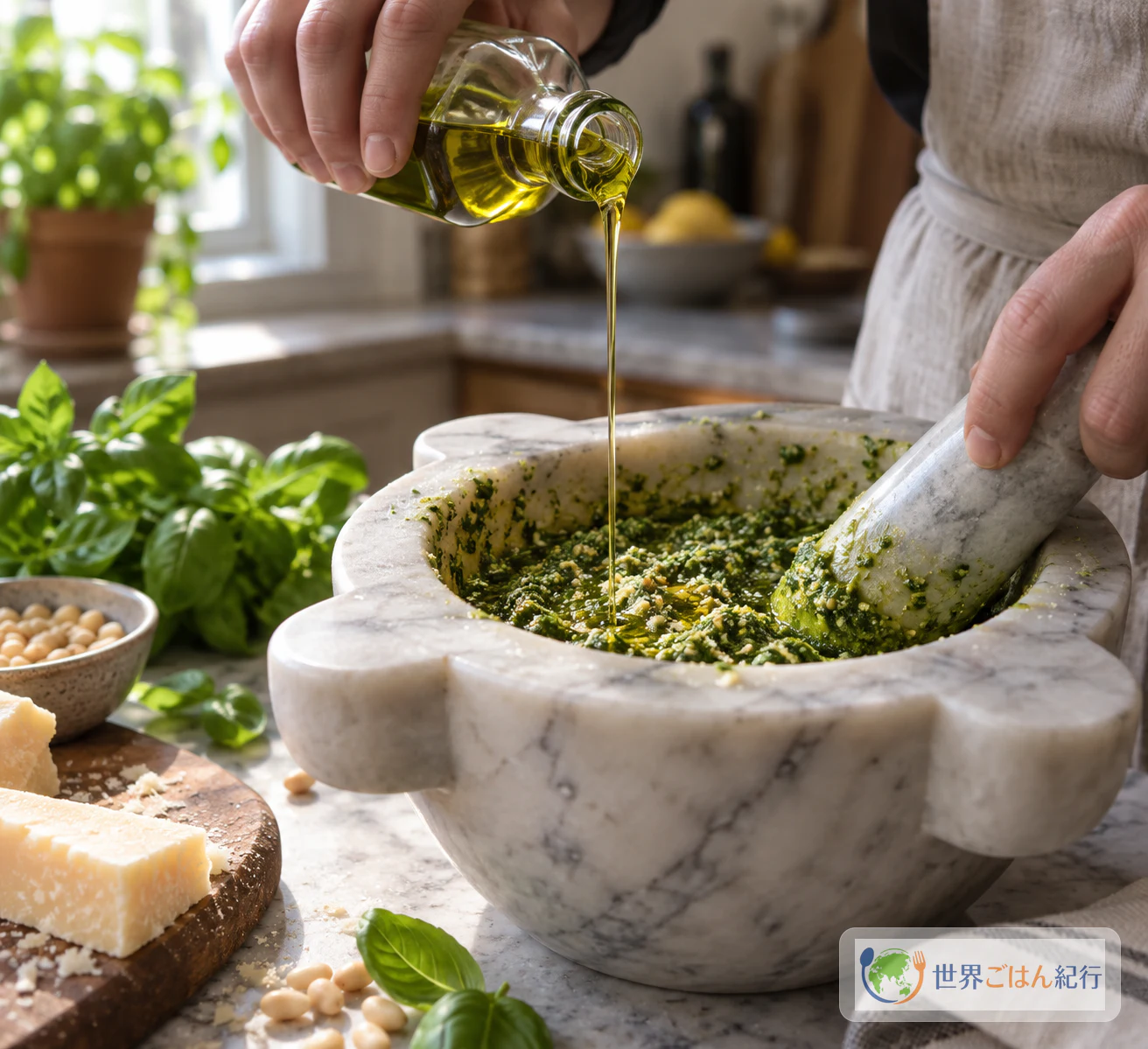
The basil is rinsed in cold water and laid on a cloth to dry. Garlic and a few grains of coarse salt are crushed in a marble mortar until creamy, then come the pine nuts, then the basil leaves a little at a time. The wooden pestle does not pound. It turns against the inside of the bowl and breaks the leaves down. Last come two grated cheeses and a thin thread of olive oil. That is the sequence described by the Consorzio del Pesto Genovese, the consortium for Genoa's pesto, and it is the recipe this article follows.
"Pesto" can refer broadly to many pounded sauces. This article covers one specific type: Pesto Genovese (pesto alla genovese) from Genoa in Liguria. The Consorzio's version uses seven ingredients: small-leaf basil, extra-virgin olive oil, Parmigiano Reggiano, Fiore Sardo pecorino, pine nuts, garlic and coarse salt. The quantities are meant to dress 600 g of pasta. Pestos made with other nuts or with ricotta are not "fake". They are simply different types from the Genoese formula given here.
Reproducing the character of this sauce depends on two things: the ingredients you choose and the way you grind them. Start with the ingredients. For more dishes from the same country, see Italian recipes.
Ingredients: Seven for the Sauce, With the Pasta Kept Separate
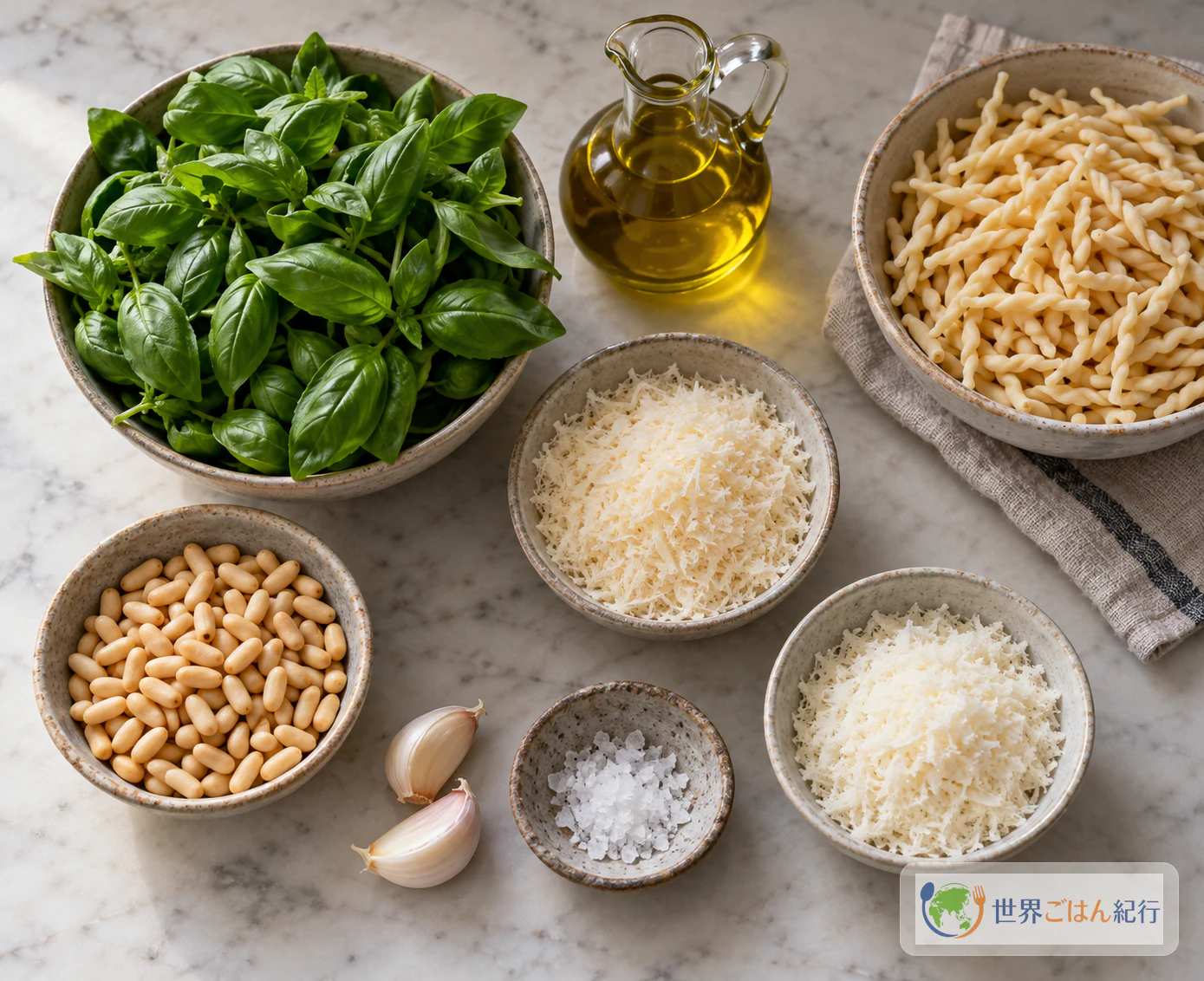
These are the Consorzio's amounts, written in its own units. The source does not define how much a "half glass" holds, and it does not give weights for its tablespoons. For that reason, no gram or milliliter conversions appear here. The pasta and its cooking water are listed separately because they are not part of the sauce.
The source also suggests about one garlic clove for every 30 basil leaves as a rough guide. Because it does not fix the number of leaves, treat that as a guide and not a strict ratio.
This sauce contains milk (Parmigiano Reggiano and pecorino) and pine nuts (a tree nut). If you use ready-grated cheese or store-bought pesto, check the ingredient and allergen labeling on each product. Swapping an ingredient does not guarantee that an allergen is avoided. Use clean utensils, don't leave the finished sauce standing at room temperature for long, and cool any leftovers quickly and refrigerate them.
Choosing and Substituting: What Changes Outside Liguria
Basil. Basilico Genovese DOP is a certification for basil grown in its typical Ligurian area under controlled rules. Young sweet basil from an ordinary supermarket is a practical choice when you can't get it. However, that choice is made for availability. It does not carry the certification, and it will not have the same aroma.
Cheese. The pairing of Parmigiano Reggiano and Fiore Sardo is part of what defines this recipe. Pecorino cheeses vary in type and saltiness, so a different pecorino will taste different. Generic grated "parmesan" is also not a like-for-like swap. If you have to use other cheeses, you are making a variation with a different flavor, not the Consorzio's formula.
Pine nuts. Walnuts, cashews or other nuts make a different recipe, so no nut substitute is offered for this version.
Olive oil and salt. Choose an extra-virgin olive oil that is not too strongly flavored. That follows the Consorzio's intent, but it does not mean the oil meets any origin requirement. The size of salt grains varies, so "a few grains" can taste different from one salt to another. Taste before adding any more salt.
Equipment
- Marble mortar and wooden pestle (the traditional tools; an ordinary mortar or a blender can also be used, as explained below)
- A bowl of cold water for washing the basil
- A clean cloth or tea towel for drying the leaves
- Grater for the two cheeses
- Measuring spoon (tablespoon)
- A pot for cooking the pasta and a bowl for tossing
Method: Making Pesto Genovese in a Mortar
This is a sauce made without heat. The Consorzio advises working at room temperature and finishing as quickly as you can to limit oxidation. The source gives no specific times or temperatures, so judge each stage by how the paste looks.
Mortar or Blender?
The Consorzio names the marble mortar and wooden pestle as the traditional tools. It does not forbid a blender, but it says that a blender will not give the same color and flavor as the traditional method. Santagata 1907, sponsor of the Genoa Pesto World Championship, also describes the marble mortar, the wooden pestle and a circular grinding movement.
Choose based on the tools you have at home. Whichever method you use, keep the ingredients and amounts the same. A blender is a shortcut, and it gives a different result from the mortar version.
When Things Go Wrong
The Consorzio's guidance is about working gently and quickly. It does not diagnose every problem, so the notes below point back to its method instead of promising a fix.
| What you notice | What to revisit | What to do |
|---|---|---|
| The sauce looks dull or dark | The source warns about oxidation | Next time, don't rub or crumple the leaves, work at room temperature, and finish as quickly as you can |
| The aroma feels harsh | How the pestle was used | Go back to the source method: light rotation against the wall, no hard pounding |
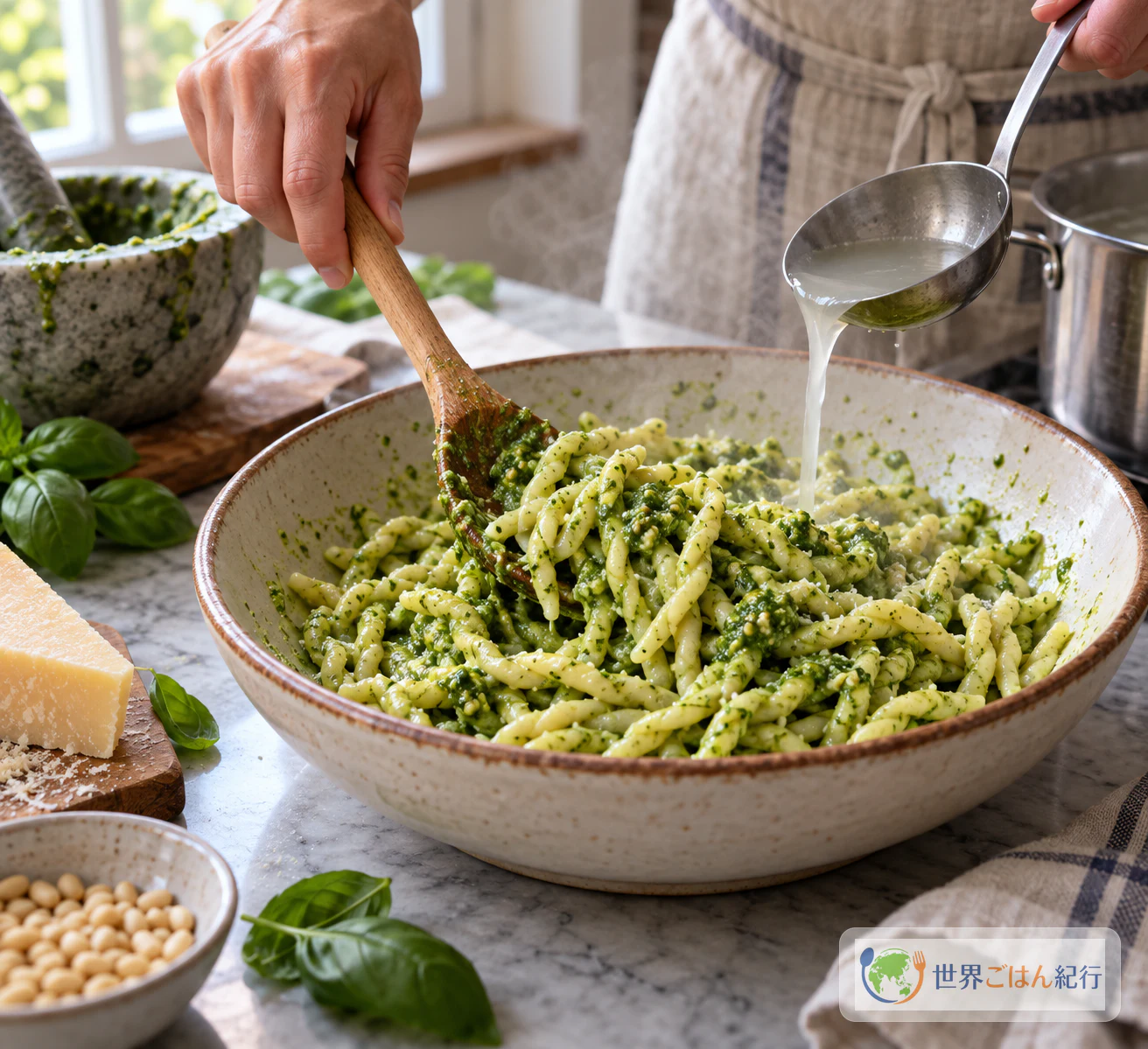
| The sauce won't coat the pasta | Thickness when tossing | Add pasta cooking water a little at a time as you toss |
| Saltier than expected | Salt plus two salty cheeses | Taste before adding any salt beyond the first few grains |
Not Only Trofie: How Pesto Genovese Is Eaten
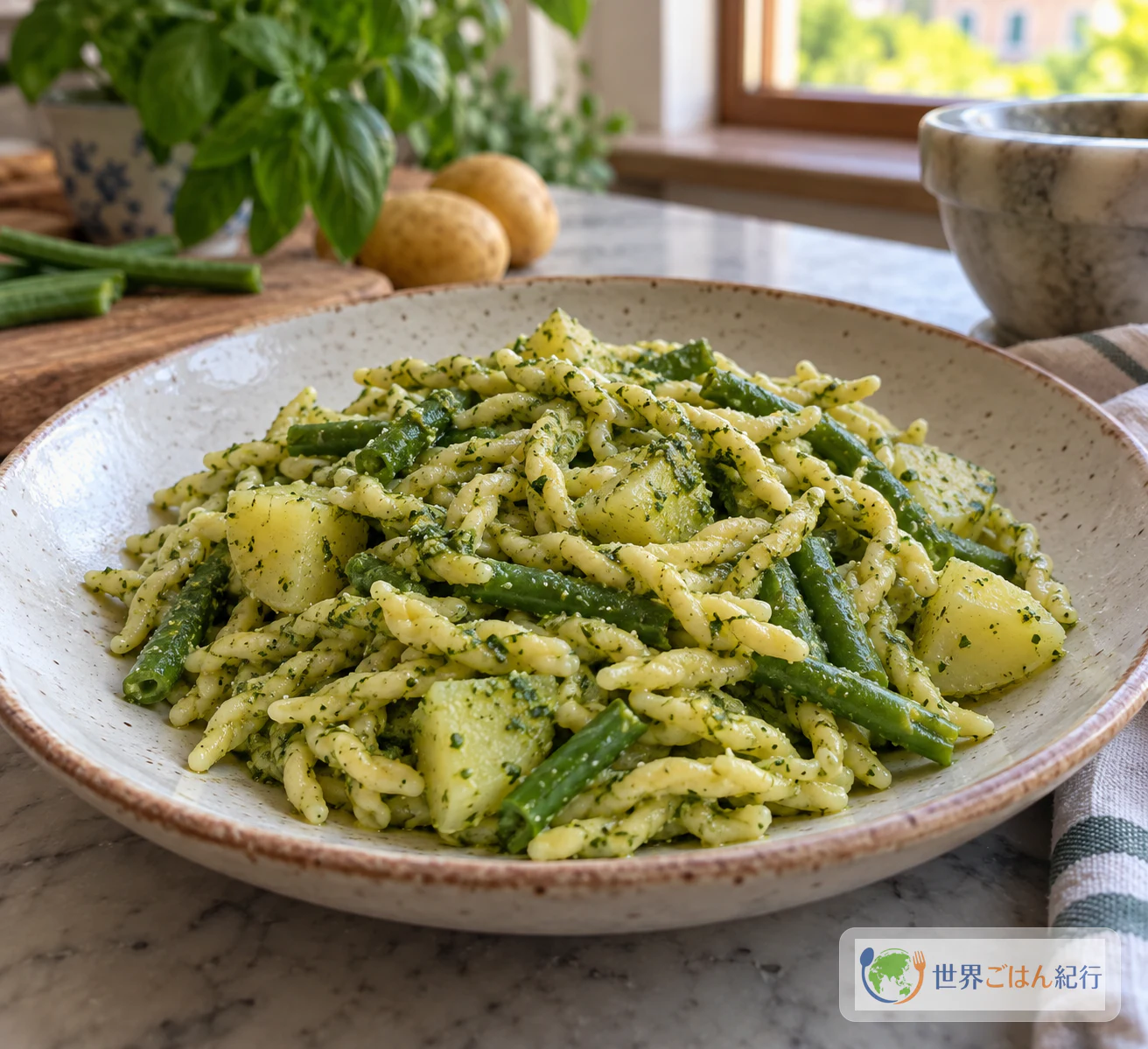
The Consorzio and the Genoa basil park list several Ligurian pairings for pesto: trofie or trofiette, trenette, mandilli de saea (thin, silky pasta sheets) and minestrone.
One traditional way of serving is to boil potatoes and green beans in the same water as the pasta and toss everything together. The vegetables are part of the plate, not part of the sauce, so they never go into the mortar. The source gives no amounts for them.
Meaningful variations
| Variation | What it involves | What to keep in mind |
|---|---|---|
| Marble mortar and wooden pestle | The traditional method above | The version the Consorzio describes |
| An ordinary mortar you already own | Same order, same light rotation | How a different mortar material changes the result has not been verified |
| Blender | A shortcut | According to the Consorzio, color and flavor differ from the mortar version |
| Trofie with potatoes and green beans | Vegetables boiled in the pasta water | A Genoese serving style, separate from the sauce recipe |
| Trenette or mandilli de saea | A different pasta shape | Both are pasta pairings named by Ligurian sources |
Genoa's Basil and the Place of Pesto
Basil is tied to Ligurian agriculture and everyday life. The consortium for Genoese basil says Basilico Genovese DOP has had EU recognition since 2005. It also states clearly that Genoese pesto itself has no DOP. Only the basil, as an ingredient, can carry that status.
Pesto appears in Genoese cookbooks from the mid-19th century. Sources disagree on the date of the Ratto brothers' book, La Cuciniera Genovese: the Genoa basil park gives 1865, while a Genoa Chamber of Commerce document gives 1863. That same document reproduces an early formula with garlic, basil, Dutch cheese, Parmesan, pine nuts and butter, which differs noticeably from today's Consorzio recipe. The dish should not be read as having one fixed ancient origin.
Even within Liguria, people do not all make pesto the same way. The championship recipe published by Santagata uses its own ratios, and that page notes that individual preparations vary. The Consorzio formula in this article is one well-defined reference point, not the only correct household recipe.
Frequently Asked Questions
Does Pesto Genovese contain cream or cashews?
Neither is in the Consorzio recipe used here. If you buy a jarred pesto, read that product's own ingredient list.
Can I make it in a blender?
Yes. The Consorzio allows it, but says the color and flavor will not be the same as pesto made in a traditional mortar.
Is Pesto Genovese a DOP product?
No. The sauce as a whole has no DOP. Basilico Genovese DOP is a certification for the basil, its main ingredient.
How many servings does this make?
The source says the recipe dresses 600 g of pasta. It does not give a number of servings or the finished weight of the sauce.
Can I store leftover pesto?
The sources used here do not establish how long pesto keeps or whether it can be frozen, so no storage period is given. Follow general home hygiene: use clean utensils, don't leave it at room temperature for long, and cool leftovers quickly and refrigerate them. Covering the surface with oil does not make room-temperature storage safe.
Sources
- Mangiare in Liguria (content provided by Consorzio del Pesto Genovese), "PESTO GENOVESE, the authentic Basil Pesto sauce recipe." The seven-ingredient recipe and its amounts for 600 g pasta, the mortar method and ingredient order, the traditional tools, quick room-temperature preparation, the difference with a blender, and Ligurian pasta and serving styles. https://www.mangiareinliguria.it/pesto-genovese/pesto-genovese-recipe
- Santagata 1907, "Regional recipes: Pesto." The marble mortar, wooden pestle and circular movement, quick preparation, and the variation among individual Ligurian preparations. Used for comparison only. https://santagata1907.it/en/news-en/regional-recipes-pesto/
- Consorzio per la Tutela del Basilico Genovese DOP, "Recognizing the true Genoese Basil DOP." The DOP status of Genoese basil since 2005, its link to Ligurian culture and pesto, and the fact that pesto itself has no DOP. https://www.basilicogenovese.it/en/genoese-basil-dop-2/ig-logo-and-identity/
- Il Parco del Basilico, Città Metropolitana di Genova, "La ricetta del pesto." The 1865 date given for the Ratto brothers' cookbook, and pairings with trofie, trenette, mandilli de saea and minestrone. https://parcodelbasilico.cittametropolitana.genova.it/ricette/la-ricetta-del-pesto
- Camera di Commercio di Genova, "Menu 'in Blu' per la GMA — Pesto genovese al mortaio" (PDF). The 1863 date given for La Cuciniera Genovese and its early formula. https://www.ge.camcom.gov.it/it/promuovi/ristoranti-e-bartender/giornata-mondiale-supporti/menu-ricette/view
- Ministry of Health, Labour and Welfare (Japan), "Six points for preventing food poisoning at home" (in Japanese). General home hygiene: clean utensils, quick cooling and refrigeration. https://www.mhlw.go.jp/stf/seisakunitsuite/bunya/kenkou_iryou/shokuhin/syokuchu/01_00006.html