Ricotta and Spinach Ravioli: One Recipe from a Dish with Many Shapes
A smooth egg dough, a ricotta and spinach filling sealed in without leaks, and a tomato sauce that is simply roasted tomato passed through a sieve. Keep each of the three plain so the others can be tasted.
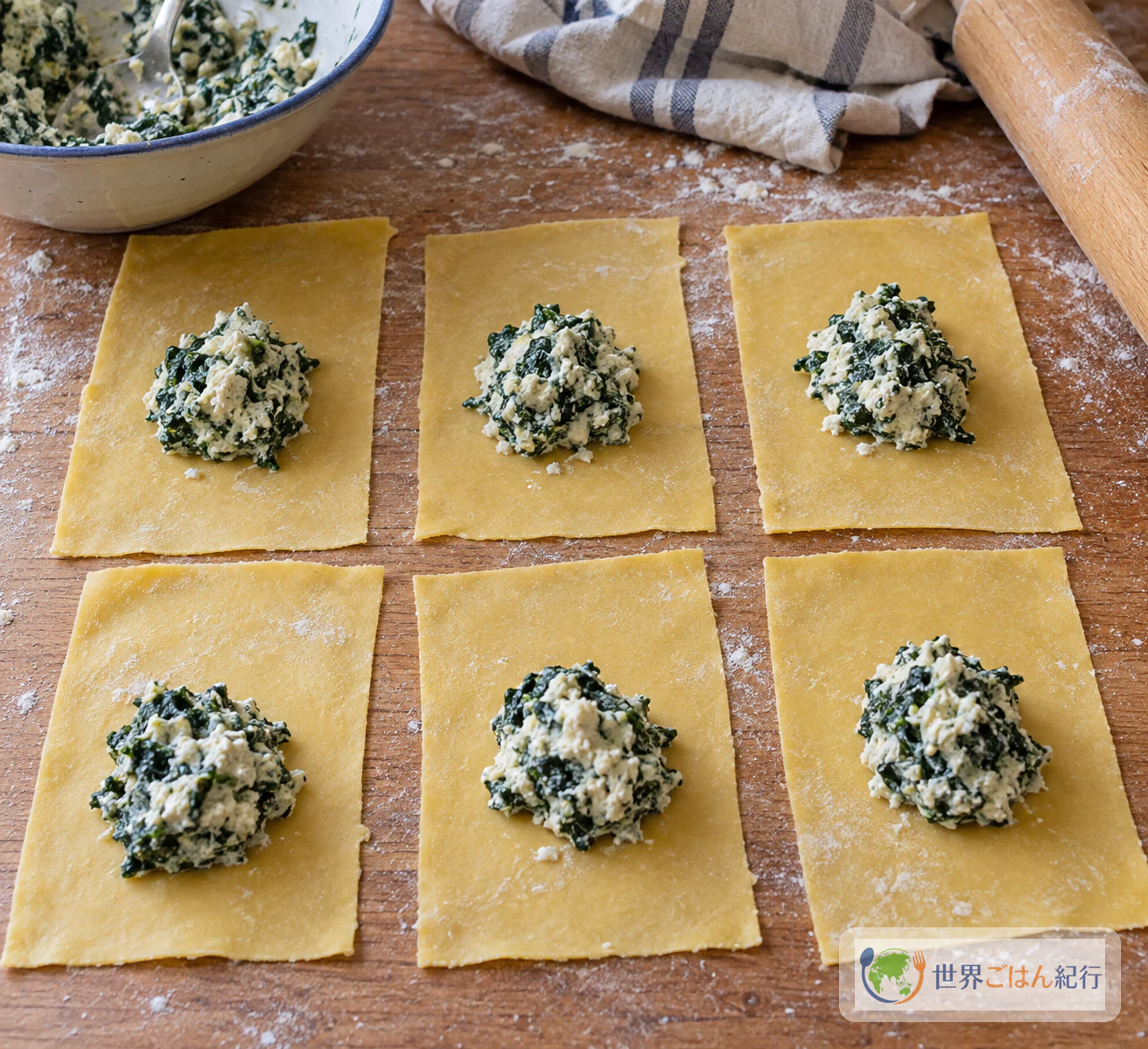
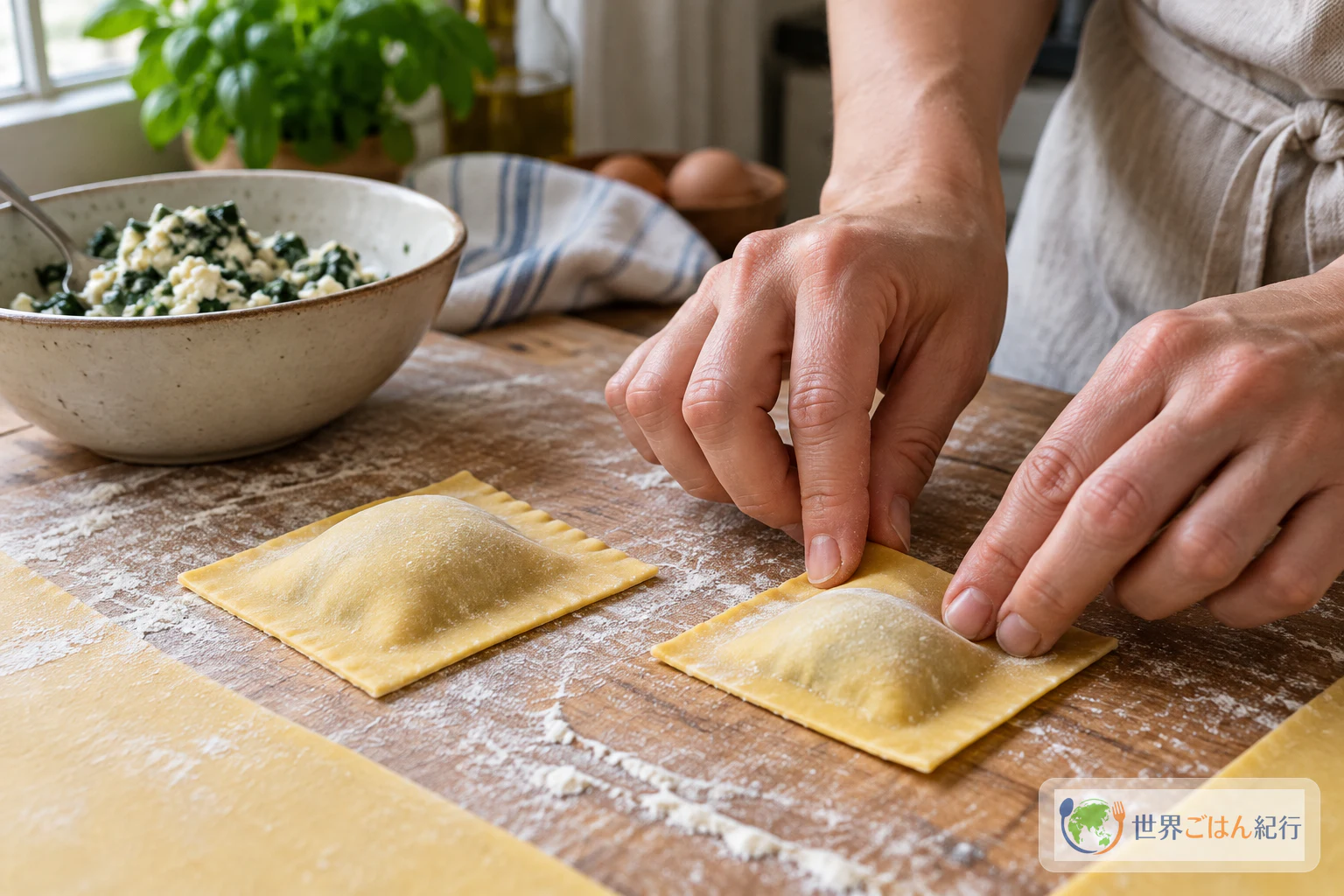
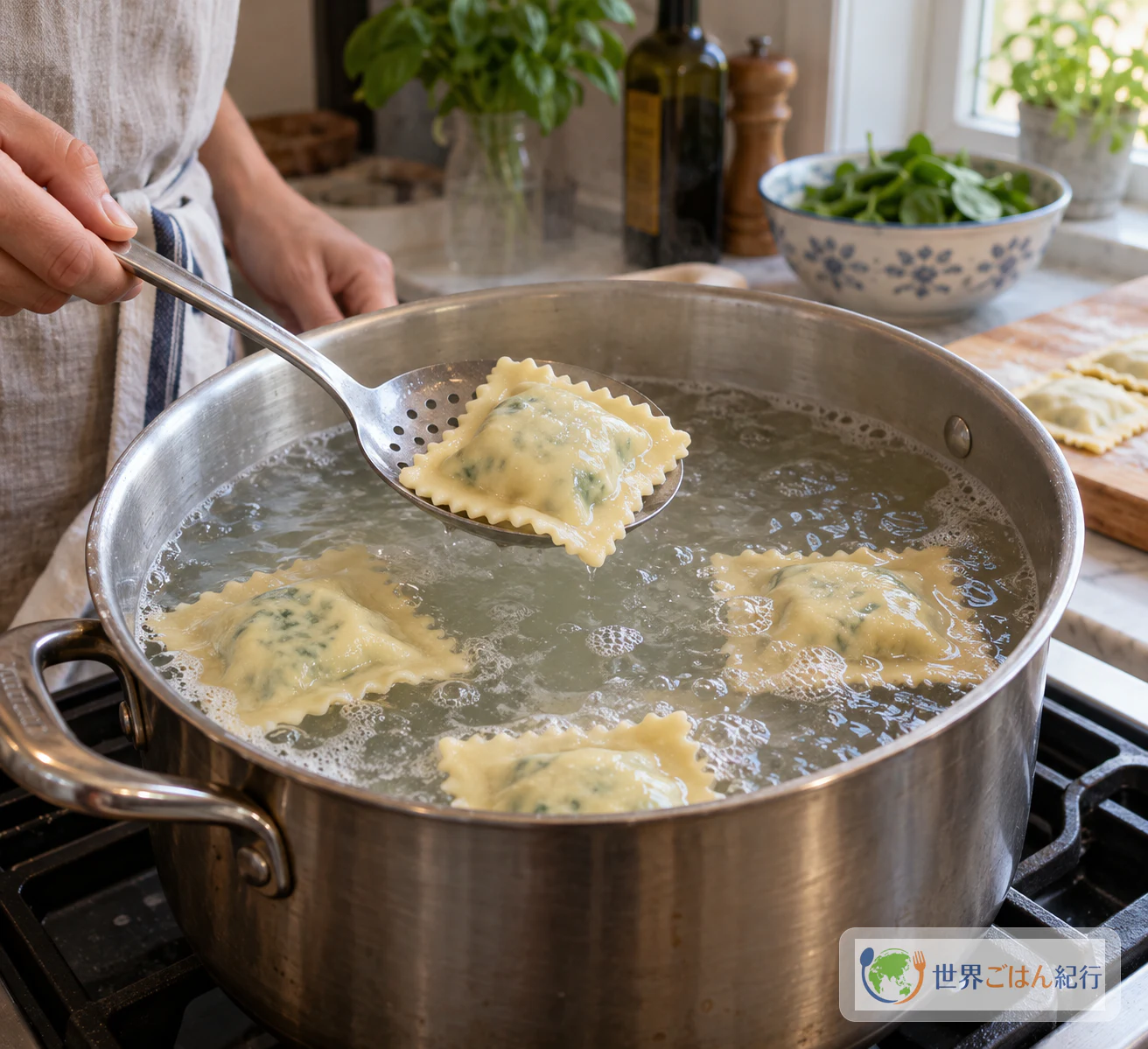
Egg dough is cut into pieces, a spoonful of filling goes in the middle, and the dough is folded or layered over it and pressed shut. That is the basic picture of ravioli, but there is no single ravioli across Italy. The Treccani dictionary describes the filling changing by region, from meat to ricotta and spinach to herbs, and the shape may be rectangular or round.
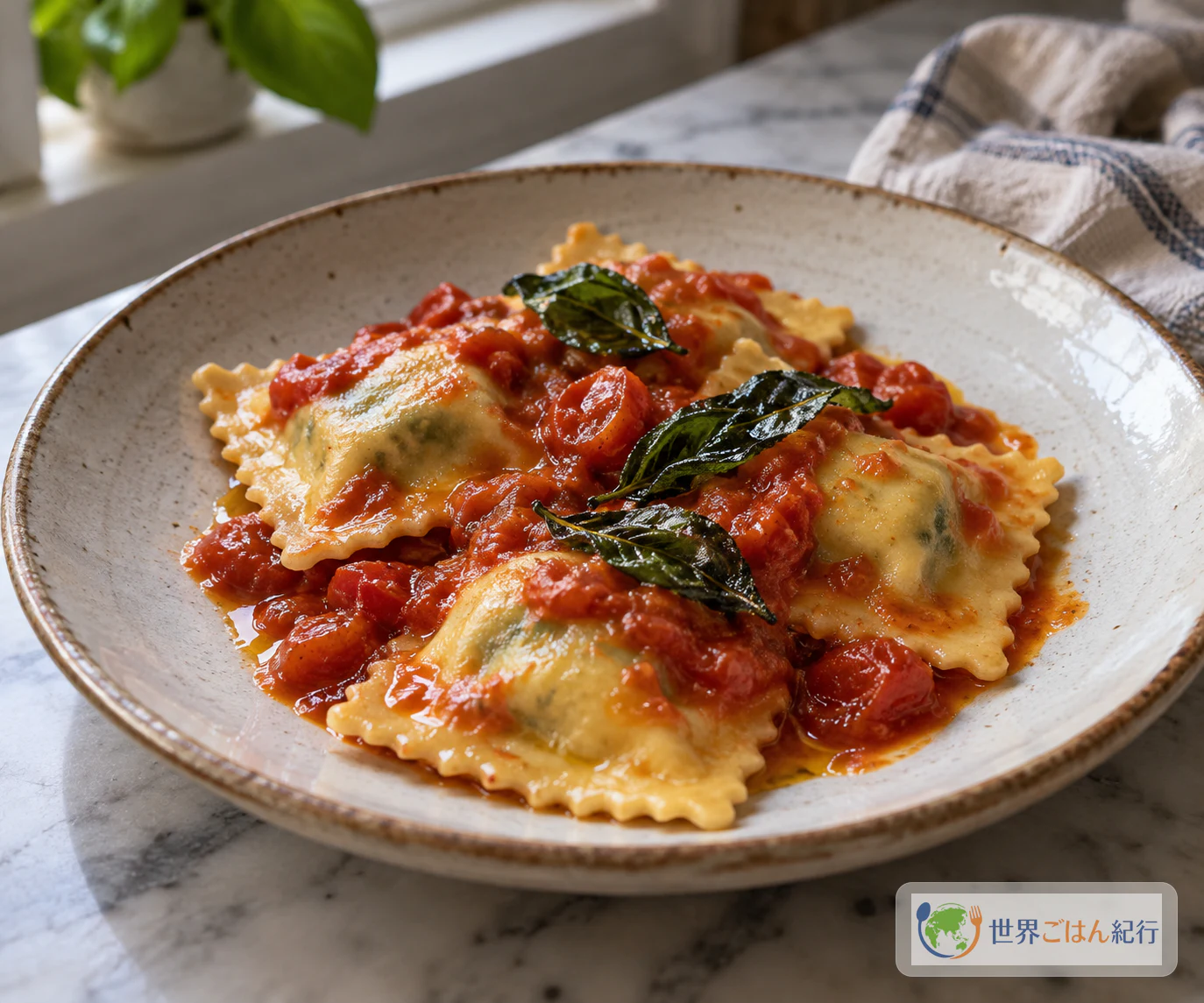
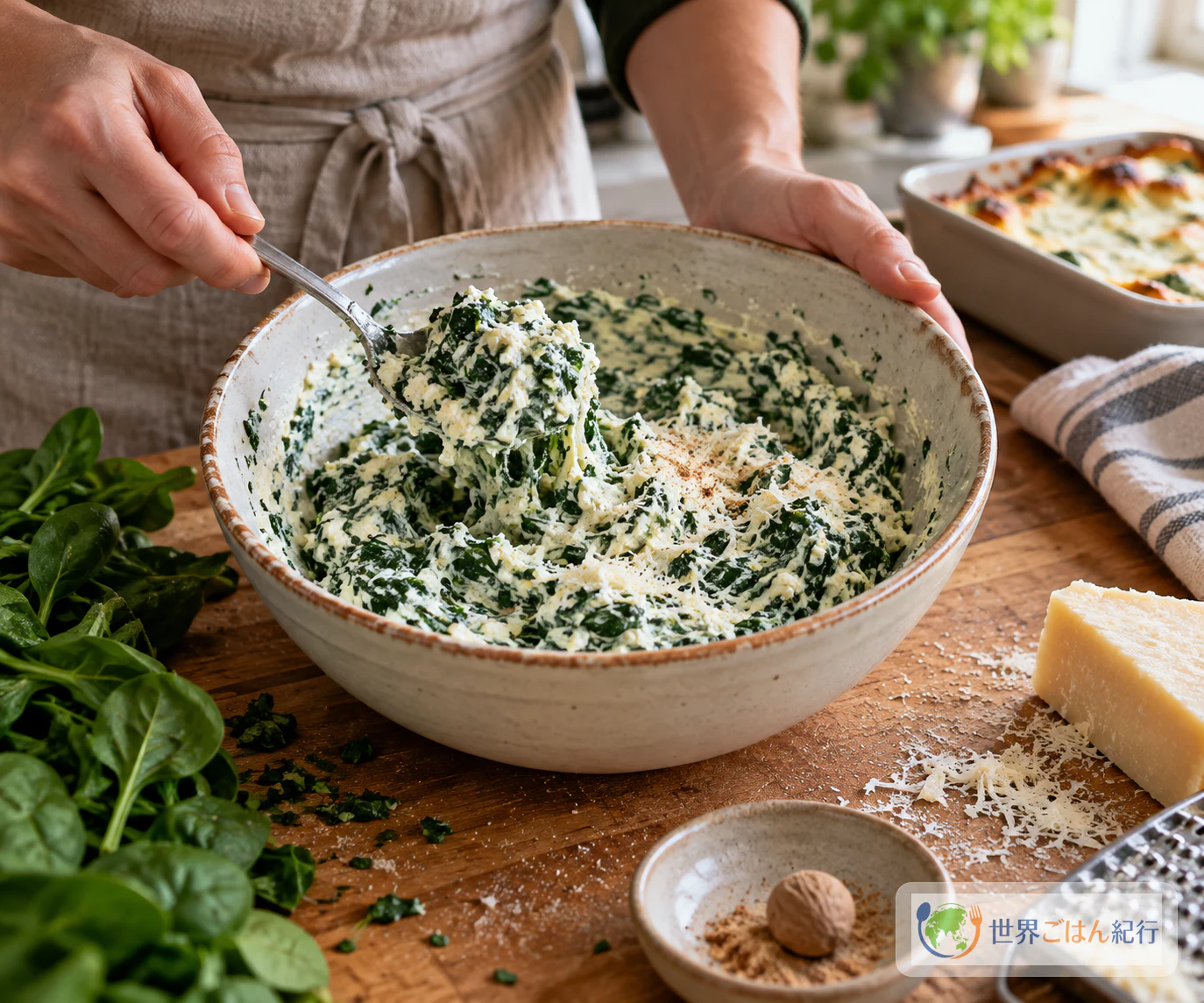
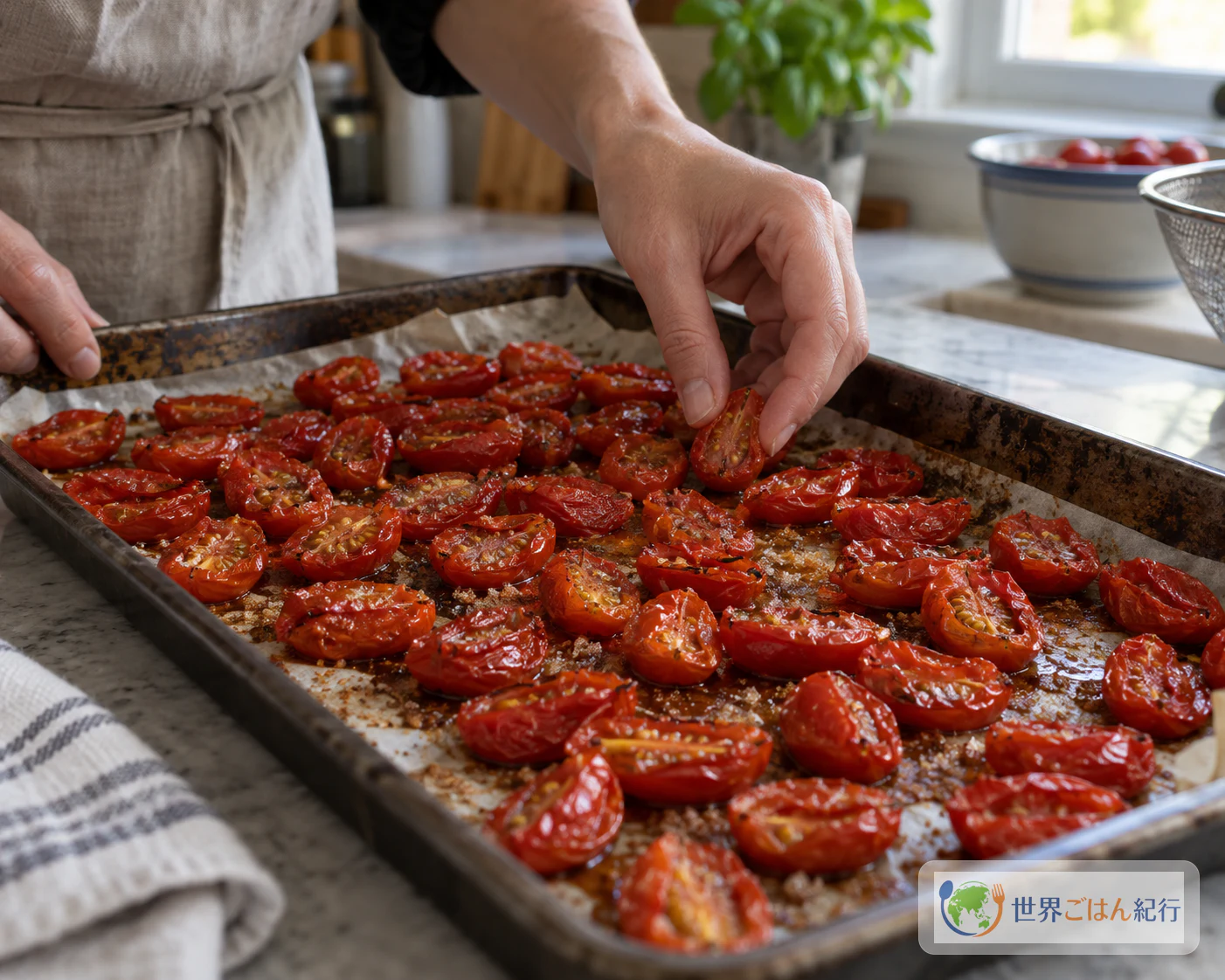
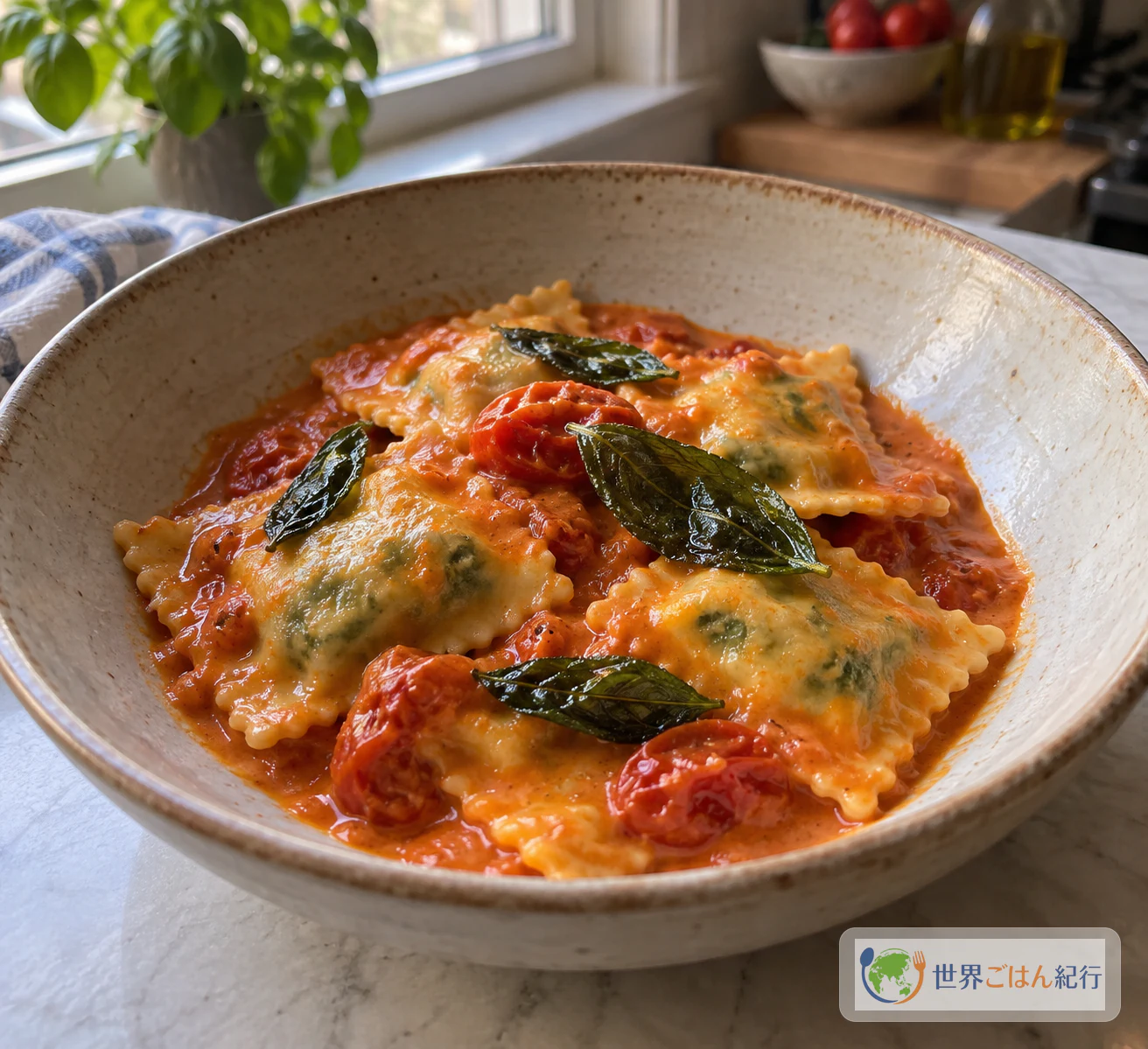
This article follows one specific recipe so you can make it from start to finish: ravioli di ricotta e spinaci by Fabrizio Boca, published by La Cucina Italiana. The dough uses re-milled durum wheat semolina and 00 flour with whole eggs, the filling combines baked ricotta and fresh ricotta with spinach, and the ravioli are tossed in a cream of datterini tomatoes roasted at low heat, then finished with fried basil leaves. The recipe serves 4. For more dishes from the same country, see the Italy page.
Raviolo is the singular; the word is normally used in the plural, ravioli. According to Treccani, the origin of the word is uncertain, and in some parts of central Italy similar pasta is also called agnellotti, agnolotti or tortelli.
What Ricotta and Spinach Ravioli Are
Ravioli are pasta parcels made by enclosing a filling in egg dough. Treccani defines them as egg-based dough cut into rectangles or circles, then layered or folded over a filling. Meat, ricotta and spinach, and herbs are all named as fillings that vary from region to region, so "ravioli" is better thought of as a family of dishes than as one fixed recipe.
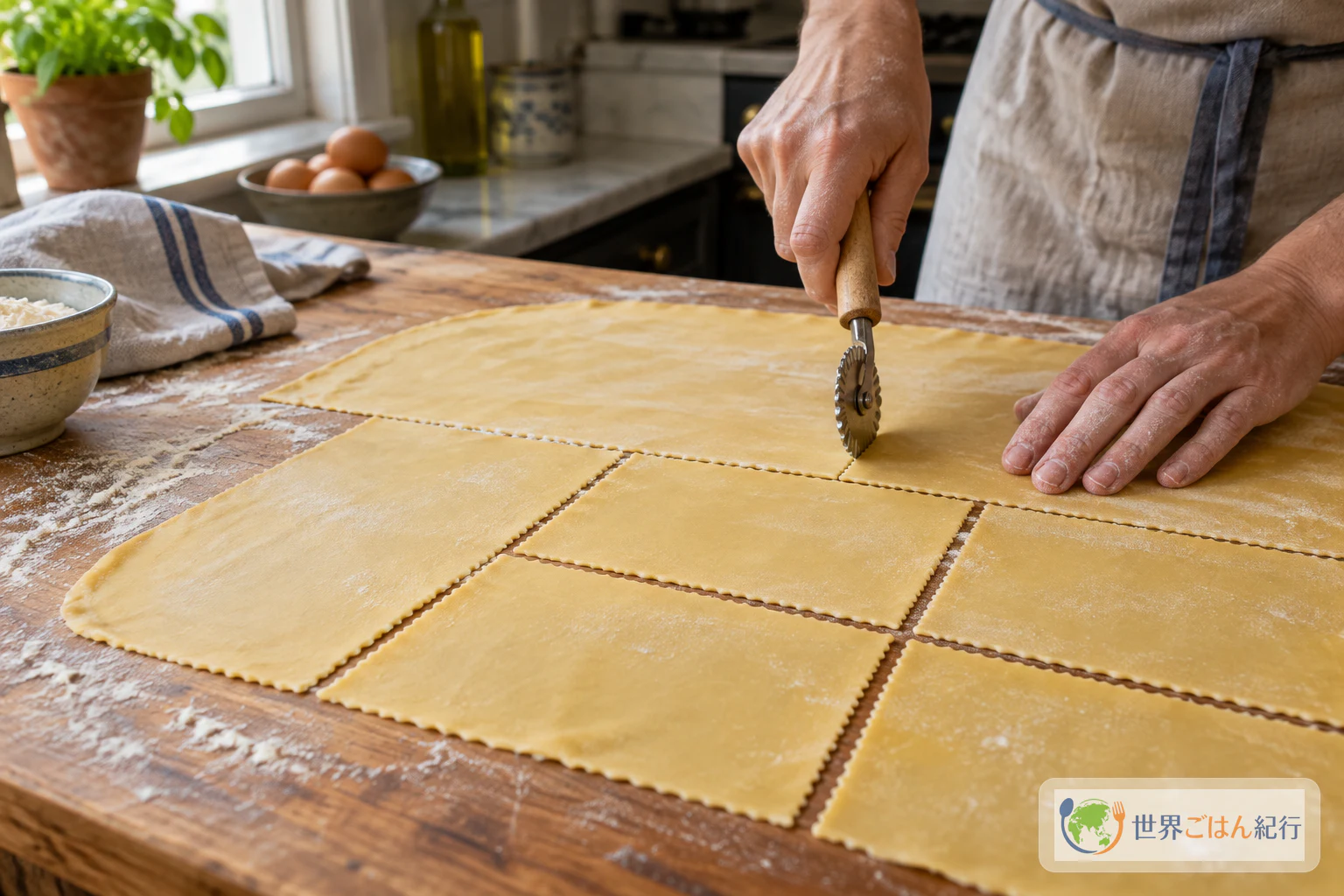
Even with similar fillings, regional names and shapes differ. In South Tyrol, schlutzkrapfen are half-moon shaped and filled with spinach and ricotta; in Piacenza, turtei cu la cua are closed with a braid like a tail. The recipe in this article is neither of those: it cuts the dough into 8×12cm rectangles and closes each one into a small square. The base amounts and sequence below come from that single recipe, not from a mixture of recipes. The refrigerated rest, raw-spinach weight choice and practical sealing and heating guidance are identified separately as editorial choices or general guidance.
Ingredients (Serves 4)
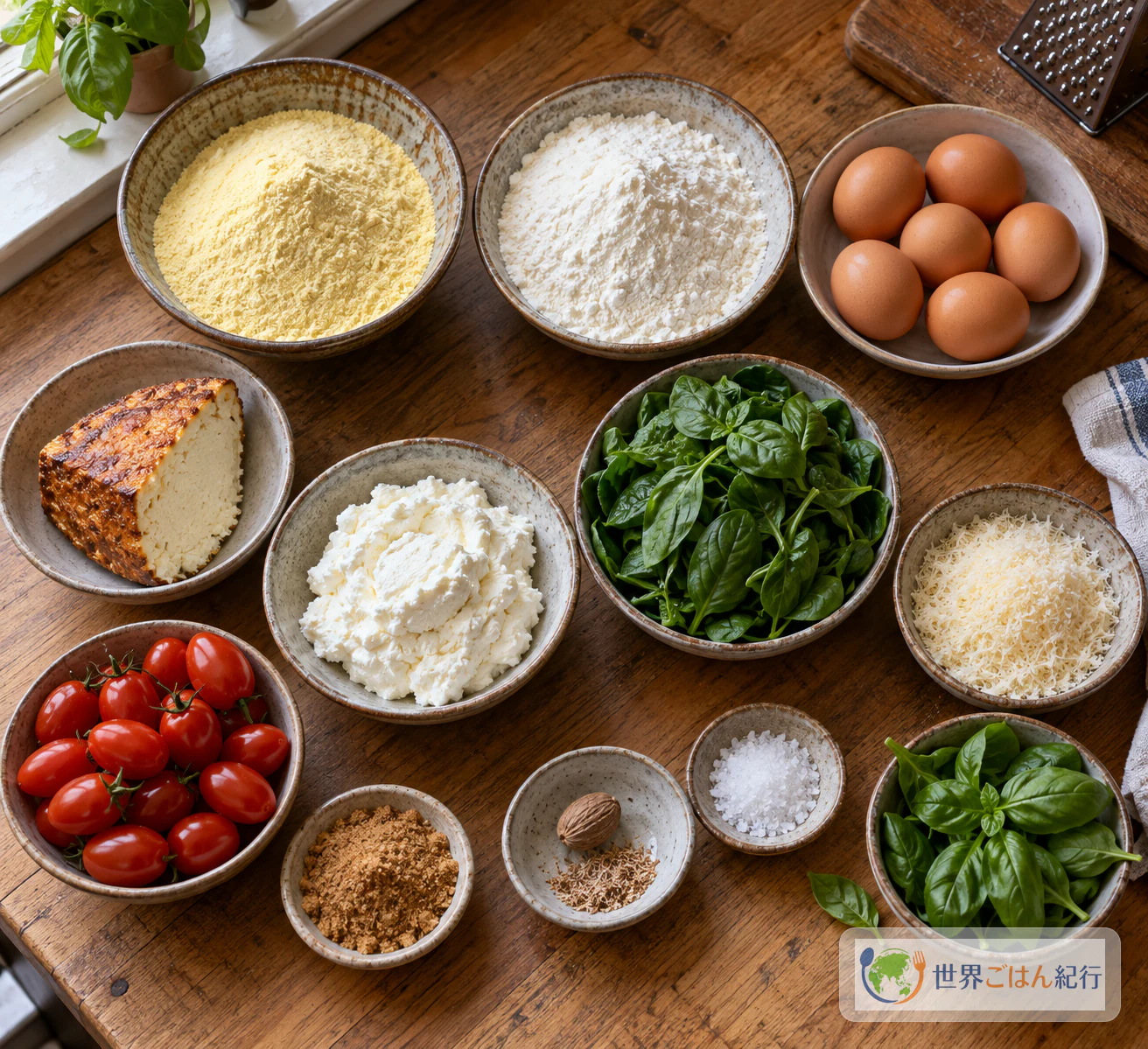
The amounts are split into dough, filling, sauce and finish, exactly as in the source recipe. The source gives the yield as 4 servings and does not state how many ravioli it makes. The flour for dusting and the water and salt for boiling are working amounts kept separate from the recipe.
This recipe contains wheat, egg and milk. Also check the labels of the flours, cheeses and any prepared ingredients you buy. The dough contains raw egg and the filling is dairy-based, so don't leave either sitting at room temperature for long.
Equipment
- Large bowl or work surface for kneading
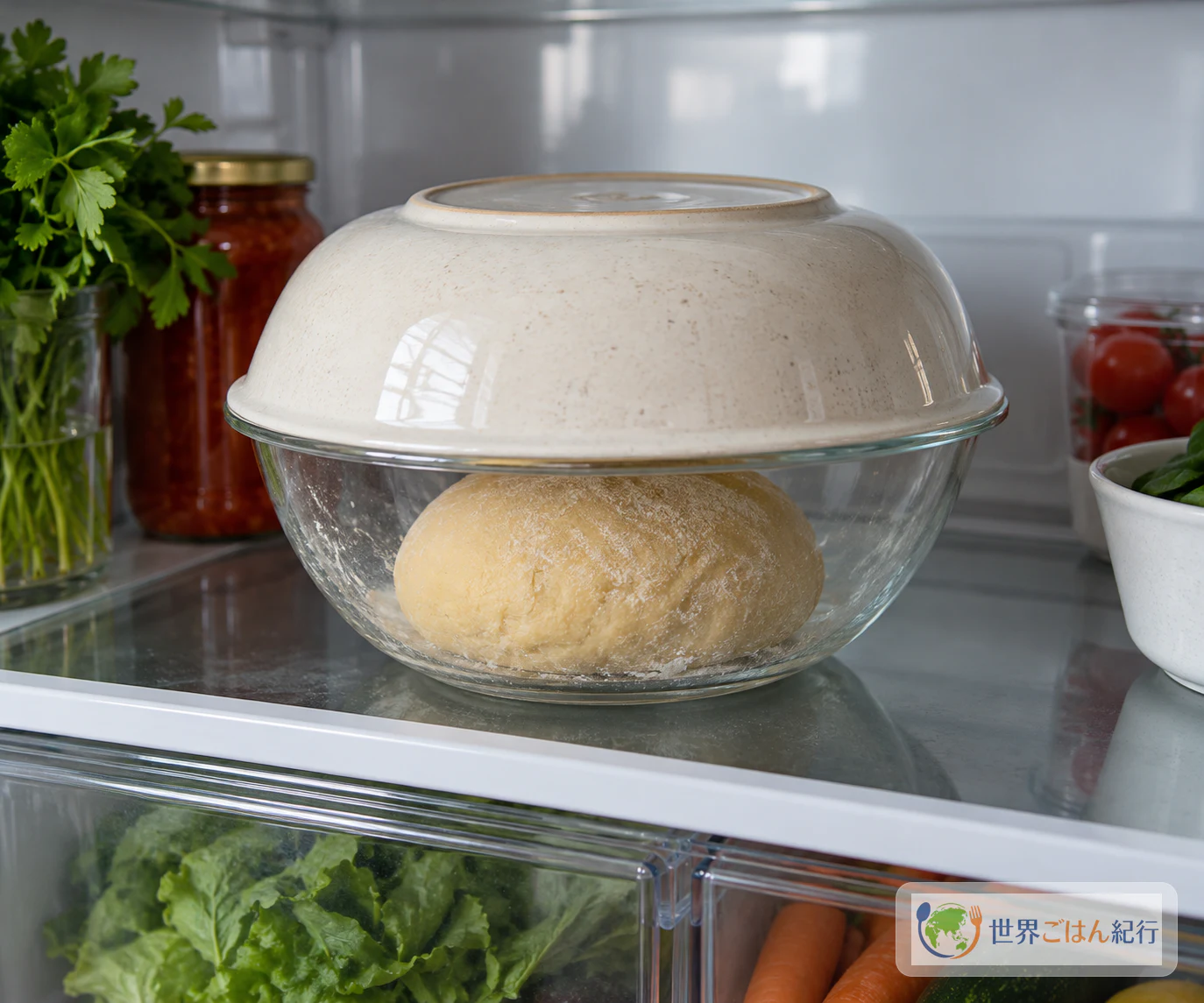
- A cover for the dough (a bowl or wrap) while it rests in the refrigerator
- Pasta machine (optional; helps roll the sheets evenly thin)
- Rolling pin (if you don't use a pasta machine)
- Pasta cutter or bench scraper, and a ruler for the 8×12cm rectangles
- Fine-mesh sieve, for the ricotta and for the roasted tomatoes
- Baking tray and an oven that holds 100°C
- Large pot for boiling, and a slotted spoon
Choosing and Substituting: Flours, Ricotta and Tomatoes
Semola rimacinata is not the same as coarse semolina. "Rimacinata" means re-milled, and its grind can differ from the coarse durum semolina sold for other uses. Look for packages labeled "semola rimacinata di grano duro" or "re-milled durum wheat semolina" at Italian groceries or online.
00 flour is its own product. Don't assume it can be replaced with cake flour or another flour; that swap has not been checked against this recipe.
Ricotta infornata (baked ricotta) can be hard to find. It is a specialty ingredient. Using only fresh ricotta in its place would change the texture, moisture and saltiness of the filling, so treat that as your own variation, not as the original recipe. No replacement amount has been tested here; if you can get baked ricotta, follow the original amounts.
Datterini tomatoes are small, sweet tomatoes. If you can't find them, cherry tomatoes are a possible substitute, but expect differences in flavor and moisture. Keep the salt and sugar at the recipe's amounts rather than trying to correct the taste.
Fried basil leaves are treated here as a finishing ingredient you prepare ahead. The source does not give the amount of oil, frying temperature or frying time, so no frying method is presented as part of this recipe.
Method: Dough, Filling, Sealing and the Tomato Cream
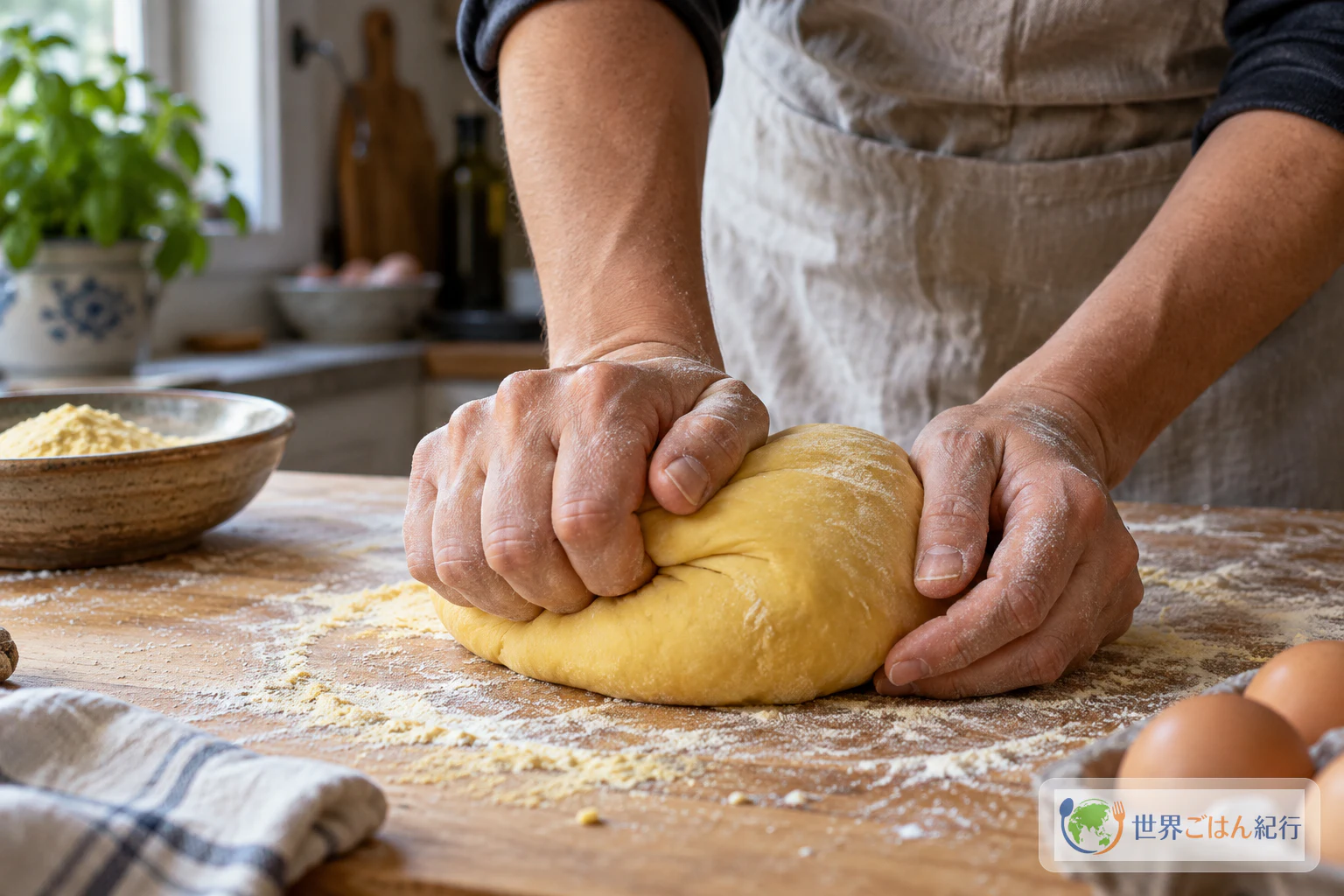
The source recipe gives no dough thickness, no amount of filling per raviolo, no number of ravioli and no boiling time. Instead of filling those gaps with numbers, this method tells you what to look for at each stage, including a test boil before cooking the whole batch.
Torn, Leaking, Underdone: Fixing Common Problems
| Problem | Likely cause | What to do |
|---|---|---|
| The dough dries and cracks while rolling | Left uncovered | Work in small portions and keep the rest covered. Don't add water or change the recipe |
| The filling is too soft to place neatly | Spinach not drained well | Check before filling that the mixture holds its shape on a spoon; drain the spinach thoroughly next time |
| The seams open or filling leaks | Filling on the edges, air trapped inside | Keep the edges clean, press out the air and seal firmly |
| A raviolo tears | Dough stretched or dried | Don't stretch it to patch; keep it from drying and cook it early |
| The dough still has a floury core | Not cooked long enough | Keep boiling and test another; don't rely on floating alone |
Leftovers
The source recipe gives no storage or reheating conditions, so no storage period is given here. As general home food-safety guidance from Japan's Ministry of Health, Labour and Welfare: divide leftovers into shallow containers, cool them quickly and refrigerate, and reheat them thoroughly (to 75°C or above as a guide).
How Fillings and Shapes Change Across Italy
The examples below are regional types with their own names and shapes. Their forms and ingredients are not mixed into this square recipe.
Piacenza: turtei cu la cua. In Emilia-Romagna, Piacenza's turtei cu la cua enclose a filling of ricotta, spinach or herbs, and grated cheese, and are closed with a braid that looks like a tail. They are eaten with melted butter, grana and sage. The Italian tourist board tells the story that they were served to Petrarch in 1351; it is presented as a legend, not as the origin of ravioli as a whole. Parma and Reggio Emilia have their own stuffed-pasta types as well.
South Tyrol: schlutzkrapfen. In South Tyrol, schlutzkrapfen are half-moon parcels filled with spinach and ricotta. The filling is close to this recipe's, but the shape and regional name are different.
Region, city, family. The Italian tourist board describes Italian cuisine as a mosaic of interpretations that differ by region, city and family, centered on sharing the table, Sunday lunch and cooking habits passed between generations. That is a description of Italian food culture overall, not a claim that this particular ravioli is a fixed Sunday dish. A recipe like this one, with dough to roll and parcels to seal by hand, is the kind of work that can easily be shared around a table.
Variations
- Regional shapes: If you want to try turtei cu la cua or schlutzkrapfen, look for a recipe written for that dish rather than reusing this recipe's amounts with a different shape.
- Fresh ricotta only: If baked ricotta is unavailable, replacing it with fresh ricotta is your own variation; expect a different texture, moisture and saltiness. No tested amount is given.
- Cherry tomatoes in the sauce: A possible substitute for datterini, with differences in flavor and moisture.
Frequently Asked Questions
How many ravioli does this make?
The source recipe gives 4 servings and does not state a number of ravioli. The count also depends on how thin you roll the dough and how much filling you use, so only the servings are given here.
How many minutes should I boil them?
The source does not give a boiling time. Cook one as a test, cut it open, and check that the center is hot and the dough has no floury core before cooking the rest.
I can't find ricotta infornata. What should I do?
Using fresh ricotta only changes the texture, moisture and saltiness, and is not the original recipe. No replacement amount has been tested. If you can get baked ricotta, follow the original amounts.
Does the tomato cream contain cream?
No. The "cream" is the roasted datterini passed through a sieve. The source lists no dairy cream and no oil for the sauce.
Are these the same as tortellini or schlutzkrapfen?
Tortellini, ravioli and schlutzkrapfen all belong to the family of stuffed pasta, but their regional names, shapes and fillings differ. Schlutzkrapfen, for example, are half-moon shaped, while this recipe closes 8×12cm rectangles into squares.
Sources
- La Cucina Italiana, "Ravioli di ricotta e spinaci" (recipe by Fabrizio Boca). Source of the ingredients, amounts, 4 servings, all steps, the 2-hour rest, cutting 8×12cm rectangles and closing them, the tomato sauce at 100°C for 30 minutes, boiling in salted water and serving. It does not give boiling time, number of ravioli, dough thickness or storage conditions. https://www.lacucinaitaliana.it/ricetta/ravioli-di-ricotta-e-spinaci/
- Treccani, Vocabolario, "Ravìolo." The definition of ravioli as egg dough cut into rectangles or circles and layered or folded over a filling, regional variety in fillings, the uncertain etymology, and the alternative names in parts of central Italy. https://www.treccani.it/vocabolario/raviolo/
- Italia.it / ENIT, "Italian cuisine, a UNESCO World Heritage asset." Italian cuisine as a mosaic of regional, city and family interpretations, the shared table, Sunday lunch and habits passed between generations. https://www.italia.it/en/italy/things-to-do/italian-cuisine-unesco-heritage
- Italia.it / ENIT, "Bolzano, the gateway to the Dolomites." South Tyrol's half-moon schlutzkrapfen filled with spinach and ricotta. https://www.italia.it/en/south-tyrol/bolzano/guide-history-facts
- Italia.it / ENIT, "Food tour to discover the tortello emiliano." Piacenza's turtei cu la cua, their braided closure, filling and serving, other stuffed-pasta types in Parma and Reggio Emilia, and the 1351 story as told legend. https://www.italia.it/en/emilia-romagna/things-to-do/tortello-tour-in-emilia
- Ministry of Health, Labour and Welfare (Japan), "家庭でできる食中毒予防の6つのポイント" (Six points for preventing food poisoning at home). General home guidance: heating the center to 75°C for at least 1 minute, dividing leftovers into shallow containers, and reheating to 75°C or above. Not a tested result for this recipe. https://www.mhlw.go.jp/stf/seisakunitsuite/bunya/kenkou_iryou/shokuhin/syokuchu/01_00006.html