Pelēkie Zirņi ar Speķi: Soft Grey Peas Under Bacon and Onion
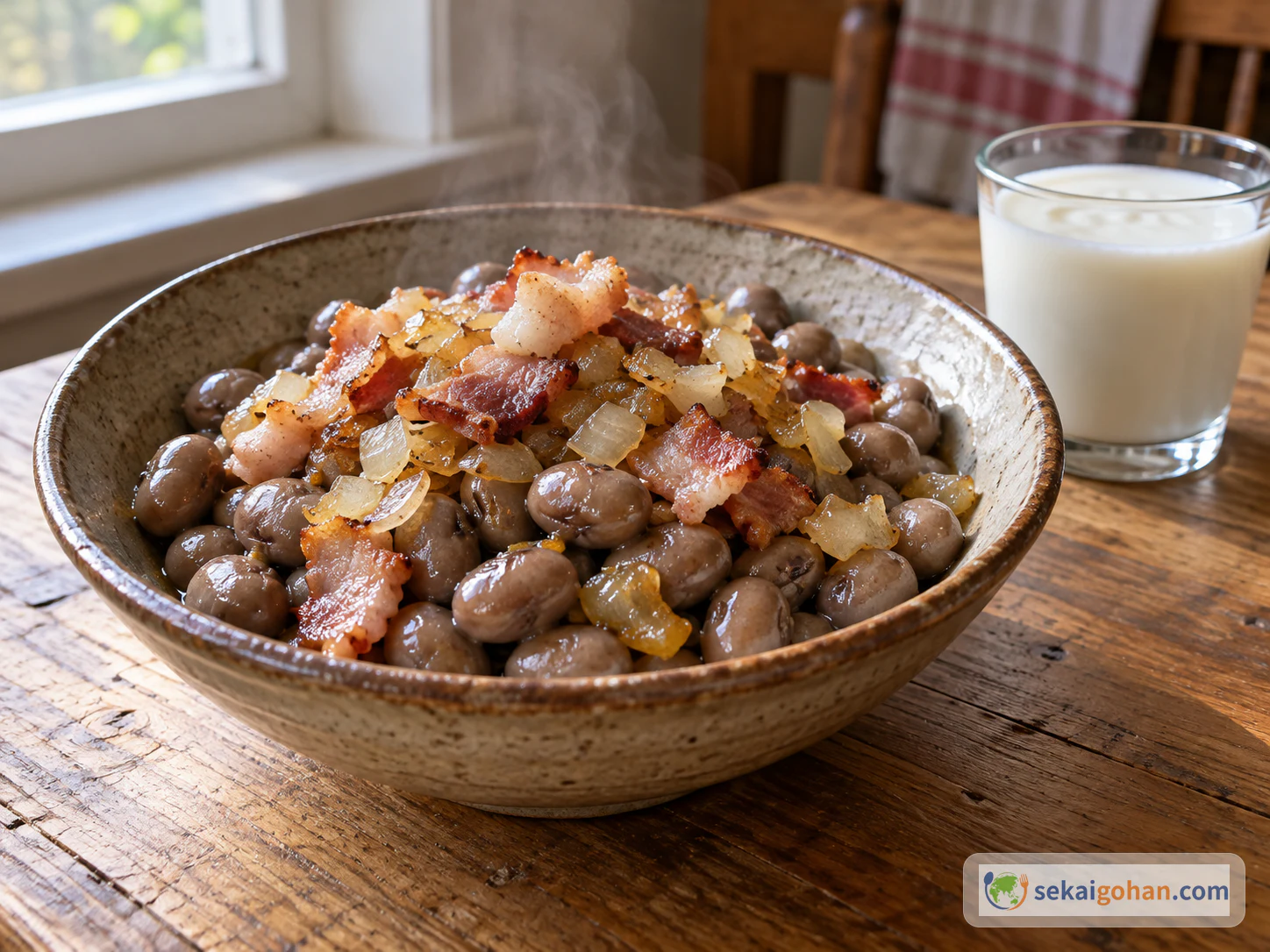
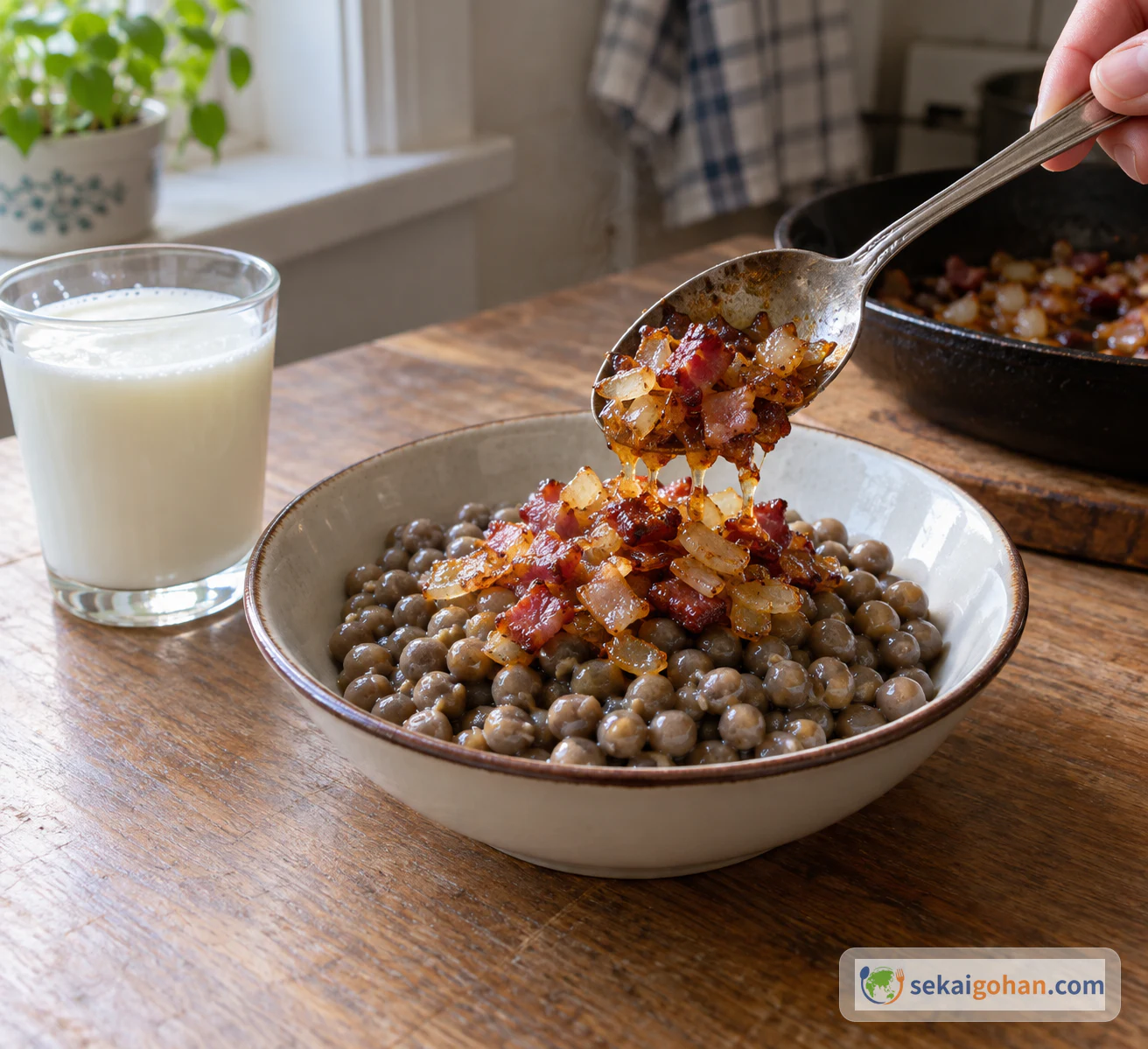
Large peas simmered until soft all the way through, with their skins still on. Fatty bacon and onion fried in the bacon's own fat, spooned over each hot bowl. A glass of kefir on the side to cut the richness.
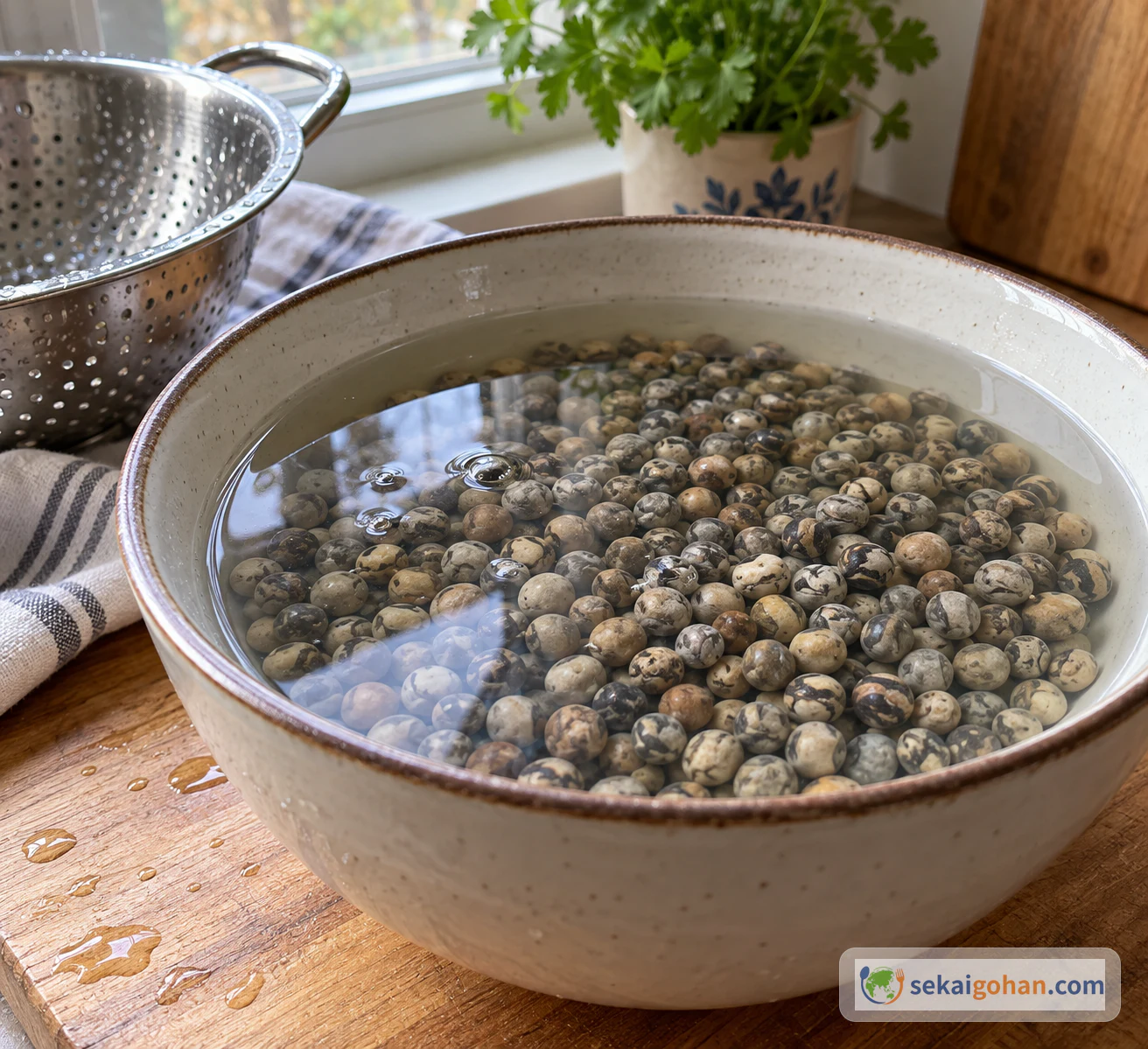
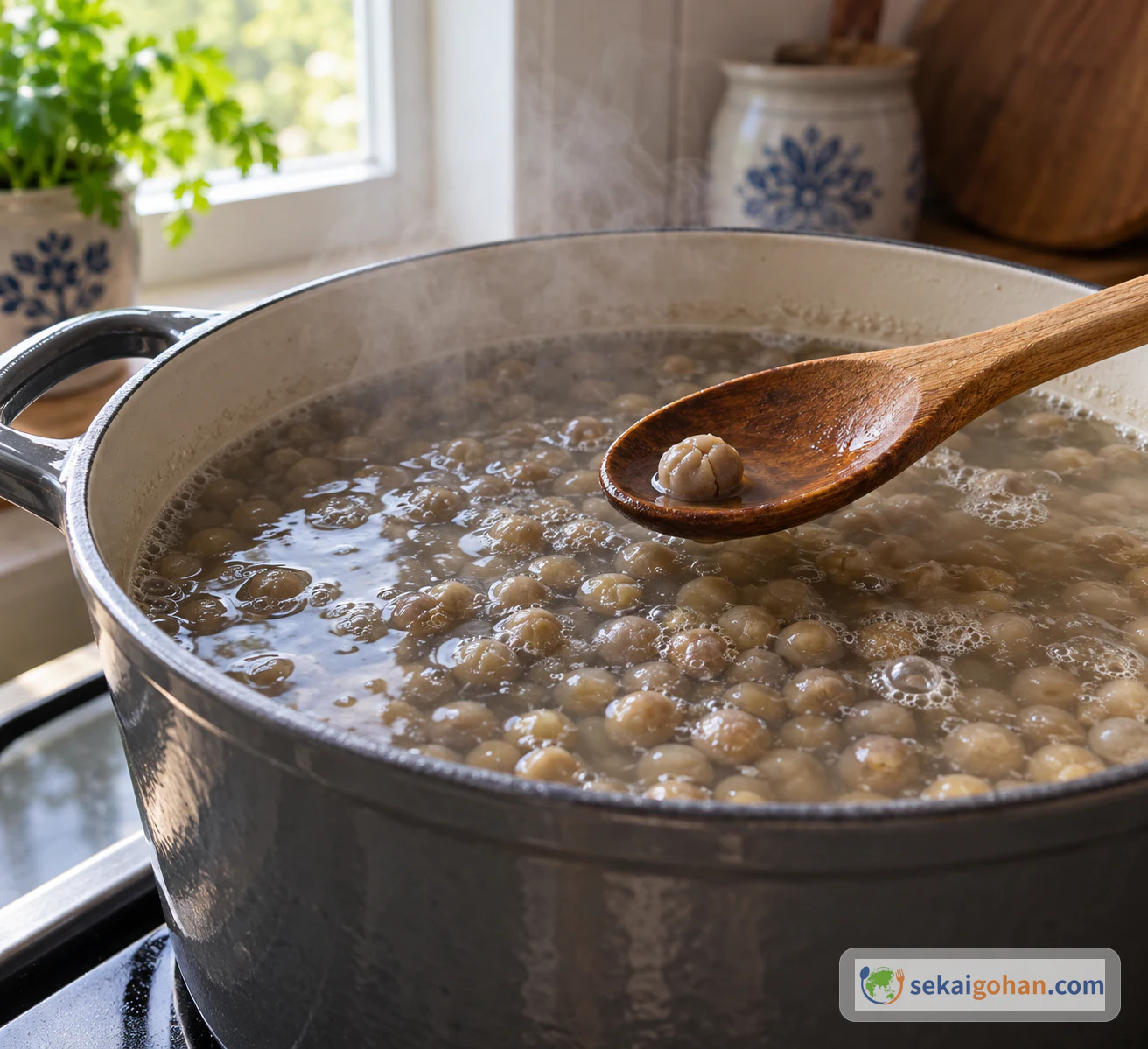
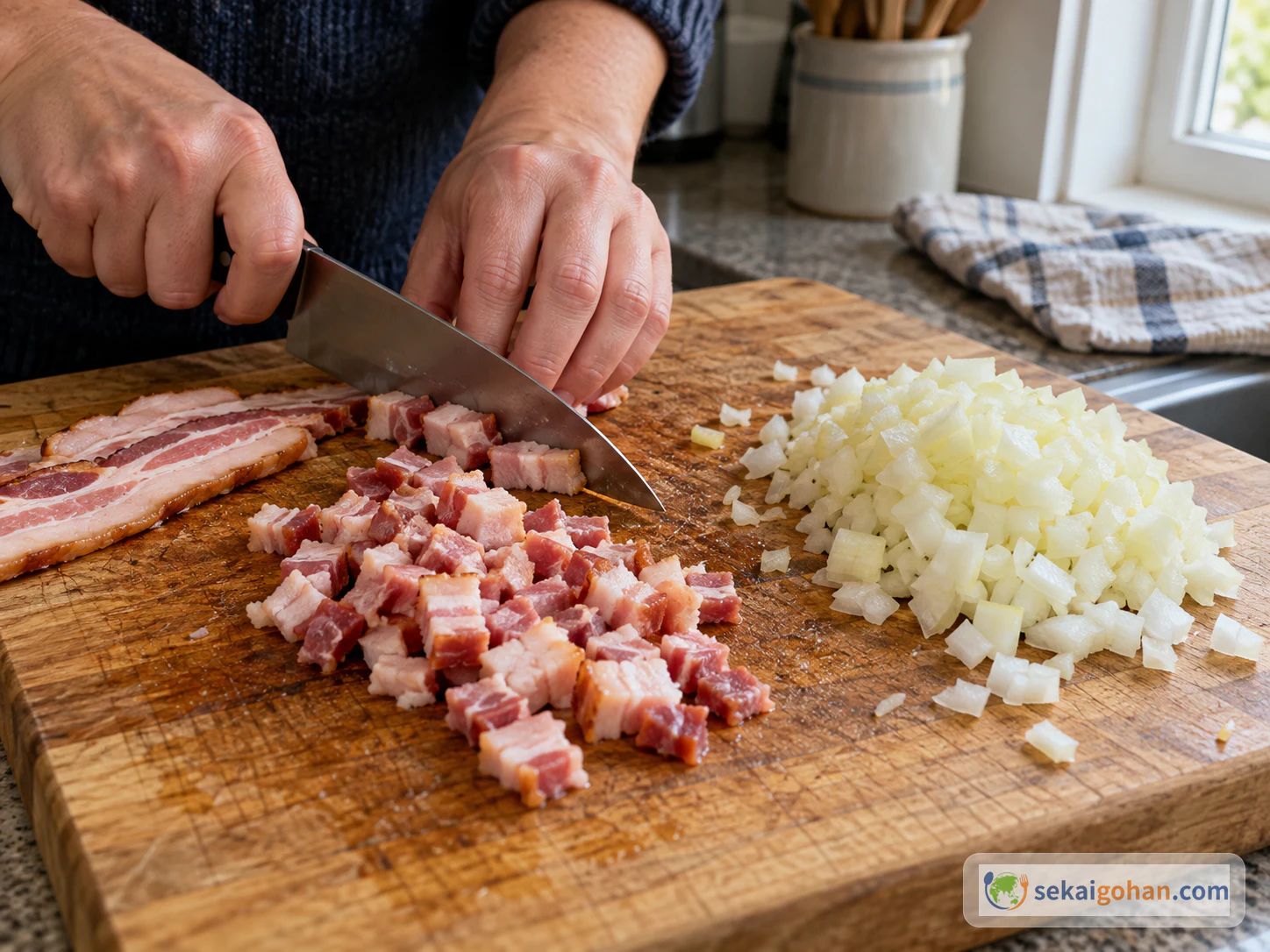
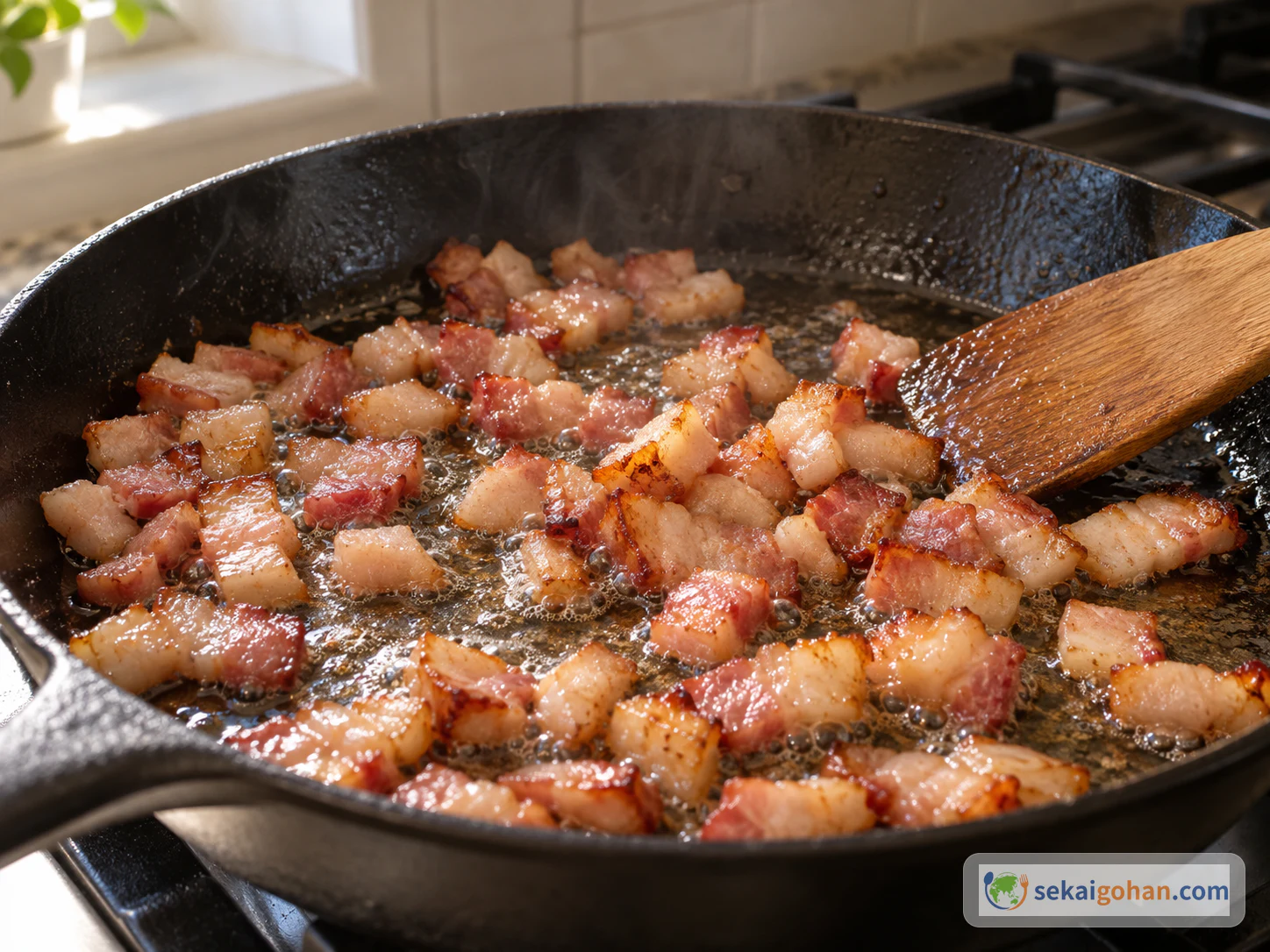
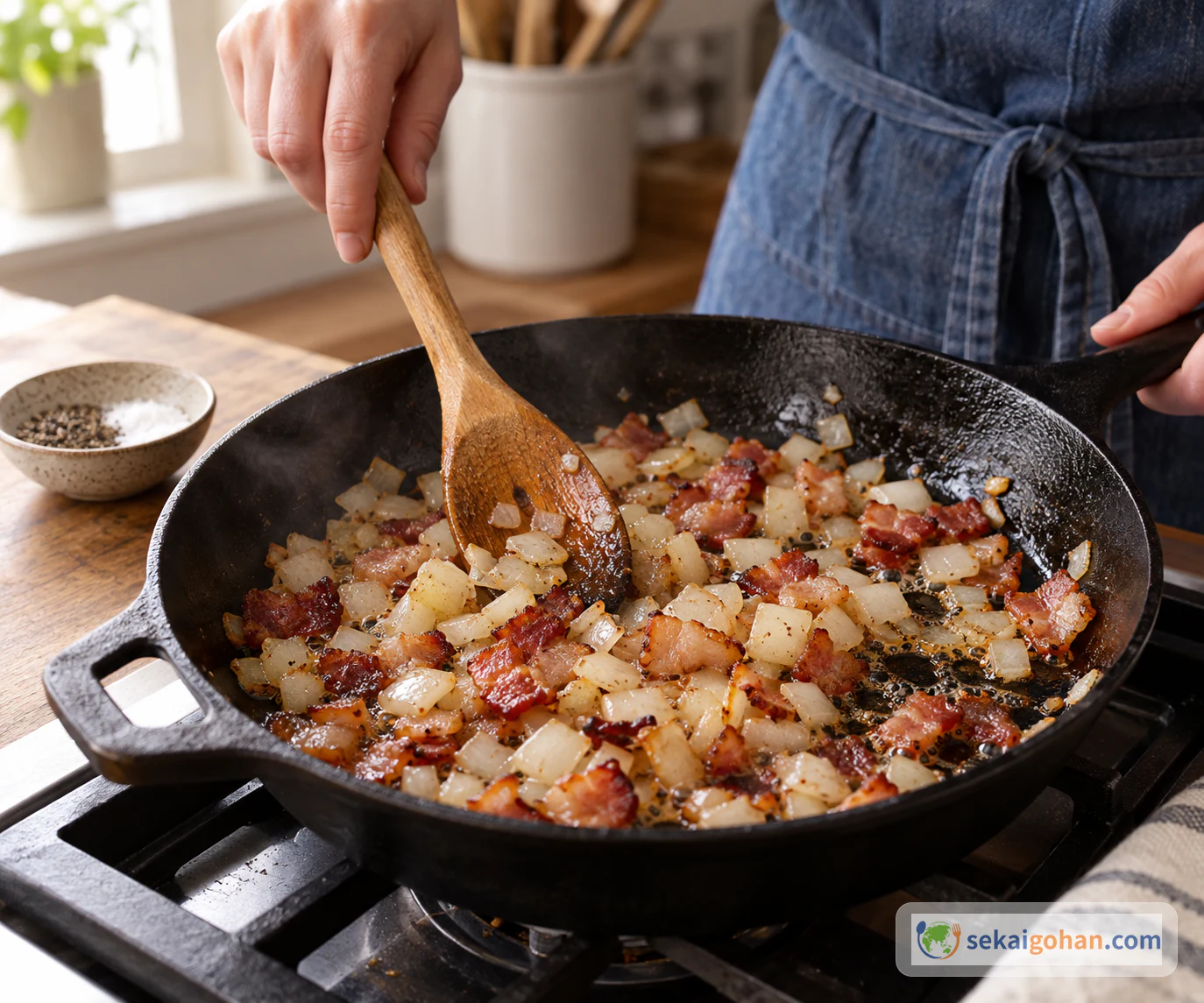
The dried peas spend the night in a bowl of cold water. The next day they go into a pot of fresh water and simmer slowly until each marbled grey-brown pea turns soft and floury inside. Meanwhile, small cubes of fatty bacon render in a skillet, and chopped onion fries in the fat they leave behind. The hot peas go into bowls, the bacon and onion go on top, and a glass of kefir stands beside each plate.
This is Pelēkie zirņi ar speķi, usually given in English as "grey peas with bacon." The official Latvian tourism site, Latvia Travel, connects grey peas with Christmas and describes grey peas with bacon as a traditional main dish, served with bacon, smoked pork, onions or other toppings.
The recipe here follows a Latvian family recipe contributed by Jordan Argyle (Koka Family) to a community recipe book: 1 kg dried grey peas, 200 g fatty bacon, one yellow or white onion, and salt and black pepper to taste, with kefir served alongside. That recipe does not give a yield, so no serving count is stated here. It is one family's version, not an official Latvian standard. For more dishes from the same country, see Latvia.
This recipe has not been kitchen-tested by Sekai Gohan. Amounts and steps are kept as close as possible to the family recipe; the cooking time is given only as an estimate that depends on how well the peas have soaked.
A Pea Dish for the Latvian Winter Table
Grey peas with bacon is a dish of peas boiled soft and finished with pork fat and onion. Latvia Travel presents it as part of the Christmas table and notes that in Latvian folklore the pea is a symbol of prosperity and vitality. The same page explains that the peas are soaked before boiling, then served with bacon, smoked pork, onions or other toppings, so even the official description leaves room for each household's choice of topping.
The family recipe followed here describes the dish as significant to the contributor's Latvian family around Christmas, eaten with kefir. That is one family's custom, and it should be read as such rather than as a rule for every Latvian home. A short educational recipe sheet from a Comenius school project in Rēzekne likewise describes grey peas with bacon as a cold-season food tied to Christmas and New Year, and includes a first-person childhood memory about peas at New Year. That memory is one writer's recollection, not proof of a universal custom.
The history of the pea itself reaches further back than any single recipe. The European Union's published specification for Latvian grey peas states that grey peas have been grown in Latvia since at least the 18th century, and that peas, barley and beans were dietary staples before potatoes became established in the 19th century. The same document notes that grey peas with bacon are now described in tourist guidebooks as a Latvian dish. No single origin story or date for the dish itself is given in these sources, so none is offered here.
What makes Latvian grey peas different?
The name protected in the EU register, "Latvijas lielie pelēkie zirņi" (Latvian large grey peas), refers to a product, not to the cooked dish. According to the 2015 publication in the Official Journal of the European Union, it covers the dried seeds of the local Retrija cultivar of field pea (Pisum sativum L., maculatum variety). The specification describes these peas as large and coarse, brown with a marbled greyish pattern and a black hilum. They are eaten with the seed coat on, do not fall apart when boiled, and have a soft, floury texture with a mild flavor that comes from the skin.
Two things follow from this. First, the dish "grey peas with bacon" does not itself have protected status; only the dried pea product does. Second, not every large grey or brown dried pea is Retrija or a protected product. If you use an ordinary dried pea from your local shop, you are reproducing the structure of the dish with a substitute, and the skins and texture may behave differently.
Ingredients and Preparation
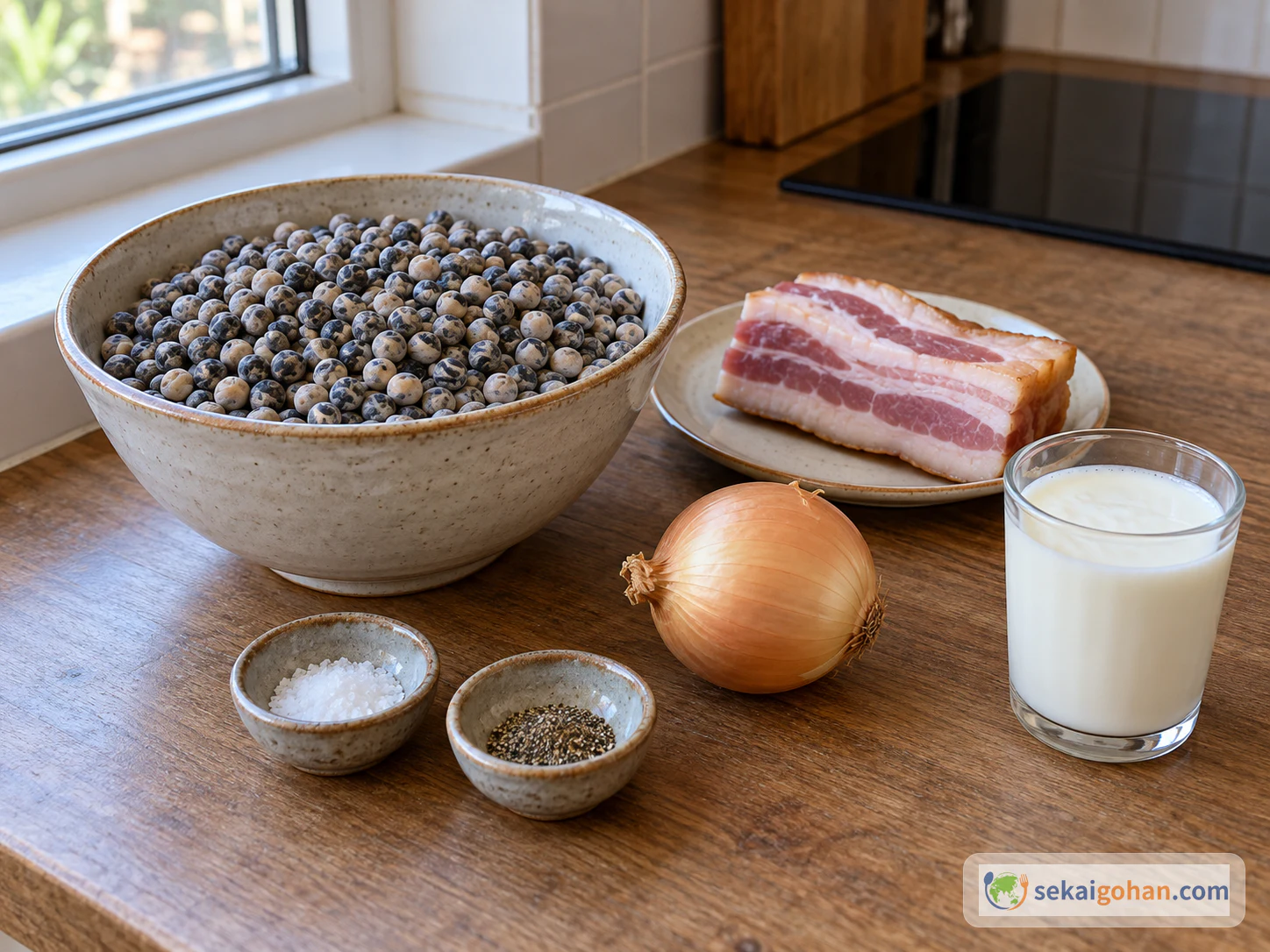
Start the night before: the peas need to soak overnight. The peas and salt belong to the boiling stage, the bacon, onion and pepper to the sauce, and the kefir is served on the side.
Bacon already carries salt, so taste the sauce before adding more. Choose bacon with plenty of visible fat; the fat is what fries the onion.
This dish contains peas (a legume) and pork, and kefir contains milk. Check the labels of the bacon and kefir you buy for ingredients, allergens and shared-facility statements.
Equipment
- Large bowl for soaking
- Colander
- Large pot
- Skillet
- Cutting board and knife
- Wooden spoon or spatula
Choosing Grey Peas, Bacon and Kefir
Peas. Look for "Latvian grey peas," "Latvijas lielie pelēkie zirņi" or "Retrija" at import grocers or online shops. Availability varies, so check what is actually on offer and read the label: a country of origin or variety name is not the same as the protected designation. If you cannot find them, a large dried whole pea is a workable stand-in for the structure of the dish, but expect the skins and floury texture to differ. Chickpeas are a different legume and give a different dish, so they are not a basic substitute.
Bacon. The fat matters more than anything else here. Latvian speķis and the bacon in your supermarket are not identical; smokiness, saltiness and fat content all vary by product. Pick a cut with plenty of fat. Lean bacon renders less fat, so the onion fries differently and the sauce tastes thinner.
Kefir. Plain, unsweetened dairy kefir is the closest match for serving. If you choose a different cultured milk drink, know that its flavor and thickness will not be the same. Because it is served on the side, the dish itself is unchanged if you leave it out.
How to Make Pelēkie Zirņi ar Speķi
The boiling time depends heavily on how well the peas soaked. Decide when they are done by biting one: soft all the way through, with the skin still on.
Hard, Mushy, Salty: Fixing Common Problems
These are practical kitchen suggestions for common issues, not rules from the family recipe.
| Problem | Likely cause | What to do |
|---|---|---|
| The peas are still hard in the center | Short soak, old peas, or the water level dropped | Keep simmering, topping up with water so the peas stay covered, and check by biting a pea. Do not go by time alone |
| The peas are splitting and turning to mush | Boiling too hard, or a pea type with thinner skins | Lower the heat to a gentle simmer and stir less. Ordinary dried peas may break down more than Retrija grey peas |
| The sauce is too salty | Salty bacon plus added salt | Hold back salt in the sauce until you have tasted it. Next time, choose a milder bacon |
| The sauce is dry and the onion is not frying well | Lean bacon, or the fat was poured off | Keep all the rendered fat in the pan. Next time, choose bacon with more fat |
| The bacon burnt before the onion was ready | Heat too high while rendering | Render more gently so the bacon turns golden, then add the onion |
Household Differences and Variations
Even the official tourism description leaves the topping open: bacon, smoked pork, onions or other toppings. Recipes also differ in method. The family recipe followed here mixes the sauce into each hot serving separately. The short Comenius project sheet uses 200 g grey peas with smoked bacon, onion and salt, and instead adds the boiled peas to the bacon and onion sauce and fries them briefly together before serving with kefir. These are two different recipes; their amounts and methods are not combined here, and neither is presented as the single correct version.
If you want to adjust the dish after making it once as written, these are untested editorial suggestions, separate from the family recipe:
- Change the smokiness of the bacon. A more heavily smoked bacon pushes the smoke flavor into the peas; a milder one lets the taste of the pea skins come through.
- Fry the onion lighter. Stopping before the onion colors deeply gives a sweeter, softer sauce, at the cost of the crisp texture.
- Adjust the kefir. A larger glass alongside makes the fat and salt feel lighter.
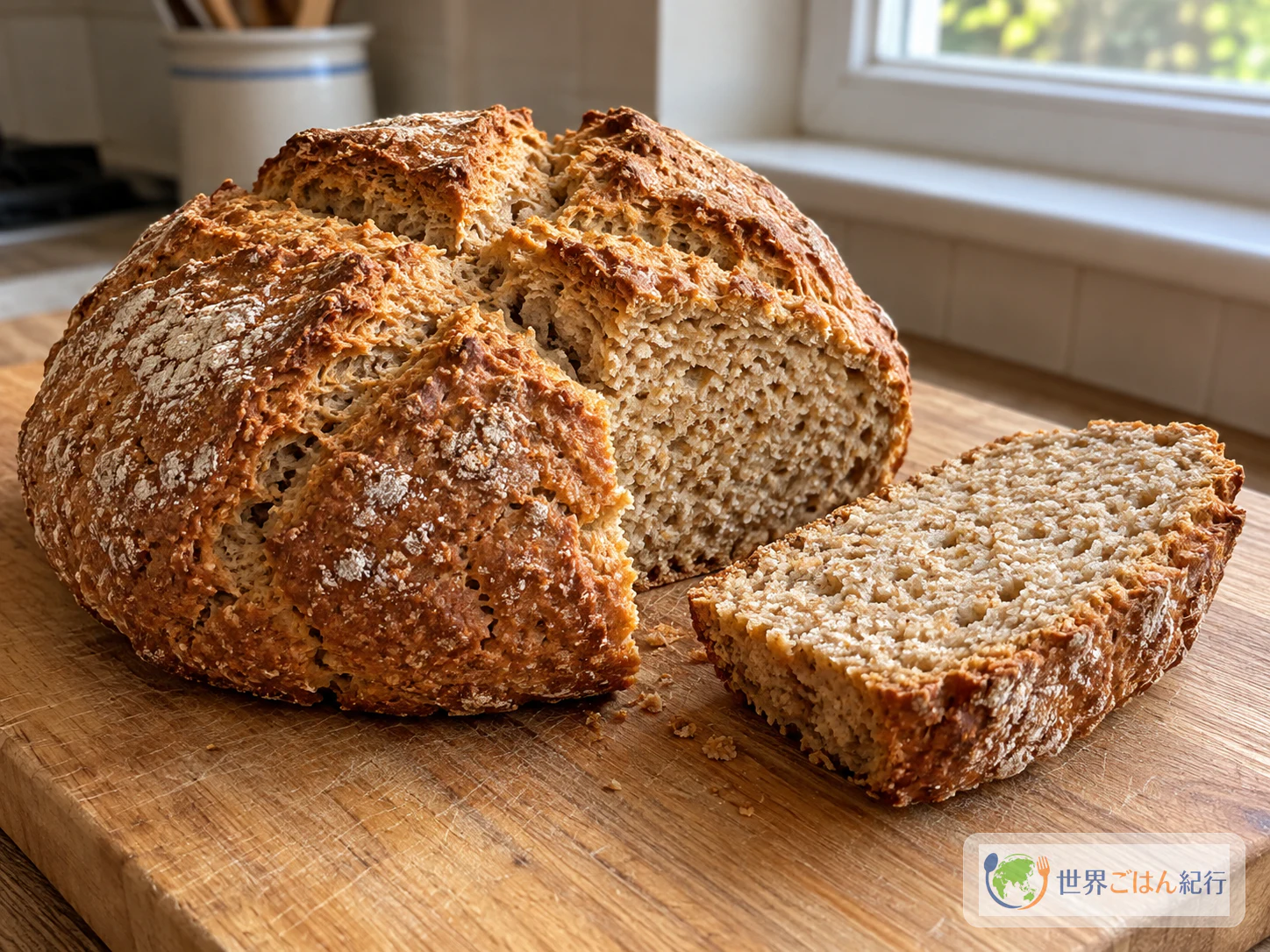
- Add rye bread on the side. This is an optional menu idea for the table and not an ingredient of the recipe.
- No shortcut soak. There is no quick-soak method in the sources used for this article, so none is offered here. Plan for the overnight soak.
Frequently Asked Questions
Are grey peas the same as chickpeas?
No. The protected Latvian grey pea is a field pea, Pisum sativum, of the Retrija cultivar, according to the EU specification. Chickpeas are a different legume, and swapping them in changes the texture and flavor of the dish.
Can I use ordinary dried peas?
You can reproduce the structure of the dish with a large dried whole pea, but it will not be the protected Latvian product. The EU specification describes Retrija peas as keeping their skins and not falling apart when boiled, with a soft, floury interior; other peas may break down more or have different skins. Judge doneness by biting a pea.
Do I need kefir?
The family recipe suggests serving the dish with kefir or another cultured milk drink, with no amount given, and the educational sheet also serves it with kefir. It goes on the side as a drink, not into the sauce. The dish can be eaten without it.
Can I make it ahead?
The family recipe serves the peas hot, with the sauce mixed into each fresh serving, and none of the sources used here give storage or reheating guidance. Because of that, this article does not state how long to keep it or how to reheat it.
Is grey peas with bacon an EU-protected dish?
No. The protected designation "Latvijas lielie pelēkie zirņi" applies to the dried Retrija grey peas as an agricultural product, not to the cooked dish or any bacon recipe.
How many people does this serve?
The family recipe does not give a yield. The full amount of 1 kg dried peas is kept here rather than scaled to a serving count that has not been measured.
Sources
- Investment and Development Agency of Latvia (LIAA) / Latvia Travel, "The Flavours of Latvia." Supports the association of grey peas with Christmas, grey peas with bacon as a traditional main dish, soaking before boiling, toppings of bacon, smoked pork, onions or others, and the pea as a symbol of prosperity and vitality in Latvian folklore. A tourism summary, not a measured recipe. https://www.latvia.travel/en/flavours-latvia
- Jordan Argyle (Koka Family), "Pelēkie Zirņi ar Speķi (Grey Peas with Bacon Sauce)," International Recipes community recipe book hosted at inl.gov. The recipe followed in this article: 1 kg grey peas, 200 g fatty bacon, one yellow or white onion, salt and black pepper to taste; overnight soak, boiling in fresh water for about 3 hours depending on the soak, salting partway through, frying bacon and onion in the rendered fat until crisp, mixing the sauce into individual hot servings, and serving with kefir. A family contribution, not an official Latvian standard; it gives no yield, water amounts, heat levels or storage guidance. https://inl.gov/content/uploads/2021/02/20-50413_Recipe-BookR_Print.pdf
- Comenius project educational recipe sheet, "Grey peas with bacon (Pelēkie zirņi ar speķīti)," hosted by Rēzeknes Valsts poļu ģimnāzija. Used for its description of the dish as a cold-season food tied to Christmas and New Year, its different short method (200 g peas, briefly fried together with the sauce, served with kefir), and a first-person childhood memory treated as one writer's recollection. Its amounts are not combined with the main recipe. https://rezpvsk.lv/wp-content/uploads/2015/01/Grey-peas-with-bacon.pdf
- European Commission, Official Journal of the European Union, C 189 (2015), "Publication of an application: 'Latvijas lielie pelēkie zirņi'" (EUR-Lex). Supports the protected product being dried Retrija field peas, their appearance and boiling characteristics, the cultivation history of grey peas in Latvia, and the note that grey peas with bacon appear in tourist guidebooks as a Latvian dish. Describes the dried pea product, not the prepared dish. https://eur-lex.europa.eu/legal-content/EN/TXT/?toc=OJ:C:2015:189:FULL&uri=uriserv:OJ.C_.2015.189.01.0011.01.ENG