Irish Soda Bread: A Loaf Made by Watching the Flour
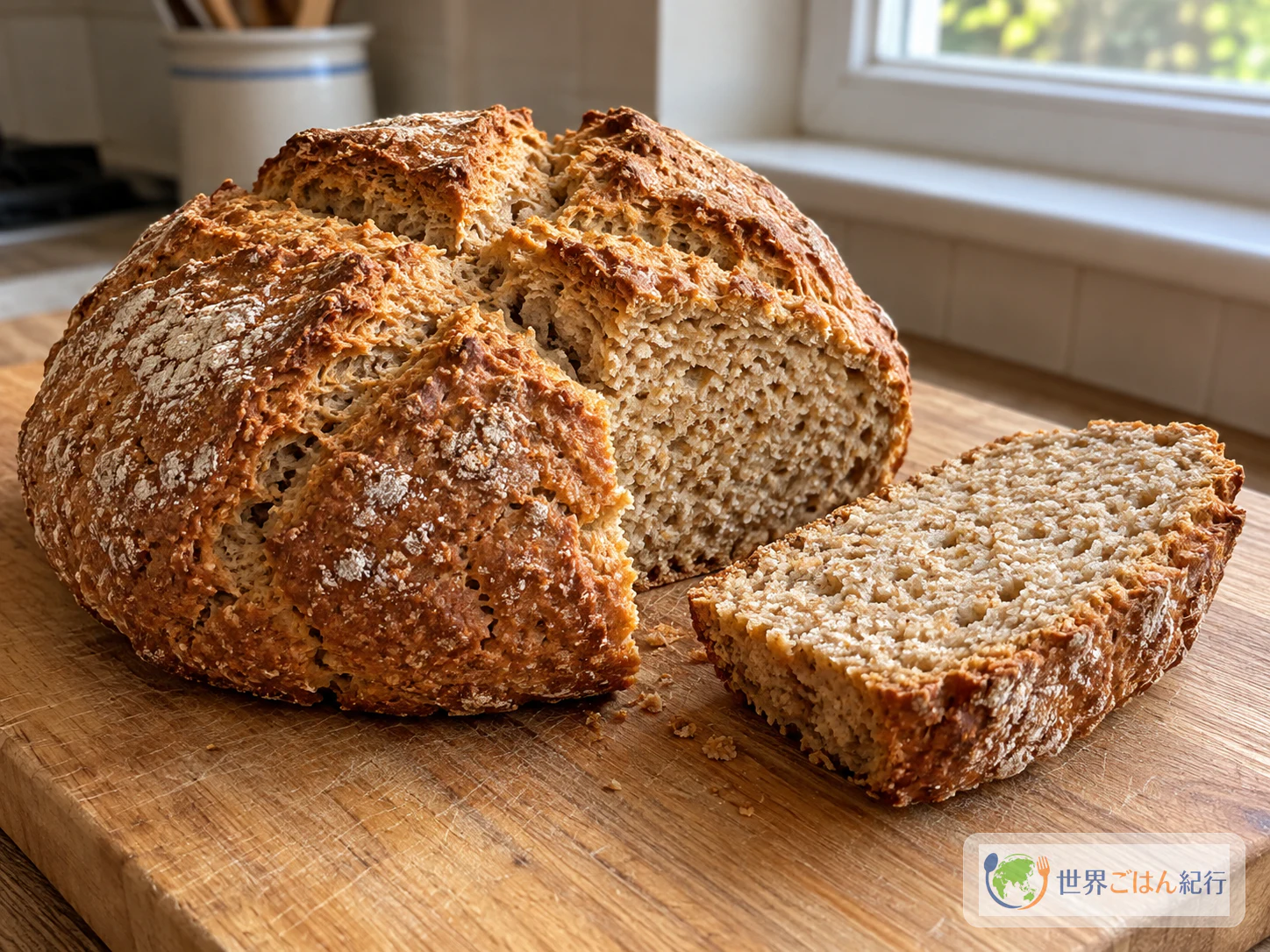
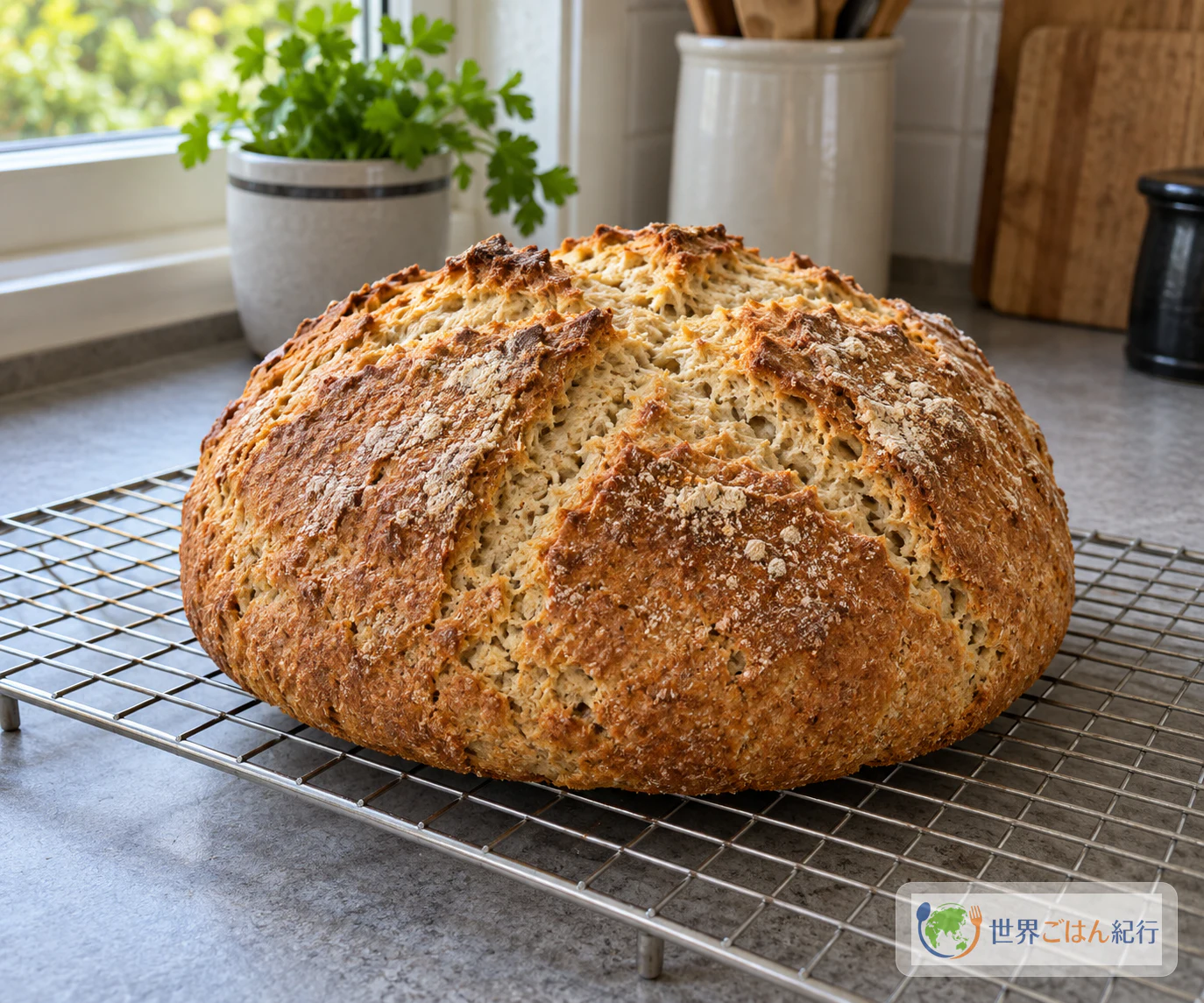
Four dry ingredients and buttermilk, nothing more. Add the buttermilk only until the flour becomes a sticky dough, shape it quickly without kneading, and judge the bake by its colour and the hollow sound of its base.
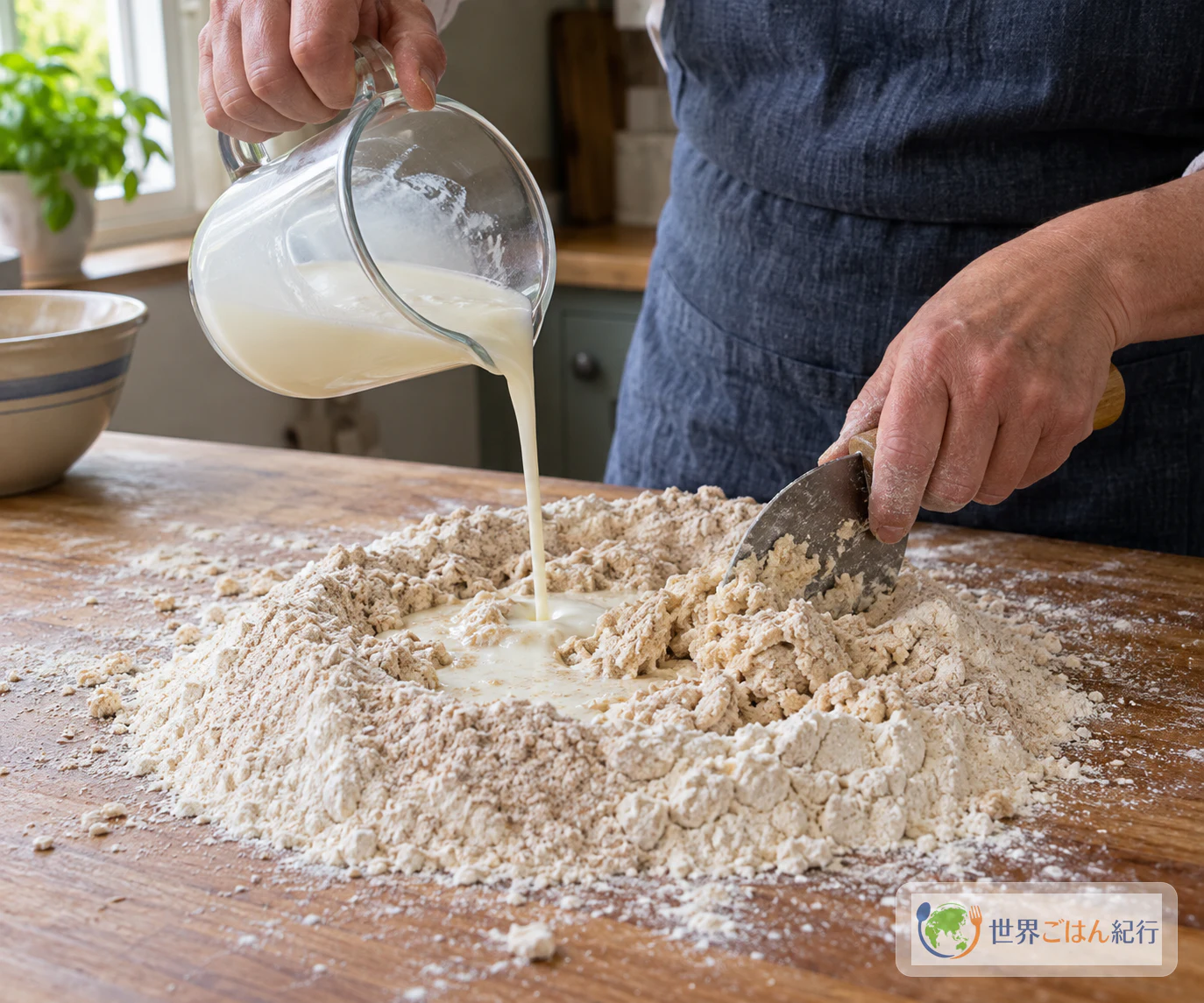
According to Visit Dublin, Irish households once had soda bread recipes handed down within the family. The bicarbonate of soda and buttermilk were often measured not on scales but by hand and by eye. The method below still asks for some of that judgement. You pour in buttermilk a little at a time and stop when the flour has come together, rather than tipping in the whole jug.
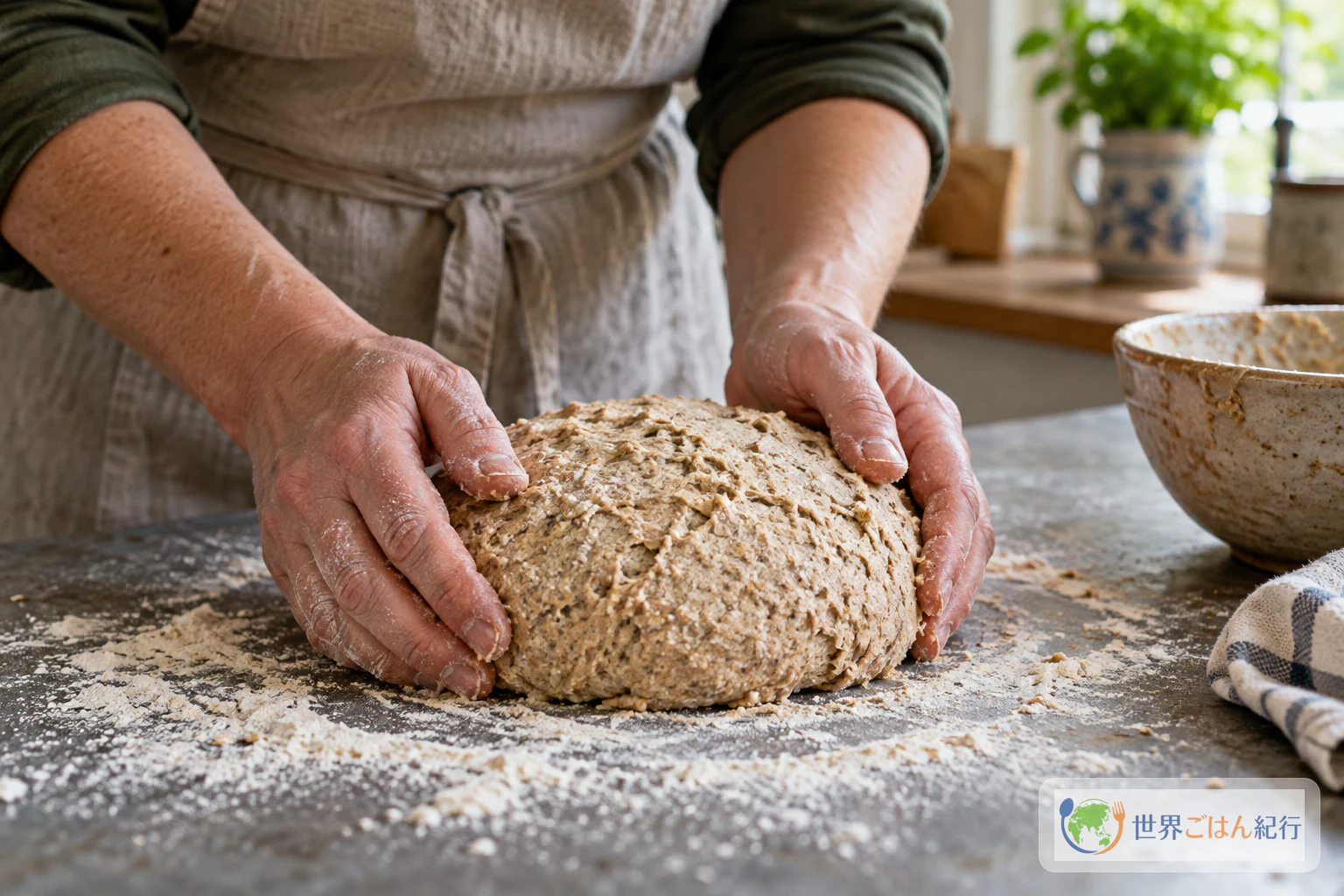
Soda bread rises without yeast. Acid in the buttermilk reacts with the bicarbonate of soda, so there is no waiting for the dough to prove. Once the liquid goes in, the work moves quickly: mix, shape, cut a cross and put it straight in the oven.
This article follows one recipe: the brown soda bread published by the National Dairy Council Ireland, made with equal weights of plain white flour and plain wholemeal flour. It is one version of soda bread among many, not the only authentic one.
This recipe has not been kitchen-tested by us. The amounts, temperature and timing come directly from the source recipe. Flour, buttermilk and home ovens vary, so rely on the doneness signs described in the steps as well as the clock.
What Irish Soda Bread Is
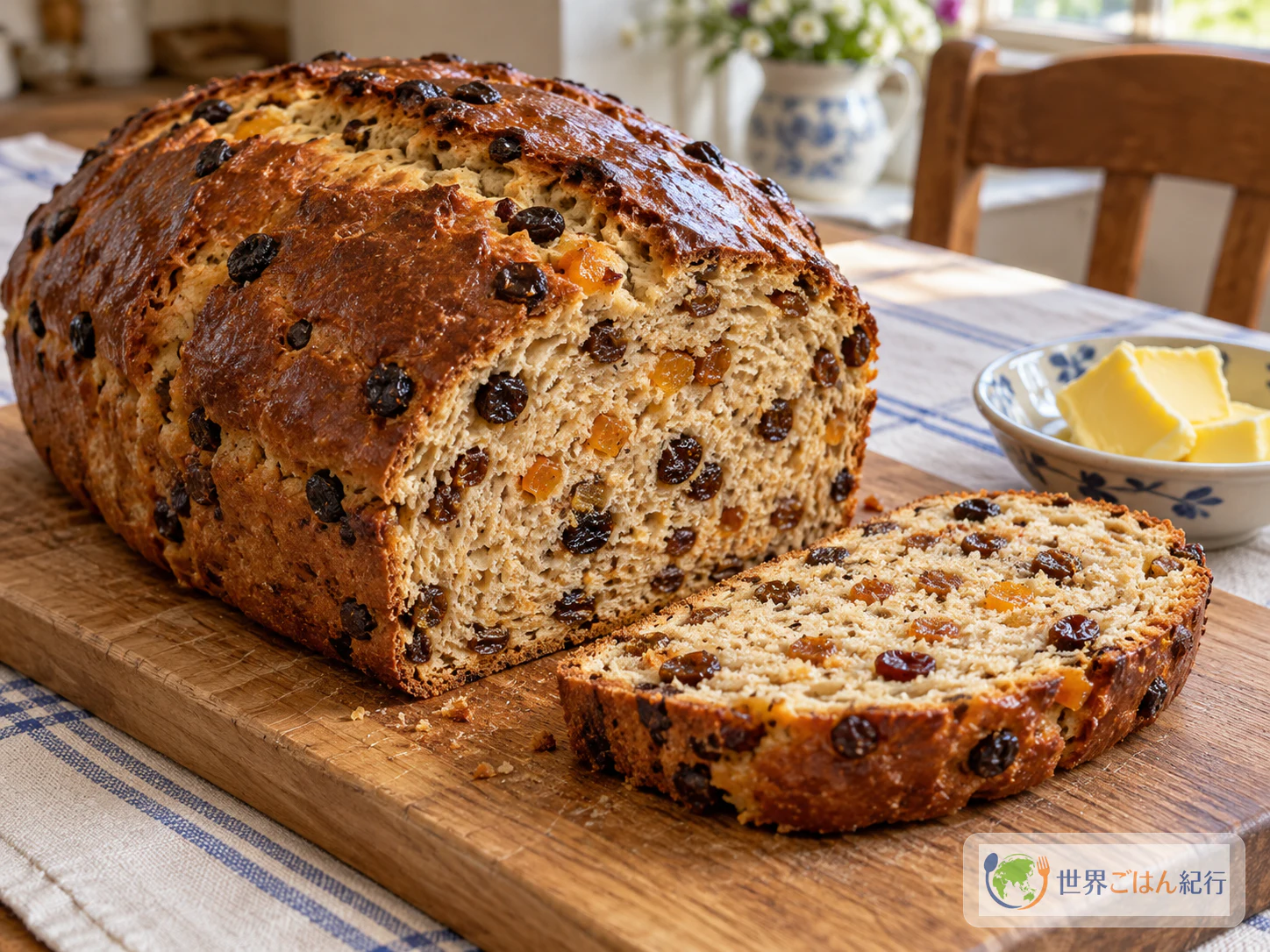
Irish soda bread is a bread leavened with bicarbonate of soda and buttermilk instead of yeast. The National Dairy Council Ireland recipe explains the rise through the reaction between the buttermilk's acid and the soda. That reaction starts as soon as the two meet. This is why the source asks you to bring the dough together quickly rather than handling it at length.
"Soda bread" is a broad name. There are brown or wheaten loaves built around wholemeal flour, loaves made mostly with white flour, and countless household mixes. Bord Bia, the Irish food board, publishes a different traditional brown soda bread. It adds an egg and honey and is baked in a loaf tin. King Arthur Baking separates a traditional four-ingredient style from an American version that adds eggs, butter, sugar and dried fruit. Each of these has its own balance of flour, liquid and baking time. Their ingredients and timings are not mixed into the recipe here.
Visit Dublin also notes newer twists, such as loaves with seeds, or with stout and treacle. These are developments of the bread, not the base recipe. The plain version below is a good place to start before trying those. It also lets you practise the same skill those family bakers relied on: reading the dough as you add the liquid.
Ingredients for One Round Loaf
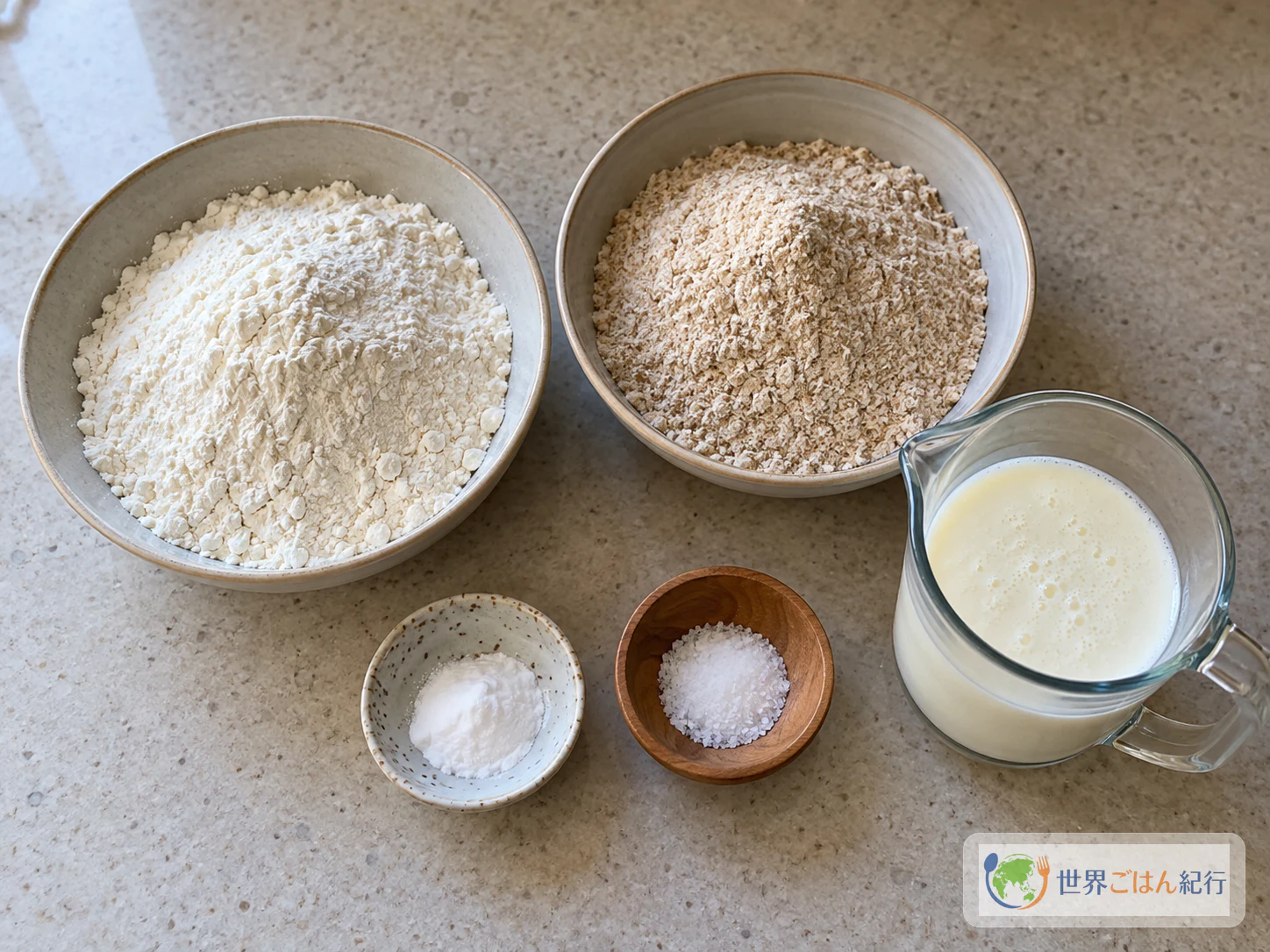
The recipe makes one round loaf; how far it goes depends on how you eat it. The buttermilk amount is what to have ready. You may not need all of it.
Equipment
- Large mixing bowl
- Measuring spoons
- Measuring jug for the buttermilk
- Round-bladed knife (or your fingers) for mixing
- Flat baking tray
- Baking paper
- Large sharp knife for cutting the cross
- Wire rack for cooling
Choosing Flour, Buttermilk and Soda
Wholemeal flour is the heart of the flavour, and it also changes how much liquid the dough needs. Wholemeal flours differ in how coarsely they are milled, and a coarser or finer grind can absorb buttermilk differently. Buttermilk also varies in thickness from product to product. Together, these are why 400ml is the maximum to have ready, not an amount to pour in automatically. Check the label of your wholemeal flour and expect to adjust by eye.
For the white flour, use plain (all-purpose) flour. In Japan, cake flour (hakurikiko) is an editorial suggestion for the white flour. It is not proven to behave the same as Irish plain flour, and we have not test-baked it.
Buttermilk supplies both the acid for the rise and much of the moisture. Home-made substitutes, such as milk soured with lemon, have not been verified for this recipe, so they are not recommended here as an equivalent.
Bicarbonate of soda and baking powder are different products. The recipe is written for bicarbonate of soda; do not swap in baking powder.
Method: Mix, Shape and Bake Without Delay
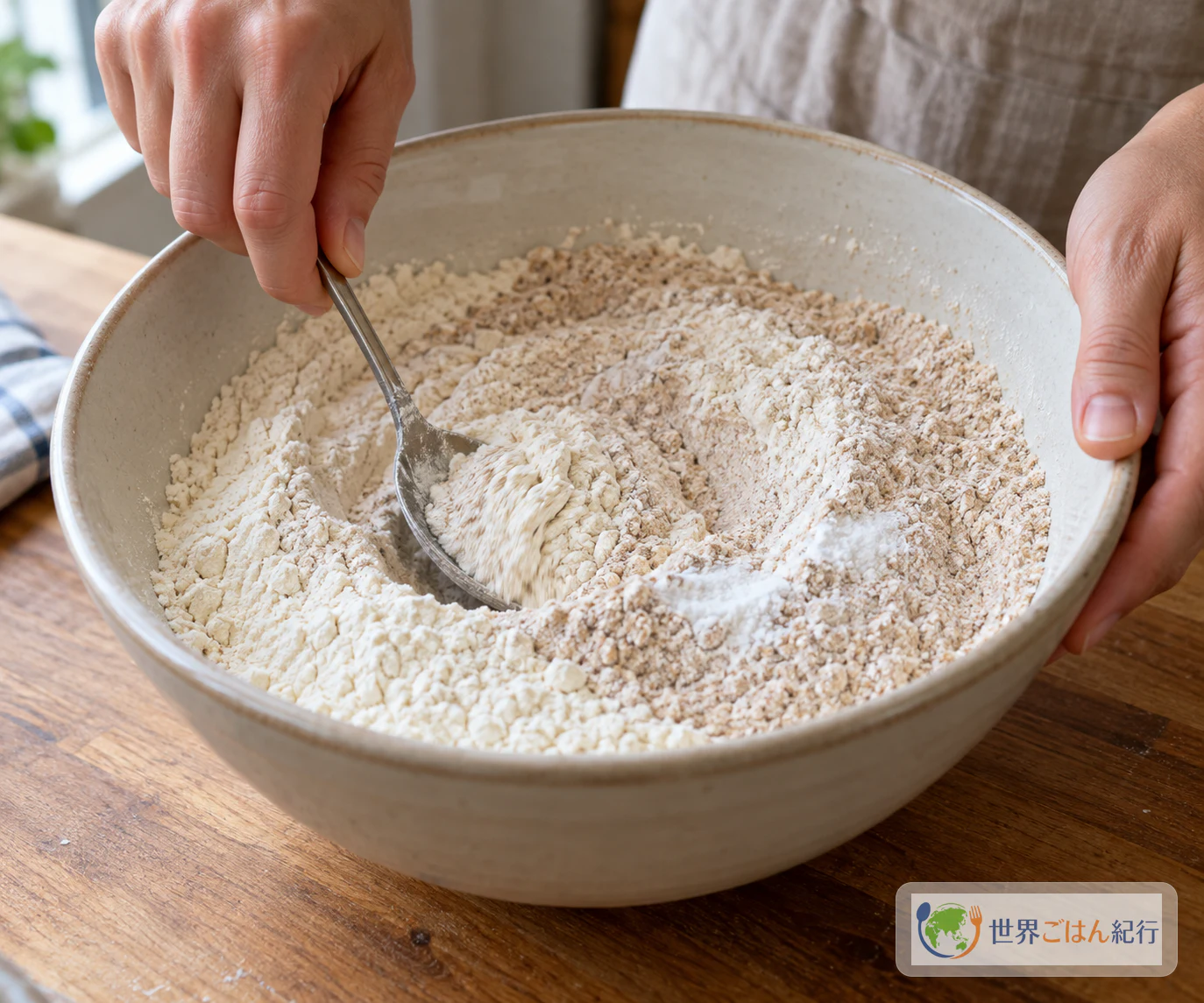
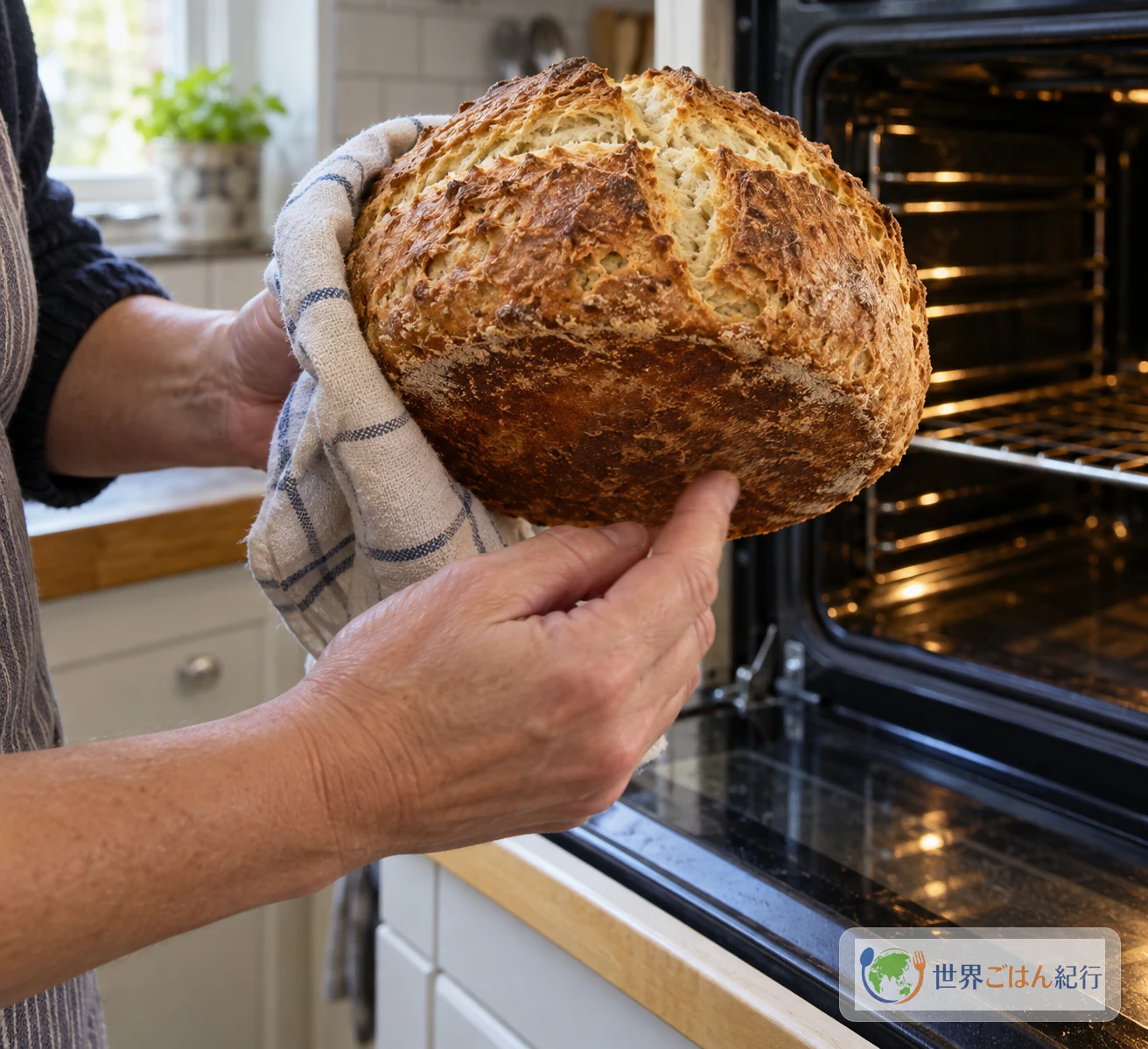
Once the buttermilk meets the soda, the reaction has begun. Preheat the oven and line the tray before you start mixing, so the dough can go straight from bowl to oven.
Common Problems and How to Avoid Them
| Problem | Likely cause | What to do |
|---|---|---|
| Dough feels stiff with dry patches | Not enough buttermilk for your flour | Add more of the measured buttermilk a little at a time until it becomes a sticky dough |
| Dough is very wet | All the buttermilk went in at once | Next time, start with about half and add the rest gradually, stopping as soon as the dough comes together |
| Loaf is dense or tough | Dough was kneaded or handled for too long | Shape it quickly into a round and get it into the oven; don't knead |
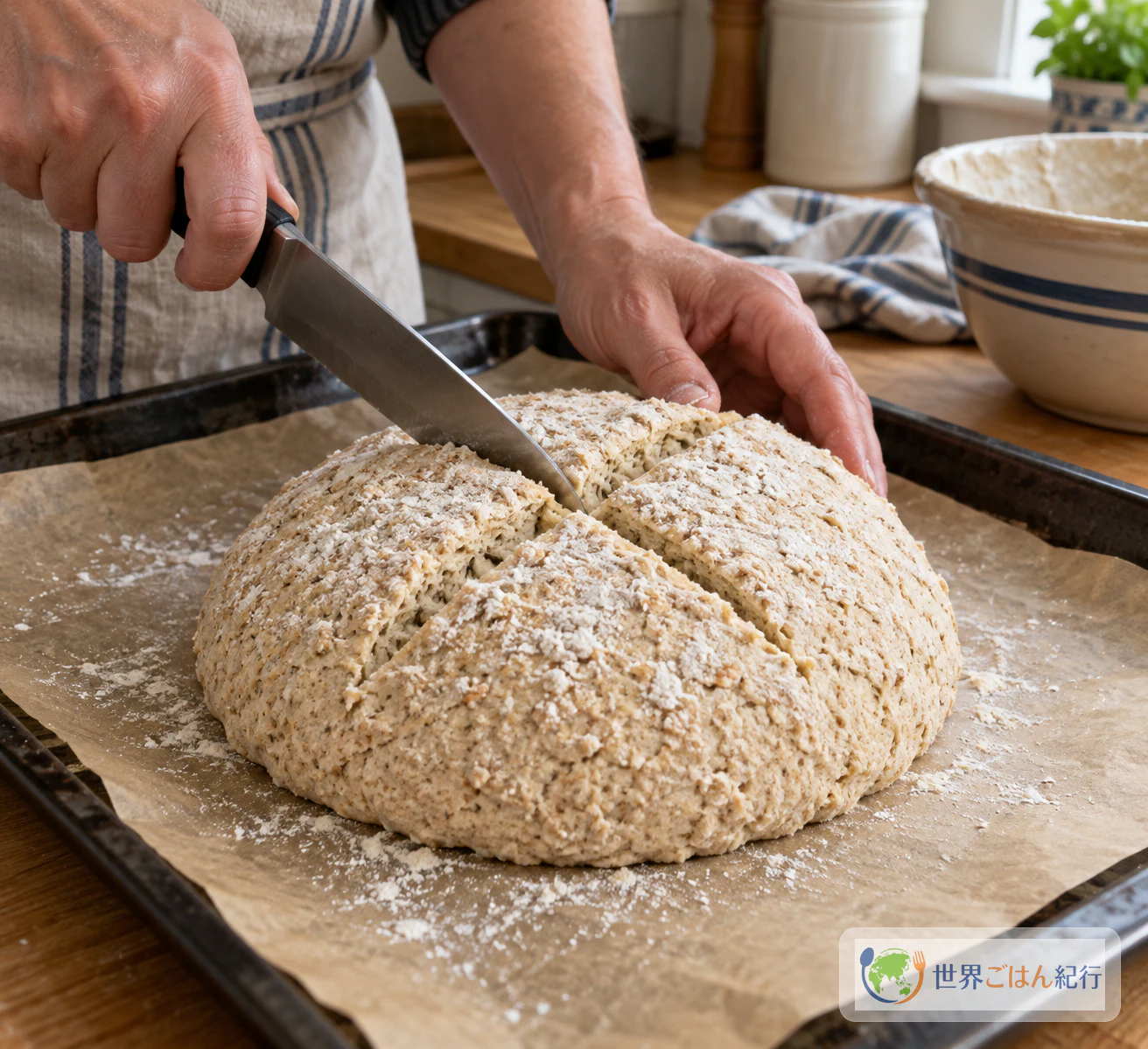
| Loaf splits into four pieces | The cross was cut through the base | Cut deeply but keep the quarters joined at the bottom |
| Base doesn't sound hollow after about 30 minutes | Oven or flour differs from the source's conditions | The source judges doneness by colour and sound but gives no extra time. Check the loaf rather than assuming it is done |
The most important habit is watching the dough rather than the measuring jug. The 400ml figure is a ceiling, not a target. Your flour decides how much buttermilk is right.
At the Irish Table
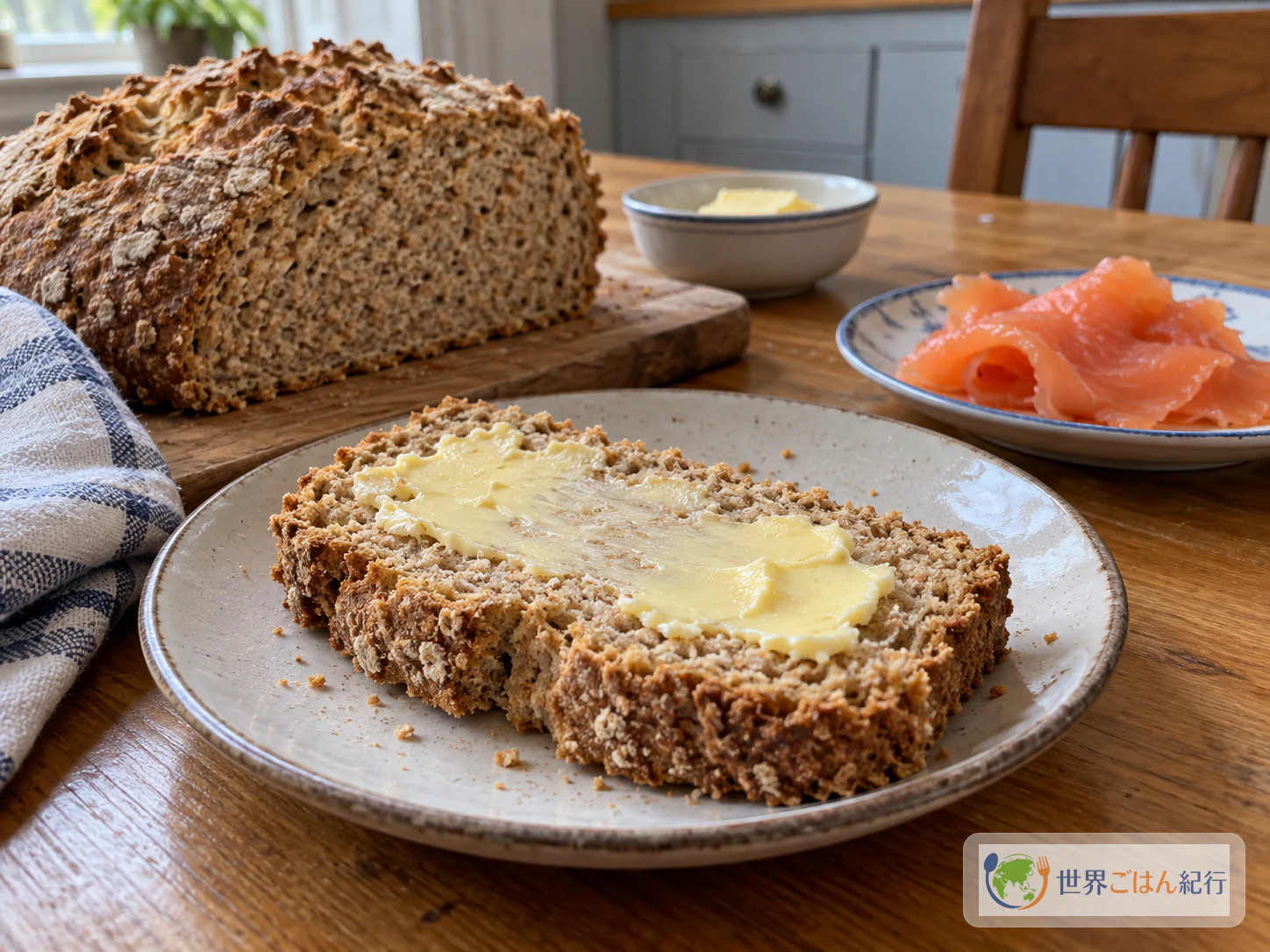
Tourism Ireland describes soda bread as a traditional Irish bread. It lists soda bread as one part of an Ulster Fry, and mentions brown bread served alongside seafood chowder. Visit Dublin describes brown soda bread in Dublin served with egg dishes and smoked salmon. These are examples of how the bread is enjoyed, not fixed rules for every region or household.
For more dishes from the same country, see Ireland.
Ways to Serve and Vary It
These are serving ideas and separate experiments. They are not part of the base recipe.
- Toast it the next day. The source suggests toasting the loaf the day after baking.
- Spread with salted butter. Butter goes on the slice at the table. It is not mixed into the dough.
- Serve with smoked salmon. This follows the Dublin serving example from Visit Dublin.
- Serve alongside chowder. Tourism Ireland mentions brown bread served with seafood chowder.
- Change the ratio of white to wholemeal flour. This is a separate experiment, not the source recipe. The flour will absorb liquid differently, so judge the buttermilk by the dough again.
Frequently Asked Questions
Do I need to add all 400ml of buttermilk?
No. Have 400ml ready, but add it gradually and stop when the flour has become a sticky dough. Depending on your flour, some buttermilk may be left over.
Can I use baking powder instead of bicarbonate of soda?
The recipe is written for bicarbonate of soda, which reacts with the acid in the buttermilk. A direct swap for baking powder is not supported by the source, so it is not recommended here.
Should I knead the dough?
No. Bring it together quickly into a round and flatten it slightly. The reaction starts as soon as the buttermilk goes in, so long handling works against the recipe.
Does the cross go all the way through?
Cut it deeply, but not through the base. The loaf should stay as one piece, marked into quarters on top.
How many people does one loaf serve?
The source does not give a clear yield. The recipe makes one round loaf, and how many people it serves depends on how you eat it.
Can I eat it the next day?
The source suggests eating the bread on the day it is baked, or toasting it the next day. It does not give a longer storage period.
Sources
- National Dairy Council Ireland, "Soda bread." The base recipe: ingredients and amounts, working the dough quickly, shaping, cutting the cross, baking at 200°C for about 30 minutes or until the base sounds hollow (the source also lists 425°F / gas mark 7, inconsistent with its Celsius figure; this article follows its 200°C setting only), cooling on a wire rack, and eating on the day or toasting the next day. https://ndc.ie/recipes/soda-bread/
- Bord Bia, "Traditional Brown Soda Bread." A different Irish brown soda bread with egg and honey, baked in a loaf tin, used here only to show how recipes differ. https://www.bordbia.ie/recipes/desserts-and-baking-recipes/traditional-brown-soda-bread/
- Visit Dublin / Fáilte Ireland, "Dining at the Irish table: your guide to Irish flavours." Household soda bread recipes made by hand and eye without scales; brown soda bread served with egg dishes and smoked salmon in Dublin; modern versions with seeds or stout and treacle. https://www.visitdublin.com/guides/irish-food
- Tourism Ireland, "FAQs and interesting facts about Ireland." Soda bread as a traditional Irish bread, as part of an Ulster Fry, and brown bread served with seafood chowder. https://www.ireland.com/help-and-advice/practical-information/ireland-faqs/
- King Arthur Baking, "Irish Soda Bread." The distinction between a traditional four-ingredient style and an American version with eggs, butter, sugar and dried fruit. https://www.kingarthurbaking.com/recipes/irish-soda-bread-recipe