Fresh from the oven, the scent of greens and garlic oil rises
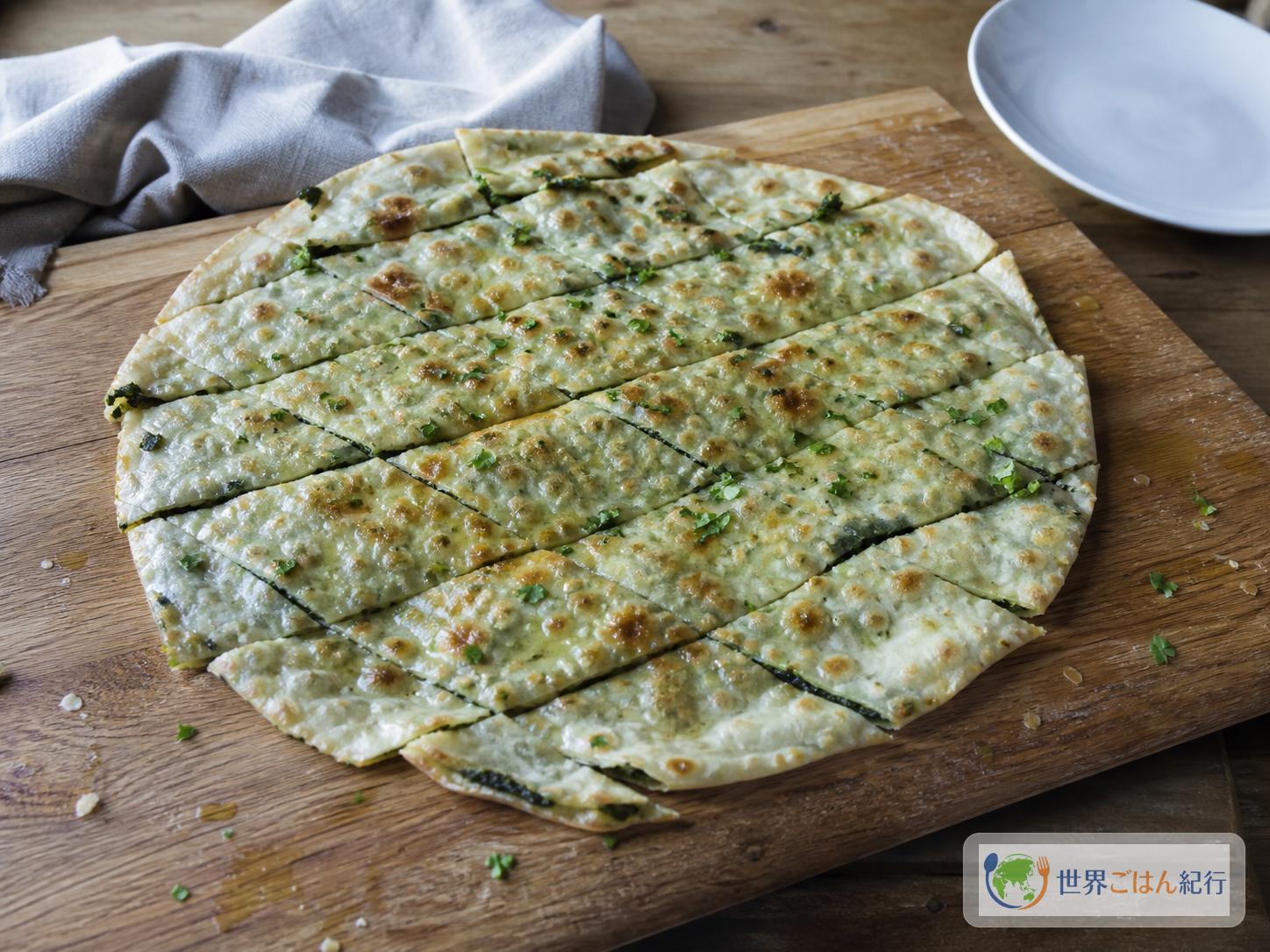
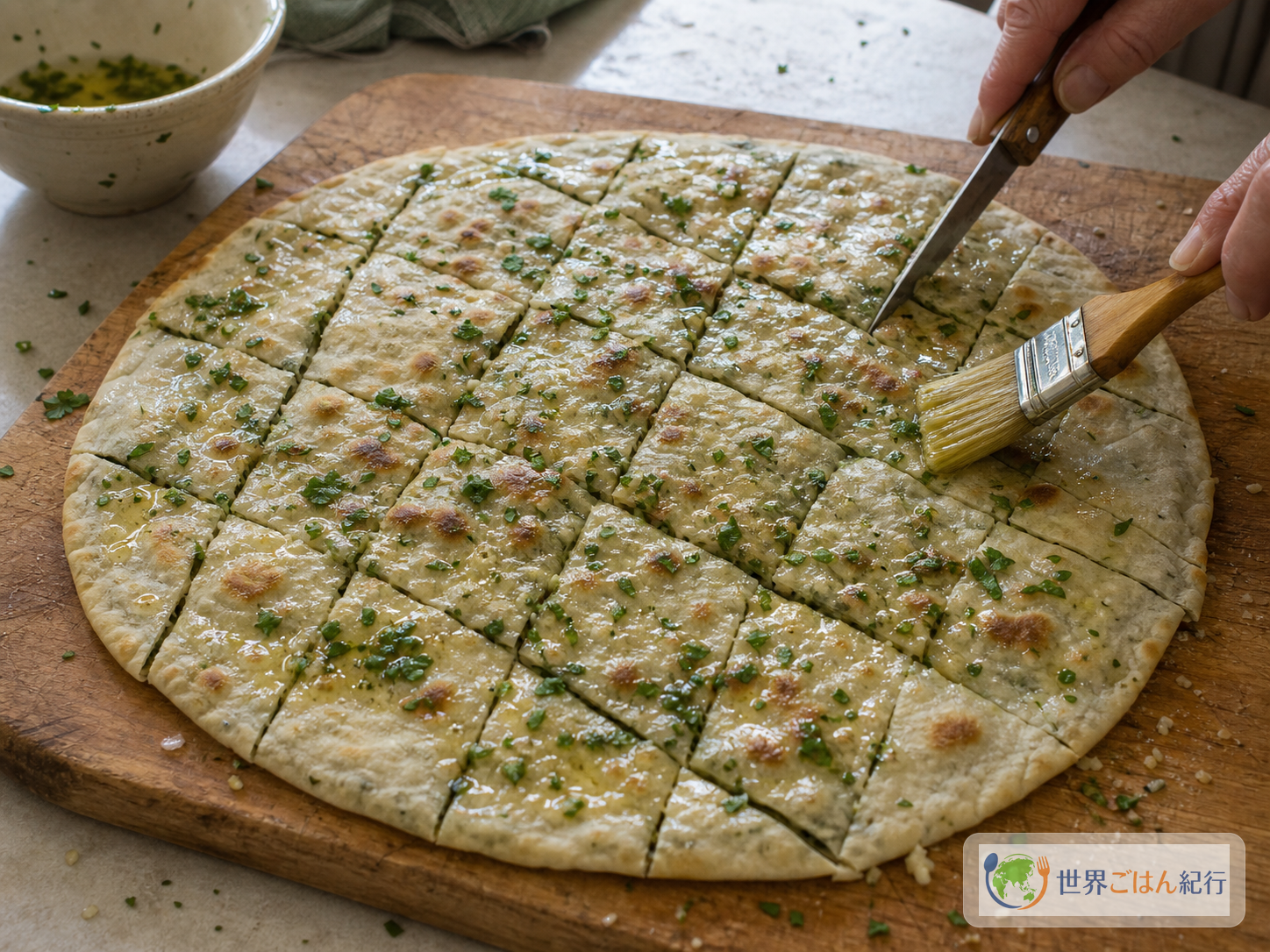
When you cut the thin dough, a little steam from the greens escapes from the tip of the knife. Brush on olive oil infused with garlic, and the green scent of a seaside kitchen layers over the toasty aroma of baked flour. By looks alone, soparnik is a large thin savory pie. But when you eat it, with no meat and no cheese in it, it is strangely hard to put down.
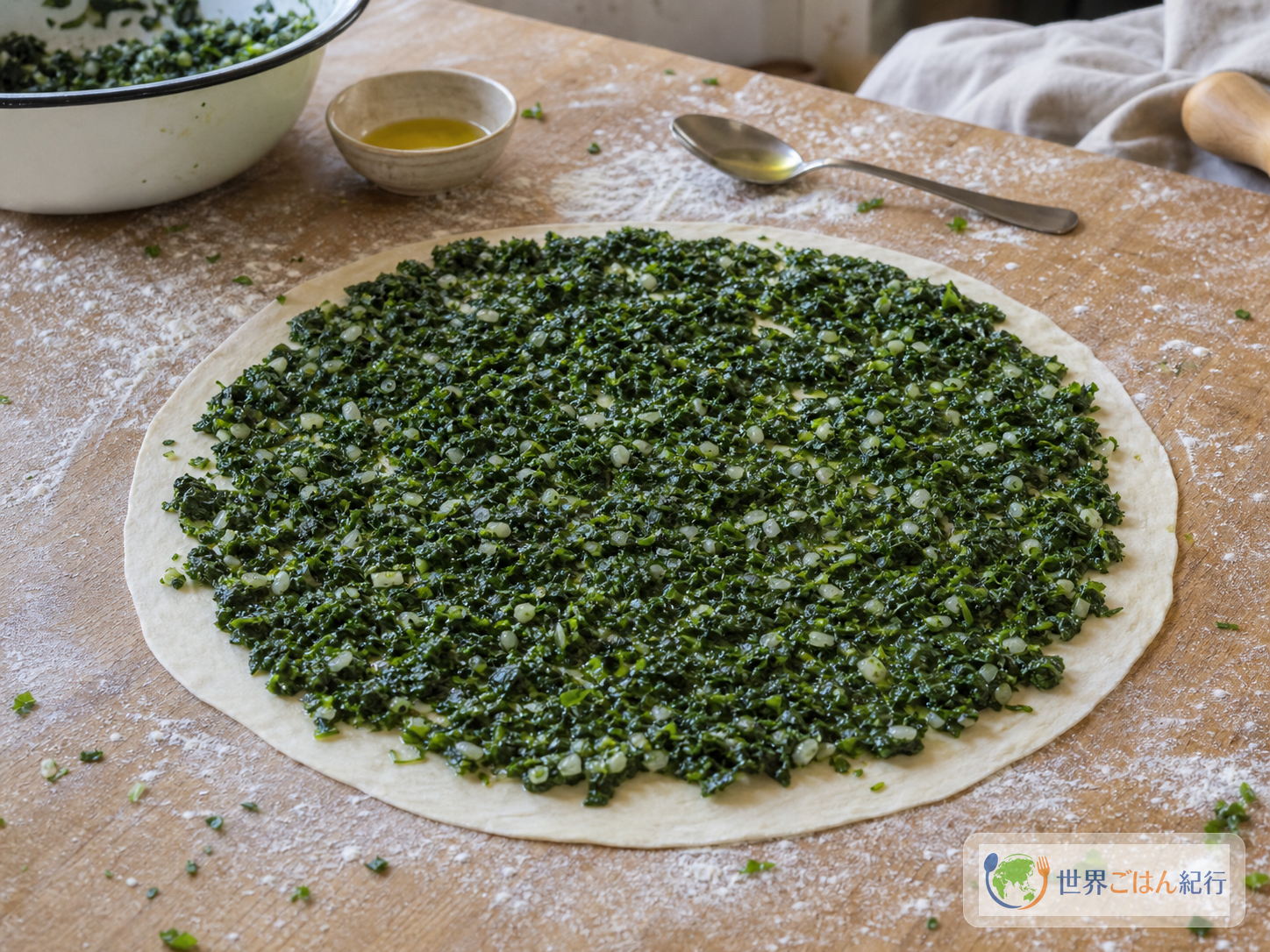
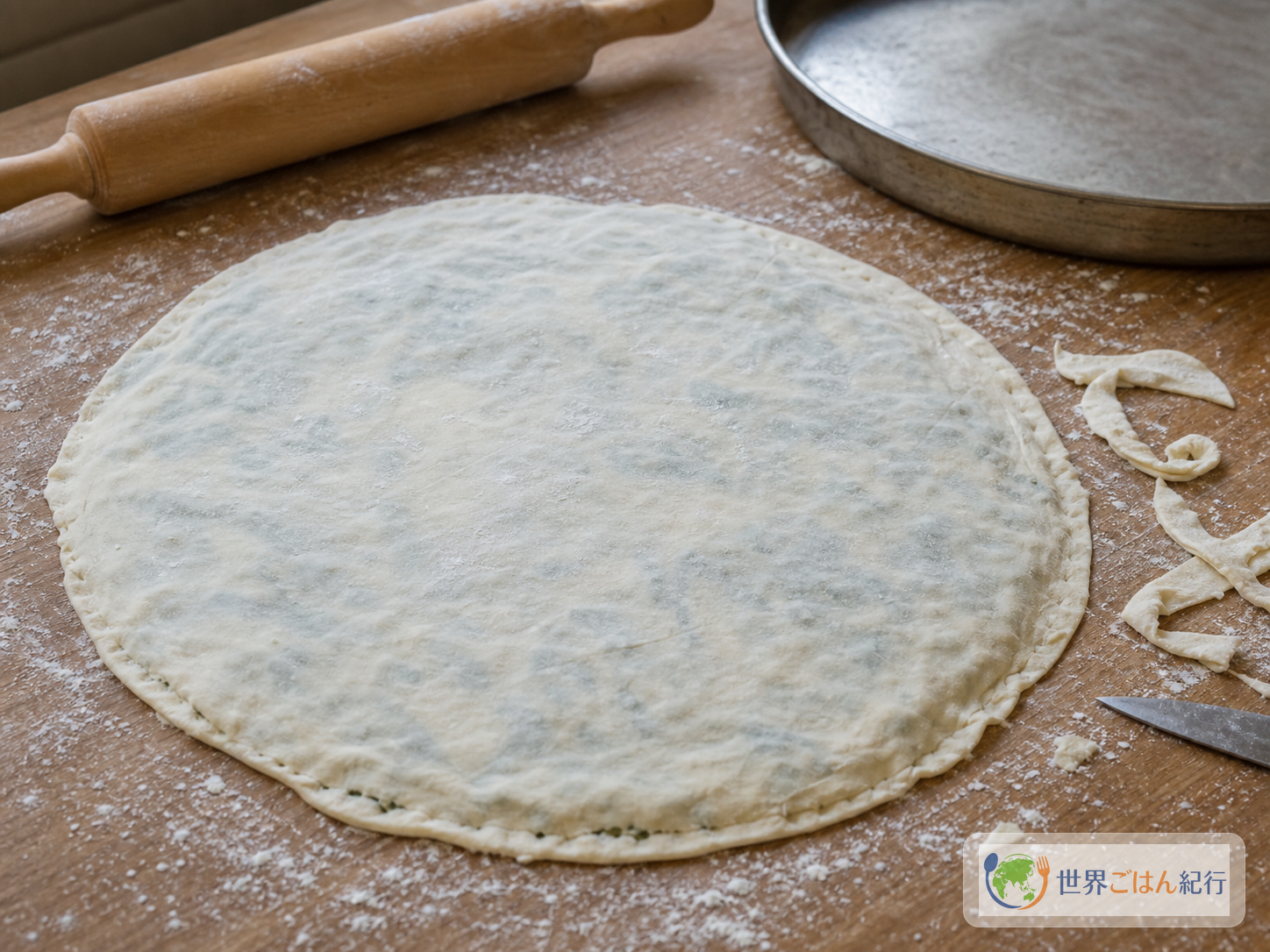
Soparnik is a thin pie of greens known around Poljica, in the interior of Dalmatia in Croatia. Under the registered name it goes by Poljički soparnik, Poljički zeljanik, and Poljički uljenjak: Swiss chard, onion, and parsley are sandwiched in thin dough, and after baking it is brushed with garlic-infused olive oil. Traditionally it is baked on an outdoor hearth and the ashes brushed off to finish, but in a home kitchen a hot oven and a thick baking sheet can get quite close to the texture.
This article assumes Swiss chard is not always easy to find, and covers a substitute using komatsuna (Japanese mustard spinach) and spinach, the temperature that crisps the bottom in a home oven, and how to handle the moisture in the greens so it does not tear the dough. In contrast to a stew like Croatian pašticada (in Japanese), soparnik builds a meal from only flour and greens.
In the local language, writing Poljički soparnik leans toward meaning the soparnik of the Poljica region. Zeljanik is closer to "greens pie" and uljenjak to "dish made with oil," and the names vary by region and household. This article uses "soparnik" as the main spelling.
Translating Poljica's festive plate to a home oven
Soparnik is also registered under the European Union's geographical indication as Poljički soparnik / Poljički zeljanik / Poljički uljenjak. The point is not to make it lavish by adding meat or cheese. The core of this dish is thinly rolled dough, a filling centered on Swiss chard, garlic oil after baking, and cutting it into diamonds to eat.
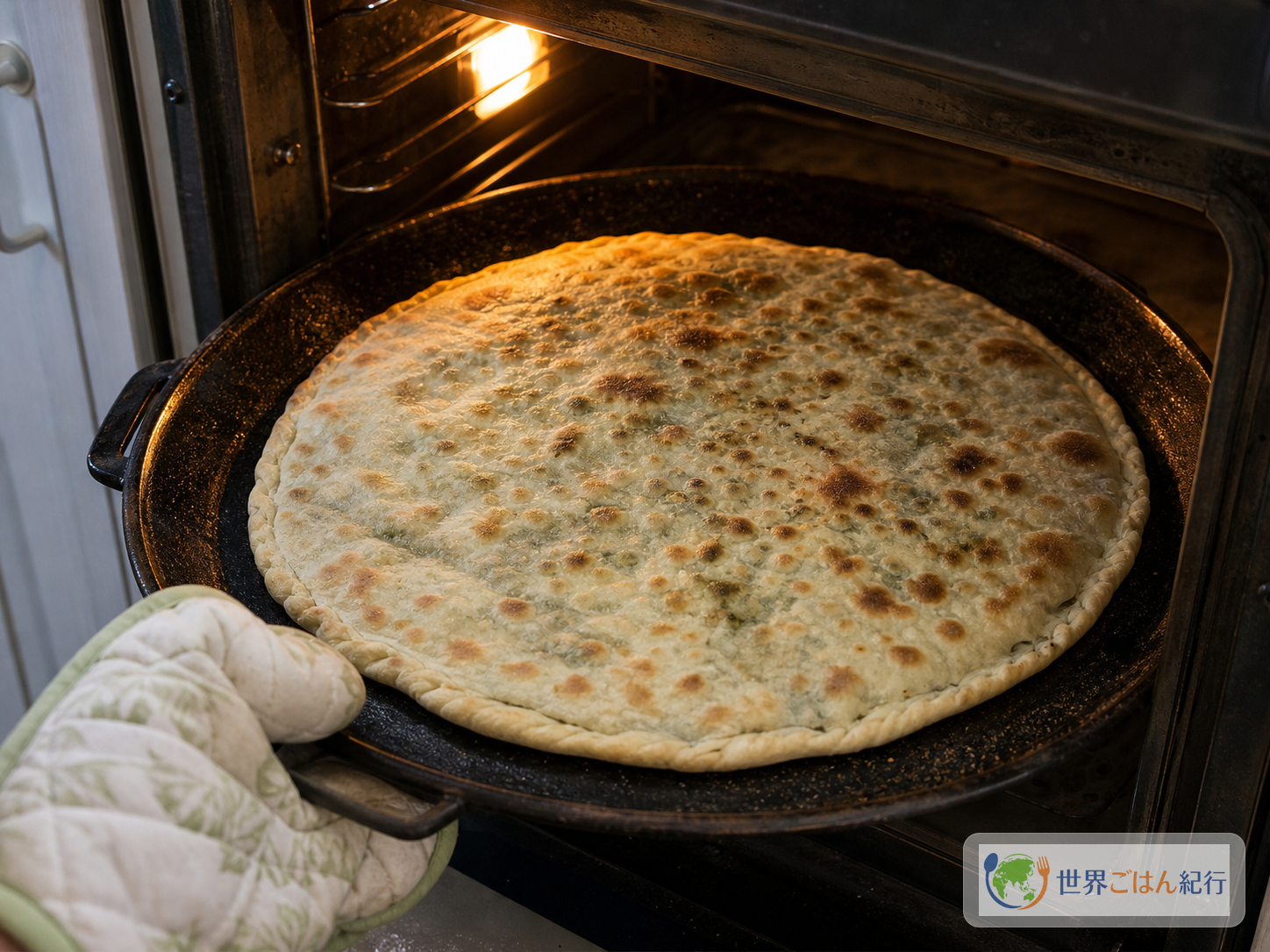
In the traditional method, the dough is rolled out round, laid on a hot flat surface, and baked with ashes or embers piled over it. You do not need to reproduce that at home, but baking low and long easily turns it into just a thin bread with greens in it. Bake hot and short, putting heat into the bottom first, and the thin dough dries out and does not lose to the moisture of the filling.
There are four things to protect when cooking it in a home kitchen.
| What makes it local | How to translate it for a home kitchen | May it be substituted? |
|---|---|---|
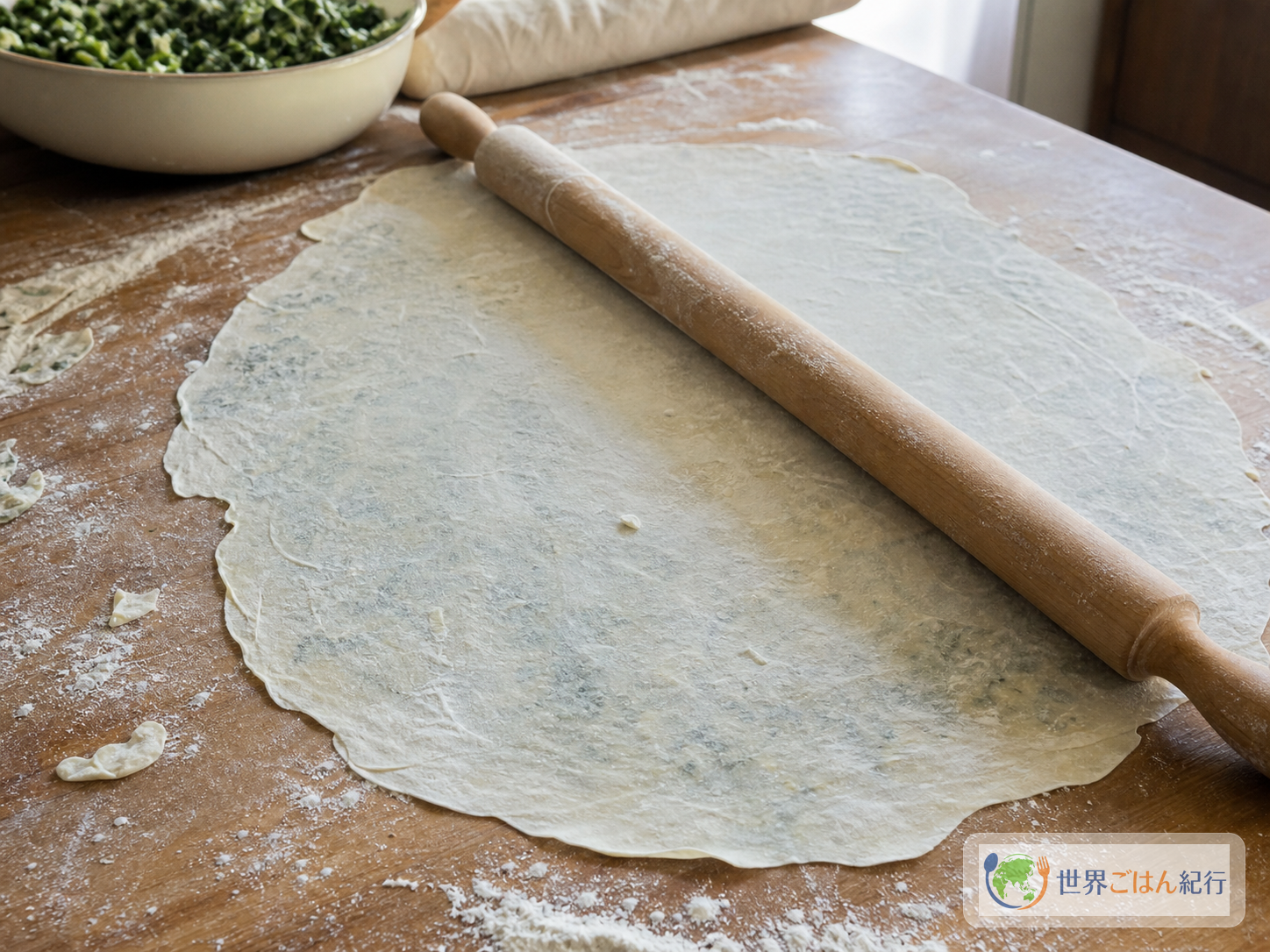
| Roll the dough thin and large | Aim for 30 to 32 cm across and 1 to 2 mm thick | Do not make it a thick bread dough |
| Use Swiss chard | Mix komatsuna and spinach and squeeze out the water | Can be replaced |
| Bake on a hot flat surface | Use a 230°C oven and a preheated baking sheet | Avoid low and long |
| Finish with garlic oil | Brush on thinly right after baking | Protect this |
The slightly tedious part is rolling the dough thin. But you do not need to aim for a perfect circle like dumplings or pizza. Even if it is a little uneven, if you spread the greens thinly and close the edge firmly it looks pretty enough at the table. A home soparnik with edges slightly wavy and greens showing at the cut is, if anything, more appetizing.
Ingredients (serves 4)
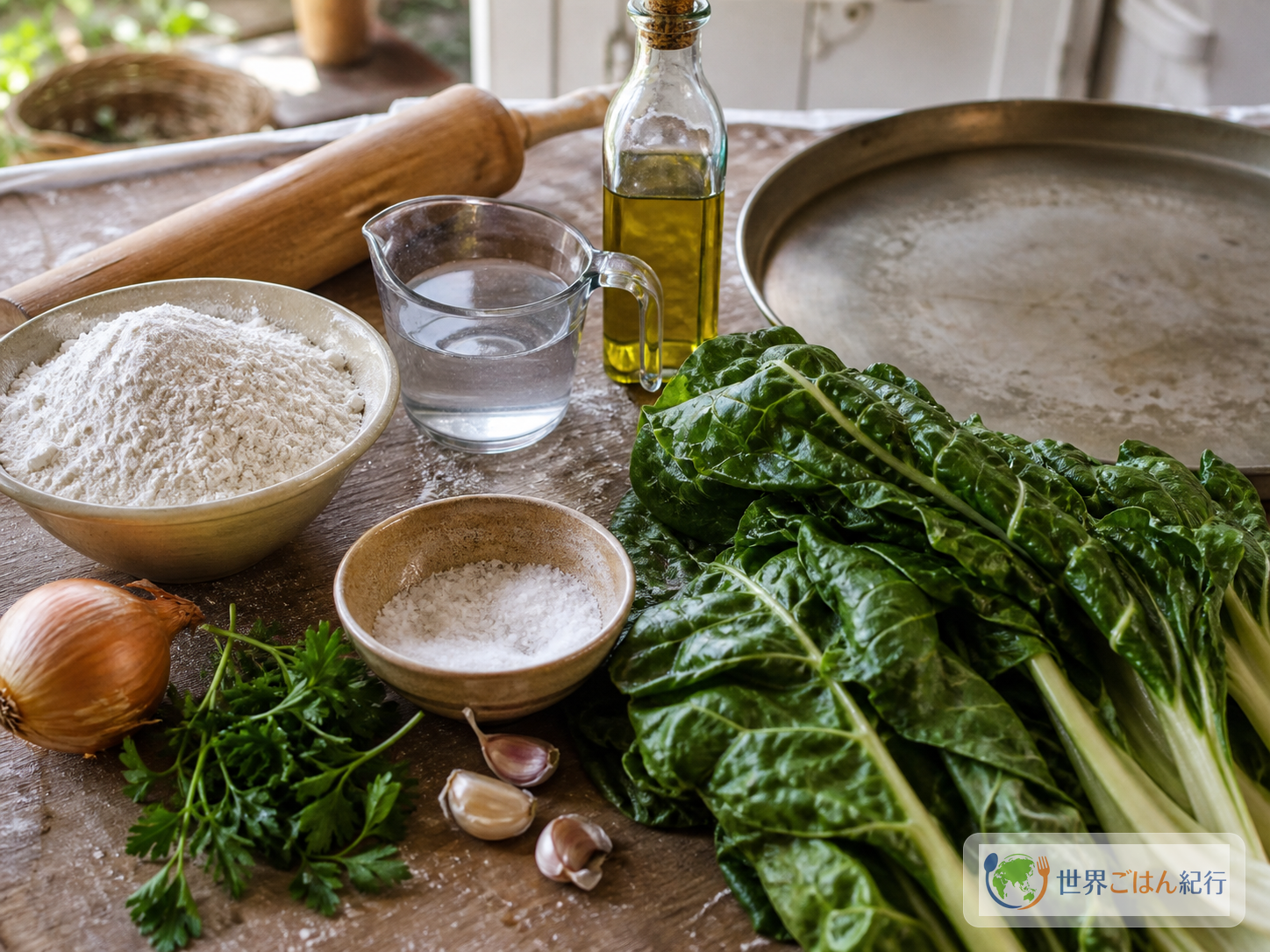
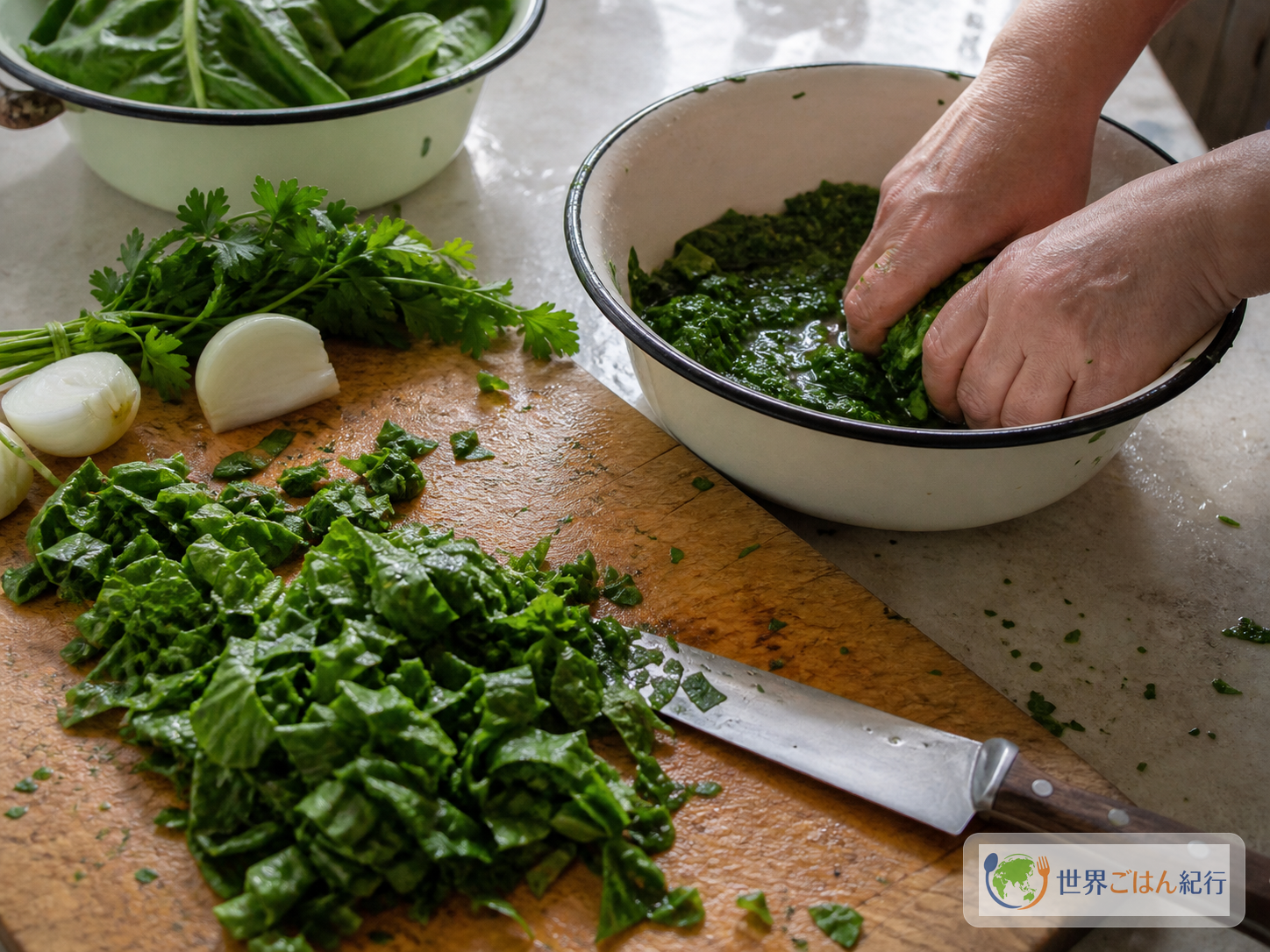
The original uses Swiss chard. Where it is not a vegetable you can always buy, mixing komatsuna and spinach for the first time makes it easier. Komatsuna alone have a strong stem texture and spinach alone gives off a lot of water, so half and half makes the dough less likely to tear.
This dish uses wheat. If you have a wheat allergy, avoid it. If using spinach, for those who mind the harshness, parboil it briefly, plunge it into water, and squeeze well before chopping, which mellows the bitterness.
What to think about when shopping
What is worth adding for soparnik is tools, not unusual seasonings. A rolling pin that rolls the dough large and thin and a thick iron sheet that stores heat in the oven change the result even with the same ingredients. Ordinary supermarket olive oil is fine, but since you brush it directly on at the end, choose one that is not too strongly scented and has a clean bitterness, which makes it easier to eat.
If you often make dishes that roll thin dough, a wooden rolling pin of around 30 cm is easy to handle. One that is too short tends to leave only the edge thick.
To crisp the bottom in a home oven, a cast-iron sheet or griddle that stores heat suits better than a thin aluminum sheet. Preheat it together with the oven before putting the dough on, and the lower crust is less likely to turn watery. If you do not have one, stack two of the oven's own baking sheets, preheat them thoroughly on the lower rack, and then use them.
If you bake small ones in a frying pan, a heavy pan of about 26 cm is easier to handle than a thin one. With a stable bottom, even on medium-low heat the browning does not gather at one spot, and the dough is less likely to fold when turning.
What to protect and what to replace in a home kitchen
With so few ingredients, soparnik changes in taste depending on what you protect. More important than finding Swiss chard are reducing the moisture of the greens, rolling thin, and baking hot.
| Where you hesitate | Recommendation | Reason |
|---|---|---|
| No Swiss chard | 250 g komatsuna and 250 g spinach | Komatsuna adds stem texture, the spinach adds green aroma |
| Whether to add bread flour | A little under 30% | Even rolled thin, it is less likely to tear |
| Whether to use parchment | Use it | It is less likely to collapse when moved to the hot sheet |
| Whether to add cheese | Not the first time | It easily erases the lightness that is soparnik |
| Whether to sauté the garlic | Warm it for only 30 seconds | Rounds off the raw sharpness and moves the aroma into the oil |
You may want to add cheese or ground meat, but the first time, leaving them out shows the outline of this dish. If the greens alone feel lacking, rather than increasing the filling, it comes together better if you use a slightly better olive oil to finish and add a pinch of salt at the end.
Where it goes wrong and how to recover
Failures with soparnik are mostly about moisture and thickness. When it tears, is damp, or is hard, separating the causes makes it easier to fix next time.
| State | Cause | How to recover |
|---|---|---|
| The bottom is damp | Not enough draining of the greens, not enough preheating of the sheet | Bake 2 to 3 more minutes on the lower rack at 230°C |
| The dough tore | Filling piled on thick, rolled too thin | Patch the torn spot with a scrap of thin dough and bake |
| The edge is hard | The edge was rolled thick | Next time trim the excess dough and close it thinly with your fingers |
| Only the surface scorches | Baked on the upper rack, thin baking sheet | Move to the lower rack and bake at 220°C |
| The greens are watery | Did not squeeze after salting | Cut just before eating and do not let excess water out onto the plate |
If it comes out a little damp, do not stack it onto a plate right away. Leave it on a cutting board or rack for about 3 minutes and the steam under the bottom escapes. If you stack it after cutting, the dough you dried out easily softens again.
Storage and how to eat it
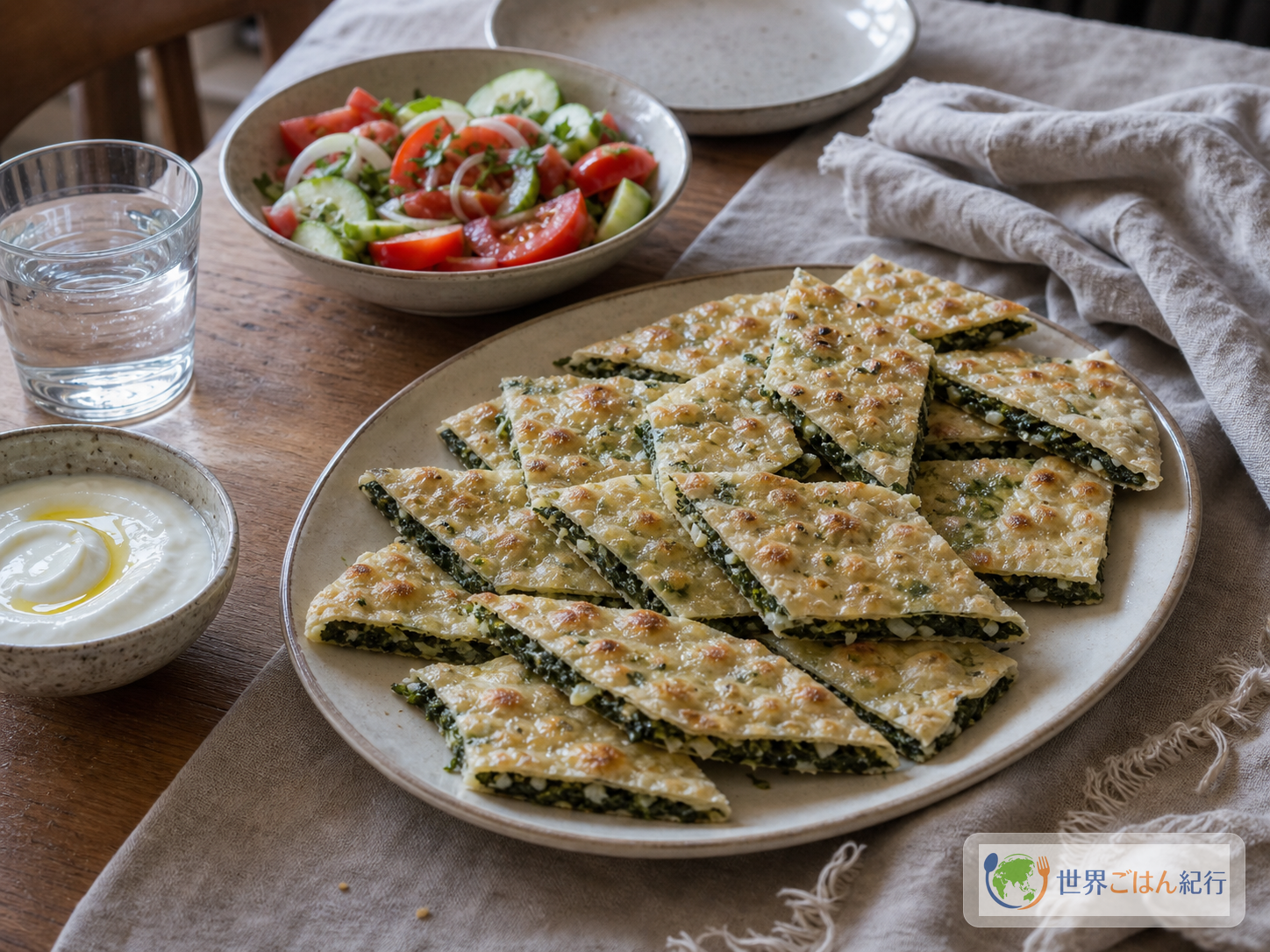
Soparnik is delicious fresh from the oven, but it is also a dish that is easy to eat cooled. Once the heat has gone, put it cut into a storage container and finish it in about 2 days in the refrigerator as a guide. Sealing it completely tends to dampen the surface, so put the lid on after it has cooled.
For rewarming, a toaster oven or a frying pan suits it. In a toaster oven, 4 to 5 minutes at 200°C; in a frying pan, without oil over medium-low heat, 2 minutes per side. With a microwave alone the dough tends to soften again, so heating at 600 W for 30 seconds and then baking 1 minute per side in a frying pan restores the texture.
At the table, a tomato and cucumber salad, plain yogurt, and white wine or sparkling water go well. If you are following with another flour dish, moving on to the layered greens of Bosnian burek (in Japanese) or the hearty cheese-filled Georgian khachapuri makes the differences easy to see. To broaden it into a Croatian table, pairing it with the meat stew pašticada (in Japanese) lets you enjoy how, even in the same Dalmatia, a flour dish and a stew have different faces.
Frequently asked questions
Q1. If I have no Swiss chard, can I make it with spinach alone?
Yes. But with spinach alone it gives off a lot of water and the filling gets soft. If you make it with spinach alone, parboil it briefly, plunge it into cold water, squeeze hard, and then chop. For the first time, mixing in komatsuna is more stable.
Q2. Can I bake it in a frying pan alone?
A smaller one of about 26 cm across can be baked. Without a lid over medium-low heat, bake 8 minutes on one side, flip, bake 6 minutes, and brush with garlic oil at the end. However, flipping a large thin one is difficult, so the first time the oven is less likely to fail.
Q3. Can I substitute pizza dough or store-bought puff pastry?
You get something edible, but it moves away from the lightness of soparnik. Pizza dough is thick and puff pastry is high in fat, which hides the simple aroma of the greens. Even when short on time, making only the dough from flour, water, salt, and olive oil gets closer.
Q4. Can I prepare it the day before?
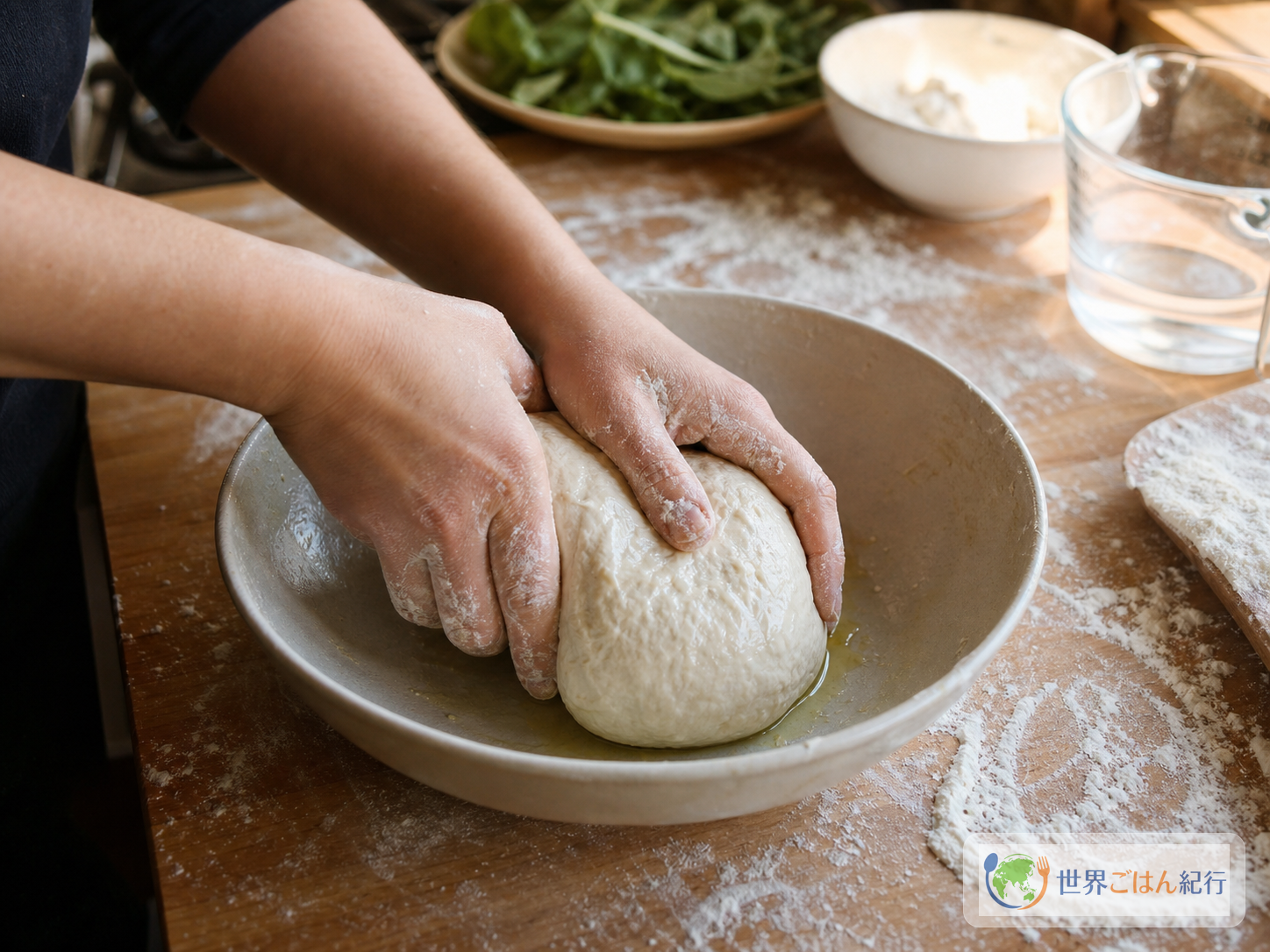
You can go as far as chopping the greens the day before. Do not salt the chopped greens; refrigerate them in a storage container lined with paper towel. Once salted, water keeps coming out, so do the squeezing on the day you bake. The dough can also be made the day before, but if refrigerated, let it stand 30 minutes at room temperature before rolling.
Q5. What if the garlic is too strong?
Halve the garlic and warm it for about 1 minute over low heat before using, and the edges come off. If you let it scorch completely it turns bitter, so turn off the heat before it colors. If children will eat it, you can let the garlic only perfume the oil and remove the pieces.
Q6. Can I freeze it?
You can, but the dough softens a little on thawing. If freezing, wrap the cut pieces one by one in plastic wrap, and keep to about 2 weeks as a guide. For rewarming, 7 to 8 minutes in a 200°C toaster oven straight from frozen is easy to manage.
Sources
- European Commission. "Commission Implementing Regulation (EU) 2016/526 of 1 April 2016 entering a name in the register of protected designations of origin and protected geographical indications (Poljički soparnik / Poljički zeljanik / Poljički uljenjak)." https://eur-lex.europa.eu/legal-content/EN/TXT/?uri=CELEX:32016R0526
- Croatia.hr. "Soparnik." https://croatia.hr/en-gb/food-and-drink/soparnik
- Wikipedia contributors. "Soparnik." https://en.wikipedia.org/wiki/Soparnik
- Chasing the Donkey. "Croatian Recipes: Poljički Soparnik." https://www.chasingthedonkey.com/croatian-recipes-poljicki-soparnik-recipe-kale-pie/