
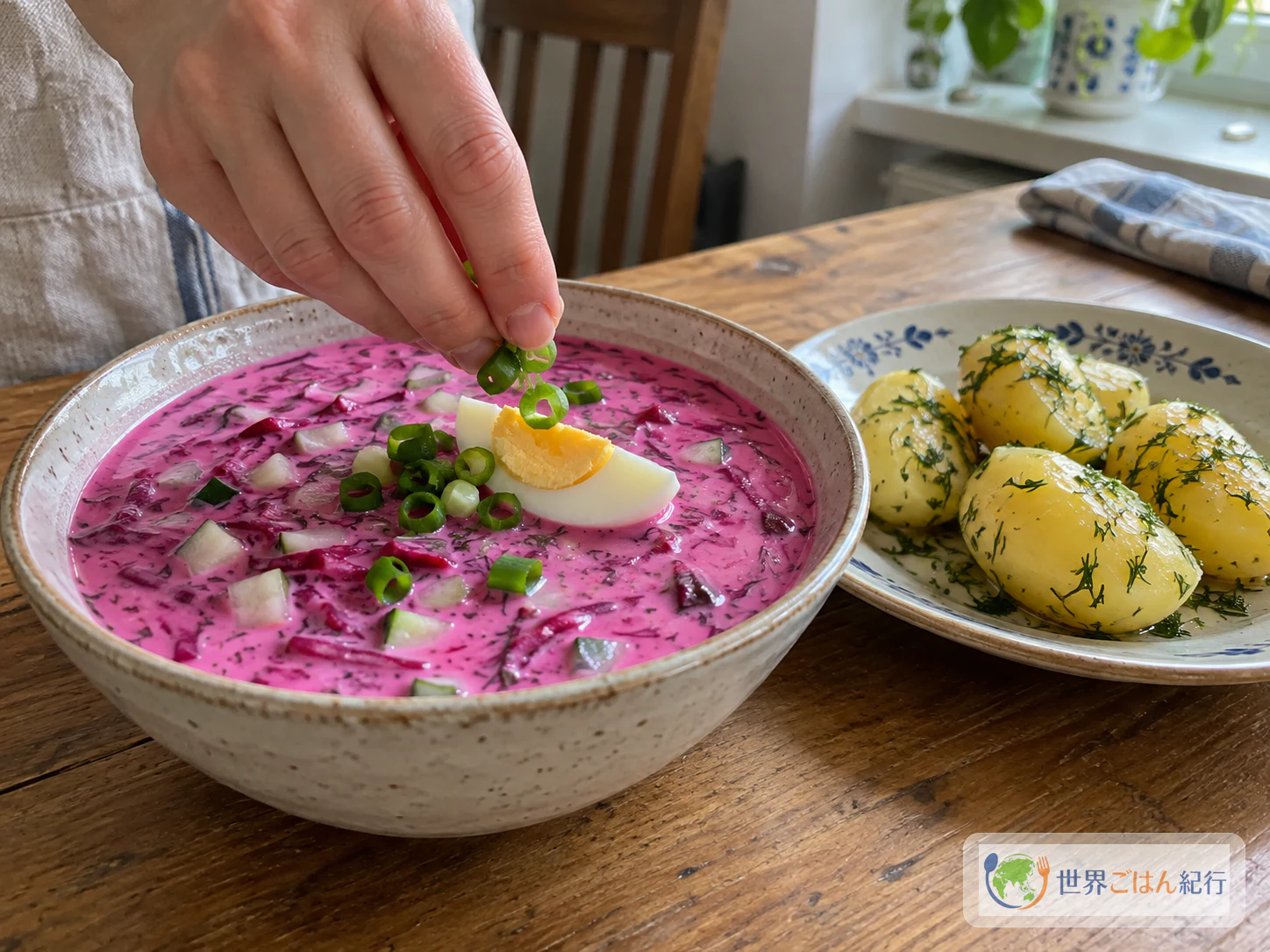
Šaltibarščiai: A Cold Pink Bowl and a Warm Plate of Potatoes
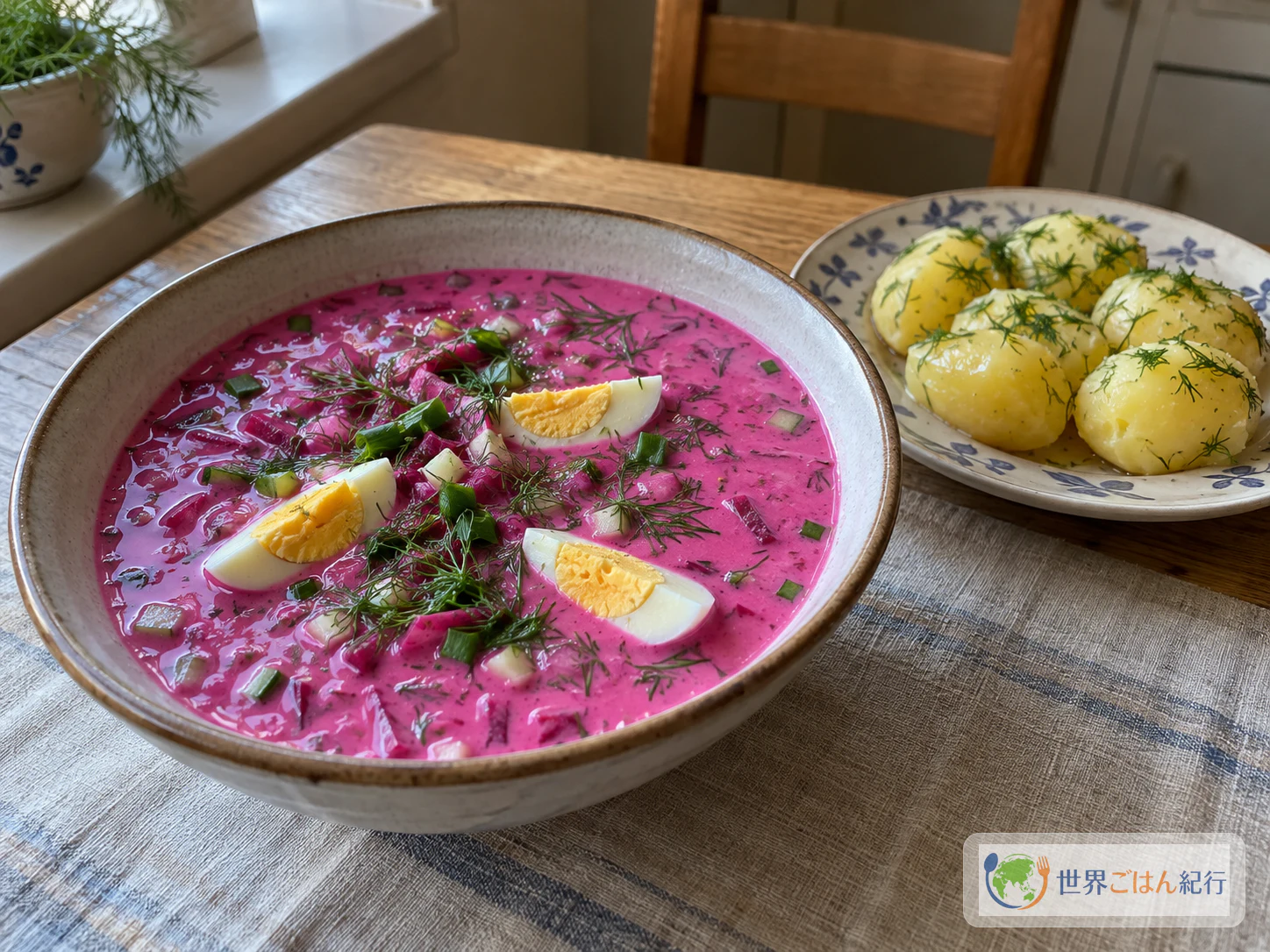
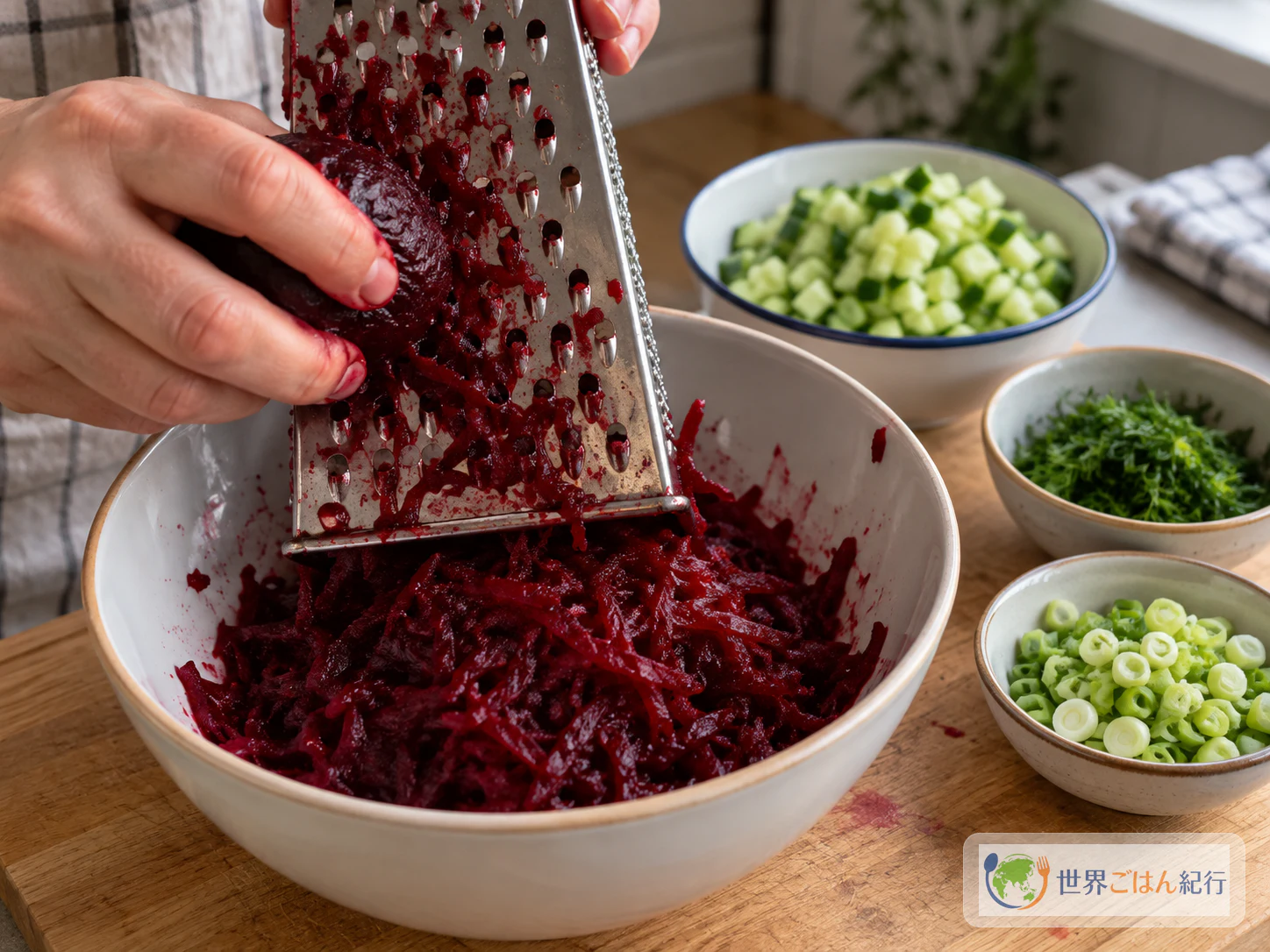
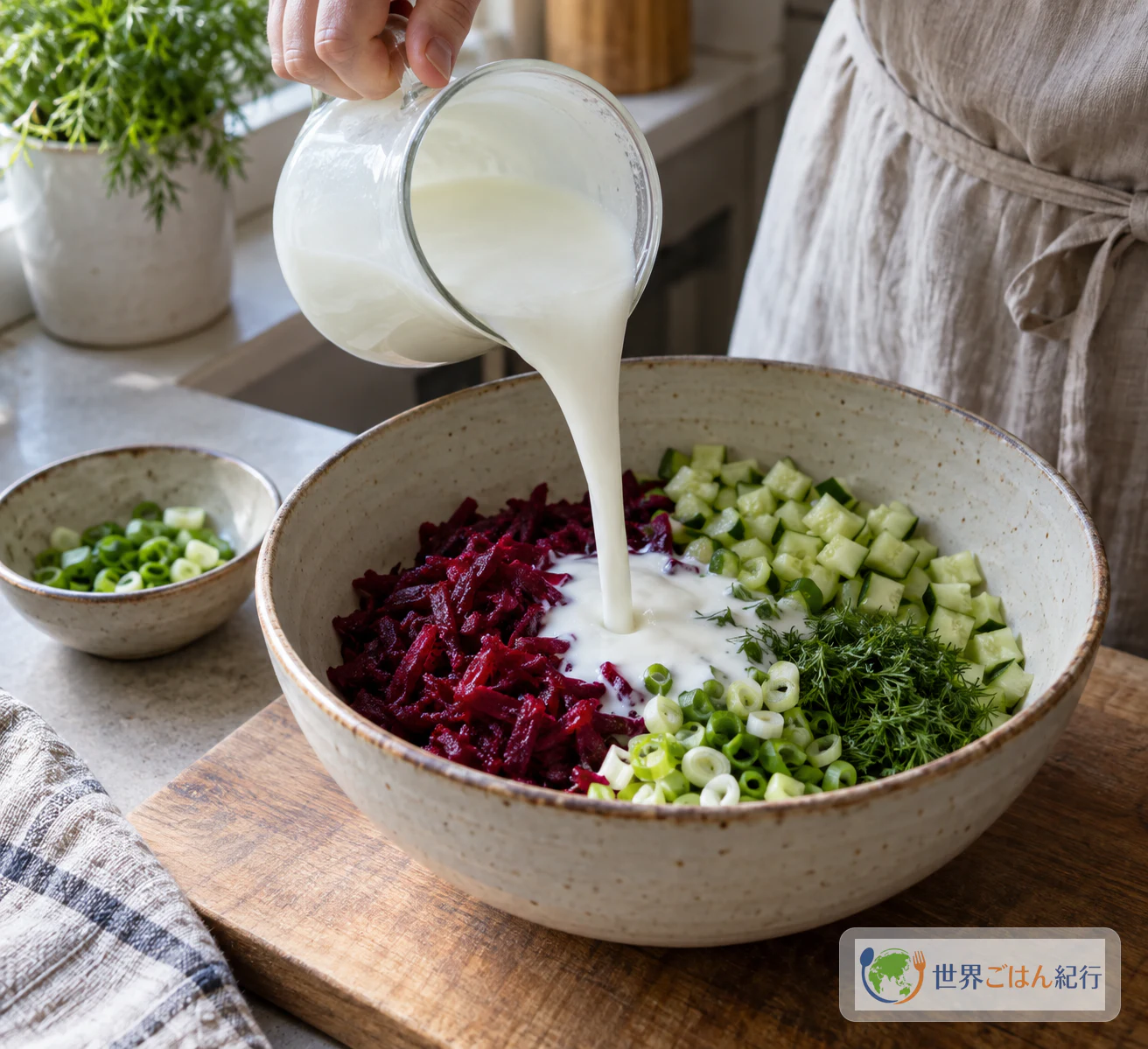
The soup stays cold, and the potatoes stay warm and separate. Keep the beetroot coarsely grated and the cucumber diced so each spoonful has texture, and season only with salt and black pepper.
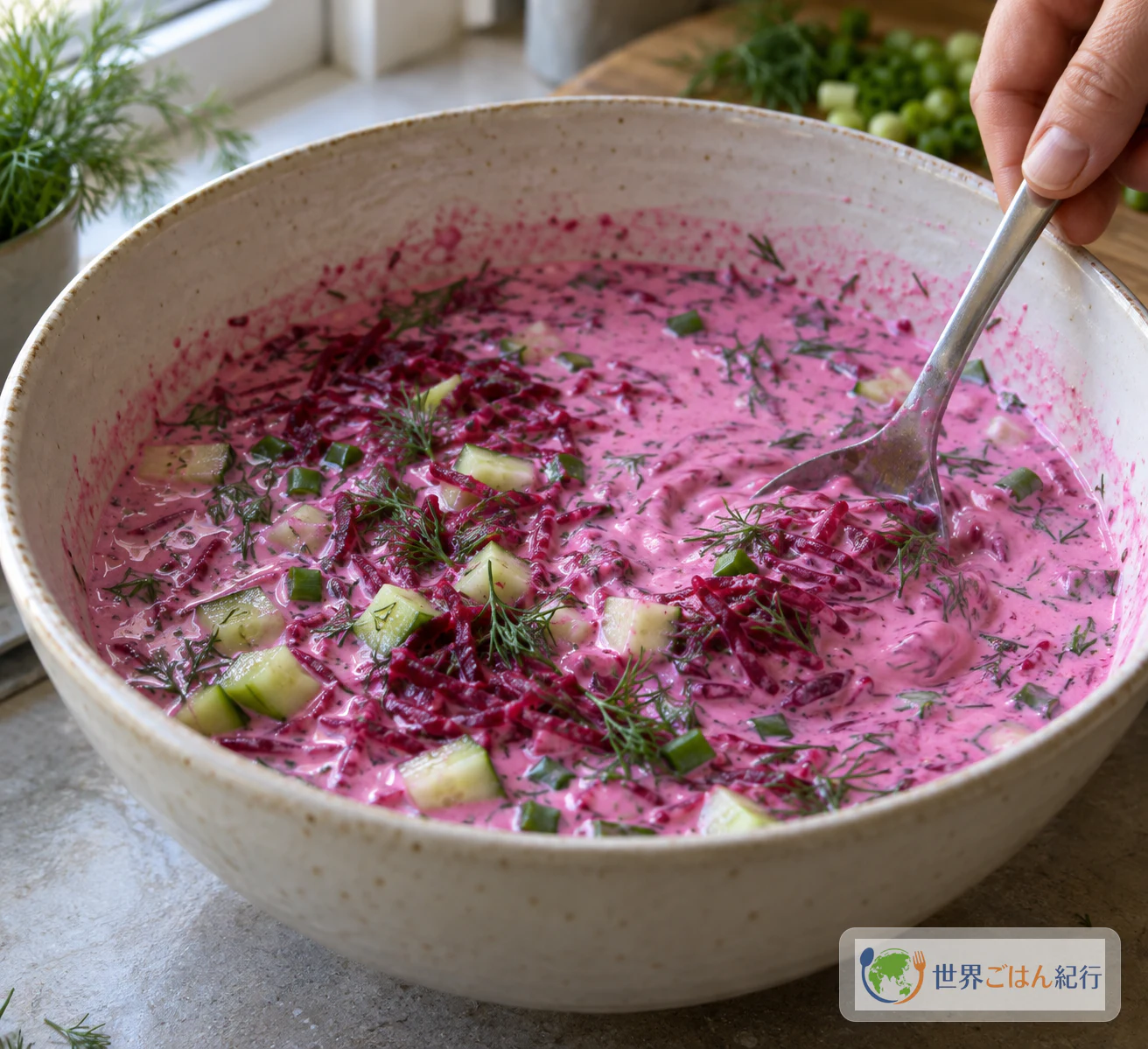
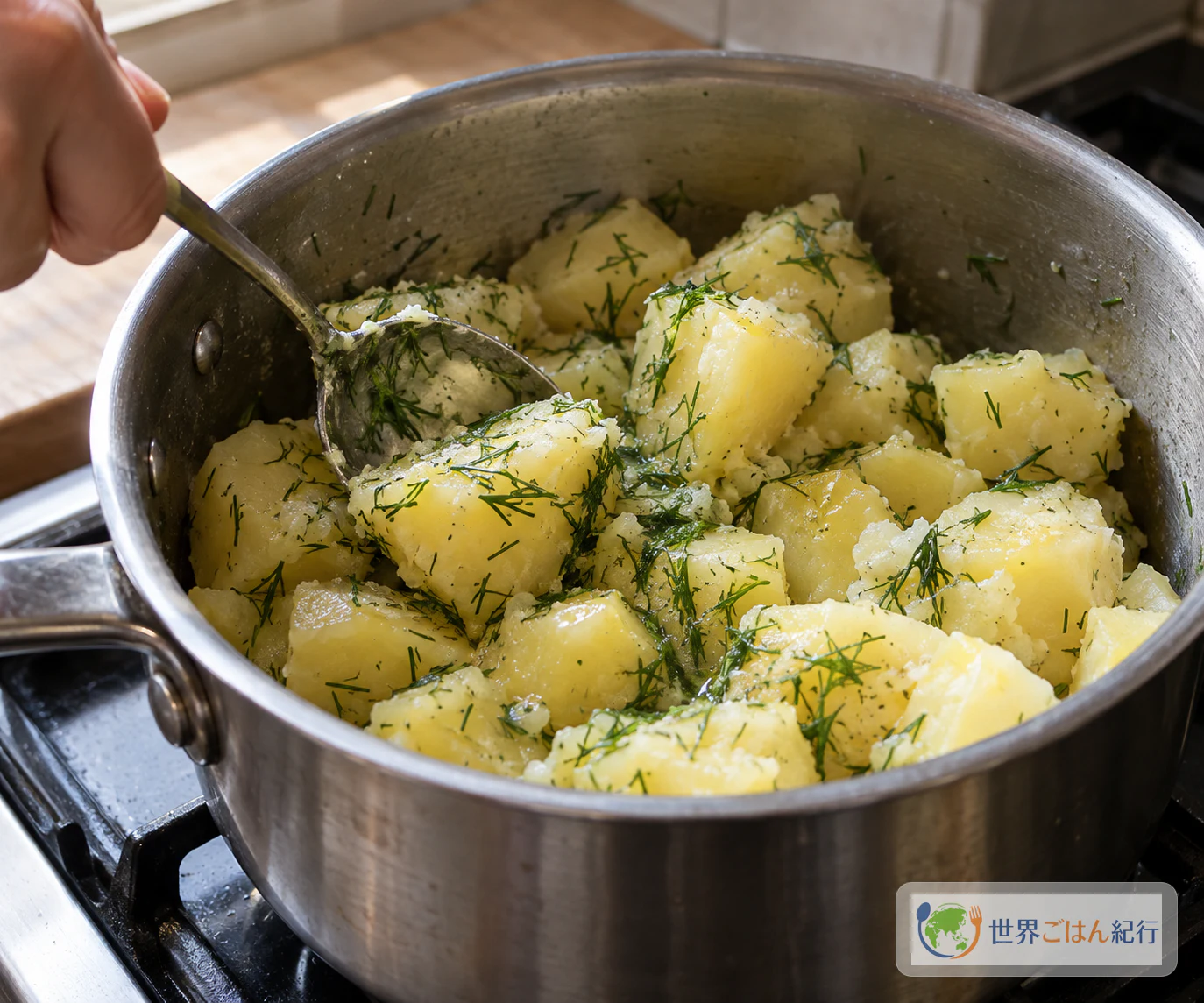
On a summer table, a bowl of soup the color of bright pink sits beside a small plate of potatoes still giving off steam. The soup is cold kefir tinted by beetroot, with crisp cucumber, wedges of hard-boiled egg and the fresh green of dill and spring onion. The potatoes, glossy with butter and dill, stay on their own plate. That contrast between cold and warm is at the heart of šaltibarščiai, the chilled beetroot soup of Lithuania.
In English it is often called "cold borscht" or simply "pink soup." Despite the name, it is not a chilled version of a hot, long-simmered beet soup such as Ukrainian borscht. The base is kefir rather than broth, nothing in the bowl is simmered, it is eaten cold, and the potatoes are served on the side rather than cooked in the soup. For more dishes from the same country, see our Lithuania page.
This recipe has not been kitchen-tested by our editors. It is based on the four-portion recipe card from Taste of Lithuania, with one editorial change to the beetroot, explained below.
A Summer Soup Lithuania Puts Forward
Lithuania's state tourism board describes the country's cuisine through seasonal, local ingredients and long-standing culinary traditions, and lists šaltibarščiai among the Lithuanian dishes visitors should try. The same guide lists the Vilnius Pink Soup Fest among events celebrating the soup, a sign of how closely this bright bowl is tied to the image of Lithuanian food today.
Go Vilnius, the city's tourism organization, also introduces the cold beetroot soup together with warm potatoes served on the side. Its own recipe uses a different combination of ingredients, so it appears here only under variations and is not mixed into the amounts below.
Within homes the details vary. The author of Taste of Lithuania explains in comments that the cucumber can be diced, sliced or grated, and that households differ in how they cut things. This recipe settles on one version: coarsely grated beetroot and diced cucumber.
Ingredients: The Soup, the Topping and the Warm Side
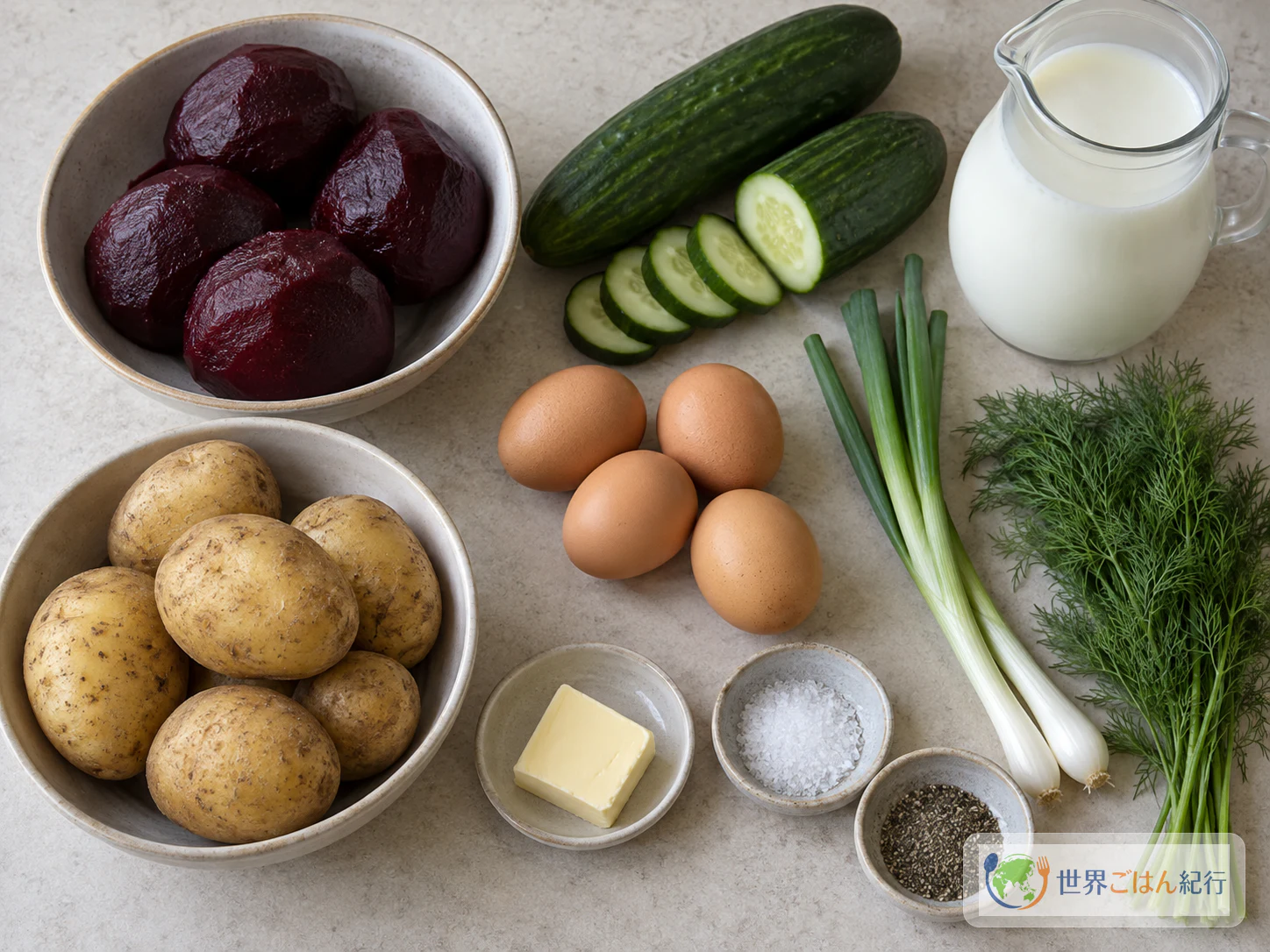
The amounts follow the source recipe card, which lists 4 portions. There are two separate portions of dill: one goes into the soup and one goes on the potatoes, so measure them separately. This household version defines 1 tbsp as 15 mL, an editorial measuring choice rather than a capacity specified by the source.
Equipment
- A saucepan for the potatoes
- A saucepan for the eggs
- A grater with coarse holes
- A knife and cutting board
- A large mixing bowl
- Soup bowls and a separate plate for the potatoes
Choosing Kefir and Beetroot
The source recipe card lists 500 g of boiled grated beetroot, while its method uses jarred beetroot together with the liquid from the jar. This recipe uses 500 g of plain, unseasoned cooked beetroot, drained, and adds no jar liquid. That is an editorial choice for home cooks, so the saltiness and sourness may differ from versions made with pickling liquid.
Beetroot. Choose cooked beetroot without seasoning or vinegar, or cook your own, and let it cool before grating. Drain it well. Don't use plain beetroot and jarred beetroot with its liquid at the same time; they are two different forms of the soup.
Kefir. Use plain, unsweetened kefir. It is not the same as yogurt or buttermilk, so this recipe does not treat them as interchangeable. Follow the storage conditions printed on the package.
Cucumber. Use fresh cucumber, not pickles. If the skin is tough, you can peel it.
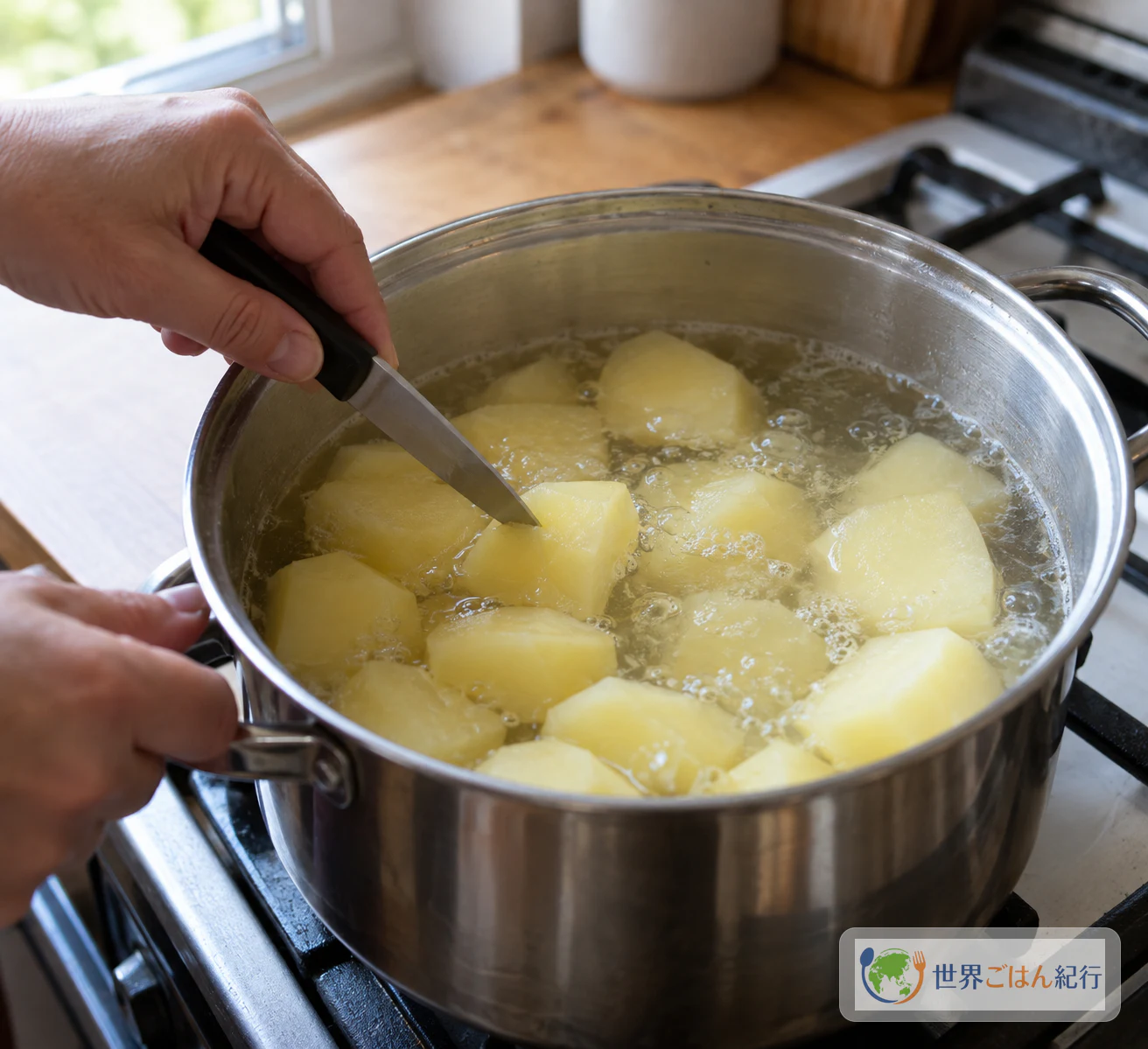
Potatoes. This recipe peels the potatoes and cuts them into bite-size pieces. The source also allows new potatoes with their thin skins left on, which is a different preparation from the one here.
This dish contains milk (kefir, butter) and eggs. Cool the eggs before cutting them, and use clean tools. Don't use a board or knife that has touched raw meat for the cold soup. Don't leave cooked food out at room temperature for long.
Method: Cook the Warm Parts, Then Mix the Cold Bowl
The source recipe lists 10 minutes of prep, 20 minutes of cooking and 30 minutes in total, and gives about 12 minutes for the eggs in boiling water. Those figures assume beetroot that is already cooked. If you start from raw beetroot, the cooking and cooling take extra time, so plan for that. The potatoes and eggs can cook while you prepare the vegetables, but finish the warm potato side last.
How to Eat It: Cold Spoonfuls, Warm Bites
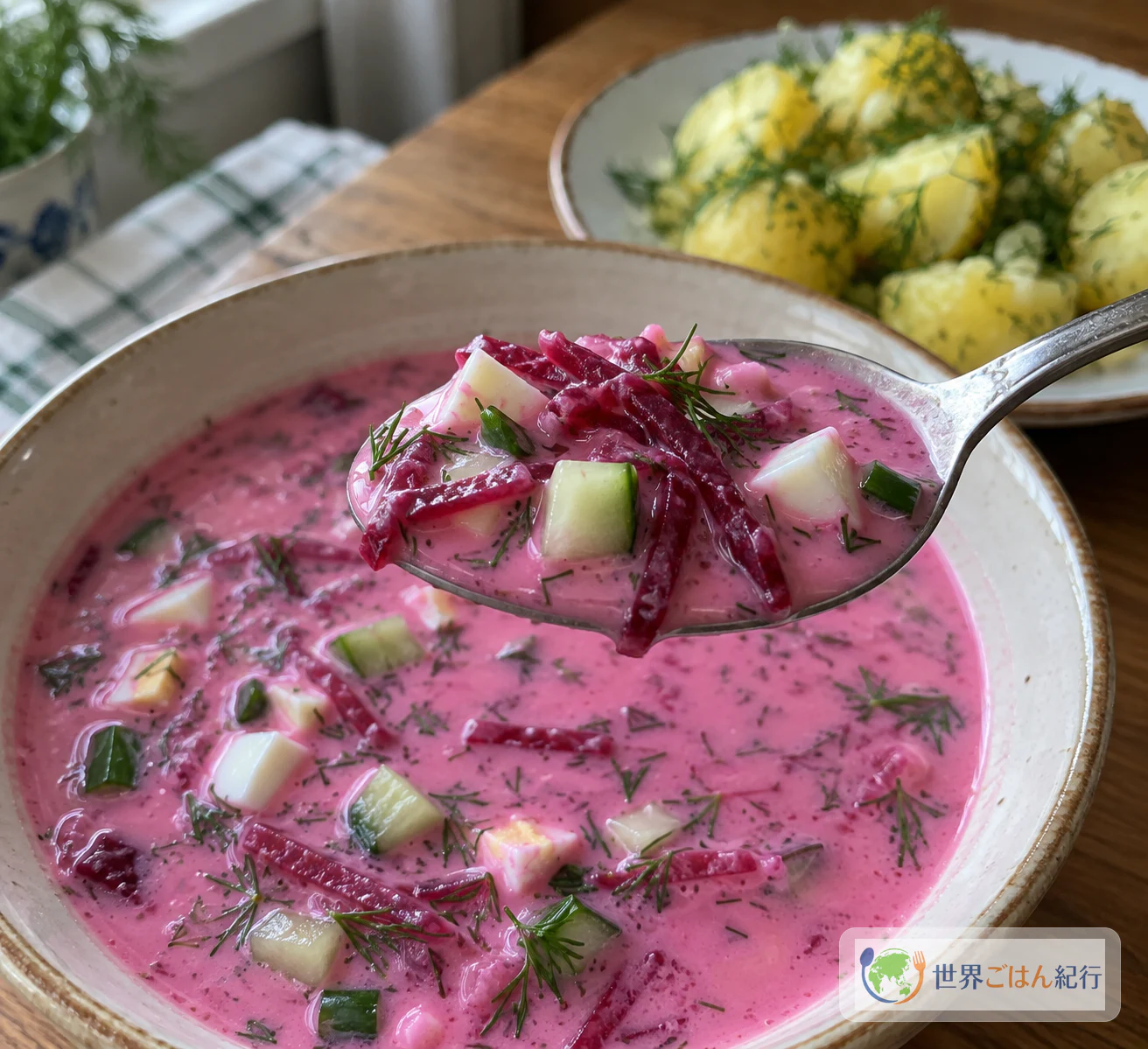
The basic way to serve it is with the potatoes on the side. You take a spoonful of cold soup, then a bite of warm potato. The author of Taste of Lithuania mentions personally liking to add the potatoes to the soup one bite at a time. That is one person's preference, not a rule for every household, and it is different from mixing the whole pot of hot potatoes into the soup.
Fixing the Flavor and Texture
| Condition | What to check | What to do |
|---|---|---|
| The soup tastes flat | Whether it has enough salt | Add salt and black pepper a little at a time, tasting as you go |
| It is more or less tangy than expected | The kefir you used and the form of beetroot | Sourness varies with the kefir and the beetroot. This version doesn't add vinegar, lemon or beet liquid. For a sharper style, see the variations below |
| The texture feels mushy | Whether the beetroot was grated fine or the cucumber cut very small | Use the coarse side of the grater and dice the cucumber into small, distinct pieces next time |
| The soup is no longer cold | Whether it waited out of the refrigerator | Keep the soup in the refrigerator until serving, and add the warm potatoes only on their own plate |
| The egg wedges crumble | Whether the eggs were cut while warm | Cool the eggs fully under cold running water before peeling and cutting |
Variations That Belong to Other Versions
Each of these is a separate version of the soup. Don't layer them onto the amounts above.
- Jarred beetroot with its liquid. The source recipe's method uses jarred beetroot and its liquid. Use either that or the plain drained beetroot here, never both together.
- Different cucumber cuts. The Taste of Lithuania author explains that cucumbers can be diced, sliced or grated, and that households differ. This recipe uses diced cucumber throughout.
- A buttermilk or vinegar version. Go Vilnius gives a different recipe made with kefir or buttermilk, with vinegar, 3 eggs and its own potato amount. Follow that recipe as a whole if you want to try it, rather than swapping buttermilk into the 1 L of kefir here at an untested ratio.
- Starting from raw beetroot. Go Vilnius's separate recipe gives 30–60 minutes for cooking beetroot, depending on size. Treat that as a guide for its own recipe, and cool the beetroot before grating.
Storage
The source recipe says to refrigerate the soup if you make it ahead of serving, and it gives no storage period for the finished soup. Keep the soup in the refrigerator until you serve it. Store the kefir according to its package label. Don't leave the cooked eggs, potatoes or soup at room temperature for long, and don't decide whether it is safe to eat by taste or smell alone.
Frequently Asked Questions
Is it the same without kefir?
No. Kefir is the base of this recipe. Go Vilnius has a version that can use buttermilk, but it is a different recipe with its own proportions. This recipe does not give an equivalent substitute.
When do the eggs go in?
Not into the mixing bowl. Hard-boil, cool, peel and cut the eggs into wedges, then place them on top of each bowl when serving, together with the remaining half of the spring onion.
How long does the soup need to chill?
The source does not give a specific chilling time. It says to refrigerate the soup if it is ready before serving. Using cooled beetroot and kefir from the refrigerator helps keep the bowl cold.
Should the potatoes go into the soup?
The basic way is to serve them warm on a separate plate. Some people, including the Taste of Lithuania author, like to add a bite of potato to the soup as they eat, but don't mix the hot potatoes into the whole bowl of soup.
Is this the same as Ukrainian borscht?
No. Šaltibarščiai is a cold soup built on kefir, with raw cucumber, hard-boiled egg and fresh herbs, served with warm potatoes on the side. It is a different dish from a hot simmered beet soup.
Sources
- Taste of Lithuania (Ieva), "Šaltibarščiai (Cold Beetroot Soup)." The base recipe: the 4-portion recipe card and ingredient amounts, the hard-boiled eggs in boiling water for about 12 minutes and cut into quarters, half the spring onion mixed in and half for topping, potatoes and eggs cooked separately, the listed prep, cook and total times, refrigerating soup made ahead, and the author's comments on coarse beetroot and differences in how households cut cucumber. https://tasteoflithuania.com/saltibarsciai-cold-beetroot-soup/
- Go Vilnius, "What is a pink soup (šaltibarščiai)?" A tourism organization's introduction to the cold beetroot soup served with warm potatoes on the side, and its separate recipe with kefir or buttermilk, 3 eggs, vinegar and its own potato amount, referred to here only as a variation. https://www.govilnius.lt/visit-vilnius/gastronomy/what-is-pink-soup-saltibarsciai
- Lithuania Travel (Lithuanian State Tourism Board), "FAQ: What foods is Lithuania known for?" Lithuanian cuisine described through seasonal, local ingredients and long-standing traditions; šaltibarščiai listed among dishes to try; the Vilnius Pink Soup Fest listed among events celebrating the soup. https://lithuania.travel/en/media/faq