Bouneschlupp: Green Beans and Smoked Bacon Simmered into a Luxembourg Home Soup
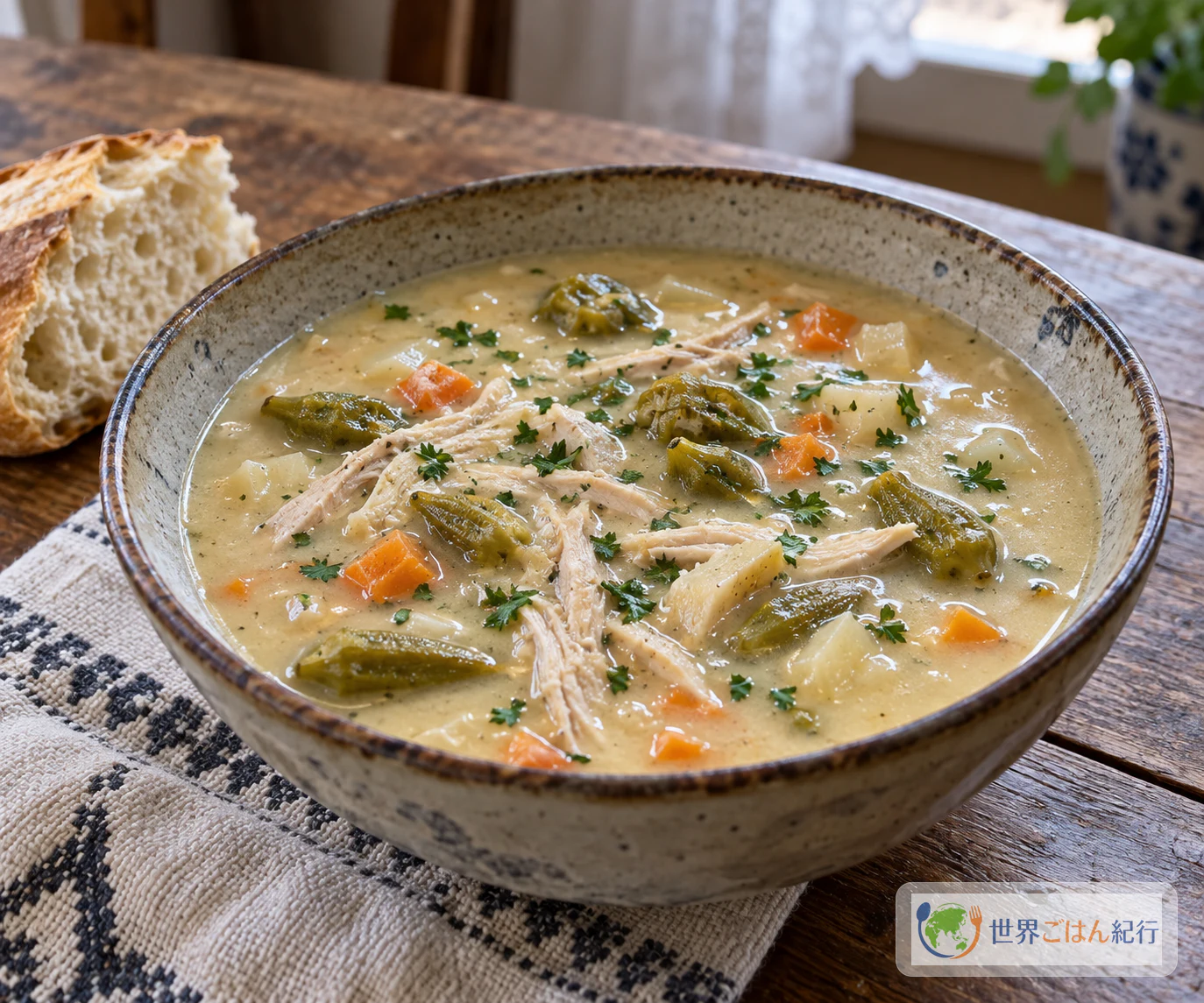
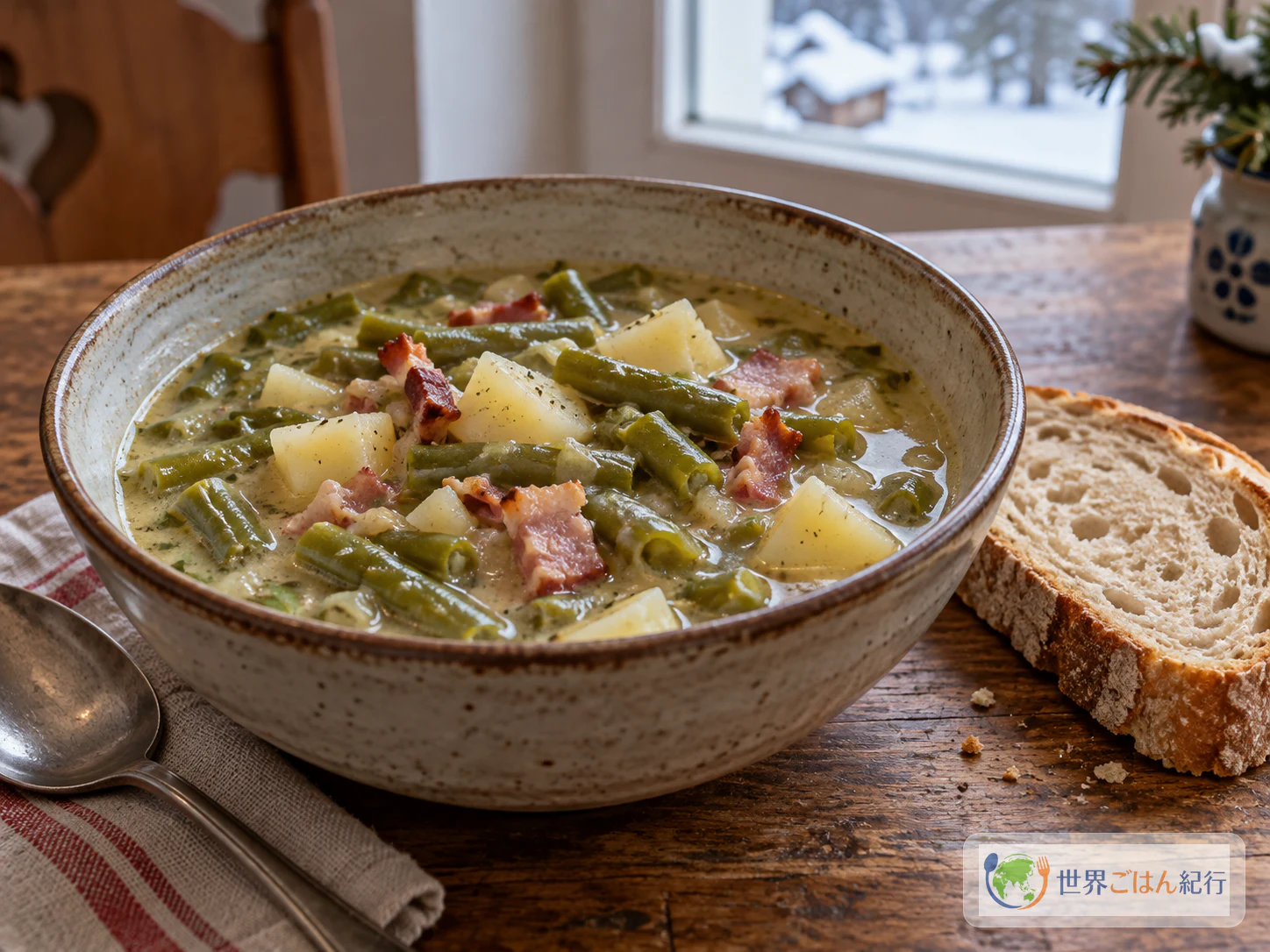
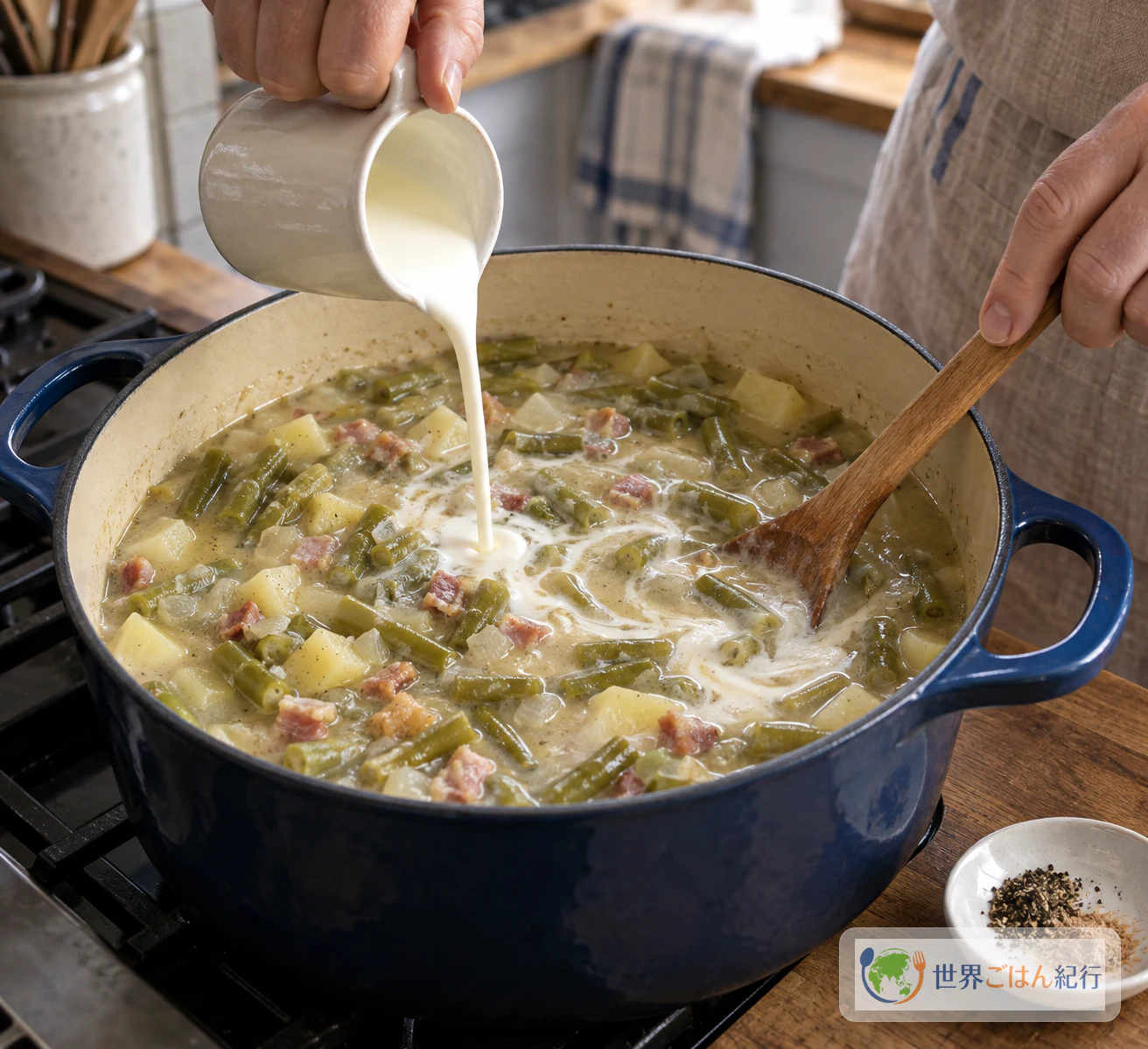
Green beans you can still pick out with a spoon, potatoes soft enough to thicken the broth a little, and a smoky note from the bacon, softened at the end with cream. It is a chunky soup, not a purée.
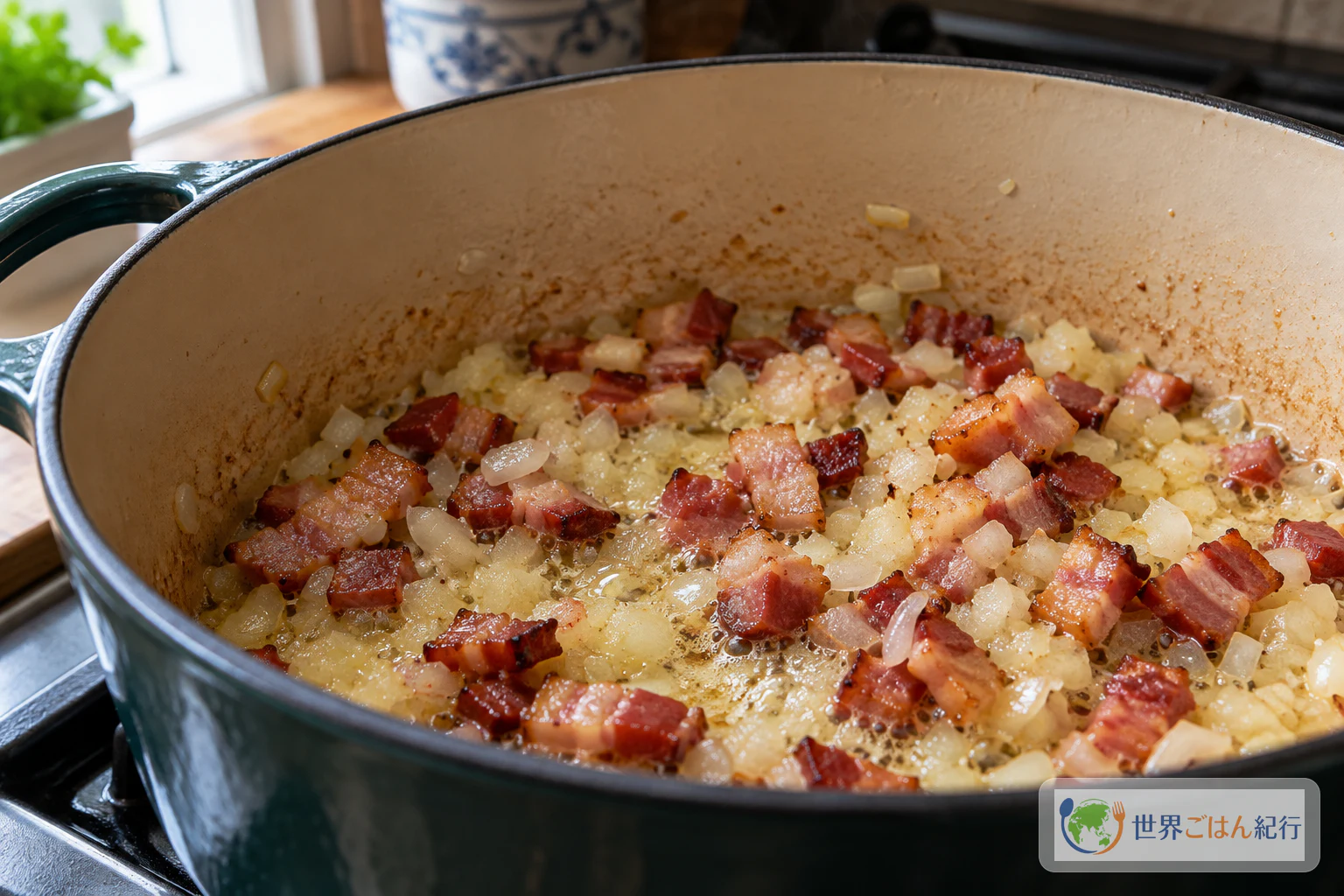
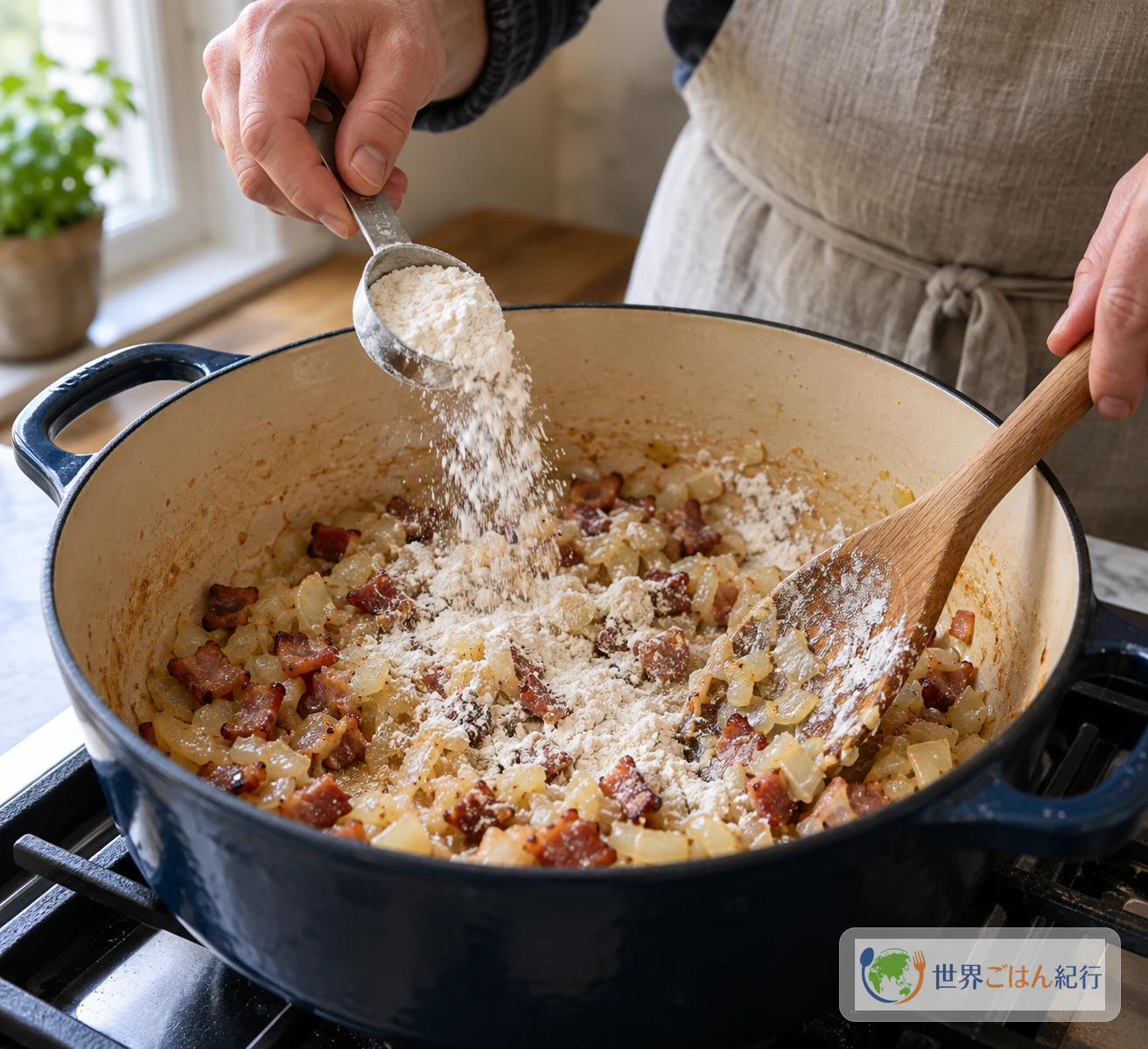
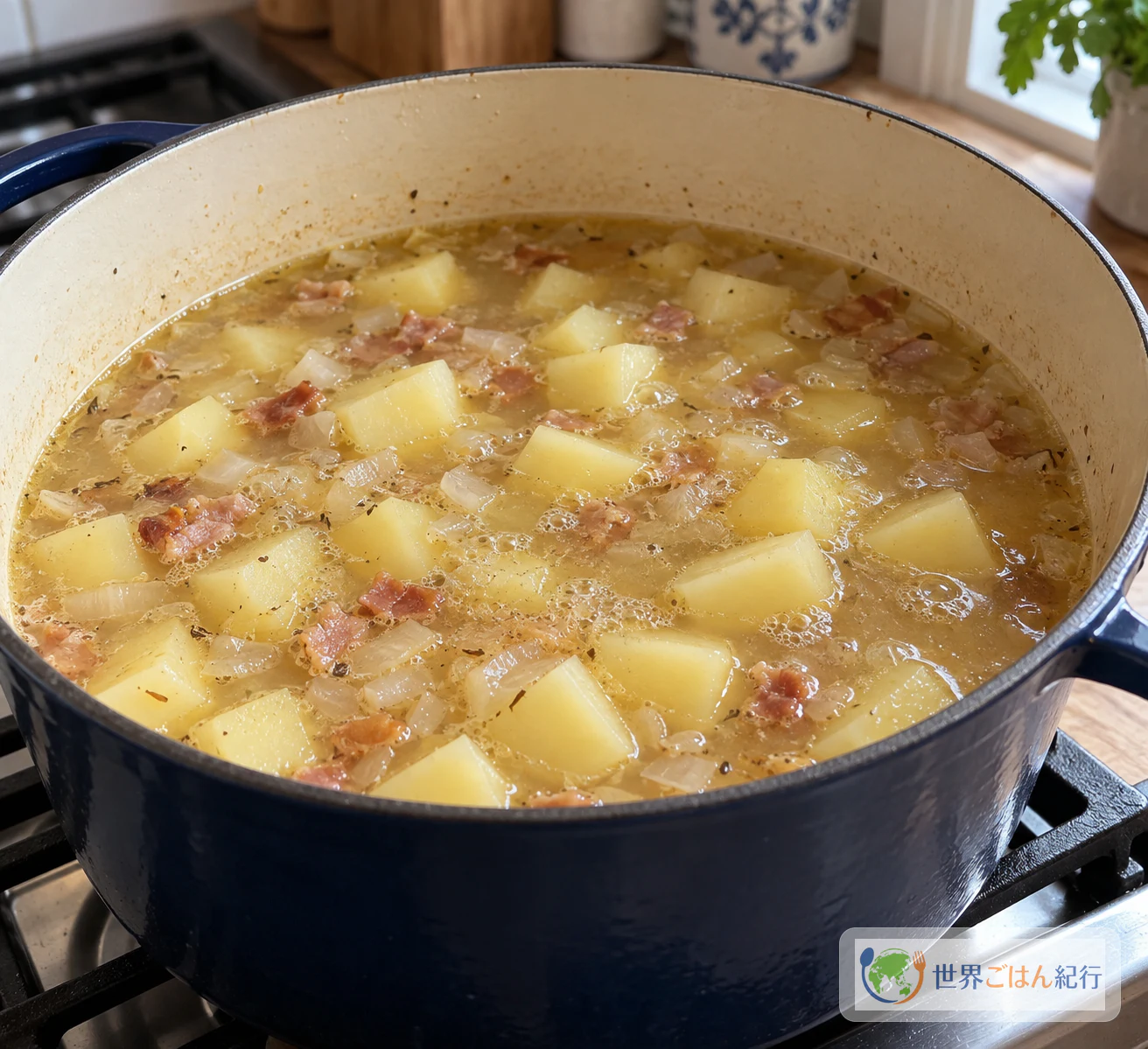
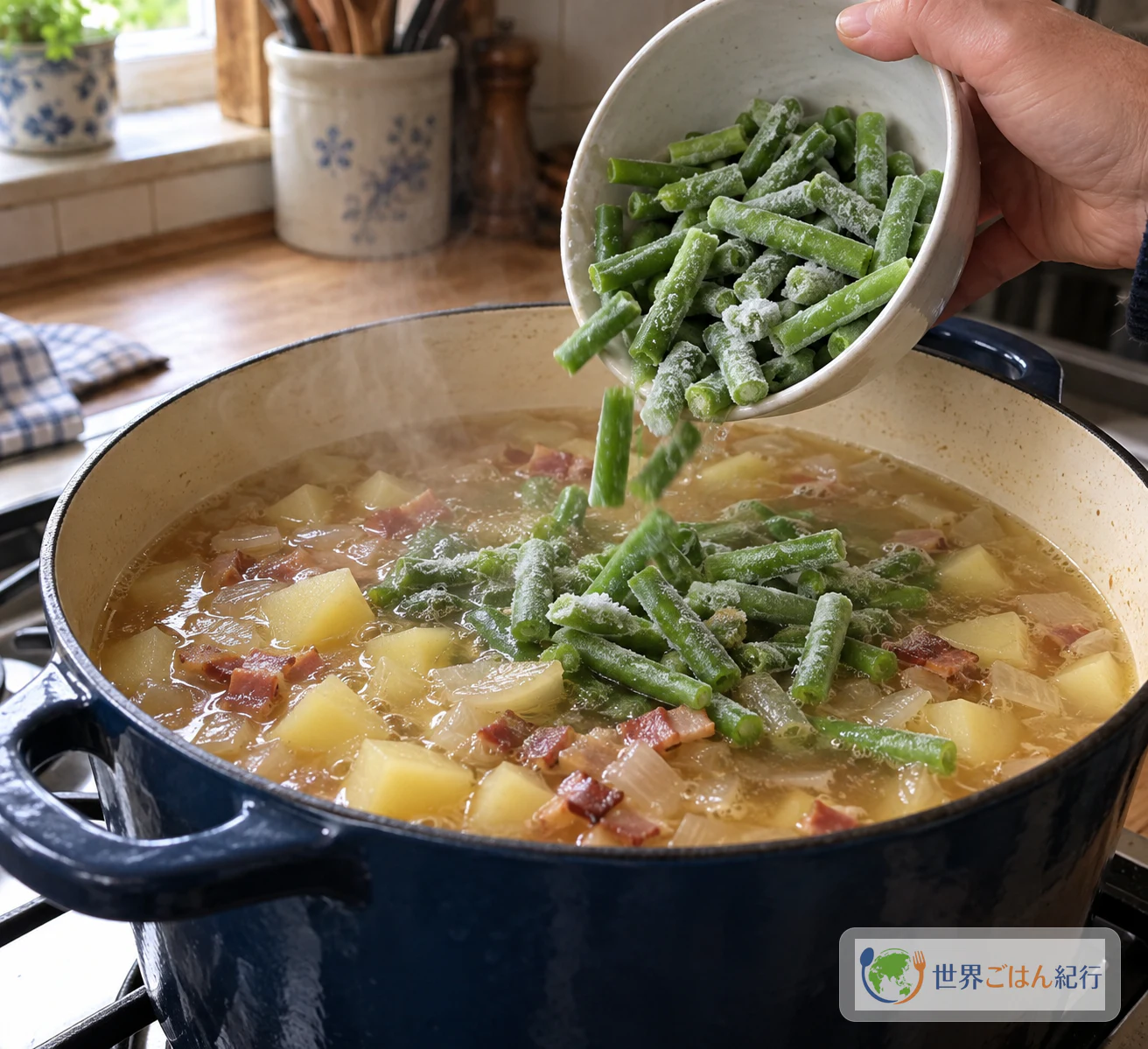
Butter melts in a large pot, chopped onion turns translucent, and diced smoked bacon starts to color. A spoonful of flour goes in, then potatoes and stock, and a little later the green beans. By the time the cream is stirred in, the steam carries both the green smell of the beans and the smokiness of the bacon. That is the outline of Bouneschlupp, a green bean soup from Luxembourg.
The Luxembourg City Tourist Office presents Bouneschlupp as a traditional Luxembourgish green bean soup, and describes a traditional version built on smoked bacon, potatoes and cream. Green beans are the star; the potatoes give body, the bacon gives smoke and salt, and the cream rounds everything off.
Recipes for this soup are not identical from household to household. Some versions published in Luxembourg add a smoked sausage called Mettwurscht, or herbs such as savory and bay. This article follows the recipe by Anne Lommel published by the Luxembourg City Tourist Office, without mixing in other versions, and looks at the variations separately further down. For more dishes from the same country, see Luxembourg.
What Kind of Dish Is Bouneschlupp?
Within the range of what the Luxembourg City Tourist Office describes, Bouneschlupp is a traditional green bean soup of Luxembourg, served hot with bread. The page gives the dish and its recipe; it does not explain where the name comes from or when the dish first appeared, so this article does not guess at either.
Luxembourg Youth Hostels, in a series introducing Luxembourg's flavors, present it as a rustic green bean soup and frame it as a warm meal shared in the cold season. That is how the dish is introduced today; it should not be read as a documented history of who ate it and when.
The bean in this soup is the slender green bean (haricot vert), eaten pod and all. Luxembourg also has Judd mat Gaardebounen, a separate dish of smoked pork and broad beans. The two share smoked pork and beans, but they are different dishes with different beans and a different role on the table.
Ingredients: Serves 4 as Listed in the Source
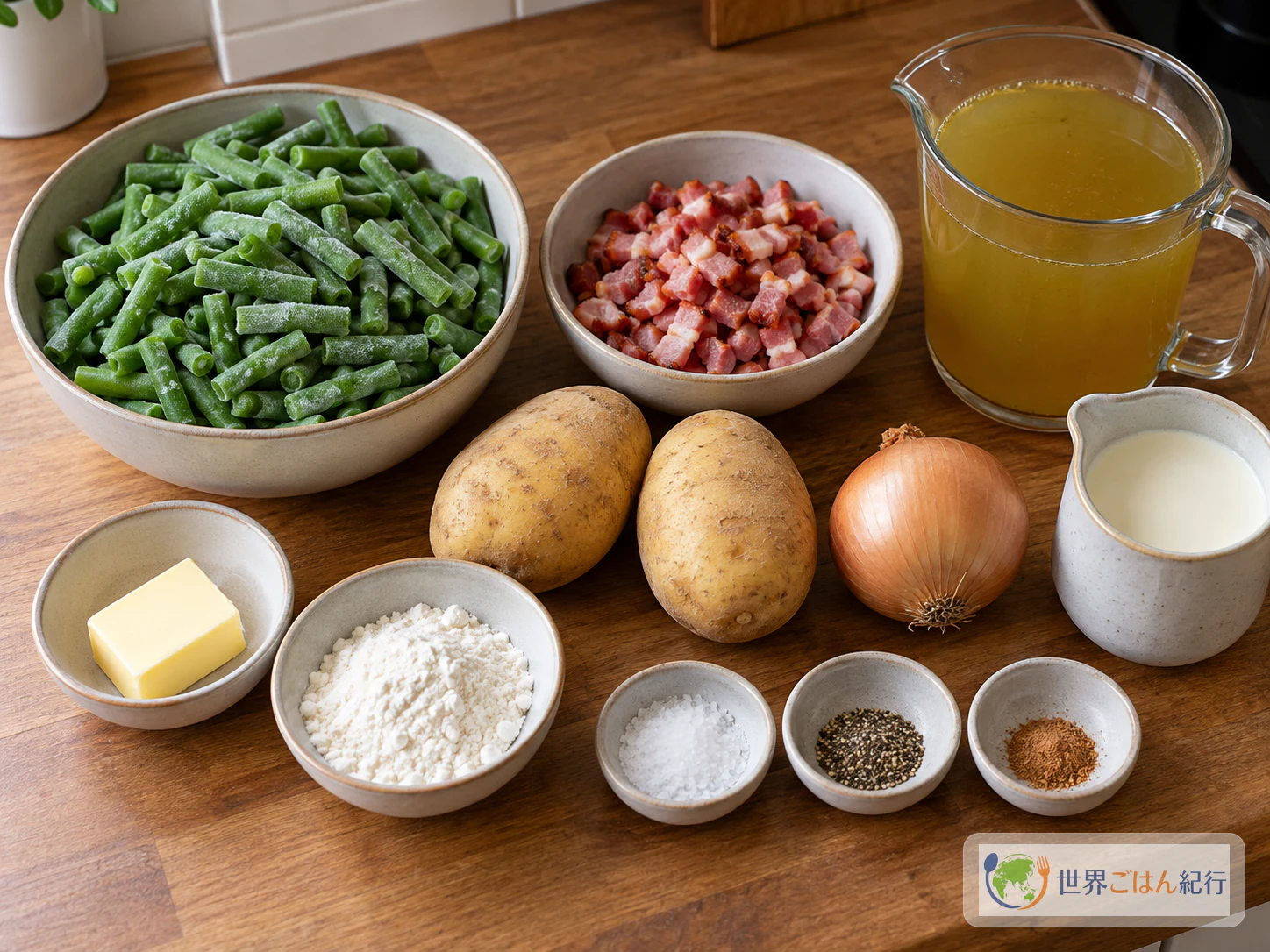
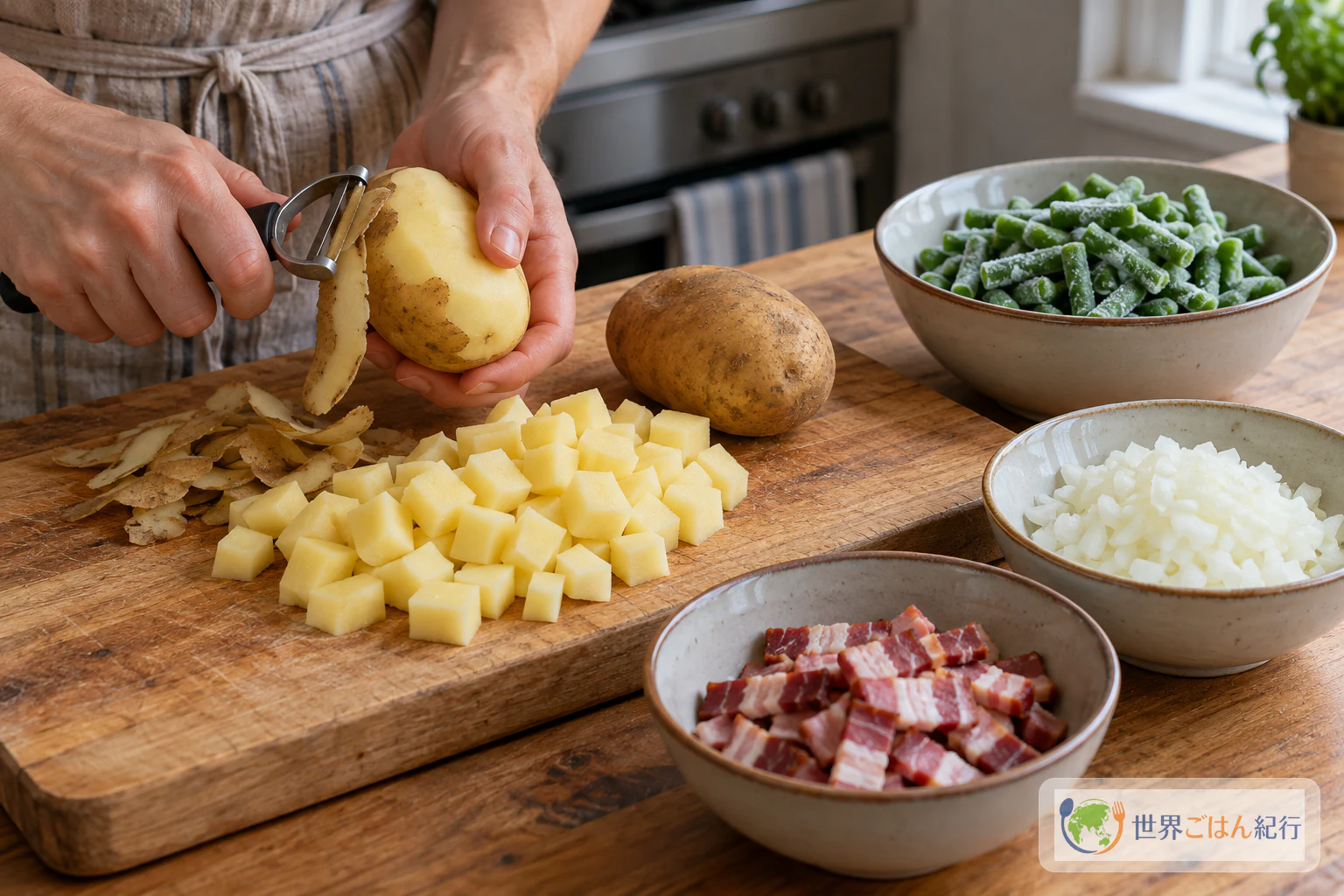
The amounts below are the ones shown in the source recipe for 4 servings. The source gives the potatoes and onion by count, not by weight, and does not state their size or the fat content of the cream, so no weights are added here. The source allows either fresh or frozen green beans and either vegetable or meat stock; this version uses frozen cut green beans, vegetable stock and plain unsweetened dairy cream throughout.
This version contains milk (cream, butter) and wheat (flour). Check the labels of the smoked bacon and vegetable stock for any other ingredients and allergens, since these vary by product.
Equipment
- Large pot
- Knife and cutting board
- Wooden spoon or spatula
- Bowls for the prepared ingredients
Choosing and Substituting Ingredients
Frozen or fresh green beans. The source gives two routes. Frozen beans go in without thawing, after the potatoes have simmered for 10 minutes. Fresh beans, trimmed and cut to an easy-to-eat length, go in at the same time as the potatoes. The source does not give a separate simmering time for fresh beans, so judge by tenderness. Don't mix the two timelines: this article follows the frozen route throughout. If you use frozen beans, also check the cooking directions on the package.
Smoked bacon. A block of smoked bacon diced at home is a close substitute for lard fumé. Bacon differs in saltiness and smokiness from product to product, so salt the soup only at the end, after tasting.
Stock. The source allows vegetable or meat stock. Store-bought stock varies in salt, so the same rule applies: taste before adding salt.
Potatoes. The source calls for floury potatoes. Varieties that break down easily when cooked are the closer match, since they help thicken the broth.
How to Make Bouneschlupp
The only times given in the source are 1 minute for the flour, 10 minutes for the potatoes and 20–25 minutes after the frozen beans go in. These are guides that allow for differences in households and ingredient size; there is no confirmed total time. Neither the clock nor a photo guarantees the vegetables are cooked through, so check tenderness yourself.
Serving
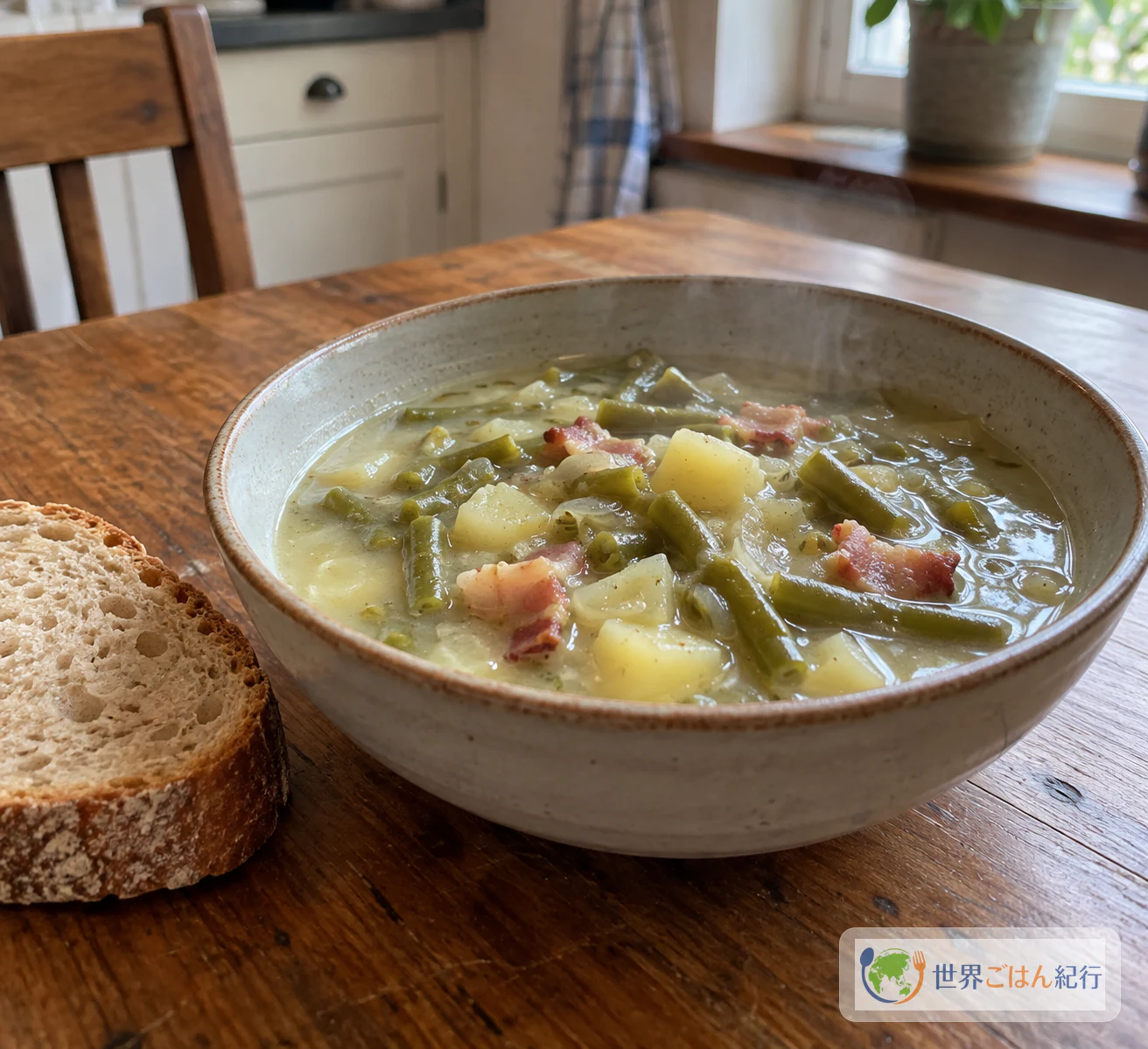
The source suggests serving Bouneschlupp hot, with bread. The bread is a separate accompaniment; nothing from it goes into the pot.
Troubleshooting
| Problem | Likely reason | What to do |
|---|---|---|
| Too salty | Salty bacon or stock, or salt added early | Next time, add salt only after tasting at the end. Choose bacon and stock with their salt in mind |
| Too thick | Potatoes broke down more than expected | As a fix, add a little hot water at a time, separate from the 1L of stock in the recipe |
| Beans or potatoes still firm | Ingredient size, heat level, or fresh beans used | Keep simmering and check tenderness again; the times are guides, not guarantees |
| Floury taste | Flour not cooked enough in step 3 | Next time, stir it for the full 1 minute until no powdery patches remain |
The 1L of stock all goes in at step 4. Any hot water you use to loosen a thick soup is an extra, added only as needed.
Food Safety: Heating, Cooling and Reheating
Japan's Ministry of Health, Labour and Welfare advises, for home cooking in general, heating food thoroughly (a guide of 75°C at the center for at least 1 minute), dividing leftovers into shallow containers so they cool quickly, refrigerating them, and reheating thoroughly (a guide of 75°C or higher). This is general food-hygiene guidance, not a tested storage period for this soup; no storage time for Bouneschlupp is given in the sources.
Household Variations: Mettwurscht, Savory and Bay
The recipe above is one version. Luxlait, a Luxembourg dairy cooperative, publishes a version from Anne's Kitchen with green beans, potato, flour, vegetable stock, bay, savory (sarriette), Mettwurscht and cream. In that version, onion is softened in butter, flour is cooked briefly, the vegetables are simmered, and the sausage and cream go in afterward. It does not use the bacon of the version followed here.
The Luxembourg Youth Hostels recipe uses green beans, potatoes, onions, smoked bacon, Mettwurscht and cream, with the sausage added near the end. Its quantities belong to that recipe and are not used here.
These versions show that the combination of meat and herbs shifts from kitchen to kitchen. For a first pot, keep to the recipe above as written; if you want sausage or savory, treat that as making a different version rather than adding them to these amounts. Neither Mettwurscht nor savory is needed for the recipe in this article.
Frequently Asked Questions
Should I thaw the frozen green beans?
No. Add them straight from frozen after the potatoes have simmered for 10 minutes, then simmer for another 20–25 minutes.
When do fresh green beans go in?
At the same time as the potatoes, in step 4. The source does not give a separate time for fresh beans, so judge by tenderness.
Can I add Mettwurscht?
There are published versions with Mettwurscht, but they are separate recipes. Rather than adding sausage to the amounts in this article, follow one of those versions as a whole.
How many grams of potato should I use?
The source gives only "2 floury potatoes," without a weight or size, so this article does not set one.
Can I make it ahead?
The sources do not give a storage period for this soup. Follow general home food-hygiene practice: cool leftovers quickly in shallow containers, refrigerate them and reheat thoroughly.
Sources
- Luxembourg City Tourist Office, "Bouneschlupp" (recipe by Anne Lommel). The basis for the description of Bouneschlupp as a traditional green bean soup with smoked bacon, potatoes and cream, the ingredient amounts, the cooking sequence and times, the timing difference between frozen and fresh beans, and serving hot with bread. It is one published recipe and does not define a single canonical household version; potatoes are given by count, not weight. https://www.luxembourg-city.com/fr/a-propos-de-luxembourg-ville/meng-stad-ma-ville/details/bouneschlupp
- Luxlait / Anne's Kitchen, "Bouneschlupp Luxembourgeoise." Used for the variation with bay, savory, Mettwurscht and cream, and its order of cooking. A separate recipe; its amounts and times are not merged into this article's recipe. https://www.luxlait.lu/recipe/bouneschlupp-luxembourgeoise/
- Les Auberges de Jeunesse Luxembourgeoises (Luxembourg Youth Hostels), "Saveurs du Luxembourg, un voyage culinaire : Bouneschlupp." Used for the presentation of the dish as a rustic green bean soup and a shared cold-weather meal, and for the variation with both smoked bacon and Mettwurscht. Its quantities are not used in this article. https://youthhostels.lu/de-kompass/saveurs-du-luxembourg-un-voyage-culinaire-bouneschlupp/
- Ministry of Health, Labour and Welfare (Japan), "家庭での食中毒予防" (Preventing food poisoning at home). Used for general home guidance on thorough heating, cooling leftovers in shallow portions and reheating. It is not a storage period or test result for this soup. https://www.mhlw.go.jp/stf/seisakunitsuite/bunya/kenkou_iryou/shokuhin/syokuchu/01_00008.html