
Gromperekichelcher: Grated Potato Turned Golden in a Shallow Pan
Grated raw potato, onion and parsley bound with egg and only a little flour, fried in a thin layer of oil until both sides are golden brown. Eat them while they are hot.
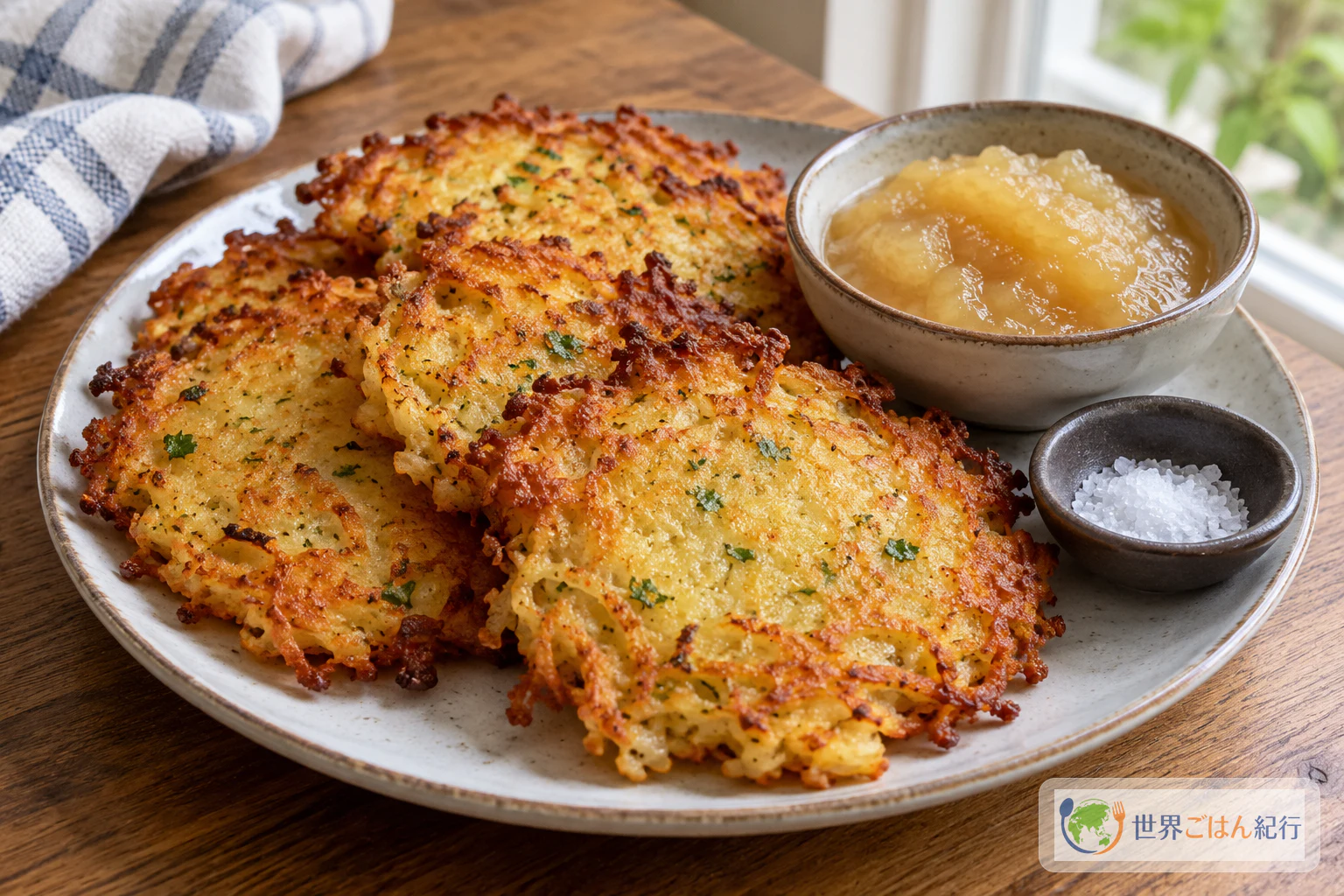
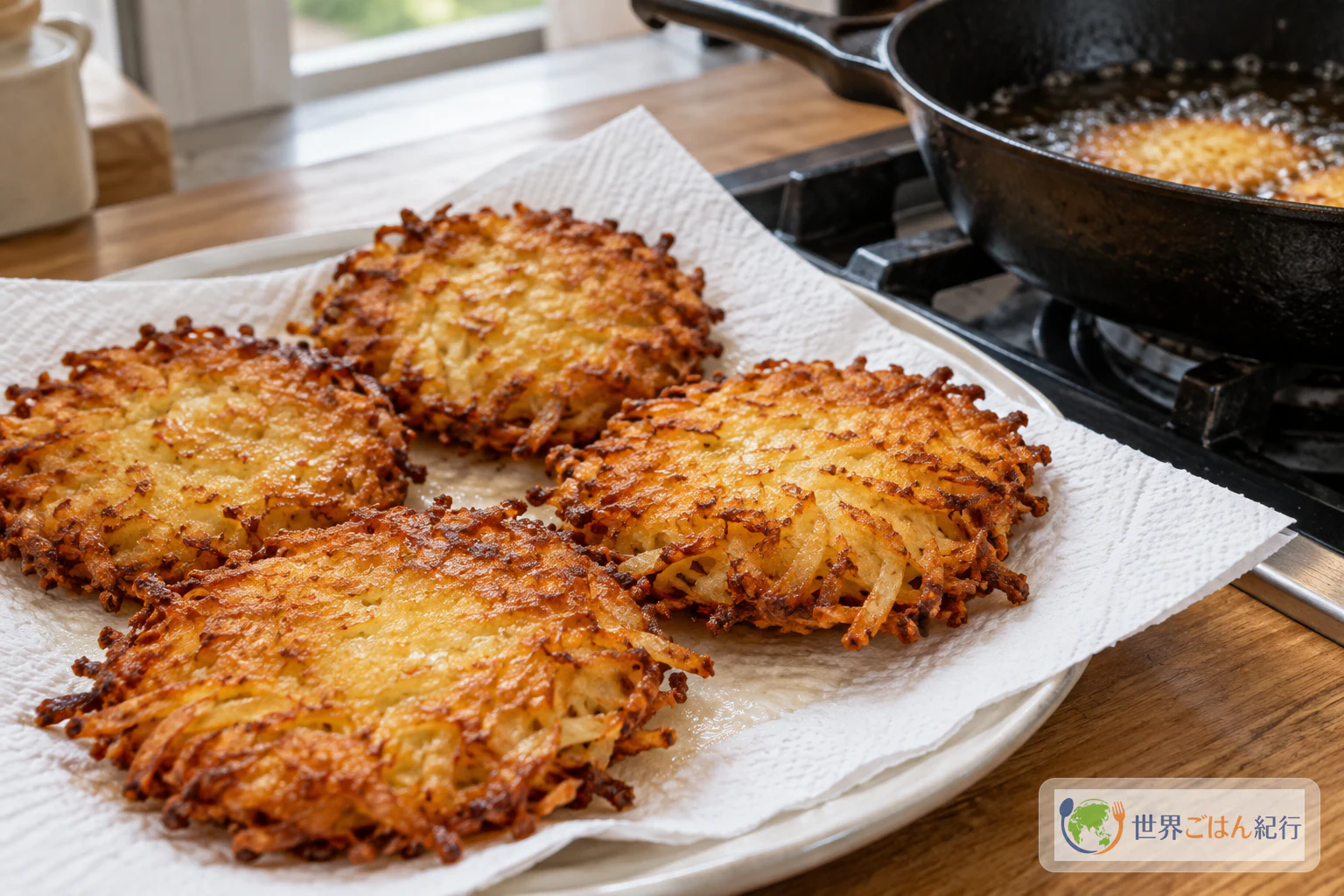
At a fair or market stall in Luxembourg, the patties come out of the pan flat and still crackling, the shreds of grated potato on their surface turned golden in the oil. A sprinkle of salt, a spoonful of applesauce on the side, and they are eaten straight away while hot. The Luxembourg government's culinary portal describes Gromperekichelcher in just this way: potato patties fried in oil and eaten warm, traditionally with salt and applesauce.
The ingredient list is short: potatoes, onions, parsley, eggs, a little flour and seasoning. What decides the result is how you handle the wet grated potato, how flat you shape the patties and how you read the color in the pan. This article follows the recipe published on the government portal and walks through each step so you can recreate it in an ordinary home kitchen. For more dishes from the same country, see our Luxembourg page.
The dish is written Gromperekichelcher, and you will also see the variant spelling Gromperenkichelcher. Detailed explanations of the name's etymology are not covered here, as we could not confirm them.
What Kind of Dish Is Gromperekichelcher?
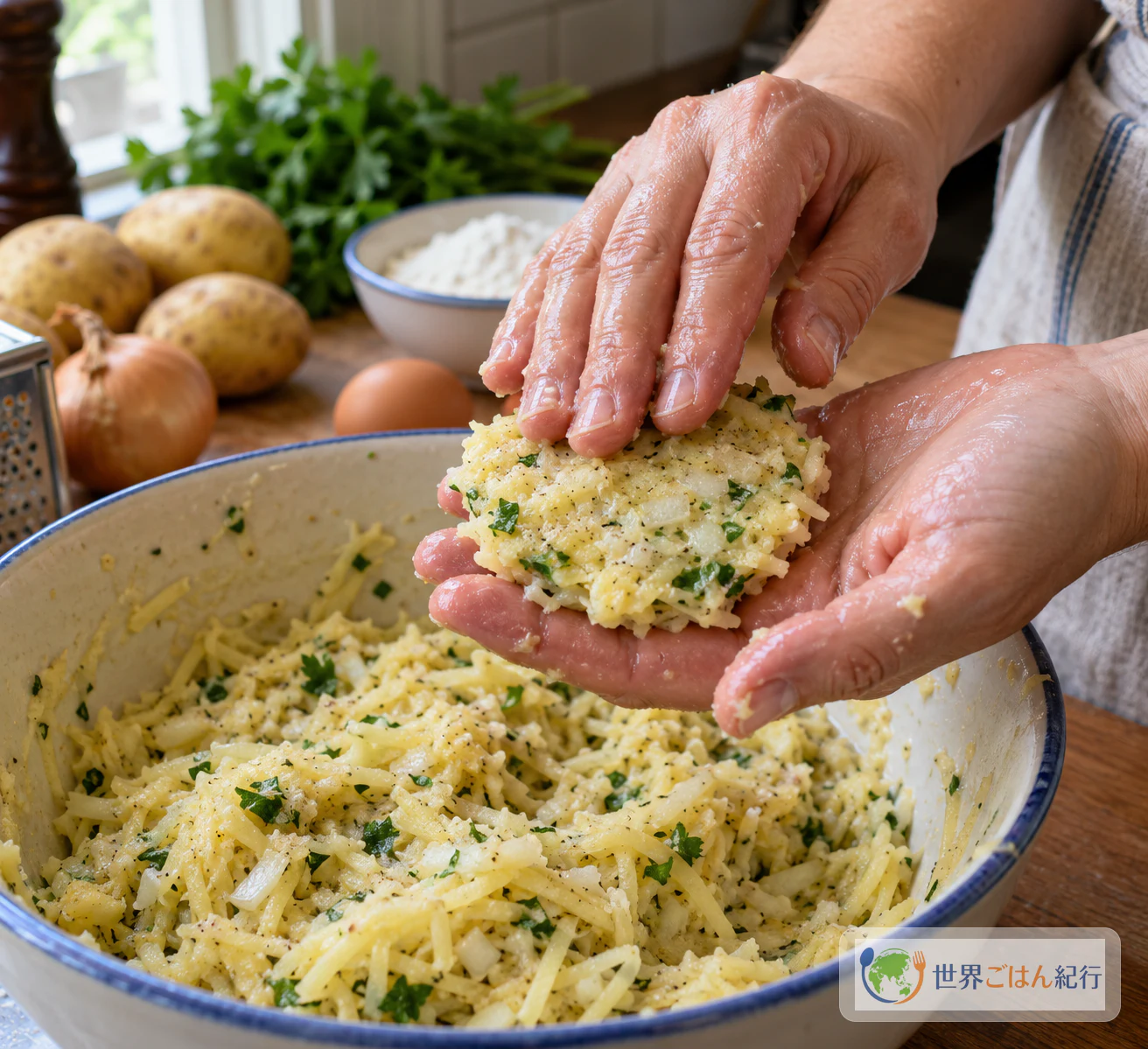
Gromperekichelcher are patties of grated potato mixed with onion, parsley and egg, fried in oil and eaten warm. It is easy to file them under "potato pancakes" in general, but this article treats them as Luxembourg's own dish, tied to the country's fairs, markets and festive days rather than as one more version of a pancake found everywhere.
The shape is flat and rustic, with uneven edges where the shreds of potato stick out and crisp up. The recipe below keeps to a single published version so that its proportions stay intact; other published versions are introduced separately under variations.
This article follows the recipe published on the Luxembourg government portal. We have not kitchen-tested it ourselves, so the amounts, times and visual cues come from that recipe, and any additional tips are marked as general home-cooking advice.
Ingredients for 4–6 Servings
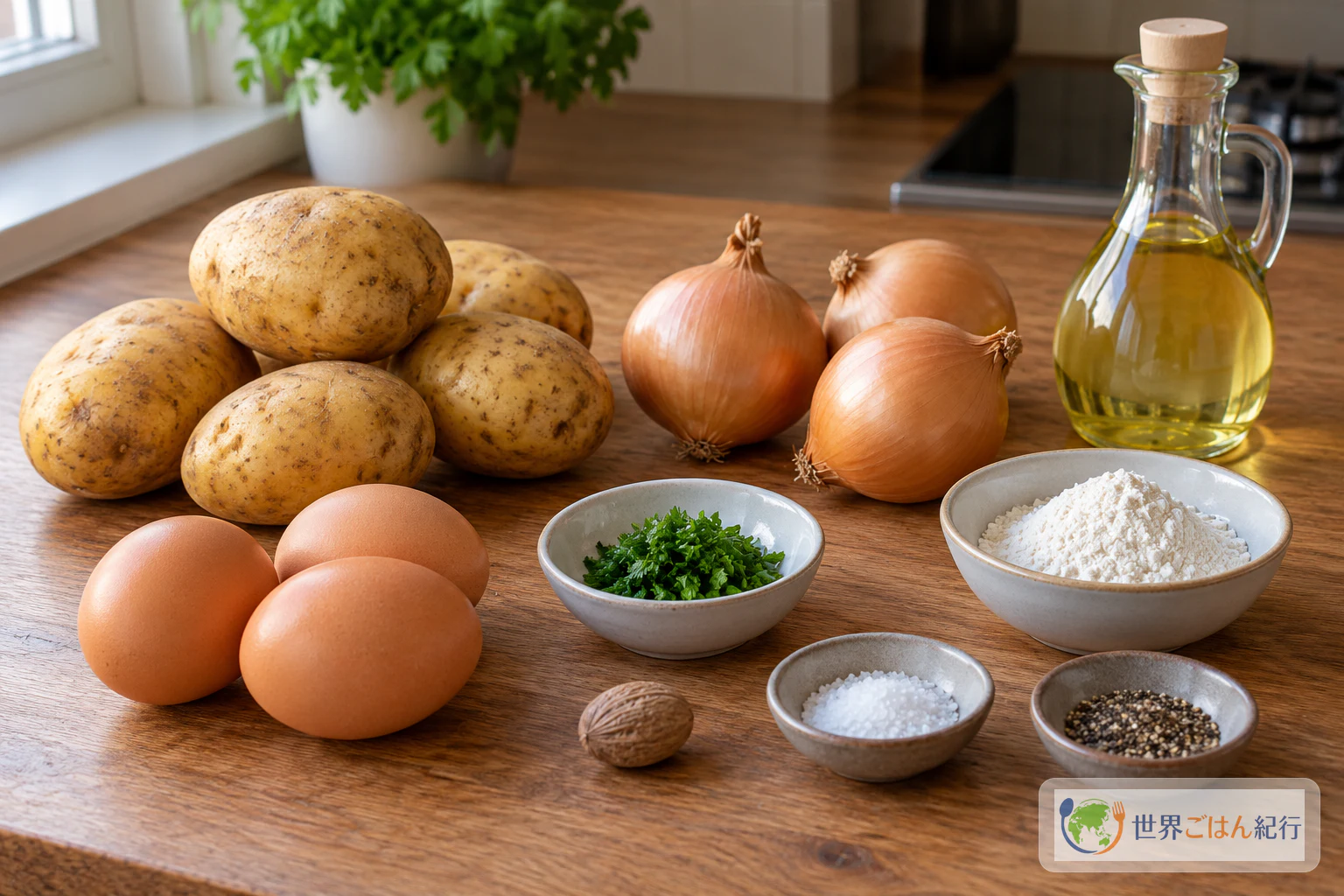
These are the amounts from the government portal's recipe, which serves 4–6 people. The recipe does not say how many patties it makes; that depends on the size you shape them. It also does not say whether the potato weight is before or after peeling, so we have kept it as written.
Applesauce is not part of the mixture. It is a traditional accompaniment served at the table and is optional.
This recipe contains wheat (flour) and egg. If you serve store-bought applesauce, check its label as well.
Equipment
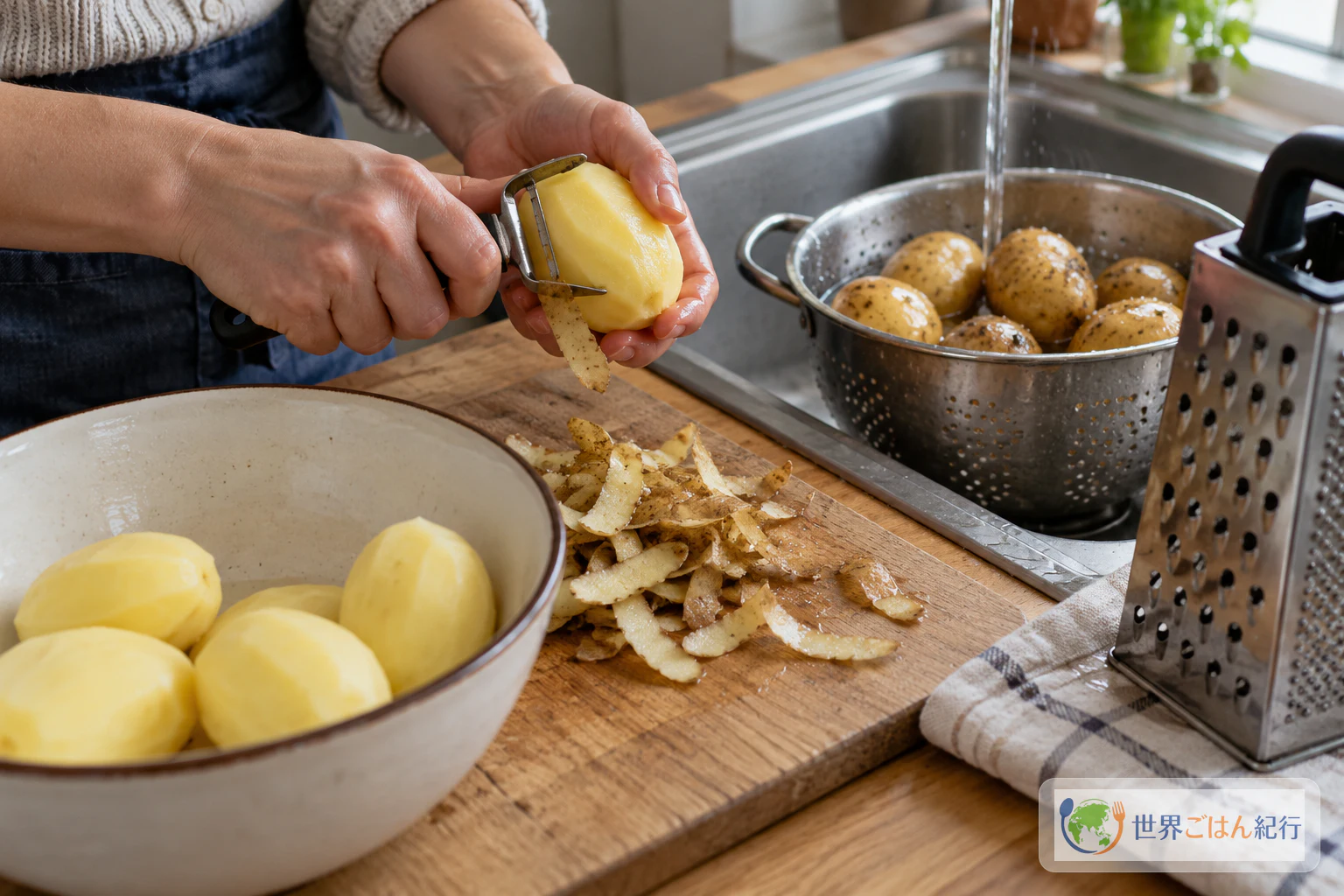
- Peeler or small knife
- Grater
- Knife and cutting board
- Large mixing bowl
- Frying pan
- Spatula
- Kitchen paper
- Oven (optional, only for keeping the patties warm)
Choosing Potatoes, Oil and Flour
Potatoes: The government recipe does not name a variety, so ordinary supermarket potatoes are an editorial choice that works within the recipe. Different varieties hold different amounts of water, and that changes how the mixture behaves and how the patties feel to eat, so expect some variation.
Oil: The recipe uses sunflower oil. Any neutral-tasting vegetable oil suited to shallow frying can stand in. Strongly flavored oils, such as toasted sesame oil, will change the taste of the dish.
Flour: Stay within the recipe's 1–2 tbsp. Replacing the wheat flour with potato starch is not part of this recipe; one other published version uses starch, but we have not verified how it changes the texture.
Method: From Grated Potato to Golden Patties
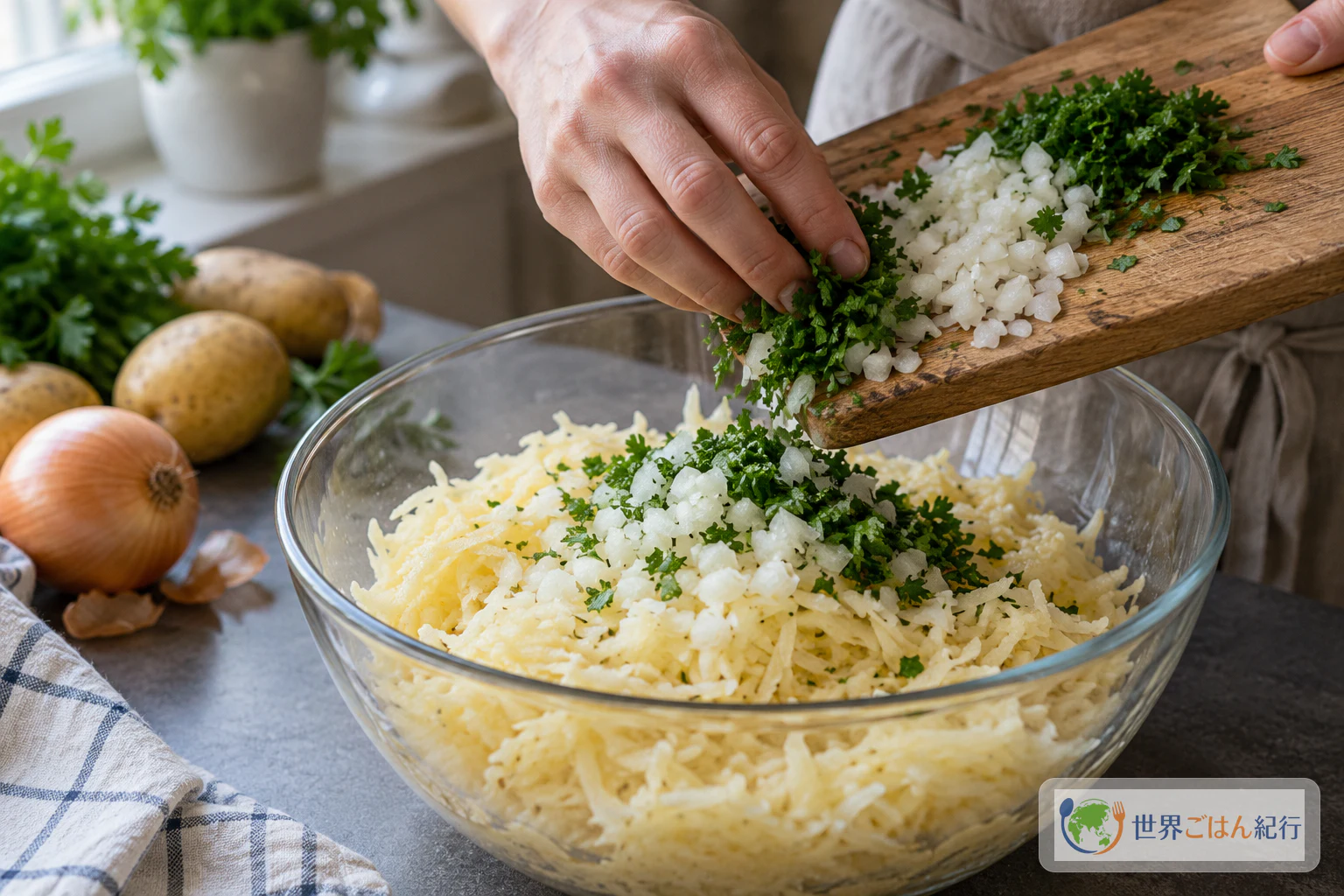
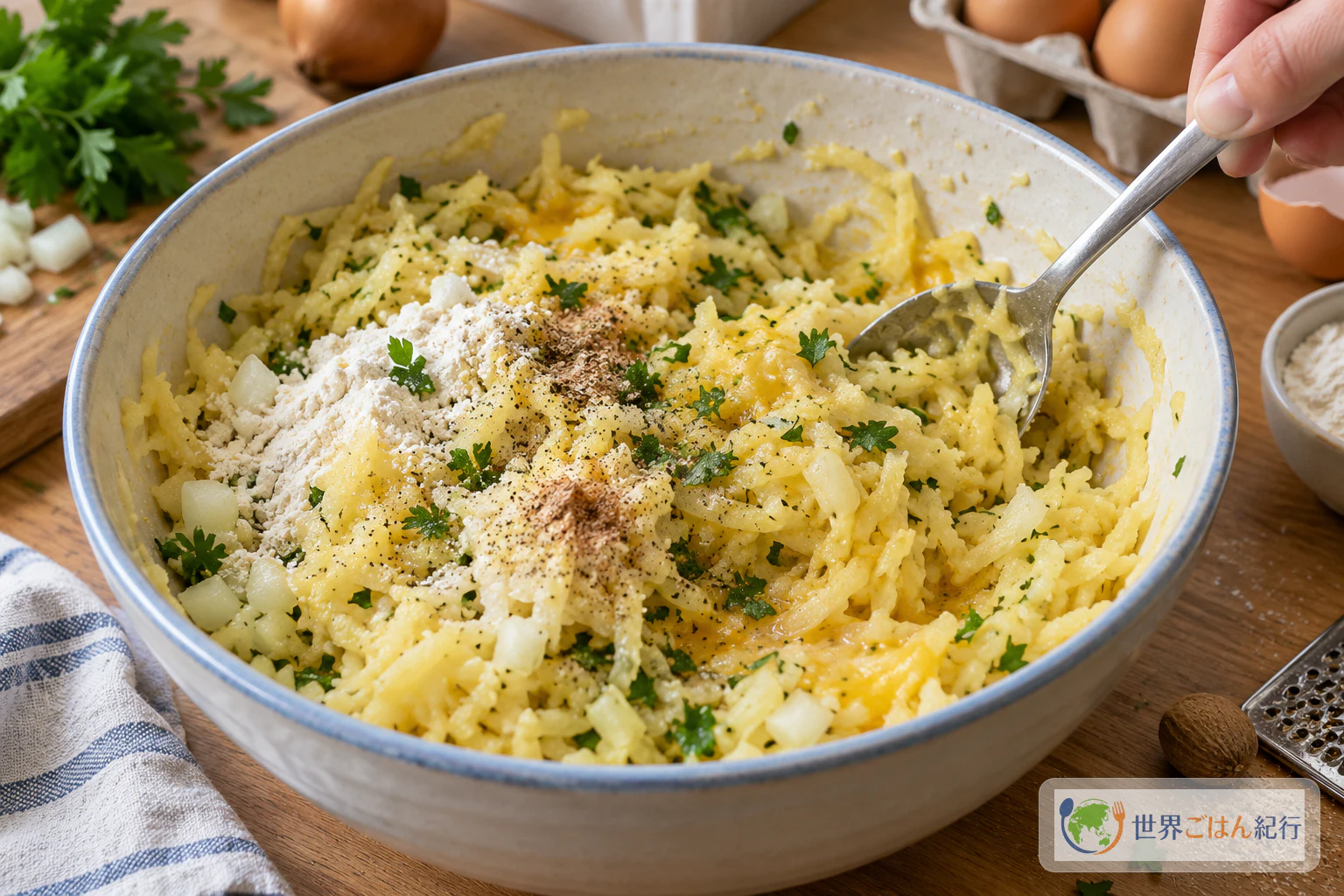
The mixture should be moist and coarse, not a smooth purée. In the pan, judge each side by its golden-brown color, using the recipe's 2–3 minutes per side as a guide.
Stay by the pan while the oil is heating and while frying, and take care not to let the oil overheat.
Wet, Falling Apart, Pale or Too Dark: Fixing Problems in the Pan
| Problem | What to check | What to do |
|---|---|---|
| The mixture is too wet to shape | How much liquid has come out of the grated potato | Add flour gradually within the recipe's 1–2 tbsp. Squeezing the potato in a cloth belongs to a different published version, not to this recipe |
| The patties fall apart | Thickness, and whether they were moved too early | Shape them flatter, and don't touch them until the underside has set and turned golden (general cooking advice) |
| Dark outside, raw-looking inside | Thickness and heat level | Make the next batch thinner. The 2–3 minutes per side is the recipe's guide; thicker patties or different heat will shift it |
| Pale and soft after several minutes | Heat level and a crowded pan | Fry fewer at a time and keep watching for the golden color rather than going by the clock alone |
The recipe gives no oil temperature or internal temperature for the patties, so this article does not invent any. Golden color is the source’s surface cue, not proof that a thick patty is cooked in the center; do not serve patties with a raw center.
Hot, with Salt and Applesauce
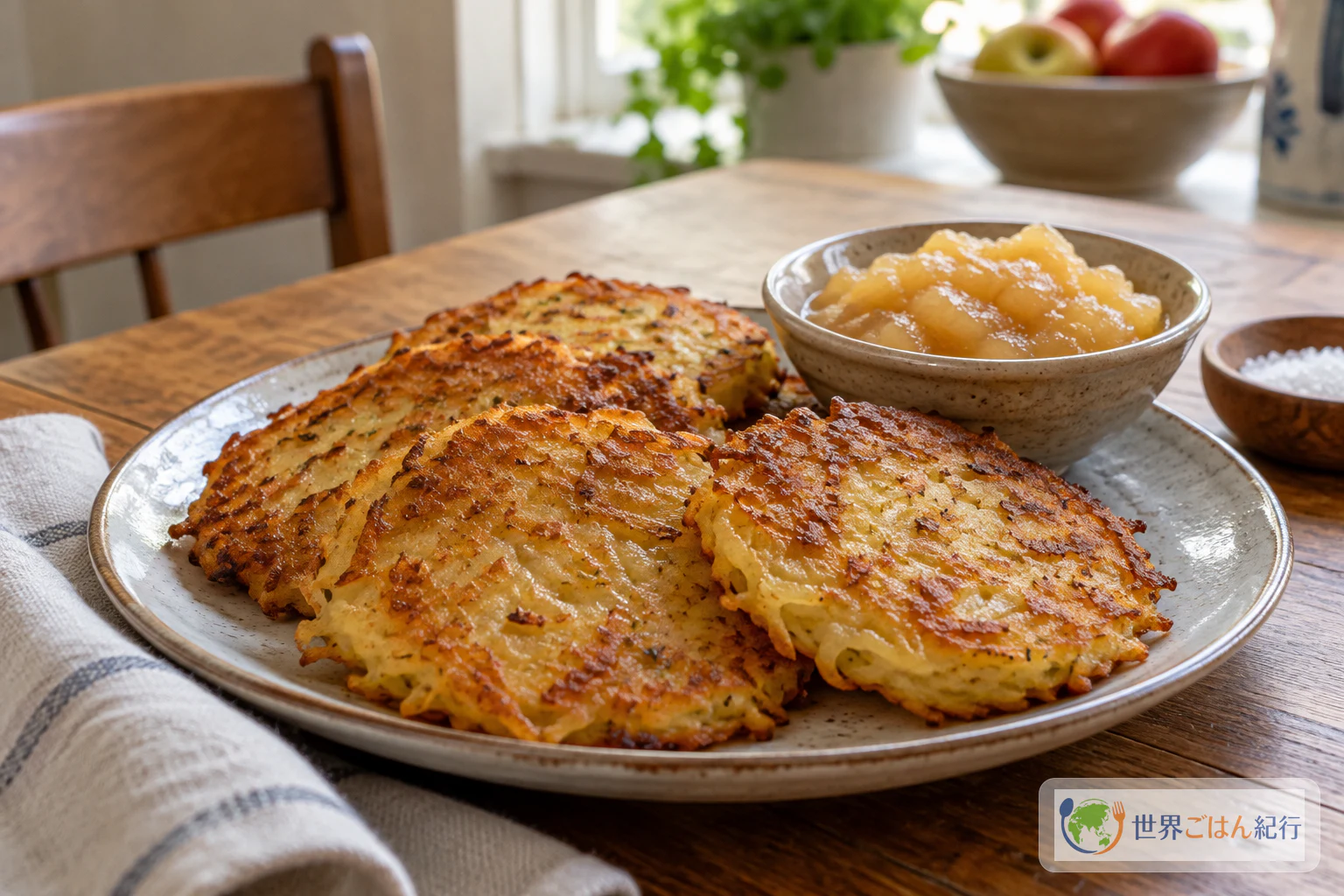
According to the government portal, Gromperekichelcher are traditionally eaten with salt and applesauce. The government recipe also lists sugar as an option. Delhaize Luxembourg's recipe suggests dipping the warm patties into apple compote.
The government portal also mentions more modern ways of serving them: as a side to soup, or as a main dish with cream and dill. These are presented as present-day variations, separate from the traditional salt and applesauce.
Other Published Versions
The recipe above follows the government portal's proportions. Other published recipes differ, and they are shown here as separate versions rather than mixed into the main one.
| Version | How it differs |
|---|---|
| Luxembourg City Tourist Office (recipe by Anne Lommel) | 1 kg firm potatoes, 1 large onion, 2 eggs, 2–3 tbsp flour or potato starch, a bunch of parsley, optional nutmeg; the grated potato is squeezed firmly in a cloth. Makes 8–10 patties, fried 3–4 minutes per side, with applesauce optional |
| Delhaize Luxembourg | A version for 2: 300g potatoes, 1 shallot, 1 onion, 1 garlic clove, 20g butter, 1 tbsp flour, 1 egg, 4cl oil, 20g parsley, nutmeg, salt and pepper |
If you want to try the cloth-squeezed or starch version, follow that recipe as a whole rather than swapping a single step into the government version. We have not verified how the texture differs.
Fairs, Markets and Festive Days
The government portal connects Gromperekichelcher with several moments in Luxembourg's calendar: the Oktav pilgrimage market, the eve of the National Day, the Schueberfouer fair and the Christmas markets. It also says the dish has its roots in the country's rural, agricultural past. Dates, inventors or a specific place of origin are not given there, and we do not add them.
The Luxembourg City Tourist Office presents it as something eaten at weekly markets and Christmas markets as well as at home. Delhaize Luxembourg describes its taste as one that recalls the Schueberfouer. Across these sources, the picture is consistent: a dish eaten hot, whether from a stall in a crowd or from the pan in a home kitchen.
Frequently Asked Questions
Is applesauce essential?
No. Applesauce is a traditional accompaniment, not an ingredient in the mixture. The government recipe suggests salt, sugar or applesauce, and the traditional pairing it names is salt and applesauce.
My grated potato is very wet. Should I squeeze it?
The government recipe does not squeeze the potato. Adjust with flour within its 1–2 tbsp range. Squeezing the potato in a cloth is a feature of the Luxembourg City Tourist Office's separate recipe; if you want to work that way, follow that version.
How many patties does this make?
The government recipe serves 4–6 people but does not give a number of patties. The count depends on how large you shape them. The separate tourist office version, with different proportions, makes 8–10.
Can I store or reheat leftovers?
The government recipe says only that patties not eaten immediately can be kept in a warm oven, without giving a temperature or time. It gives no guidance on storing or reheating leftovers, so we do not give any here. The dish is meant to be eaten hot.
Sources
- Government of the Grand Duchy of Luxembourg, "Gromperekichelcher." The dish as fried potato patties eaten warm; its place at the Oktav pilgrimage market, the eve of the National Day, the Schueberfouer and Christmas markets; its roots in the rural, agricultural past; traditional serving with salt and applesauce and modern serving ideas; and the recipe's ingredients, method and 2–3 minutes per side. https://luxembourg.public.lu/en/society-and-culture/culinary-delights/gromperekichelcher.html
- Luxembourg City Tourist Office, "Gromperekichelcher: Luxembourg's Crispy Classic" (recipe by Anne Lommel). The dish at weekly markets, Christmas markets and at home; serving with applesauce; and a separate recipe in which the potato is squeezed in a cloth, with its own proportions and frying time. https://www.luxembourg-city.com/en/about-luxembourg-city/meng-stad-my-city/details/gromperekichelcher
- Delhaize Luxembourg, "Gromperekichelcher." A taste recalling the Schueberfouer, dipping the warm patties in apple compote, and a separate two-portion recipe. https://www.delhaize.lu/fr/recettes/single/gromperekichelcher