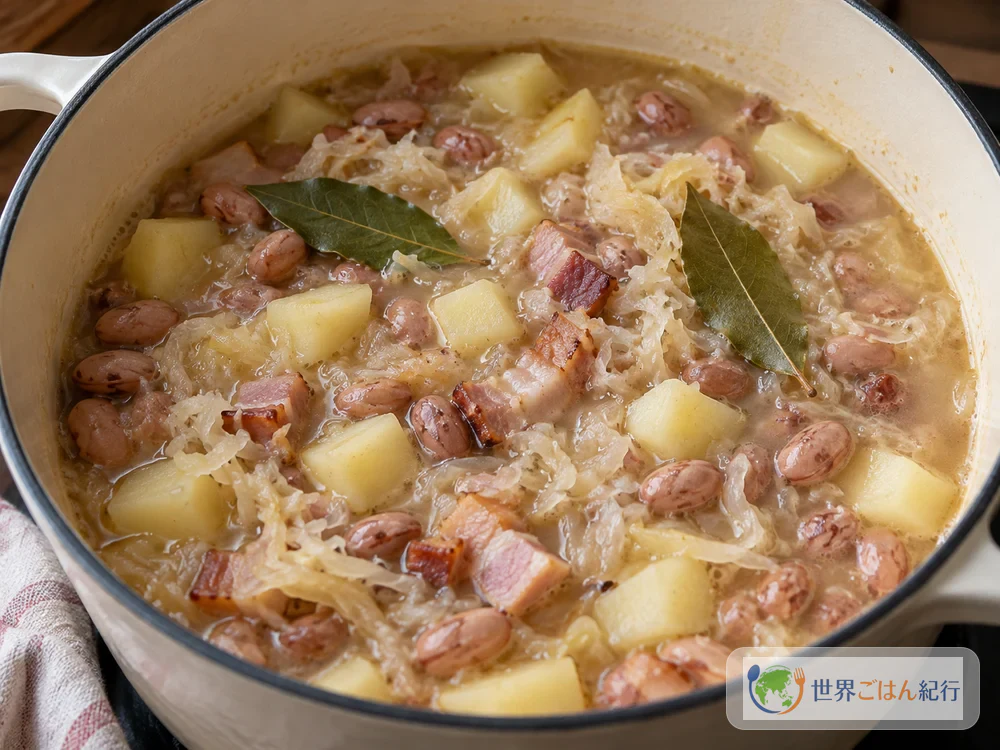

On the Karst plateau, where white limestone walls run on, a cold, dry northeasterly wind called the burja (Slovene: burja) blows down in winter. It is also the wind that has dried the Karst's famous cured ham, kraški pršut, for centuries. Simmering away in the kitchen of a stone house is a thick soup of beans, sauerkraut and potatoes: jota. A winter soup of sour cabbage and beans, it is an essential dish on tables in western Slovenia.
The ingredients are easy to gather almost anywhere. Jarred sauerkraut, dried borlotti beans, smoked bacon and potatoes. If you soak the beans overnight in water, the rest is just about an hour in the pot.
In the Karst kitchen, a pot of sour cabbage
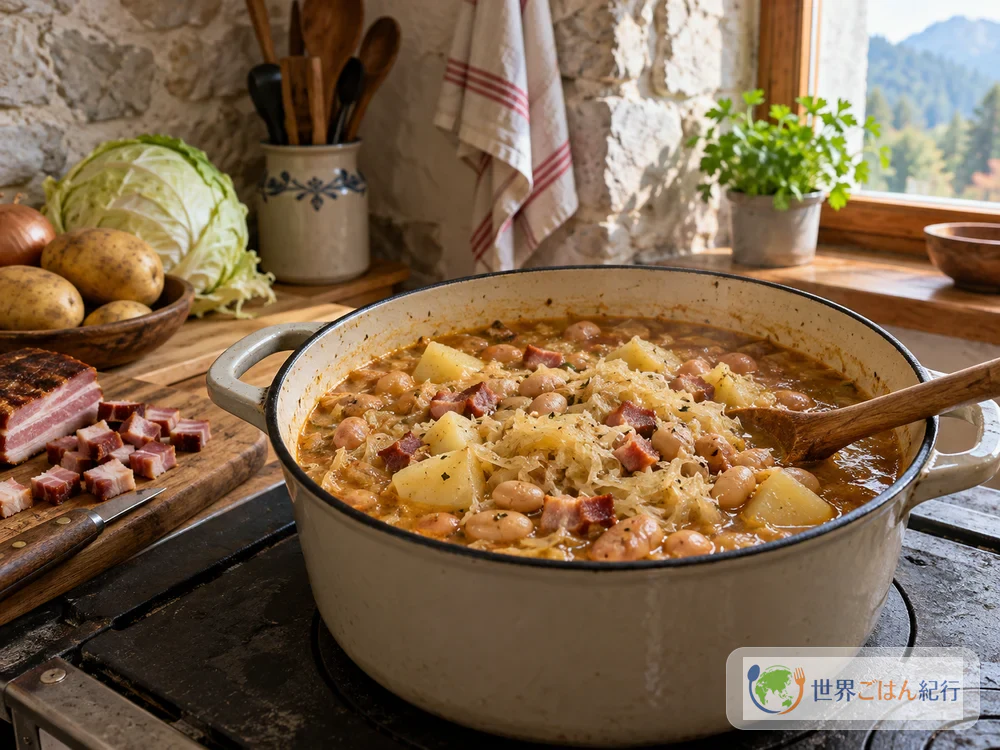
Slovenia is a small country where the Alps, the Adriatic, the Pannonian plain and the Karst plateau meet. The Slovenian Tourist Board introduces the country in 24 gastronomic regions, and its guide "Taste Slovenia" lists kraška jota as a representative dish of the Karst. The description is short: "In the Karst, jota is made with sour turnip or sauerkraut, but potatoes are always added." Whether potatoes go in is the clearest mark of Karst jota.
The origin of the name is said to lie in Friuli, in Italy to the west of Slovenia. Sara Kalisnik of Slovenian Kitchen, which introduces Slovenian cooking in English, explains that in Friuli "jota" is a word for a kind of minestrone, and that it spread east and south from there. It is also said to share a root with the Slovene word for soup, "juha." The guide "Taste Slovenia" likewise introduces the Vipava Valley jota as "a regional version of a dish originally from Carnia (the mountains of northern Friuli)."
Jota is not only a Slovenian dish. In Trieste, Italy, it is so familiar that it is called representative of Triestine cooking, and it is also eaten on the Istrian peninsula, in Gorizia, and around Rijeka in Croatia. Even when borders were redrawn, the pot in the kitchen was handed down across them.
Karst cooking holds the wisdom of preserved food for getting through the winter, just as it is. Sauerkraut and sour turnips pickled in autumn, dried beans, smoked and salted pork. All of it is what remains in the kitchen in the cold season, and jota simmers it in one pot and thickens it with beans and potatoes. Right around here, the food culture of Central European sauerkraut meets that of Mediterranean beans and olive oil.
Cross a valley, and the contents of jota change
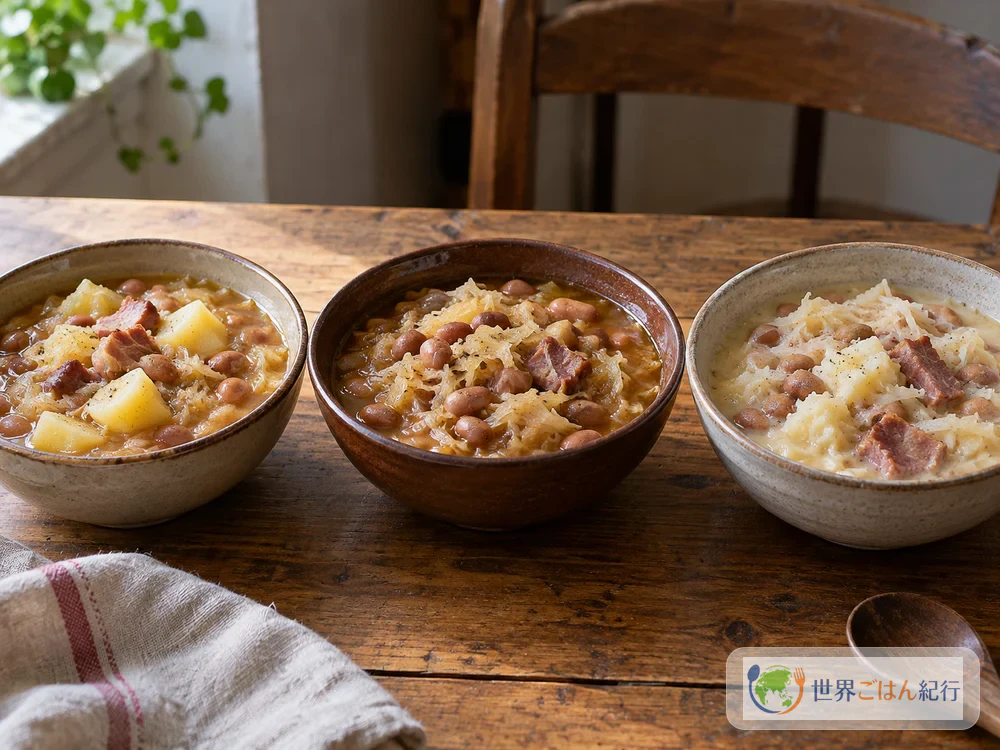
Jota changes its contents just by crossing a valley or a peninsula. Karst jota is made with sauerkraut or sour turnip, and always with potatoes. The jota of the Istrian peninsula to the south is made with sauerkraut and beans, without potatoes. In the Vipava Valley to the north, a jota with turnip fermented in grape pomace is known, and in the Slovenian Tourist Board recipe, mashed potato and beans are combined with that fermented turnip.
The Karst also has a special dish called "sweet jota." It adds carrot, spices and a little vinegar to mashed potato and beans, and because it uses no sour cabbage, it has a gentler taste. What every jota shares is that the beans and potatoes are cooked until they break down, finishing not as a thin soup but with a thick, creamy body.
In Istria, Slovenia, jota is also said to be often served with cornmeal polenta. Whether you dip bread in it or eat it with polenta changes the impression of the same soup considerably.
Ingredients (serves 4)
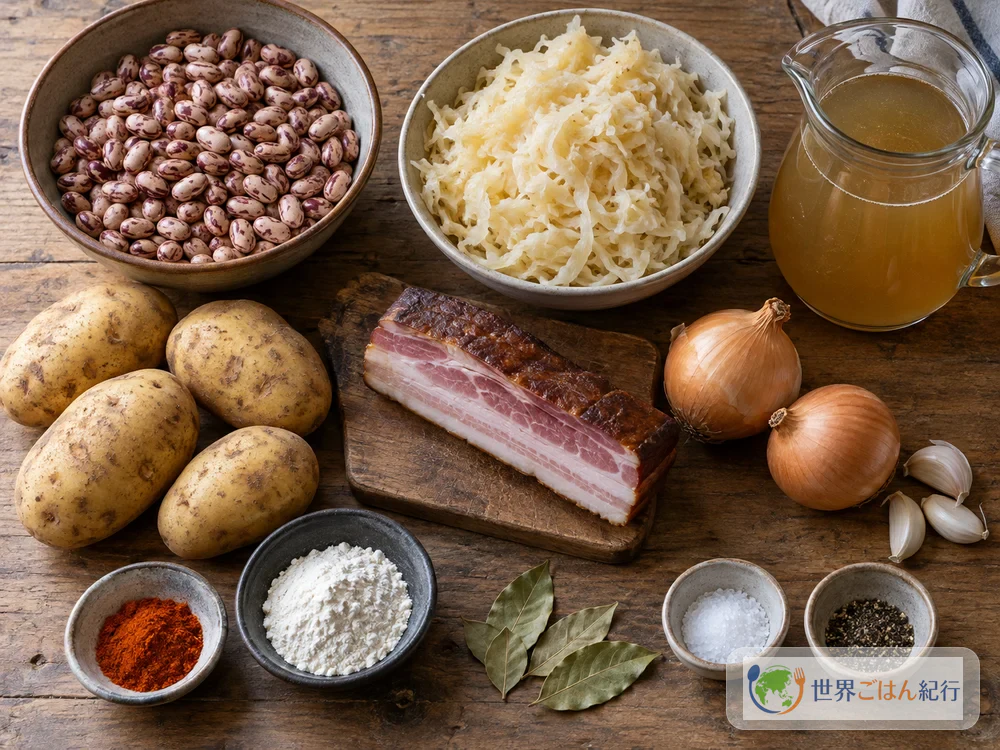
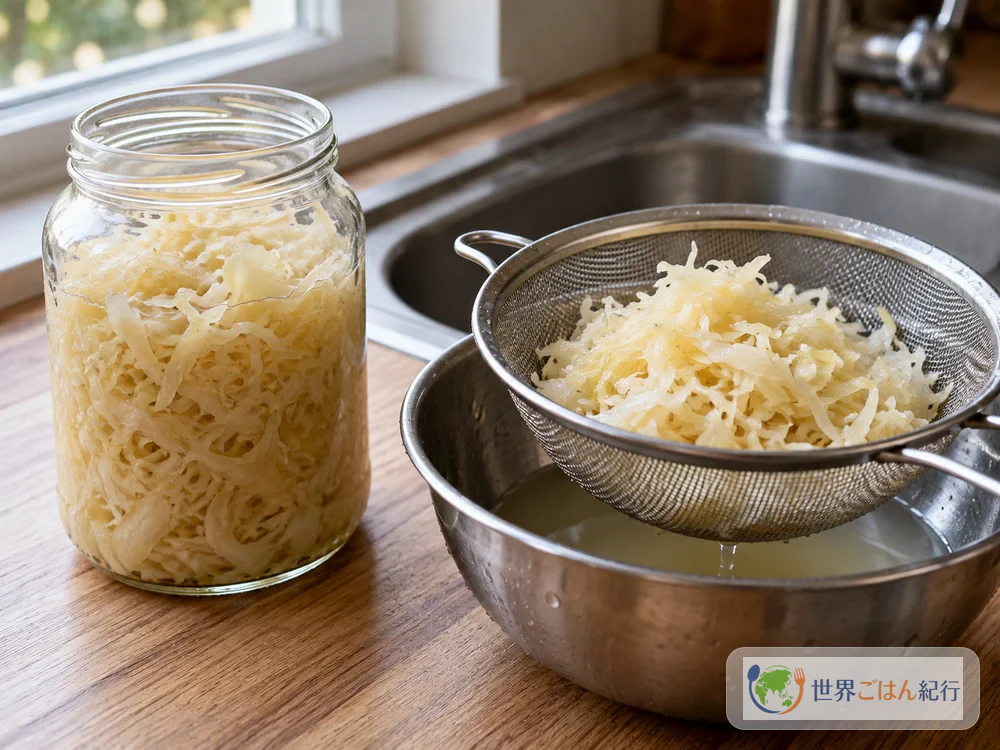
Sauerkraut can be found on the shelves of jarred and canned goods at import food stores and supermarkets. Sourness and saltiness differ quite a lot by product, so taste a little once you open it. If it is too sour, put it in a colander and rinse it quickly with water and squeeze it, and the sourness settles at about the right level. For smoked bacon, a slab rather than thin slices keeps its savor even after simmering, and leaves a smoky aroma when you bite into it.
On days you have no time to soak dried beans, you can substitute 600 g cooked beans. Skip the parboiling step and add them with the broth in step 4. Cooking from dried beans makes the soup thicken more easily, so when using cooked beans, mash a few of the potatoes as you add them to make up the body.
How to make jota
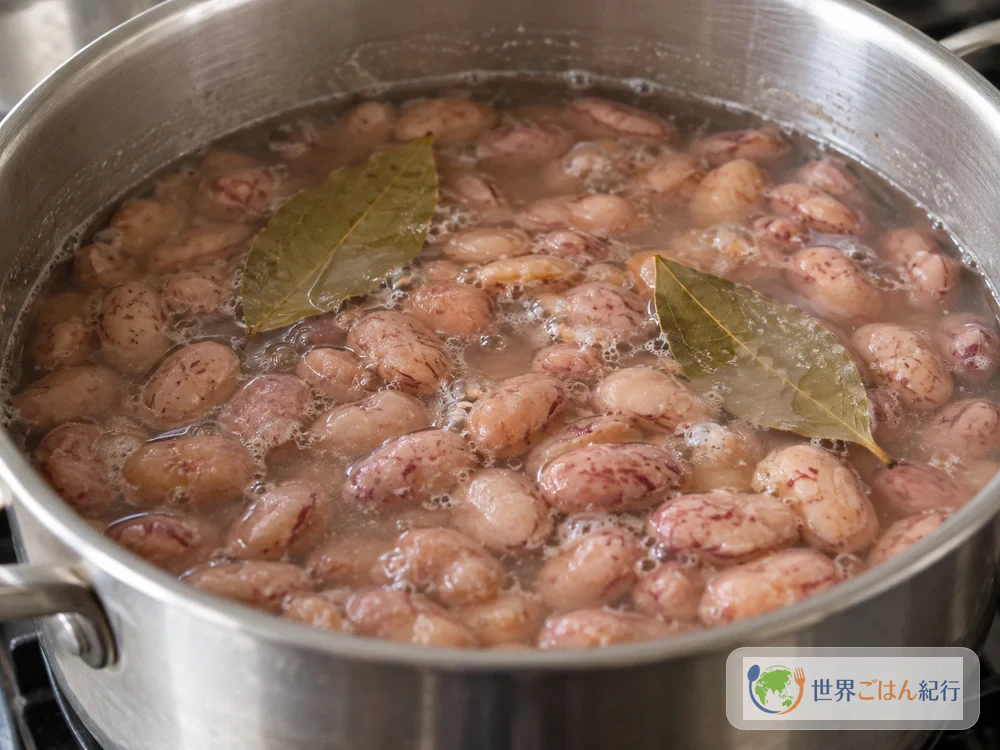
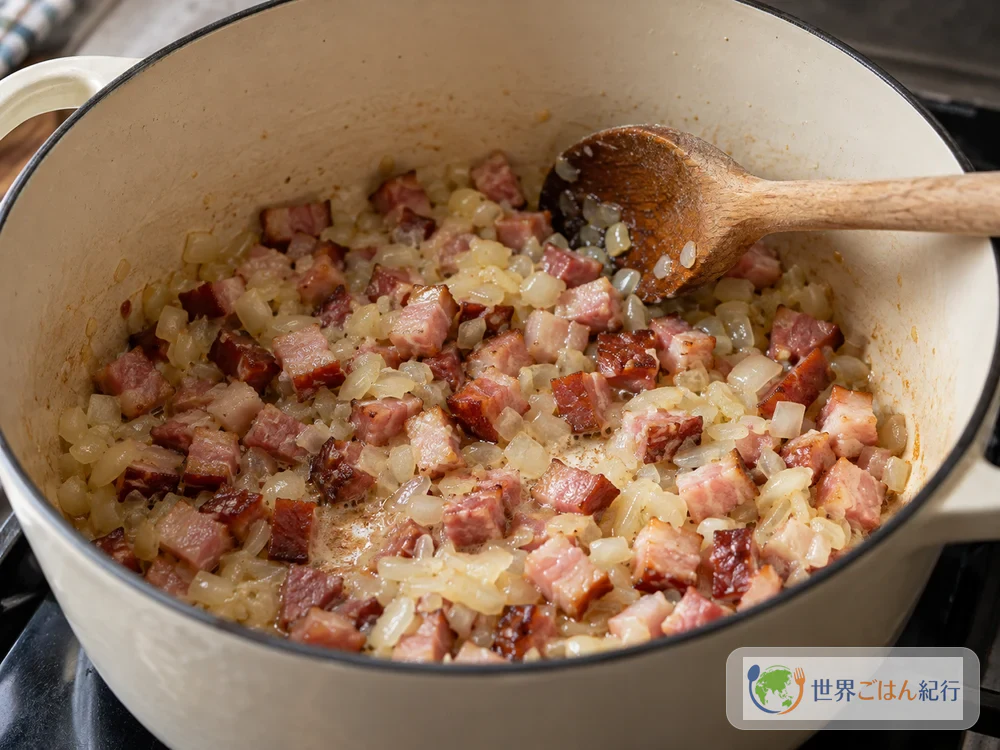
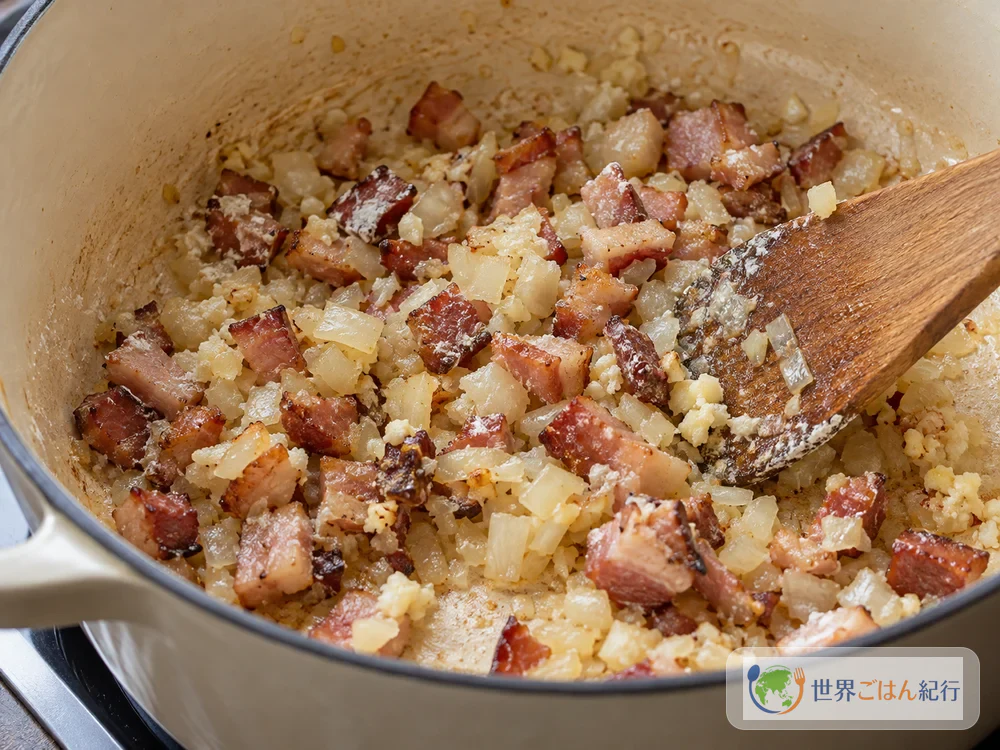
Soak the beans overnight (8 hours or more) in water. The prep on the day is about 15 minutes, parboiling the beans about 30 minutes, and simmering the soup about 30 minutes. Excluding soaking time, it is done in about 1 1/2 hours.
Jota is also known as a soup that is better the next day. After a night's rest, the sourness of the sauerkraut blends with the beans and potatoes and becomes rounder. It will have thickened when reheated, so add a little hot water to loosen it.
Because it is a sour soup, simmering it in an enameled or stainless steel pot is best. Do not leave leftovers in the pot; move them to a lidded storage container.
This uses flour (wheat). If you want to avoid wheat, leave out the flour and thicken by breaking down more of the potatoes and beans in step 5. Some commercial broths and bacon contain dairy, wheat or soy, so check the ingredient labels when serving someone with allergies.
In a deep bowl, with bread
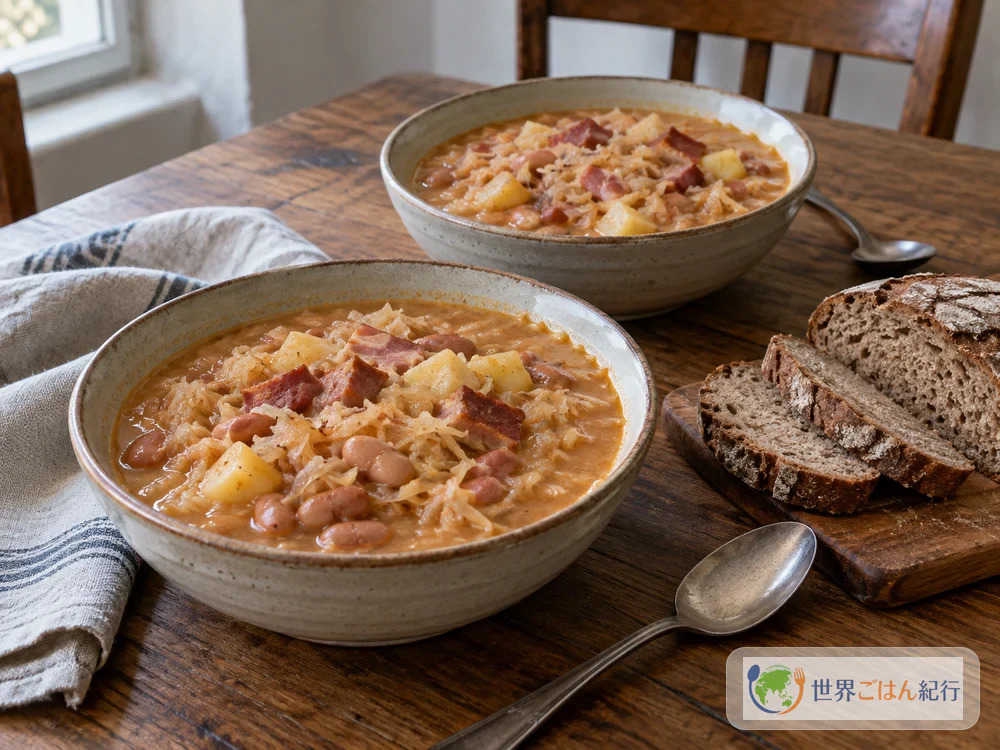
The basic way to eat jota is to ladle it generously into a deep bowl and add thick slices of bread. Sara Kalisnik of Slovenian Kitchen writes that in her own home it is eaten with mashed potato. Pairing more potato with a soup of beans and potatoes is unexpected, but on a cold winter day it makes perfect sense as a meal. Baguette or rye bread go well with it.
There are also recipes that simmer a slab of bacon with it, then slice it thick and lay it on top. If you want the meat to star, simmering pork spare ribs or a smoked sausage in it makes a festive plate. For another dish that simmers sauerkraut with meat, try Poland's bigos as well. You can see well how the use of sour cabbage differs from country to country.
Make it without bacon and you have a vegetarian jota. In that case, combine smoked paprika and sweet paprika in equal parts to make up the smoky aroma. Cooking the onion in 2 tbsp olive oil gives a lighter, more Istrian flavor.
Frequently asked questions
What can I use if I cannot find sauerkraut?
You can get close with lightly pickled cabbage, or salted cabbage with a little vinegar added, but the sourness and savoriness from fermentation will not come out as they do with sauerkraut. If possible, I recommend getting sauerkraut from an import food store or online.
Can I cook the beans in a pressure cooker?
Yes. Cook beans soaked overnight according to the pressure time for beans in your pressure cooker's manual. The guide to tenderness is a state where pressing with a finger crushes them smoothly without a hard core.
Can I make it ahead?
It suits making ahead, since it blends better after a night's rest. Once the heat is off, move it to a lidded container, refrigerate, and eat it soon. When reheating, add a little hot water and warm the whole thing well over low heat.
What happens without potatoes?
It comes closer to an Istrian-style jota. The flavor of beans and sauerkraut is clearer, and the thickness is a little weaker. If you want thickness, mash some of the beans and add them.
Sources
- Slovenian Tourist Board, “Taste Slovenia,” 2013. Accessed and checked 22 October 2026. https://www.slovenia.info/uploads/publikacije/en/okusiti_slovenijo_2013_ANG_WEB__pub.pdf
- Slovenian Tourist Board, “Vipava Jota with Turnip Fermented in Pomace.” Accessed and checked 22 October 2026. https://www.slovenia.info/en/places-to-go/regions/mediterranean-karst-slovenia/nova-gorica-and-the-vipava-valley/vipava-jota-with-turnip-fermented-in-pomace
- Sara Kalisnik, Slovenian Kitchen, “Sauerkraut and Bean Soup (Kraška jota).” Accessed and checked 22 October 2026. https://slovenian-kitchen.com/blog-1/kraska-jota
- Jernej Kitchen, “Sauerkraut Pork Slovenian Jota,” 2 November 2021. Accessed and checked 22 October 2026. https://jernejkitchen.com/recipes/sauerkraut-pork-slovenian-jota
- Wikipedia, “Jota (food).” Accessed and checked 22 October 2026. https://en.wikipedia.org/wiki/Jota_(food)