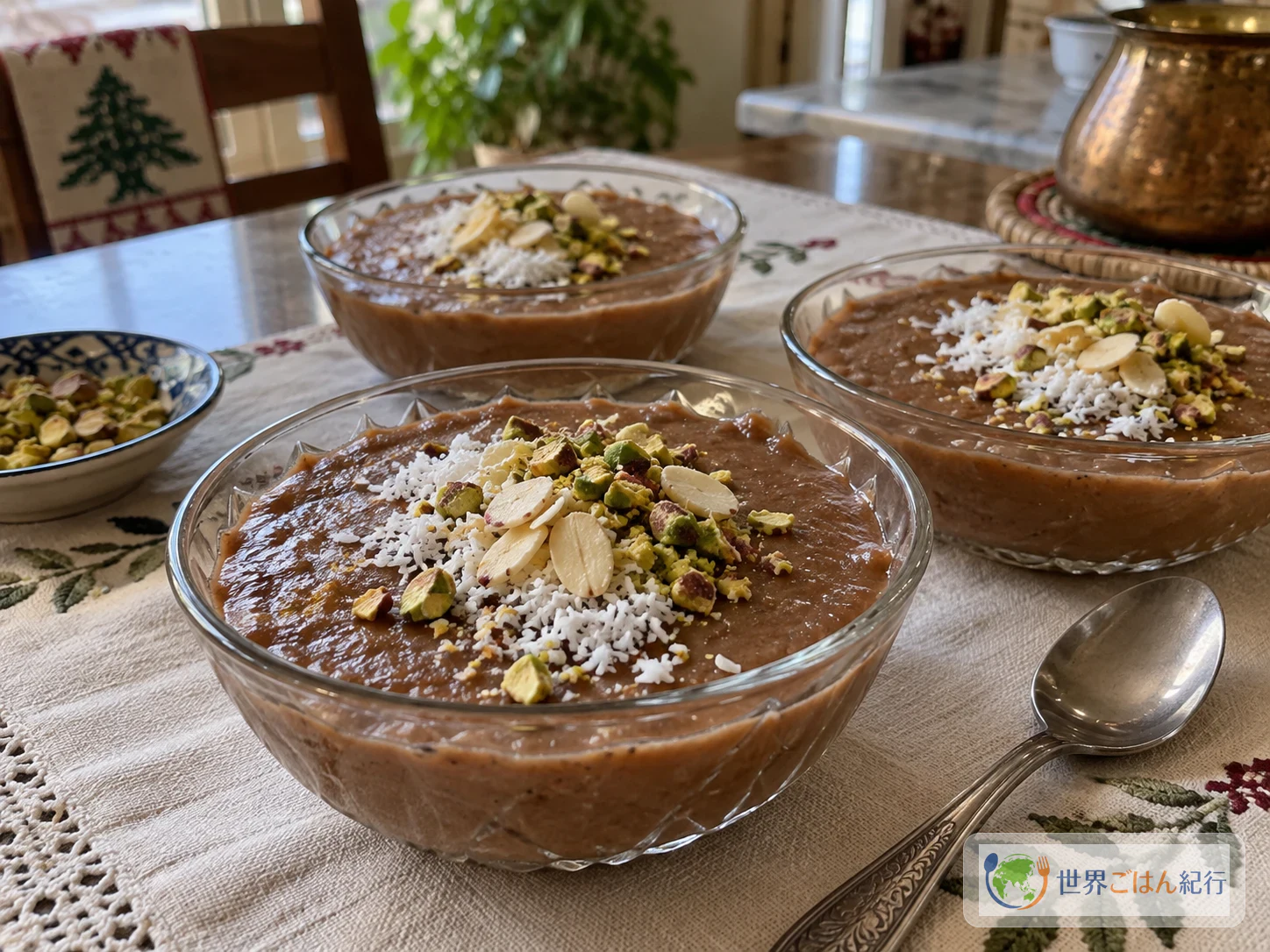
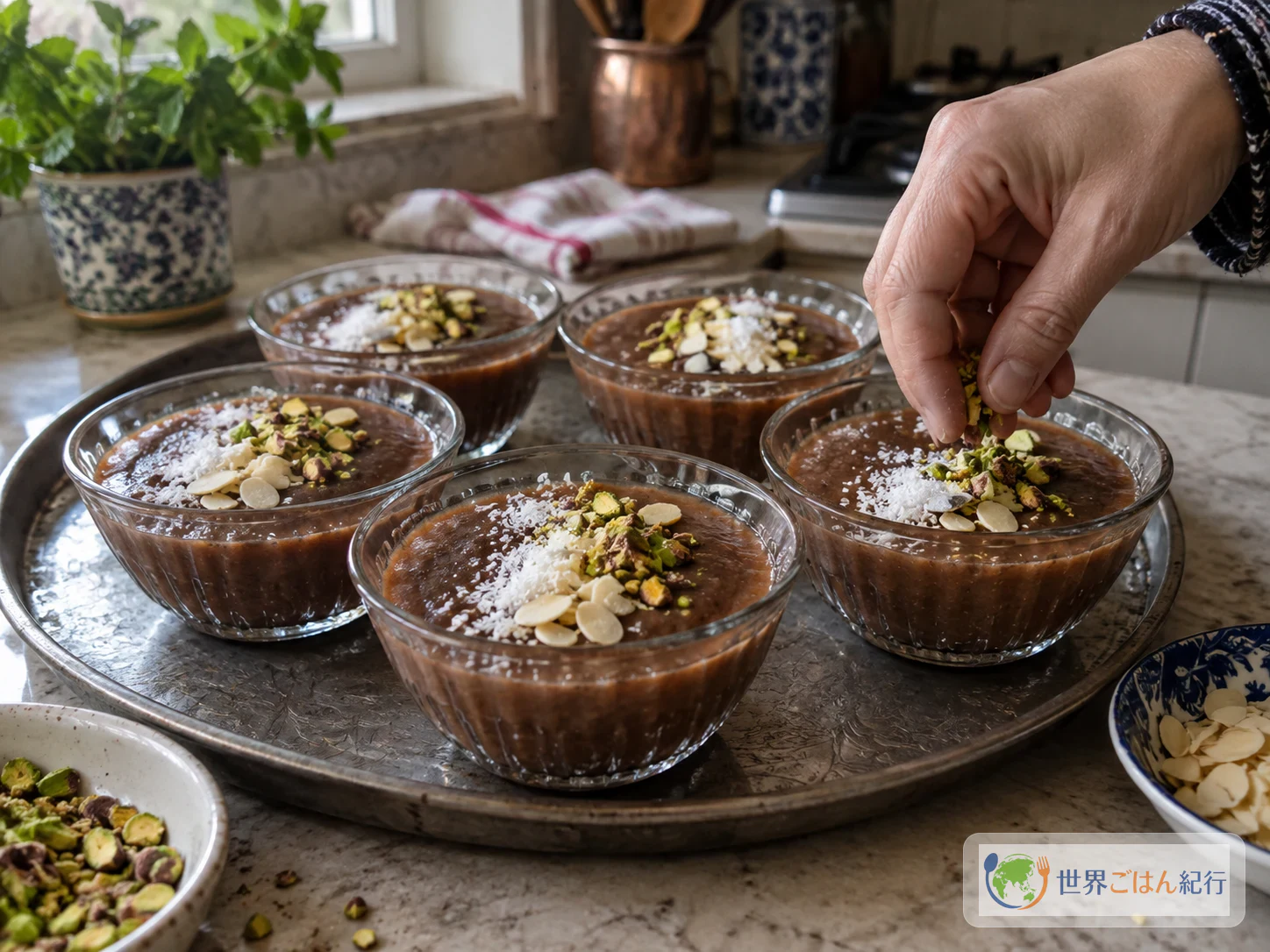
In Lebanon, when a baby is born, family and friends come to visit. The host hands each of them a small bowl. In that bowl of celebration is meghli: a smooth brown pudding with white coconut piled on top like snow, scattered with green pistachios and thin almonds. Put a spoon in and you get a gentle sweetness with the crunch of nuts inside it.
Meghli (Meghli, مغلي) is a Lebanese sweet made by cooking rice flour, sugar and water and scenting it with caraway and cinnamon. It is not the kind of rice pudding made by simmering grains; the flour does the thickening. Milk, eggs and gelatin are not part of the basic recipe. It is a pudding made from rice flour and water, yet it is properly soft on the tongue, and the brown color comes from the spices, not from caramel.
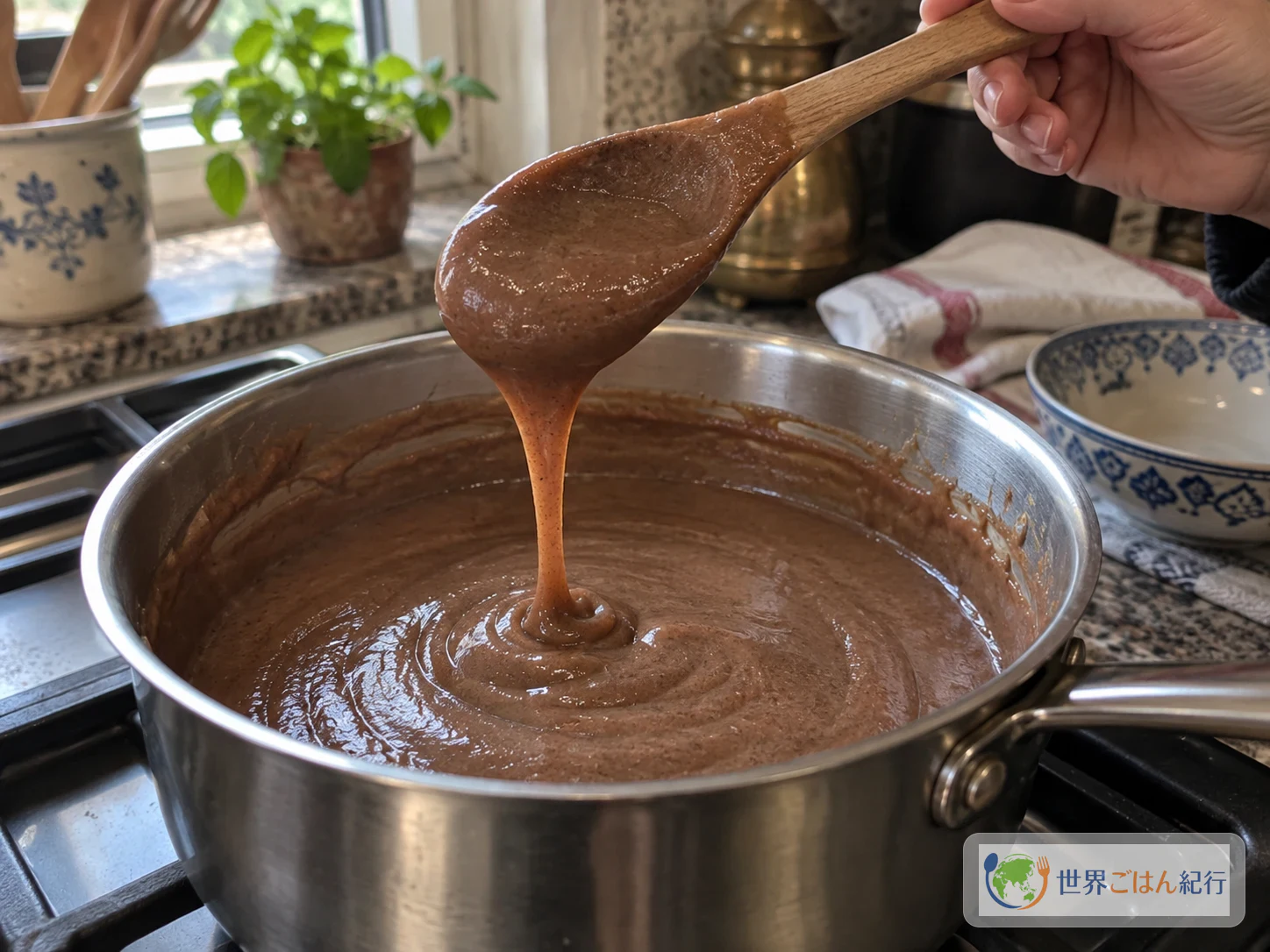
At home, the work is mostly about stirring the pot. This is a home-scaled recipe that fills 6 small bowls. Prep takes 10 minutes, cooking about 25 minutes, a rough 10 minutes of cooling, and at least 4 hours in the refrigerator, about 4 hours 45 minutes in all. No oven is used. The one ingredient you may need to arrange ahead is caraway seed. The sign to turn off the heat is not the clock but a thickness that coats the back of a spoon. Count the chilling time separately from the cooking.
A Birth Celebration That Also Lands on the Family Table
For the family and friends who come to see the baby, each person is served in a bowl. That is the hospitality meghli stands for. You cook one pot, divide it among several bowls, and add the nuts bowl by bowl. You can picture the kitchen with a row of bowls, one per guest. But a bigger crowd does not mean you can simply use a bigger pot and keep the same cooking time. When making a lot, watch the thickness rather than the clock. Also, being a birthday-celebration sweet does not mean it is food for the baby itself.
Iman of Simply Lebanese has written down meghli as a dish learned from family. Her 2019 meghli post was published to coincide with the birth of her second child, and she writes that she learned the method from her mother, who came to help when her eldest was born. This is Iman's own household record. Even so, it conveys how a dish on the table is tied to a milestone when people are welcomed.
Nicole O'Neil explains the name Meghli as related, in Arabic, to "boiled" or "boiling." In Latin letters it is spelled Meghli, Meghle and other ways, and in Arabic it is written مغلي. What the name calls to mind is the act of boiling in a pot. It is a sweet that keeps the motion of boiling in its name, but when and in which town it first appeared is not known.
Meghli is not served only for births. In Lebanon it is also eaten at Christmas in some households, as Simply Lebanese and Nicole O'Neil describe. SamIAm, a home-recipe contributor on Nigella.com, mentions a link with Christmas Eve, which celebrates the birth of Christ. That is the contributor's own explanation, not a recipe tested and confirmed by the site. A family gathering for a newborn and a seasonal holiday table: the occasions differ, but both are tables that celebrate a "birth." Keep in mind that this is not a custom shared by every denomination or household in Lebanon, or at every celebration.
Household Differences in Aroma and Garnish
The basic fragrance of meghli combines caraway and cinnamon with rice flour, water and sugar. Some recipes also add anise seed. Some households add anise. This does not mean each town has a fixed formula. All that is certain is that comparing recipes shows differences from home to home. The basic version in this article uses caraway and cinnamon, and without anise it is still perfectly good meghli.
The finishing nuts vary too. Coconut, almonds, pistachios and pine nuts all appear, and this recipe uses 18 g each of coconut, almonds and pistachios. In Nicole O'Neil's recipe, the nuts are soaked overnight in cold water. That method suits people who like a moist texture, while others add dry nuts just before eating. Here we do not soak, and the garnish goes on just before serving. On the soft pudding, the crunch of the nuts stands out clearly. If you try the soaking variation, do it in the refrigerator and use the nuts right after draining. Avoid leaving them overnight at room temperature.
SamIAm of Nigella.com writes of preferring no coconut, while Simply Lebanese and Nicole O'Neil use it as a topping. This is a difference of taste, not of authentic versus fake. It is enough to think of coconut as a garnish you can skip and caraway as the basic scent. When setting meghli next to Lebanese semolina desserts made with dairy, return to the point that meghli is a sweet of flour and water.
Ingredients (serves 6)
Prepare 6 heatproof small bowls of about 200–250 ml. Do not fill them to the brim; divide evenly at about 180 ml each. The final yield changes with how far the pudding reduces. The home recipe uses 80 g rice flour, 1000 ml water, 150 g sugar, 6 g ground caraway and 6 g cinnamon. For the rice flour choose fine non-glutinous rice flour, and avoid bread-style rice flour mixes that contain wheat gluten. Measure the water in ml and the flour and sugar by weight.
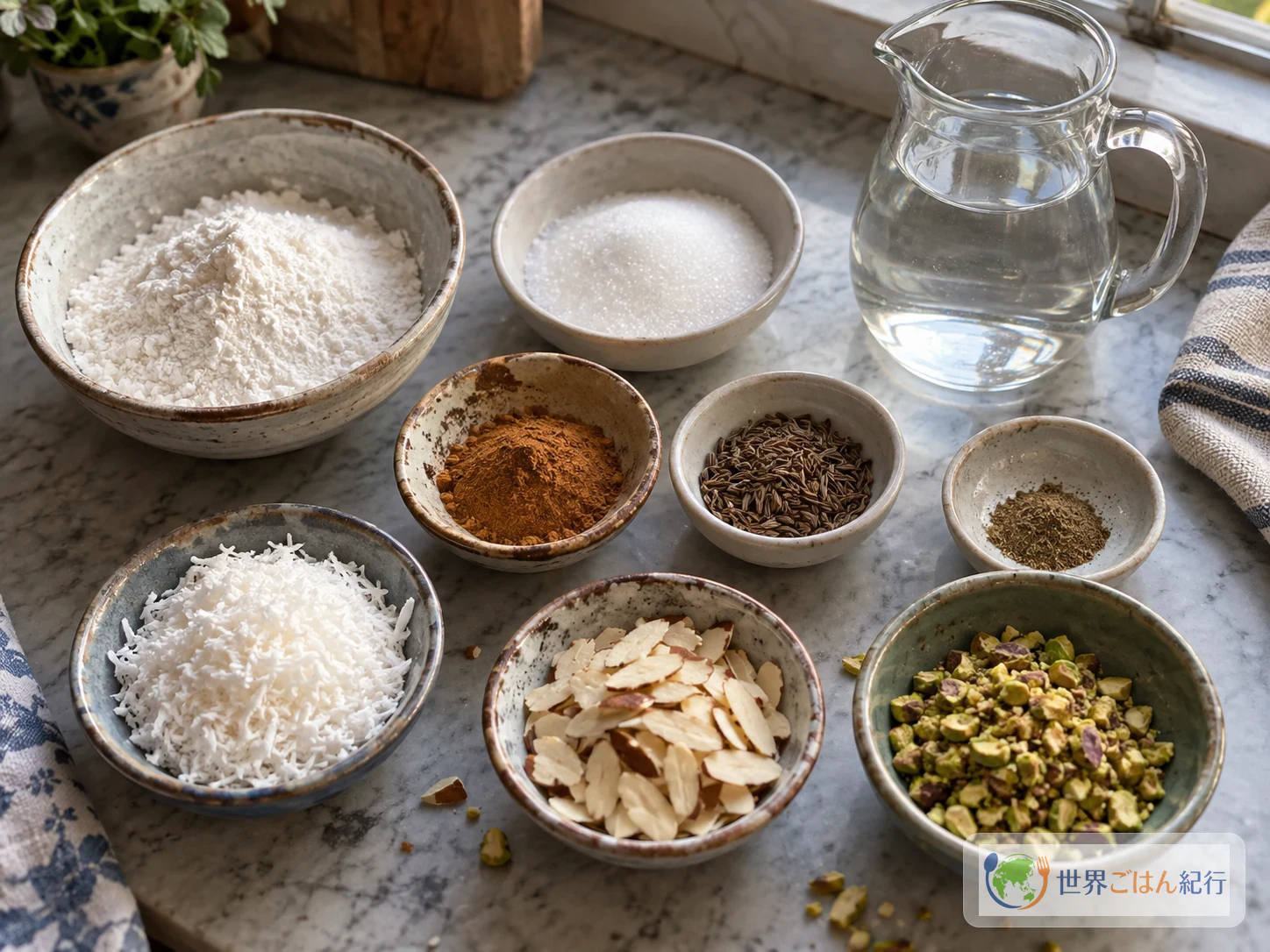
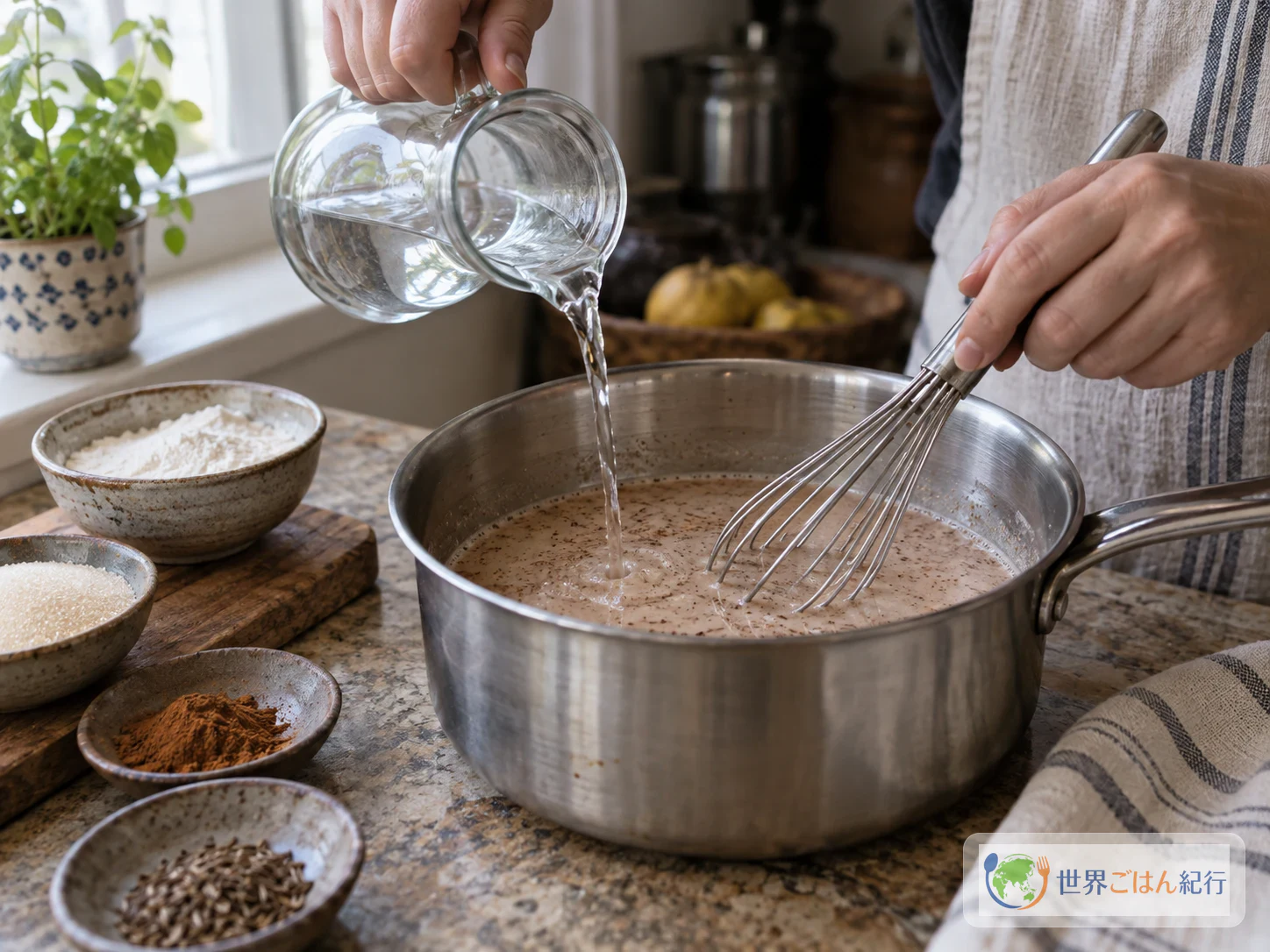
The basic recipe I checked thickens by cooking the rice flour. No cornstarch, eggs or gelatin are added. To thicken with rice flour alone, scatter the flour evenly while it is still cold and wait for it to thicken as it cooks. Avoid dropping the flour into hot water from the start. Changing the type of flour changes the relationship between texture and moisture, so using shiratama or potato starch in the same amount is not part of the basic method.
Set out the 6 small bowls first and clear a spot in the refrigerator. Light the stove only after the flour, sugar, spices and water are measured. During cooking the rice flour sinks and you must keep stirring the bottom, so arrange things so that you never have to stop to measure or hunt for a bowl. Use the spices in powdered form, not whole. If the grind is coarse, sift it through a fine tea strainer.
Tips to Remember at the Pot
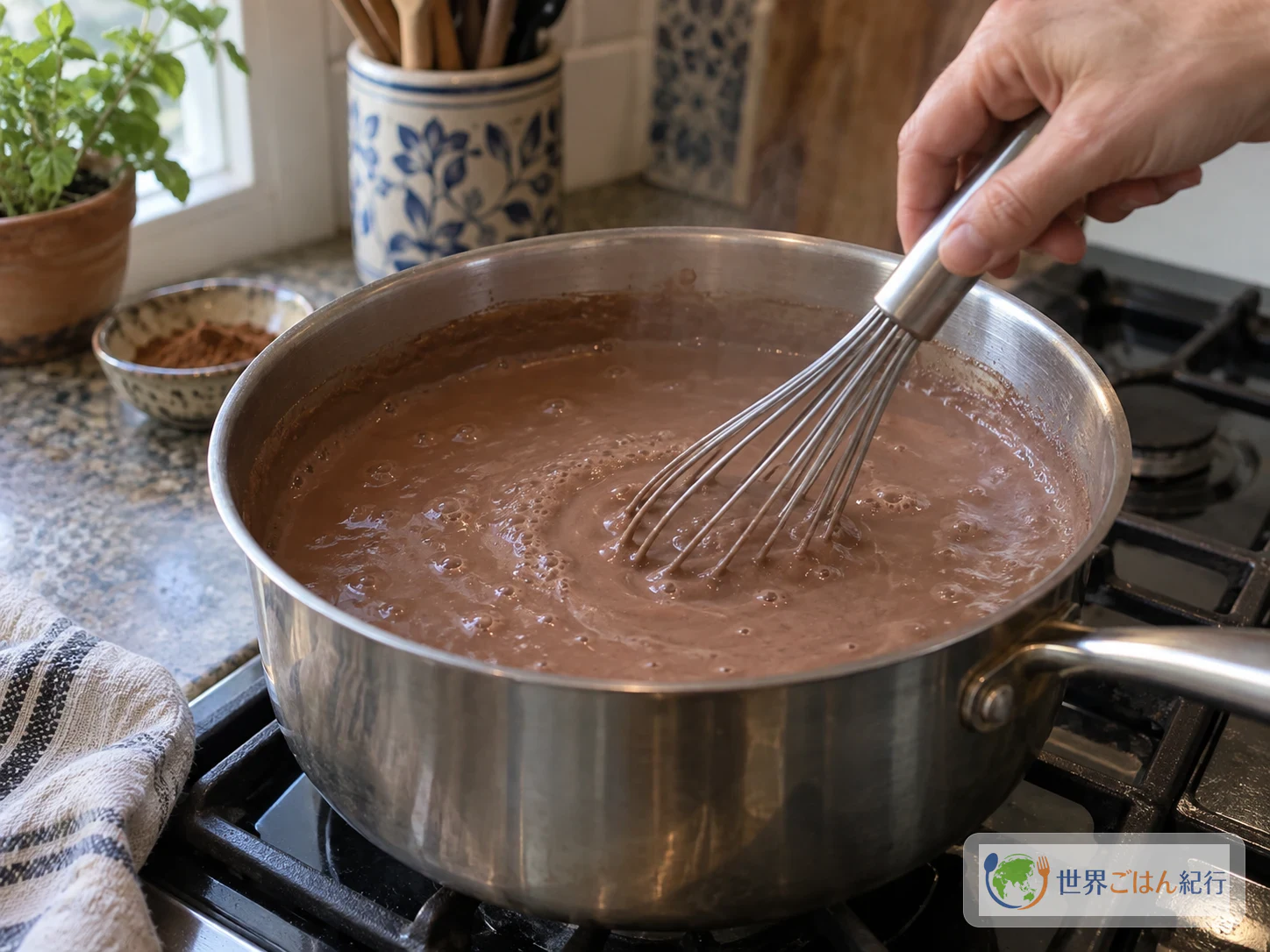
If you only whisk in the center, flour stays in the corners of the pot and scorches. Stir all the way to the edge of the bottom, tracing the corners. As it thickens, switch to scooping along the bottom with a wooden spoon. After it boils, stay on low heat and do not stop stirring. When you spoon some out to check thickness, leave the pot on low heat. Remember that what has cooled on a plate is in a different state from the hot liquid in the pot.
For half a batch, halve every ingredient for 3 small bowls; for a double batch, double them for 12. But the time to boil and the way it reduces change with the shape of the pot and the quantity. For a double batch, confirm by thickness. A big double pot is hard to stir, so at home you can divide it between two pots. Do not turn off the heat just because 20 minutes have passed; check the thickness on the back of a spoon. If you add only flour to make it set in a short time, the texture differs from the basic recipe. Think of the recipe multiplier and the heat adjustment separately.
When transferring hot pudding, use heatproof bowls and keep the pot handle steady. Avoid suddenly pouring hot liquid into cold thin glass. Do not tilt the big pot and pour all at once; transfer a little at a time with a ladle. Do not let children stand near the pot. If large bubbles surge, lower the heat and keep your face and hands away from the spatter.
Arranging the Caraway in a Home Kitchen
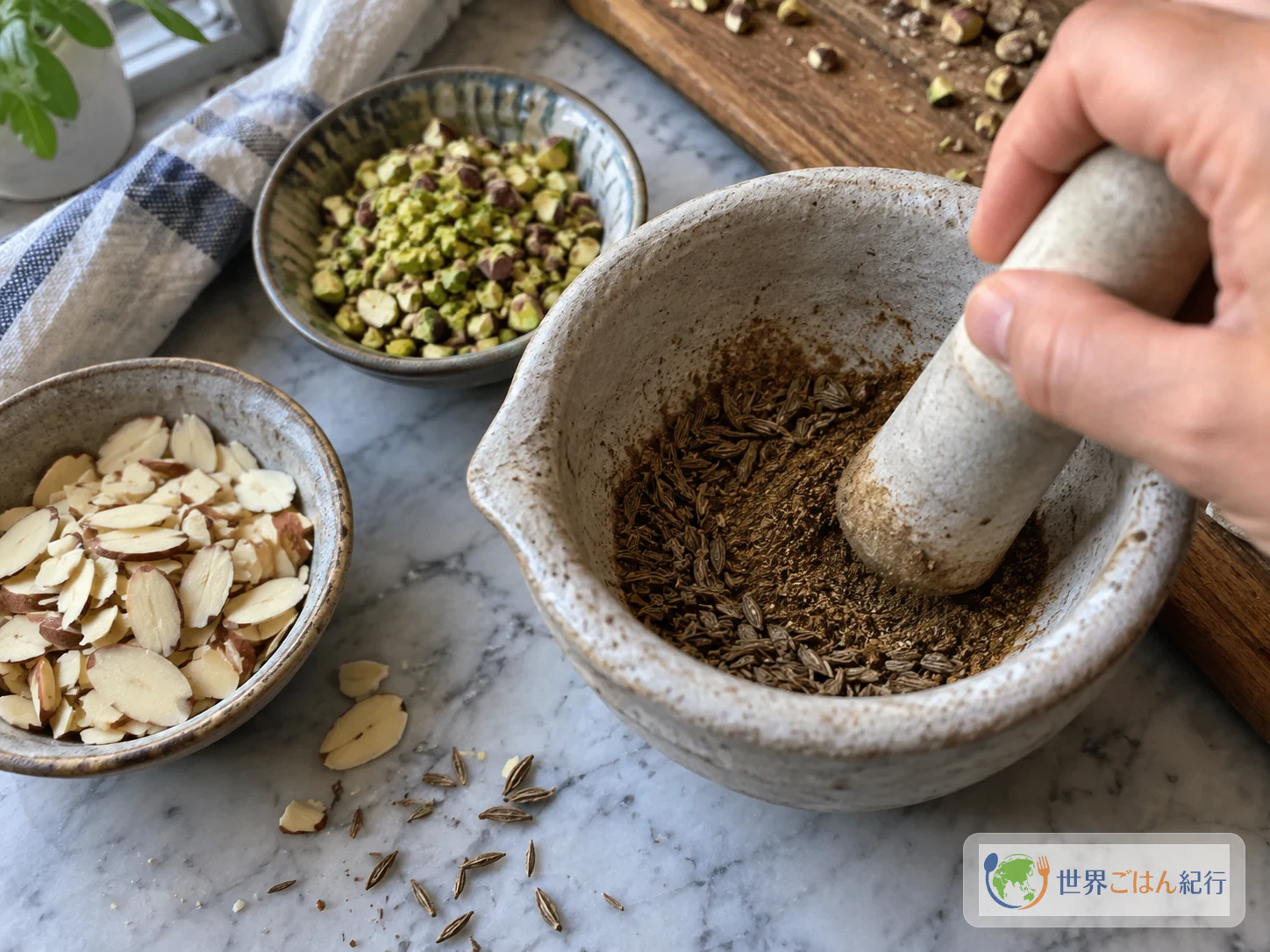
The ingredient to arrange first for this sweet is caraway seed. When buying, check the common name and the ingredients. Grind whole seeds in a mortar; if powdered, use 6 g as is. Caraway and cumin are different spices from cumin, and swapping the same amount changes the aroma of the dish, so cumin is not a replacement in the basic recipe. Search for the common name at a spice shop, a spice aisle or online.
For rice flour, a fine one for baking is a good candidate. Check on the package that it is non-glutinous rice flour and has no other flours or gluten mixed in. A coarse flour changes the texture. Do not swap glutinous rice flour or shiratama in the same amount, and do not turn this into a version that substitutes cooked rice grains. Use powdered cinnamon. Adding a stick and removing it does not guarantee the same amount of aroma and color as here.
For the nuts and coconut garnish, choose unsweetened, unsalted garnish. Keep it separate from sweetened baking coconut and salted snack nuts. Weigh the pistachios without shells; sliced almonds need less prep. Even a small 3 g per bowl makes a clear difference in texture and color. The tools are a mortar, an ordinary heavy pot and a whisk. You do not need to buy a special appliance just for this sweet.
Telling Lumps, Thickness and Scorching Apart
If lumps of flour remain
Before heating, strain through a tea strainer to break up the flour lumps and return it to the pot. Rice flour and spices sink, so stir everything once more. If you notice during cooking, turn off the heat once and break them up with the whisk. Pass any lumps that remain through a heatproof strainer back into the pot, and cook over low heat to the thickness you need. Avoid putting hot, sticky liquid into a sealed blender. The way to prevent it is to add cold water a little at a time at the start. Fix lumps before heating; it is the shortcut.
If it is still runny after chilling
First check that it was chilled for at least 4 hours. If it was so thin during cooking that it did not coat the back of a spoon, extra chilling time may not set it. Only if it is before topping and has been kept cleanly refrigerated, you can return it to the pot. Stir over low heat to check the thickness, then divide into bowls and refrigerate promptly. Do not rescue anything that was left at room temperature this way. Also avoid sprinkling dry rice flour into a hot pot. Review the cooking state before changing the formula.
If it is too firm or smells scorched
If it became rice-cake-like before you turned off the heat, it has reduced too far. While hot, add water 1 tablespoon (15 ml) at a time and stir over low heat until it is pourable again. The texture may not match the basic recipe. If, on the other hand, the scorched smell has only just started at the bottom of the pot, do not scrape the burnt bottom; move the upper part to another pot. If bitterness has spread through everything, do not try to hide it with extra spices or sugar. Next time, lower the heat and stir all the way into the bottom corners. It also matters not to try to set it to its final form inside the pot.
Enjoying Different Finishes for the Bowls
From here on are home variations, not names for traditional formulas of any country or town. Do not change several things at once; try one and compare it with the basic version. The center of the fragrance is caraway, and the cooking of the rice flour stays the same. Even when you add anise, it does not replace the caraway.
| Variation | Change for 6 servings | Result and cautions |
|---|---|---|
| Add an anise note | Add 1 g ground anise seed | Adds a sweet fragrance. Keep the 6 g caraway. Do not swap in star anise for the same amount |
| Omit the coconut | Set coconut from 18 g to 0 g | Enjoy mainly the texture of nuts and pudding. The base water and rice flour stay the same |
| Add walnuts | Change 18 g almonds to 18 g unsalted walnuts | Chop walnuts to about 3–5 mm. This is not a substitute for people with nut allergies |
| Serve without nuts | Set 18 g almonds and 18 g pistachios to 0 g | Serve the base alone, or with only edible coconut. Do not skip checking utensils and labels |
| Less sweet | Change 150 g sugar to 120 g | A home adjustment. The spices may taste stronger. Water, rice flour and chilling time stay the same |
Take a look too at Lebanese sweets that change with flour and fragrance. To move on to a chilled semolina dessert made with dairy, try layali lubnan. For a baked sweet that shows how anise and semolina are used, try sfouf. Where meghli is made from rice flour, water and caraway, each has a different combination of ingredients and aroma. The amounts belong to those other sweets, so do not carry them over into meghli.
- How to make layali lubnan
- How to make sfouf (in Japanese)
Storage and Allergy Notes
If you make it ahead for guests, portion it and refrigerate promptly. About 4°C (40°F) or below is the guide for the refrigerator; keep it covered with a lid or plastic wrap. Make the base the day before and set the garnish aside to add just before eating: store the base and the garnish separately. This article's storage guide is up to 3 days in the refrigerator, but that is a deliberately short home guideline, not a guarantee of safety. Feel Good Foodie writes up to 4 days covered in the refrigerator, nuts stored separately, and does not recommend freezing because the texture changes after thawing. This article also does not recommend freezing.
Refrigerate within 2 hours of cooking, or within 1 hour when the air temperature is above about 32°C (90°F). Do not wait until the limit; portion it and cool it quickly. Refrigerate it even though it has no dairy. Avoid leaving the big pot out overnight at room temperature. Pudding left out for a long time cannot be said to be made safe again by reheating. Do not eat anything with an off smell or change. Even if it looks normal, food that did not meet the storage conditions cannot be judged safe.
Nuts such as almonds, pistachios and walnuts can cause allergies. Check the allergies of the people eating first, and do not use the ingredients in question. Even in a recipe that adds no dairy or eggs, check all ingredients and allergen labels of the store-bought rice flour and toppings. Also watch for contamination from the mortar, cutting board and utensils that handled nuts. The name "nut-free" or "dairy-free" on a recipe alone does not make it safe for everyone. Do not use any ingredient if you are not sure whether it is an allergen.
Frequently Asked Questions
How does it become a pudding without milk?
When rice flour is dispersed in water and heated, it thickens. The mechanism is different from egg custard or gelatin jelly. You cook until it coats the back of a spoon, then chill it. It is a sweet that sets by cooking, then chilling. Replacing the water with milk is not part of the basic method.
Can I make it without caraway?
You can make a rice-flour and sugar pudding, but leaving out the caraway loses the basic fragrance of meghli. If it is your first time, prepare the caraway. We do not swap in the same amount of cumin or star anise. It is not a spicy chili dessert, so think about your preference for the scent of cinnamon and caraway separately from heat.
Can I make it the day before?
Cook the base the day before and chill it in the bowls for at least 4 hours. The next day, take it out of the refrigerator and add the nuts and coconut just before eating, and you will not need heat on the day. This article's guide is up to 3 days covered in the refrigerator. Do not bring it back to room temperature for long in between. We do not recommend freezing because the texture changes. If you put the toppings on before refrigerating, the dry crunch changes, so store the garnish separately.
Is the same garnish fine when making it for a child's celebration?
Meghli is a sweet from a culture of serving guests who come to welcome a baby. It is not a recipe meant for feeding the baby itself. Adapt the garnish to the people eating, and if there is an allergy, leave out the nuts in question. It is not enough to just chop them finely.
Nutrition Estimate
| Per serving (1/6 of the whole, with the basic garnish) | Approx. |
|---|---|
| Energy | about 209 kcal |
| Protein | about 2.5 g |
| Fat | about 5 g |
| Carbohydrate | about 39 g |
The table is an estimate calculated from ingredient weights, not a measured value. It is an estimate including the garnish, based on six equal portions, with 3 g each of coconut, almonds and pistachios. If you add more nuts, reduce the sugar or change the number of bowls, the per-serving values also change. Differences also arise from the labels and weights of the actual products. Because it uses no dairy, it is not guaranteed to be low in calories or to have health benefits.
Sources
- Simply Lebanese, "Meghli" — Iman. The birth-celebration and Christmas context, the record of learning from her mother, the cold-water mixing step, and cooking and chilling guides. Published 13 February 2019. Accessed and checked 8 October 2026.
- Feel Good Foodie, "Traditional Lebanese Meghli" — Yumna Jawad. How to mix the rice flour, thickness guide, timing of garnishing, refrigerated storage and texture after freezing. Published 16 March 2026. Accessed and checked 8 October 2026.
- Nicole O'Neil, "Traditional Lebanese Meghli Recipe" — Explanation of the name, a formula with anise, and an example of soaking the nuts. Accessed and checked 8 October 2026.
- Nigella.com, "My Mothers Meghli" — A home recipe by the contributor SamIAm. A link to Christmas Eve and an example of household preference. Not a recipe tested and verified by Nigella.com. Accessed and checked 8 October 2026.
- FDA, "Safe Food Handling" — Prompt refrigeration, dividing into shallow containers, refrigerator temperature, and the upper limit for time at room temperature. Accessed and checked 8 October 2026.
- FDA, "Have Food Allergies? Read the Label" — Nut allergy, full ingredient labeling and cautions about contamination during manufacture. Accessed and checked 8 October 2026.