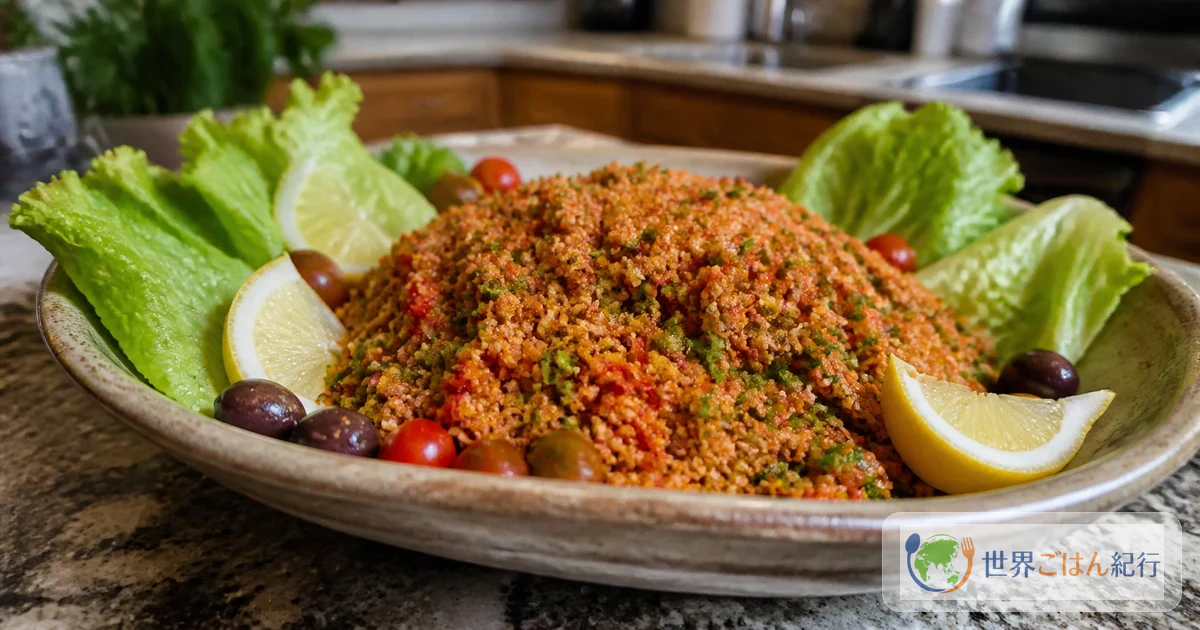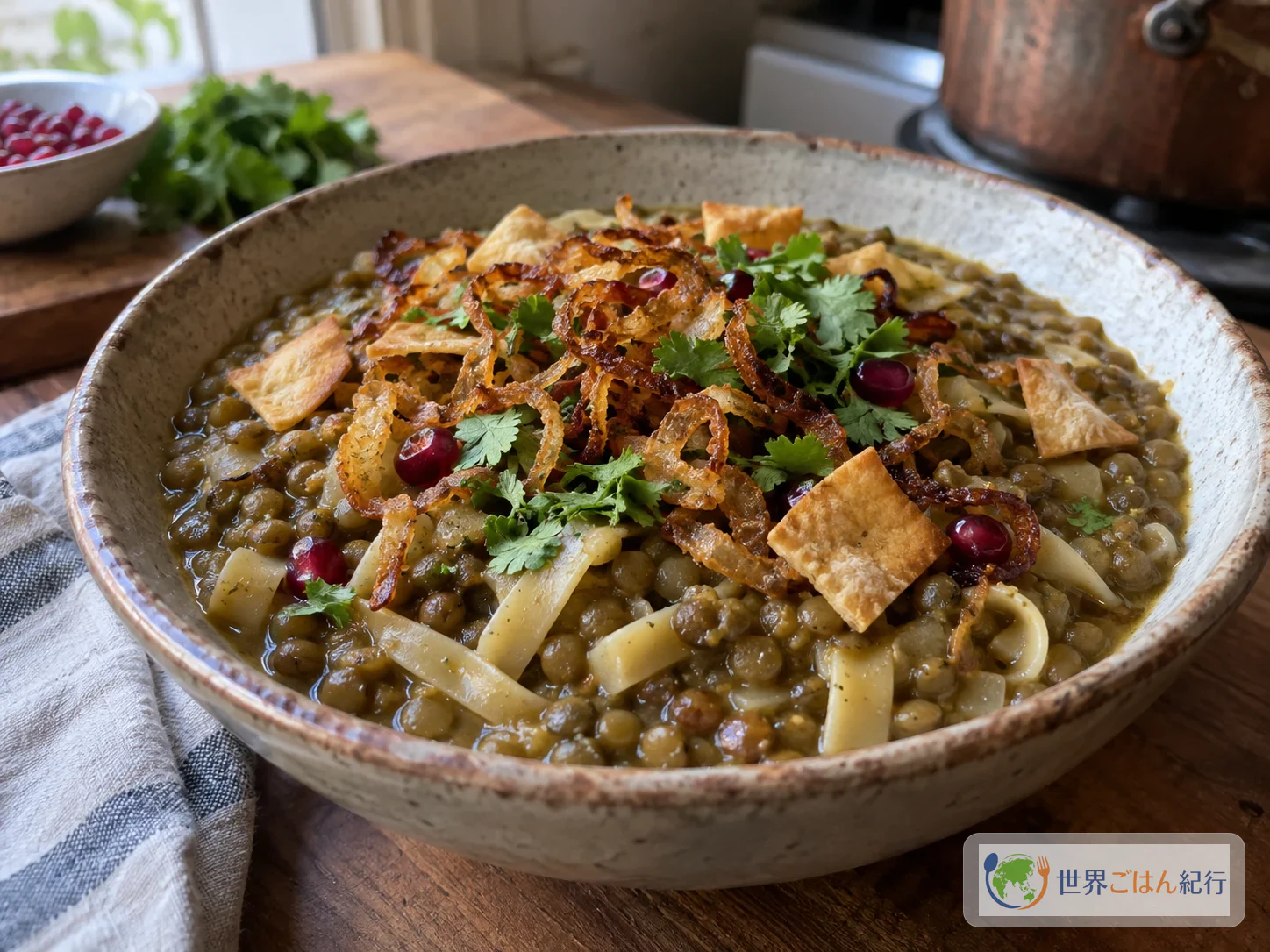
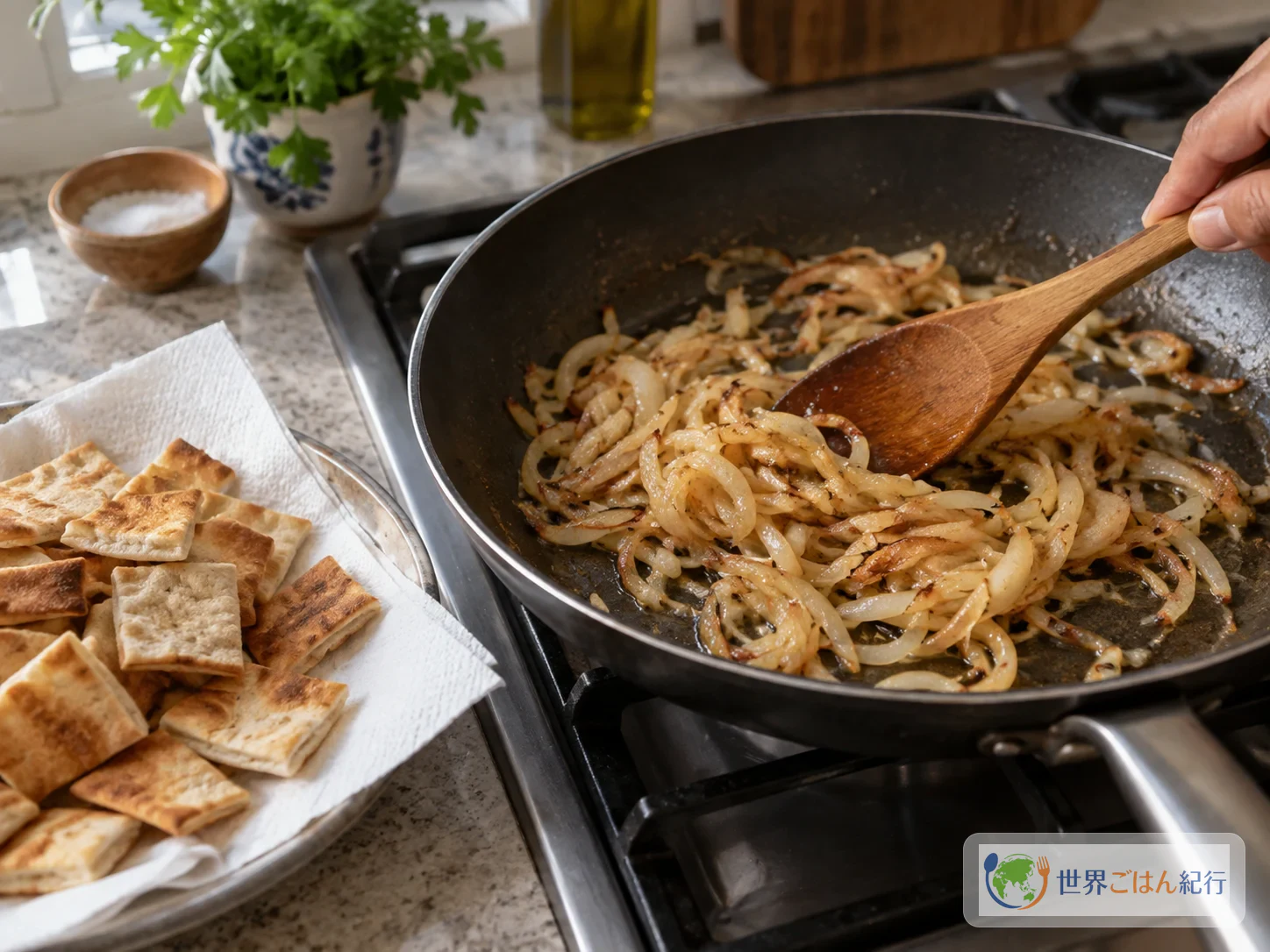
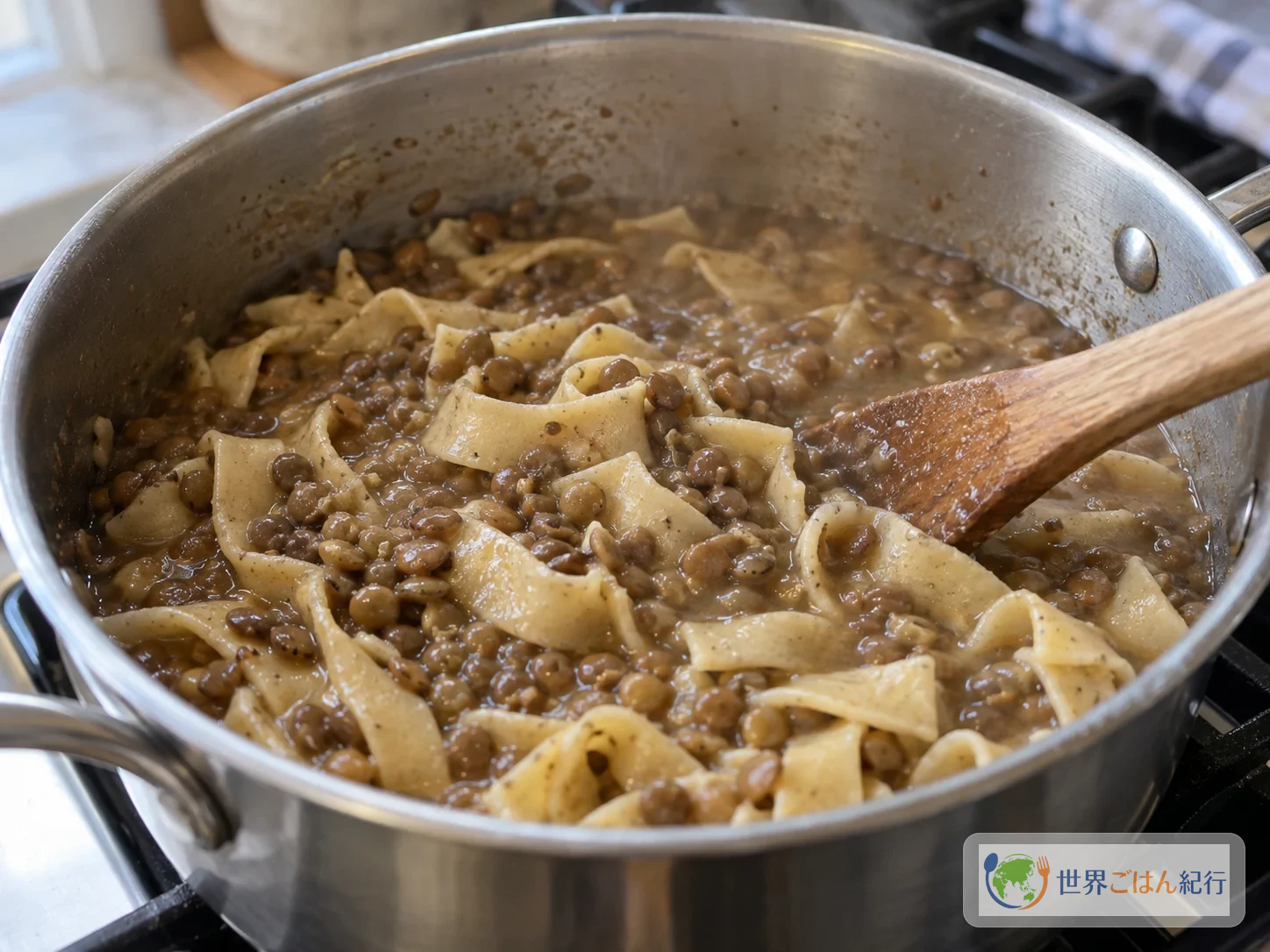
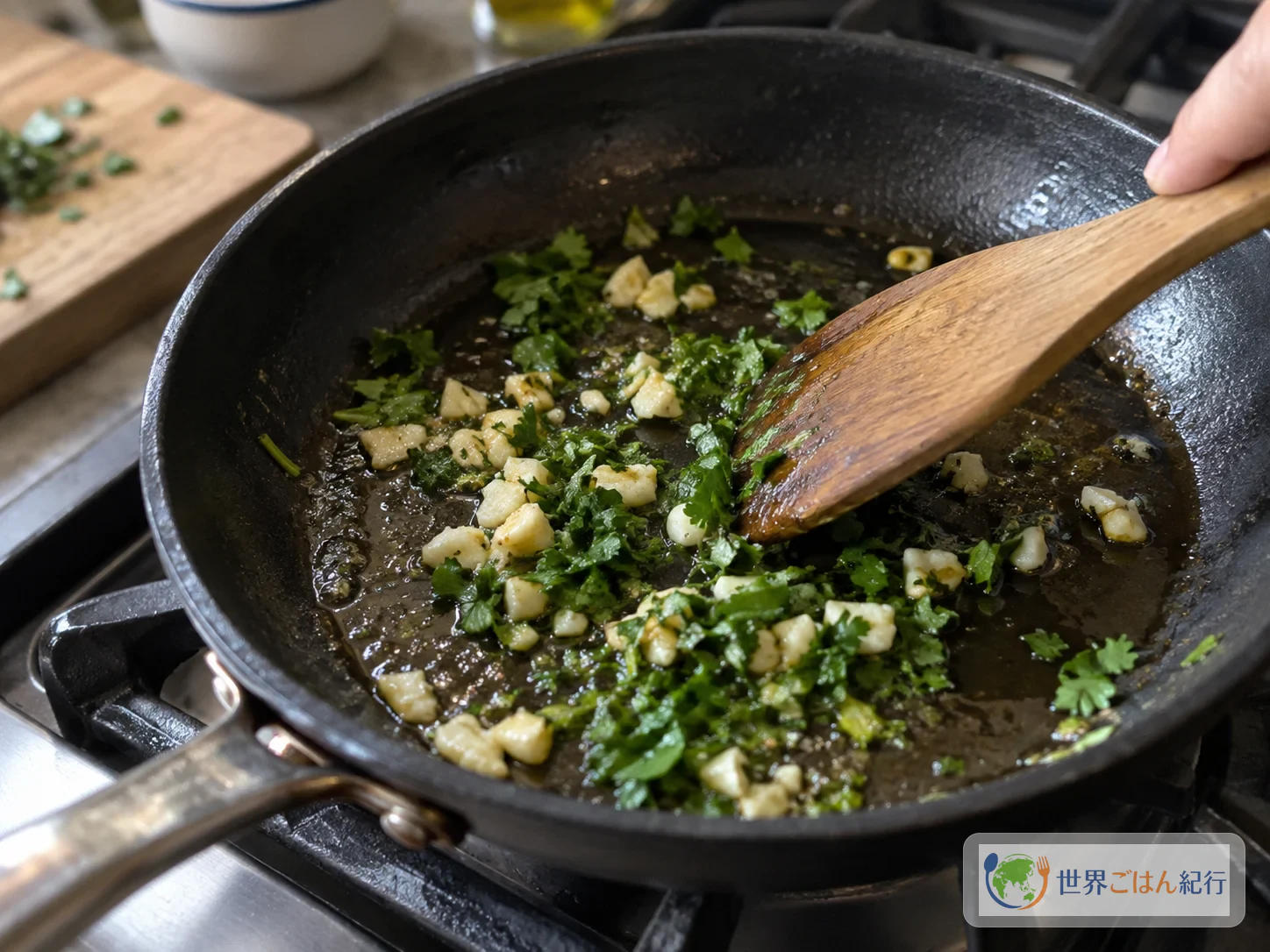
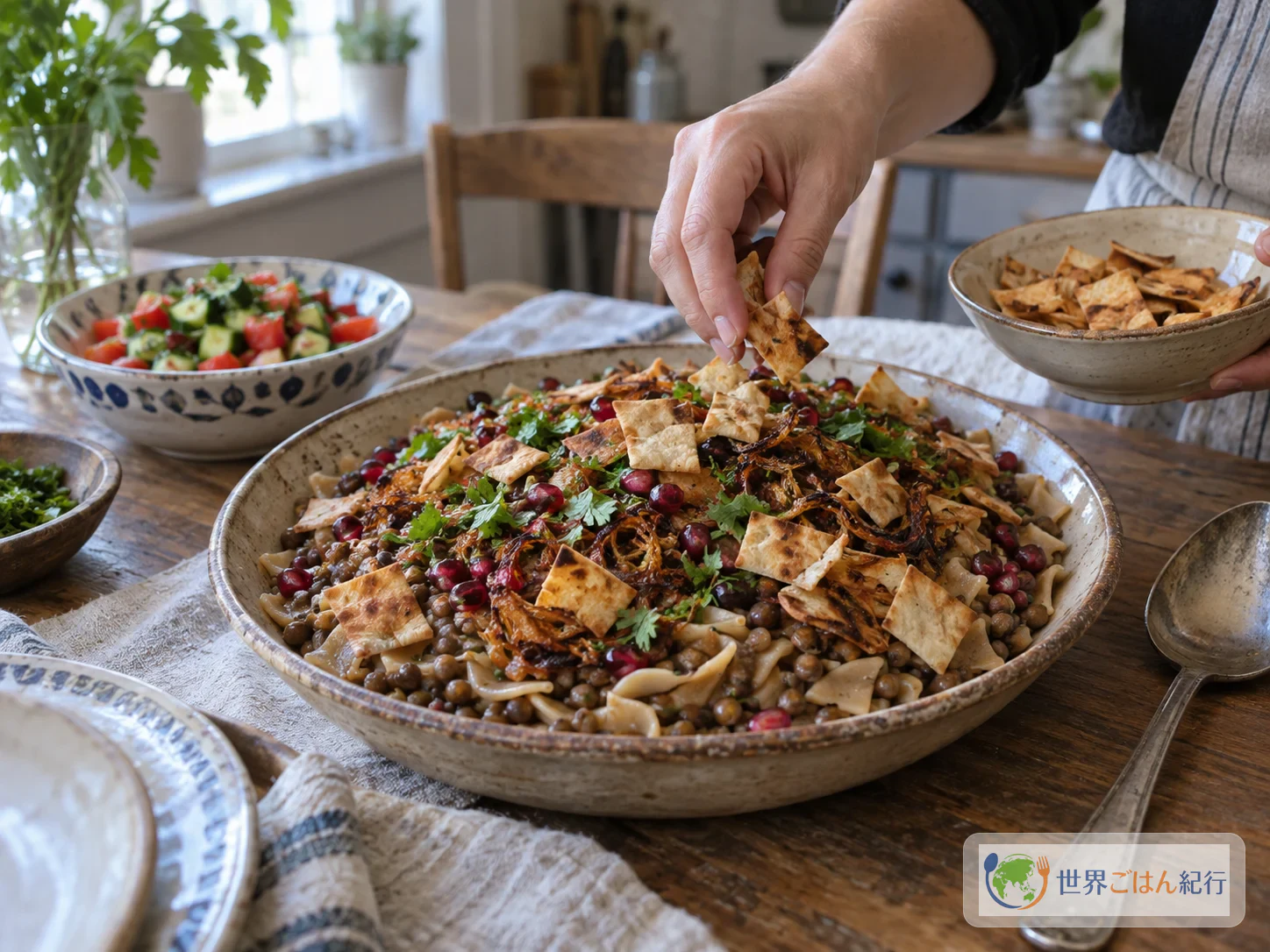
In a Syrian home kitchen, golden onions and thin pieces of bread rain down over a big platter of lentils and noodles. In the pan beside it, garlic and cilantro are perfuming the oil. Harak osbao (Harak Osbao / حراق إصبعه) is a sweet-and-sour stew of lentils and pasta. A moist stew is topped with crunchy things, and the contrast is the point of the dish.
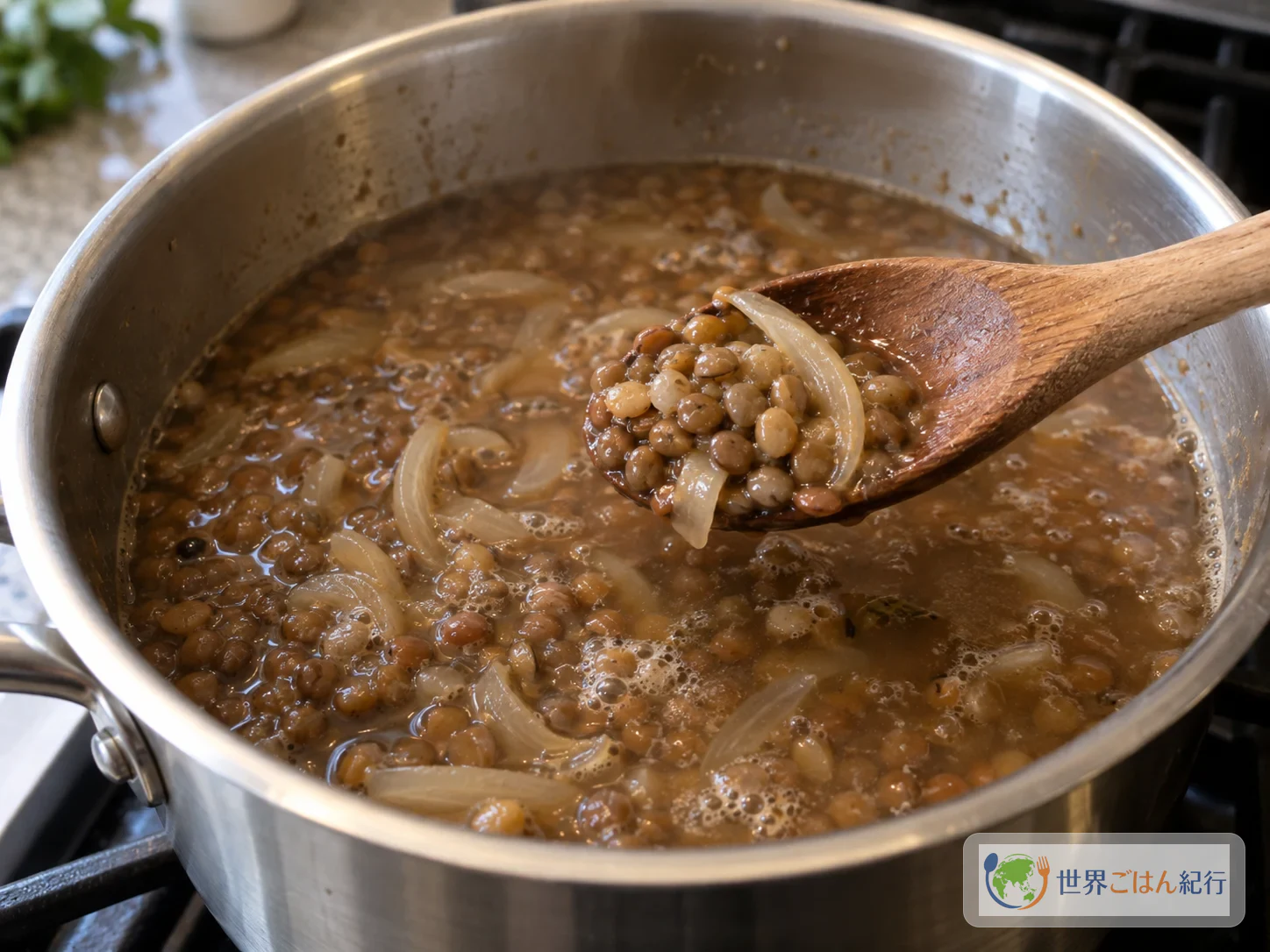
Under the toasty surface hide the sourness of tamarind and pomegranate molasses. The combination of tender lentils and noodles with fragrant onions and bread on top has been adjusted here to serve 4 in a home kitchen. Prep takes about 20 minutes and cooking about 45, though firm lentils will stretch that. The trouble spots are how soft the lentils get and how much liquid is left; add the sour ingredients only after the lentils are tender.
The Syrian Table Around the Dish "That Burned a Finger"
The story of the name survives in family tellings. For Rodain, a cook from Syria featured in the IRC cookbook Recipes from Home, this dish is a food that reminds her of her mother. The same booklet records the tale her mother told about the name: a hungry man came home, could not wait for the hot dish his wife had made, reached for it, and burned his finger.
The name "burned finger" and the story that the food was that tempting are a telling, not an origin history in which we can verify who invented it or when. Take it as a laugh at the dinner table.
It is often presented as a Damascus dish, and even without meat, a combination of lentils and wheat can be the star of the table. It is presented as a dish to go with iftar, the meal that breaks the fast, but it is not limited to Ramadan. Alaa Al Zain, who contributed a recipe to The National, says she makes it from scratch with homemade dough, and explains that flat pasta can stand in. Small hand-made pieces of dough and dried pasta differ in texture and effort. Still, one family's way is not the only correct one for all of Syria.
The table survives in places people have moved to, too. Hanan Sayed Worrell of Table Tales told The National she remembers the "ghabqa", the Ramadan-night gatherings of women that her mother hosted in 1980s Kuwait. In that memory, the dish had many different formulas and also went by the name mahrooq sub'o in the Kuwaiti dialect. This is one person's recollection and does not show the habits of every household in Kuwait today.
On the platter in that memory sit green leaves, red pomegranate, and fried bread. It is a table where the aromas and textures layered on the platter are shared out and enjoyed together. It is natural to imagine that the recipe differs from home to home.
Examples using hand-made dough, flat noodles, and macaroni can each be found. Some households top the dish with fried bread, and some cooks serve it with sumac or parsley. Because we cannot confirm a strict regional distribution, we cannot say "Damascus always does it this way" or "the north always does it that way". Enjoy it as a difference in each home's handwork.
Choosing the Lentils, and Two Kinds of Sourness
For the lentils, use brown or green lentils with their skins on as the base. Swapping in red lentils at the same weight changes how they break down and makes it hard to keep the lentils whole. Use 200 g of dried lentils. A method without soaking is documented, but if the product label gives instructions, follow them. Ordinary soybeans or chickpeas will not cook in the same time. When buying, check the type of lentil and whether it is dried or canned. If you use canned, see the variations later.
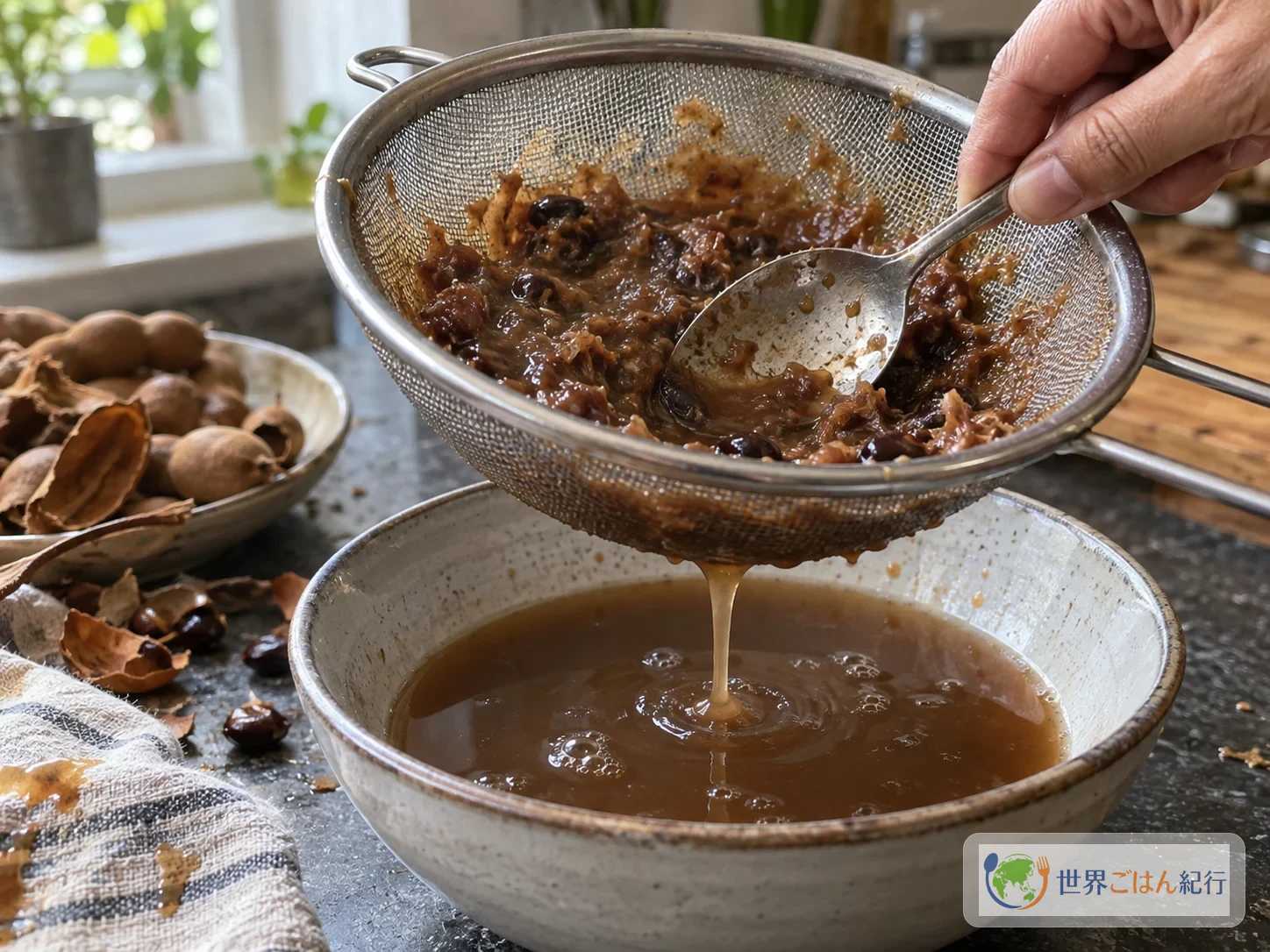
For tamarind, the basic method is to extract the sourness from a block of compressed pulp. Soak 20 g in 150 ml of hot water for 20 minutes and strain out the seeds and fibers to get a brown extract. Seedless unsweetened paste can stand in: dissolve 10 g in 150 ml of water, though concentration differs by product. Do not add all of it at once; add it in two portions. Sweet dessert sauces and sugar-added drink concentrates cannot replace it at the same amount. Choose by reading the ingredient and concentration labels.
"Pomegranate syrup" in the ingredient table is also called pomegranate molasses, a seasoning that concentrates the sweet-sour flavor. It is different from the sweet grenadine syrup used in cocktails. Some products are quite sweet, so add it in stages, with 30 ml as the upper limit. Lemon juice alone can add sourness, but it cannot reproduce the deep sweet-sourness of pomegranate or the flavor of tamarind. Having both tamarind and pomegranate molasses makes it easier to build the sweet-sourness of this formula. Chili is not part of the basic recipe. Being sour and being spicy are separate matters.
To get close to the easy eating of small pieces of dough with convenient dried noodles, break egg-free dried fettuccine into 2–3 cm lengths. Left long, it is hard to serve from a platter. You can also make it with 120 g of short macaroni, but go by the cooking time on the package and make sure no core remains. Pasta and pita contain wheat. If you choose egg noodles, check the label for egg as well.
The pasta, pita, and flour in the basic recipe contain wheat. Some noodles and breads also contain egg or milk, so check the ingredient labels. If you have a food allergy, check the labels of any substitutes and cross-contact too. Swapping in gluten-free noodles alone does not make the whole dish wheat-free.
Ingredients (serves 4)
This serves 4 with the lentils and pasta as the main dish. If you serve it in small bowls as a side, reduce the portions. The onions are split into 200 g for the stew and 200 g for finishing, and the cilantro into 20 g for cooking and 10 g for finishing. Splitting the ingredients between stew and finish is the signature feature of this ingredient table.
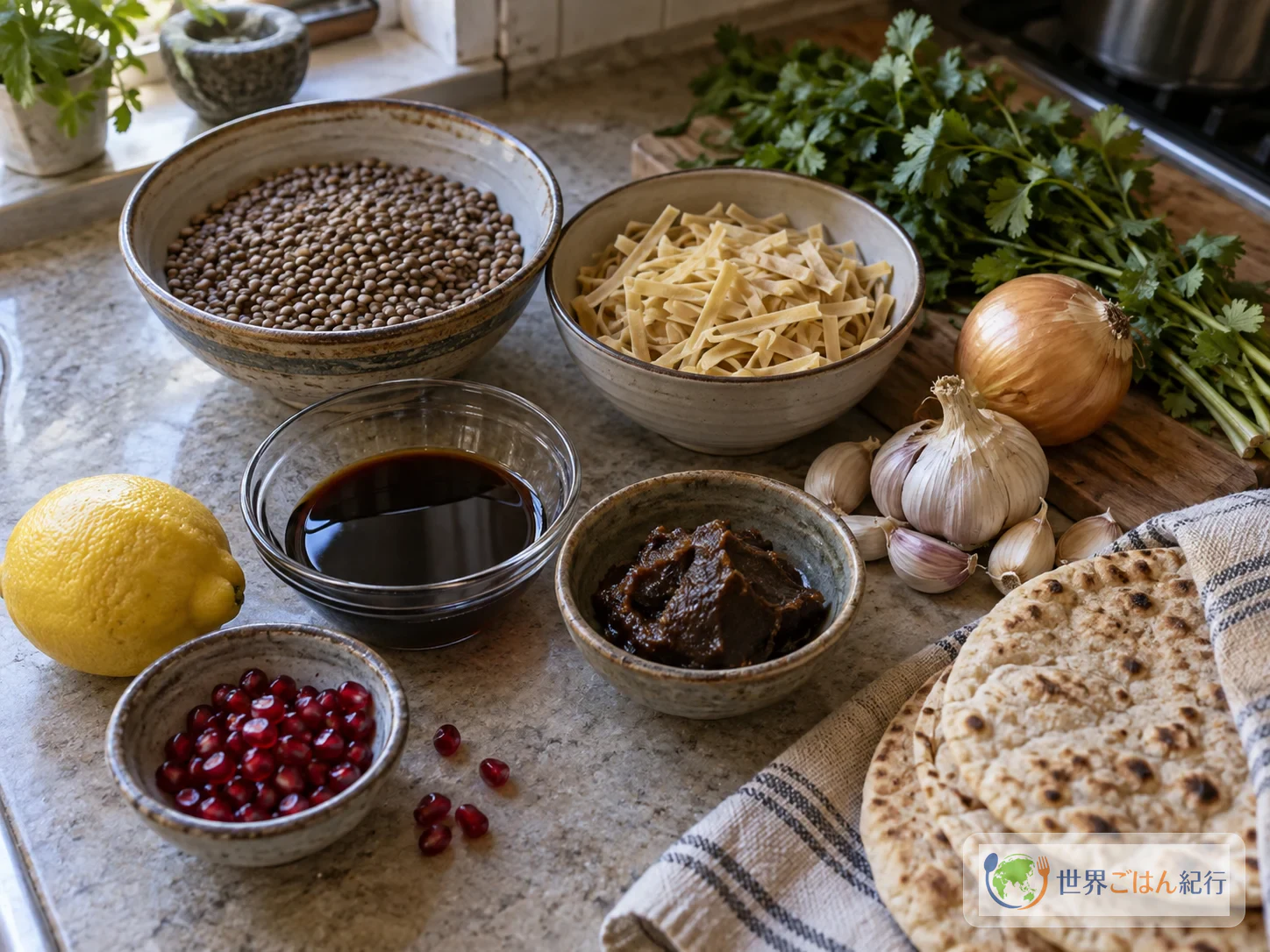
For equipment you need a pot of about 3 L, a skillet of about 26 cm, a colander or fine strainer, a spatula, paper towels, and a shallow serving platter. Apart from the strainer for removing tamarind fibers, ordinary kitchen tools are enough. Before you start, we recommend measuring the seasonings first. Once the lentils are tender, you can move on to the noodle step without rushing.
After adding the noodles, if the pot gets heavy and the spatula is hard to move, add hot water 50 ml at a time. If it is too watery, stir from the bottom over medium-low heat for 1–2 minutes at a time to reduce it. Once the noodles are tender, do not keep cooking; let it rest. Lentils or noodles that have turned mushy will not return to their original shape. Adjust the liquid and finish it as a stew.
When It Goes Wrong, Look Back Into the Pot
The cause is not only sourness; it may be how the heat went in or scorching. The basic rule is to check the firmness of the lentils and the noodles separately. If you add noodles to hard lentils, the noodles fall apart before the lentils cook. Check the center of the lentils before adding the noodles. Old beans and product differences lengthen cooking time, so it will not always be done in 20–30 minutes.
| Condition | Likely cause | How to fix it |
|---|---|---|
| Centers of the lentils are hard | Not cooked long enough | Before adding the sour ingredients and noodles, add 50 ml of hot water and extend by 5 minutes at a time over low heat |
| Noodles have a core and there is no liquid | The noodles absorbed the liquid | Add 50 ml of hot water and check while stirring for 1–2 minutes at a time over medium-low heat |
| Too sour | Added a strong concentrate all at once | Do not add the rest of the sourness. Next time start with half. Adding unsalted boiled lentils or noodles separately this time would change the amount and the number of servings |
| Scorched bottom | Too little liquid or too little stirring | Do not scrape the scorched bottom; move only the unscorched part to another pot. The bitterness that has spread cannot be taken back |
| Bread is soft | Added to the stew too early | Add the dry bread you set aside just before eating. Wet bread cannot be re-fried back to its original texture |
Even if it tastes sour, do not keep adding sugar without limit; stop adding seasonings for a moment. Add the sourness little by little. Adding a lot of hot water alone changes the thickness and texture. Adjust liquid 50 ml at a time, and think of seasoning adjustments and water added to cook the noodles as separate things.
Five Variations to Enjoy the Differences Between Homes
Some households use hand-made dough, some use short dried noodles, and some use different amounts of herbs. Here we distinguish documented examples from suggestions for the home cook. Rather than adding everything to the basic recipe, change only one thing at a time so you can see the effect.
Make it with short macaroni
When you do not have flat noodles, there are examples using macaroni or penne. Replace the 120 g of noodles with 120 g of short macaroni. Use the package time as a guide and check that no core remains. A thicker shape can take longer than 8–12 minutes.
Make it with small hand-made dough pieces
Some Damascus home recipes cut a dough of flour, water, and oil into small pieces and simmer them. It is a method that recalls handwork from before dried pasta became common. The time needed for homemade dough depends on its thickness, so do not simply reuse the dried-noodle time; check that it is cooked through. It is introduced here only as another culturally rooted method, and no separate ingredient table is provided.
Reduce the work with canned lentils
This is a suggestion for the home cook. Instead of 200 g of dried lentils, use 500 g of drained canned lentils, and start with 400 ml of the 850 ml of cooking water. After sautéing the onion, add the canned lentils and water, and when it boils, move on to the sour ingredients and dried noodles. This skips the 20–30 minutes of cooking the lentils.
Check the salt on the can label, do not add the 3 g of salt at the start, and adjust it at the end. While the noodles are firm, add hot water 50 ml at a time. The thickness and texture may not match the formula made from dried lentils and their cooking liquid.
Use less cilantro
This is a suggestion for those who do not like cilantro. Reduce 30 g to 10 g, divided into 5 g for cooking and 5 g for finishing. If you want to add something, use 20 g of chopped parsley at the finish. Some cooks do serve it with parsley, but it is not a direct replacement for the aroma of cilantro. You can cook it without cilantro, but the signature of sautéing garlic with herbs is weakened.
Bake the bread in the oven
You can also bake the bread. A home guideline is to toss 80 g of pita in 2 cm squares with 10 ml of vegetable oil and bake in an oven preheated to 180°C for 8–12 minutes. Turn once halfway and take it out when the edges are golden. Of the 30 ml of frying oil in the basic recipe, assign 10 ml to the bread and 20 ml to the onion. Times vary by oven, so go by color and a dry texture.
Serving From the Platter, and Using the Leftover Seasonings
As a main dish, serve it with spoons from a shallow platter. Instead of stirring hard from the start, combine a little at a time the lentils and noodles with the herbs, onion, and bread to enjoy the different textures. Even without meat, lentils and wheat are filling. However, being meat-free does not mean low in calories or nutritionally complete. For a home menu, we recommend a light side of cucumber or tomato. This is only a suggestion, not a standard pairing in Syrian homes.
The seasonings you gathered can carry over from the same ingredients to another table. For another dish using pomegranate molasses, there is muhammara, a Syrian dip of red peppers and walnuts. To enjoy lentils and fragrant onions with a different staple, try mujaddara, a dish of lentils and rice. Rather than adding a lot of the seasonings to this stew just to use them up, pass them on to the next dish.
Storage and Frequently Asked Questions
Can I eat it the next day?
The texture changes, but you can make it ahead. Divide the stew, before topping it, into shallow containers and refrigerate it. Do not wait for it to cool completely at room temperature; put it in the refrigerator promptly. Keep the refrigerator at 4°C or below. The general official guideline for stews is 3–4 days in the refrigerator, but at home we recommend finishing it early, within one to two days. This does not mean it is guaranteed safe within that period. Do not leave it at room temperature for more than 2 hours, and in heat above 32°C refrigerate it within 1 hour. Even if it is very sour, do not assume it can be kept at room temperature.
There are examples of recipes served warm or at room temperature, but that does not mean it can be left out for a long time. If you will not serve it right after cooking, refrigerate it promptly. Do not assume that heating food that has fallen outside the storage conditions makes it safe again.
Do I add water when reheating?
The pasta has absorbed liquid and set firmly. Add 15–30 ml of water per portion and warm it over low heat, stirring. In a microwave, stir partway and heat thoroughly, aiming for 74°C or above at the center, leaving no cold spots. Keep the onion, bread, and herbs separate, and add the garnishes after reheating to keep their crispness. Reheating does not fully restore the noodles' bounce.
Can I freeze it?
The stew alone can be frozen in portions. The general quality guideline for soups and stews is 2–3 months at -18°C or below, but because the noodle texture changes in this dish, it is better to use it up sooner. As a quality suggestion for home cooks, aim for 2–3 weeks. This is not our own safety deadline. Thaw in the refrigerator and heat thoroughly with water added. Do not add bread or raw herbs to the frozen stew; prepare them on the day you eat.
What if I have no tamarind?
As a home substitute, use 150 ml of water in place of the extract, and add lemon juice 5 ml at a time, aiming for a total of 15–20 ml including the 10 ml in the basic recipe. Keep the pomegranate molasses, and adjust the sourness after the lentils and noodles are cooked. The tamarind flavor will be gone, so it will not taste the same. Leaving out both tamarind and pomegranate molasses departs a long way from the basic recipe.
What do the nutrition numbers represent?
The per-serving estimate is about 530 kcal, 19 g protein, 15 g fat, and 86 g carbohydrates. It is a rough figure from dividing the whole basic ingredient list by 4, not a measured value. It changes with how much oil stays in the pan, differences between seasoning products, and the portion served. If you omit seasonings or use substitute noodles, the values will not necessarily be the same.
Sources
- UK for UNHCR — Majeda’s Harrak Isbaao — a home recipe with lentils and dried pasta, tamarind, pomegranate molasses, herbs, and fried bread. Accessed and checked 8 October 2026.
- The National / Table Tales — Ramadan recipes: harak osbao — 6 May 2021. Alaa Al Zain's home method and Hanan Sayed Worrell's recollection of Kuwait. Accessed and checked 8 October 2026.
- UNICEF UK / CookForSYRIA — Harak Osbao recipe card (PDF) — the formula by Yotam Ottolenghi and Sami Tamimi, the order of cooking lentils and pasta, and the herb and sumac finish. Accessed and checked 8 October 2026.
- International Rescue Committee — Recipes from Home (PDF, p. 17) — Rodain's memory of her mother and the tale of the name. Accessed and checked 8 October 2026.
- FoodSafety.gov — 4 Steps to Food Safety — guidelines for dividing and cooling, time at room temperature, refrigerator temperature, and microwave heating. Accessed and checked 8 October 2026.
- FoodSafety.gov — Cold Food Storage Chart — general refrigerator and freezer guidelines for soups and stews. Accessed and checked 8 October 2026.
- FDA — Food Allergies — allergen labeling and cautions about cross-contact. Accessed and checked 8 October 2026.
- MEXT Standard Tables of Food Composition in Japan — Lentils, whole, dried — nutrient values for lentils used in the nutrition estimate. Accessed and checked 8 October 2026.
- MEXT Standard Tables of Food Composition in Japan — Macaroni and spaghetti, dried — nutrient values for dried pasta used in the nutrition estimate. Accessed and checked 8 October 2026.