One Pot of Sweetness, Shared with the Neighborhood on Milestone Days
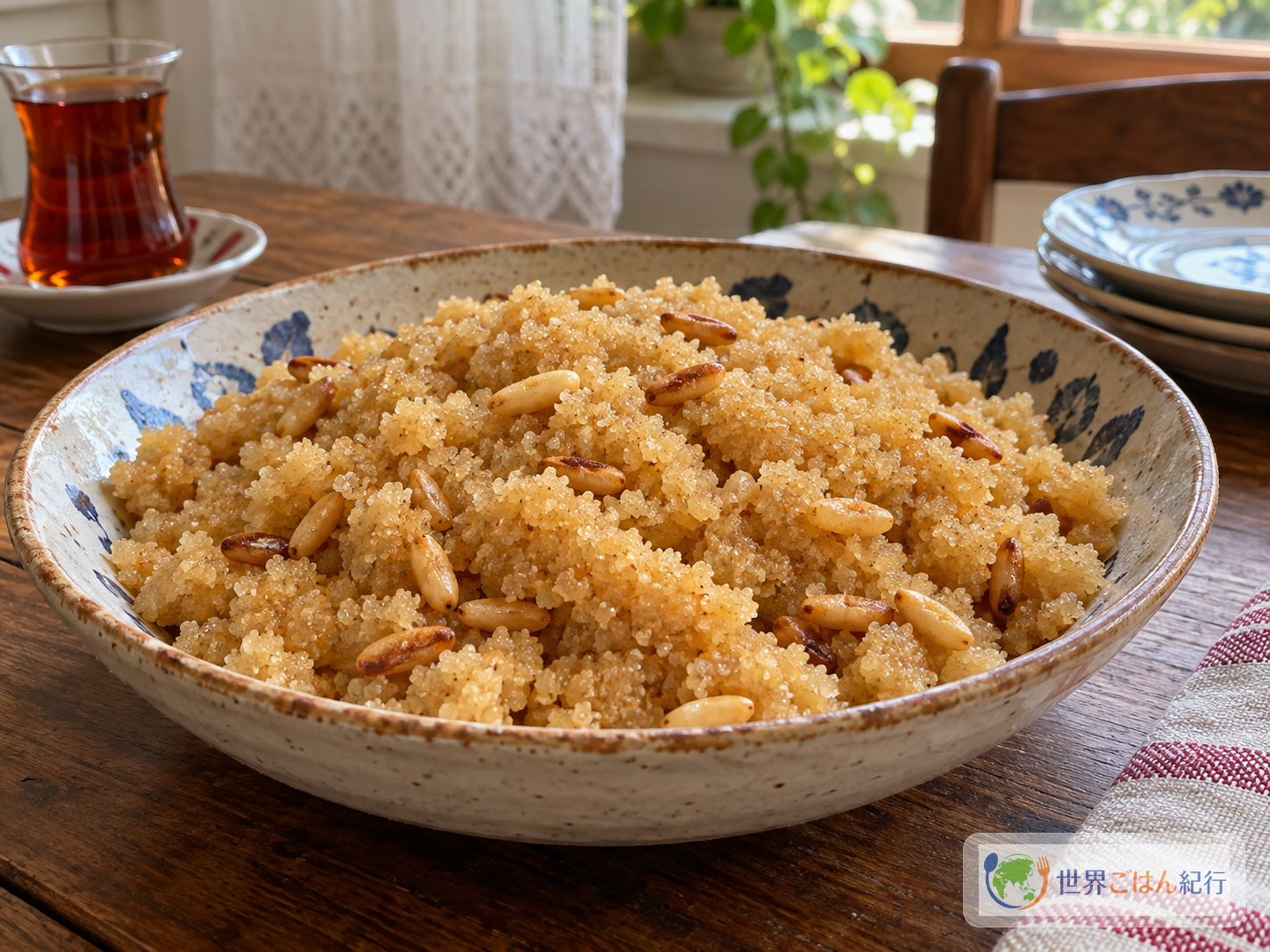
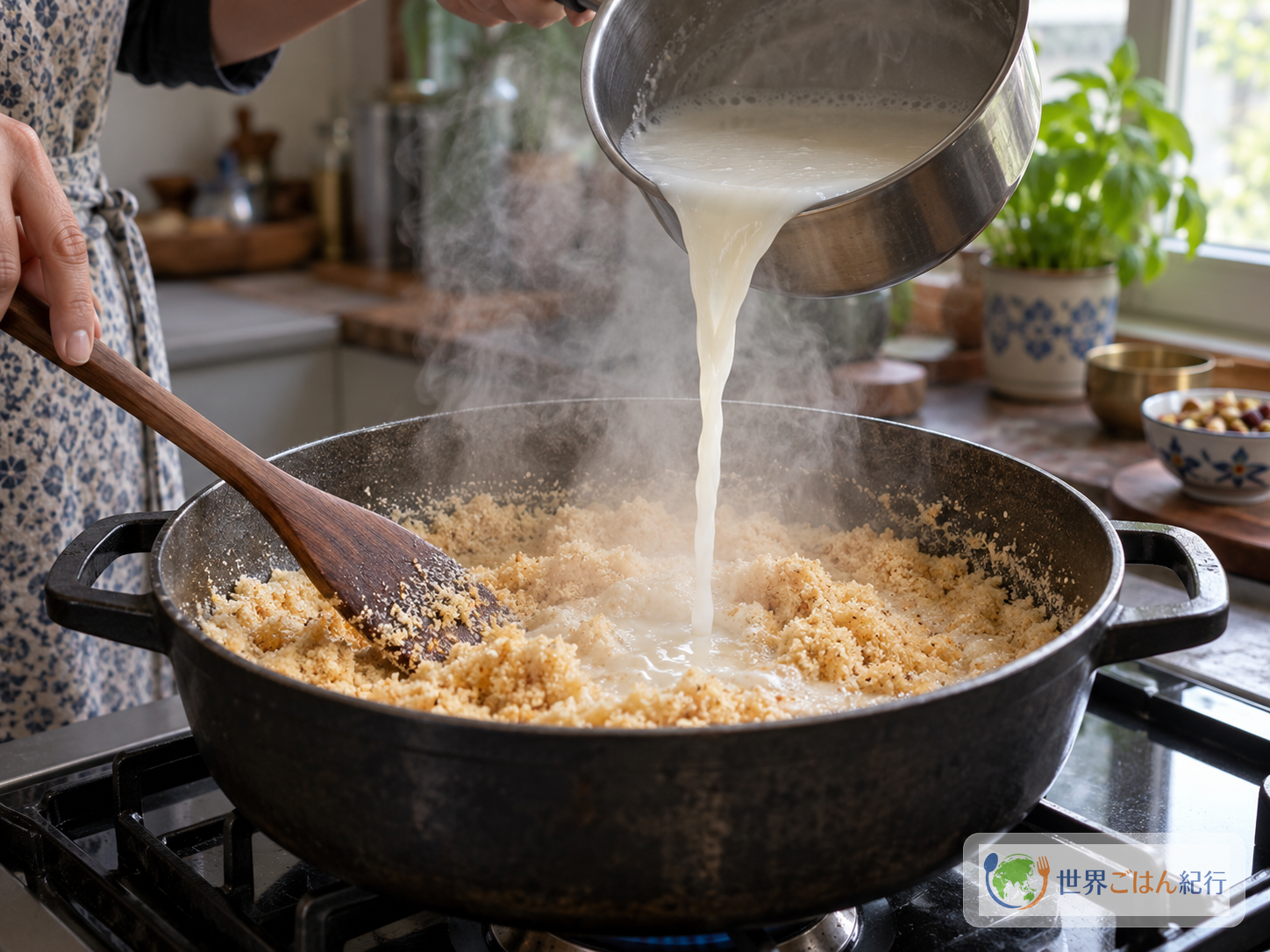
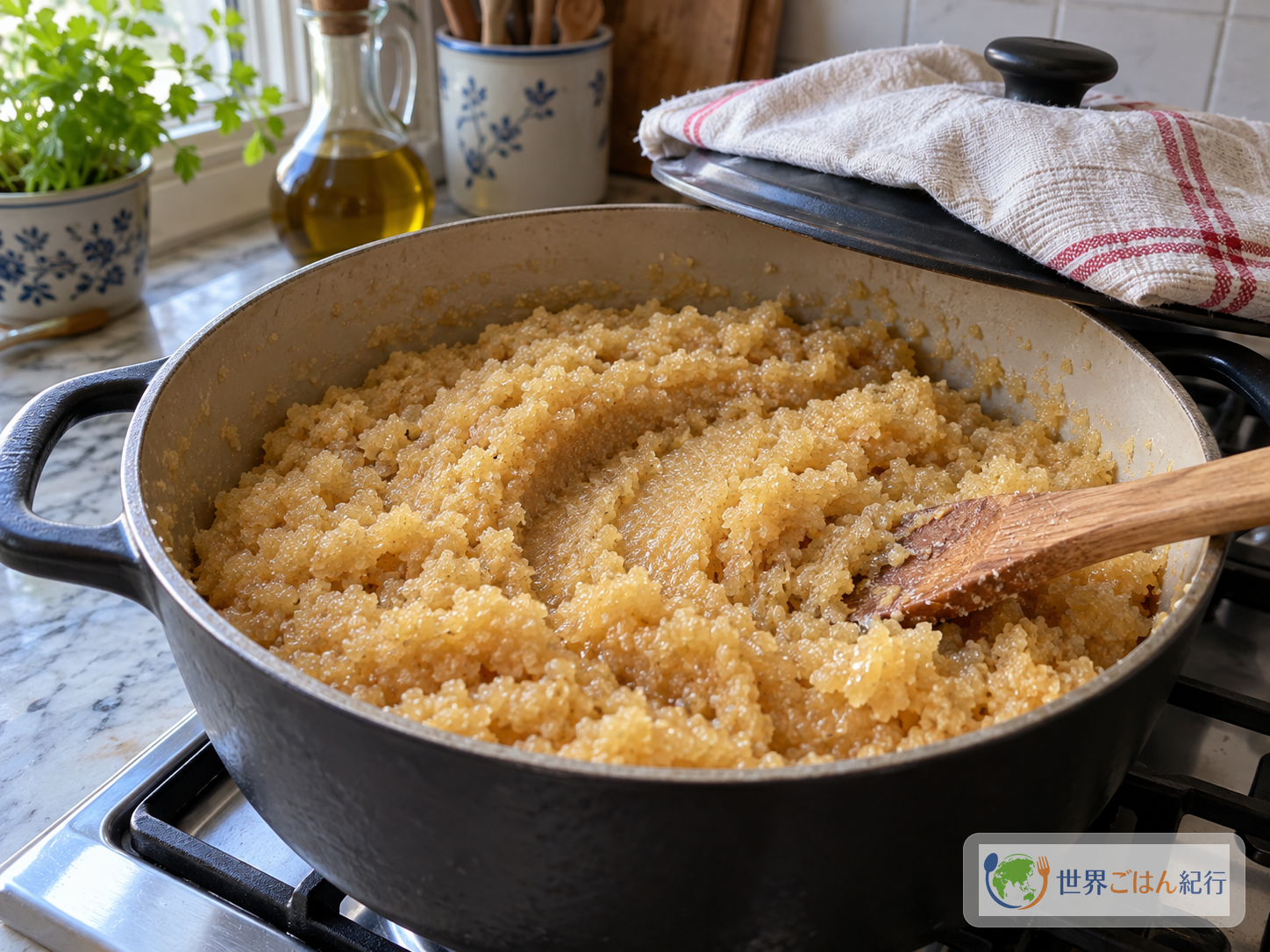
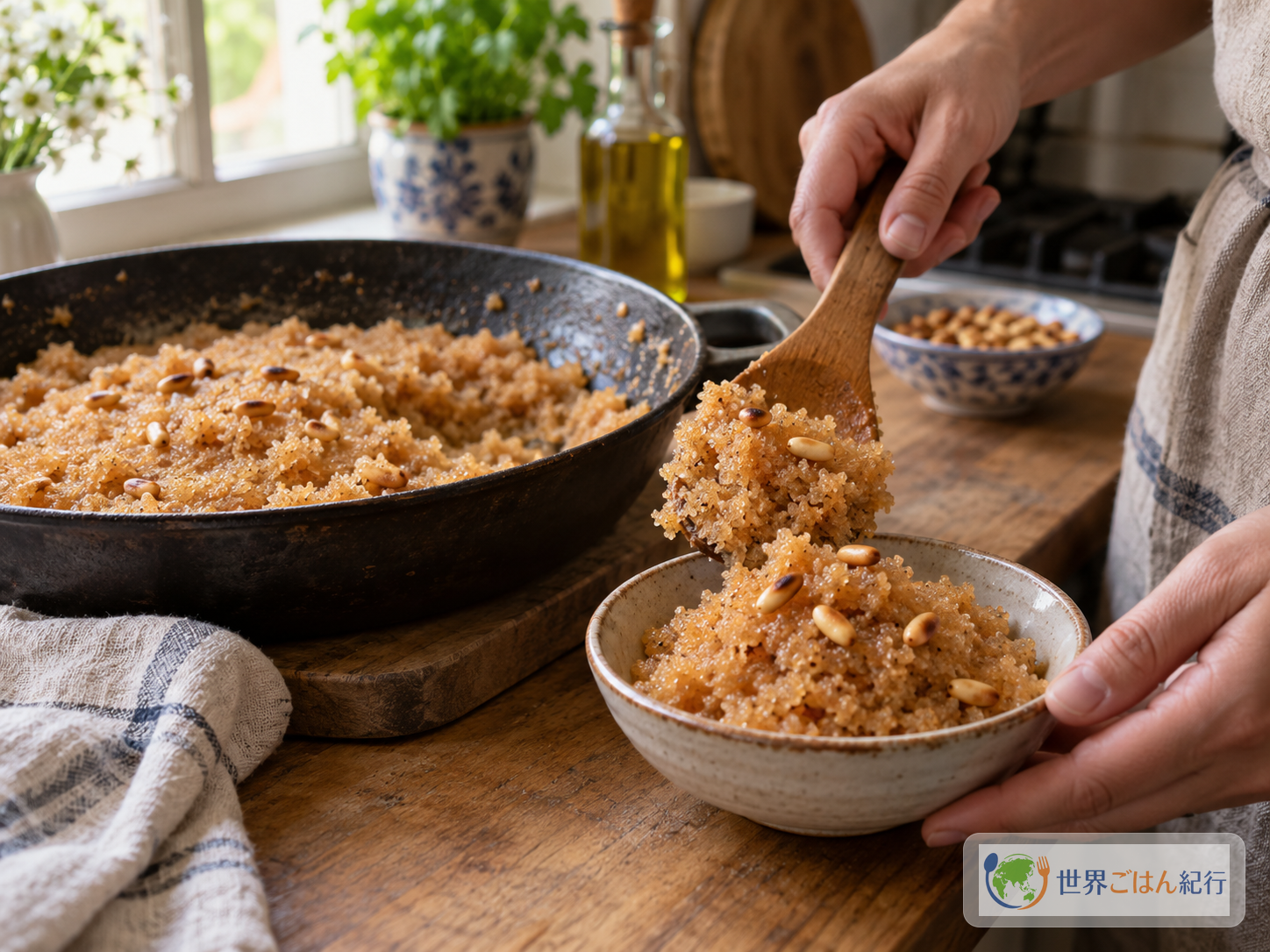
Semolina and pine nuts roasted in a large pot are made to absorb a sweet milk liquid. After a rest under the lid, turn it from the bottom with a wooden spoon and the grains loosen softly. The sight of it being portioned out one small bowl at a time is not rare in Turkish homes and neighborhoods. According to the Turkish Ministry of Culture and Tourism, halva is made on religious holidays and after funerals, and is a sweet handed out to people who come to pay condolences and to neighbors.
Sweetness divided into bowls from one pot has been placed at tables of celebration and of mourning. The steam rising from the pot of a milestone day draws in not only the people who eat but also those who are given a share. What is described here is a typical scene tied to the local table, not a story of the editors visiting and eating.
The name is İrmik Helvası in Turkish and Semolina Halva in English. The ingredients are semolina and pine nuts, fat such as butter, sugar, and milk or water. Semolina comes from wheat, and is slowly roasted in fat before being made to absorb the sweet liquid. It is not a firm, sliceable slab but a sweet where you scoop moist grains that fall softly apart with a spoon while warm.
The place of origin, the person who devised it and the year it was born cannot be narrowed to one from the sources I could verify, so I do not assert them here. The proportions for four servings were adjusted for home kitchens by the editors, with reference to the Ministry's six-serving water-based version and the milk-based version from the pasta maker Nuh'un Ankara.
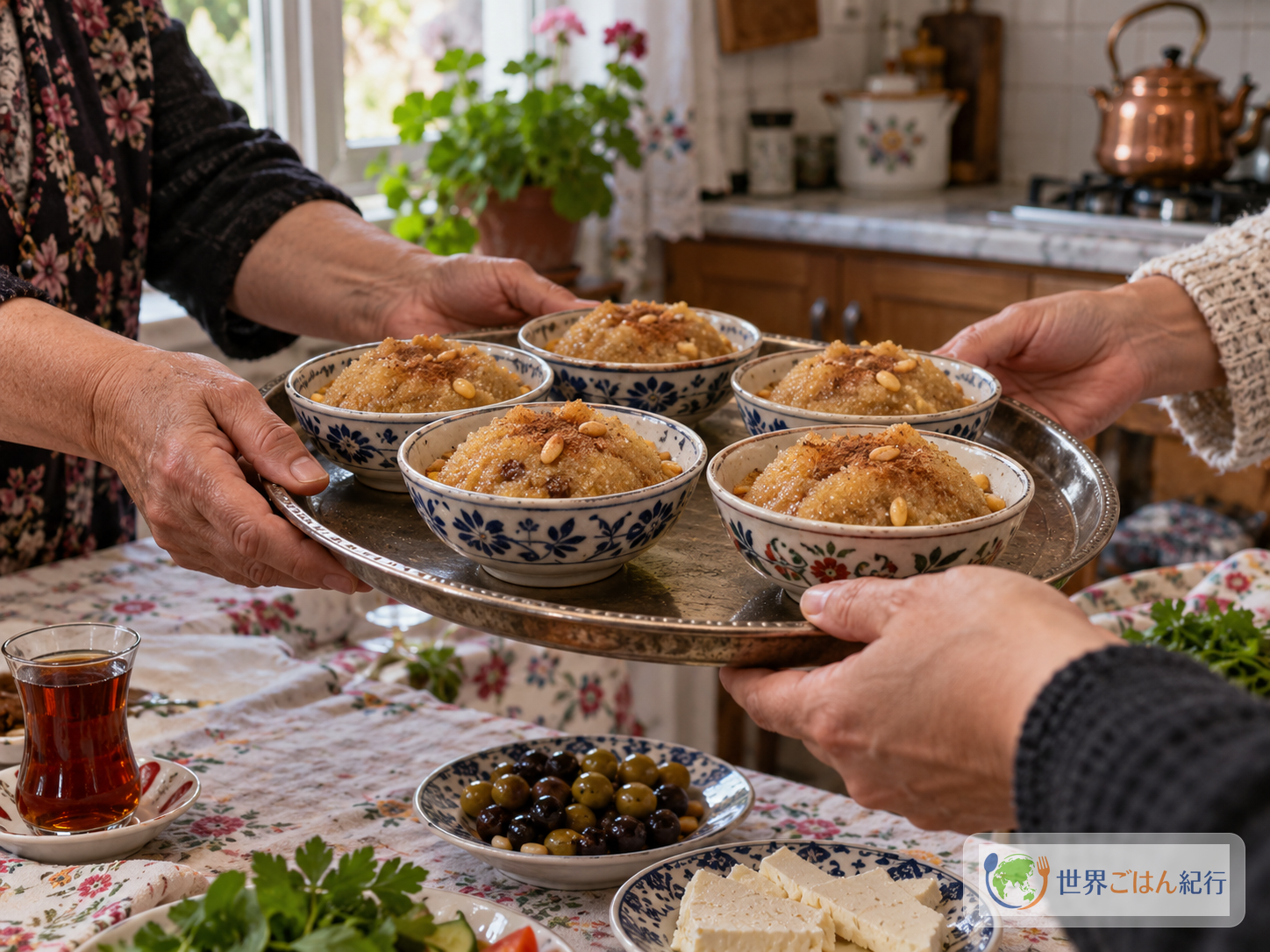
In an introduction to Ottoman cuisine, the basic ingredients of halva are given as flour or semolina, fat, sugar, milk and cream. The same source records that halva was given out to relatives and neighbors at milestones such as birth, death, military service, return from pilgrimage, starting school and graduation. This is an explanation of the Ottoman period, not a statement that every modern household keeps it as a fixed custom.
What gives you trouble in your own kitchen is not an unusual seasoning. It is four things: the grind of fine semolina, the color change over low heat, the order of adding the hot liquid in parts, and the final firmness that changes with a 20-minute rest. You can make it with a heavy pot, a wooden spoon and a lid, so there is no need to buy a special pot.
The only thing that may be hard to find at a nearby supermarket is the fine semolina that decides the grain. Look for fine-ground durum semolina at a store that carries Italian or Middle Eastern foods, or online.
Ingredients (serves 4)
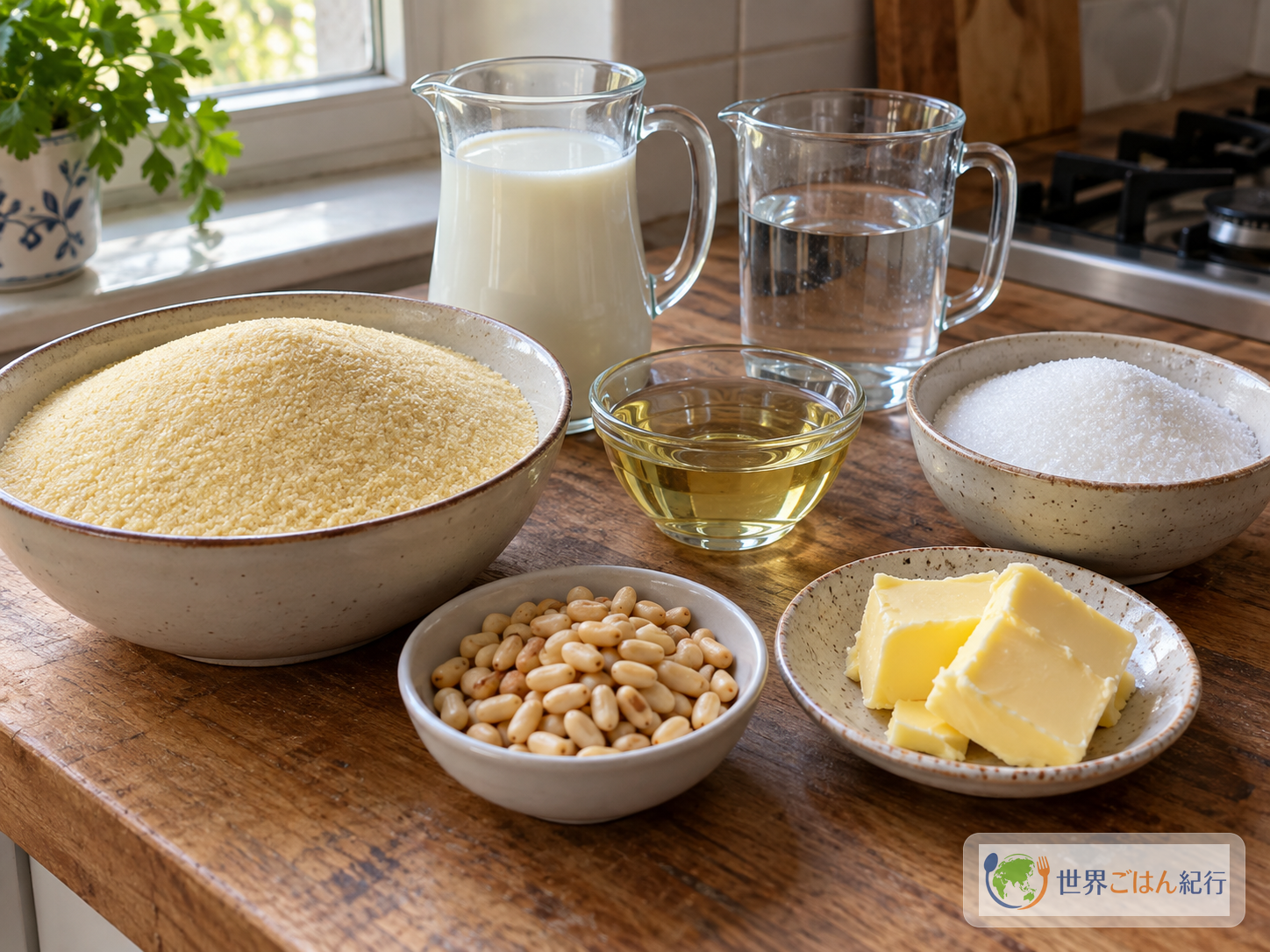
Coarse semolina absorbs slowly and changes the graininess of the result, so look for fine grind, durum wheat, and the word semolina on the label, in a 1 kg size if you will use it for pasta, bread or a coating for frying as well.
If you already have fine semolina, there is no need to buy more. If you want to make a single small batch and do not want to be left with 1 kg, you can also pass.
Semolina comes from wheat, milk and butter are dairy, and pine nuts are tree nuts. People with the relevant allergies should not make this. When choosing substitutes, check the ingredients, allergy labeling and whether it is made in the same facility. Replacing pine nuts with another nut changes not only flavor but the allergen. Do not treat it as the same substitute.
Changing the Liquid and Fat in Your Kitchen
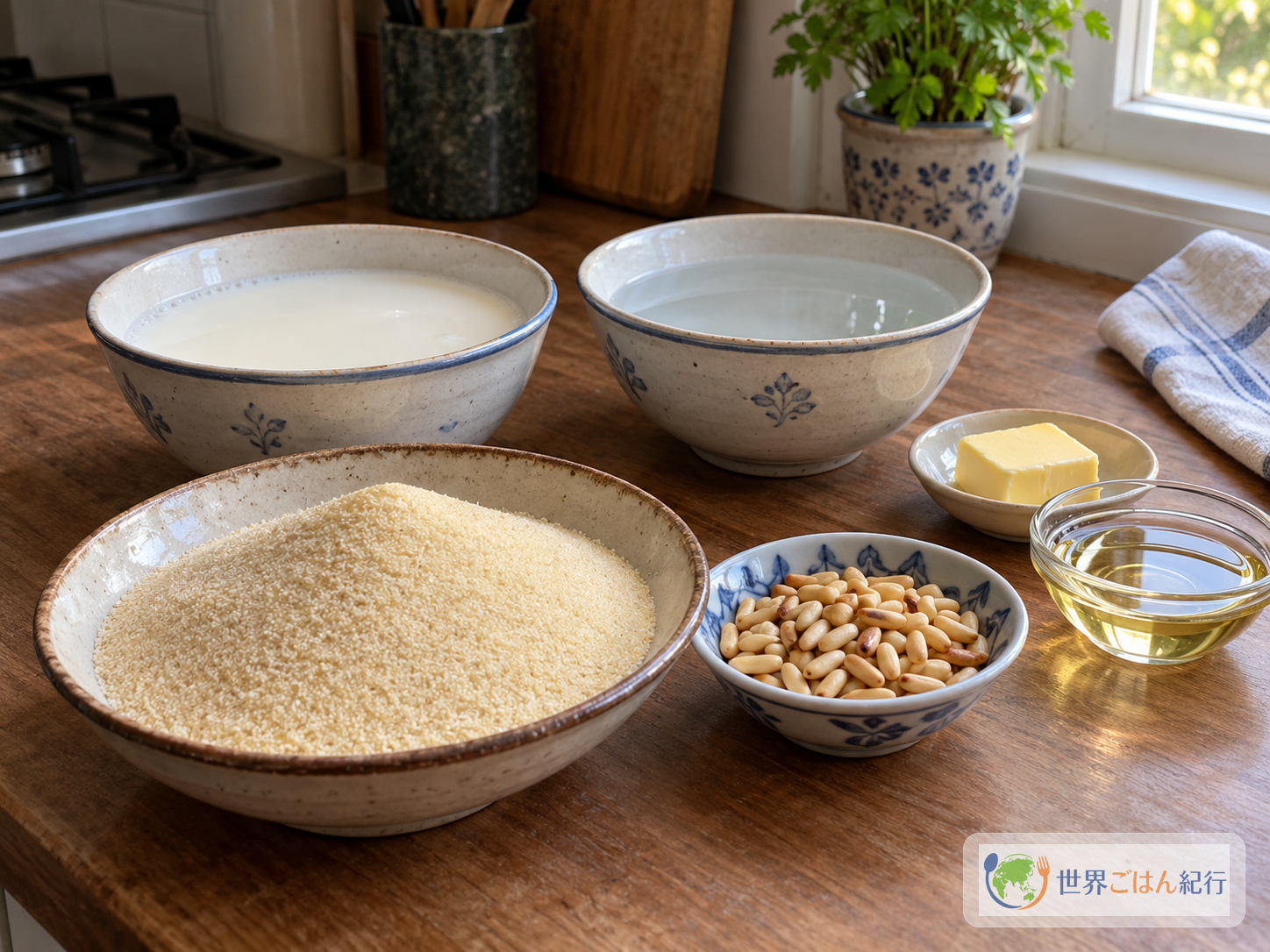
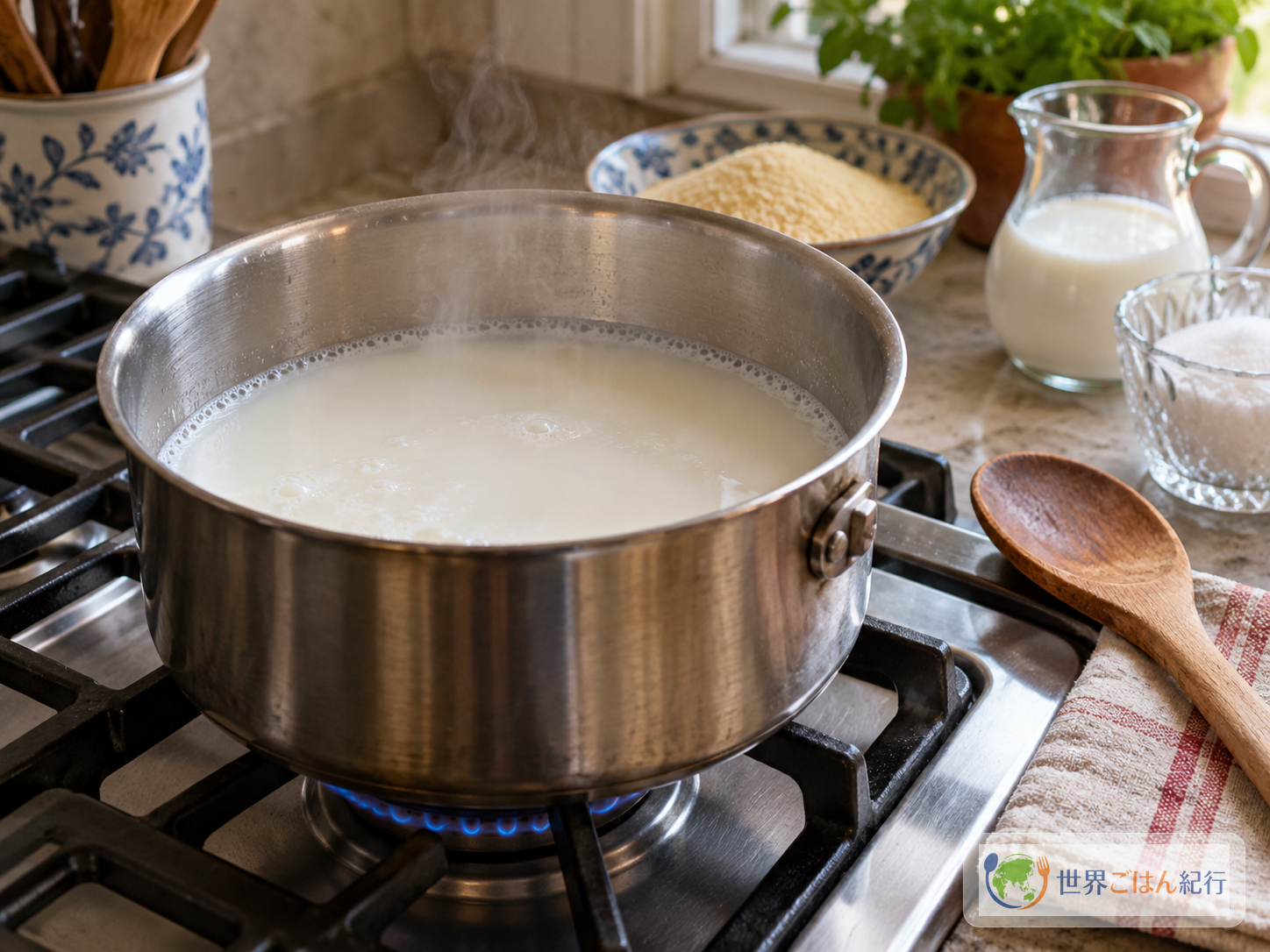
The Turkish Ministry of Culture and Tourism explains that some regions use milk, or a mix of milk and water, in place of water. For these four servings it is 250 ml milk + 150 ml water, 400 ml in total. It is the editors' proportion that keeps the richness of milk while making scorching at the bottom of the pot easier to read than with milk alone, and is not presented as the only authentic one. With 400 ml water the result is lighter, and with 400 ml milk alone it is richer. This is within regional variation. When increasing the milk, keep the heat low and get the wooden spoon into the corners of the bottom of the pot.
The Ministry's six-serving example uses 500 g of water, but a note says some regions use milk or a mix of water and milk. The ratio of milk to water cannot be fixed as the authentic nationwide formula. When making it elsewhere, you can choose water-based or milk-based by preference and how easy the pot is to handle.
The 70 g butter and 15 ml oil are the editors' home version, combining the aroma of butter with the ease of handling of oil. The Nuh'un Ankara formula also lists butter, oil, milk, sugar and pine nuts. To avoid dairy, you can replace the 70 g butter with 45 ml oil and the 250 ml milk with 250 ml water. However, the dairy richness and mouthfeel that come from the aroma of butter are not reproduced. You can make it without the 25 g pine nuts, but you lose the toasty bite and the accent on top of the bowl. A heavy ordinary pot, wooden spoon and lid are enough, so no special pot is needed. You also need not buy a cooking thermometer.
Stopping Before the Scorch Color: The Heat of İrmik Helvası
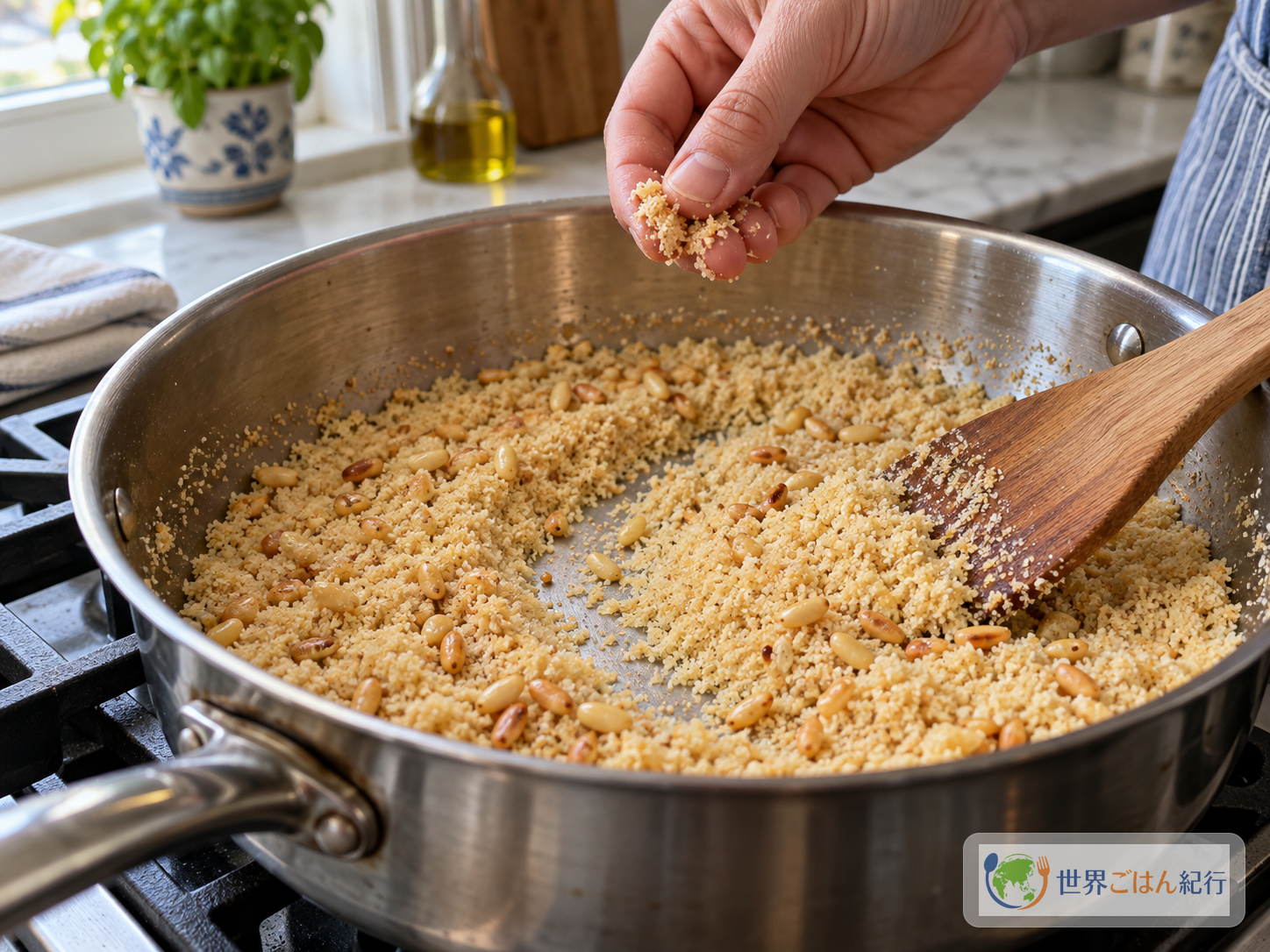
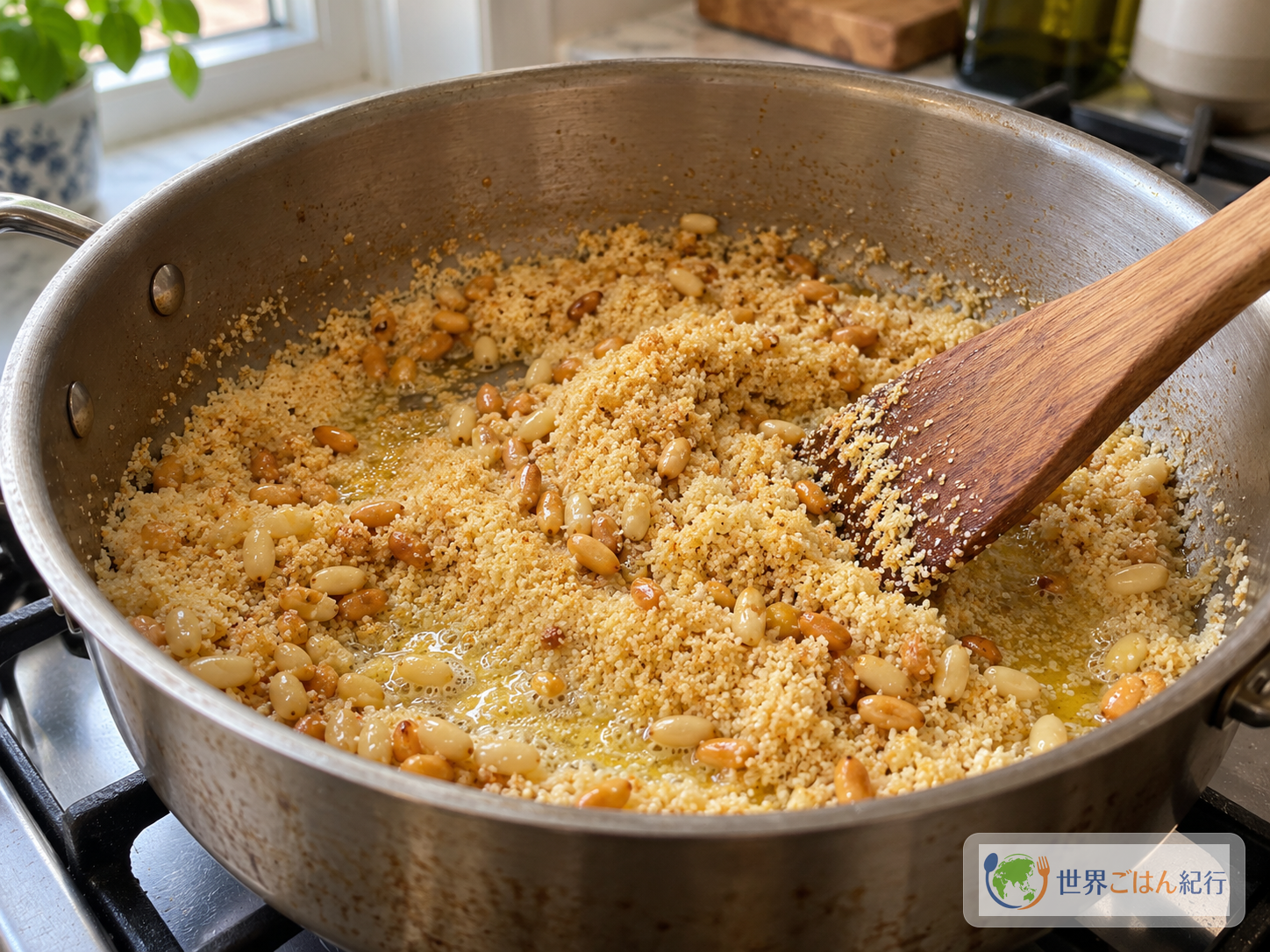
There are four things to watch. The whiteness of raw flour disappears, it turns pale beige, the aroma of pine nuts rises, and it gets a loose weight just before the tracks of the spoon stay. About 15 minutes is a guide, so keep the heat low and check color and aroma every 2 minutes. Take it off the heat before black specks or smoke appear, before a bitter smell comes out. A burnt bitterness does not disappear even if you add the sugar liquid.
If it has only gone a little darker than pale beige, take it off the heat at once and add the liquid in time. If black specks, smoke or a bitter smell have spread through the pot, do not try to rescue it with liquid; make it again. Burnt bitterness does not come back. If after resting it is too dry, add hot milk or water 15 ml at a time, warm 1 to 2 minutes over low heat and rest again for 5 minutes. If moisture remains, heat 2 minutes at a time over low heat with the lid off and stop where streaks remain on the bottom of the pot.
If color or aroma is only a little short, you can make it up gradually over low heat. What cannot be undone is the burnt bitterness, so keeping to the first point of stopping is more reliable. Also, halva firms up as it cools. Do not reduce it fully by the firmness while hot.
Halva Connects the Tables of Milestone Days in Turkey
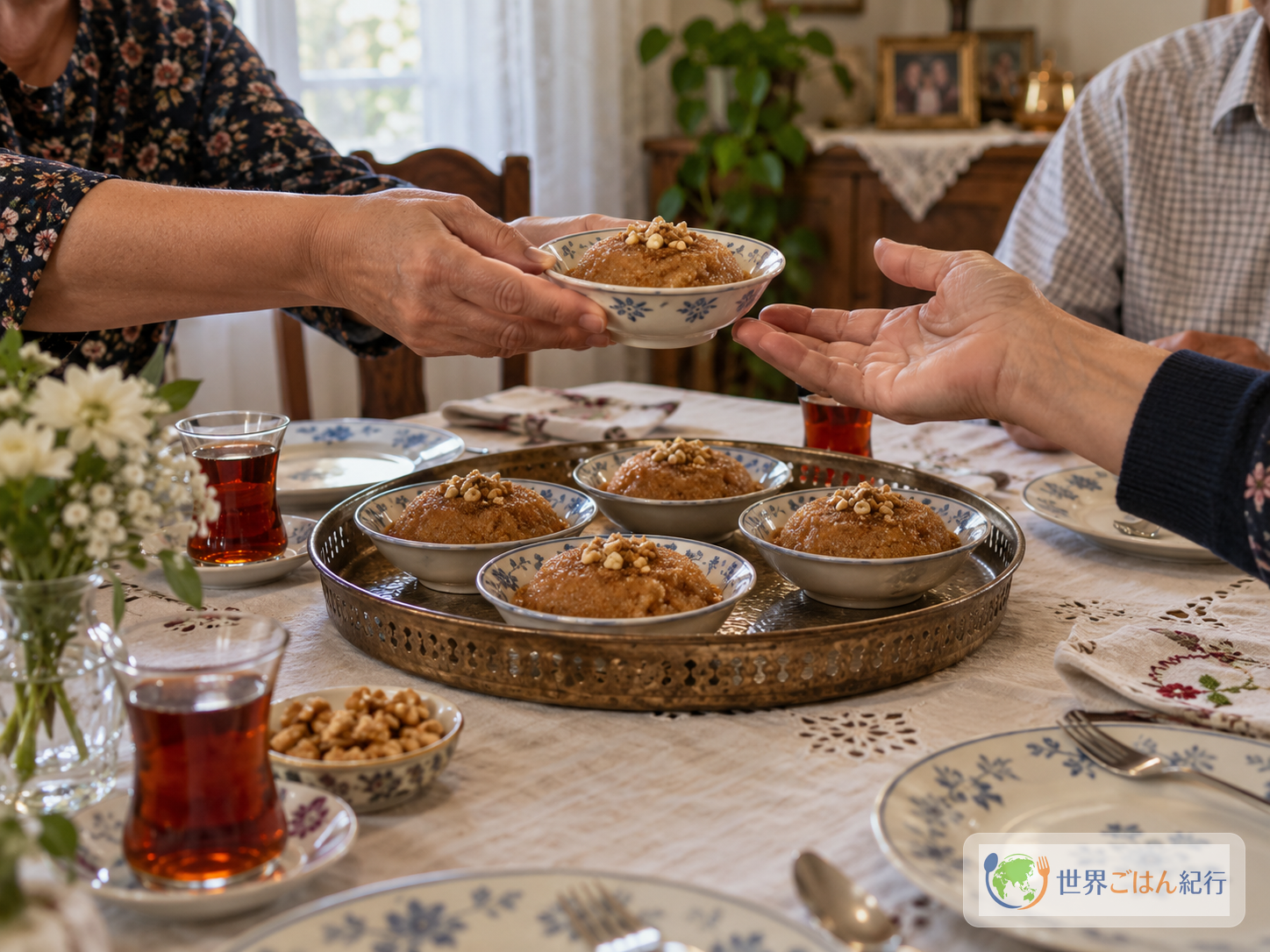
The introduction to Ottoman cuisine lists occasions such as birth, death, military service, return from pilgrimage, and a child's starting school and graduation. On days of celebration and of mourning, halva was a sweet shared from one pot. What mattered seems to have been less the size of the pot than handing the sweetness you made to the neighbors. However, it cannot be said that every household now keeps the same custom. As seen earlier, another official introduction says it is given out to condolence visitors and neighbors after religious holidays and funerals, and these are connected at the same root.
GoTürkiye presents irmik helvası as part of Anatolian food culture and says it is made in slightly different forms in almost every province. There are small differences by province, but the basic ingredients are semolina, butter, sugar, milk and pine nuts. It also introduces serving cold ice cream, Maraş ice cream, with the hot grains.
Unsweetened vanilla ice cream elsewhere is a substitute that approximates the pairing of serving temperatures. It does not reproduce the stretchiness, ingredients or texture of Maraş ice cream. The scene of sharing from a shared plate or into bowls is a typical depiction based on cultural information, not something the editors saw on site.
Among other Turkish sweets, the ingredients and textures differ. For the shared context of dividing among neighbors on a milestone, there is aşure (in Japanese), cooked from grains, beans and fruit. Against a sweet of roasted semolina grains, a festive sweet that layers thin dough, nuts and syrup is baklava (in Japanese). From the story of serving hot halva with cold ice cream, if you want to know the stretchy texture of Maraş-style ice cream, try dondurma.
The official sources list both religious holidays and after funerals. Extending to the records of Ottoman cuisine, there are also explanations of halva being shared on celebratory milestones such as birth, starting school and graduation. Rather than fixing it as "a funeral sweet," it is closer to remember it as a sweet made on days of celebration and of mourning, a sweetness shared into bowls.
What You Can Change: The Liquid and the Serving
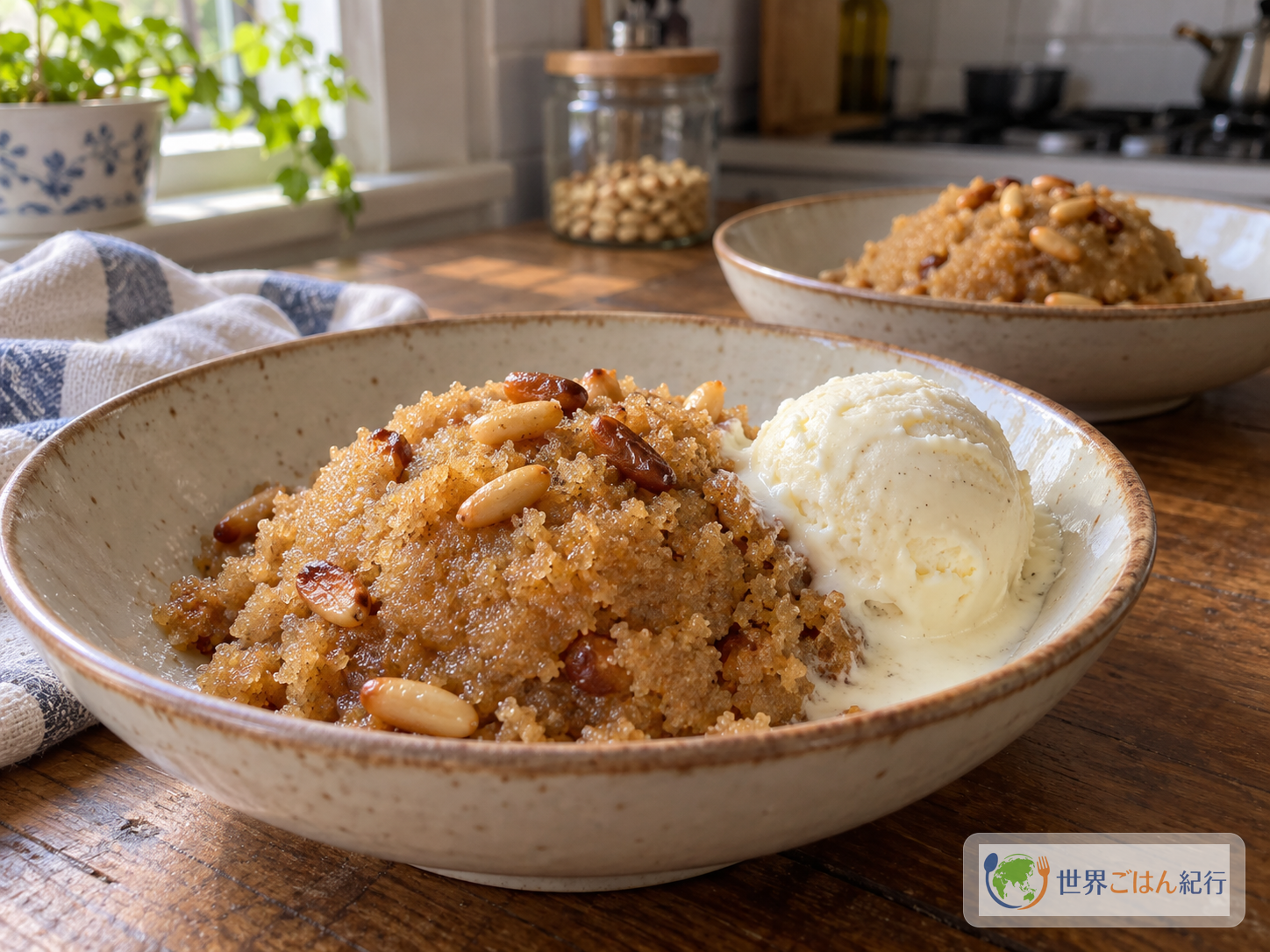
Lighten it with water only
Replace 250 ml milk + 150 ml water with 400 ml water. The result is lighter, and since the milk's richness is reduced, the aroma of semolina and butter comes forward. A water-based version is not a fake. The Ministry's six-serving example also uses 500 g of water, and a separate note indicates regional differences with milk or a mixed liquid. Even with water, do not raise the heat; keep to the same low heat and the same endpoint for absorption.
Make it richer with more milk
If you use 400 ml of milk alone, warm the sugar liquid over low heat and do not raise the heat after adding the liquid either. Nuh'un Ankara's milk-based method warms milk and sugar, roasts pine nuts and semolina in fat, lets the hot liquid be absorbed and rests it. Milk solids tend to stick to the bottom of the pot, so get the wooden spoon into the corners of the bottom to prevent sticking and scorching. Make the 400 ml milk version together with this caution.
Use oil alone to avoid dairy
Replacing 70 g butter with 45 ml oil and 250 ml milk with 250 ml water gives a formula without dairy. However, the milky aroma and richness of butter are not reproduced, so it will not taste the same, and the type of oil also changes the aroma. Also, semolina is wheat and pine nuts are tree nuts. Avoiding dairy alone does not make it suitable for wheat or nut allergies.
Leave out the pine nuts
Even without the 25 g pine nuts, the formula in the pot works. But you lose the toasty bite and the accent on top of the bowl. If you replace them with another nut, treat it not as a flavor substitution but as a change of allergen and check the product label. The representative ingredients in official and tourism sources include pine nuts, but it cannot be said that every region's and household's formula is the same.
Serve cold ice cream alongside hot halva
GoTürkiye introduces serving cold Maraş ice cream with hot irmik helvası. Elsewhere, add a little unsweetened vanilla ice cream just before eating. It is not the same product, ingredients or stretchiness as Maraş ice cream. Use a separate spoon so the moisture of the hot halva does not get back into the ice cream container, and eat it right after adding.
Storage and FAQ
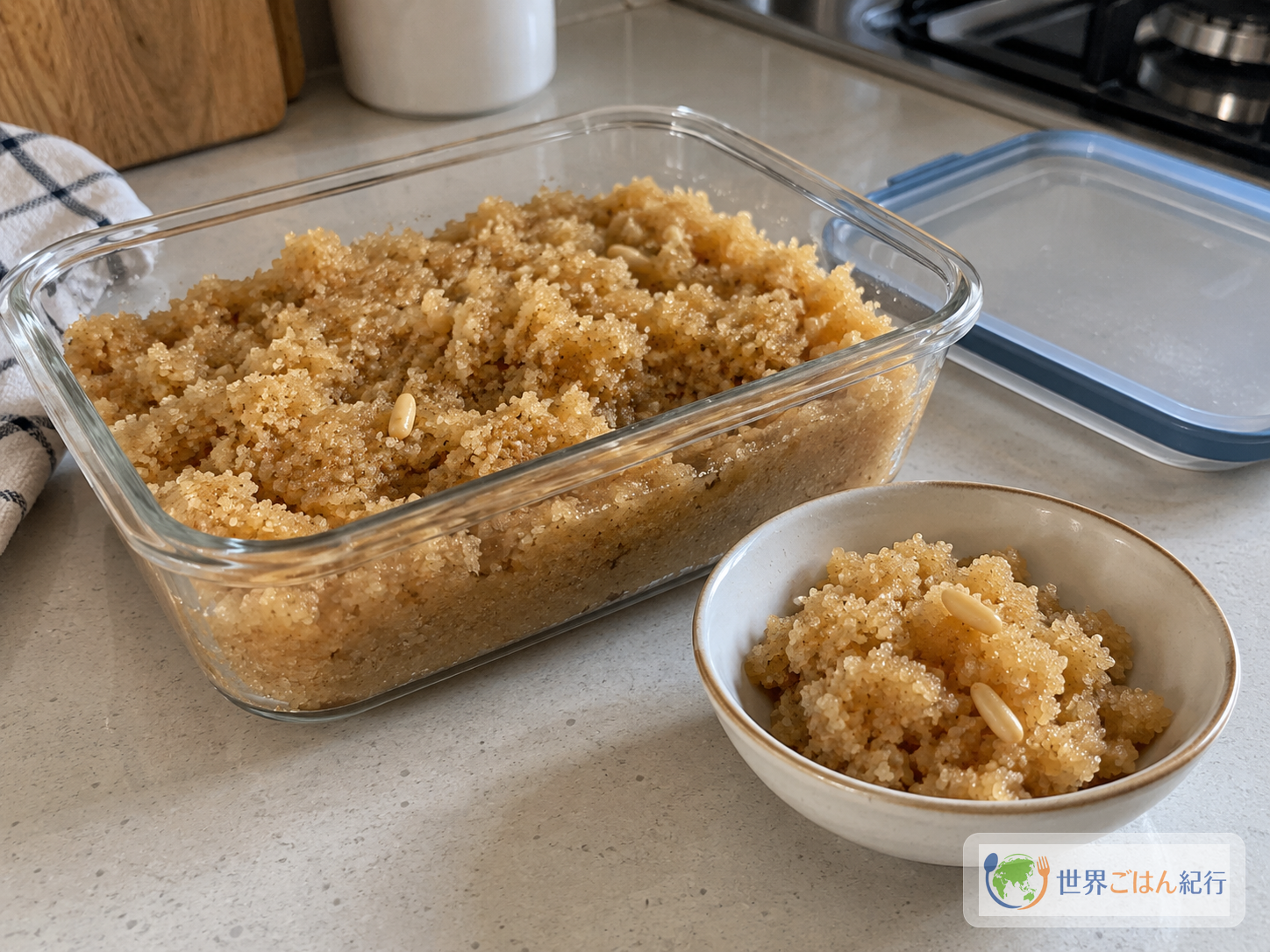
Divide what you will not eat into clean shallow containers, and do not leave it long at room temperature after it cools slightly; move it to the refrigerator. According to the guidance of Japan's Ministry of Health, Labour and Welfare, the refrigerator should be 10°C or below, and cooked food should not be left long at room temperature. The official sources I checked this time give no uniform storage period, so I cannot guarantee a number of days. If too much time has passed, or if there is anything unusual about smell or appearance, throw it away without tasting. When reheating, take out only what you will eat and heat all of it thoroughly. The Ministry's reheating guide is 75°C or above.
Q1. Can I make it with water only?
Yes. Replace 250 ml milk + 150 ml water with 400 ml water; the steps are the same. The milk richness is reduced and the aroma of butter and semolina comes forward. There is no need to think of the water-based version as fake; it is one of the regional differences that can be confirmed from the Turkish Ministry of Culture and Tourism's material.
Q2. What if my semolina is coarse?
You can make it with coarse flour, but it absorbs more slowly than fine and the graininess stays. Extend the absorption after adding the hot liquid by 2 minutes at a time, and if it is very dry add hot liquid 15 ml at a time. If you want even grains the first time, or do not have fine flour, look for fine-ground durum semolina and check its size and grind. If you already have fine semolina, you need not buy more.
Q3. Can I fix it if the color gets too dark?
If it has gone only a little darker than pale beige, take it off the heat at once and add the liquid in time. If there are black specks, smoke or a bitter smell, adding sugar liquid or milk will not remove the bitterness. If the scorch has spread through the pot, do not try to save it by moving only the unburnt part; start again with new ingredients.
Q4. Can I make the milk version ahead?
You can, but since the official sources I confirmed give no uniform number of days, I do not set one. Divide it into clean shallow containers, do not leave it long at room temperature after it cools slightly, and refrigerate. The guide is 10°C or below in the refrigerator. Take out only what you will eat and reheat it thoroughly; if too much time has passed or the smell or appearance seems off, throw it away without tasting.
Q5. Is serving it with ice cream a different dish?
It is not a different dish. The base is the same irmik helvası, and it is a way of serving a hot sweet with cold ice cream. GoTürkiye introduces the combination with Maraş ice cream. Unsweetened vanilla ice cream elsewhere is a substitute that approximates the temperature contrast, and cannot be called the same product or texture.
Sources
- Republic of Türkiye Ministry of Culture and Tourism: Semolina Halva (accessed and checked: 30 September 2026)
- Republic of Türkiye Ministry of Culture and Tourism: The Ottoman Cuisine (accessed and checked: 30 September 2026)
- Nuh’un Ankara: Semolina Halva (accessed and checked: 30 September 2026)
- GoTürkiye: Taste Atlas's list of notable Turkish desserts that you should not miss (accessed and checked: 30 September 2026)
- Ministry of Health, Labour and Welfare (Japan): Preventing food poisoning at home (in Japanese) (accessed and checked: 30 September 2026)