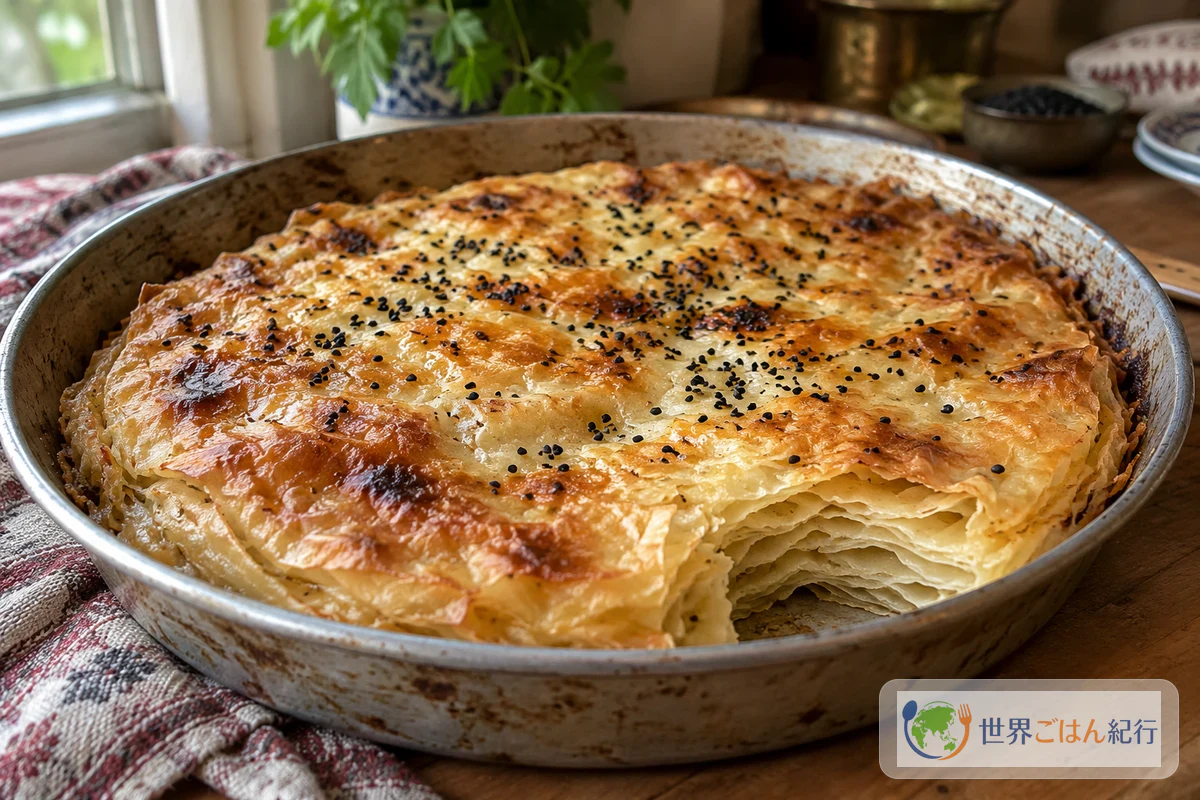
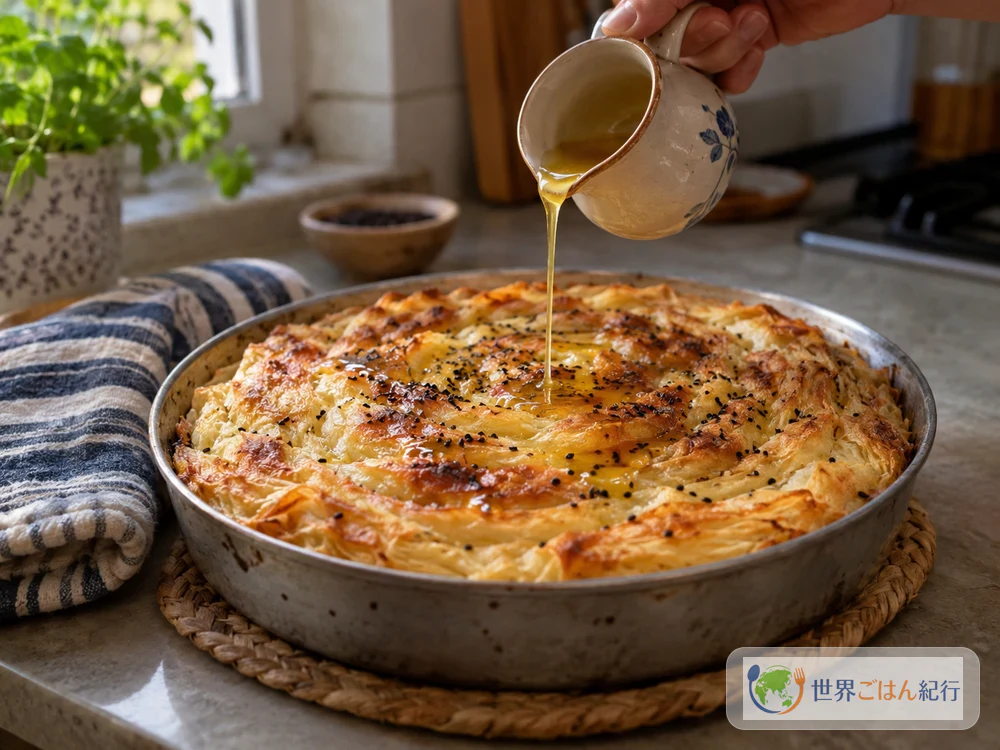
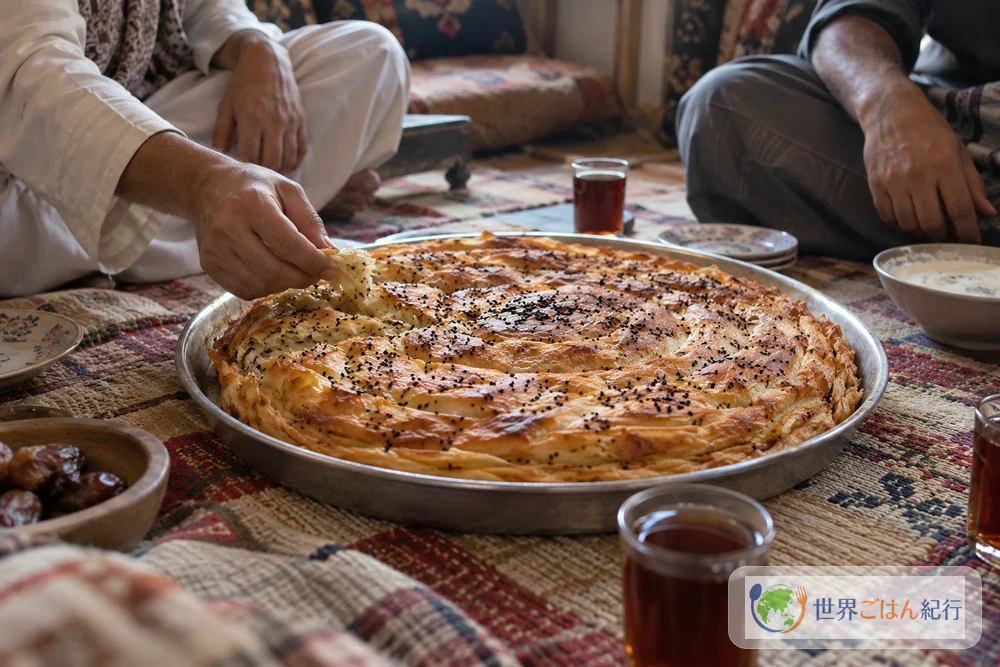
A round dish, fresh from the oven, is set in the middle of a cloth spread on the floor. On its golden surface honey and butter glisten, with black nigella seeds scattered in dots. Family and guests gather around and tear at it with their fingers while it is still hot, and the thin layers of dough peel away one by one. Bint al-sahn is a layered honey pie served at the start of the meal on Yemeni festive days.
The Pie Called "Daughter of the Dish"
In Arabic, bint al-sahn means "daughter of the dish." It also goes by the name sabayah. In English it is often translated as "honey cake," but in fact it is closer to a pie than a cake: many layers of buttery, crisp dough baked together, eaten with honey and melted ghee poured over. The dough is made from flour, eggs, yeast and clarified butter (samn), and after baking it is drizzled with honey and scattered with black nigella seeds (habba sawda in Arabic).
The Canadian food writer Habeeb Salloum introduces the sweet as a dish of the capital, Sanaa, and writes that on special days it is always served as the first dish. It can also accompany an ordinary meal, and suits breakfast or dessert. Eating something sweet at the beginning of a meal shows an order at the Yemeni table that differs from Japanese expectations.
Bint al-sahn counts among the most popular dishes in Yemen. On the other hand, because stacking many sheets of thin dough takes effort, it is rarely served in restaurants and is mostly made at home. Being best eaten warm from the oven is also one reason it is made at home.
Layers as Thin as Paper
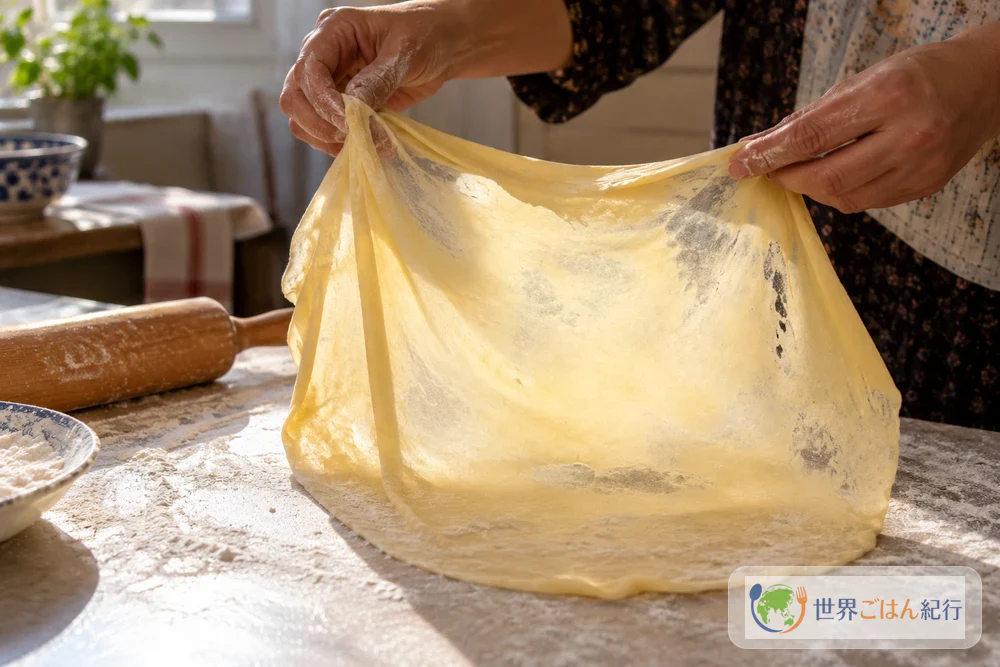
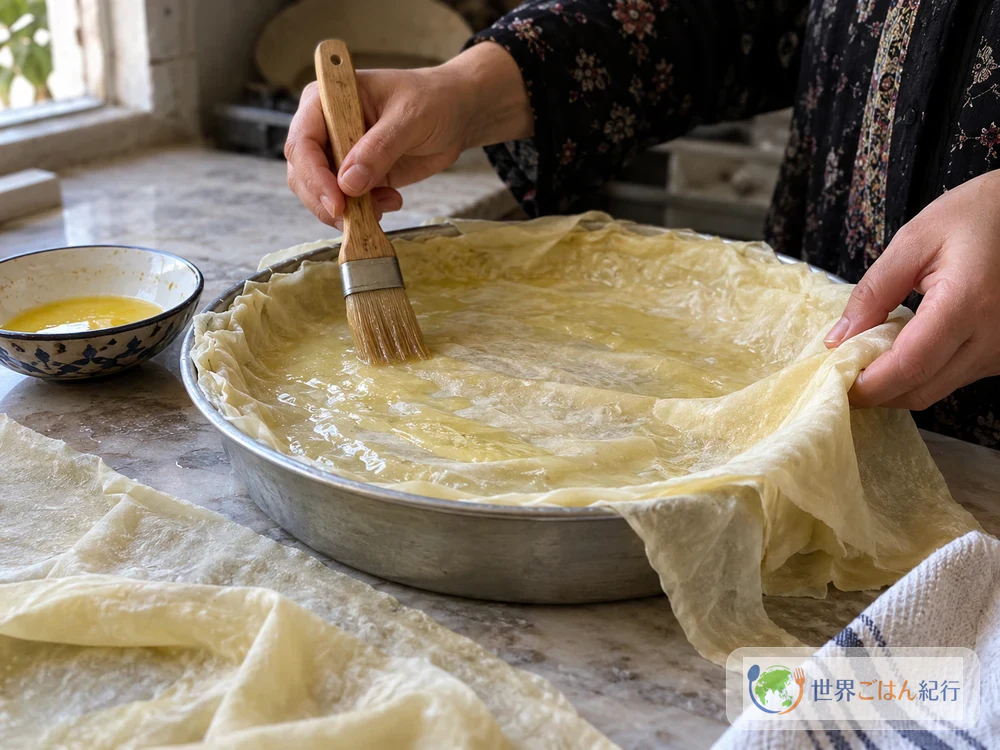
The key to this sweet is said to be rolling out every sheet of dough as thin as paper. Melted butter brushed between the thin sheets, then stacked and baked, lets air and butter into the spaces between layers, giving a light texture that comes apart one sheet at a time once baked. If the dough is thick, the layers stick together and the pie turns heavy like bread.
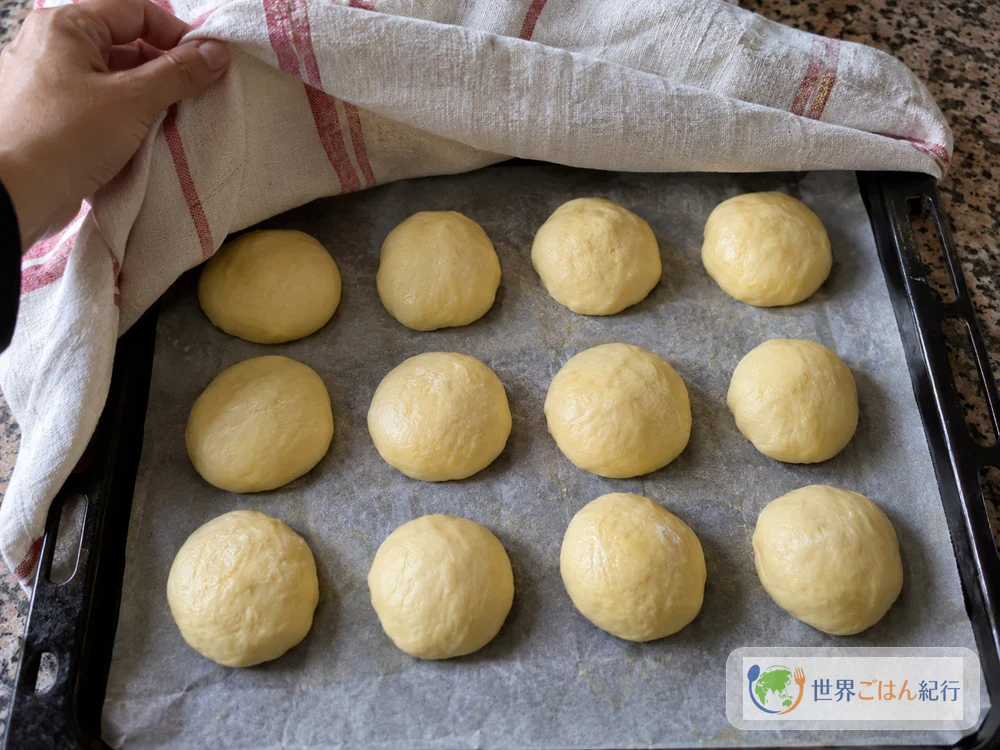
This recipe uses Salloum's proportions and makes two pie plates of about 20 to 23 cm in diameter. You roll the dough, divided into 12 pieces, one at a time and stack 6 sheets in each plate. Even if the first few sheets do not get as thin as you would like, you get used to handling the dough as you roll while letting it rest.
Ingredients (2 pie plates, serves 8)
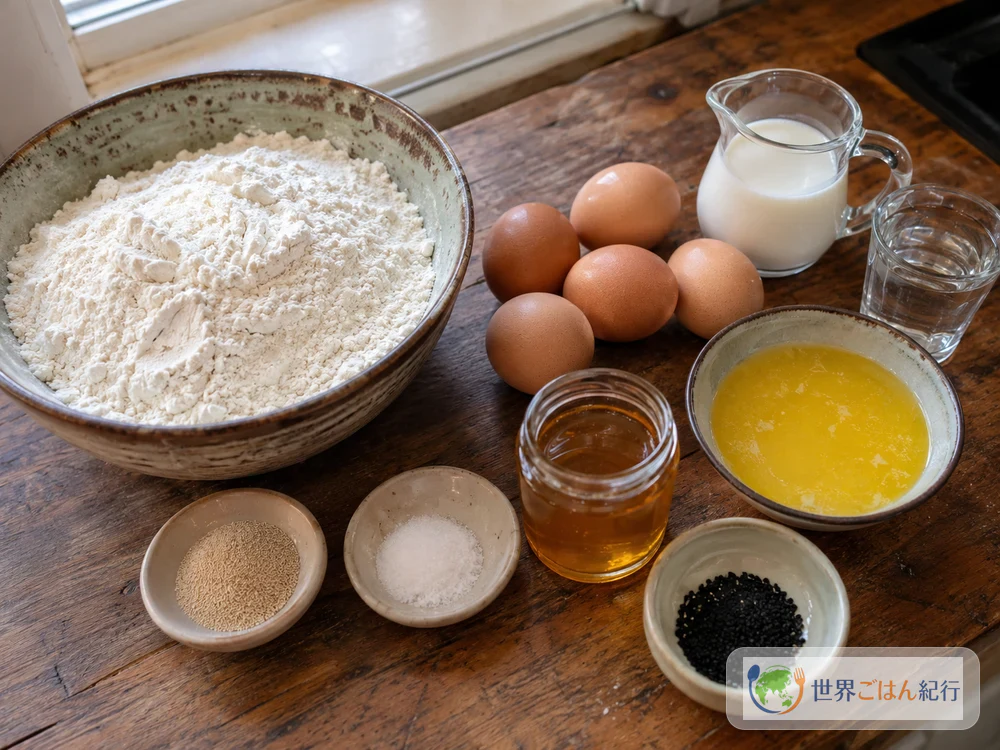
The ingredients are based on Habeeb Salloum's recipe. The original is written in US measuring cups, so quantities have been converted to g and ml for easier weighing.
The melted butter is used both for brushing between the layers and for mixing into the honey. The recipe gives no fixed split, so brush only a thin coat on the dough and mix the rest with the honey. Nigella seeds are tiny black seeds with an onion-like toasty flavor that tightens the sweetness of the honey.
Using ghee instead of butter makes it less likely to burn and gives a nutty aroma. If you want to get closer to the clarified butter (samn) used in Yemen, choose ghee.
How to Make Bint al-Sahn
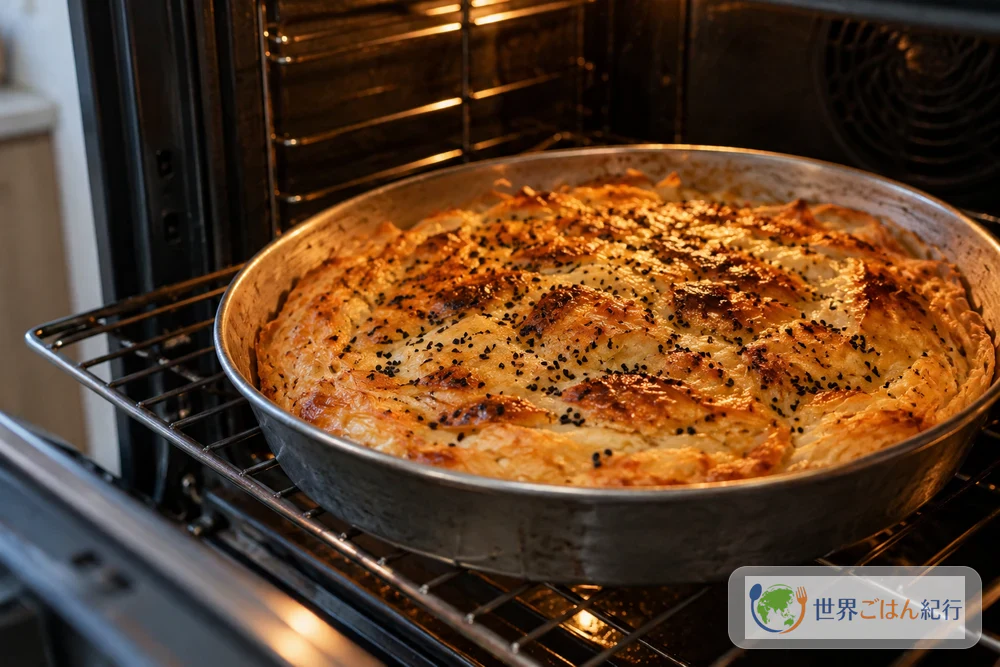
Bake at 180°C. If you start preheating around the time you start rolling the dough, you can bake right after finishing the stacking.
The freshly baked pie plate and the hot honey butter get very hot. Hot honey that touches skin stays hot for a long time, so use oven mitts and do not bring your hands too close when pouring. Also, do not give honey to infants under 1 year old. This pie also contains wheat, eggs and dairy (butter and milk).
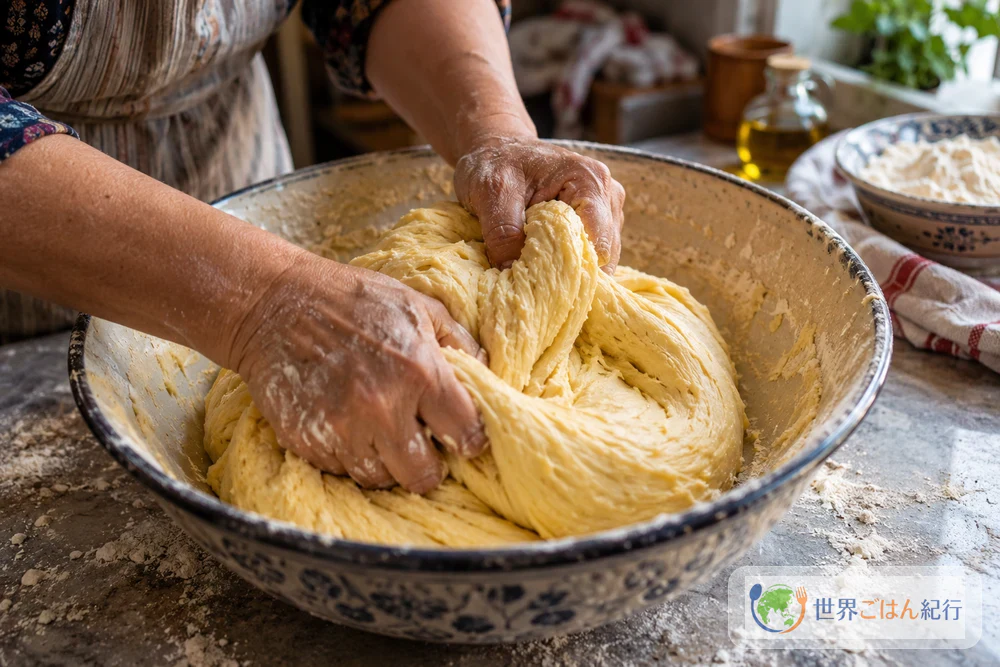
If the dough shrinks instead of stretching, do not force it; cover it with a cloth, rest it 5 to 10 minutes, then roll again. The time you let the dough rest is the shortest road to rolling it thin.
If you take it out while the color is still pale, the layers will be underbaked and heavy. Check that not only the surface but the layers at the edge have turned golden before removing it.
Tear and Share While Warm
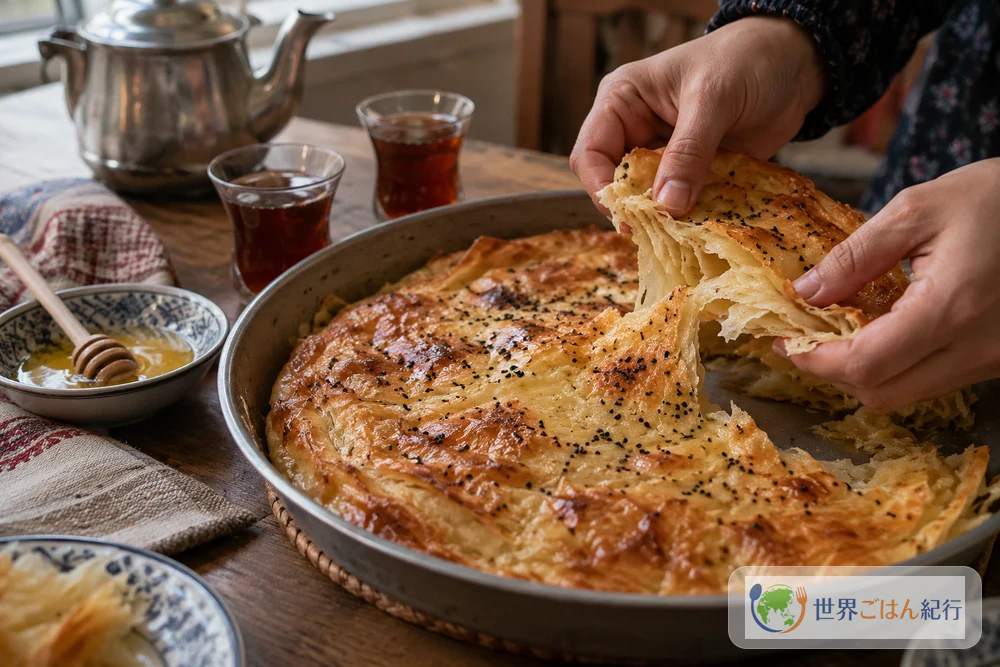
Bring bint al-sahn to the table warm from the oven. It suits being set in the middle, plate and all, and torn by hand and shared. If you run short of honey butter, pour as much as you like from the bowl. The sweetness and the richness of the butter, with the toasty note of nigella seeds, make it hard to stop when eaten with hot tea.
The Yemeni table has many other dishes born in home kitchens. Make saltah, fahsa, or rice and meat mandi the meal, and serve bint al-sahn first rather than last, and you can enjoy the Yemeni order of the table.
Frequently Asked Questions
Rolling the dough thin is hard. What should I do?
Dough resists stretching because the gluten is tight. If it shrinks back while rolling, cover with a cloth, rest 5 to 10 minutes and start again. Dust the surface generously with flour, and lift and turn the dough from time to time as you roll, and it will not stick to the surface and can be made thin.
Can I make just one plate?
Halve all the ingredients for one plate. But halving 5 eggs is difficult, so use 2 eggs and add about 1 to 2 tablespoons of beaten egg to match the amount. Adjust the firmness of the dough with milk.
How should I eat it once it has cooled?
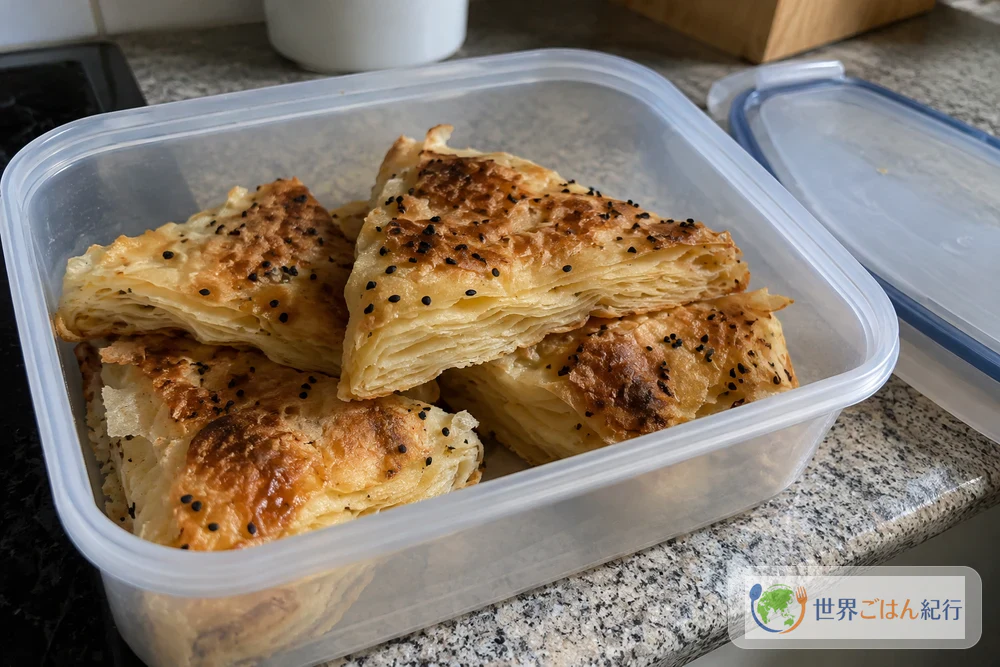
Bint al-sahn is said to be best warm from the oven. Cooled, it can be reheated lightly in an oven or toaster oven, which crisps the surface layers a little. Put what you cannot finish in a lidded container and eat it soon.
What if I don't have nigella seeds?
You can make it without them. Nigella seeds add a distinctive toasty note to this pie, so try them when you can find them.
Sources
- Habeeb Salloum, "Recipe: Bint Al-sahn - Honey Cake-pie," ThingsAsian, 29 March 2006. Accessed and checked 22 October 2026. https://www.thingsasian.com/node/2039.html
- Wikipedia, "Bint al-sahn." Accessed and checked 22 October 2026. https://en.wikipedia.org/wiki/Bint_al-sahn