Fungee and Pepperpot: Two Pots, One Plate
A pepperpot that is thick with tomato, vegetables, beans and greens, not just meat, and a fungee firm enough to pull away from the pan, with okra running through it. Cook the stew first; finish the fungee just before you eat.
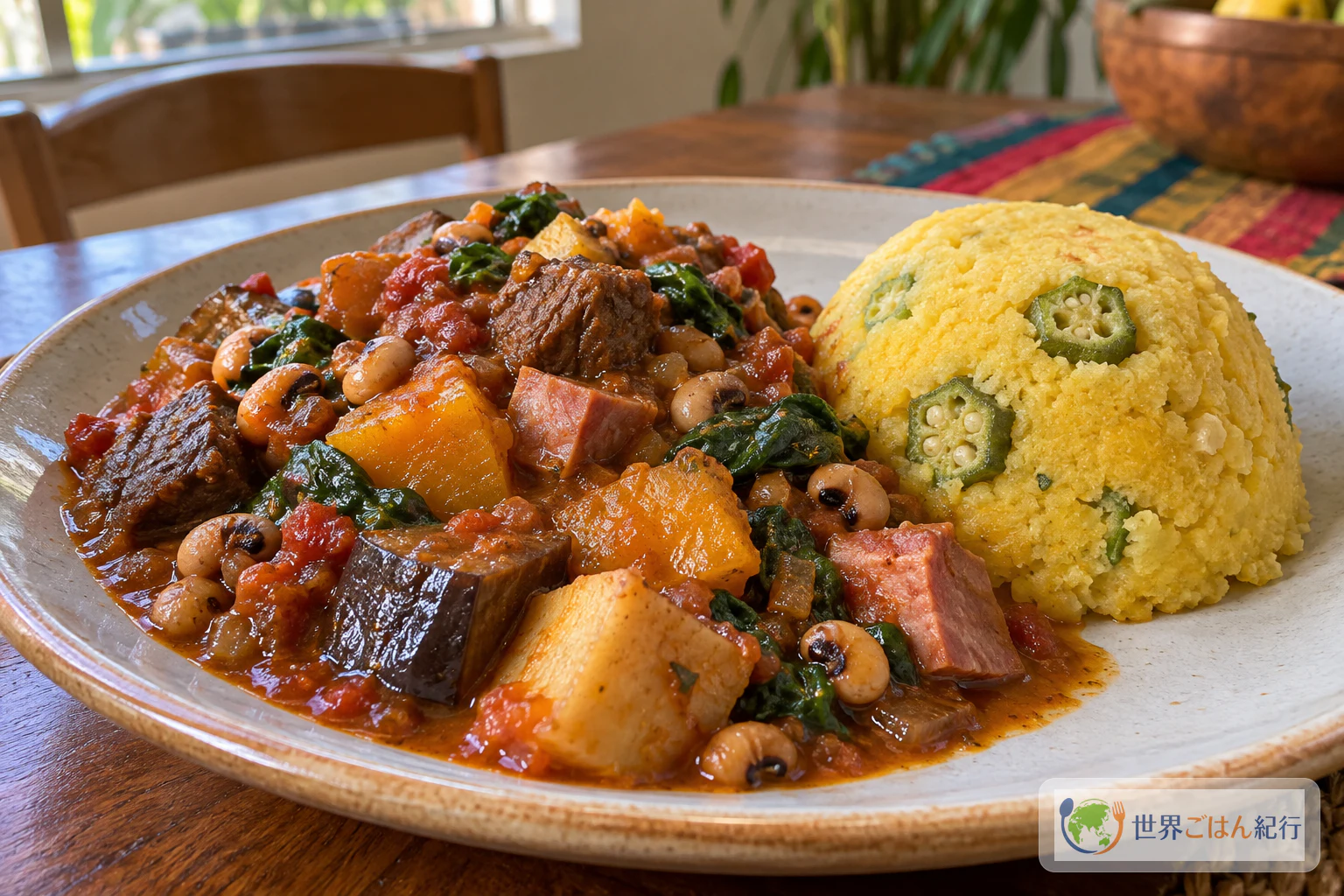
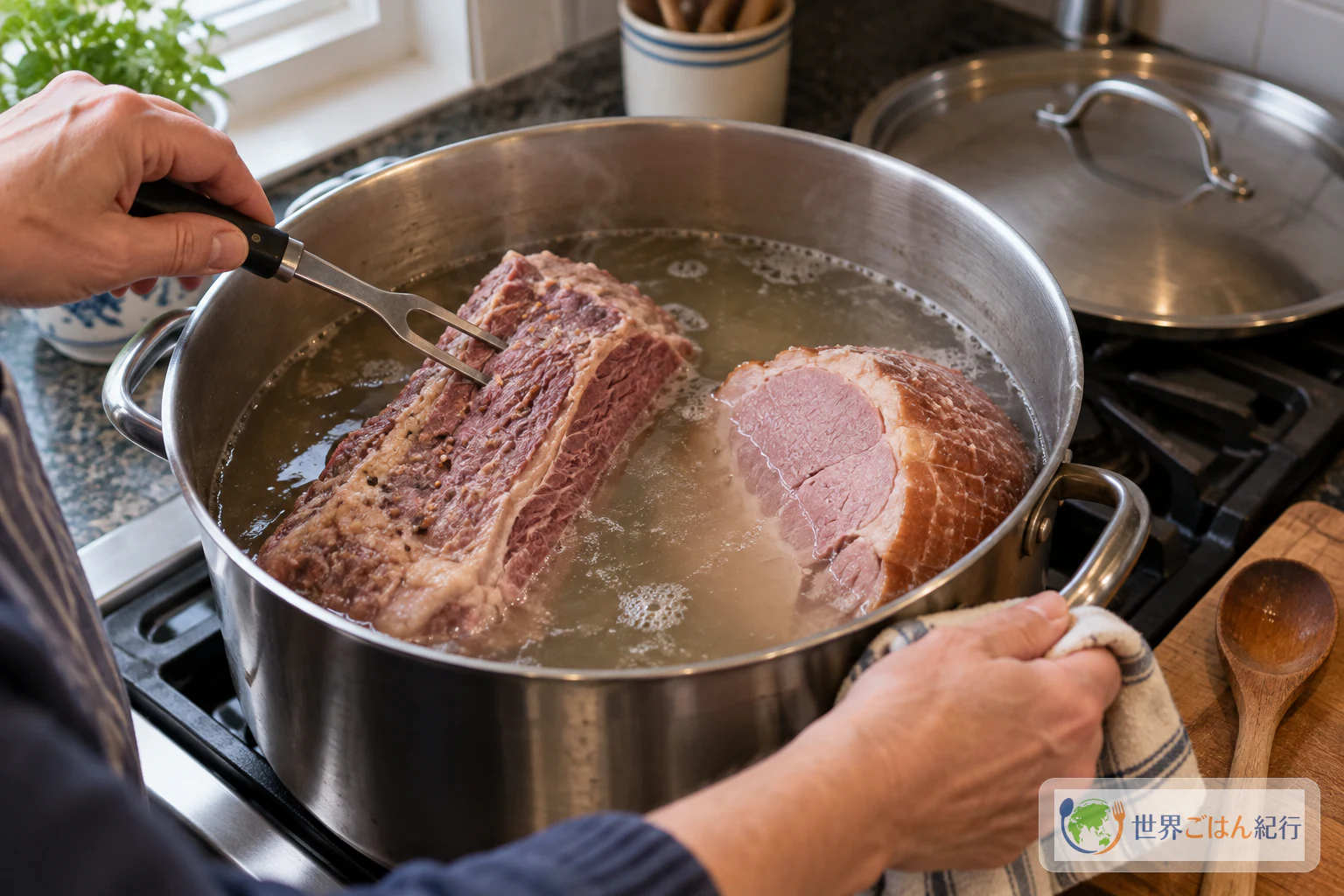
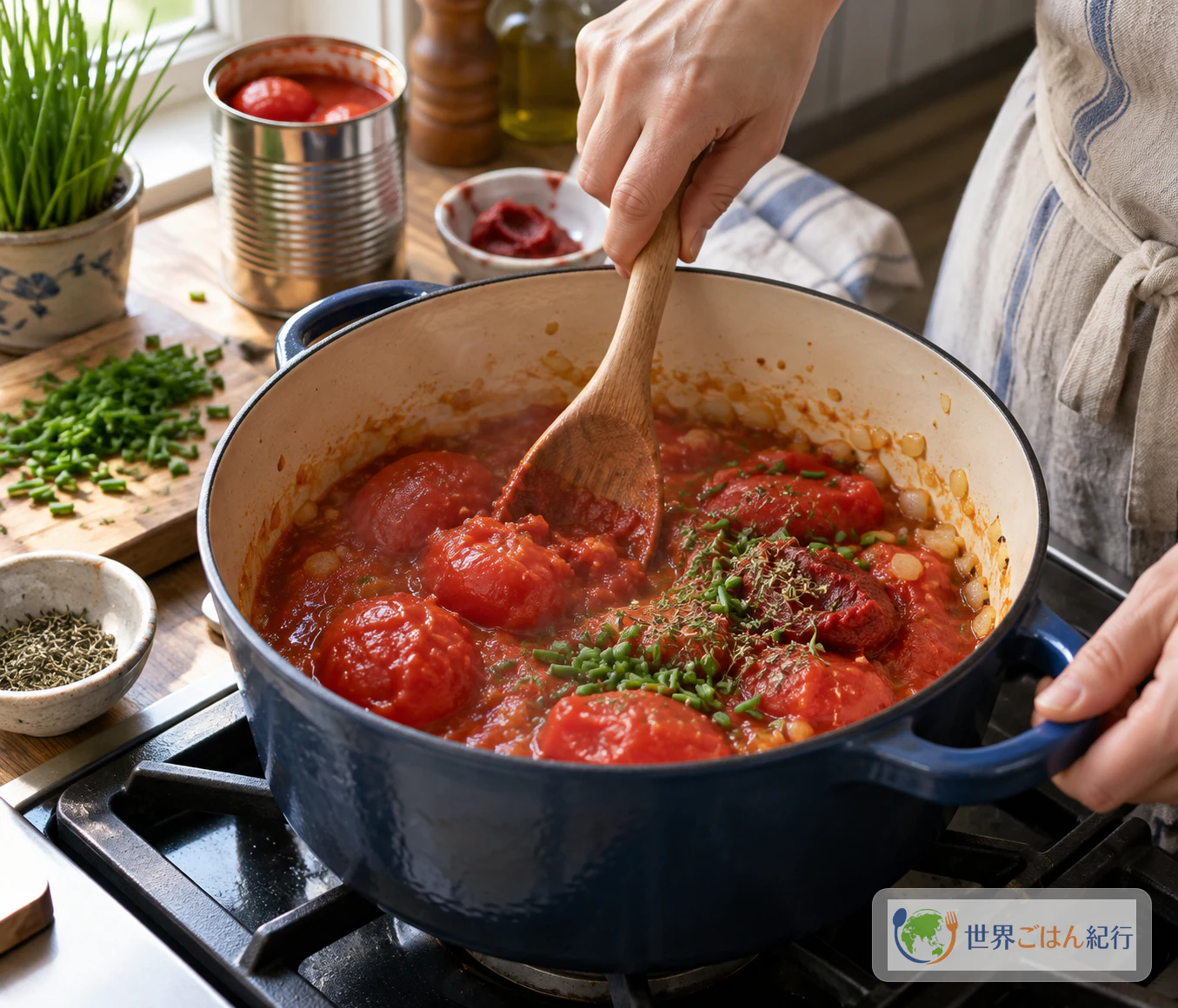
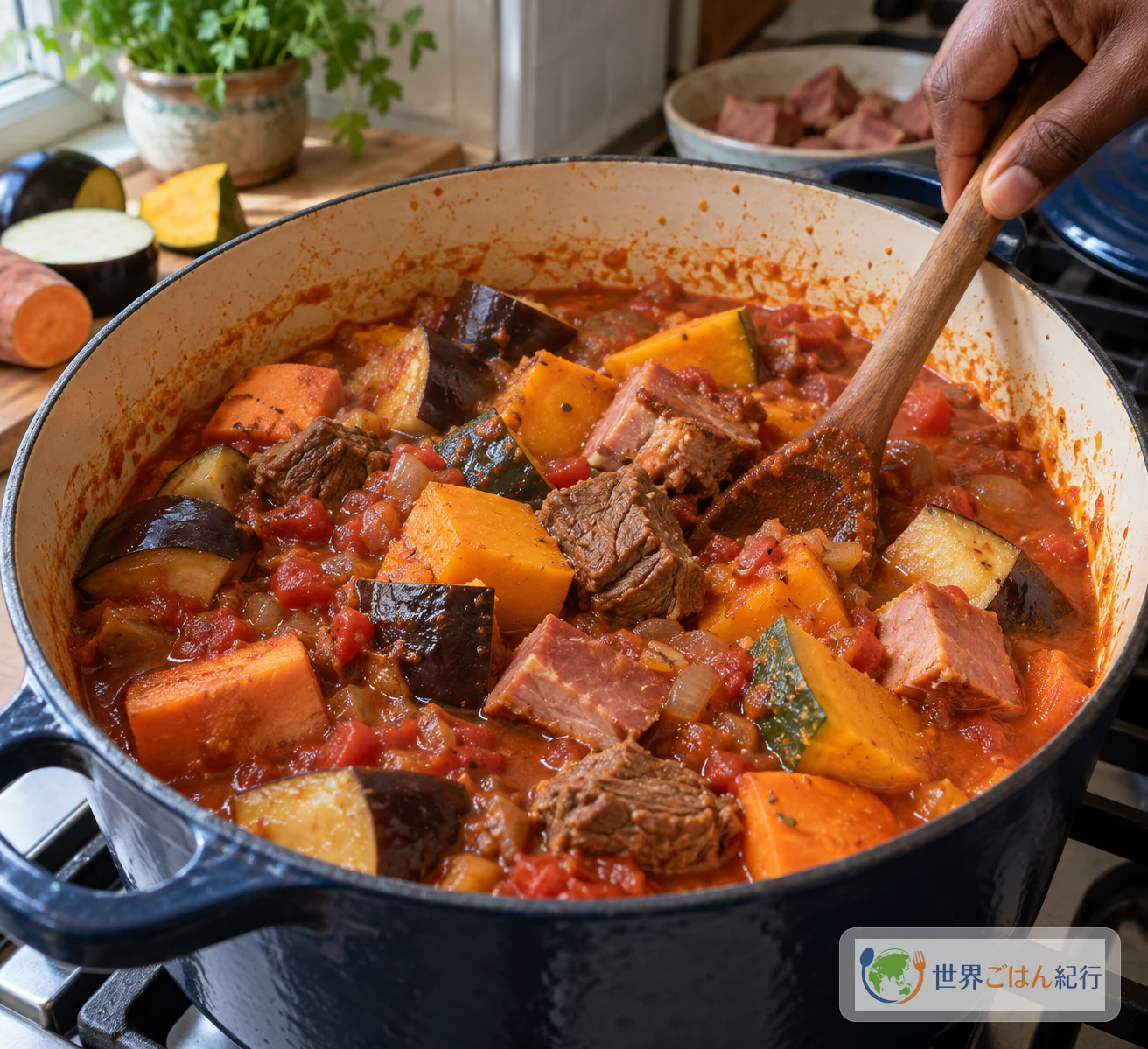
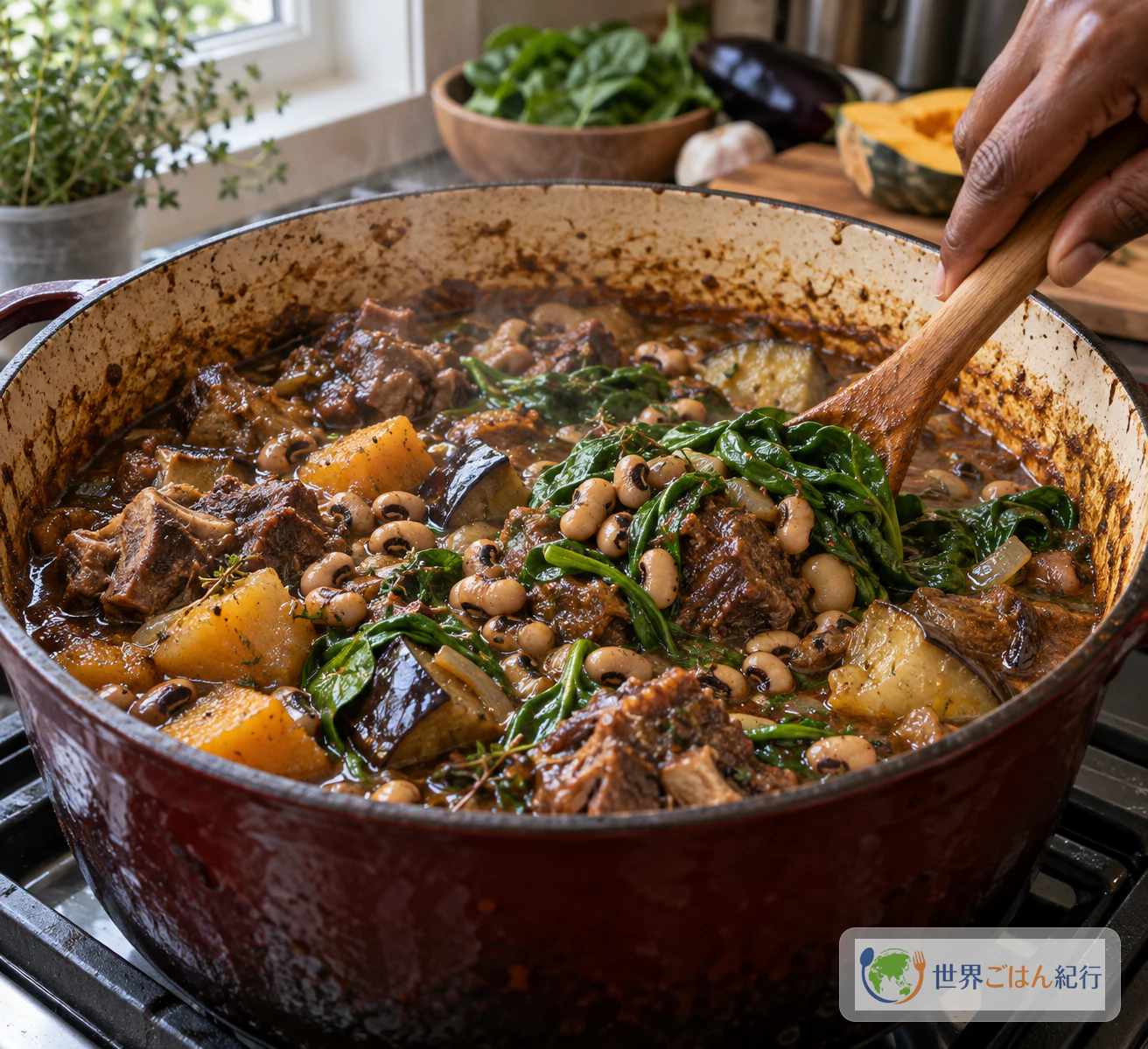
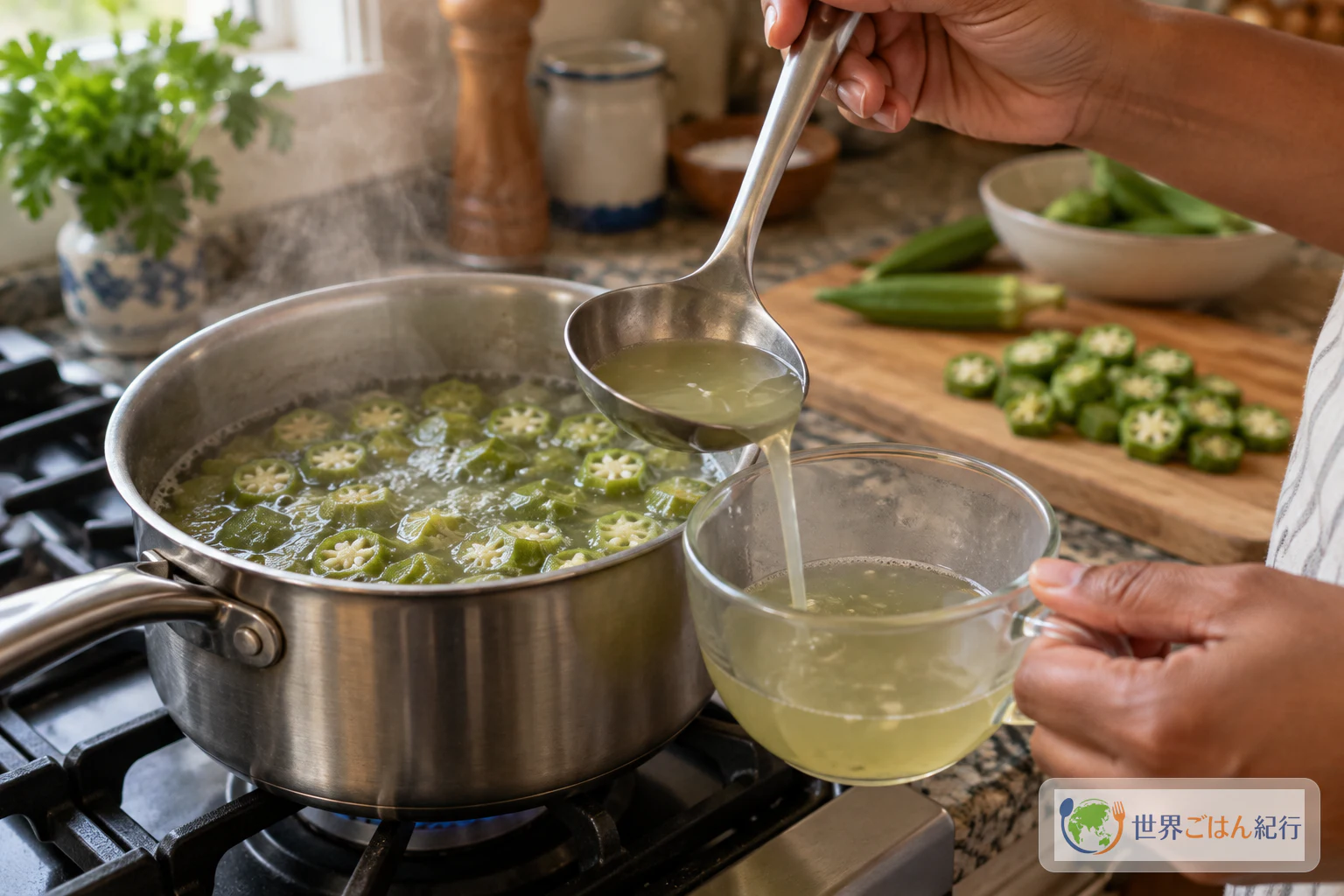
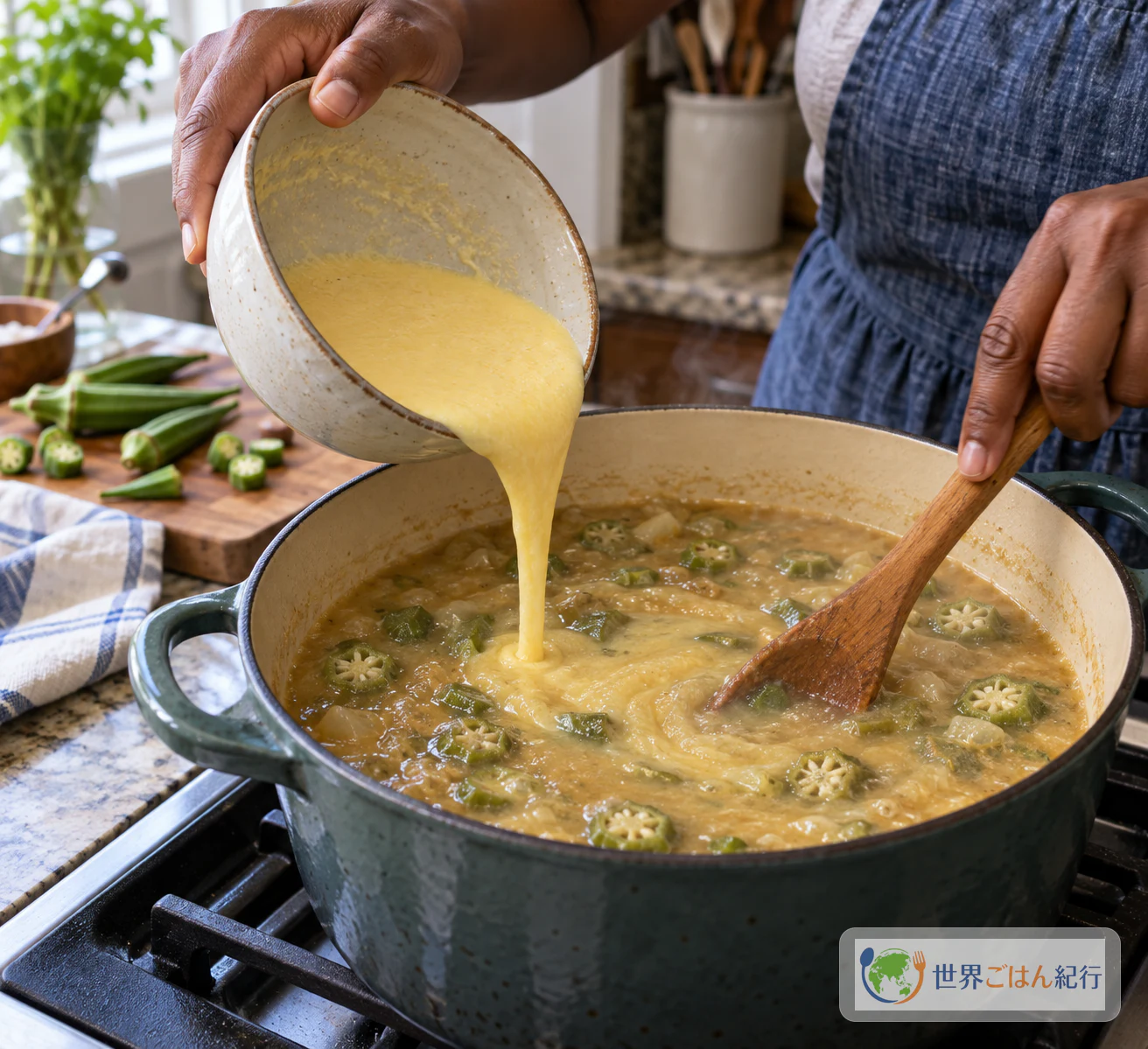
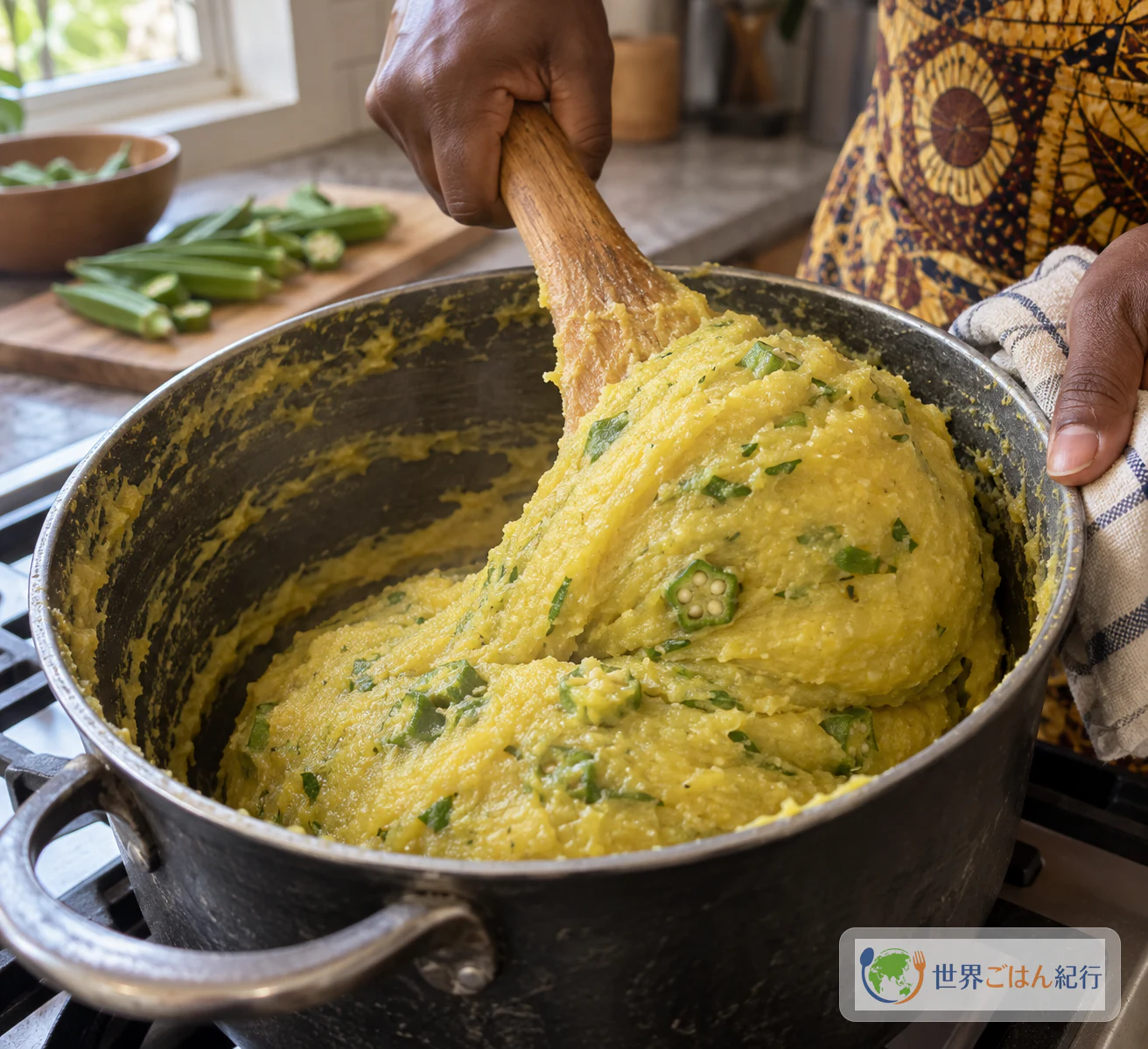
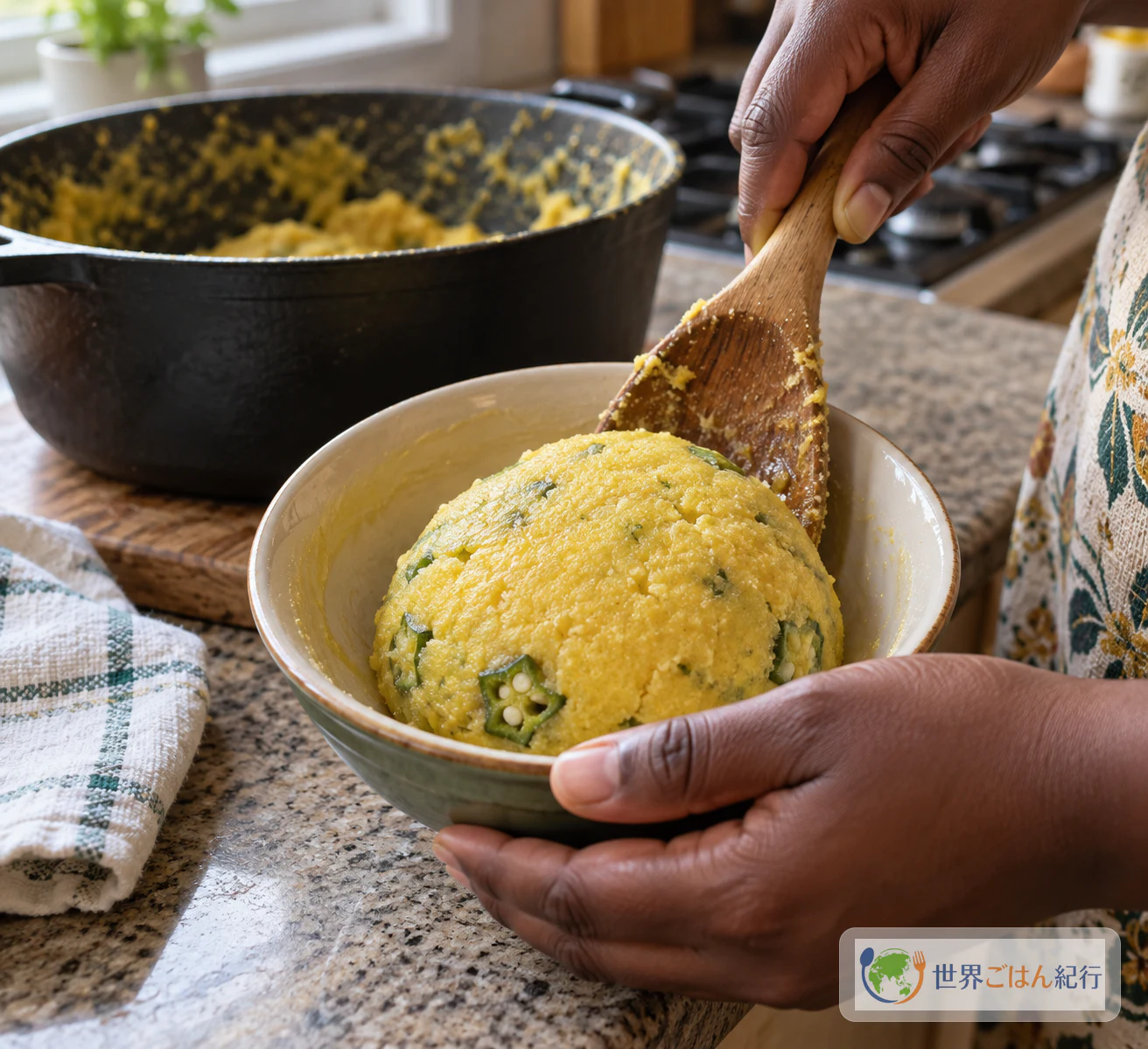
In one pot, cured beef and ham have softened in their own broth, and the smell of tomato and thyme rises as the stew thickens around chunks of eggplant, squash and yam. In a second pot, yellow cornmeal that has absorbed okra cooking water clings heavily to a wooden spoon and finally gathers into a single mass that comes away from the sides of the pan. Put the two side by side on a plate, and the way the dish is meant to be eaten becomes clear: the firm fungee is there to take up the rich stew and its gravy.
Fungee and pepperpot are presented together as the national dish of Antigua and Barbuda. The name "pepperpot" can mislead. It is not a stew of peppers and mushrooms, but a thick stew of meat and vegetables. It is also not the same dish as Guyanese pepperpot, a dark meat stew built around cassareep; if that is the dish you are looking for, see Guyanese pepperpot.
This recipe follows one documented version, published by the Daughters of the British Empire in the USA, which uses corned beef brisket, ham, tomato, eggplant, squash, yam, spinach and black-eyed peas, with a fungee made from yellow cornmeal and sliced okra. Other published home recipes use different meats and greens, so treat this as one well-documented version, not the only correct one.
The dish is written both fungee and fungi. These are spelling variants of the same name; this article uses "fungee."
The two halves at a glance
| Pepperpot | Fungee | |
|---|---|---|
| Role on the plate | The stew: flavor, gravy, meat and vegetables | The starch: firm, mild, eaten with the stew |
| Main ingredients in this version | Corned beef brisket, ham, tomato, eggplant, squash, yam, black-eyed peas, spinach | Yellow cornmeal, sliced okra, okra cooking water, salt |
| Texture | Thick, with vegetables tender but distinct | Dense and cohesive, with soft okra pieces |
| When to cook | First; it can wait in the pot | Last; shape it while warm and serve right away |
Ingredients for Pepperpot and Fungee
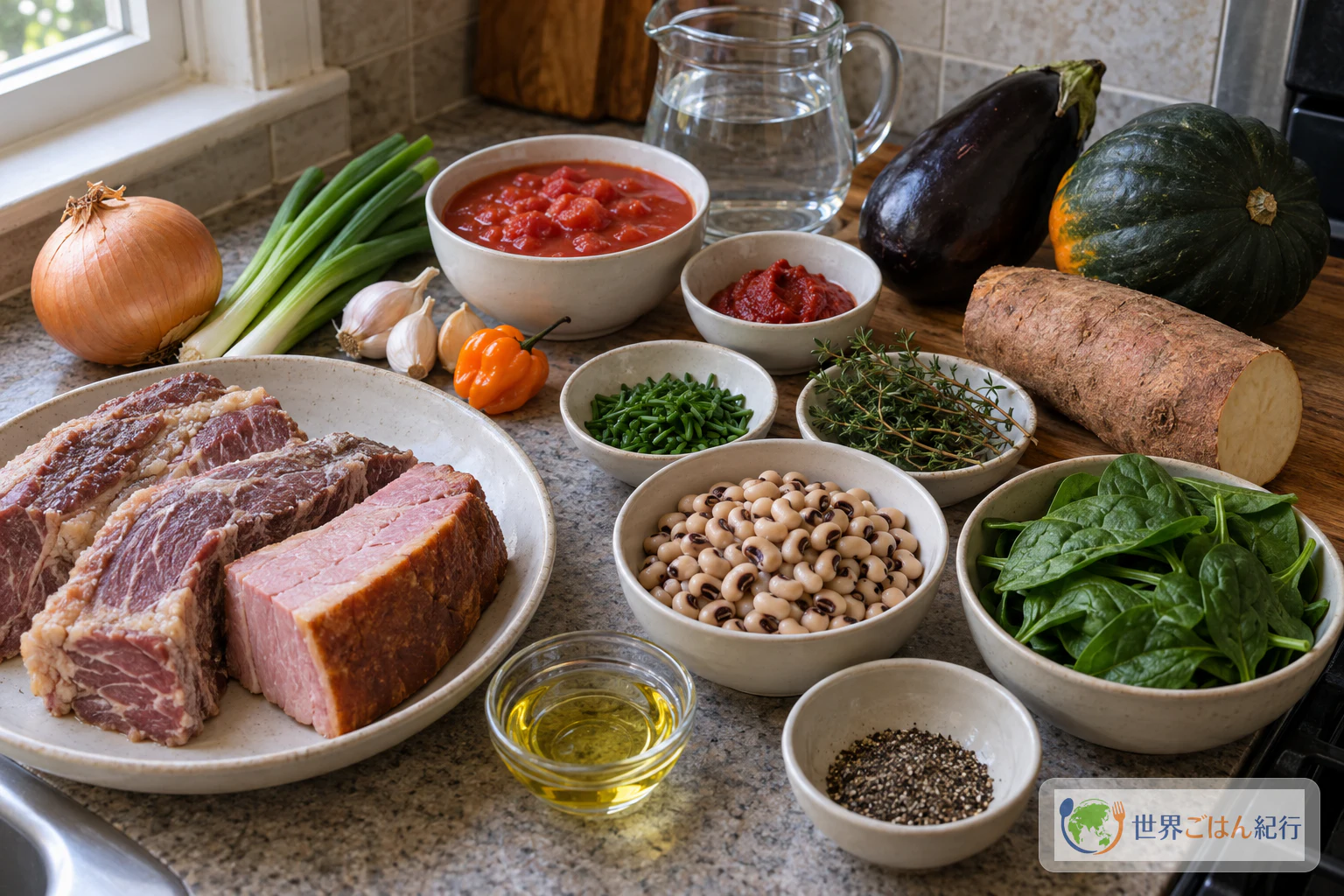
This is a large-pot amount, so plan on a big gathering or leftovers for the stew, and make the fungee fresh.
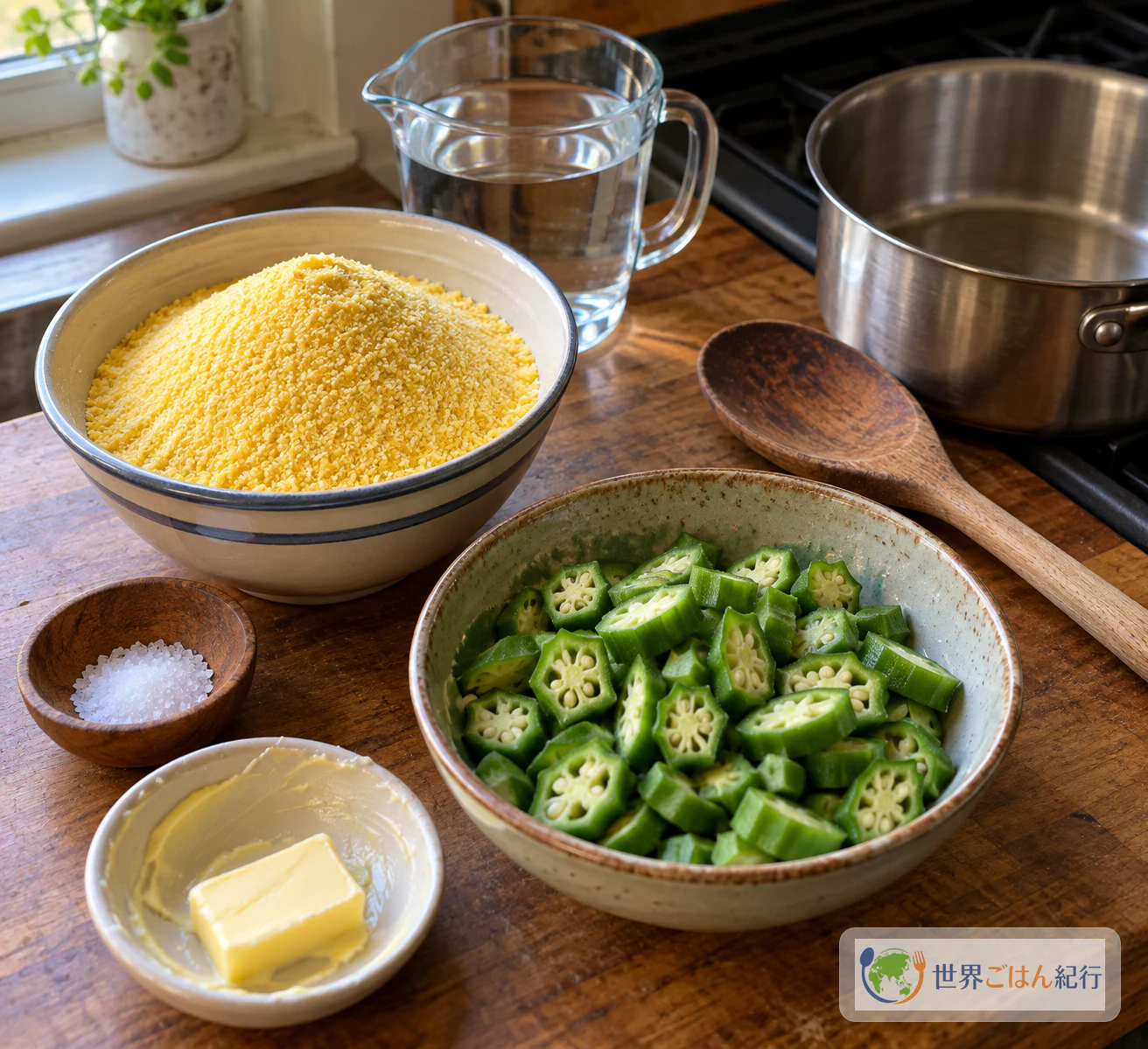
Equipment
- A heavy pot of about 4–5L, for boiling the meat and simmering the stew
- A separate saucepan for the fungee
- A sturdy wooden spoon; fungee takes real force to stir as it firms up
- A heatproof cup or bowl for the reserved okra water
- A mixing bowl for the cornmeal paste
- Small bowls for shaping the fungee
- Shallow containers for leftovers
- A food thermometer, for reheating leftovers
Choosing Ingredients and Honest Substitutions
Corned beef brisket. What you want is a whole piece of salt-cured beef brisket. Shredded canned corned beef is a different product and will not behave the same way in a long simmer. Cured meats vary widely in salt: whether and how to soak the meat to remove salt depends on the product, so follow its label rather than tasting the raw cured meat to decide. Judge the salt later, from the broth after boiling. Using unsalted beef shank instead is a workable home idea, but the saltiness and the cured flavor will both be different, so season the stew more deliberately at the end.
Ham. The recipe calls for ham without specifying a type. Use a chunk you can cut into pieces, not thin slices.
Acorn squash. Kabocha is a practical substitute, but its sweetness and moisture differ, so check the tenderness rather than relying on the clock.
Yam. Taro or potato can stand in at home, but neither has the same starchy texture as yam. Nagaimo (Chinese yam) is much wetter and more mucilaginous and is not an equivalent. If you want to keep a substitute from falling apart, cut it in larger pieces.
Yellow cornmeal. Look for yellow cornmeal, ideally medium-fine. Fine polenta meal can work, but the grind changes how long you stir and how the fungee feels in the mouth; a coarse grind tends to stay grainy. Cornstarch and potato starch are not substitutes: they are a different kind of product altogether.
Okra. Frozen sliced okra is fine.
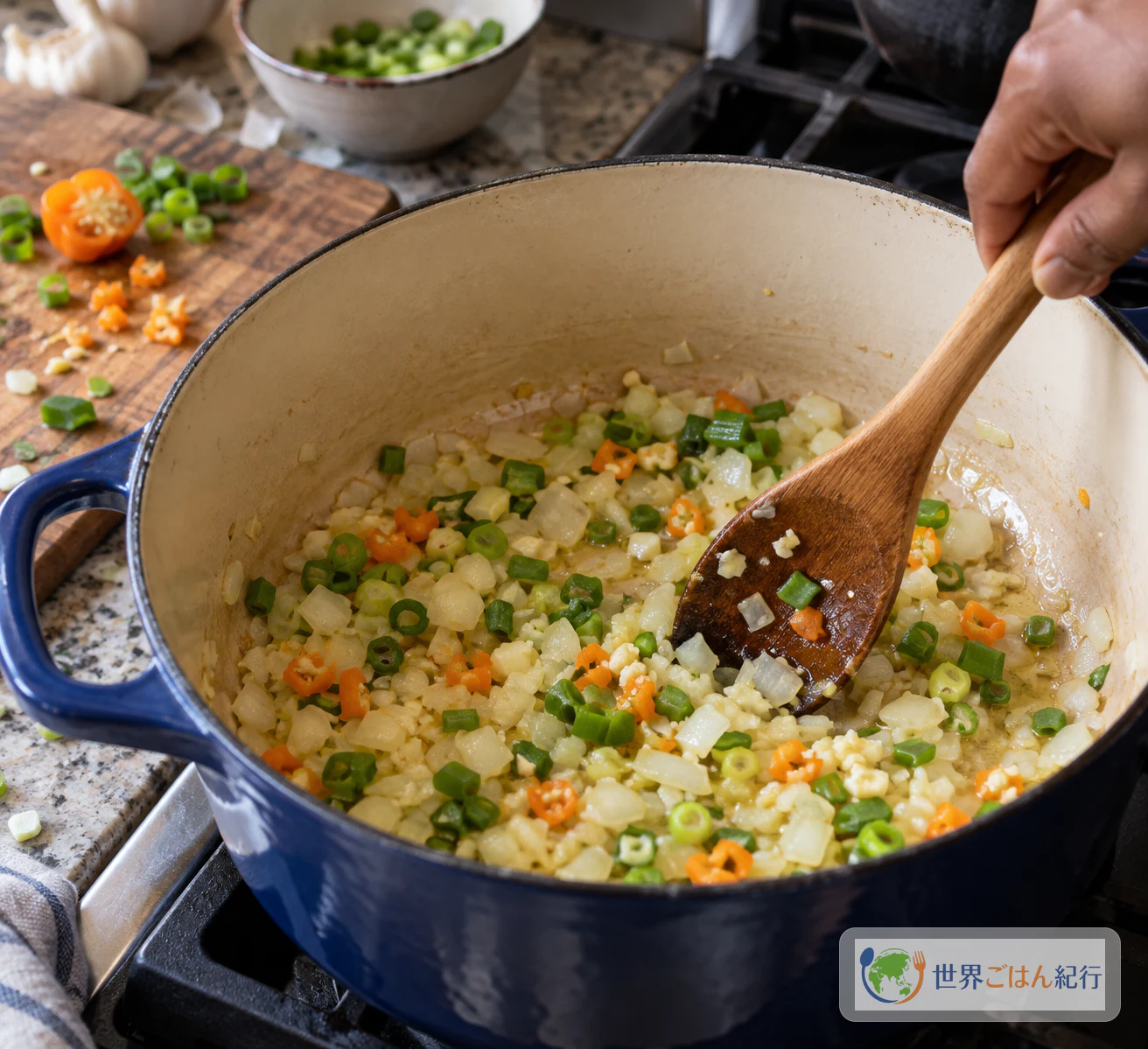
Habanero or Scotch bonnet. Either works. They have a similar fruity aroma but are not the same variety, so start small and adjust.
Chives. If you can't find them, a little of the green part of green onions can be used, though the aroma is different.
Greens. Spinach is what the base recipe uses. If you can get callaloo greens, they are a candidate for the greens, with a different flavor (see also Trinidadian callaloo for the dish of that name).
Black-eyed peas. If unavailable, other cowpea-type beans or white beans can be used, with a different flavor.
The butter used for shaping contains milk. Check the labels of cured beef, ham, canned beans and canned tomatoes for allergens and possible cross-contact. When handling habanero, avoid touching your eyes with hands that have touched the pepper.
Method: Stew First, Fungee Last
Steps 1–5 make the pepperpot, which can sit in the pot while you work. Steps 6–9 make the fungee, which firms as it cools, so start it only when you are nearly ready to eat.
Serving and Eating
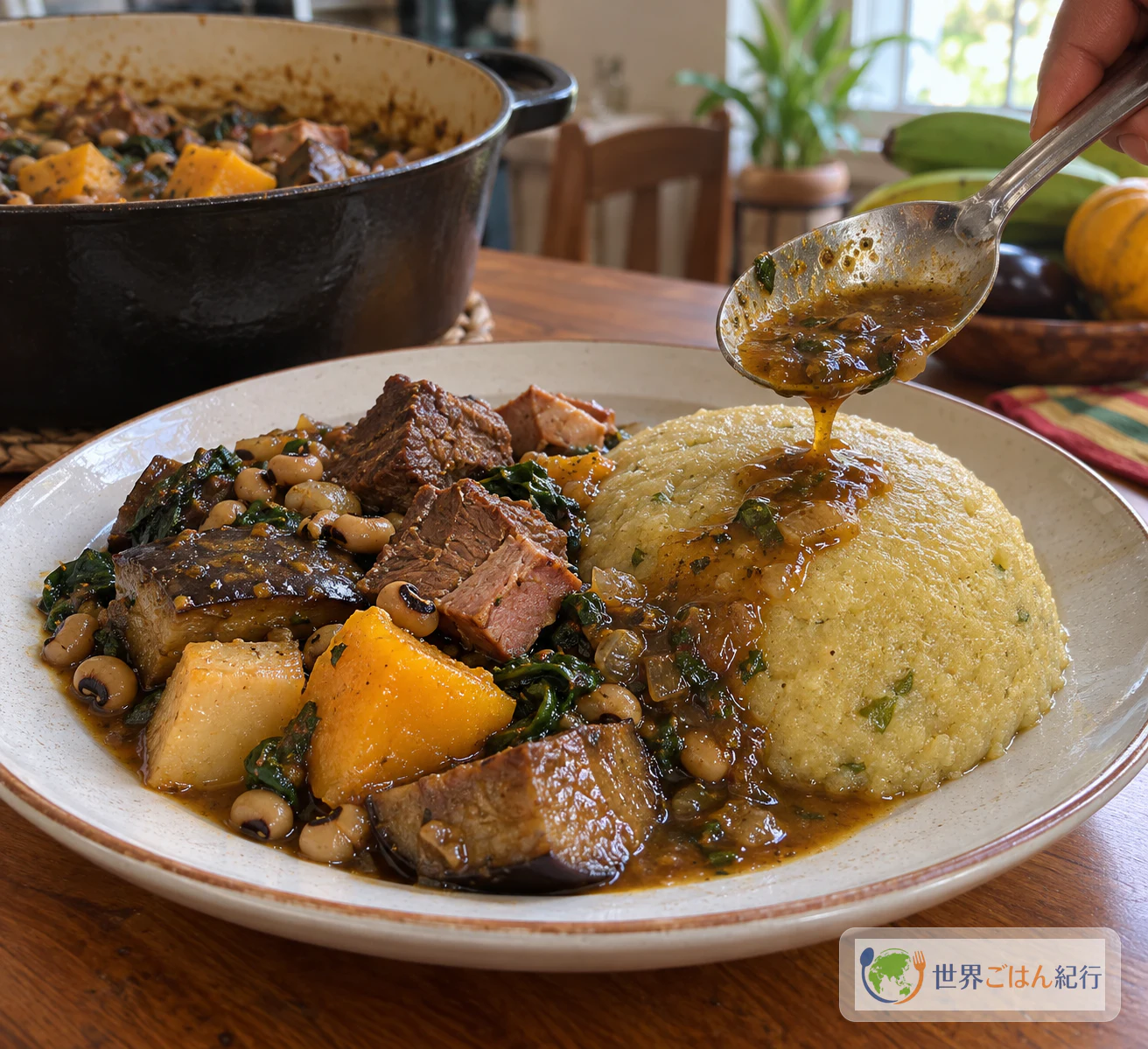
Set the rounded fungee on the plate and ladle the pepperpot beside it, letting some of the thick gravy run over its edge. The fungee is mild and dense; its job is to carry the stew, so take a piece of fungee with each bite of meat, vegetables and gravy.
Household Differences and Background
Both the recipe this article follows and a tourism feature on Antigua and Barbuda present fungee and pepperpot as the national dish: a meat-and-vegetable stew served with a fungee based on okra and cornmeal. That does not mean every household makes it the same way, and the dish also has a contemporary presence; the tourism feature mentions attention to it during the islands' Culinary Month and Restaurant Week.
On origins, the same tourism article says the recipe is said to have been introduced with enslaved people brought from Africa, and later adapted to ingredients found on the islands. This is a hedged statement in sponsored tourism writing, not a documented history, and it is best read that way.
Published recipes vary. The version here uses corned beef brisket and ham with eggplant, squash, yam, black-eyed peas and spinach. Another published recipe makes a simpler pepperpot with pork, okra, spinach or callaloo, onion, garlic, thyme and Scotch bonnet, simmering the pork for 1.5–2 hours; its fungee is made from cornmeal, water, salt and butter, with no okra in the mixture, and portions are shaped with a wet bowl. Neither is wrong; they are two examples of how home recipes differ.
Two neighbors are worth keeping straight. Guyanese pepperpot shares the name but is a different dish, a dark meat stew built around cassareep. Barbadian cou-cou is a useful comparison because it also stirs cornmeal with okra, but it should not be treated as the same dish as fungee; see cou-cou and flying fish.
Variations
- Scotch bonnet instead of habanero. Similar fruity aroma, but a different variety; seed it and start with less, adjusting the heat.
- Callaloo for the greens. If available, a candidate in place of spinach, with a different flavor. Spinach is what the base recipe uses.
- Kabocha for acorn squash. Check its sweetness and moisture and adjust the simmer by tenderness.
- Taro or potato for yam. The texture won't match yam's starchiness; cut larger pieces to avoid breaking down.
- A pork-based pot. Some households build the stew on pork, as in the second published recipe. The flavor and salt level will differ from the cured beef and ham version, so treat it as its own variation.
Troubleshooting, Storage and Reheating
| Problem | Likely cause | What to do |
|---|---|---|
| Lumpy fungee | Cornmeal added too quickly or not fully mixed | Mix it into a smooth paste with cold water first, and stir steadily as it goes in |
| Fungee is too soft | Too much okra water returned at once | Keep stirring over low heat to cook off moisture |
| Fungee is too stiff | Not enough liquid for your cornmeal | Add the reserved okra water a little at a time |
| Fungee catches on the bottom | Heat too high, or stirring stopped | Lower the heat and stir constantly from the bottom |
| Stew is too salty | Salty cured meat, or too much broth returned | Add unsalted water or stock, or more vegetables. Acid or sugar won't remove salt |
| Stew is too thick | Reduced too far | Add a little reserved broth |
Pepperpot is a big-pot stew. Divide leftovers into shallow containers and refrigerate within 2 hours of cooking, and avoid leaving it out at room temperature for long. Reheat to 165°F (about 74°C), checked with a food thermometer; for soups and sauces, bring the whole pot to a rolling boil. This is general food-handling guidance from the USDA, not part of Antiguan culinary tradition.
Fungee firms up as it cools, which is why this recipe makes the stew ahead and the fungee just before serving.
Frequently Asked Questions
Are fungee and fungi different dishes?
No. They are spelling variants of the same name. This article uses "fungee."
Is this the same as Guyanese pepperpot?
No. Guyanese pepperpot is a dark meat stew centered on cassareep. The Antiguan and Barbudan pepperpot here is a tomato-based stew with vegetables, beans and greens, served with okra fungee.
Can I use polenta meal instead of cornmeal?
It depends on the grind. A fine polenta meal can work, but a coarse grind tends to leave the fungee grainy and changes how long you need to stir. This is a general cooking judgment about grind, not a claim that the result matches the original. Do not use cornstarch or potato starch.
Can I leave out the okra?
You can, but the fungee will lose the silky body and flavor that okra gives it. One published recipe makes fungee without okra in the mixture, but the result is not the same as this version.
Can I make it the day before?
The pepperpot can be made ahead. The fungee firms as it cools, so it is best stirred and shaped just before eating. That is a practical suggestion for timing, not a traditional rule.
Sources
- Daughters of the British Empire in the USA (DBE), "Fungee and Pepperpot Recipe." The base recipe: presents fungee and pepperpot as Antigua and Barbuda's national dish and pepperpot as a thick stew; ingredients, quantities and method for both, including the okra water and the pull-away doneness cue for fungee. The page gives no yield and is one documented recipe, not an island-wide standard. https://www.dbenational.org/recipes/fungee-and-pepperpot
- National Geographic Traveller UK, "Rum, spice & all things nice: Antigua & Barbuda" (paid content for the Antigua and Barbuda Tourism Authority). Describes pepperpot as a meat-and-vegetable stew served with okra-and-cornmeal fungee, identifies the pair as the national dish, mentions Culinary Month and Restaurant Week, and gives the hedged statement that the recipe is said to have arrived with enslaved people from Africa and been adapted to local ingredients. https://mediakit.natgeotraveller.co.uk/wp-content/uploads/2025/01/NGTF1224_092_PC_antigua_barbuda.pdf
- Exceptional Caribbean, "Antigua Fungee and Pepperpot Recipe." A second published recipe showing variation: a pork pepperpot with okra, spinach or callaloo and Scotch bonnet, and a fungee of cornmeal, water, salt and butter shaped with a wet bowl. https://exceptionalcaribbean.com/2023/10/12/antigua-fungee-and-pepperpot-recipe/
- USDA Food Safety and Inspection Service, "Leftovers and Food Safety." General guidance on refrigerating leftovers within 2 hours in shallow containers and reheating to 165°F, with soups and sauces brought to a rolling boil. https://www.fsis.usda.gov/food-safety/safe-food-handling-and-preparation/food-safety-basics/leftovers-and-food-safety