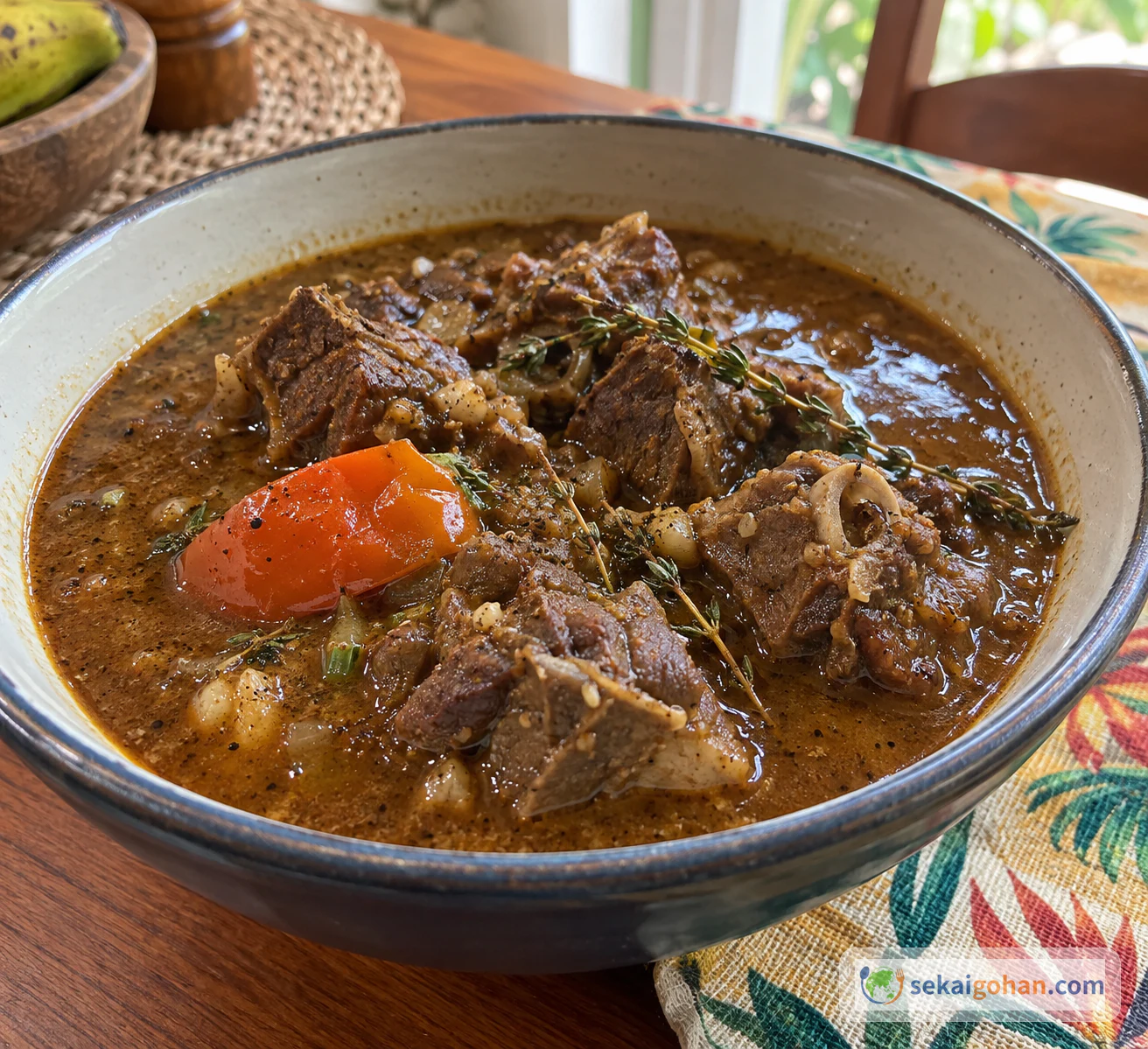
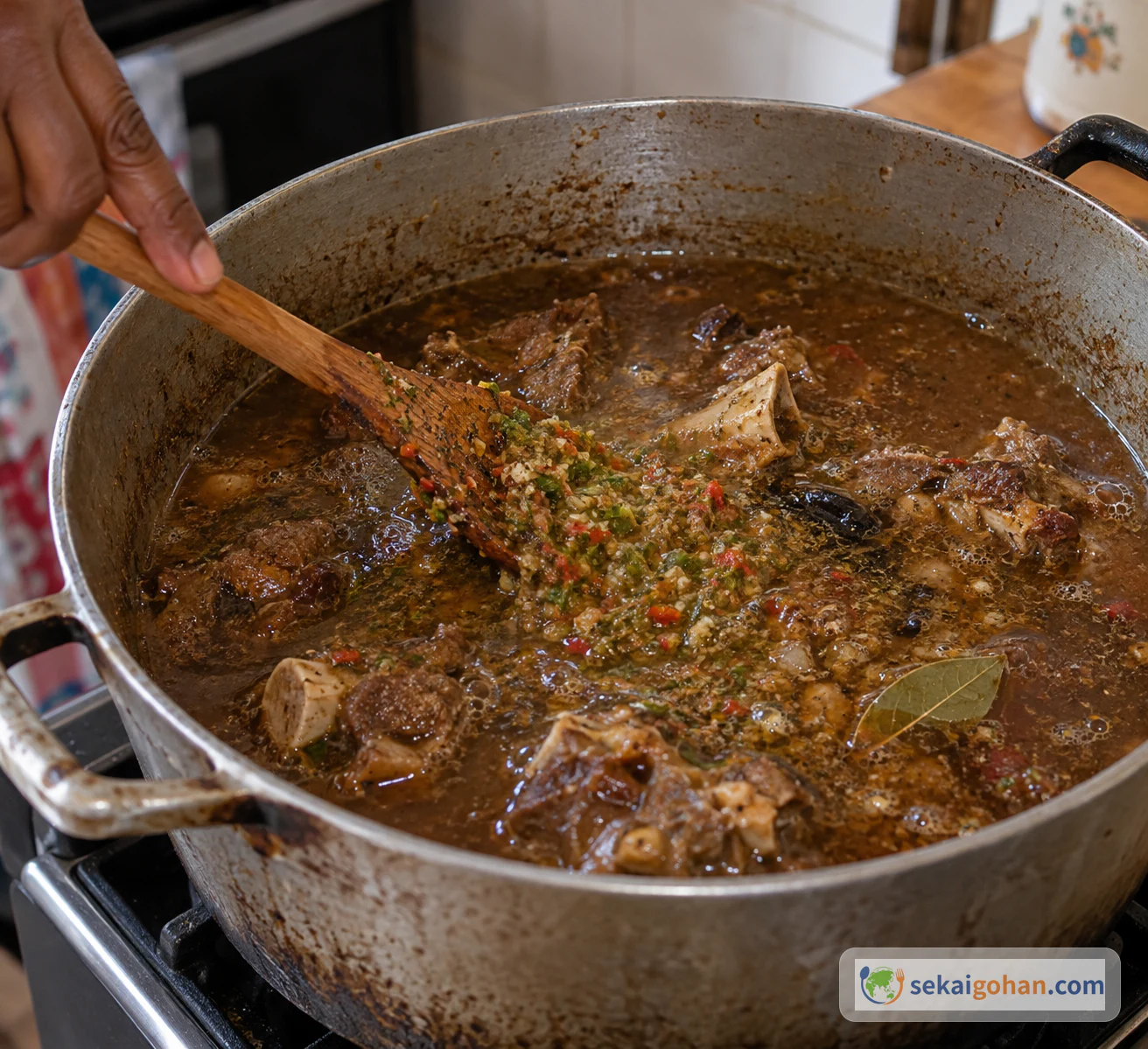
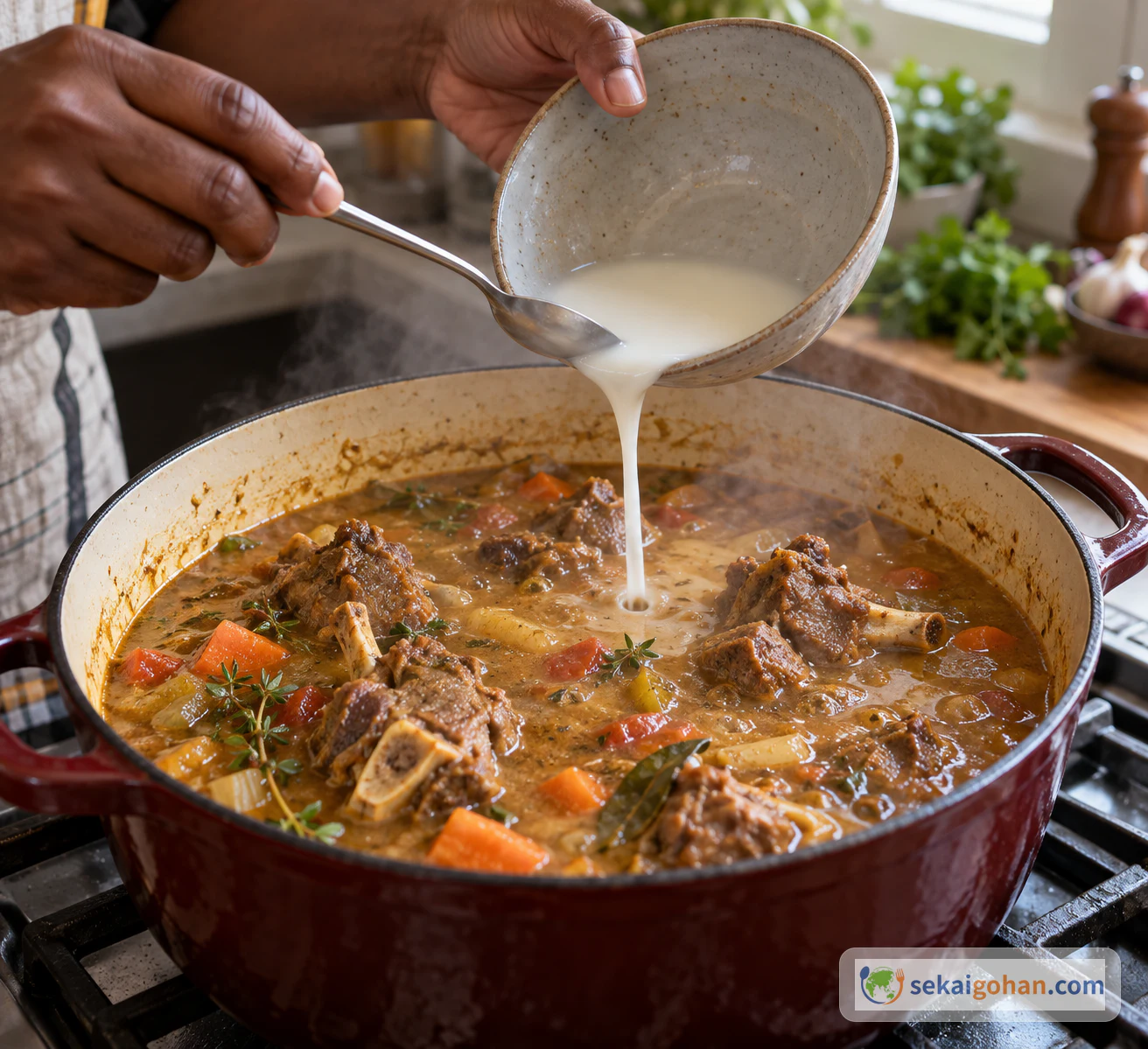
Goat Water: Bone-In Goat Stewed with Cloves, Allspice and Mace
Bone-in goat, cloves, allspice and mace, Scotch bonnet heat, and a broth that is thickened only lightly at the very end.
A writer's 2013 account for Eat Your World describes a bowl of goat water at a beach bar in Antigua, with notes of clove and cinnamon, small dumplings in the stew and fungee alongside. The cook there described it as a dish traditionally served on Saturdays. That is one cook at one place, not a rule for the island, but it is a good way into a dish that changes from one pot to the next. Antigua and Barbuda's tourism pressroom calls goat water an Antiguan specialty and a local staple, and says recipes vary between restaurants and roadside stands.
About this recipe
The recipe below follows the version published by Fabulous Fusion Food, which lists it as an Antiguan and Barbudan dish for 6 servings, with 20 minutes of prep, 160 minutes of cooking and 180 minutes in total. That page names no author, and its ingredients and method closely match a recipe by Keshia Sakarah in BBC Good Food, which presents goat water as the national dish of Montserrat. So this is not a uniquely Antiguan formula or the one true version. It is a recipe for a dish that Antigua and its neighbors all claim as their own, in their own ways.
Sekai Gohan has not kitchen-tested this recipe. The substitutions and visual checks offered as editorial suggestions below are also untested.
Ingredients for 6 Servings
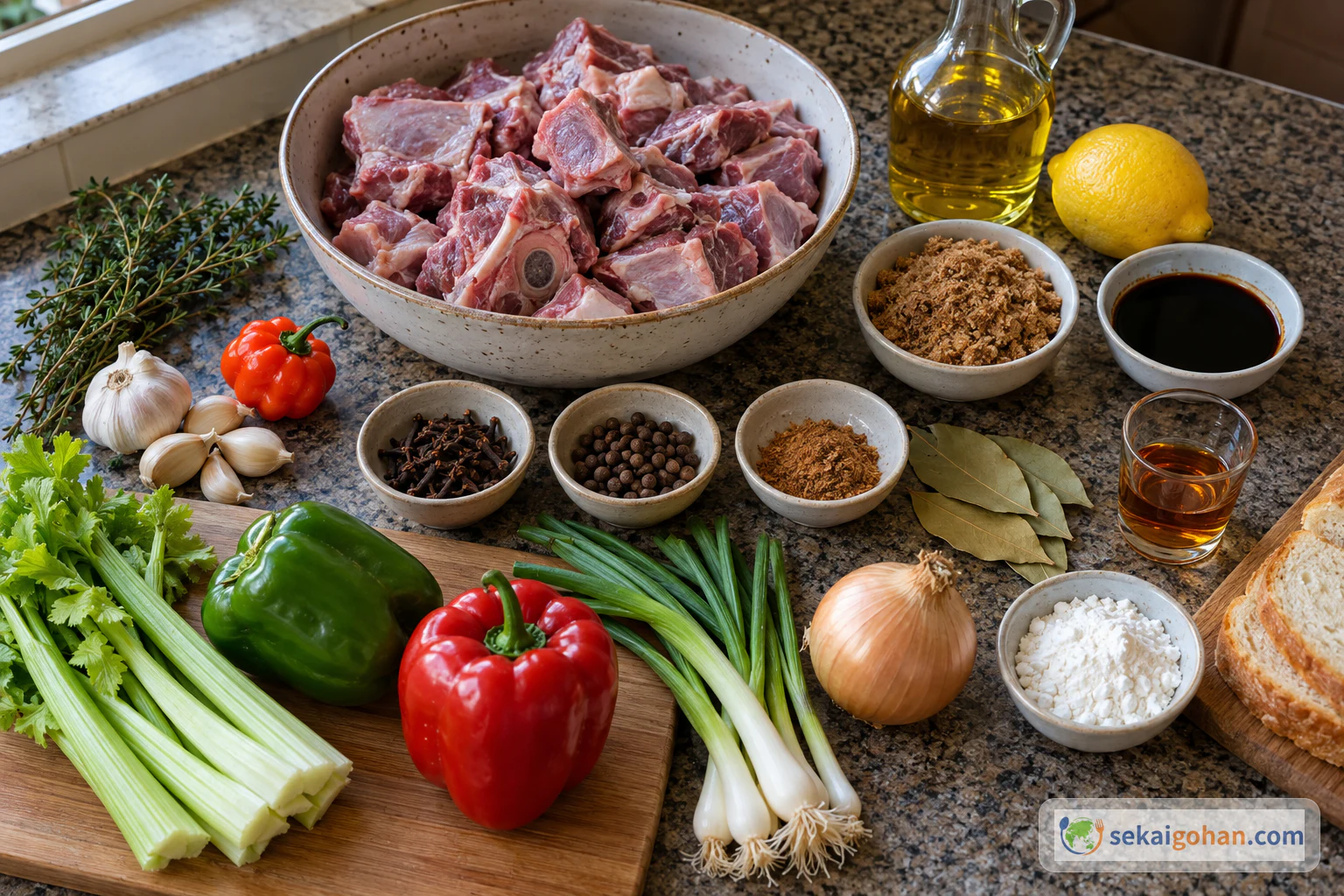
Choosing and Substituting
These notes are editorial suggestions, not local practice, and none of them has been tested.
- Goat: this is the ingredient most worth tracking down, and it usually means a specialty supplier. Ask for bone-in pieces.
- Mace: cloves, allspice and mace are the core of the flavor. Nutmeg is not the same as mace and will change the aroma.
- Scotch bonnet: it brings both heat and aroma. Another hot chili such as habanero will differ in both.
- Gravy browning: it is there for color. Do not treat Worcestershire sauce as the same thing. We have no confirmed substitute to offer.
- Cornflour: potato starch is a different ingredient, so do not assume it behaves the same way.
Equipment
- Large heavy pot with a lid
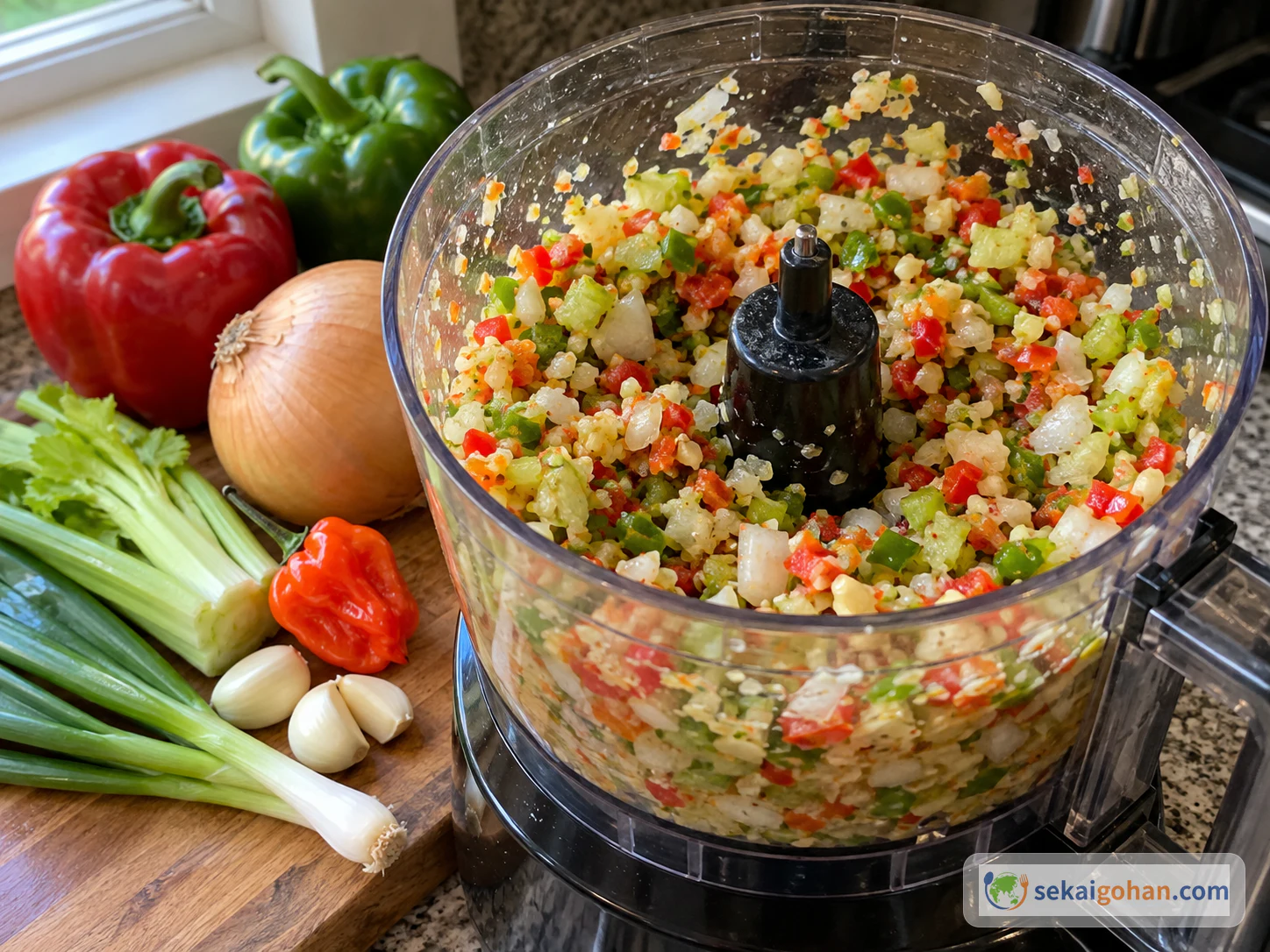
- Food processor
- Large bowl and colander
- Paper towels
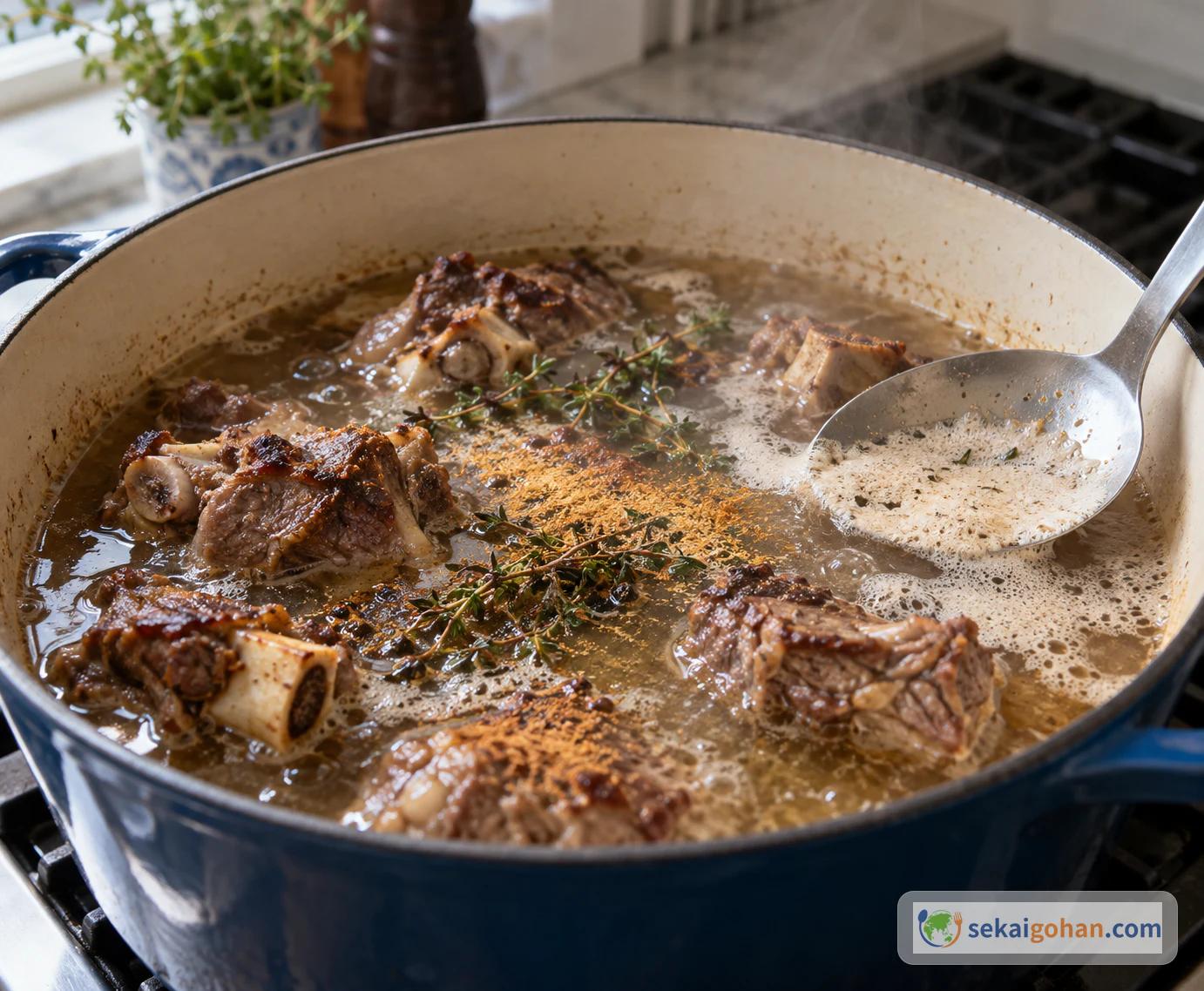
- Spoon or ladle for skimming foam
- Small bowl for the cornflour mixture
- Separate knife and cutting board for raw meat
When Something Looks Wrong
These checks are editorial guidance and have not been tested.
| What you notice | Likely reason | What to do |
|---|---|---|
| Bitter, burned smell from the caramel | The sugar went too dark | Add the meat while the caramel is golden, before it blackens |
| Vegetables turn to liquid | Processed too long | Stop while the paste still has visible texture |
| Meat is still firm | Age or cut of the goat | Keep simmering, covered, until very tender. The time range is a guide, not a guarantee |
| Broth is heavy or pasty | Too much starch | Keep to 1 tsp and stop at a light, pourable body |
| Too hot | Scotch bonnet seeds and flesh | See the variation below for next time |
Variations
These are editorial ideas, not substitutions approved by local cooks, and they have not been tested.
- Less heat: remove the seeds from the Scotch bonnet. The heat and aroma will both change.
- Another chili: use a different hot chili. The aroma will shift.
- Lamb instead of goat: this is an option for when goat is out of reach. The flavor will differ and the simmering time may too, so judge by tenderness.
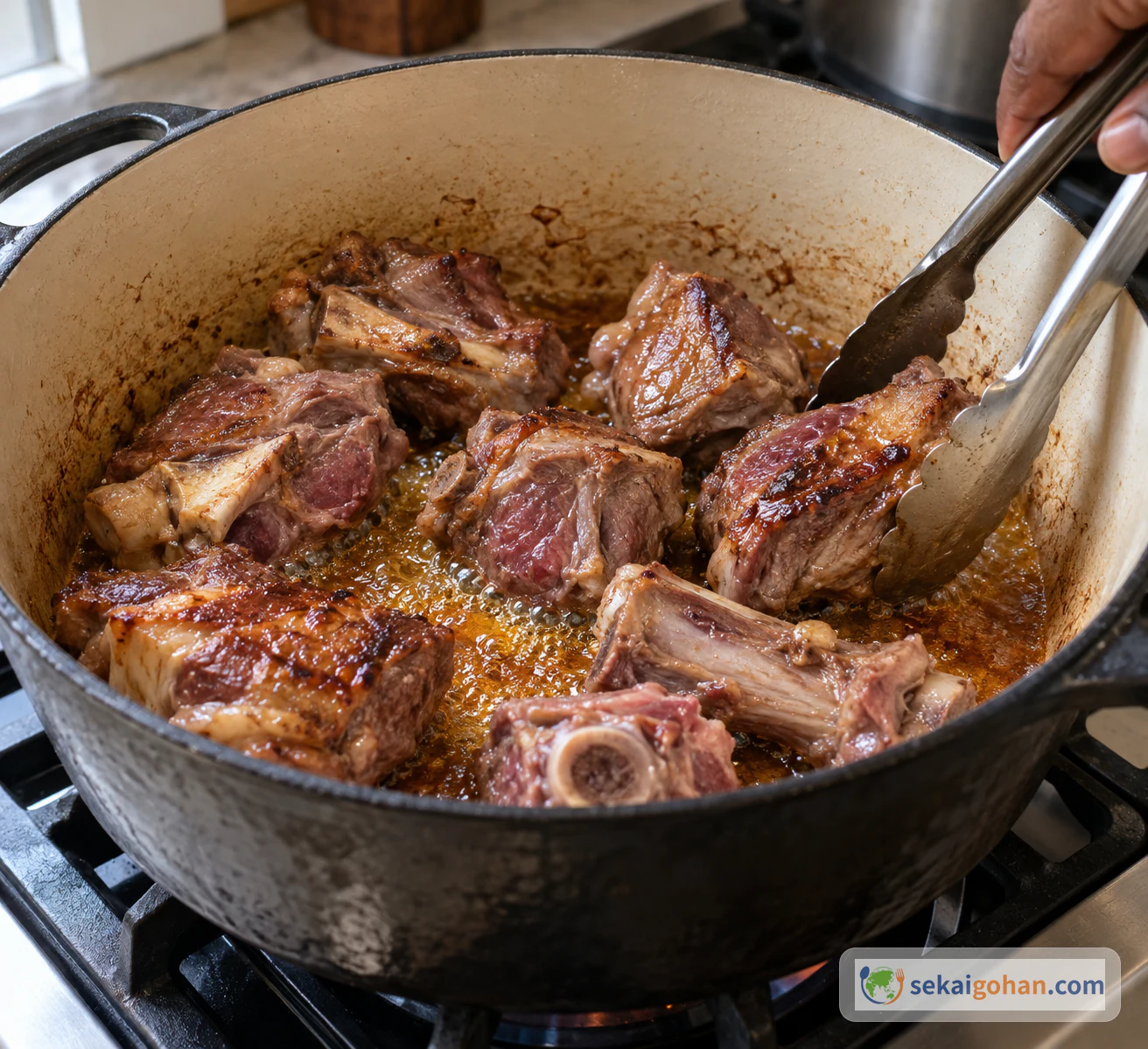
- Brown sugar or molasses: either can go in the pot at step 2. We have not compared the two for caramelizing or sweetness.
Serving and Storing
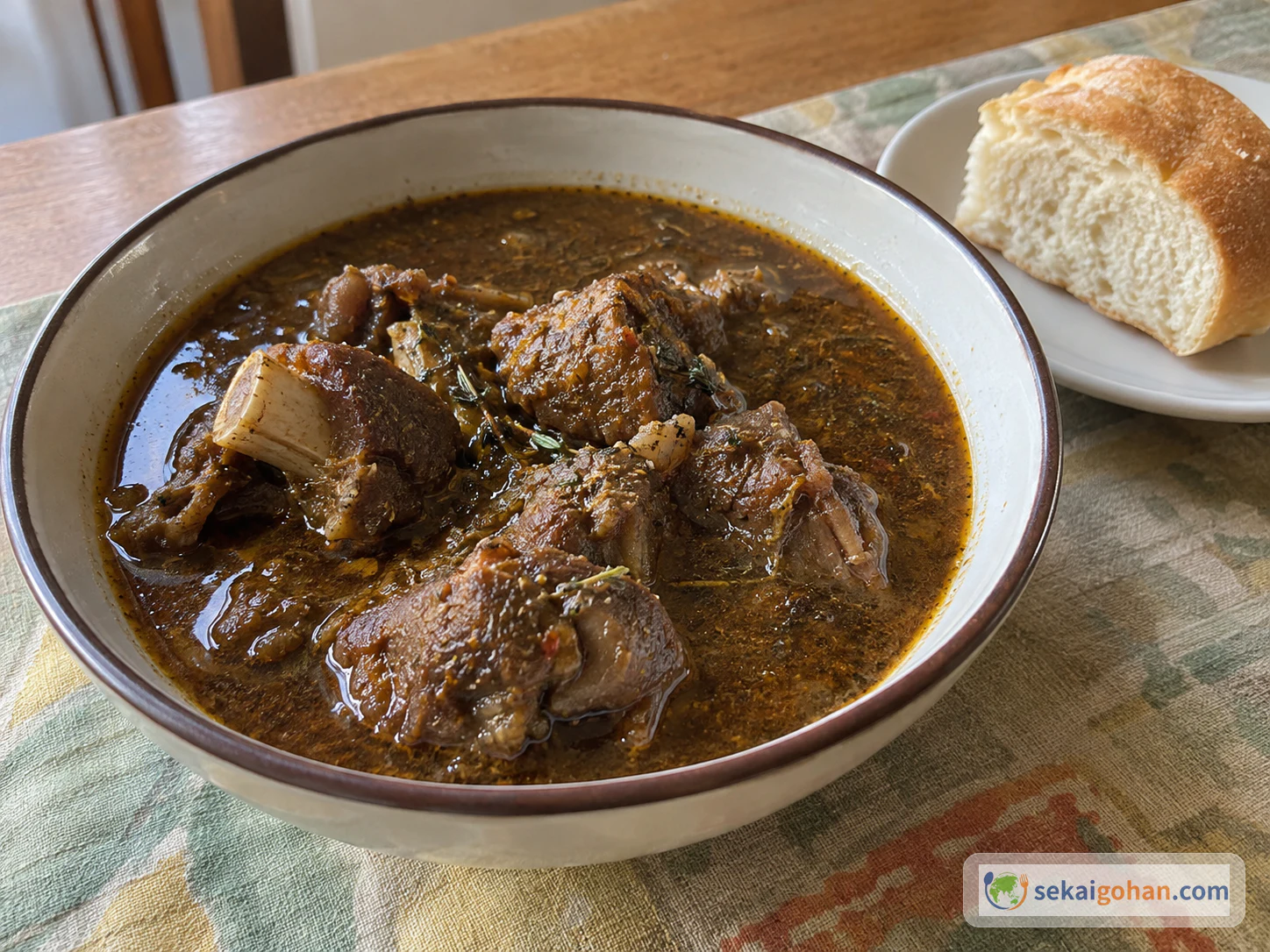
Serve the stew hot with bread.
Do not leave the stew at room temperature for long, and do not cool it in the pot at room temperature. The spores of Clostridium perfringens (a food-poisoning bacterium) survive ordinary cooking. Divide leftovers into shallow containers and cool them quickly, then refrigerate at 10°C or below or freeze at −15°C or below. Reheat while stirring well, until the stew reaches 75°C or above. Throw away anything that has been kept too long.
Goat Water Across the Islands
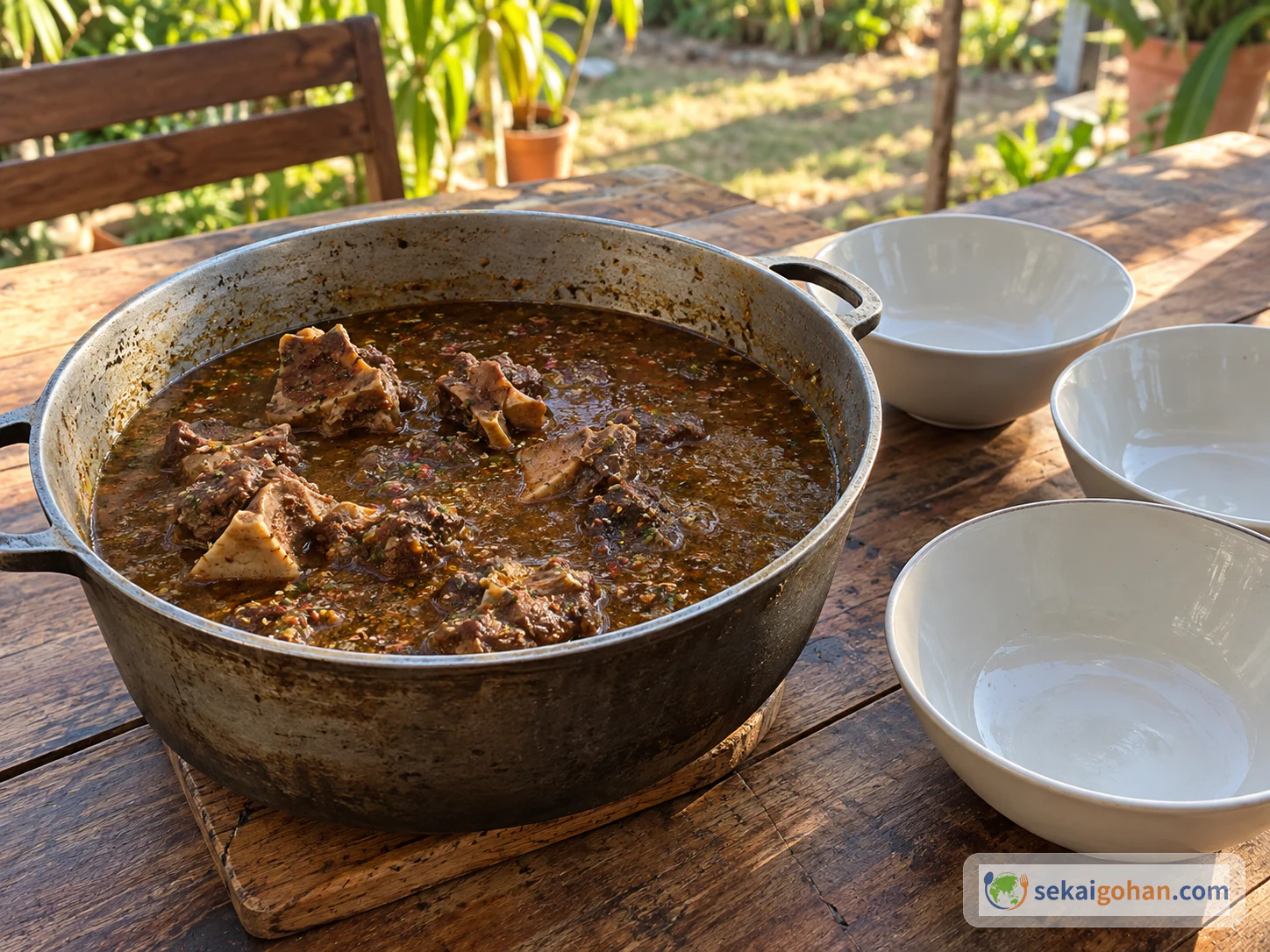
In Antigua and Barbuda, the tourism pressroom describes goat water as a spicy stew seasoned with hot peppers, cloves and cinnamon, with recipes that differ between restaurants and roadside stands. Cinnamon is not in the recipe above, which shows how far the dish can move while keeping its name.
| Island | What its source says | How to read it |
|---|---|---|
| Antigua | A local staple whose recipes vary by restaurant and stand. One 2013 account has small dumplings, fungee on the side, and a cook's mention of Saturdays | The account describes one cook and one place, and its dumplings and fungee are not part of this recipe |
| Montserrat | The national dish, a male-goat stew meant to be neither too thick nor too thin, served with bread or rice and linked to Friday lunch and communal occasions | This is Montserrat's own account, not an Antiguan custom |
| St. Maarten | Listed among the local dishes by the National Heritage Foundation & Museum | The listing gives no method or history |
The sources we used do not establish where goat water began, so we make no claim about its origin.
Frequently Asked Questions
Is goat water a thin, watery soup?
No. Fabulous Fusion Food describes its "water" dishes as flavorful soups or stews rather than thin broths, and the Antiguan pressroom calls goat water a spicy stew. We could not confirm the origin of the name, so we treat "water" simply as part of the dish's name.
Is this the Antiguan recipe?
It is listed as Antiguan and Barbudan by Fabulous Fusion Food, but the same recipe appears in BBC Good Food as the national dish of Montserrat. Please read it as one recipe for a dish shared across islands. Antigua's own sources say recipes there vary.
Why 1 tsp of cornflour?
Both Fabulous Fusion Food and BBC Good Food list 1 tsp cornflour and also a separate line of 1–2 tsp plain flour or cornflour, yet their methods mix only "the cornflour" with 50 ml water. In BBC Good Food, that extra line comes last, after the bread, with no stated use, and plain flour appears in no step. The Good Food Middle East edition, which differs in other ways, lists only 1 tsp cornflour. We chose 1 tsp as an editorial decision. It has not been confirmed with the author or tested in a kitchen.
Why isn't the cooking water in the usual ingredient list?
Fabulous Fusion Food gives the 1 L of simmering water and the 50 ml of water for the cornflour only in its method. We moved both amounts into the ingredient table so you can see them up front.
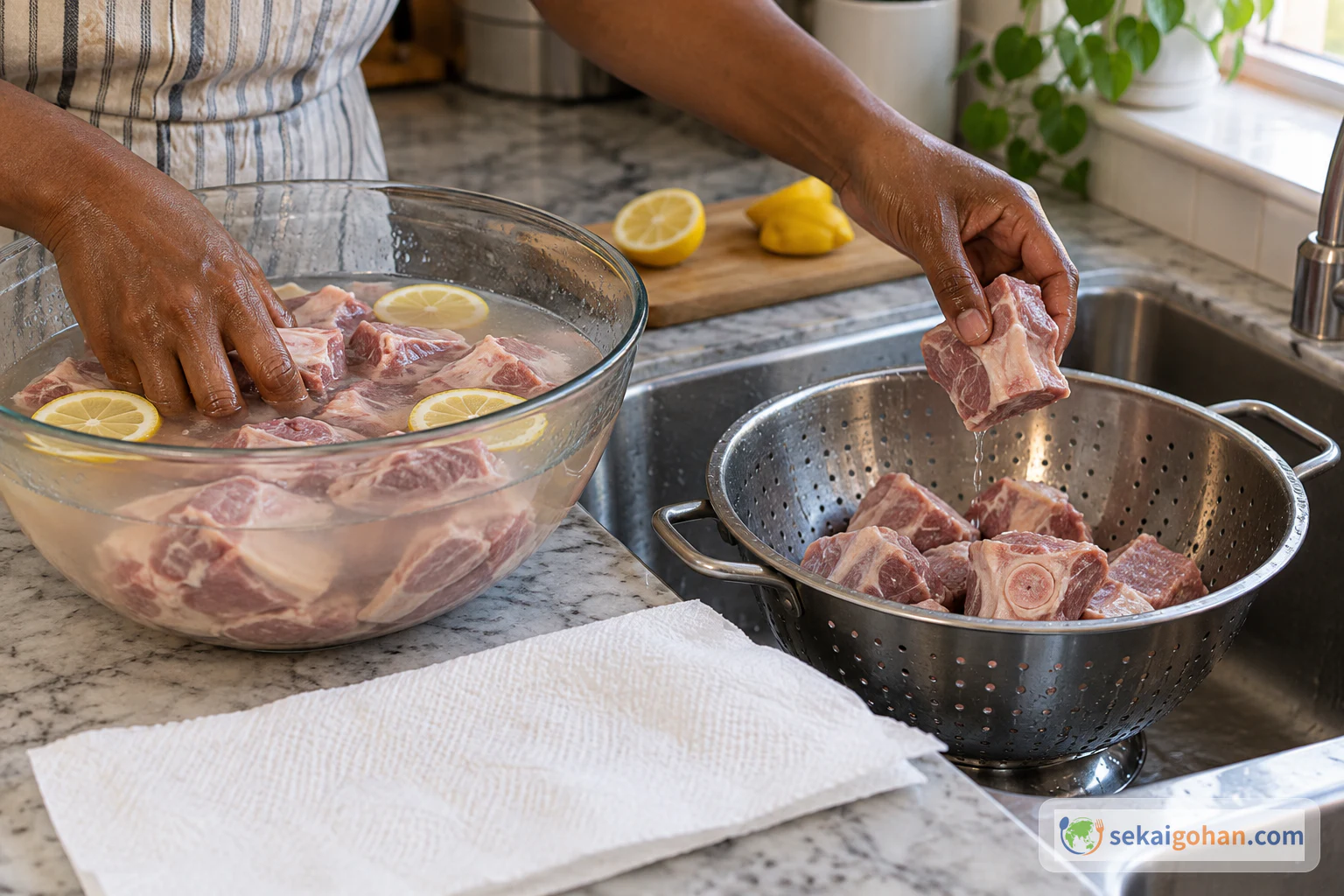
Do I have to wash the meat in lemon water?
No. The wash comes from Fabulous Fusion Food's method, but Japan's Ministry of Agriculture, Forestry and Fisheries (Kinki regional office) advises against washing raw meat because water can spread bacteria onto counters and tools. Patting the meat dry is enough, and we have not tested how skipping the wash affects the flavor.
Are the cloves and allspice whole or ground?
The recipe does not say. It gives 2 tsp of each and specifies "ground" only for the mace, so we have kept those amounts as they are and have not converted them.
Why is there no salt?
Neither the ingredient list nor the method includes salt, so we have not added an amount. Tasting at the end and adding salt if you want it is our editorial suggestion, not part of the recipe, and it has not been tested.
Is goat water always a Saturday dish?
No such rule is supported. The Saturday detail comes from one cook in one travel account from Antigua, while Montserrat's tourism authority mentions Friday lunch and communal occasions on its own island.
How many days does it keep?
We do not give a number of days, because the public guidance we used from Japan's food-safety authorities does not state one. It does give the cooling, temperature and reheating advice in the storage section above, and says to throw away food kept too long. The spore guidance uses curry as its example, and applying it to this stew is our editorial judgment.
Sources
- Fabulous Fusion Food, "Goat Water." The main recipe: servings, times, ingredients and method, and its description of "water" dishes as soups or stews. https://www.fabulousfusionfood.com/recipes/misc-ab-goat-water
- Antigua and Barbuda Pressroom, "A Taste of Exotic for the Everyday Gourmet." Goat water as an Antiguan specialty and staple, its seasonings, and variation between restaurants and stands. https://www.antigua-barbuda.org/press133.htm
- Eat Your World, "Dish Spotlight: Goat Water, on Antigua." A writer's 2013 account of one beach-bar serving and one cook's remark about Saturdays. https://eatyourworld.com/blog/dish-spotlight-goat-water-on-antigua/
- Montserrat Tourism Authority, "National Dish." Goat water as Montserrat's national dish and the island's own account of it. https://www.visitmontserrat.com/about-montserrat/national-dish/
- Sint Maarten National Heritage Foundation & Museum, "National Symbols." Goat water listed among St. Maarten's local dishes. https://www.sintmaartenmuseum.org/national-symbols
- BBC Good Food, "Goat water," recipe by Keshia Sakarah, 2020. The matching recipe, its presentation as Montserrat's national dish, and the cornflour method and ingredient lines. https://www.bbcgoodfood.com/recipes/goat-water
- Good Food Middle East, "Goat water," recipe by Keshia Sakarah. Used only as evidence for the 1 tsp cornflour amount. https://www.bbcgoodfoodme.com/recipes/goat-water/
- Ministry of Agriculture, Forestry and Fisheries of Japan, Kinki Regional Agricultural Administration Office, "料理前に気を付けたいポイント" (Points to watch before cooking). Not washing raw meat, washing produce eaten raw, separating knives and boards, and washing hands. https://www.maff.go.jp/kinki/syouhi/mn/foodpoisoning/ryourimae.html
- Ministry of Health, Labour and Welfare of Japan, "家庭での食中毒予防" (Preventing food poisoning at home). Cooking, refrigerator, freezer and reheating temperatures, shallow containers, and cleaning knives and boards with boiling water. https://www.mhlw.go.jp/stf/seisakunitsuite/bunya/kenkou_iryou/shokuhin/syokuchu/01_00008.html
- Ministry of Agriculture, Forestry and Fisheries of Japan, Kinki Regional Agricultural Administration Office, "カレーの保存には注意が必要です!!" (Take care when storing curry). Heat-resistant spores, quick cooling in shallow containers, and reheating while stirring. https://www.maff.go.jp/kinki/syouhi/mn/foodpoisoning/curry.html
- Ministry of Health, Labour and Welfare of Japan, "家庭でできる食中毒予防の6つのポイント" (Six points for preventing food poisoning at home). Throwing away food that has been kept too long. https://www.mhlw.go.jp/www1/houdou/0903/h0331-1.html