
The sesame aroma comes first in Puebla's big sandwich
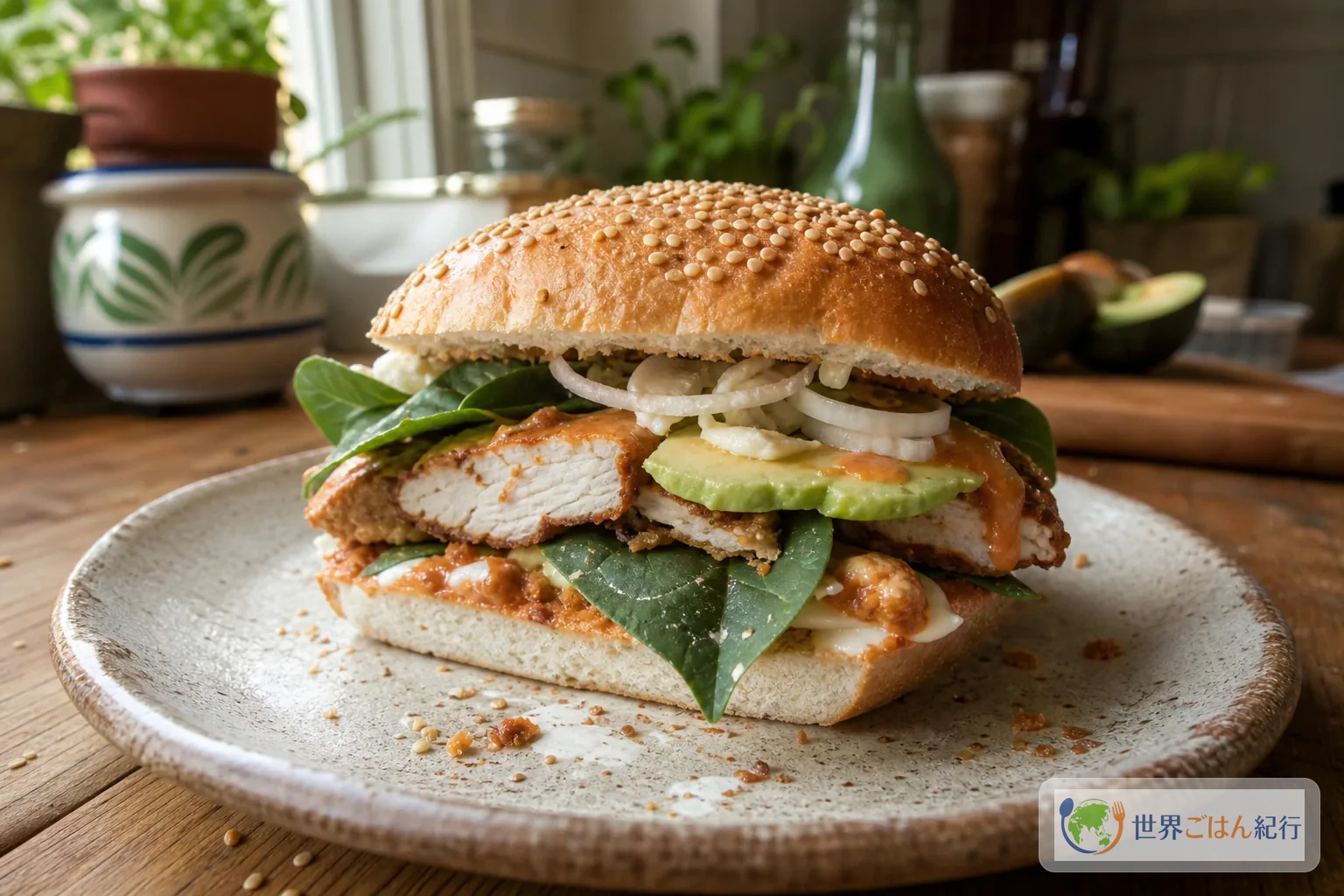
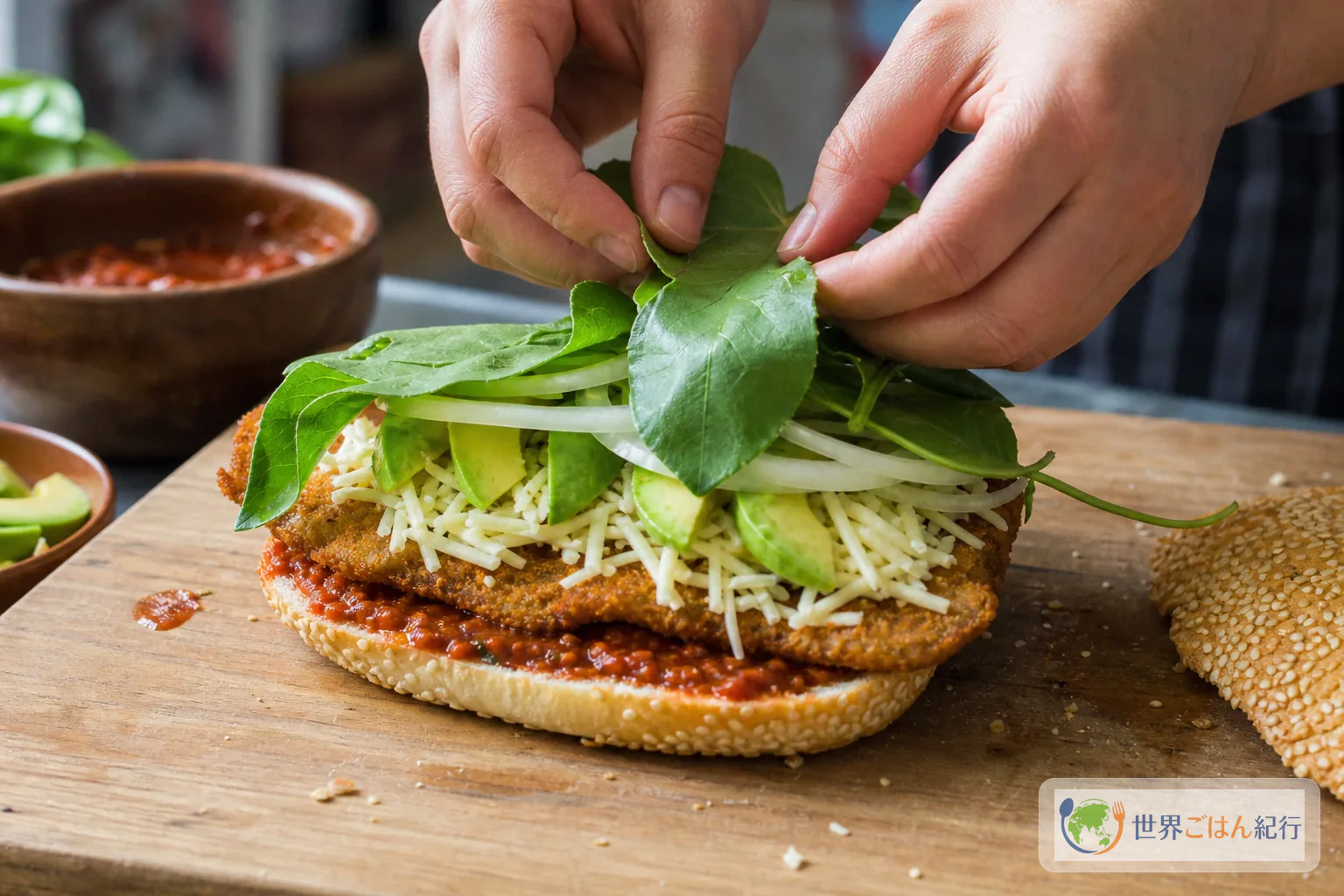
The cemita poblana is a big sandwich from the state of Puebla, Mexico. Make it at home and the first surprise is the presence of the bread. This is not a dish where soft sandwich bread catches the filling. You re-toast a round roll thickly coated in sesame seeds, lay a freshly fried milanesa on it, and pile on red chipotle sauce, avocado, white stringy cheese, onion and green aromatic leaves.
Hearing "street-stall sandwich," you might think it light, but the cemita is quite three-dimensional. The crunch of the breading, the smoky heat of chipotle, the richness of avocado and the green scent of papalo come one after another in a single bite. Unlike dishes built on a corn base, such as sopes (in Japanese) or chilaquiles, the bread itself gives the cemita its outline.
This article breaks the local character of the cemita into five points, "sesame roll, thin milanesa, chipotle, quesillo and papalo," and translates them into ingredients you can find elsewhere. Papalo and quesillo are hard to get, so it also spells out what you lose and what you protect when substituting.
What to protect in a cemita poblana
The Pueblan cemita is not just a big hamburger that takes any filling. The word that gives it its name, cemita, also refers to the round roll coated in sesame. The well-known form stacks milanesa, quesillo or Oaxaca cheese, aguacate, chipotle, cebolla and papalo on it.
| Element | Role in Mexico | How to handle it in a home kitchen |
|---|---|---|
| Cemita roll | Sesame-coated, with enough spring to stand up to the filling | Without a cemita roll, use a round sesame roll or a firm bun |
| Milanesa | Thinly pounded meat, fried, which gives the main element its thickness | Open chicken breast to 7 mm thick and fry at 170 to 175°C |
| Chipotle | Smoky heat and acidity that tighten the whole | Canned chipotle is ideal. Without it, approach it with smoked paprika and chile |
| Quesillo | A white cheese that pulls into strands, adding saltiness and a milky aroma | String-type mozzarella with a little extra salt |
| Papalo | A green aroma stronger than cilantro, raised at the end | If you can't get it, mix cilantro and arugula. Not a complete substitute |
Papalo, also called papaloquelite in Mexico, is an aromatic herb with a distinctive green scent. Replacing it with cilantro alone makes the aroma too rounded, so adding arugula or a little mint restores some of the bitterness and cool freshness of the leaf.
Quesillo is sometimes sold as Oaxaca cheese, but it can be hard to find outside Mexican markets. Instead, tear string-type mozzarella thin and add a pinch of salt to approach the stretch and faint milky aroma. Cheese is an ordinary dairy item, so nothing is recommended by brand here.
For chipotle heat clinging to chicken, there is tinga de pollo; for building a corn base, sopes (in Japanese); and for a stew with a festive feel, pozole rojo (in Japanese) is a close doorway. Among them, the cemita is a street dish where fried meat and bread are eaten all at once.
Ingredients (serves 4)
This amount makes 4 large cemitas. For lunch, 1 per person is plenty. For dinner, add bean soup or lime to lighten the heaviness.
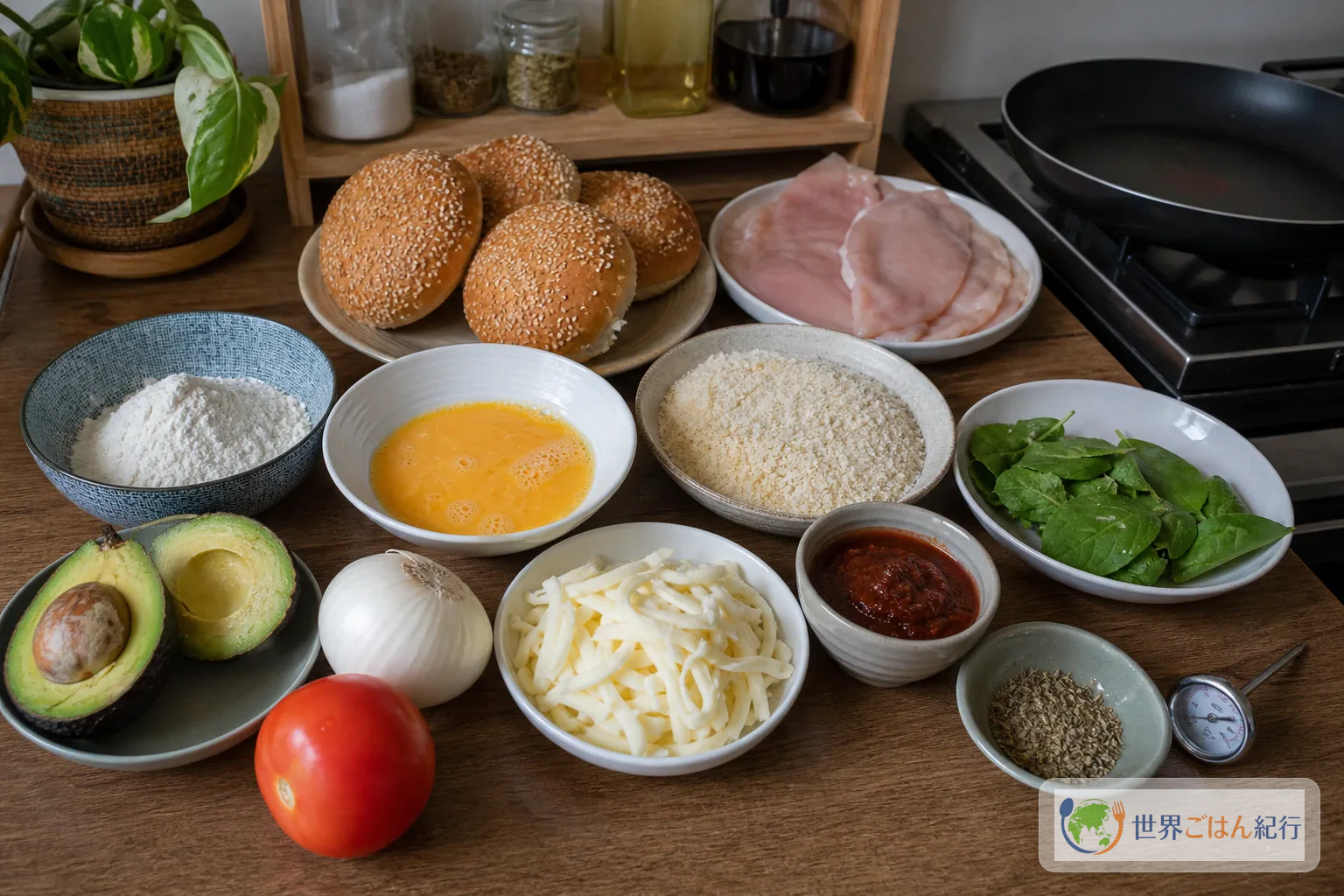
If you can't get chipotle, mix 2 tsp smoked paprika, 1/4 tsp cayenne, 1 tbsp tomato paste, 1 tbsp rice vinegar, 1/2 tsp sugar and 1/2 tsp oregano. You approach the smoky scent, but not the fermented-seeming deep heat of chipotle.
This recipe uses wheat, egg, milk and chicken. Aim for a core temperature of 74°C in the chicken breast, and if redness or clear juices remain after frying, cook it further. Frying oil gets very hot, so keep wet tools and watery ingredients away from it.
Where shopping gets confusing
Ordinary bread, chicken, avocado and cheese can be chosen at any neighborhood grocery. Here the gear worth having is limited to a tool that keeps the oil temperature on target, a wide griddle for re-toasting the bread, and a mortar that can coarsely crush the chipotle sauce.
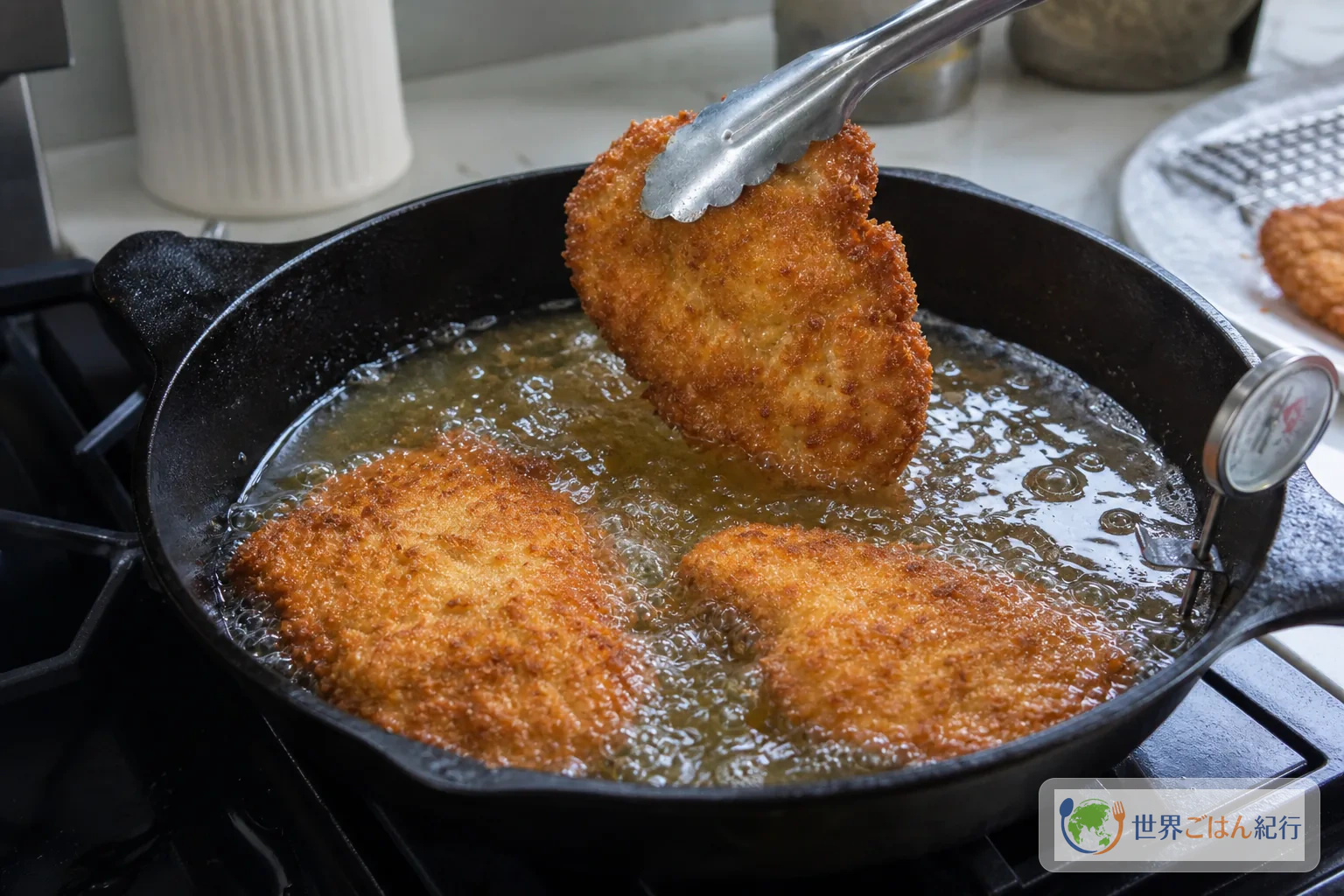
With a chicken-breast milanesa, judging by the color of the breading alone can leave the center underdone. A thermometer lets you check both the oil at 170 to 175°C and the core at 74°C.
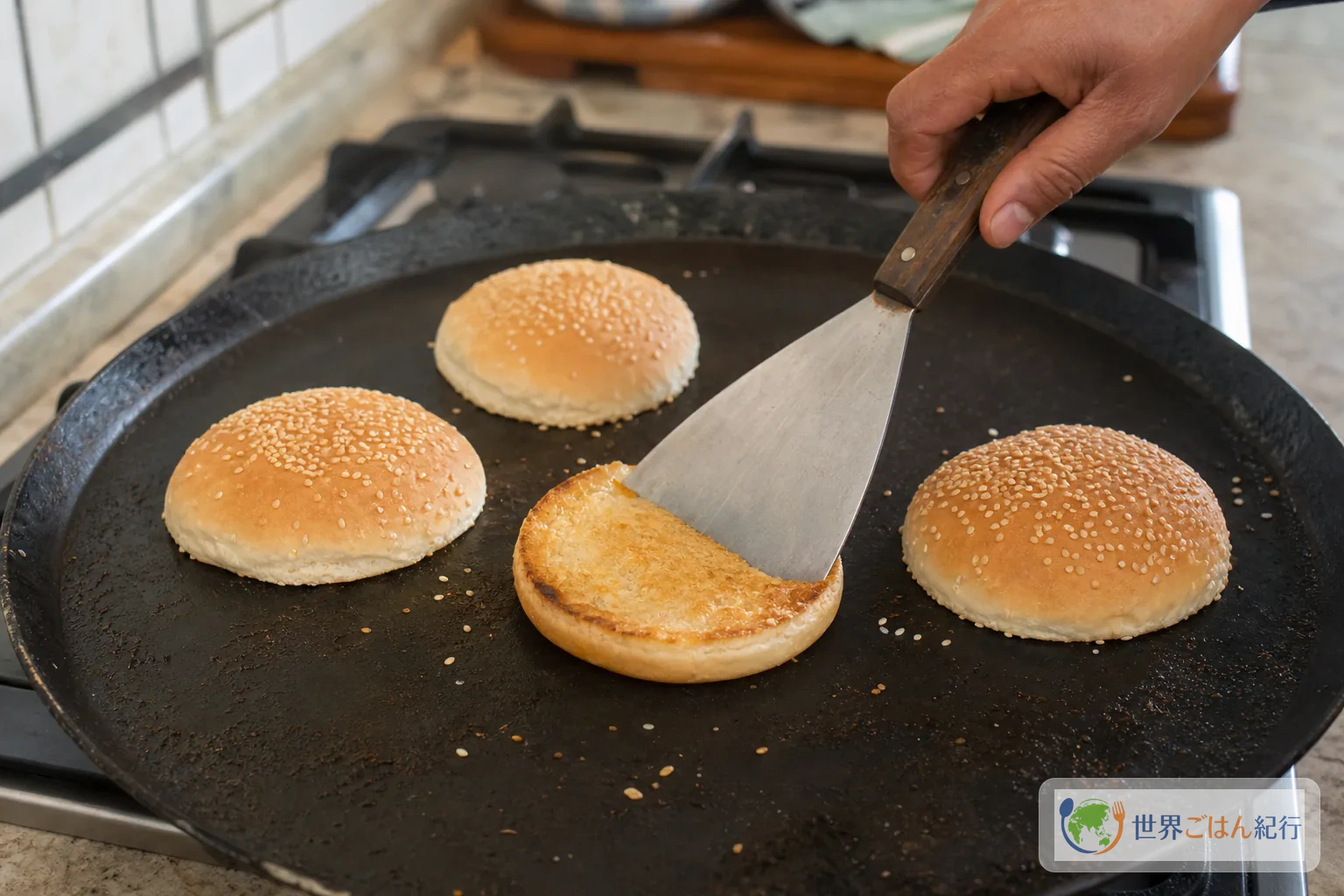
If you lightly re-toast the cut surfaces of the bread, the bottom doesn't turn damp right away even with chipotle sauce spread on. A griddle lets you lay the bread out wide and shortens the wait for the fried milanesa.
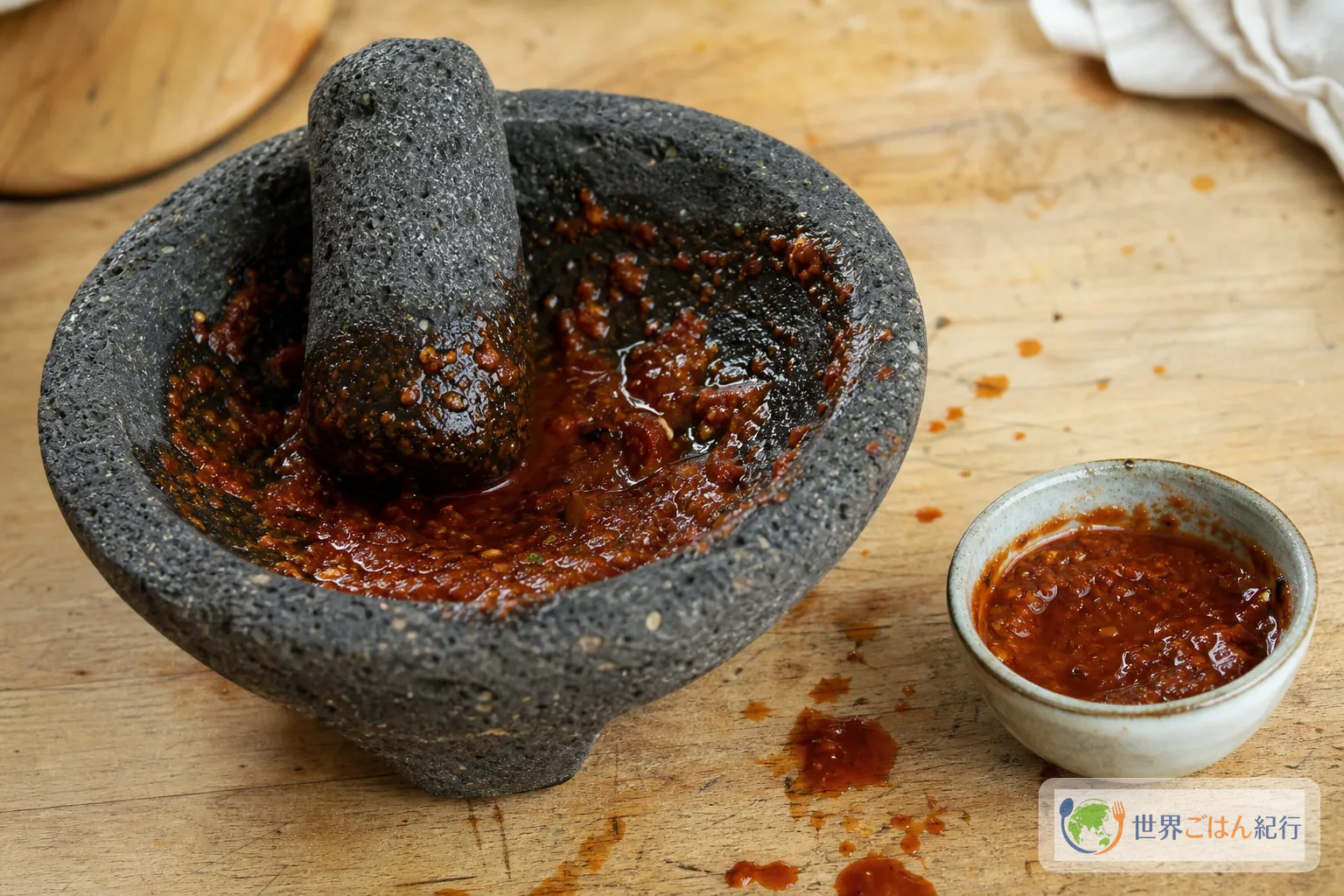
You can make the chipotle sauce in a blender, but for a small amount, crushing it coarsely in a mortar keeps it from going watery when spread on the bread. It is a tool that is easy to reuse if you often use salsa, spices and garlic.
How to make it
The milanesa is freshly fried, the bread freshly re-toasted, and the herb leaves go last. Rushing everything at once makes a mess, so first cut the filling, make the sauce, and open the bread just before frying.
Where to draw the line when substituting
The cemita looks easy to substitute, but if you move everything to ordinary sandwich ingredients, it becomes just a cutlet sandwich. Think of substitution as keeping at least one of "the spring of the bread, the smokiness of chipotle, the green scent of the leaves."
| Local ingredient | Ease of substitution | Substitute | What changes |
|---|---|---|---|
| Cemita roll | Medium | Round sesame roll, firm bun | The aroma is close, but the light pull of the local bread is weaker |
| Papalo | Low | 12 g cilantro and 20 g arugula, or a little mint | The distinctive green scent is weaker |
| Quesillo | Medium | 120 g string mozzarella with 0.5 g salt | The pull-apart texture is close, but the saltiness is faint |
| Chipotle | Low | Smoked paprika, chile, vinegar, tomato paste | The smokiness comes through, but the deep heat of chipotle is missing |
| Milanesa | High | Chicken breast, pork loin, beef round | The meat's aroma changes, but the structure of thin frying is kept |
The one thing not to compromise on the first time is chipotle. Bread and cheese can move to something close, but if the quality of the heat becomes just plain chile, it can't cut the weight of the avocado and cheese.
Where it tends to go wrong
| State | Cause | Fix |
|---|---|---|
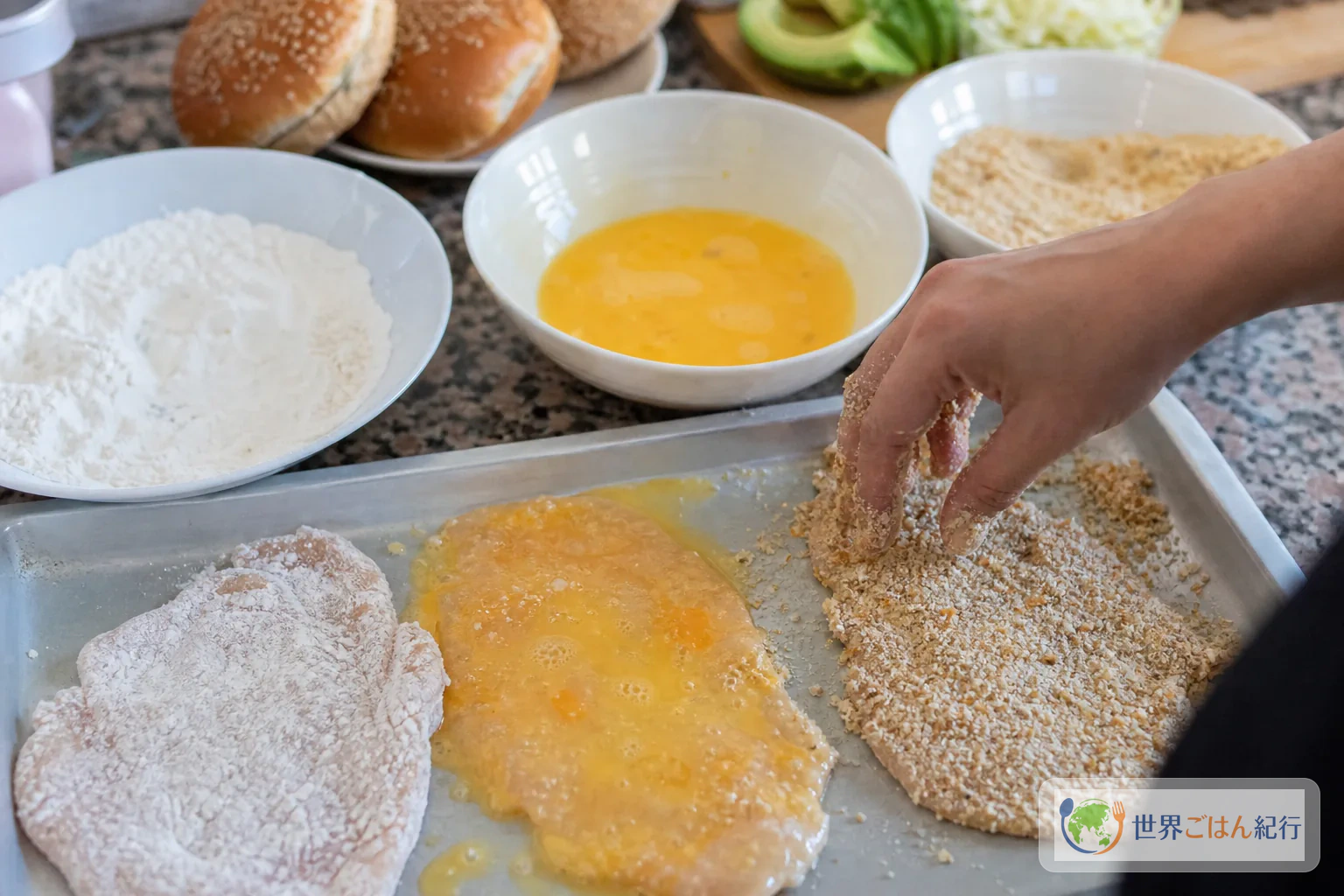
| Coating comes off | Moisture left on the meat, or too much flour | Pat dry with paper, and dust the flour thin before the egg |
| Meat is tough | Fried while thick, or the oil was low and the time stretched | Pound to 7 mm and keep the oil at 170 to 175°C |
| Bottom of the bread is damp | Under-toasted, or the sauce is watery | Dry the cut sides over medium heat, and make the sauce thick enough that spoon marks remain |
| Aroma is blurred | The substitute herb went on early and wilted | Put the herb leaves on last, and cut right before eating |
| Whole thing is heavy | Too much cheese and avocado | Aim for 30 g cheese and 45 g avocado per sandwich |
The urge to make the coating thick is understandable, but in a cemita the meat is the star and the coating is a layer that adds toastiness. Make it as thick as Japanese tonkatsu, and the aromas of chipotle and papalo lose out.
Storage and how to eat it
An assembled cemita is not something to leave out. The best way is to keep the bread, sauce, fried meat and vegetables separate and sandwich them just before eating.
| Component | Storage | Reheating |
|---|---|---|
| Milanesa | Refrigerate 2 days. Wrap in paper, then put in a container | 5 to 6 minutes in a 180°C toaster oven. Heat through to the center |
| Chipotle sauce | Refrigerate 4 days | Bring to room temperature. If stiff, add 1 tsp water |
| Cut vegetables | Same day | Don't heat. Wipe off the water before sandwiching |
| Bread | Room temperature 1 day, freezer 2 weeks | Re-toast the cut sides over medium heat |
When eating, avoid pressing down too hard from above, and the aroma stays. A little lime squeezed on the cut face of the meat lifts the weight of the fried coating and the cheese. If you like heat, leave a little chipotle sauce on a separate dish and add it partway, so the taste doesn't get monotonous.
What to serve with it
The cemita poblana is a dish where staple and main come together in one. Rather than adding another heavy fried item beside it, supporting it with acidity, moisture and the light sweetness of beans makes it easier to finish. To make it more like a street stall, put lime, thinly sliced onion and a hot sauce in small dishes so everyone can add as they go.
| Pairing | Role | Easy combination |
|---|---|---|
| Lime and white onion | Cut the weight of the fried coating and cheese | Squeeze lime on the cut face of the meat, and soak the onion in water |
| Bean soup | Adds satisfaction as a meal | Simmer pinto or black beans on the thin side and season with salt and oregano |
| Acidic seafood | Lightens the table | On a hot day, add a small portion of aguachile |
| Corn snack | Builds the flow of a Mexican meal | Serve a small sope (in Japanese) as a starter |
For breakfast or brunch, make the cemita a little smaller and add a small portion of chilaquiles tossed in salsa. Both use the acidity of chipotle and salsa, so they can be run from the same shopping trip.
FAQ
Can I make it without papalo?
Yes. But papalo is a herb that matters a great deal to the cemita's character. If you don't have it, add arugula or a little mint rather than cilantro alone. Some of the bitterness and cool freshness of the leaf comes back.
What if I can't find canned chipotle?
Approach it with smoked paprika, chile, vinegar and tomato paste. But the deep smoky heat peculiar to chipotle won't come out completely. If you plan to make cemitas several times, canned chipotle is worth looking for.
Can I use pork instead of chicken?
Pork loin works. Pound it to about 7 mm as well and cook through to the center. You don't have to aim for a core temperature of 74°C as with chicken, but make sure no strong redness remains. For the first time, the chicken breast is used in the explanation because doneness is easier to judge.
Can I use hamburger buns?
Yes. Buns that are too soft sink under the sauce, so choose a slightly firm one with plenty of sesame, and be sure to re-toast the cut sides. Sandwich bread or brioche puts sweetness and softness up front, so the cemita character is weaker.
How much can I prepare ahead?
The chipotle sauce can be made 4 days ahead, and the milanesa coating applied up to 2 hours before frying. Fried meat can be refrigerated, but once assembled the bread turns damp. Re-toast the bread just before eating, warm the meat, and add the leaves last.