Fish and Fungi: Simmered White Fish and a Yellow Cornmeal Side, No Mushrooms Involved
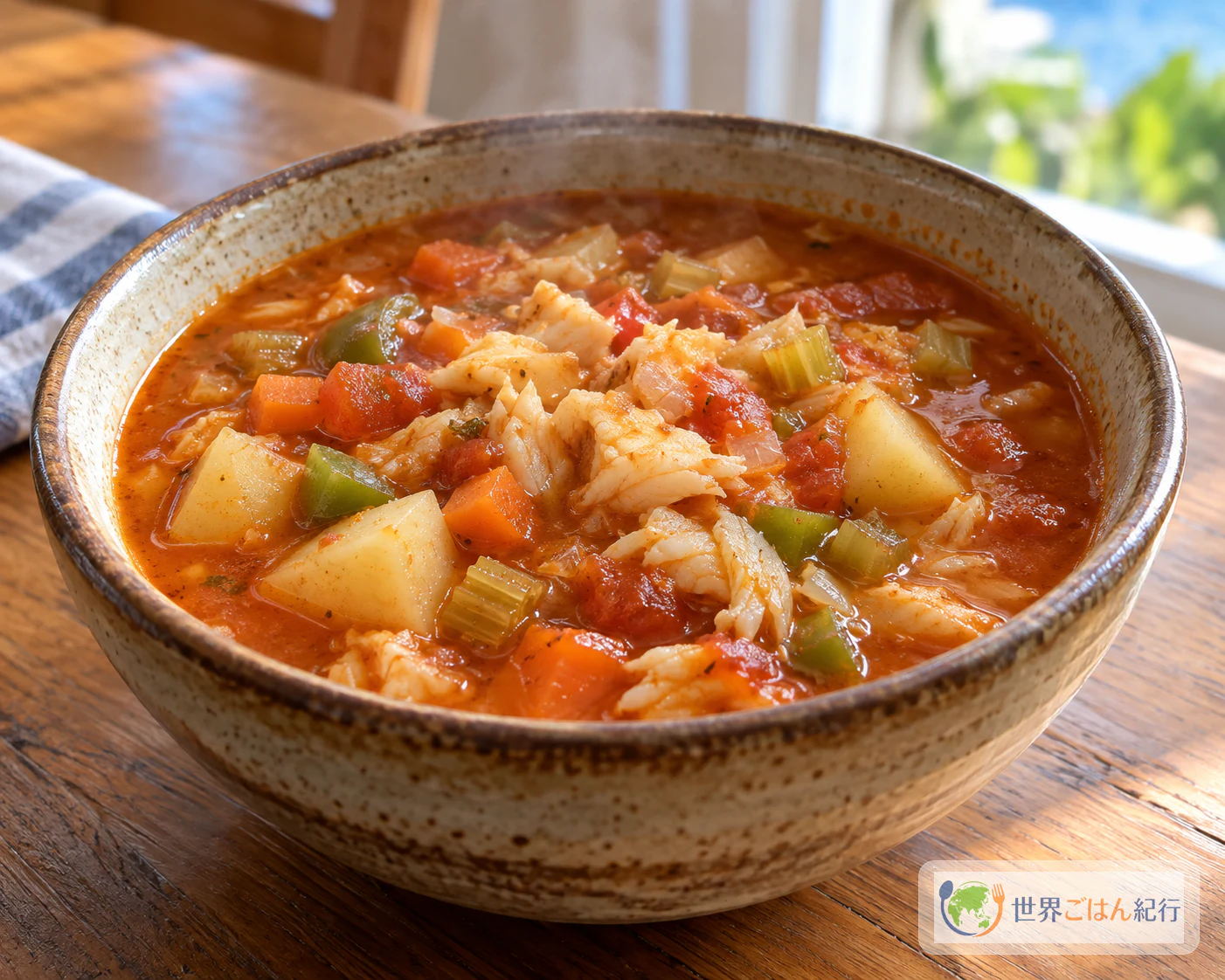
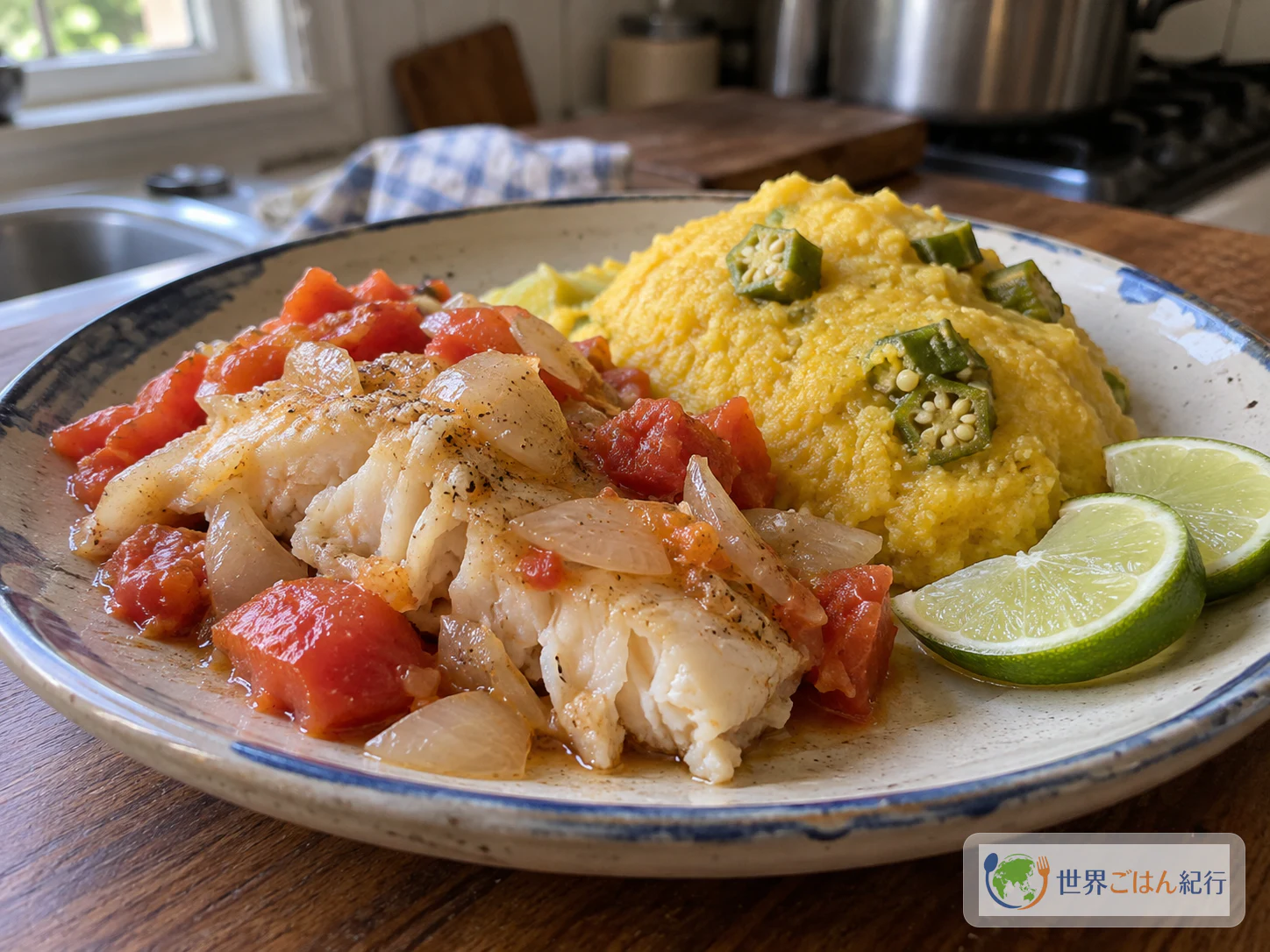
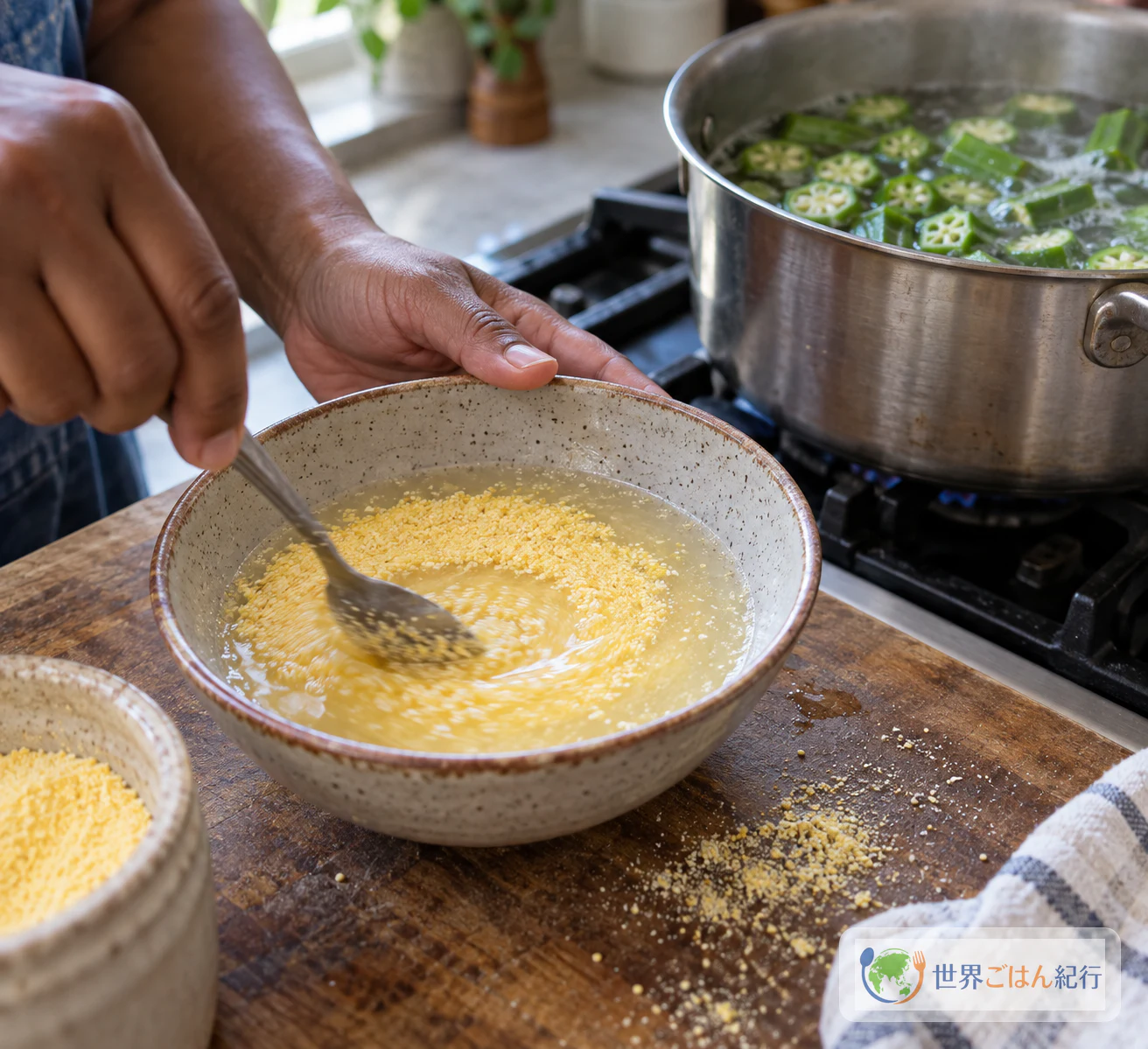
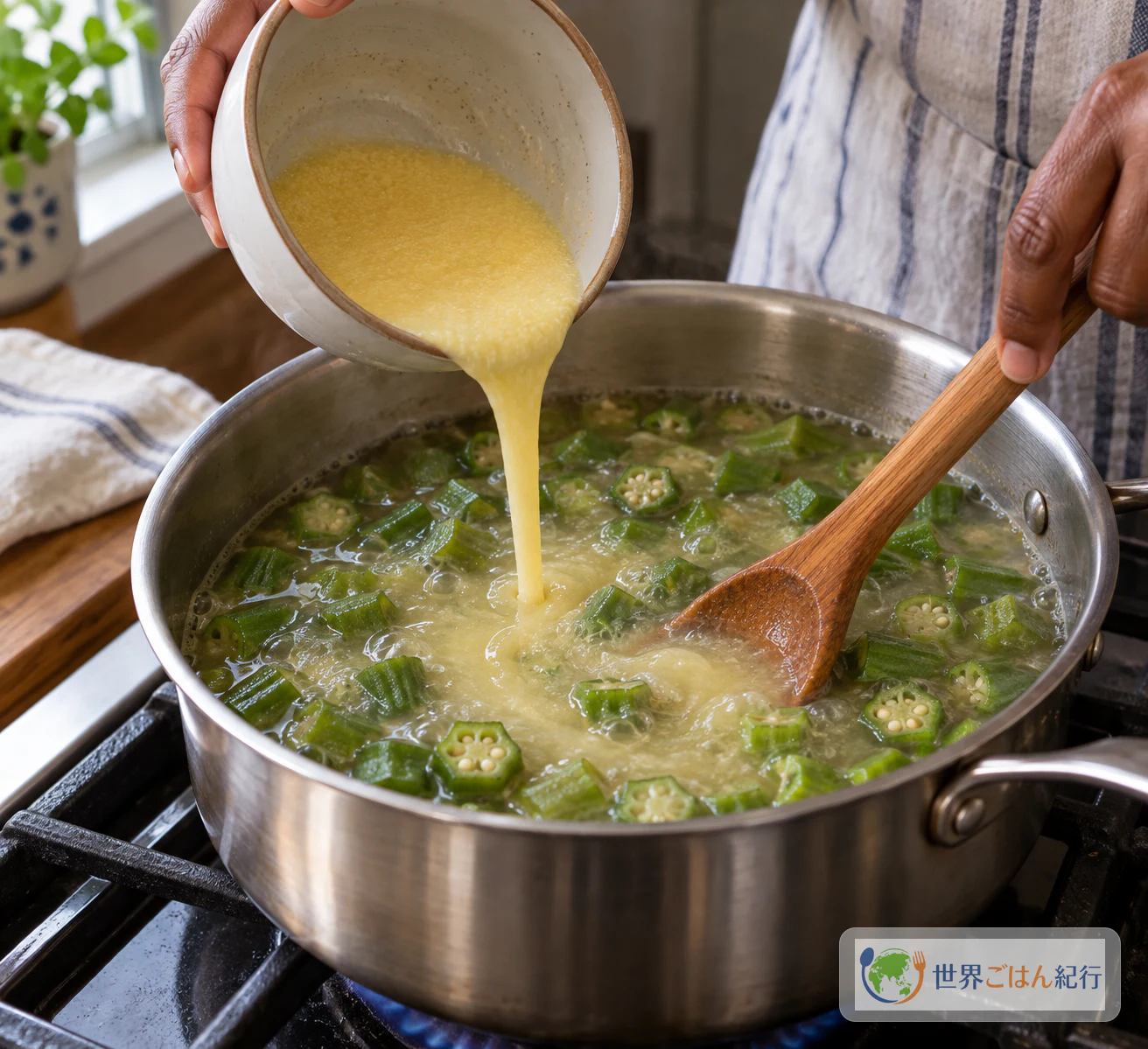
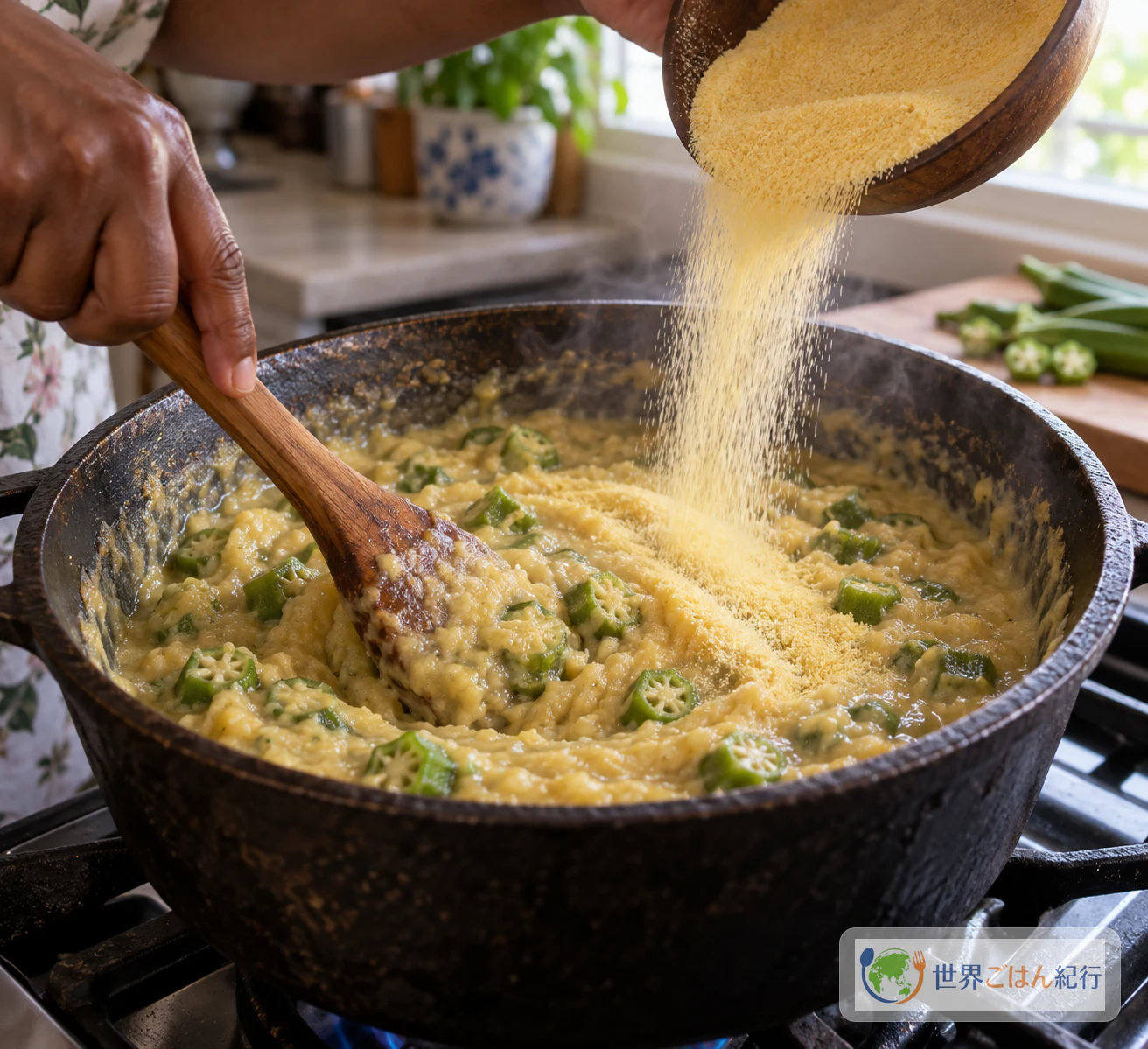
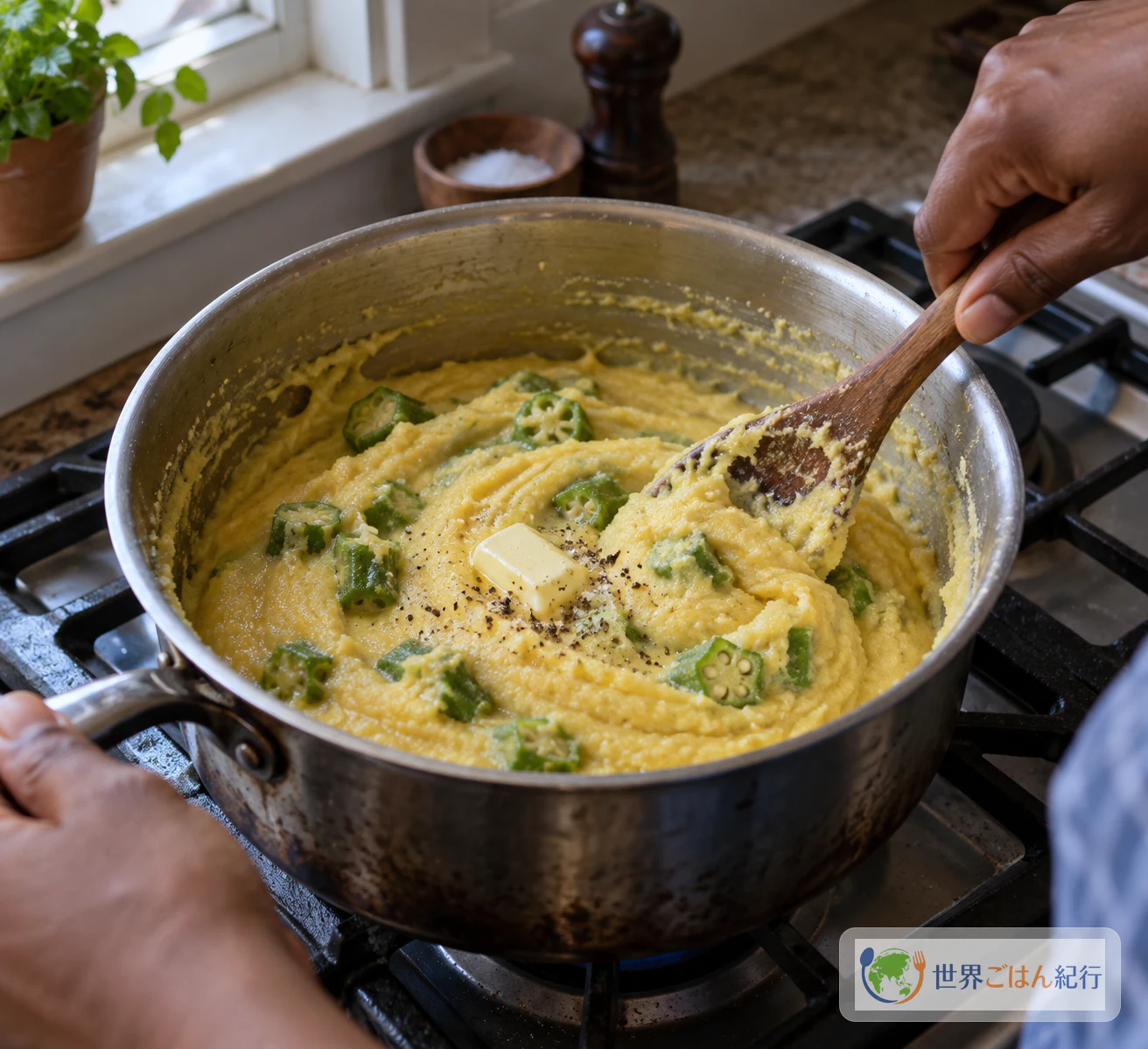
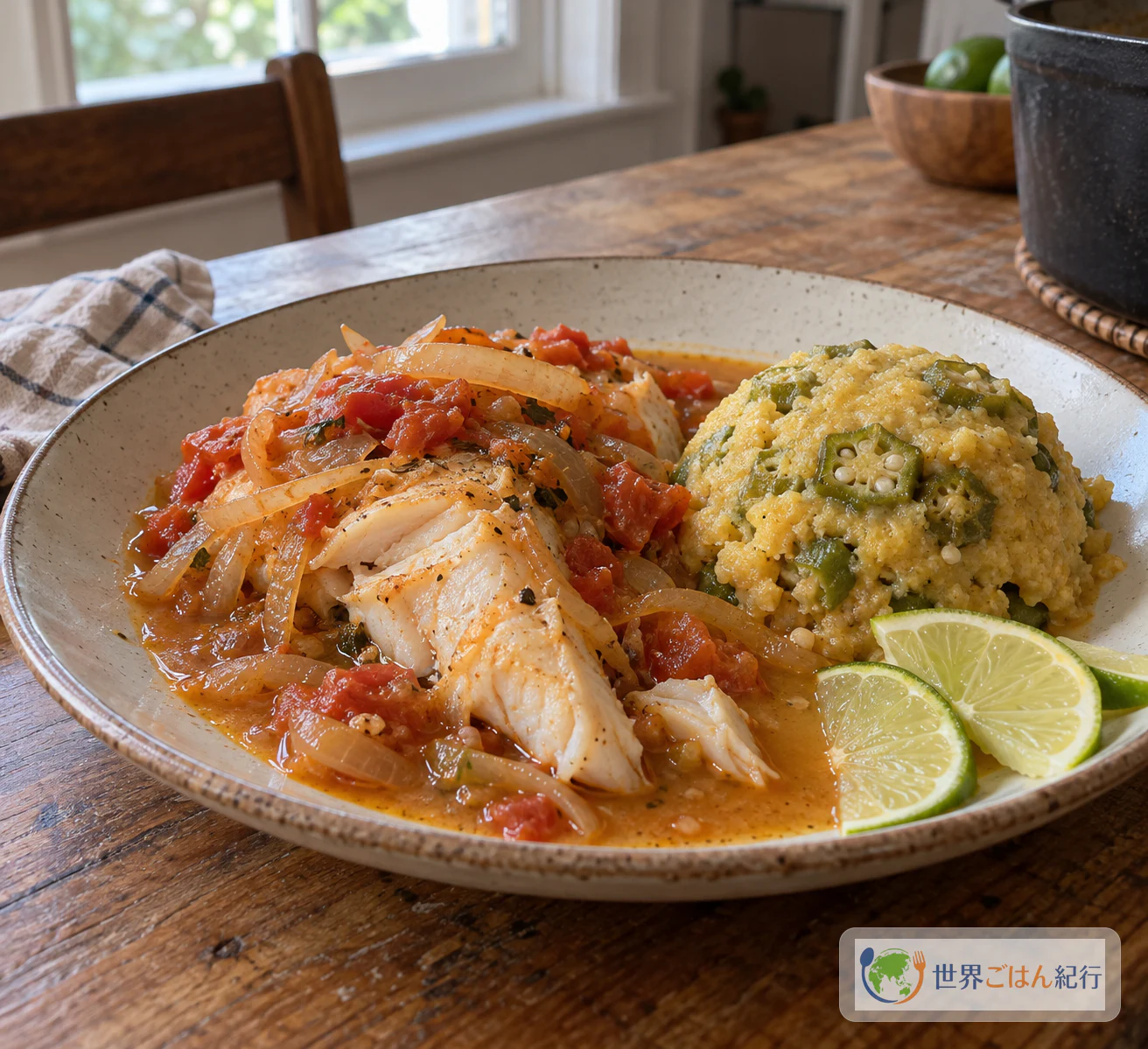
There are two parts: firm white fish simmered with onion, tomato, vinegar and citrus, and fungi made from fine yellow cornmeal and okra. Here, "fungi" does not mean mushrooms.
On one side of the plate, white fish rests in a sour broth with large pieces of onion and chopped tomato. On the other is a mound of yellow cornmeal dotted with okra, with a few slices of lime alongside. The name raises a question for many readers, so it helps to answer it first: fungi in this dish is cooked cornmeal and okra.
This recipe follows the version published by News Americas Now in a British Virgin Islands context. Its text and quantities closely match a recipe in a newsletter from the United Nations Economic Commission for Latin America and the Caribbean (ECLAC), and a British Virgin Islands recipe on Food.com uses the same wording for the fungi. These look like copies of one text rather than separate traditions, so their agreement doesn't count as independent confirmation.
We have not cooked this recipe for this article, so we can't promise how firm the fungi will turn out. The amounts and method below come from the published recipe, with food-safety notes added.
A few points in the published recipe are worth knowing before you cook:
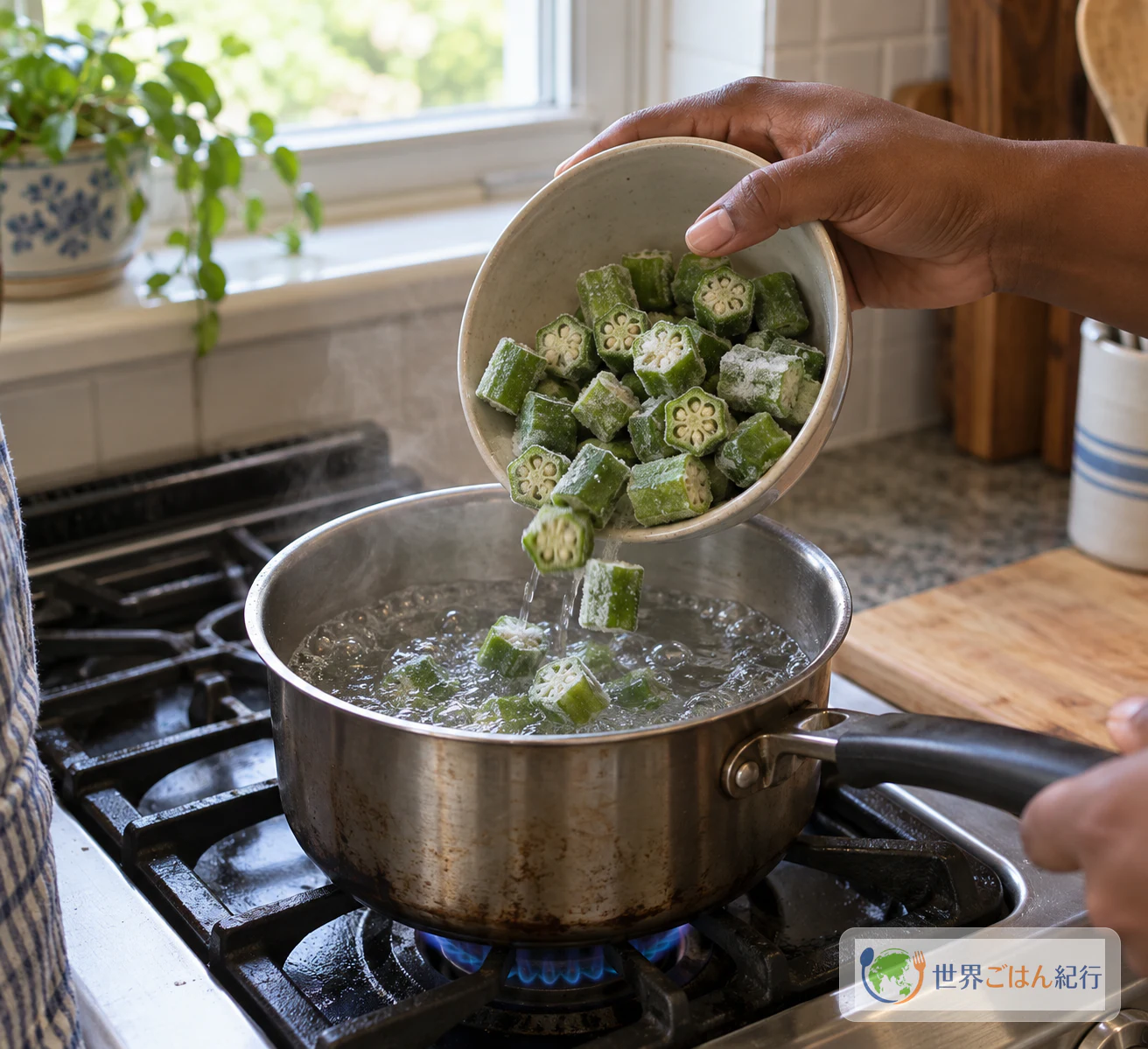
- Two water amounts for the fungi. The ingredient list gives 1 1/4 cups of boiling water. The method boils the listed water with the okra, then blends 2 tbsp of the cornmeal with about 6 tbsp of water in a separate bowl. None of the published versions says whether those 6 tbsp are counted within the 1 1/4 cups, so we show both amounts as published and have not corrected them.
- Fish weight. News Americas Now gives 2 1/4 lb. The extracted text of the ECLAC newsletter shows "2 1/4" with no unit.
- Cooking time after the slurry goes in. News Americas Now says 1–2 minutes, and ECLAC says 1 minute.
- Servings and salt. The recipe doesn't give a yield, so we don't state one. It lists salt only for the fungi, so we haven't added any to the fish.
Ingredients: One Pot for Fish, One for Fungi
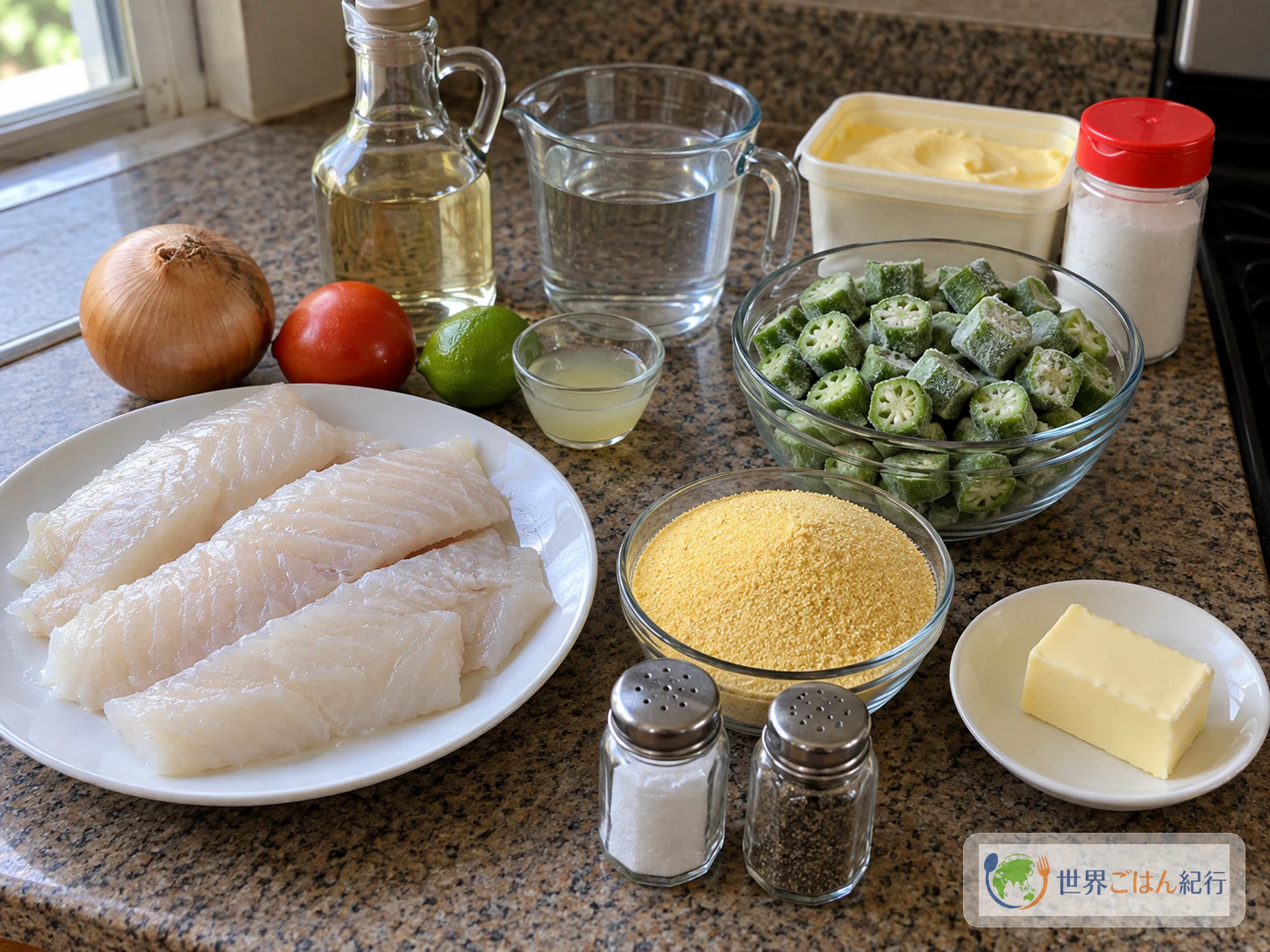
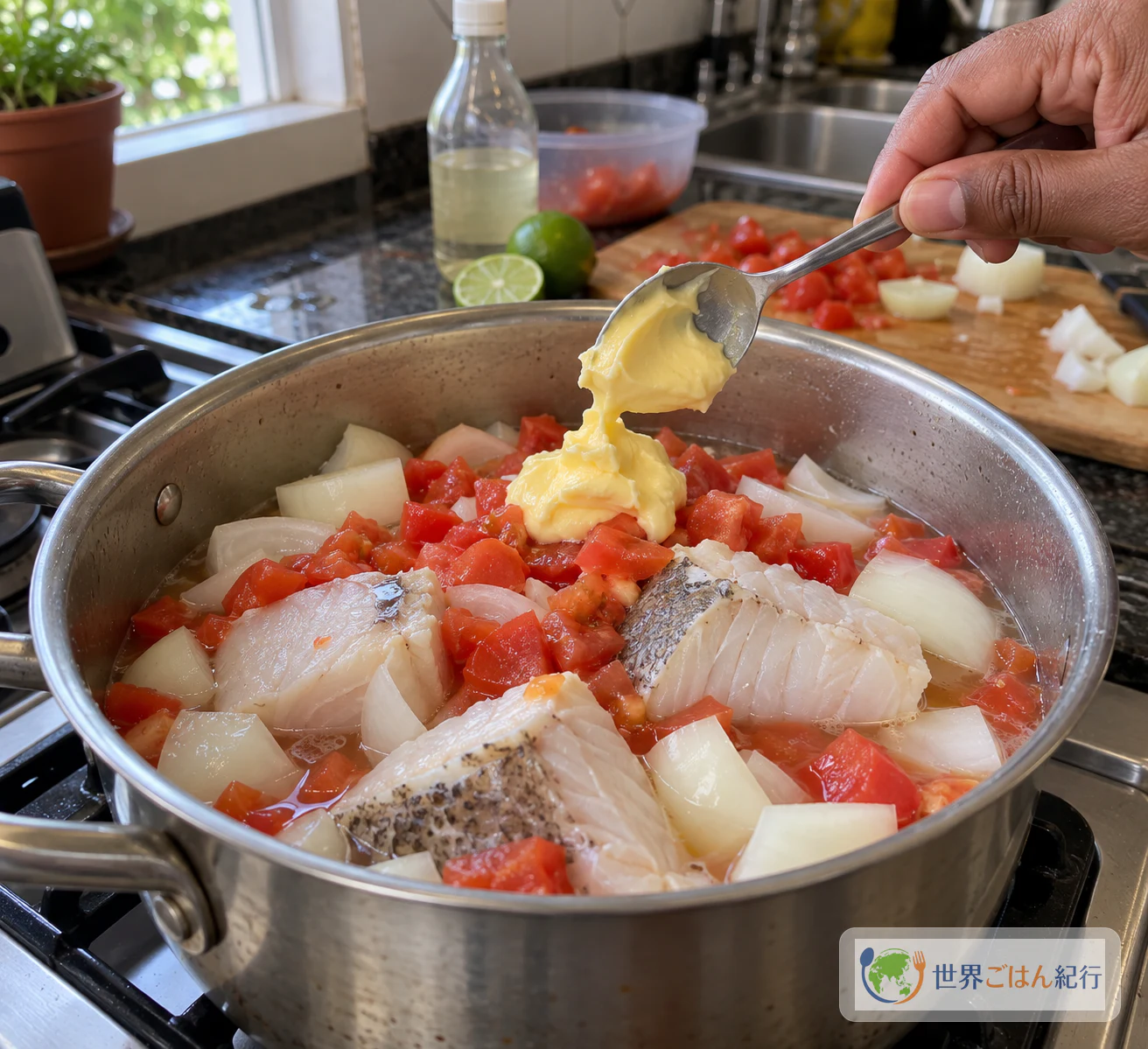
This dish contains fish and butter. Check the label on your Accent seasoning and margarine for allergens. Keep hands, boards and tools used for raw fish away from cooked food, and from vegetables and citrus for serving, unless they have been washed first.
Equipment
- Heavy pot with a lid, for simmering the fish
- Second pot, for the fungi
- Small bowl, for the slurry
- Food thermometer, for checking the center of the fish
- Long-handled wooden spoon, for stirring the fungi
Fixing Problems in the Pot
| What you see | Likely reason | What to do |
|---|---|---|
| The time is up, but the fish is below 145°F (about 63°C) or still not opaque | Thick pieces, or a low simmer | Cover and keep simmering, then check again. Temperature decides, not the clock |
| The fish is falling apart | Too much stirring, or a hard boil | Keep the heat low, leave the pot mostly alone, and lift the fish out gently |
| The cornmeal forms lumps | It went in too quickly | Add the rest a little at a time and keep stirring |
| The fungi tastes powdery | It needs more cooking | Keep stirring over the heat until the raw, powdery taste is gone |
| The fungi is firmer or looser than you like | The final firmness hasn't been tested | Note what you used and how it turned out. We have no tested correction to offer |
| The texture and timing are off, even though you followed the steps | Coarse cornmeal may have been used | Use fine yellow cornmeal next time. Coarser grinds cook differently |
Choosing and Substituting
Cornmeal: Look for fine yellow cornmeal. Coarse polenta meal changes the graininess and the cooking it needs, so the same times won't apply. Cornstarch and potato starch are not substitutes.
Fish: Any fish that is white and firm-fleshed fits. We don't name one species as the traditional choice.
Okra: Frozen cut okra is the first choice. Fresh okra is a change to the recipe: it differs in cut, weight and cooking, and we have no tested equivalent amount.
Citrus: Use lemon juice or lime juice for the 4 1/2 tsp, not both. The sliced lime is separate.
Accent seasoning: Don't assume another seasoning is the same thing. If you can't find it, leaving it out is our editorial suggestion, not part of the recipe. The flavor will differ, and we haven't tested by how much.
Margarine and butter: The fish uses margarine and the fungi uses butter. Using butter in the fish would change the aroma and possibly the saltiness, so treat that as your own variation.
Where the Dish Belongs: Shared Across the Virgin Islands
Fish and fungi is treated here as a British Virgin Islands dish, but not as one that belongs only to those islands. ECLAC's newsletter The Hummingbird presents it as the national dish of Saint Croix and says it is the same dish as the national dish of the British Virgin Islands. The same short piece traces its history to the period when all the islands were under Danish rule. That account is brief and cites no supporting evidence, so we attribute it to ECLAC and don't build on it or claim a single birthplace.
The pairing also appears beyond this recipe. A separate user-submitted Virgin Islands-style recipe on Food.com pairs stewed fish with okra-cornmeal fungi, using quantities that differ substantially and a cold-water cornmeal slurry to avoid lumps. It isn't specific to the British Virgin Islands, so we mention it only for comparison and haven't mixed its amounts into this recipe.
We read the fungi as the starchy part of the meal, a firm counterpart to the sour cooking liquid of the fish. That is our interpretation of how the two parts work together, not a claim from the sources.
Frequently Asked Questions
Is fungi a mushroom dish?
No. In this dish, fungi is cooked fine yellow cornmeal and okra.
Is the 6 tbsp of slurry water part of the 1 1/4 cups?
The published versions don't say. They list 1 1/4 cups of boiling water, then use about 6 tbsp of water to blend the cornmeal in a separate bowl. We show both as published without adding them up or saying one includes the other. Because we haven't tested the recipe, we can't guarantee the final firmness.
What does "limed" fish mean?
The ingredient list says "cleaned and limed", which points to treating the fish with lime, but it doesn't describe how. We haven't invented a procedure for it. Follow the safety notes in the method whichever way you prepare the fish.
Which fish should I use?
The recipe says only "firm white fish". It doesn't say whether the fish is filleted or has skin and bones, and we couldn't confirm any particular species as traditional.
How many people does this serve?
The recipe doesn't state a yield, so we don't give one.
How do I know the fish is cooked?
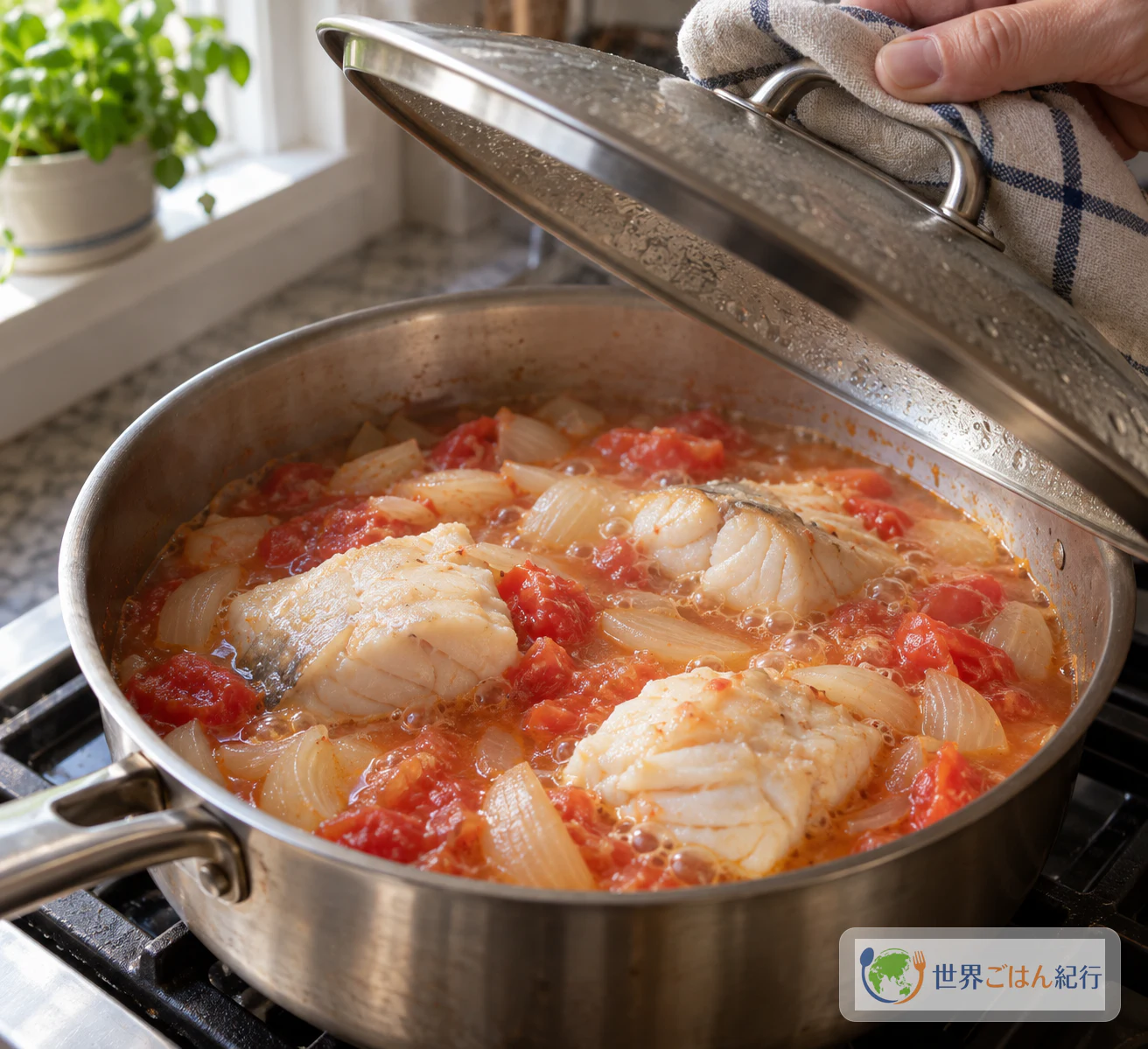
The recipe's endpoint is fish that flakes with a fork after a covered simmer of about 20–30 minutes. The US Food and Drug Administration's seafood guidance adds an internal temperature of 145°F (about 63°C), with flesh that is opaque and separates easily with a fork. Use a thermometer as well as the time.
Is this dish only from the British Virgin Islands?
ECLAC describes Saint Croix's fish and fungi as the same dish, so we don't describe it as exclusive to the British Virgin Islands.
Can I keep leftovers?
The recipe sources give no storage or reheating guidance, so we don't give a storage period here.
Sources
- United Nations Economic Commission for Latin America and the Caribbean (ECLAC), Subregional Headquarters for the Caribbean, The Hummingbird, "Fish and fungi." The dish's description as Saint Croix's national dish and the same dish as the British Virgin Islands' national dish, the attribution to the period of Danish rule, and the ingredient lists and method. https://repositorio.cepal.org/server/api/core/bitstreams/b539a672-fc9e-4046-8098-b5b8c916bf18/content
- News Americas Now, "Caribbean Recipes – Fish And Fungi." The recipe in a British Virgin Islands context: ingredient list, method and the fork-flaking endpoint for the fish. https://www.newsamericasnow.com/caribbean-recipes-british-virgin-islands-fish-and-fungi/
- Food.com, "Fish and Fungi (British Virgin Islands)," user-submitted recipe (GiddyUpGo, blog "Travel by Stove"). The fungi ingredient list and water and slurry wording, the same text as the two sources above. https://www.food.com/recipe/fish-and-fungi-british-virgin-islands-480612
- Food.com, "Fish and Fungi Virgin Islands Style Recipe," user-submitted recipe (Member 610488). Comparison only: a separate recipe pairing stewed fish with okra-cornmeal fungi, using a cold-water cornmeal slurry to avoid lumps. https://www.food.com/recipe/fish-and-fungi-virgin-islands-style-287080
- U.S. Food and Drug Administration, "Selecting and Serving Fresh and Frozen Seafood Safely." The internal temperature of 145°F and the signs of doneness: opaque flesh that separates easily with a fork. https://www.fda.gov/food/buy-store-serve-safe-food/selecting-and-serving-fresh-and-frozen-seafood-safely