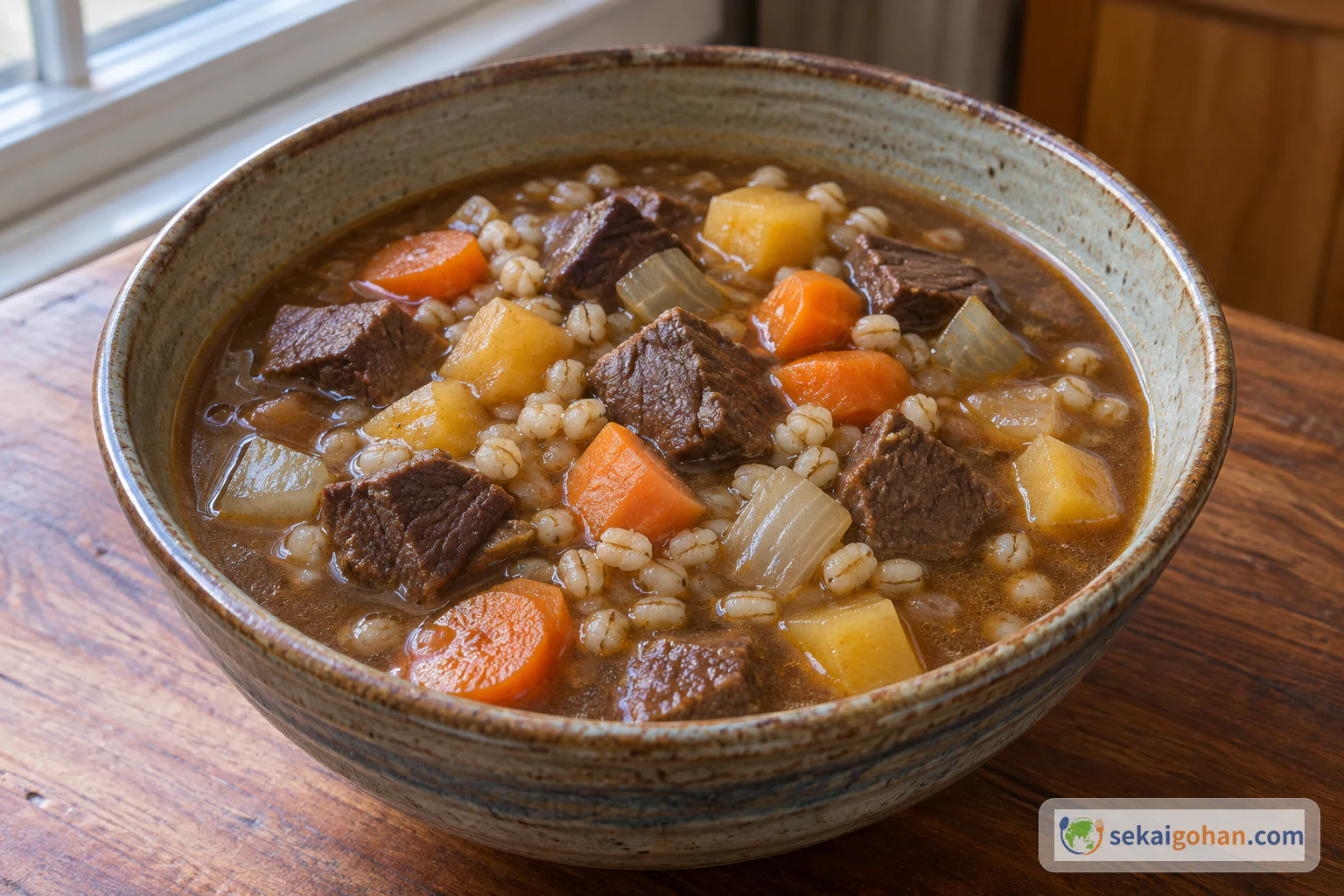
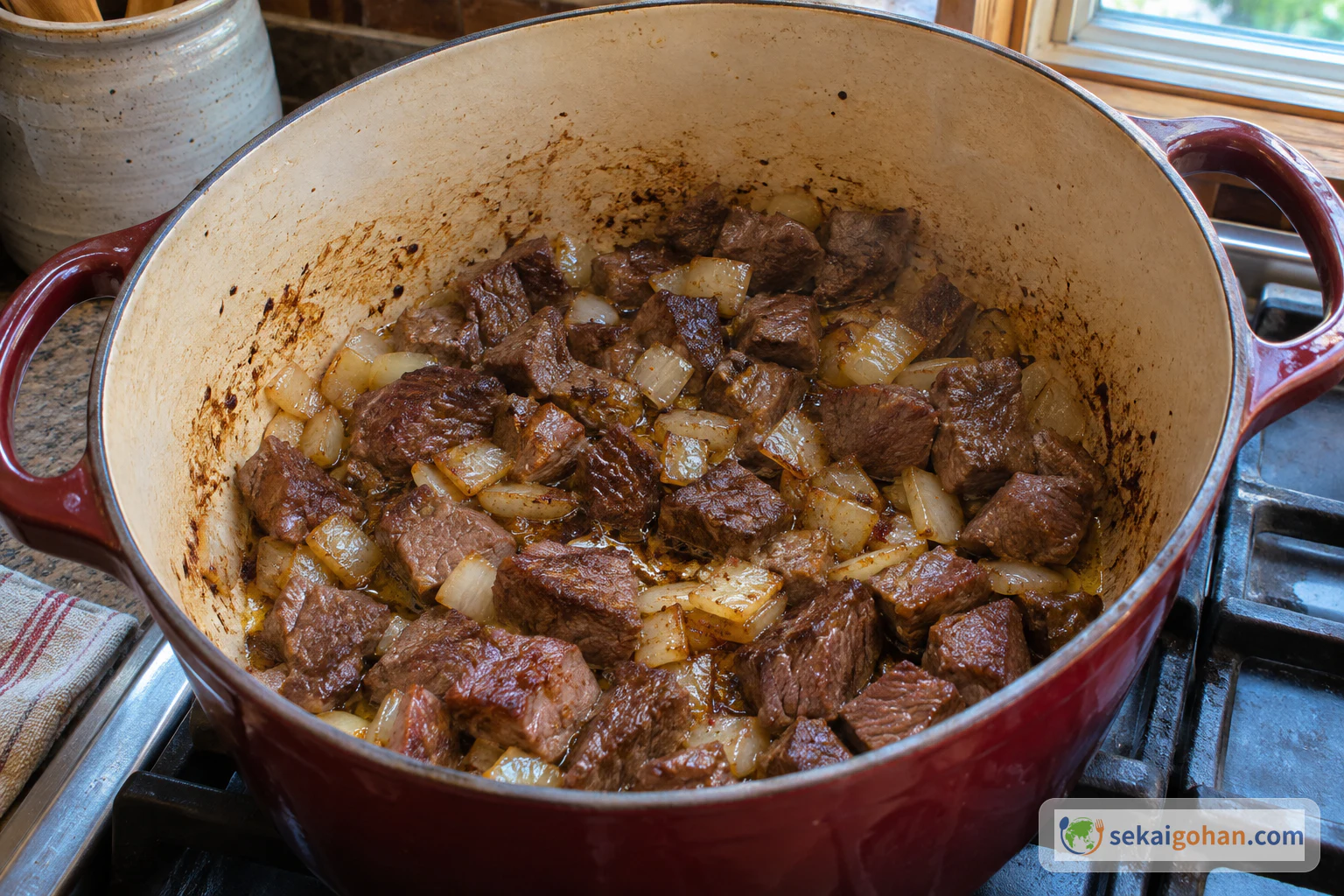
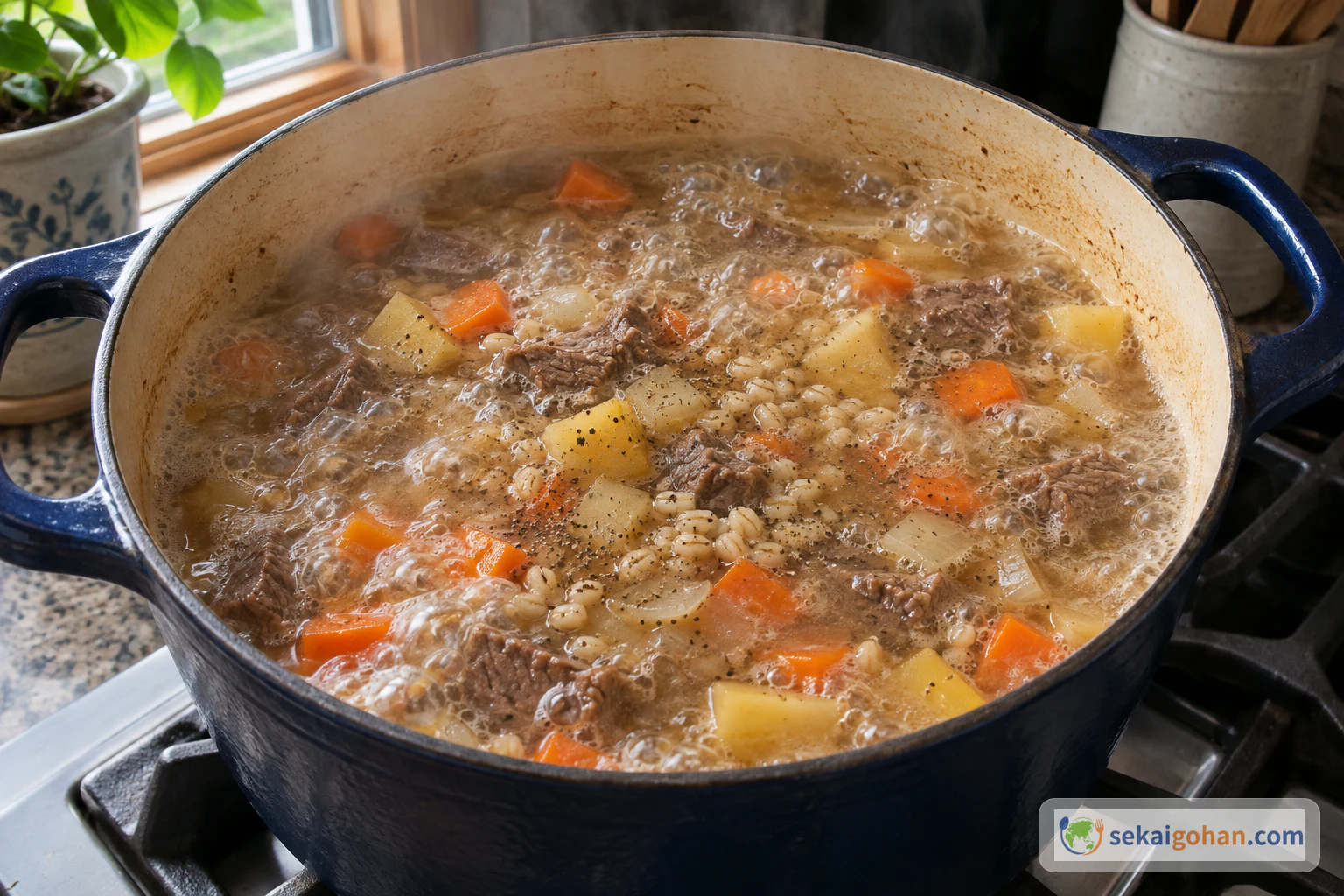
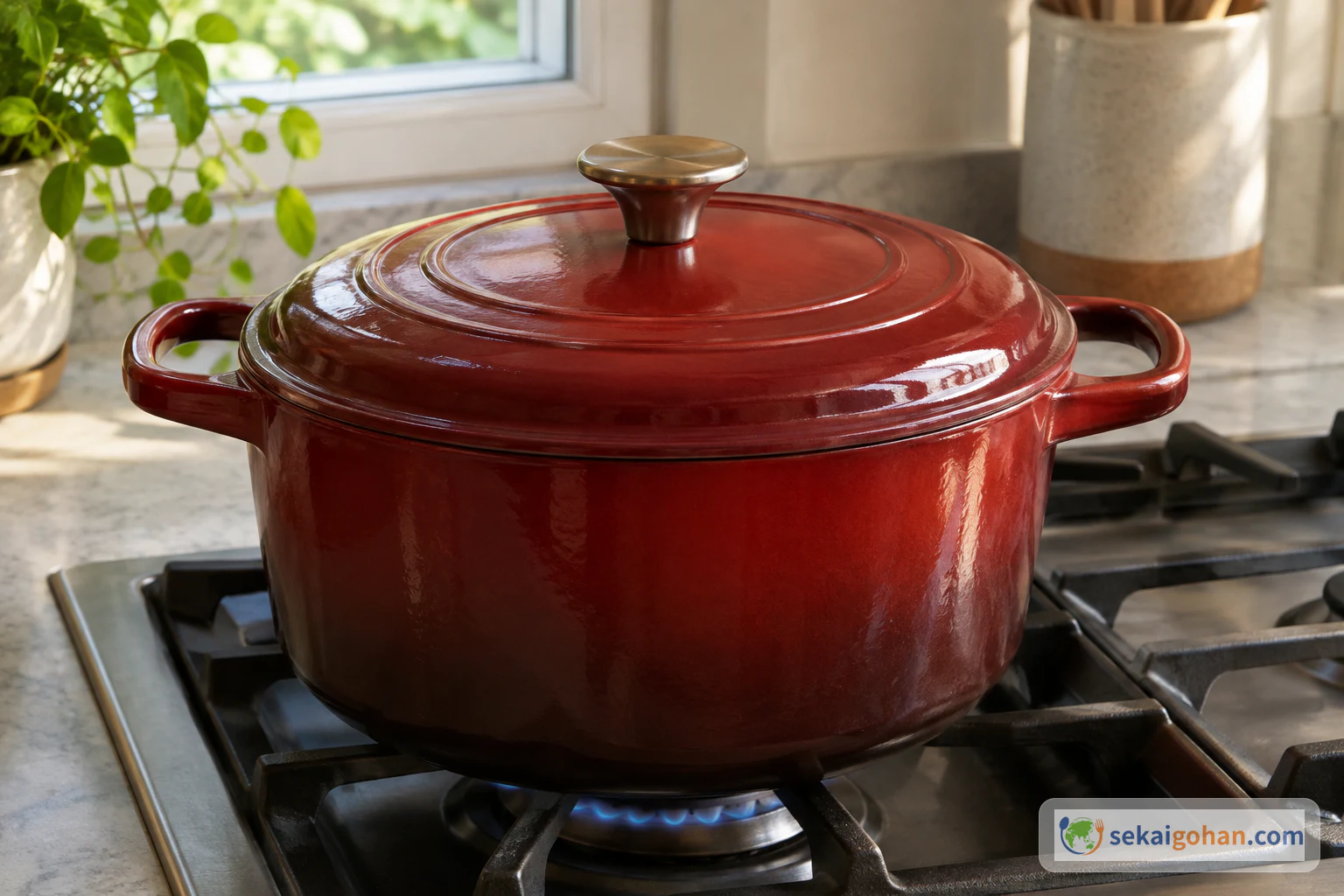
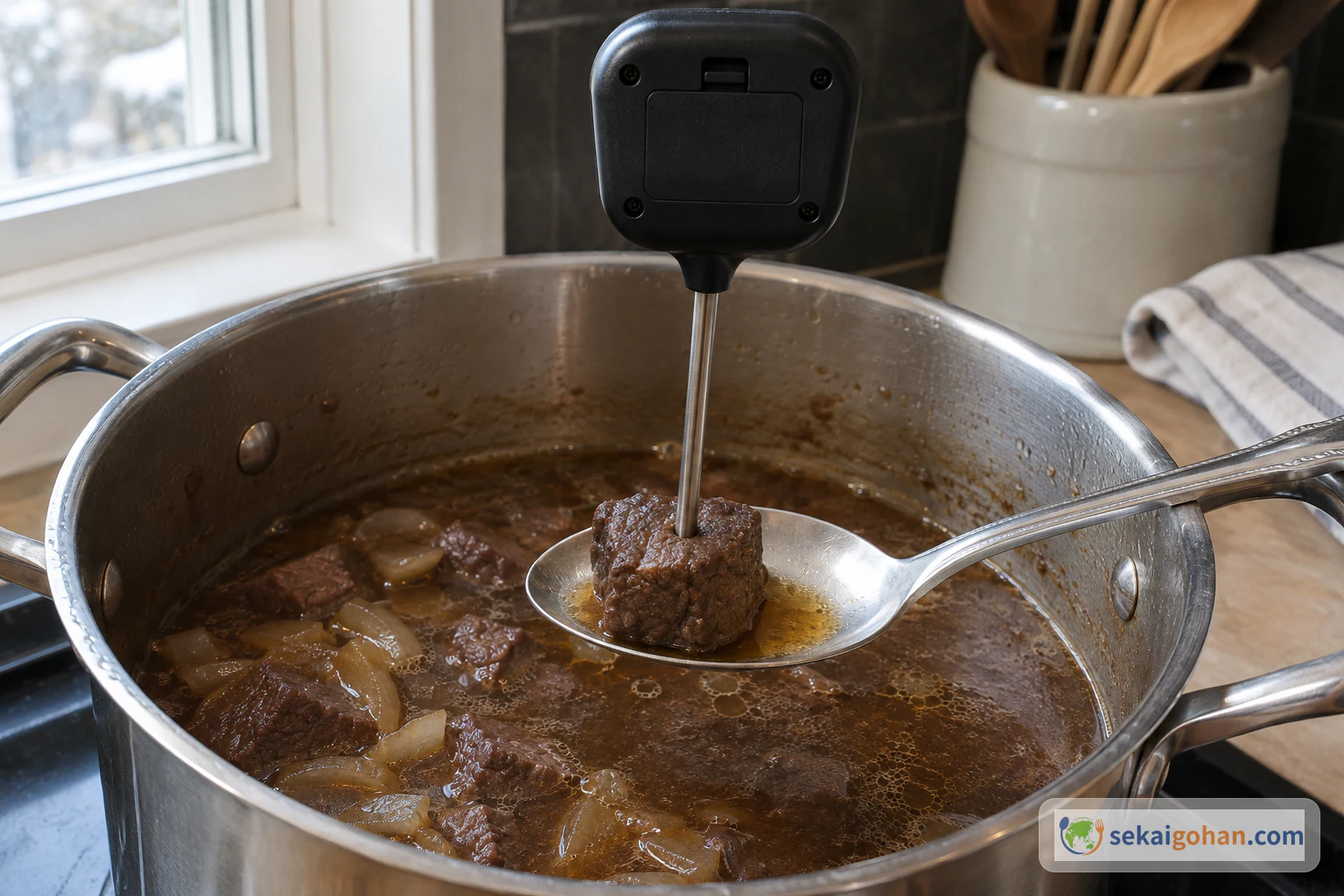
The first thing you notice is the hiss of dark, lean cubes of caribou and chopped onion hitting hot oil. The kitchen fills with a sweet, meaty smell as the edges brown. Then the carrots, the pale yellow rutabaga, the barley and the water go in. The pot comes to a hard boil, and the lid goes on for a long, quiet simmer. Caribou stew is the meat-and-barley pot of the Canadian North. It tastes of deep, lean meat and sweet roots, and the barley swells until the broth is thick enough to coat a spoon. Bannock goes on the side, and the pot is big enough for the whole table.
A Pot for the Whole Table in the Canadian North
Caribou stew is usually described as an Inuit and Tłı̨chǫ dish, tied to the northern territories of Nunavut and the Northwest Territories. It is cooked for a crowd. The amounts here fill one big lidded pot and serve eight to ten people. The seasoning is spare. Salt and pepper carry it, with chili powder only if you want it, so the meat, roots and grain set the flavor. Barley does two jobs: it thickens the broth as it cooks, and it makes a bowl filling enough to work as a whole meal.
There is no single fixed recipe. Every household makes its own. In Mittimatalik (Pond Inlet), one home version adds a minestrone soup mix along with potatoes and celery. That pot boils for fifteen minutes, then simmers on low until the potatoes are soft. That home cook prefers lean cuts such as the tenderloin. Further east, in Newfoundland and Labrador, the same one-pot stew is made with either caribou or moose. Other versions bring in rosemary, garlic, tomato paste or red wine. The pot below keeps to the plainer northern core: meat, onion, carrot, rutabaga, barley and water.
At the table the stew comes with bannock and water. That sets it apart from Canada's other home stews, such as the Acadian chicken-and-dumpling fricot, where the starch cooks in the pot. Here the bread stays on the side, ready for wiping the bowl. You can find more of the country's dishes in our Canadian recipes.
In Inuit kitchens caribou is tuktu, so the same pot is often called tuktu stew. Look for both names when you go looking for family versions from the North.
Ingredients (serves 8–10)
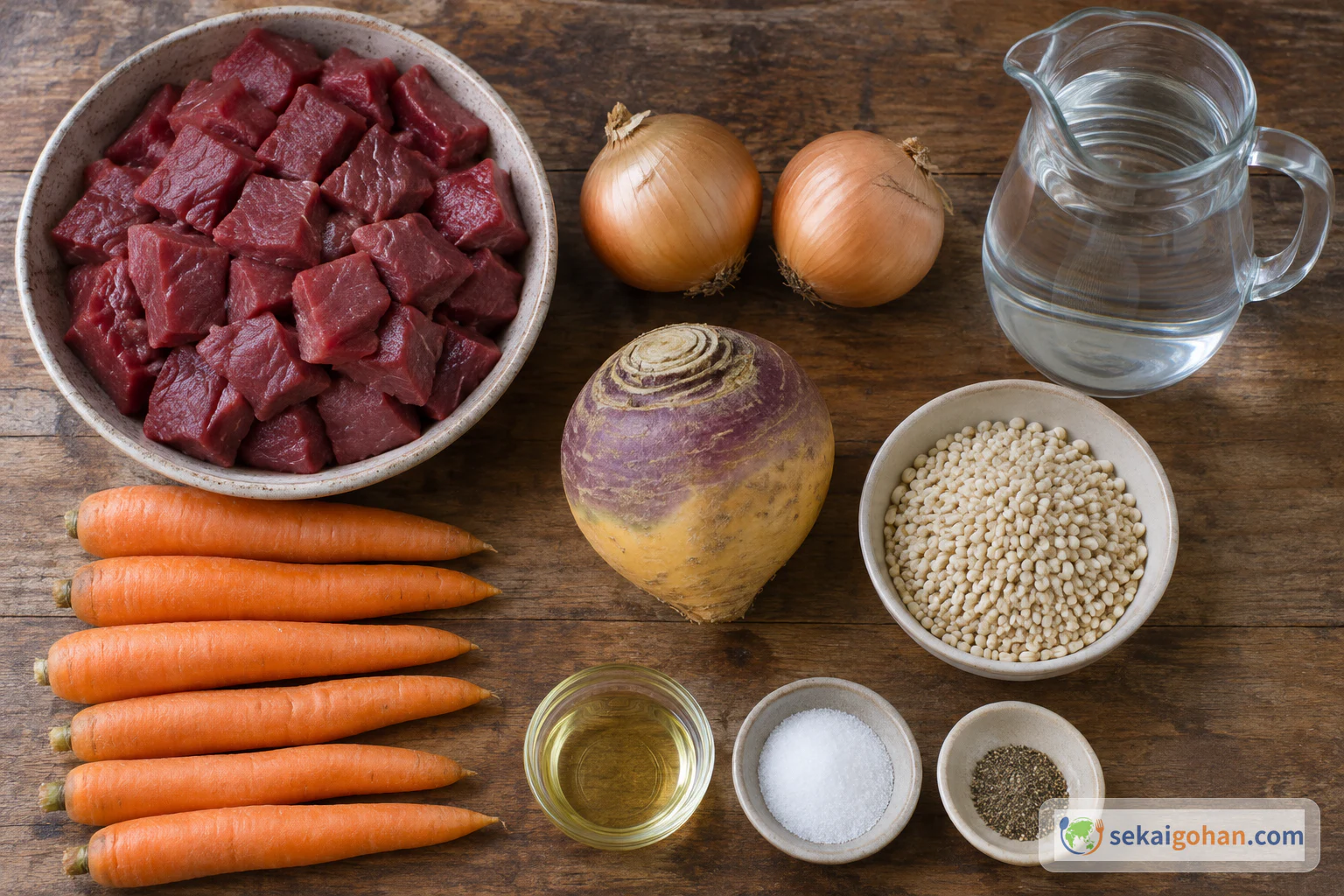
Barley contains gluten. If you use chili powder or frozen mixed vegetables, check the labels on those products too.
Equipment
- A large heavy pot with a tight lid, about 20 cups (5 L)
- A sharp knife and a cutting board
- A wooden spoon
- An instant-read thermometer
- A ladle
Choosing the Meat, the Root and the Barley
Caribou rarely shows up in ordinary grocery stores, so most cooks outside the North will choose a substitute. Moose is the closest swap, since the same stew is made with either meat. Lean venison is also close because it shares caribou's low fat. Watch the heat with lean venison, because it tightens if the pot boils hard during the simmer. Beef shank or shoulder, cut into cubes, gives a milder, more familiar flavor and leaves more fat in the broth.
Rutabaga is the root to look for. It is the big, waxy, purple-and-yellow globe, usually sold near the turnips. A small white turnip holds more water, breaks down sooner and tastes sharper. A potato makes the broth starchier and loses the rutabaga's earthy sweetness. Both swaps work, but neither tastes the same.
For barley, buy pearl or pot barley. Other kinds, such as waxy or rolled barley, absorb water and break down at a different rate, so the broth will thicken differently. Salt also varies. Fine table salt tastes saltier by the spoon than coarse kosher salt, so with fine salt start with a little less than the full tablespoon and adjust at the end.
Meat, rutabaga, carrot and barley give this stew its northern character, so keep those four. Chili powder and herbs are optional.
Method: Brown, Boil, Simmer, Check
Cut everything before you turn on the stove: cube the meat, and chop the onions, carrots and rutabaga. Browning needs your full attention. After that comes a quick stage of adding the rest and bringing it to a boil. The long simmer is mostly hands-off, apart from a stir now and then. The thermometer check at the end decides when the stew is ready to serve.
When It Goes Wrong
| What you see | Why | What to do |
|---|---|---|
| The meat turns grey and sits in liquid instead of browning | The pot is too crowded or not hot enough | Brown in batches over medium-high heat and put everything back in the pot before adding the water |
| The broth is thick and sticks to the bottom | The barley has absorbed the water | Stir in a little water, scrape the bottom gently, and keep the heat low with the lid on |
| The meat is still firm after the simmer | Lean meat tightens if the pot boils during the simmer | Turn the heat down until the surface barely moves, cover, and keep simmering until the meat is tender |
| One piece reads below 165°F (74°C) | Big or dense pieces heat more slowly | Cover, keep simmering, and measure each piece again |
| The root pieces have fallen apart | Turnip or potato was used instead of rutabaga | Let them thicken the broth, and next time cut them in larger pieces or use rutabaga |
| The stew tastes flat or too salty | Different salts have different strength | Adjust with salt a pinch at a time at the end, and with fine salt start lower next time |
Serving, Variations and Storage
At the table
Serve the stew in deep bowls, piping hot, with bannock and water. Tear the bannock and use it to wipe up the barley-thick broth at the bottom of the bowl. One pot feeds a full table of eight to ten, which makes it the stew for family gatherings and big cold-weather meals.
Variations
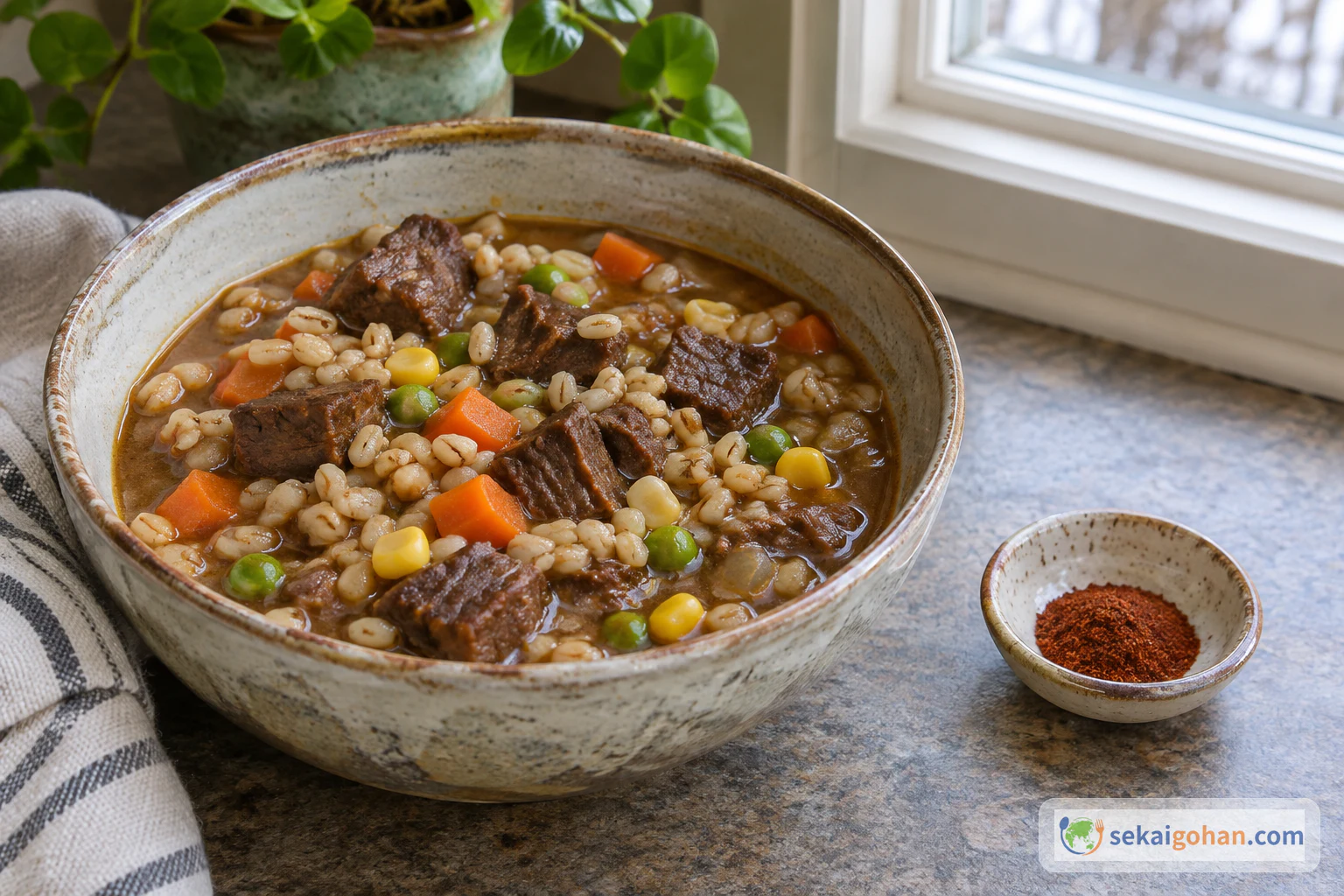
- Frozen mixed vegetables. Leave out the chopped fresh vegetables and add 4 cups of frozen mixed vegetables about 30 minutes before the end of cooking. The peas and corn keep their color and bring a sweeter, lighter bowl, and you skip most of the chopping.
- Chili powder. Add 1–2 tbsp with the salt and pepper for a gentle warmth and a redder broth. Start with the smaller amount if bannock-dipping children are at the table.
- Pond Inlet style. Add a minestrone soup mix, potatoes and celery, boil for fifteen minutes, then simmer on low until the potatoes are soft. The potatoes make it heartier and the soup mix adds a vegetable-herb note.
- Herb and wine versions. Rosemary, garlic, tomato paste or red wine move the stew toward a richer, darker braise and away from the plain northern pot.
Storage
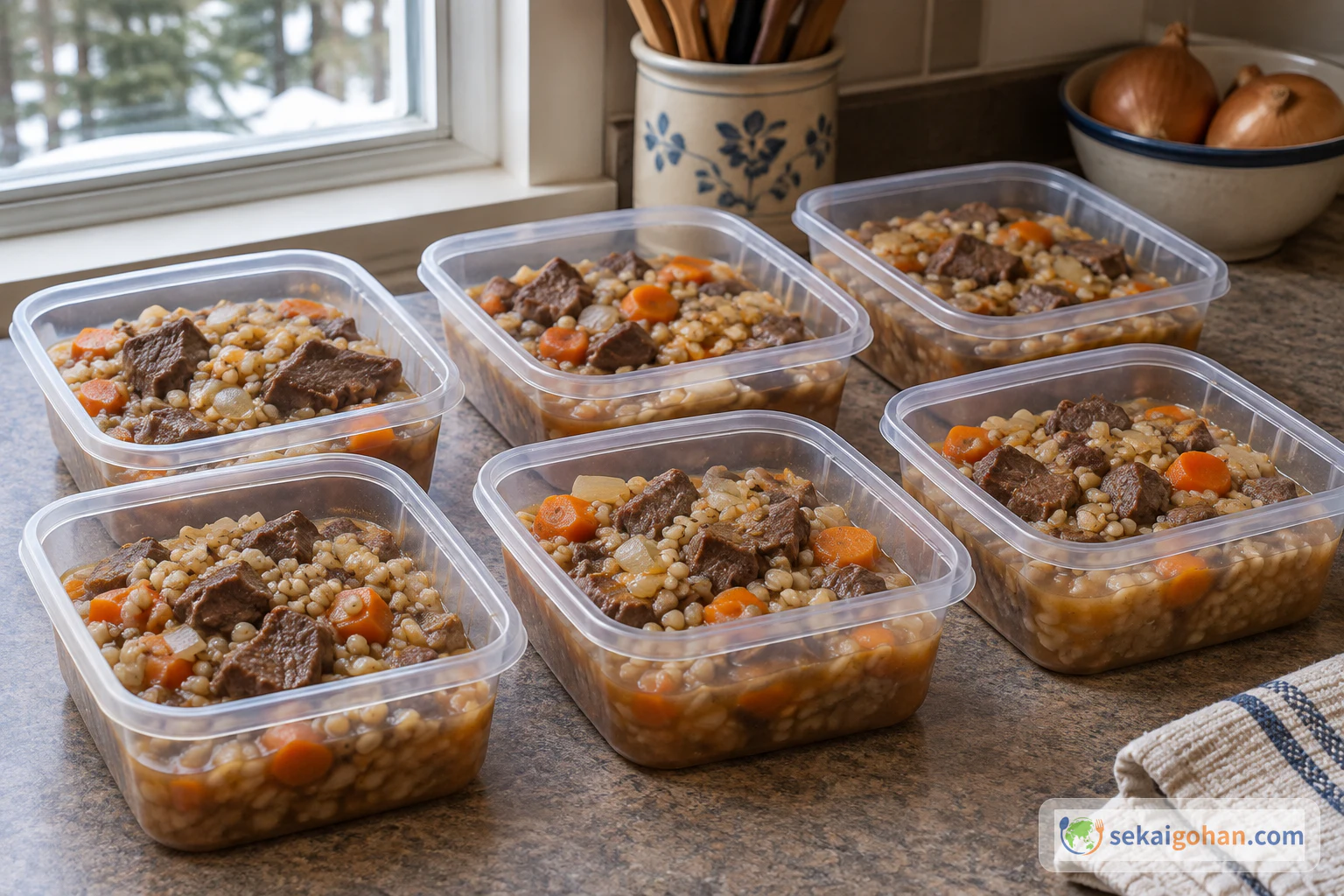
Caribou stew freezes well. Let it cool, portion it into freezer containers, cover them and freeze.
Frequently asked questions
Is rutabaga the same as turnip?
They are different vegetables. Rutabaga is the large root with yellow flesh, and a white turnip is smaller, wetter and sharper. Some versions of this same stew list "turnip," and which root those versions mean is not settled. Buy rutabaga for this pot.
Is a whole tablespoon of salt too much?
It seasons a lot of food: a big batch of meat, a cup of barley and six cups of water. The strength depends on the salt you use, because fine table salt is saltier by the spoon than coarse salt. With fine salt, add a little less at the start and taste once the barley is soft.
How big should I cut the vegetables?
Cut the carrots and rutabaga into chunky, bite-size pieces. They need to hold together through more than an hour of simmering and still be easy to eat from a spoon. Chop the onions smaller so they soften and brown along with the meat.
Can I use a pressure cooker or slow cooker?
The timing and cues here are for a heavy lidded pot on the stove over low heat. Whatever pot you use, finish the same way: the meat should be tender, the barley soft, and every piece at 165°F (74°C) in its thickest center.