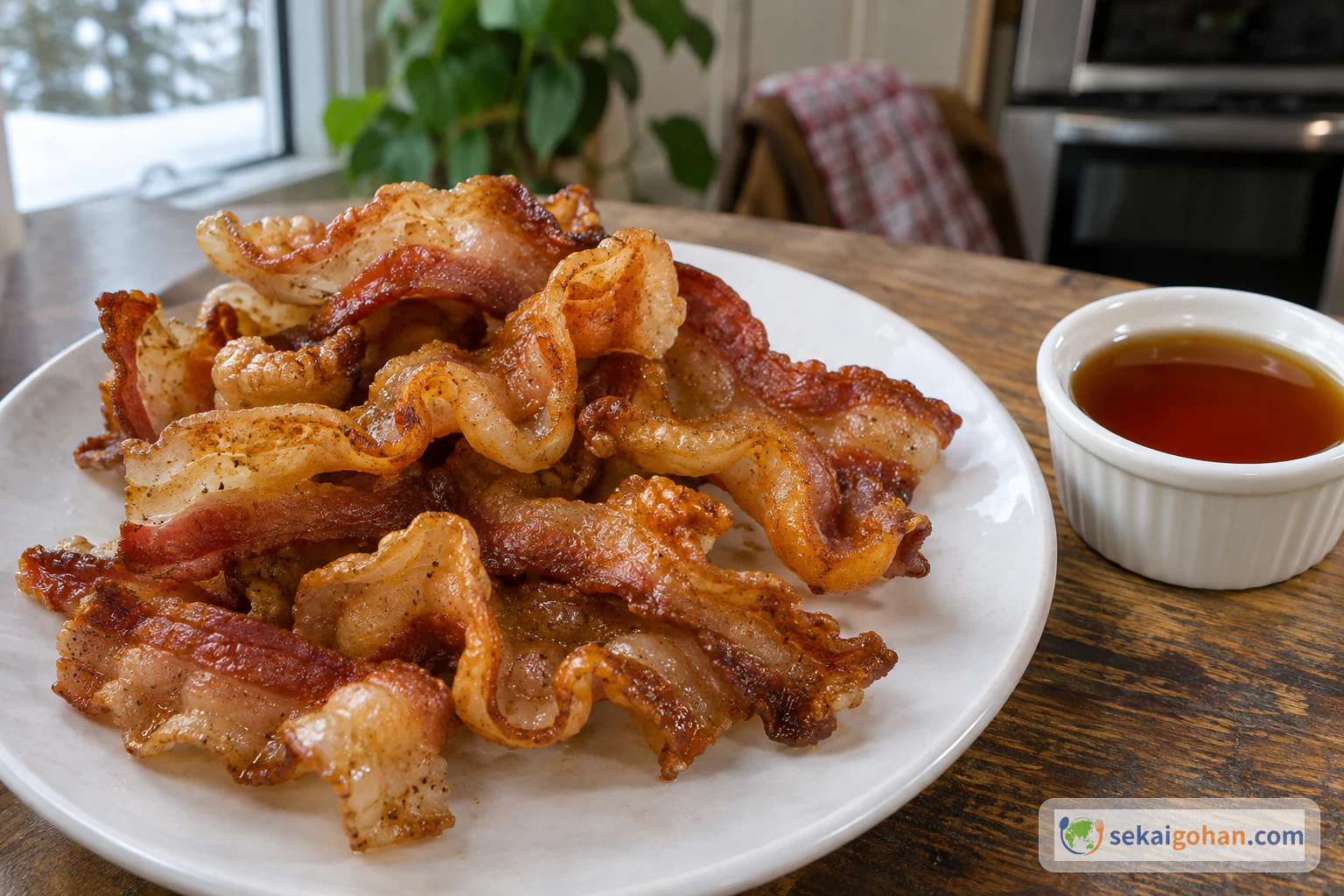
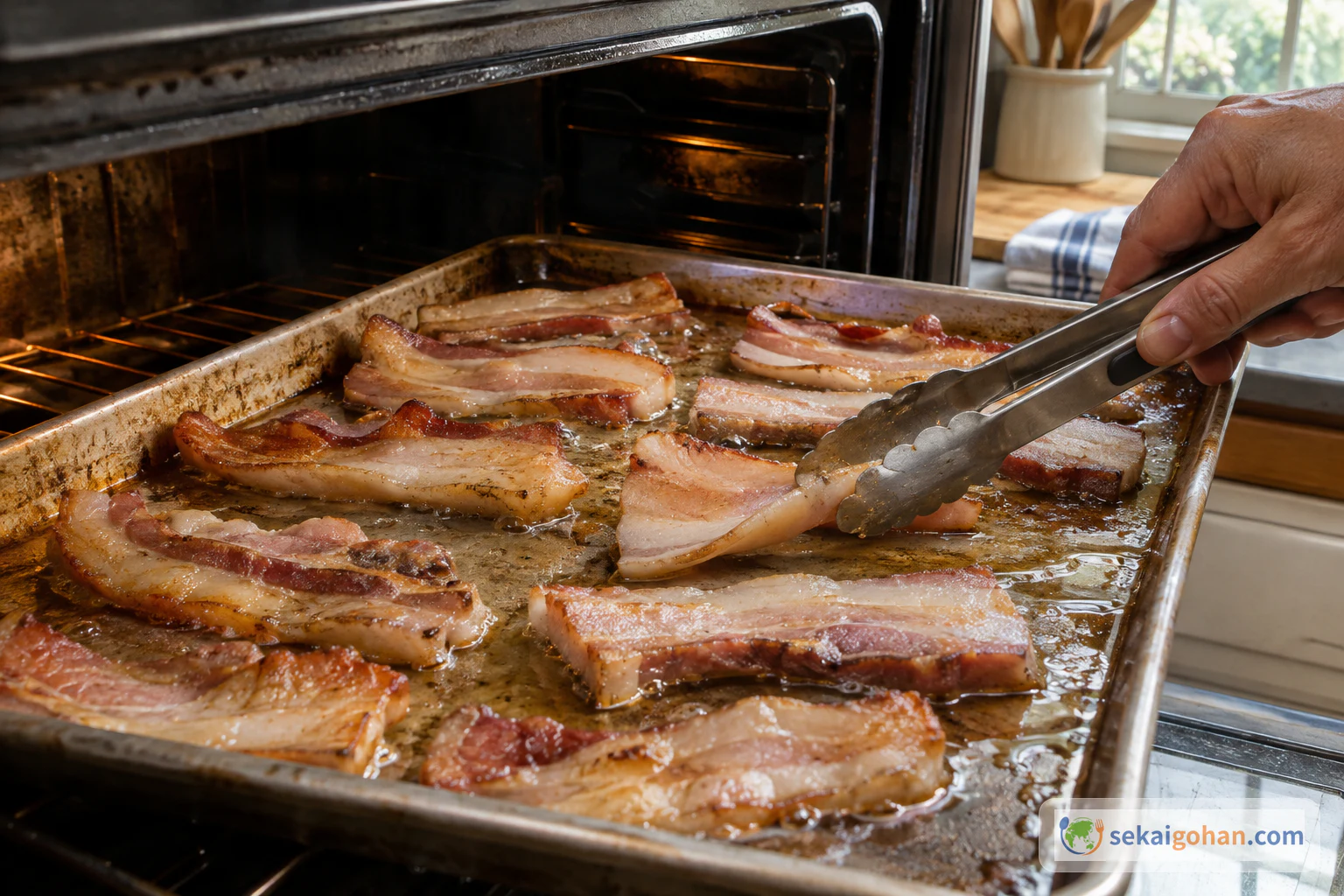
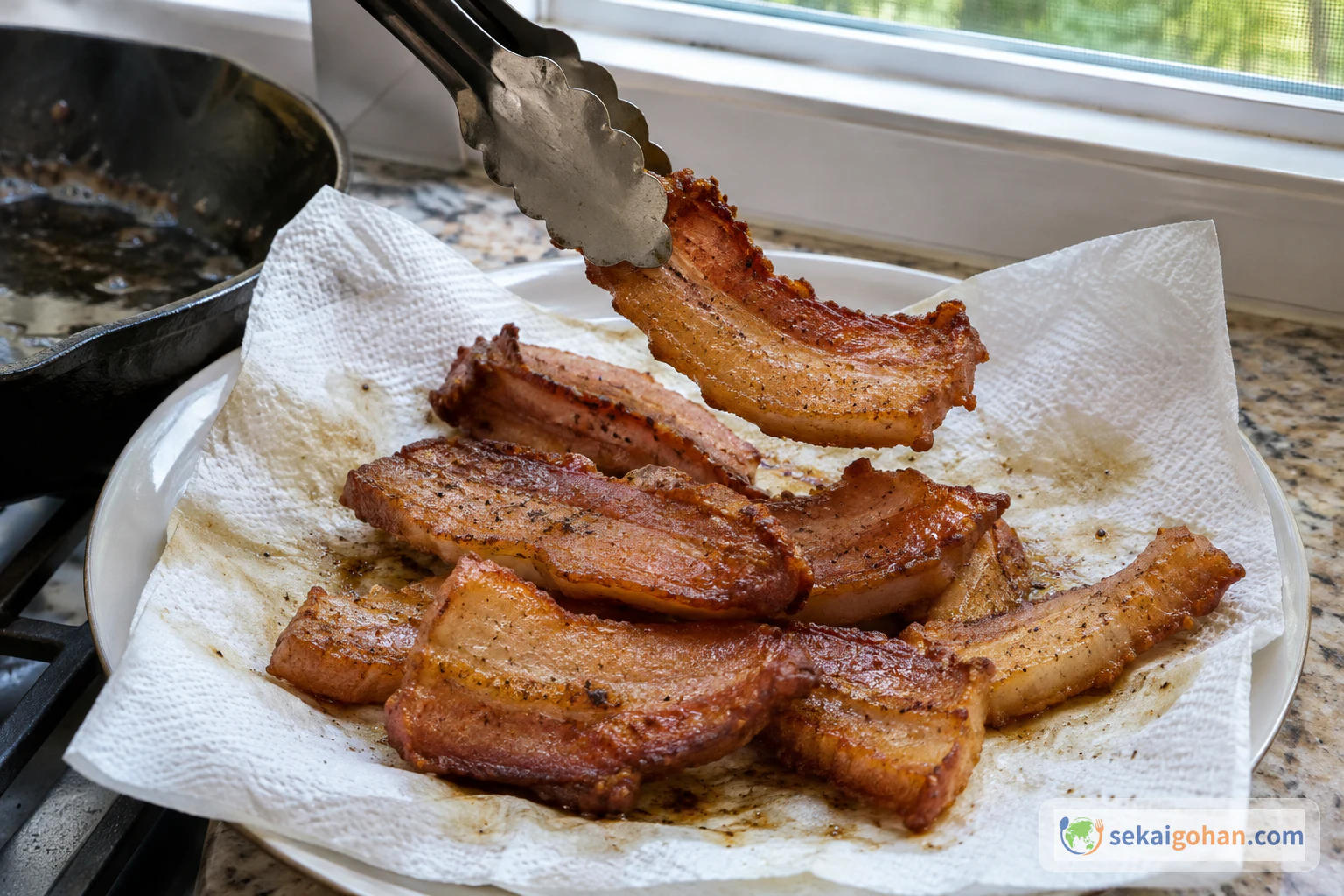
In the oven, pale strips of salt pork shrink on the tray, fat pools around them, and their edges curl up and turn gold. Lift one with tongs and it is hard on the outside and still tender inside. That salty crunch is what Quebec puts beside the sweetest meal of its year: oreilles de crisse, cured pork fat with the rind left on, boiled briefly and then crisped. At a spring sugar shack, they sit among dishes glazed and simmered in maple syrup, and they do a job the sweet dishes cannot. They bring salt.
Strips of Pork Fat Called Ears
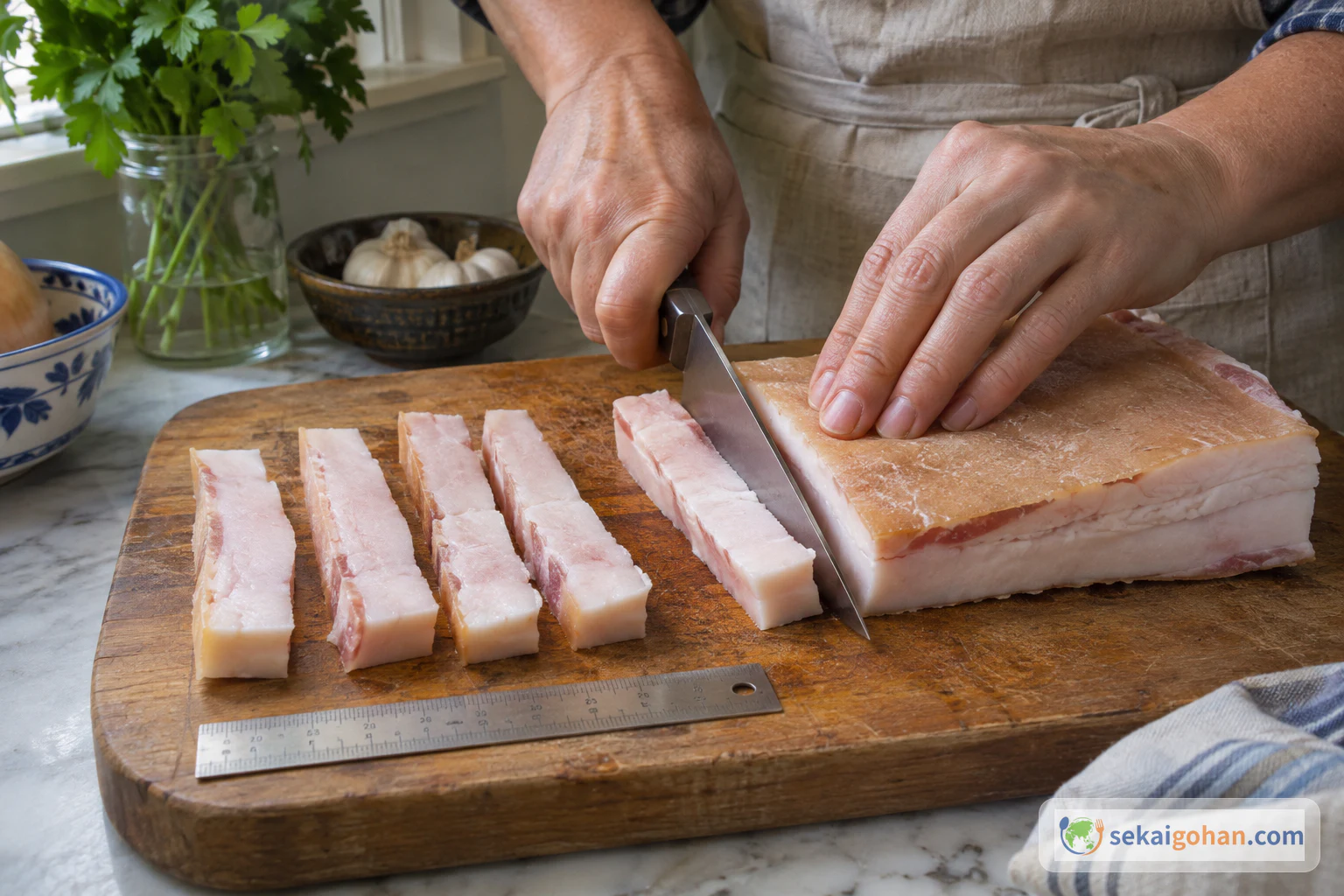
The name translates as "Christ's ears," and it puzzles everyone the first time. The "ears" are strips of fried pork fat, cut from a slab of salt pork with its rind. As they cook, the rind tightens and the strips ruffle and curl. They go by other names too: oreilles de Christ, grillades de lard, grillades de lard salé.
Where the name began is not settled. One folk explanation says "Crisse" is how "Christ" sounds in Quebec speech, which is how the name is explained in one folk account. Another links it to the verb crisser, the creak or crackle of something crunchy, which fits the sound a good strip makes between your teeth.
The sugar shack table
The place these strips belong is the cabane à sucre. In March and April, when the maple sap runs, families and groups of friends drive out to an érablière, a maple grove with its own sugar house, and sit down to a long meal. The table fills with crisp fried potatoes, sausages simmered in maple syrup, coleslaw, crêpes, a puffed omelette soufflée, maple-glazed ham, tourtière, fèves au lard, cretons and pea soup. Then the sweet side arrives: maple pie, pouding chômeur, grands-pères dans le sirop, pets de sœur, and tire sur neige, hot maple syrup poured onto snow and rolled up on a stick.
Against all that syrup, oreilles de crisse are the salty, crunchy counterweight. A bite of strip between forkfuls of sweet ham or beans resets the palate, and it is the reason a bowl of them stays on the table to the end of the meal.
Beyond the season
Away from the sugar shack, the strips turn up at breakfast beside eggs, on top of a plate of beans, alongside stews, or broken over a dish as a crunchy garnish. In pubs, their salt keeps people ordering another drink. These days most cooks deep-fry them; this recipe bakes them on a tray, which gets you the same golden strips at home with a pan you already own. If you are planning a fuller Quebec spread, they sit comfortably next to ragoût de boulettes, and there is more from across Canada to build a menu around.
Ingredients
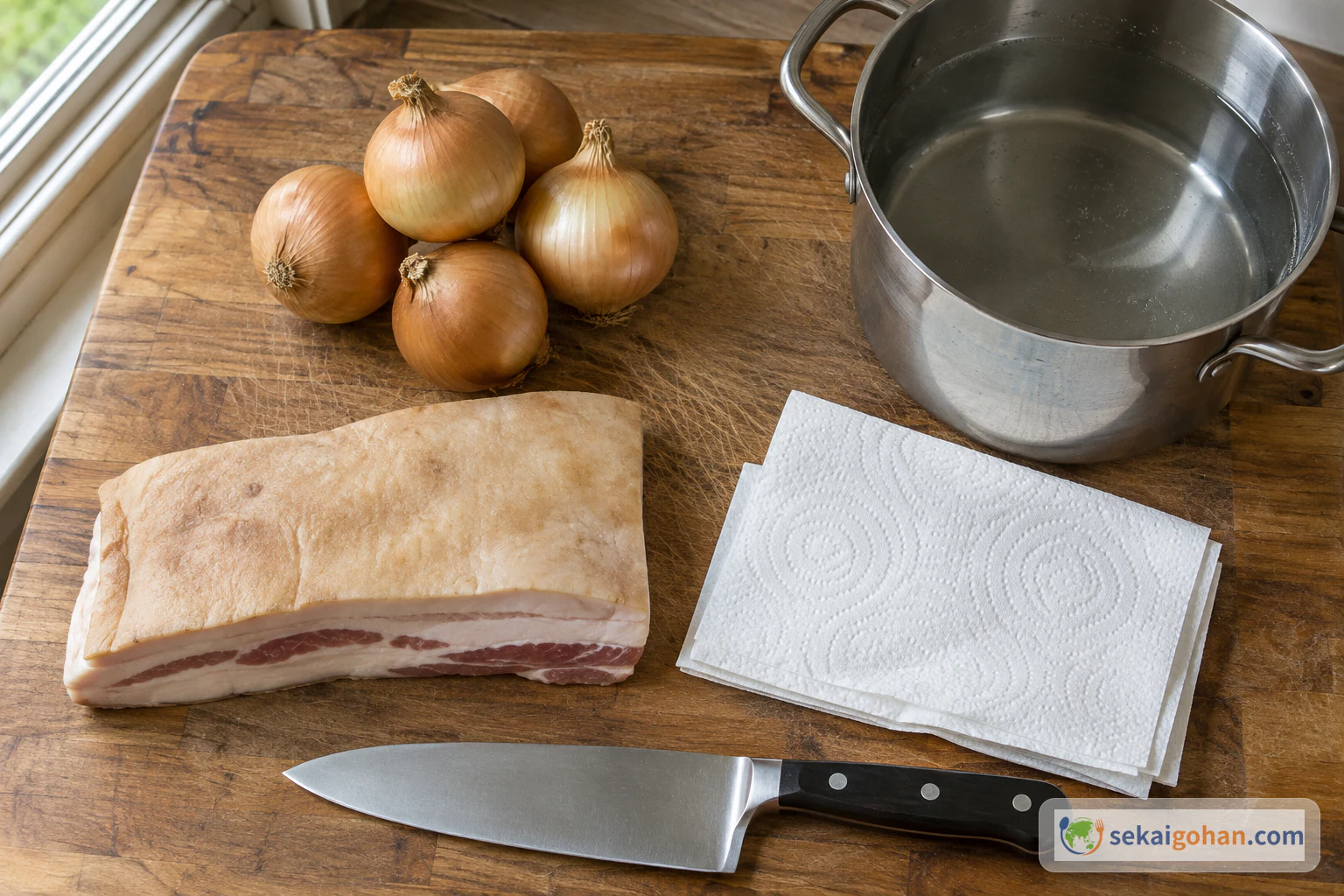
The rind decides the dish. It is what shrinks, curls and turns hard in the oven while the fat underneath stays tender. Salt pork without rind bakes flatter and softer, with a different chew.
These ingredients contain pork. None of the major allergens are in the recipe itself; check the label of the salt pork you buy for anything added in the cure.
Equipment
- Sharp knife and cutting board
- Pot for boiling
- Colander
- Paper towels
- Baking tray
- Tongs
Choosing the Salt Pork
The one thing worth hunting for is salt pork with the rind still on. Look for it as a slab, and if the skin has been trimmed off, ask for a piece with the skin left attached. The salt and the rind are what make these taste like the strips from a Quebec table, so keep both. The onion is the part you can let go.
Look closely at the rind before you buy and again at home. Rind can still carry bristles, and they are unpleasant to bite into once the strip is crisp. Choose a slab whose rind looks clean and smooth, and pull out any bristles you find before you cut.
| Choice | What it changes |
|---|---|
| Salt pork with rind | The full result: curl, hard outside, tender inside, clear salt |
| Salt pork without rind | Flatter, softer strips with less crunch |
| With onion under the pork | A sweeter, rounder smell in the kitchen and on the strips |
| Without onion | Cleaner pork flavor, the plain sugar shack version |
Method: Boil, Dry, Then Bake Until Gold
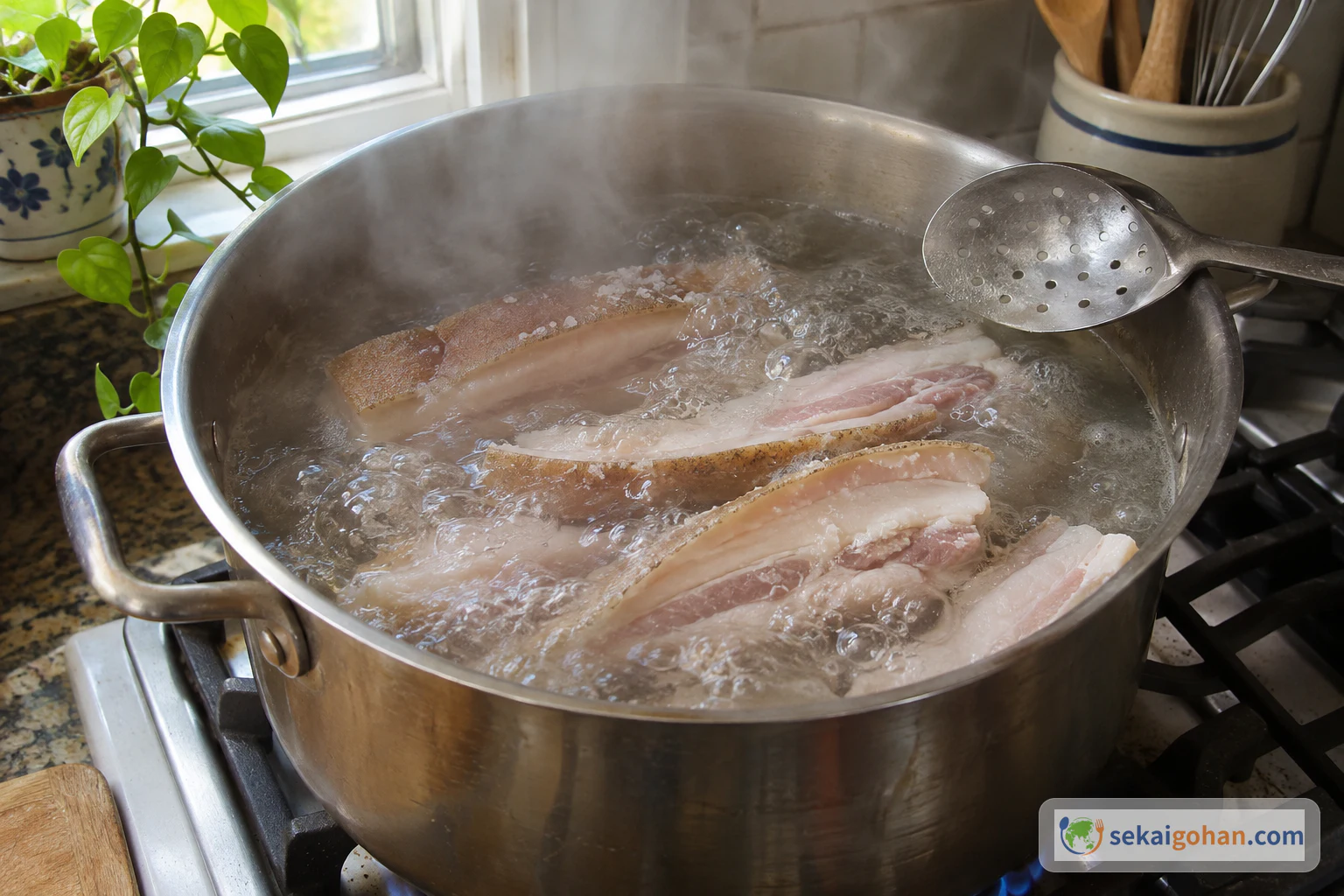
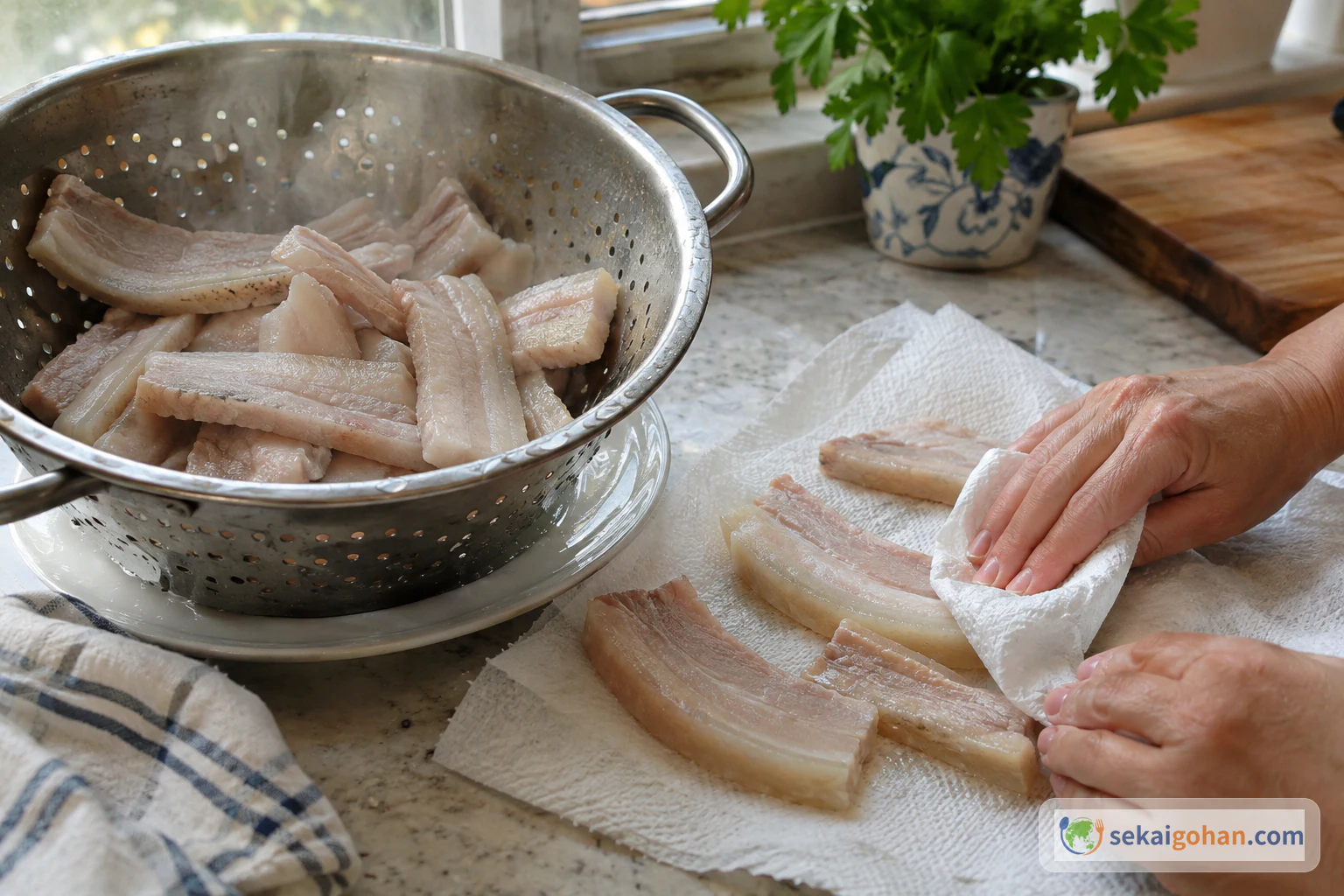
The work runs in one line. Get the oven heating and the water boiling while you check and cut the pork, so each step leads straight into the next. The baking takes as long as the strips need, so judge it by color and hardness, and stay near the oven to turn them.
When It Goes Wrong
| What you see | Why | What to do |
|---|---|---|
| Strips rolled into tight tubes | The rind shrank with nothing to release it | Next time, nick the edges more deeply before boiling |
| Spitting and smoke when the tray opens | Water was left on the strips | Pat them drier before baking; open the oven carefully and stand back |
| Pale and chewy, rind still soft | Pulled out too early | Keep baking and turning until golden and hard to the tap |
| Some strips dark, others pale | Uneven sizes, or not turned often enough | Cut evenly, turn more often, and take out the darker ones first |
| Hard bristles in the bite | Bristles stayed on the rind | Check and pull them out before cutting |
| Too salty for you | Salt pork carries its cure | Serve them with eggs, beans or a sweet maple dish, and add no salt anywhere on the plate |
Serving and Variations
At breakfast and beside beans
The simplest plate is the morning one: a few hot strips next to fried eggs, where the runny yolk softens their salt. They work the same way on a plate of beans or next to a stew, adding crunch to something soft. Broken into pieces, they become a garnish scattered over a finished dish.

A sugar shack table at home
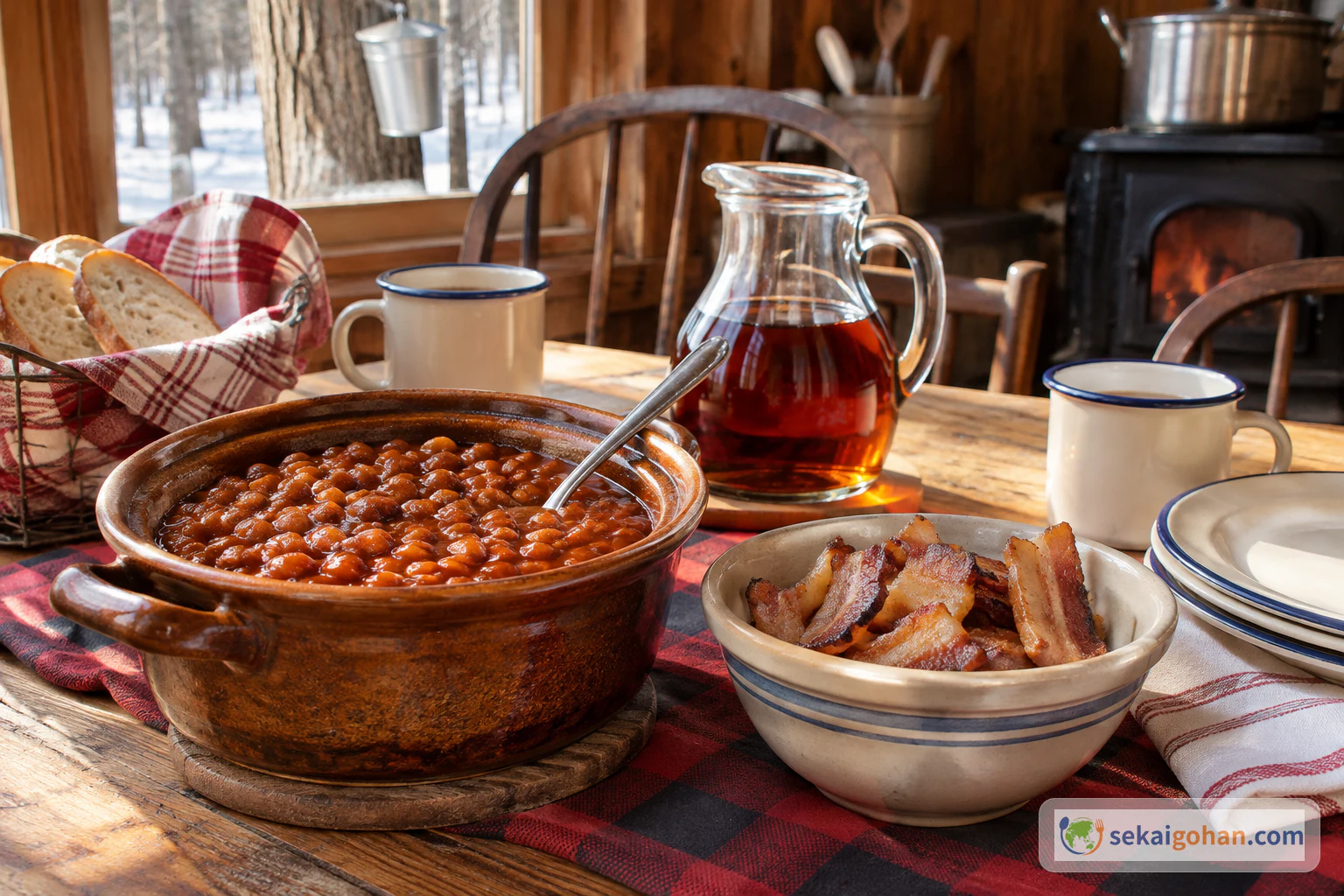
To bring the spring meal home, put a bowl of strips in the middle of the table with fèves au lard, maple-glazed ham, a pitcher of maple syrup and whatever sweet dishes you can manage. People reach for a strip between sweet bites all through the meal, so make the bowl bigger than you think. With drinks, they play the pub role: their salt keeps glasses moving.
Variations
- On a bed of onion. Baking the strips over sliced onion fills the kitchen with a sweeter smell and gives the pork a rounder edge, with soft, fat-soaked onion as a bonus.
- As a crunchy topping. Crumble the finished strips over beans, soup or a stew just before serving, so they stay crisp.
- Deep-fried. This is how most cooks make them today, boiling and draining the strips first and then frying them until golden. The oven method gets the strips golden with nothing more than a tray.
Frequently asked questions
Are these the same as the puffed pork rinds sold in bags?
They are a different thing. Bagged pork rinds are light and airy; oreilles de crisse are hard on the outside and tender inside, with real fat in each bite. Their closer relatives are Latin American chicharrón and British pork scratchings.
Should I salt them?
Leave the salt shaker alone. The cure already seasons the pork, and the strips are meant to be the salty element on the plate. Taste one hot from the paper towels before seasoning anything else you serve with them.
Can I cook more than one tray at a time?
Yes, as long as each tray holds a single layer with space between the strips. Turn the strips on each tray as usual, and take each tray out when its strips are golden and hard to the tap.