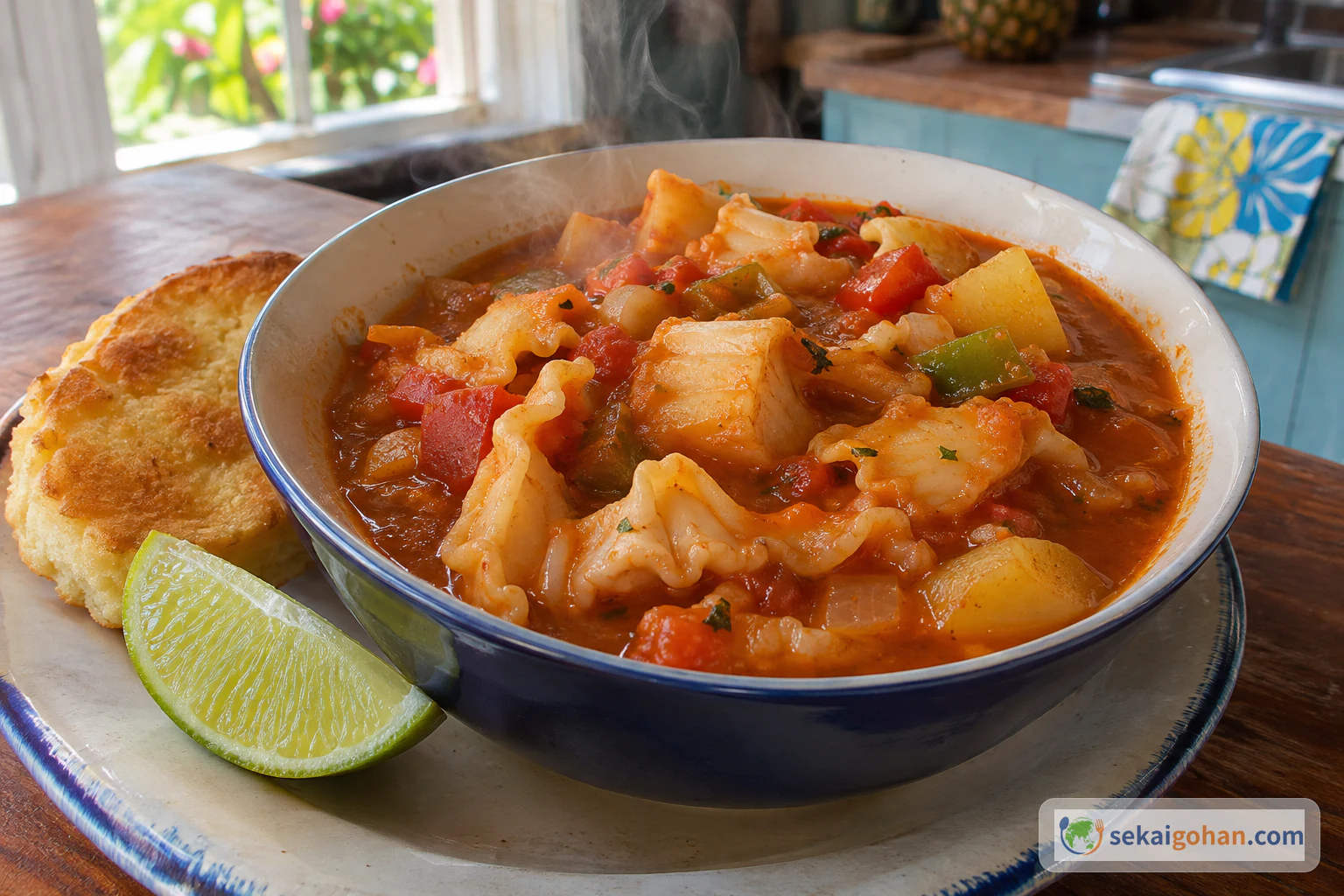
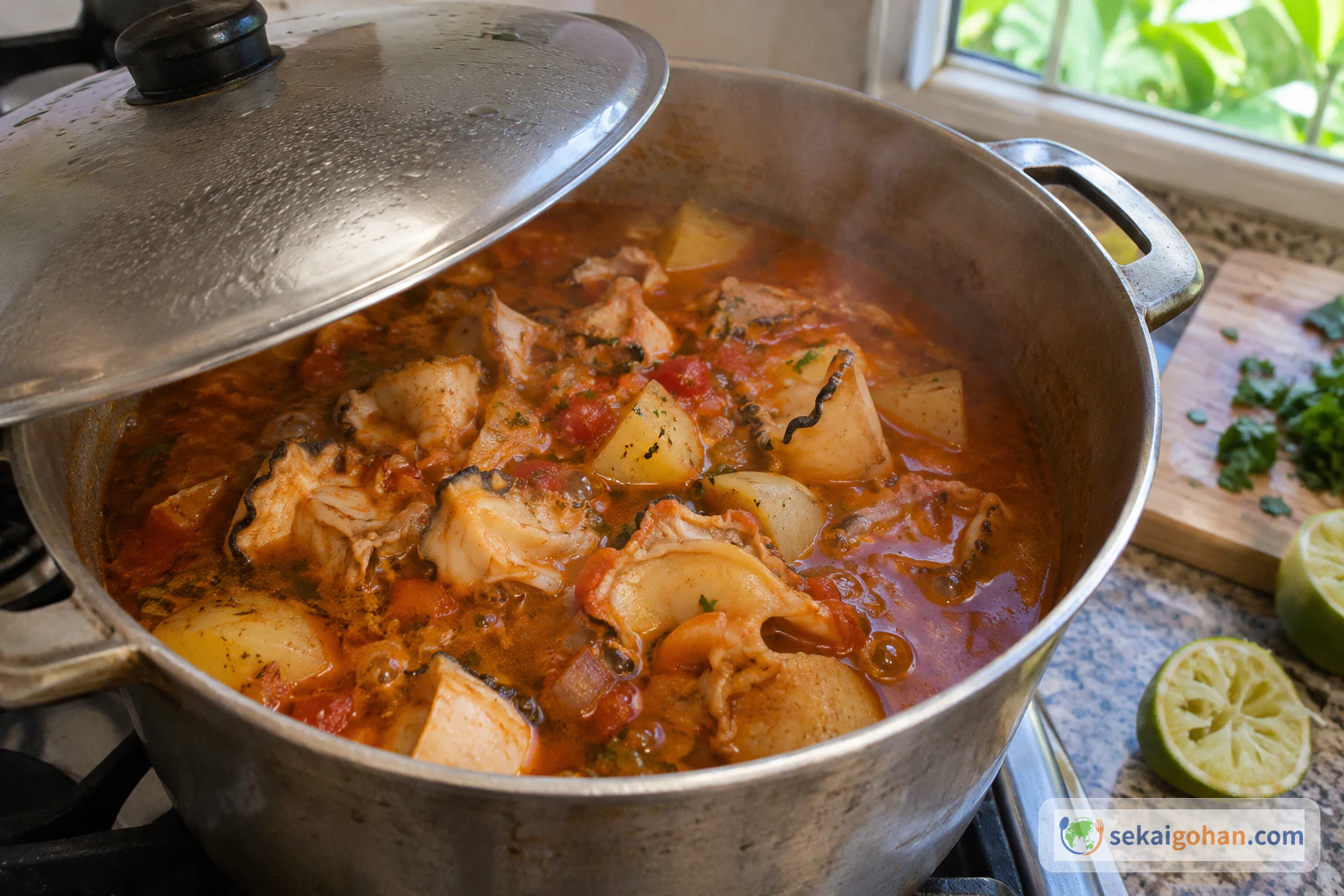
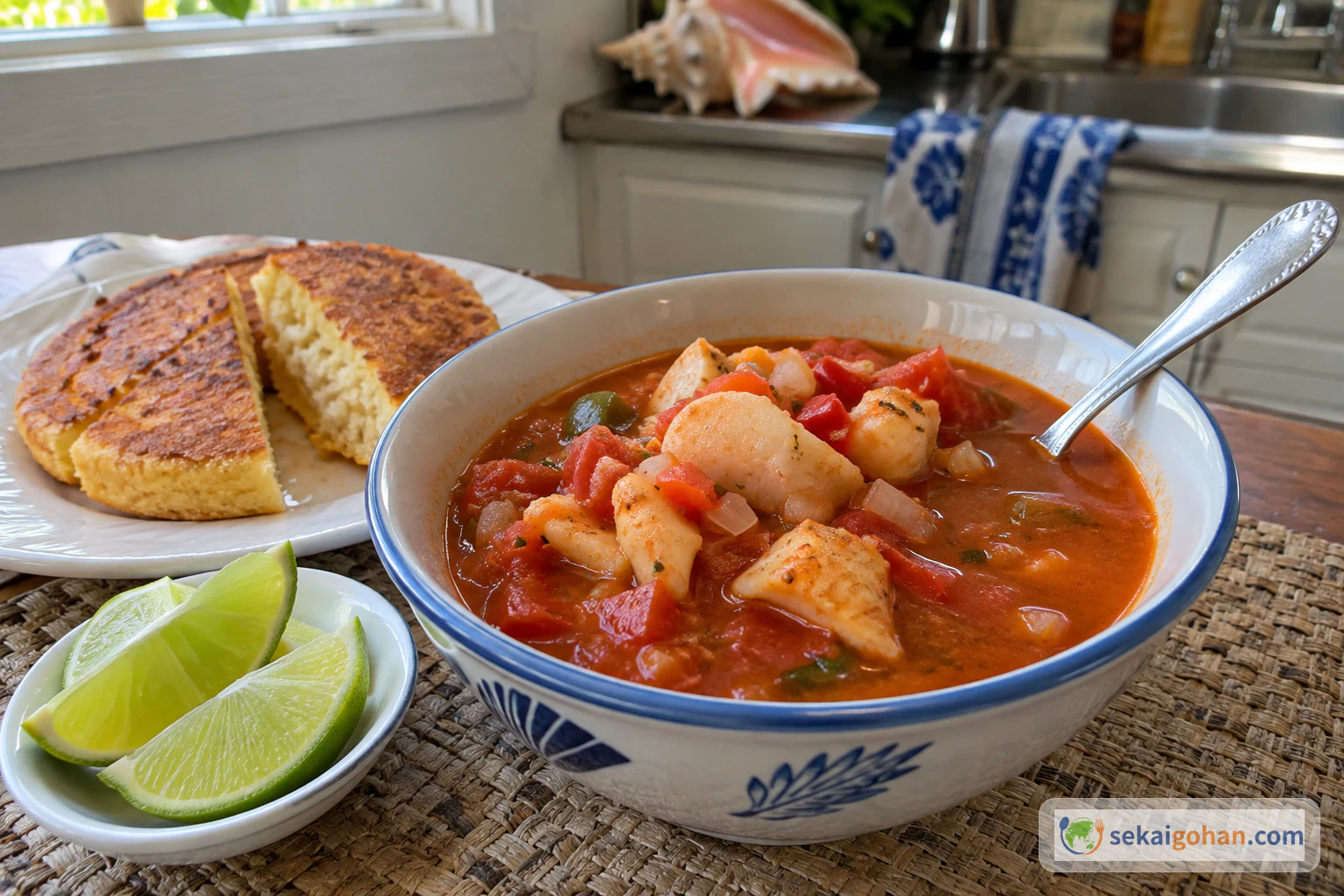
The lid comes off a big pot, steam rolls up, and underneath is a red-orange broth crowded with pale chunks of conch and soft potato. A squeeze of lime goes in at the stove, another at the table, and a slice of bread or johnnycake goes straight into the bowl. In the Bahamas this is a breakfast and brunch dish as much as a dinner, and people eat it as a snack too. Stewed conch tastes of tomato and thyme over a gentle roux, with the sweet, firm chew of the shellfish in every spoonful and lime lifting the whole bowl.
Conch in the Bahamas
A shellfish at every meal
Conch is a staple of the Bahamas and one of its cultural icons. It turns up in everything from raw salads to baskets of fritters, and conch festivals bring contests and cooking out in public. A restaurant that serves one conch dish may well serve others, such as chowder and fritters. Stewed conch is a pot dish: a big pot, a slow simmer, and something warm to eat early in the day. It is also comfort food for the cooler months, when a bowl of hot tomato broth makes sense even on an island.
Most conch fishers free dive for it. By 2019, overfishing had become a serious concern, alongside a ban on scuba for conch fishing, export quotas and marine protected areas, with recommendations that went as far as ending exports. The rules have shifted since then, so it is worth checking how the conch you buy was sourced.
Stewed, steamed, cracked or raw
Each Bahamian conch dish handles the meat differently, and the names tell you what you will get. Stewed conch keeps the meat in large pieces in a thinner, brothy sauce. It looks a little like chowder, but chowder has finely chopped or ground conch in a thick soup. Steamed conch is pounded, steamed or boiled, then cooked down with onion, peppers, tomato paste, tomato, thyme and chile. Cracked conch is battered and fried.
Conch salad is raw conch dressed with lime, and it is a separate dish with its own name. Scorched conch is another. Stewed conch is fully cooked, first in its own boil and then in the stew.
Ingredients
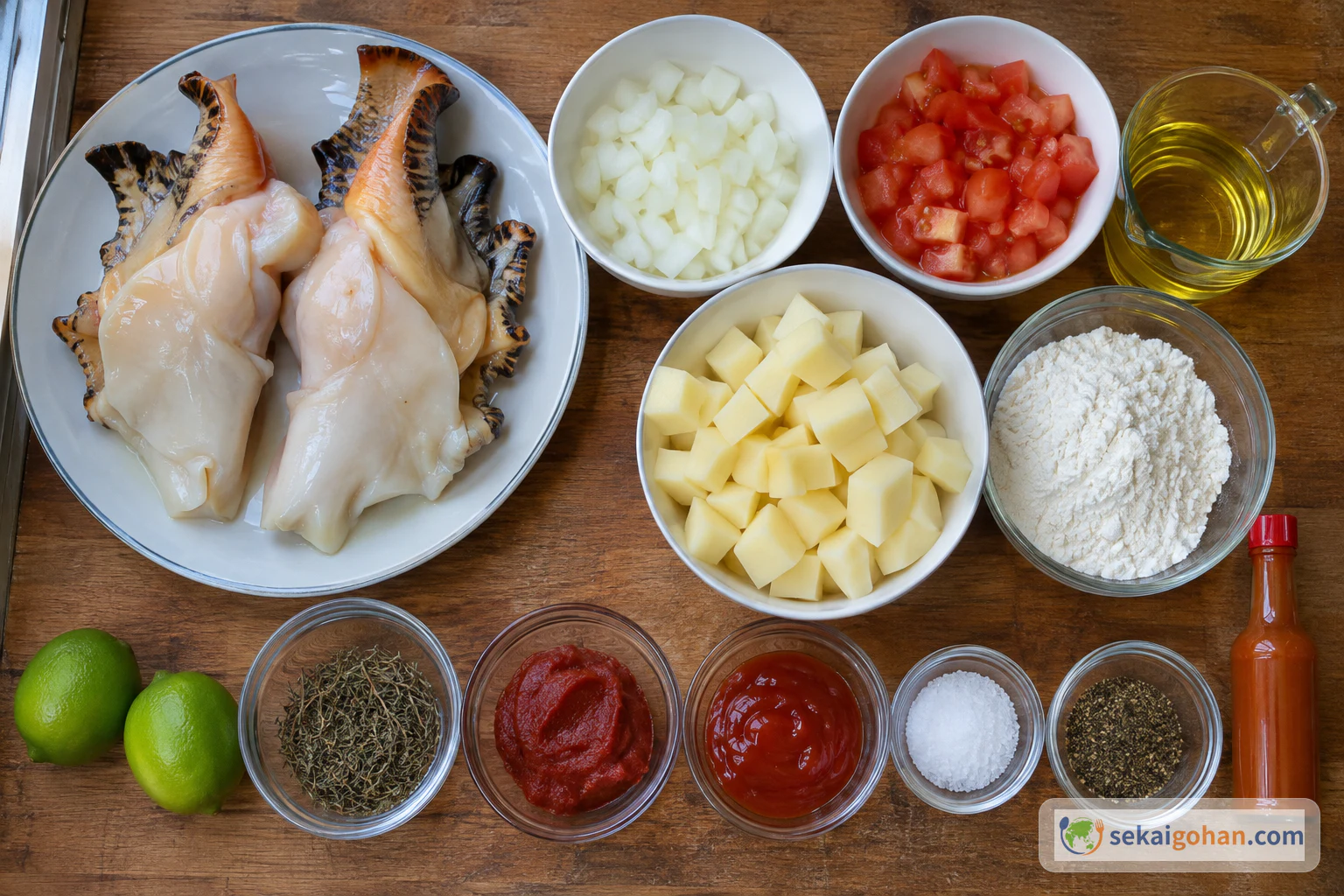
The 3 tbsp of salt is for a large pot, and it is a lot. Start with less salt when you add the vegetables and bring it up when you taste at the end.
Contains shellfish (conch, a mollusc) and wheat (the roux). The lobster variation adds crustacean shellfish. Check the labels on pepper sauce and ketchup if you cook for anyone with allergies.
Equipment
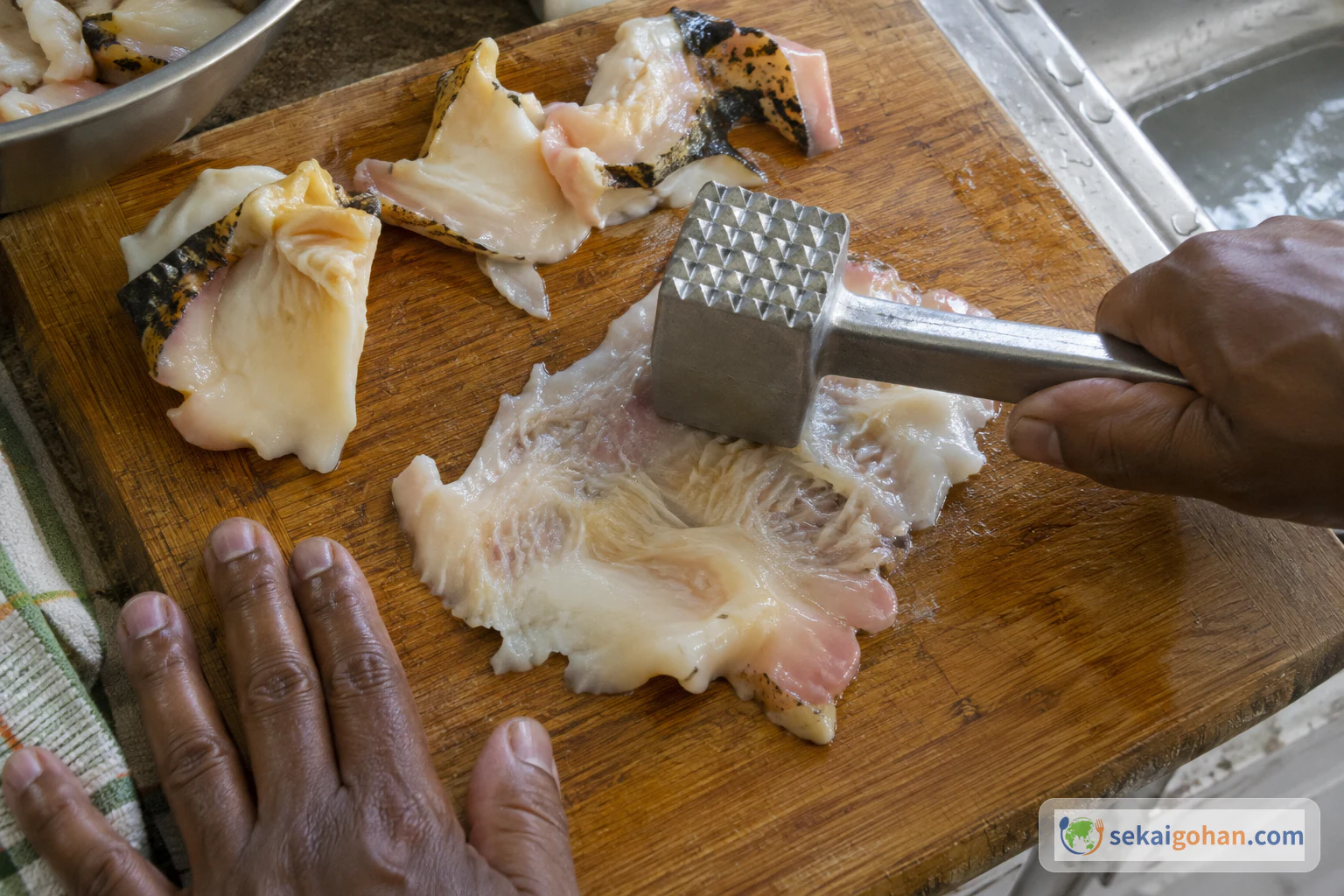
- Meat mallet (an empty bottle works)
- Sturdy cutting board and sharp knife
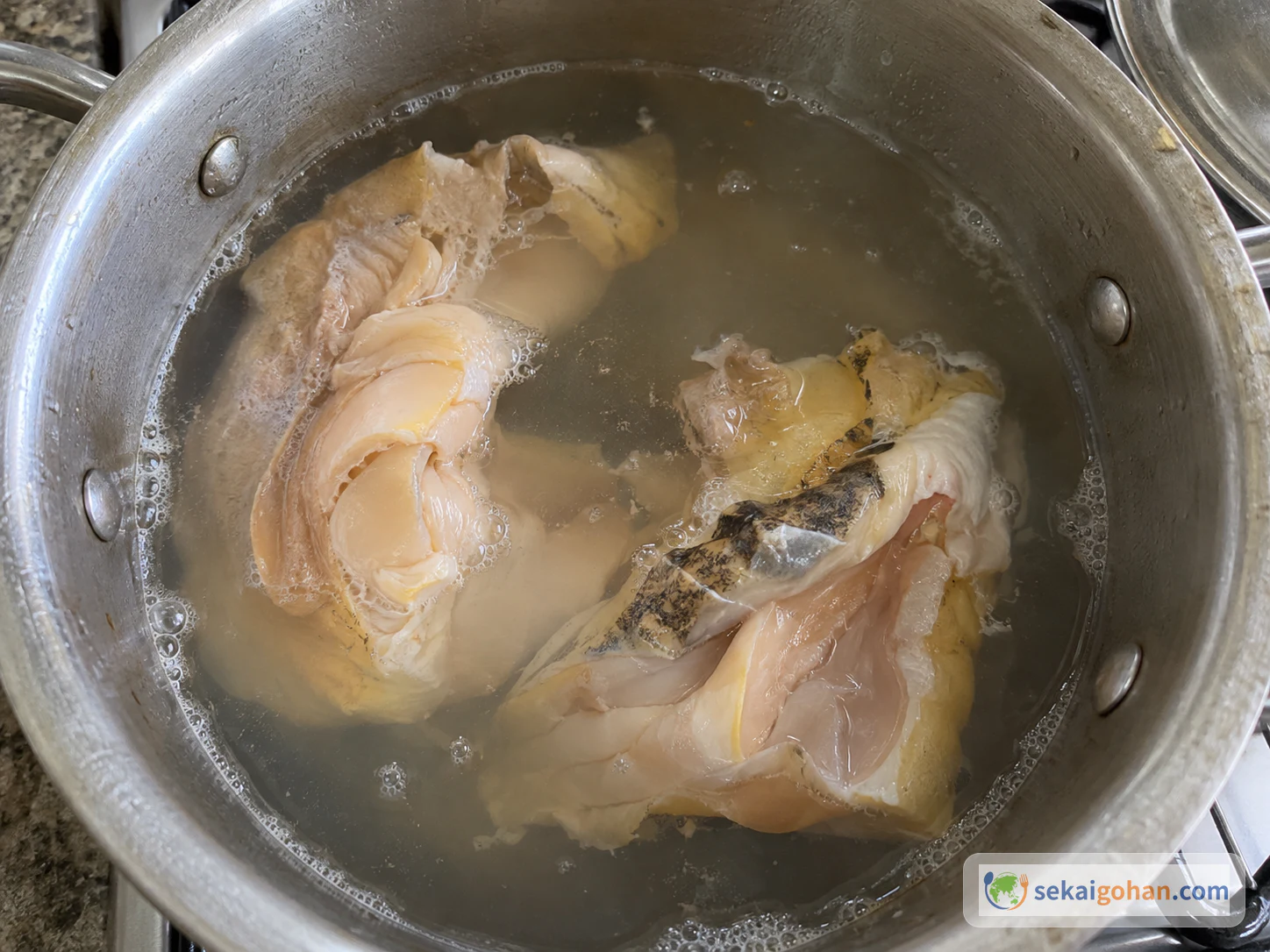
- Medium pot for the pre-boil
- Large heavy pot with a lid
- Wooden spoon
Choosing and substituting
Conch is the one thing to hunt down. Look for frozen, cleaned queen conch, which is usually imported; it is ready to pound. If you cannot get it, other firm sea snails and shellfish such as whelk or abalone-type shellfish can stand in, but the chew and sweetness change and the stew becomes a cousin of the Bahamian dish. Use all-purpose flour for the roux, not bread flour. Any hot pepper sauce or plain chili flakes will do for heat. The flavour that makes it taste Bahamian is tomato acidity, roux body, thyme and a lime finish; keep those four and the rest of the pot forgives small swaps.
Method
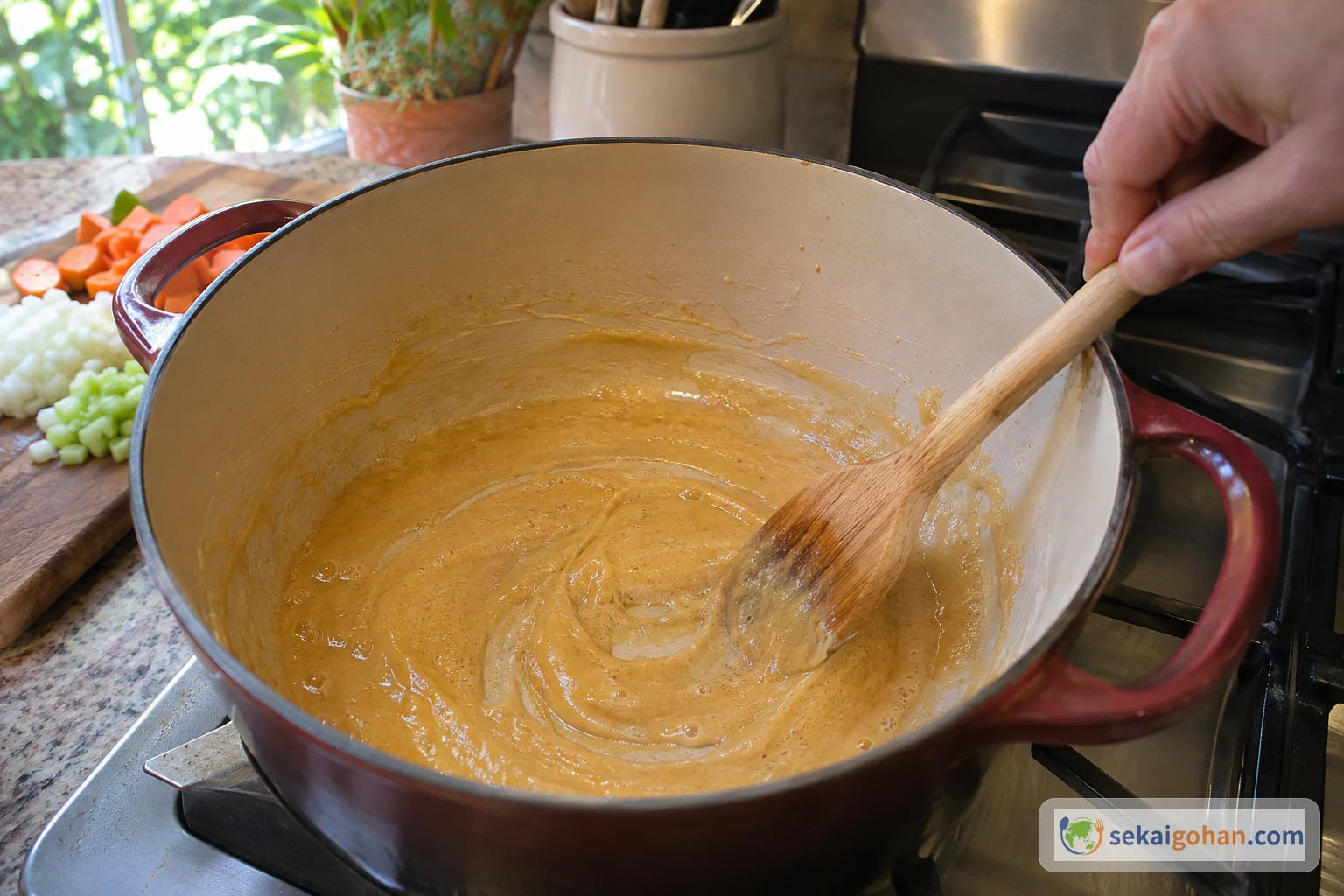
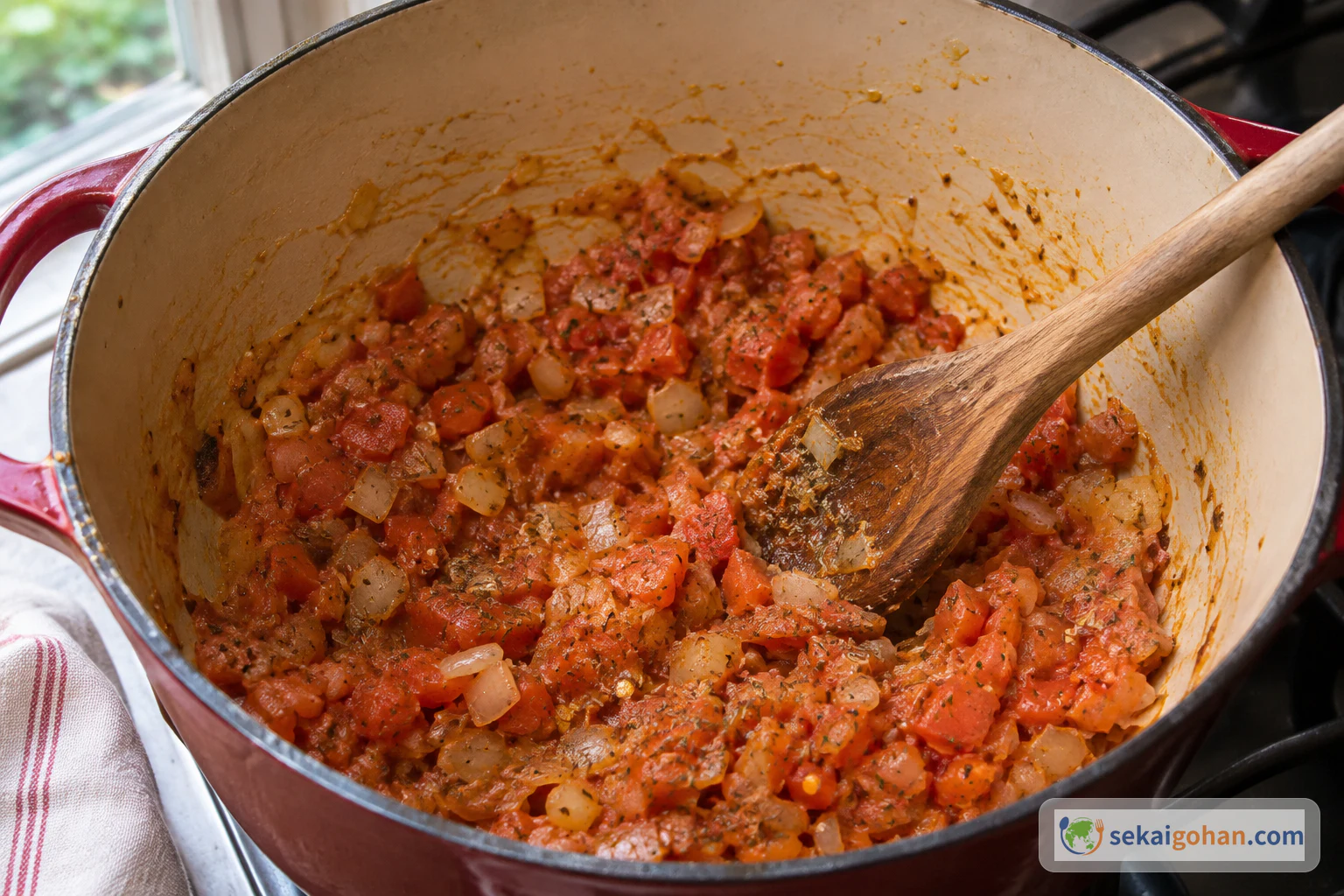
The conch comes first: pound it, then let it boil on its own while you chop the onion, tomato and potatoes. The roux and vegetables build in the large pot while the conch finishes. Once everything is together, the covered simmer is hands-off.
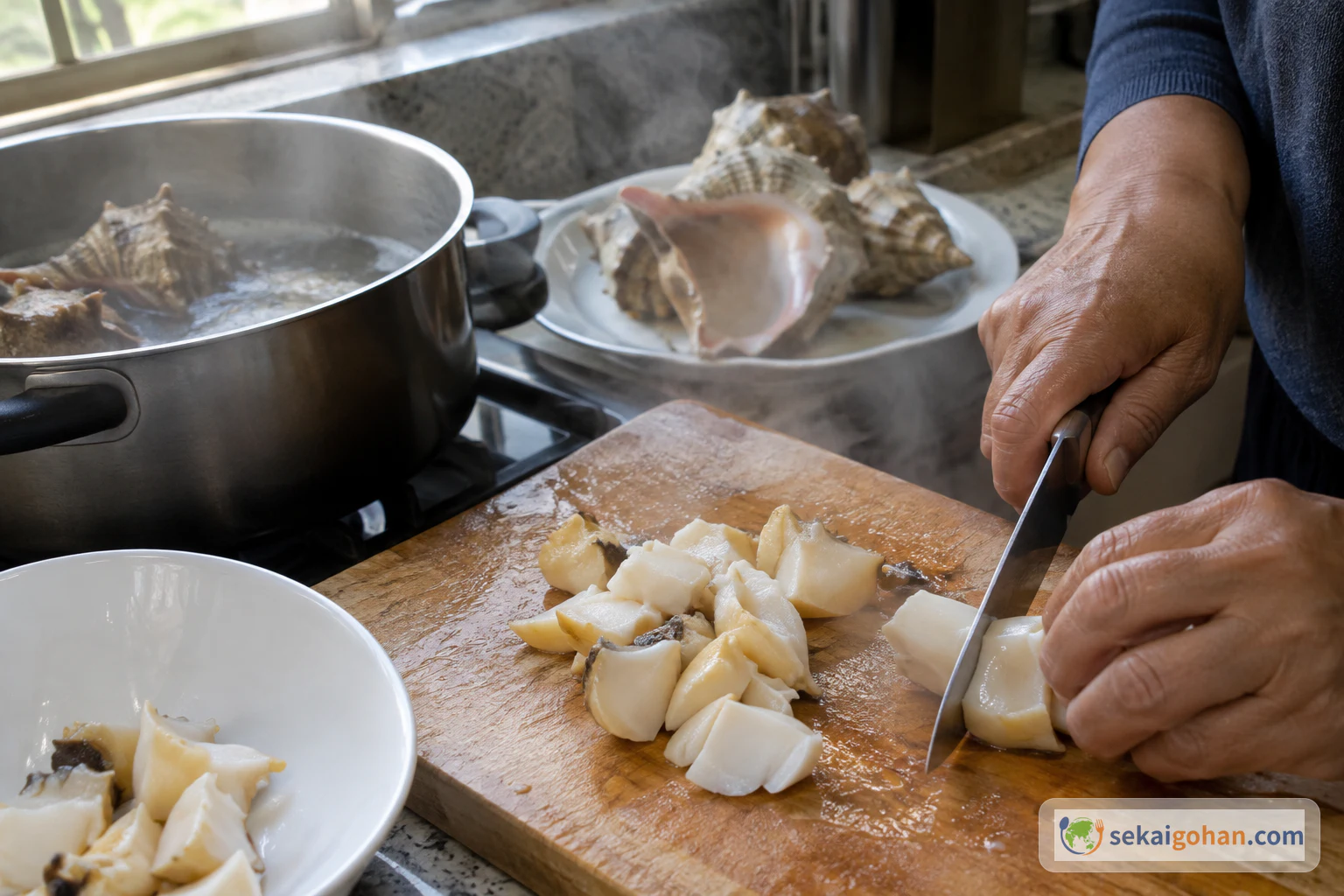
Conch toughens easily, and the order decides the texture. Pound it whole, pre-boil it whole, and cut it only after boiling. Skip any of the three and the pieces stay rubbery in the finished stew.
When it goes wrong
| What you see | Why | What to do |
|---|---|---|
| Conch is rubbery in the bowl | Pounding was light or the pre-boil was cut short | Pound until the whole surface looks bruised and give the pre-boil its full 20 to 30 minutes next time |
| Roux has dark specks and tastes bitter | Heat too high or stirring stopped | Discard it and start again with fresh oil and flour over lower heat |
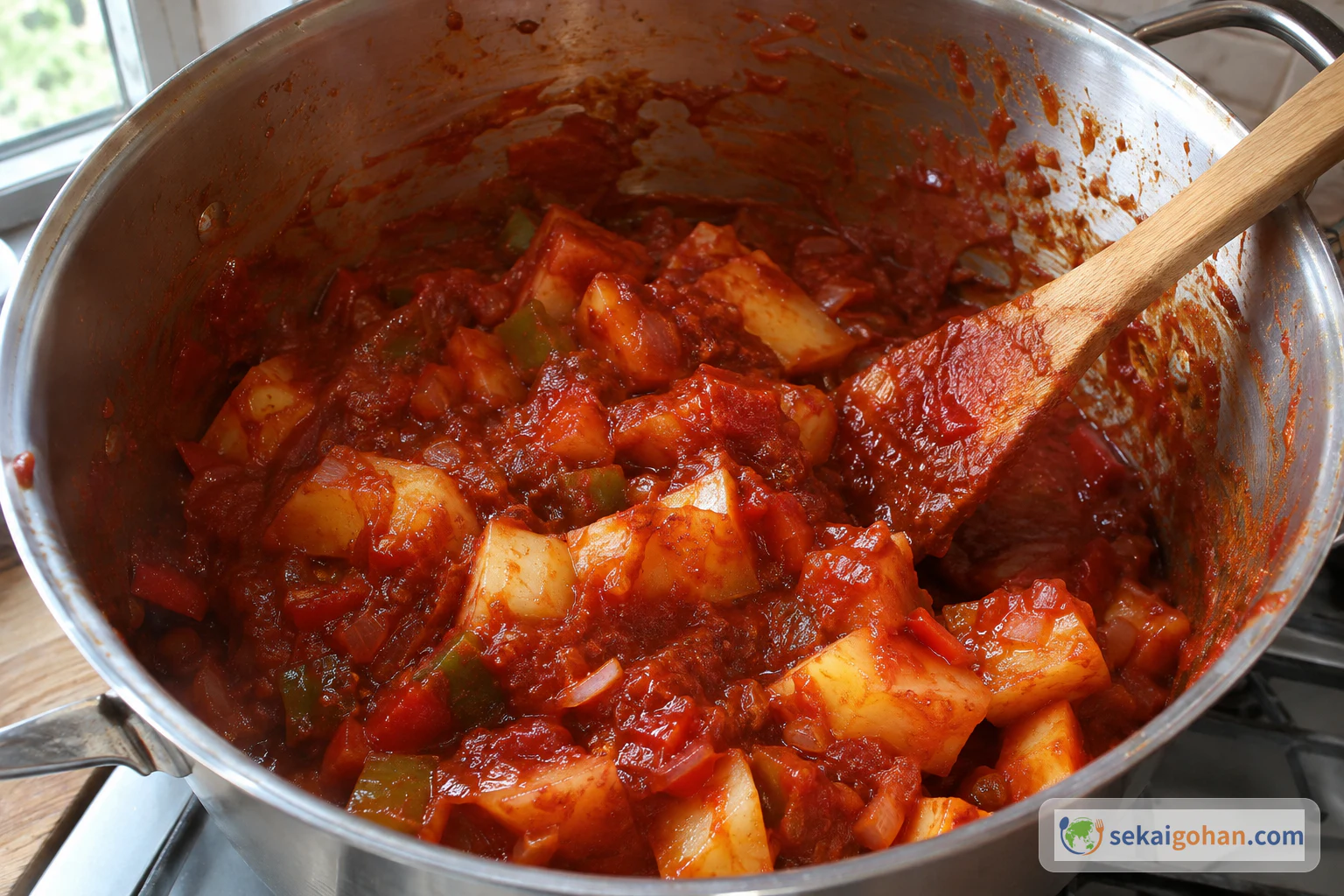
| Paste sticks to the bottom in step 5 | Potatoes cook in very little liquid | Stir from the bottom often and lower the heat; scrape up the stuck paste when the water goes in |
| Stew tastes too salty | Full salt amount went into a smaller pot | Hold back salt at step 4 next time and adjust only at the end |
| Potatoes still firm when the conch is ready | Simmer was too gentle or the lid was off | Cover and keep simmering until the potatoes are soft |
Serving, variations and storage
At the table
Bread, johnnycake and lime are the classic partners. The bread is for dipping into the broth, and lime at the table keeps each bowl bright. Breakfast, brunch, an afternoon snack or dinner all suit it.
Variations
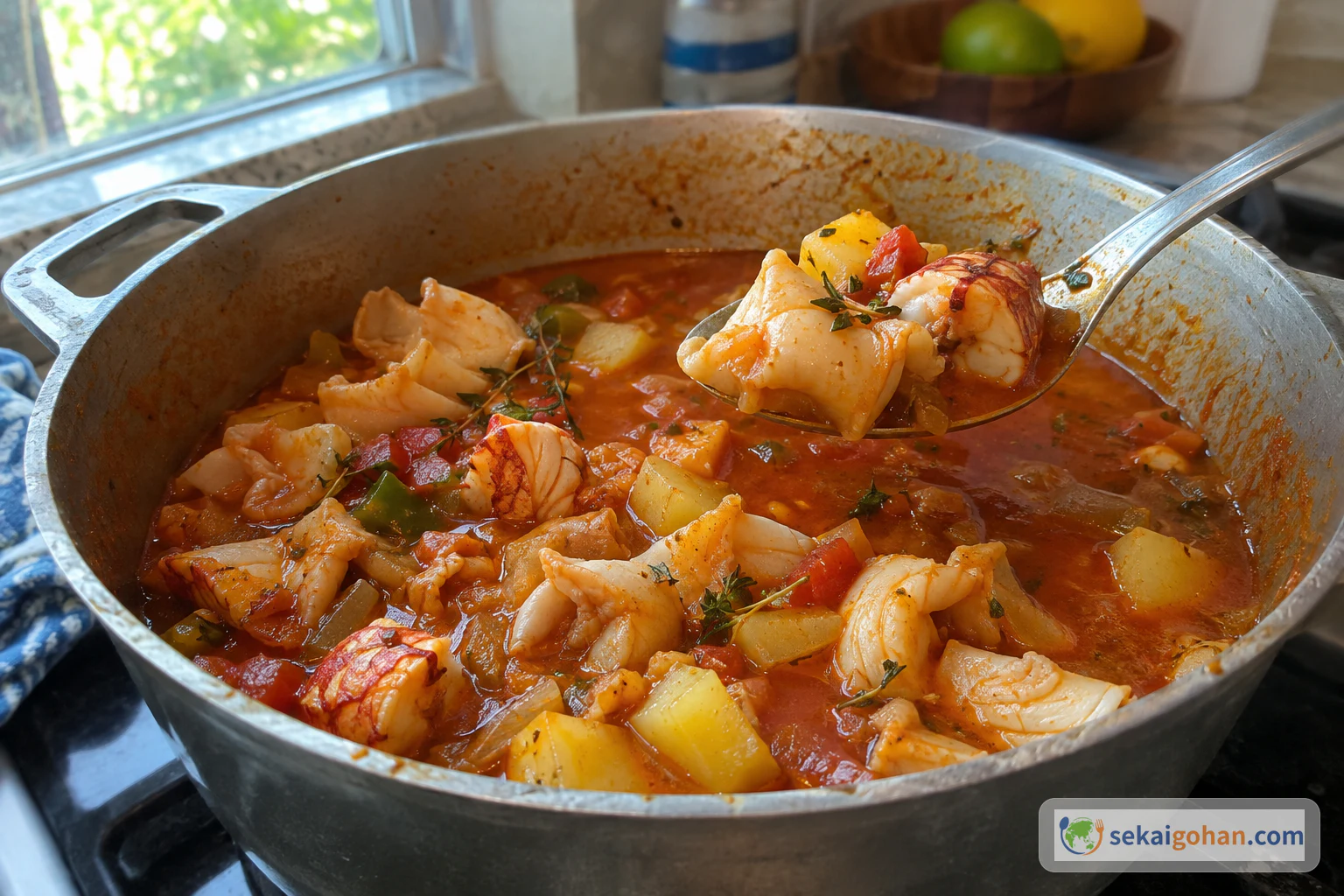
Lobster: Cut raw lobster into bite-size pieces and add it partway through the covered simmer in step 7, giving it about 10 minutes in the pot. It adds a sweeter, softer bite beside the firm conch. The lobster brings crustacean shellfish into the pot.
Half pot: Halve every amount: 1 large conch, 2 potatoes, ¼ cup (60 ml) oil, 2 tbsp flour and 3½ cups (840 ml) water, with the rest halved to match. Small fractions such as ¾ tomato can be rounded to taste. Start the salt well below half of the full amount and adjust at the end.
Leftovers
Cool leftovers, then refrigerate promptly in a covered container. Reheat until the stew is steaming hot all the way through before serving.
Frequently asked questions
Why use both tomato paste and ketchup?
The paste gives depth and a deep red colour, while the ketchup adds sweetness and a little acidity. Cooked down with the potatoes, the two build a thick tomato base that dissolves into the water and colours the broth.
How spicy is stewed conch?
As hot as you like. The pepper gives a steady warmth, and the pepper sauce or chili flakes are added to taste. Keep extra pepper sauce on the table for anyone who wants more.
Can I leave the conch a little underdone, like conch salad?
No. Conch salad is a separate raw dish. In stewed conch, the conch is cooked through in its pre-boil and again in the simmer.